Month: July 2010

  • Mad Expat Skills

    Mad Expat Skills

    Expats develop a unique skill set over many years of international travel.  For example, at airport security, I can strip off shoes, jacket, and watch: move my computer from backpack to plastic bin: get three bins worth of personal items, a backpack and myself through the metal detectors (without setting anything off) all in under 20 seconds.

    A well choreographed routine for security lines is something expats share with all frequent travelers. A week ago, I realized a skill exclusive to the frequent international traveler.

    At any moment, I can drop what I’m doing and be at the airport completely packed to leave the country in an hour. From zero to transcontinental in under an hour. How is that for an awesome, albeit totally unmarketable, skill?

    I remember the very first time I traveled outside of the US.  I was going to spend three weeks in the British Isles with a high school exchange program and I spent at least three days packing.  Lists were made, checked, rechecked and amended.

    Every single family member participated in the preparation and packing for this trip.  My grandmother told me to roll my dresses instead of folding them in order to avoid wrinkles.  My Mom bought me detergent tablets for washing clothes and a string for hanging them to dry in the bathroom.  My Dad made sure I had extra batteries for my camera.

    I have streamlined things considerably since that first trip abroad.

    Today, I have a set of strict rules when it comes to my luggage.  First, I must be able to lift my own suitcase and carry it up and down stairs.  I will not be dependent on others to move my own luggage. Second, if you haven’t had to sit on your suitcase to close it, then it’s not full.  Third, thongs are the go to underwear because you can pack a month’s worth inside of a shoe.  And finally, hoodie sweatshirts can cushion anything from computer printers to brass lamps.

    When I pack it happens in a logical and well established order.  Underwear, bras, socks, pajamas, bottoms (casual, dressy), tops (casual, semi-dressy, dressy), workout attire, one dress, shoes (1 comfy, 1 cute, 1 dressy pairs), and finally accessories (jewelry, belts).  Then I pack my carry-on with my laptop, iPod, book, snacks, plastic baggy with hand sanitizer and chapstick, and of course passport and wallet.  I pack my toiletries last because I take a quick shower and brush my teeth right before I head to the airport.  (I assume the other passengers appreciate this habit.)

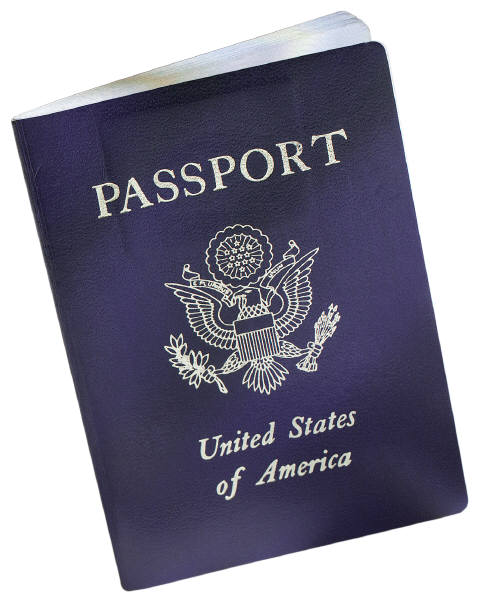
    I can go through this entire routine, including the shower, and be in a taxi on my way to the airport in an hour or less. I believe most expats have an equally impressive travel prep routine.  We never have to search for our passports and we always have some cash in a variety of currencies in the house.  If I ever need to flee a country, I’m confident I’ll make it out and still be well packed for any occasion, be it casual, formal or sporty.
  • Great Expectations

    Great Expectations

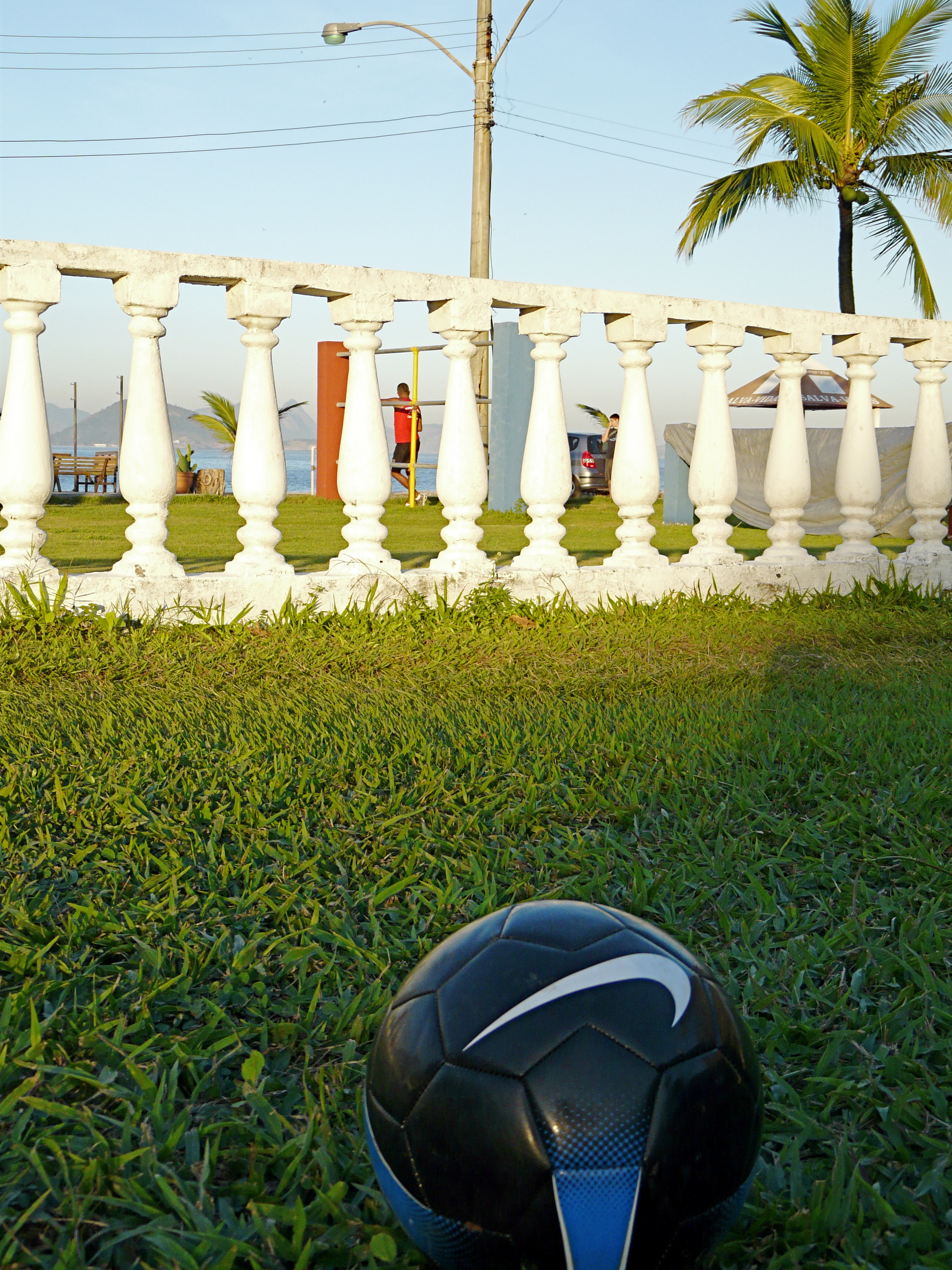
    The World Cup ended last Sunday when Spain finally, after 116 minutes of play, managed to score.  For me there was one important lesson to be learned from the Cup. If people expected the same level of performance from their governments as they do from their soccer teams, the world would be a better place.

    Last week, O Globo reported that 13 coaches had lost their jobs in the wake of unsatisfactory performances.  13 coaches out of 32 teams. Some resigned with their dignity intact but disappointed at having fallen short of their goal like Argentina’s Maradona.  Some, like Italy’s coach, resigned out of shame.  France’s coach resigned and then found himself the object of federal investigation led by the president and a mob of angry peasants with a guillotine.

    And some were fired.  No face saving letters of resignation.  Goodbye and good riddance. This was the fate of Dunga, the Brazilian coach who committed the unspeakable crime of focusing on defense and only getting Brazil to the top 8.  The general consensus in Brazil seems to be that Dunga single handedly killed the beautiful game Brazilians have always played and for what?  To make it only as far as the quarterfinals?

    I have been amazed at how swift and harsh the condemnation of Dunga has been here.  He did get Brazil to the final 8, right?  The top eight in the world is not a bad place to be.  Only 32 countries out of the entire world even make it to the Cup.  Just being there is a big deal isn’t it?

    Nope, not for Brazil, Cameroon, Greece, Argentina, Italy, Mexico, or South Africa.  None were satisfied with a top 32 finish and the coaches lost their jobs within days of their team’s elimination.

    Now, imagine all that energy, passion and sky-high expectations directed at government officials.  Moody’s downgrades your country’s credit rating?  The finance minister and chairman of the federal reserve immediately submit their resignation. Massive corruption is revealed in the police department?  All captains resign, every officer does community service and a national debate ensues over the “values” the police should embody. Unemployment over 20%?  The entire legislature has to issue a formal apology to the country, resigns and call for new elections.

    The human development index ranks the country 153 (cough, Cameroon, cough) out of 182 countries?  Then the president, prime minister, all cabinet officials, the head of every regulatory agency and the post master general all resign in disgrace.  The country is in an uproar and no one can talk about anything except these humiliating results. Every newspaper, radio, and television news programs is asking how this could happen and what can be done to prevent this kind of embarrassment in the future.

    Of course, this will never happen.  Soccer coaches answer to a higher authority.  Politicians would have to follow the example of Italy’s coach, accept full responsibility and resign of their own accord.  I can’t ever remember an elected official accepting full responsibility for failure.  And public outrage will never force them from office. Everyone is too busy watching soccer.

  • Hiking Pico da Bandeira

    Hiking Pico da Bandeira

    We’ve had a lot of holidays recently due to the World Cup.  Many Brazilian institutions have realized their employees are going to be watching the game regardless so they might as well get a holiday and do it watch at home.

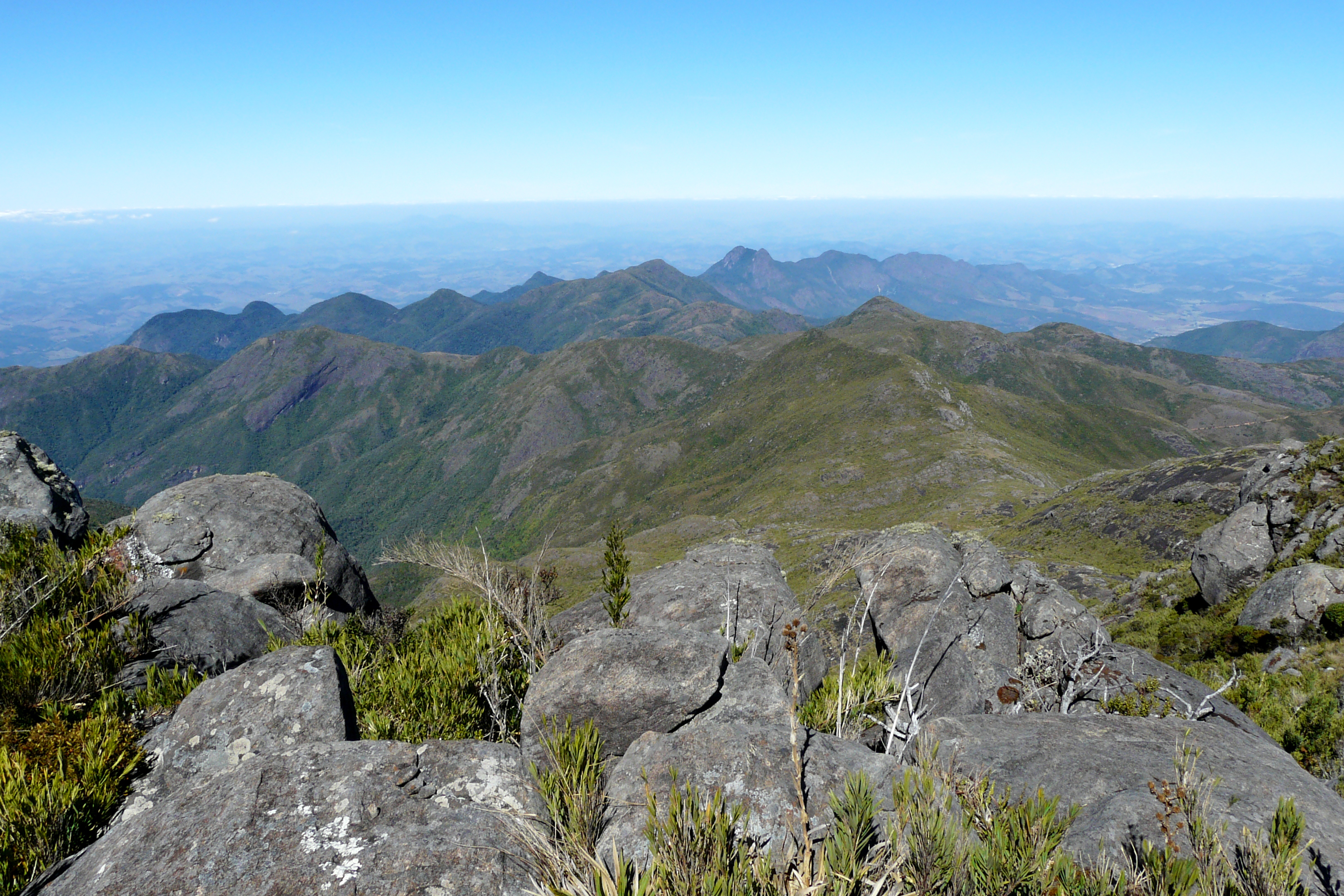
    My husband and I used one of these holidays to visit the Parque Nacional do Caparão.  The park sits right on the border of Espirito Santo and Minas Gerais.  If you think Brazil is nothing but beaches, then visit Caparão.  The lush forests, mountains and numerous waterfalls are evidence of how diverse the Brazilian landscape truly is.

    Now, I’m all for appreciating a nice waterfall, but I don’t jump at every opportunity to spend four hours hiking up a mountain.  I don’t remember ever saying “Oh yes sweetheart, I’d love to hike up Brazil’s third highest peak with you,” and yet that’s exactly what I wound doing at 8am last Tuesday.  My husband and I hiked 3.5km to Pico da Bandeira, the third highest peak in Brazil at 9,482ft.

    The peak can be reached from either the Espirito Santo or Minas side of the park.  We took the ES trail and while it is shorter it is also more difficult with a very sheer drop off right before the peak.  In fact, the trail gets so steep and the drop is so far, I did not feel comfortable coming over the summit in my old tennis shoes.  If one foot lost its grip, it would be a long way down.  I was also very cold at that point.  My executive decision was to turn back, get out of the wind, eat lunch, and get back down injury free.

    Not only did we avoid injury, but we also got some incredible views, great photos and a chance to have an entire mountain range to ourselves.  We didn’t see a single person the whole day.


  • I don’t think we’re in Rio anymore.

    I don’t think we’re in Rio anymore.

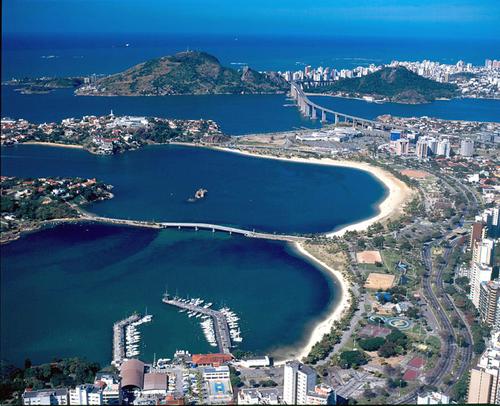
    Well, just when I’ve made it my personal goal to try every kind of snack food in Brazil, it looks as though our weekly road trips are coming to end.  Barring any changes of heart or collapse of the Federal government, my husband will be able to take a position in Vitoria starting in September.

    This means one apartment in one city and all our possessions in a single location.  Eventually.  Of course, we have to decide whether to sell or rent the apartment in Rio.  We’re going to rent an apartment in Vitoria as we get to know the city and decide where we would like to buy.  Some of our stuff will probably stay in Rio until we buy our apartment in Vitoria, because only masochists want to move all of their furniture twice in one year.

    But, eventually, at a now foreseeable date in the future, we and all of our stuff will be in one place.

    With this happy day in mind, my husband and I spent the weekend in Vitoria strolling around the neighborhood of Praia do Canto.  We wandered up and down the streets, taking note of the restaurants, shops, traffic, noise levels, and the many coffee shops.  My husband also literally noted down (always thinking, he had brought a notepad and pen from our hotel room) the address of apartments for sale that had the quiet street and netted balcony we are looking for.

    Praia do Canto is very, very promising.

    It wasn’t just tranquility and friendly cafes, that gave me hope of finding a home in Vitoria.  At one point, I realized I was walking around staring up at apartments without any consideration as to where I was putting my feet.  In Rio, if you take your eyes of the sidewalk for ten seconds you’ll probably be lost forever in a pot hole.  At the very least, you’ll have a sprained ankle.

    Not the case here in this tranquil, little hamlet of only 4 million people.  The sidewalks are almost entirely free of pot holes and garbage.  The city is new and the people calm.  Drivers stay in a single lane and use their blinkers when they want to move to a different one.  There was so little horn honking I wondered if the population was sedated.  When a car slowed down, came to a complete stop, and the driver waved at my husband and I to cross the street, I almost fainted in shock.

    I didn’t faint because I wanted to hurry up and get across the street in case this was some sort of trick.  Perhaps, the driver was going to floor it right when we hit the middle of road just to see us leap to safety.  But he didn’t.  He waited patiently, until we reached the sidewalk, and then slowly eased around the traffic circle.  I was amazed.

    After this series of events had happened a dozen more times and I realized coming to a stop for pedestrians was the rule as opposed to the exception, I knew this was the city for me.