Author: Brynn

  • Orientation Day in Brasilia

    Orientation Day in Brasilia

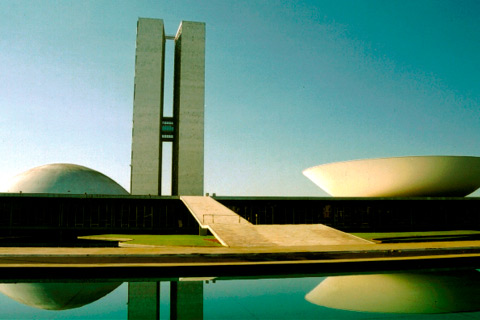
    Good morning and welcome to Brasilia! First, I’d like to congratulate all of you on winning your elections and having the honor of serving the Brazilian people. As a member of Congress you are the voice of Brazil!

    Yes, does the Deputy from Sao Paulo have a question?

    Uh, no we don’t usually open with a joke of the day. We…Yes, I know Brazilians love a good a joke but I meant you’re the voice of Brazil on political matters, not comedic ones.

    Right, as I was saying, as a member of Congress you find yourself facing new and great responsibilities. Today’s orientation will help familiarize you all with the administrative procedures of Congress so that you can more effectively serve your states.

    I’d like to start by discussing housing and transportation. I’m sure for many of you this is your first time in Brasilia. All of you will be assigned a car and driver, whom you will meet later this afternoon. He will be able to take you around…Yes, the Deputy from Sao Paulo?

    No, you don’t need to worry about affording the driver. Congress pays for it. It’s just something you get by being a member of Congress, like your office. Ok?

    So in terms of schedule, while Deputies and Senators do have slightly different schedules, Congress members are generally expected to be present Tuesday through Thursday. Sessions rarely start before lunch on Tuesday, they…Well, I can see Sao Paulo is going to be well represented. Your question Deputy?

    I’m sorry, I don’t understand. What work do you do the other four days? Well, that depends on your job…No, no. I mean your other job…Yes, of course being a member of Congress is a job but, unlike judges who are not allowed a second job due to potential conflicts of interest, many Deputies and Senators have jobs in addition to Congress they need to spend time on. That’s why Congress can only meet three days a week…You’re free to return home and attend to business there. Perhaps there is a child’s birthday party you need to attend.

    Speaking of traveling home, Congress will reimburse you for all your travel expenses. Will be going over the procedure to purchase plane tickets through the travel office this afternoon.

    You will need…Deputy?…Yes sir, if you would like to fly to the Amazon and see the monkeys it can be arranged. You will have three months of vacation when you can do all the sightseeing you want.

    I know some of you are wondering about finding accommodations here in Brasilia. Congress will provide housing to its members. For those of you who already own a home in Brasilia you may choose to receive your housing stipend in cash. The stipend is $R3,000 a month.

    We will of course be depositing all payments directly to your accounts and your staff will handle filing out the necessary paperwork. All 14 months of salary will be…

    Sir, there’s no reason to get angry. I don’t understand…No, I’m not making fun of you…Yes, there are 12 months in the year. I said 14 months because Congress pays 14 payments of your monthly salary…No Deputy, I’m not trying to trick you. Members of Congress get paid as if there were 14 months in the year. It’s a good thing sir. You should be happy.

    Did you know, Deputy, that members of Congress are also getting a raise this year?…Yes sir, every member of Congress will receive a 62% raise to fairly compensate all members for their hard work and dedication to their country.

    Sir, what’s so funny?…I’m sorry. From one professional to another that’s the best joke you’ve ever heard? I don’t understand. What joke is that?

    For those who don’t know the inspiration for my Sao Paulo Congressman character. A professional clown has been elected to Congress. He has passed all literacy tests to date and will begin serving in the House of Deputies come January.

  • Teaching Teachers Day 1

    Today was my very first day of teacher training as well as my first day of totally on the books employment in Brazil. It was also the first time I’ve had to be in a classroom at 8am since undergrad. (Yup, it still sucks.) 

    Thankfully, Brazilians are generous with the coffee and the snacks. The caffeine was needed because it was a full day of sitting and watching mock classes on American Literature. Remember American Literature? Probably not because you didn’t have Brazilian coffee to get through class.

    I left at 5pm with Ben Franklin’s aphorisms in my head and a song in my heart. I’m so excited to have a regular job working with some brilliant expats and Brazilians. (Will I make my first real Brazilian friend? Only time will tell.) Here are some of the lessons I took away from the first day.

    – Puritan writing is awesome, particularly “Sinners in the Hand of an Angry God” which I will be teaching to my future children at an early age but replacing God with Mommy.

    – Benjamin Franklin, the genius behind “A penny saved is a penny earned,” also invented the lightning rod which patriotic Americans hung flags on. The rod came before the flag.

    – If you want to laugh a lot gather a group of teachers. I’m pretty sure a sense of humor is the only thing keeping them sane.

    – I’m not a transcendentalist.

    – Every piece of literature taught in high school was originally written for adults. What would Poe think about his work being taught to 15 year-olds? And why didn’t I realize this while in the class as a student?

  • Navy v. Army: A Brazilian Rivalry

    Navy v. Army: A Brazilian Rivalry

    This week the naval school here in Vitoria celebrated it’s 50th birthday. They marked the occasion with a series of events culminating in the unveiling of two commemorative stamps by the post office.

    In case you were caught off guard by the birthday or the fact people still make commemorative stamps, don’t worry. There was a big enough turnout among the naval community in Vitoria to keep the Commandante happy. As a former naval officer my husband is part of this community and I joined him at the Marine corps concert. Despite the unfortunate artistic decision to include “Can You feel the Love Tonight,” which was neither appropriate following Carmen nor improved by the addition of bagpipes, the band was excellent.

    I’ve been to a few Naval events during my time in Brazil and it took me a while to realize my husband was in the military during a military dictatorship.

    When asked “So, being part of an all powerful military, what was that like?” he explained that A) by the time he was an officer the military was ceding power and the country only a few years away from becoming a Democracy, B) supply officers don’t go on power trips and C) the navy was not really in power during the dictatorship.

    Here’s a little Brazilian history. The army has rivalry with the navy that goes beyond an annual sporting event and the dictators of the 20th century came exclusively from the army.

    Brazil has the 16th longest coastline in the world, 4,650 miles, and has one of the most extensive river systems in the world. Given this geography, the navy, already an important part of Portuguese culture before their arrival in Brazil, continued to be crucial to the develop and defense of the country. Both the Portuguese royalty during the colonial period and the Brazilian aristocracy during the empire were closely tied to the navy.

    When the republic was declared in 1889, it was the army funded by rich but not royal coffee farmers that overthrew the emperor. A people’s army was not eager to share power with an aristocratic navy.

    It was your typical armed forces rivalry. “The aristocracy always loved you best.” “Because you’re an undisciplined mess who never touches up the paint on your bases,” etc.

    The tension came to a head just a few years into the republic, in 1893, after some bungled governance and a president who ignored the constitution. Several high ranking officers and admirals sent a letter to the president (such nice manners those naval officers) calling for the constitutionally mandated elections. The president’s response was to issue arrest warrants for every officer who signed the letter.

    Rather than go to jail, naval officers in Rio de Janeiro attempted a coup and for several days Rio was under siege as the navy exchanged fire with the army. The navy failed to garner popular support, possibly because many of its officers were believed to be sympathetic to the monarchy, and those involved were forced to flee south where they were captured in 1894.

    Thus a rivalry was born. Fortunately today, both branches work in support of the democratically elected government. There’s still a competitive edge between them but it only manifests during school fencing and judo tournaments. Or who’s been issued the most commemorative stamps.

  • Turkey & Tanks: Happy Thanksgiving from Rio!

    Turkey & Tanks: Happy Thanksgiving from Rio!

    One week ago today, I was sitting at the end of a beautifully laid table surrounded by good friends and equally good food. On my plate was a second helping of turkey and on the tv were images of tanks rolling through streets. Happy Thanksgiving from Rio de Janeiro!

    Most people, even in the US, have at this point heard that Rio was the scene of a violent showdown between drug gangs and police last week. Fortunately, the city has calmed since last Sunday when police and military invaded and secured one of the most violent slums in the city, Complexo Alemão.

    Despite questions and comments from friends in the US, I haven’t written about it because I don’t really understand my own reaction. My rational brain failing to sway my gut reaction. What finally prompted me to write something even if its contradictory and lacks a conclusion, was a facebook post by a family friend and Georgia state legislator that linked to coverage of the violence and asked “How did Rio get the Olympics?”

    Well, I can’t answer how Rio secured the Olympics although I suspect it has something to do with its fabulous location, vibrant sports-crazy population, huge federal support, and the fact South America was long overdue to host the Games. What I can say for certain is that no one needs to be afraid to come to Rio for the Games. Last week was the most violent week in recent Rio history and, to be perfectly honest, I never felt afraid.

    It was fluke that my husband and I were even in Rio when the violence broke out. We flew from Vitoria specifically to celebrate Thanksgiving with good friends. By the time we arrived in the city Wednesday afternoon gangs had been burning cars and buses around Rio for a couple of days.

    My husband and I spent Wednesday afternoon running errands, buying Christmas presents and visiting my in-laws. For dinner everyone, including my 1 year-old nephew, walked to the mall for pizza. The next morning someone came to look at our apartment, more errands and packing. It wasn’t until my husband and I went to the mall for lunch that I realized how bad things were.

    The tv in the food court was showing tanks in the streets of Rio. I had heard that gangs were burning buses and causing huge traffic jams but I never thought it was bad enough to call the military. From what I saw around me everyone was going about their day as usual. When my husband mentioned the bus burnings I asked, “Did they let the people off the bus before they burned it?” He told me they did and I promptly forgot about it. My only concern was getting caught in one of the resulting traffic jams.

    Should I have been afraid? I’ve been asking myself that question. I don’t think so. In a metropolitan area of over 10 million people the odds my husband and I would be in the car selected for burning were minuscule, made even smaller by the area of the city live in.

    In our neighborhood the streets were busy. The coconut water vendor was on the corner and the weekly vegetable market was set up like any Thursday. Taxis were lined up outside the mall and we grabbed one to head to our friend’s apartment for Thanksgiving dinner.

    Throughout the afternoon while prepping for dinner, our host had the tv on. Globo news replayed images of more than a hundred drug dealers fleeing through the bushes into another slum as the police moved in. Our host, a native of Rio, had a very clear opinion on how to deal with the gangs; bring in the helicopters and launch some missiles. In his opinion, the gangs were armed militias and they were waging war against the government.

    I was sitting next to him watching the same reports but I couldn’t muster the same anger. I saw a group of armed (yes, heavily) but often shirtless and shoeless young men and teenagers running from one neglected part of the city to another. The news was running shots of gang members burning tires. While my host called for missile strikes a voice in my head cried “Oh God, shirtless teenagers are burning tires! Quick call the marines!”

    I know those teens had guns. I know they were actively using them. Many people in Rio were justifiably afraid for their lives. Just not any of the people in the neighborhood where I was.

    I didn’t understand the ferocity and panic that some of the other dinner guests had. Their day had not ben impacted in any way by the violence. As for the chance of this “war” spreading to other areas…To my eyes the “war” was over before the second bus finished burning.

    The gangs had pistols and some automatic rifles. The police had bullet proof vests, pistols, rifles, scopes, years of training, overwhelming numbers, helicopters and did I mention the army was called in? This was the most one sided war in the history of military engagements.

    I’ve read back over this post and I’m aware of how bizarrely pro-drug dealer it sounds. Let me assure you, I think everyone of them should be arrested, sent to trial and then to jail on what is probably overwhelming evidence. They have broken the law, disrupted the entire city and started a gun battle that hurt many and even killed some. And yet…

    Images are powerful things. The image I remember most vividly from all of the news reports that Thursday was not the scene of a hundred armed men running from the police. It was of a group of armed and uniformed police officers dragging a shirtless, handcuffed teenager (he was 19 at the most) in front of reporters. One of the officers grabbed the teen’s chin and jerked his face up so all the cameras could see. The police displayed their human trophy and it made my stomach turn.

    I was the only one who saw that scene. We were having dinner but from my chair at the end of the table I could still see the tv. My reaction was physical. My stomach clenched and could feel my face flush. The crawl along the screen told me this was a captured drug dealer but all I saw was a half-naked kid being treated like a prized animal pelt by forces infinitely more powerful than he had ever been or could hope to be. It broke my heart.

    Of course I want the police to be able to defend themselves from people perfectly willing to use violence, but I expect the people society allows to carry weapons and use them to have respect for every human being. That is why they are the “good guys.” The good guys know that human life has value simply by being human. If you can treat someone like an animal without a second thought, in my book, you’re a bad guy.

    I don’t think that young drug dealer was born evil. His government failed him at every turn, health care, education, even basic sanitation. It’s certainly not an excuse given the thousands of people living in the slums who don’t turn to crime, but so many legitimate options were closed to him because of where he was born.

    It’s funny. I’ve been reading comment streams and blog posts about the violence. The majority seem to agree with my host. Kill the drug dealers. They’re the bad guys. I’m truly amazed by the fact I haven’t jumped on that band wagon. I’m no pacifist. I do moral outrage and righteous indignation really well.

    I’m sure it all it would take is for me to have a gun put in my face. It’s not been tested, but my compassion is probably only around when the weather is fair. I finally decided to stop trying to convince myself to hate them. A few people reminding everyone that even drug dealers are people who deserve a trial before being convicted is not a bad thing. Why would I want to talk myself into hating and fearing people anyway? If I can be aware of the situation and go on about my day, then yay for me.

    And you can go about your day in Rio too! That was the point of this entire post. The world doesn’t need to fear coming to Rio for the Olympics. I was in Rio during a week of violence and I still got all my Christmas shopping done. The chances of you being assaulted are minimal. You’re far more likely to get run over by a bus.

    So buy your tickets early! Beach volleyball is going to be right on Copacabana!
  • Getting the Brazilian Work Card: Gateway to Legal Employment

    Getting the Brazilian Work Card: Gateway to Legal Employment

    Well, it’s official. As of today, I’m legally employable.You might be thinking, didn’t that happen when you applied for residency? Well, not totally. A residency card alone is not enough for legal employment in Brazil. For that, you need a Work Card, or a Carteira de Trabalho.

    I’ve been eligible for a work card since I became a resident of Brazil but haven’t bothered to apply for one because I never signed an employment contract. (I was, uh, doing a lot of volunteer work in Rio.) Now that I’ve been hired as a regular teacher, it’s time to join the Brazilian labor force. As a responsible worker, I’ve been learning about the work card and all the rights it guarantees.

    The work card is issued to all people employed via contract in Brazil, which I’ve learned is not everyone. For example, my husband doesn’t have a work card because his job with the government is regulated by statutes. If you were the owner of a business you wouldn’t need a card but your employees would. The purpose of the work card is to prevent exploitation, particularly of low income and domestic workers. It’s something that happens all too frequently in Brazil.

    To be clear, the work card should not be confused with the Brazilian equivalent of a Social Security Number. That’s called a CPF and I already have one of those as well. (I’m just a driver’s license shy of collecting the whole Brazilian Bureaucracy series!)

    So, what rights am I entitled to with my carteira?

    I am guaranteed one month paid vacation, an additional “13 month” salary, and in the event of pregnancy 4 months of paid maternity leave. Oh, and the company is legally required to take me back after the maternity leave. Woohoo!

    Hand me a red shirt and tell me where the parade is because I’m all about the workers right here. Sure, these policies are crippling to small businesses. It’s certainly possible that requiring four months maternity leave might prevent businesses from ever a 20 something person with a functioning uterus. And why the hell is anyone guaranteed a right to something that doesn’t even exist, like a 13th month? I don’t know. And as the beneficiary of all these rights, I’m not going to start a debate on them.

    I’m just going to plan where I’ll spend my month paid vacation and my 13th month’s paycheck. Maybe I’ll fly to Brasilia and ask for an 8th day of the week I can get paid for.

    Marcar com estrela

    CompartilharCompartilhar com observação
  • Behind the Scenes at Garoto Candy Factory

    Behind the Scenes at Garoto Candy Factory

    It’s not been a good week for healthy or even reasonable eating. My multi-helping Thanksgiving dinner was followed by a birthday dinner that consisted solely of red wine, red meat, and chocolate petit gateau. Topping the decadence of a rare filet wrapped in presunto is difficult but if you want to try, I suggest visiting a chocolate factory.

    Today, we visited the Garoto Chocolate Factory, the fourth and final thing to do when visiting Vitoria. Garoto is the brand of chocolate here in Brazil and while technically owned by Nestle nowadays, Garoto chocolates are 100% Brazilian.

    A factory whirring and buzzing away is one of the purest examples of human ingenuity. I was frequently hypnotized by the rhythmic filling and flipping of candy trays to the point I became completely unaware the guide was speaking. The production line is amazing. Each machine is perfectly timed, measured, programmed, and maintained. Here’s the process for one single candy, the famous (to anyone who has spent a month in Brazil) Serenata de Amor.

    Serenatas are chocolate coated balls, with crispy wafer shells surrounding a hazel nut creme filling. They are the overwhelming favorite among Garotos candies.

    First on the conveyor belt are the shells in long sheets. The shells arrive on the conveyor concave. They are flipped on a ferris wheel contraption before passing through a humidifier. They are rehydrated by 5% and I would love to know how long it took to determine 5% provided the optimum crunch.

    After their trip through the sauna, the shells are filled. Tubes running across the ceiling, labeled “clear filling”, squirt the filling into each half shell before sending the sheets down the conveyor to be pressed together. The now complete balls, still together in sheets, roll through a refrigerator to cool the filling. Then they’re cut into individual balls of yumminess.

    Finally, it’s time for the chocolate.

    We followed the conveyor belt into another room and the smell alone was enough to satisfy any chocoholics craving for months. The shells pass first through a cascade of dark chocolate, are cooled and then are drenched in milk chocolate. They are sorted and distributed along the conveyor belt to four different wrapping machines. I have no idea how these machines work. Candy went in naked and came out with neatly twisted wrapper. It happened too fast for the human eye.

    Just how fast? Depending on the setting, the machine can wrap between 850 to 1200 pieces in a minute. And there are four of these machines wrapping 24 hours a day. In a single day this factory produces 3.5 tons of Serenata de Amors.

    Of course the tasting stations along the way were gluttonous and generous enough to put you off chocolate until Easter (which the factory is already producing for), but it was seeing the production, spinning and whirring, perfectly timed that I enjoyed the most. The engineering on display gives me faith in humanity. If we can build a sauna for 3.5 tons of candy, can a pill that increases your metabolism on holidays and candy factory visits be far off? That would be pretty sweet!

  • Expat Masochists

    Expat Masochists

    The word “expatriate” derives from the Medieval Latin expatriatus, which means to have left one’s own country. It was and, according to Webster’s, still is a synonym of banished.

    If you google the word expatriate you can find literally millions of proud expatriates. Personally, I wonder about a group of people so happy about banishment they ask for it and promote it via themed cookbooks. It just proves what I’ve always known. We expats have some masochistic tendencies.

    Ok, not all us. There are lots of expats who didn’t have a choice. I’m talking about those of us who volunteered for banishment. We applied for the job, or requested the assignment, or married the handsome foreigner. Knowing full well we’d be giving up unappreciated comforts like being able to count change by touch and recognizing the people featured on it. Many of us even gave up our voice by moving into a language we can’t speak.

    We tell people the rewards of the new job/marriage/opportunity-for-world-improvement will more than outweigh the costs of self-imposed banishment but the mere fact that we have a price at which we are willing to leave our home sets us apart from, I believe, the vast majority of people in the world.

    There are literally millions of people who would rather live in a tent for decades than give up their home and rebuild somewhere else. Certainly, relocating across the world requires resources many people don’t have but war torn and failing states are populated by successful professionals (I’m thinking of several personal friends here) who could find jobs in countries without an inflation rate over 1,000%. But they stay. Why? Because they are home. They will not give up their family, their culture, their home for any price.

    Whereas many expats look at the really lustrous hair this man could pass to his offspring (or the higher salary, whatever motivates you), weigh it against living in a country with street signs in a different alphabet, and our response is “Sign me up!” I’m willing to bet if polled, the general consensus of the world would be that we are some crazy mofos.

    And I think they’d be right. We’re not certifiable but part of us definitely wanted the hardship. We revel in the fact that our daily lives would reduce lesser people (or ourselves if we haven’t gotten enough sleep) to tears and pleasure in our own pain is the definition of masochism.

    Fortunately, it’s a growing pain. We know it won’t last forever and surviving it, building a life like the one we left behind, makes us worthier people. Worthy of what? Well, I’d accept revered silence whenever I speak during holiday meals with my family.

    After all, why did we struggle to build a life in a different culture if not to become wiser, more open-minded people with all the best stories? All the struggling had to be for something. I mean, I’m not a masochist.

  • O Convento Nossa Senhora da Penha

    O Convento Nossa Senhora da Penha

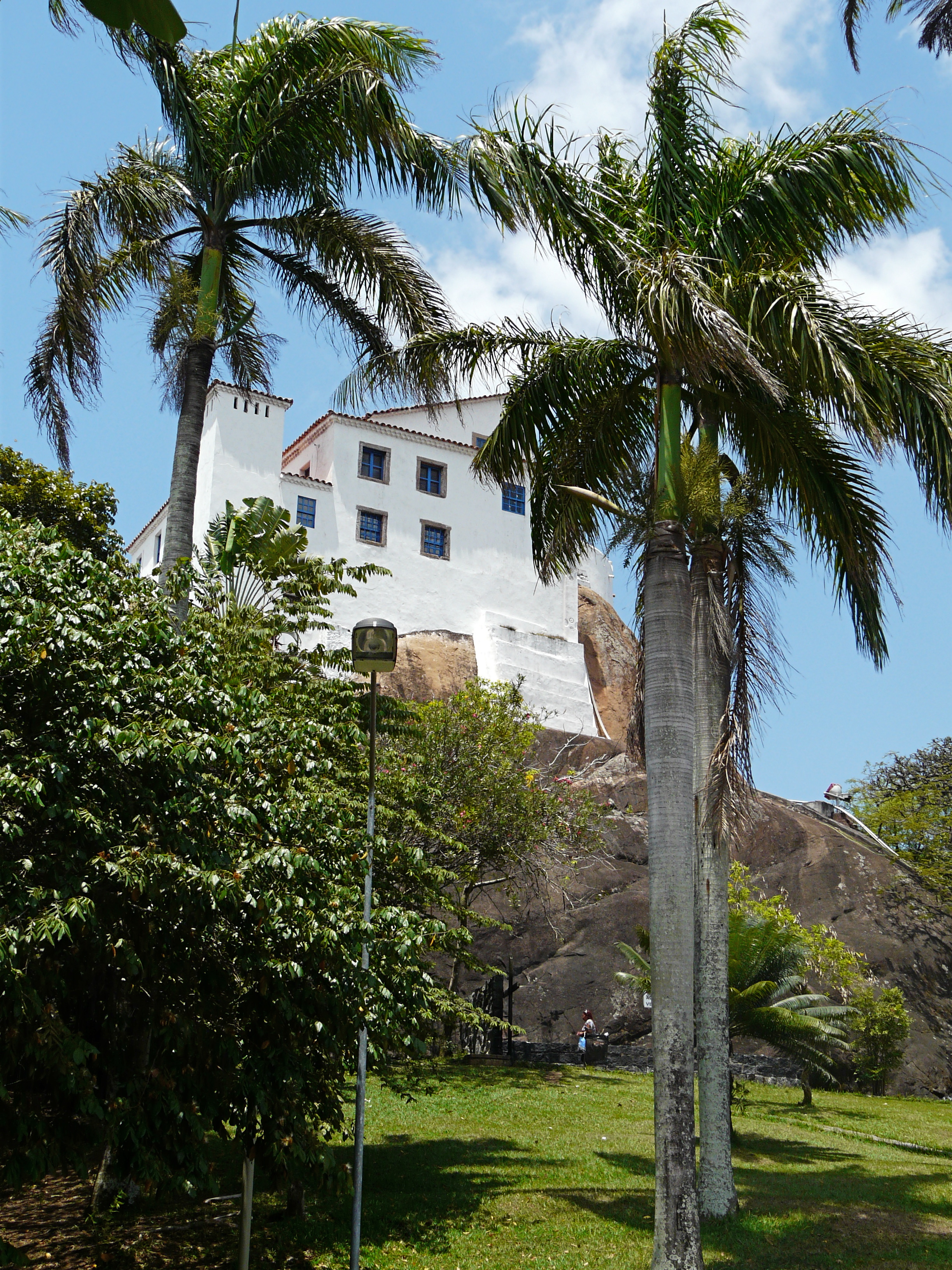
    I mentioned in a previous post the four attractions of Vitoria: 1) eating the regional fish stew more appetizingly called Moqueca, 2) visiting one of the beach towns just outside of the city, 3) visiting the 16th century Convento de Nossa Senhora da Penha and 4) visiting the Garoto Candy Factory.

    My husband and I recently did number three. We took a morning and wandered around what turned out to be a nun-free convent.

    The Convento da Penha is surprisingly not a convent at all. At least, when I heard “convent” I imagined a group of grumpy yet ultimately tender hearted women wearing black and all possessing phenomenal singing voices. I’m not Catholic but I saw the groundbreaking documentary Sound of Music and it’s contemporary follow-up Sister Act.

    Unfortunately, there are no nuns there today, nor have there ever been. The paintings of monks everywhere only confused me further. Clearly, “convento” has a different meaning in Portuguese.

    Because there was no soaring soprano, we had to be entertained by history and an interesting yet disturbing “Wall of Miracles.”

    The Wall of Miracles. People who have had their prayers answered by Nossa Senhora da Penha will post thank you messages on her wall. (No kids, Nossa Senhora is not on facebook. There’s an actual wall.)

    It’s a lovely concept that ends up being darn creepy. Many people have said thank you with pictures of the gaping wounds and mauled limbs that were saved. Or with locks of hair. Few things creep out like 30 year-old locks of hair. Gross!

    One of the older “thank you” walls, comfortingly free of human hair.

    The city of Vila Velha is just across the bridge from Vitoria. For those who know Rio, the relationship between Vitoria and Vila Velha is more like Zona Sul and Barra than Rio and Niteroi.

    People who live in Vila Velha talk about the low cost of an apartment by the beach and those in Vitoria say “Yeah, but you have to live in Vila Velha at least an hour away from anyplace you’d actually like to be.”

    Here’s one of the Convento’s original telephones they’ve successfully restored. There’s a fund accepting donations if you’d like to help with the restoration of the original snack bar.

    It’s worth visiting the Convento if only for the spectacular views of Vitoria and Vila Velha. My only complaint is that after spending an entire morning there, I still don’t know which Mary sighting Nossa Senhora da Penha refers to. Can anyone help me out here?

    Next stop on our tour of Vitoria, the Garoto Candy Factory tour! Our tour is scheduled for a week from Monday. We’ve been instructed to wear long pants and no jewelry. Sounds more hardcore than my tour of Hershey World.

  • Stove Top Terror

    Stove Top Terror

    I’ve never enjoyed cooking. It’s something I’ve been forced by hunger pangs and lack of sandwich bread to do from time to time. With the exception of freshly baked cookies and pies, I’ve never cooked anything so much more satisfying than a peanut butter and jelly sandwich that it justified the extra costs in both material and labor.

    Now, I live in Brazil. If cooking was merely uninteresting before, here it’s terrifying. It’s not the spiny vegetables and fruits or recipes using the metric system. It’s my stove. People here find it acceptable to have a kitchen appliance that combines both gas and an open flame.

    I can’t remember the first dish my husband and I cooked in Brazil, but I do remember the first time I was asked to light the stove.

    “Did you light the stove?” my husband asked.

    “Sure, I turned the burner on,” I replied.

    “Did you light it?”

    “What do you mean ‘light it’?”

    “Did you light the burner? With the spark button?”

    “Spark button? What the heck’s a spark button?”

    “You turned it on and didn’t light it?!” My husband is frantically turning knobs and opening windows. “You’re letting gas pour into the kitchen! You have to turn the knob and then hold the spark button to light the burner.”

    “When you say ‘light’ you’re talking about an actual flame?” I asked with my mouth hanging open.

    Against my better judgement, I did master the simple trick of opening the gas flow and holding a button to cause sparks in front of the opening. Every time the spark button went click, click, click, I thought about what a quaint, yet potentially lethal, contraption this gaseous machine is.

    In retrospect, I was not fully appreciative of the huge technological leap that is the spark button.

    My husband and I are currently split between two apartments. Rather than purchase new appliances, we hauled a variety of pieces out of retirement including a stove which I can only assume Benjamin Franklin designed. In order to use the stove, I’m required to strike a match and hold it to the gas opening. My fear of the stove is second only to my fear of lighting matches.

    Every time I boil water I picture a massive explosion. In my head the blast rivals Hiroshima.

    Here’s how I begin every cooking attempt:

    Before using the stove, I get everything set. I double check the burner and its corresponding knob. I turn the gas on. Then I try to strike the match as quickly as possible. I hesitate on the first two strikes and they’re not hard enough to light. The third strike is too hard; the match breaks in half sending it’s lit head to the floor. I frantically and thoroughly stomp on the match. At this point, I realize the gas has been flowing for a few seconds. I imagine the mushroom cloud and turn the gas off. I’ll wait 20 minutes before starting all over.

    My husband says stoves without flames are available for purchase in Brazil. All I have to do is say the word and we’ll go get one. But then, what excuse will I have to avoid cooking?