Tag: Baby in Brazil

  • Dengue, Zika, Chikungunya, & Yellow Fever

    Dengue, Zika, Chikungunya, & Yellow Fever

    This is public enemy #1!
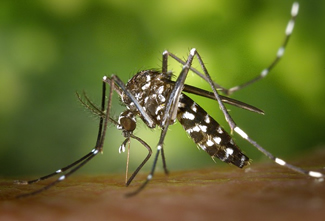
    Aedes aegypti. Know it and squish it!

    There are over 3,000 species of mosquitoes. A fact I think proves there’s no benevolent deity.

    This post is a run down of the basic info on the common mosquito born diseases in Brazil: dengue, zika, chikungunya, and yellow fever. It’s essential information if you’re visiting.

    Because the mosquitoes are winning.

    Last year in the wake of zika and the microcephaly epidemic in Brazil, the federal government mobilized troops to patrol for standing water basically declaring war against mosquitoes. The yellow fever outbreak this year is evidence of how well that went in the long term.

    So here’s everything you didn’t want to need to know about mosquito born illnesses in Brazil.

    DENGUE: Let’s start with dengue because it kills the most people every year. I know zika is the Kim Kardashian of the bunch, hogging all the media attention, but dengue is most likely to put you in the hospital. There were roughly 1.5 million registered cases of dengue in Brazil last year and of those 629 died. The severity depends on which of the four strains of the virus you get. The worst causes hemorrhaging, but most people just get incapacitating joint pain and high fever.

    Dengue is usually transmitted through the bite of an infected mosquito, but it can be passed from mother to fetus. The disease is asymptomatic in 40-80% of cases. The incubation ranges from 3 to 14 days.

    Symptoms

    • Sudden high fever
    • Severe headache
    • Severe joint pain
    • Moderate joint pain
    • Severe pain behind the eyes (basically your body will hurt a lot)
    • A skin rash that appears post fever
    • Fatigue
    • Nausea
    • Itching

    The Severe Case Symptoms (everything above plus…)

    • Bleeding from the nose and gums
    • Abdominal pain
    • Vomiting
    • Hypotension
    • Dizziness
    • Breathing difficulty

    In rare cases, sometimes after a second infection, a person can develop dengue hemorrhagic fever which leads to shock and death in 24 hours. Yeah, dengue totally sucks.

    There’s no vaccine. There’s no drug treatment. The only thing to do with dengue is treat the symptoms and be sure not use any aspirin because it increases the risk of hemorrhaging.

    Yeah, they’re all cute and cuddly until one drops dead of yellow fever.

    ZIKA: If you’ve been to Brazil in the last year and sneezed, you might have had zika. Or maybe you didn’t sneeze. You still might have had zika. Most cases are asymptomatic, about 80%.

    Of the most common mosquito borne diseases, zika results in the fewest hospital cases. In 2016 there were 214,193 cases of Zika in Brazil and 3 deaths. The global panic over zika is because of it’s link to microcephaly, a condition that babies develop in utero which prevents the brain and skull from developing normally.

    And let’s be clear. There IS scientific consensus that the zika virus is one of the causes of microcephaly. I believe in the CDC, WHO, and peer reviewed scientific journals. Conspiracy theorists can save themselves time and not bother commenting about genetically altered mosquitos. I will just delete them.

    The fact the disease is asymptomatic in the majority of cases makes it particularly scary for women who are or may become pregnant. It’s possible to have zika and never know until the baby develops complications. Even if you develop symptoms, they’re usually mild.

    Symptoms

    • low grade fever
    • headache
    • skin rash starting on the face and spreading over the body
    • red eyes
    • itching
    • fatigue
    • sore joints

    Less Common Symptoms

    • Muscle pain
    • Swelling
    • Sore throat
    • Vomiting or diarrhea
    • Swelling

    So now pregnant women all over Brazil can worry that their swollen legs and exhaustion is actually zika. Because there wasn’t enough for expectant parents to worry about. Fucking mosquitos.

    There’s no vaccine.

    CHIKUNGUNYA: Unlike zika and dengue, if you get chikungunya, you’ll know. 70% of cases develop symptoms. At least you don’t have to wonder whether or not you need a doctor.

    Last year there were 265,554 cases of chikungunya resulting in 159 deaths, so worse than zika but not as prevalent as dengue.

    Symptoms

    • Sudden onset of high fever
    • Severe joint pain mostly in feet, ankles, hands, wrists

    About the joint pain, almost every case has it and in rare cases it becomes chronic.

    Less Common Symptoms

    • Intense back pain
    • Headache
    • Muscle pain
    • Vomiting
    • Conjunctivitis
    • Fatigue
    • Photophobia
    • Sore throat

    Basically everything hurts like hell.

    Like the others, there’s no vaccine for chikungunya and no treatment beyond treating the symptoms.

    CDC’s risk area for yellow fever in South America

    YELLOW FEVER: The CDC’s website has a map of areas where yellow fever vaccines are recommended. The risk area for Brazil extends just up to the border of our state. So far this year 31 people have died from yellow fever in Esparto Santo. Dear CDC, you need to update your map.

    Yellow fever is typically passed via an infected monkey to mosquito to human, so areas without dense forests were considered safe. The incubation period is 3 to 6 days but most cases are asymptomatic.

    Symptoms

    • Sudden high fever
    • Severe headache
    • Back pain
    • Muscle pain
    • Nausea & vomiting
    • Fatigue
    • Weakness

    After a brief remission, 15% of cases will develop a severe form of the disease.

    Symptoms of Severe Form

    • High fever
    • Jaundice (hence the name)
    • Bleeding
    • Shock
    • Organ Failure

    Of cases that turn severe 20-50% die.

    We got our yellow fever vaccines!

    But good news! There’s a vaccine! Two doses taken ten years apart provide lifetime immunity. Yay science! If you’re thinking about visiting Brazil this year, double check to see if your hotel is located within one of the new expanded risk area. Be sure to use a Brazilian site. Remember, the CDC’s map is out of date.

    Vaccines are being developed for the other three. Several companies will have zika vaccines ready for clinical trials by the end of the year. Late stage clinical trials of dengue vaccines are already underway, and researchers have reported success with initial clinical trials for chikungunya vaccines. Unfortunately, we’re still years away from these vaccines being available to the public.

    In the meantime, don’t cancel your vacation. Just be prepared. Get a yellow fever vaccine. Pack repellent. Sleep with your windows closed and fan on. And for god’s sake, if you see a mosquito, kill it!

  • Knocked Up Abroad Again is Now Available!

    Knocked Up Abroad Again is Now Available!

    creativity-is-intelligence-having-fun-2I’m thrilled to announce that after a successful Kickstarter campaign Knocked Up Abroad Again is available for purchase on Amazon!
    Hip, hip, hooray! Hip, hip…Dear god, I’m never doing another Kickstarter campaign again. I wasn’t even in charge of the thing. Our editor put in a billion more hours organizing and promoting the thing, but I still felt like a used car salesman begging people to donate their hard earned money and time on my words. Who am I kidding? How am I ever going to promote and sell my own books if I can’t promote a collaborative work on Kickstarter on my Facebook? Even if I get published I’m never going to sell a single book. Never! My promotional posts will read “If you don’t mind and happen to enjoy this particular type of book and maybe have ten extra dollars to spare I would greatly appreciate it if you wouldn’t mind buying my book and if you really, really liked it then perhaps tell a friend about it. If you have the time and it won’t be a huge inconvenience. That would be really great. Thanks so much. (And if you’re not into YA or not a huge reader I totally understand. No hard feelings.)” I’m never going to sell a single book. But how can I be an author if can’t ask people to buy my book? Aaaaaagh!

    Sorry about that. I got off track. What was I saying? Oh right, Knocked Up Abroad Again has been successfully funded and is now available for purchase on Amazon! It’s the perfect gift for expectant parents, travelers, and expectant travelers in your life. If you want. I don’t want to insist. Pretty please. But only if you like this sort of thing.

    In all seriousness, thank you to everyone who donated to the project, and I hope you enjoy the book!

    Save

    Save

    Save

  • 28 Days in a Brazilian NICU: The Mom Milking Room

    28 Days in a Brazilian NICU: The Mom Milking Room

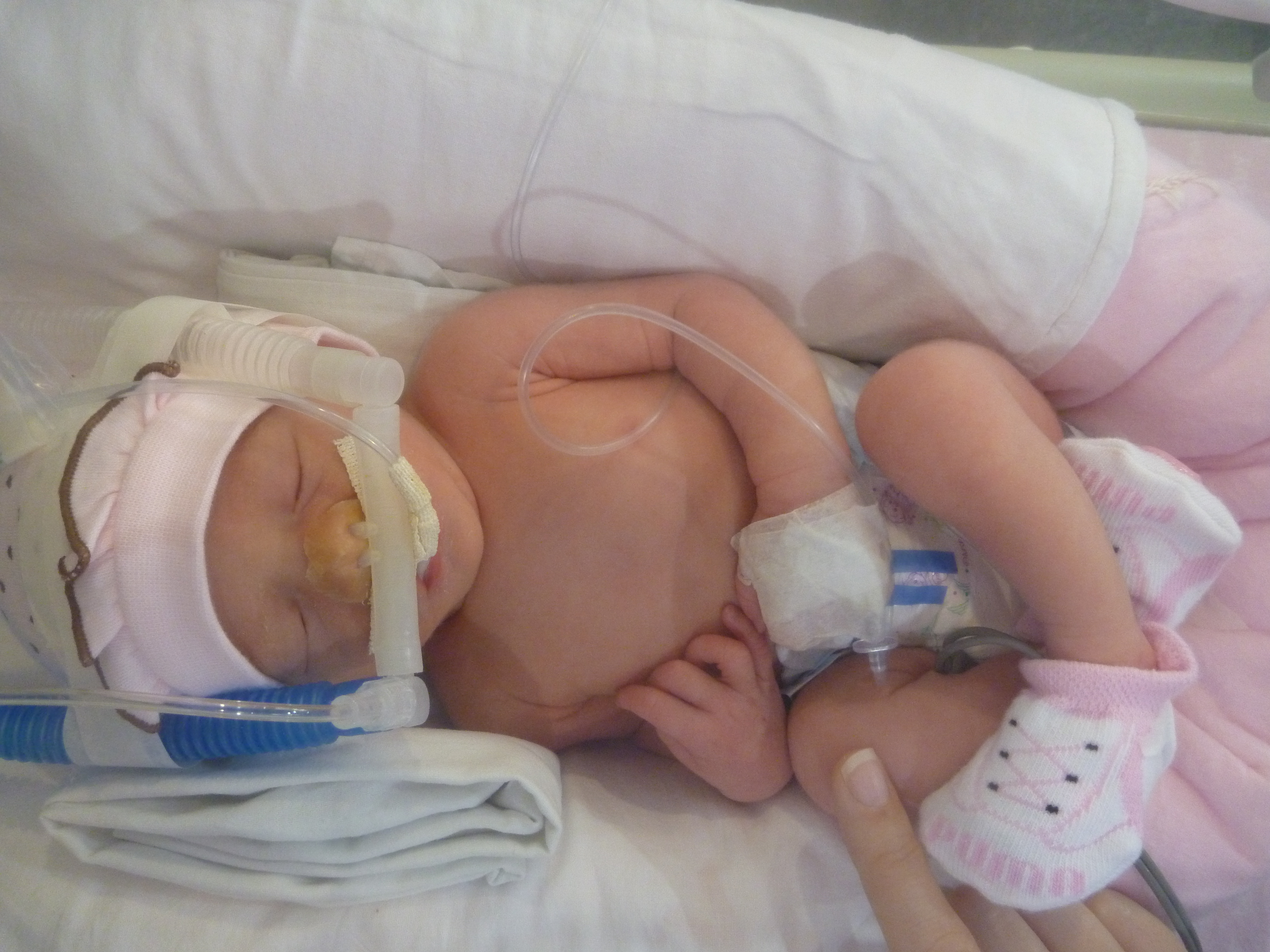
    Day 2 of 28 in the NICU at Vitoria Apart Hospital in Brazil.
    Day 2 of 28 in the NICU at Vitoria Apart Hospital in Brazil.

    My daughter was born seven weeks early due to placental abruption.  That was a new term for me, placental abruption. Another one was UTIN.  That’s the acronym in Portuguese for Neonatal Intensive Care Unit (NICU).  It was one of the many Portuguese medical terms I learned after my daughter spent 28 days in a NICU in Brazil.  In the moment, each day felt like a lifetime. I was sure every minute of all 28 days had been seared into my memory.

    But they weren’t.

    My daughter just turned four, and I’m shocked to realize how much of a blur those weeks have become.  Most of the exact numbers are gone.  How many days was she on a ventilator?  When did she get above 2kg?  Of the many people who cared for my daughter, all but one of the names has been erased.  Now they’re the doctor with red glasses and the physiotherapist who spoke some English.  I suspect these details will disappear too.

    What has not faded in any detail, much to my dismay, is my memory of the milking room.  This was the place they sent the new moms to strip them dignity.  It was the room for hand expressing breast milk.

    Many preemies are born too small to breastfeed and are fed through a tube and syringe.  How do you get these babies breast milk?  The obvious answer is pump it, store it, and serve it.  Except the NICU did not allow breast pumps of any kind.  The hospital said it could not guarantee that an individual mom’s pump would be sterile, so they could not give the milk from from a potentially unsterile source to the baby.  The only way for a baby in the NICU at Vitoria Apart Hospital to get breast milk, other than on tap, was to hand express it.  This is as awful as it sounds.

    At least for me.  I am not particularly in touch with my body.  I’m more cerebral and would be quite content to be a floating brain in space except for the facts I do like going for walks and eating french fries.  I’m aware that my conscious self is housed in an organic Tupperware container that impacts how I feel, think, am, but I don’t dwell on it.  At least not until I get a stomach virus.  Or until I have to breastfeed a baby.

    And I was going to breastfeed.  I had done my research.  Despite my lack of emotional connection to my mammary glands, I was totally committed to breastfeeding.  I did not, however, anticipate having to milk myself like a cow.

    That’s what it is.  Hand expressing means squeezing out the milk by hand into a container.

    Despite that daunting psychological hurdle, I told the nurses I still wanted to breastfeed, so one of them led me out the backdoor of the NICU, down a hall, through an unmarked door, and into an unused storage closet.  Based on the size and lack of any comforts except three chairs, I assume storage closet was the original purpose of the room.  White walls, tile floor, no windows, and freezing cold.  This was the room I shuffled to, fresh from an emergency c-section, so that I could hand squeeze milk from my boobs.

    As I stood there shivering in my hospital gown, the nurse quickly went through the officially sanctioned routine that guaranteed milk I expressed in that closet would be more sanitary than what I could get from a pump: wash hands, don hairnet and face mask, remove the plastic cups from the packaging and take the lids off, wash hands again, wash nipples with gauze, squeeze milk into cup and seal the cup immediately when full.  Fortunately, she demonstrated the whole process because to this day I don’t know the Portuguese word for gauze or hairnet.

    Then she left.  No medical professional stayed in that closet with the moms.

    Want to guess how many of the moms expressing themselves actually followed that routine when left on their own?

    I know because it turned out to be a communal milking closet, and the answer is none that I saw.  The next time I went to the closet, two other women were already there happily chatting away, masks down over their chins.  I distinctly remember these two women because they were friendly, completely comfortable being half-naked in front of strangers, and filling up cup after cup with milk like a competition at a state fair.  I was none of those things.  I struggled to fill half a cup when alone.  Trying to hand-express milk in a freezer while confronting small talk in Portuguese and the four largest breasts I’ve ever seen in person was literally impossible.

    I got almost no milk out during that session or any other.  I subjected myself to breastfeeding purgatory every three hours for four days before finally saying “Enough.”  I believe breast milk is ideal.  I don’t believe it is worth torture.  I restarted breastfeeding only after my daughter was big enough to handle it herself.  Hand-expressing in that closet was one of the worst experiences of my life.  And I sat through the Sponge Bob movie.

    If I’d had any reserve of energy I would have been outraged.  I was being denied a breast pump on the grounds it wasn’t sterile, but there was nothing sterile about that room.  They sent a bunch of not-medically-trained women down the hall with instructions to wash their hands and wear a mask. I don’t believe a single doctor actually thought the milk coming out of that closet was sterile.  They know they’re in Brazil where actual laws are treated as suggestions.

    But I didn’t have the capacity for outrage then and I don’t care to feel it now.  True, an electric pump and a private space would have made a huge difference, but we all survived and someday the sound of someone else’s breastmilk squirting into a plastic cup will fade from memory.  In the meantime, I’ll milk it for the entertaining story it is.

    11ghkra

    Save

  • Dear Brazil: Pay Your Nannies a Living Wage!

    Dear Brazil: Pay Your Nannies a Living Wage!

    Seriously Brazil, it's 2015. Pay your help a living wage.
    Seriously Brazil, it’s 2015. Pay your help a living wage.

    Dear reader, if you’re not in the mood for a rant, check back next week.

    It all started when I received an early morning WhatsApp message from a fellow mom asking the group about rates for a substitute nanny while the permanent nanny is on vacation.

    A little cultural context. Here in Brazil full-time nannies are common. This was surreal for me coming from the United States. In the U.S. full-time nannies are something only the Jolie-Pitt or Kardashian families can afford.  I remember a combination of church daycares and grandparents after school and over the summers while my parents worked.  Personally, I’ve never known anyone in the U.S. with a full-time nanny.

    In Brazil, almost everyone I know has a full-time maid and many have a full-time nanny too.  Often if the family has kids but can’t afford two employees, the maid will have childcare duties in addition to the housekeeping, grocery shopping, and cooking.  Several of our friends also employ a weekend nanny because labor laws in Brazil don’t allow families to demand ask their nanny to work 7 days a week. It’s like Downton Abbey in flip-flops with more beer and better weather.

    How can these middle class and professional families afford full time nannies and housekeepers in the year 2015? Minimum wage in Brazil for 2015 is $250 a month. (I’m using today’s exchange rate of 1 U.S. dollar to 3.15 Brazilian reais to put all values into US dollars.) U.S. federal minimum wage is $7.25 per hour, so assuming four 40-hour-weeks a month, the U.S. federal minimum wage per month is $1,160.

    $1,160 versus $250 a month.

    Now, a lower minimum wage doesn’t necessarily indicate a lower quality of life.

    Maybe the cost of living is significantly lower in Brazil than the US? Maybe goods are less expensive? They’re not. The only things cheap in Brazil are coconuts and people, and even the coconuts are experiencing inflation.

    Maybe there are a variety of free/very low-cost public services in Brazil? There aren’t.  Public services from school to health care are abysmal.  Everyone who can scrape together the cost goes private, and a full-time nanny at minimum wage is significantly cheaper than private day cares here in Vitoria.

    But there’s no way people pay nannies minimum wage, right? In practice people are paying more than the legal minimum, aren’t they?

    This brings us back to this morning’s Whatsapp conversation among local moms.

    A mom wanted to know what other people had paid for someone to fill-in as a nanny for a month.  The values reported ranged from $254 to $476 for the month.  For two children.  For the entire day, Monday through Friday.

    But these shockingly low values are not what drove me to clutch at my hair and mutter obscenities at my computer.  Nor was I upset that a family of four is looking for the highest quality childcare at the lowest possible cost.

    I got upset after I sent a message saying that our kids’ pregnant preschool teacher was at the doctor again due to pain from her sciatic nerve.  I commented about how what she really needed as a present was a housekeeper.  My message got no response.  The conversation continued about nannies until finally the original poster asked, “Did your nannies just take care of the kids or did they also clean their rooms and do laundry?”  This sparked the rant.

    Dear Brazilian Middle and Upper Classes, nannies are people!  Housekeepers are people!  Preschool teachers and assistants are people!

    There are so many wonderful things about Brazilian culture, like the attitude toward children, the judicial selection process, and dental hygiene.  But the way upper classes treat people in the working class is NOT one of those things.  I’m so tired of listening to good, ethical people, friends, colleagues and parents I respect, refer to their nannies or maids as “them”.  I’ve heard complaints about how much the maid eats, stories about getting older kids to spy on the maid and report back, and indignation about a nanny who went and got married.  The underlying message is that “we” must be vigilant against “them” or they will use up our sugar and make a lot of long distance phone calls.

    When I saw the movie The Help, I thought, “Wow, that’s like present day Brazil”.  That’s what I see here.  Upper-classes in Brazil often deny the basic humanity of the people working in their homes.  (And to Brazilians who protest that Brazil doesn’t have The Help‘s racial component, I recommend a walk around Ipanema in the afternoon or a visit to a private daycare in Vitoria. Look at the color of the kids and look at the color of the people holding their hands.)

    I believe for most people it’s unconscious.  It’s how their own parents and everyone in their circle has always talked about nannies and housekeepers and drivers.  They’ve internalized this division, don’t see anything wrong with it, and haven’t been challenged on it.

    I’m not against paying for a housekeeper. We employ one. I’m not against paying for a nanny.  I believe affordable child care is a HUGE barrier keeping women from advancing in the workforce in the U.S. and Brazil. I’m writing this while my kid is at daycare. Many of the mom’s I know are amazing professionals, and it’s only possible because they can find childcare be it a daycare or nanny. Many moms want to work. Many moms HAVE to work. Quality childcare is a necessity.

    I’m against a system that keeps people from empathizing. That makes it “us” versus “them”. That causes a really nice person to ask the woman she’s paying almost minimum wage to watch her kids if she could also do the laundry.

    What about the kids of the people we pay to watch our kids?  Who watches them if we pay their moms $300 a month?  Is it ethical to ask a woman willing to assume the enormous task of keeping two small children alive for only $350/month to also do the laundry?  Is this woman really in a position to say “no”?  Are we going to be annoyed if she does?  If we’re paying minimal costs, why do we expect top-quality service and undying loyalty?

    Beyond respecting and talking to each other as people as opposed to being constantly on guard against the machinations of “those” others who want to exploit us…I have an idea for improving things for the moms, maids, and childcare workers.

    Everyone gets rid of their housekeeper.

    We take the money we were paying to housekeepers and put it toward childcare, either by increasing the wage of the nanny or increasing the salary of daycare and preschool teachers.  The former housekeepers come together and start cleaning-service businesses.  Their former employers, now clients, hire the company for once or twice a week, and now the preschool teachers and nannies may even be able to afford the housekeepers’ services with their increases in salary. The former housekeepers can also find employment at all the new public daycares the government will open in my utopia.

    And what about all the cooking and laundry and grocery shopping left in the wake of the maids?  Well, I think it’s time for Brazilian men to stop watching soccer and do some freakin’ laundry.

    How does that sound?

    Save

    Save

  • Brazil: Children Allowed

    Brazil: Children Allowed

    Brazil! Where children are always welcome!
    Brazil! Where children are always welcome!

    As an American, I know that taking a child to any restaurant that doesn’t have it’s menu posted on a wall and ordering her juice while she plays on your phone will get you nasty looks at the least and reported to child services at worst.  The US can be a harsh culture in which to go about the day to day activities of parenting.  I didn’t know how harsh until I moved to Brazil, and my eyes were opened.

    Brazilians are gaga for children!

    Women and men, old and young, Brazilians adore kids.  Brazil makes the US seem like one giant lawn its crotchety citizens don’t want children stepping on.

    I first noticed this difference during a staff lunch at a chic restaurant in Rio. My boss brought her newborn to this very crowded restaurant at peak lunch hour.  Exactly one table was available and it was on the opposite of the restaurant.  There was a sea of people in expensive clothes and tables covered in glassware between us and that table.  When my boss indicated to the staff that we would be claiming that table, I cringed.  My stomach clenched at the idea of getting through this fancy crowd with a baby and stroller.

    That’s the appropriate response, right?  Obviously, a parent should feel ill at the thought of briefly disturbing other people’s lunches on the way to her own table.  Ha. How American of me.  Two waiters swooped in, all smiles, lifted the stroller up over their heads, and carried that baby like royalty across the entire dining room.  Not a single dirty look.

    Brazilians have this bizarre assumption that babies and children are a staple part of everyday life.  If there are people around, there will be young people and these young people will cry, complain, spill things, talk too loudly, and generally not behave like adults.  That’s life.  How else is it supposed to continue?

    People here also acknowledge kids.  They talk to them and include kids as if they were a part of society.  Strangers smile and say hello to my daughter on our walks to school.  Waiters greet her at restaurants.  When she cries in public, people stop and ask her what’s wrong. During a melt down, I’m not worried the stranger approaching is about to helpfully inform me my child is being disruptive or offer some  judgement in the form of unsolicited advice.  That stranger approaching doesn’t want to talk to me at all.  She’s going to console my daughter.

    At playgrounds, parents help each others’ kids on and off equipment.  They freely offer snacks they’ve brought to every child in earshot.  They let other kids run off with their own child’s toy confident it will be returned. Playgrounds in Brazil initially felt to me like loud, sandy communist communes.  It was a long time before I stopped apologizing profusely every time my daughter touched another kid’s toy and fearing the wrath of another parent because I offered her child gluten.

    If you do bring your baby to Brazil, be prepared. Brazilians love children, and Brazilians are touchy people.  I mean literally touchy.  They touch other people a lot.  A random passersby will want to touch, stroke, kiss, and even hold your baby.  One of my daughter’s nurses at the NICU here in Vitoria admitted this was a particular blind spot for Brazilians.  Knowledge of germ theory cannot curb their enthusiasm for babies. I dealt with it by reminding myself I’d rather have a request to hold my baby than a request to remove it from the premises.

    This habit of baby fawning is not limited to any age, gender, or class.  A trainer at my gym once brought his newborn into the weight room and a half dozen of the burliest men were reduced to cooing and clucking incoherently.  The school where I taught had preschool through high school, and everyday as the toddlers left the nap room, a crowd of teenagers gathered to squeal and exclaim over the adorably rumpled munchkins.

    And of course there are the old ladies.  Women over the age 70 must develop a sixth sense to detect babies.  I’d be sitting at the cafe, waving a rattle in my daughter’s face, and suddenly an 85 year old woman materialized out of thin air to stroke my daughter’s hair and to tell me my baby is cold.

    This is the one sin a parent cannot commit in Brazil.  You can leave the TV on 24 hours day.  You can feed your kid white rice and french fries at every lunch.  But do NOT let your baby get cold!!!  If there is a breeze and your baby is not covered with a blanket, every person will stop and tell you your baby is cold.  Every. Single. Person.  As someone who does not think 65 F requires gloves at any age, I heard it pretty much everyday of my child’s infancy.

    The love for and acceptance of children as part of daily life are two of the things I love best about Brazil, and for now, I’m perfectly content to raise my tantrum prone daughter here so as not to disturb my fellow Americans’ lattes.

    Save

  • Children’s Parties: Brazilian Edition

    Children’s Parties: Brazilian Edition

    What are they going to do for the 2nd birthday?

    We can learn a lot about our own culture by having to explain it to outsiders.  What specifically outsiders want an explanation for is telling and then having to explain why can lead to great enlightenment.

    For example, as an American I have fielded quite a few questions about guns.  I’ve learned that to the rest of the world our obsession with firearms makes us look like batshit crazy people hellbent on our own destruction.  Also, no American expat has ever convinced another person that a civilian needs a grenade launcher to potentially fight off a government that has missile launching drones.

    Of course every culture has its idiosyncracies.  Americans must account for a love of lethal weapons, and I’d like to ask my Brazilian family and friends to explain the Brazilian child’s birthday party.

    (This is a totally legit transition.  An American gun range and a Brazilian child’s first birthday are, for me, equally intimidating environments.)

    This past weekend, we attended the birthday party of my daughter’s classmate.  My husband, daughter, and I all stayed the duration, from 5pm to 9pm on Sunday night.  There were about 60 people in attendance.  The three tables of decorated sweets and cakes on display throughout the event were perfectly arranged.  The personalized favors were lovely.  The party space had a climbing wall, a bungee-trampoline thing, a three-story playground, a rope walk suspended above everyone’s head, and a ball pit.  The trays of fingers foods, soda, and beer swept by with impressive frequency.  The boy was turning three.

    To be fair not every Brazilian family does this and many cannot afford to do this, but the party I have described is typical of middle class families.  It’s not something worthy of a reality TV show.  It’s completely mainstream.

    I have been to a few 1st birthday parties and they all had more guests than my wedding.  I understand that Brazilian families tend be large and stay in the same city where they were born.  It is very likely the birthday girl has ten cousins living close by. Ok. I understand that at a young age, it’s appropriate to give an invitation to everyone in the preschool class.  I’m totally on board.  But why their parents? Why do I have to feed 15 of my kid’s classmates, plus their moms, dads, and siblings?  My child doesn’t know little Rodrigo’s grandma. And why your boss and work colleagues your kid has never met?

    My nephew’s first birthday had around 100 people.  He spent almost the entire party hanging out with his grandpa in the car.  The poor kid burst into tears every time he got carried toward the commotion.

    I question the value of of a birthday party that the honoree is terrified to attend.

    Some beautiful things for the janitor to sweep up…

    And why spend so much money and time on the elaborate decorations and sweets?  A two year old doesn’t care if the candy is personalized and color coordinated.  For guests, those cute wrappers, ribbons, and bedazzled boxes are merely impediments between mouth and candy.  Once the birthday song is sung, it’s Lord of the Flies.  The smoke is still wafting up from the candles and the dessert tables look like a pack of Labradors was set on them. The kids are aggressive too.

    Ok, I’m being mean.  This is actually perfectly reasonable behavior considering the kids have been made to stare at these tables of sweets for three hours.  All the desserts are beautifully laid out upon arrival but DO NOT TOUCH them until after the candles are blown out!!  Scheduling a party at dinner time and making kids stare at cupcakes for hours is straight up torture.  I’m pretty sure it’s illegal under the Geneva Convention.

    I know some of the moms do everything themselves and I bow to their superior design and art skills. Every child’s party I’ve been to has been beautiful and if they were for a 15th birthday or graduation or even just for older kids who could remember it and not burst into tears at the sight of Great Aunt Roberta, I wouldn’t have any questions.  But I can’t help asking when I attend a three-year old’s birthday, who is this party for?

    blog-button-linkup-2

  • The Super-Awesome, Amazingly-Exotic Expat Life

    The Super-Awesome, Amazingly-Exotic Expat Life

    The daily rainbow in Brazil.
    The daily rainbow in Brazil.

    When I’m back home in Atlanta, I try not to mention that I live in Brazil.  The opportunity presents itself with surprising frequency, usually when a sales associate asks if I’d like to sign up for a rewards card.  I decline saying “I’m just visiting for the holidays.”   Nine times out of ten, at least in the state of Georgia where people still practice things like small talk and friendliness, the person will ask “Oh, where do you live?”  Then I’m stuck.  “In Brazil,” I answer, and I’m at the counter another five minutes as I tell my story and confess that I have not in fact learned to speak Spanish.  Though I have learned the local Portuguese.

    I can’t blame people for their wide-eyed excitement and curiosity about my life.  Americans are under the impression that life south of Texas or north of Idaho or on the other side of an ocean is more…something.  More exciting.  More dangerous.  More romantic.  More barbaric.  More luxurious.  They’ve seen movies set in these “foreign” countries and read articles like “3 Things Dating Foreign Women (And Marrying One) Taught Me” which tell people what a romantic adventure life can be if they only find a spouse with a different passport.

    As someone who did manage to land a coveted foreign spouse and move abroad, I can state that it’s all true.  My life is more exciting than everyone else’s.  It’s more romantic and luxurious yet still a rewarding, character-building challenge.

    Take my very first meal in Brazil.  I got to eat in the food court of the nearby mall.  My future husband took me and it was incredibly romantic.  The din of the other customers drowned out our voices, so we could only stare into each other’s eyes.  Because I arrived in the midst of remodeling the apartment, I had the opportunity to tour all the best hardware stores in Rio de Janeiro.  The thrill of shopping for toilet seats abroad really gets downplayed in expat blogs.  The only thing in Brazil that rivals shopping for toilets is getting finger printed for a visa at the federal police.  The ink smells like jasmine.

    Living in Brazil has also given me the opportunity to learn a new language.  It’s a fact that everything is sexier in a foreign language. Doesn’t matter which language.  They’re all sexier than English.  Here are some of the local Portuguese phrases I learned in my first months here.  Encanador.  Plumber.  Conta corrente conjunta.  Joint checking account.  Seguro de saúde.  Health insurance.  Absorvente interno.  Tampon.

    If you are ever lucky enough to visit Rio, I recommend driving from downtown to the suburbs at 5:30pm.  It will give you an authentic local experience.  Turn the air-conditioning off and roll the windows down to really go native.  Be sure to have the GoPros charged because friends back home will want to watch this trek. All three hours of it.

    Anyone leaving the US should do their family and friends the favor of recording every second of their time abroad.  They’ll thank you for allowing them to live vicariously through you.  After all, life outside the United States is one long perpetual vacation.  Nobody goes to the grocery store or a “job” in foreign countries.  The people serving coconuts on the beach here in Brazil? Robots.  All of them.  Where do you think Walt Disney got the idea for the Hall of Presidents?  He stayed at the Copacabana Palace in Rio.  Actual Brazilian citizens don’t work and if you’re fortunate enough to get residency neither will you.  People who live here just go to the beach and gym everyday.  I haven’t had to run an errand since I arrived in September of 2006.

    Having a child abroad with a foreign spouse (Yes, even in Brazil my Brazilian husband is the foreigner.  I can’t be a foreigner because I’m American), it only adds to the drama and glamor of the expat life.  I’m writing a screenplay based on my experience of visiting the US consulate to prove the maternity of my child.  I’m hoping Ridley Scott will direct and it will star Angelina Jolie (as me), Antonio Banderas (as my husband), and Jack Black as the unwieldy and misunderstood stack of paperwork that ultimately saves the day and gets us the US birth certificate.

    Those of us living in far-off, exotic lands know that “living” abroad is exactly the same thing as “vacationing” abroad.  Don’t make the mistake of thinking that most people in the world are busy going about the tediousness of living day to day, with the jobs and childcare and home repairs and laundry that human existence demands.  No, no.  Life outside the US is romantic and electrifying all the time.  In fact, I have another Brazilian adventure planned for this morning.  I’m going on an excursion for light bulbs.

  • Why I Don’t Want Another Child

    Why I Don’t Want Another Child

    My daughter at 3 years
    My daughter at 3 years

    Yesterday my husband, daughter, and I headed out early for a morning on the beach.  We dug a giant sand pit, built and promptly stomped on sandcastles, and failed to convince my daughter stepping on seaweed is not the absolute worst thing in the world.  We followed this with fish stew and fried bananas on the beach.  In the afternoon, there was a skype call with grandparents, tutus, and puzzles, and a thirty minute tantrum during which my little ballerina spit in my face.

    When I finally crept out of her bedroom at night, I collapsed on the couch thinking “I will never do this again.”

    There it is.  My true feelings about parenthood.  I love my daughter.  I also love myself.  And I cannot spend any more of my one lifetime parenting a small child.

    Despite being born with a uterus, I never dreamed of having children.  In high school through my early twenties, when I imagined my future it never included children.  I pictured travel, politics, law, publishing a book and going on tour, or accepting an appointment as a US ambassador.  Babies never made an appearance.  Then I got married and in my late twenties, I began to think that a child might be nice.  Also, my husband is sixteen years older than I am and given women’s tendency to outlive men, I’d rather not be alone for the last twenty years of my life.

    Wanting a guaranteed companion in old age is a pretty selfish reason to have a child.  But aren’t they all?  I’ve never heard of a couple having a child because the kid asked to be born.  “I’ve always dreamed of a big family.” “We need someone to carry on the family name.”  “I just love babies.”  All selfish reasons.  Yet society reacts with hostility to a person who decides, “Yeah, I had a kid and I really don’t like parenting a baby. I won’t be doing it again.”

    Of course, I’m not just a person deciding I don’t want more children.  I’m a woman declaring I’d rather spend my Sunday afternoons reading as opposed to stringing macaroni necklaces.  I searched for other posts about women with one child by choice, and every mom wrote about her family feeling “complete” with just one.  One child just “feels right.”  Not one mother said, “It was hard.  I struggled.  And I’m not doing it again.”  Well, I’ll say it.  The last three years have been a struggle and I’m not going through it again.

    My daughter was born seven weeks early by emergency c-section after a placental abruption.  She spent 28 days in the NICU.  Her stay would have been shorter but she developed a food allergy at 2 weeks-old which caused loose, bloody stools at every feeding and meant I, the breastfeeding mother, had to begin eliminating things from my diet to isolate the cause.  I eventually removed all dairy, soy, peanuts, nuts, eggs, tomatoes, and berries from my diet but traces of blood and a poopy diaper every two hours continued for 7 months.  I clearly remember sitting at a Mexican restaurant, surrounded by my entire extended family and their plates of cheesy, processed deliciousness, while I ate my skinless chicken breast between two crumbling slices of homecooked, dairy-egg-soy-free bread.  On the plus side, I dropped to under my pre-pregnancy weight in three months.

    Since her homecoming my daughter has rejected the idea of sleeping in her own bed.  Not just her bed.  In her early months, she rejected swings, vibrating chairs, strollers, moving strollers, car seats, swaddling, and every means of soothing except a parent’s arms. And when I say “reject”, I mean she would scream until she couldn’t breathe, and it would take fifteen minutes of rocking to calm her back down.  At 3 and a half, she still doesn’t sleep the whole night in her own bed.  At least now, she will wake up and walk to our room and not just scream waiting for us to come.

    Her separation anxiety is so extreme, I have spent exactly one night away from her since she came home from the hospital.  It happened this January, while we were visiting my parents.  We prepped my daughter for days.  Mommy and Daddy were going away for a couple of days but she would be with Gramma and Grandpa.  There were chicken nuggets, new toys, and Legoland.  My husband and I kissed her goodbye at 6pm.  She cried from 2:30 to 7:30am and was back with us after 20 hours.  It’s been two months and still every story she plays out, with stuffed animals, Legos, or Littlest Pets, involves a lost parent.

    I haven’t even mentioned her tantrums.  And I won’t except that my dad witnessed one and described it to my brother this way: “Whatever you’re imagining, however awful…it was worse.”

    I’m not writing all this to convince anyone of how hard I’ve had it.  My daughter is happy, healthy, and growing.  Despite being a preemie, she is now on the median line for height and weight.  Her teachers send home glowing reports about what an active participant she is and what strides she has made recently with sharing.  When I ask her teachers about the tantrums, they acknowledge her fits are extreme but not abnormally so, and they are occurring less and less often.  It’s clear she will outgrow them.

    My point in listing my greatest parenting challenges (so far) is to say that as tough as these years have been, they could have been worse.  Much worse!  A second child could have health complications or developmental challenges that make my daughter’s early life a three year vacation. My marriage can’t take that.  My sanity can’t take that.  I can’t take the risk!  In the choice between a sane mother and siblings, I think we can universally agree a sane mother is more important for a child’s development.

    In the most private recesses of my mind, I think that I am simply too selfish for a parent.  While pregnant, I thought that hormones would flip some martyr switch that biology had surely hard wired in me.  It didn’t happen.  My dreams, interests, and personality remained mostly unchanged. I would throw myself in front of a bus for my daughter, but I still find coloring and crafting tedious.  I’m making play-dough spaghetti and wishing I could get back to my book.

    I do see a light at the end of tunnel.  I see a turning point, a threshold, an event horizon approaching.  We recently took her out Stand-Up Paddling for the first time.  Fun was had by all.  She’s asking to revisit the sea turtle center, making up stories, and composing songs off of the top of her head.  I’m seeing flashes of a person, one I can’t wait to know and think I’ll have a few things in common with.

    I definitely will not be repeating the past, but I am genuinely excited about the future.


    Brilliant blog posts on HonestMum.com

  • The Novelty of Beach Life

    The Novelty of Beach Life

    Baby at the Beach
    Beach Comber From Birth

    Growing up in Atlanta, I got to be part of that great American summer tradition, the annual family beach trip.  Depending on the beach, my brother and I could look forward to between 4 and 6 hours of Wee-Sing-Silly-Songs cassettes, gas station candy, and fierce battles for control of the middle-seat armrest.

    We usually ventured to one of a handful of beaches: Panama City, Florida; Daytona, Florida; St. Simons Island, Georgia; Hilton Head, South Carolina.  Some on the Atlantic and some on the Gulf of Mexico but all had an abundance of cooked white flesh and thick southern accents.  It was paradise!

    I remember the thrill of the first palm tree sighting.  My brother and I would then count the palms in growing anticipation until we finally glimpsed a flash of ocean between a Texaco and a McDonald’s.  After checking into the hotel, we’d spend the next five days coated with sand and sunscreen jumping waves, riding boogie boards, and hunting for seashells.  Often grandparents came along and sometimes aunts, uncles, and cousins.  There was always a family putt-putt outing, which some of us took more seriously than others.  Inevitably, the week ended, and we would say goodbye to the beach for a year.

    I now live three blocks from the beach.

    I can wake up any day of the week and decide to skip writing in favor of paddling around the bay spotting sea turtles.  It. is. amazing!

    My daughter has been going to the beach regularly since before she discovered her hands.  The list of foods my girl will eat is short but includes white fish, salmon, shark, and tiny fried shrimp.  Fried shrimp with the shell and legs still on them.  The girl won’t part her lips for a carrot but she pops little shrimp in her mouth like chocolates.  We frequently have some version of this conversation on Saturday mornings:

    Me: “Should we go to beach today?”

    Husband: “I don’t know.  We went the last few weekends.  I think she might be getting tired of it.”

    Me: “Hey Little Bit, do you want to go to the beach?”

    Kid: “No, I want to stay home and play with my toys.”

    Yes, my daughter will turn down going to the beach in favor of staying home to play with her Littlest Pets because she has no idea how lucky she is and no appreciation for the months of waiting that I had to endure when I was her age to get to the beach.  Preschoolers!

    Because of these different life experiences, my daughter will probably never understand my obsession with ocean-based hobbies, specifically that she master one or several of them.  Some parents dream of their children graduating from the ivy league, I dream of my daughter being a competitive sailor or windsurfer or deep sea fisherwoman.  (That last one is lower down on the list.)

    Given the novelty (for me anyway) of growing up next to the beach, imagine my joy when my girl started swim class and LOVED it!  She has no fear of water, which makes supervising her around the pool more stressful, but is an important first step to becoming a world champion free diver!

    A couple of weeks ago, we embarked on phase two of my master plan.  Stand up paddle boarding in the bay!*  We went as a family and spent the morning spotting green sea turtles in the bay.  It was a success.  You can see in the video below.  My daughter had so much fun, we all went back out yesterday and the heavy grey clouds and constant drizzle didn’t deter her one bit.

    Watching my daughter yesterday on my husband’s board, leaning forward through the rain with a smile on her face, I thought “I just might have a seafarer on my hands.”  At least I hope I do.  All she needs now is a willingness to use sunscreen.

    *If you’re ever in Vitoria, Brazil, I highly recommend a morning of SUP.  We rented our boards from Loop.  They have windsurf and stand up equipment for rent. The bay is filled with sea turtle, fish, and the occasional ray leaping from the water.

    Whatever-the-weather-both-small