Tag: Beaches

  • Projeto Tamar: Saving Sea Turtles along Brazil’s Coast

    Projeto Tamar: Saving Sea Turtles along Brazil’s Coast

    Hello, adorable baby sea turtle!

    Today is world turtle day! Hooray for the turtles!

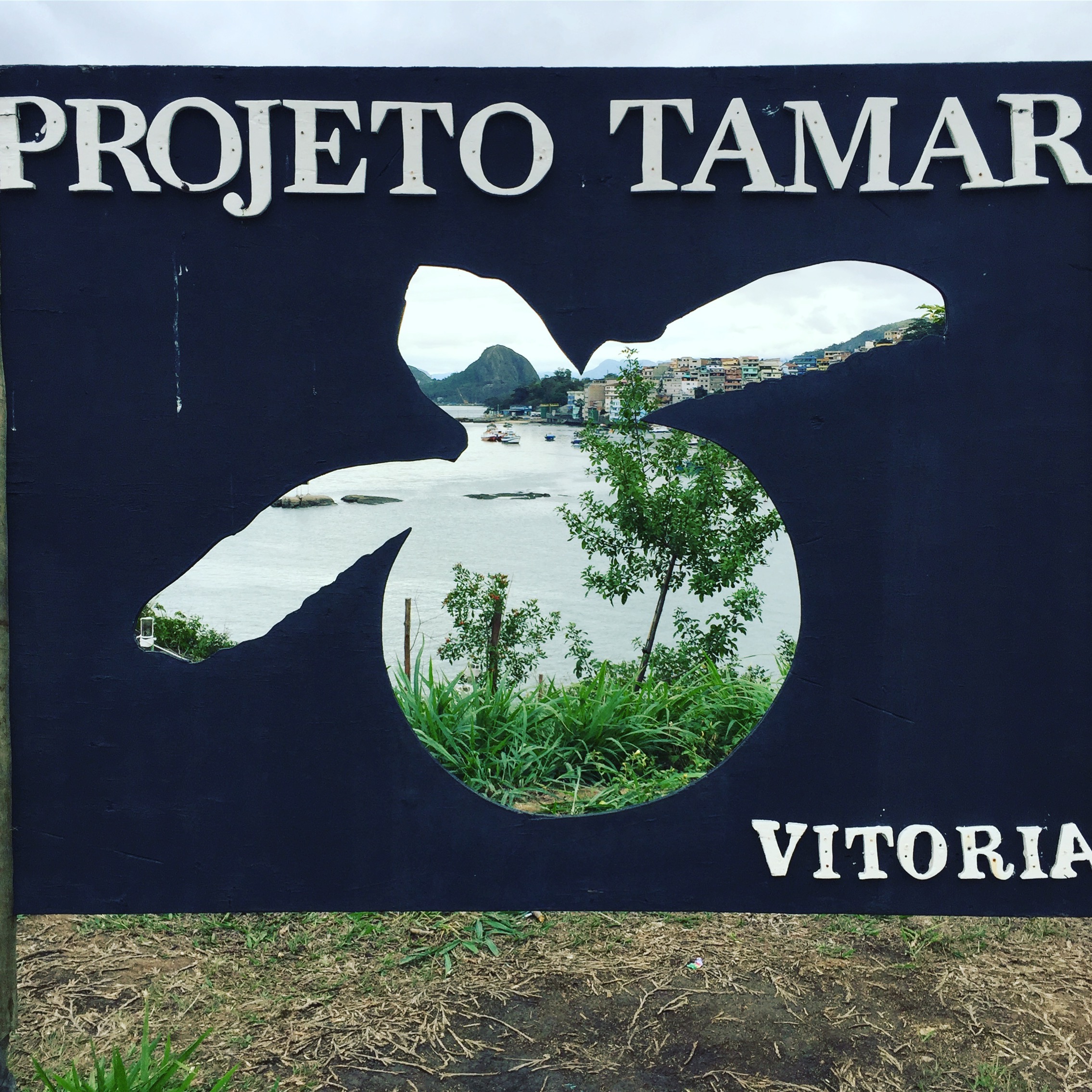
    In honor of turtles everywhere, I wanted to give a shout out to one of my favorite places to spend an afternoon in Vitoria: Projeto Tamar.


    Projeto Tamar is an NGO working throughout Brazil to study, protect, and rescue sea turtles. The name comes from the Portuguese for sea turtle, tartaruga marinha. Five species of sea turtle nest along Brazil’s coast, and one of Projeto Tamar’s initiatives it to observe and protect their nests. To date, Projeto Tamar has protected more than 25,000,000 baby turtles from egg to ocean. The organization also works with local fishermen to develop alternative methods that reduce the risk of sea turtle death from nets and has facilities up and down Brazil that work to educate the public about sea turtles and their major threats.


    They’re so close! Just a little pet…

    One unique skill I’ve developed since moving to Vitoria is sea turtle spotting. I can spot the shiny head of a turtle popping up for a breath in my peripheral vision at high noon without sunglasses. It’s one of the unintended consequences of my expat life. I’ve also become quite the amateur expert on sea turtles thanks to our regular visits to our local Projeto Tamar site. We take my daughter, but I’m the one hovering a little too close to the babies the staff always keep their eyes on. They look just like leaves bobbing in the water. A little touch wouldn’t hurt. I’d only use one finger. I’d be sooooo gentle.

    In honor of turtles everywhere and to show off my sea turtle trivia, here are five facts I’ve learned thanks to Projeto Tamar.

    Fact 1 The sea turtle species that nest along Brazil’s coast are olive ridely, green, hawksbill, loggerhead, and leatherback. The turtles I regularly see in the bay are young green turtles.

    This poor olive ridely was hit by a boat. It was rescued by Projeto Tamar and now gets physical therapy for its front flipper every Monday.

    Fact 2 Over the course of a year, the leatherbacks which nest here will migrate between Brazil and Africa. That is some impressive swimming.

    Fact 3 Most sea turtles lay between 100 – 200 eggs per nest.

    Fact 4 Experts estimate only about 1 in a thousand babies reaches adulthood in natural condition. 1 in a 1,000! Why so few? Well…

    Fact 5 Sea turtles don’t reach maturity until 10-50 years old depending on the species. That’s a long time to try and avoid all the fishermen, boats, and plastic bags masquerading as jellyfish. Odds are against surviving all those threats for five decades. It’s why killing the moms as they’re laying eggs and then harvesting the eggs is so devastating for the species.

    Fortunately in Brazil, Projeto Tamar has worked with local communities to dramatically reduce the hunting of turtles while they lay their eggs. In fact, Projeto Tamar has been working for 37 years, just long enough that they’ve recorded an 87% increase in babies hatched over the last five years compared to the previous five. The first few groups of turtles hatched under the protection of the project are finally old enough to come back and lay eggs of their own.

    And what adorable babies hatch out of the eggs! Someday, I will convince a volunteer to let me hold. Surely out of over 25,000,000, there’s one baby turtle who doesn’t mind being held by a doting human aunt perfectly willing to handle chopped up pieces of fish and squid for feedings. Just for a few seconds?


    Save

    Save

  • 10 Tips to Enjoy Rio de Janeiro

    10 Tips to Enjoy Rio de Janeiro

    Rio 1 2008-82Alright, now that we’ve covered 10 ways to avoid trips to the police station and hospital in the last post, it’s time fill up all that vacation time with the second half of my list.

    IMG_2022
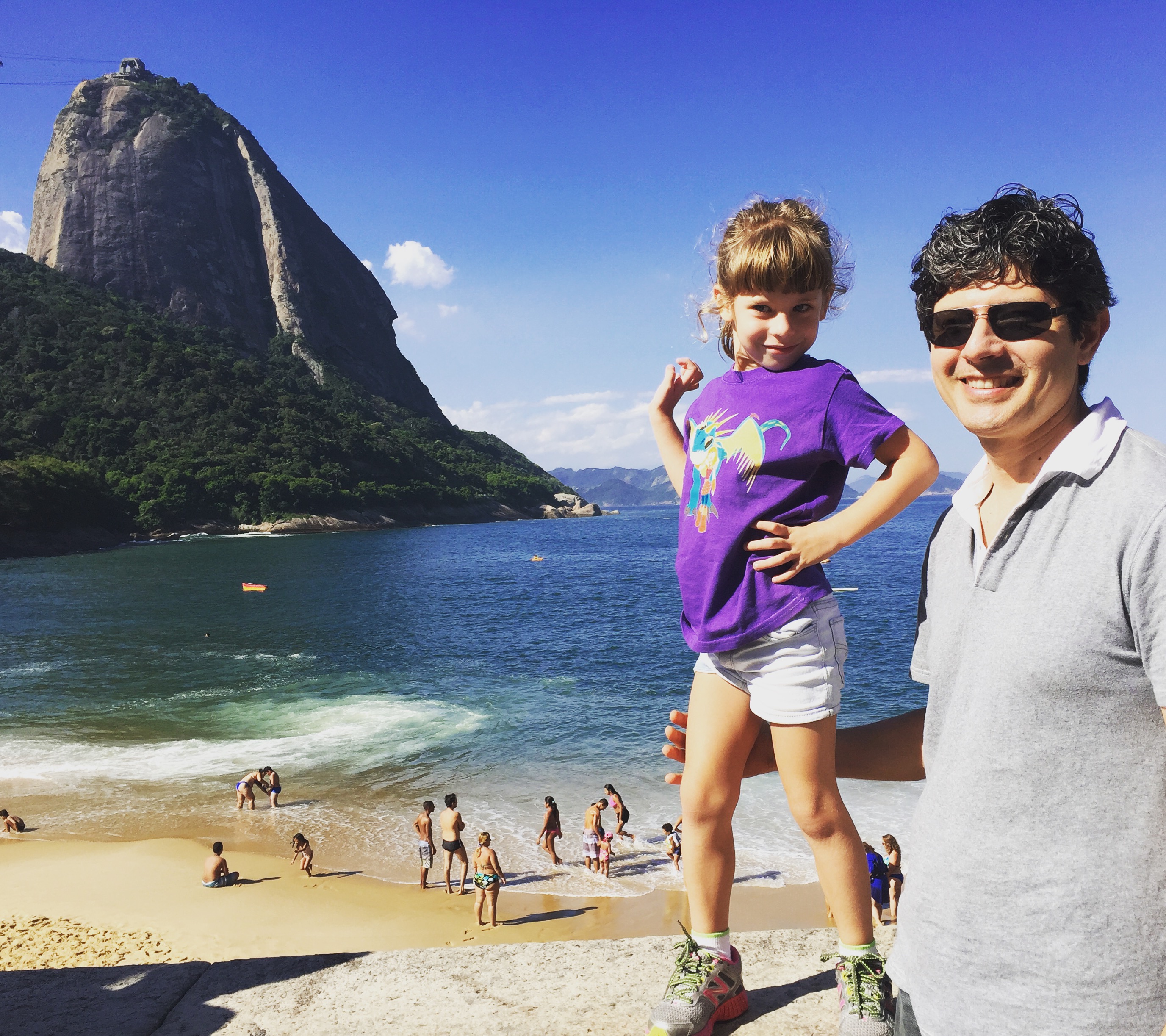
    This one young tourist is feelin’ good after visiting Sugar Loaf and Praia Vermelha!
    P1020593
    So cute!!!

    11. Sugar Loaf  or Pão de Açucar in Portuguese but that ão sound is crazy hard to make, so I think visitors to Brazil can be forgiven for using Sugar Loaf. In my opinion if you have a choice between Christ the Redeemer on Corcovado or Sugar Loaf, pick Sugar Loaf. The most crowded day I’ve been on Sugar Loaf involved 50% fewer people than my most crowded trip up Corcovado. (And let’s assume any day sightseeing during the Olympics will be in contention for “most crowded”.) Both sites have amazing views of Rio, but Sugar Loaf and Morro da Urca (the smaller mountain next to Sugar Loaf) have more space to wander around the forest, including a trail that wraps around the bottom of Morro da Urca and offers a great chance of seeing micos (the little marmosets you might remember from the movie Rio), blue butterflies, and all kinds of birds and other local animals. Yay, micos! Then you stop and have lunch at Praia Vermelha (Red Beach). That is a great morning!

    It's those same tourists again. This time visiting Praça XV in front of the Paço Imperial.
    It’s those same tourists again. This time visiting Praça XV in front of the Paço Imperial.

    12. Arco do Teles You can go back to colonial Rio by walking around this street off of the square Praça XV. I recommend going for lunch and grabbing a prato feito, a daily set menu that usually includes a choice of meat, rice, beans, french fries, and salad. Then go back across the square to Arlequim, a fabulous music & book inside the Paço Imperial, the former Imperial Palace. The store is a great place to pick up books and music from Brazil and grab a coffee and dessert.

    23313. Walk Along Copacabana Pretty self explanatory. The rules for beach going apply. Wear your shorts, tshirt and flip flops, bringing a little cash tucked away. Work out attire is fine too. The sidewalk will be full of people jogging and riding bikes. Grab a coconut to drink and stop and watch a game of footvolley. It’s volleyball played with your feet and it’s awesome.

    14. Confeitaria Columbo Oh man, go to the downtown (Centro) location late in the afternoon after you’ve spent the day walking and feel you deserve a generous reward. Confeitaria Columbo is a gorgeous Belle epoque cafe and both the decor and dessert are amazing. They do offer meals and salty snacks, but you’ll regret that choice when you see the desserts being delivered to other tables. I recommend the rabanada, a Brazilian version of french toast, or anything else on the menu honestly.

    IMG_070615. Juice Crawl A staple of Rio is restaurants and kiosks specializing in fruit juice. The variety of fruit available to be freshly squeezed is astonishing and I can promise, no matter how hard you try, you will not be able to try juice from every fruit on the menu. My cousin made the most valiant effort I’ve ever seen, and even after consuming 2.5 liters of liquid during a walk from Leblon to Ipanema, she’d not tasted a quarter of the fruits on the menus.

    IMG_138716. Jardim Botanico A beautiful Botanical Garden that offers a welcome chance to slow down and enjoy the tropical flora and fauna of Rio, including Tucans and parrots. There are beautiful plants there too, but I’m more of animal person. I remember the snack area having some super friendly stray cats, which my husband was a lot less thrilled about.

    P1020596
    Two American tourists enjoying their informative yet enjoyable audio guides! Their big sister definitely did not order them to smile for this picture.

    17. Museu Histórico Nacional If you like history or would just like to know something about Brazil other than it’s affinity for soccer and barbecue, visit the National History Museum. They have guided audio tours in a variety languages. You can hear Dom Pedro’s famous speech when he refused to to return to the Court of Portugal and declared himself emperor of an independent Brazil or learn about Princess Isabel who finally ended slavery in Brazil in 1894.

    P101019718. Churrasco If you eat beef, you need to do so while in Brazil. Find a churrasco. Just type “churrasco Rio de Janeiro” into Google. They’ll probably be one within two blocks of wherever you’re standing. Brazilian know how to cook meat and they cook every part of the cow. Go for lunch and then plan on laying down for the rest of the day.

    P101061619. Watch Some Capoeira I’m sure there will be groups playing capoeira in the parks and beaches during the Olympics. With the exception of açaí, I don’t think there is a more uniquely Brazilian export. Capoeira is a Brazilian martial practiced to music and dance. I wrote a post explaining the history and practice of capoeira. For now, I’ll just say if you see a circle of people wearing white, singing and clapping, while two people dance around each other in the middle, stop and watch for a few minutes.

    IMG_201020. Beer, Snacks, and a Lovely View at Bar Urca This is a more personal recommendation. Back in our childless Rio days, my husband and I lived very close to the Urca neighborhood, which sits just on the inside of Guanarbara in the shadow of Sugar Loaf. The neighborhood is quiet with beautiful houses and a magnificent view of the bay and Rio. Bar Urca is just across the street from the water. Late afternoon you should go grab a beer or soda, a basket of pasteis, take them to the stone wall overlooking the water, and enjoy the view and company. You won’t regret it.

    That’s it. I’m out of suggestions and advice. There are of course so many more things to do and ways to get into trouble than I’ve mentioned in my post. I don’t surf, so I can’t advise on best beaches for waves. I’m not a thrill seeker and have never had any desire to go hang gliding in Rio, and I’m not much of a live music in a bar person. The city of Bossa Nova is wasted on me. But Rio is known for all of these things. Rio has a lot to offer tourists than the beach and a stomach bug.

    You can see from the pictures, we’ve had family of all ages visiting Rio and Brazil for years and our biggest emergency has been running out of toilet paper in the apartment. With a little planning and a few precautions, Rio de Janeiro can be an amazing experience. Just leave the passport in the room and bring the bug spray.

    IMG_0035

    Save

    Save

    Save

    Save

  • 10 Tips to Survive Rio de Janeiro

    10 Tips to Survive Rio de Janeiro

    IMG_2008Last week my family and I were waiting in the citizens service area of the US Consulate in Rio de Janeiro, and I overhead a young man pouring out a pretty tragic story to the consulate staff standing opposite the bullet proof glass. He’d been robbed and had lost every single form of id, all his credit cards, and all his cash. He was left with no proof of identity whatsoever.

    My husband and I cringed at the guy’s story. As a woman, I know we shouldn’t blame the victim. A person should be able to walk down any street with his house deed and gold bullion spilling out of his pockets without the threat of violence. But dude! You walked around Rio with all of your documents in your pockets? Come on!

    IMG_1990Because I have been a recently arrived foreigner in Rio without a word of Portuguese other than Obrigada and with the Rio Olympics opening in less than week, I’ve written down some tips to help visitors survive enjoy their time in Rio. The tips are gathered from my own experience in Rio and the advice my Carioca (native of Rio de Janeiro) husband gave me when I first arrived.

    1. Leave Your Passport in the Hotel Safe  Do not walk around Rio with your passport in your back pocket. Take a driver’s license, or even better a student id, just something with a picture and name so that your body could be identified. (I’m not saying you’ll be shot. Even though Rio does have an incredibly high violent crime rate, you’re much more likely to die in a car accident or crushed by a hastily constructed bikeway.)
    2. Carry Cash Only or 1 Credit Card at Most Every touristy area in the world has pickpockets and canceling stolen cards is a major pain. Save yourself the worry. Also, withdraw a bunch of cash at the airport (Don’t carry it all at once or in the same pocket), so you can leave your ATM card back at the hotel too.
    3. Speaking of Cash…Always Have Small Bills  Many taxi drivers will tell you they cannot break a fifty. They will swear to it on their mother’s life, and then demand you pay them with what you have. Unless you enjoy arguing in Portuguese, always have 10s and 20s on you. Small bills are also more convenient for food vendors and stalls in the markets.
    4. Carry a Purse/Backpack But Don’t Put Your Cards or Phone In It  This advice I got from my husband my first day in Rio. Many women in Rio carry dummy purses with an old wallet that has some cash. Their credit card and id are in a back pocket.
    5. Don’t Wear A Lot of Jewelry  I know. We should all be able to wear whatever we want whenever we want, but maybe while on vacation in a foreign country it’s best to accept reality as is and save showy displays of wealth for your home turf. Wearing your gold necklaces and diamond rings will not in anyway improve your trip. Leave them at home. Besides Cariocas are generally a casual beach people. If you want to blend in, you should be going around in shorts and flip flops anyway.
    6. And if you want to Blend in…Sunscreen!  The surest way to find the tourists strolling through Ipanema is to look for the pinkest people. Even though it’s winter in Brazil, last week was 80 in Rio, and the sun was intense. I know. We had to walk around downtown in direct sun with an impatient preschooler. Pack sunscreen (It will be crazy expensive in Rio) and use it.
    7. What You Bring to the Beach: Towel, Flip Flops, and Cash Tucked in Your Bathing Suit  That’s it people. You leave the hotel already in your bathing suit & cover up and carry nothing other than your towel. You can rent chairs and buy snacks on the beach. This was a huge cultural adaptation for me. I come from Atlanta, and my family’s summer trips to the beach involved a cooler, a half dozen canvas totes, and a wheelbarrow. True statement.
    8. The Ocean is For Admiring Not Swimming At this point most people have heard about Rio’s toxic bay and surrounding waters. I do feel a bit like I’m beating a dead horse that died from a super bacteria picked up after drinking out of Guanabara Bay, and I have taken lots of pictures of children playing happily in the water at Ipanema and Leblon beaches. But those local kids have immunity that visitors don’t. If you want to take the very real risk of spending your vacation hydrating on a bathroom floor, then by all means, dive in.
    9. Deet I recommend insect repellent with the highest level of deet that doesn’t immediately give you cancer. Mosquitoes are a problem in Rio. Any exploration around the bay or into the forests around Rio absolutely demands bug spray. You do not want dengue! Sorry…what about zika? Oh sure, zika is terrible if contracted while pregnant for its potential to pass on devastating birth defects. Dengue can straight up kill you. It did kill 843 people in Brazil last year, and this years there’s been about 9 times more dengue cases than zika. Either way, dengue or zika, you’re gonna want to use repellent.
    10. Be Alert Don’t be the idiot that’s so focused on getting the perfect selfie you’ve failed to realize you’re group of obvious tourists is alone on the street. My husband looks over both shoulders every few seconds when walking through Rio out of habit. He’s confirmed this level of vigilance is every bit as exhausting you’d imagine, but he developed the habit after being robbed twice. Just pick a designated driver for your group. Someone who can be in charge of risk management while everyone else has a good time.

    IMG_0033This is the most depressing list of travel advice. I realize that. But before angry Cariocas start posting in the comment stream about the foreigner who doesn’t appreciate their magnificent city, I’m going to do a second post on all the great experiences in Rio. Now that everyone knows how to stay safe, I can recommend awesome things to do with the free time not being used up with emergency trips to the consulate or hospital. Come back on Wednesday for 10 Tips to Enjoy Rio.
    Save

    Save

    Save

    Save

    Save

    Save

    Save

  • A Tropical Paradise is a Sweaty Paradise

    A Tropical Paradise is a Sweaty Paradise

    IMG_1524Today was another sunny, blue-sky day here in Vitoria. A breeze blowing through my apartment forced me to stop the doors with various colored flipflops. By late afternoon, I’d been enjoying the weather so much, I was compelled to look up the temperature. What numeric value can I assign to this lovely afternoon.

    84℉ (28.9℃) And feels like 91℉ (32.8℃)

    Oh, yes. So much nicer. I knew it had to be cooler today because the sweat was only beading and not trickling down my back.

    It’s hot this year. So hot. We’re almost a month into fall, and I’m still leaving thigh-shaped pools of sweat on every chair I sit in. I haven’t had to pee since January. All liquid just gushes out my pores. Within a half an hour of waking up and leaving the air-conditioned bedroom for the naturally breeze-cooled den, I have sweat stains along my breast bone, and the only exertion I’ve had is lifting a piece of peanut butter toast.

    Of course I married a man who doesn’t have pores and could wear the same shirt to the gym everyday for a week without any lingering odor. He doesn’t. But he could. Meanwhile, I look like I jumped in a pool. Whenever I complain, my husband shakes his head and insists “Your body is more efficient at cooling itself than mine.” (Life Lesson: If you find a man who can turn being a sweaty mess into a compliment, marry him.) I reapply deodorant two time a day minimum, and I can still smell myself at the end of the day.

    But seriously without any hyperbole, I can’t remember a day I wasn’t actively sweating in Vitoria. There might have been one cool day last September, but definitely by October, I was dripping sweat trying to cut cookie dough in a ninety degrees kitchen. A secondary perk to annual Christmas visit to Atlanta is we get to miss a month of summer heat in Vitoria.  Although, it’s feeling less like summer heat and more like pretty-much-all-year-long heat. For anyone still on the fence about global warming, I have a guest room with only an old window unit AC that you’re welcome to sleep in. If you can make it through breakfast the next morning without complaining about the heat, I’ll paint Drill Baby Drill on my kid’s bedroom wall.

    The heat’s not just in Vitoria. On February 27, Rio had a record breaking high of 106.5℉ (41.4℃) with a heat index of 119.5℉ (48.6℃). What?!!! I’m so glad we left Rio.

    Just imagine if that’s the temperature you have to go to work in. You’re not on vacation. You can’t just camp out at a pool with a swim up bar. You have to get dressed, maybe in a suit, maybe with a lab coat, maybe a uniform that requires pants. You have to go work now. Remember the worst traffic or school drop-off run you’ve ever experienced, now imagine it happening at 120℉. And without air conditioning. Many buses in Rio don’t have air conditioning.

    Actually, central AC is rare and reserved mostly for tourists. We don’t have it at home. The top tier private school I worked for didn’t have it. My bank doesn’t have it. What we use here are individual units, and the top of line can effectively turn a classroom into a freezer. Just don’t be the first one to show up and have to turn them on. And of course they break. And if you wake up in the middle of night in a puddle of sweat and the clock blinking, don’t worry. All the thousands of bedroom unit ACs just overwhelmed the grid and caused a blackout.

    So if you are planning a trip to Brazil for this time of year, bring a flashlight, lots of sunscreen, and a half dozen sticks of deodorant. That should last you about a week.

    Image_zps04194192

  • The World’s Pickiest Beachgoers

    The World’s Pickiest Beachgoers

    IMG_1698Last Saturday, the whole Barineau-Mauricio clan (all three of us) seized the day early (like 10ish) and headed to the beach. It was the kind of day that gets recorded and replayed in every tourist advertisement for the next decade. The temperature was perfect, warm enough to sit comfortably in a bathing suit but not oppressively hot. There was a steady breeze that my husband and daughter exploited for kite flying. It was a perfect beach day.
    There were two other families on the beach.

    I’m not exaggerating. This is not hyperbole. When we arrived there were two families camped out close to the boardwalk. The next closest people we could see were colorful ants. We looked around in dismay for any food vendor. We’d been banking on supplementing my daughter’s meager breakfast with an ear of corn, but the beach was empty.

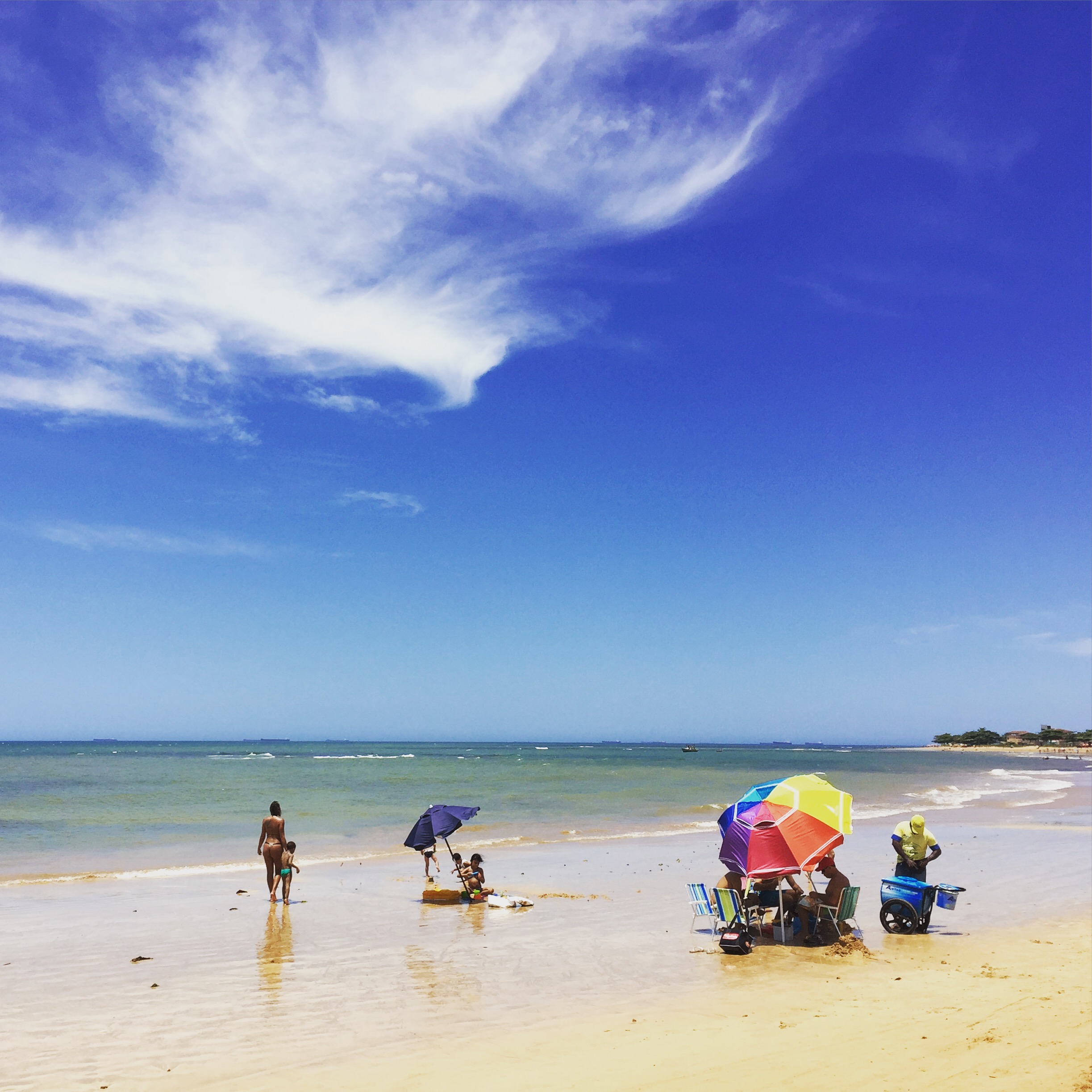
    Now, before people start shipping furniture and arranging to have their pensions deposited in Brazil, empty beaches are not typical in Brazil, especially not around the cities. Typically, they’re packed so densely you can’t stretch your legs out without kicking the back of someone’s chair. (True story. It was a summer day at Iriri in Espirito Santo. Worst beach day ever!) In Rio de Janeiro, you can’t find a beach with less than a few thousand people on it. Drive past Ipanema on a Tuesday, and you’ll wonder who’s running the city.

    That’s not the case here in Vitoria. The empty beaches were one of the biggest shocks moving from Rio to Vitoria. I kept trying to find some explanation. Are Vitoria’s beaches more polluted than Rio’s? Are they more violent? Is there a vicious rip current? A Kraken? Where the hell is everybody?!

    After living in Vitoria for almost six years, I’ve figured it out. Capixabas are simply the pickiest beach goers in the world.

    Capixaba is the Brazilian term for a person born in Vitoria, the state capital of Espirito Santo. The best English equivalent would be North Carolinian. That state has picturesque mountains and beaches and a generally more conservative population that goes regularly to church and the salon.

    Capixabas are incredibly picky about their beach trips. Here are 7 reasons why Capixabas won’t go to the beach.

    1. The temperature has dropped below 80°F (26.5°C). If there’s one thing Capixabas fear more than visiting Rio de Janeiro, it’s cold weather. And any temperature in which you can comfortably wear long sleeves is cold. In winter when the high is around 75°F (24°C), my kid will be one of three students whose parents are still allowing them in the pool. Those other all kids have parents from Rio Grande do Sul, the state that’s so far south it’s basically Uruguay.

    2. It’s Saturday. Sunday is beach day. Obviously.

    3. It rained yesterday. Everything will be wet. And the water will be too cold.

    4. It might rain today. Everything will get wet. And to pack everything up and walk across the street only to get rained on would be such a pain.

    5. Those clouds are kind of dark. It’s probably going to be chilly with all the clouds. The wind is picking up. It might rain. Better just to wait for a day with no clouds. It’s going to be too cold today anyway.

    6. We went to the beach yesterday. If we want to go to the beach everyday we’ll go to a hotel or to our family’s beach house in Guarapari. The beaches in Vitoria are mostly decorative. You can’t use them too much, or they’ll break.

    7. It’s too empty. There just aren’t enough people to feel safe. This is the one reason I agree with. The rate of violent crime in Espirito Santo is a tragedy. It’s why we’ve never considered buying a house near the beach even though we go every weekend. I’d love to walk along an empty beach early in the morning or a night, but it wouldn’t be safe. On the other hand, I don’t think two hundred people are required to make beach a safe, and the threat of robbery certainly doesn’t stop people in Rio from swarming Copacabana.

    Most excuses are weather related. I assume most Capixabas believe English beaches to be fatal, and I’m not going to try dissuade anyone from that thinking. Mostly because Capixabas are friendly and obsessively follow traffic rules compared to people in Rio. Because nobody’s perfect. But mostly because this way my family and I have the beaches to ourselves from June through September.

    Have I missed any excuses, Capixaba friends and readers? Am I totally and completely off-base?

  • Fortaleza, Brazil: All-I-Can-Take at the All-Inclusive

    Fortaleza, Brazil: All-I-Can-Take at the All-Inclusive

    Vacationing in Fortaleza, Brazil! A lot of a good thing.
    Vacationing in Fortaleza, Brazil! A lot of a good thing.

    I just got back from a family vacation in Fortaleza, Brazil.  Our group was made up of three generations traveling from three different cities.  It was a great trip and some memories will be with me forever.  Which is only slightly longer than all the meat I consumed will be.

    If Rio is looking to present an honest and endearing image of itself to the world during next year’s Olympic Games, they should build a barbeque pit in the international terminal and welcome each flight with a free lunch.  “Welcome to Brazil! Have a plate of meat!”

    A plate of meat, piled as high as it was wide, and a mojito made with a shot of white rum and 32 scoops of sugar was my lunch each day of our stay at the all-inclusive resort.  Because once you’ve decided on the all-inclusive vacation, you’ve clearly made self-indulgence your primary goal for the week.  No point in trying to hide it under a few leaves of arugula with olive oil.

    Of course, visiting an all-inclusive with the entire family does limit the extent to which a person can self-indulge.  Vacationing with my only-child who prefers me to any other person in the world, (She’s 4 and hasn’t met a wide range yet.) meant that I did not get the writing and reading time I would have liked.  Being unable to pass out under a palm tree with a book on my face due to parenting responsibilities, I compensated by giving my stomach completely uninhibited and unrestrained access to every buffet at every meal.

    Puddings, steak, french fries, cakes, risottos, Prosecco, sandwiches, salad, cappuccinos, tarts, omelets, shrimp, cheeses, mussels, chicken, soft drinks, sausages, pasta, mousse, fruit juices, fish, rice, beans, ice cream, croissants, pineapples, and pork were all consumed with reckless abandon.  Lunch involved at least three plates; the grilled meat got it’s own plate of honor.  Breakfast would take over an hour and I survived the long stretch between lunch and dinner by indulging in the afternoon tea, which included no tea but lots of cake.  It was four days of eating as if life was free of consequences.  All consumption and no exertion.  It was glorious and delicious.  I didn’t worry or go to the bathroom from Tuesday to Saturday.

    Actually, I did start to worry on Saturday but not because I was feeling awful.  I got worried because I didn’t feel awful.  My rational-self kept waiting for the effects of my week-long bacchanalia to catch up with me.  That part of me knew no person could eat with total abandon for long and not feel utterly disgusting.  And that part of me waited.  And waited.  Meal after meal after, I filled my plate and went back for more, my taste buds rejoicing in how life could be if I didn’t care about staying a size 8 or living past 45, and I felt fine.

    Saturday’s lunch was fish stew, fried shrimp, pork chops, rice, and french fries.  I ate some of everything washing it down with a Coke.  I enjoyed every bite and would have eaten a few more french fries if they hadn’t cleared the plates.  On the walk back to the hotel, I wondered if I should seek help.

    As we hid out from the tropical sun for a few hours in our room (because too much sun is really terrible for you), the hotel staff dropped off complimentary bottled water and coconut candy.  My husband opened up one of the candies, took a small bite, and abandoned it on the table saying “Wow, that is too sweet.”  So I immediately went over and finished it.

    I popped the last bite in my mouth, swallowed it, and thought “I will never eat anything again.”

    With that last bite of coconut candy, I hit my food wall.  The full weight of every meal landed on me and left me in a fetal position on the bed.  That was it.  I was done eating.  Possibly for the rest of my life.  It took four and a half days, but I found my physical limit for food consumption.

    I’m back home and in my normal routine that includes exercise and vegetables.  My parents have gone back to the States and my daughter is back in daycare.  I’m already looking forward to our next vacation, but perhaps a camping trip would be healthier.

    I’ll bring the s’mores!!!

    TingNewBlue

  • Beach Day Doctrine: Great weather leads to awful governments

    Beach Day Doctrine: Great weather leads to awful governments

    A typical winter's day in Brazil.
    A typical winter’s day in Brazil.

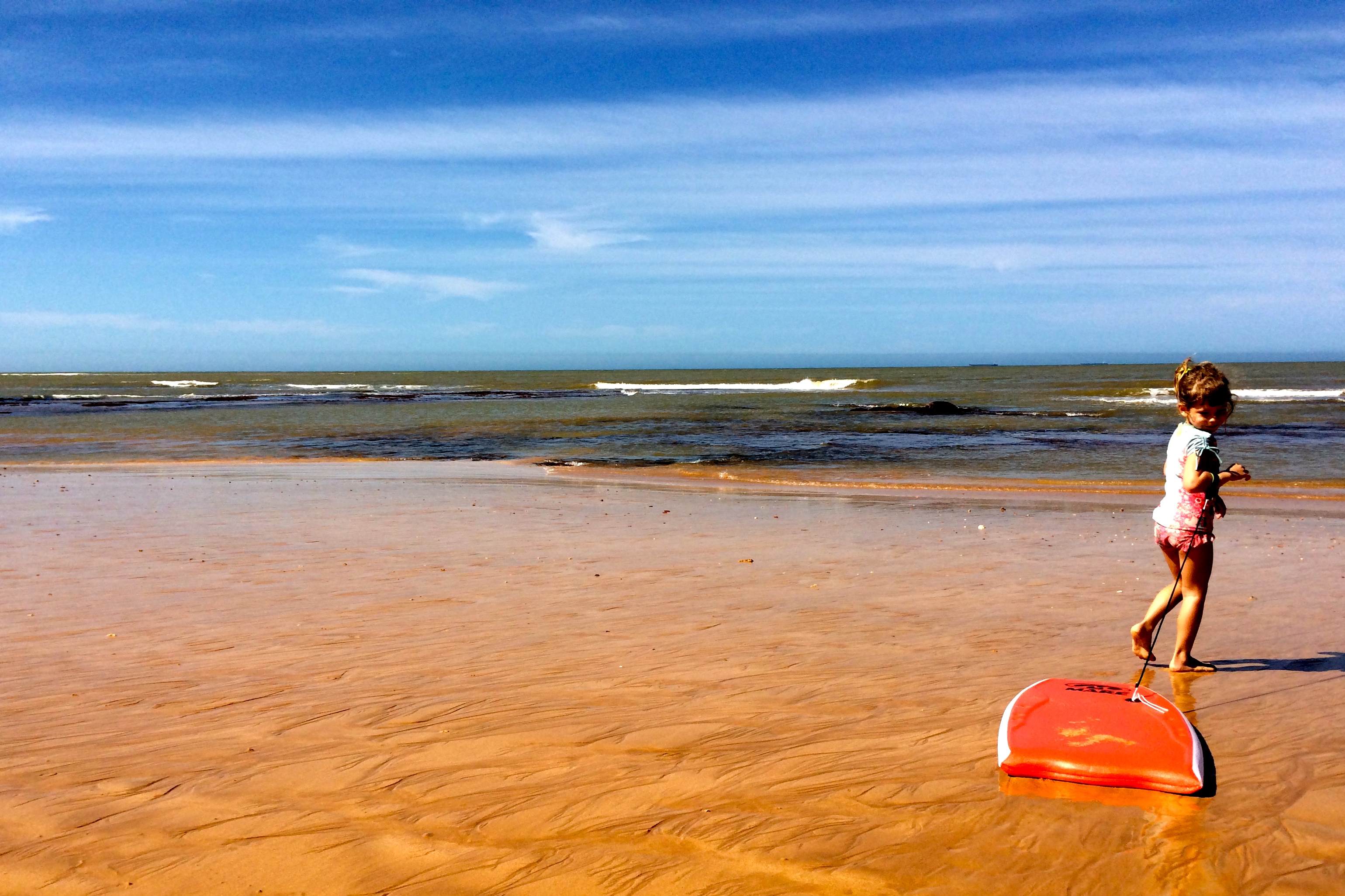
    My family went to the beach this past Saturday.  We packed a kite and a boogie board and stayed out through lunch. It was an absolutely perfect beach day, warm without being hot and breezy without being chilly.  The sky was a sheet of blue with a few fluffy clouds pulled decoratively across it.  But the best part was having the beach almost entirely to ourselves.  People in Vitoria just don’t go to the beach in winter.

    Yes, it’s winter here in Vitoria, Brazil.  You can really feel it today.  It’s 68 degrees (20 C) outside and drizzly.  People are wearing their leather jackets over their shorts.  This will be one of the coldest days of the year here.  I’m sure it will be a front page article in tomorrow’s paper.  “Cold Front hits Vitoria. Drives Locals to Wearing Coats!”

    In my opinion, the weather is one of the best things about Vitoria and Brazil in general.  I think it’s also why the government sucks.

    I have a theory that the weather of a country can be tied directly to the quality of that country’s government.  The better the weather, the worse the public services.  The worse the weather, free university for everyone!

    Let’s take Norway.  The Economist’s Quality of Life Index ranks Norway third in terms of quality of life and third in GDP per capita.  Norway is number one on the UNDP’s Human Development Index.  Norway’s government is the world champion of governing.  Year after year, they are crushing the competition. Why? Because without an awesome government, there would be absolutely no reason to live there.

    This is a place where citizens go weeks without seeing the sun.  Every winter, there’s a period when the sun never makes it over the horizon.  This isn’t a freak phenomenon.  It’s a lifestyle.  How to avoid Winter SAD (Seasonal Affective Disorder) during the polar nights is a regular part of the school curriculum.  Why would anybody live in a place where winter is accompanied by its own psychological disorder causing sadness, a loss of self-esteem, and desire to avoid social and physical contact?  Why? Free universal healthcare coverage for all legal residents.  That’s why.

    Not surprisingly, Norway’s tourism website doesn’t bring up those polar nights, but it does have a lot to say about its midnight sun.  You can take an ocean cruise at midnight or stroll through the park at 2am.  Come visit Norway in summer and have 24 hours of sunlight!  Honestly Norway, 24 hours of sunlight doesn’t sound like a good thing.  It’s slightly better than 24 hours of darkness, but I have no desire to live in a place with sunlight streaming through my window at 2 am.

    Except that in Norway, universities are tuition free for all students, including international students.

    On second thought, I could probably get used to wearing a sleep mask.

    Norway’s tourism site also touts its mild winter temperatures.  The average January high for Oslo is 32 degrees (0 C). I suppose that’s mild compared to Siberia, but it’s still a place where getting locked out of your house in December is potentially life threatening.

    Here in Vitoria, you can sleep on the sidewalk 365 days a year and feel, at worst, a little uncomfortable.  Good thing too, because there are quite a few people who do sleep on the sidewalk.  Does Norway even have homeless?  I don’t see how.  The winters would kill them off.

    And this is the crux of my theory.  The environment in Norway is so inhospitable, the government has to help its people survive and then give them a reason to stay.

    What does a person need to survive a winter day here in Vitoria? A sandwich and a tree.  Something to eat and shelter from the hot-even-in-winter sun or rain.  That’s it.

    My theory holds true for other countries.  Sweden, Finland, Denmark, Canada, Australia (Why is Australia listed? It’s hot, in the middle of nowhere, and has all the world’s most poisonous things). These countries have awesome governments and crappy weather.  Venezuela, Fiji, Mexico, Maldives, Greece: crappy governments, 365 days of beach.

    This past Saturday was a spectacular day.  Bright sun.  Soft sand.  It was the kind of day that warms you on the inside and puts hope back in your life.  Listening to the waves while getting drunk on sunshine and coconut water, a person won’t care about anything.  Not even that Brazil ranks 79 on the HDI or that dozens of top government officials have been indicted for stealing billions in taxpayers’ money or that the President’s approval rating is 9%.

    Here schools are terrible.  Public healthcare is broken.  Inflation is increasing.  But the weather is fantastic, the beaches are free, and with 4,655 miles (7,491 km) of breathtaking coastline, there’s space on the sand for everybody.  What else do you really need?

  • The Super-Awesome, Amazingly-Exotic Expat Life

    The Super-Awesome, Amazingly-Exotic Expat Life

    The daily rainbow in Brazil.
    The daily rainbow in Brazil.

    When I’m back home in Atlanta, I try not to mention that I live in Brazil.  The opportunity presents itself with surprising frequency, usually when a sales associate asks if I’d like to sign up for a rewards card.  I decline saying “I’m just visiting for the holidays.”   Nine times out of ten, at least in the state of Georgia where people still practice things like small talk and friendliness, the person will ask “Oh, where do you live?”  Then I’m stuck.  “In Brazil,” I answer, and I’m at the counter another five minutes as I tell my story and confess that I have not in fact learned to speak Spanish.  Though I have learned the local Portuguese.

    I can’t blame people for their wide-eyed excitement and curiosity about my life.  Americans are under the impression that life south of Texas or north of Idaho or on the other side of an ocean is more…something.  More exciting.  More dangerous.  More romantic.  More barbaric.  More luxurious.  They’ve seen movies set in these “foreign” countries and read articles like “3 Things Dating Foreign Women (And Marrying One) Taught Me” which tell people what a romantic adventure life can be if they only find a spouse with a different passport.

    As someone who did manage to land a coveted foreign spouse and move abroad, I can state that it’s all true.  My life is more exciting than everyone else’s.  It’s more romantic and luxurious yet still a rewarding, character-building challenge.

    Take my very first meal in Brazil.  I got to eat in the food court of the nearby mall.  My future husband took me and it was incredibly romantic.  The din of the other customers drowned out our voices, so we could only stare into each other’s eyes.  Because I arrived in the midst of remodeling the apartment, I had the opportunity to tour all the best hardware stores in Rio de Janeiro.  The thrill of shopping for toilet seats abroad really gets downplayed in expat blogs.  The only thing in Brazil that rivals shopping for toilets is getting finger printed for a visa at the federal police.  The ink smells like jasmine.

    Living in Brazil has also given me the opportunity to learn a new language.  It’s a fact that everything is sexier in a foreign language. Doesn’t matter which language.  They’re all sexier than English.  Here are some of the local Portuguese phrases I learned in my first months here.  Encanador.  Plumber.  Conta corrente conjunta.  Joint checking account.  Seguro de saúde.  Health insurance.  Absorvente interno.  Tampon.

    If you are ever lucky enough to visit Rio, I recommend driving from downtown to the suburbs at 5:30pm.  It will give you an authentic local experience.  Turn the air-conditioning off and roll the windows down to really go native.  Be sure to have the GoPros charged because friends back home will want to watch this trek. All three hours of it.

    Anyone leaving the US should do their family and friends the favor of recording every second of their time abroad.  They’ll thank you for allowing them to live vicariously through you.  After all, life outside the United States is one long perpetual vacation.  Nobody goes to the grocery store or a “job” in foreign countries.  The people serving coconuts on the beach here in Brazil? Robots.  All of them.  Where do you think Walt Disney got the idea for the Hall of Presidents?  He stayed at the Copacabana Palace in Rio.  Actual Brazilian citizens don’t work and if you’re fortunate enough to get residency neither will you.  People who live here just go to the beach and gym everyday.  I haven’t had to run an errand since I arrived in September of 2006.

    Having a child abroad with a foreign spouse (Yes, even in Brazil my Brazilian husband is the foreigner.  I can’t be a foreigner because I’m American), it only adds to the drama and glamor of the expat life.  I’m writing a screenplay based on my experience of visiting the US consulate to prove the maternity of my child.  I’m hoping Ridley Scott will direct and it will star Angelina Jolie (as me), Antonio Banderas (as my husband), and Jack Black as the unwieldy and misunderstood stack of paperwork that ultimately saves the day and gets us the US birth certificate.

    Those of us living in far-off, exotic lands know that “living” abroad is exactly the same thing as “vacationing” abroad.  Don’t make the mistake of thinking that most people in the world are busy going about the tediousness of living day to day, with the jobs and childcare and home repairs and laundry that human existence demands.  No, no.  Life outside the US is romantic and electrifying all the time.  In fact, I have another Brazilian adventure planned for this morning.  I’m going on an excursion for light bulbs.

  • Ubu, our hidden gem

    Ubu, our hidden gem

    For me, one of the greatest pleasures life in Vitoria has to offer is the opportunity to visit a gorgeous beach, on a gorgeous day. Can’t I do that in Rio? Yes, but I have to share the beach with 1 million other people. I don’t really like to share. That’s why I prefer this little, hidden gem called Ubu.

    The coast of Espirito Santo is lined with small beach towns. The relatively small population of the state will head out every weekend and drive to one of the three or four beaches within an hour of their homes. If you’re willing to drive an hour and half, you can have the beach to yourself.

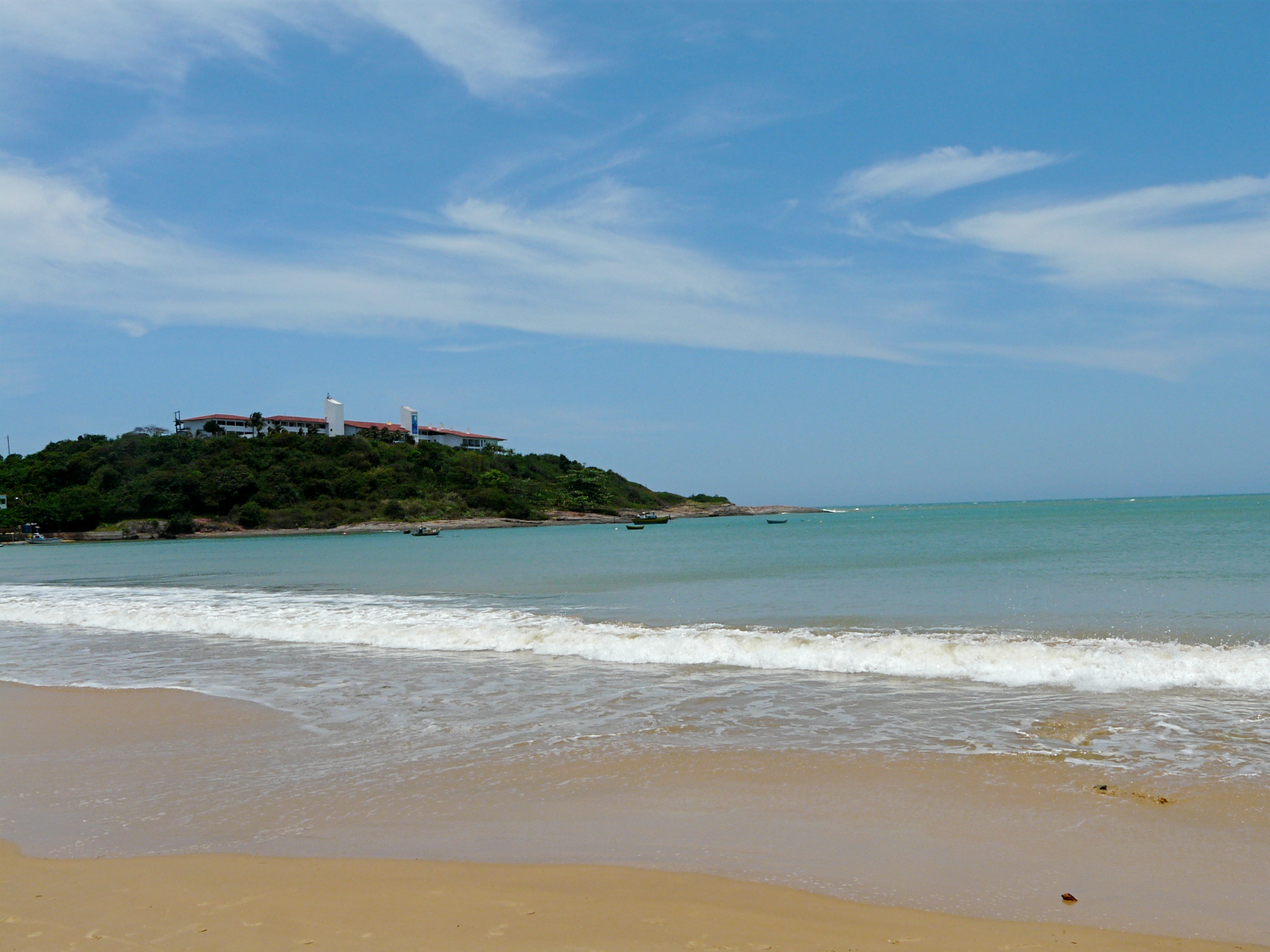
    Yesterday was a perfect beach day. It was the kind of day against which all other beach days are judged. A blue sky with a few clouds like stretched out cotton balls. The temp was in the 80s and a constant strong breeze made everything perfect. There were not more than 30 people on the beach. A gorgeous beach, on a gorgeous day and we got it all to ourselves.

    I’d tell you how to get to Ubu, but then you might actually come.

    And did I mention the moqueca restaurant in front of the beach?

    The famous Moqueca Capixaba deserves and will receive its own post. To be continued…