Tag: birth in brazil

  • 28 Days in a Brazilian NICU: The Mom Milking Room

    28 Days in a Brazilian NICU: The Mom Milking Room

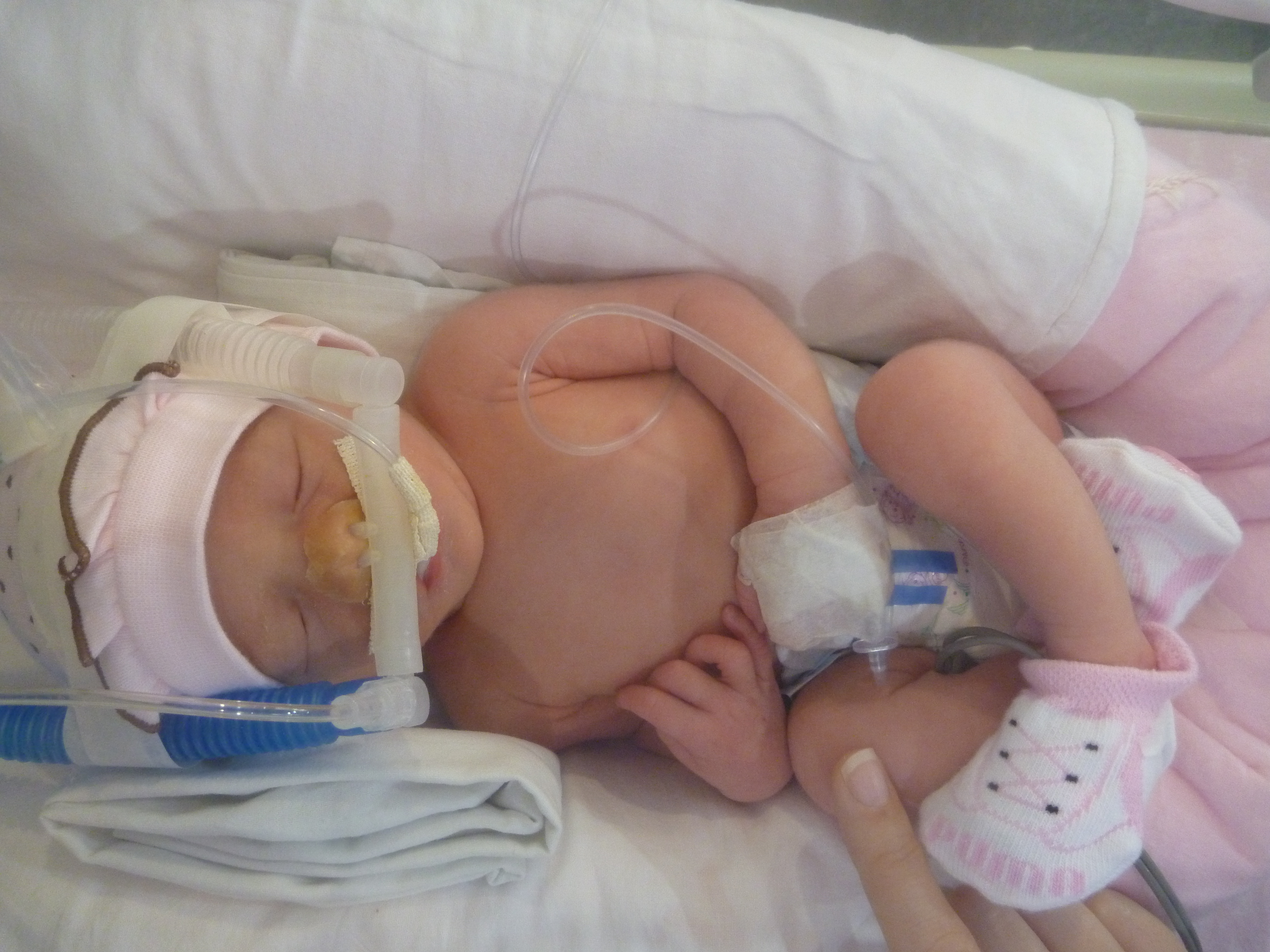
    Day 2 of 28 in the NICU at Vitoria Apart Hospital in Brazil.
    Day 2 of 28 in the NICU at Vitoria Apart Hospital in Brazil.

    My daughter was born seven weeks early due to placental abruption.  That was a new term for me, placental abruption. Another one was UTIN.  That’s the acronym in Portuguese for Neonatal Intensive Care Unit (NICU).  It was one of the many Portuguese medical terms I learned after my daughter spent 28 days in a NICU in Brazil.  In the moment, each day felt like a lifetime. I was sure every minute of all 28 days had been seared into my memory.

    But they weren’t.

    My daughter just turned four, and I’m shocked to realize how much of a blur those weeks have become.  Most of the exact numbers are gone.  How many days was she on a ventilator?  When did she get above 2kg?  Of the many people who cared for my daughter, all but one of the names has been erased.  Now they’re the doctor with red glasses and the physiotherapist who spoke some English.  I suspect these details will disappear too.

    What has not faded in any detail, much to my dismay, is my memory of the milking room.  This was the place they sent the new moms to strip them dignity.  It was the room for hand expressing breast milk.

    Many preemies are born too small to breastfeed and are fed through a tube and syringe.  How do you get these babies breast milk?  The obvious answer is pump it, store it, and serve it.  Except the NICU did not allow breast pumps of any kind.  The hospital said it could not guarantee that an individual mom’s pump would be sterile, so they could not give the milk from from a potentially unsterile source to the baby.  The only way for a baby in the NICU at Vitoria Apart Hospital to get breast milk, other than on tap, was to hand express it.  This is as awful as it sounds.

    At least for me.  I am not particularly in touch with my body.  I’m more cerebral and would be quite content to be a floating brain in space except for the facts I do like going for walks and eating french fries.  I’m aware that my conscious self is housed in an organic Tupperware container that impacts how I feel, think, am, but I don’t dwell on it.  At least not until I get a stomach virus.  Or until I have to breastfeed a baby.

    And I was going to breastfeed.  I had done my research.  Despite my lack of emotional connection to my mammary glands, I was totally committed to breastfeeding.  I did not, however, anticipate having to milk myself like a cow.

    That’s what it is.  Hand expressing means squeezing out the milk by hand into a container.

    Despite that daunting psychological hurdle, I told the nurses I still wanted to breastfeed, so one of them led me out the backdoor of the NICU, down a hall, through an unmarked door, and into an unused storage closet.  Based on the size and lack of any comforts except three chairs, I assume storage closet was the original purpose of the room.  White walls, tile floor, no windows, and freezing cold.  This was the room I shuffled to, fresh from an emergency c-section, so that I could hand squeeze milk from my boobs.

    As I stood there shivering in my hospital gown, the nurse quickly went through the officially sanctioned routine that guaranteed milk I expressed in that closet would be more sanitary than what I could get from a pump: wash hands, don hairnet and face mask, remove the plastic cups from the packaging and take the lids off, wash hands again, wash nipples with gauze, squeeze milk into cup and seal the cup immediately when full.  Fortunately, she demonstrated the whole process because to this day I don’t know the Portuguese word for gauze or hairnet.

    Then she left.  No medical professional stayed in that closet with the moms.

    Want to guess how many of the moms expressing themselves actually followed that routine when left on their own?

    I know because it turned out to be a communal milking closet, and the answer is none that I saw.  The next time I went to the closet, two other women were already there happily chatting away, masks down over their chins.  I distinctly remember these two women because they were friendly, completely comfortable being half-naked in front of strangers, and filling up cup after cup with milk like a competition at a state fair.  I was none of those things.  I struggled to fill half a cup when alone.  Trying to hand-express milk in a freezer while confronting small talk in Portuguese and the four largest breasts I’ve ever seen in person was literally impossible.

    I got almost no milk out during that session or any other.  I subjected myself to breastfeeding purgatory every three hours for four days before finally saying “Enough.”  I believe breast milk is ideal.  I don’t believe it is worth torture.  I restarted breastfeeding only after my daughter was big enough to handle it herself.  Hand-expressing in that closet was one of the worst experiences of my life.  And I sat through the Sponge Bob movie.

    If I’d had any reserve of energy I would have been outraged.  I was being denied a breast pump on the grounds it wasn’t sterile, but there was nothing sterile about that room.  They sent a bunch of not-medically-trained women down the hall with instructions to wash their hands and wear a mask. I don’t believe a single doctor actually thought the milk coming out of that closet was sterile.  They know they’re in Brazil where actual laws are treated as suggestions.

    But I didn’t have the capacity for outrage then and I don’t care to feel it now.  True, an electric pump and a private space would have made a huge difference, but we all survived and someday the sound of someone else’s breastmilk squirting into a plastic cup will fade from memory.  In the meantime, I’ll milk it for the entertaining story it is.

    11ghkra

    Save

  • Nine Parenting Lessons Learned 3 Months In

    Nine Parenting Lessons Learned 3 Months In

    I don’t have a lot of time to write these days.  The last post took more than 2 months to finish.  Still, I need some kind of outlet, so when a reader posted a comment about Moby Wraps and baby products in Brazil, I was inspired to post a few of the lessons I’ve learned over the last few months.

    Lesson 1 About 85% of my identity is based on getting sufficient sleep.  After several days of less than four hours of sleep (none of them consecutive) the talkative, thoughtful person who cracks jokes to deal with stress becomes a simmering pot of boiling rage which spills over at the slightest thing.  A pacifier I cleaned minutes before pops out and falls straight to the floor and suddenly I am using every curse I know on gravity, Newton and any living relatives.  Jekyll never made a potion.  He just didn’t sleep for a few weeks.

    Lesson 2 The Moby Wrap, a popular baby carrying device in the US, needs to come with a warning.  Caution: Moby Wrap should only be used in air-conditioned environments in non-tropical countries. After 15 minutes with her in the wrap, I was on the verge of a heat stroke.  I managed to sweat off a few pounds and successfully teach my daughter that blankets are torture devices.

    Lesson 3 Like just about everything in Brazil, baby stuff is super expensive here.  $50 is too much to spend on preemie clothes or any baby clothes.  Call me cheap but I don’t want to spend more than $20 on an outfit she will either spit up on, poop on or outgrow after only three wearings.

    Lesson 4  Every person who does not have a baby thinks every time a baby cries it’s due to hunger.  And they will tell you this. “Your baby is hungry.”  They will tell you this repeatedly for an hour and a half and when the baby is inevitably hungry again these people will say, “See.  I knew she was hungry.”

    Lesson 5 I don’t want big breasts. I used to think I wanted some slightly larger breasts to balance out my bottom half.  Nope. Not anymore. I’m totally content with and miss my modest B cups.  Hats off to you ladies who have the back muscles and patience to tolerate these weights hanging off your front and bouncing around as your work out, jog, take stairs, try to sleep, etc.

    Lesson 6 The only practical outfit for a newborn is a onesie.  Being told this and eventually learning this from experience will not stop you from continuing to buy super adorable dresses which make her closet look spectacular.

    Lesson 7 I do not believe a baby should have it’s ears pierced, and I will not be piercing my baby’s ears.  This means when dressed in any color other than pink, everyone in Brazil thinks she is a boy.

    Lesson 8 Not all babies are born willing to sleep in a crib.  Some are born with a mistrust and a dislike of cribs that is so strong merely standing close to a crib will be enough to penetrate the deepest sleep.  They may also hate the swing, vibrating chair, stroller, car seat, and sleep in general.

    Lesson 9 Nothing, absolutely nothing in the world, is as adorable as a new baby smiling.  It’s what keeps you from dropping her in that ridiculously-expensive crib she hates and putting on some noise canceling headphones.


    Check out more great…

    Advice From The Heart

  • My Recommendation for an OBGYN in Vitoria

    My Recommendation for an OBGYN in Vitoria

    My expat identity has taken a back seat in my last few posts to the teacher or pregnant woman part of me, but after reading some blog entries from other expats in Brazil I’ve been inspired to finally write a post that has been in the back of my mind for some time.

    Coconut Water is officially recommending Dr. Paulo Batistuta for anyone in Vitoria looking for an OBGYN.

    While I’ve endorsed several Brazilian food options including açaí and moqueca capixaba, this is Coconut Water’s first official endorsement of a healthcare professional in Brazil and I’m recommending Dr. Batistuta with the same fervor I do a big bowl of açaí.

    A fairly common complaint from expats here is that doctors in Brazil don’t really explain things to you.  They tell you to get a test and bring them the results.  Unless the results require being ordered to get another test or bypass surgery, that’s all you’ll hear about them.  Another complaint specific to women in the process of childbearing is that doctors here in Brazil prefer doing c-sections to pretty much anything else.  (I’d believe even more than sex given the rate at which they are performed here.)  Some private hospitals in Brazil have c-section rates as high as 90%.

    Dr. Batistuta (Dr. Paulo here in Brazil where they use first names) defies both of these stereotypes.

    Personal anecdote.  After an early ultrasound, I noticed there was one item that had an abnormal reading, specifically low blood flow in the left uterine artery. When we took the results to Dr. Batistuta, I asked about it and Dr. Batistuta picked up a pen and immediately began sketching a uterus and arteries.  He explained what the test measured and what the result meant.  He even sketched out exactly where the placenta was attached in my uterus.  You know, the more information the better.  He assured us that this wasn’t a problem given the normal results for everything else and we’d check it again at the next ultrasound.  He was right.  Everything was normal at the next ultrasound.

    Dr. Batistuta never rushes us out the door.  I’ll pull out a list of questions.  He’ll happily answer everyone, giving me cards, books, even DVDs that will provide further information.  While I’m in the bathroom changing I can hear him and my husband chatting away about upgrading their computers’ operating systems.  We were in his office for almost an hour during our last visit.

    As for c-sections, Dr. Batistuta is one of the leading voices in Brazil for natural childbirth.  If you speak Portuguese you can watch him being interviewed on youtube.  While he will state point blank he believes the best birth for the mother and baby is one with no unnecessary medical intervention, he has also told me that ultimately the doctors and staff are there to support me and what I want.  If I ask for drugs, they will give me drugs.

    I should mention cost.  One of the great things about Vitoria is that you can get great medical care (private) for half the cost of what you’d pay in Rio or Sao Paulo.  For an office visit, Dr. Batistuta charges BR$200 ($118).  We pay this out of pocket at the visit and send a receipt to our insurance company for reimbursement.  For the actual birth, Dr. Batistuta is charging BR$4.000 ($2,353). Again, we’ll pay and get reimbursed later.  (Once the whole birthing process is said and done, I’ll do a summary of all medical expenses for giving birth in Vitoria.)

    Finally, the language issue.  Our visits are conducted exclusively in Portuguese but when I have to use an English phrase Dr. Batistuta understands.  (I suspect he is modest about his level of English and understands way more English than he lets on.)  Fortunately, my husband attends every visit and supplements my intermediate Portuguese with his native tongue thus preventing any serious misunderstandings.  I can’t say for sure how it would go if you don’t speak any Portuguese. I think everyone could muddle through but it is important to know that Vitoria is a much smaller city than Rio, Sao Paulo or Belo Horizonte and English speaking professionals are in much shorter supply here.

    If you are an expat in Vitoria looking for an OBGYN, I strongly recommend Dr. Batistuta.  He talks to his patients as intellectual equals.  He supports natural birth and medical intervention only when necessary.  He understands some English and is very patient when listening to bad Portuguese.  You can find his profile and contact info with the CECON medical group.

  • Coconut Water in a Bottle

    Coconut Water in a Bottle

    I’d like to share a PSA I’m working on.

    “Hey kids, let’s talk about statistics!  Statistics are lame? Ok, how about, sex and statistics? Did you know there are lots of statistics about sex? Totally! People base entire careers off of pie charts illustrating issues about sex.  What issues?  Well, you could have data about how likely it is for someone above a certain age with a certain medical history to have a baby.  You could then pass this information along to doctors.  Doctors in turn pass it along to patients.  These doctors might even chuckle when the patient talks about continuing to use birth control for the time being, because the doctor knows the odds of pregnancy are so slim contraception isn’t necessary.  Then the patient and his partner, believing the doctor knows what he’s talking about, think it’s ok to go a few weeks without birth control.  Four months later the couple is researching baby names and picking out colors for the nursery.  Look kids, my point is that the only statistic about sex that really matters is ‘A small chance is NOT the same as no chance.”  Say it with me, ‘A small chance is NOT the same as no chance.’ ” -This message was brought to you by the US Department of Agriculture, for years bringing you numbing statistics such as raising child from birth to 17 costs $221,000 (not including the cost of time, sanity or college).

    A little wordy for a 30 second spot?  Maybe.  I could just make t-shirts that state in bold and all caps “A SMALL CHANCE IS NOT THE SAME AS NO CHANCE” and give one to, well, everybody .

    It’s an important lesson my husband and I have learned, because, obviously, the story above is ours.  I am currently 18 weeks pregnant.  We’re expecting a little girl August 26.

    Despite what my PSA might imply, we are excited.  Although, to be completely honest, it is has taken me a couple of months to reach that stage.  We always planned to have a family, but we were going to wait another year or two.  Being a person who sticks to any well-made plan the way others adhere to religion, I was thrown by this schedule change.  “Buying an apartment comes before having a baby!”  Then I looked at the big picture, the one where you see your entire life laid out, and I realized that having a baby after college, after grad school, after marriage, after employment, even if it’s still one year earlier than planned, is actually pretty darn good life planning.  Also, I started looking at baby stuff and discovered there is not a single item of clothing that does not become totally adorable when miniaturized.  OMG, baby socks!!

    Now that I’m far enough along, I’m comfortable posting about my pregnancy to the world.  This means Coconut Water will have lots of posts in the coming months about having a baby in Brazil.  Having read about expats in Rio, I already know having a baby in Vitoria is about half the cost as Rio for the same quality of care.  There will be posts about my doctor (love him!), raising bilingual kids, costs, hospitals, finding a nanny, coordinating family visits, etc. Between the new job and the new baby, I have so much to write about but right now I need to go edit essays.  So many posts, so little time.