Tag: Brazilian History

  • Jungle of Ashes’ First Event! Virtual Cover Reveal Party!

    Jungle of Ashes’ First Event! Virtual Cover Reveal Party!

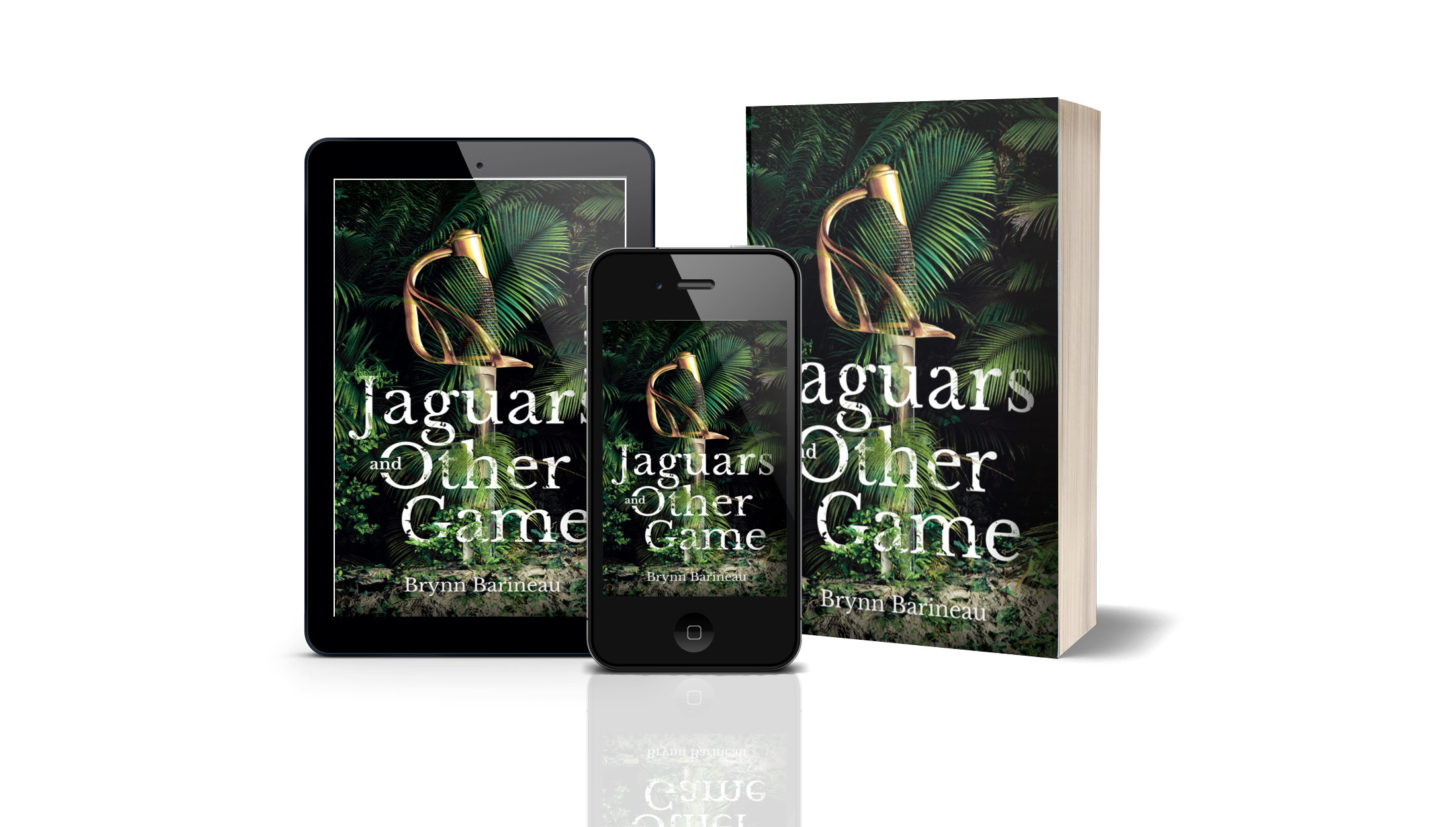
    I guess it’s going to be a real book! Jungle of Ashes has its first event on the calendar! Put on your coziest slippers, grab your drink of choice (Prosecco for me!) and join us on Zoom for not one but two cover reveals! On Wine, Words and First Looks we’ll be revealing the cover for my second novel Jungle of Ashes AND the new cover for the new edition of Jaguars and Other Game, both coming out with History Through Fiction on May 19.

    I’m so excited to be joined by Caroline Hewitt, the audio narrator for Jungle of Ashes and Jillian Forsberg, fabulous historical fiction and JoA’s first official reviewer. The conversation will be hosted by my editor and founder of History Through Fiction, Colin Mustful. We’re going to have a great time. I love a virtual event because I can be cozy and cozy makes me chatty. I will probably overshare and ask inappropriate questions. I can’t wait to speak to Caroline (we’ve only emailed a ton) and hear how she handled all the Portuguese words and Brazilian accents. Y’all she learned a Brazilian for my book!

    The event is FREE! Just register on Eventbrite to get the link and mark your calendar for Friday, February 20 at 8pm EST/7pm CST.

  • Pre-Order Jaguars and Other Game! A Rousing Historical Adventure!

    Pre-Order Jaguars and Other Game! A Rousing Historical Adventure!

    It’s finally happening! After more than a decade of writing, I can finally answer the dreaded “Oh, you write novels? Where can I buy your book?”

    At your local bookstore! That’s where! Jaguars and Other Game, my gender-flipped, Three-Musketeers-style adventure set in 1809 Rio de Janeiro, is available for pre-order from any local bookstore. (Shout out to my indie, Charis Books!) Or if you prefer, buy digital copies from Amazon or Barnes&Noble! Grab a signed first edition directly from Orange Blossom Publishing!

    I have inwardly cringed at the “Can I buy your book?” for years. Writers constantly share memes “If you write, you’re a writer,” but let’s be honest. If you constantly talk aloud to yourself without an audience, you’re not an actor. You’re the person at the coffee shop no one sits near. And a writer without readers is a prolific diary keeper with delusions of grandeur. An author requires an audience.

    Of course, we’re always warned to be careful what you wish for. Once your book is out in the world, it’s fair game for readers to interpret, critique, review and judge. Despite desperately wanting people to read my book, I was also terrified of people reading my book. I carried around a knot in my stomach from the moment my publisher uploaded Jaguars for early reviews on NetGalley until the first review came in 48 hours later. 5 stars. From a stranger. This person was under no familial obligation or threat of causing a super awkward PTA meeting. They could trash my book without consequence to themselves, and they gave my book 5 stars.

    I know you’re not supposed to read reviews. It’s the one piece of advice all authors give to debuts. Don’t read your reviews. But…who actually does that? Who possesses the stone-cold, borderline sociopathic indifference to others’ opinions required to avoid reviews? When you take your kid to a doctor, you don’t leave the check-up without hearing some feedback. This is my book baby. I love it, but maybe I’m delusional. Honestly, after line edits I have no perspective whatsoever where Jaguars is concerned. I need a second opinion. I want to know what readers think.

    Currently, they think it’s a 4.9 out of 5 stars!

    I even got 5 stars from a librarian! *screaming* Take that agent lady who read an early query and said for Americans to read a book set in Portugal it would “have to be exceptional, and this is not it.” (Also, Rio de Janeiro is not in Portugal.)

    This is very stream of consciousness post is to say, I’m an author. My debut novel, Jaguars and Other Game, is available for pre-order through your local indie bookstore, Amazon, Barnes&Noble and directly from Orange Blossom Publishing. You can get signed first editions from Orange Blossom. Check-out early reviews on Goodreads then order your own copy and see for yourself. Jaguars and Other Game comes out on November 22! I hope you love it!

  • The Mad Queen of Portugal Maria I

    The Mad Queen of Portugal Maria I

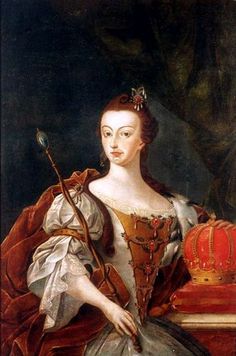
    The first woman to rule Portugal, Maria Francisca Isabel Josefa Antónia Gertrudes Rita Joana (why’d her parents stop there?) married her uncle in order to remain in line for the throne, saw her hometown destroyed by an earthquake-tsunami-fire mega disaster, calmed political unrest in Portugal by proving infinitely more competent, less corrupt, and not as prone to mass incarceration as her father and his advisors, outlived her husband and all but one of her children, and became the only European monarch to leave the content and rule her empire from a colony. Although, by the time the court fled to Brazil, she wasn’t technically in charge anymore as she’d been declared insane and unfit to rule fifteen years earlier.

    Similarly to her son, Prince Regent and then King João VI, Queen Maria was as engaging and tragic as any fictional character. Also like her son, she appears in the historical fiction I’m writing, and has become a favorite character in large part because I want to give her the ending I think she’s due.

    Maria was born in 1734 and became the heir presumptive when all her brothers were still born. Now Portugal had never had a Queen rule in her own right, and they had this totally just and reasonable law that said a princess could NOT marry a foreigner and remain in line for the throne. Because obviously a man would be strong enough to resist manipulation from his Spanish wife, but a woman would be a puppet to her mustache-twirling Spanish husband. (This is hilariously ironic if you know about Queen Maria’s son and daughter-in-law.) So how can a princess marry a prince but not marry foreigner?

    She marries her uncle.

    Despite the family relationship and 17 year age difference, they were quite happily married. Although their son, future King João IV, might have preferred a little less inbreeding in exchange for a lot more chin.

    In 1755, when Maria was just shy of 21, Lisbon was left in smoldering ruins after being hit by so many disasters in day even Hollywood producers would call it over the top. A massive earthquake hit at 9:30 in the morning on All Saint’s Day, while the churches were packed for mass. Almost every church in the city collapsed. Thousands of survivors rushed to open squares around the port, only to be swept away by the tsunami triggered by the quake. Fires then broke out and raged for five days destroying whatever parts of the city were left.

    Estimates put the death toll between 30,000 and 60,000. Three quarters of Lisbon was destroyed. The royal family was away from the city that day, and likely escaped being crushed when the Ribeira Palace collapsed. The people of Lisbon were devastated, and the tragedy would stay with Maria her whole life.

    While the devastating effects of an earthquake on a devout city on a holy day caused much of Europe to start seeing earthquakes as randomly, occurring natural phenomenon and not heavenly ordained, the Portuguese, including Maria, doubled down on their religious devotion. Her Majesty was particularly devout, bordering on fanatical. She kissed the names of God, Mary, and all the saints and angels in any book she opened. She attended mass every morning and prayers every night. Maria filled her room with crucifixes and dolls of saints. (In my imagination, her room is decidedly creepy.)

    As Queen she took a much more hands on approach to governing compared to her father who had taken the “everyone listen to my advisor because I’m going hunting” approach. She rolled back a lot of her father’s more extreme measures such as mass incarceration of political opponents. She’s remembered as a good ruler in Portugal and Brazil. By all accounts Maria was kind and affectionate with her family.

    But she showed signs of mental health problems as early as her teen years when records mention “bouts of melancholy and nervous agitation”. She’d been treated for episodes of delirium even before her husband died in 1786, but two years later when her eldest son, only daughter, a grandson, and her confessor of more than 30 years all died within three months, she descended inconsolable grief and never recovered.

    Her maternal grandfather and uncle had fallen into madness at the end of their lives, suffering from violent mood swings and hallucinations. It’s heartbreaking to imagine, but Maria probably knew her fate during her last years of lucidity. She began ranting that she was damned and that the devil was inside her. On the assumption she was already marked for hell, her conversation became rather “unchaste” and not at all queenly. Visitors who stayed near her apartments heard “the most agonising shrieks…[that] inflicted on me a sensation of horror such as I had never felt before.” She would swing from violently punching and slapping her servants to nearly catatonic.

    By 1792, she was deemed insane and control of the government was given to her only surviving son, João.

    When the Portuguese court fled Napoleon to Brazil, Maria thought she was being kidnapped and had to be carried aboard the ship by the fleet commander. She spent much of the three month voyage screaming. It sounds horrible for everyone involved.

    There’s no consensus on what afflicted Maria during her last two decades. Some historians have suggested she suffered from porphyria, but contemporary research suggests severe bipolar disease. What is certain is that Maria’s death in Rio de Janeiro in 1816 finally brought the queen much deserved peace after more than two decades of torment.


    Save

    Save

    Save

    Save

    Save

    Save

    Save

  • King João VI of Portugal: Feared Crustaceans, Tricked Napoleon, & Lost Brazil

    King João VI of Portugal: Feared Crustaceans, Tricked Napoleon, & Lost Brazil

    One reason I love writing historical fiction is the chance to discover real people I’d swear were fabricated in someone’s imagination. King João VI of Portugal is one of these people. The man was born to be the comedic relief in someone else’s story. Sure, he was also born into royalty, but he seemed so much more suited for getting laughs than governing.

    I discovered Dom João VI while researching for a book set in 1809 Rio de Janeiro. (Aside: King John is the English version of his name and title, which I won’t be using because that makes me think of English kings and Robin Hood but I’m writing about Portugal and there really are just too many people named John or some variation in human history). At the time of my story, João was Prince Regent and had been ruling in place of his mom, Queen Maria I of Portugal, since 1792 when she was declared insane. (Queen Maria is a whole other post.)

    What to say about Dom João? He loved to eat. He always carried grilled chicken in his coat pocket for emergency snacking. This becomes even more disgusting after learning he also hated bathing and wouldn’t change his clothes for months. He was terrified of thunder and crustaceans, very inconvenient phobias when living in tropical Rio de Janeiro. João would literally hide in his bedroom during thunderstorms. He referred to himself in third person and was plagued by vertigo and hemorrhoids.

    Not surprisingly, João was also the last absolute monarch of Portugal. What is surprising are his nine kids, which is eight more than I’d have guessed for a man universally considered a “peaceful dullard” with a “flaccid visage”.

    But the truly shocking and grand achievement of Dom João was surviving. When monarchs all over Europe were getting deposed at best and beheaded at worst, Dom João, the peaceful dullard, kept his crown, and he did it by being the only European monarch in history to move the capitol of his kingdom to a different continent. This man, who hated change so much his servants had to repair holes in his pants while he slept, moved the capital of Portugal from Lisbon to Rio de Janeiro.
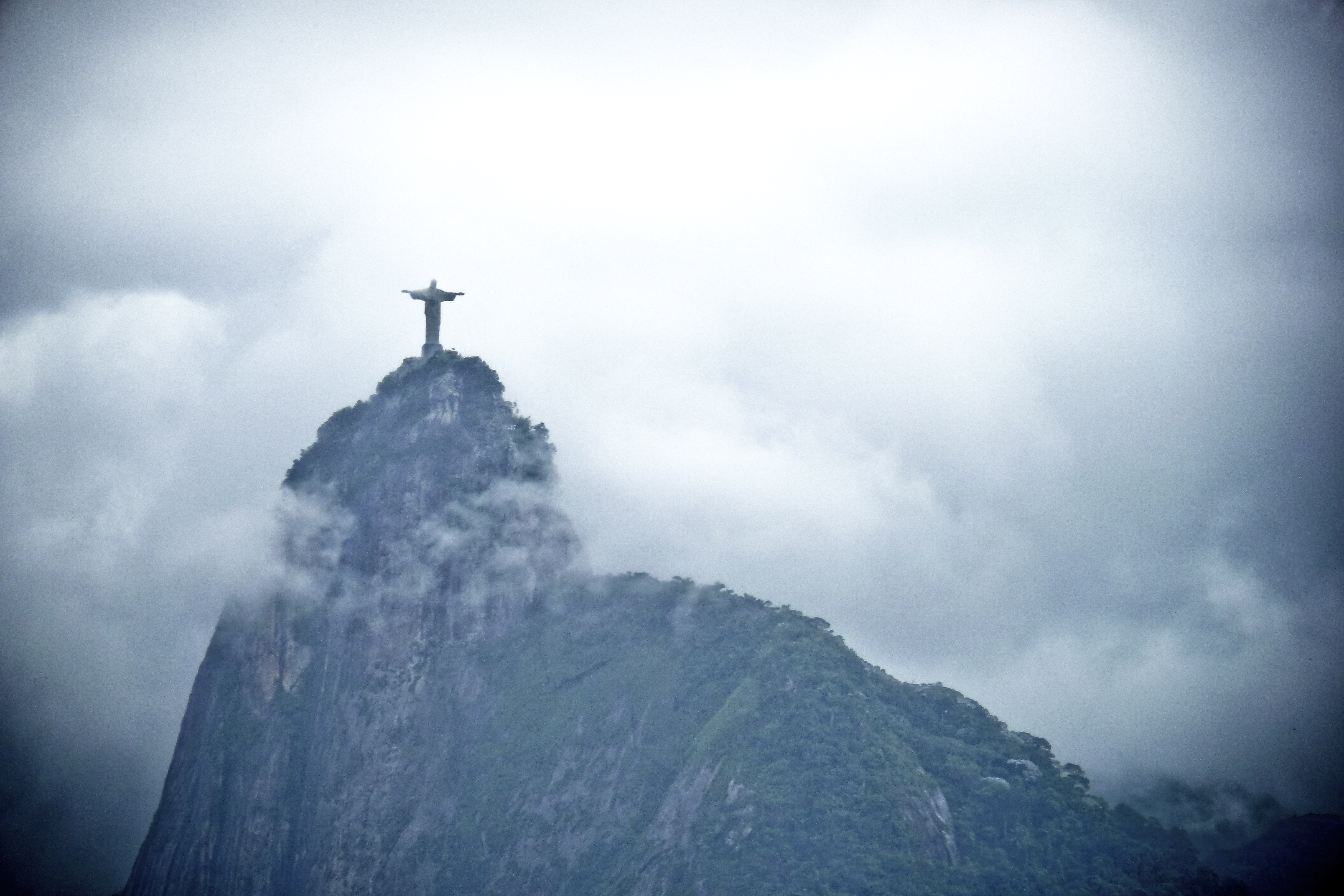
    João had been communicating with Napoleon in hopes of finding some solution that didn’t get him exiled or killed. Napoleon, the British, and pretty much everyone was under the impression Portugal would surrender to France. In 1808, the Prince Regent played Napoleon just long enough to order his government to pack up, board a ship, and get the hell out of Portugal before Napoleon’s army showed up. As someone who always preferred to delay a decision rather than make one, João gave the court three days to evacuate 10,000 people across the Atlantic.

    That’s how Dom João VI found himself living in Rio de Janeiro, Brazil trying to establish court in a colony that had almost no roads between cities, no universities, no printing presses, and no trade with anyone but Portugal. Of course, the total lack of development in Brazil was intentional to keep the colony submissive and easily controlled. No Portuguese monarch ever anticipated having to live in this place where doctor, dentist, and barber was a single, mostly self-taught profession.

    But it all changed under Dom João. He allowed roads, universities, and newspapers to flourish in Brazil. In exchange for escorting the court across the Atlantic, Brazilians ports were opened to the British and trade expanded. Academics, artists, and merchants flooded Brazil.

    And Brazil declared independence sixteen years after João arrived in Rio. (Printing presses always lead to independence.)

    As king finally back in Portugal, João conceded Brazilian independence in 1822 after a bloodless revolution led by the son he left behind in Rio to run the colony. His son’s betrayal probably didn’t bother him too much. At that point his wife had tried to overthrow him a few times so he was surely used to betrayal by immediate family.  When he died in 1826, many suspected arsenic poisoning possibly ordered by his wife. (She really hated him.)

    He may have lost Brazil for Portugal, but because of the reforms and development João initiated during his time in Brazil which led directly to independence, he’s remembered quite fondly here in spite of his eccentricities.

    For my part, I can picture him clearly. His Majesty Dom João VI holding court, unbathed, and referring to himself in third while nibbling buttery chicken pulled out of a stained coat pocket that hasn’t been changed in a month. The perfect comedic relief.

    If you’re interested in reading more about João and Brazilian history, I highly recommend 1808: The Flight of the Emperor by Laurentino Gomes.

    Save

    Save

  • Why Doesn’t Anyone Know a Thing About Brazil?

    Why Doesn’t Anyone Know a Thing About Brazil?

    Rio 1 2008-82There’s a famous comedy sketch in Brazil that features a home invasion with the owner held at gunpoint. The masked assailant aims at the owner and barks “Name the major tributaries on the left bank of the Amazon River!” The owner rattles off several rivers in rapid succession. The bad guy immediately lowers his gun and leaves taking nothing. The homeowner stands, exhales and says “I knew that information would be useful some day.”

    Every country has its own “tributaries of the Amazon”. I had all fifty US state capitols memorized for most of fourth grade then never again. Why would I retain the capital of Wyoming? The world’s a big place and geography is only one of many subjects to master. With a background in international relations, I know where Brunei is but nothing about computer coding. That’s why I won’t judge someone for not being able to place Sri Lanka or name the capital of Azerbaijan, unless that person is on the Senate Foreign Relations committee.

    But Brazil is not Sri Lanka.

    Brazil is not a tiny country with a tiny population and a tiny economy. It’s a huge country with a massive economy but still nobody in the US knows anything about it. The average American knows people speak Arabic in Tunisia and Spanish in Argentina, but ask her about Brazil and she hesitates. People generally know India is important in the global economy but what does Brazil produces exactly? Mention Guatemala, Korea, or Sweden and most Americans will imagine someone with a particular phenotype. What do you think of when you hear “Brazilian”?

    Several years ago, I was visiting my parents in Atlanta and I read an article in the neighborhood newsletter about a recent mugging in the area. The victim gave a helpful warning to other residents to be on the lookout for someone who looked “Brazilian”. Whaaaat?!!! The only less helpful description would be to describe that attacker as a Homo sapien.

    The most upsetting fact was that my parents live in a highly educated neighborhood and still “Brazilian” was published as a helpful description of a person. Even these people wallpapering in college diplomas didn’t know the most basic things about Brazil, like the fact a Brazilian can have ancestry from anywhere.

    And there really is no excuse for it.

    Brazil has the seventh largest GDP in the world. It’s economy is larger than India, Russia, Korea, or Canada and that was coming off of a bad year. At roughly 206,000 million people, Brazil has the fifth largest population in the world. There are more Brazilians than Japanese, Germans, or Mexicans. Globally speaking, it’s pretty common to be born in Brazil. Brazil is also the fifth largest country in terms of land area. It’s bigger than Australia. In terms of exports, Brazil is the US’s seventh best customer ahead of France or India.

    I’ll admit a pro-Brazil bias given that my husband and daughter are both Brazilian, but knowing what I do now, I’m embarrassed by my pre-husband ignorance of Brazil. I’d like to spare others my embarrassment, so here are five basic facts every person should know about Brazil.

    1. Language  Brazilians speak Portuguese! Brazil is the largest country in South America and the official language is Portuguese, not Spanish.
    2. Capital City  The capital is Brasilia. The largest city in terms of population and economy is São Paulo. Rio de Janeiro was the capital from 1763 until 1960, which is why it’s the most frequently given wrong answer to the capital of Brazil question.
    3. Type of Government  Brazil is a democracy and it’s not just a part of the country’s name that is never actually lived up to. Brazil transitioned to a constitutional democracy in 1988 after 30 years of a military dictatorship. Brazil stabilized and entrenched the new constitution in less than a decade, which is amazing considering it takes that long to get a pothole fixed here. Currently President Dilma’s approval rating is 8% and people are demanding an impeachment. Not a revolution. Not a military invasion of the President’s mansion. Literally the entire country despises the current government, but the people want to work within the rule of law. Bravo Brazil! You guys can express your absolute and unified hatred of the current government within the confines of the constitution. Well done!
    4. Economy Really, really terrible at the moment. So, uh, let’s just talk about exports. What does Brazil produce? The top five exports are iron ore, crude petroleum, soy beans, raw sugar, and…any guesses? Poultry. Nobody, not even my Brazilian high school students, ever guesses chickens.
    5. Fun Fact To Impress Friends Brazil has been a colony, a monarchy, a dictatorship, a military dictatorship, and a republic. Name a type of government and Brazil has tried it.  The country celebrates two independence days.  The first on September 7 celebrates independence from Portugal and the second is on November 15 when Brazil transitioned from monarchy to republic in 1889.

    I hope people’s general awareness about the country improves before we move out of Brazil and my daughter is expected to play the role of walking Wikipedia article on the country. What language do they speak is a really boring question to repeatedly answer.

    After all, Brazil is not a tributary on the left bank of the Amazon or the capitol of Wyoming. It’s so much more important. But not many people know that.


    Badge-smlImage_zps04194192