Tag: Brazilian Politics

  • Turkey & Tanks: Happy Thanksgiving from Rio!

    Turkey & Tanks: Happy Thanksgiving from Rio!

    One week ago today, I was sitting at the end of a beautifully laid table surrounded by good friends and equally good food. On my plate was a second helping of turkey and on the tv were images of tanks rolling through streets. Happy Thanksgiving from Rio de Janeiro!

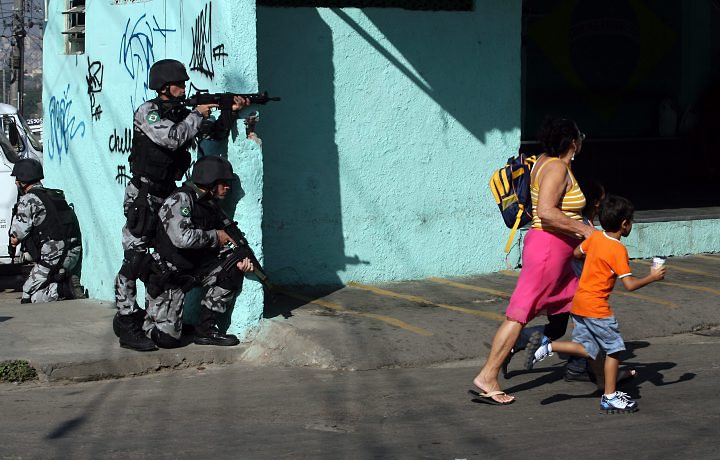
    Most people, even in the US, have at this point heard that Rio was the scene of a violent showdown between drug gangs and police last week. Fortunately, the city has calmed since last Sunday when police and military invaded and secured one of the most violent slums in the city, Complexo Alemão.

    Despite questions and comments from friends in the US, I haven’t written about it because I don’t really understand my own reaction. My rational brain failing to sway my gut reaction. What finally prompted me to write something even if its contradictory and lacks a conclusion, was a facebook post by a family friend and Georgia state legislator that linked to coverage of the violence and asked “How did Rio get the Olympics?”

    Well, I can’t answer how Rio secured the Olympics although I suspect it has something to do with its fabulous location, vibrant sports-crazy population, huge federal support, and the fact South America was long overdue to host the Games. What I can say for certain is that no one needs to be afraid to come to Rio for the Games. Last week was the most violent week in recent Rio history and, to be perfectly honest, I never felt afraid.

    It was fluke that my husband and I were even in Rio when the violence broke out. We flew from Vitoria specifically to celebrate Thanksgiving with good friends. By the time we arrived in the city Wednesday afternoon gangs had been burning cars and buses around Rio for a couple of days.

    My husband and I spent Wednesday afternoon running errands, buying Christmas presents and visiting my in-laws. For dinner everyone, including my 1 year-old nephew, walked to the mall for pizza. The next morning someone came to look at our apartment, more errands and packing. It wasn’t until my husband and I went to the mall for lunch that I realized how bad things were.

    The tv in the food court was showing tanks in the streets of Rio. I had heard that gangs were burning buses and causing huge traffic jams but I never thought it was bad enough to call the military. From what I saw around me everyone was going about their day as usual. When my husband mentioned the bus burnings I asked, “Did they let the people off the bus before they burned it?” He told me they did and I promptly forgot about it. My only concern was getting caught in one of the resulting traffic jams.

    Should I have been afraid? I’ve been asking myself that question. I don’t think so. In a metropolitan area of over 10 million people the odds my husband and I would be in the car selected for burning were minuscule, made even smaller by the area of the city live in.

    In our neighborhood the streets were busy. The coconut water vendor was on the corner and the weekly vegetable market was set up like any Thursday. Taxis were lined up outside the mall and we grabbed one to head to our friend’s apartment for Thanksgiving dinner.

    Throughout the afternoon while prepping for dinner, our host had the tv on. Globo news replayed images of more than a hundred drug dealers fleeing through the bushes into another slum as the police moved in. Our host, a native of Rio, had a very clear opinion on how to deal with the gangs; bring in the helicopters and launch some missiles. In his opinion, the gangs were armed militias and they were waging war against the government.

    I was sitting next to him watching the same reports but I couldn’t muster the same anger. I saw a group of armed (yes, heavily) but often shirtless and shoeless young men and teenagers running from one neglected part of the city to another. The news was running shots of gang members burning tires. While my host called for missile strikes a voice in my head cried “Oh God, shirtless teenagers are burning tires! Quick call the marines!”

    I know those teens had guns. I know they were actively using them. Many people in Rio were justifiably afraid for their lives. Just not any of the people in the neighborhood where I was.

    I didn’t understand the ferocity and panic that some of the other dinner guests had. Their day had not ben impacted in any way by the violence. As for the chance of this “war” spreading to other areas…To my eyes the “war” was over before the second bus finished burning.

    The gangs had pistols and some automatic rifles. The police had bullet proof vests, pistols, rifles, scopes, years of training, overwhelming numbers, helicopters and did I mention the army was called in? This was the most one sided war in the history of military engagements.

    I’ve read back over this post and I’m aware of how bizarrely pro-drug dealer it sounds. Let me assure you, I think everyone of them should be arrested, sent to trial and then to jail on what is probably overwhelming evidence. They have broken the law, disrupted the entire city and started a gun battle that hurt many and even killed some. And yet…

    Images are powerful things. The image I remember most vividly from all of the news reports that Thursday was not the scene of a hundred armed men running from the police. It was of a group of armed and uniformed police officers dragging a shirtless, handcuffed teenager (he was 19 at the most) in front of reporters. One of the officers grabbed the teen’s chin and jerked his face up so all the cameras could see. The police displayed their human trophy and it made my stomach turn.

    I was the only one who saw that scene. We were having dinner but from my chair at the end of the table I could still see the tv. My reaction was physical. My stomach clenched and could feel my face flush. The crawl along the screen told me this was a captured drug dealer but all I saw was a half-naked kid being treated like a prized animal pelt by forces infinitely more powerful than he had ever been or could hope to be. It broke my heart.

    Of course I want the police to be able to defend themselves from people perfectly willing to use violence, but I expect the people society allows to carry weapons and use them to have respect for every human being. That is why they are the “good guys.” The good guys know that human life has value simply by being human. If you can treat someone like an animal without a second thought, in my book, you’re a bad guy.

    I don’t think that young drug dealer was born evil. His government failed him at every turn, health care, education, even basic sanitation. It’s certainly not an excuse given the thousands of people living in the slums who don’t turn to crime, but so many legitimate options were closed to him because of where he was born.

    It’s funny. I’ve been reading comment streams and blog posts about the violence. The majority seem to agree with my host. Kill the drug dealers. They’re the bad guys. I’m truly amazed by the fact I haven’t jumped on that band wagon. I’m no pacifist. I do moral outrage and righteous indignation really well.

    I’m sure it all it would take is for me to have a gun put in my face. It’s not been tested, but my compassion is probably only around when the weather is fair. I finally decided to stop trying to convince myself to hate them. A few people reminding everyone that even drug dealers are people who deserve a trial before being convicted is not a bad thing. Why would I want to talk myself into hating and fearing people anyway? If I can be aware of the situation and go on about my day, then yay for me.

    And you can go about your day in Rio too! That was the point of this entire post. The world doesn’t need to fear coming to Rio for the Olympics. I was in Rio during a week of violence and I still got all my Christmas shopping done. The chances of you being assaulted are minimal. You’re far more likely to get run over by a bus.

    So buy your tickets early! Beach volleyball is going to be right on Copacabana!
  • Brasilia: Poorly Executing Good Ideas

    Brasilia: Poorly Executing Good Ideas

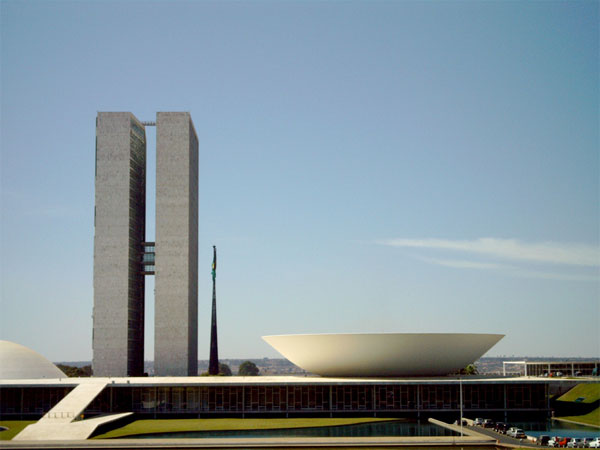
    Brasilia, the Washington DC of Brazil, is coming out with a new slogan for the country as part of a rebranding for the 21st century.

    “Brazil, using the best technology moderately well.”

    Ok, it’s not an official slogan. Just an accurate one. Brazil is rapidly becoming a global player with steady economic growth and the world’s fifth largest population, but the country still has serious development challenges ahead of it. Fortunately, politicians love nothing more than shiny, new, development projects.

    The goals behind Brasilia’s plans (improve efficiency, access, or capacity) are worthwhile. The problem with many of the government’s projects is deadlines. The haste with which many improvements are put into place results in half-assed solutions.

    My last post was about the disaster that is the new college admissions exam. The ENEM is an excellent example of a good idea hastily and poorly implemented. Another example is the Federal Judiciary’s “Processo Virtual.”

    The Federal Judiciary is on it’s way to being a paperless institution. All records, procedures, decisions will be virtual. Anyone who has ever been asked to provide three certified copies of their 8th grade report card (which in Brazil is everyone) will applaud any effort to reduce paperwork in Brazil.

    How can Brasilia ruin such a good idea? Assign a deadline giving all first instance courts of the Federal Judiciary less than two years to make the transition.

    In order to meet the deadline, courts quickly adapted previously-made software to use for cataloguing cases. Because the software was not designed for the courts there have been constant problems inputing records. Adding to the confusion, different regions are using different software. While lawyers have the option of filing petitions online, they are not required to. Cases submitted on paper are than scanned by the court staff.

    The records of the Federal Judiciary did not warrant the creation of specific software? Maybe no one told Brasilia that nowadays people create new software daily. While not as exciting as launching angry birds with a slingshot, judicial record keeping certainly deserves it’s own app. Maybe that Facebook guy would do some pro bono work as part of his image rehabilitation.

    The Federal Judiciary is trying to improve and move into the future. Admirable goals but rushing the process will only cause problems that have to be fixed later. I know politicians think in terms of election cycles but when it comes to development long term thinking is crucial.

    Note to Brasilia: Replacing an outdated system with a flawed one is not progress.

  • The Entrance Exam: a comedy of errors

    The Entrance Exam: a comedy of errors

    Traditionally in Brazil, universities have each had their own entrance exam. A student applying to six universities, would need to travel to each university and sit for six different exams. The process was inefficient and costly for both students and universities.

    In order to make the admissions process more egalitarian and streamlined, Brazil created the ENEM, a national entrance exam. This year is the second year the exam has been in official use and is now used by many universities as the sole entrance criteria or a first round exam.

    How’s it working out?

    Putting aside my personal belief that a single test score on a single weekend is a terrible way of determining a student’s merit, the ENEM in Brazil has been a tutorial on how to screw up administering a national exam. A true comedy of errors, that is unfortunately not funny at all since kids, already in one of the most stressful times of their lives, are the ones who suffer.

    Let’s start at the beginning.

    In 2009, the answers were leaked in advance and the exam was scrapped days before the testing date. Every student in Brazil hoping to attend college had to regroup, the exam rewritten and universities across the country had to push back start dates in order to use the ENEM as their admissions criteria.

    Earlier this year a software error within the Ministry of Education released personal data for millions of students.

    Last weekend the 2010 ENEM was given. This time around the test was successfully kept secret. Not quite as successful was the printing. At least 2000 tests had the Natural Science and Human Science questions inverted from the results sheet, some tests were missing or repeated questions and there are reports the essay theme was leaked in advance.

    Inevitably, someone sued. That “someone” being both state and federal agencies arguing the test failed the very basic standard of being equal for all students. A federal judge ruled the exam invalid. Inep, the federal agency responsible for the ENEM, appealed the judge’s decision and as of Friday the ENEM results are reinstated. But the appeals court’s decision is, of course, being appealed. The minister of Education said it would take at least two or three months to organize a second exam for all 3.4 million students and is therefore in favor of keeping last week’s test. A final decision could be weeks away.

    In the meantime, a second exam has been schedule for the students who received misprinted tests on the same days as the individual entrance exams for many of the top universities. Those students will have to choose which exam to take either forgoing application to a top university or the many universities who use the ENEM.

    And the students, the children who spent hours preparing and planning futures based on the results of this exam, they are being told not to worry and go on prepping for any other entrance exams they have.

    I think it’s important to see this entire fiasco from the student’s perspective. In the US, the SAT and the anxiety it causes are well known. Imagine if the SAT was the only admissions criteria. No grades, no essays, no letters of rec. Just an SAT score. That is the situation in Brazil. I’ve worked with teens here during the process and American seniors a zen masters compared to their test obsessed Brazilian counterparts.

    Based on my work here, I have some advice for Inep.

    Unfortunately, there is no way to salvage this year’s exam. Either 3 million students have to take the ENEM again in a few months or 2,000 take it again and miss out on applying to the universities with overlapping exams.

    There is a solution for next year, however. Don’t offer the exam.

    The Minister of Education should take responsibility and admit the federal government is not yet capable of administering an exam to 3 million students simultaneously. Therefore, the ENEM should be suspended for a minimum of 5 years.

    Universities will return to offering their own entrance exams. Don’t worry. The ENEM has only been official for two years. I’m sure universities are still capable of administering their own exams at least as successfully as you have administered yours.

    Over the next five years you, the bureaucrats, will revamp security and printing protocol. You will follow the excellent advice of Maria Helena de Castro, a former president of Inep, expand the question bank from a meagre 10,000 to 100,000 so that you can always have multiple of versions of the exam. This way you will be able to offer the exam on multiple weekends allowing backup dates should there be problems and reducing the number of students sitting for any exam.

    The exam will be administered during the next five years on a trial basis. Scholarships for top scorers and emphasizing the chance to practice sitting for entrance exams, are ways to encourage students to take the exam seriously during it’s trial phase.

    If after five years Inep has managed to administer the exam without security breaches or the score sheet being printed in reverse order, then the test may be brought back for official use.

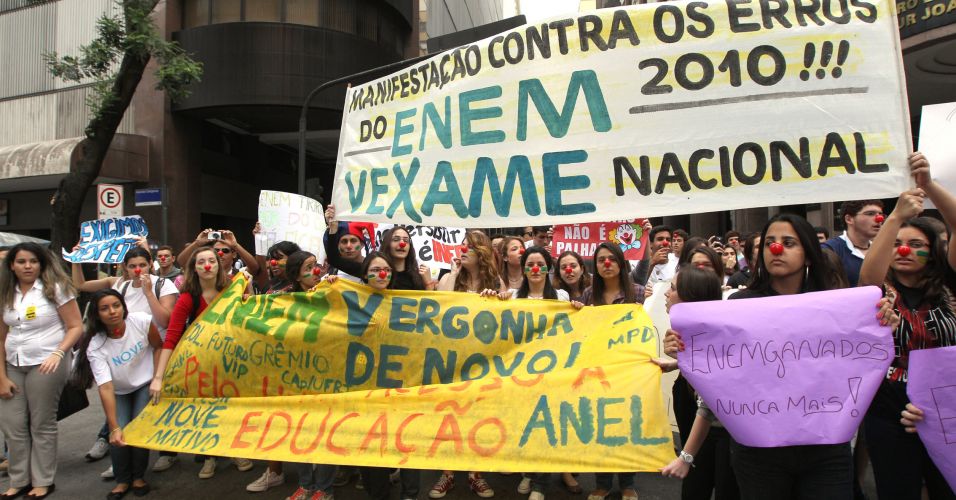
    A spokewoman for Inep called the 2009 exam a great success. That is wrong. It was successfully salvaged after a disaster. Now, officials are saying this year’s exam was successful save the misprinted exams, dismissing the 2,000 students who received those exams. Inep claims to have made the admissions process better for students, but based on the many student protests against the ENEM this week, I don’t think they believe you.

  • Human Development Index Brazil & US

    Human Development Index Brazil & US

    This past week the 2010 Human Development Index (HDI) came out and marked its 20th anniversary. The idea behind the HDI report is that a country’s development cannot be measured in GDP alone. The quality of life for the people living in the county is what matters.

    Data on every type of development factor from internet accessibility to maternal mortality rates to average years of school has been collected from 169 countries. This year they’ve added a special section looking at global trends of the past two decades. And it’s all free. All the data, their methodology, the analysis, it’s all available to anyone with internet access. The internet is amazing! (So is UNDP for not charging us to see their very pretty graphs.)

    Just for fun (yes, I think comparing development stats between countries is fun) let’s compare Norway, Brazil, the US and Tajikistan. Why Tajikistan? Because Tajikistan is fun to say.

    Overall HDI ranking (out of 169 countries)
    Norway 1
    Brazil 73
    United States 4
    Tajikistan 112

    Life Expectancy at Birth
    Norway 81
    Brazil 72.9
    US 79.5
    Tajikistan 67.3

    Mean Years of Schooling (among adults)
    Norway 12.6
    Brazil 7.1
    US 12.4
    Tajikistan 9.7

    GDP per capita (2008 PPP US$)
    Norway $58,277
    Brazil $10,846
    US $46,652
    Tajikistan $2,064

    Inequality Gini Coefficient (0 is perfectly equal distribution)
    Norway 25.8
    Brazil 55
    US 40.8
    Tajikistan N/A

    Adolescent Fertility Rate (Births per 1,000 women 15-19)
    Norway 8.6
    Brazil 75.6
    US 35.9
    Tajikistan 28.4

    Homicide Rate (per 100,000)
    Norway 0.6
    Brazil 22
    US 5.2
    Tajikistan 2.3

    So, what can we conclude from all these numbers? Norway deserves some hearty congratulations for doing apparently everything right. I think the only reason we all aren’t heading to Norway and putting plaster gnomes in our windows is because most people want to see the sun more than six months out of the year.

    We can all be grateful we don’t live in Tajikistan no matter how fabulous the name is. Brazil has come a long way but still has serious problems particularly in terms of education and violence. Better public education would also go a long way in combatting other issues such as teen pregnancy.

    And what about the US? There are serious problems facing the US, but the fear and despair manifesting itself in the media, political rhetoric, and comment streams isn’t warranted. Life in the US is good. Not perfect, but in comparison to the vast majority countries the quality of life you can have in the States is luxurious.

    If people would just stop screaming at each other as if we’re on a burning ship that’s sinking into shark infested waters, we could see that we have all the resources we need to fix our problems. Governing is not a game with winners and losers. It’s problem solving. Nobody wins until the problem is solved. We may not be Norway, but number 4 is pretty darn good.

  • Should hate speech be a crime?

    Should hate speech be a crime?

    Just when you start to think your country is the best at something, reality goes and levels the playing field. I thought the US boasted the craziest, angriest bigots but then a group of pissed off Brazilians took to twitter Sunday night and proved me wrong. It seems really hateful people can live anywhere. How unfortunate.

    The hate-filled twitter feed was brought to my attention by a fellow blogger (Thanks Rachel!). Obviously not everyone in Brazil is happy about Dilma’s election. A few people decided the best way to express their frustration was to send a flurry of tweets blaming voters in the Northeast and calling for them to be gassed Nazi Germany style. (Really, the casual references to Nazis and Hitler being tossed out these days show a disturbing lack of perspective. But I digress…)

    The group Diga Não A Xenofobia (Say No to Xenophobia) collected a few of the tweets and posted a summary of the subsequent legal action being filed against one of the authors. The tweets are at the bottom of the article and even if you don’t speak a word of Portuguese the hate comes through loud and clear.

    That these people are ignorant bigots and their messages racist, hateful and repulsive is beyond dispute. But should they be prosecuted for expressing that hate? No, I don’t think so.

    I know my opinion is grounded in a very American understanding of free speech. Hate speech is illegal in many countries, not just Brazil. Here the crime of racism results in 2-5 years in prison and a fine. While I think the sentiment behind such laws is good, I don’t think they are effective and I firmly believe they encroach on a person’s right to voice her opinion.

    I assume that laws against hate speech were enacted to combat racism, xenophobia, etc. Perhaps, supporters even believe they made things safer and cut down on hate crimes. Based on what I’ve experienced, the laws merely force racism underground. It is not extinguished. People will continue to voice their opinions in the privacy of their homes, between friends and in front of their children, but now there is no public debate about the issue. I think it’s better to know who the bigots are and what they’re thinking. You can confront them and debate the issue.

    On a more fundamental level, I believe that if a person wants to post 140 characters of trash that is her right. Unfortunately, she has a right to be a bigot.

    One exception to free speech is inciting violence. Calling on people to kill or hurt others should not be protected. The twitter author is being charged with inciting the public to commit a crime and it carries a penalty of 3-6 months in prison or a fine. (I’m baffled why inciting a crime results in less jail time than being a racist. Anyway…)

    So what crime did this tweeter ask people to commit? She asked for people to do SP (Sao Paulo) a favor and kill someone from the Northeast. Disgusting, yes but a clarion call to violence, I think not.

    Now, if she had gone on to list the names and addresses of several people then I’d agree she was trying to incite actual violence. But a tweet? Someone who takes the time to send a tweet to express her hate is not violent. Just ignorant and lazy. These people are too busy trying to figure out how many slurs they can fit within 140 characters to be a threat to anything other than their own reputations.

    What do you think? Should hate speech be a crime? Should the people who sent the tweets be prosecuted?

  • Faking It: A Brazilian Success Story

    Faking It: A Brazilian Success Story

    Brazil is certainly getting its play in the international press lately.  Electing a possibly illiterate clown to congress by a landslide will do that for a country. (No, that is not a metaphor. An actual, professional clown will be representing Sao Paulo.)  Because I live here, I would prefer to focus on Brazil’s success stories and my stepmom sent me a link that does just that.

    On NPR’s All Things Considered last week, there was a segment about Brazil’s remarkable end to decades of runaway inflation.  It’s due in no small part to a group of drinking buddies from PUC (Catholic University in Rio) and a trick that worked on pretty much the entire population of Brazil.

    My Brazilian husband refers to the problem as “Brazil’s culture of inflation.”  He being somewhat (no specifics) older than myself remembers prices on virtually everything changing daily during the worst periods of inflation.  Those who could bought dollars or had savings accounts that adjusted daily.  But for lower income families (i.e. most of Brazil at the time) paychecks had to be deposited immediately or risk being worth less by the next day.

    This went on for decades until it became built into Brazilian culture.  People had no faith in the government or the currency.  They behaved as if the currency had no value and expected all government plans to fail.  So part of the solution was to trick the population into believing the currency was stable.  How do you do that?  You create a imaginary currency.  This became known as the real plan.

    Obviously, this is a gross simplification and at 7 minutes the broadcast is not delving into all the complexities either.  I do think, however, that’s it’s an informative and enjoyable introduction to a subject most Americans have never heard of.  You can listen to the story here.

    And on a human interest note, I can say that one of those four drinking buddies who ended inflation, is now a nice, doting father.  I taught his daughter in an SAT prep class.

  • Suggestions for Lula’s Second Career

    Suggestions for Lula’s Second Career

    The results are in and we’re headed toward a runoff.  In Brazil, you cannot be elected with a mere plurality.  Because no presidential candidate managed to secure more than 50% of the vote, there will be a runoff between the top two vote winners, Dilma and Serra.

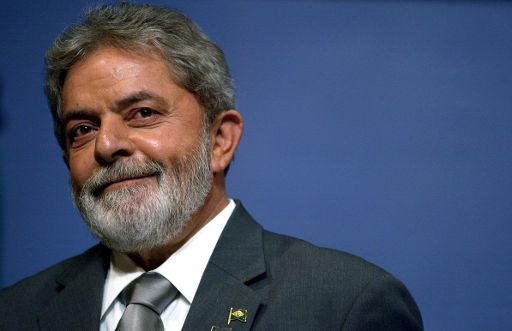
    Analysts in Brazil and abroad are certain Dilma will win easily, but it’s not over until all the vote are counted.  The one thing we know for certain is that President Lula will be out of a job in a few months.  Rumor has it he’ll be back to run again in four years but in the meantime he’s going to need a second career.  I have some suggestions.

    Sea captain.  With his beard and deep, gravelly voice the man was born to shout orders like “Swab the decks!”  Or whatever the Portuguese equivalent of “swab” is.  Brazil has plenty of monkeys and parrots, so he can have his pick of faithful, shoulder-sitting animal companion.  He lost a couple of fingers working in the factory. He could start telling people it happened while loading cannons during a sea battle.

    Restaurateur.  Specifically, the owner of a cachaçaria in Salvador.  Lula has a legendary love of cachaça. Why not take that passion to the bank?  He is charming and personable, crucial skills for a great bartender. Plus, the northeast is Lula’s strongest base so he’d be able to get in a little politicking while passing out shots.

    Tattoo Parlor Owner.  Not because the man has any tattoos. (That we know of…) I just want him to buy a shop and name it Lula Ink.

    Santa Claus.  Has any country ever been ruled by a man who more closely resembles St. Nick?  Lula is short, with a round belly and full, grey beard.  Has he seriously never been dressed in red velvet for a Christmas photo op? If I found myself standing in front of him, I would have to fight the urge to ask for a new iPad and pony.  Lula is already called the Father of Brazil, which makes for a pretty smooth transition to Father Christmas.

    Who knows?  Maybe he’d love life at the north pole so much he’d decide to stay there rather than come back in four years to establish his dynasty.  What a wonderful present that would be.

    So, what do you guys think Lula should spend the next four years doing?

  • Election Day in Brazil

    Election Day in Brazil

    Tomorrow is election day in Brazil.  Thank God!  If I hear one more election jingle being blasted from the propaganda cars driving through the city, well, I don’t know what I’d do, probably nothing, because I’m not a citizen and can’t vote.

    Anyway, elections! All the expats are blogging about it.  Even the NYT made it their lead article online this afternoon, so I’ll jump on the bandwagon.

    The big job is up for grabs this year.  The major presidential candidates are in the picture above.  Starting on the left, we have Marina Silva. (No relation to the current president.  Silva is the Portuguese equivalent of Jones.)  Marina is a native of the Amazon and passionate environmentalist.  She’s running on the Green Party ticket after resigning from her job as Environmental Minister under current President Lula.  She’s got her cred with the workers, something very important in Brazil, due to the years she spent working as a maid while she got through school. She fights for the preservation of the rainforest and rights of the native forest dwellers.  Very cool!  She is staunchly anti-abortion.  Very uncool!

    To the right of Marina is Jose Serra who’s running with the Social Democrats (PSDB).  As a student union leader, Serra was forced into exile for 14 years after the military government came to power.  During that time he got a PhD in economics from Cornell.  He’s been a Senator from Sao Paulo and Health Minister under President Cardoso.  He lost the 2002 Presidential Election to Lula.  Now, he’s probably going to loose to Lula’s lackey.  Let’s wait and see if he then grows a beard and gains 40 lbs.

    Lula’s lackey, is better known as Dilma Rousseff.  And she’s not really a lackey. She’s a handpicked protege who lacks the charm and energy of her predecessor.  Not that she doesn’t have any experience.  In fact, she was part of an armed rebel group fighting against the military dictatorship during her student days.  She was eventually jailed and tortured. Under Lula she has served as Minister of Energy and Chief of Staff.  Lula, whose approval is around 80%, has been at her side constantly for the last year.  Electing her is essentially an endorsement of Lula’s government and Worker Party (PT) control of the government.

    There’s also some old guy on the end. He’s not going to win so I don’t really care to find out who he is.

    What I find ironic and depressing is that both Dilma and Serra are people who have personally experienced the brutality of a government that does whatever it wants ignoring the rule of law, yet they are running campaigns that continually violate electoral law.  Serra has been fined seven times for a total of R$35,000.  He’s paid R$5,000.  Dilma has been fined 10 times by the electoral court.  She’s paid  R$16,000 of the total R$48,000 she owes.  And in a truly shameful display of leadership, President Lula has been fined a total of R$47,500 for his illegal campaigning for Dilma and has failed to pay a single cent.

    Marina has not been fined once.  As of Friday one poll had her at 15%.  See kids, follow the rules and you too can come in third place!

    It’s disgraceful for the party in control to create a political culture where the rule of law can be ignored. PT leaders buy off lower income families with a monthly stipend (which they do need and certainly makes a difference in their lives) and then spend the rest of their time serving their own interests.  They threaten critical media outlets, buy votes in Congress, and expand government’s role in industries to create jobs for their party bosses.

    Not that I think any other party would behave differently. Without a doubt PSDB wins the award for slimiest attack ad.  The ad claims a Dilma presidency will unleash a zombie army on Brazil that would release the hounds of hell and paint Brasilia red with blood.  My Portuguese isn’t great, so I may have some of the details wrong.  Watch for yourself and let me know what you think PSDB is trying to say.

  • Free Speech in Brazil

    If there is one group of people I would not want to piss off, it’s comedians.  They may make other people laugh but comedians themselves can be a savage and unforgiving group.  Think Tina Faye and Sarah Palin or Jon Stewart and anyone at Fox News.  A good comedian can leave someone’s ego in tatters and send him running for mommy.

    Maybe it’s that ability Brazilian politicians feared when back in July at the official start of the campaign season,  the electoral commission decided to start enforcing a law that prohibited ridiculing a candidate.  Specifically, radio and tv personalities cannot create audio or video content that degrades or ridicules a candidate, party or coalition.  The fine for a single infraction is R$200,000.

    As an American, I was shocked when I read this.  Because of course, as an American I know what true democracy is and am its de facto spokesperson when abroad.  I know the right to mock politicians is sacred.  It’s a cornerstone supporting the entire institution democracy.  Freedom to religion, property, guns, and to mercilessly ridicule politicians.

    In the midst of my righteous indignation on behalf of free speech, my husband pointed out, correctly, that free speech is a myth.  All countries regulate speech in some way.  The type of speech that gets regulated is determined by culture.  In the US, we allow the most grotesque distortions of facts to be presented as truth.  And in addition to Fox News, we also allow political satire.  We do, however, regulate speech related to sex.  You can call the President a nazi but you can’t say the word vagina.

    If there are precedents of regulating offensive speech, then it’s understandable the Brazilian legislature wants to protect the image of the candidates from harmful humor.  Right?  Turns out most Brazilians are not political candidates themselves, strongly value free speech, and really enjoy satire.  Hundreds joined comedians in a protest through Copacabana.  Legal experts throughout the country condemned the law.  One op-ed in O Globo said the law ignores the fact that truth is often presented through satire.  Also, it’s unconstitutional.

    A few people who share that opinion, 6 to be exact, are on the Supreme Court and last week voted to suspend the law.  Even the justices who dissented agreed the law was never meant to be applied to comedians, but felt its complete suspension was unnecessary.  It’s a victory for free speech and Brazilian comedians have something to smile about.