Tag: Bureacracy

  • Dear Brazil, It’s Portugal’s Fault.

    Dear Brazil, It’s Portugal’s Fault.

    I’m currently obsessed with an idea for a historical fiction novel and have spent the last week devouring books on colonial Brazil. (I know you’re jealous.) It’s been fascinating reading actually because it’s all entirely new history for me. It wasn’t until World History in high school that I even knew humans existed outside of Europe, and by “Europe” I mean Italy, France, and Britain with a brief stop in Germany for the Reformation. Any ideas I have about Portugal or South America I learned from Columbus Day themed picture books and Disney’s Emperor’s New Groove.

    Turns out the Portuguese did more than just finance Columbus. They dominated maritime exploration in the 15th century, and that’s how little Portugal ended up with the enormous colony of Brazil. After a week of research, I now understand the root of all of Brazil’s problems. Portugal.

    Everything is Portugal’s fault.

    Let’s take education. Brazil does not have a single university in anybody’s top 100 Schools in World list. I recently read an article that could be summed up as “Brazilian have started buying books!” I can’t remember that last time I went to the beach and saw someone reading a book and I’m at the beach almost every weekend. Which makes perfect sense in a country that had printing presses, books, and universities banned for the first 300 years of its existence.

    Yes, Portugal controlled Brazil for 300 years before it allowed a university to be built or a printing press to operate. Put another way, book circulation was banned for a century longer than it’s been legal in Brazil. Thanks Portugal!

    Do you think Brazil’s government is a quagmire of ineffective bureaucracy staffed by people who are allergic to work? When the Portuguese court fled Napoleon and established itself in Rio de Janeiro, it brought between 10,000 and 15,000 people. When John Adams moved the US government from Philadelphia to Washington D.C., he moved 1,000 employees. And all those 10,000 people who came with the court expected a stipend from the government. Today, public pensions are currently bankrupting Brazil. Thanks Portugal!

    Brazil is currently hosting a global event. No, not the Olympics. I’m talking about the largest corruption scheme in the history of democracy, the Lava Jato case in which federal politicians awarded contracts and got kickbacks to the tune of billions of dollars.

    It’s actually totally understandable that Congressmen and their friends all expected rewards. When Prince Regent João showed up in Rio, the crown was flat broke, so he just started selling titles to wealthy Brazilian merchants. Prince João gave out more titles in eight years than his ancestors had in the previous three centuries. You get to be a Baron! And you get to be a Baron! And you get to be a Baron! (This is assuming you’d like to make a donation to the Court, of course.) Those of us at the top have to get each others’ backs, amiright? It’s Brazilian tradition. Thanks, Portugal!

    I’ve wondered since arriving back in 2006 why the fifth largest country in the world in terms of land area seems to use two lanes roads almost exclusively. Why? Why am I sharing a single lane between states with all the 18-wheeled trucks? Because it was illegal to build roads between states until after João and his court arrived in 1808, 300 years after the Portuguese took control of the territory. And factories weren’t allowed. So no industrialization. Which means no trains. Thanks, Portugal!

    I’ve learned all this from 1808 The Flight of the Emperor by Laurentino Gomes. It’s an engrossing telling of an unbelievable true story. One of the most striking accounts of colonial Brazil was from a woman, Maria Graham, arriving in Brazil for the first time. As her ship sailed up, she gushed over the picturesque city of Salvador with it’s beautiful white homes and striking setting on a cliffside. She called it “a city, magnificent in appearance from the sea.” Her opinion changed dramatically once walking the streets of the city. She describes Salvador as no less than “the filthiest place I ever was in.”

    19th century Salvador by Joseph Alfred Martinet
    19th century Salvador by Joseph Alfred Martinet

    While I did not consider Rio anywhere close to the filthiest place I’ve ever been (I lived in a coed dorm in college), I did go through the exact same swing in emotions when first arriving in Brazil. Looking out the plane window, I was in awe of Rio’s beauty. Then I left the airport. The view out the car window was…disappointing in comparison.

    Two hundred years separates Graham’s arrival and mine, yet our reactions were nearly identical. Culture is a powerful yet often unconscious shaper of our behavior. I have a university degree in this. I shouldn’t need a reminder, but this book was just that. Now, I understand. The next time I have to argue about whether the phrase “copy of your passport” means just the information page or all pages in the book, or I bounce along a road filled with potholes but with wifi coverage, or I read about another politician who’s been suspended due to a corruption scandal, I’m not blaming Brazil. I’m blaming Portugal.

    Because it’s all Portugal’s fault (#blameportugal). And they didn’t even leave a legacy of good wine. Thanks a lot, Portugal.

  • Beach Day Doctrine: Great weather leads to awful governments

    Beach Day Doctrine: Great weather leads to awful governments

    A typical winter's day in Brazil.
    A typical winter’s day in Brazil.

    My family went to the beach this past Saturday.  We packed a kite and a boogie board and stayed out through lunch. It was an absolutely perfect beach day, warm without being hot and breezy without being chilly.  The sky was a sheet of blue with a few fluffy clouds pulled decoratively across it.  But the best part was having the beach almost entirely to ourselves.  People in Vitoria just don’t go to the beach in winter.

    Yes, it’s winter here in Vitoria, Brazil.  You can really feel it today.  It’s 68 degrees (20 C) outside and drizzly.  People are wearing their leather jackets over their shorts.  This will be one of the coldest days of the year here.  I’m sure it will be a front page article in tomorrow’s paper.  “Cold Front hits Vitoria. Drives Locals to Wearing Coats!”

    In my opinion, the weather is one of the best things about Vitoria and Brazil in general.  I think it’s also why the government sucks.

    I have a theory that the weather of a country can be tied directly to the quality of that country’s government.  The better the weather, the worse the public services.  The worse the weather, free university for everyone!

    Let’s take Norway.  The Economist’s Quality of Life Index ranks Norway third in terms of quality of life and third in GDP per capita.  Norway is number one on the UNDP’s Human Development Index.  Norway’s government is the world champion of governing.  Year after year, they are crushing the competition. Why? Because without an awesome government, there would be absolutely no reason to live there.

    This is a place where citizens go weeks without seeing the sun.  Every winter, there’s a period when the sun never makes it over the horizon.  This isn’t a freak phenomenon.  It’s a lifestyle.  How to avoid Winter SAD (Seasonal Affective Disorder) during the polar nights is a regular part of the school curriculum.  Why would anybody live in a place where winter is accompanied by its own psychological disorder causing sadness, a loss of self-esteem, and desire to avoid social and physical contact?  Why? Free universal healthcare coverage for all legal residents.  That’s why.

    Not surprisingly, Norway’s tourism website doesn’t bring up those polar nights, but it does have a lot to say about its midnight sun.  You can take an ocean cruise at midnight or stroll through the park at 2am.  Come visit Norway in summer and have 24 hours of sunlight!  Honestly Norway, 24 hours of sunlight doesn’t sound like a good thing.  It’s slightly better than 24 hours of darkness, but I have no desire to live in a place with sunlight streaming through my window at 2 am.

    Except that in Norway, universities are tuition free for all students, including international students.

    On second thought, I could probably get used to wearing a sleep mask.

    Norway’s tourism site also touts its mild winter temperatures.  The average January high for Oslo is 32 degrees (0 C). I suppose that’s mild compared to Siberia, but it’s still a place where getting locked out of your house in December is potentially life threatening.

    Here in Vitoria, you can sleep on the sidewalk 365 days a year and feel, at worst, a little uncomfortable.  Good thing too, because there are quite a few people who do sleep on the sidewalk.  Does Norway even have homeless?  I don’t see how.  The winters would kill them off.

    And this is the crux of my theory.  The environment in Norway is so inhospitable, the government has to help its people survive and then give them a reason to stay.

    What does a person need to survive a winter day here in Vitoria? A sandwich and a tree.  Something to eat and shelter from the hot-even-in-winter sun or rain.  That’s it.

    My theory holds true for other countries.  Sweden, Finland, Denmark, Canada, Australia (Why is Australia listed? It’s hot, in the middle of nowhere, and has all the world’s most poisonous things). These countries have awesome governments and crappy weather.  Venezuela, Fiji, Mexico, Maldives, Greece: crappy governments, 365 days of beach.

    This past Saturday was a spectacular day.  Bright sun.  Soft sand.  It was the kind of day that warms you on the inside and puts hope back in your life.  Listening to the waves while getting drunk on sunshine and coconut water, a person won’t care about anything.  Not even that Brazil ranks 79 on the HDI or that dozens of top government officials have been indicted for stealing billions in taxpayers’ money or that the President’s approval rating is 9%.

    Here schools are terrible.  Public healthcare is broken.  Inflation is increasing.  But the weather is fantastic, the beaches are free, and with 4,655 miles (7,491 km) of breathtaking coastline, there’s space on the sand for everybody.  What else do you really need?

  • Getting a Driver’s License in Brazil

    Getting a Driver’s License in Brazil

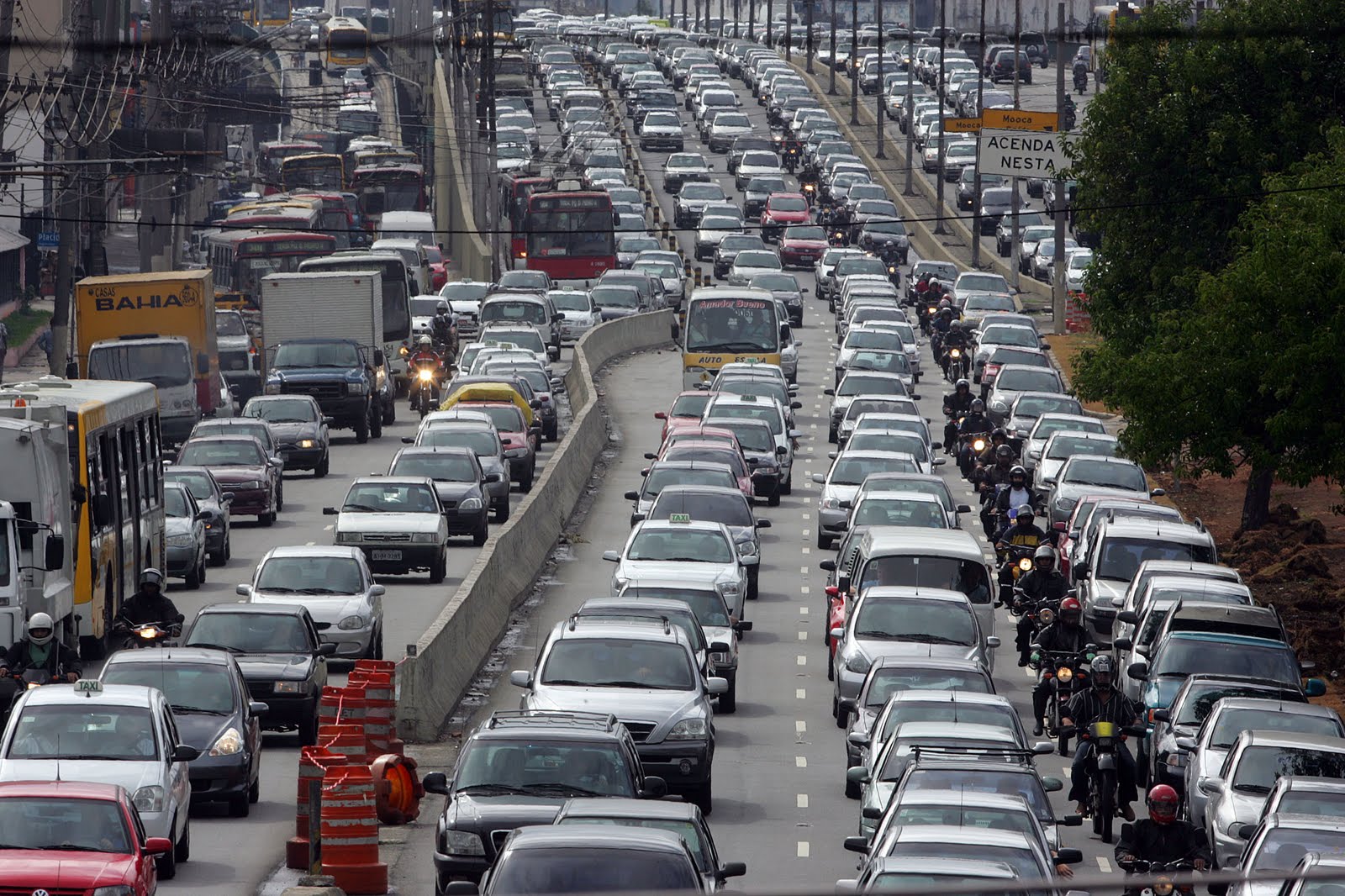
    Traffic in Brazil is not helped by all the unlicensed drivers.

    To put my family at ease, I tend to downplay the more dangerous aspects of life in Brazil, but the truth is you’re much more likely to die a violent death in Brazil than in Canada or Japan or even gun-crazy United States.  Oh, you’re not going to get shot.  No, you’re going to die in a flaming car crash long before you get mixed up in drug-related violence.

    It didn’t take me very long in Brazil to understand that cars were the real danger.  After my first months in Rio, I assumed that traffic in Brazil was governed only by the laws of physics.  I was wrong.  It’s governed by plenty of people laws too.  It is Brazil after all.

    Licenses require medical exams, eye exams, and psychological exams.  Driver’s ed is mandatory and its content federally regulated down to the number of hours for theory and practice.  Thus, the only reasonable explanation for the number of traffic-related deaths here is that no bureaucrat in Brasilia has ever actually driven a car, and they have no idea what skills to include on the test.

    A student of mine recently turned 18 and has been taking his mandatory driver’s ed class.  He brought me several of his practice exams.  He knows I love to laugh.

    Driver’s education courses in Brazil are divided into two parts: 45 hours and 25 hours.  That’s 45 hours in the classroom and 25 hours on the road.  Some people might be thinking, “Gee, wouldn’t it be better is these kids learning to drive a car spent the majority of their class time in a car?”  These people don’t appreciate the teaching power of multiple choice exams and visualizing your goal.  “I can see myself successfully merging in rush hour traffic.”  (Actually, visualizing is the only way to practice highway driving.  Driver’s ed cars aren’t allowed on highways.)

    So if not safe merging practices, what are these up and coming driver’s expected to know?  For one, the best attitude man can have in relation to the environment.  (The answer is “preservation”.)  It’s also necessary to know how the government of Brazil is trying to reduce emissions.  Humans have basic rights and there are a variety of ways we can observe the importance of family and friends to society.  Know that pointing out to a fellow driver that one of her tires is low encourages solidarity and courtesy in society more so than it demonstrates a concern for traffic. Don’t worry about knowing the effects of alcohol on reflexes.  That’s only a leading cause of traffic deaths in Brazil.  It won’t be on the test.

    Now, a 35 question multiple choice test isn’t the only requirement. The non-drivers in Brasilia didn’t want just anybody who can read getting a license.  They also wanted to weed out the crazies, which is why a psychological exam is required.  Again, I think this shows a complete lack of understanding of driving and a prejudice against crazy people.  There’s no reason a person can’t be a sociopath and an excellent driver.  My life experience has shown me no correlation between sanity and a willingness to use the blinker.

    The greatest irony is that all these required (and expensive) exams and driver’s ed courses intended to make the roads safer actually result in a huge market for fake licenses.  People need to drive and they don’t have 70 hours to spend learning about the parts of an engine.

    In the end who ends up driving on Brazil’s roads? A bunch of unlicensed drivers who have no idea how rain affects a car’s ability to stop, a bunch of licensed drivers who can label all the parts of an engine but have never driven on a highway, and not a single person who knows anything about alcohol’s affects on the body.

    So, if you’re coming to Brazil be sure to wear your seat belt.  Or just stay on the beach the whole time.  Cancer kills fewer people here than cars.

  • Lessons For Toddlers and Expats

    Lessons For Toddlers and Expats

    bureaucracyMy 3 year old daughter is currently struggling to accept some of the physical limitations of our three dimensional world.  “That tunnel is not tall enough for the train.”  “It was made for one Littlest Pet not eight.”  “Sweetheart, your teddy bear is never going to fit in that play dough pot.”   She will ignore me, keep trying, and eventually hurl whatever it is against the wall in a frustrated fury. I hope it’s just a phase.

    What is remarkable is her flat out refusal to accept an obvious reality.  She will continue to struggle long after it’s clear that it’s not going to fit.  Her tenacity is impressive.  It’s also the source of many a nighttime tantrum.  While I don’t want her to ever give up easily, I’d like to spare her the frustration and save her the energy spent fighting against a fact about her world.

    As an expat, I should apply this lesson myself.

    I’ve lived in Brazil eight and a half years, and I still struggle to accept some facts about life here.  One thing that still makes my face burn is the out of control and invasive bureaucracy.

    There is no question too personal for a form and no transaction that does not require one.  The eyeglass store wants your social security number.  The hotel wants your profession.  The dentist wants your race.  Your employer wants to know your blood pressure.

    I get around some forms by pretending I’m here temporarily or don’t speak a word of Portuguese, but I couldn’t do this at my former job.

    When I began teaching the school asked me to have a medical exam.  When I came back from maternity leave there was another exam and another a year later for every employee at the school.  When I gave notice at the end of last year, human resources asked me to sign several letters saying that I was leaving of my own accord and have another medical exam.

    I refused.  As American, an employer requiring a medical exam and making note of the fact you use contraceptives is deeply offensive.  I had done the previous exams because I liked the job, and hey when in Rome…but now I was quitting.  What could they do? Fire me?

    There were several meetings with HR during which I nicely refused to accommodate and the HR lady just as nicely said it was mandatory by law.  After checking with a lawyer, I explained sweetly there’s no law requiring a person to submit to a medical exam.  She politely insisted there is.

    Eventually I was told it was the union that required the exam.  And speaking of the union, I had to meet with them and have a rep sign off on my paperwork.  Please come back next Tuesday afternoon.

    I showed up at the union rep’s office in my school and met a man very disgruntled by my lateness.  The meeting was at 2pm.  It was 2:02 pm.  As he grumbled, he grabbed his keys, my work card, and my paperwork. Below is as faithful a transcription of our conversation as my memory allows.

    Me: “Excuse me, are you leaving?”

    Man I Have Only Just Met:  “He’s going to wait for us.”

    Me: “Who?”

    MIHOJM:  “The union Kahuna. (That’s my word because I don’t remember what title the guy really had.)  You were supposed to meet with him at 2pm.”

    Me: “Aren’t you the man I’m meeting?”

    MIHOJM: “No, the Kahuna has to sign off on your papers, and he’s at the union’s headquarters.”

    Me: “Wait. Do we have to drive somewhere?”

    MIHOJM: “Yes. We’re going to the union office.”

    Me: “Stop.  I’m not leaving.  Give me my work card and documents.  I am not going.”

    At that point I had been quitting my job for almost two months.  I was done.  I was out of patience and polite Portuguese.  I unleashed the full force of my direct, low-context American culture on him and I wrapped things up then and there.

    I am not going to the union office.  I am not having the medical exam.  I want to quit today.  You are a union officer?  Do you have authority to sign these papers?  Great.  Please, sign them all now.

    While I did manage to officially quit, within a Brazilian context, I was a complete asshole to a guy who was just doing his job.  He was acting according to standard practice and then comes this woman who freaks out on him, is blunt to the point of being rude, and very angry.

    And I stayed angry.  I complained about the whole process to everyone I met for days.  Hurling my complaints about meaningless bureaucracy against every wall in a frustrated fury.  What did that anger get me?  Well, it used up a lot of my energy, a very precious commodity.  It would have taken a lot less energy to shrug my shoulders.

    Somethings you have to accept.  Don’t waste energy being angry about something you can’t change.   Lessons we expats have to learn.  Expats and toddlers.

  • Getting the Brazilian Work Card: Gateway to Legal Employment

    Getting the Brazilian Work Card: Gateway to Legal Employment

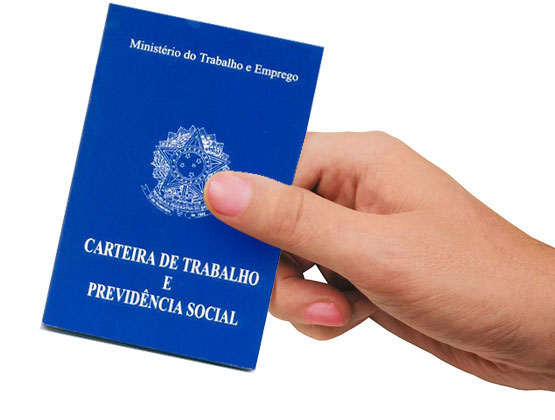
    Well, it’s official. As of today, I’m legally employable.You might be thinking, didn’t that happen when you applied for residency? Well, not totally. A residency card alone is not enough for legal employment in Brazil. For that, you need a Work Card, or a Carteira de Trabalho.

    I’ve been eligible for a work card since I became a resident of Brazil but haven’t bothered to apply for one because I never signed an employment contract. (I was, uh, doing a lot of volunteer work in Rio.) Now that I’ve been hired as a regular teacher, it’s time to join the Brazilian labor force. As a responsible worker, I’ve been learning about the work card and all the rights it guarantees.

    The work card is issued to all people employed via contract in Brazil, which I’ve learned is not everyone. For example, my husband doesn’t have a work card because his job with the government is regulated by statutes. If you were the owner of a business you wouldn’t need a card but your employees would. The purpose of the work card is to prevent exploitation, particularly of low income and domestic workers. It’s something that happens all too frequently in Brazil.

    To be clear, the work card should not be confused with the Brazilian equivalent of a Social Security Number. That’s called a CPF and I already have one of those as well. (I’m just a driver’s license shy of collecting the whole Brazilian Bureaucracy series!)

    So, what rights am I entitled to with my carteira?

    I am guaranteed one month paid vacation, an additional “13 month” salary, and in the event of pregnancy 4 months of paid maternity leave. Oh, and the company is legally required to take me back after the maternity leave. Woohoo!

    Hand me a red shirt and tell me where the parade is because I’m all about the workers right here. Sure, these policies are crippling to small businesses. It’s certainly possible that requiring four months maternity leave might prevent businesses from ever a 20 something person with a functioning uterus. And why the hell is anyone guaranteed a right to something that doesn’t even exist, like a 13th month? I don’t know. And as the beneficiary of all these rights, I’m not going to start a debate on them.

    I’m just going to plan where I’ll spend my month paid vacation and my 13th month’s paycheck. Maybe I’ll fly to Brasilia and ask for an 8th day of the week I can get paid for.

    Marcar com estrela

    CompartilharCompartilhar com observação
  • Brasilia: Poorly Executing Good Ideas

    Brasilia: Poorly Executing Good Ideas

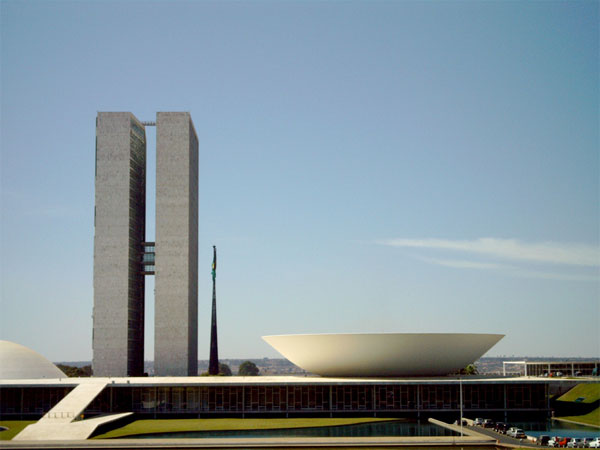
    Brasilia, the Washington DC of Brazil, is coming out with a new slogan for the country as part of a rebranding for the 21st century.

    “Brazil, using the best technology moderately well.”

    Ok, it’s not an official slogan. Just an accurate one. Brazil is rapidly becoming a global player with steady economic growth and the world’s fifth largest population, but the country still has serious development challenges ahead of it. Fortunately, politicians love nothing more than shiny, new, development projects.

    The goals behind Brasilia’s plans (improve efficiency, access, or capacity) are worthwhile. The problem with many of the government’s projects is deadlines. The haste with which many improvements are put into place results in half-assed solutions.

    My last post was about the disaster that is the new college admissions exam. The ENEM is an excellent example of a good idea hastily and poorly implemented. Another example is the Federal Judiciary’s “Processo Virtual.”

    The Federal Judiciary is on it’s way to being a paperless institution. All records, procedures, decisions will be virtual. Anyone who has ever been asked to provide three certified copies of their 8th grade report card (which in Brazil is everyone) will applaud any effort to reduce paperwork in Brazil.

    How can Brasilia ruin such a good idea? Assign a deadline giving all first instance courts of the Federal Judiciary less than two years to make the transition.

    In order to meet the deadline, courts quickly adapted previously-made software to use for cataloguing cases. Because the software was not designed for the courts there have been constant problems inputing records. Adding to the confusion, different regions are using different software. While lawyers have the option of filing petitions online, they are not required to. Cases submitted on paper are than scanned by the court staff.

    The records of the Federal Judiciary did not warrant the creation of specific software? Maybe no one told Brasilia that nowadays people create new software daily. While not as exciting as launching angry birds with a slingshot, judicial record keeping certainly deserves it’s own app. Maybe that Facebook guy would do some pro bono work as part of his image rehabilitation.

    The Federal Judiciary is trying to improve and move into the future. Admirable goals but rushing the process will only cause problems that have to be fixed later. I know politicians think in terms of election cycles but when it comes to development long term thinking is crucial.

    Note to Brasilia: Replacing an outdated system with a flawed one is not progress.

  • The Entrance Exam: a comedy of errors

    The Entrance Exam: a comedy of errors

    Traditionally in Brazil, universities have each had their own entrance exam. A student applying to six universities, would need to travel to each university and sit for six different exams. The process was inefficient and costly for both students and universities.

    In order to make the admissions process more egalitarian and streamlined, Brazil created the ENEM, a national entrance exam. This year is the second year the exam has been in official use and is now used by many universities as the sole entrance criteria or a first round exam.

    How’s it working out?

    Putting aside my personal belief that a single test score on a single weekend is a terrible way of determining a student’s merit, the ENEM in Brazil has been a tutorial on how to screw up administering a national exam. A true comedy of errors, that is unfortunately not funny at all since kids, already in one of the most stressful times of their lives, are the ones who suffer.

    Let’s start at the beginning.

    In 2009, the answers were leaked in advance and the exam was scrapped days before the testing date. Every student in Brazil hoping to attend college had to regroup, the exam rewritten and universities across the country had to push back start dates in order to use the ENEM as their admissions criteria.

    Earlier this year a software error within the Ministry of Education released personal data for millions of students.

    Last weekend the 2010 ENEM was given. This time around the test was successfully kept secret. Not quite as successful was the printing. At least 2000 tests had the Natural Science and Human Science questions inverted from the results sheet, some tests were missing or repeated questions and there are reports the essay theme was leaked in advance.

    Inevitably, someone sued. That “someone” being both state and federal agencies arguing the test failed the very basic standard of being equal for all students. A federal judge ruled the exam invalid. Inep, the federal agency responsible for the ENEM, appealed the judge’s decision and as of Friday the ENEM results are reinstated. But the appeals court’s decision is, of course, being appealed. The minister of Education said it would take at least two or three months to organize a second exam for all 3.4 million students and is therefore in favor of keeping last week’s test. A final decision could be weeks away.

    In the meantime, a second exam has been schedule for the students who received misprinted tests on the same days as the individual entrance exams for many of the top universities. Those students will have to choose which exam to take either forgoing application to a top university or the many universities who use the ENEM.

    And the students, the children who spent hours preparing and planning futures based on the results of this exam, they are being told not to worry and go on prepping for any other entrance exams they have.

    I think it’s important to see this entire fiasco from the student’s perspective. In the US, the SAT and the anxiety it causes are well known. Imagine if the SAT was the only admissions criteria. No grades, no essays, no letters of rec. Just an SAT score. That is the situation in Brazil. I’ve worked with teens here during the process and American seniors a zen masters compared to their test obsessed Brazilian counterparts.

    Based on my work here, I have some advice for Inep.

    Unfortunately, there is no way to salvage this year’s exam. Either 3 million students have to take the ENEM again in a few months or 2,000 take it again and miss out on applying to the universities with overlapping exams.

    There is a solution for next year, however. Don’t offer the exam.

    The Minister of Education should take responsibility and admit the federal government is not yet capable of administering an exam to 3 million students simultaneously. Therefore, the ENEM should be suspended for a minimum of 5 years.

    Universities will return to offering their own entrance exams. Don’t worry. The ENEM has only been official for two years. I’m sure universities are still capable of administering their own exams at least as successfully as you have administered yours.

    Over the next five years you, the bureaucrats, will revamp security and printing protocol. You will follow the excellent advice of Maria Helena de Castro, a former president of Inep, expand the question bank from a meagre 10,000 to 100,000 so that you can always have multiple of versions of the exam. This way you will be able to offer the exam on multiple weekends allowing backup dates should there be problems and reducing the number of students sitting for any exam.

    The exam will be administered during the next five years on a trial basis. Scholarships for top scorers and emphasizing the chance to practice sitting for entrance exams, are ways to encourage students to take the exam seriously during it’s trial phase.

    If after five years Inep has managed to administer the exam without security breaches or the score sheet being printed in reverse order, then the test may be brought back for official use.

    A spokewoman for Inep called the 2009 exam a great success. That is wrong. It was successfully salvaged after a disaster. Now, officials are saying this year’s exam was successful save the misprinted exams, dismissing the 2,000 students who received those exams. Inep claims to have made the admissions process better for students, but based on the many student protests against the ENEM this week, I don’t think they believe you.

  • Combatting Fraud & Efficiency

    The Brazilian government is truly amazing in its ability to complicate simple things.  Take signing your name to a contract.  In the US, at the end of negotiations a piece of paper is laid down on which is written everything the parties agree to and then all affected by the agreement pick up a pen and sign their names.  That’s it. Deal’s closed.

    Here in Brazil, there is an extra step.  Once everyone has signed the contract then each signatory must prove that she is in fact the person whose name is signed on the document.

    You prove the validity of your signature by having it notarized.  The only way you can have your signature notarized is by having an official signature on record with one of the notary offices in your city.  And that was what I got to do last week.  I put my signature on record.  Now, all I need is a contract to sign.

    In an age when I can see and talk to my parents in the States while sitting on my couch in Brazil, this signature registration seems a touch outdated.  I walked into the notary and gave them my RNE card (Brazilian green card).  A man then typed my information onto what is essentially a 3×5 index card.  He gave the card to me and told me to sign my name three times on the empty lines provided.  I did.  He stamped it and filed it away.

    Now, I have an official signature.  In the future if I’m signing an official document, let’s say a contract on a four-bedroom apartment with two parking spaces, just imagining here, once I sign the document I will have to go back to that same notary office.  They will pull my card out and compare the signature on the contract to the signatures on the card.  If they match, the notary will stamp the contract saying the person who signed “Brynn” is in fact “Brynn.”  If they are different in any way, the notary will not affirm the signature. I either resign matching the index card exactly or I get sent to jail for fraud.  Something like that.

    I’m told this is a way to prevent fraud.  I guess Brazilian criminals aren’t sophisticated enough to fake the ID shown to register the signature in the first place.  They just run around trying to sign other people’s names on marriage certificates.

    An American lawyer friend explained to me Brazilians and Americans have different ways of approaching fraud.  Americans assume 95% of all transactions will be legit and make the process simple.  They invest resources in prosecuting the 5% that is fraudulent.  Brazilians invest their resources in trying to prevent fraud from ever occurring, hence the overwhelming amount of bureaucracy.

    Obvious, not all fraud in America is persecuted, but neither does Brazil’s approach prevent fraud from ever happening.  My husband, who knows something about fraud cases in Brazil, said most people would be surprised by just how often fraud occurs.  So in the end the only thing a notarized signature prevents every time, is efficiency.