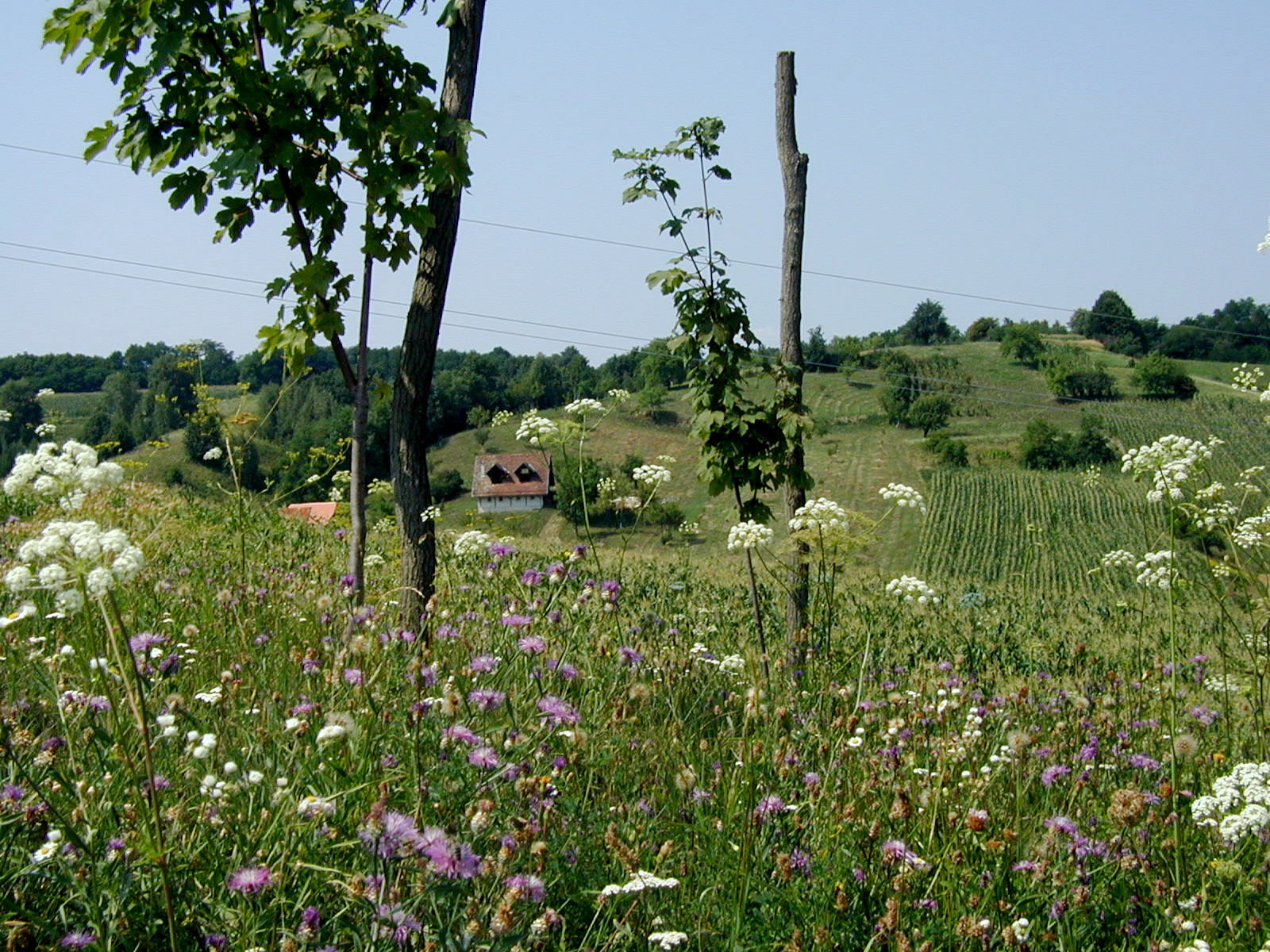

Today is a Throwback Thursday post. I was cleaning out old files and discovered this essay I wrote about a memorable lunch with my homestay family while volunteering in Croatia during the summer of 2003. I wrote it in 2007 for a contest at a now defunct magazine. It was one of the first pieces of creative non-fiction I ever wrote and thought it would be fun to share because the question raised are some I still ask myself daily living in Brazil. (Also, this past week was Carnaval, so I haven’t had time to write anything new.)
A Different Part of the Pig

It was with something less than enthusiasm that I sat down for lunch next to my host sister. I had never quite understood what indigestion was, but after three weeks of eating plates of fried meat swimming in its own fat, I could now write an epic poem to its effects. Unfortunately, the small little village of Zdala, Croatia, where I was teaching, had only 600 people and no CVS with shelves of antacids to choose from. So, while I was thoroughly enjoying the rewards and challenges of teaching English to the local kids, the prospect of three more weeks of potatoes, bread and meat drowned in liquid fat made each meal a bit of a trial.

I was staying in Zdala with a generous family who had volunteered to house me while I was teaching. They weren’t receiving any kind of money or stipend for their trouble. I also knew from my walks around the village with my host sisters that no family in the village had resources to waste. Every house in Zdala had its own small farm and animals that supplied the staples for each meal. Knowing this, I couldn’t refuse to accept their generosity, even if it made my stomach feel like a beach ball blown up to the point of bursting. What would my host family think if I turned down the large helping of meat specially prepared for me and asked for a cucumber instead?

As I looked at the table that afternoon, it looked pretty much like every other lunch. Potatoes and onions, bread (which was homemade, amazing, and the one thing I was never sorry to see) and a large dish of meat stacked in the center of a shinning pool of grease. But there was something different on the meat this day. It was placed directly on top of the meat, like the star on a Christmas tree. A grayish, jiggly star. Oh no. I looked at my host mother and grandmother on the opposite side of the table. There was no way I could discreetly ask my host sister what it was that jiggled at the top of the meat tower. And I knew as the guest, I was going to be offered the first helping.

That summer in Croatia was my first time living abroad, and the first time I had ever lived with a family other than my own. I was desperate to make a good impression. I wanted them to like me and not write me off as one of the arrogant Americans I had heard the cousin talk about. But I do not eat food that jiggles. I have had a lifelong no-jiggly-food policy. I believe that orange Jell-O is the worst food ever invented. I was sure my family would offer the jiggly thing to me, and I wasn’t sure I could tactfully refuse it on the grounds that it jiggled.

I was still staring at this piece of grayish, jiggly matter when Granny spooned it out and sure enough, offered it in my direction. I looked down at the offered spoon and saw them, two slits in the flat top of the fat. Oh God! It was a nose. I was being offered a pig’s nose. I looked across the table at Granny. Here was a sweet old woman, smiling kindly and holding out a large spoon with a pig’s nose nestled in it. I didn’t know whether to laugh or throw up.

Coming face to face—or, more accurately, face to nose—with a pig nose in a spoon, I knew it could be considered hypocritical to eat some parts of the pig but be repulsed by others. I was clearly the only one there who found a pig’s nose on the table unusual. I didn’t want to seem rude. I had come on my first trip abroad prepared to try new things. I was ready to be open-minded, but apparently not open-mouthed. I knew my family couldn’t afford to waste any part of the animal, but I couldn’t eat the nose. I wanted to adapt to Croatian culture, but I couldn’t deny who I was either. What level of discomfort was I supposed to be willing to accept in order to avoid offending my hosts? Where should I, or could I, draw the line?

As it turned out, I didn’t have to answer those questions on that day. My hesitation (and possibly the shade of green on my face) had tipped off my host family that I was not accustomed to eating this particular part of the pig. They started laughing, and my sister said I didn’t have to eat it if I didn’t want to. She didn’t like pig noses, either. But Granny loved them. And with that, Granny put the nose on her plate, scooped it up with her own spoon, and slurped it into her mouth. I knew I would never see Granny in the same way after that.
My family enjoyed teasing me with other animal parts over the next weeks, like a chicken beak in the soup. I was so thrilled they didn’t think I was rude that I didn’t even protest when a chicken’s foot was placed right on the middle of my plate. In retrospect, I could have saved myself some panic if I had just explained that where I come from, we don’t eat noses. After all, the family didn’t want me eating or doing anything I felt uncomfortable with.

I still struggle with the question of how far I should go in adapting to different cultures. There is a balance. I could not have expected my host family to provide me the exact same foods I had at home. It was impossible to make Zdala like home. Living in another country means being uncomfortable and trying things that are often scary. But at the same time, I cannot reject my own culture and my own feelings. How far should I go? Where do I draw the line? It changes. I haven’t found the balance yet. I do have one line that doesn’t move though. It’s just in front of the pig’s nose.