Tag: Culture Shock

  • A Different Part of the Pig: Volunteering in Croatia

    A Different Part of the Pig: Volunteering in Croatia

    Today is a Throwback Thursday post. I was cleaning out old files and discovered this essay I wrote about a memorable lunch with my homestay family while volunteering in Croatia during the summer of 2003. I wrote it in 2007 for a contest at a now defunct magazine. It was one of the first pieces of creative non-fiction I ever wrote and thought it would be fun to share because the question raised are some I still ask myself daily living in Brazil. (Also, this past week was Carnaval, so I haven’t had time to write anything new.)


    A Different Part of the Pig

    Koprivnica, Croatia

    It was with something less than enthusiasm that I sat down for lunch next to my host sister.  I had never quite understood what indigestion was, but after three weeks of eating plates of fried meat swimming in its own fat, I could now write an epic poem to its effects.  Unfortunately, the small little village of Zdala, Croatia, where I was teaching, had only 600 people and no CVS with shelves of antacids to choose from.  So, while I was thoroughly enjoying the rewards and challenges of teaching English to the local kids, the prospect of three more weeks of potatoes, bread and meat drowned in liquid fat made each meal a bit of a trial.


    Zdala, Croatia

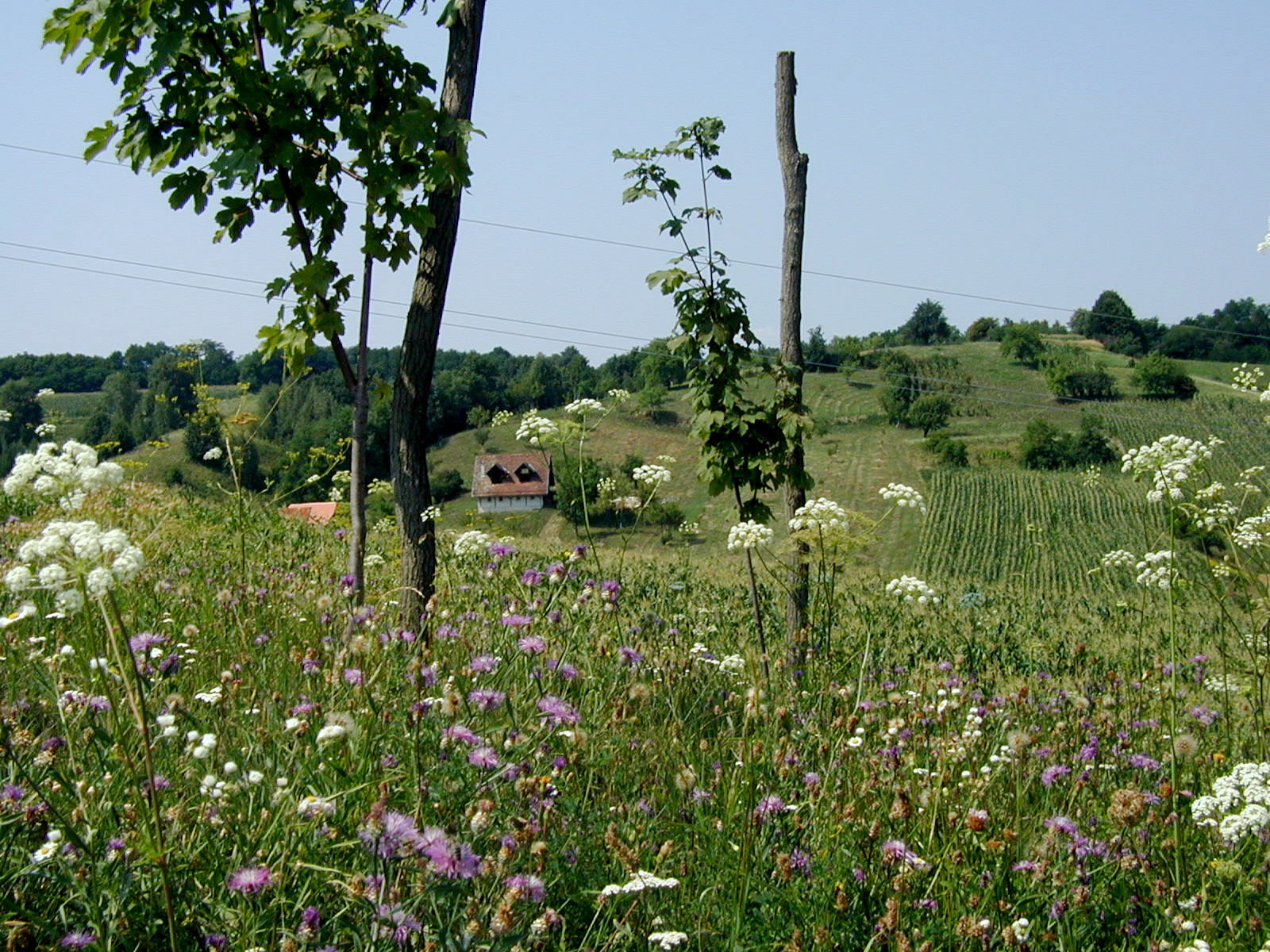
    I was staying in Zdala with a generous family who had volunteered to house me while I was teaching.  They weren’t receiving any kind of money or stipend for their trouble. I also knew from my walks around the village with my host sisters that no family in the village had resources to waste.  Every house in Zdala had its own small farm and animals that supplied the staples for each meal.  Knowing this, I couldn’t refuse to accept their generosity, even if it made my stomach feel like a beach ball blown up to the point of bursting.  What would my host family think if I turned down the large helping of meat specially prepared for me and asked for a cucumber instead?


    My adorable homestay sister

    As I looked at the table that afternoon, it looked pretty much like every other lunch.  Potatoes and onions, bread (which was homemade, amazing, and the one thing I was never sorry to see) and a large dish of meat stacked in the center of a shinning pool of grease.  But there was something different on the meat this day.  It was placed directly on top of the meat, like the star on a Christmas tree.  A grayish, jiggly star.  Oh no.  I looked at my host mother and grandmother on the opposite side of the table.  There was no way I could discreetly ask my host sister what it was that jiggled at the top of the meat tower. And I knew as the guest, I was going to be offered the first helping.

    These amazing kids chose to attend English classes during their summer vacation!

    That summer in Croatia was my first time living abroad, and the first time I had ever lived with a family other than my own.  I was desperate to make a good impression.  I wanted them to like me and not write me off as one of the arrogant Americans I had heard the cousin talk about.  But I do not eat food that jiggles.  I have had a lifelong no-jiggly-food policy.  I believe that orange Jell-O is the worst food ever invented.  I was sure my family would offer the jiggly thing to me, and I wasn’t sure I could tactfully refuse it on the grounds that it jiggled.

    I was still staring at this piece of grayish, jiggly matter when Granny spooned it out and sure enough, offered it in my direction.  I looked down at the offered spoon and saw them, two slits in the flat top of the fat.  Oh God!  It was a nose.  I was being offered a pig’s nose.  I looked across the table at Granny.  Here was a sweet old woman, smiling kindly and holding out a large spoon with a pig’s nose nestled in it.  I didn’t know whether to laugh or throw up.

    Coming face to face—or, more accurately, face to nose—with a pig nose in a spoon, I knew it could be considered hypocritical to eat some parts of the pig but be repulsed by others.  I was clearly the only one there who found a pig’s nose on the table unusual. I didn’t want to seem rude.  I had come on my first trip abroad prepared to try new things. I was ready to be open-minded, but apparently not open-mouthed. I knew my family couldn’t afford to waste any part of the animal, but I couldn’t eat the nose. I wanted to adapt to Croatian culture, but I couldn’t deny who I was either.  What level of discomfort was I supposed to be willing to accept in order to avoid offending my hosts?  Where should I, or could I, draw the line?

    As it turned out, I didn’t have to answer those questions on that day.  My hesitation (and possibly the shade of green on my face) had tipped off my host family that I was not accustomed to eating this particular part of the pig.  They started laughing, and my sister said I didn’t have to eat it if I didn’t want to.  She didn’t like pig noses, either.  But Granny loved them.  And with that, Granny put the nose on her plate, scooped it up with her own spoon, and slurped it into her mouth.  I knew I would never see Granny in the same way after that.

    My family enjoyed teasing me with other animal parts over the next weeks, like a chicken beak in the soup.  I was so thrilled they didn’t think I was rude that I didn’t even protest when a chicken’s foot was placed right on the middle of my plate.  In retrospect, I could have saved myself some panic if I had just explained that where I come from, we don’t eat noses.  After all, the family didn’t want me eating or doing anything I felt uncomfortable with.

    I still struggle with the question of how far I should go in adapting to different cultures.  There is a balance.  I could not have expected my host family to provide me the exact same foods I had at home.  It was impossible to make Zdala like home.  Living in another country means being uncomfortable and trying things that are often scary.  But at the same time, I cannot reject my own culture and my own feelings.  How far should I go?  Where do I draw the line?  It changes.  I haven’t found the balance yet.  I do have one line that doesn’t move though.  It’s just in front of the pig’s nose.
    Save

    Save

    Save

  • Why I’m an Expat in Brazil Part II: Between Meeting & Dating

    Why I’m an Expat in Brazil Part II: Between Meeting & Dating

    Some very impressive Humphrey Fellows and me.
    Some very impressive Humphrey Fellows and me.

    It is a long way between meeting someone for the first time and marrying him.

    I saw my future husband for the second time early the next morning as I collected the entire group of Humphrey Fellows to escort them to their welcome meeting.  As an international studies major, I was in quite the fan-girl tizzy over the Humphrey Fellows, specifically the Fellow from Bhutan.  There are only about 700,000 Bhutanese in the world, and I was going to work with one!  I’d been bringing her up in conversation regularly for months in an effort to compete with my roommate’s stories from her internship on Capitol Hill.

    On that typically humid August morning, I found my Brazilian waiting in the dorm lobby next to the Fellow from Kenya.  We chatted as the others slowly trickled down.  There was a lot of hand shaking and slow pronouncing of names, my own name included.  “It’s pronounced like Lynn, except with a Br instead of an L.”  “No, it’s not a boy’s name.  That’s Bryan, with an A.”  “No, I don’t think my parents knew my name would be unpronounceable to, apparently, the entire world.”

    Orientation for an international exchange program is probably the most emotionally exhaustive thing a person can go through that doesn’t involve a birth, a death, or a space suit.  A person is expected to navigate a new place, new culture, possibly a new language, and new people, all while jet lagged and in some amount of digestive distress from new food.  It’s not a vacation.  There’s no sleeping in.  I met the Fellows in the lobby at 8:45am for a welcome meeting that started at 9 sharp, and from that moment on for the next two weeks, it was a race to get them registered for classes, bank accounts, cell phones, and long-term housing before fall semester began.

    Our Fellows had an added emotional blow as they went from being up and coming stars of their respective professions to nobody.

    Welcome to Washington DC!  It has the highest concentration of PhDs, law degrees and self-esteem per capita of any city in the world.  You are now officially unimpressive.  You will not have maids.  You will not have secretaries.  If you don’t know how to send an email or cook, well…we can teach you how to email.  Try not to starve.

    Undergrads who study abroad don’t have these problems.  They haven’t been on their own long enough to be embarrassed by dependency.  The Humphrey Fellows however ranged in age from 35 to 50.  They arrived for their year in Washington with impressive CVs and very fragile egos.  Working with them taught me how to explain what to do with used toilet paper without sounding condescending.

    Culture shock and a complete lack of family and friends explain why I, at 22 with the ink still drying on my diploma, was treated by the Fellows as an equal.  Nobody asked me to get their coffee.  They asked me to explain the online course registration.  They asked me to listen as they cried over how much they missed their kids.  They asked me to explain the endless variety of milk in grocery stores.  At that moment in their lives, they needed an insiders guide to Americans.  I was an American with a embarrassingly fortuitously empty social calendar and that huge fan-girl crush on them.  I became the group’s cultural wingman.

    I started hanging out with the Fellows on weekends.  We went to a coffee shop at Dupont Circle for s’mores.  We hit some bars in Adams Morgan and tried out an Ethiopian restaurant for lunch.  The group changed depending on who had a paper due or a bad case of culture shock, except for one member: the Brazilian.  In my memories he’s always there.  Always up for anything.  Usually available for lunch.  He’d rented a basement apartment close to where I lived, and we often ran into each other on the shuttle heading to and from campus.

    But I was so hung up on his resume and the sixteen year age difference, I never imagined he actually thought of me as a fellow adult.  I was sure the Brazilian, like the other Fellows, was being incredibly polite to someone helping him.  When he paid close attention as I took him through every picture from my semester in India, I must have subconsciously chalked it up to good manners because I would never, NEVER, have brought a photo album to lunch with someone I actually hoped to date.

    About a month after orientation, the Korean Fellow invited everyone to his apartment for dinner.  I clearly remember a few wonderful minutes in the kitchen as the Brazilian taught me how to make caipirinhas and I tried one.  I blamed my flushed cheeks on the cachaça.  Later a group of us took the subway home.  It was several blocks to the metro station, and the temperature had dropped changing my sandals from cute to extremely impractical.  My toes were slowly freezing and I probably would have lost a few, if the Brazilian hadn’t stopped, taken off his shoes, and handed me his socks.  He gave me the socks off his feet.

    And I still didn’t see the first kiss coming.  But that night deserves its own story.

  • Culture Shock Causes 3 Year Loss in Productivity

    Culture Shock Causes 3 Year Loss in Productivity

    I had to update my resume last week for the first time in several years.  I was filling in dates and noticed a nearly three year gap between jobs.   Thanks to some nonspecific start dates, on the resume it looks like only a two year gap, but I know the truth.  I didn’t do anything for three years. At least not anything that could be put on a resume.

    “September 2006 – October 2009: Learning new language, new marriage, new culture and trying to avoid plunging into serious depression,” does not count as legitimate work experience.

    It’s not just the lack of formal employment that struck me.  I had a blog that whole time, yet I almost never wrote in it.  I didn’t need any Portuguese or work permit to write.  What’s my excuse?  Why did I do nothing for the better part of three years?

    I think I finally have an answer. I was mentally incapacitated.  I’m not kidding. Over the last three year, I was physically unable to produce quality thought or work during that time because my brain’s limbic system had taken control from my cerebral cortex due to the constant stress I was under from culture shock.

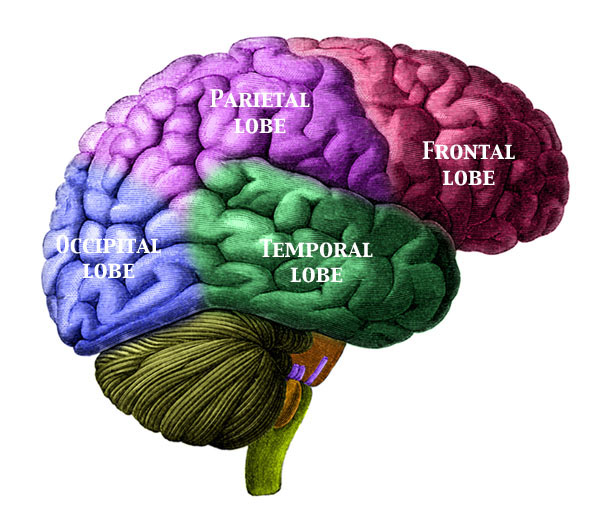
    I came across an article written for teachers of creative writing.  It explained from a neurological standpoint how stress inhibits creativity.  Human brains are typically divided into 3 systems: the brain stem which keeps your heart beating, the limbic system which provides emotion to input like “be happy,” or “get ready to kick some ass,” and the cerebral cortex which handles most of the problem solving, creative thinking that defines being human.

    When a person is relaxed the cerebral cortex is in control.  Creative thinking comes easily.  People are able to consider options, weigh consequences, and make a rational decision.

    Unfortunately, the cerebral cortex is not always in control.  The last time someone cut you off and your face flushed and you imagined running the jerk off the road?  That would be your limbic system.  When the idiot cut you off, the driver was perceived as a threat, and your limbic system triggered your fight or flight response.

    With the limbic system in control it’s physically impossible for someone to be at her creative best. Rational thought?  Not possible either.  Focusing on solving a problem?  Nope.  Self-motivation?  Sorry, not handled by the limbic system. But long naps, crying, cursing, and slamming doors are all things the limbic system does very well.

    That last list of behaviors are pretty common manifestations of culture shock. To people who’ve never lived abroad culture shock might sound, I don’t know, obvious.  “Gosh, living in a new country is difficult.” And something so obvious must surely be avoidable.  “Maybe if you just did the prep work and had the right attitude, you’d be a local in no time.  Just like Julia Roberts in that movie with the pasta and elephants.”  Right?

    God, I wish.  As far as prep work goes, I studied culture shock.  I worked with international students going through the process.  I have a freakin degree in cross-cultural communication.  And how did I handle moving to Brazil?  Well, I have the first three seasons of Grey’s Anatomy and Sex and the City memorized. Feel free to draw your own conclusions.

    It does not matter how much advance research you do, everyone goes through culture shock.  What we call culture shock is the brain creating a new operating system for the new environment.  Your brain has been trained to operate in a specific environment.  In your own culture your brain knows what meaning to attach to symbols and behaviors.  It can anticipate reactions.  It can predict a chain of events.  Different cultures have different cues, and thus require a new operating system.

    Culture Shock has physical symptoms.  Headaches, stomach pains, an unfortunate variety of digestion problems,   physical exhaustion, all are a result of the enormous 24 hours a day, 7 days a week workload your brain is handling.  The brain is frantically creating new connections and pathways to understand the new culture.

    This constant work, combined with the fear from not understanding the words or behaviors of people around you puts serious stress on your body.  And what happens to our brains when we’re stressed?  The limbic system takes over.  Limbic system inhibits creativity and problem solving.

    And so, due to the stress of culture shock I was physically incapable of producing my best quality, or any, work from 2006 – 2009.  That’s my story. I’m sticking to it and honestly I don’t have a better explanation for my sudden change in behavior.

    Beginning last October, after not writing for 3 years, new blog topics started popping into my head daily. I’ve been writing regularly since February and enjoying it. I have the energy and desire to go jogging.  I can’t remember the last time my previously moody stomach complained.  It feels like I found myself.  It took three years but I think my limbic system finally surrendered control.

    Hello, cerebral cortex. It’s so nice to be working together again.  Can you help me update my resume?