Tag: culture

  • 5 Ways to Improve Christmas in Brazil

    5 Ways to Improve Christmas in Brazil

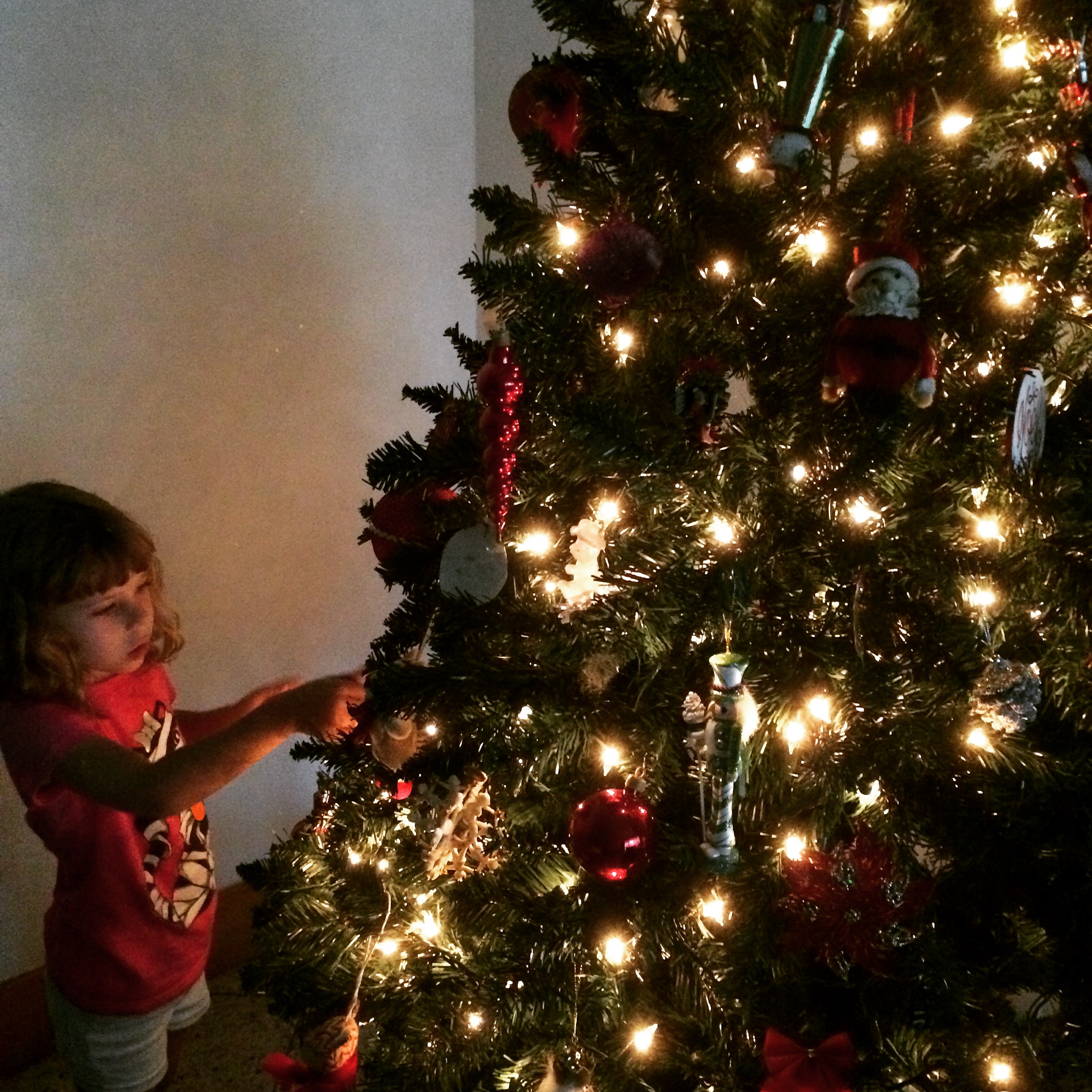
    IMG_1089We put our Christmas decorations up this past weekend. This is the first year my daughter has really anticipated decorating and, more or less, helped in the process. She’s very proud of her Christmas decorations, and so am I. They are minimal but were hung with Christmas spirit. And a lot of sweat. Probably more sweat than Christmas spirit for my part.

    That’s the problem with Christmas in Brazil. It’s hot. It’s humid. It is decidedly un-Christmasy. At least for someone who grew up spending Christmas a good bit north of the equator.

    I tried to recreate my tree decorating memories for my daughter. We had Christmas carols playing. We pulled out the Christmas books and read Rudolph. But everytime I had to stop and rehydrate, the pleas to “Let it Snow” felt more like a cruel joke than an endearing tradition. Not that I’ve ever had a white Christmas in Atlanta, but it’s at least cold enough to necessitate pants.

    I can’t shake this feeling that I’m faking Christmas and it’s not just because I’m importing my foreign Christmas culture. Brazil has already imported 90 percent of American & European Christmas traditions. The malls pipe in instrumental versions of American carols, and shop windows are filled with fake evergreens decked out in red, green, and sprayed on snow. Apartment buildings string lights in the shape of icicles and poor Santa greets kids in fur-trimmed, red velvet.

    What feels so wrong about Christmas in Brazil is the juxtaposition between Northern hemisphere customs and Southern hemisphere weather. In order to make the season feel more authentic, I’ve got a few suggestions for improving Christmas in Brazil.

    5 Way to Improve Christmas in Brazil

    IMG_1056
    This was in October. December is hotter.
    1. Put Santa in Board Shorts For his own sake, at the very least. It’s also hard for a parent to explain Santa’s velvet uniform to a kid running around in her underwear. “Yes, it’s very hot here, but Santa is magic and can maintain a constant body temperate even when wrapped in fur under the sun in 98 degrees.” How about some window decals of Santa strolling down the beach in board shorts pulling his sack along on a boogy board.
    2. Carols About Sand, Not Snow “Oh the weather outside’s delightful. And the barbecue’s left me quite full. Laying out that’s my plan, In the sand, in the sand, in the sand.”  They could also be more local. I think the world needs some Bossa Nova Christmas. “Gifts and fun and family and sunshine. Good will to all, good cheer we keep in mind. We’ll raise some glasses, attend some masses and dine.”
    3. Replace Red & Green with Yellow & Blue Look in the store windows and you’ll see red and green wreathes, ornaments, figurines, dinner ware. These colors are too dark and heavy for a place that’s got sunlight until 8pm followed by balmy evenings with temps in the 80s. Christmas in Brazil should be bright and bold. It should be swirled on a sarong that you wear over tanned (or in my case sunburned) legs. I propose Christmas decorations in yellow, for the intense sun, and blue, for the ocean that everyone is visiting on their summer vacations.
    4. Exchange Santa’s Sleigh for a VW Bug What good is a sleigh going to be in a tropical rainforest? Or on the sandy coast? Or the sertão, the arid grasslands? No good at all. For a truly Brazilian ride, give Santa a VW Beetle from the 70s pulled by a team of flying capybara. (Someone please draw and post that image!) I’ve seen old Beetles driving around every city I’ve visited in Brazil. Those cars can run forever in any environment. Santa can land in Caracas, send his team of reindeer back to the North Pole with the sleigh, and pick up his Beetle to continue distributing presents in South America.
    5. Christmas Palm Trees First, we need to burn all the artificial evergreens that been assembled around Brazil. Most of them are probably made by children in Bangladesh with toxic chemicals. One thing Brazil is not short on is vegetation. No more cheap, fake fir trees. Let’s decorate little potted palms. It’d be a hundred times easier to wrap light around a palm tree. There wouldn’t be room for quite as many ornaments, but I can make sacrifices.
    rabanada-1
    Rabanada. Mmmmmm!

    I have no complaints about Christmas dishes. Nuts, pineapple, figs, codfish, ham, and lots more fruit. These are all things I can support. And rabanada. Especially the rabanada! It’s like french toast on steroids. It’s amazing and one Brazilian tradition I’ll be taking back to the US with me.

    It’ll be my addition to the dessert table. When else wold you serve bread dipped in egg and covered with cinnamon and powdered sugar? At breakfast?


    effitfriday_zpsteehzlucfJzNWoE

  • Throwing a Brazilian Halloween Party: An Odyssey of Prep

    Throwing a Brazilian Halloween Party: An Odyssey of Prep

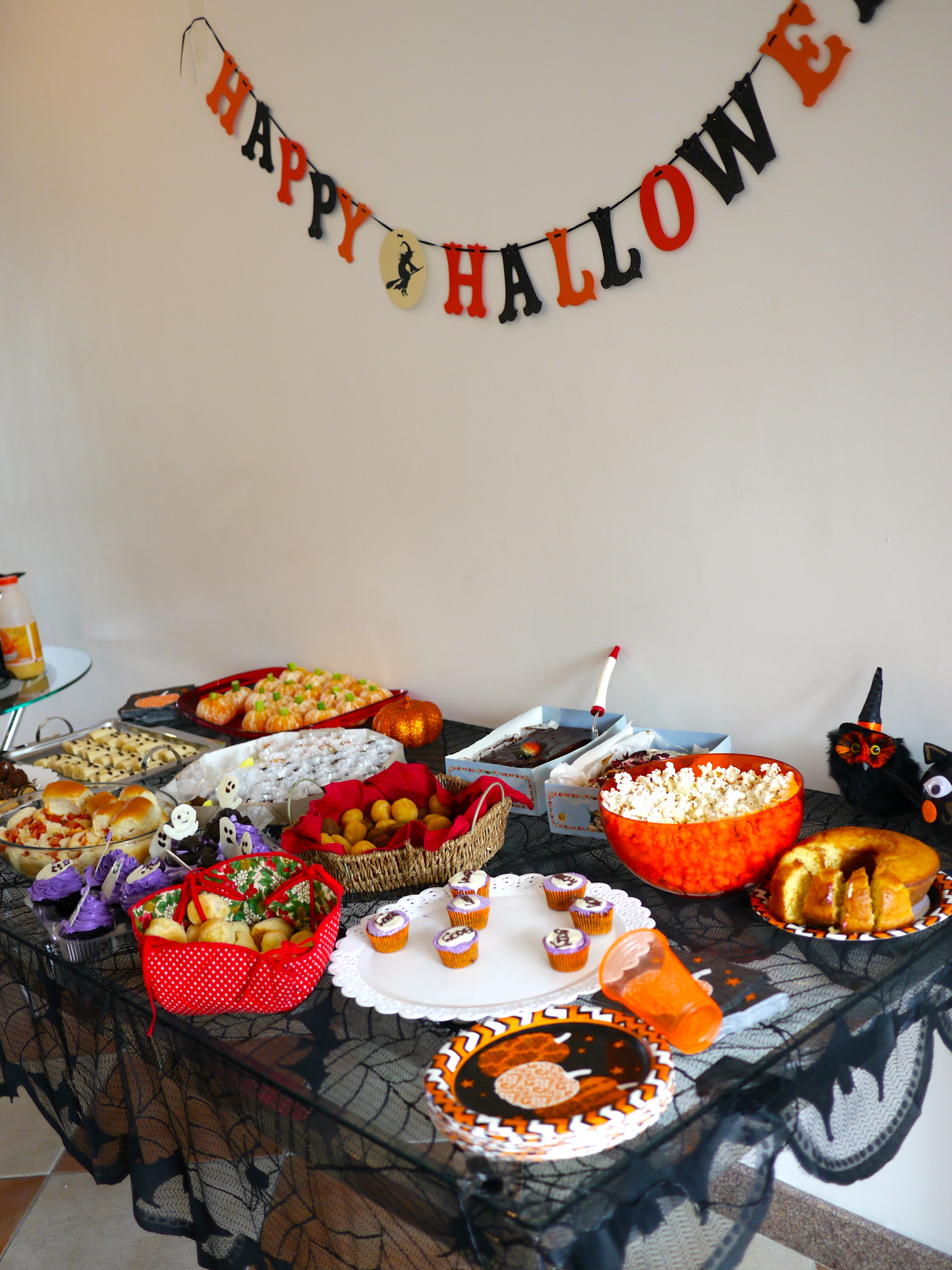
    P1010501I threw a Halloween party for fifteen preschoolers last Saturday. It was a huge success, but I feel I owe my guests an apology.

    Multiple parents came up to me and said I was “muito animada”,  a very fun-loving, party-throwing person. I realized that by throwing a fun children’s party, I had completely misrepresented myself to them. I’m sorry. I didn’t mean to lie. The fact is I’m not a creative, crafty mom who saves egg cartons to make earthworm condos for the compost pile. My perfect Sunday afternoon is sitting quietly with a good a book and cup of coffee. Ideally on the beach and without people unable to wipe their own bottoms.

    So why did I throw a class Halloween party?

    Because they don’t traditionally celebrate Halloween in Brazil. I loved Halloween as a kid, and if I don’t throw the party, my Brazilian daughter won’t know one of my favorite childhood traditions.

    Why did I make such an effort on the crafts and decorations?

    Because the day after I announced my intention to have a party, one of the moms came up to me at school and told me she’d always dreamed of going to a real Halloween party.  To which I thought “Oh crap! I’m fulfilling someone’s dream of Halloween? I don’t want that kind of responsibility!” But I accepted it. And that brings us to the last and really most revealing question.P1010469

    How was I able to come up with such creative and age-appropriate themed snacks and crafts if I’m not a creative crafty mommy?

    I’m an intelligent and highly-organized, type-A personality with access to the Internet and a working knowledge of Pinterest. That’s it. That’s the real me. If I take on the responsibility of a project, it will be done well. Even if it’s something I usually avoid.

    Like baking.

    Let me tell you about the cookie baking.

    P1010462While in Atlanta in August, I found Halloween themed cookie cutters and decorating supplies. Bat, ghost, and pumpkin cutters. Black, orange, and green slime icing. The kids could decorate cookies! It would be awesome.

    I knew I was going to have to make the dough from scratch. Shortly after arriving in Brazil, I tried to bake a pecan pie for reasons again related to culture sharing. I asked my husband where I could buy the crust. He stared at me brow furrowed. “Buy the crust? You mean the ingredients?” I laughed. Ha. Ha. Good joke. I’m not making my crust from scratch. Not even my South-Georgia raised, preserve-making grandmother makes her own crust anymore. Nobody does. “Uh, they do in Brazil.” Oh.

    So I knew I was going to have to make sugar cookie dough from scratch and having baked maybe four times in my life, I knew I’d need a practice run. I planned out every day of the week leading up to the party. Saturday I went online and found a simple and well-rated sugar cookie recipe. Sunday I bought the ingredients. Tuesday was the baking run-through.

    After my experience with the pie crust, I brought measuring cups back from the US because I’d learned I’m a victim of the US education system and can’t think in metric. Also, the Brazilian versions of recipes often call for “tea cups” which is not a standardized form of measurement! I find baking stressful enough without vague instructions, so American measurements and tools it is.

    Recipe. Ingredients. Measuring cups and spoons. I thought I was prepared.

    Preheat the oven to 350 F. My oven only has a line decreasing in thickness and the numbers 1 through 5, but my plan was to pick a number and once the first batch was in check them every minute and figure out the right amount of time at that setting. First problem solved.

    Mix dry ingredients. Easy.

    P1010507Cream butter and sugar. That’s when I realized I had a handheld beater with no beaters. They had been lost somewhere between a school project and kitchen renovation. Ok. People were obviously baking before electricity, so I decided to mix by hand. If I had known I would be creaming butter three times in a week, I would have gone out and bought a damn beater right then. But I didn’t.

    Fifteen minutes and two sore arms later…mix in dry ingredients.

    Two quivering arms and one sore back later…put dough on cookie sheet. Looking at the dough, I could tell using the cutters was out the question. The dough stuck to everything. I could have wallpapered with it. I went ahead and baked globs of it to test the flavor but knew I was going to have to address the stickiness.

    One minute of internet research later, I’d learned the dough must be refrigerated for at least an hour before attempting to cut out cookies. Great! I had learned a valuable lesson. This is why test runs are important.

    Friday morning I made the dough for a second time, breaking a sweat mixing by hand. I left it in the fridge all afternoon. I was going to bake the cookies after my daughter was asleep, but on a whim I decided to do one batch before I picked her up from school.

    Within minutes I learned that firm dough doesn’t stay that way for long in an 85 degree kitchen. Central air conditioning in the kitchen would have been a big help, but I shrugged it off. People baked without air conditioning for most of human history. No big deal. I simply raced, hunched over my kitchen table, to roll out, cut, and dump cookies onto to the baking tray before the dough softened into a gooey mess.P1010493

    I put cats, bats, and witches’ hats into oven and pulled out 8 amoebas. Son of a bitch.

    I collapsed in a chair. Beads of sweat dripped down my back and forehead. My shoulders ached. And the prospect of mixing another batch of dough by hand loomed before me and crushed my soul.

    I hate cooking. No matter how much I research and prepare, I feel I always, always, end up facing a dozen unexpected challenges that keep the results from being perfect. And perfect is the end goal, people. And it should be achievable with good planning and organization. That doesn’t seems to be the case with cooking, which is why I hate it.

    The silver lining is that by making that test batch before I picked up my daughter, I was able to swing by the store and get more flour and butter for a third batch. Because I was making the cookies. My daughter had already found the cookie cutters and asked for a cat to decorate. I had brought the icing and spider sprinkles from the United States. I was making those damn cookies.

    P1010513And by 1:12 a.m I had forty cookies in recognizable shapes.

    At the party the next afternoon, a mom asked my husband where I bought the cookies. He told her I had baked them. She exclaimed “Really? Oh, those creative moms.”

    That’s why I want to apologize to her and the other moms because I’m not the person the cookies make me out to be. I don’t get a thrill from making my daughter’s birthday cupcakes. I get stress knots above my shoulder blades. I don’t jump at every chance to throw a party. I cringe remembering the mess after the last one. I wish my Portuguese was better, then maybe I could translate my sarcasm when I talk about the joys of crafting.

    I may have given my daughter wonderful Halloween memories and successfully represented a piece of my culture abroad, but I misrepresented myself in the process.

    Which could be true for a lot party hosts. Maybe behind every Pinterest image, there’s a sweaty person popping painkillers and muttering obscenities at a tray of cookies.

    blog-button-linkup-2

    Save

    Save

  • I Gave My Daughter a Dinosaur

    I Gave My Daughter a Dinosaur

    IMG_0387It all started when the Littlest Pet army wanted to steal Polly Pocket’s kitty.

    In her desperation, Polly called on her big sister, Wonder Woman, to defend her from the oncoming hoard of Littlest Pets. Wonder Woman joined the battle, the tide seemed to turn, but the Littlest Pets called on their Pteranodon freed from Jurassic World for air support. Wonder Woman countered by summoning her dragon, Storm Fly, and together they defended Polly and her pets from the Pteranodon. The battle raged. A pink poodle was decapitated. Then everyone stopped to have dinner.

    I’ve clearly screwed up my daughter.

    I should have realize it sooner, but it only became clear as I separated the earth-toned reptiles from the candy-colored pets. My daughter is terribly confused, and I have only myself to blame.

    I should never have put both super heroes and Polly Pockets in the same playroom. I wasn’t thinking. She’s a girl. It’s not enough that she likes Littlest Pets and Polly Pocket; she must like only Littlest Pets and Polly Pockets. By acting out “Polly has a new pet kitty” and “Epic Battle to the death”, I have no idea what label to ascribe to her. Tomboy? Animal lover? Warrior? Caretaker? What is she?!

    If I’m confused, I can only imagine everyone else in her life. How are people supposed to know what present to get her when she’ll play with anything? I can’t ask friends and family to walk down more than one aisle at the toy store.

    Also I don’t think these toys can be used together safely. Thomas the Train’s wheels might fall off if he has to pull the Littlest Pets. What if Elsa’s dress gets glitter on the Pteranodon? Dinosaurs that were bred in a lab from DNA preserved in prehistoric mosquitoes weren’t meant to be covered in glitter. Neither are the toys inspired by them. The glitter will probably erode the wings off. I’m worried Batman might combust if he’s made to ride a My Little Pony.

    The effects of this cross-play on the toys themselves are actually minor concerns compared to the effects on my daughter. If I had only stuck to tea sets, maybe she wouldn’t insist on climbing the bookshelves. Or leaping off the bed. Or running. Or moving. She would have learned that girls are supposed to sit quietly for long periods of time. If I’d limited her to baby dolls, she would have learned that changing diapers is an important part of care for infants handled exclusively by females. As such, girls aren’t supposed to find poop funny. Human waste management is a serious responsibility and constantly imagining your stuffed animals pooping on your mom’s head is NOT hilarious.

    I definitely haven’t bought her enough Barbies. She’s still willing to leave the house with her hair unbrushed. If I hadn’t diluted the effects of the Barbies and princesses by including some super heroes, she’d be obsessed with accessories by now. As it is, she only wants to wear a crown some of the time not all of the time. Since she doesn’t have pierced ears, how are people supposed to know she’s a girl without a tiara and perfectly styled hair?

    Allowing all the violent play was another mistake. That battle the Littlest Pets engaged in was brutal and not girly at all. Parenting fail. I bought the swords and shields. My husband and I read her illustrated Greek myths that referenced the Trojan War. We were forcing her to go against her nature when I taught her how to make a fist and my husband recalled his fencing days to teach her to properly thrust and parry. We should have known that having to set the rule “You cannot actually touch anyone when pretending to fight” was an indication our daughter’s development had gone off track.

    It doesn’t matter that no scientific evidence has linked war play in kids to aggression in adults. I’m sure that’s only true for boys. A girl playing war is just unnatural. No girl in history has ever wanted to punch something. Girls don’t feel frustration and anger or desire to be powerful and heroic. They only ever want to rock babies, cook dinner, dress dolls, and put someone else’s needs ahead of their own. All girls. All of the time.

    As every clothing, toy, and book store here in Vitoria make clear, girls are all the same by nature. So I can only assume my husband and I are to blame for my daughter being different.

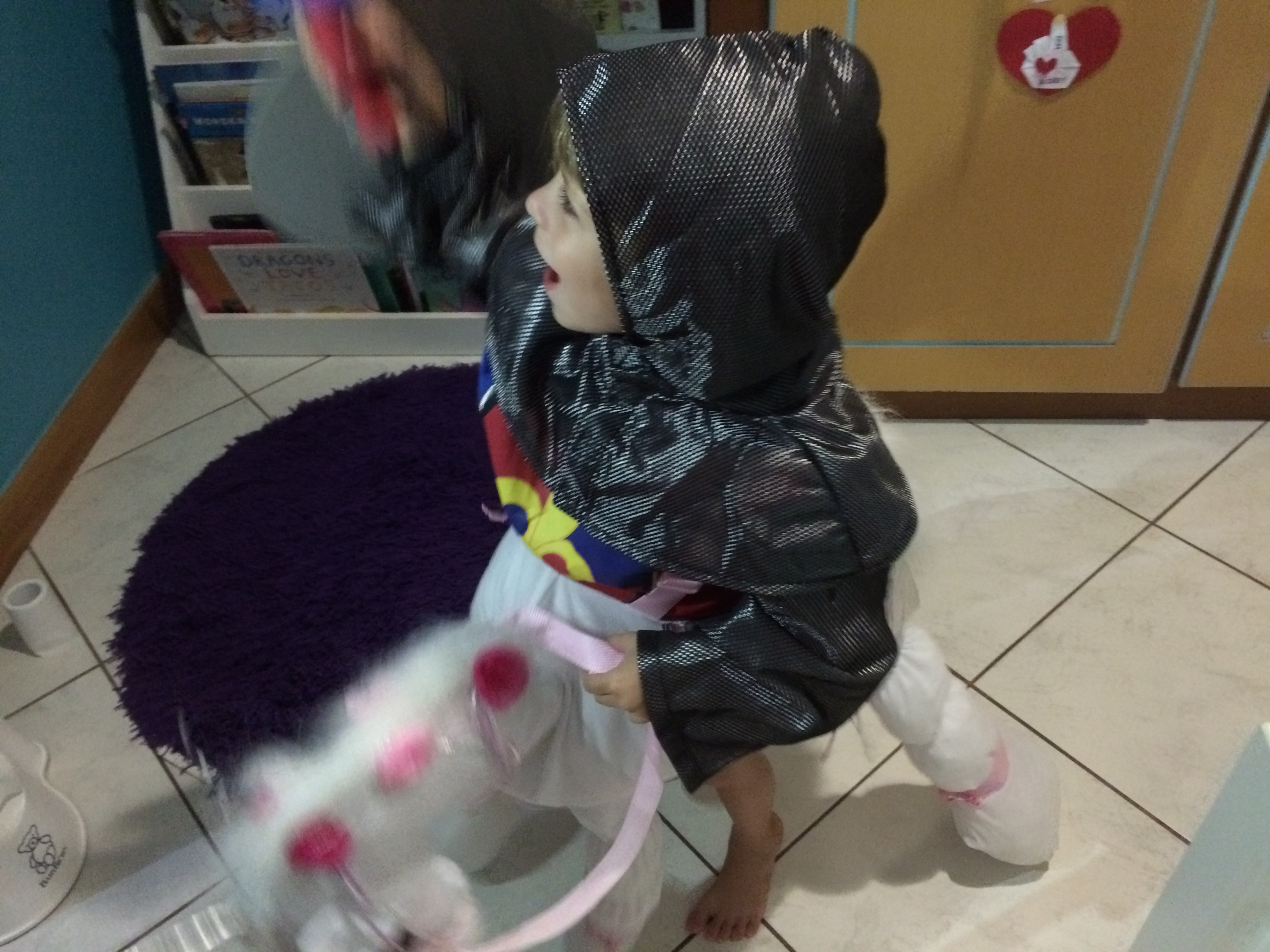
    I was still reeling from this disturbing revelation when my daughter announced her choice of Halloween costume. She wants to be a knight riding a flying unicorn.IMG_1009

    “Like the man and his flying horse,” she said.

    “What man?” I said confused. “You mean Bellerophon and Pegasus?!”

    “Yes, like Beliphon.”

    Great. On top of everything else, we’ve turned her into a nerd.


  • My Daughter’s Bilingual. It’s not a big deal.

    My Daughter’s Bilingual. It’s not a big deal.

    DSC_0028
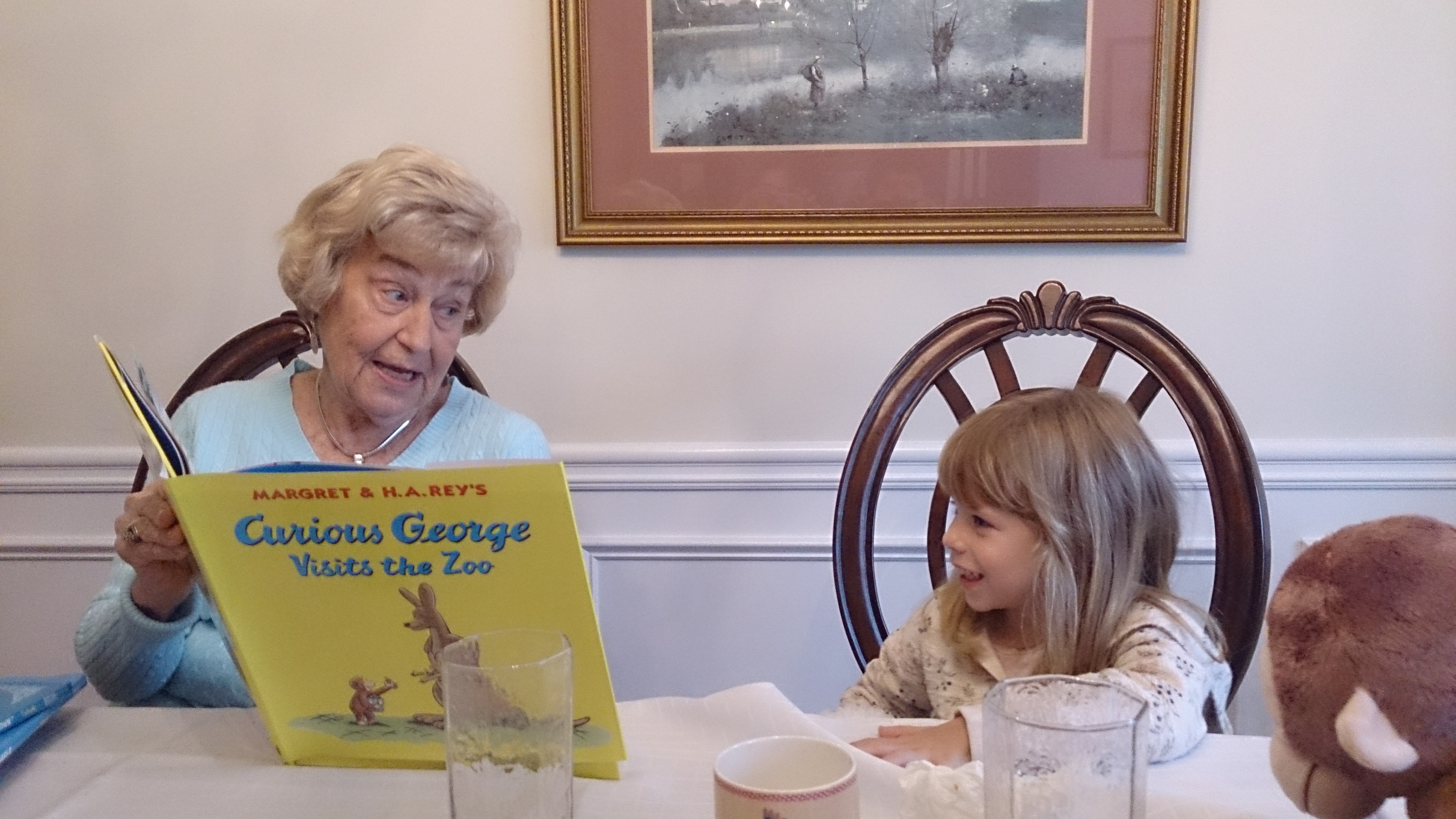
    My Brazilian-American daughter listening to her anglophone Great-Grandmother read Curious George.

    About a month ago, I was invited to be interviewed for a podcast with Marianna Du Bosq at Bilingual Avenue. She asked me to talk about raising my daughter bilingual in Portuguese and English, with English being the minority language. (Jargon alert! In the bilingual community, minority language is any language not spoken by the majority of people in the community.) I was flattered and excited.  In preparation, I visited her site and pulled up previous podcasts. As I listened to the PhD experts and trilingual parents, the researchers and published authors, I began to suspect that I would be the least helpful person ever interviewed for Bilingual Avenue.

    Well the interview is up, and I’m certain that I’m the least helpful guest ever.

    Of all the issues that come with parenting my daughter, raising her bilingual is one of the last I think about. In terms of energy usage, reflecting on her bilingualism comes just after flossing her teeth and ahead of which hand she writes with.

    I don’t have a favorite book on bilingualism. I don’t have tips or special strategies to share. I can’t list the names of prominent researchers in the field or site the latest journal article making waves. I don’t have a “biggest fear” or “primary concern”. I’m not visiting online forums and sharing my struggles with other parents.

    Before my daughter was born I did buy two books on raising bilingual kids. I read enough to know the common strategies: One Parent One Language (each parent speaks his/her native language to the child) and Minority Language at Home (the child learns the majority language at school/in public and speaks the minority language with both parents at home). Our pre-birth strategy session went something like this:

    Me: “Since she’s going to be getting Portuguese at school and with all her friends, we should probably speak English to her at home, right?”

    My Husband: “Absolutely.”

    And that was that. Marianna asked me during the interview how my Brazilian husband feels about speaking English to his daughter. Not to spoil the interview, but I considered revealing my suspicions that I married a robot. He speaks English fluently and wants his daughter to be fluent in both languages, thus the logical choice was to speak English at home. Period. I realize this story is not helpful for the majority of people who also consider feelings when making decisions. I personally would not be able to say “I love you” in Portuguese and feel it the way I do in English, but my husband didn’t give it a second thought.

    It’s possible we would have talked about it more, but then my daughter was born seven weeks early. We spent a month in the NICU. She developed a severe food allergy that caused bloody stools until she was 8 months and left me, the breastfeeding mom, only able to eat fruits and vegetables handpicked by fairies and meat that hadn’t been cooked in anything remotely tasty. Her breastfeeding feeding schedule was every two hours, so I didn’t sleep for almost a year. She has severe separation anxiety which has allowed me one night off in over four years, and that night was such a disaster it will take years for everyone to recover enough to try again. When she started throwing tantrums, they included biting, scratching, spitting, kicking, and screaming until she lost her voice. Two years later, we’ve managed to reduce the tantrums to only screaming and throwing toys at doors instead of people. She refuses to try new foods. Iran is more flexible over nuclear policies than my daughter is on the subject of vegetables. And she has recently decided she is done with both school and sleeping.

    Truly my daughter speaking two languages is the least of my concerns.

    Her teachers report no problems with communication. She has lots of friends she speaks to in Portuguese. She enjoys speaking in English to my parents via Skype. She might have in total fewer words in English than a monolingual her age but so, what? I’m a native English speaker and still regularly have to look up English words I’ve never seen before. With every piece of writing, I learn new ways to use and manipulate my native language. Learning a language is a lifelong activity, not something you need mastered by 18. My kid can identify an armadillo in both English and Portuguese. I’m not worried.

    When I do consider her bilingualism and her place in the world as a bilingual, I remember that the idea a child should only have one native language or risk never being fluent in any has been totally and completely debunked. Linguists estimate 75% of the world’s population speaks more than one language and about 20% of the U.S. population. She’s far from alone in her bilingualism. In fact, compared to the many families passing on three or even four languages, our two-language family is pretty straightforward.

    I think about these facts for two minutes and then go back to finding a way to make applying sunscreen less traumatic. Which is why, I’m the absolute last parent to ask about raising a bilingual child.

    Because when someone says “You’re raising her bilingual. How’s that going?” I say, “Fine. Hey, do you have any suggestions for getting her to not hate carrots?”


    *Here is the link to my interview with Marianna at Bilingual Avenue. Episode 87: Learning Language from our Kids with Brynn Barineau

    If you have any questions or doubts about raising multilingual kids, Bilingual Avenue is a great resource!!


    fJzNWoE3050e876-5d08-44fa-b416-1e09c2490383_zpse12fd438

  • Why I’m an Expat in Brazil Part III: Leaving the Friend Zone

    Why I’m an Expat in Brazil Part III: Leaving the Friend Zone

    Dancing crosses culture and brings people together. It did for my husband and me.
    Dancing crosses culture and brings people together. It did for my husband and me.

    My husband and I never actually dated.  Not officially.  He never asked me to dinner.  I never invited him to a movie.  We didn’t sit across from each other in a dimly-lit, over-cooled restaurant asking about family or hometowns between sips of wine.  When one of the parties can pull out a two inch file on the other there is no “getting to know you” period.

    “So, I’m from Rio de Janeiro originally…”

    “Yes, I read that in your program application.  I also saw that you got your law degree from a university in Bahia and recently completed your master’s in law at the State University of Rio de Janeiro.  Changing the subject, your blood pressure is fantastic!  Do you have any cardio tips?”

    For his part, he’d listened to a running stream of personal revelations from me as I attempted to make each of the Fellows (him in particular) feel at home in DC.  I thought the best way to do this was to talk about my parents’ divorce and bring travel photo albums to lunch.  He’d met my closest friends within two weeks of meeting me because I’d recruited them to be student hosts for the Fellows, and he met my parents when I brought them along to karaoke with the Fellows at a bar in Adams Morgan.

    He may not have had a full medical history for me, but he knew exactly who I was within a month of meeting me: a 22 year-old who excitedly brings her parents out to a bar to show off her new work colleagues.

    I hid nothing.  I revealed all of me including friends, family, and cat.  The only reason I did something as insane as show the HD version of myself from the start is because it was inconceivable that we would end up in a relationship.  And I mean inconceivable literally.  I did not imagine, envision, or hypothesize any scenario in which we were more than friends.  His different nationality and culture had nothing to do it with it.  He was…is sixteen years older than I am.  His professional career at that point included naval officer and auditor with Brazil’s IRS.  My professional title at the time was “Graduate Assistant”.  We were at such different stages in our lives that all I had my sights set on was an incredibly impressive letter of recommendation from him at the end of year.

    So when my friend confidently told me over dinner one Saturday night “He’s totally going to stick his tongue down your throat.”  I replied “Wha…he…I…uh…we…nooooo, he is not.”  Because I was both incredulous at the idea and painfully uncomfortable talking about physical relationships.  It was a cool evening in early October, and my friend and I were having basin sized salads before I headed out clubbing with some of the Fellows.  The Fellows from Zimbabwe and Cameroon were desperate to go out dancing, so I’d agreed to pretend I could dance and go with them.  The Brazilian said he’d come too.  The plan was for me to meet him at the metro stop near our apartments and head to Dupont Circle together.

    “So you’re going to the club together,” my friend concluded.  I changed the subject.

    We were headed to Cafe Citron, a club I had visited once before, and thought (wrongly) I could get to without directions.  After lapping the circle, asking for directions, and finding the other Fellows at the club, we hit the dance floor.  This was the part I had been dreading.  Besides soccer playing, the only other skill I associated with Brazil was dancing.  Samba. The Girl from Ipanema.  Carnaval.  Bossa Nova.  I imagined a country full of people who celebrated soccer victories by literally dancing, extremely well, in the streets.  I could handle the “Electric Slide”, the “Chicken Dance”, or a montage from Greece, but as we weren’t at a suburban high school homecoming, I didn’t expect to shine very brightly on the dance floor.

    Fortunately, neither does he.  The Brazilian doesn’t dance.

    Oh, he dances better than I do, but the music and the crowd that night kept things simple and close.  I could follow.  Not that we danced for long.

    I felt the tension from the first sway of my hips.  After having lunch together for weeks, I suddenly couldn’t look him in the eye.  I looked at his shoulder, just beyond his shoulder, his feet, his forearm, his hand, his chest.  Eventually, I was down to body parts that would have been far more awkward to stare at than his eyes. So I looked up.  We made eye contact.  And he made his move.

    His move was confident and calm and so wonderful.  It was the unhurried and sure kiss of a grown man.  Thank god, we got married because after a minute of kissing, I was spoiled forever for mid-twenty grad students.

    We left the club a couple.  Not dating.  Not open to other people.  We left together.

    Not that we told anyone.  Why cause a fuss if it wasn’t going to work out?  But by Christmas break we’d said I love you and it was time to tell my family I had fallen for a Brazilian, atheist, sixteen-years my elder, who was in the states for only another seven months.

    It went better than I expected.


  • Why I’m an Expat in Brazil Part II: Between Meeting & Dating

    Why I’m an Expat in Brazil Part II: Between Meeting & Dating

    Some very impressive Humphrey Fellows and me.
    Some very impressive Humphrey Fellows and me.

    It is a long way between meeting someone for the first time and marrying him.

    I saw my future husband for the second time early the next morning as I collected the entire group of Humphrey Fellows to escort them to their welcome meeting.  As an international studies major, I was in quite the fan-girl tizzy over the Humphrey Fellows, specifically the Fellow from Bhutan.  There are only about 700,000 Bhutanese in the world, and I was going to work with one!  I’d been bringing her up in conversation regularly for months in an effort to compete with my roommate’s stories from her internship on Capitol Hill.

    On that typically humid August morning, I found my Brazilian waiting in the dorm lobby next to the Fellow from Kenya.  We chatted as the others slowly trickled down.  There was a lot of hand shaking and slow pronouncing of names, my own name included.  “It’s pronounced like Lynn, except with a Br instead of an L.”  “No, it’s not a boy’s name.  That’s Bryan, with an A.”  “No, I don’t think my parents knew my name would be unpronounceable to, apparently, the entire world.”

    Orientation for an international exchange program is probably the most emotionally exhaustive thing a person can go through that doesn’t involve a birth, a death, or a space suit.  A person is expected to navigate a new place, new culture, possibly a new language, and new people, all while jet lagged and in some amount of digestive distress from new food.  It’s not a vacation.  There’s no sleeping in.  I met the Fellows in the lobby at 8:45am for a welcome meeting that started at 9 sharp, and from that moment on for the next two weeks, it was a race to get them registered for classes, bank accounts, cell phones, and long-term housing before fall semester began.

    Our Fellows had an added emotional blow as they went from being up and coming stars of their respective professions to nobody.

    Welcome to Washington DC!  It has the highest concentration of PhDs, law degrees and self-esteem per capita of any city in the world.  You are now officially unimpressive.  You will not have maids.  You will not have secretaries.  If you don’t know how to send an email or cook, well…we can teach you how to email.  Try not to starve.

    Undergrads who study abroad don’t have these problems.  They haven’t been on their own long enough to be embarrassed by dependency.  The Humphrey Fellows however ranged in age from 35 to 50.  They arrived for their year in Washington with impressive CVs and very fragile egos.  Working with them taught me how to explain what to do with used toilet paper without sounding condescending.

    Culture shock and a complete lack of family and friends explain why I, at 22 with the ink still drying on my diploma, was treated by the Fellows as an equal.  Nobody asked me to get their coffee.  They asked me to explain the online course registration.  They asked me to listen as they cried over how much they missed their kids.  They asked me to explain the endless variety of milk in grocery stores.  At that moment in their lives, they needed an insiders guide to Americans.  I was an American with a embarrassingly fortuitously empty social calendar and that huge fan-girl crush on them.  I became the group’s cultural wingman.

    I started hanging out with the Fellows on weekends.  We went to a coffee shop at Dupont Circle for s’mores.  We hit some bars in Adams Morgan and tried out an Ethiopian restaurant for lunch.  The group changed depending on who had a paper due or a bad case of culture shock, except for one member: the Brazilian.  In my memories he’s always there.  Always up for anything.  Usually available for lunch.  He’d rented a basement apartment close to where I lived, and we often ran into each other on the shuttle heading to and from campus.

    But I was so hung up on his resume and the sixteen year age difference, I never imagined he actually thought of me as a fellow adult.  I was sure the Brazilian, like the other Fellows, was being incredibly polite to someone helping him.  When he paid close attention as I took him through every picture from my semester in India, I must have subconsciously chalked it up to good manners because I would never, NEVER, have brought a photo album to lunch with someone I actually hoped to date.

    About a month after orientation, the Korean Fellow invited everyone to his apartment for dinner.  I clearly remember a few wonderful minutes in the kitchen as the Brazilian taught me how to make caipirinhas and I tried one.  I blamed my flushed cheeks on the cachaça.  Later a group of us took the subway home.  It was several blocks to the metro station, and the temperature had dropped changing my sandals from cute to extremely impractical.  My toes were slowly freezing and I probably would have lost a few, if the Brazilian hadn’t stopped, taken off his shoes, and handed me his socks.  He gave me the socks off his feet.

    And I still didn’t see the first kiss coming.  But that night deserves its own story.

  • How I Met My Husband or Why I’m in Brazil

    How I Met My Husband or Why I’m in Brazil

    We met, we married, and I moved to Brazil.
    We met, we married, and I moved to Brazil.

    Ten years ago today, I met my husband.

    He showed up at the office a day early and if he had been less adventurous or more patient, if he had just followed his orientation schedule, I’d probably still be in Washington DC with an impressive career in international education.

    He was one of nine mid-career professionals from around the world being hosted by the Washington College of Law as part of the Hubert Humphrey Fellowship Program.  His welcome orientation was scheduled for August 4, 2005.  I was spending August 3 sprawled on the floor with my hair in a pony-tail  hole-punching, stacking, and assembling orientation binders.  At least, that was my plan, but about mid-morning the office manager poked his head into the conference room and told me the Brazilian was at the front desk.

    The office manager actually called him, “The Brazilian”.  We all did, even program staff at the national level, because no one had a clue how to pronounce his name, which is quite a statement considering the range of nationalities around the office suite.  My boss was out of the office, so I got to be the first to hear the correct pronunciation and fail repeatedly to say it.  We would be dating before I could correctly say his name.

    I saw him as soon as I stepped out of the conference room.  He was standing by the reception desk just beyond several ubiquitous office cubicles, including my own, and I thought, “Wow, he’s white. I didn’t know Brazilians could be white.”  It was the first in what has turned out to be a lifetime of revelations about Brazil, many of which have revealed an embarrassing number of unconscious assumptions based exclusively on Pelé.

    My second thought on seeing him was “He’s really handsome.”  My third was “I can’t believe he found this place.”  The program office was located in a suite on the bottom level of a building two blocks down from the law school.  The suite housed a variety of programs and offices, none of which had found a way to give directions that didn’t get most visitors lost.  The Brazilian had successfully navigated the maps and directions while jet-lagged and operating in a foreign language.  I was impressed.

    But I’d been impressed by him for months.  We received a binder on each Fellow that included a medical history, their complete program application with letters of recommendation, and the Fulbright selection committee’s evaluations.  The Brazilian came with a letter of recommendation from a Supreme Court Justice and a clean bill of health.  Not bad as boyfriend applications go.  For my part, I’d been a college graduate for three months.

    Truly I don’t know what about me got his attention.  Maybe it was my stellar administrative skills or consistent punctuality.  Somehow, I managed to make navigating my home country in my native language seem impressive.  Thank god for home court advantage.

    I wasn’t thinking relationship in that first moment.  After recognizing that he was attractive, I went straight to professional mode.  I took him on a tour of the school and to the bank.  There is nothing romantic about banking or walking around DC at midday in August.  Unless pit stains are considered a turn on.  We grabbed lunch at the sandwich place across the street where I proved I was strictly business and indifferent to others by ordering the onion smothered Greek wrap.  We chatted easily over lunch, and I believe that casual conversation over vegetarian wraps laid the groundwork for everything that followed.

    If my boss had been around that morning, she would have been the one to take him to the bank and to lunch.  If we had met the next day along with the entire group, we wouldn’t have had the rapport that made me the obvious choice to go with him apartment hunting while the other Fellows opened bank accounts.  And if we hadn’t gotten to know one another while touring some rather frightening basement apartments in Northwest DC, it wouldn’t have felt perfectly natural to meet up for lunch periodically over the coming weeks.

    By the time we went on our first date, we’d already opened a bank account, shopped for an apartment, and been subjected to a variety of team building exercises together. Rarely has a couple’s compatibility been so thoroughly tested.  All we lacked was an astrologer’s blessing.

    But all those moments came after that first meeting, when he showed up early and I mispronounced his name exactly ten years ago today.

  • 5 Things You’d Never Guess About Brazil

    5 Things You’d Never Guess About Brazil

    5 Surprising Facts About Brazil
    5 of the many things that have surprised me about Brazil…

    “Do you like Brazil?” I heard this question for the thousandth time last night.  I don’t know why people bother to ask this question.  It’s in the same category as “Does this make me look fat?” and “Did you read my last blog post?”  Nobody wants an honest answer.  “Do you like Brazil?”  The correct response is an enthusiastic “Yes!”

    At least this question has an obvious correct answer, unlike “So which country do you like better?  The US or Brazil?”  What am I supposed to say?  I usually cop out with humor. “Neither.  I’m giving up on the whole nation-state system.  I’d like to start my own island tribe based on handedness.”

    Another strategy I’ve developed over the years is to answer these politically loaded questions with lists: “Things I love about Brazil” or “Things I miss about the US”.  Below is my favorite list.  I like it because it’s personal but more unusual than the standard “Things I love about Brazil.”

    Five Things That Surprised Me About Brazil

    1) Stellar Dental Hygiene   Brazilians are obsessed with their teeth.  If you go into a restroom after lunch, there will be a wall of people between you and the sink, all of them flossing their teeth.  Helpfully, many public restrooms have floss dispensers to facilitate this habit.  You should brush your teeth after every meal and ideally after every snack.  As an after-breakfast-and-before-bed brusher, I have the most disgusting teeth in all of Brazil.  Fortunately, my husband accepts me for who I am and ascribes my poor dental hygiene and once-a-day-showering to my Anglo-Saxon ancestors’ affinity for filth.  Although thanks to him, I have grudgingly become a daily flosser.

    2) Your Fingers Must Never Touch Your Food  When I learned that many Brazilians use a fork to eat french fries, I almost moved back to the US.  Brazilians use a knife and fork for EVERYTHING!  Your fingers must never touch your food.  As my people created a category just for “finger foods”, this is not a custom that I’m particularly comfortable with or always able to keep in mind.  I’ll be at a birthday party happily popping mini-pizzas in my mouth, when I notice everyone else at the table has a napkin delicately wrapped around their snack, creating a polite barrier between fingers and food.  After 9 years, I still can’t muster that level of formality for something that came frozen out of a box.  (Honestly between the finger eating and lack of teeth brushing, I’m surprised my husband agrees to go out with me.)

    3) Japanese-Brazilians  My initial thought when I saw my husband for the first time was “Hey, he’s white!”  True story.  Pretty romantic, huh?  Before my husband, the only Brazilian I was aware of was Pelé, thus my unconscious assumption about how Brazilians look.  I wasn’t totally wrong.  According to the 2010 census, 50.7% of Brazilians do consider themselves black or mixed-race. But in addition to the 4.8 million people brought as slaves from Africa and the indigenous tribes who were already here, Brazil has had substantial immigration from Portugal, Italy, Japan, Lebanon, and Germany to name a few countries.  With a history of intermarriage between the groups, Brazilians cover the entire range of possible human phenotypes.  

    4) Brazilians Love Volleyball!  Everyone else in the world besides Americans might already know this.  Probably the world loves indoor volleyball, and it’s only us Americans who are in the dark. Literally. We’d rather just sit in the dark than watch a volleyball game.  But not Brazilians!  If there’s no soccer game, the sports channels are covering a volleyball match.  They have incredibly popular professional leagues here, and if you stay in Brazil long enough, you will find yourself at a bar with a women’s club volleyball game on the TV.  Or judo.  Judo is also very popular in Brazil.

    5) Did You Already Add Salt?  This is a question most Brazilians won’t ask because they’re going to go ahead add more salt regardless.  Meal after meal, I see Brazilians get food placed in front of them and without even tasting it, they reach for the salt packets, rip one open, and rain salt down on the entire plate.  Very shortly after arriving, my husband made sure to treat me to one of Brazil’s traditional meals imported from Portugal, bacalhau or codfish.  Imagine a salt lick served with potatoes and onions. That’s bacalhau.  I couldn’t eat it.  The same was true for feijoada, a uniquely Brazilian dish involving black beans, all the leftover pieces of pig, and a few ice cream scoops of salt. Not surprisingly, Brazil has a hypertension epidemic.

    Those were some of the most surprising truths I learned about Brazil.  I’d come up with more, but I just ate a pretzel and must go floss my teeth.


  • The Two Kinds of Americans Abroad

    The Two Kinds of Americans Abroad

    There are two kinds of Americans abroad.
    There are two kinds of Americans abroad.

    Last week, I gave a lecture comparing Brazilian and American culture to a group of law students from West Virginia University.  I like to think that I was asked to lecture because I have a Master’s degree in International Communication, a subject I have been living everyday since I moved to Brazil.  But I think the decision making process was more like this.

    “We have a large group of Americans coming and none of them speak Portuguese.  We need English speakers with advanced degrees! Quick!”

    “We have these five professors.  That’s two days, but the group is here a week.”

    “Crap.”

    “Hey, isn’t there a professor with an American wife?”

    “Yes! She can talk about the differences between Americans and Brazilians.  Plus, she’s not actually a professor so we won’t have to pay her anything. Perfect!”

    And that’s how I ended up on a stage talking to a gaggle of WVU law students, who unfortunately didn’t come dressed in coal-dusted miner’s clothing, strumming banjos.  Thus the only images I had of West Virginia were shattered.

    I opened my lecture by asking for the audience to describe a “typical” American and Brazilian.  I asked each group to describe their own nationality.  The Brazilians in the room described a typical Brazilian as “friendly”, “family oriented”, “has lots of kids”, “talkative”, “kind”, and “social” among other things.  Now, how do you think the Americans described themselves?

    A little personal reflection before I tell you.  I’ve traveled a fair amount, and I think Americans who venture outside the US can be divided into two categories.  One group is the famous American tourist.  The loud, pink-faced, sneaker-wearing patriot who cannot fathom why this third-world country doesn’t put ice cubes in the drinks.  They seem surprised and confused to discover that not every person everywhere lives exactly like they do.

    “Cheryl, did you see that you cannot flush the toilet paper?!  I tell you what…I don’t know how these people can live like this.  If I lived in this place, I’d get myself an American toilet right quick.”

    Then there is the other group.  These students were from the other group.

    These American students described a typical American as “fat”, “lazy”, “arrogant”, “selfish”, and “ignorant”.  They basically described the typical American as a cross between Voldemort and Jabba the Hutt.

    It was fascinating.  Despite currently living through a recession and an enormous corruption scandal involving billions of taxpayers’ reais and rising inflation and gross income inequality and sky high rates of gun deaths…the Brazilians described themselves in overwhelmingly positive and honest terms.  Why were the Americans so brutal and negative toward their countrymen? And more interestingly, would any of them have described themselves in those terms? Of course not! They don’t see themselves as “typical”. (Ironically, separating yourself out from the majority as a unique individual is typically American.)

    These students are the second type of Americans abroad, the “serial apologizers”.

    Perhaps you’ve seen them eating couscous with their fingers in Rabat or using chopsticks like a local in Tokyo. They are Americans who are hyper aware of the negative opinion many people have of US foreign policy and/or Americans themselves.  Thus, they go around profusely apologizing for everything the US has ever done wrong.  They preempt criticism with more extreme criticism of their own.

    “You don’t like US policy in the Middle East?  How could you?  We’re arrogantly imposing our will on everyone who is different!  It’s what we do!  Let me tell you about our history with Native Americans and slavery and don’t even get me started on the present day! Between Iraq and the Kardashians, we’ve destroyed everything that is good and decent in the world!  Disney! Drones! Starbucks! We are the WORST!”

    My fellow Americans, isn’t there some happy middle ground between these groups?  Can’t we describe ourselves as hardworking, informal, and innovative while also acknowledging that Walmart is run by the devil’s minions?

    Let’s try!  Next time you go abroad, don’t assume the lack of ice cubes is indicative of underdevelopment.  If someone brings up Guantanamo, acknowledge that our collective fear after 9/11 led to some horrible policy decisions but you’re confident the pendulum is swinging back the other way.  Then lead everyone in a rousing chorus, “Tomorrow!  Tomorrow! I love ya, tomorrow!” Because fierce optimism and musical theater are two of Americans’ greatest contributions to the world.