Tag: culture

  • Combatting Fraud & Efficiency

    The Brazilian government is truly amazing in its ability to complicate simple things.  Take signing your name to a contract.  In the US, at the end of negotiations a piece of paper is laid down on which is written everything the parties agree to and then all affected by the agreement pick up a pen and sign their names.  That’s it. Deal’s closed.

    Here in Brazil, there is an extra step.  Once everyone has signed the contract then each signatory must prove that she is in fact the person whose name is signed on the document.

    You prove the validity of your signature by having it notarized.  The only way you can have your signature notarized is by having an official signature on record with one of the notary offices in your city.  And that was what I got to do last week.  I put my signature on record.  Now, all I need is a contract to sign.

    In an age when I can see and talk to my parents in the States while sitting on my couch in Brazil, this signature registration seems a touch outdated.  I walked into the notary and gave them my RNE card (Brazilian green card).  A man then typed my information onto what is essentially a 3×5 index card.  He gave the card to me and told me to sign my name three times on the empty lines provided.  I did.  He stamped it and filed it away.

    Now, I have an official signature.  In the future if I’m signing an official document, let’s say a contract on a four-bedroom apartment with two parking spaces, just imagining here, once I sign the document I will have to go back to that same notary office.  They will pull my card out and compare the signature on the contract to the signatures on the card.  If they match, the notary will stamp the contract saying the person who signed “Brynn” is in fact “Brynn.”  If they are different in any way, the notary will not affirm the signature. I either resign matching the index card exactly or I get sent to jail for fraud.  Something like that.

    I’m told this is a way to prevent fraud.  I guess Brazilian criminals aren’t sophisticated enough to fake the ID shown to register the signature in the first place.  They just run around trying to sign other people’s names on marriage certificates.

    An American lawyer friend explained to me Brazilians and Americans have different ways of approaching fraud.  Americans assume 95% of all transactions will be legit and make the process simple.  They invest resources in prosecuting the 5% that is fraudulent.  Brazilians invest their resources in trying to prevent fraud from ever occurring, hence the overwhelming amount of bureaucracy.

    Obvious, not all fraud in America is persecuted, but neither does Brazil’s approach prevent fraud from ever happening.  My husband, who knows something about fraud cases in Brazil, said most people would be surprised by just how often fraud occurs.  So in the end the only thing a notarized signature prevents every time, is efficiency.
  • My Brazilian Gym Membership Part 3: Dress Code

    My Brazilian Gym Membership Part 3: Dress Code

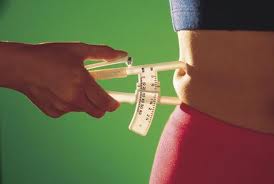
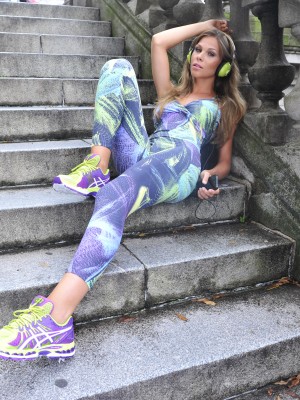
    Most ads don't reflect reality...this one does. This is exactly how many women show up to my gym.
    Most ads don’t reflect reality…this one does. This is exactly how many women show up to my gym.

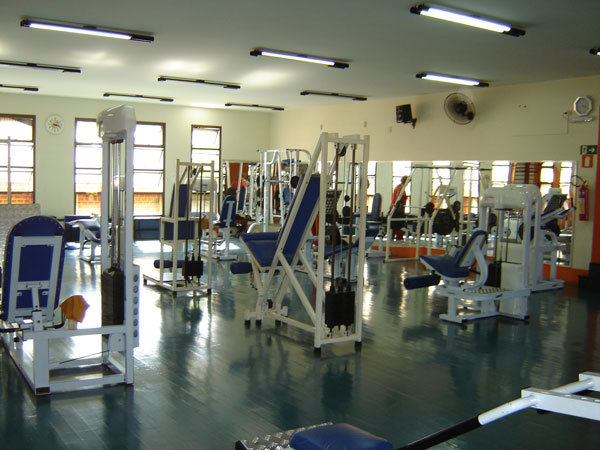
    I’ve been a regular at our new gym for one full week and I have to say I’m a bit of a standout.  People come up to me and ask where I’m from.  The trainers notice me and wave from across the gym.  I notice guys doing a double take.  Not to brag but people notice me.  Yup, I have the distinction of being the most conservatively dressed woman in the gym.

    With my t-shirts and running shorts, I might as well be using an American flag as a towel. It’s not just the fact that my abdomen is entirely covered that sets me apart.  I’m not wearing eyeliner or chandelier earrings and I haven’t left my waist-length hair streaming down my back. The Brazilian women at my gym are the sexiest collection of gym goers I’ve ever seen.  It’s like working out in a Flo Rida music video.

    There’s more leopard print here than on a jungle safari.  You can also see a good deal of paisley in all the colors of the rainbow.  Every outfit is perfectly matched and accessorized.  A flower-print sports bra paired with striped shorts?  Major faux-pas!

    Most of the women avoid the risks of mismatching by just going with the unitard.  Until recently, the unitard was, for me, merely a myth.  An extinct manner of dress that could be seen in historic records and frequently used in comedy sketches, like the toga.

    I’m pleased to report the unitard is alive and popular here in Brazil.  Surprisingly, there is quite a variety of cuts.  You have very low cut backs that dip so far down it’s possible to count every vertebra. Some of the unitards have cutouts on the sides and others have lace-up backs. They also have fronts cut so low there’s no way the woman can lift her arms over head without everything popping out.

    But lifting one’s arms is something most of the women never need to do since 95% of their workout focuses on legs.  Probably, to pull off their unitards.  And boy, do they pull them off.  In addition to being sex bombs, I’m pretty sure every woman there is also a triathlete.  These women sport six packs and perky, round butts without any jiggle.

    I’m not exaggerating when I say every woman in the gym is hardcore.  Yesterday, I scanned the gym specifically looking for women who could stand to lose a pound or two.  I saw maybe four.  Everyone else looked like an athlete and this includes the grandmothers in the room.  One woman, who could not have been younger than 60, followed me on the squat press and upped my weight by 40kgs. A very humbling moment.

    I’d be lying if I said I wasn’t a little intimidated by the overt sexiness of the women.  The women are sleek, styled and fit. I’m in baggy shorts with my ponytail askew.  In the end though, I’ll take a ponytail over sweaty hair clinging to my back.  For me, comfort trumps fashion but I will take a cue from their commitment.  These women, of all ages, have made exercise an integral part of their lifestyle.  That, unlike unitards, is something worth imitating.

  • My Gym Membership A 3 part series  Part II: Results

    My Gym Membership A 3 part series Part II: Results

    In a dazzling, welcome and somewhat out of character for Brazil, display of efficiency, the results of our introductory physical evaluation were sent by email the evening of the exam.  Having run on a treadmill wearing a mask most commonly seen on fighter pilots, I was expecting the results to be somewhat technical.  The myriad of pie charts and bar graphs didn’t disappoint.  My husband and I met with a trainer the next morning to have our results explained.

    I was all set to hear a trainer explain my good results and tell me I had passed my evaluation with flying colors.  I’m certainly no Olympian but I’ve been going to the gym pretty regularly and I watch what I eat.  I anticipated good results.

    A red-shirted trainer pulled up my results on a computer in weight room.  He took a second to skim the brightly colored charts.

    “Ok, your goal is to drop your body fat percentage by 4%.  You also need to increase your percentage of lean body mass.  Your right shoulder hangs slightly lower than your left which makes your pelvis tilt up on your left side. We’re going to have to work on that. You really need to improve your cardio.  The evaluator recommends at least 30 minutes on the treadmill a few times a week.  We’ll give you some ab exercises to reduce your waist circumference and of course we’ll concentrate heavily on your glutes and thighs.”

    I was waiting for him to tell me I had a brain tumor to go along with my fat, scoliosis, and weak heart. Then he scrolled farther down into the report, and my butt mugshots came into view.

    These were the most unflattering, complex-inducing, fat-roll highlighting pictures any human being has ever had taken. With the helpful grid on the wall behind me, I could measure just how far out my butt protruded from my body.  My profile shot provided a wonderful comparison between the horizontal extension of my butt and boobs, which, being under a sports bra, were non-existent according to the grid.

    Never once did he say to me “This is really good,” or “You’re doing great in this area.” I heard nothing except my current measurements and goals to work toward. By the end of the review I was convinced I had some serious work to do and guilty of assault every time I put on a bikini.

    What exactly were my results?  Currently, I weigh 62.8 kg (138.45 lbs) and my body fat percentage is 18.35.  My recommended goal is to reduce my body fat percentage to 14 and lose 2 kg (4.4lbs). To do this I will need to increase my lean body mass (muscle) by 1 kg.

    When the trainer gave me those numbers, I had no idea how they compared to other people.  I’m not a nutritionist or a doctor.  The trainer just told how much fat I should work on losing.  I was genuinely dismayed and believed I was in fact slightly over weight. Never once did he say “Wow, Brynn you’re actually in really great shape.”

    Which is exactly what I am!!  I am in awesome shape as  two hours worth of internet research told me.  Oh my god!  I realize I look like an ass for being upset about discovering I’m in good shape but the trainer really made me believe I NEEDED to loose the fat.  After visiting a dozen health sites, I learned that 14% body fat, my goal, is the lowest amount of fat an athletic woman my age should have. I need 12% body fat just for my organs to function well.

    Trainers, a word of advice.  If your client is already in good shape at the beginning of her training, lead with that!  Rather than say “Your goal is to lose 4% body fat,” say “4% body fat is all you can lose and still be healthy.”  It’s all in the presentation of the information.  As a trainer you have the power to make a person feel like she’s got a great body or like she’s that “before” picture in all the diet pill ads.

    Trust me, it’s not a hard sell to convince most women they need to lose weight.  It’s more difficult to convince most of us that we’re perfectly healthy and can afford to enjoy a side a french fries.

    Although, if the abundance of six packs and unitards is any indication, I bet most of the women at this gym haven’t eaten any kind of carb in the last decade.

    Up next…
    Part III: Dress Code

  • My Gym Membership A 3 part series Part I: Registration

    My Gym Membership A 3 part series Part I: Registration

    “Just tuck the heart rate monitor under your sports bra.  Just like that…good.  Now I’m going to put the mask on.  You let me know if it’s too tight.”  I nodded as she slipped the rubber mask over my nose and mouth and adjusted the straps behind my head.  “Ok, I’ll keep increasing the speed every minute.  You let me know when it gets uncomfortable.”

    When you’re running on a treadmill, with a rubber mask and hose on your face, things don’t become uncomfortable.  They start out that way and proceed to get worse.  Within, five minutes I was running flat out, sweating underneath my rubber muzzle and listening to the friendly blonde chat with my husband.  To top off the indignity, they were chatting about me while I’m inches away with a hose running from my face.

    I voluntarily submitted myself to all of it.  Of course, I hadn’t known what exactly was in store when my husband and I were told we had to do a physical evaluation before starting our new gym.  That’s right.  Every new member goes through a complete physical evaluation that is kept on file and used by the trainers to develop your personal fitness routine.  You can access it yourself from any of the gym’s computers if you’re feeling lazy and need to be reminded just what percentage of you is fat.

    The morning after filling out our paperwork and paying our fees, we returned to the gym and were led to a small, flourescent lit room where we met Marisa, trainer and our physical evaluator.  My husband graciously let me go first.  (He probably knew I was hoping to memorize whatever he did and slack off on understanding Marisa’s Portuguese.)

    The evaluation started with a series of questions.  “Do you drink two liters of water a day?”  (Does anybody?) “Do you smoke?”  “What medical problems run in your family?”  etc. Then, I took off my shoes and shirt, got weighed and measured.  Marisa didn’t just take my height.  She measured around my arms, legs, calves, waist, hips, ribs, everywhere.  Muscles flexed and relaxed.

    I knew this was serious data collection when the calipers came out.  Nothing brings you down like watching all of your body fat get pinched and recorded.  I also discovered that nothing gives you body issues like having your body evaluated.  I had thought I was in pretty good shape but I began to doubt it with every notation Marisa made.  The phrase ignorance is bliss flitted through my head more than once that morning.

    When Marisa finished cataloguing my fat, she asked me to stand against the wall, centered in front of a grid painted on it.  You know, similar to the one criminals stand in front of for mug shots.  Like the criminals I got my picture taken, front, left side, right side, and back, but unlike traditional mug shots my pictures cut my head completely out of the shot.  It was a mug shot of my butt.  Wanted: my ass for being disproportionately large.

    The exam finally ended with the aerobic test on the treadmill.  The mask measured my oxygen output in relation to my heart rate.  When I finished my husband went through the same process.  I feel pretty strongly we should now be cleared for astronaut training.

    Despite feeling slightly foolish while doing the tests, I am very glad I had the evaluation.  True, I became acutely aware of the places my body likes to store fat, I know that I’m a healthy weight with a healthy lifestyle.  Plus, isn’t knowing where the fat is stored the first step in getting rid of it?  That’s the whole point, obviously, of doing the physical evaluation.  The trainer knows exactly what areas you need to maintain and what you need to improve.  A personal fitness plan.

    Or at least that’s how I felt until I saw the mug shots.

    Up next…
    Part II: The Results

  • Why Does Brazil Not Have Closets?!

    Why Does Brazil Not Have Closets?!

    We saw our current apartment for the first time about a month ago.  We had two days in Vitoria to find an apartment to rent so my husband could move and start work in 10 days.  One step across the threshold and I knew I liked it.  After a quick tour I was ready to sign the papers. My husband hesitated.

    “What’s the problem?” I asked.

    “Well, it doesn’t come with closets.”

    I did a double take. Plenty of cabinets in the kitchen,  and…nothing else. That’s it.  No closet or storage room of any kind.  Unless we wanted to store our socks above the sink, we would have to purchase a closet.

    “Brazilian homes typically don’t have built in closets,” my husband explained later.  “It’s just a piece of furniture your have to buy. It’s cultural.”

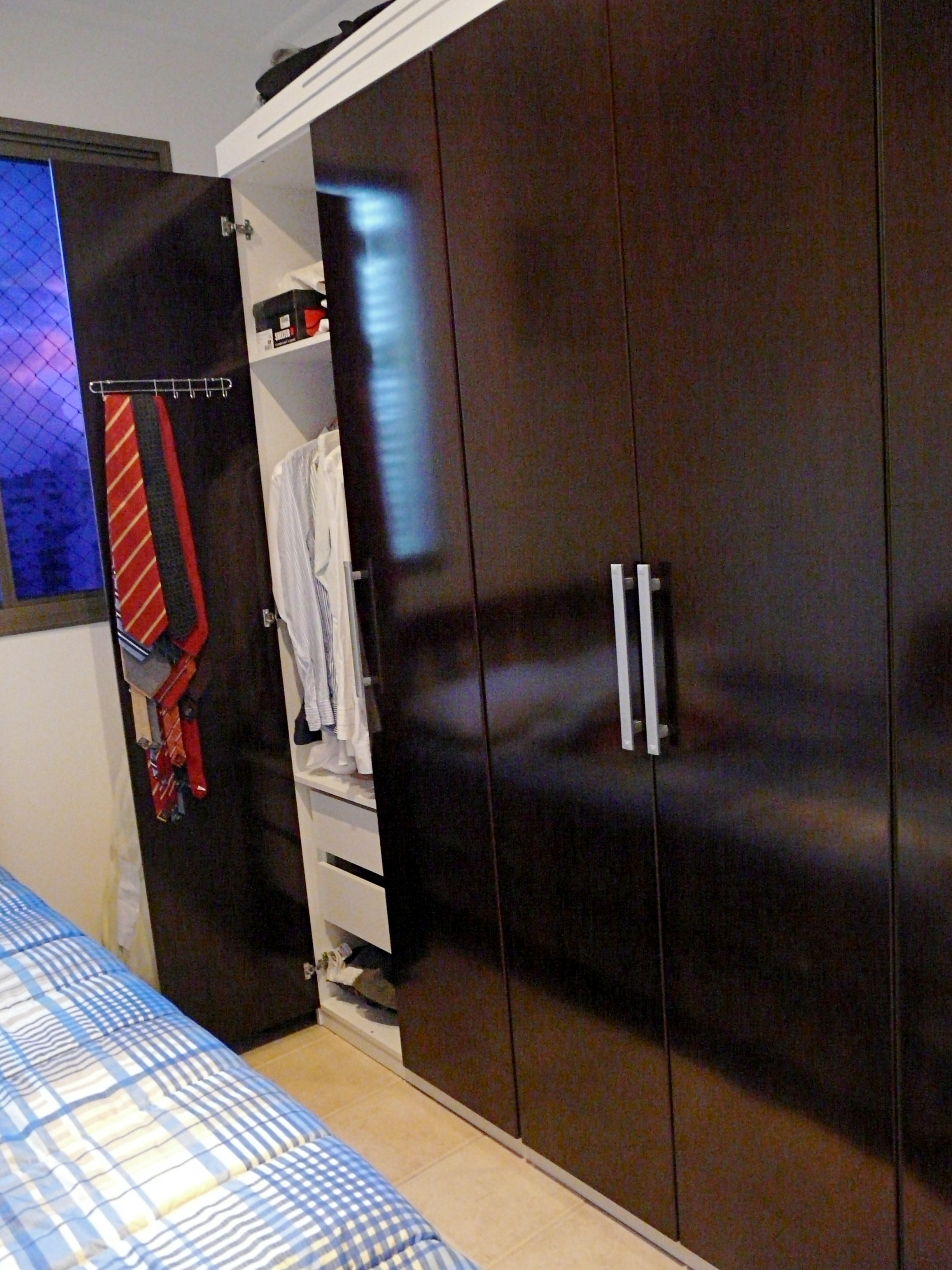
    Obviously, Brazilians have clothes.  They have towels and bed sheets.   Cariocas seem to think 60 degrees requires a coat and scarf, so where do they store the coat?  In separately purchased, often custom made, cabinets and closets like the one pictured above.

    In our quest for a closet, I developed my own theory to explain the lack closets.  It is one giant conspiracy between developers and furniture manufacturers.  Oh, the architects and interior designers are in on it too.  Everyone’s involved.  It’s a massive, money-making conspiracy.  And you the poor home buyer, with your four suitcases of clothes and one of shoes (yes, you need it all), you are the victim.

    For those of you scoffing at the idea of a closet conspiracy, let me tell you about the first stop on our closet shopping quest.  We went into a beautiful store, just a few, tree-lined blocks from our new apartment.  They had efficient yet elegant looking layouts of closets and cabinets for every room of the house.  We sat down in front of a lovely woman.  My husband spoke to her for all of forty seconds.  Before I could even catch up in the conversation, we were leaving.

    “What was the problem?  I couldn’t understand what she said.”  I scurried after my husband out the door.

    “They only do custom work.”

    “Is that a problem?”

    “It would probably cost around R$3,000/m.  So, a big closet could cost between R$27 – 30,000.”

    In dollars, about $15,000.  A $15,000 closet!  A closet!  Hell no, I’m not paying for a closet the same amount that I could pay for a car.  Never going to happen.  I will live out of my suitcases forever, before I spend that kind of money on what are essentially very tall cabinets.   Now, tell me there is not a conspiracy here?

    We did eventually find the above closet for way, way less and it is working beautifully.  It keeps our clothes off the floor, which is where we’ve had them for the past two weeks.  My husband keeps saying this is just how Brazilians do it.  Big closets are an American thing.

    I thought about that last comment.  I’ve stayed with families in a few different countries and I have to admit that I don’t remember ever walking into a closet or even seeing one.  Still, if the idea of “0” can be developed independently on two different continents, I refuse to believe the concept of a walk-in closet is uniquely American.

  • Happy Birthday, Vitoria!

    Happy Birthday, Vitoria!

    Today, the city of Vitoria turns 459 years old.  A long time ago, September 8, 1551 to be exact, the Portuguese fought and won a decisive battle against the Goitacazes tribe.  They were so tickled with themselves for winning, the Portuguese called the island where the battle occurred Ilha de Vitoria, or Island of Victory.  Thus, the city of Vitoria was born and has been continuously inhabited for the past 459 years.

    A founding date of 1551 seems quite old to me, at least for a European city in the Western hemisphere.  The city government claims on their website that Vitoria is the second oldest capital city in Brazil.  I did some research (i.e. went to wikipedia) and found a list of the oldest cities in the US for comparison.

    The oldest, continuously inhabited city in the US is St. Augustine, which was founded in 1565.  Pensacola, FL was originally founded in 1559 but destroyed shortly after it’s founding.  It wasn’t refounded until 1698, so it loses the title on a technicality.  Either way, Vitoria is older than the oldest city in the US.

    Actually, Europeans began living on the islands that now make-up Vitoria beginning decades before the city was officially founded.  The first Portuguese governor of the region of Espirito Santo, Vasco Fernandes Coutinho, arrived in 1535.  The bay was protected by a series of small islands making it an ideal port.  The Portuguese could easily defend against the French and the Dutch.  There were also some problems with the locals.  With thousands of people already living up and down the Brazilian coast, the Portuguese had a little trouble convincing them to relocate.

    The local Indian tribes called Vitoria Guanaaní, Island of Honey.  The calm bay, bejewled with emerald green islands, was a beautiful site.  The waters were filled with mollusks and fish and the forests were filled with parrots and monkeys.  It was an Island of Honey, an island of plenty.

    Unfortunately, a city cannot be a major port for 400 continuous years and remain an untainted oasis.  While not at the levels of Rio, Vitoria has serious problems with water and air pollution.  Fortunately, it only takes an hour or two to reach the small beach towns that line the coast of Espirito Santo.  There you can see glimmers of the paradise Vitoria must have been.

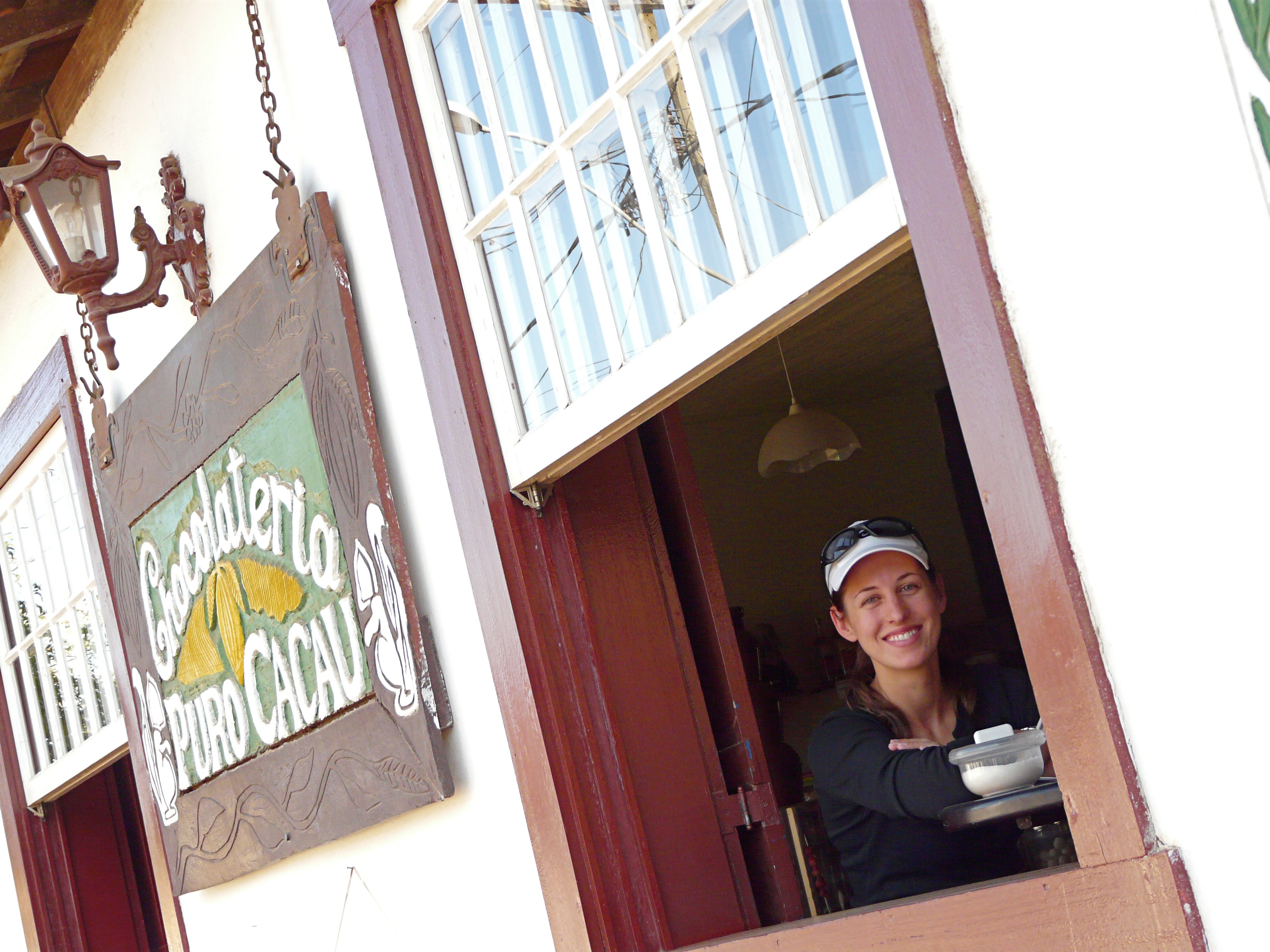
    So happy birthday Vitoria!  I’ve only been here a week but I’m already a big fan.  To be honest, you had me at your incredible fish stew, but throwing in centuries of history and a candy factory was a nice touch.

  • Welcome to Vitoria, Brazil

    Welcome to Vitoria, Brazil

    Last Monday, my husband and I loaded up our suitcases, and after being delayed by a meteor, we arrived at our new home, Vitoria.

    Vitoria is the capitol of Espirito Santo, the state immediately north of Rio de Janeiro state.  Including the metro area, Vitoria has a population of roughly 1.6 million people.  That’s only about 13 million less than Rio.

    I’ll be writing more about the city and how life here compares to that in Rio as I explore the city.  For now, here are some of the neat places I’ve found in our new neighborhood.


  • Great Things About Rio: Open Windows

    Great Things About Rio: Open Windows

    My last post was a little down on Rio.  What can I say?  My brother’s plane was canceled because drug dealers invaded a hotel and I ran out of peanut butter.

    Today, I had a delicious lunch while sitting outside on a beautiful afternoon.  Spring has come to Rio and the temperature is perfect, warm enough to wear a tank top without a jacket but not hot enough to make you sweat.  Plus, I saw a monkey this morning and fuzzy monkeys are one thing Rio has going for it. All that is to say, today I like Rio.

    Because Rio and I are on good terms today, I thought I’d return to my Great Things About Rio series.  The spectacular weather has highlighted a common practice here, which I intend to continue whenever I return to the US.  Here in Rio, people open their windows.

    Growing up, if a window in my house was opened, an adult always raced to it, vaulting over the coffee table, while shouting “The air! Don’t let the air out!” and then slammed the window shut crushing the bluebird that had landed on the sill.  Air was apparently a very precious commodity as we suburbanites moved from one hermetically sealed environment to another.  Heated or cooled, the air could not get out.  Thus, the windows remained shut.

    I guess there is an abundance of air in Rio because people just leave the windows open.  While the air inside the apartment does escape, it is replaced by air from the outside and the outside air brings all sort of wonderful things with it.  The sounds of birds, the shouts of kids playing soccer, the smell of beans and fish being prepared, the occasional chill before a storm hits.  It’s only been in Rio that I’ve discovered a breeze blowing through your home is a marvelous thing.  How wonderful to be simultaneously cozy in your apartment and still connected to the outside world.  If I were a therapist, I would regularly prescribe opening windows.

    True, an open window can let in the seasonal swarm of termites or strains of the drunken, karaoke contest from the nearby college campus, but dealing with the occasional plague does not detract from the daily calming effects of a curtain gently drifting into the room.  Besides, an open window can always be closed when it’s amateur night on the quad.

  • Great Expectations

    Great Expectations

    The World Cup ended last Sunday when Spain finally, after 116 minutes of play, managed to score.  For me there was one important lesson to be learned from the Cup. If people expected the same level of performance from their governments as they do from their soccer teams, the world would be a better place.

    Last week, O Globo reported that 13 coaches had lost their jobs in the wake of unsatisfactory performances.  13 coaches out of 32 teams. Some resigned with their dignity intact but disappointed at having fallen short of their goal like Argentina’s Maradona.  Some, like Italy’s coach, resigned out of shame.  France’s coach resigned and then found himself the object of federal investigation led by the president and a mob of angry peasants with a guillotine.

    And some were fired.  No face saving letters of resignation.  Goodbye and good riddance. This was the fate of Dunga, the Brazilian coach who committed the unspeakable crime of focusing on defense and only getting Brazil to the top 8.  The general consensus in Brazil seems to be that Dunga single handedly killed the beautiful game Brazilians have always played and for what?  To make it only as far as the quarterfinals?

    I have been amazed at how swift and harsh the condemnation of Dunga has been here.  He did get Brazil to the final 8, right?  The top eight in the world is not a bad place to be.  Only 32 countries out of the entire world even make it to the Cup.  Just being there is a big deal isn’t it?

    Nope, not for Brazil, Cameroon, Greece, Argentina, Italy, Mexico, or South Africa.  None were satisfied with a top 32 finish and the coaches lost their jobs within days of their team’s elimination.

    Now, imagine all that energy, passion and sky-high expectations directed at government officials.  Moody’s downgrades your country’s credit rating?  The finance minister and chairman of the federal reserve immediately submit their resignation. Massive corruption is revealed in the police department?  All captains resign, every officer does community service and a national debate ensues over the “values” the police should embody. Unemployment over 20%?  The entire legislature has to issue a formal apology to the country, resigns and call for new elections.

    The human development index ranks the country 153 (cough, Cameroon, cough) out of 182 countries?  Then the president, prime minister, all cabinet officials, the head of every regulatory agency and the post master general all resign in disgrace.  The country is in an uproar and no one can talk about anything except these humiliating results. Every newspaper, radio, and television news programs is asking how this could happen and what can be done to prevent this kind of embarrassment in the future.

    Of course, this will never happen.  Soccer coaches answer to a higher authority.  Politicians would have to follow the example of Italy’s coach, accept full responsibility and resign of their own accord.  I can’t ever remember an elected official accepting full responsibility for failure.  And public outrage will never force them from office. Everyone is too busy watching soccer.