
Tag: Development

  • Beach Day Doctrine: Great weather leads to awful governments

    Beach Day Doctrine: Great weather leads to awful governments

    A typical winter's day in Brazil.
    A typical winter’s day in Brazil.

    My family went to the beach this past Saturday.  We packed a kite and a boogie board and stayed out through lunch. It was an absolutely perfect beach day, warm without being hot and breezy without being chilly.  The sky was a sheet of blue with a few fluffy clouds pulled decoratively across it.  But the best part was having the beach almost entirely to ourselves.  People in Vitoria just don’t go to the beach in winter.

    Yes, it’s winter here in Vitoria, Brazil.  You can really feel it today.  It’s 68 degrees (20 C) outside and drizzly.  People are wearing their leather jackets over their shorts.  This will be one of the coldest days of the year here.  I’m sure it will be a front page article in tomorrow’s paper.  “Cold Front hits Vitoria. Drives Locals to Wearing Coats!”

    In my opinion, the weather is one of the best things about Vitoria and Brazil in general.  I think it’s also why the government sucks.

    I have a theory that the weather of a country can be tied directly to the quality of that country’s government.  The better the weather, the worse the public services.  The worse the weather, free university for everyone!

    Let’s take Norway.  The Economist’s Quality of Life Index ranks Norway third in terms of quality of life and third in GDP per capita.  Norway is number one on the UNDP’s Human Development Index.  Norway’s government is the world champion of governing.  Year after year, they are crushing the competition. Why? Because without an awesome government, there would be absolutely no reason to live there.

    This is a place where citizens go weeks without seeing the sun.  Every winter, there’s a period when the sun never makes it over the horizon.  This isn’t a freak phenomenon.  It’s a lifestyle.  How to avoid Winter SAD (Seasonal Affective Disorder) during the polar nights is a regular part of the school curriculum.  Why would anybody live in a place where winter is accompanied by its own psychological disorder causing sadness, a loss of self-esteem, and desire to avoid social and physical contact?  Why? Free universal healthcare coverage for all legal residents.  That’s why.

    Not surprisingly, Norway’s tourism website doesn’t bring up those polar nights, but it does have a lot to say about its midnight sun.  You can take an ocean cruise at midnight or stroll through the park at 2am.  Come visit Norway in summer and have 24 hours of sunlight!  Honestly Norway, 24 hours of sunlight doesn’t sound like a good thing.  It’s slightly better than 24 hours of darkness, but I have no desire to live in a place with sunlight streaming through my window at 2 am.

    Except that in Norway, universities are tuition free for all students, including international students.

    On second thought, I could probably get used to wearing a sleep mask.

    Norway’s tourism site also touts its mild winter temperatures.  The average January high for Oslo is 32 degrees (0 C). I suppose that’s mild compared to Siberia, but it’s still a place where getting locked out of your house in December is potentially life threatening.

    Here in Vitoria, you can sleep on the sidewalk 365 days a year and feel, at worst, a little uncomfortable.  Good thing too, because there are quite a few people who do sleep on the sidewalk.  Does Norway even have homeless?  I don’t see how.  The winters would kill them off.

    And this is the crux of my theory.  The environment in Norway is so inhospitable, the government has to help its people survive and then give them a reason to stay.

    What does a person need to survive a winter day here in Vitoria? A sandwich and a tree.  Something to eat and shelter from the hot-even-in-winter sun or rain.  That’s it.

    My theory holds true for other countries.  Sweden, Finland, Denmark, Canada, Australia (Why is Australia listed? It’s hot, in the middle of nowhere, and has all the world’s most poisonous things). These countries have awesome governments and crappy weather.  Venezuela, Fiji, Mexico, Maldives, Greece: crappy governments, 365 days of beach.

    This past Saturday was a spectacular day.  Bright sun.  Soft sand.  It was the kind of day that warms you on the inside and puts hope back in your life.  Listening to the waves while getting drunk on sunshine and coconut water, a person won’t care about anything.  Not even that Brazil ranks 79 on the HDI or that dozens of top government officials have been indicted for stealing billions in taxpayers’ money or that the President’s approval rating is 9%.

    Here schools are terrible.  Public healthcare is broken.  Inflation is increasing.  But the weather is fantastic, the beaches are free, and with 4,655 miles (7,491 km) of breathtaking coastline, there’s space on the sand for everybody.  What else do you really need?
  • Brasilia: Poorly Executing Good Ideas

    Brasilia: Poorly Executing Good Ideas

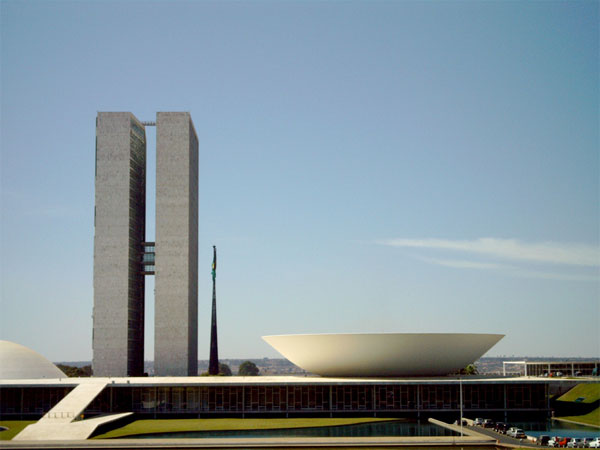
    Brasilia, the Washington DC of Brazil, is coming out with a new slogan for the country as part of a rebranding for the 21st century.

    “Brazil, using the best technology moderately well.”

    Ok, it’s not an official slogan. Just an accurate one. Brazil is rapidly becoming a global player with steady economic growth and the world’s fifth largest population, but the country still has serious development challenges ahead of it. Fortunately, politicians love nothing more than shiny, new, development projects.

    The goals behind Brasilia’s plans (improve efficiency, access, or capacity) are worthwhile. The problem with many of the government’s projects is deadlines. The haste with which many improvements are put into place results in half-assed solutions.

    My last post was about the disaster that is the new college admissions exam. The ENEM is an excellent example of a good idea hastily and poorly implemented. Another example is the Federal Judiciary’s “Processo Virtual.”

    The Federal Judiciary is on it’s way to being a paperless institution. All records, procedures, decisions will be virtual. Anyone who has ever been asked to provide three certified copies of their 8th grade report card (which in Brazil is everyone) will applaud any effort to reduce paperwork in Brazil.

    How can Brasilia ruin such a good idea? Assign a deadline giving all first instance courts of the Federal Judiciary less than two years to make the transition.

    In order to meet the deadline, courts quickly adapted previously-made software to use for cataloguing cases. Because the software was not designed for the courts there have been constant problems inputing records. Adding to the confusion, different regions are using different software. While lawyers have the option of filing petitions online, they are not required to. Cases submitted on paper are than scanned by the court staff.

    The records of the Federal Judiciary did not warrant the creation of specific software? Maybe no one told Brasilia that nowadays people create new software daily. While not as exciting as launching angry birds with a slingshot, judicial record keeping certainly deserves it’s own app. Maybe that Facebook guy would do some pro bono work as part of his image rehabilitation.

    The Federal Judiciary is trying to improve and move into the future. Admirable goals but rushing the process will only cause problems that have to be fixed later. I know politicians think in terms of election cycles but when it comes to development long term thinking is crucial.

    Note to Brasilia: Replacing an outdated system with a flawed one is not progress.

  • Human Development Index Brazil & US

    Human Development Index Brazil & US

    This past week the 2010 Human Development Index (HDI) came out and marked its 20th anniversary. The idea behind the HDI report is that a country’s development cannot be measured in GDP alone. The quality of life for the people living in the county is what matters.

    Data on every type of development factor from internet accessibility to maternal mortality rates to average years of school has been collected from 169 countries. This year they’ve added a special section looking at global trends of the past two decades. And it’s all free. All the data, their methodology, the analysis, it’s all available to anyone with internet access. The internet is amazing! (So is UNDP for not charging us to see their very pretty graphs.)

    Just for fun (yes, I think comparing development stats between countries is fun) let’s compare Norway, Brazil, the US and Tajikistan. Why Tajikistan? Because Tajikistan is fun to say.

    Overall HDI ranking (out of 169 countries)
    Norway 1
    Brazil 73
    United States 4
    Tajikistan 112

    Life Expectancy at Birth
    Norway 81
    Brazil 72.9
    US 79.5
    Tajikistan 67.3

    Mean Years of Schooling (among adults)
    Norway 12.6
    Brazil 7.1
    US 12.4
    Tajikistan 9.7

    GDP per capita (2008 PPP US$)
    Norway $58,277
    Brazil $10,846
    US $46,652
    Tajikistan $2,064

    Inequality Gini Coefficient (0 is perfectly equal distribution)
    Norway 25.8
    Brazil 55
    US 40.8
    Tajikistan N/A

    Adolescent Fertility Rate (Births per 1,000 women 15-19)
    Norway 8.6
    Brazil 75.6
    US 35.9
    Tajikistan 28.4

    Homicide Rate (per 100,000)
    Norway 0.6
    Brazil 22
    US 5.2
    Tajikistan 2.3

    So, what can we conclude from all these numbers? Norway deserves some hearty congratulations for doing apparently everything right. I think the only reason we all aren’t heading to Norway and putting plaster gnomes in our windows is because most people want to see the sun more than six months out of the year.

    We can all be grateful we don’t live in Tajikistan no matter how fabulous the name is. Brazil has come a long way but still has serious problems particularly in terms of education and violence. Better public education would also go a long way in combatting other issues such as teen pregnancy.

    And what about the US? There are serious problems facing the US, but the fear and despair manifesting itself in the media, political rhetoric, and comment streams isn’t warranted. Life in the US is good. Not perfect, but in comparison to the vast majority countries the quality of life you can have in the States is luxurious.

    If people would just stop screaming at each other as if we’re on a burning ship that’s sinking into shark infested waters, we could see that we have all the resources we need to fix our problems. Governing is not a game with winners and losers. It’s problem solving. Nobody wins until the problem is solved. We may not be Norway, but number 4 is pretty darn good.

  • Faking It: A Brazilian Success Story

    Faking It: A Brazilian Success Story

    Brazil is certainly getting its play in the international press lately.  Electing a possibly illiterate clown to congress by a landslide will do that for a country. (No, that is not a metaphor. An actual, professional clown will be representing Sao Paulo.)  Because I live here, I would prefer to focus on Brazil’s success stories and my stepmom sent me a link that does just that.

    On NPR’s All Things Considered last week, there was a segment about Brazil’s remarkable end to decades of runaway inflation.  It’s due in no small part to a group of drinking buddies from PUC (Catholic University in Rio) and a trick that worked on pretty much the entire population of Brazil.

    My Brazilian husband refers to the problem as “Brazil’s culture of inflation.”  He being somewhat (no specifics) older than myself remembers prices on virtually everything changing daily during the worst periods of inflation.  Those who could bought dollars or had savings accounts that adjusted daily.  But for lower income families (i.e. most of Brazil at the time) paychecks had to be deposited immediately or risk being worth less by the next day.

    This went on for decades until it became built into Brazilian culture.  People had no faith in the government or the currency.  They behaved as if the currency had no value and expected all government plans to fail.  So part of the solution was to trick the population into believing the currency was stable.  How do you do that?  You create a imaginary currency.  This became known as the real plan.

    Obviously, this is a gross simplification and at 7 minutes the broadcast is not delving into all the complexities either.  I do think, however, that’s it’s an informative and enjoyable introduction to a subject most Americans have never heard of.  You can listen to the story here.

    And on a human interest note, I can say that one of those four drinking buddies who ended inflation, is now a nice, doting father.  I taught his daughter in an SAT prep class.