Tag: Doctor’s Visit

  • 28 Days in a Brazilian NICU: The Mom Milking Room

    28 Days in a Brazilian NICU: The Mom Milking Room

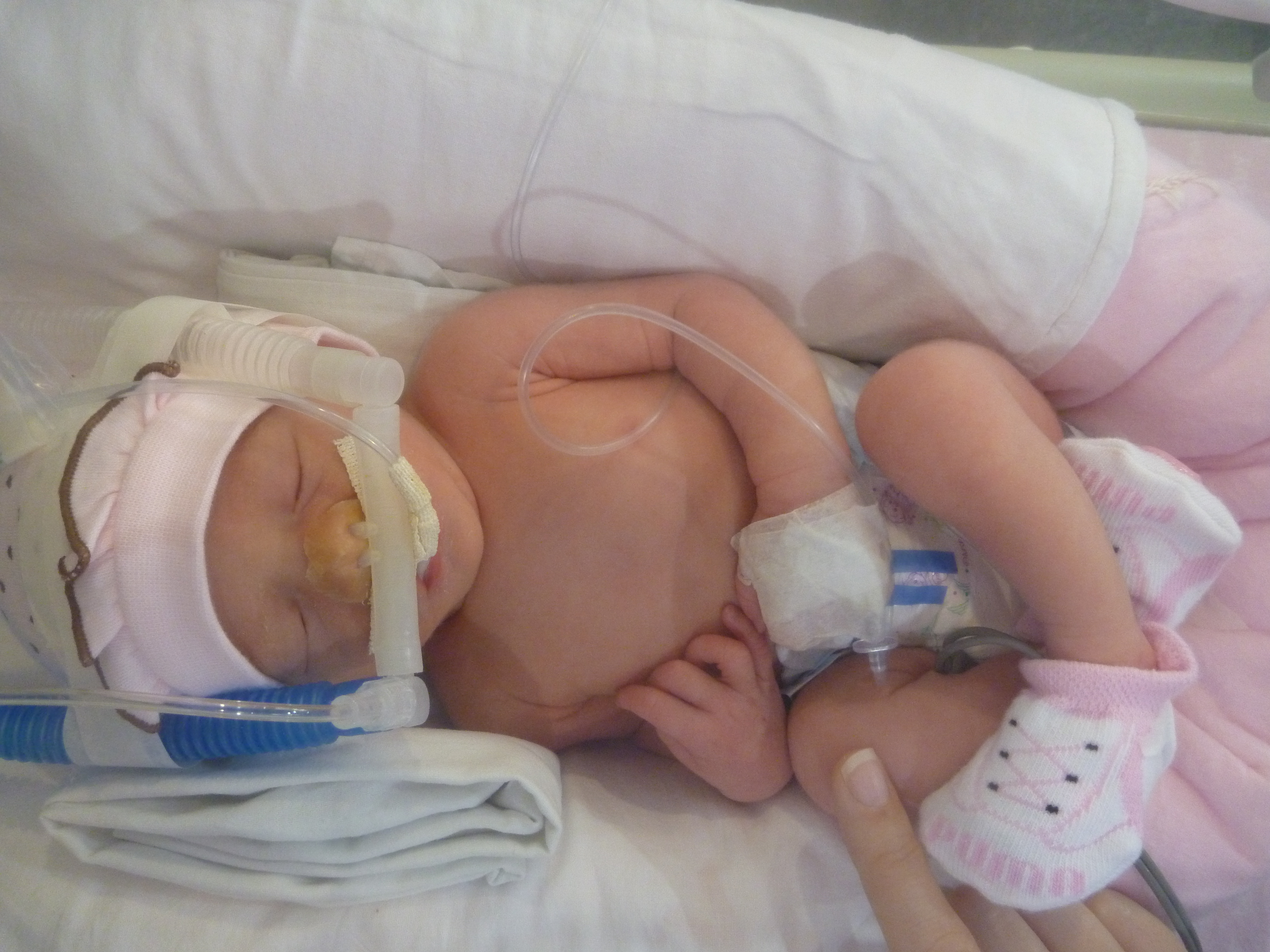
    Day 2 of 28 in the NICU at Vitoria Apart Hospital in Brazil.
    Day 2 of 28 in the NICU at Vitoria Apart Hospital in Brazil.

    My daughter was born seven weeks early due to placental abruption.  That was a new term for me, placental abruption. Another one was UTIN.  That’s the acronym in Portuguese for Neonatal Intensive Care Unit (NICU).  It was one of the many Portuguese medical terms I learned after my daughter spent 28 days in a NICU in Brazil.  In the moment, each day felt like a lifetime. I was sure every minute of all 28 days had been seared into my memory.

    But they weren’t.

    My daughter just turned four, and I’m shocked to realize how much of a blur those weeks have become.  Most of the exact numbers are gone.  How many days was she on a ventilator?  When did she get above 2kg?  Of the many people who cared for my daughter, all but one of the names has been erased.  Now they’re the doctor with red glasses and the physiotherapist who spoke some English.  I suspect these details will disappear too.

    What has not faded in any detail, much to my dismay, is my memory of the milking room.  This was the place they sent the new moms to strip them dignity.  It was the room for hand expressing breast milk.

    Many preemies are born too small to breastfeed and are fed through a tube and syringe.  How do you get these babies breast milk?  The obvious answer is pump it, store it, and serve it.  Except the NICU did not allow breast pumps of any kind.  The hospital said it could not guarantee that an individual mom’s pump would be sterile, so they could not give the milk from from a potentially unsterile source to the baby.  The only way for a baby in the NICU at Vitoria Apart Hospital to get breast milk, other than on tap, was to hand express it.  This is as awful as it sounds.

    At least for me.  I am not particularly in touch with my body.  I’m more cerebral and would be quite content to be a floating brain in space except for the facts I do like going for walks and eating french fries.  I’m aware that my conscious self is housed in an organic Tupperware container that impacts how I feel, think, am, but I don’t dwell on it.  At least not until I get a stomach virus.  Or until I have to breastfeed a baby.

    And I was going to breastfeed.  I had done my research.  Despite my lack of emotional connection to my mammary glands, I was totally committed to breastfeeding.  I did not, however, anticipate having to milk myself like a cow.

    That’s what it is.  Hand expressing means squeezing out the milk by hand into a container.

    Despite that daunting psychological hurdle, I told the nurses I still wanted to breastfeed, so one of them led me out the backdoor of the NICU, down a hall, through an unmarked door, and into an unused storage closet.  Based on the size and lack of any comforts except three chairs, I assume storage closet was the original purpose of the room.  White walls, tile floor, no windows, and freezing cold.  This was the room I shuffled to, fresh from an emergency c-section, so that I could hand squeeze milk from my boobs.

    As I stood there shivering in my hospital gown, the nurse quickly went through the officially sanctioned routine that guaranteed milk I expressed in that closet would be more sanitary than what I could get from a pump: wash hands, don hairnet and face mask, remove the plastic cups from the packaging and take the lids off, wash hands again, wash nipples with gauze, squeeze milk into cup and seal the cup immediately when full.  Fortunately, she demonstrated the whole process because to this day I don’t know the Portuguese word for gauze or hairnet.

    Then she left.  No medical professional stayed in that closet with the moms.

    Want to guess how many of the moms expressing themselves actually followed that routine when left on their own?

    I know because it turned out to be a communal milking closet, and the answer is none that I saw.  The next time I went to the closet, two other women were already there happily chatting away, masks down over their chins.  I distinctly remember these two women because they were friendly, completely comfortable being half-naked in front of strangers, and filling up cup after cup with milk like a competition at a state fair.  I was none of those things.  I struggled to fill half a cup when alone.  Trying to hand-express milk in a freezer while confronting small talk in Portuguese and the four largest breasts I’ve ever seen in person was literally impossible.

    I got almost no milk out during that session or any other.  I subjected myself to breastfeeding purgatory every three hours for four days before finally saying “Enough.”  I believe breast milk is ideal.  I don’t believe it is worth torture.  I restarted breastfeeding only after my daughter was big enough to handle it herself.  Hand-expressing in that closet was one of the worst experiences of my life.  And I sat through the Sponge Bob movie.

    If I’d had any reserve of energy I would have been outraged.  I was being denied a breast pump on the grounds it wasn’t sterile, but there was nothing sterile about that room.  They sent a bunch of not-medically-trained women down the hall with instructions to wash their hands and wear a mask. I don’t believe a single doctor actually thought the milk coming out of that closet was sterile.  They know they’re in Brazil where actual laws are treated as suggestions.

    But I didn’t have the capacity for outrage then and I don’t care to feel it now.  True, an electric pump and a private space would have made a huge difference, but we all survived and someday the sound of someone else’s breastmilk squirting into a plastic cup will fade from memory.  In the meantime, I’ll milk it for the entertaining story it is.

    11ghkra

    Save

  • 7 Weeks Early

    7 Weeks Early

    Almost three weeks old!
    Almost three weeks old!

    The contractions started just before 5pm.  I didn’t know that’s what they were.  It was my first pregnancy and I’d never felt a contraction.  Everything I read about contractions emphasized back pain.  Oh the back pain!  I had no back pain. So much for preliminary research.

    What I had was pain across my lower abdomen that seemed to come in waves.  While watching my students study during the last few minutes of class for the day, I chalked the pain up to intestinal problems.  The one classic pregnancy symptom I’d had the joy of experiencing for several months was constipation.  I assumed the pain was my intestine finally in revolt, not contractions.

    Also, I was only 33 weeks along.

    I noted the increasing intensity of the pain as I caught a ride home from a fellow teacher.  I thought it odd when I finally  scurried into my bathroom at home that I didn’t really have to go.  Still, I did not think contractions.  It was 7 weeks before my due date.  I didn’t even dismiss the thought of contractions.  The thought has to enter your head in order to dismiss it and the idea of contractions never did.

    By 6:15pm however, I was in sufficient enough pain to ask my husband to call my doctor.  My doctor told me to get in a warm shower and sent my husband off to buy some pregnancy safe pain killers.  When the shower failed to lessen the pain, I began to think something was wrong.  Then there was blood.

    I called my husband.  He turned back before ever reaching the drug store.  He was on the phone with my doctor when he walked back into the apartment.  As I was yanking on clothes in the bedroom, I heard him ask “How much blood is there? If it’s just…” He stopped talking.  He’d seen the bathmat.  In less than a minute we were in the car on our way to the doctor’s office.

    Thankfully, Dr. Batistuta’s office is only five minutes from our apartment and he was working late.  It was about 7pm and the office was empty except for the doctor and his secretary, as my husband helped me climb the stairs to the exam room.  The pain was now so intense I wanted nothing more than to close my eyes and breathe.  But there were questions and Portuguese verbs to conjugate in order to answer.  I used to think speaking in Portuguese on the phone was difficult.  Speaking in Portuguese during a contraction is much harder.

    Placental Abruption.  That was my Portuguese phrase of the day.

    My doctor explained that the baby’s heart rate was elevated and that combined with the blood and contractions made him think the placenta had torn from the uterus and blood was now pumping into the uterus.  I was headed for an emergency c-section.

    After a flurry of discussion between my husband and the doctor, some quick phone calls made by his assistant, they confirmed no office with an ultrasound was open to confirm this diagnosis so we would be going straight to the emergency room.  At least, that’s what I was told happened.  I was still lying on the exam table breathing through contractions and pain that went from aching to breathtaking, never completely disappearing.

    A little before 8pm I was standing outside with my doctor trying to have small talk in Portuguese while my husband got the car.  Twenty minutes later my doctor was wheeling me into the emergency room and pushing me over to some nurses who began giving a flurry of instructions in Portuguese.  I was being prepped for emergency surgery 7 weeks before my due date and strangely enough I was not panicked.  I was too occupied with breathing through contractions and understanding the directions I was given to really dwell on worst case scenarios.  Contractions are a great distraction.  Contractions and conjugating Portuguese verbs.

    I never thought I would die.  I never thought I could die.  I never thought my baby would die.  In the moment, I never once feared for my life or my baby’s.  It was only afterwards, when researching placental abruptions, that I learned just how serious the situation was.  Not as much for me as for her.  While I lay on my side curled into a ball having a needle stuck between vertebrae, I was worried about the kinds of complications my daughter could have being born so early.  Would she have eye or ear problems?  Would she have some sort of neurological problem?  Would her lungs be working yet?

    I didn’t bring any of this up to my husband as he sat by my head in canary yellow scrubs pointedly not looking in the direction of my open abdomen.  The c-section is certainly one of the most surreal experiences of my life.  To be fully conscious while your abdomen is opened and people stick their hands in and root around your internal organs…well, surreal doesn’t quite cover it.  I felt tugging, sometimes hard tugging but absolutely no pain.  There was one hard tug and suddenly a baby was crying.  I cried for the first and only time all night.

    My daughter was born at 8:50pm on July 11.  We thought she was 33 weeks but her initial exams put her developmentally at 35 weeks.  She was just small so the ultrasounds underestimated her age.  She was 2.005kg or 4 1/2lbs.  She was on oxygen for a day and then under a UV lamp for four.  Some problems concerning her lactose tolerance resulted in her staying in Intensive care for 26 days.  But those 26 days are the subject of a future post.

    4 months old!
    4 months old!

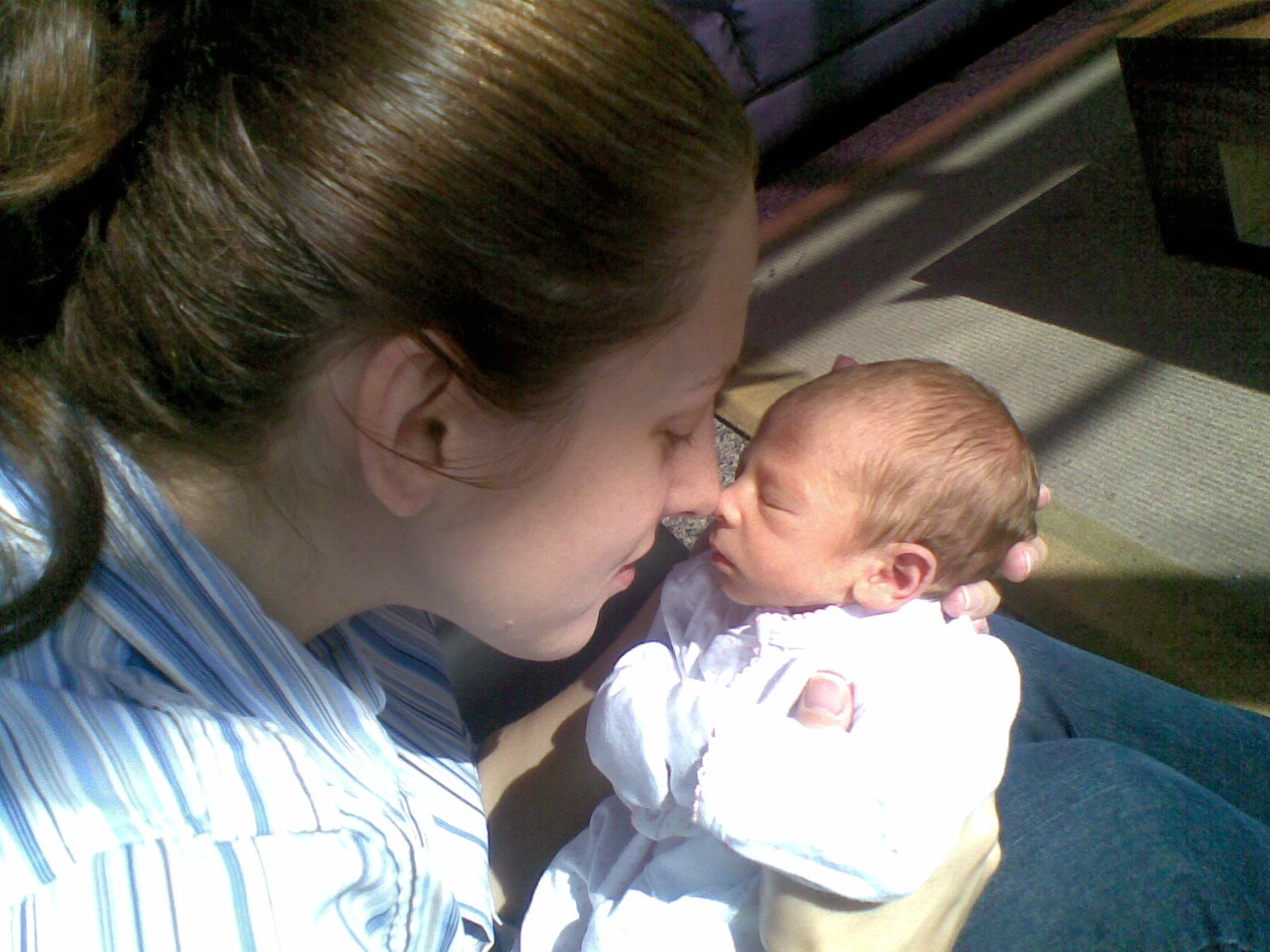
    Yesterday, my daughter celebrated her 3 month birthday.  She smiles and coos and refuses to sleep during the day anywhere but in a someone’s arms.  That’s why there haven’t been many posts recently.  It’s hard to type with a baby in your arms.  A perfectly healthy, happy, and breathtakingly beautiful baby.


    flower

  • My Recommendation for an OBGYN in Vitoria

    My Recommendation for an OBGYN in Vitoria

    My expat identity has taken a back seat in my last few posts to the teacher or pregnant woman part of me, but after reading some blog entries from other expats in Brazil I’ve been inspired to finally write a post that has been in the back of my mind for some time.

    Coconut Water is officially recommending Dr. Paulo Batistuta for anyone in Vitoria looking for an OBGYN.

    While I’ve endorsed several Brazilian food options including açaí and moqueca capixaba, this is Coconut Water’s first official endorsement of a healthcare professional in Brazil and I’m recommending Dr. Batistuta with the same fervor I do a big bowl of açaí.

    A fairly common complaint from expats here is that doctors in Brazil don’t really explain things to you.  They tell you to get a test and bring them the results.  Unless the results require being ordered to get another test or bypass surgery, that’s all you’ll hear about them.  Another complaint specific to women in the process of childbearing is that doctors here in Brazil prefer doing c-sections to pretty much anything else.  (I’d believe even more than sex given the rate at which they are performed here.)  Some private hospitals in Brazil have c-section rates as high as 90%.

    Dr. Batistuta (Dr. Paulo here in Brazil where they use first names) defies both of these stereotypes.

    Personal anecdote.  After an early ultrasound, I noticed there was one item that had an abnormal reading, specifically low blood flow in the left uterine artery. When we took the results to Dr. Batistuta, I asked about it and Dr. Batistuta picked up a pen and immediately began sketching a uterus and arteries.  He explained what the test measured and what the result meant.  He even sketched out exactly where the placenta was attached in my uterus.  You know, the more information the better.  He assured us that this wasn’t a problem given the normal results for everything else and we’d check it again at the next ultrasound.  He was right.  Everything was normal at the next ultrasound.

    Dr. Batistuta never rushes us out the door.  I’ll pull out a list of questions.  He’ll happily answer everyone, giving me cards, books, even DVDs that will provide further information.  While I’m in the bathroom changing I can hear him and my husband chatting away about upgrading their computers’ operating systems.  We were in his office for almost an hour during our last visit.

    As for c-sections, Dr. Batistuta is one of the leading voices in Brazil for natural childbirth.  If you speak Portuguese you can watch him being interviewed on youtube.  While he will state point blank he believes the best birth for the mother and baby is one with no unnecessary medical intervention, he has also told me that ultimately the doctors and staff are there to support me and what I want.  If I ask for drugs, they will give me drugs.

    I should mention cost.  One of the great things about Vitoria is that you can get great medical care (private) for half the cost of what you’d pay in Rio or Sao Paulo.  For an office visit, Dr. Batistuta charges BR$200 ($118).  We pay this out of pocket at the visit and send a receipt to our insurance company for reimbursement.  For the actual birth, Dr. Batistuta is charging BR$4.000 ($2,353). Again, we’ll pay and get reimbursed later.  (Once the whole birthing process is said and done, I’ll do a summary of all medical expenses for giving birth in Vitoria.)

    Finally, the language issue.  Our visits are conducted exclusively in Portuguese but when I have to use an English phrase Dr. Batistuta understands.  (I suspect he is modest about his level of English and understands way more English than he lets on.)  Fortunately, my husband attends every visit and supplements my intermediate Portuguese with his native tongue thus preventing any serious misunderstandings.  I can’t say for sure how it would go if you don’t speak any Portuguese. I think everyone could muddle through but it is important to know that Vitoria is a much smaller city than Rio, Sao Paulo or Belo Horizonte and English speaking professionals are in much shorter supply here.

    If you are an expat in Vitoria looking for an OBGYN, I strongly recommend Dr. Batistuta.  He talks to his patients as intellectual equals.  He supports natural birth and medical intervention only when necessary.  He understands some English and is very patient when listening to bad Portuguese.  You can find his profile and contact info with the CECON medical group.

  • Diagnosis: Information Overload

    Diagnosis: Information Overload

    The Internet is amazing.  Easy communication between continents, quick access to the rules on semicolon usage, and adorable animal videos.  What’s not to love?  Well, for me, the gross amount of information available on pregnancy and mothering.  Here is a tiny sample of the useful info the Internet has provided me concerning pregnancy.
    Google query:  “What to eat while pregnant?”
    You absolutely have to get enough folic acid, vitamin C, Calcium, iron and about a dozen other things while pregnant or your baby will not have a fully developed spinal cord, skeleton, or eyebrows. You can get these things from dark green vegetables, citrus fruits, beans, milk, yogurt, steak, eggs.

    Google query: “gas and indigestion while pregnant”

    You will inevitably suffer from gas and indigestion.  In the case of severe pain avoid eating dark green vegetables, citrus fruits, beans, and dairy products.

    Google query: “Foods to avoid while pregnant”

    Avoid any undercooked meat and eggs and any unpasteurized dairy or fruit juices.  Consuming these will cause terrible bacteria to eat your baby.

    Google query: “Important nutrients while pregnant”

    You really, really need to eat a lot of iron, which the body easily absorbs from meat and eggs, spinach and beans.


    An hour of this will make a sane person’s head explode.  You should eat beans and broccoli but not if you want to avoid being doubled over with gas pain.  You should eat lots of meat and dairy but only if it’s been pasteurized or cooked until it can be used as a spare tire.  This is the curse of too much information.  Spend enough time researching and you will inevitably end up with contradictory information.   If it’s not flat out contradictory, it will at least make every bite of salad cause for an anxiety attack and present you with the choice of gritting through passing a beach ball through your intestines or depriving your baby of vital nutrients.  And we all know which option a good mother would choose.

    During my first few weeks, I had pretty much convinced myself there was no way the baby could make it out of my uterus alive when I had my first consultation with Dr. Paulo Batistuta.  Leaning back in his chair, he listened while I asked about eating fish and peanut butter and salad prepared by anyone’s hands other my own.  He smiled and said “Go ahead enjoy.”  Restaurants don’t do very good business if their patrons get sick, so they keep their food clean and fresh.  As long as my peanut butter is made in the USA, it’s no problem.  (Remember, Brazilian peanuts can carry a liver-eating fungus.)  And fish? Well, of course. Moqueca capixaba is delicious, isn’t it?  Yes, doctor.  Yes it is.  And thanks to you, I will now be able to enjoy it without a side of guilt.

    Internet research is basically the only skill I got in college and it has become something of a curse since being pregnant.  Dr. Paulo is exactly the zen master this patient needs.  Eat a balanced diet. Cook everything until there’s no pink.  Stop using Google.  Everyone will be fine.

  • Learning Brazilian History at  the Dentist

    Learning Brazilian History at the Dentist

    Something I enjoy about living in a different culture are the little reminders, even after years, that you’re not from here. Usually it’s a small thing that catches you by surprises and causes a double take. These cultural surprises are often trivial matters that you didn’t even anticipate being different, such as how socks get folded or the absence functional seat belts in the back seats of taxis.

    I wonder how long a person must live in a place before the little “Wait, what?” moments taper off. I’ve been in Brazil for four and a half years but just last week I was thrown by a simple question on a medical history form.

    At the dentist recently, I filled out a new patient form. I’ve become accustomed to routinely answering what I feel are very personal question such as marriage status and profession for everyone including the woman who sold me my bookshelf, but this question stopped me.

    “Cor:_____________”

    Cor in Portuguese means color. A medical history form handed to me by the dentist’s office asked for my color. I blinked in disbelief. I double checked with my husband. “Does this say color?” He told me it did. I asked “Ok, color of what exactly?” even though I knew the answer. He looked at the receptionist who said simply “skin.”

    For an American, an American from Atlanta, Georgia who heard about slavery, the civil rights movements, and racial tensions every year in school and was in high school during the ridiculously overdue process of getting the confederate flag off of the state flag, a doctor’s office asking for skin color is shocking.

    Four years in Brazil and I can still be shocked by a single word on a form. A simple piece of information that would never be asked for in my own culture. Or would it?

    How often is a person in the states asked to designate her race? Isn’t the same question just phrased in what, for Americans, is a more comfortable way? Sure, we’re usually told that question is “optional” and for “statistical purposes only” but the question is still asked.

    In talking to my husband afterwards, I learned that there are actually some Afro-Brazilian groups that are lobbying to get “color” included on forms. When Brazil first became a republic any mention of race was outlawed under the argument it would prevent discrimination. The result, however, was that millions of Brazilians who had been enslaved based solely on their race had no way to receive any programs targeted specifically  to help them overcome circumstances created by race, thus locking them into the lowest levels of society. Now, certain Afro-Brazilian groups want “color” on forms to have data about color and race in Brazil.

    So much history from a form at the dentist. That’s why, even though each cultural surprise is a clear reminder I’m living in someone else’s culture, I welcome them. Each one is a learning opportunity. Not that I always appreciate them. Learning takes energy and often I only have enough energy to be annoyed and call whatever is different stupid. (Both creativity and tolerance suffer when I’m tired.) But on good days having to pay for bottled water leads to a discussion of sewage infrastructure and a dentist’s form opens a dialogue on racial history.