
Dear reader, if you’re not in the mood for a rant, check back next week.
It all started when I received an early morning WhatsApp message from a fellow mom asking the group about rates for a substitute nanny while the permanent nanny is on vacation.
A little cultural context. Here in Brazil full-time nannies are common. This was surreal for me coming from the United States. In the U.S. full-time nannies are something only the Jolie-Pitt or Kardashian families can afford. I remember a combination of church daycares and grandparents after school and over the summers while my parents worked. Personally, I’ve never known anyone in the U.S. with a full-time nanny.
In Brazil, almost everyone I know has a full-time maid and many have a full-time nanny too. Often if the family has kids but can’t afford two employees, the maid will have childcare duties in addition to the housekeeping, grocery shopping, and cooking. Several of our friends also employ a weekend nanny because labor laws in Brazil don’t allow families to demand ask their nanny to work 7 days a week. It’s like Downton Abbey in flip-flops with more beer and better weather.
How can these middle class and professional families afford full time nannies and housekeepers in the year 2015? Minimum wage in Brazil for 2015 is $250 a month. (I’m using today’s exchange rate of 1 U.S. dollar to 3.15 Brazilian reais to put all values into US dollars.) U.S. federal minimum wage is $7.25 per hour, so assuming four 40-hour-weeks a month, the U.S. federal minimum wage per month is $1,160.
$1,160 versus $250 a month.
Now, a lower minimum wage doesn’t necessarily indicate a lower quality of life.
Maybe the cost of living is significantly lower in Brazil than the US? Maybe goods are less expensive? They’re not. The only things cheap in Brazil are coconuts and people, and even the coconuts are experiencing inflation.
Maybe there are a variety of free/very low-cost public services in Brazil? There aren’t. Public services from school to health care are abysmal. Everyone who can scrape together the cost goes private, and a full-time nanny at minimum wage is significantly cheaper than private day cares here in Vitoria.
But there’s no way people pay nannies minimum wage, right? In practice people are paying more than the legal minimum, aren’t they?
This brings us back to this morning’s Whatsapp conversation among local moms.
A mom wanted to know what other people had paid for someone to fill-in as a nanny for a month. The values reported ranged from $254 to $476 for the month. For two children. For the entire day, Monday through Friday.
But these shockingly low values are not what drove me to clutch at my hair and mutter obscenities at my computer. Nor was I upset that a family of four is looking for the highest quality childcare at the lowest possible cost.
I got upset after I sent a message saying that our kids’ pregnant preschool teacher was at the doctor again due to pain from her sciatic nerve. I commented about how what she really needed as a present was a housekeeper. My message got no response. The conversation continued about nannies until finally the original poster asked, “Did your nannies just take care of the kids or did they also clean their rooms and do laundry?” This sparked the rant.
Dear Brazilian Middle and Upper Classes, nannies are people! Housekeepers are people! Preschool teachers and assistants are people!
There are so many wonderful things about Brazilian culture, like the attitude toward children, the judicial selection process, and dental hygiene. But the way upper classes treat people in the working class is NOT one of those things. I’m so tired of listening to good, ethical people, friends, colleagues and parents I respect, refer to their nannies or maids as “them”. I’ve heard complaints about how much the maid eats, stories about getting older kids to spy on the maid and report back, and indignation about a nanny who went and got married. The underlying message is that “we” must be vigilant against “them” or they will use up our sugar and make a lot of long distance phone calls.
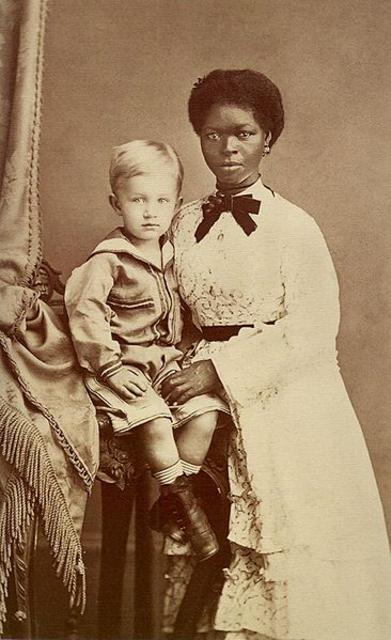
When I saw the movie The Help, I thought, “Wow, that’s like present day Brazil”. That’s what I see here. Upper-classes in Brazil often deny the basic humanity of the people working in their homes. (And to Brazilians who protest that Brazil doesn’t have The Help‘s racial component, I recommend a walk around Ipanema in the afternoon or a visit to a private daycare in Vitoria. Look at the color of the kids and look at the color of the people holding their hands.)
I believe for most people it’s unconscious. It’s how their own parents and everyone in their circle has always talked about nannies and housekeepers and drivers. They’ve internalized this division, don’t see anything wrong with it, and haven’t been challenged on it.
I’m not against paying for a housekeeper. We employ one. I’m not against paying for a nanny. I believe affordable child care is a HUGE barrier keeping women from advancing in the workforce in the U.S. and Brazil. I’m writing this while my kid is at daycare. Many of the mom’s I know are amazing professionals, and it’s only possible because they can find childcare be it a daycare or nanny. Many moms want to work. Many moms HAVE to work. Quality childcare is a necessity.
I’m against a system that keeps people from empathizing. That makes it “us” versus “them”. That causes a really nice person to ask the woman she’s paying almost minimum wage to watch her kids if she could also do the laundry.
What about the kids of the people we pay to watch our kids? Who watches them if we pay their moms $300 a month? Is it ethical to ask a woman willing to assume the enormous task of keeping two small children alive for only $350/month to also do the laundry? Is this woman really in a position to say “no”? Are we going to be annoyed if she does? If we’re paying minimal costs, why do we expect top-quality service and undying loyalty?
Beyond respecting and talking to each other as people as opposed to being constantly on guard against the machinations of “those” others who want to exploit us…I have an idea for improving things for the moms, maids, and childcare workers.
Everyone gets rid of their housekeeper.
We take the money we were paying to housekeepers and put it toward childcare, either by increasing the wage of the nanny or increasing the salary of daycare and preschool teachers. The former housekeepers come together and start cleaning-service businesses. Their former employers, now clients, hire the company for once or twice a week, and now the preschool teachers and nannies may even be able to afford the housekeepers’ services with their increases in salary. The former housekeepers can also find employment at all the new public daycares the government will open in my utopia.
And what about all the cooking and laundry and grocery shopping left in the wake of the maids? Well, I think it’s time for Brazilian men to stop watching soccer and do some freakin’ laundry.
How does that sound?