Tag: Employment in Brazil

  • The Super-Awesome, Amazingly-Exotic Expat Life

    The Super-Awesome, Amazingly-Exotic Expat Life

    The daily rainbow in Brazil.
    The daily rainbow in Brazil.

    When I’m back home in Atlanta, I try not to mention that I live in Brazil.  The opportunity presents itself with surprising frequency, usually when a sales associate asks if I’d like to sign up for a rewards card.  I decline saying “I’m just visiting for the holidays.”   Nine times out of ten, at least in the state of Georgia where people still practice things like small talk and friendliness, the person will ask “Oh, where do you live?”  Then I’m stuck.  “In Brazil,” I answer, and I’m at the counter another five minutes as I tell my story and confess that I have not in fact learned to speak Spanish.  Though I have learned the local Portuguese.

    I can’t blame people for their wide-eyed excitement and curiosity about my life.  Americans are under the impression that life south of Texas or north of Idaho or on the other side of an ocean is more…something.  More exciting.  More dangerous.  More romantic.  More barbaric.  More luxurious.  They’ve seen movies set in these “foreign” countries and read articles like “3 Things Dating Foreign Women (And Marrying One) Taught Me” which tell people what a romantic adventure life can be if they only find a spouse with a different passport.

    As someone who did manage to land a coveted foreign spouse and move abroad, I can state that it’s all true.  My life is more exciting than everyone else’s.  It’s more romantic and luxurious yet still a rewarding, character-building challenge.

    Take my very first meal in Brazil.  I got to eat in the food court of the nearby mall.  My future husband took me and it was incredibly romantic.  The din of the other customers drowned out our voices, so we could only stare into each other’s eyes.  Because I arrived in the midst of remodeling the apartment, I had the opportunity to tour all the best hardware stores in Rio de Janeiro.  The thrill of shopping for toilet seats abroad really gets downplayed in expat blogs.  The only thing in Brazil that rivals shopping for toilets is getting finger printed for a visa at the federal police.  The ink smells like jasmine.

    Living in Brazil has also given me the opportunity to learn a new language.  It’s a fact that everything is sexier in a foreign language. Doesn’t matter which language.  They’re all sexier than English.  Here are some of the local Portuguese phrases I learned in my first months here.  Encanador.  Plumber.  Conta corrente conjunta.  Joint checking account.  Seguro de saúde.  Health insurance.  Absorvente interno.  Tampon.

    If you are ever lucky enough to visit Rio, I recommend driving from downtown to the suburbs at 5:30pm.  It will give you an authentic local experience.  Turn the air-conditioning off and roll the windows down to really go native.  Be sure to have the GoPros charged because friends back home will want to watch this trek. All three hours of it.

    Anyone leaving the US should do their family and friends the favor of recording every second of their time abroad.  They’ll thank you for allowing them to live vicariously through you.  After all, life outside the United States is one long perpetual vacation.  Nobody goes to the grocery store or a “job” in foreign countries.  The people serving coconuts on the beach here in Brazil? Robots.  All of them.  Where do you think Walt Disney got the idea for the Hall of Presidents?  He stayed at the Copacabana Palace in Rio.  Actual Brazilian citizens don’t work and if you’re fortunate enough to get residency neither will you.  People who live here just go to the beach and gym everyday.  I haven’t had to run an errand since I arrived in September of 2006.

    Having a child abroad with a foreign spouse (Yes, even in Brazil my Brazilian husband is the foreigner.  I can’t be a foreigner because I’m American), it only adds to the drama and glamor of the expat life.  I’m writing a screenplay based on my experience of visiting the US consulate to prove the maternity of my child.  I’m hoping Ridley Scott will direct and it will star Angelina Jolie (as me), Antonio Banderas (as my husband), and Jack Black as the unwieldy and misunderstood stack of paperwork that ultimately saves the day and gets us the US birth certificate.

    Those of us living in far-off, exotic lands know that “living” abroad is exactly the same thing as “vacationing” abroad.  Don’t make the mistake of thinking that most people in the world are busy going about the tediousness of living day to day, with the jobs and childcare and home repairs and laundry that human existence demands.  No, no.  Life outside the US is romantic and electrifying all the time.  In fact, I have another Brazilian adventure planned for this morning.  I’m going on an excursion for light bulbs.

  • Lessons For Toddlers and Expats

    Lessons For Toddlers and Expats

    bureaucracyMy 3 year old daughter is currently struggling to accept some of the physical limitations of our three dimensional world.  “That tunnel is not tall enough for the train.”  “It was made for one Littlest Pet not eight.”  “Sweetheart, your teddy bear is never going to fit in that play dough pot.”   She will ignore me, keep trying, and eventually hurl whatever it is against the wall in a frustrated fury. I hope it’s just a phase.

    What is remarkable is her flat out refusal to accept an obvious reality.  She will continue to struggle long after it’s clear that it’s not going to fit.  Her tenacity is impressive.  It’s also the source of many a nighttime tantrum.  While I don’t want her to ever give up easily, I’d like to spare her the frustration and save her the energy spent fighting against a fact about her world.

    As an expat, I should apply this lesson myself.

    I’ve lived in Brazil eight and a half years, and I still struggle to accept some facts about life here.  One thing that still makes my face burn is the out of control and invasive bureaucracy.

    There is no question too personal for a form and no transaction that does not require one.  The eyeglass store wants your social security number.  The hotel wants your profession.  The dentist wants your race.  Your employer wants to know your blood pressure.

    I get around some forms by pretending I’m here temporarily or don’t speak a word of Portuguese, but I couldn’t do this at my former job.

    When I began teaching the school asked me to have a medical exam.  When I came back from maternity leave there was another exam and another a year later for every employee at the school.  When I gave notice at the end of last year, human resources asked me to sign several letters saying that I was leaving of my own accord and have another medical exam.

    I refused.  As American, an employer requiring a medical exam and making note of the fact you use contraceptives is deeply offensive.  I had done the previous exams because I liked the job, and hey when in Rome…but now I was quitting.  What could they do? Fire me?

    There were several meetings with HR during which I nicely refused to accommodate and the HR lady just as nicely said it was mandatory by law.  After checking with a lawyer, I explained sweetly there’s no law requiring a person to submit to a medical exam.  She politely insisted there is.

    Eventually I was told it was the union that required the exam.  And speaking of the union, I had to meet with them and have a rep sign off on my paperwork.  Please come back next Tuesday afternoon.

    I showed up at the union rep’s office in my school and met a man very disgruntled by my lateness.  The meeting was at 2pm.  It was 2:02 pm.  As he grumbled, he grabbed his keys, my work card, and my paperwork. Below is as faithful a transcription of our conversation as my memory allows.

    Me: “Excuse me, are you leaving?”

    Man I Have Only Just Met:  “He’s going to wait for us.”

    Me: “Who?”

    MIHOJM:  “The union Kahuna. (That’s my word because I don’t remember what title the guy really had.)  You were supposed to meet with him at 2pm.”

    Me: “Aren’t you the man I’m meeting?”

    MIHOJM: “No, the Kahuna has to sign off on your papers, and he’s at the union’s headquarters.”

    Me: “Wait. Do we have to drive somewhere?”

    MIHOJM: “Yes. We’re going to the union office.”

    Me: “Stop.  I’m not leaving.  Give me my work card and documents.  I am not going.”

    At that point I had been quitting my job for almost two months.  I was done.  I was out of patience and polite Portuguese.  I unleashed the full force of my direct, low-context American culture on him and I wrapped things up then and there.

    I am not going to the union office.  I am not having the medical exam.  I want to quit today.  You are a union officer?  Do you have authority to sign these papers?  Great.  Please, sign them all now.

    While I did manage to officially quit, within a Brazilian context, I was a complete asshole to a guy who was just doing his job.  He was acting according to standard practice and then comes this woman who freaks out on him, is blunt to the point of being rude, and very angry.

    And I stayed angry.  I complained about the whole process to everyone I met for days.  Hurling my complaints about meaningless bureaucracy against every wall in a frustrated fury.  What did that anger get me?  Well, it used up a lot of my energy, a very precious commodity.  It would have taken a lot less energy to shrug my shoulders.

    Somethings you have to accept.  Don’t waste energy being angry about something you can’t change.   Lessons we expats have to learn.  Expats and toddlers.

  • Getting the Brazilian Work Card: Gateway to Legal Employment

    Getting the Brazilian Work Card: Gateway to Legal Employment

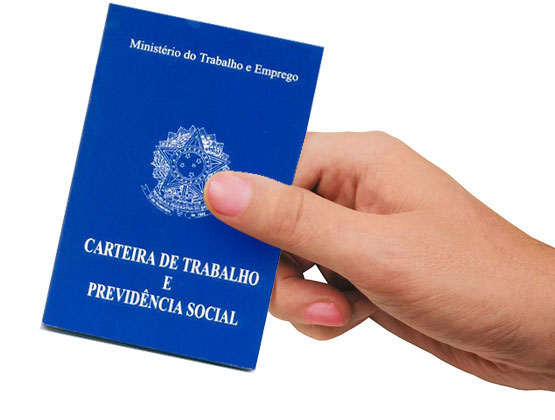
    Well, it’s official. As of today, I’m legally employable.You might be thinking, didn’t that happen when you applied for residency? Well, not totally. A residency card alone is not enough for legal employment in Brazil. For that, you need a Work Card, or a Carteira de Trabalho.

    I’ve been eligible for a work card since I became a resident of Brazil but haven’t bothered to apply for one because I never signed an employment contract. (I was, uh, doing a lot of volunteer work in Rio.) Now that I’ve been hired as a regular teacher, it’s time to join the Brazilian labor force. As a responsible worker, I’ve been learning about the work card and all the rights it guarantees.

    The work card is issued to all people employed via contract in Brazil, which I’ve learned is not everyone. For example, my husband doesn’t have a work card because his job with the government is regulated by statutes. If you were the owner of a business you wouldn’t need a card but your employees would. The purpose of the work card is to prevent exploitation, particularly of low income and domestic workers. It’s something that happens all too frequently in Brazil.

    To be clear, the work card should not be confused with the Brazilian equivalent of a Social Security Number. That’s called a CPF and I already have one of those as well. (I’m just a driver’s license shy of collecting the whole Brazilian Bureaucracy series!)

    So, what rights am I entitled to with my carteira?

    I am guaranteed one month paid vacation, an additional “13 month” salary, and in the event of pregnancy 4 months of paid maternity leave. Oh, and the company is legally required to take me back after the maternity leave. Woohoo!

    Hand me a red shirt and tell me where the parade is because I’m all about the workers right here. Sure, these policies are crippling to small businesses. It’s certainly possible that requiring four months maternity leave might prevent businesses from ever a 20 something person with a functioning uterus. And why the hell is anyone guaranteed a right to something that doesn’t even exist, like a 13th month? I don’t know. And as the beneficiary of all these rights, I’m not going to start a debate on them.

    I’m just going to plan where I’ll spend my month paid vacation and my 13th month’s paycheck. Maybe I’ll fly to Brasilia and ask for an 8th day of the week I can get paid for.

    Marcar com estrela

    CompartilharCompartilhar com observação
  • Expat Milestones: First Job Interview

    Expat Milestones: First Job Interview

    I’m bragging a little today. You see, in the life of an expat there are some standard milestones. At least standard for an English speaking expat who moves to a non-English speaking country with no previous knowledge of the language. For example…

    -There’s the first time you order a pizza over the phone in your new language.

    -The first time you notice and can yell at the taxi driver for taking you on the longer “tourist” route.

    -The first time you understand enough to genuinely enjoy a film in your second language.

    Last week I hit a new one: first successful job interview in your second language.

    On Wednesday, I received the official offer to teach here in Vitoria. I had been waiting to hear back and a particularly frustrating night of Portuguese had given me a sinking feeling that I had blown the interview.

    I didn’t know going into the interview that it would be in Portuguese. I had already been through one interview with the high school coordinator. We spoke in English. All emails had been in English. I was applying to teach in English. I was reasonably expecting more English.

    When I walked in for the second interview with the principal, as we exchanged greetings the high school coordinator said, “Vamos falar em português, tá bom?” We’re going to speak in Portuguese, ok?

    Had I known the interview would be in Portuguese, I might have abandoned the entire project. I do not have very good Portuguese. It’s not false modesty. It’s speaking only English at home and having only American friends in Rio. The Portuguese I have acquired has been in spite of a pathological fear of sounding like an idiot, so the announcement that I would be interviewed by the principal in Portuguese caused a shot of adrenaline urging me to flee out the door.

    As I sat down in front of her desk, I told myself, “Just keep talking. If you start thinking too hard you’ll realize all the mistakes you’re making. Then you’ll feel embarrassed, followed by panic, and you’ll end up either tongue-tied or crying.”

    So I smiled, kept my arms at my sides to hide the giant sweat stains appearing, and I kept talking. At the end of the interview the principal complemented my fluency.

    Now, I’m the newest teacher at my school and I have to say I’m pretty proud of myself. Not only did I interview in Portuguese but I got the job without any help. I researched and found the school on my own. I sent an email asking if there were opportunities for someone with my background. I sent my resume and had two interviews. I didn’t use my husband’s contacts or drop a single name. I got the job entirely on my own.

    The only downside is that I just found out American expats still have to pay US taxes. Damn.

  • My Peculiar Professional Niche: Helping Brazilian Students Study Abroad

    My Peculiar Professional Niche: Helping Brazilian Students Study Abroad

    Last Friday, Veja.com, posted an article on the growing number of Brazilian students attending college abroad. I found the article from a link posted by one of my former students, who just happens to be featured in the article. Flavia, is one of the 24,000 Brazilians, who attended college abroad in 2009. She’s studying economics at Harvard. I like to think I played a very small part in getting her there.

    My peculiar niche in the great market of Rio de Janeiro was teaching Brazilians how to write the personal statement for college applications. I also taught Kaplan SAT prep classes through FK Partners, but it was the essay workshop that I loved most.

    The Fulbright/Education USA office in Rio was kind enough (desperate enough) to let me develop a workshop despite the fact I had very little experience teaching kids. I also had real doubt as to whether or not I could spend time with a room of full of teenagers and not resort to physical violence at some point. I did not like high schoolers when I was one, I was pretty sure they hadn’t improved in 8 years.

    Well, 8 years changed something because I LOVE working with teenagers. At this age they’re just starting to figure out who they are as individual people, with their own opinions and dreams. Even at their most self-absorbed moments, I find them fresh and amusing. (Of course, I’m teaching kids who are trying to attend college. The true hooligans don’t sign up for my class.)

    Flavia was in my very first workshop. I told the kids they were my guinea pigs (a metaphor I then had to explain) and they were great. Respectful of me and supportive of each other. That support turned out to be a critical element.

    It turns out a workshop on personal statements really does get personal. In two weeks, I knew what achievement my students were most proud of, what they were afraid of and their most important memories. Forget therapy. If you want to know the inner most thoughts of a group of teenagers, have them write a personal statement.

    I also love the cultural elements that come into play. You might not know, but probably are not surprised to learn, that writing about yourself in first person is a very American thing. While my students definitely struggle with prepositions, they are completely thrown by the first person. I have been told time and again that Brazilian students never write in first person.

    And this whole, “what event in your past has most shaped who you are today” self-reflective stuff. “American universities really want to know about what I learned from my mom?” “Why does my opinion matter? I’m not anyone important.”

    Can you imagine an American teenager asking why people would care about his opinion?! It’s pretty much assumed by all American teens that their opinion is in fact the only one that matters. And that’s what I love about the workshop. I get to see how a different culture interprets something so ubiquitous to my American perception. The College Application Essay.

    Unfortunately, I won’t be giving any essay workshops this fall. Our move to Vitoria has made that impossible. But I am pursuing some options that I hope will allow me to keep working with teenagers and hopefully, send a couple more Brazilians Flavia’s way.