Tag: Health Care in Brazil

  • Dengue, Zika, Chikungunya, & Yellow Fever

    Dengue, Zika, Chikungunya, & Yellow Fever

    This is public enemy #1!
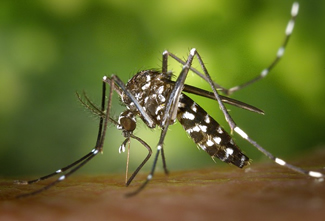
    Aedes aegypti. Know it and squish it!

    There are over 3,000 species of mosquitoes. A fact I think proves there’s no benevolent deity.

    This post is a run down of the basic info on the common mosquito born diseases in Brazil: dengue, zika, chikungunya, and yellow fever. It’s essential information if you’re visiting.

    Because the mosquitoes are winning.

    Last year in the wake of zika and the microcephaly epidemic in Brazil, the federal government mobilized troops to patrol for standing water basically declaring war against mosquitoes. The yellow fever outbreak this year is evidence of how well that went in the long term.

    So here’s everything you didn’t want to need to know about mosquito born illnesses in Brazil.

    DENGUE: Let’s start with dengue because it kills the most people every year. I know zika is the Kim Kardashian of the bunch, hogging all the media attention, but dengue is most likely to put you in the hospital. There were roughly 1.5 million registered cases of dengue in Brazil last year and of those 629 died. The severity depends on which of the four strains of the virus you get. The worst causes hemorrhaging, but most people just get incapacitating joint pain and high fever.

    Dengue is usually transmitted through the bite of an infected mosquito, but it can be passed from mother to fetus. The disease is asymptomatic in 40-80% of cases. The incubation ranges from 3 to 14 days.

    Symptoms

    • Sudden high fever
    • Severe headache
    • Severe joint pain
    • Moderate joint pain
    • Severe pain behind the eyes (basically your body will hurt a lot)
    • A skin rash that appears post fever
    • Fatigue
    • Nausea
    • Itching

    The Severe Case Symptoms (everything above plus…)

    • Bleeding from the nose and gums
    • Abdominal pain
    • Vomiting
    • Hypotension
    • Dizziness
    • Breathing difficulty

    In rare cases, sometimes after a second infection, a person can develop dengue hemorrhagic fever which leads to shock and death in 24 hours. Yeah, dengue totally sucks.

    There’s no vaccine. There’s no drug treatment. The only thing to do with dengue is treat the symptoms and be sure not use any aspirin because it increases the risk of hemorrhaging.

    Yeah, they’re all cute and cuddly until one drops dead of yellow fever.

    ZIKA: If you’ve been to Brazil in the last year and sneezed, you might have had zika. Or maybe you didn’t sneeze. You still might have had zika. Most cases are asymptomatic, about 80%.

    Of the most common mosquito borne diseases, zika results in the fewest hospital cases. In 2016 there were 214,193 cases of Zika in Brazil and 3 deaths. The global panic over zika is because of it’s link to microcephaly, a condition that babies develop in utero which prevents the brain and skull from developing normally.

    And let’s be clear. There IS scientific consensus that the zika virus is one of the causes of microcephaly. I believe in the CDC, WHO, and peer reviewed scientific journals. Conspiracy theorists can save themselves time and not bother commenting about genetically altered mosquitos. I will just delete them.

    The fact the disease is asymptomatic in the majority of cases makes it particularly scary for women who are or may become pregnant. It’s possible to have zika and never know until the baby develops complications. Even if you develop symptoms, they’re usually mild.

    Symptoms

    • low grade fever
    • headache
    • skin rash starting on the face and spreading over the body
    • red eyes
    • itching
    • fatigue
    • sore joints

    Less Common Symptoms

    • Muscle pain
    • Swelling
    • Sore throat
    • Vomiting or diarrhea
    • Swelling

    So now pregnant women all over Brazil can worry that their swollen legs and exhaustion is actually zika. Because there wasn’t enough for expectant parents to worry about. Fucking mosquitos.

    There’s no vaccine.

    CHIKUNGUNYA: Unlike zika and dengue, if you get chikungunya, you’ll know. 70% of cases develop symptoms. At least you don’t have to wonder whether or not you need a doctor.

    Last year there were 265,554 cases of chikungunya resulting in 159 deaths, so worse than zika but not as prevalent as dengue.

    Symptoms

    • Sudden onset of high fever
    • Severe joint pain mostly in feet, ankles, hands, wrists

    About the joint pain, almost every case has it and in rare cases it becomes chronic.

    Less Common Symptoms

    • Intense back pain
    • Headache
    • Muscle pain
    • Vomiting
    • Conjunctivitis
    • Fatigue
    • Photophobia
    • Sore throat

    Basically everything hurts like hell.

    Like the others, there’s no vaccine for chikungunya and no treatment beyond treating the symptoms.

    CDC’s risk area for yellow fever in South America

    YELLOW FEVER: The CDC’s website has a map of areas where yellow fever vaccines are recommended. The risk area for Brazil extends just up to the border of our state. So far this year 31 people have died from yellow fever in Esparto Santo. Dear CDC, you need to update your map.

    Yellow fever is typically passed via an infected monkey to mosquito to human, so areas without dense forests were considered safe. The incubation period is 3 to 6 days but most cases are asymptomatic.

    Symptoms

    • Sudden high fever
    • Severe headache
    • Back pain
    • Muscle pain
    • Nausea & vomiting
    • Fatigue
    • Weakness

    After a brief remission, 15% of cases will develop a severe form of the disease.

    Symptoms of Severe Form

    • High fever
    • Jaundice (hence the name)
    • Bleeding
    • Shock
    • Organ Failure

    Of cases that turn severe 20-50% die.

    We got our yellow fever vaccines!

    But good news! There’s a vaccine! Two doses taken ten years apart provide lifetime immunity. Yay science! If you’re thinking about visiting Brazil this year, double check to see if your hotel is located within one of the new expanded risk area. Be sure to use a Brazilian site. Remember, the CDC’s map is out of date.

    Vaccines are being developed for the other three. Several companies will have zika vaccines ready for clinical trials by the end of the year. Late stage clinical trials of dengue vaccines are already underway, and researchers have reported success with initial clinical trials for chikungunya vaccines. Unfortunately, we’re still years away from these vaccines being available to the public.

    In the meantime, don’t cancel your vacation. Just be prepared. Get a yellow fever vaccine. Pack repellent. Sleep with your windows closed and fan on. And for god’s sake, if you see a mosquito, kill it!

  • Getting Our Yellow Fever Vaccines

    Getting Our Yellow Fever Vaccines

    This is public enemy #1!
    Aedes aegypti. It carries dengue, zika, & chikungunya.

    Mosquito born viruses did not cross my mind when considering what my daily life would be like in Brazil, but it turns out that repellent is right up there with sunscreen as a daily necessity.

    I certainly never lost sleep over a mosquito in the U.S., but here in Brazil, more than once we’ve turned the lights on in the middle of the night at the whine of a mosquito. Some people might think mosquito hunting at 2am is overreacting, but my husband has had dengue. The steely-eyed commitment with which he stalks every mosquito in our home makes me think the experience has stayed with him.

    Public health officials in Brazil take mosquitoes seriously too. They’ve been battling dengue for decades. Chikungunya and Zika became common place in the last few years, and this year, Espirito Santo and its neighbor, Minas Gerais, are combating the spread of yellow fever. My family and I got our yellow fever vaccines last week, and it was an impressive operation.

    If you know the monkey might have yellow fever, is it still as cute?

    Vaccine distribution is one public service Brazil has mastered. At the end of February, the city government confirmed a monkey found dead in Vitoria in January had died from yellow fever. This one dead monkey kicked public health services into Defcon 5. The city closed 11 parks in the metro area. The federal government sent 1 million more doses of yellow fever vaccine to Espirito Santo. Public Health posts’ hours and days of operation were expanded. Churches have been converted to vaccination centers. Firefighters and nurses from public hospitals have been enlisted to distribute and administer the vaccines. This past Saturday 98,904 people were vaccinated in the metro area bringing the total vaccinated to over 800,000 in a little over two weeks.

    This is public health at it’s most efficient and most militarized. I know from personal experience. We were assigned a specific vaccination center and time when my husband reserved our vaccines online. When we got to the church, we had to present IDs for everyone, including my daughter, before we could enter the building where people waited in rows of white plastic chairs. We’d been assigned numbers at the entrance, and in what has to be one of the shortest waits in the history of line waiting in Brazil, a woman in a white lab coat, clipboard in hand, called our numbers, and we entered the heart of the operation.

    Along one wall was a row of nurses and firefighters taking down people’s names, ID numbers, and stamping vaccine cards. Firefighters are militarized in Brazil, and their khaki green uniforms with ranks sewn on their shirts made the whole scene feel like something out of Contagion. Along the adjacent wall, was another group readying vaccines before passing them in a ceaseless stream to the one woman who administered vaccines. Needle in. Needle out. Hands off the old needle. Accepts freshly opened vaccine. Needle in. Needle out.

    It wasn’t frantic, but it was efficient. People were moved around the room and back out the door with a lack of pleasantries I have never witnessed in Brazil.

    We survived!

    My daughter did not like it. She’d been totally chill about it until we got inside the vaccination room. The tension and focus that permeated the air had her clinging to her dad and begging to go. And these people were not waiting for her to calm down. I don’t blame them. They’re trying to vaccinate a few million people. My husband and I went first, trying to teach by example. It had no effect. She just got more hysterical with every second, so my husband held her in his arms. I held her arm straight, and the vaccine lady jabbed the needle in.

    For the rest of the day, my daughter showed off the tiny, nearly invisible red dot left behind like the scars of a near-death shark attack.

    As of Friday, there were 20 confirmed yellow fever deaths in our state. That’s 20 deaths out of 80 confirmed cases. The math is simple. That’s a 25% fatality rate. In neighboring Minas Gerais, there have been 109 deaths out 288 confirmed cases. I’m getting my calculator…37.8%. Wow, I hadn’t realized until writing this how bad this outbreak is.

    So if you’re planning on visiting Brazil anytime soon, I’d check if you’re ecolodge is smack in the middle of a high risk zone, and then I’d pack lots and lots of repellent regardless.

  • Knocked Up Abroad Again is Now Available!

    Knocked Up Abroad Again is Now Available!

    creativity-is-intelligence-having-fun-2I’m thrilled to announce that after a successful Kickstarter campaign Knocked Up Abroad Again is available for purchase on Amazon!
    Hip, hip, hooray! Hip, hip…Dear god, I’m never doing another Kickstarter campaign again. I wasn’t even in charge of the thing. Our editor put in a billion more hours organizing and promoting the thing, but I still felt like a used car salesman begging people to donate their hard earned money and time on my words. Who am I kidding? How am I ever going to promote and sell my own books if I can’t promote a collaborative work on Kickstarter on my Facebook? Even if I get published I’m never going to sell a single book. Never! My promotional posts will read “If you don’t mind and happen to enjoy this particular type of book and maybe have ten extra dollars to spare I would greatly appreciate it if you wouldn’t mind buying my book and if you really, really liked it then perhaps tell a friend about it. If you have the time and it won’t be a huge inconvenience. That would be really great. Thanks so much. (And if you’re not into YA or not a huge reader I totally understand. No hard feelings.)” I’m never going to sell a single book. But how can I be an author if can’t ask people to buy my book? Aaaaaagh!

    Sorry about that. I got off track. What was I saying? Oh right, Knocked Up Abroad Again has been successfully funded and is now available for purchase on Amazon! It’s the perfect gift for expectant parents, travelers, and expectant travelers in your life. If you want. I don’t want to insist. Pretty please. But only if you like this sort of thing.

    In all seriousness, thank you to everyone who donated to the project, and I hope you enjoy the book!

    Save

    Save

    Save

  • Dear Brazil, It’s Portugal’s Fault.

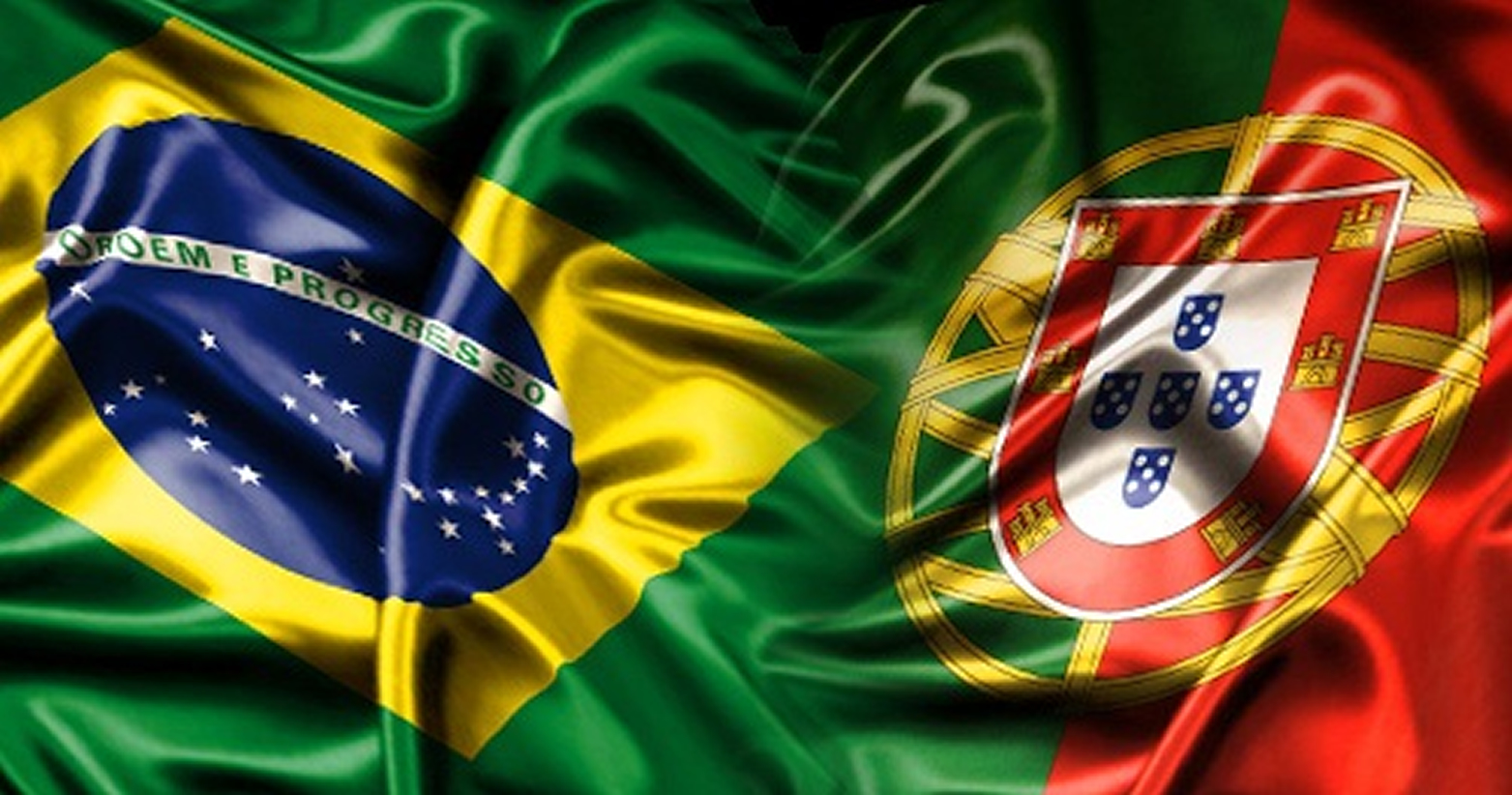
    Dear Brazil, It’s Portugal’s Fault.

    I’m currently obsessed with an idea for a historical fiction novel and have spent the last week devouring books on colonial Brazil. (I know you’re jealous.) It’s been fascinating reading actually because it’s all entirely new history for me. It wasn’t until World History in high school that I even knew humans existed outside of Europe, and by “Europe” I mean Italy, France, and Britain with a brief stop in Germany for the Reformation. Any ideas I have about Portugal or South America I learned from Columbus Day themed picture books and Disney’s Emperor’s New Groove.

    Turns out the Portuguese did more than just finance Columbus. They dominated maritime exploration in the 15th century, and that’s how little Portugal ended up with the enormous colony of Brazil. After a week of research, I now understand the root of all of Brazil’s problems. Portugal.

    Everything is Portugal’s fault.

    Let’s take education. Brazil does not have a single university in anybody’s top 100 Schools in World list. I recently read an article that could be summed up as “Brazilian have started buying books!” I can’t remember that last time I went to the beach and saw someone reading a book and I’m at the beach almost every weekend. Which makes perfect sense in a country that had printing presses, books, and universities banned for the first 300 years of its existence.

    Yes, Portugal controlled Brazil for 300 years before it allowed a university to be built or a printing press to operate. Put another way, book circulation was banned for a century longer than it’s been legal in Brazil. Thanks Portugal!

    Do you think Brazil’s government is a quagmire of ineffective bureaucracy staffed by people who are allergic to work? When the Portuguese court fled Napoleon and established itself in Rio de Janeiro, it brought between 10,000 and 15,000 people. When John Adams moved the US government from Philadelphia to Washington D.C., he moved 1,000 employees. And all those 10,000 people who came with the court expected a stipend from the government. Today, public pensions are currently bankrupting Brazil. Thanks Portugal!

    Brazil is currently hosting a global event. No, not the Olympics. I’m talking about the largest corruption scheme in the history of democracy, the Lava Jato case in which federal politicians awarded contracts and got kickbacks to the tune of billions of dollars.

    It’s actually totally understandable that Congressmen and their friends all expected rewards. When Prince Regent João showed up in Rio, the crown was flat broke, so he just started selling titles to wealthy Brazilian merchants. Prince João gave out more titles in eight years than his ancestors had in the previous three centuries. You get to be a Baron! And you get to be a Baron! And you get to be a Baron! (This is assuming you’d like to make a donation to the Court, of course.) Those of us at the top have to get each others’ backs, amiright? It’s Brazilian tradition. Thanks, Portugal!

    I’ve wondered since arriving back in 2006 why the fifth largest country in the world in terms of land area seems to use two lanes roads almost exclusively. Why? Why am I sharing a single lane between states with all the 18-wheeled trucks? Because it was illegal to build roads between states until after João and his court arrived in 1808, 300 years after the Portuguese took control of the territory. And factories weren’t allowed. So no industrialization. Which means no trains. Thanks, Portugal!

    I’ve learned all this from 1808 The Flight of the Emperor by Laurentino Gomes. It’s an engrossing telling of an unbelievable true story. One of the most striking accounts of colonial Brazil was from a woman, Maria Graham, arriving in Brazil for the first time. As her ship sailed up, she gushed over the picturesque city of Salvador with it’s beautiful white homes and striking setting on a cliffside. She called it “a city, magnificent in appearance from the sea.” Her opinion changed dramatically once walking the streets of the city. She describes Salvador as no less than “the filthiest place I ever was in.”

    19th century Salvador by Joseph Alfred Martinet
    19th century Salvador by Joseph Alfred Martinet

    While I did not consider Rio anywhere close to the filthiest place I’ve ever been (I lived in a coed dorm in college), I did go through the exact same swing in emotions when first arriving in Brazil. Looking out the plane window, I was in awe of Rio’s beauty. Then I left the airport. The view out the car window was…disappointing in comparison.

    Two hundred years separates Graham’s arrival and mine, yet our reactions were nearly identical. Culture is a powerful yet often unconscious shaper of our behavior. I have a university degree in this. I shouldn’t need a reminder, but this book was just that. Now, I understand. The next time I have to argue about whether the phrase “copy of your passport” means just the information page or all pages in the book, or I bounce along a road filled with potholes but with wifi coverage, or I read about another politician who’s been suspended due to a corruption scandal, I’m not blaming Brazil. I’m blaming Portugal.

    Because it’s all Portugal’s fault (#blameportugal). And they didn’t even leave a legacy of good wine. Thanks a lot, Portugal.

  • 28 Days in a Brazilian NICU: The Mom Milking Room

    28 Days in a Brazilian NICU: The Mom Milking Room

    Day 2 of 28 in the NICU at Vitoria Apart Hospital in Brazil.
    Day 2 of 28 in the NICU at Vitoria Apart Hospital in Brazil.

    My daughter was born seven weeks early due to placental abruption.  That was a new term for me, placental abruption. Another one was UTIN.  That’s the acronym in Portuguese for Neonatal Intensive Care Unit (NICU).  It was one of the many Portuguese medical terms I learned after my daughter spent 28 days in a NICU in Brazil.  In the moment, each day felt like a lifetime. I was sure every minute of all 28 days had been seared into my memory.

    But they weren’t.

    My daughter just turned four, and I’m shocked to realize how much of a blur those weeks have become.  Most of the exact numbers are gone.  How many days was she on a ventilator?  When did she get above 2kg?  Of the many people who cared for my daughter, all but one of the names has been erased.  Now they’re the doctor with red glasses and the physiotherapist who spoke some English.  I suspect these details will disappear too.

    What has not faded in any detail, much to my dismay, is my memory of the milking room.  This was the place they sent the new moms to strip them dignity.  It was the room for hand expressing breast milk.

    Many preemies are born too small to breastfeed and are fed through a tube and syringe.  How do you get these babies breast milk?  The obvious answer is pump it, store it, and serve it.  Except the NICU did not allow breast pumps of any kind.  The hospital said it could not guarantee that an individual mom’s pump would be sterile, so they could not give the milk from from a potentially unsterile source to the baby.  The only way for a baby in the NICU at Vitoria Apart Hospital to get breast milk, other than on tap, was to hand express it.  This is as awful as it sounds.

    At least for me.  I am not particularly in touch with my body.  I’m more cerebral and would be quite content to be a floating brain in space except for the facts I do like going for walks and eating french fries.  I’m aware that my conscious self is housed in an organic Tupperware container that impacts how I feel, think, am, but I don’t dwell on it.  At least not until I get a stomach virus.  Or until I have to breastfeed a baby.

    And I was going to breastfeed.  I had done my research.  Despite my lack of emotional connection to my mammary glands, I was totally committed to breastfeeding.  I did not, however, anticipate having to milk myself like a cow.

    That’s what it is.  Hand expressing means squeezing out the milk by hand into a container.

    Despite that daunting psychological hurdle, I told the nurses I still wanted to breastfeed, so one of them led me out the backdoor of the NICU, down a hall, through an unmarked door, and into an unused storage closet.  Based on the size and lack of any comforts except three chairs, I assume storage closet was the original purpose of the room.  White walls, tile floor, no windows, and freezing cold.  This was the room I shuffled to, fresh from an emergency c-section, so that I could hand squeeze milk from my boobs.

    As I stood there shivering in my hospital gown, the nurse quickly went through the officially sanctioned routine that guaranteed milk I expressed in that closet would be more sanitary than what I could get from a pump: wash hands, don hairnet and face mask, remove the plastic cups from the packaging and take the lids off, wash hands again, wash nipples with gauze, squeeze milk into cup and seal the cup immediately when full.  Fortunately, she demonstrated the whole process because to this day I don’t know the Portuguese word for gauze or hairnet.

    Then she left.  No medical professional stayed in that closet with the moms.

    Want to guess how many of the moms expressing themselves actually followed that routine when left on their own?

    I know because it turned out to be a communal milking closet, and the answer is none that I saw.  The next time I went to the closet, two other women were already there happily chatting away, masks down over their chins.  I distinctly remember these two women because they were friendly, completely comfortable being half-naked in front of strangers, and filling up cup after cup with milk like a competition at a state fair.  I was none of those things.  I struggled to fill half a cup when alone.  Trying to hand-express milk in a freezer while confronting small talk in Portuguese and the four largest breasts I’ve ever seen in person was literally impossible.

    I got almost no milk out during that session or any other.  I subjected myself to breastfeeding purgatory every three hours for four days before finally saying “Enough.”  I believe breast milk is ideal.  I don’t believe it is worth torture.  I restarted breastfeeding only after my daughter was big enough to handle it herself.  Hand-expressing in that closet was one of the worst experiences of my life.  And I sat through the Sponge Bob movie.

    If I’d had any reserve of energy I would have been outraged.  I was being denied a breast pump on the grounds it wasn’t sterile, but there was nothing sterile about that room.  They sent a bunch of not-medically-trained women down the hall with instructions to wash their hands and wear a mask. I don’t believe a single doctor actually thought the milk coming out of that closet was sterile.  They know they’re in Brazil where actual laws are treated as suggestions.

    But I didn’t have the capacity for outrage then and I don’t care to feel it now.  True, an electric pump and a private space would have made a huge difference, but we all survived and someday the sound of someone else’s breastmilk squirting into a plastic cup will fade from memory.  In the meantime, I’ll milk it for the entertaining story it is.

    11ghkra

    Save

  • Beach Day Doctrine: Great weather leads to awful governments

    Beach Day Doctrine: Great weather leads to awful governments

    A typical winter's day in Brazil.
    A typical winter’s day in Brazil.

    My family went to the beach this past Saturday.  We packed a kite and a boogie board and stayed out through lunch. It was an absolutely perfect beach day, warm without being hot and breezy without being chilly.  The sky was a sheet of blue with a few fluffy clouds pulled decoratively across it.  But the best part was having the beach almost entirely to ourselves.  People in Vitoria just don’t go to the beach in winter.

    Yes, it’s winter here in Vitoria, Brazil.  You can really feel it today.  It’s 68 degrees (20 C) outside and drizzly.  People are wearing their leather jackets over their shorts.  This will be one of the coldest days of the year here.  I’m sure it will be a front page article in tomorrow’s paper.  “Cold Front hits Vitoria. Drives Locals to Wearing Coats!”

    In my opinion, the weather is one of the best things about Vitoria and Brazil in general.  I think it’s also why the government sucks.

    I have a theory that the weather of a country can be tied directly to the quality of that country’s government.  The better the weather, the worse the public services.  The worse the weather, free university for everyone!

    Let’s take Norway.  The Economist’s Quality of Life Index ranks Norway third in terms of quality of life and third in GDP per capita.  Norway is number one on the UNDP’s Human Development Index.  Norway’s government is the world champion of governing.  Year after year, they are crushing the competition. Why? Because without an awesome government, there would be absolutely no reason to live there.

    This is a place where citizens go weeks without seeing the sun.  Every winter, there’s a period when the sun never makes it over the horizon.  This isn’t a freak phenomenon.  It’s a lifestyle.  How to avoid Winter SAD (Seasonal Affective Disorder) during the polar nights is a regular part of the school curriculum.  Why would anybody live in a place where winter is accompanied by its own psychological disorder causing sadness, a loss of self-esteem, and desire to avoid social and physical contact?  Why? Free universal healthcare coverage for all legal residents.  That’s why.

    Not surprisingly, Norway’s tourism website doesn’t bring up those polar nights, but it does have a lot to say about its midnight sun.  You can take an ocean cruise at midnight or stroll through the park at 2am.  Come visit Norway in summer and have 24 hours of sunlight!  Honestly Norway, 24 hours of sunlight doesn’t sound like a good thing.  It’s slightly better than 24 hours of darkness, but I have no desire to live in a place with sunlight streaming through my window at 2 am.

    Except that in Norway, universities are tuition free for all students, including international students.

    On second thought, I could probably get used to wearing a sleep mask.

    Norway’s tourism site also touts its mild winter temperatures.  The average January high for Oslo is 32 degrees (0 C). I suppose that’s mild compared to Siberia, but it’s still a place where getting locked out of your house in December is potentially life threatening.

    Here in Vitoria, you can sleep on the sidewalk 365 days a year and feel, at worst, a little uncomfortable.  Good thing too, because there are quite a few people who do sleep on the sidewalk.  Does Norway even have homeless?  I don’t see how.  The winters would kill them off.

    And this is the crux of my theory.  The environment in Norway is so inhospitable, the government has to help its people survive and then give them a reason to stay.

    What does a person need to survive a winter day here in Vitoria? A sandwich and a tree.  Something to eat and shelter from the hot-even-in-winter sun or rain.  That’s it.

    My theory holds true for other countries.  Sweden, Finland, Denmark, Canada, Australia (Why is Australia listed? It’s hot, in the middle of nowhere, and has all the world’s most poisonous things). These countries have awesome governments and crappy weather.  Venezuela, Fiji, Mexico, Maldives, Greece: crappy governments, 365 days of beach.

    This past Saturday was a spectacular day.  Bright sun.  Soft sand.  It was the kind of day that warms you on the inside and puts hope back in your life.  Listening to the waves while getting drunk on sunshine and coconut water, a person won’t care about anything.  Not even that Brazil ranks 79 on the HDI or that dozens of top government officials have been indicted for stealing billions in taxpayers’ money or that the President’s approval rating is 9%.

    Here schools are terrible.  Public healthcare is broken.  Inflation is increasing.  But the weather is fantastic, the beaches are free, and with 4,655 miles (7,491 km) of breathtaking coastline, there’s space on the sand for everybody.  What else do you really need?

  • My Recommendation for an OBGYN in Vitoria

    My Recommendation for an OBGYN in Vitoria

    My expat identity has taken a back seat in my last few posts to the teacher or pregnant woman part of me, but after reading some blog entries from other expats in Brazil I’ve been inspired to finally write a post that has been in the back of my mind for some time.

    Coconut Water is officially recommending Dr. Paulo Batistuta for anyone in Vitoria looking for an OBGYN.

    While I’ve endorsed several Brazilian food options including açaí and moqueca capixaba, this is Coconut Water’s first official endorsement of a healthcare professional in Brazil and I’m recommending Dr. Batistuta with the same fervor I do a big bowl of açaí.

    A fairly common complaint from expats here is that doctors in Brazil don’t really explain things to you.  They tell you to get a test and bring them the results.  Unless the results require being ordered to get another test or bypass surgery, that’s all you’ll hear about them.  Another complaint specific to women in the process of childbearing is that doctors here in Brazil prefer doing c-sections to pretty much anything else.  (I’d believe even more than sex given the rate at which they are performed here.)  Some private hospitals in Brazil have c-section rates as high as 90%.

    Dr. Batistuta (Dr. Paulo here in Brazil where they use first names) defies both of these stereotypes.

    Personal anecdote.  After an early ultrasound, I noticed there was one item that had an abnormal reading, specifically low blood flow in the left uterine artery. When we took the results to Dr. Batistuta, I asked about it and Dr. Batistuta picked up a pen and immediately began sketching a uterus and arteries.  He explained what the test measured and what the result meant.  He even sketched out exactly where the placenta was attached in my uterus.  You know, the more information the better.  He assured us that this wasn’t a problem given the normal results for everything else and we’d check it again at the next ultrasound.  He was right.  Everything was normal at the next ultrasound.

    Dr. Batistuta never rushes us out the door.  I’ll pull out a list of questions.  He’ll happily answer everyone, giving me cards, books, even DVDs that will provide further information.  While I’m in the bathroom changing I can hear him and my husband chatting away about upgrading their computers’ operating systems.  We were in his office for almost an hour during our last visit.

    As for c-sections, Dr. Batistuta is one of the leading voices in Brazil for natural childbirth.  If you speak Portuguese you can watch him being interviewed on youtube.  While he will state point blank he believes the best birth for the mother and baby is one with no unnecessary medical intervention, he has also told me that ultimately the doctors and staff are there to support me and what I want.  If I ask for drugs, they will give me drugs.

    I should mention cost.  One of the great things about Vitoria is that you can get great medical care (private) for half the cost of what you’d pay in Rio or Sao Paulo.  For an office visit, Dr. Batistuta charges BR$200 ($118).  We pay this out of pocket at the visit and send a receipt to our insurance company for reimbursement.  For the actual birth, Dr. Batistuta is charging BR$4.000 ($2,353). Again, we’ll pay and get reimbursed later.  (Once the whole birthing process is said and done, I’ll do a summary of all medical expenses for giving birth in Vitoria.)

    Finally, the language issue.  Our visits are conducted exclusively in Portuguese but when I have to use an English phrase Dr. Batistuta understands.  (I suspect he is modest about his level of English and understands way more English than he lets on.)  Fortunately, my husband attends every visit and supplements my intermediate Portuguese with his native tongue thus preventing any serious misunderstandings.  I can’t say for sure how it would go if you don’t speak any Portuguese. I think everyone could muddle through but it is important to know that Vitoria is a much smaller city than Rio, Sao Paulo or Belo Horizonte and English speaking professionals are in much shorter supply here.

    If you are an expat in Vitoria looking for an OBGYN, I strongly recommend Dr. Batistuta.  He talks to his patients as intellectual equals.  He supports natural birth and medical intervention only when necessary.  He understands some English and is very patient when listening to bad Portuguese.  You can find his profile and contact info with the CECON medical group.

  • Diagnosis: Information Overload

    Diagnosis: Information Overload

    The Internet is amazing.  Easy communication between continents, quick access to the rules on semicolon usage, and adorable animal videos.  What’s not to love?  Well, for me, the gross amount of information available on pregnancy and mothering.  Here is a tiny sample of the useful info the Internet has provided me concerning pregnancy.
    Google query:  “What to eat while pregnant?”
    You absolutely have to get enough folic acid, vitamin C, Calcium, iron and about a dozen other things while pregnant or your baby will not have a fully developed spinal cord, skeleton, or eyebrows. You can get these things from dark green vegetables, citrus fruits, beans, milk, yogurt, steak, eggs.

    Google query: “gas and indigestion while pregnant”

    You will inevitably suffer from gas and indigestion.  In the case of severe pain avoid eating dark green vegetables, citrus fruits, beans, and dairy products.

    Google query: “Foods to avoid while pregnant”

    Avoid any undercooked meat and eggs and any unpasteurized dairy or fruit juices.  Consuming these will cause terrible bacteria to eat your baby.

    Google query: “Important nutrients while pregnant”

    You really, really need to eat a lot of iron, which the body easily absorbs from meat and eggs, spinach and beans.


    An hour of this will make a sane person’s head explode.  You should eat beans and broccoli but not if you want to avoid being doubled over with gas pain.  You should eat lots of meat and dairy but only if it’s been pasteurized or cooked until it can be used as a spare tire.  This is the curse of too much information.  Spend enough time researching and you will inevitably end up with contradictory information.   If it’s not flat out contradictory, it will at least make every bite of salad cause for an anxiety attack and present you with the choice of gritting through passing a beach ball through your intestines or depriving your baby of vital nutrients.  And we all know which option a good mother would choose.

    During my first few weeks, I had pretty much convinced myself there was no way the baby could make it out of my uterus alive when I had my first consultation with Dr. Paulo Batistuta.  Leaning back in his chair, he listened while I asked about eating fish and peanut butter and salad prepared by anyone’s hands other my own.  He smiled and said “Go ahead enjoy.”  Restaurants don’t do very good business if their patrons get sick, so they keep their food clean and fresh.  As long as my peanut butter is made in the USA, it’s no problem.  (Remember, Brazilian peanuts can carry a liver-eating fungus.)  And fish? Well, of course. Moqueca capixaba is delicious, isn’t it?  Yes, doctor.  Yes it is.  And thanks to you, I will now be able to enjoy it without a side of guilt.

    Internet research is basically the only skill I got in college and it has become something of a curse since being pregnant.  Dr. Paulo is exactly the zen master this patient needs.  Eat a balanced diet. Cook everything until there’s no pink.  Stop using Google.  Everyone will be fine.

  • My Dentist, My Sadist

    Today, I met the world’s friendliest dentist. Hmm, maybe I should rephrase given that dentists have not traditionally set the bar high when it comes to amicability. Today, I met a dentist who could not have been friendlier had she been inhaling her own laughing gas.

    It was my first trip to the dentist in Brazil. It was my first trip to the dentist in a decade. Maybe not quite that long. It’s hard to remember.

    Anyway, the last dentist I liked had video games and Disney movies playing in her waiting. Since the age of ten, every dentist I’ve had has been competent but distant and all business, in the way I imagine disembowlers must have been.

    My dentist today greeted me with a huge smile and flattering yet oddly enthusiastic declaration of how pretty I am. I think complimenting might be office policy to hook new patients and if so, I was sold. The smiling and over-the-top-compliments were such a welcome change for a dentist’s office; I thanked her and introduced myself to Doctor Gabriella.

    Brazilians use first names right away, even in professional contexts. It gives every encounter a personal feel. In Brazil, I don’t have bankers, dentists and doctors. I have a large network of personal acquaintances with a diverse skill set.

    Gabriella and I chatted about all the obvious first meeting facts: where are you from, how long have you lived here, which country do you like better. (There is no way to answer that last question honestly without offending someone. I just go with “Wow, that’s hard. They’re so many good things about both.”) Right before we got started I mumbled something about how long it had been since my last trip and then I waited for the shaming to begin.

    I’d always assumed that dentists are taught that shame is the only way to make people floss regularly. A patient must be told whatever she is doing, it is not done frequently or well enough and ultimately not sufficient to keep her teeth from falling out of her head. And toothless people go to hell.

    It was quite a shock then when Doctor Gabriella gently plied my lips and cheek away from my teeth and assured me they were very clean. When she spotted a cavity she called it a “little thing” that we can fix quickly. No lectures. A cavity and no lecture. I wonder if this woman knows what a disgrace she is to her profession.

    When we were done she walked me to reception area, asked me to come back for a cleaning and cavity filled, then she gave me a big hug and kiss on the cheek. A Brazilian that hugs. A dentist that is genuinely pleasant. I was completely thrown. I didn’t know how to react. I did know I liked it. So I’m going back for more next Tuesday at 9am.