Tag: healthcare

  • Dengue, Zika, Chikungunya, & Yellow Fever

    Dengue, Zika, Chikungunya, & Yellow Fever

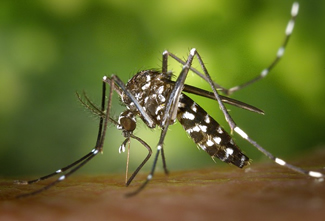
    This is public enemy #1!
    Aedes aegypti. Know it and squish it!

    There are over 3,000 species of mosquitoes. A fact I think proves there’s no benevolent deity.

    This post is a run down of the basic info on the common mosquito born diseases in Brazil: dengue, zika, chikungunya, and yellow fever. It’s essential information if you’re visiting.

    Because the mosquitoes are winning.

    Last year in the wake of zika and the microcephaly epidemic in Brazil, the federal government mobilized troops to patrol for standing water basically declaring war against mosquitoes. The yellow fever outbreak this year is evidence of how well that went in the long term.

    So here’s everything you didn’t want to need to know about mosquito born illnesses in Brazil.

    DENGUE: Let’s start with dengue because it kills the most people every year. I know zika is the Kim Kardashian of the bunch, hogging all the media attention, but dengue is most likely to put you in the hospital. There were roughly 1.5 million registered cases of dengue in Brazil last year and of those 629 died. The severity depends on which of the four strains of the virus you get. The worst causes hemorrhaging, but most people just get incapacitating joint pain and high fever.

    Dengue is usually transmitted through the bite of an infected mosquito, but it can be passed from mother to fetus. The disease is asymptomatic in 40-80% of cases. The incubation ranges from 3 to 14 days.

    Symptoms

    • Sudden high fever
    • Severe headache
    • Severe joint pain
    • Moderate joint pain
    • Severe pain behind the eyes (basically your body will hurt a lot)
    • A skin rash that appears post fever
    • Fatigue
    • Nausea
    • Itching

    The Severe Case Symptoms (everything above plus…)

    • Bleeding from the nose and gums
    • Abdominal pain
    • Vomiting
    • Hypotension
    • Dizziness
    • Breathing difficulty

    In rare cases, sometimes after a second infection, a person can develop dengue hemorrhagic fever which leads to shock and death in 24 hours. Yeah, dengue totally sucks.

    There’s no vaccine. There’s no drug treatment. The only thing to do with dengue is treat the symptoms and be sure not use any aspirin because it increases the risk of hemorrhaging.

    Yeah, they’re all cute and cuddly until one drops dead of yellow fever.

    ZIKA: If you’ve been to Brazil in the last year and sneezed, you might have had zika. Or maybe you didn’t sneeze. You still might have had zika. Most cases are asymptomatic, about 80%.

    Of the most common mosquito borne diseases, zika results in the fewest hospital cases. In 2016 there were 214,193 cases of Zika in Brazil and 3 deaths. The global panic over zika is because of it’s link to microcephaly, a condition that babies develop in utero which prevents the brain and skull from developing normally.

    And let’s be clear. There IS scientific consensus that the zika virus is one of the causes of microcephaly. I believe in the CDC, WHO, and peer reviewed scientific journals. Conspiracy theorists can save themselves time and not bother commenting about genetically altered mosquitos. I will just delete them.

    The fact the disease is asymptomatic in the majority of cases makes it particularly scary for women who are or may become pregnant. It’s possible to have zika and never know until the baby develops complications. Even if you develop symptoms, they’re usually mild.

    Symptoms

    • low grade fever
    • headache
    • skin rash starting on the face and spreading over the body
    • red eyes
    • itching
    • fatigue
    • sore joints

    Less Common Symptoms

    • Muscle pain
    • Swelling
    • Sore throat
    • Vomiting or diarrhea
    • Swelling

    So now pregnant women all over Brazil can worry that their swollen legs and exhaustion is actually zika. Because there wasn’t enough for expectant parents to worry about. Fucking mosquitos.

    There’s no vaccine.

    CHIKUNGUNYA: Unlike zika and dengue, if you get chikungunya, you’ll know. 70% of cases develop symptoms. At least you don’t have to wonder whether or not you need a doctor.

    Last year there were 265,554 cases of chikungunya resulting in 159 deaths, so worse than zika but not as prevalent as dengue.

    Symptoms

    • Sudden onset of high fever
    • Severe joint pain mostly in feet, ankles, hands, wrists

    About the joint pain, almost every case has it and in rare cases it becomes chronic.

    Less Common Symptoms

    • Intense back pain
    • Headache
    • Muscle pain
    • Vomiting
    • Conjunctivitis
    • Fatigue
    • Photophobia
    • Sore throat

    Basically everything hurts like hell.

    Like the others, there’s no vaccine for chikungunya and no treatment beyond treating the symptoms.

    CDC’s risk area for yellow fever in South America

    YELLOW FEVER: The CDC’s website has a map of areas where yellow fever vaccines are recommended. The risk area for Brazil extends just up to the border of our state. So far this year 31 people have died from yellow fever in Esparto Santo. Dear CDC, you need to update your map.

    Yellow fever is typically passed via an infected monkey to mosquito to human, so areas without dense forests were considered safe. The incubation period is 3 to 6 days but most cases are asymptomatic.

    Symptoms

    • Sudden high fever
    • Severe headache
    • Back pain
    • Muscle pain
    • Nausea & vomiting
    • Fatigue
    • Weakness

    After a brief remission, 15% of cases will develop a severe form of the disease.

    Symptoms of Severe Form

    • High fever
    • Jaundice (hence the name)
    • Bleeding
    • Shock
    • Organ Failure

    Of cases that turn severe 20-50% die.

    We got our yellow fever vaccines!

    But good news! There’s a vaccine! Two doses taken ten years apart provide lifetime immunity. Yay science! If you’re thinking about visiting Brazil this year, double check to see if your hotel is located within one of the new expanded risk area. Be sure to use a Brazilian site. Remember, the CDC’s map is out of date.

    Vaccines are being developed for the other three. Several companies will have zika vaccines ready for clinical trials by the end of the year. Late stage clinical trials of dengue vaccines are already underway, and researchers have reported success with initial clinical trials for chikungunya vaccines. Unfortunately, we’re still years away from these vaccines being available to the public.

    In the meantime, don’t cancel your vacation. Just be prepared. Get a yellow fever vaccine. Pack repellent. Sleep with your windows closed and fan on. And for god’s sake, if you see a mosquito, kill it!
  • Getting Our Yellow Fever Vaccines

    Getting Our Yellow Fever Vaccines

    This is public enemy #1!
    Aedes aegypti. It carries dengue, zika, & chikungunya.

    Mosquito born viruses did not cross my mind when considering what my daily life would be like in Brazil, but it turns out that repellent is right up there with sunscreen as a daily necessity.

    I certainly never lost sleep over a mosquito in the U.S., but here in Brazil, more than once we’ve turned the lights on in the middle of the night at the whine of a mosquito. Some people might think mosquito hunting at 2am is overreacting, but my husband has had dengue. The steely-eyed commitment with which he stalks every mosquito in our home makes me think the experience has stayed with him.

    Public health officials in Brazil take mosquitoes seriously too. They’ve been battling dengue for decades. Chikungunya and Zika became common place in the last few years, and this year, Espirito Santo and its neighbor, Minas Gerais, are combating the spread of yellow fever. My family and I got our yellow fever vaccines last week, and it was an impressive operation.

    If you know the monkey might have yellow fever, is it still as cute?

    Vaccine distribution is one public service Brazil has mastered. At the end of February, the city government confirmed a monkey found dead in Vitoria in January had died from yellow fever. This one dead monkey kicked public health services into Defcon 5. The city closed 11 parks in the metro area. The federal government sent 1 million more doses of yellow fever vaccine to Espirito Santo. Public Health posts’ hours and days of operation were expanded. Churches have been converted to vaccination centers. Firefighters and nurses from public hospitals have been enlisted to distribute and administer the vaccines. This past Saturday 98,904 people were vaccinated in the metro area bringing the total vaccinated to over 800,000 in a little over two weeks.

    This is public health at it’s most efficient and most militarized. I know from personal experience. We were assigned a specific vaccination center and time when my husband reserved our vaccines online. When we got to the church, we had to present IDs for everyone, including my daughter, before we could enter the building where people waited in rows of white plastic chairs. We’d been assigned numbers at the entrance, and in what has to be one of the shortest waits in the history of line waiting in Brazil, a woman in a white lab coat, clipboard in hand, called our numbers, and we entered the heart of the operation.

    Along one wall was a row of nurses and firefighters taking down people’s names, ID numbers, and stamping vaccine cards. Firefighters are militarized in Brazil, and their khaki green uniforms with ranks sewn on their shirts made the whole scene feel like something out of Contagion. Along the adjacent wall, was another group readying vaccines before passing them in a ceaseless stream to the one woman who administered vaccines. Needle in. Needle out. Hands off the old needle. Accepts freshly opened vaccine. Needle in. Needle out.

    It wasn’t frantic, but it was efficient. People were moved around the room and back out the door with a lack of pleasantries I have never witnessed in Brazil.

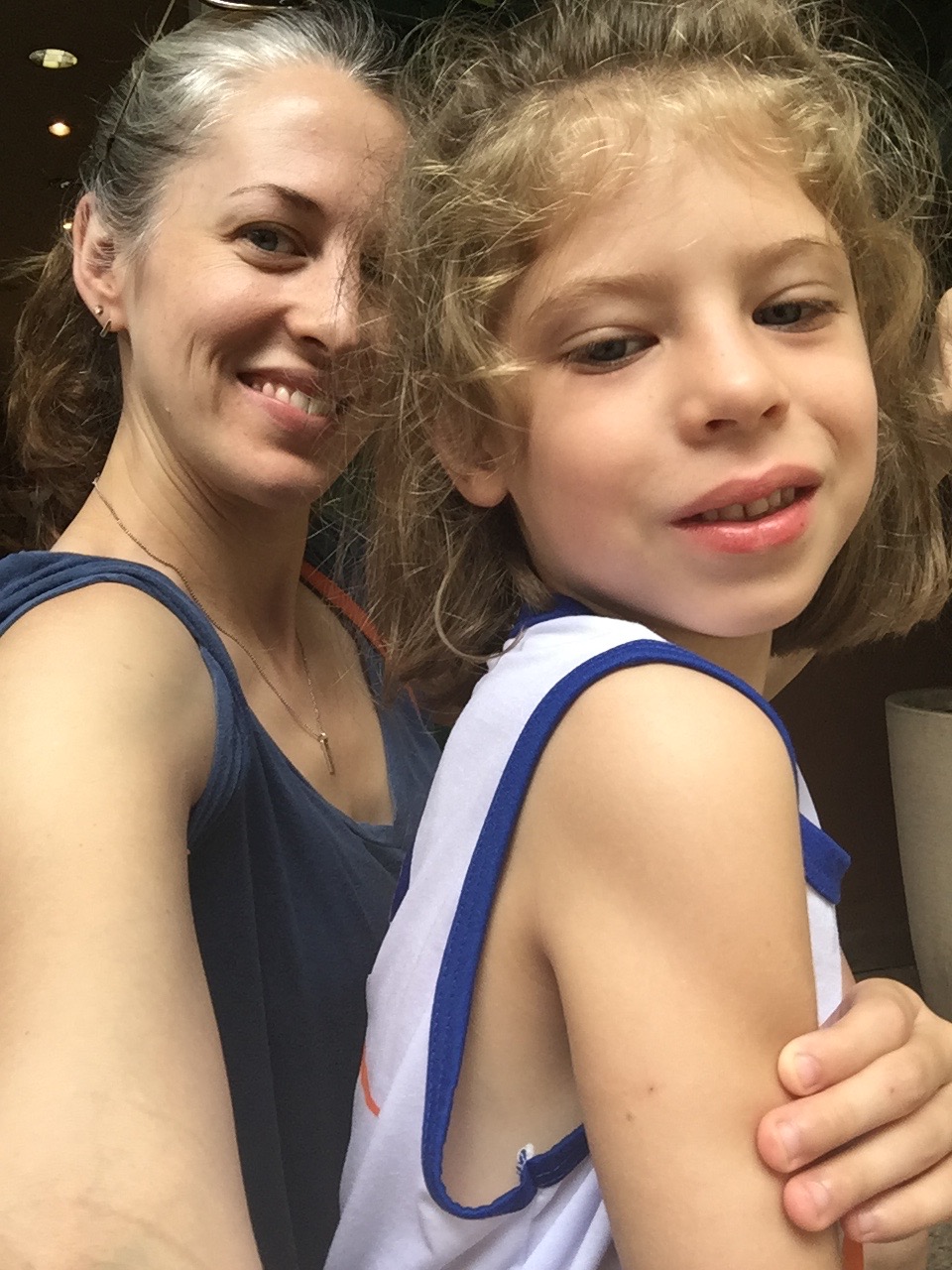
    We survived!

    My daughter did not like it. She’d been totally chill about it until we got inside the vaccination room. The tension and focus that permeated the air had her clinging to her dad and begging to go. And these people were not waiting for her to calm down. I don’t blame them. They’re trying to vaccinate a few million people. My husband and I went first, trying to teach by example. It had no effect. She just got more hysterical with every second, so my husband held her in his arms. I held her arm straight, and the vaccine lady jabbed the needle in.

    For the rest of the day, my daughter showed off the tiny, nearly invisible red dot left behind like the scars of a near-death shark attack.

    As of Friday, there were 20 confirmed yellow fever deaths in our state. That’s 20 deaths out of 80 confirmed cases. The math is simple. That’s a 25% fatality rate. In neighboring Minas Gerais, there have been 109 deaths out 288 confirmed cases. I’m getting my calculator…37.8%. Wow, I hadn’t realized until writing this how bad this outbreak is.

    So if you’re planning on visiting Brazil anytime soon, I’d check if you’re ecolodge is smack in the middle of a high risk zone, and then I’d pack lots and lots of repellent regardless.

  • Knocked Up Abroad Again is Now Available!

    Knocked Up Abroad Again is Now Available!

    creativity-is-intelligence-having-fun-2I’m thrilled to announce that after a successful Kickstarter campaign Knocked Up Abroad Again is available for purchase on Amazon!

    Hip, hip, hooray! Hip, hip…Dear god, I’m never doing another Kickstarter campaign again. I wasn’t even in charge of the thing. Our editor put in a billion more hours organizing and promoting the thing, but I still felt like a used car salesman begging people to donate their hard earned money and time on my words. Who am I kidding? How am I ever going to promote and sell my own books if I can’t promote a collaborative work on Kickstarter on my Facebook? Even if I get published I’m never going to sell a single book. Never! My promotional posts will read “If you don’t mind and happen to enjoy this particular type of book and maybe have ten extra dollars to spare I would greatly appreciate it if you wouldn’t mind buying my book and if you really, really liked it then perhaps tell a friend about it. If you have the time and it won’t be a huge inconvenience. That would be really great. Thanks so much. (And if you’re not into YA or not a huge reader I totally understand. No hard feelings.)” I’m never going to sell a single book. But how can I be an author if can’t ask people to buy my book? Aaaaaagh!

    Sorry about that. I got off track. What was I saying? Oh right, Knocked Up Abroad Again has been successfully funded and is now available for purchase on Amazon! It’s the perfect gift for expectant parents, travelers, and expectant travelers in your life. If you want. I don’t want to insist. Pretty please. But only if you like this sort of thing.

    In all seriousness, thank you to everyone who donated to the project, and I hope you enjoy the book!

    Save

    Save

    Save

  • 28 Days in a Brazilian NICU: The Mom Milking Room

    28 Days in a Brazilian NICU: The Mom Milking Room

    Day 2 of 28 in the NICU at Vitoria Apart Hospital in Brazil.
    Day 2 of 28 in the NICU at Vitoria Apart Hospital in Brazil.

    My daughter was born seven weeks early due to placental abruption.  That was a new term for me, placental abruption. Another one was UTIN.  That’s the acronym in Portuguese for Neonatal Intensive Care Unit (NICU).  It was one of the many Portuguese medical terms I learned after my daughter spent 28 days in a NICU in Brazil.  In the moment, each day felt like a lifetime. I was sure every minute of all 28 days had been seared into my memory.

    But they weren’t.

    My daughter just turned four, and I’m shocked to realize how much of a blur those weeks have become.  Most of the exact numbers are gone.  How many days was she on a ventilator?  When did she get above 2kg?  Of the many people who cared for my daughter, all but one of the names has been erased.  Now they’re the doctor with red glasses and the physiotherapist who spoke some English.  I suspect these details will disappear too.

    What has not faded in any detail, much to my dismay, is my memory of the milking room.  This was the place they sent the new moms to strip them dignity.  It was the room for hand expressing breast milk.

    Many preemies are born too small to breastfeed and are fed through a tube and syringe.  How do you get these babies breast milk?  The obvious answer is pump it, store it, and serve it.  Except the NICU did not allow breast pumps of any kind.  The hospital said it could not guarantee that an individual mom’s pump would be sterile, so they could not give the milk from from a potentially unsterile source to the baby.  The only way for a baby in the NICU at Vitoria Apart Hospital to get breast milk, other than on tap, was to hand express it.  This is as awful as it sounds.

    At least for me.  I am not particularly in touch with my body.  I’m more cerebral and would be quite content to be a floating brain in space except for the facts I do like going for walks and eating french fries.  I’m aware that my conscious self is housed in an organic Tupperware container that impacts how I feel, think, am, but I don’t dwell on it.  At least not until I get a stomach virus.  Or until I have to breastfeed a baby.

    And I was going to breastfeed.  I had done my research.  Despite my lack of emotional connection to my mammary glands, I was totally committed to breastfeeding.  I did not, however, anticipate having to milk myself like a cow.

    That’s what it is.  Hand expressing means squeezing out the milk by hand into a container.

    Despite that daunting psychological hurdle, I told the nurses I still wanted to breastfeed, so one of them led me out the backdoor of the NICU, down a hall, through an unmarked door, and into an unused storage closet.  Based on the size and lack of any comforts except three chairs, I assume storage closet was the original purpose of the room.  White walls, tile floor, no windows, and freezing cold.  This was the room I shuffled to, fresh from an emergency c-section, so that I could hand squeeze milk from my boobs.

    As I stood there shivering in my hospital gown, the nurse quickly went through the officially sanctioned routine that guaranteed milk I expressed in that closet would be more sanitary than what I could get from a pump: wash hands, don hairnet and face mask, remove the plastic cups from the packaging and take the lids off, wash hands again, wash nipples with gauze, squeeze milk into cup and seal the cup immediately when full.  Fortunately, she demonstrated the whole process because to this day I don’t know the Portuguese word for gauze or hairnet.

    Then she left.  No medical professional stayed in that closet with the moms.

    Want to guess how many of the moms expressing themselves actually followed that routine when left on their own?

    I know because it turned out to be a communal milking closet, and the answer is none that I saw.  The next time I went to the closet, two other women were already there happily chatting away, masks down over their chins.  I distinctly remember these two women because they were friendly, completely comfortable being half-naked in front of strangers, and filling up cup after cup with milk like a competition at a state fair.  I was none of those things.  I struggled to fill half a cup when alone.  Trying to hand-express milk in a freezer while confronting small talk in Portuguese and the four largest breasts I’ve ever seen in person was literally impossible.

    I got almost no milk out during that session or any other.  I subjected myself to breastfeeding purgatory every three hours for four days before finally saying “Enough.”  I believe breast milk is ideal.  I don’t believe it is worth torture.  I restarted breastfeeding only after my daughter was big enough to handle it herself.  Hand-expressing in that closet was one of the worst experiences of my life.  And I sat through the Sponge Bob movie.

    If I’d had any reserve of energy I would have been outraged.  I was being denied a breast pump on the grounds it wasn’t sterile, but there was nothing sterile about that room.  They sent a bunch of not-medically-trained women down the hall with instructions to wash their hands and wear a mask. I don’t believe a single doctor actually thought the milk coming out of that closet was sterile.  They know they’re in Brazil where actual laws are treated as suggestions.

    But I didn’t have the capacity for outrage then and I don’t care to feel it now.  True, an electric pump and a private space would have made a huge difference, but we all survived and someday the sound of someone else’s breastmilk squirting into a plastic cup will fade from memory.  In the meantime, I’ll milk it for the entertaining story it is.

    11ghkra

    Save

  • Beach Day Doctrine: Great weather leads to awful governments

    Beach Day Doctrine: Great weather leads to awful governments

    A typical winter's day in Brazil.
    A typical winter’s day in Brazil.

    My family went to the beach this past Saturday.  We packed a kite and a boogie board and stayed out through lunch. It was an absolutely perfect beach day, warm without being hot and breezy without being chilly.  The sky was a sheet of blue with a few fluffy clouds pulled decoratively across it.  But the best part was having the beach almost entirely to ourselves.  People in Vitoria just don’t go to the beach in winter.

    Yes, it’s winter here in Vitoria, Brazil.  You can really feel it today.  It’s 68 degrees (20 C) outside and drizzly.  People are wearing their leather jackets over their shorts.  This will be one of the coldest days of the year here.  I’m sure it will be a front page article in tomorrow’s paper.  “Cold Front hits Vitoria. Drives Locals to Wearing Coats!”

    In my opinion, the weather is one of the best things about Vitoria and Brazil in general.  I think it’s also why the government sucks.

    I have a theory that the weather of a country can be tied directly to the quality of that country’s government.  The better the weather, the worse the public services.  The worse the weather, free university for everyone!

    Let’s take Norway.  The Economist’s Quality of Life Index ranks Norway third in terms of quality of life and third in GDP per capita.  Norway is number one on the UNDP’s Human Development Index.  Norway’s government is the world champion of governing.  Year after year, they are crushing the competition. Why? Because without an awesome government, there would be absolutely no reason to live there.

    This is a place where citizens go weeks without seeing the sun.  Every winter, there’s a period when the sun never makes it over the horizon.  This isn’t a freak phenomenon.  It’s a lifestyle.  How to avoid Winter SAD (Seasonal Affective Disorder) during the polar nights is a regular part of the school curriculum.  Why would anybody live in a place where winter is accompanied by its own psychological disorder causing sadness, a loss of self-esteem, and desire to avoid social and physical contact?  Why? Free universal healthcare coverage for all legal residents.  That’s why.

    Not surprisingly, Norway’s tourism website doesn’t bring up those polar nights, but it does have a lot to say about its midnight sun.  You can take an ocean cruise at midnight or stroll through the park at 2am.  Come visit Norway in summer and have 24 hours of sunlight!  Honestly Norway, 24 hours of sunlight doesn’t sound like a good thing.  It’s slightly better than 24 hours of darkness, but I have no desire to live in a place with sunlight streaming through my window at 2 am.

    Except that in Norway, universities are tuition free for all students, including international students.

    On second thought, I could probably get used to wearing a sleep mask.

    Norway’s tourism site also touts its mild winter temperatures.  The average January high for Oslo is 32 degrees (0 C). I suppose that’s mild compared to Siberia, but it’s still a place where getting locked out of your house in December is potentially life threatening.

    Here in Vitoria, you can sleep on the sidewalk 365 days a year and feel, at worst, a little uncomfortable.  Good thing too, because there are quite a few people who do sleep on the sidewalk.  Does Norway even have homeless?  I don’t see how.  The winters would kill them off.

    And this is the crux of my theory.  The environment in Norway is so inhospitable, the government has to help its people survive and then give them a reason to stay.

    What does a person need to survive a winter day here in Vitoria? A sandwich and a tree.  Something to eat and shelter from the hot-even-in-winter sun or rain.  That’s it.

    My theory holds true for other countries.  Sweden, Finland, Denmark, Canada, Australia (Why is Australia listed? It’s hot, in the middle of nowhere, and has all the world’s most poisonous things). These countries have awesome governments and crappy weather.  Venezuela, Fiji, Mexico, Maldives, Greece: crappy governments, 365 days of beach.

    This past Saturday was a spectacular day.  Bright sun.  Soft sand.  It was the kind of day that warms you on the inside and puts hope back in your life.  Listening to the waves while getting drunk on sunshine and coconut water, a person won’t care about anything.  Not even that Brazil ranks 79 on the HDI or that dozens of top government officials have been indicted for stealing billions in taxpayers’ money or that the President’s approval rating is 9%.

    Here schools are terrible.  Public healthcare is broken.  Inflation is increasing.  But the weather is fantastic, the beaches are free, and with 4,655 miles (7,491 km) of breathtaking coastline, there’s space on the sand for everybody.  What else do you really need?

  • Getting a Driver’s License in Brazil

    Getting a Driver’s License in Brazil

    Traffic in Brazil is not helped by all the unlicensed drivers.

    To put my family at ease, I tend to downplay the more dangerous aspects of life in Brazil, but the truth is you’re much more likely to die a violent death in Brazil than in Canada or Japan or even gun-crazy United States.  Oh, you’re not going to get shot.  No, you’re going to die in a flaming car crash long before you get mixed up in drug-related violence.

    It didn’t take me very long in Brazil to understand that cars were the real danger.  After my first months in Rio, I assumed that traffic in Brazil was governed only by the laws of physics.  I was wrong.  It’s governed by plenty of people laws too.  It is Brazil after all.

    Licenses require medical exams, eye exams, and psychological exams.  Driver’s ed is mandatory and its content federally regulated down to the number of hours for theory and practice.  Thus, the only reasonable explanation for the number of traffic-related deaths here is that no bureaucrat in Brasilia has ever actually driven a car, and they have no idea what skills to include on the test.

    A student of mine recently turned 18 and has been taking his mandatory driver’s ed class.  He brought me several of his practice exams.  He knows I love to laugh.

    Driver’s education courses in Brazil are divided into two parts: 45 hours and 25 hours.  That’s 45 hours in the classroom and 25 hours on the road.  Some people might be thinking, “Gee, wouldn’t it be better is these kids learning to drive a car spent the majority of their class time in a car?”  These people don’t appreciate the teaching power of multiple choice exams and visualizing your goal.  “I can see myself successfully merging in rush hour traffic.”  (Actually, visualizing is the only way to practice highway driving.  Driver’s ed cars aren’t allowed on highways.)

    So if not safe merging practices, what are these up and coming driver’s expected to know?  For one, the best attitude man can have in relation to the environment.  (The answer is “preservation”.)  It’s also necessary to know how the government of Brazil is trying to reduce emissions.  Humans have basic rights and there are a variety of ways we can observe the importance of family and friends to society.  Know that pointing out to a fellow driver that one of her tires is low encourages solidarity and courtesy in society more so than it demonstrates a concern for traffic. Don’t worry about knowing the effects of alcohol on reflexes.  That’s only a leading cause of traffic deaths in Brazil.  It won’t be on the test.

    Now, a 35 question multiple choice test isn’t the only requirement. The non-drivers in Brasilia didn’t want just anybody who can read getting a license.  They also wanted to weed out the crazies, which is why a psychological exam is required.  Again, I think this shows a complete lack of understanding of driving and a prejudice against crazy people.  There’s no reason a person can’t be a sociopath and an excellent driver.  My life experience has shown me no correlation between sanity and a willingness to use the blinker.

    The greatest irony is that all these required (and expensive) exams and driver’s ed courses intended to make the roads safer actually result in a huge market for fake licenses.  People need to drive and they don’t have 70 hours to spend learning about the parts of an engine.

    In the end who ends up driving on Brazil’s roads? A bunch of unlicensed drivers who have no idea how rain affects a car’s ability to stop, a bunch of licensed drivers who can label all the parts of an engine but have never driven on a highway, and not a single person who knows anything about alcohol’s affects on the body.

    So, if you’re coming to Brazil be sure to wear your seat belt.  Or just stay on the beach the whole time.  Cancer kills fewer people here than cars.

  • We’re All A Little Prejudiced: My Personal Encounters with Racism Around the World

    We’re All A Little Prejudiced: My Personal Encounters with Racism Around the World

    03380d86195895d94985f46283c97370
    Is your dark complexion keeping you from happiness?

    Many years ago I was dating a handsome Punjabi who lived in Milan, and we took a trip to Paris.  (That sentence makes me seem way more interesting than I actually am.)  While leaving our hotel one morning, he offered to carry my wallet.  “Thanks,” I said, “but these pants have pockets.  I carry my own money.  I’m not an Indian woman.”  He, being a human with feelings, rightfully gave me the silent treatment for the rest of the morning.  I, being an idiot, couldn’t figure out what was wrong and had to pointedly ask over lunch.

    My comment was referring to my fruitless quest to find a salwar kameez with pockets during my semester in Jaipur back in 2004. I spent four months in India looking for a place to put my cash.  I was trying to make a joke.  I failed.  To my friend, it wasn’t just not funny.  It was insulting to him, to his mom, his sister, and every Indian woman, so about 500,000,000 people.  Not my best moment.

    I share this memory in defense of Trevor Noah, the South African comedian who will be taking over for Jon Stewart on the Daily Show.  He’s gotten a lot criticism for some unfunny and unoriginal tweets about people who are overweight and Jewish.  I’m still a Trevor Noah fan.  Good people can be insensitive and thoughtless.  These people learn from their offenses, and these offenses can be pretty glaring when moving between cultures.

    Different cultures have different prejudices and sensitivities.  I’ve not been to South Africa but I wonder if they have the same level of sensitivity to weight related jokes that exists (only recently) in the US.  Brazil doesn’t.  I don’t believe any of Noah’s tweets would raise an eyebrow in Brazil.

    The truth is I’ve never been to a country that was not rampant with prejudices.  Every culture has groups of people that it marginalizes, fears, or has very little contact with and thus, no sensitivity to.  To make my point, here’s a global tour of prejudices I’ve encountered around the world.  And since people can be the worst with all our many, many prejudices, I’ll just focus on race for now.

    I once spent a summer in rural Croatia. It is the whitest place have ever been.  It’s like a town populated exclusively by the audience of the Country Music Awards, except with a better grasp of geography.  When I mentioned to my homestay sister that it was weird for me to be in a place with no people of any color except white, she cheerfully informed me, “Oh no, there’s one African.  He plays for our soccer team. They brought him here because those people are really good at soccer.” I was also told that throwing bananas during games is just a joke. It’s all in good fun.

    Morocco was the first place I discovered the product Fair and Lovely.  After repeated applications, this cream will lighten the complexion of any young woman and save her from the bad husband and unhappy life resulting from dark skin.  I was so horrified by it, I couldn’t bring myself to buy it as a joke.  In Morocco I also learned about the two Africas.  A fellow student in my program had shown me how to wrap my hair up in a scarf, and I sported the look almost daily for awhile.  Eventually, my homestay mom said I should try a different style because my style was how “African women” wrapped their hair.  I was momentarily confused because Morocco is in Africa, but of course she meant Sub-Saharan Africa. Black Africa. Not Arab Africa.  Even in Africa you can’t be black.

    India, unfortunately, also had Fair and Lovely and it was running a truly spectacular commercial.  A girl, in her early teens, is on the couch watching a cricket match, pretending to call the plays into a hairbrush.  Her mom appears and lovingly embraces her daughter while handing her a tube of Fair and Lovely.  The girl diligently applies the cream to her face before bed.  Leap to the future and a young woman with skin several shades lighter is taking her place in the announcer’s booth at a cricket match.  She’s smiling, loving life, and so thankful her lightened skin has helped her get a job as a radio announcer.

    White skin is also a prized commodity in Brazil.  Well maybe not “white” skin, not with all the beaches and lack of clothing, but blond hair and blue eyes are prized possessions.  Almost every Brazilian who sees my daughter for the first exclaims over her blue eyes.  The teachers and staff at school affectionately call her “Blondie”.  The staff of the preschool is almost entirely dark skinned and the students are almost entirely white.

    Brazil does have very strict hate speech laws which make racist remarks a crime, and I think they do limit the amount of explicit comments directed at Afro-Brazilians.  The law does not, however, seem to protect gays or anyone from the continent of Asia.  If there’s a gay joke your local PC police are holding you back from, come to Vitoria, Brazil.  You’ll get a hearty laugh because here men know there is nothing worse than being gay.  Do you think pulling down the corners of your eyes when talking about Japan is absolutely hilarious?  So do a lot of people in Brazil.  Here’s a commercial for the fast food chain China in Box. Please, watch it and tell me in the comments if your mouth dropped open too.

    I used to teach high school here in Vitoria, and I’ve had to stop my classes more than once to say,  “Never, never do that thing with your eyes in my class.” Some students then helpfully explain that the gesture is not racist in Brazil, and Americans are too sensitive about race.  I’ve heard the sentiment many times.  “Americans are too sensitive about race.”  Also, “Americans have a real problem with racism.”  Americans are very sensitive racists.

    The truth is we’re all a little bit racist or homophobic or Islamophobic.  Every person has prejudices and every culture has groups it doesn’t encourage empathy with.  My students here have had little to no contact with anyone from anywhere in Asia.  The jokes they make reflect this.  I think the solution is asking the students, asking ourselves, to consider the other group’s perspective. In short, empathy.

    I know, I know.  Actively respecting other people’s feelings requires thinking and we’re all so busy.  It may also require us to apologize when we fail to do that thinking and offend someone, and apologizing is the worst!  It implies we’re not right all the time!  I also understand the temptation to blame whoever for being overly sensitive.  Then we don’t have to feel guilty for hurting someone.  I hate feeling guilty.  It’s such a downer.  Speaking of downers, we are all going to have to drop some jokes about Latinos, women, gays, foreigners, the disabled, the indigent, Catholics, Muslims…oh my god, is it even possible to be funny while respecting others?  Yes, it is.

    And I think Trevor Noah will learn from his mistake.  I learned from mine that morning in Paris and the many more I’ve made since.  Empathy requires more energy than indifference, but the result, a kinder world for all, seems worth the effort.

  • 7 Weeks Early

    7 Weeks Early

    Almost three weeks old!
    Almost three weeks old!

    The contractions started just before 5pm.  I didn’t know that’s what they were.  It was my first pregnancy and I’d never felt a contraction.  Everything I read about contractions emphasized back pain.  Oh the back pain!  I had no back pain. So much for preliminary research.

    What I had was pain across my lower abdomen that seemed to come in waves.  While watching my students study during the last few minutes of class for the day, I chalked the pain up to intestinal problems.  The one classic pregnancy symptom I’d had the joy of experiencing for several months was constipation.  I assumed the pain was my intestine finally in revolt, not contractions.

    Also, I was only 33 weeks along.

    I noted the increasing intensity of the pain as I caught a ride home from a fellow teacher.  I thought it odd when I finally  scurried into my bathroom at home that I didn’t really have to go.  Still, I did not think contractions.  It was 7 weeks before my due date.  I didn’t even dismiss the thought of contractions.  The thought has to enter your head in order to dismiss it and the idea of contractions never did.

    By 6:15pm however, I was in sufficient enough pain to ask my husband to call my doctor.  My doctor told me to get in a warm shower and sent my husband off to buy some pregnancy safe pain killers.  When the shower failed to lessen the pain, I began to think something was wrong.  Then there was blood.

    I called my husband.  He turned back before ever reaching the drug store.  He was on the phone with my doctor when he walked back into the apartment.  As I was yanking on clothes in the bedroom, I heard him ask “How much blood is there? If it’s just…” He stopped talking.  He’d seen the bathmat.  In less than a minute we were in the car on our way to the doctor’s office.

    Thankfully, Dr. Batistuta’s office is only five minutes from our apartment and he was working late.  It was about 7pm and the office was empty except for the doctor and his secretary, as my husband helped me climb the stairs to the exam room.  The pain was now so intense I wanted nothing more than to close my eyes and breathe.  But there were questions and Portuguese verbs to conjugate in order to answer.  I used to think speaking in Portuguese on the phone was difficult.  Speaking in Portuguese during a contraction is much harder.

    Placental Abruption.  That was my Portuguese phrase of the day.

    My doctor explained that the baby’s heart rate was elevated and that combined with the blood and contractions made him think the placenta had torn from the uterus and blood was now pumping into the uterus.  I was headed for an emergency c-section.

    After a flurry of discussion between my husband and the doctor, some quick phone calls made by his assistant, they confirmed no office with an ultrasound was open to confirm this diagnosis so we would be going straight to the emergency room.  At least, that’s what I was told happened.  I was still lying on the exam table breathing through contractions and pain that went from aching to breathtaking, never completely disappearing.

    A little before 8pm I was standing outside with my doctor trying to have small talk in Portuguese while my husband got the car.  Twenty minutes later my doctor was wheeling me into the emergency room and pushing me over to some nurses who began giving a flurry of instructions in Portuguese.  I was being prepped for emergency surgery 7 weeks before my due date and strangely enough I was not panicked.  I was too occupied with breathing through contractions and understanding the directions I was given to really dwell on worst case scenarios.  Contractions are a great distraction.  Contractions and conjugating Portuguese verbs.

    I never thought I would die.  I never thought I could die.  I never thought my baby would die.  In the moment, I never once feared for my life or my baby’s.  It was only afterwards, when researching placental abruptions, that I learned just how serious the situation was.  Not as much for me as for her.  While I lay on my side curled into a ball having a needle stuck between vertebrae, I was worried about the kinds of complications my daughter could have being born so early.  Would she have eye or ear problems?  Would she have some sort of neurological problem?  Would her lungs be working yet?

    I didn’t bring any of this up to my husband as he sat by my head in canary yellow scrubs pointedly not looking in the direction of my open abdomen.  The c-section is certainly one of the most surreal experiences of my life.  To be fully conscious while your abdomen is opened and people stick their hands in and root around your internal organs…well, surreal doesn’t quite cover it.  I felt tugging, sometimes hard tugging but absolutely no pain.  There was one hard tug and suddenly a baby was crying.  I cried for the first and only time all night.

    My daughter was born at 8:50pm on July 11.  We thought she was 33 weeks but her initial exams put her developmentally at 35 weeks.  She was just small so the ultrasounds underestimated her age.  She was 2.005kg or 4 1/2lbs.  She was on oxygen for a day and then under a UV lamp for four.  Some problems concerning her lactose tolerance resulted in her staying in Intensive care for 26 days.  But those 26 days are the subject of a future post.

    4 months old!
    4 months old!

    Yesterday, my daughter celebrated her 3 month birthday.  She smiles and coos and refuses to sleep during the day anywhere but in a someone’s arms.  That’s why there haven’t been many posts recently.  It’s hard to type with a baby in your arms.  A perfectly healthy, happy, and breathtakingly beautiful baby.


    flower

  • Diagnosis: Information Overload

    Diagnosis: Information Overload

    The Internet is amazing.  Easy communication between continents, quick access to the rules on semicolon usage, and adorable animal videos.  What’s not to love?  Well, for me, the gross amount of information available on pregnancy and mothering.  Here is a tiny sample of the useful info the Internet has provided me concerning pregnancy.
    Google query:  “What to eat while pregnant?”
    You absolutely have to get enough folic acid, vitamin C, Calcium, iron and about a dozen other things while pregnant or your baby will not have a fully developed spinal cord, skeleton, or eyebrows. You can get these things from dark green vegetables, citrus fruits, beans, milk, yogurt, steak, eggs.

    Google query: “gas and indigestion while pregnant”

    You will inevitably suffer from gas and indigestion.  In the case of severe pain avoid eating dark green vegetables, citrus fruits, beans, and dairy products.

    Google query: “Foods to avoid while pregnant”

    Avoid any undercooked meat and eggs and any unpasteurized dairy or fruit juices.  Consuming these will cause terrible bacteria to eat your baby.

    Google query: “Important nutrients while pregnant”

    You really, really need to eat a lot of iron, which the body easily absorbs from meat and eggs, spinach and beans.


    An hour of this will make a sane person’s head explode.  You should eat beans and broccoli but not if you want to avoid being doubled over with gas pain.  You should eat lots of meat and dairy but only if it’s been pasteurized or cooked until it can be used as a spare tire.  This is the curse of too much information.  Spend enough time researching and you will inevitably end up with contradictory information.   If it’s not flat out contradictory, it will at least make every bite of salad cause for an anxiety attack and present you with the choice of gritting through passing a beach ball through your intestines or depriving your baby of vital nutrients.  And we all know which option a good mother would choose.

    During my first few weeks, I had pretty much convinced myself there was no way the baby could make it out of my uterus alive when I had my first consultation with Dr. Paulo Batistuta.  Leaning back in his chair, he listened while I asked about eating fish and peanut butter and salad prepared by anyone’s hands other my own.  He smiled and said “Go ahead enjoy.”  Restaurants don’t do very good business if their patrons get sick, so they keep their food clean and fresh.  As long as my peanut butter is made in the USA, it’s no problem.  (Remember, Brazilian peanuts can carry a liver-eating fungus.)  And fish? Well, of course. Moqueca capixaba is delicious, isn’t it?  Yes, doctor.  Yes it is.  And thanks to you, I will now be able to enjoy it without a side of guilt.

    Internet research is basically the only skill I got in college and it has become something of a curse since being pregnant.  Dr. Paulo is exactly the zen master this patient needs.  Eat a balanced diet. Cook everything until there’s no pink.  Stop using Google.  Everyone will be fine.