Tag: preemie baby

  • 28 Days in a Brazilian NICU: The Mom Milking Room

    28 Days in a Brazilian NICU: The Mom Milking Room

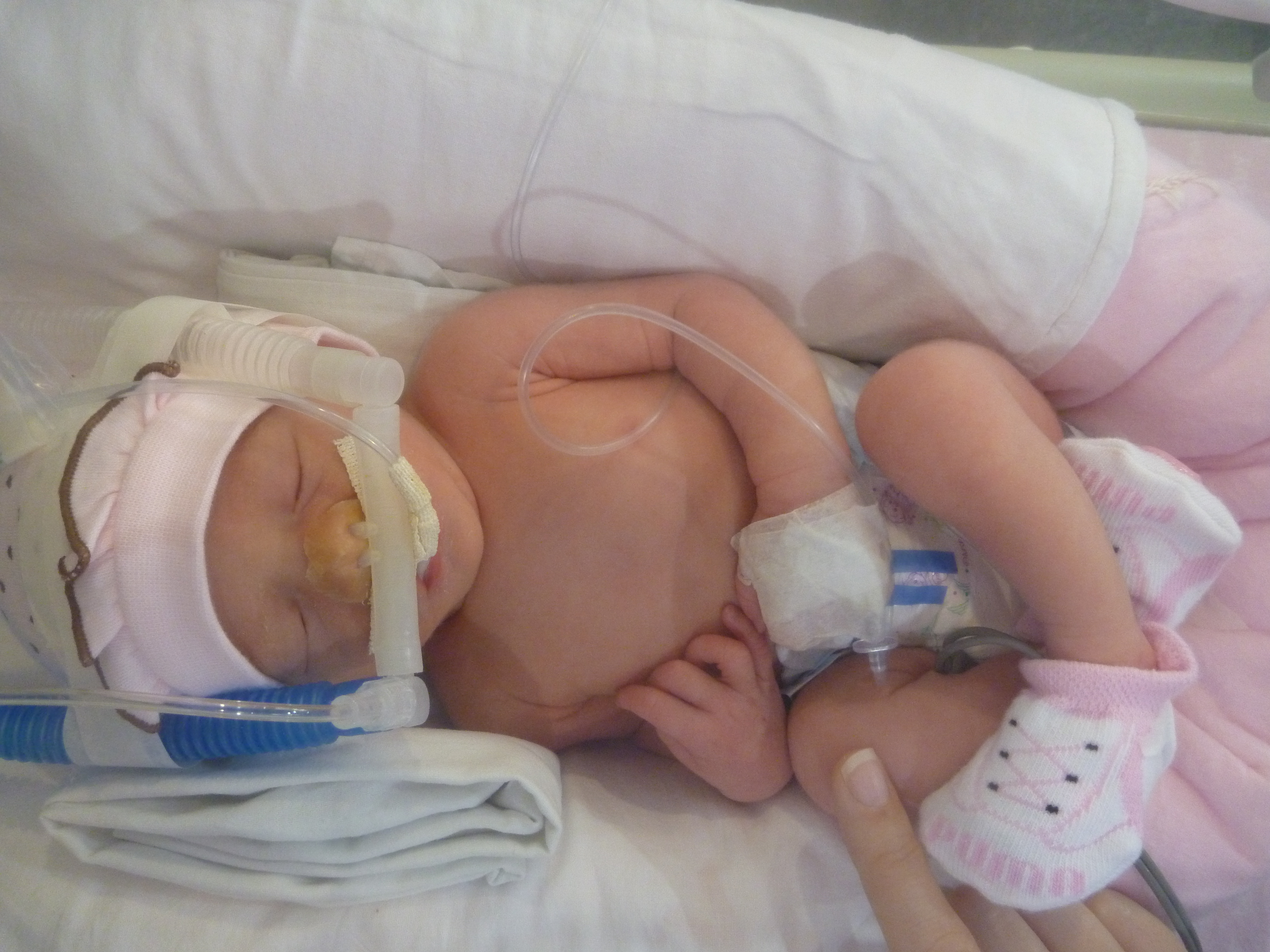
    Day 2 of 28 in the NICU at Vitoria Apart Hospital in Brazil.
    Day 2 of 28 in the NICU at Vitoria Apart Hospital in Brazil.

    My daughter was born seven weeks early due to placental abruption.  That was a new term for me, placental abruption. Another one was UTIN.  That’s the acronym in Portuguese for Neonatal Intensive Care Unit (NICU).  It was one of the many Portuguese medical terms I learned after my daughter spent 28 days in a NICU in Brazil.  In the moment, each day felt like a lifetime. I was sure every minute of all 28 days had been seared into my memory.

    But they weren’t.

    My daughter just turned four, and I’m shocked to realize how much of a blur those weeks have become.  Most of the exact numbers are gone.  How many days was she on a ventilator?  When did she get above 2kg?  Of the many people who cared for my daughter, all but one of the names has been erased.  Now they’re the doctor with red glasses and the physiotherapist who spoke some English.  I suspect these details will disappear too.

    What has not faded in any detail, much to my dismay, is my memory of the milking room.  This was the place they sent the new moms to strip them dignity.  It was the room for hand expressing breast milk.

    Many preemies are born too small to breastfeed and are fed through a tube and syringe.  How do you get these babies breast milk?  The obvious answer is pump it, store it, and serve it.  Except the NICU did not allow breast pumps of any kind.  The hospital said it could not guarantee that an individual mom’s pump would be sterile, so they could not give the milk from from a potentially unsterile source to the baby.  The only way for a baby in the NICU at Vitoria Apart Hospital to get breast milk, other than on tap, was to hand express it.  This is as awful as it sounds.

    At least for me.  I am not particularly in touch with my body.  I’m more cerebral and would be quite content to be a floating brain in space except for the facts I do like going for walks and eating french fries.  I’m aware that my conscious self is housed in an organic Tupperware container that impacts how I feel, think, am, but I don’t dwell on it.  At least not until I get a stomach virus.  Or until I have to breastfeed a baby.

    And I was going to breastfeed.  I had done my research.  Despite my lack of emotional connection to my mammary glands, I was totally committed to breastfeeding.  I did not, however, anticipate having to milk myself like a cow.

    That’s what it is.  Hand expressing means squeezing out the milk by hand into a container.

    Despite that daunting psychological hurdle, I told the nurses I still wanted to breastfeed, so one of them led me out the backdoor of the NICU, down a hall, through an unmarked door, and into an unused storage closet.  Based on the size and lack of any comforts except three chairs, I assume storage closet was the original purpose of the room.  White walls, tile floor, no windows, and freezing cold.  This was the room I shuffled to, fresh from an emergency c-section, so that I could hand squeeze milk from my boobs.

    As I stood there shivering in my hospital gown, the nurse quickly went through the officially sanctioned routine that guaranteed milk I expressed in that closet would be more sanitary than what I could get from a pump: wash hands, don hairnet and face mask, remove the plastic cups from the packaging and take the lids off, wash hands again, wash nipples with gauze, squeeze milk into cup and seal the cup immediately when full.  Fortunately, she demonstrated the whole process because to this day I don’t know the Portuguese word for gauze or hairnet.

    Then she left.  No medical professional stayed in that closet with the moms.

    Want to guess how many of the moms expressing themselves actually followed that routine when left on their own?

    I know because it turned out to be a communal milking closet, and the answer is none that I saw.  The next time I went to the closet, two other women were already there happily chatting away, masks down over their chins.  I distinctly remember these two women because they were friendly, completely comfortable being half-naked in front of strangers, and filling up cup after cup with milk like a competition at a state fair.  I was none of those things.  I struggled to fill half a cup when alone.  Trying to hand-express milk in a freezer while confronting small talk in Portuguese and the four largest breasts I’ve ever seen in person was literally impossible.

    I got almost no milk out during that session or any other.  I subjected myself to breastfeeding purgatory every three hours for four days before finally saying “Enough.”  I believe breast milk is ideal.  I don’t believe it is worth torture.  I restarted breastfeeding only after my daughter was big enough to handle it herself.  Hand-expressing in that closet was one of the worst experiences of my life.  And I sat through the Sponge Bob movie.

    If I’d had any reserve of energy I would have been outraged.  I was being denied a breast pump on the grounds it wasn’t sterile, but there was nothing sterile about that room.  They sent a bunch of not-medically-trained women down the hall with instructions to wash their hands and wear a mask. I don’t believe a single doctor actually thought the milk coming out of that closet was sterile.  They know they’re in Brazil where actual laws are treated as suggestions.

    But I didn’t have the capacity for outrage then and I don’t care to feel it now.  True, an electric pump and a private space would have made a huge difference, but we all survived and someday the sound of someone else’s breastmilk squirting into a plastic cup will fade from memory.  In the meantime, I’ll milk it for the entertaining story it is.

    11ghkra

    Save

  • 7 Weeks Early

    7 Weeks Early

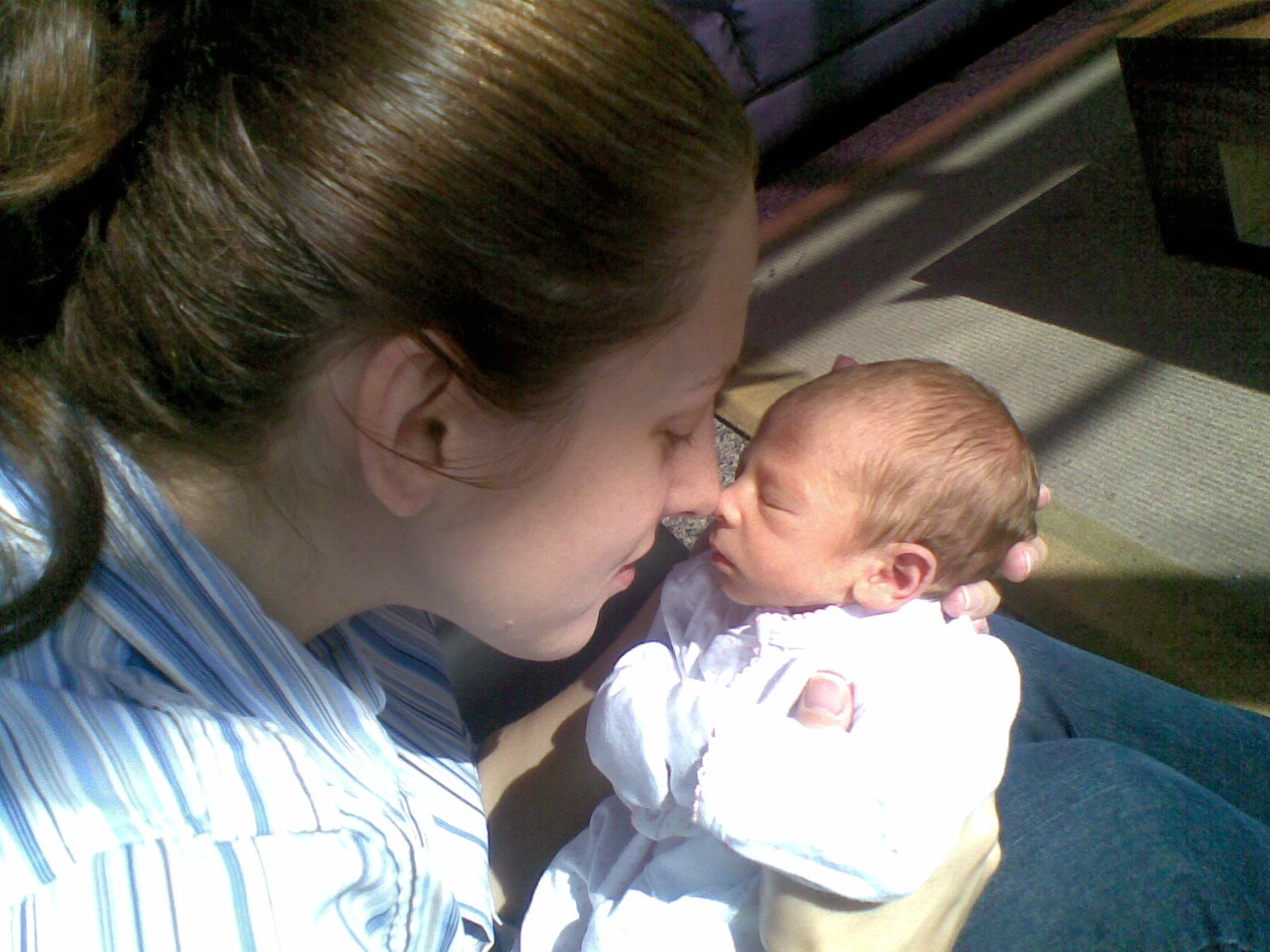
    Almost three weeks old!
    Almost three weeks old!

    The contractions started just before 5pm.  I didn’t know that’s what they were.  It was my first pregnancy and I’d never felt a contraction.  Everything I read about contractions emphasized back pain.  Oh the back pain!  I had no back pain. So much for preliminary research.

    What I had was pain across my lower abdomen that seemed to come in waves.  While watching my students study during the last few minutes of class for the day, I chalked the pain up to intestinal problems.  The one classic pregnancy symptom I’d had the joy of experiencing for several months was constipation.  I assumed the pain was my intestine finally in revolt, not contractions.

    Also, I was only 33 weeks along.

    I noted the increasing intensity of the pain as I caught a ride home from a fellow teacher.  I thought it odd when I finally  scurried into my bathroom at home that I didn’t really have to go.  Still, I did not think contractions.  It was 7 weeks before my due date.  I didn’t even dismiss the thought of contractions.  The thought has to enter your head in order to dismiss it and the idea of contractions never did.

    By 6:15pm however, I was in sufficient enough pain to ask my husband to call my doctor.  My doctor told me to get in a warm shower and sent my husband off to buy some pregnancy safe pain killers.  When the shower failed to lessen the pain, I began to think something was wrong.  Then there was blood.

    I called my husband.  He turned back before ever reaching the drug store.  He was on the phone with my doctor when he walked back into the apartment.  As I was yanking on clothes in the bedroom, I heard him ask “How much blood is there? If it’s just…” He stopped talking.  He’d seen the bathmat.  In less than a minute we were in the car on our way to the doctor’s office.

    Thankfully, Dr. Batistuta’s office is only five minutes from our apartment and he was working late.  It was about 7pm and the office was empty except for the doctor and his secretary, as my husband helped me climb the stairs to the exam room.  The pain was now so intense I wanted nothing more than to close my eyes and breathe.  But there were questions and Portuguese verbs to conjugate in order to answer.  I used to think speaking in Portuguese on the phone was difficult.  Speaking in Portuguese during a contraction is much harder.

    Placental Abruption.  That was my Portuguese phrase of the day.

    My doctor explained that the baby’s heart rate was elevated and that combined with the blood and contractions made him think the placenta had torn from the uterus and blood was now pumping into the uterus.  I was headed for an emergency c-section.

    After a flurry of discussion between my husband and the doctor, some quick phone calls made by his assistant, they confirmed no office with an ultrasound was open to confirm this diagnosis so we would be going straight to the emergency room.  At least, that’s what I was told happened.  I was still lying on the exam table breathing through contractions and pain that went from aching to breathtaking, never completely disappearing.

    A little before 8pm I was standing outside with my doctor trying to have small talk in Portuguese while my husband got the car.  Twenty minutes later my doctor was wheeling me into the emergency room and pushing me over to some nurses who began giving a flurry of instructions in Portuguese.  I was being prepped for emergency surgery 7 weeks before my due date and strangely enough I was not panicked.  I was too occupied with breathing through contractions and understanding the directions I was given to really dwell on worst case scenarios.  Contractions are a great distraction.  Contractions and conjugating Portuguese verbs.

    I never thought I would die.  I never thought I could die.  I never thought my baby would die.  In the moment, I never once feared for my life or my baby’s.  It was only afterwards, when researching placental abruptions, that I learned just how serious the situation was.  Not as much for me as for her.  While I lay on my side curled into a ball having a needle stuck between vertebrae, I was worried about the kinds of complications my daughter could have being born so early.  Would she have eye or ear problems?  Would she have some sort of neurological problem?  Would her lungs be working yet?

    I didn’t bring any of this up to my husband as he sat by my head in canary yellow scrubs pointedly not looking in the direction of my open abdomen.  The c-section is certainly one of the most surreal experiences of my life.  To be fully conscious while your abdomen is opened and people stick their hands in and root around your internal organs…well, surreal doesn’t quite cover it.  I felt tugging, sometimes hard tugging but absolutely no pain.  There was one hard tug and suddenly a baby was crying.  I cried for the first and only time all night.

    My daughter was born at 8:50pm on July 11.  We thought she was 33 weeks but her initial exams put her developmentally at 35 weeks.  She was just small so the ultrasounds underestimated her age.  She was 2.005kg or 4 1/2lbs.  She was on oxygen for a day and then under a UV lamp for four.  Some problems concerning her lactose tolerance resulted in her staying in Intensive care for 26 days.  But those 26 days are the subject of a future post.

    4 months old!
    4 months old!

    Yesterday, my daughter celebrated her 3 month birthday.  She smiles and coos and refuses to sleep during the day anywhere but in a someone’s arms.  That’s why there haven’t been many posts recently.  It’s hard to type with a baby in your arms.  A perfectly healthy, happy, and breathtakingly beautiful baby.


    flower