Tag: pregnancy

  • Dengue, Zika, Chikungunya, & Yellow Fever

    Dengue, Zika, Chikungunya, & Yellow Fever

    This is public enemy #1!
    Aedes aegypti. Know it and squish it!

    There are over 3,000 species of mosquitoes. A fact I think proves there’s no benevolent deity.

    This post is a run down of the basic info on the common mosquito born diseases in Brazil: dengue, zika, chikungunya, and yellow fever. It’s essential information if you’re visiting.

    Because the mosquitoes are winning.

    Last year in the wake of zika and the microcephaly epidemic in Brazil, the federal government mobilized troops to patrol for standing water basically declaring war against mosquitoes. The yellow fever outbreak this year is evidence of how well that went in the long term.

    So here’s everything you didn’t want to need to know about mosquito born illnesses in Brazil.

    DENGUE: Let’s start with dengue because it kills the most people every year. I know zika is the Kim Kardashian of the bunch, hogging all the media attention, but dengue is most likely to put you in the hospital. There were roughly 1.5 million registered cases of dengue in Brazil last year and of those 629 died. The severity depends on which of the four strains of the virus you get. The worst causes hemorrhaging, but most people just get incapacitating joint pain and high fever.

    Dengue is usually transmitted through the bite of an infected mosquito, but it can be passed from mother to fetus. The disease is asymptomatic in 40-80% of cases. The incubation ranges from 3 to 14 days.

    Symptoms

    • Sudden high fever
    • Severe headache
    • Severe joint pain
    • Moderate joint pain
    • Severe pain behind the eyes (basically your body will hurt a lot)
    • A skin rash that appears post fever
    • Fatigue
    • Nausea
    • Itching

    The Severe Case Symptoms (everything above plus…)

    • Bleeding from the nose and gums
    • Abdominal pain
    • Vomiting
    • Hypotension
    • Dizziness
    • Breathing difficulty

    In rare cases, sometimes after a second infection, a person can develop dengue hemorrhagic fever which leads to shock and death in 24 hours. Yeah, dengue totally sucks.

    There’s no vaccine. There’s no drug treatment. The only thing to do with dengue is treat the symptoms and be sure not use any aspirin because it increases the risk of hemorrhaging.

    Yeah, they’re all cute and cuddly until one drops dead of yellow fever.

    ZIKA: If you’ve been to Brazil in the last year and sneezed, you might have had zika. Or maybe you didn’t sneeze. You still might have had zika. Most cases are asymptomatic, about 80%.

    Of the most common mosquito borne diseases, zika results in the fewest hospital cases. In 2016 there were 214,193 cases of Zika in Brazil and 3 deaths. The global panic over zika is because of it’s link to microcephaly, a condition that babies develop in utero which prevents the brain and skull from developing normally.

    And let’s be clear. There IS scientific consensus that the zika virus is one of the causes of microcephaly. I believe in the CDC, WHO, and peer reviewed scientific journals. Conspiracy theorists can save themselves time and not bother commenting about genetically altered mosquitos. I will just delete them.

    The fact the disease is asymptomatic in the majority of cases makes it particularly scary for women who are or may become pregnant. It’s possible to have zika and never know until the baby develops complications. Even if you develop symptoms, they’re usually mild.

    Symptoms

    • low grade fever
    • headache
    • skin rash starting on the face and spreading over the body
    • red eyes
    • itching
    • fatigue
    • sore joints

    Less Common Symptoms

    • Muscle pain
    • Swelling
    • Sore throat
    • Vomiting or diarrhea
    • Swelling

    So now pregnant women all over Brazil can worry that their swollen legs and exhaustion is actually zika. Because there wasn’t enough for expectant parents to worry about. Fucking mosquitos.

    There’s no vaccine.

    CHIKUNGUNYA: Unlike zika and dengue, if you get chikungunya, you’ll know. 70% of cases develop symptoms. At least you don’t have to wonder whether or not you need a doctor.

    Last year there were 265,554 cases of chikungunya resulting in 159 deaths, so worse than zika but not as prevalent as dengue.

    Symptoms

    • Sudden onset of high fever
    • Severe joint pain mostly in feet, ankles, hands, wrists

    About the joint pain, almost every case has it and in rare cases it becomes chronic.

    Less Common Symptoms

    • Intense back pain
    • Headache
    • Muscle pain
    • Vomiting
    • Conjunctivitis
    • Fatigue
    • Photophobia
    • Sore throat

    Basically everything hurts like hell.

    Like the others, there’s no vaccine for chikungunya and no treatment beyond treating the symptoms.

    CDC’s risk area for yellow fever in South America

    YELLOW FEVER: The CDC’s website has a map of areas where yellow fever vaccines are recommended. The risk area for Brazil extends just up to the border of our state. So far this year 31 people have died from yellow fever in Esparto Santo. Dear CDC, you need to update your map.

    Yellow fever is typically passed via an infected monkey to mosquito to human, so areas without dense forests were considered safe. The incubation period is 3 to 6 days but most cases are asymptomatic.

    Symptoms

    • Sudden high fever
    • Severe headache
    • Back pain
    • Muscle pain
    • Nausea & vomiting
    • Fatigue
    • Weakness

    After a brief remission, 15% of cases will develop a severe form of the disease.

    Symptoms of Severe Form

    • High fever
    • Jaundice (hence the name)
    • Bleeding
    • Shock
    • Organ Failure

    Of cases that turn severe 20-50% die.

    We got our yellow fever vaccines!

    But good news! There’s a vaccine! Two doses taken ten years apart provide lifetime immunity. Yay science! If you’re thinking about visiting Brazil this year, double check to see if your hotel is located within one of the new expanded risk area. Be sure to use a Brazilian site. Remember, the CDC’s map is out of date.

    Vaccines are being developed for the other three. Several companies will have zika vaccines ready for clinical trials by the end of the year. Late stage clinical trials of dengue vaccines are already underway, and researchers have reported success with initial clinical trials for chikungunya vaccines. Unfortunately, we’re still years away from these vaccines being available to the public.

    In the meantime, don’t cancel your vacation. Just be prepared. Get a yellow fever vaccine. Pack repellent. Sleep with your windows closed and fan on. And for god’s sake, if you see a mosquito, kill it!
  • Knocked Up Abroad Again is Now Available!

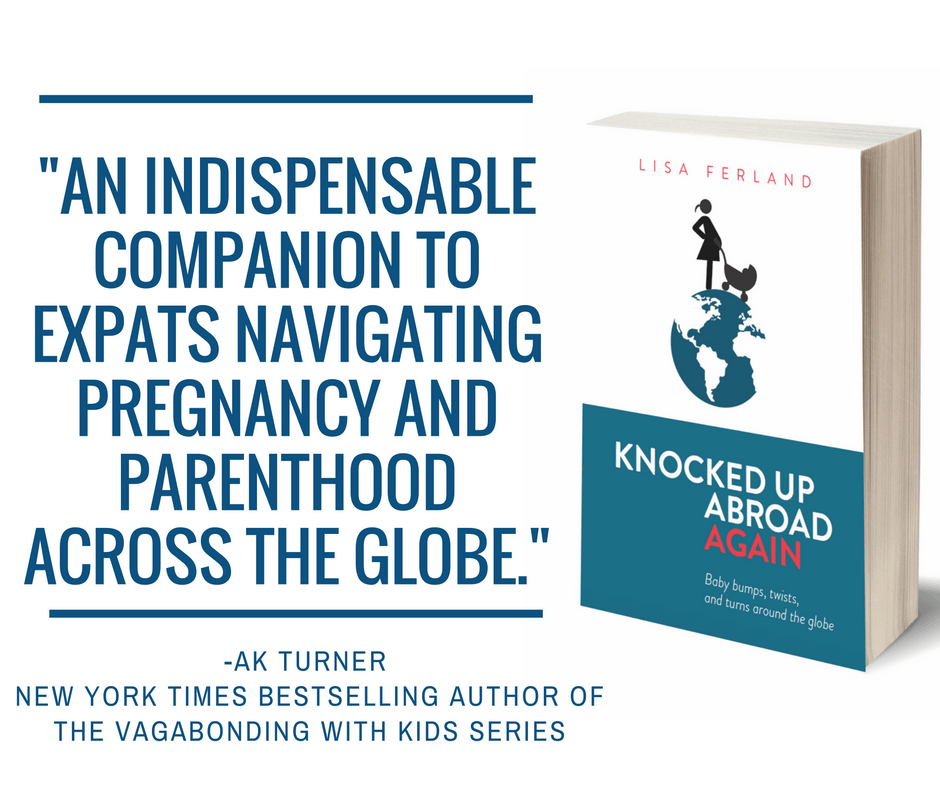
    Knocked Up Abroad Again is Now Available!

    creativity-is-intelligence-having-fun-2I’m thrilled to announce that after a successful Kickstarter campaign Knocked Up Abroad Again is available for purchase on Amazon!
    Hip, hip, hooray! Hip, hip…Dear god, I’m never doing another Kickstarter campaign again. I wasn’t even in charge of the thing. Our editor put in a billion more hours organizing and promoting the thing, but I still felt like a used car salesman begging people to donate their hard earned money and time on my words. Who am I kidding? How am I ever going to promote and sell my own books if I can’t promote a collaborative work on Kickstarter on my Facebook? Even if I get published I’m never going to sell a single book. Never! My promotional posts will read “If you don’t mind and happen to enjoy this particular type of book and maybe have ten extra dollars to spare I would greatly appreciate it if you wouldn’t mind buying my book and if you really, really liked it then perhaps tell a friend about it. If you have the time and it won’t be a huge inconvenience. That would be really great. Thanks so much. (And if you’re not into YA or not a huge reader I totally understand. No hard feelings.)” I’m never going to sell a single book. But how can I be an author if can’t ask people to buy my book? Aaaaaagh!

    Sorry about that. I got off track. What was I saying? Oh right, Knocked Up Abroad Again has been successfully funded and is now available for purchase on Amazon! It’s the perfect gift for expectant parents, travelers, and expectant travelers in your life. If you want. I don’t want to insist. Pretty please. But only if you like this sort of thing.

    In all seriousness, thank you to everyone who donated to the project, and I hope you enjoy the book!

    Save

    Save

    Save

  • 28 Days in a Brazilian NICU: The Mom Milking Room

    28 Days in a Brazilian NICU: The Mom Milking Room

    Day 2 of 28 in the NICU at Vitoria Apart Hospital in Brazil.
    Day 2 of 28 in the NICU at Vitoria Apart Hospital in Brazil.

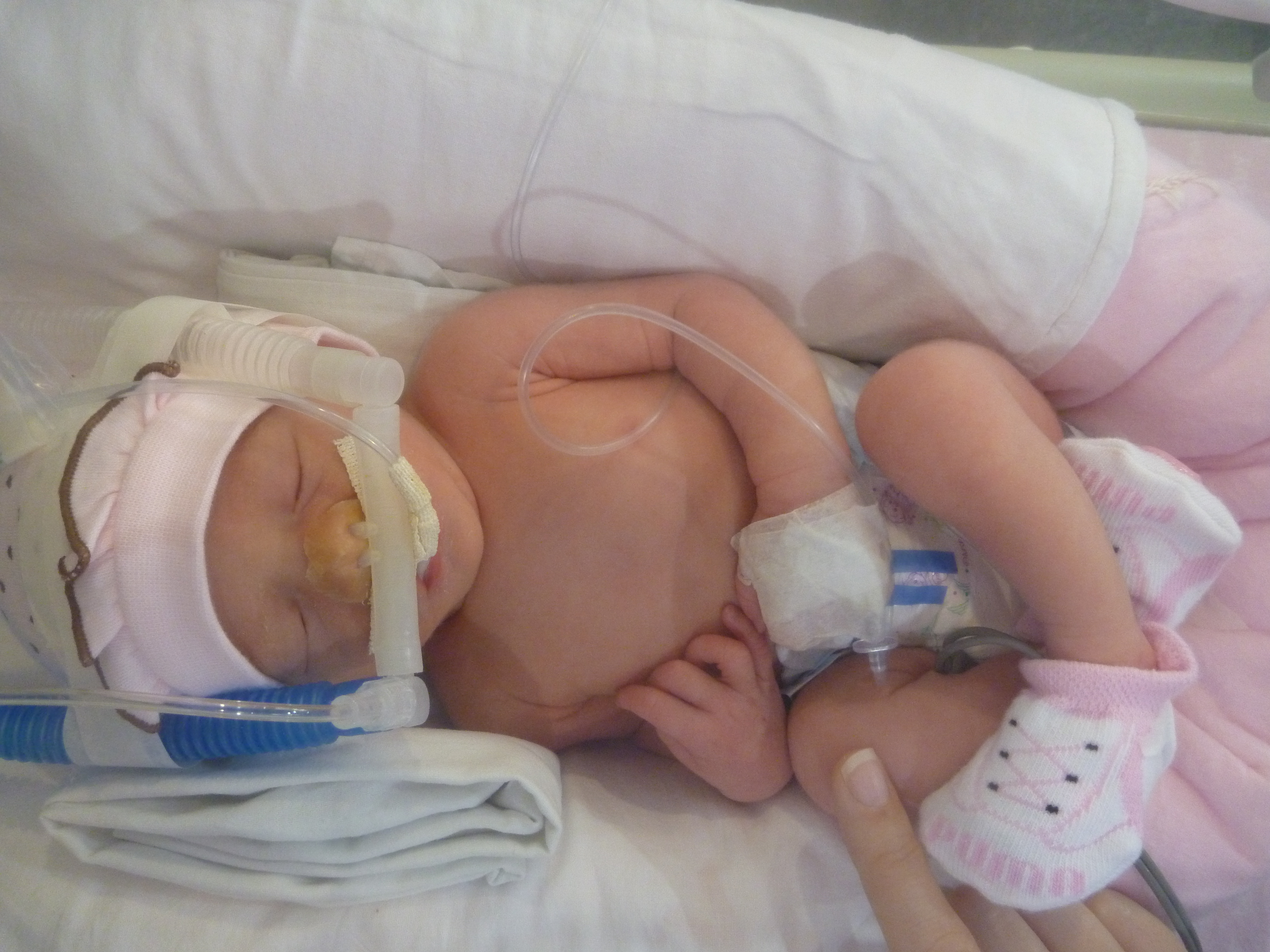
    My daughter was born seven weeks early due to placental abruption.  That was a new term for me, placental abruption. Another one was UTIN.  That’s the acronym in Portuguese for Neonatal Intensive Care Unit (NICU).  It was one of the many Portuguese medical terms I learned after my daughter spent 28 days in a NICU in Brazil.  In the moment, each day felt like a lifetime. I was sure every minute of all 28 days had been seared into my memory.

    But they weren’t.

    My daughter just turned four, and I’m shocked to realize how much of a blur those weeks have become.  Most of the exact numbers are gone.  How many days was she on a ventilator?  When did she get above 2kg?  Of the many people who cared for my daughter, all but one of the names has been erased.  Now they’re the doctor with red glasses and the physiotherapist who spoke some English.  I suspect these details will disappear too.

    What has not faded in any detail, much to my dismay, is my memory of the milking room.  This was the place they sent the new moms to strip them dignity.  It was the room for hand expressing breast milk.

    Many preemies are born too small to breastfeed and are fed through a tube and syringe.  How do you get these babies breast milk?  The obvious answer is pump it, store it, and serve it.  Except the NICU did not allow breast pumps of any kind.  The hospital said it could not guarantee that an individual mom’s pump would be sterile, so they could not give the milk from from a potentially unsterile source to the baby.  The only way for a baby in the NICU at Vitoria Apart Hospital to get breast milk, other than on tap, was to hand express it.  This is as awful as it sounds.

    At least for me.  I am not particularly in touch with my body.  I’m more cerebral and would be quite content to be a floating brain in space except for the facts I do like going for walks and eating french fries.  I’m aware that my conscious self is housed in an organic Tupperware container that impacts how I feel, think, am, but I don’t dwell on it.  At least not until I get a stomach virus.  Or until I have to breastfeed a baby.

    And I was going to breastfeed.  I had done my research.  Despite my lack of emotional connection to my mammary glands, I was totally committed to breastfeeding.  I did not, however, anticipate having to milk myself like a cow.

    That’s what it is.  Hand expressing means squeezing out the milk by hand into a container.

    Despite that daunting psychological hurdle, I told the nurses I still wanted to breastfeed, so one of them led me out the backdoor of the NICU, down a hall, through an unmarked door, and into an unused storage closet.  Based on the size and lack of any comforts except three chairs, I assume storage closet was the original purpose of the room.  White walls, tile floor, no windows, and freezing cold.  This was the room I shuffled to, fresh from an emergency c-section, so that I could hand squeeze milk from my boobs.

    As I stood there shivering in my hospital gown, the nurse quickly went through the officially sanctioned routine that guaranteed milk I expressed in that closet would be more sanitary than what I could get from a pump: wash hands, don hairnet and face mask, remove the plastic cups from the packaging and take the lids off, wash hands again, wash nipples with gauze, squeeze milk into cup and seal the cup immediately when full.  Fortunately, she demonstrated the whole process because to this day I don’t know the Portuguese word for gauze or hairnet.

    Then she left.  No medical professional stayed in that closet with the moms.

    Want to guess how many of the moms expressing themselves actually followed that routine when left on their own?

    I know because it turned out to be a communal milking closet, and the answer is none that I saw.  The next time I went to the closet, two other women were already there happily chatting away, masks down over their chins.  I distinctly remember these two women because they were friendly, completely comfortable being half-naked in front of strangers, and filling up cup after cup with milk like a competition at a state fair.  I was none of those things.  I struggled to fill half a cup when alone.  Trying to hand-express milk in a freezer while confronting small talk in Portuguese and the four largest breasts I’ve ever seen in person was literally impossible.

    I got almost no milk out during that session or any other.  I subjected myself to breastfeeding purgatory every three hours for four days before finally saying “Enough.”  I believe breast milk is ideal.  I don’t believe it is worth torture.  I restarted breastfeeding only after my daughter was big enough to handle it herself.  Hand-expressing in that closet was one of the worst experiences of my life.  And I sat through the Sponge Bob movie.

    If I’d had any reserve of energy I would have been outraged.  I was being denied a breast pump on the grounds it wasn’t sterile, but there was nothing sterile about that room.  They sent a bunch of not-medically-trained women down the hall with instructions to wash their hands and wear a mask. I don’t believe a single doctor actually thought the milk coming out of that closet was sterile.  They know they’re in Brazil where actual laws are treated as suggestions.

    But I didn’t have the capacity for outrage then and I don’t care to feel it now.  True, an electric pump and a private space would have made a huge difference, but we all survived and someday the sound of someone else’s breastmilk squirting into a plastic cup will fade from memory.  In the meantime, I’ll milk it for the entertaining story it is.

    11ghkra

    Save

  • Why I Don’t Want Another Child

    Why I Don’t Want Another Child

    My daughter at 3 years
    My daughter at 3 years

    Yesterday my husband, daughter, and I headed out early for a morning on the beach.  We dug a giant sand pit, built and promptly stomped on sandcastles, and failed to convince my daughter stepping on seaweed is not the absolute worst thing in the world.  We followed this with fish stew and fried bananas on the beach.  In the afternoon, there was a skype call with grandparents, tutus, and puzzles, and a thirty minute tantrum during which my little ballerina spit in my face.

    When I finally crept out of her bedroom at night, I collapsed on the couch thinking “I will never do this again.”

    There it is.  My true feelings about parenthood.  I love my daughter.  I also love myself.  And I cannot spend any more of my one lifetime parenting a small child.

    Despite being born with a uterus, I never dreamed of having children.  In high school through my early twenties, when I imagined my future it never included children.  I pictured travel, politics, law, publishing a book and going on tour, or accepting an appointment as a US ambassador.  Babies never made an appearance.  Then I got married and in my late twenties, I began to think that a child might be nice.  Also, my husband is sixteen years older than I am and given women’s tendency to outlive men, I’d rather not be alone for the last twenty years of my life.

    Wanting a guaranteed companion in old age is a pretty selfish reason to have a child.  But aren’t they all?  I’ve never heard of a couple having a child because the kid asked to be born.  “I’ve always dreamed of a big family.” “We need someone to carry on the family name.”  “I just love babies.”  All selfish reasons.  Yet society reacts with hostility to a person who decides, “Yeah, I had a kid and I really don’t like parenting a baby. I won’t be doing it again.”

    Of course, I’m not just a person deciding I don’t want more children.  I’m a woman declaring I’d rather spend my Sunday afternoons reading as opposed to stringing macaroni necklaces.  I searched for other posts about women with one child by choice, and every mom wrote about her family feeling “complete” with just one.  One child just “feels right.”  Not one mother said, “It was hard.  I struggled.  And I’m not doing it again.”  Well, I’ll say it.  The last three years have been a struggle and I’m not going through it again.

    My daughter was born seven weeks early by emergency c-section after a placental abruption.  She spent 28 days in the NICU.  Her stay would have been shorter but she developed a food allergy at 2 weeks-old which caused loose, bloody stools at every feeding and meant I, the breastfeeding mother, had to begin eliminating things from my diet to isolate the cause.  I eventually removed all dairy, soy, peanuts, nuts, eggs, tomatoes, and berries from my diet but traces of blood and a poopy diaper every two hours continued for 7 months.  I clearly remember sitting at a Mexican restaurant, surrounded by my entire extended family and their plates of cheesy, processed deliciousness, while I ate my skinless chicken breast between two crumbling slices of homecooked, dairy-egg-soy-free bread.  On the plus side, I dropped to under my pre-pregnancy weight in three months.

    Since her homecoming my daughter has rejected the idea of sleeping in her own bed.  Not just her bed.  In her early months, she rejected swings, vibrating chairs, strollers, moving strollers, car seats, swaddling, and every means of soothing except a parent’s arms. And when I say “reject”, I mean she would scream until she couldn’t breathe, and it would take fifteen minutes of rocking to calm her back down.  At 3 and a half, she still doesn’t sleep the whole night in her own bed.  At least now, she will wake up and walk to our room and not just scream waiting for us to come.

    Her separation anxiety is so extreme, I have spent exactly one night away from her since she came home from the hospital.  It happened this January, while we were visiting my parents.  We prepped my daughter for days.  Mommy and Daddy were going away for a couple of days but she would be with Gramma and Grandpa.  There were chicken nuggets, new toys, and Legoland.  My husband and I kissed her goodbye at 6pm.  She cried from 2:30 to 7:30am and was back with us after 20 hours.  It’s been two months and still every story she plays out, with stuffed animals, Legos, or Littlest Pets, involves a lost parent.

    I haven’t even mentioned her tantrums.  And I won’t except that my dad witnessed one and described it to my brother this way: “Whatever you’re imagining, however awful…it was worse.”

    I’m not writing all this to convince anyone of how hard I’ve had it.  My daughter is happy, healthy, and growing.  Despite being a preemie, she is now on the median line for height and weight.  Her teachers send home glowing reports about what an active participant she is and what strides she has made recently with sharing.  When I ask her teachers about the tantrums, they acknowledge her fits are extreme but not abnormally so, and they are occurring less and less often.  It’s clear she will outgrow them.

    My point in listing my greatest parenting challenges (so far) is to say that as tough as these years have been, they could have been worse.  Much worse!  A second child could have health complications or developmental challenges that make my daughter’s early life a three year vacation. My marriage can’t take that.  My sanity can’t take that.  I can’t take the risk!  In the choice between a sane mother and siblings, I think we can universally agree a sane mother is more important for a child’s development.

    In the most private recesses of my mind, I think that I am simply too selfish for a parent.  While pregnant, I thought that hormones would flip some martyr switch that biology had surely hard wired in me.  It didn’t happen.  My dreams, interests, and personality remained mostly unchanged. I would throw myself in front of a bus for my daughter, but I still find coloring and crafting tedious.  I’m making play-dough spaghetti and wishing I could get back to my book.

    I do see a light at the end of tunnel.  I see a turning point, a threshold, an event horizon approaching.  We recently took her out Stand-Up Paddling for the first time.  Fun was had by all.  She’s asking to revisit the sea turtle center, making up stories, and composing songs off of the top of her head.  I’m seeing flashes of a person, one I can’t wait to know and think I’ll have a few things in common with.

    I definitely will not be repeating the past, but I am genuinely excited about the future.


    Brilliant blog posts on HonestMum.com

  • What Would Jesus Do?

    What Would Jesus Do?

    tumblr_static_makeup_1  Recently I finished unpacking after moving  into my apartment three and a half years ago.  Why the delay?  I simply didn’t care enough to discover where the dessert bowls were.  Caring requires a crucial combination of both time and energy that I haven’t had since my daughter came home from the hospital.

    After a month of being abandoned every night in the NICU, she arrived home with severe separation anxiety. I have not had a full night’s in over three years.  In the initial tortuous months, I was able to care about ten things:

    1. Feed baby.

    2. Clean baby.

    3. Make sure baby sleeps.

    4. Try to sleep while baby does.

    5. Feed myself.

    6. Provide age appropriate stimulation for the baby.

    7. Get dressed and take baby for a walk.

    8. Acknowledge my husband’s presence.

    9. Brush my teeth.

    10. Take a shower.

    For the first seven months, I consistently managed numbers 1 through 8.  Then I went back to work, showering moved up among my priorities, and preparing classes got added to the list.  Unpacking the DVDs, staying up on current events, making intelligent conversation were not things I cared about at all.  Caring takes energy and with so little sleep, my energy became a commodity more precious than clean water in Sao Paulo.  It was awful.  It was also the most liberating experience of my life.

    A nice outfit.  A good hair day.  Makeup.   Staples of my leaving-the-house routine.  I stopped caring about them all.  My routine was reduced to shower, brush teeth, brush hair, use deodorant (I remembered it most days), a comfortable shirt, jeans, and flat shoes.  I had enough energy to be clean, dressed, and present wherever I was required.  Nothing more.

    Then it dawned on me who’s routine I had adopted: my husband’s.

    With my new routine, I was living life like a man.  No makeup. No blowdryers or straighteners or curling irons.  No time spent over earrings, necklaces, and bracelets.  Only flat shoes that make stairs merely good exercise and not treacherous.  Holy crap!!!  This is how men go through the world.  No wonder they still run everything.  They’re wearing shoes that actually allow them to run.

    My husband goes out in the world with visible bags under eyes when he doesn’t sleep and he is still wildly successful with many people who want to work with him.  He doesn’t dye his hair and he still has friends.  He regularly puts his t-shirts on backwards and his family still loves him.

    Why the hell can’t I have it so easy?

    Turns out I can.  It was during this time when I regularly forgot to brush my teeth until after lunch, that I met and made my three best friends in Vitoria.  I had great relationships with my boss and colleagues and earned more responsibility at work.  My husband didn’t leave me when I kept my hair in a ponytail for three months straight.  My new friends didn’t stop calling when I went six months without putting in a pair of earrings.  My fellow teachers didn’t ignore me because I recycled the same five tops every week.

    I hope with all of my heart that I can teach these lessons to my daughter.  If she is honest, respectful, hard working, and fair, she will be successful personally and professionally.  That’s all she needs. High school might be a bitch, but her life will be a success.

    I believe the best way I can teach her these lessons is to apply them to myself.  Now when staring in the bathroom mirror, I ask myself a question I haven’t since trying to fit in at my public high school in Georgia.  What would Jesus do?

    As a man, would Jesus arrive five minutes late because he had to pluck his eyebrows?  Would Jesus wear the super cute shoes even though they’ll give him a blister on the walk to daycare?  Would Jesus wear eyeliner to a pool party?

    I wish I could say I’ve been hardcore enough to ask if Jesus would shave his pits but I haven’t and don’t plan to.  I admit I apply my new philosophy somewhat selectively.  I guess I’m not perfect.  But I don’t have the energy to care.


    flower


  • Nine Parenting Lessons Learned 3 Months In

    Nine Parenting Lessons Learned 3 Months In

    I don’t have a lot of time to write these days.  The last post took more than 2 months to finish.  Still, I need some kind of outlet, so when a reader posted a comment about Moby Wraps and baby products in Brazil, I was inspired to post a few of the lessons I’ve learned over the last few months.

    Lesson 1 About 85% of my identity is based on getting sufficient sleep.  After several days of less than four hours of sleep (none of them consecutive) the talkative, thoughtful person who cracks jokes to deal with stress becomes a simmering pot of boiling rage which spills over at the slightest thing.  A pacifier I cleaned minutes before pops out and falls straight to the floor and suddenly I am using every curse I know on gravity, Newton and any living relatives.  Jekyll never made a potion.  He just didn’t sleep for a few weeks.

    Lesson 2 The Moby Wrap, a popular baby carrying device in the US, needs to come with a warning.  Caution: Moby Wrap should only be used in air-conditioned environments in non-tropical countries. After 15 minutes with her in the wrap, I was on the verge of a heat stroke.  I managed to sweat off a few pounds and successfully teach my daughter that blankets are torture devices.

    Lesson 3 Like just about everything in Brazil, baby stuff is super expensive here.  $50 is too much to spend on preemie clothes or any baby clothes.  Call me cheap but I don’t want to spend more than $20 on an outfit she will either spit up on, poop on or outgrow after only three wearings.

    Lesson 4  Every person who does not have a baby thinks every time a baby cries it’s due to hunger.  And they will tell you this. “Your baby is hungry.”  They will tell you this repeatedly for an hour and a half and when the baby is inevitably hungry again these people will say, “See.  I knew she was hungry.”

    Lesson 5 I don’t want big breasts. I used to think I wanted some slightly larger breasts to balance out my bottom half.  Nope. Not anymore. I’m totally content with and miss my modest B cups.  Hats off to you ladies who have the back muscles and patience to tolerate these weights hanging off your front and bouncing around as your work out, jog, take stairs, try to sleep, etc.

    Lesson 6 The only practical outfit for a newborn is a onesie.  Being told this and eventually learning this from experience will not stop you from continuing to buy super adorable dresses which make her closet look spectacular.

    Lesson 7 I do not believe a baby should have it’s ears pierced, and I will not be piercing my baby’s ears.  This means when dressed in any color other than pink, everyone in Brazil thinks she is a boy.

    Lesson 8 Not all babies are born willing to sleep in a crib.  Some are born with a mistrust and a dislike of cribs that is so strong merely standing close to a crib will be enough to penetrate the deepest sleep.  They may also hate the swing, vibrating chair, stroller, car seat, and sleep in general.

    Lesson 9 Nothing, absolutely nothing in the world, is as adorable as a new baby smiling.  It’s what keeps you from dropping her in that ridiculously-expensive crib she hates and putting on some noise canceling headphones.


    Check out more great…

    Advice From The Heart

  • 7 Weeks Early

    7 Weeks Early

    Almost three weeks old!
    Almost three weeks old!

    The contractions started just before 5pm.  I didn’t know that’s what they were.  It was my first pregnancy and I’d never felt a contraction.  Everything I read about contractions emphasized back pain.  Oh the back pain!  I had no back pain. So much for preliminary research.

    What I had was pain across my lower abdomen that seemed to come in waves.  While watching my students study during the last few minutes of class for the day, I chalked the pain up to intestinal problems.  The one classic pregnancy symptom I’d had the joy of experiencing for several months was constipation.  I assumed the pain was my intestine finally in revolt, not contractions.

    Also, I was only 33 weeks along.

    I noted the increasing intensity of the pain as I caught a ride home from a fellow teacher.  I thought it odd when I finally  scurried into my bathroom at home that I didn’t really have to go.  Still, I did not think contractions.  It was 7 weeks before my due date.  I didn’t even dismiss the thought of contractions.  The thought has to enter your head in order to dismiss it and the idea of contractions never did.

    By 6:15pm however, I was in sufficient enough pain to ask my husband to call my doctor.  My doctor told me to get in a warm shower and sent my husband off to buy some pregnancy safe pain killers.  When the shower failed to lessen the pain, I began to think something was wrong.  Then there was blood.

    I called my husband.  He turned back before ever reaching the drug store.  He was on the phone with my doctor when he walked back into the apartment.  As I was yanking on clothes in the bedroom, I heard him ask “How much blood is there? If it’s just…” He stopped talking.  He’d seen the bathmat.  In less than a minute we were in the car on our way to the doctor’s office.

    Thankfully, Dr. Batistuta’s office is only five minutes from our apartment and he was working late.  It was about 7pm and the office was empty except for the doctor and his secretary, as my husband helped me climb the stairs to the exam room.  The pain was now so intense I wanted nothing more than to close my eyes and breathe.  But there were questions and Portuguese verbs to conjugate in order to answer.  I used to think speaking in Portuguese on the phone was difficult.  Speaking in Portuguese during a contraction is much harder.

    Placental Abruption.  That was my Portuguese phrase of the day.

    My doctor explained that the baby’s heart rate was elevated and that combined with the blood and contractions made him think the placenta had torn from the uterus and blood was now pumping into the uterus.  I was headed for an emergency c-section.

    After a flurry of discussion between my husband and the doctor, some quick phone calls made by his assistant, they confirmed no office with an ultrasound was open to confirm this diagnosis so we would be going straight to the emergency room.  At least, that’s what I was told happened.  I was still lying on the exam table breathing through contractions and pain that went from aching to breathtaking, never completely disappearing.

    A little before 8pm I was standing outside with my doctor trying to have small talk in Portuguese while my husband got the car.  Twenty minutes later my doctor was wheeling me into the emergency room and pushing me over to some nurses who began giving a flurry of instructions in Portuguese.  I was being prepped for emergency surgery 7 weeks before my due date and strangely enough I was not panicked.  I was too occupied with breathing through contractions and understanding the directions I was given to really dwell on worst case scenarios.  Contractions are a great distraction.  Contractions and conjugating Portuguese verbs.

    I never thought I would die.  I never thought I could die.  I never thought my baby would die.  In the moment, I never once feared for my life or my baby’s.  It was only afterwards, when researching placental abruptions, that I learned just how serious the situation was.  Not as much for me as for her.  While I lay on my side curled into a ball having a needle stuck between vertebrae, I was worried about the kinds of complications my daughter could have being born so early.  Would she have eye or ear problems?  Would she have some sort of neurological problem?  Would her lungs be working yet?

    I didn’t bring any of this up to my husband as he sat by my head in canary yellow scrubs pointedly not looking in the direction of my open abdomen.  The c-section is certainly one of the most surreal experiences of my life.  To be fully conscious while your abdomen is opened and people stick their hands in and root around your internal organs…well, surreal doesn’t quite cover it.  I felt tugging, sometimes hard tugging but absolutely no pain.  There was one hard tug and suddenly a baby was crying.  I cried for the first and only time all night.

    My daughter was born at 8:50pm on July 11.  We thought she was 33 weeks but her initial exams put her developmentally at 35 weeks.  She was just small so the ultrasounds underestimated her age.  She was 2.005kg or 4 1/2lbs.  She was on oxygen for a day and then under a UV lamp for four.  Some problems concerning her lactose tolerance resulted in her staying in Intensive care for 26 days.  But those 26 days are the subject of a future post.

    4 months old!
    4 months old!

    Yesterday, my daughter celebrated her 3 month birthday.  She smiles and coos and refuses to sleep during the day anywhere but in a someone’s arms.  That’s why there haven’t been many posts recently.  It’s hard to type with a baby in your arms.  A perfectly healthy, happy, and breathtakingly beautiful baby.


    flower

  • My Recommendation for an OBGYN in Vitoria

    My Recommendation for an OBGYN in Vitoria

    My expat identity has taken a back seat in my last few posts to the teacher or pregnant woman part of me, but after reading some blog entries from other expats in Brazil I’ve been inspired to finally write a post that has been in the back of my mind for some time.

    Coconut Water is officially recommending Dr. Paulo Batistuta for anyone in Vitoria looking for an OBGYN.

    While I’ve endorsed several Brazilian food options including açaí and moqueca capixaba, this is Coconut Water’s first official endorsement of a healthcare professional in Brazil and I’m recommending Dr. Batistuta with the same fervor I do a big bowl of açaí.

    A fairly common complaint from expats here is that doctors in Brazil don’t really explain things to you.  They tell you to get a test and bring them the results.  Unless the results require being ordered to get another test or bypass surgery, that’s all you’ll hear about them.  Another complaint specific to women in the process of childbearing is that doctors here in Brazil prefer doing c-sections to pretty much anything else.  (I’d believe even more than sex given the rate at which they are performed here.)  Some private hospitals in Brazil have c-section rates as high as 90%.

    Dr. Batistuta (Dr. Paulo here in Brazil where they use first names) defies both of these stereotypes.

    Personal anecdote.  After an early ultrasound, I noticed there was one item that had an abnormal reading, specifically low blood flow in the left uterine artery. When we took the results to Dr. Batistuta, I asked about it and Dr. Batistuta picked up a pen and immediately began sketching a uterus and arteries.  He explained what the test measured and what the result meant.  He even sketched out exactly where the placenta was attached in my uterus.  You know, the more information the better.  He assured us that this wasn’t a problem given the normal results for everything else and we’d check it again at the next ultrasound.  He was right.  Everything was normal at the next ultrasound.

    Dr. Batistuta never rushes us out the door.  I’ll pull out a list of questions.  He’ll happily answer everyone, giving me cards, books, even DVDs that will provide further information.  While I’m in the bathroom changing I can hear him and my husband chatting away about upgrading their computers’ operating systems.  We were in his office for almost an hour during our last visit.

    As for c-sections, Dr. Batistuta is one of the leading voices in Brazil for natural childbirth.  If you speak Portuguese you can watch him being interviewed on youtube.  While he will state point blank he believes the best birth for the mother and baby is one with no unnecessary medical intervention, he has also told me that ultimately the doctors and staff are there to support me and what I want.  If I ask for drugs, they will give me drugs.

    I should mention cost.  One of the great things about Vitoria is that you can get great medical care (private) for half the cost of what you’d pay in Rio or Sao Paulo.  For an office visit, Dr. Batistuta charges BR$200 ($118).  We pay this out of pocket at the visit and send a receipt to our insurance company for reimbursement.  For the actual birth, Dr. Batistuta is charging BR$4.000 ($2,353). Again, we’ll pay and get reimbursed later.  (Once the whole birthing process is said and done, I’ll do a summary of all medical expenses for giving birth in Vitoria.)

    Finally, the language issue.  Our visits are conducted exclusively in Portuguese but when I have to use an English phrase Dr. Batistuta understands.  (I suspect he is modest about his level of English and understands way more English than he lets on.)  Fortunately, my husband attends every visit and supplements my intermediate Portuguese with his native tongue thus preventing any serious misunderstandings.  I can’t say for sure how it would go if you don’t speak any Portuguese. I think everyone could muddle through but it is important to know that Vitoria is a much smaller city than Rio, Sao Paulo or Belo Horizonte and English speaking professionals are in much shorter supply here.

    If you are an expat in Vitoria looking for an OBGYN, I strongly recommend Dr. Batistuta.  He talks to his patients as intellectual equals.  He supports natural birth and medical intervention only when necessary.  He understands some English and is very patient when listening to bad Portuguese.  You can find his profile and contact info with the CECON medical group.

  • Beards Before Brains

    Beards Before Brains

    Being pregnant, I’ve become aware of several areas where evolution has either slacked off a little or failed utterly to come up with a sensible solution.  Obviously pregnancy is one of those areas.  Humans started walking upright but failed to develop a means of procreation that didn’t involve heartburn, back pain, hemorrhoids, and the inability to tie your tennis shoes.  I’m amazed were able to survive because if I were at this moment on the Serengeti trying to avoid a predator, with my diminished lung capacity and screwed up center of gravity, I’d be toast.

    Pregnancy is not the only flawed process evolution has led us to.  What master planner thought it was a good idea to combine adult bodies and still developing brains? Because this is the plight of the teenager.  A creature frequently misunderstood and the cause of many car insurance claims.  After only four months of working with teenagers, ranging in age from 14 to 17 years old, there is no doubt in my mind that I am working with children.  Children who can grow beards.

    Many if not most of my students would (and I’m sure will after they read this) vehemently disagree.  When in class I have addressed them as “children”, perhaps while they were poking each other in the ribs or making snot-like balls of glue at their desks, they have protested.  They adamantly state, “No teacher, we’re not children,” while painting their fingernails with white out.  Limited class time and a heavy curriculum keeps me from having the time to explain to them that, yes, they in fact are children and it is in no way meant to be an insult.  It is a reminder to myself that while many of my students may look like adults, towering several inches above me or with a few days worth of stubble on their chins, they do not have the brain of an adult. I need to adjust my expectations accordingly.

    Science backs me up.  Research seems to agree that 25 years is the age at which a human brain fully matures.  Recent studies have shown a significant difference between the brains of an 18 year old and a 25 year old, specifically in the prefrontal cortex.  This area of the brain is in charge of decision making, determining right-from wrong, predicting the future and exerting self-control.  All things teenagers are notoriously bad at doing.

    Again, I say that evolution really screwed up by giving people fully functioning reproductive systems before fully functional brains.  That is just really terrible planning.

    I think teenagers themselves should be out promoting this fact.  The world would probably go a lot easier on them if people started looking at them and thinking “old kid” as opposed to “young adult.”  When a kid sits quietly through a movie without disturbing anyone, they’re praised.  Well according to the research, a teenager who can think “Maybe I should not spend this movie texting my friends because it might disturb someone,” should be praised as well.  Thinking beyond themselves and predicting the future are difficult tasks for their immature brains. “Way to think about possible future consequences of your actions, little Johnny!  Good job!”

    It is hard to remember these facts.  I can’t help but expect someone with a size 12 shoe to be able to reason.  But for all the frustration that begins to bubble when I’m presented with their faulty logic (“You want me to give an extension because you were really busy the day the essay was due?  What about the other 13 days you had between when I gave the assignment and when it was due?), I truly am impressed by my students.  Because when I do remember that they are older kids with a decade’s worth of brain development still in front of them, I realize the fact they sit through 10 hours of class a day is amazing.  The fact that they spend several afternoons sitting in classes taught in a second language is amazing.

    So, I’ll do my part for my students by lowering everyone’s expectations because currently my pregnant belly and I are in the same boat as they are.  Evolution has failed us miserably.