When I first began shopping for children’s books in Brazil, I had a hard time finding books by Brazilians. It was crazy. I was in Saraiva, one of the major chain bookstores in Brazil, and I noticed the books I’d picked were all translations from American authors. So I began hunting for books by Brazilians. I picked up one book after another. Published in France. Published in the UK. Published in Italy. I picked up one with a Macaw on the front. Macaws are from the Amazon. It had to be Brazilian. Nope. Published in Columbia.
There are of course many amazing Brazilian authors writing for children, but despite amazing native authors and children’s lit community, I had to research and order books by Brazilians. My local chain bookstore in Vitoria was no help, which is just wrong.
So I’d like to introduce five of my favorite Brazilian children’s book authors. I’ve included links for English translations when available. Based on what Spanish speaking friends have told me, a native Spanish speaker should have no trouble reading the Portuguese, but I’d love to get more Brazilian kid lit translated into English. I’ll add it to the list of life goals.
 ANA MARIA MACHADO
Machado was born in Rio de Janeiro in 1941 and has written over 100 books for children. In 2000, Machado won the international Hans Cristian Andersen Award, which designated her one of the greatest children’s authors in the world. She began writing in 1969 and wrote specifically for children because during the military dictatorship in Brazil, children’s literature along with poetry and song, “were amongst the few literary forms with which, through the poetic and symbolic use of language, you could make the ideas of a joie de vivre, individual freedom and respect for human rights known.”  Some of her most famous books include A Menina Bonita do Laço de Fita, about a white bunny who desperately wants to become a beautiful black like the little girl next door and the advice she gives him, and Bisa Bia, Bisa Bel, about a girl’s internal dialogue with her great-grandfather and her own great-granddaughter. A Menina Bonita do Laço de Fita is available in English on Amazon.
 CECILIA MEIRELES
Born in Rio de Janeiro in 1901, Meirelles published her first work at the age of 18, and she was every bit the genius you’d assume based on that fact. She’s known in Brazil primarily as a poet, but she was also a professor, journalist, painter, playwright, and fiction author. There aren’t many types of writing she didn’t publish in. She could do it all. Meirelles was one of the first women in Brazil to be recognized as a great literary voice. Some of her most famous works for children are “O Cavalinho Branco”, “Sonhos de Menina”, and “O Menino Azul”.  The musicality of her lines is so strong, that “O Menino Azul” still sounded lovely when I read it aloud. (And as all adult learners of a second language know, nothing is harder to read aloud in a foreign language than poetry.) I haven’t been able to find any of her children’s works translated into English, but you can find many of her most famous poems translated in this anthology of Brazilian poets.
 EVA FURNARI
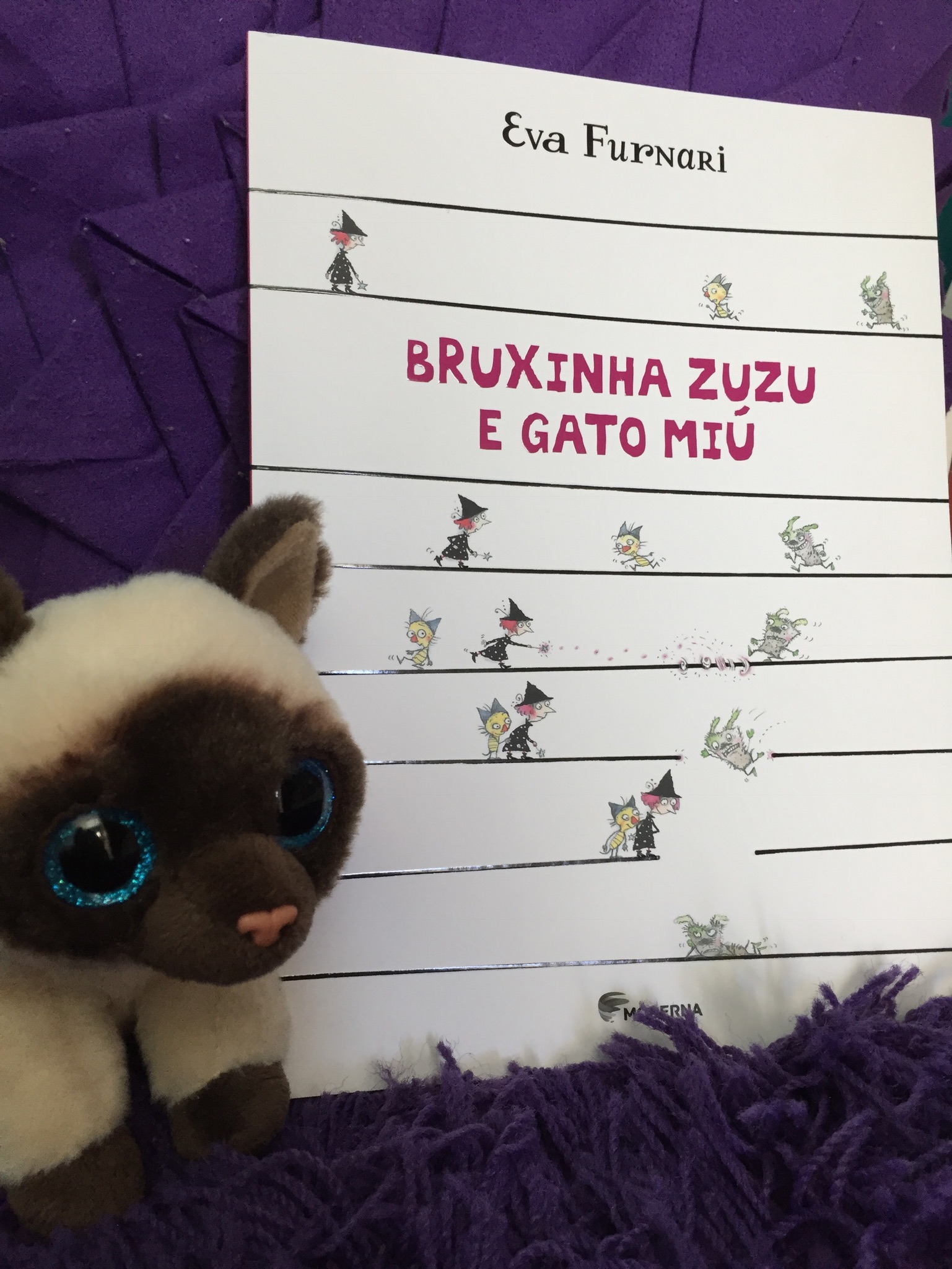
Furnari is an Italian-Brazilian author-illustrator. I’ve been able to forgive her for hoarding so much talent (author-illustrators seem so unfairly awesome) because her characters are so delightfully quirky. Born in Rome in 1948, she moved to São Paulo at the age of two and has lived there ever since. She came to children’s books in the early 1980’s through art and initially worked exclusively an illustrator before creating her own characters and stories.  One of her most famous characters is A Bruxinha Zuzu or Zuzu the Little Witch, who never quite seems to master the power of her magic wand. Many of Funari’s books are textless, including our favorite A Bruxinha Zuzu e o Gato Miú, and can be enjoyed regardless of what languages you read. One of her most famous and award winning stories, Felpo Filva, is available in English as Fuzz McFlops in both the US and UK.
 SONIA JUNQUEIRA
Born in the state of Minas Gerais in 1945, Junqueira published her first book at the age of 37 and has gone on to write more than 100 children’s books. She worked as a professor and editor before becoming an author. My daughter and I discovered Junqueira through a book swap at school. My daughter, always the animal lover, picked up a book with a cute cat on the front porch. I was the first story in verse that was more poetry than story and I honestly wasn’t sure how well she’d like it. A Poesia na Varanda was a hit and inspired me to buy Where the Sidewalk Ends during our Christmas trip to the US. I haven’t found any English translations but many of her world are available outside Brazil in Portuguese through Kindle.
 VERONICA STIGGER
Stigger is not really known as a children’s author. She’s a journalist, art critic, and writer primarily for adults known for challenging rules of genre and format in her work. Born in the state of Porto Alegre in 1973, Stigger began working as an essayist for radio and television. She then pursued a PhD in Art theory and Criticism and pursued research and various post-doctoral work before publishing her first collection of stories for adults in 2004. So not a career kid lit writer.  However, one of her most recent books, Onde a Onça Bebe Água, Where the Jaguar Drinks Water, is one of the best books I’ve read for teaching empathy and seeing the world through a another’s eyes. In the story, Jaci is forced to consider the world from the perspective of the Jaguar he’s ends up dining with. Unfortunately, there isn’t an English translation of it or any of her books that I can find but several of her adults works do have Spanish versions available on Amazon.
 Journey by Aaron Becker This stunning and wordless book, follows the adventure of a girl as she journeys to a fantastical land with the help of a magic crayon. There are enchanting forests, flying carpets, and bad guys on air ships!
 If You Give a Pig a Pancake by Laura Numeroff illustrated by Felicia Bond If you loved what happens when you give a mouse a cookie, check out what one little girl has to deal with when she caves to a pig’s demands.
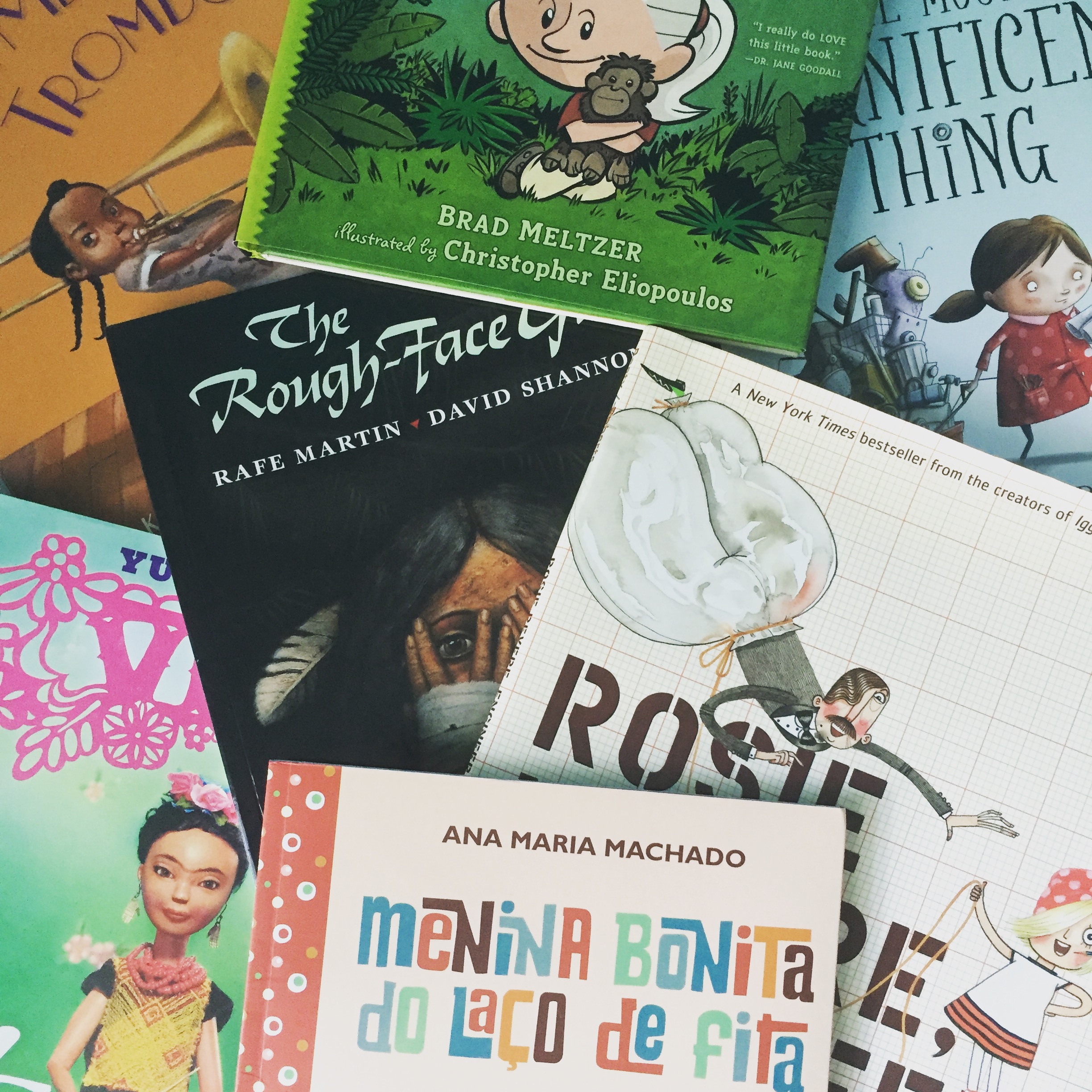
 Viva Frida by Yuyi Morales This is one of the most gorgeous books my daughter owns. The text (what very little there is) in both English and Spanish goes through the themes in Khalo’s work, such as live, imagine, create. The illustrations are bright and vibrant and straight out of a dream.
 Paper Bag Princess by Robert Munsch illustrated by Michael Martchenko I’m not at all opposed to Princesses if they’re one among many different types of characters and take matters in their own hands like Princess Elizabeth. She has no intention of letting that dragon get away with burning down her castle and stealing her fiance.
 The Rough Face Girl by Rafe Martin illustrated by David Shannon In addition to the beautiful illustrations, the heroine wins the day because of her character. She’s not pretty. She doesn’t have fancy clothes, but she sees the beauty and power in nature and understands what’s truly valuable. Yes, the book is about a young woman looking for a husband, but the message about character over appearance and clothes is an important one for all kids.
 My Two Grannies by Floella Benjamin illustrated by Margaret Chamberlain In addition to featuring females both young and old, black and white, the book also deal with two different cultures mixing! Multicultural, multiracial, and female protagonists! There is no reason not to have this book on your kid’s shelf.
 Pretty Salma by Niki Daly A Little Red Riding Hood tale set in Ghana. What I love about this version is that Salma redeems herself after getting tricked by coming up with the idea for how to scare away Mr. Dog and save Granny.
 My Pet Dragon by Christoph Niemann Lin has lost her pet dragon! She has to go on an adventure to find him and along the way the illustrator cleverly introduces some Chinese characters. Of your kid isn’t going to be fluent in Mandarin at the end, but thank to this book my daughter is ware that not all languages use an phonetic alphabet like English.
 Menina Bonita do Laço de Fita by Ana Maria Machado illustrated by Claudius A Brazilian story about a beautiful little girl who so captivates a neighboring bunny that he wants desperately to become black like her. She gives him all sorts of funny tricks to turn black. None of them work. Don’t worry if you can’t read Portuguese. There’s an English version on Amazon.
 The Most Magnificent Thing by Ashley Spires illustrated by Mark Pett Yes, this book is about a girl who loves to build things (awesome!), but that’s not the reason I bought it. My daughter gets frustrated easily and goes from fine to throwing things in a heartbeat. Just like the girl in the story. If you know a kid who has trouble coping with frustration when things don’t work exactly right, this book is a MUST read.
 The Girl Who Never Made Mistakes by Gary Rubenstein Similarly to The Most Magnificent Thing, this book is great for kids who stress about being perfectionists and have a hard time dealing when things don’t work exactly the way they wanted. Spolier alert: A mistake is eventually made and lessons are learned.
 As Mil e Umas Historias de Manuela by Marcelo Weberson illustrated by Maluf Santiago Ok, I don’t think there’s an English version of this, but Portuguese and Spanish speakers (because really they’re almost the same language) will love this story of a girl who devours books. Literally. She consumes so many books, she literally becomes a book and the only cure is to write her own story using all the words she has inside of her.
 Wave by Suzy Lee This is a gorgeous, wordless story about a curious girl, a sunny day, and a playful wave. Lee is a fantastic illustrator from South Korea and her primarily ink drawings are stunning. If your child loves the beach, she will adore this book.
 Biscuit series by Alyssa Capucilli illustrated by Pat Schories This is a series of simple stories about a girl and her dog, Biscuit, because it’s not only boys who love their dogs. My daughter adores animals. We bought her first Biscuit story to go with a veterinarian costume. Now that she is starting to read, Biscuit books are great first readers.
 Rosie Revere Engineer & Ada Twist Scientist by Andrea Beaty illustrated by David Roberts Diverse representation in children’s literature is so important and Beaty has written two amazing books that feature girls in STEM fields. They’re rhyming books and a joy to read aloud, and the illustrations are so much fun.
 I Am Jane Goodall by Brad Meltzer illustrated by Christopher Eliopoulos At the end of the video above, the girls asks if the bookseller has any books about a girl going to Mars. Studies have shown that by 5 years old kids already think certain jobs are “for boys”. This book is part of the Ordinary People Change World series. It’s a delightful collection about real people from history in all different professions. Books feature Rosa Parks, Helen Keller, Amelia Earhart, Eleanor Roosevelt, Sacagawea and Lucille Ball for your budding activists, teachers, pilots, politicians, or comedians.
 Mufaro’s Beautiful Daughters by John Steptoe I remember my teacher reading this book to my class in elementary school. It’s a Cinderella story but in this version both sisters are equally physically beautiful. It’s Nyasha’s generosity and respect for all creatures and nature that sets her apart from her selfish sister.
 I Wonder by Annaka Harris illustrated by John Rowe I love this book about a mother and daughter on a walk wondering about…everything really. The book has a beautiful message. It’s ok to say, “I don’t know,” and the beauty of not knowing allows all to wonder about the mysteries of the universe.
 The Princess in Black by Shannon & Dean Hale illustrated by LeUyen Phan This is an illustrated early chapter book and was one of the first chapter books my daughter stayed interested several nights in a row. I love Princess Magnolia, and I think her adventures fighting monsters would appeal to girls and boys. I love the message. You can enjoy a frilly dress at the tea party and also love wearing a mask and boots and fighting monsters. A kid doesn’t have to chose between sparkly tiaras and being a hero.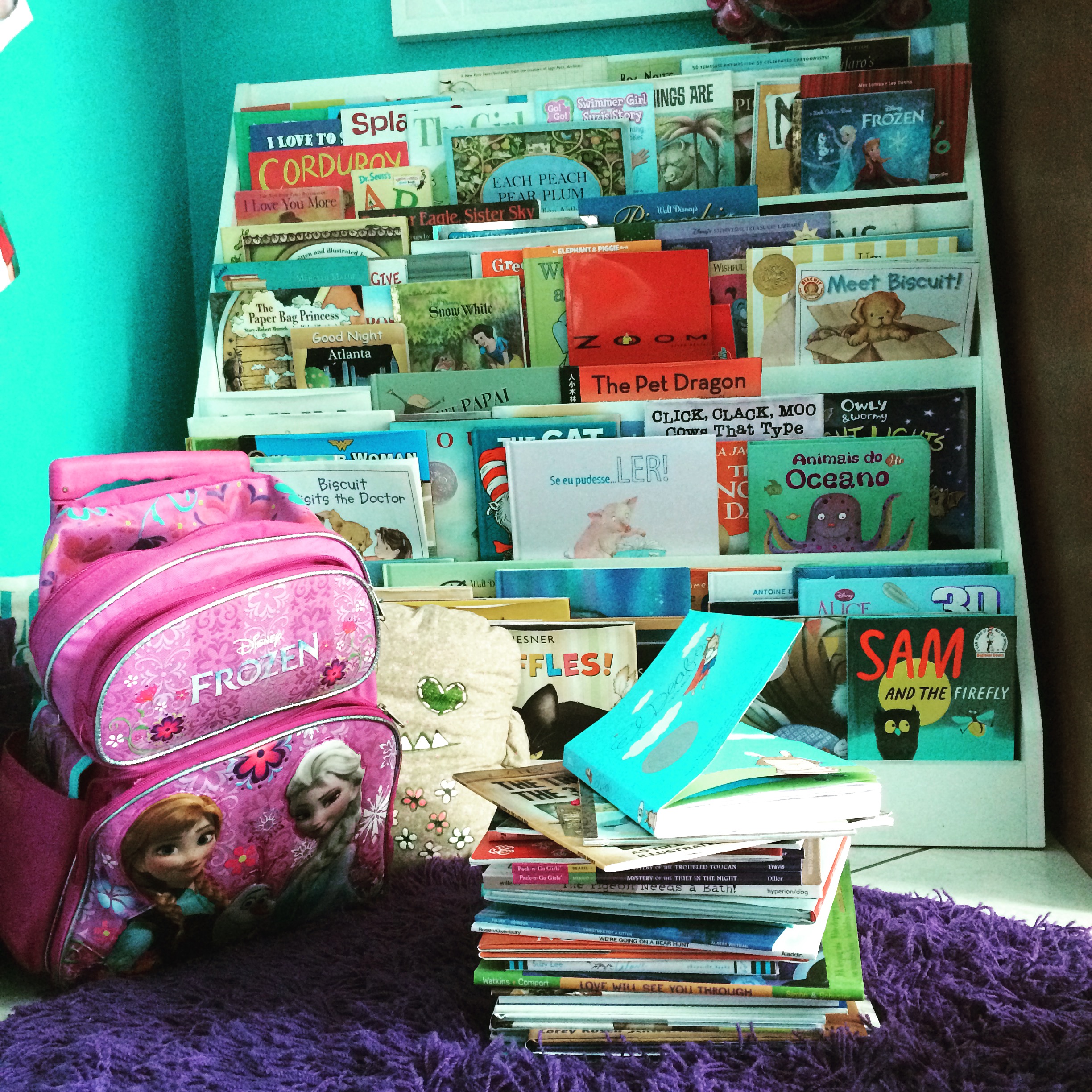
 Our Walk to School A one act play inspired by true events with a 5-year-old.
 Mom: Oh, ok. One day Mario was walking through the forest on his way to Princess Peach’s castle for tea when he heard a noise and Yoshi appeared.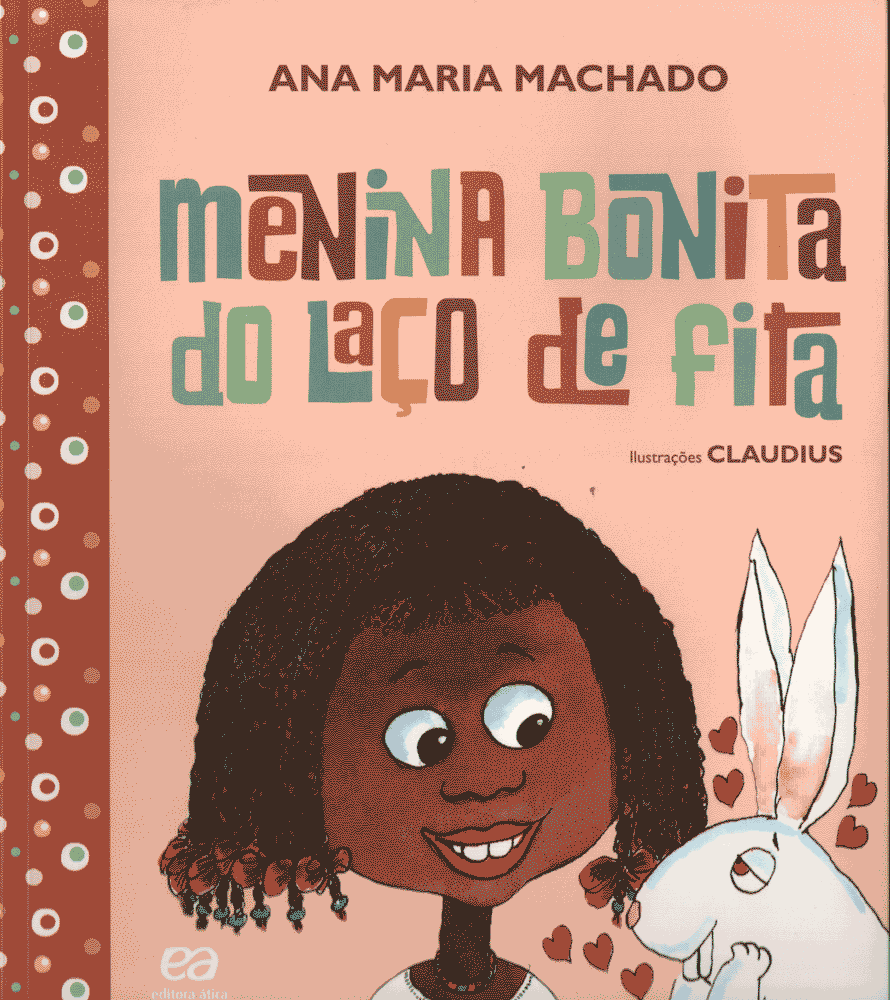


 We just got home after a week-long family vacation in New York City! I’ve been to New York City three times before, but this was my first visit as part of a preschooler’s posse. Our little Diva, with all of her four and a half years, was the central figure around which all activities were planned. If she wouldn’t like it or eat it or wait for it, then we didn’t do it. By we I mean, Mommy, Daddy, Gramma, and Grandpa aka The Posse.
 The hour subway ride into Manhattan or the car service were a small price to pay for the luxury of having a house with a den and backyard patio. The Diva is highly prone to outbursts when tired, so we wrapped up our sightseeing around 5pm everyday and spent the nights hanging out at the house. It was a stress-free way to end each day and allowed us to assume the role of local New Yorker for the week.
 Our week in New York was a tour of playgrounds and any museums that happened to be close by, starting with the Science Playground at the New York Hall of Science. This hands-on museum geared toward young kids was just down the street from our house in Queens. Even many of the indoor exhibits were basically highly educational playgrounds, particularly the exhibit on physics in sports. My daughter particularly loved the rope jungle gym and giant see-saw bridge.
 Day three’s plan to see the knights’ armor at the Metropolitan Museum of Art was immediately abandoned upon sight of the Ancient Playground next door to the museum. The playground’s stonework gave it a castle feel and the Diva unsurprisingly played for over two hours. What did surprise everyone was her question while heading back to the subway late afternoon “When are we going to see the knights in their armor?” When a four-year old expresses interest in an art exhibit, you go before she can change her mind or fall asleep in someone’s lap. The coolest part was the horses’ armor.
 We took one day off from playgrounds to see Aladdin at the New Amsterdam Theater which is right at the Times Square metro station. While Aladdin was beautiful and fun and the Diva is still talking about the flying carpet, the chaos of Times Square was not fun or beautiful. A prematurely pitched lollipop, which she hadn’t liked in the first place, caused the second major meltdown of the trip.
 After Times Square the posse had learned our lesson. Playgrounds and parks are enjoyable. Crowds and a sea of fifty foot iPads are not. This lesson led us to Brooklyn Bridge Park and the Main Street Playground near Manhattan Bridge. The Diva loved the nautical themed playground, and the posse loved the views. We rode Jane’s Carousel and had lunch at a little bistro just off the park. The breathtaking views are a great antidote to the effects of paying $4 for a single glass of coke that’s fifty percent ice.
 To complete our admittedly small sampling of New York City playgrounds, we went to Billy Johnson Playground in Central Park just north of the zoo. This comparatively humble playground features a 45 foot granite slide that the Diva went down at least twenty times. It was a gorgeous day and Central Park was lush and green. When we stumbled upon the Central Park Zoo after leaving the playground, there was no debate. The Diva bonded with a spirited puffin and enjoyed a hyper-active sea lion.
 I hope I haven’t given the impression that being in the posse of a small diva is only stressful. It does require planning and a willingness to abandon those plans, but the plus side of a diva is that they are energetic, passionate, and expressive people who draw you into their world. My Diva manifested such joy after seeing her first dog walker, I thought we’d have to follow him around the city.
 Having spent the majority of my adult life outside of the United States (mostly in small, homogeneous cities), I’ve gotten used to being the subject of conversation at the next table over. It happens pretty frequently in Vitoria. My husband and I speak in English so people assume I don’t understand their Portuguese freeing them to openly discuss me from two feet away. It happens most frequently with kids and teens, but a surprising number of adults don’t seem to realize that a person could understand both English and Portuguese. In Vitoria, we expats are like endangered wildlife. People know we’re around, but when actually spotted, locals take note.