Tag: Things to do in Vitoria!

  • Projeto Tamar: Saving Sea Turtles along Brazil’s Coast

    Projeto Tamar: Saving Sea Turtles along Brazil’s Coast

    Hello, adorable baby sea turtle!

    Today is world turtle day! Hooray for the turtles!

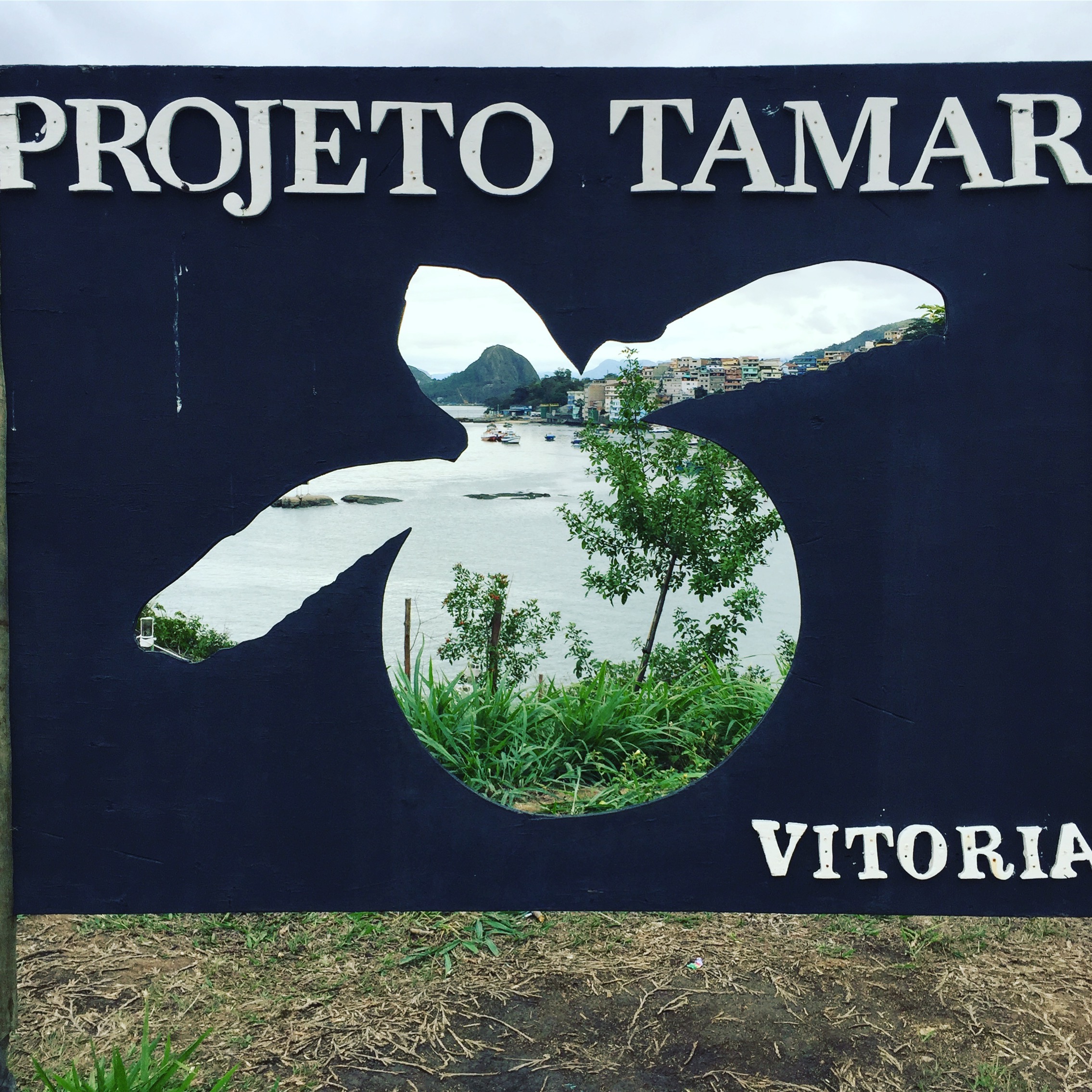
    In honor of turtles everywhere, I wanted to give a shout out to one of my favorite places to spend an afternoon in Vitoria: Projeto Tamar.


    Projeto Tamar is an NGO working throughout Brazil to study, protect, and rescue sea turtles. The name comes from the Portuguese for sea turtle, tartaruga marinha. Five species of sea turtle nest along Brazil’s coast, and one of Projeto Tamar’s initiatives it to observe and protect their nests. To date, Projeto Tamar has protected more than 25,000,000 baby turtles from egg to ocean. The organization also works with local fishermen to develop alternative methods that reduce the risk of sea turtle death from nets and has facilities up and down Brazil that work to educate the public about sea turtles and their major threats.


    They’re so close! Just a little pet…

    One unique skill I’ve developed since moving to Vitoria is sea turtle spotting. I can spot the shiny head of a turtle popping up for a breath in my peripheral vision at high noon without sunglasses. It’s one of the unintended consequences of my expat life. I’ve also become quite the amateur expert on sea turtles thanks to our regular visits to our local Projeto Tamar site. We take my daughter, but I’m the one hovering a little too close to the babies the staff always keep their eyes on. They look just like leaves bobbing in the water. A little touch wouldn’t hurt. I’d only use one finger. I’d be sooooo gentle.

    In honor of turtles everywhere and to show off my sea turtle trivia, here are five facts I’ve learned thanks to Projeto Tamar.

    Fact 1 The sea turtle species that nest along Brazil’s coast are olive ridely, green, hawksbill, loggerhead, and leatherback. The turtles I regularly see in the bay are young green turtles.

    This poor olive ridely was hit by a boat. It was rescued by Projeto Tamar and now gets physical therapy for its front flipper every Monday.

    Fact 2 Over the course of a year, the leatherbacks which nest here will migrate between Brazil and Africa. That is some impressive swimming.

    Fact 3 Most sea turtles lay between 100 – 200 eggs per nest.

    Fact 4 Experts estimate only about 1 in a thousand babies reaches adulthood in natural condition. 1 in a 1,000! Why so few? Well…

    Fact 5 Sea turtles don’t reach maturity until 10-50 years old depending on the species. That’s a long time to try and avoid all the fishermen, boats, and plastic bags masquerading as jellyfish. Odds are against surviving all those threats for five decades. It’s why killing the moms as they’re laying eggs and then harvesting the eggs is so devastating for the species.

    Fortunately in Brazil, Projeto Tamar has worked with local communities to dramatically reduce the hunting of turtles while they lay their eggs. In fact, Projeto Tamar has been working for 37 years, just long enough that they’ve recorded an 87% increase in babies hatched over the last five years compared to the previous five. The first few groups of turtles hatched under the protection of the project are finally old enough to come back and lay eggs of their own.

    And what adorable babies hatch out of the eggs! Someday, I will convince a volunteer to let me hold. Surely out of over 25,000,000, there’s one baby turtle who doesn’t mind being held by a doting human aunt perfectly willing to handle chopped up pieces of fish and squid for feedings. Just for a few seconds?


    Save

    Save

  • A Tropical Paradise is a Sweaty Paradise

    A Tropical Paradise is a Sweaty Paradise

    IMG_1524Today was another sunny, blue-sky day here in Vitoria. A breeze blowing through my apartment forced me to stop the doors with various colored flipflops. By late afternoon, I’d been enjoying the weather so much, I was compelled to look up the temperature. What numeric value can I assign to this lovely afternoon.

    84℉ (28.9℃) And feels like 91℉ (32.8℃)

    Oh, yes. So much nicer. I knew it had to be cooler today because the sweat was only beading and not trickling down my back.

    It’s hot this year. So hot. We’re almost a month into fall, and I’m still leaving thigh-shaped pools of sweat on every chair I sit in. I haven’t had to pee since January. All liquid just gushes out my pores. Within a half an hour of waking up and leaving the air-conditioned bedroom for the naturally breeze-cooled den, I have sweat stains along my breast bone, and the only exertion I’ve had is lifting a piece of peanut butter toast.

    Of course I married a man who doesn’t have pores and could wear the same shirt to the gym everyday for a week without any lingering odor. He doesn’t. But he could. Meanwhile, I look like I jumped in a pool. Whenever I complain, my husband shakes his head and insists “Your body is more efficient at cooling itself than mine.” (Life Lesson: If you find a man who can turn being a sweaty mess into a compliment, marry him.) I reapply deodorant two time a day minimum, and I can still smell myself at the end of the day.

    But seriously without any hyperbole, I can’t remember a day I wasn’t actively sweating in Vitoria. There might have been one cool day last September, but definitely by October, I was dripping sweat trying to cut cookie dough in a ninety degrees kitchen. A secondary perk to annual Christmas visit to Atlanta is we get to miss a month of summer heat in Vitoria.  Although, it’s feeling less like summer heat and more like pretty-much-all-year-long heat. For anyone still on the fence about global warming, I have a guest room with only an old window unit AC that you’re welcome to sleep in. If you can make it through breakfast the next morning without complaining about the heat, I’ll paint Drill Baby Drill on my kid’s bedroom wall.

    The heat’s not just in Vitoria. On February 27, Rio had a record breaking high of 106.5℉ (41.4℃) with a heat index of 119.5℉ (48.6℃). What?!!! I’m so glad we left Rio.

    Just imagine if that’s the temperature you have to go to work in. You’re not on vacation. You can’t just camp out at a pool with a swim up bar. You have to get dressed, maybe in a suit, maybe with a lab coat, maybe a uniform that requires pants. You have to go work now. Remember the worst traffic or school drop-off run you’ve ever experienced, now imagine it happening at 120℉. And without air conditioning. Many buses in Rio don’t have air conditioning.

    Actually, central AC is rare and reserved mostly for tourists. We don’t have it at home. The top tier private school I worked for didn’t have it. My bank doesn’t have it. What we use here are individual units, and the top of line can effectively turn a classroom into a freezer. Just don’t be the first one to show up and have to turn them on. And of course they break. And if you wake up in the middle of night in a puddle of sweat and the clock blinking, don’t worry. All the thousands of bedroom unit ACs just overwhelmed the grid and caused a blackout.

    So if you are planning a trip to Brazil for this time of year, bring a flashlight, lots of sunscreen, and a half dozen sticks of deodorant. That should last you about a week.

    Image_zps04194192

  • The World’s Pickiest Beachgoers

    The World’s Pickiest Beachgoers

    IMG_1698Last Saturday, the whole Barineau-Mauricio clan (all three of us) seized the day early (like 10ish) and headed to the beach. It was the kind of day that gets recorded and replayed in every tourist advertisement for the next decade. The temperature was perfect, warm enough to sit comfortably in a bathing suit but not oppressively hot. There was a steady breeze that my husband and daughter exploited for kite flying. It was a perfect beach day.
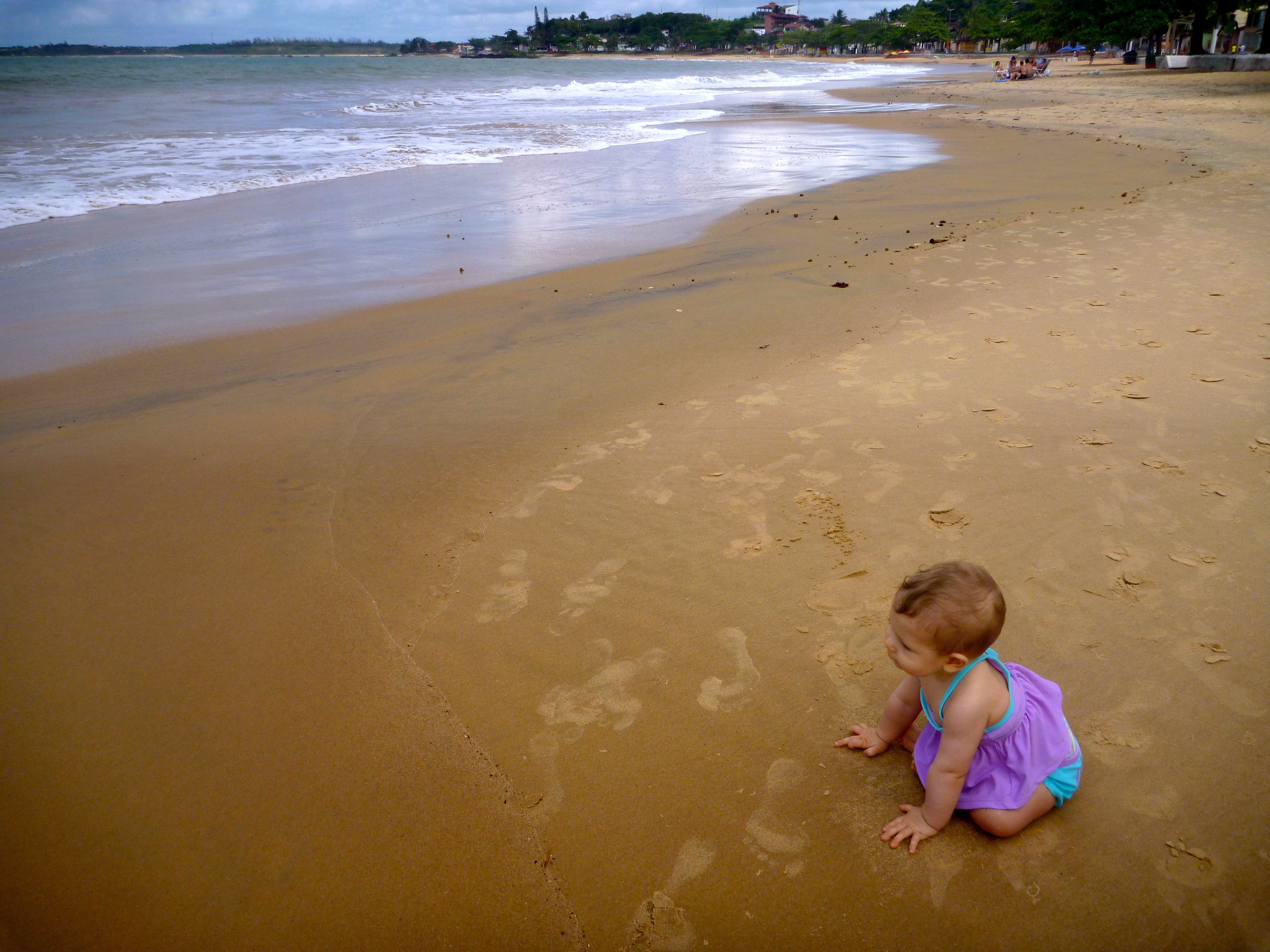
    There were two other families on the beach.

    I’m not exaggerating. This is not hyperbole. When we arrived there were two families camped out close to the boardwalk. The next closest people we could see were colorful ants. We looked around in dismay for any food vendor. We’d been banking on supplementing my daughter’s meager breakfast with an ear of corn, but the beach was empty.

    Now, before people start shipping furniture and arranging to have their pensions deposited in Brazil, empty beaches are not typical in Brazil, especially not around the cities. Typically, they’re packed so densely you can’t stretch your legs out without kicking the back of someone’s chair. (True story. It was a summer day at Iriri in Espirito Santo. Worst beach day ever!) In Rio de Janeiro, you can’t find a beach with less than a few thousand people on it. Drive past Ipanema on a Tuesday, and you’ll wonder who’s running the city.

    That’s not the case here in Vitoria. The empty beaches were one of the biggest shocks moving from Rio to Vitoria. I kept trying to find some explanation. Are Vitoria’s beaches more polluted than Rio’s? Are they more violent? Is there a vicious rip current? A Kraken? Where the hell is everybody?!

    After living in Vitoria for almost six years, I’ve figured it out. Capixabas are simply the pickiest beach goers in the world.

    Capixaba is the Brazilian term for a person born in Vitoria, the state capital of Espirito Santo. The best English equivalent would be North Carolinian. That state has picturesque mountains and beaches and a generally more conservative population that goes regularly to church and the salon.

    Capixabas are incredibly picky about their beach trips. Here are 7 reasons why Capixabas won’t go to the beach.

    1. The temperature has dropped below 80°F (26.5°C). If there’s one thing Capixabas fear more than visiting Rio de Janeiro, it’s cold weather. And any temperature in which you can comfortably wear long sleeves is cold. In winter when the high is around 75°F (24°C), my kid will be one of three students whose parents are still allowing them in the pool. Those other all kids have parents from Rio Grande do Sul, the state that’s so far south it’s basically Uruguay.

    2. It’s Saturday. Sunday is beach day. Obviously.

    3. It rained yesterday. Everything will be wet. And the water will be too cold.

    4. It might rain today. Everything will get wet. And to pack everything up and walk across the street only to get rained on would be such a pain.

    5. Those clouds are kind of dark. It’s probably going to be chilly with all the clouds. The wind is picking up. It might rain. Better just to wait for a day with no clouds. It’s going to be too cold today anyway.

    6. We went to the beach yesterday. If we want to go to the beach everyday we’ll go to a hotel or to our family’s beach house in Guarapari. The beaches in Vitoria are mostly decorative. You can’t use them too much, or they’ll break.

    7. It’s too empty. There just aren’t enough people to feel safe. This is the one reason I agree with. The rate of violent crime in Espirito Santo is a tragedy. It’s why we’ve never considered buying a house near the beach even though we go every weekend. I’d love to walk along an empty beach early in the morning or a night, but it wouldn’t be safe. On the other hand, I don’t think two hundred people are required to make beach a safe, and the threat of robbery certainly doesn’t stop people in Rio from swarming Copacabana.

    Most excuses are weather related. I assume most Capixabas believe English beaches to be fatal, and I’m not going to try dissuade anyone from that thinking. Mostly because Capixabas are friendly and obsessively follow traffic rules compared to people in Rio. Because nobody’s perfect. But mostly because this way my family and I have the beaches to ourselves from June through September.

    Have I missed any excuses, Capixaba friends and readers? Am I totally and completely off-base?

  • The Novelty of Beach Life

    The Novelty of Beach Life

    Baby at the Beach
    Beach Comber From Birth

    Growing up in Atlanta, I got to be part of that great American summer tradition, the annual family beach trip.  Depending on the beach, my brother and I could look forward to between 4 and 6 hours of Wee-Sing-Silly-Songs cassettes, gas station candy, and fierce battles for control of the middle-seat armrest.

    We usually ventured to one of a handful of beaches: Panama City, Florida; Daytona, Florida; St. Simons Island, Georgia; Hilton Head, South Carolina.  Some on the Atlantic and some on the Gulf of Mexico but all had an abundance of cooked white flesh and thick southern accents.  It was paradise!

    I remember the thrill of the first palm tree sighting.  My brother and I would then count the palms in growing anticipation until we finally glimpsed a flash of ocean between a Texaco and a McDonald’s.  After checking into the hotel, we’d spend the next five days coated with sand and sunscreen jumping waves, riding boogie boards, and hunting for seashells.  Often grandparents came along and sometimes aunts, uncles, and cousins.  There was always a family putt-putt outing, which some of us took more seriously than others.  Inevitably, the week ended, and we would say goodbye to the beach for a year.

    I now live three blocks from the beach.

    I can wake up any day of the week and decide to skip writing in favor of paddling around the bay spotting sea turtles.  It. is. amazing!

    My daughter has been going to the beach regularly since before she discovered her hands.  The list of foods my girl will eat is short but includes white fish, salmon, shark, and tiny fried shrimp.  Fried shrimp with the shell and legs still on them.  The girl won’t part her lips for a carrot but she pops little shrimp in her mouth like chocolates.  We frequently have some version of this conversation on Saturday mornings:

    Me: “Should we go to beach today?”

    Husband: “I don’t know.  We went the last few weekends.  I think she might be getting tired of it.”

    Me: “Hey Little Bit, do you want to go to the beach?”

    Kid: “No, I want to stay home and play with my toys.”

    Yes, my daughter will turn down going to the beach in favor of staying home to play with her Littlest Pets because she has no idea how lucky she is and no appreciation for the months of waiting that I had to endure when I was her age to get to the beach.  Preschoolers!

    Because of these different life experiences, my daughter will probably never understand my obsession with ocean-based hobbies, specifically that she master one or several of them.  Some parents dream of their children graduating from the ivy league, I dream of my daughter being a competitive sailor or windsurfer or deep sea fisherwoman.  (That last one is lower down on the list.)

    Given the novelty (for me anyway) of growing up next to the beach, imagine my joy when my girl started swim class and LOVED it!  She has no fear of water, which makes supervising her around the pool more stressful, but is an important first step to becoming a world champion free diver!

    A couple of weeks ago, we embarked on phase two of my master plan.  Stand up paddle boarding in the bay!*  We went as a family and spent the morning spotting green sea turtles in the bay.  It was a success.  You can see in the video below.  My daughter had so much fun, we all went back out yesterday and the heavy grey clouds and constant drizzle didn’t deter her one bit.

    Watching my daughter yesterday on my husband’s board, leaning forward through the rain with a smile on her face, I thought “I just might have a seafarer on my hands.”  At least I hope I do.  All she needs now is a willingness to use sunscreen.

    *If you’re ever in Vitoria, Brazil, I highly recommend a morning of SUP.  We rented our boards from Loop.  They have windsurf and stand up equipment for rent. The bay is filled with sea turtle, fish, and the occasional ray leaping from the water.

    Whatever-the-weather-both-small

  • Coolest extracurricular activity ever!

    Coolest extracurricular activity ever!

    I’ve spent the last couple of days editing essays.  I’m drowning in essays.  During a break, I watched a clip of the Daily Show where they showed a commentator ranting about how teachers are paid too much for a part-time job.  I envisioned ramming a two-inch stack of ungraded essays down his throat until he chocked.  It made me happy and reminded me that I still had about 20 essays left to grade.

    When not being used as a weapon, my student’s essays are also an endless source of amusement.  I fill entire dinner conversations relating what pearls of wisdom my kids have come up with.  The essays are also helping me compile a list of potential extra curricular activities available in Vitoria for any future Brazilian-Americans I have in my house.

    It’s fascinating to see what activities teenagers in the US and Brazil share and what activities are unique not just to Brazil but to Vitoria.

    It’s no surprise a kid in Vitoria can be a soccer player but I also have competitive basketball players, skateboarders and surfers as well.  Judo is pretty popular.  There are ballet studios and acting lessons. With my guitar players, drummers, pianists and singers, I can supply any event in Vitoria with a band.  One of my students has taken cooking lessons and runs a small business catering desserts for parties.  Another is a financier in the making, having taken classes on the stock market and started his own investment portfolio.

    But I think my favorite hobby, of all the hobbies I’ve read about, is competitive oceanic fishing.  It’s not my favorite because it’s anything I’d like to be proficient at myself but because it is such an utterly foreign activity to the suburban, Atlanta culture where I grew up.  Competitive oceanic fishing!  Maybe there were some kids in my school who regularly caught trout from the Chattahoochee River but nobody was heading to Australia to compete catching marlins.  Which is exactly what one of my students did.

    I mentioned this to my husband and he said “Oh sure, Vitoria is one of the best spots for oceanic fishing along Brazil’s coast.”  Huh, a new fact about Vitoria thanks to my students’ essays.  It seems one of the perks of being a teachers is that the learning goes both ways.

    Oceanic fishing is a skill I would never have thought to offer any of my future kids.  It wasn’t part of my childhood and I would not have made it part of theirs.  Now I know.  And if the kid doesn’t like fishing, there’s always surfing, sailing, samba dancing, cooking, judo and of course, soccer.

  • Behind the Scenes at Garoto Candy Factory

    Behind the Scenes at Garoto Candy Factory

    It’s not been a good week for healthy or even reasonable eating. My multi-helping Thanksgiving dinner was followed by a birthday dinner that consisted solely of red wine, red meat, and chocolate petit gateau. Topping the decadence of a rare filet wrapped in presunto is difficult but if you want to try, I suggest visiting a chocolate factory.

    Today, we visited the Garoto Chocolate Factory, the fourth and final thing to do when visiting Vitoria. Garoto is the brand of chocolate here in Brazil and while technically owned by Nestle nowadays, Garoto chocolates are 100% Brazilian.

    A factory whirring and buzzing away is one of the purest examples of human ingenuity. I was frequently hypnotized by the rhythmic filling and flipping of candy trays to the point I became completely unaware the guide was speaking. The production line is amazing. Each machine is perfectly timed, measured, programmed, and maintained. Here’s the process for one single candy, the famous (to anyone who has spent a month in Brazil) Serenata de Amor.

    Serenatas are chocolate coated balls, with crispy wafer shells surrounding a hazel nut creme filling. They are the overwhelming favorite among Garotos candies.

    First on the conveyor belt are the shells in long sheets. The shells arrive on the conveyor concave. They are flipped on a ferris wheel contraption before passing through a humidifier. They are rehydrated by 5% and I would love to know how long it took to determine 5% provided the optimum crunch.

    After their trip through the sauna, the shells are filled. Tubes running across the ceiling, labeled “clear filling”, squirt the filling into each half shell before sending the sheets down the conveyor to be pressed together. The now complete balls, still together in sheets, roll through a refrigerator to cool the filling. Then they’re cut into individual balls of yumminess.

    Finally, it’s time for the chocolate.

    We followed the conveyor belt into another room and the smell alone was enough to satisfy any chocoholics craving for months. The shells pass first through a cascade of dark chocolate, are cooled and then are drenched in milk chocolate. They are sorted and distributed along the conveyor belt to four different wrapping machines. I have no idea how these machines work. Candy went in naked and came out with neatly twisted wrapper. It happened too fast for the human eye.

    Just how fast? Depending on the setting, the machine can wrap between 850 to 1200 pieces in a minute. And there are four of these machines wrapping 24 hours a day. In a single day this factory produces 3.5 tons of Serenata de Amors.

    Of course the tasting stations along the way were gluttonous and generous enough to put you off chocolate until Easter (which the factory is already producing for), but it was seeing the production, spinning and whirring, perfectly timed that I enjoyed the most. The engineering on display gives me faith in humanity. If we can build a sauna for 3.5 tons of candy, can a pill that increases your metabolism on holidays and candy factory visits be far off? That would be pretty sweet!

  • O Convento Nossa Senhora da Penha

    O Convento Nossa Senhora da Penha

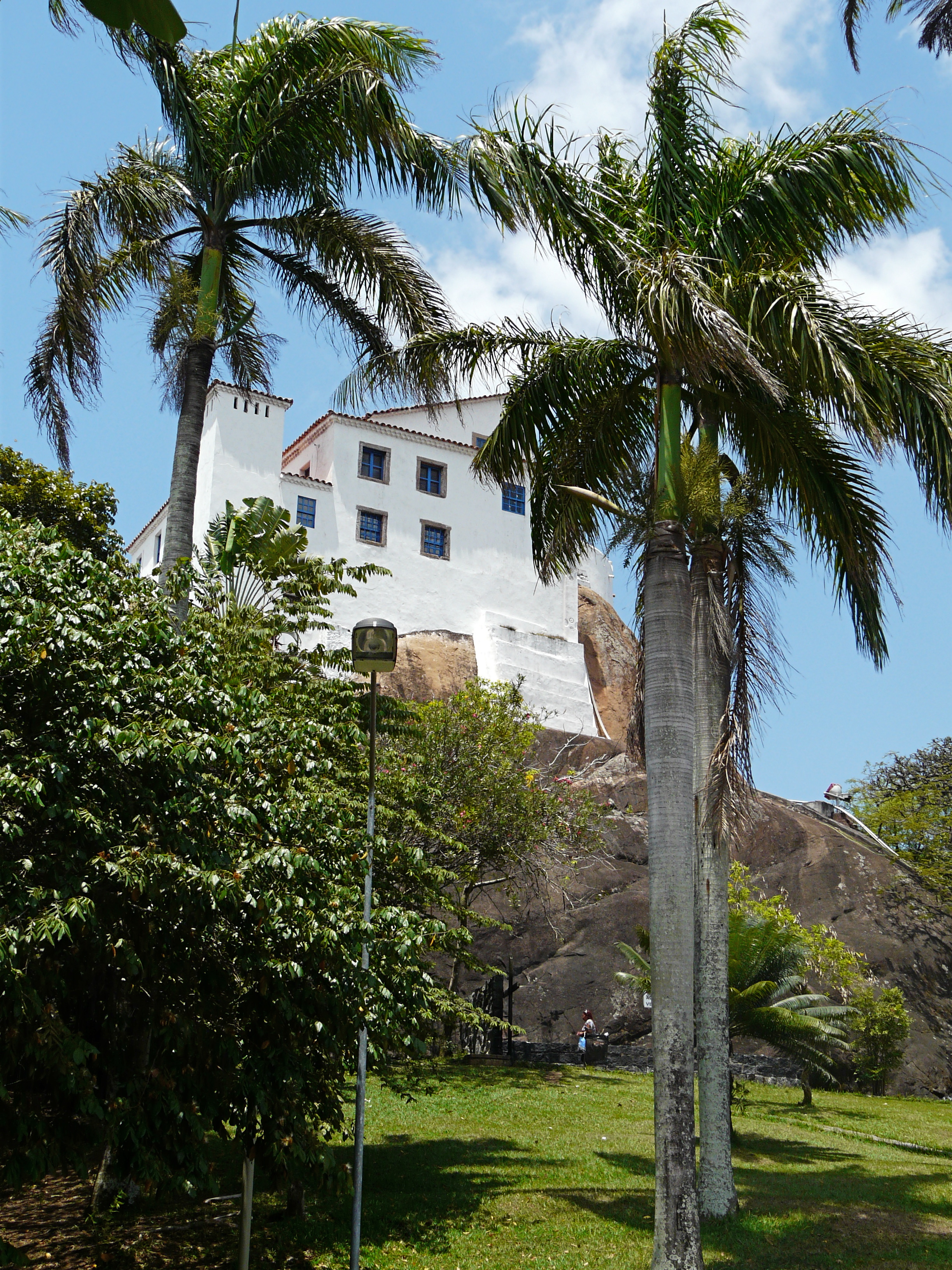
    I mentioned in a previous post the four attractions of Vitoria: 1) eating the regional fish stew more appetizingly called Moqueca, 2) visiting one of the beach towns just outside of the city, 3) visiting the 16th century Convento de Nossa Senhora da Penha and 4) visiting the Garoto Candy Factory.

    My husband and I recently did number three. We took a morning and wandered around what turned out to be a nun-free convent.

    The Convento da Penha is surprisingly not a convent at all. At least, when I heard “convent” I imagined a group of grumpy yet ultimately tender hearted women wearing black and all possessing phenomenal singing voices. I’m not Catholic but I saw the groundbreaking documentary Sound of Music and it’s contemporary follow-up Sister Act.

    Unfortunately, there are no nuns there today, nor have there ever been. The paintings of monks everywhere only confused me further. Clearly, “convento” has a different meaning in Portuguese.

    Because there was no soaring soprano, we had to be entertained by history and an interesting yet disturbing “Wall of Miracles.”

    The Wall of Miracles. People who have had their prayers answered by Nossa Senhora da Penha will post thank you messages on her wall. (No kids, Nossa Senhora is not on facebook. There’s an actual wall.)

    It’s a lovely concept that ends up being darn creepy. Many people have said thank you with pictures of the gaping wounds and mauled limbs that were saved. Or with locks of hair. Few things creep out like 30 year-old locks of hair. Gross!

    One of the older “thank you” walls, comfortingly free of human hair.

    The city of Vila Velha is just across the bridge from Vitoria. For those who know Rio, the relationship between Vitoria and Vila Velha is more like Zona Sul and Barra than Rio and Niteroi.

    People who live in Vila Velha talk about the low cost of an apartment by the beach and those in Vitoria say “Yeah, but you have to live in Vila Velha at least an hour away from anyplace you’d actually like to be.”

    Here’s one of the Convento’s original telephones they’ve successfully restored. There’s a fund accepting donations if you’d like to help with the restoration of the original snack bar.

    It’s worth visiting the Convento if only for the spectacular views of Vitoria and Vila Velha. My only complaint is that after spending an entire morning there, I still don’t know which Mary sighting Nossa Senhora da Penha refers to. Can anyone help me out here?

    Next stop on our tour of Vitoria, the Garoto Candy Factory tour! Our tour is scheduled for a week from Monday. We’ve been instructed to wear long pants and no jewelry. Sounds more hardcore than my tour of Hershey World.

  • The Delicious Moqueca Capixaba

    The Delicious Moqueca Capixaba

    When visiting Vitoria there are exactly four things to do: 1)spend the day at one of the nearby beach towns, 2) visit the Garoto candy factory, 3) see the 16th century Convento da Penha and 4) stuff your face with Moqueca.

    Moqueca (pronounced Mookecka) can generally be described as a fish stew. Or, more accurately, the greatest fish stew ever made. There are two kinds of Moqueca in Brazil, Moqueca Baiana and Moqueca Capixaba. The basic ingredients are the same for both, fish, onions, tomatoes, garlic, and cilantro.

    The Moqueca Baiana, from the state of Bahia, uses dende oil (a kind of palm oil) and coconut milk


    The Dende Palm

    The Moqueca Capixaba, from Espirito Santo, draws more from native Brazilian cuisine. Traditionally, it’s cooked in a pot made with black clay and tree sap. The stew is colored using arucum, a natural pigment made from the urucu flower. Moqueca Capixaba uses olive oil instead of dende and doesn’t have coconut milk.


    The urucu flower

    Which version of Moqueca is tastiest? Well, that depends on which Brazilian you ask. Unfortunately, I’ve not had the Baiana version in order to declare definitively that the Capixaba version is better, but I can say the Moqueca Capixaba is not just a dish. It’s an experience.

    If ordering a Moqueca, I recommend having a very early, light breakfast and foregoing food for the rest of the day. If you’re a calorie counter, you might as well plan on not eating for the preceding 24 hours. You should also have the afternoon blocked off for napping. There is no strolling or sight seeing after this meal.

    You’ll be able to choose what kind of fish you want, but in Espirito Santo it’s almost always a kind of hard, white fish. My husband and I always order dorado. That is a hearty fish. We also like to have a shrimp sauce. As you can see the restaurant in Ubu is pretty generous with their shrimp.

    In addition to the stew, you’ll also get white rice, piraõ (a fish juice goo, very tasty) and Moqueca Banana (amazing!). Our favorite place also includes a delicious and totally unnecessary fried shrimp appetizer.

    Everything is brought to the table in a steaming, bubbling collection of black pans. The steam rising off the stew is so thick for a few seconds you can’t see across the table. Serving yourself is like dipping into a witch’s cauldron.

    There is no better way to spend an afternoon than gorging on Moqueca followed by a long, quiet nap on the beach. It’s become our Saturday routine, weather permitting. We always love company, so shoot me an email if you’d like to join us sometime.

    The Moqueca pictures were taken at Moqueca do Garcia, on Ubu beach, directly in front of the sea. Find Ubu and you find Garcia.


  • Ubu, our hidden gem

    Ubu, our hidden gem

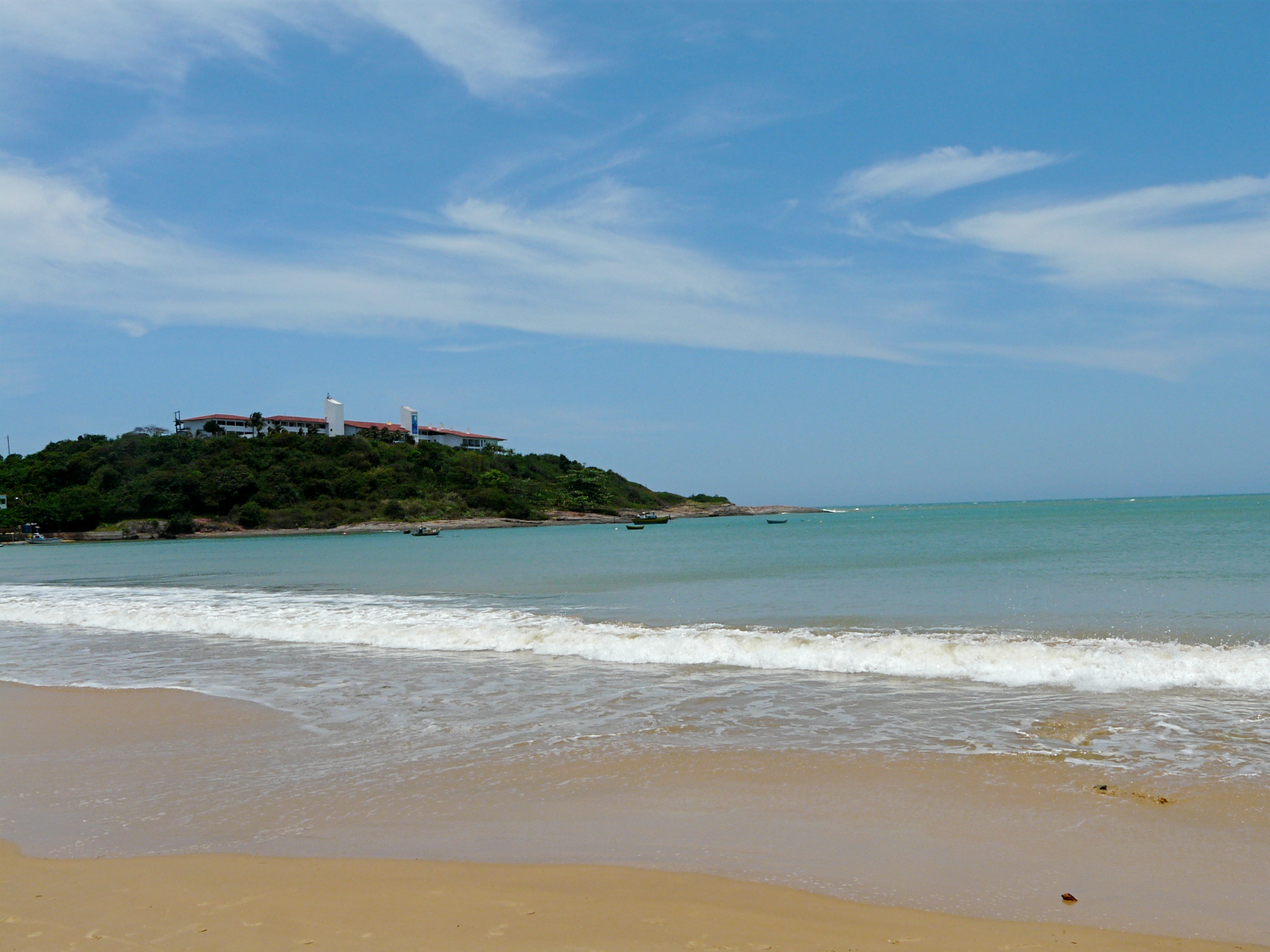
    For me, one of the greatest pleasures life in Vitoria has to offer is the opportunity to visit a gorgeous beach, on a gorgeous day. Can’t I do that in Rio? Yes, but I have to share the beach with 1 million other people. I don’t really like to share. That’s why I prefer this little, hidden gem called Ubu.

    The coast of Espirito Santo is lined with small beach towns. The relatively small population of the state will head out every weekend and drive to one of the three or four beaches within an hour of their homes. If you’re willing to drive an hour and half, you can have the beach to yourself.

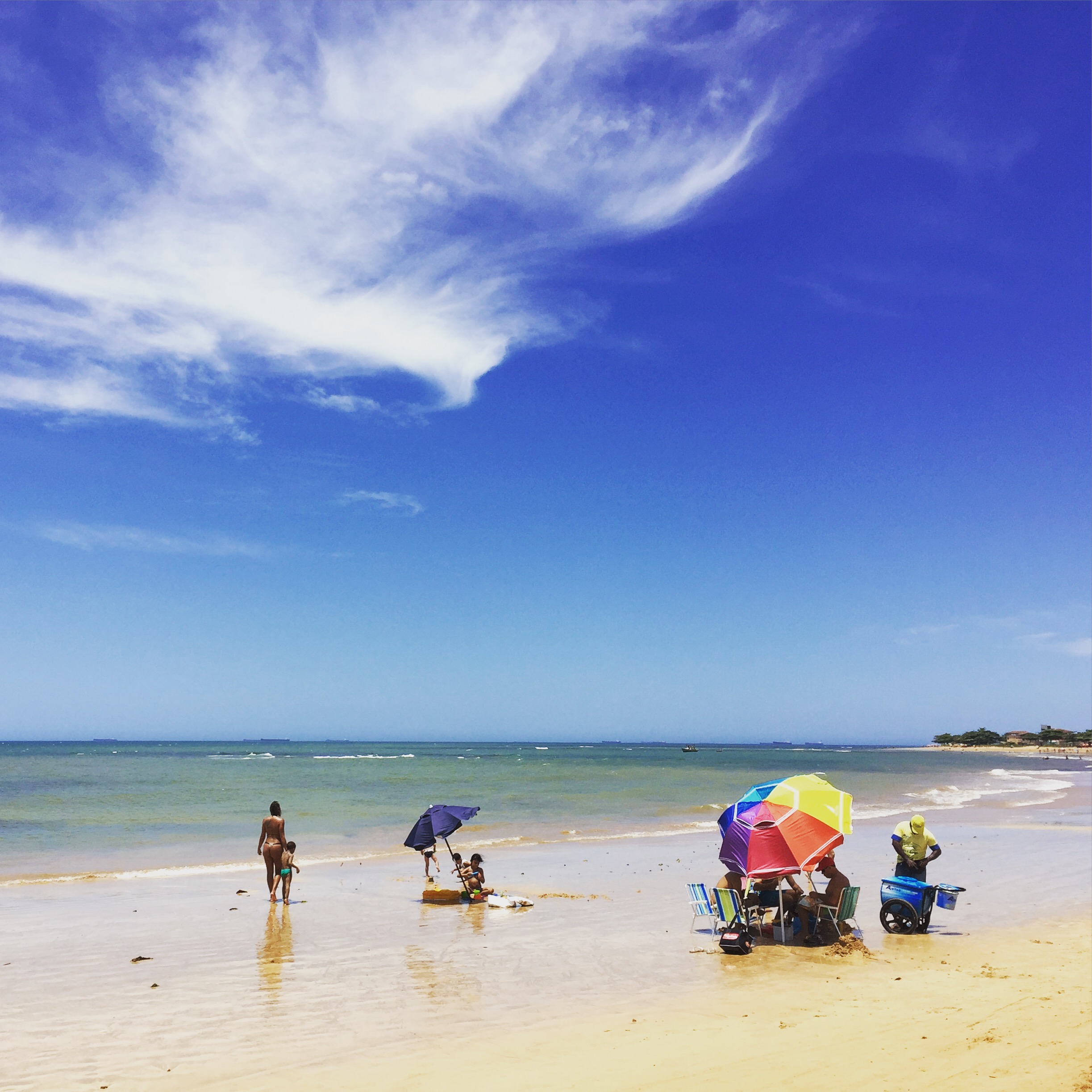
    Yesterday was a perfect beach day. It was the kind of day against which all other beach days are judged. A blue sky with a few clouds like stretched out cotton balls. The temp was in the 80s and a constant strong breeze made everything perfect. There were not more than 30 people on the beach. A gorgeous beach, on a gorgeous day and we got it all to ourselves.

    I’d tell you how to get to Ubu, but then you might actually come.

    And did I mention the moqueca restaurant in front of the beach?

    The famous Moqueca Capixaba deserves and will receive its own post. To be continued…