Tag: Tourist Attractions

  • Behind the Scenes at Garoto Candy Factory

    Behind the Scenes at Garoto Candy Factory

    It’s not been a good week for healthy or even reasonable eating. My multi-helping Thanksgiving dinner was followed by a birthday dinner that consisted solely of red wine, red meat, and chocolate petit gateau. Topping the decadence of a rare filet wrapped in presunto is difficult but if you want to try, I suggest visiting a chocolate factory.

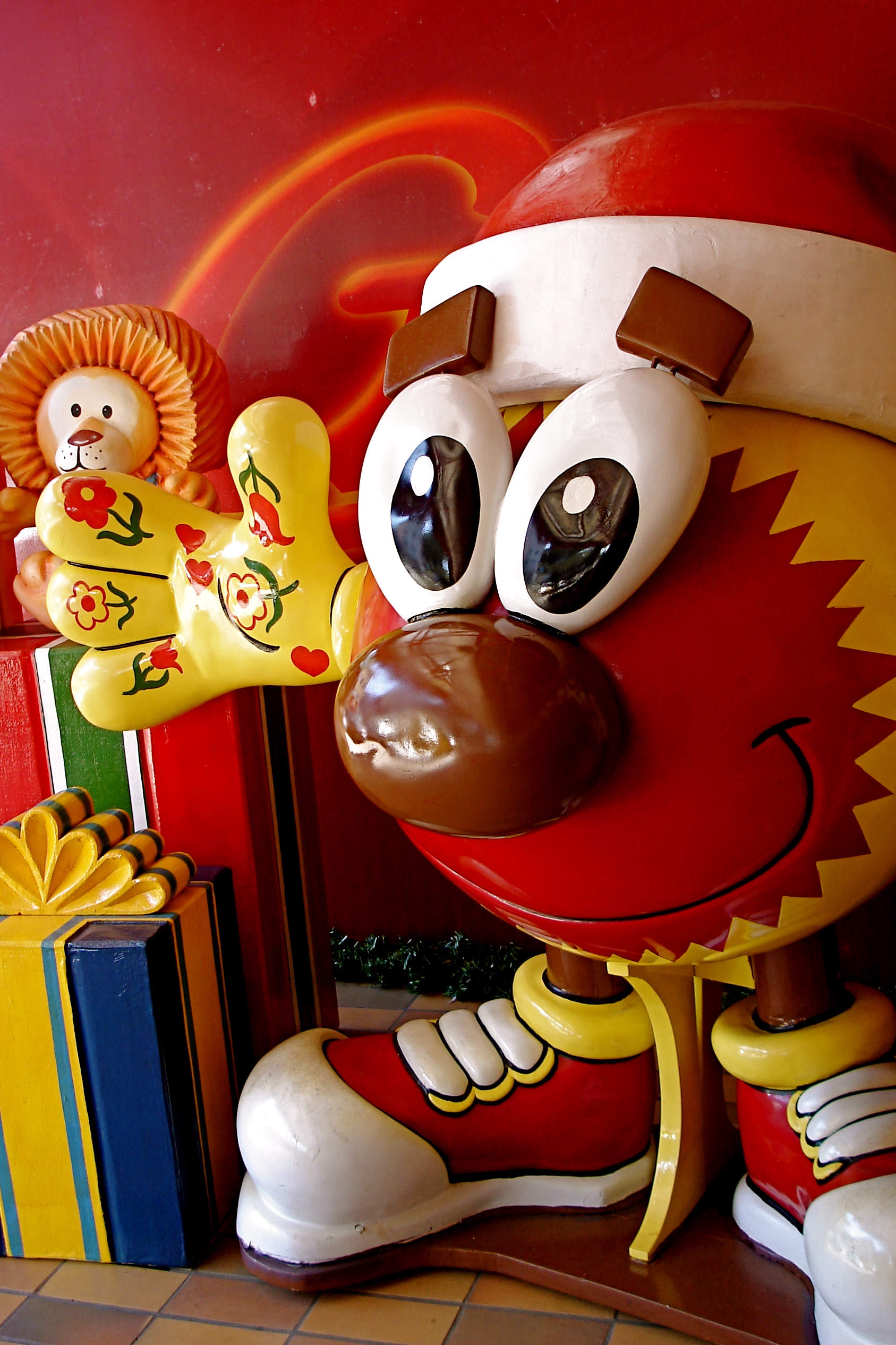
    Today, we visited the Garoto Chocolate Factory, the fourth and final thing to do when visiting Vitoria. Garoto is the brand of chocolate here in Brazil and while technically owned by Nestle nowadays, Garoto chocolates are 100% Brazilian.

    A factory whirring and buzzing away is one of the purest examples of human ingenuity. I was frequently hypnotized by the rhythmic filling and flipping of candy trays to the point I became completely unaware the guide was speaking. The production line is amazing. Each machine is perfectly timed, measured, programmed, and maintained. Here’s the process for one single candy, the famous (to anyone who has spent a month in Brazil) Serenata de Amor.

    Serenatas are chocolate coated balls, with crispy wafer shells surrounding a hazel nut creme filling. They are the overwhelming favorite among Garotos candies.

    First on the conveyor belt are the shells in long sheets. The shells arrive on the conveyor concave. They are flipped on a ferris wheel contraption before passing through a humidifier. They are rehydrated by 5% and I would love to know how long it took to determine 5% provided the optimum crunch.

    After their trip through the sauna, the shells are filled. Tubes running across the ceiling, labeled “clear filling”, squirt the filling into each half shell before sending the sheets down the conveyor to be pressed together. The now complete balls, still together in sheets, roll through a refrigerator to cool the filling. Then they’re cut into individual balls of yumminess.

    Finally, it’s time for the chocolate.

    We followed the conveyor belt into another room and the smell alone was enough to satisfy any chocoholics craving for months. The shells pass first through a cascade of dark chocolate, are cooled and then are drenched in milk chocolate. They are sorted and distributed along the conveyor belt to four different wrapping machines. I have no idea how these machines work. Candy went in naked and came out with neatly twisted wrapper. It happened too fast for the human eye.

    Just how fast? Depending on the setting, the machine can wrap between 850 to 1200 pieces in a minute. And there are four of these machines wrapping 24 hours a day. In a single day this factory produces 3.5 tons of Serenata de Amors.

    Of course the tasting stations along the way were gluttonous and generous enough to put you off chocolate until Easter (which the factory is already producing for), but it was seeing the production, spinning and whirring, perfectly timed that I enjoyed the most. The engineering on display gives me faith in humanity. If we can build a sauna for 3.5 tons of candy, can a pill that increases your metabolism on holidays and candy factory visits be far off? That would be pretty sweet!
  • O Convento Nossa Senhora da Penha

    O Convento Nossa Senhora da Penha

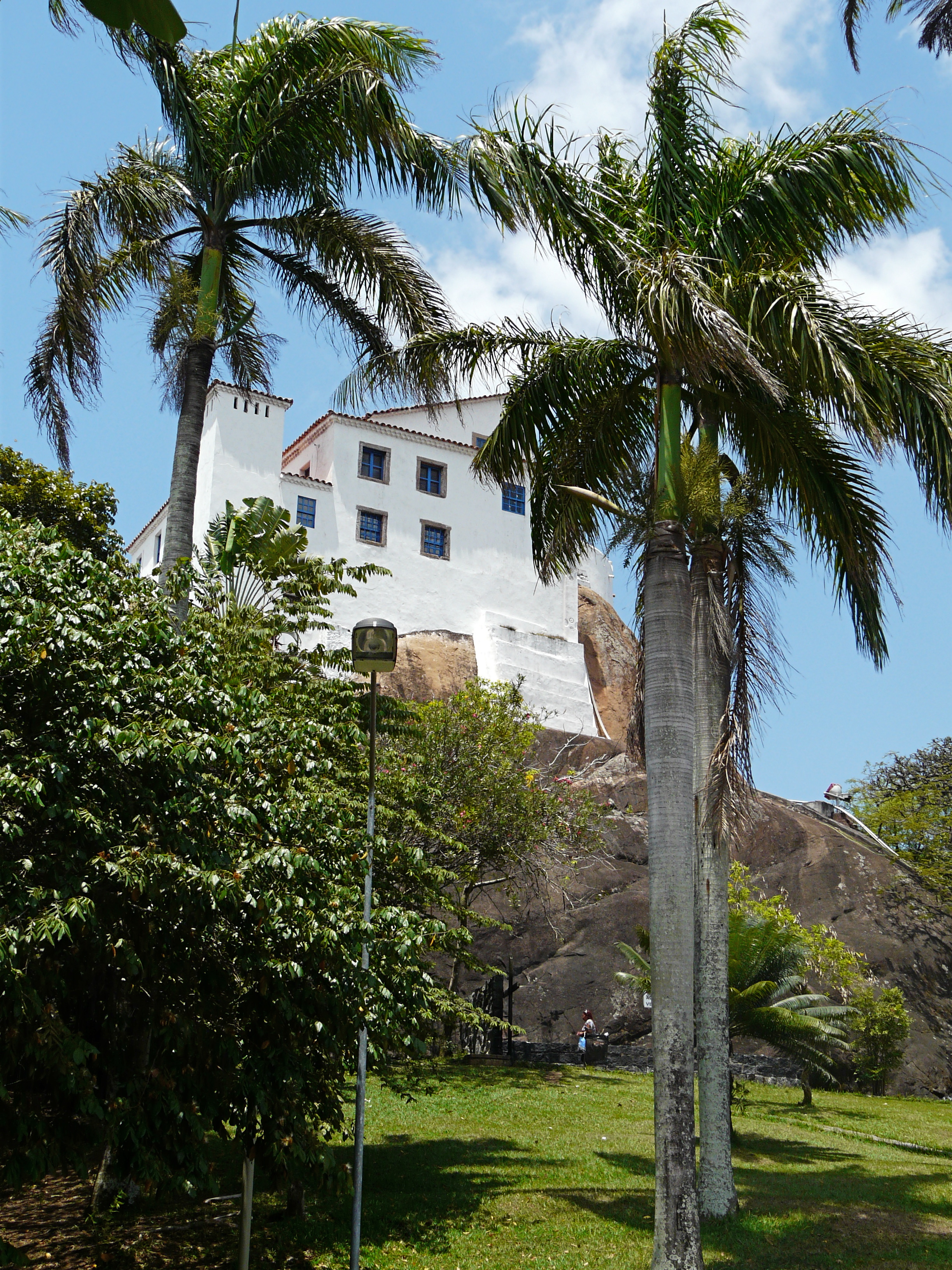
    I mentioned in a previous post the four attractions of Vitoria: 1) eating the regional fish stew more appetizingly called Moqueca, 2) visiting one of the beach towns just outside of the city, 3) visiting the 16th century Convento de Nossa Senhora da Penha and 4) visiting the Garoto Candy Factory.

    My husband and I recently did number three. We took a morning and wandered around what turned out to be a nun-free convent.

    The Convento da Penha is surprisingly not a convent at all. At least, when I heard “convent” I imagined a group of grumpy yet ultimately tender hearted women wearing black and all possessing phenomenal singing voices. I’m not Catholic but I saw the groundbreaking documentary Sound of Music and it’s contemporary follow-up Sister Act.

    Unfortunately, there are no nuns there today, nor have there ever been. The paintings of monks everywhere only confused me further. Clearly, “convento” has a different meaning in Portuguese.

    Because there was no soaring soprano, we had to be entertained by history and an interesting yet disturbing “Wall of Miracles.”

    The Wall of Miracles. People who have had their prayers answered by Nossa Senhora da Penha will post thank you messages on her wall. (No kids, Nossa Senhora is not on facebook. There’s an actual wall.)

    It’s a lovely concept that ends up being darn creepy. Many people have said thank you with pictures of the gaping wounds and mauled limbs that were saved. Or with locks of hair. Few things creep out like 30 year-old locks of hair. Gross!

    One of the older “thank you” walls, comfortingly free of human hair.

    The city of Vila Velha is just across the bridge from Vitoria. For those who know Rio, the relationship between Vitoria and Vila Velha is more like Zona Sul and Barra than Rio and Niteroi.

    People who live in Vila Velha talk about the low cost of an apartment by the beach and those in Vitoria say “Yeah, but you have to live in Vila Velha at least an hour away from anyplace you’d actually like to be.”

    Here’s one of the Convento’s original telephones they’ve successfully restored. There’s a fund accepting donations if you’d like to help with the restoration of the original snack bar.

    It’s worth visiting the Convento if only for the spectacular views of Vitoria and Vila Velha. My only complaint is that after spending an entire morning there, I still don’t know which Mary sighting Nossa Senhora da Penha refers to. Can anyone help me out here?

    Next stop on our tour of Vitoria, the Garoto Candy Factory tour! Our tour is scheduled for a week from Monday. We’ve been instructed to wear long pants and no jewelry. Sounds more hardcore than my tour of Hershey World.

  • The Delicious Moqueca Capixaba

    The Delicious Moqueca Capixaba

    When visiting Vitoria there are exactly four things to do: 1)spend the day at one of the nearby beach towns, 2) visit the Garoto candy factory, 3) see the 16th century Convento da Penha and 4) stuff your face with Moqueca.

    Moqueca (pronounced Mookecka) can generally be described as a fish stew. Or, more accurately, the greatest fish stew ever made. There are two kinds of Moqueca in Brazil, Moqueca Baiana and Moqueca Capixaba. The basic ingredients are the same for both, fish, onions, tomatoes, garlic, and cilantro.

    The Moqueca Baiana, from the state of Bahia, uses dende oil (a kind of palm oil) and coconut milk


    The Dende Palm

    The Moqueca Capixaba, from Espirito Santo, draws more from native Brazilian cuisine. Traditionally, it’s cooked in a pot made with black clay and tree sap. The stew is colored using arucum, a natural pigment made from the urucu flower. Moqueca Capixaba uses olive oil instead of dende and doesn’t have coconut milk.


    The urucu flower

    Which version of Moqueca is tastiest? Well, that depends on which Brazilian you ask. Unfortunately, I’ve not had the Baiana version in order to declare definitively that the Capixaba version is better, but I can say the Moqueca Capixaba is not just a dish. It’s an experience.

    If ordering a Moqueca, I recommend having a very early, light breakfast and foregoing food for the rest of the day. If you’re a calorie counter, you might as well plan on not eating for the preceding 24 hours. You should also have the afternoon blocked off for napping. There is no strolling or sight seeing after this meal.

    You’ll be able to choose what kind of fish you want, but in Espirito Santo it’s almost always a kind of hard, white fish. My husband and I always order dorado. That is a hearty fish. We also like to have a shrimp sauce. As you can see the restaurant in Ubu is pretty generous with their shrimp.

    In addition to the stew, you’ll also get white rice, piraõ (a fish juice goo, very tasty) and Moqueca Banana (amazing!). Our favorite place also includes a delicious and totally unnecessary fried shrimp appetizer.

    Everything is brought to the table in a steaming, bubbling collection of black pans. The steam rising off the stew is so thick for a few seconds you can’t see across the table. Serving yourself is like dipping into a witch’s cauldron.

    There is no better way to spend an afternoon than gorging on Moqueca followed by a long, quiet nap on the beach. It’s become our Saturday routine, weather permitting. We always love company, so shoot me an email if you’d like to join us sometime.

    The Moqueca pictures were taken at Moqueca do Garcia, on Ubu beach, directly in front of the sea. Find Ubu and you find Garcia.


  • Ubu, our hidden gem

    Ubu, our hidden gem

    For me, one of the greatest pleasures life in Vitoria has to offer is the opportunity to visit a gorgeous beach, on a gorgeous day. Can’t I do that in Rio? Yes, but I have to share the beach with 1 million other people. I don’t really like to share. That’s why I prefer this little, hidden gem called Ubu.

    The coast of Espirito Santo is lined with small beach towns. The relatively small population of the state will head out every weekend and drive to one of the three or four beaches within an hour of their homes. If you’re willing to drive an hour and half, you can have the beach to yourself.

    Yesterday was a perfect beach day. It was the kind of day against which all other beach days are judged. A blue sky with a few clouds like stretched out cotton balls. The temp was in the 80s and a constant strong breeze made everything perfect. There were not more than 30 people on the beach. A gorgeous beach, on a gorgeous day and we got it all to ourselves.

    I’d tell you how to get to Ubu, but then you might actually come.

    And did I mention the moqueca restaurant in front of the beach?

    The famous Moqueca Capixaba deserves and will receive its own post. To be continued…

  • Hiking Pico da Bandeira

    Hiking Pico da Bandeira

    We’ve had a lot of holidays recently due to the World Cup.  Many Brazilian institutions have realized their employees are going to be watching the game regardless so they might as well get a holiday and do it watch at home.

    My husband and I used one of these holidays to visit the Parque Nacional do Caparão.  The park sits right on the border of Espirito Santo and Minas Gerais.  If you think Brazil is nothing but beaches, then visit Caparão.  The lush forests, mountains and numerous waterfalls are evidence of how diverse the Brazilian landscape truly is.

    Now, I’m all for appreciating a nice waterfall, but I don’t jump at every opportunity to spend four hours hiking up a mountain.  I don’t remember ever saying “Oh yes sweetheart, I’d love to hike up Brazil’s third highest peak with you,” and yet that’s exactly what I wound doing at 8am last Tuesday.  My husband and I hiked 3.5km to Pico da Bandeira, the third highest peak in Brazil at 9,482ft.

    The peak can be reached from either the Espirito Santo or Minas side of the park.  We took the ES trail and while it is shorter it is also more difficult with a very sheer drop off right before the peak.  In fact, the trail gets so steep and the drop is so far, I did not feel comfortable coming over the summit in my old tennis shoes.  If one foot lost its grip, it would be a long way down.  I was also very cold at that point.  My executive decision was to turn back, get out of the wind, eat lunch, and get back down injury free.

    Not only did we avoid injury, but we also got some incredible views, great photos and a chance to have an entire mountain range to ourselves.  We didn’t see a single person the whole day.


  • Road Trip Munchies

    Road Trip Munchies

    About a year ago my husband began working in the state of Espirito Santo, just north of Rio.  As a result, road trips have become part of our weekly routine.  And you know the best part about roads trips?  Junk food!

    I believe road trips offer a brief hiatus from rules of healthy eating.  Any car trip lasting longer than two hours puts the world into a state of suspended animation allowing you to eat whatever you want without consequences.

    True road trip food must come from either a fast food chain or gas station convenience store.  (Rest station vending machines work too.)  My go to road trip munchies in the US are Yoohoo and ranch flavored corn nuts.  Mmmmm, delicious!  Sadly, neither of these exist in Brazil, so I’ve had to explore new options.

    First, candy!  Brazil has two big candy makers, Garoto and Lacta.  Garoto sells many delicious candies including mini chocolate bars, only four squares, in a variety of flavors.  In my opinion, Lacta is a second-tier candy maker. The only Lacta product worth consuming is a Bis, a type of Brazilian Kit Kat.

    Another popular snack is Japanese peanuts.  They’re roasted peanuts with a crunchy, salty shell around them.  I don’t know what the shell is made of or what exactly makes them Japanese.   They sure are tasty though.

    You can also find small bags of pretzel sticks.  Based on the exclamations points and the word “NEW” all over the packaging, I can only assume pretzel sticks only just made it to Brazil and everyone is very excited about it.

    There seems to be a lot of dried fruit.  I don’t really know.  I don’t shop in that section.

    A favorite of many Cariocas is the biscoito de vento, air cookie.  It’s salty so it’s not really a cookie but it has so little substance I’m at a loss as to exactly what it is.  It’s crispy, filled with air pockets, and dissolves immediately upon hitting your tongue.  Is it corn?  Wheat?  I can’t say but it has a very satisfying crunch.

    Finally, potato chips. I can sum up the difference between American and Brazilian chips in two words, meat flavored.  Yes, the US has BBQ flavor but it’s referring to the sauce.  When a Brazilian chip bag says “roasted meat” the chip is going to taste like pot roast.  Unmistakably and disconcertingly like pot roast.

    If you’re not a red meat fan, there is also grilled chicken and turkey breast. Even the “herb” flavored reminded me, oddly, of tandoori chicken.

    And here we have the limit of my cross-culture understanding.  I do not want my potato chips to taste like meat.  Ranch dressing, fine.  Turkey breast, no.  My tolerance goes only so far. This is one tradition I will not be adopting.  I’m going to stick with my Japanese peanuts.

  • Hosting family

    Hosting family

    Last week, I played host to my cousin who flew down from Atlanta.  It was her first trip to Rio. And she did her research.

    We drank coconuts on Copacabana beach and watched footvolley on Ipanema.  We shopped in Leblon and rode bikes around Lagoa.  We hiked up Morro da Urca and fed monkeys.  We explored the botanical gardens and got harassed by some aggressive strawberry salesmen at the market.  Salgados, acaraje, tapioca, sushi, and pounds of red meat were consumed in addition to 16 different kinds of fruit juice.  (Not even half of the 41 fruits on the menu.) Her trip ended with the obligatory visit to Cristo Redentor.

    After a week with my cousin, I now have some idea what it’s like to have a five year-old on summer vacation.

    I’ve had to translate for all of my family but, unlike other visitors, my cousin has an endless supply of energy and tendency to shout recently learned Portuguese phrases at totally inappropriate times.  A pre-departure nightmare involving a kidnapping meant leaving her on her own was out of the question.  Her first question every morning was “What are we doing today?”  So, she couldn’t read or speak to anyone, couldn’t be left alone, needed to be entertained every day, and she found the Portuguese word for armadillo absolutely hilarious.  In Rio, my cousin becomes a 23 year-old child.

    Our week went like this.  “What would you like to do today?”  “What do you feel like eating?”  “What do you want to drink?”  “Who else do you need to get gifts for?”   “The word for opossum is gambá.”  “Where do you want to go now?”  “Let me ask him where the bathroom is.”  “Not a good idea to shout ‘gambá!’ in the middle of the market.”  “What would you like to do if it rains?”  “Fui assaltada means ‘I was assaulted.’”  “What size do you want?”  “It’s 35 reais.”  “Please don’t tell the taxi driver you were assaulted.”

    On her last day, she proudly announced that this was the first time she had ever exhausted a guidebook.

    For my cousin every new experience, no matter how small, was worthy of being celebrated, turned into a joke, and discussed repeatedly.  While her constant enthusiasm is tiring it is also her most admirable trait.  She still has that childlike wonder which turns a trip to the grocery store into an adventure and pot-roast flavored potato chips into a treasure.

    Our week together in Rio was great fun!  Exhausting but great fun.  She helped me realize just how much fun Rio can be with a sense of adventure and that I will probably be sending future kids to summer camp.