Tag: Working in Brazil

  • Expat Milestones: First Job Interview

    Expat Milestones: First Job Interview

    I’m bragging a little today. You see, in the life of an expat there are some standard milestones. At least standard for an English speaking expat who moves to a non-English speaking country with no previous knowledge of the language. For example…

    -There’s the first time you order a pizza over the phone in your new language.

    -The first time you notice and can yell at the taxi driver for taking you on the longer “tourist” route.

    -The first time you understand enough to genuinely enjoy a film in your second language.

    Last week I hit a new one: first successful job interview in your second language.

    On Wednesday, I received the official offer to teach here in Vitoria. I had been waiting to hear back and a particularly frustrating night of Portuguese had given me a sinking feeling that I had blown the interview.

    I didn’t know going into the interview that it would be in Portuguese. I had already been through one interview with the high school coordinator. We spoke in English. All emails had been in English. I was applying to teach in English. I was reasonably expecting more English.

    When I walked in for the second interview with the principal, as we exchanged greetings the high school coordinator said, “Vamos falar em português, tá bom?” We’re going to speak in Portuguese, ok?

    Had I known the interview would be in Portuguese, I might have abandoned the entire project. I do not have very good Portuguese. It’s not false modesty. It’s speaking only English at home and having only American friends in Rio. The Portuguese I have acquired has been in spite of a pathological fear of sounding like an idiot, so the announcement that I would be interviewed by the principal in Portuguese caused a shot of adrenaline urging me to flee out the door.

    As I sat down in front of her desk, I told myself, “Just keep talking. If you start thinking too hard you’ll realize all the mistakes you’re making. Then you’ll feel embarrassed, followed by panic, and you’ll end up either tongue-tied or crying.”

    So I smiled, kept my arms at my sides to hide the giant sweat stains appearing, and I kept talking. At the end of the interview the principal complemented my fluency.

    Now, I’m the newest teacher at my school and I have to say I’m pretty proud of myself. Not only did I interview in Portuguese but I got the job without any help. I researched and found the school on my own. I sent an email asking if there were opportunities for someone with my background. I sent my resume and had two interviews. I didn’t use my husband’s contacts or drop a single name. I got the job entirely on my own.

    The only downside is that I just found out American expats still have to pay US taxes. Damn.

  • My Peculiar Professional Niche: Helping Brazilian Students Study Abroad

    My Peculiar Professional Niche: Helping Brazilian Students Study Abroad

    Last Friday, Veja.com, posted an article on the growing number of Brazilian students attending college abroad. I found the article from a link posted by one of my former students, who just happens to be featured in the article. Flavia, is one of the 24,000 Brazilians, who attended college abroad in 2009. She’s studying economics at Harvard. I like to think I played a very small part in getting her there.

    My peculiar niche in the great market of Rio de Janeiro was teaching Brazilians how to write the personal statement for college applications. I also taught Kaplan SAT prep classes through FK Partners, but it was the essay workshop that I loved most.

    The Fulbright/Education USA office in Rio was kind enough (desperate enough) to let me develop a workshop despite the fact I had very little experience teaching kids. I also had real doubt as to whether or not I could spend time with a room of full of teenagers and not resort to physical violence at some point. I did not like high schoolers when I was one, I was pretty sure they hadn’t improved in 8 years.

    Well, 8 years changed something because I LOVE working with teenagers. At this age they’re just starting to figure out who they are as individual people, with their own opinions and dreams. Even at their most self-absorbed moments, I find them fresh and amusing. (Of course, I’m teaching kids who are trying to attend college. The true hooligans don’t sign up for my class.)

    Flavia was in my very first workshop. I told the kids they were my guinea pigs (a metaphor I then had to explain) and they were great. Respectful of me and supportive of each other. That support turned out to be a critical element.

    It turns out a workshop on personal statements really does get personal. In two weeks, I knew what achievement my students were most proud of, what they were afraid of and their most important memories. Forget therapy. If you want to know the inner most thoughts of a group of teenagers, have them write a personal statement.

    I also love the cultural elements that come into play. You might not know, but probably are not surprised to learn, that writing about yourself in first person is a very American thing. While my students definitely struggle with prepositions, they are completely thrown by the first person. I have been told time and again that Brazilian students never write in first person.

    And this whole, “what event in your past has most shaped who you are today” self-reflective stuff. “American universities really want to know about what I learned from my mom?” “Why does my opinion matter? I’m not anyone important.”

    Can you imagine an American teenager asking why people would care about his opinion?! It’s pretty much assumed by all American teens that their opinion is in fact the only one that matters. And that’s what I love about the workshop. I get to see how a different culture interprets something so ubiquitous to my American perception. The College Application Essay.

    Unfortunately, I won’t be giving any essay workshops this fall. Our move to Vitoria has made that impossible. But I am pursuing some options that I hope will allow me to keep working with teenagers and hopefully, send a couple more Brazilians Flavia’s way.

  • Culture Shock Causes 3 Year Loss in Productivity

    Culture Shock Causes 3 Year Loss in Productivity

    I had to update my resume last week for the first time in several years.  I was filling in dates and noticed a nearly three year gap between jobs.   Thanks to some nonspecific start dates, on the resume it looks like only a two year gap, but I know the truth.  I didn’t do anything for three years. At least not anything that could be put on a resume.

    “September 2006 – October 2009: Learning new language, new marriage, new culture and trying to avoid plunging into serious depression,” does not count as legitimate work experience.

    It’s not just the lack of formal employment that struck me.  I had a blog that whole time, yet I almost never wrote in it.  I didn’t need any Portuguese or work permit to write.  What’s my excuse?  Why did I do nothing for the better part of three years?

    I think I finally have an answer. I was mentally incapacitated.  I’m not kidding. Over the last three year, I was physically unable to produce quality thought or work during that time because my brain’s limbic system had taken control from my cerebral cortex due to the constant stress I was under from culture shock.

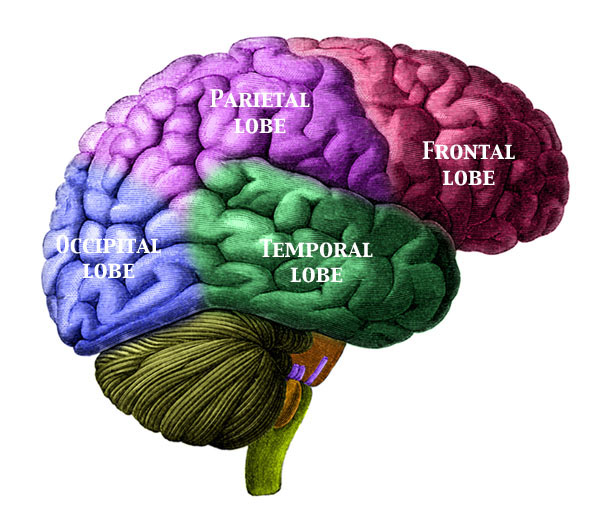
    I came across an article written for teachers of creative writing.  It explained from a neurological standpoint how stress inhibits creativity.  Human brains are typically divided into 3 systems: the brain stem which keeps your heart beating, the limbic system which provides emotion to input like “be happy,” or “get ready to kick some ass,” and the cerebral cortex which handles most of the problem solving, creative thinking that defines being human.

    When a person is relaxed the cerebral cortex is in control.  Creative thinking comes easily.  People are able to consider options, weigh consequences, and make a rational decision.

    Unfortunately, the cerebral cortex is not always in control.  The last time someone cut you off and your face flushed and you imagined running the jerk off the road?  That would be your limbic system.  When the idiot cut you off, the driver was perceived as a threat, and your limbic system triggered your fight or flight response.

    With the limbic system in control it’s physically impossible for someone to be at her creative best. Rational thought?  Not possible either.  Focusing on solving a problem?  Nope.  Self-motivation?  Sorry, not handled by the limbic system. But long naps, crying, cursing, and slamming doors are all things the limbic system does very well.

    That last list of behaviors are pretty common manifestations of culture shock. To people who’ve never lived abroad culture shock might sound, I don’t know, obvious.  “Gosh, living in a new country is difficult.” And something so obvious must surely be avoidable.  “Maybe if you just did the prep work and had the right attitude, you’d be a local in no time.  Just like Julia Roberts in that movie with the pasta and elephants.”  Right?

    God, I wish.  As far as prep work goes, I studied culture shock.  I worked with international students going through the process.  I have a freakin degree in cross-cultural communication.  And how did I handle moving to Brazil?  Well, I have the first three seasons of Grey’s Anatomy and Sex and the City memorized. Feel free to draw your own conclusions.

    It does not matter how much advance research you do, everyone goes through culture shock.  What we call culture shock is the brain creating a new operating system for the new environment.  Your brain has been trained to operate in a specific environment.  In your own culture your brain knows what meaning to attach to symbols and behaviors.  It can anticipate reactions.  It can predict a chain of events.  Different cultures have different cues, and thus require a new operating system.

    Culture Shock has physical symptoms.  Headaches, stomach pains, an unfortunate variety of digestion problems,   physical exhaustion, all are a result of the enormous 24 hours a day, 7 days a week workload your brain is handling.  The brain is frantically creating new connections and pathways to understand the new culture.

    This constant work, combined with the fear from not understanding the words or behaviors of people around you puts serious stress on your body.  And what happens to our brains when we’re stressed?  The limbic system takes over.  Limbic system inhibits creativity and problem solving.

    And so, due to the stress of culture shock I was physically incapable of producing my best quality, or any, work from 2006 – 2009.  That’s my story. I’m sticking to it and honestly I don’t have a better explanation for my sudden change in behavior.

    Beginning last October, after not writing for 3 years, new blog topics started popping into my head daily. I’ve been writing regularly since February and enjoying it. I have the energy and desire to go jogging.  I can’t remember the last time my previously moody stomach complained.  It feels like I found myself.  It took three years but I think my limbic system finally surrendered control.

    Hello, cerebral cortex. It’s so nice to be working together again.  Can you help me update my resume?