To celebrate International Women’s Day this week, I watched a lot of videos with infuriating facts. As a writer, book lover, and mother of a daughter, this one caught my attention. It made me get up and go straight to my daughter’s bookshelves.
One thing I can do right now to combat the publishing industry’s gender bias in kid’s lit is help spread the word about amazing picture books with female protagonists and encourage you to buy them. (Because sales matter!) And don’t buy them just for girls, please!
It’s important to read books with female protagonists to boys because reading about people different from ourselves teaches empathy. Shannon Hale, prolific author in every age group (her Princess in Black books appear on my list) wrote an amazing post about the dangers of not giving books with female protagonists to boys. Reading diversely also develops a realistic idea about the world which is filled with different kinds of people. I didn’t think twice about reading Peter’s Snowy Day to my daughter, despite the fact she is not a boy, black, or ever going to see snow outside her door. It’s a delightful human story and that’s what matters.
The books on my list are funny, exciting, and thought provoking stories that both girls and boys will enjoy. They’re set in countries all over the world and feature characters of different colors, languages, and cultures. The only commonality is that all the main characters are human female. (Sorry, Olivia. Female animal protagonists didn’t count for this list. You’re still totally awesome though!)
20 Fabulous Picture Books with Diverse Female Protagonists (In no order other than how I came to them on my daughter’s shelf)
 Journey by Aaron Becker This stunning and wordless book, follows the adventure of a girl as she journeys to a fantastical land with the help of a magic crayon. There are enchanting forests, flying carpets, and bad guys on air ships!

Normal Norman by Tara Lazar illustrated by Stephen Britton This book is laugh out loud adorable as the narrator tries to define the word “normal” using a totally average orangutan. Things start to go wrong starting with Norman’s refusal to eat a banana and his preerence for pizza.
 If You Give a Pig a Pancake by Laura Numeroff illustrated by Felicia Bond If you loved what happens when you give a mouse a cookie, check out what one little girl has to deal with when she caves to a pig’s demands.
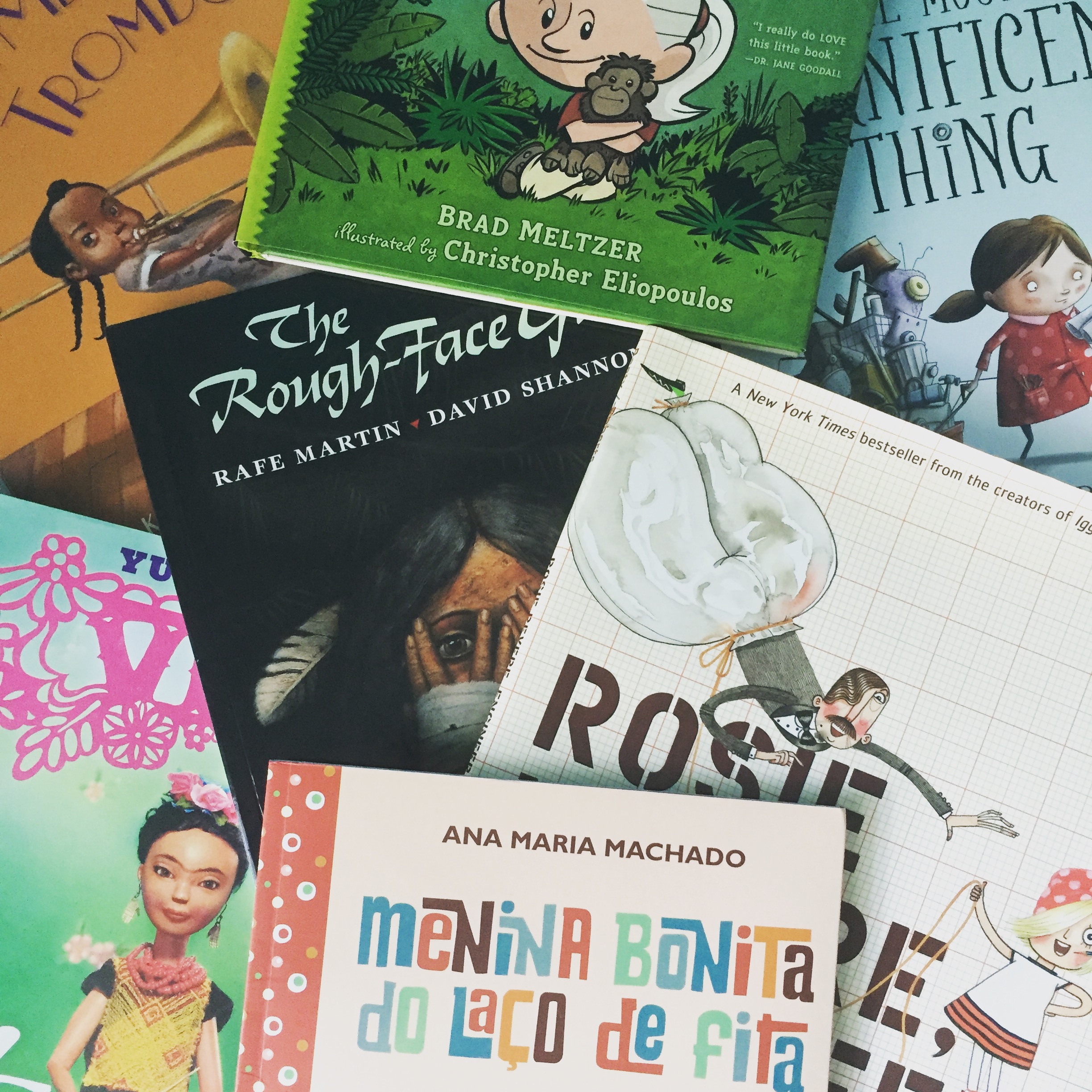
 Viva Frida by Yuyi Morales This is one of the most gorgeous books my daughter owns. The text (what very little there is) in both English and Spanish goes through the themes in Khalo’s work, such as live, imagine, create. The illustrations are bright and vibrant and straight out of a dream.
 Paper Bag Princess by Robert Munsch illustrated by Michael Martchenko I’m not at all opposed to Princesses if they’re one among many different types of characters and take matters in their own hands like Princess Elizabeth. She has no intention of letting that dragon get away with burning down her castle and stealing her fiance.
 The Rough Face Girl by Rafe Martin illustrated by David Shannon In addition to the beautiful illustrations, the heroine wins the day because of her character. She’s not pretty. She doesn’t have fancy clothes, but she sees the beauty and power in nature and understands what’s truly valuable. Yes, the book is about a young woman looking for a husband, but the message about character over appearance and clothes is an important one for all kids.
 My Two Grannies by Floella Benjamin illustrated by Margaret Chamberlain In addition to featuring females both young and old, black and white, the book also deal with two different cultures mixing! Multicultural, multiracial, and female protagonists! There is no reason not to have this book on your kid’s shelf.
 Pretty Salma by Niki Daly A Little Red Riding Hood tale set in Ghana. What I love about this version is that Salma redeems herself after getting tricked by coming up with the idea for how to scare away Mr. Dog and save Granny.
 My Pet Dragon by Christoph Niemann Lin has lost her pet dragon! She has to go on an adventure to find him and along the way the illustrator cleverly introduces some Chinese characters. Of your kid isn’t going to be fluent in Mandarin at the end, but thank to this book my daughter is ware that not all languages use an phonetic alphabet like English.
 Menina Bonita do Laço de Fita by Ana Maria Machado illustrated by Claudius A Brazilian story about a beautiful little girl who so captivates a neighboring bunny that he wants desperately to become black like her. She gives him all sorts of funny tricks to turn black. None of them work. Don’t worry if you can’t read Portuguese. There’s an English version on Amazon.
 The Most Magnificent Thing by Ashley Spires illustrated by Mark Pett Yes, this book is about a girl who loves to build things (awesome!), but that’s not the reason I bought it. My daughter gets frustrated easily and goes from fine to throwing things in a heartbeat. Just like the girl in the story. If you know a kid who has trouble coping with frustration when things don’t work exactly right, this book is a MUST read.
 The Girl Who Never Made Mistakes by Gary Rubenstein Similarly to The Most Magnificent Thing, this book is great for kids who stress about being perfectionists and have a hard time dealing when things don’t work exactly the way they wanted. Spolier alert: A mistake is eventually made and lessons are learned.
 As Mil e Umas Historias de Manuela by Marcelo Weberson illustrated by Maluf Santiago Ok, I don’t think there’s an English version of this, but Portuguese and Spanish speakers (because really they’re almost the same language) will love this story of a girl who devours books. Literally. She consumes so many books, she literally becomes a book and the only cure is to write her own story using all the words she has inside of her.
 Wave by Suzy Lee This is a gorgeous, wordless story about a curious girl, a sunny day, and a playful wave. Lee is a fantastic illustrator from South Korea and her primarily ink drawings are stunning. If your child loves the beach, she will adore this book.
 Biscuit series by Alyssa Capucilli illustrated by Pat Schories This is a series of simple stories about a girl and her dog, Biscuit, because it’s not only boys who love their dogs. My daughter adores animals. We bought her first Biscuit story to go with a veterinarian costume. Now that she is starting to read, Biscuit books are great first readers.

 Rosie Revere Engineer & Ada Twist Scientist by Andrea Beaty illustrated by David Roberts Diverse representation in children’s literature is so important and Beaty has written two amazing books that feature girls in STEM fields. They’re rhyming books and a joy to read aloud, and the illustrations are so much fun.
 I Am Jane Goodall by Brad Meltzer illustrated by Christopher Eliopoulos At the end of the video above, the girls asks if the bookseller has any books about a girl going to Mars. Studies have shown that by 5 years old kids already think certain jobs are “for boys”. This book is part of the Ordinary People Change World series. It’s a delightful collection about real people from history in all different professions. Books feature Rosa Parks, Helen Keller, Amelia Earhart, Eleanor Roosevelt, Sacagawea and Lucille Ball for your budding activists, teachers, pilots, politicians, or comedians.
 Mufaro’s Beautiful Daughters by John Steptoe I remember my teacher reading this book to my class in elementary school. It’s a Cinderella story but in this version both sisters are equally physically beautiful. It’s Nyasha’s generosity and respect for all creatures and nature that sets her apart from her selfish sister.
 I Wonder by Annaka Harris illustrated by John Rowe I love this book about a mother and daughter on a walk wondering about…everything really. The book has a beautiful message. It’s ok to say, “I don’t know,” and the beauty of not knowing allows all to wonder about the mysteries of the universe.
 The Princess in Black by Shannon & Dean Hale illustrated by LeUyen Phan This is an illustrated early chapter book and was one of the first chapter books my daughter stayed interested several nights in a row. I love Princess Magnolia, and I think her adventures fighting monsters would appeal to girls and boys. I love the message. You can enjoy a frilly dress at the tea party and also love wearing a mask and boots and fighting monsters. A kid doesn’t have to chose between sparkly tiaras and being a hero.
So those are a few of my favorite pictures books with female protagonists. When you get into chapter books…wow! There’s Matilda, El Deafo, Little Women, Island of the Blue Dolphin, Anne of Green Gable, Smile, and anything by Judy Blume. But that’s another list for another post.
Obviously there are so many more great picture books not on the list. If I’ve left off one of your favorites, please add it in the comments!! I’m always on the lookout for new additions to our library! Our copy of Goodnight Stories for Rebel Girls is on the way!
Save
Save
Save
Save
Save
Save
Save
Save


 Walking down a street in Jaipur, India, I heard what had become a familiar recorded political message blasting out over loudspeakers. The message was imploring people to vote for a particular party in the upcoming election. I turned the corner, expecting to see one of what I had affectionately termed the “propaganda trucks.” But instead of a truck, I saw a man on a cycle rickshaw that looked about ready to fall apart at the next pothole it hit. The rickshaw had two loudspeakers, duct-taped to the handlebars, and dangling wires that crisscrossed back to a stereo, which was also secured to the rickshaw with duct tape. I watched the man pedal by, the squeaking of the rickshaw drowned out by the message blasting repeatedly from the speakers. I was so moved by one of the most humble, yet dedicated, displays of democracy I had ever seen that I decided to take advantage of being in India during a parliamentary election to research local political campaigns.
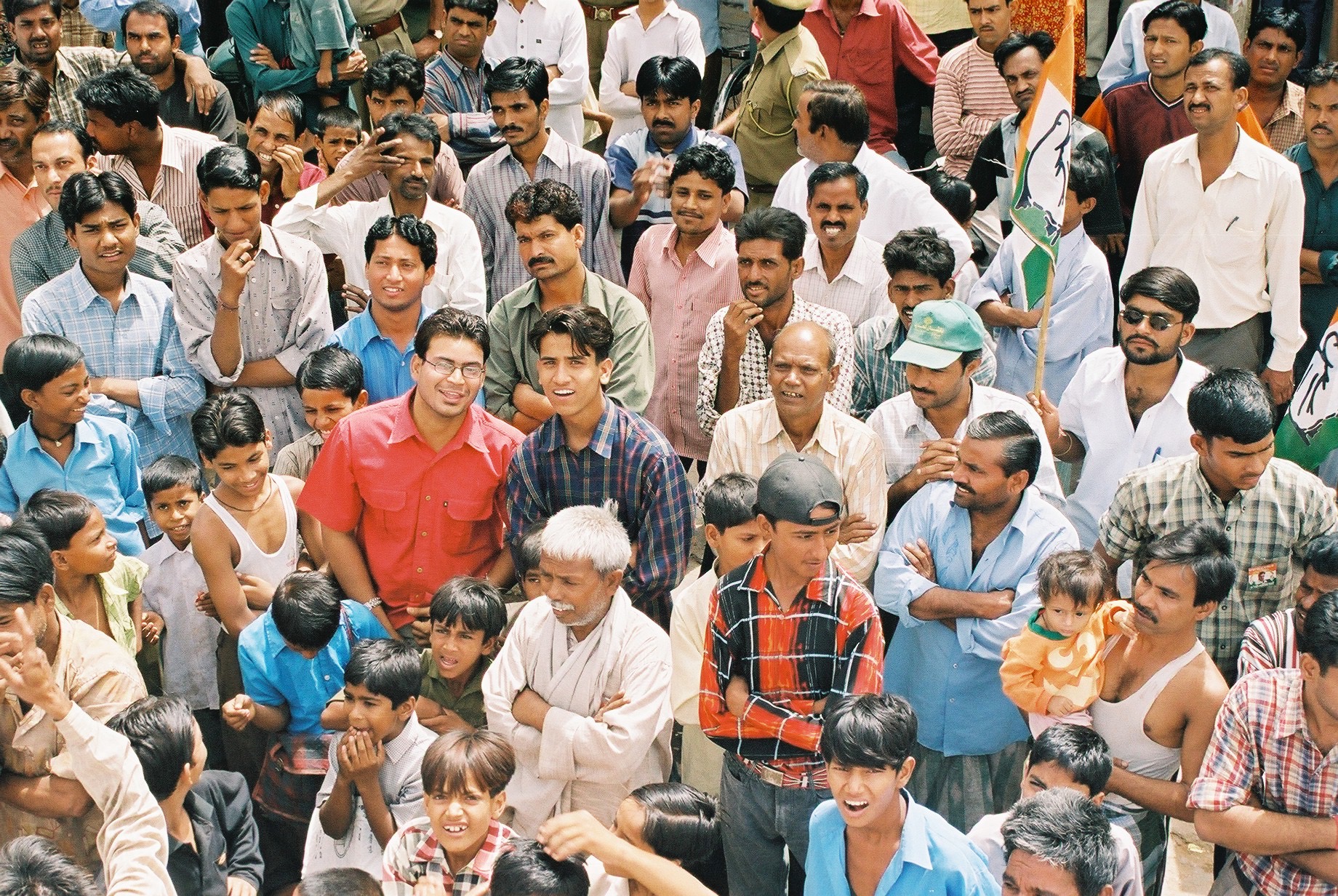
 The candidate arrived about 7:40 a.m., and by 8:00 he had given his speech and started a small riot in the market. The crowd that gathered during his speech had been completely passive, almost indifferent to what was being said, but at the end of the speech some aides brought out boxes of sweets. When the first sweet was handed to a woman in the front of the audience, the impassive crowd suddenly turned violent, surging forward as if on command. Elbows dug into rib cages. Shirts were ripped. People were shoved to the ground. The noise of the market was now drowned out by the yelling of people desperately groping for a single piece of candy. The aides tossed the boxes of sweets into the air over the crowd and hastily retreated. I don’t know whether the sweets actually ended up in anyone’s mouth, or whether anyone ended up getting hurt. I didn’t get the chance to find out. My friend grabbed my elbow, pulling me off the stage.
 After successfully disrupting the daily routine of the market, it was off to a march and rally through the heart of downtown Jaipur. As I trailed behind the candidate I learned that a successful mobile political rally in India must include four things: 1) the previously mentioned “propaganda truck,” brightly decorated, and spewing party slogans through loudspeakers, 2) a group of school children with a sweet song to sing and rose petals to throw (if the kids can be in uniforms, they earn extra points on the “adorable scale”), 3) a memorable stunt of some kind that can be pictured in the newspaper, i.e. milking a cow, and 4) a passionate group of youths who can wave flags and chant nonstop for the entire three-hour walk. Combine these elements and a crowd of hundreds is guaranteed to have developed by the time a candidate has reached the platform where he will give his speech.

 While the campaigns I observed in India were similar in many ways to U.S. political campaigns, they were ultimately, unmistakably Indian. There were the superficial differences: the garlands, turbans, saffron and green banners, the traditional white dress worn by male candidates and the saris worn by women candidates. On a deeper level, the wide variety of political parties vying for power reflects the wide variety of ethnicities, religions and linguistic groups that all live within the world’s largest democracy. A three-hour walking tour is the only way to reach a constituency that does not own televisions or radios. While India currently celebrates its technological advances, I believe its greatest achievement is bringing democracy to one billion citizens—democracy that is delivered when necessary by cycle rickshaw.
 One reason I love writing historical fiction is the chance to discover real people I’d swear were fabricated in someone’s imagination. King João VI of Portugal is one of these people. The man was born to be the comedic relief in someone else’s story. Sure, he was also born into royalty, but he seemed so much more suited for getting laughs than governing.
 But the truly shocking and grand achievement of Dom João was surviving. When monarchs all over Europe were getting deposed at best and beheaded at worst, Dom João, the peaceful dullard, kept his crown, and he did it by being the only European monarch in history to move the capitol of his kingdom to a different continent. This man, who hated change so much his servants had to repair holes in his pants while he slept, moved the capital of Portugal from Lisbon to Rio de Janeiro.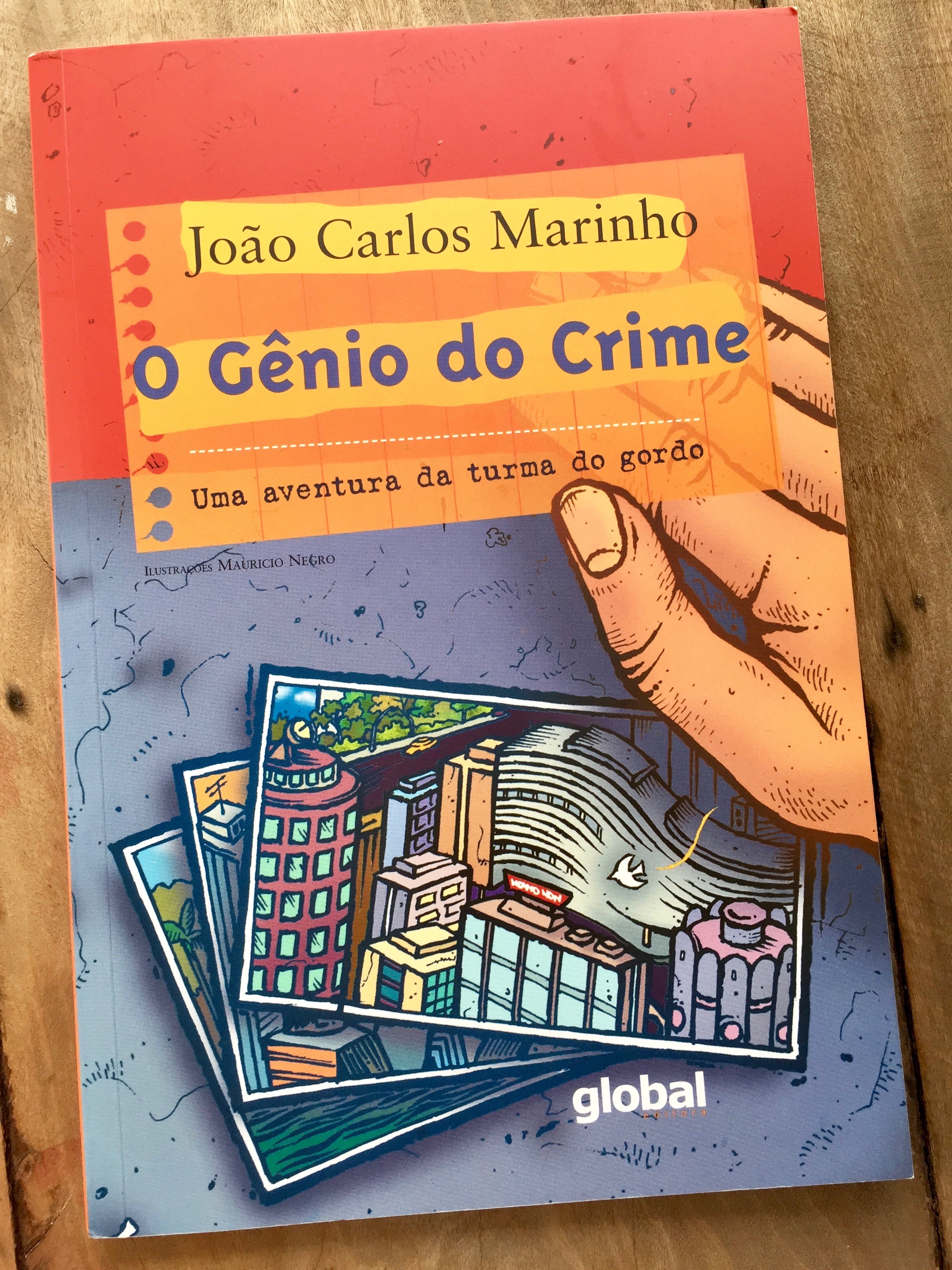
 I recently asked my husband what his favorite books were as a kid and without hesitation he said “O Gênio do Crime.” He couldn’t remember the author’s name, but he remembered in detail an ingenious system the kid detectives invented to tail a very tricky criminal. My husband remembered this book instantly after forty years, and it wasn’t about ancient Rome.
 The kids of São Paulo are on the verge of an uprising when the company manufacturing soccer trading cards stops awarding prizes for collecting because of counterfeit cards being mass produced in the city. (It’s possibly the most Brazilian crime ever.) The police have yet to find this “gênio do crime” (genius of crime), but Edmundo, Pituca, and Bolachão are determined to succeed where the police have failed and ensure the kids of Sao Paulo can continue collecting cards and prizes.
 It happened. I finally got the brutal agent response I will talk about twenty years from now at book signings. I’m a real writer now. Yay!
 My first thought was “Portugal, a Christian country in Europe full of white people, may feel too foreign for Americans?” I’m still trying to figure out what about US demographics gives the agent this impression. If Portugal is too foreign what countries will Americans read about? Great Britain, obviously. France, yes. Germany? What about Russia? They’re white, but their culture is pretty dissimilar to the US.
 The Census Bureas predicts that by 2020, the majority of kids in the United States will be members of a minority race or ethnic group.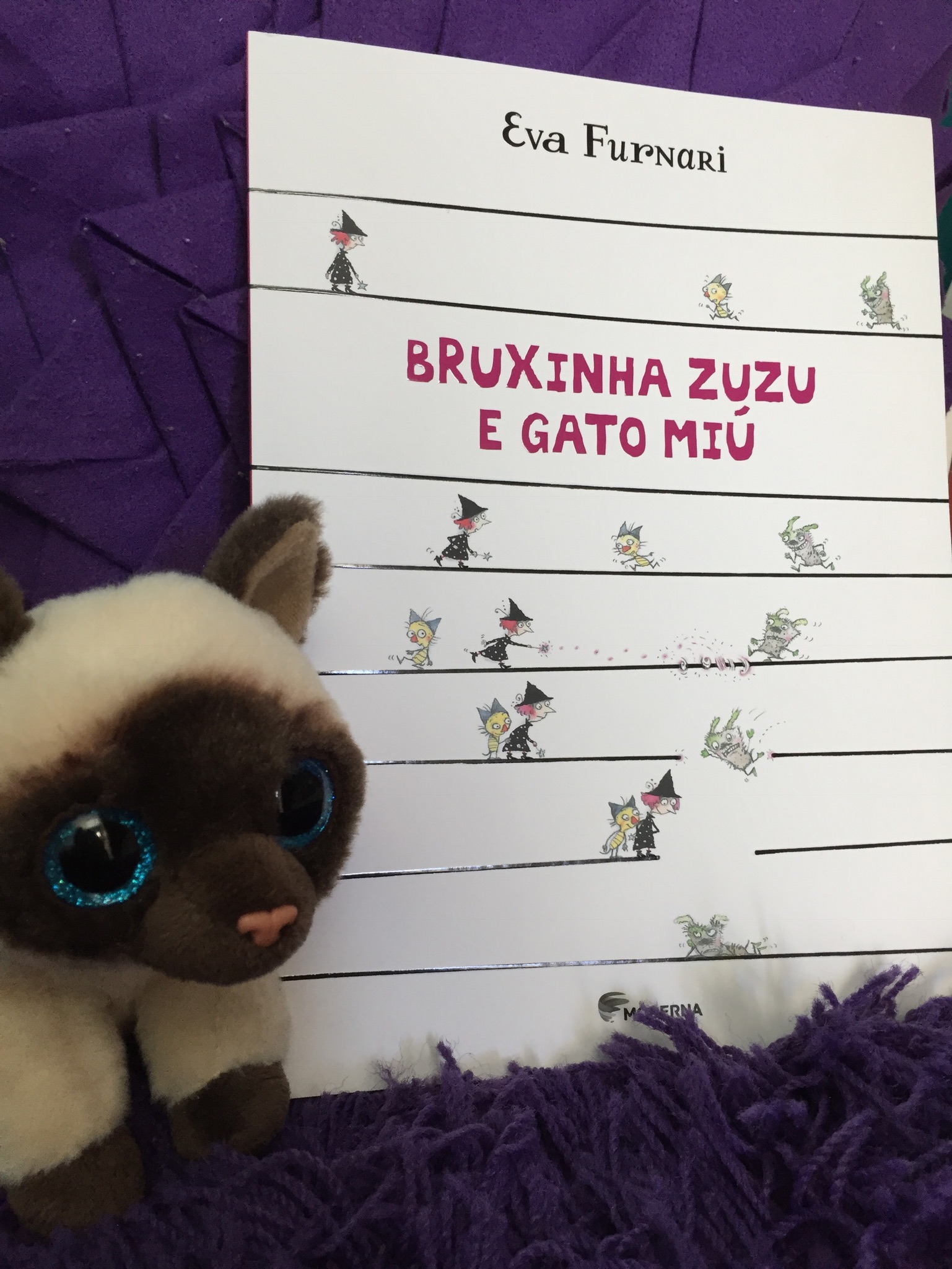
 ANA MARIA MACHADO
 Some of her most famous books include
  CECILIA MEIRELES
 The musicality of her lines is so strong, that “O Menino Azul” still sounded lovely when I read it aloud. (And as all adult learners of a second language know, nothing is harder to read aloud in a foreign language than poetry.) I haven’t been able to find any of her children’s works translated into English, but you can find many of
  EVA FURNARI
 One of her most famous characters is A Bruxinha Zuzu or Zuzu the Little Witch, who never quite seems to master the power of her magic wand. Many of Funari’s books are textless, including our favorite A Bruxinha Zuzu e o Gato Miú, and can be enjoyed regardless of what languages you read. One of her most famous and award winning stories, Felpo Filva, is
  SONIA JUNQUEIRA
 VERONICA STIGGER
 However, one of her most recent books, Onde a Onça Bebe Água, Where the Jaguar Drinks Water, is one of the best books I’ve read for teaching empathy and seeing the world through a another’s eyes. In the story, Jaci is forced to consider the world from the perspective of the Jaguar he’s ends up dining with. Unfortunately, there isn’t an English translation of it or any of her books that I can find but several of her adults works do have Spanish versions available on Amazon.