Author: Brynn

  • Getting a Driver’s License in Brazil

    Getting a Driver’s License in Brazil

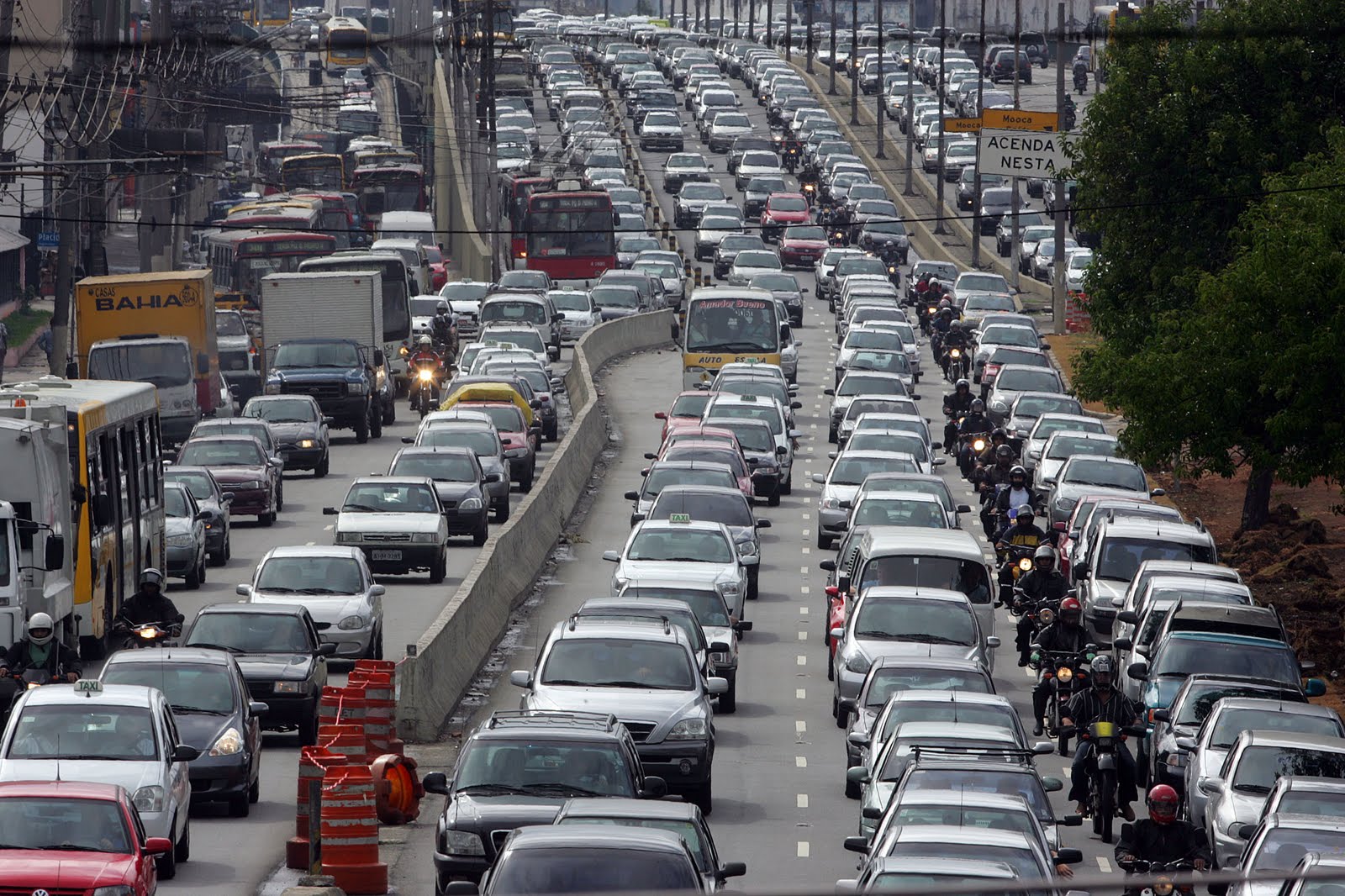
    Traffic in Brazil is not helped by all the unlicensed drivers.

    To put my family at ease, I tend to downplay the more dangerous aspects of life in Brazil, but the truth is you’re much more likely to die a violent death in Brazil than in Canada or Japan or even gun-crazy United States.  Oh, you’re not going to get shot.  No, you’re going to die in a flaming car crash long before you get mixed up in drug-related violence.

    It didn’t take me very long in Brazil to understand that cars were the real danger.  After my first months in Rio, I assumed that traffic in Brazil was governed only by the laws of physics.  I was wrong.  It’s governed by plenty of people laws too.  It is Brazil after all.

    Licenses require medical exams, eye exams, and psychological exams.  Driver’s ed is mandatory and its content federally regulated down to the number of hours for theory and practice.  Thus, the only reasonable explanation for the number of traffic-related deaths here is that no bureaucrat in Brasilia has ever actually driven a car, and they have no idea what skills to include on the test.

    A student of mine recently turned 18 and has been taking his mandatory driver’s ed class.  He brought me several of his practice exams.  He knows I love to laugh.

    Driver’s education courses in Brazil are divided into two parts: 45 hours and 25 hours.  That’s 45 hours in the classroom and 25 hours on the road.  Some people might be thinking, “Gee, wouldn’t it be better is these kids learning to drive a car spent the majority of their class time in a car?”  These people don’t appreciate the teaching power of multiple choice exams and visualizing your goal.  “I can see myself successfully merging in rush hour traffic.”  (Actually, visualizing is the only way to practice highway driving.  Driver’s ed cars aren’t allowed on highways.)

    So if not safe merging practices, what are these up and coming driver’s expected to know?  For one, the best attitude man can have in relation to the environment.  (The answer is “preservation”.)  It’s also necessary to know how the government of Brazil is trying to reduce emissions.  Humans have basic rights and there are a variety of ways we can observe the importance of family and friends to society.  Know that pointing out to a fellow driver that one of her tires is low encourages solidarity and courtesy in society more so than it demonstrates a concern for traffic. Don’t worry about knowing the effects of alcohol on reflexes.  That’s only a leading cause of traffic deaths in Brazil.  It won’t be on the test.

    Now, a 35 question multiple choice test isn’t the only requirement. The non-drivers in Brasilia didn’t want just anybody who can read getting a license.  They also wanted to weed out the crazies, which is why a psychological exam is required.  Again, I think this shows a complete lack of understanding of driving and a prejudice against crazy people.  There’s no reason a person can’t be a sociopath and an excellent driver.  My life experience has shown me no correlation between sanity and a willingness to use the blinker.

    The greatest irony is that all these required (and expensive) exams and driver’s ed courses intended to make the roads safer actually result in a huge market for fake licenses.  People need to drive and they don’t have 70 hours to spend learning about the parts of an engine.

    In the end who ends up driving on Brazil’s roads? A bunch of unlicensed drivers who have no idea how rain affects a car’s ability to stop, a bunch of licensed drivers who can label all the parts of an engine but have never driven on a highway, and not a single person who knows anything about alcohol’s affects on the body.

    So, if you’re coming to Brazil be sure to wear your seat belt.  Or just stay on the beach the whole time.  Cancer kills fewer people here than cars.
  • Dear Retailers, Stop Arranging by Color!!

    Dear Retailers, Stop Arranging by Color!!

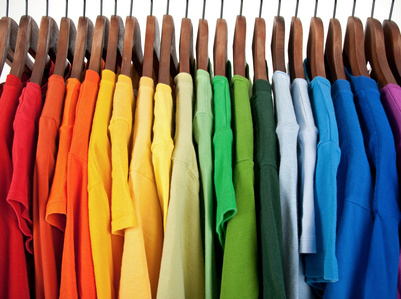
    Colors of rainbow. Variety of casual clothes on wooden hangers, isolated on white.
    I’d like something yellow.  Tshirt, pants, socks, doesn’t matter. I just need yellow clothes.

    When was the last time you went shopping for clothes?  This past weekend?  Last month?  If you’re my brother, the answer is about 13 years ago when you could still be forced to accompany our mom.  He’s survived off of birthday and Christmas presents ever since.  Since those dates are December 21 and 25 respectively, he hasn’t owned a new pair of shorts in over a decade.

    For those who can remember your most recent spree, why did you go out in the first place?  Did you need new shorts for summer?  Had your kid outgrown all his socks?  Was it because you needed something orange?  Or blue? Was color in any way a factor in deciding to hit the mall?

    I’m curious because based on how the stores around me are laid out, color seems to be the primary characteristic people consider when shopping for clothes.  Items are not grouped by type of clothing or season; clothing, no matter what it is, is grouped according to color.  Miniskirt, pants, tank top, cocktail dress, if it’s any shade of purple it goes on the purple rack.

    This is the absolute worst way to arrange clothing!  I can’t even walk by a store that does this and not feel annoyed.  The person who thought this a good idea was obviously a guy with one semester of design classes and a mom who bought all of his clothes for him.

    Normally, I enter a store knowing that I need new shirts for work or a new dress for a dinner party.  Even on the rare occasion when I have no purpose other than spending birthday money, I know I will be avoiding miniskirts, culottes, and anything in animal print.  I would like to have these items together so that I don’t waste my time digging through them.  Never have I entered a store looking only for a color.

    Customer: Hi, I’m looking for some piece of green clothing.

    Sales Associate: You’re in luck! We have this lovely green blazer or tube top.

    Customer: No, those are a forest green.  I was hoping for something more lime green.

    Sale Associate: Well, we have these pajama bottoms.

    Customer: Perfect! I’ll take them.

    American college students prepping for a tailgate are the only people in the world who could legitimately have this conversation. This seems like a pretty small demographic to cater to, especially if your store is located in Brazil.

    There is a high end retail store on the corner of my block that arranges its merchandise this way.  At the moment, the front window has a long rack with every piece of purple clothing in the store.  While I think the clothes are pretty I will never shop there.  I would have to look through every single piece of clothing because that dressy, warm weather top I want could literally be ANYWHERE in the store.

    On principle, I refuse to shop at a store that forces me to look through all of its merchandise. This is, of course, a possible explanation for this mind-bogglingly inefficient organization.  I’ve also heard that it’s more visually appealing, an explanation I would accept from an art museum, but no one is walking into an international clothing retailer hoping for a visually arresting experience.

    This organizational style is neither unique to Brazil nor done by every store here, but the first time I ever tried to shop in a store laid out this way was in Rio.  A friend told me “Oh, this is how stores in Europe do it.”  Really? I find it hard to believe that the Germans or Swedes would ever adopt a practice this inefficient.  I’ve been in an Ikea.  They wouldn’t put a couch with a toilet seat on the grounds they’re both white.

    Thankfully, I have the Internet and can do most of my shopping without having to actually put on any of the clothes I’ve previously purchased.  But maybe if the store on the corner would arrange its clothing in a more helpful manner, I’d be willing to stop by and look at the lovely skirts those kids in Bangladesh made.

  • Brazil: Children Allowed

    Brazil: Children Allowed

    Brazil! Where children are always welcome!
    Brazil! Where children are always welcome!

    As an American, I know that taking a child to any restaurant that doesn’t have it’s menu posted on a wall and ordering her juice while she plays on your phone will get you nasty looks at the least and reported to child services at worst.  The US can be a harsh culture in which to go about the day to day activities of parenting.  I didn’t know how harsh until I moved to Brazil, and my eyes were opened.

    Brazilians are gaga for children!

    Women and men, old and young, Brazilians adore kids.  Brazil makes the US seem like one giant lawn its crotchety citizens don’t want children stepping on.

    I first noticed this difference during a staff lunch at a chic restaurant in Rio. My boss brought her newborn to this very crowded restaurant at peak lunch hour.  Exactly one table was available and it was on the opposite of the restaurant.  There was a sea of people in expensive clothes and tables covered in glassware between us and that table.  When my boss indicated to the staff that we would be claiming that table, I cringed.  My stomach clenched at the idea of getting through this fancy crowd with a baby and stroller.

    That’s the appropriate response, right?  Obviously, a parent should feel ill at the thought of briefly disturbing other people’s lunches on the way to her own table.  Ha. How American of me.  Two waiters swooped in, all smiles, lifted the stroller up over their heads, and carried that baby like royalty across the entire dining room.  Not a single dirty look.

    Brazilians have this bizarre assumption that babies and children are a staple part of everyday life.  If there are people around, there will be young people and these young people will cry, complain, spill things, talk too loudly, and generally not behave like adults.  That’s life.  How else is it supposed to continue?

    People here also acknowledge kids.  They talk to them and include kids as if they were a part of society.  Strangers smile and say hello to my daughter on our walks to school.  Waiters greet her at restaurants.  When she cries in public, people stop and ask her what’s wrong. During a melt down, I’m not worried the stranger approaching is about to helpfully inform me my child is being disruptive or offer some  judgement in the form of unsolicited advice.  That stranger approaching doesn’t want to talk to me at all.  She’s going to console my daughter.

    At playgrounds, parents help each others’ kids on and off equipment.  They freely offer snacks they’ve brought to every child in earshot.  They let other kids run off with their own child’s toy confident it will be returned. Playgrounds in Brazil initially felt to me like loud, sandy communist communes.  It was a long time before I stopped apologizing profusely every time my daughter touched another kid’s toy and fearing the wrath of another parent because I offered her child gluten.

    If you do bring your baby to Brazil, be prepared. Brazilians love children, and Brazilians are touchy people.  I mean literally touchy.  They touch other people a lot.  A random passersby will want to touch, stroke, kiss, and even hold your baby.  One of my daughter’s nurses at the NICU here in Vitoria admitted this was a particular blind spot for Brazilians.  Knowledge of germ theory cannot curb their enthusiasm for babies. I dealt with it by reminding myself I’d rather have a request to hold my baby than a request to remove it from the premises.

    This habit of baby fawning is not limited to any age, gender, or class.  A trainer at my gym once brought his newborn into the weight room and a half dozen of the burliest men were reduced to cooing and clucking incoherently.  The school where I taught had preschool through high school, and everyday as the toddlers left the nap room, a crowd of teenagers gathered to squeal and exclaim over the adorably rumpled munchkins.

    And of course there are the old ladies.  Women over the age 70 must develop a sixth sense to detect babies.  I’d be sitting at the cafe, waving a rattle in my daughter’s face, and suddenly an 85 year old woman materialized out of thin air to stroke my daughter’s hair and to tell me my baby is cold.

    This is the one sin a parent cannot commit in Brazil.  You can leave the TV on 24 hours day.  You can feed your kid white rice and french fries at every lunch.  But do NOT let your baby get cold!!!  If there is a breeze and your baby is not covered with a blanket, every person will stop and tell you your baby is cold.  Every. Single. Person.  As someone who does not think 65 F requires gloves at any age, I heard it pretty much everyday of my child’s infancy.

    The love for and acceptance of children as part of daily life are two of the things I love best about Brazil, and for now, I’m perfectly content to raise my tantrum prone daughter here so as not to disturb my fellow Americans’ lattes.

    Save

  • Children’s Parties: Brazilian Edition

    Children’s Parties: Brazilian Edition

    What are they going to do for the 2nd birthday?

    We can learn a lot about our own culture by having to explain it to outsiders.  What specifically outsiders want an explanation for is telling and then having to explain why can lead to great enlightenment.

    For example, as an American I have fielded quite a few questions about guns.  I’ve learned that to the rest of the world our obsession with firearms makes us look like batshit crazy people hellbent on our own destruction.  Also, no American expat has ever convinced another person that a civilian needs a grenade launcher to potentially fight off a government that has missile launching drones.

    Of course every culture has its idiosyncracies.  Americans must account for a love of lethal weapons, and I’d like to ask my Brazilian family and friends to explain the Brazilian child’s birthday party.

    (This is a totally legit transition.  An American gun range and a Brazilian child’s first birthday are, for me, equally intimidating environments.)

    This past weekend, we attended the birthday party of my daughter’s classmate.  My husband, daughter, and I all stayed the duration, from 5pm to 9pm on Sunday night.  There were about 60 people in attendance.  The three tables of decorated sweets and cakes on display throughout the event were perfectly arranged.  The personalized favors were lovely.  The party space had a climbing wall, a bungee-trampoline thing, a three-story playground, a rope walk suspended above everyone’s head, and a ball pit.  The trays of fingers foods, soda, and beer swept by with impressive frequency.  The boy was turning three.

    To be fair not every Brazilian family does this and many cannot afford to do this, but the party I have described is typical of middle class families.  It’s not something worthy of a reality TV show.  It’s completely mainstream.

    I have been to a few 1st birthday parties and they all had more guests than my wedding.  I understand that Brazilian families tend be large and stay in the same city where they were born.  It is very likely the birthday girl has ten cousins living close by. Ok. I understand that at a young age, it’s appropriate to give an invitation to everyone in the preschool class.  I’m totally on board.  But why their parents? Why do I have to feed 15 of my kid’s classmates, plus their moms, dads, and siblings?  My child doesn’t know little Rodrigo’s grandma. And why your boss and work colleagues your kid has never met?

    My nephew’s first birthday had around 100 people.  He spent almost the entire party hanging out with his grandpa in the car.  The poor kid burst into tears every time he got carried toward the commotion.

    I question the value of of a birthday party that the honoree is terrified to attend.

    Some beautiful things for the janitor to sweep up…

    And why spend so much money and time on the elaborate decorations and sweets?  A two year old doesn’t care if the candy is personalized and color coordinated.  For guests, those cute wrappers, ribbons, and bedazzled boxes are merely impediments between mouth and candy.  Once the birthday song is sung, it’s Lord of the Flies.  The smoke is still wafting up from the candles and the dessert tables look like a pack of Labradors was set on them. The kids are aggressive too.

    Ok, I’m being mean.  This is actually perfectly reasonable behavior considering the kids have been made to stare at these tables of sweets for three hours.  All the desserts are beautifully laid out upon arrival but DO NOT TOUCH them until after the candles are blown out!!  Scheduling a party at dinner time and making kids stare at cupcakes for hours is straight up torture.  I’m pretty sure it’s illegal under the Geneva Convention.

    I know some of the moms do everything themselves and I bow to their superior design and art skills. Every child’s party I’ve been to has been beautiful and if they were for a 15th birthday or graduation or even just for older kids who could remember it and not burst into tears at the sight of Great Aunt Roberta, I wouldn’t have any questions.  But I can’t help asking when I attend a three-year old’s birthday, who is this party for?

    blog-button-linkup-2

  • A First Test as a Writer

    A First Test as a Writer

    Keep the espresso coming!
    Keep the espresso coming!

    Recently, I decided to become a writer.  I’ve actually been diligently writing a novel for a couple years, but a few months ago I quit my job teaching and left myself with no other answer to the question “What do you do?” So now people actually know.

    Today I’m facing my first great test as a “writer”.

    The only piece of advice every writer in history seems to agree on is that a writer writes everyday. So I have been. But today, I’m alone in my apartment, lacking inspiration, with access to Netflix.  And it’s raining.

    I don’t think Shakespeare would have been so prolific if he’d been able to binge watch old seasons of Mad Men, Walking Dead, Downton Abbey, or almost any other show worth watching.  (Except West Wing! Seriously, Netflix, where the hell is West Wing?)  James Joyce would probably have been more straightforward if he’d been sucked into the Twitterverse daily while building his author’s platform.  Without a doubt Twain would have spent his afternoons watching the Daily Show.

    And the rain! What is it about grey skies and a light drizzle?  I’ve had three espressos, but it feels like I’ve been hit by a tranquilizer.  Why can’t sleep be this persistent after my daughter has gone to bed and my teeth are brushed?  I could just go take a nap. I’m completely alone.  No one would know, and my bed is so conveniently located in the same apartment where I keep my computer.

    No. I will remain doggedly at my desk. Why? Because I’m a writer.  More specifically, I’m a 32 year-old writer who hasn’t ever published anything, and that makes for some awkward conversations.  Oh, I’ve read lots of  inspirational, bucking-up articles to new writers. “If you’re writing, you’re a writer.”  Own it.  Be proud.  Hashtag amwriting.  Whatever. Let’s be honest.  Telling people you’re “working on a graphic novel” is only impressive if you’re sitting in a high school cafeteria and still legally required to be there. To the rest of the world, you’re just unemployed and probably going to have to explain what graphic novel is.

    My situation is complicated by the fact my husband is a genius with a PhD and two full-time jobs.  To be clear, my husband is incredibly supportive and respectful of new career.  It’s not his fault he’s so damn impressive.  Well, it kind of is his fault he’s a workaholic, but he’s not the one who makes things awkward for me.  It’s other people.  Non-writers.  I had this conversation the other day.

    Not-a-writer: “What have you been up to?”

    Me:  “Well, I’ve spent the last two days on this synopsis and I have FINALLY, FINALLY gotten it down to a single page.”

    Not-a-writer: “How about [the hubby]?”

    Me:  “Well, this year he’s applying to the Ministry of Education to get approval for his master’s program.  He’s been organizing all the lines of research, hiring professors, and specifically recruiting professors with PhDs to publish in those areas. He published three or four articles last year and has two or three pending approval.”

    Not-a-writer: “Well, if he needs someone to sum it all up in a single page, I know a gal he can call.” chuckle

    Ouch. And that is a mild dose of the unintended condescension given to the yet unpublished.

    So I won’t be napping because it’s Monday afternoon and I’m at work.  I’m writing.  And drinking more coffee.  And giving my emails a final check before getting back down…hey, there’s a new episode of Mad Men!

  • The Perks of Not Speaking the Language

    The Perks of Not Speaking the Language

    Or don't...depending on the situation.
    Or don’t…depending on the situation.

    I have a secret to confess.  I speak Portuguese.  Please, don’t tell my mother-in-law.

    I don’t speak Portuguese fluently. Nothing as impressive as that. I speak Portuguese like a 96-year-old suffering from extreme dementia.  My sentences are punctuated by gestures and facial expression to stand-in for words I’ve forgotten, and my responses to questions sometimes have nothing to do with what was actually asked.

    “Brynn, what did you do this weekend?”

    “No, I don’t like mangoes.”

    But more often than not, I can successfully converse, arrange appointments, and get the hair cut and color I actually want. (The correct hair color was something I mistakenly thought I could get after only recently arriving in Brazil with minimal Portuguese.)

    While life is greatly improved now that I don’t consistently confuse Monday and Tuesday, there are times when I play the clueless foreigner card without hesitation.  I should probably feel bad for perpetuating the ignorant, monolingual American stereotype, but it’s such an effective way to avoid all those tedious conversations that suck up patience and sanity: the chatty person with what sounds like TB at the doctor’s office, the perfume-drenched, close-talking lady from upstairs, all phone solicitors.

    I always answer my phone with a thick, American, “Hello.”  It’s the perfect screen.  Family and friends obviously know where I’m from and aren’t thrown by it.  Only salespeople freeze up and give themselves away with a long pause as they try to figure out what to do next.  Some hang up.  Some ask if they can speak to my husband.  Others plow doggedly ahead with their scripts.  I cut them all off and say sweetly in English, “Oh, I’m sorry. I don’t speak Portuguese. Goodbye.” Click.  Conversation over.  The salesperson doesn’t feel bad about losing someone they couldn’t talk to.  I’m back to watching John Oliver on YouTube. Win-win.

    I first employed this trick in Morocco.  Describing the young men in Morocco as persistent is like calling the Kardashians’ lifestyle “comfortable.”  Tired of being unable to walk two blocks without being asked to dinner and then asked why I was refusing, I answered one man with Croatian song lyrics.  Why Croatian? Because in almost every country other than the US, even misogynist assholes can speak more than one language.  But with only four million Croatians in the world, I was pretty confident Croatian would not be one of his languages.  I was right.  The guy stopped talking to me after a couple sentences.  He did still follow me all the way back to my hotel, but stalking is way less annoying when done in silence.

    Playing dumb also helps avoid awkward conversations with in-laws and before you judge, just imagine Thanksgiving with your in-laws.  What if you could avoid awkward conversations about politics or global-warming or when your daughter is getting baptized by simply fumbling the language? “Oh, what? When is she getting her booster shots? Next month.”  Wouldn’t everyone be happier if there was just a lot of smiling and complementing of the food?

    So before you get annoyed with the woman in the elevator for not speaking your language, check if you’re wearing deodorant, have brushed your teeth recently, and are saying something more interesting than the silence.  Then be careful what you mumble out loud.  There’s a chance she’s faking it.


    Find more fun adventures from life abroad!

    Expat Life with a Double Buggy


  • Hell: Adding a Social Media Button to My Blog

    Hell: Adding a Social Media Button to My Blog

    wordpress-widgets
    Help! I don’t speak IT! Is this even what IT people do? See…I don’t know anything!

    Today, I had a terrible afternoon.  By the end of it, I was pacing around, shoulders hunched and knotted, snarling and snapping at any person who came within arms length.  I was adding a Pinterest button to my blog.

    It’s easy.  Our platform allows for a smooth and intuitive interface.  It’s drag and drop.  You can have your site optimized in fifteen minutes.  You never need to see any code.  A blind, semi-literate centenarian could optimize her own site with our system.  Lies.

    Pinterest is a form of social media, so in order to add a button enabling readers to “pin” a post to their digital board, I must change my “social media buttons”.  In order to change the social media buttons, I need to update my plugins with a new widget…or do I update my widgets with a new plugin?  I can activate plugins in the settings heading. Or is it tools or appearance headings?  But activating the plugin might not work if you don’t change your security settings to allow the code to embed on the blog…or do you want the code to embed on the blog and single post pages? Obviously your blog and posts are two different things.  What about archives and categories?

    And which plugin for social media buttons do you want?  Choose one from the 1,127 listed.  This one here allows short code for embedding.  That one allows for following and sharing.  Some make your static content more dynamic and others make your dynamic content more static.  One popular choice allows your website to show both thumbnails and blocks. (No, not the things your preschooler still chews on. Is that what you think “thumbnails” means? Are you 150 years old?)  Perhaps you’re really looking for a slider plugin that specifically works with social media SEO.  What is SEO?  Just step away from the internet.  Immediately.

    Now that you have selected and activated your widgetized plugin for optimizing all your acronyms, you must decide where on each page the buttons will be displayed.  Do you want them in the header, footer, primary sidebar, secondary sidebar, tertiary sidebar, content area, more footer left, more footer right, more footer middle? What position? First, second, third, or fifty-third widget down, caddy-corner to the far-left-more-footer? How many pixels between the icons?  Of course you know the length of a pixel because a pixel is now a standardized form of measurement.

    Alright, now that you have assigned a position to your button…you’re done!  Click visit site and there’s your beautiful Pinterest button! In four different places on the homepage, no places on the individual post pages, and all the post excerpts have disappeared from the homepage.  Aaaaaaaaaaaaaagh!

    I was at this stage of the button adding process when my husband came into the office.  He approached me slowly and spoke in a low, calm voice.  He stopped a few feet away and didn’t make any sudden movements as he assessed my situation.

    “Have you cleared your cache?” he asked slowly.

    “What the hell is a cache?” I snarled, a few drops of spittle landing on my screen.

    I still don’t know what a cache, but I do know that clearing it is an important troubleshooting technique that should come before slamming your fist on the return key fifty times in a row.

    An entire afternoon of my life was given to putting a white square less than a centimeter across on my blog so that strangers will share my writing with other strangers by pinning it to virtual tack boards.  There are life-saving surgeries that take less time.

    But I’ve got a damn Pinterest button now. At least, I think I do. I’m sure I speak for everyone in my home when I say if you’re reading this and don’t see a Pinterest button, please DON’T tell me.

  • We’re All A Little Prejudiced: My Personal Encounters with Racism Around the World

    We’re All A Little Prejudiced: My Personal Encounters with Racism Around the World

    03380d86195895d94985f46283c97370
    Is your dark complexion keeping you from happiness?

    Many years ago I was dating a handsome Punjabi who lived in Milan, and we took a trip to Paris.  (That sentence makes me seem way more interesting than I actually am.)  While leaving our hotel one morning, he offered to carry my wallet.  “Thanks,” I said, “but these pants have pockets.  I carry my own money.  I’m not an Indian woman.”  He, being a human with feelings, rightfully gave me the silent treatment for the rest of the morning.  I, being an idiot, couldn’t figure out what was wrong and had to pointedly ask over lunch.

    My comment was referring to my fruitless quest to find a salwar kameez with pockets during my semester in Jaipur back in 2004. I spent four months in India looking for a place to put my cash.  I was trying to make a joke.  I failed.  To my friend, it wasn’t just not funny.  It was insulting to him, to his mom, his sister, and every Indian woman, so about 500,000,000 people.  Not my best moment.

    I share this memory in defense of Trevor Noah, the South African comedian who will be taking over for Jon Stewart on the Daily Show.  He’s gotten a lot criticism for some unfunny and unoriginal tweets about people who are overweight and Jewish.  I’m still a Trevor Noah fan.  Good people can be insensitive and thoughtless.  These people learn from their offenses, and these offenses can be pretty glaring when moving between cultures.

    Different cultures have different prejudices and sensitivities.  I’ve not been to South Africa but I wonder if they have the same level of sensitivity to weight related jokes that exists (only recently) in the US.  Brazil doesn’t.  I don’t believe any of Noah’s tweets would raise an eyebrow in Brazil.

    The truth is I’ve never been to a country that was not rampant with prejudices.  Every culture has groups of people that it marginalizes, fears, or has very little contact with and thus, no sensitivity to.  To make my point, here’s a global tour of prejudices I’ve encountered around the world.  And since people can be the worst with all our many, many prejudices, I’ll just focus on race for now.

    I once spent a summer in rural Croatia. It is the whitest place have ever been.  It’s like a town populated exclusively by the audience of the Country Music Awards, except with a better grasp of geography.  When I mentioned to my homestay sister that it was weird for me to be in a place with no people of any color except white, she cheerfully informed me, “Oh no, there’s one African.  He plays for our soccer team. They brought him here because those people are really good at soccer.” I was also told that throwing bananas during games is just a joke. It’s all in good fun.

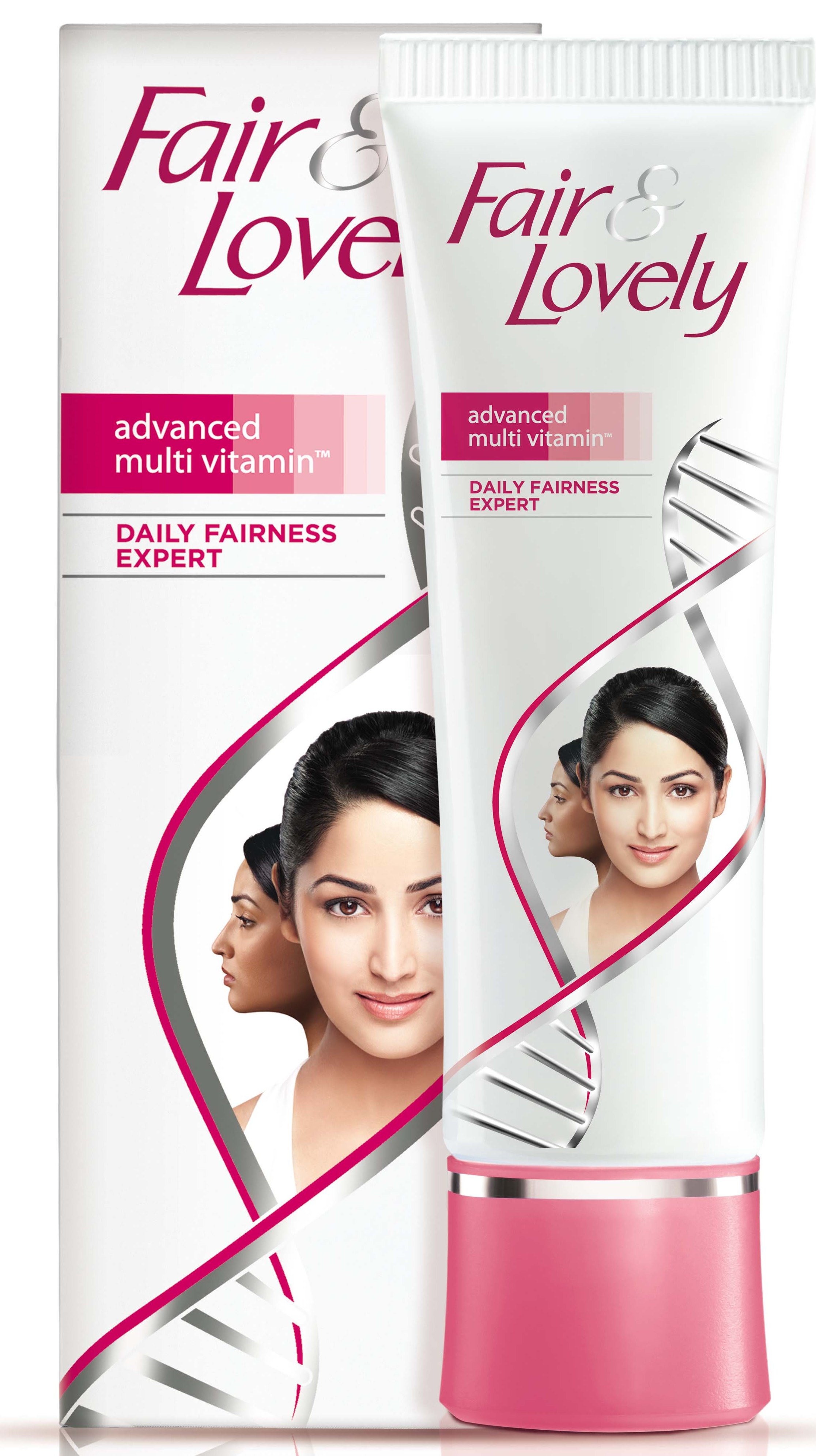
    Morocco was the first place I discovered the product Fair and Lovely.  After repeated applications, this cream will lighten the complexion of any young woman and save her from the bad husband and unhappy life resulting from dark skin.  I was so horrified by it, I couldn’t bring myself to buy it as a joke.  In Morocco I also learned about the two Africas.  A fellow student in my program had shown me how to wrap my hair up in a scarf, and I sported the look almost daily for awhile.  Eventually, my homestay mom said I should try a different style because my style was how “African women” wrapped their hair.  I was momentarily confused because Morocco is in Africa, but of course she meant Sub-Saharan Africa. Black Africa. Not Arab Africa.  Even in Africa you can’t be black.

    India, unfortunately, also had Fair and Lovely and it was running a truly spectacular commercial.  A girl, in her early teens, is on the couch watching a cricket match, pretending to call the plays into a hairbrush.  Her mom appears and lovingly embraces her daughter while handing her a tube of Fair and Lovely.  The girl diligently applies the cream to her face before bed.  Leap to the future and a young woman with skin several shades lighter is taking her place in the announcer’s booth at a cricket match.  She’s smiling, loving life, and so thankful her lightened skin has helped her get a job as a radio announcer.

    White skin is also a prized commodity in Brazil.  Well maybe not “white” skin, not with all the beaches and lack of clothing, but blond hair and blue eyes are prized possessions.  Almost every Brazilian who sees my daughter for the first exclaims over her blue eyes.  The teachers and staff at school affectionately call her “Blondie”.  The staff of the preschool is almost entirely dark skinned and the students are almost entirely white.

    Brazil does have very strict hate speech laws which make racist remarks a crime, and I think they do limit the amount of explicit comments directed at Afro-Brazilians.  The law does not, however, seem to protect gays or anyone from the continent of Asia.  If there’s a gay joke your local PC police are holding you back from, come to Vitoria, Brazil.  You’ll get a hearty laugh because here men know there is nothing worse than being gay.  Do you think pulling down the corners of your eyes when talking about Japan is absolutely hilarious?  So do a lot of people in Brazil.  Here’s a commercial for the fast food chain China in Box. Please, watch it and tell me in the comments if your mouth dropped open too.

    I used to teach high school here in Vitoria, and I’ve had to stop my classes more than once to say,  “Never, never do that thing with your eyes in my class.” Some students then helpfully explain that the gesture is not racist in Brazil, and Americans are too sensitive about race.  I’ve heard the sentiment many times.  “Americans are too sensitive about race.”  Also, “Americans have a real problem with racism.”  Americans are very sensitive racists.

    The truth is we’re all a little bit racist or homophobic or Islamophobic.  Every person has prejudices and every culture has groups it doesn’t encourage empathy with.  My students here have had little to no contact with anyone from anywhere in Asia.  The jokes they make reflect this.  I think the solution is asking the students, asking ourselves, to consider the other group’s perspective. In short, empathy.

    I know, I know.  Actively respecting other people’s feelings requires thinking and we’re all so busy.  It may also require us to apologize when we fail to do that thinking and offend someone, and apologizing is the worst!  It implies we’re not right all the time!  I also understand the temptation to blame whoever for being overly sensitive.  Then we don’t have to feel guilty for hurting someone.  I hate feeling guilty.  It’s such a downer.  Speaking of downers, we are all going to have to drop some jokes about Latinos, women, gays, foreigners, the disabled, the indigent, Catholics, Muslims…oh my god, is it even possible to be funny while respecting others?  Yes, it is.

    And I think Trevor Noah will learn from his mistake.  I learned from mine that morning in Paris and the many more I’ve made since.  Empathy requires more energy than indifference, but the result, a kinder world for all, seems worth the effort.

  • I enjoy comics, therefore I am a geek.  I think.

    I enjoy comics, therefore I am a geek. I think.

    ls
    I admit it. I had X-men comics as a kid.

    A couple weeks ago as I was skimming the Internet, I  saw the latest Avengers: Age of Ultron trailer.  I saw it five times in a row.  When I discovered in the comment stream that the movie opens on April 23 here in Brazil, a full week earlier than in the US, I squealed for joy.

    Last Friday, I was browsing books on Amazon and it recommended the fourth compilation of the Saga series.  I hadn’t even realized it was out!  I gave thanks to the omniscient Amazon gods and ordered it immediately.

    This week I’m putting the final touches on the second draft of my 216 page graphic novel.

    I can no longer hide from the truth.  I am a geek.

    I suppose I’ve always known on some level, although I’ve repressed it for decades.  My brother is a gamer and has actually attended a Dragoncon, so I think it might be genetic.  I definitely don’t think it was anything my parents or society did.  I grew up in an upper-middle class suburb outside of Atlanta in a congressional district that doesn’t even have a Democratic party office.  There were club sports, sleepovers, and more churches than gas stations.  I had everything necessary to be totally mainstream.  Yet, my absolute favorite cartoons growing up were X-men and Batman.  I watched reruns of Batman every day after school long after I knew I couldn’t admit it at my lunch table.

    I was very confused.  I liked X-men comics, but I also made top grades, was elected to student council, and played varsity sports.  I didn’t have trouble making friends or shopping at the Gap.  It was made clear, by people on both sides of the line, that people who liked comics and superheroes didn’t do those kinds of things.  Also, I have a vagina, so I couldn’t possibly be a comics fan.  I was assigned a side, which I’ve stuck with until now.

    And there are most definitely sides.  I’ve done my research, and the internet divides people into two distinct camps: geeks and non-geeks.

    Geeks like comic.  They also enjoy animé, very elaborate games that require an entirely new language of acronyms like MUDs, ADnD, and MMORPGs, dressing as characters from their favorite comic/movie/tv show/video game, and toys.  Lots of toys.  When not cosplaying, geeks also enjoy wearing cotton tshirts with witty quotes or logos proudly promoting their geekhood.

    Non-geeks enjoy the outdoors, Starbucks, Top Gear, and yogurt.  They frequently wear cotton tshirts with logos promoting their favorite sports team and/or player.  They believe books with pictures are for children and adults only read celebrity cookbooks, Literature (with a capitol L), or war memoirs.  When not wearing their team colors, they are wearing Old Navy or J. Crew depending on income.

    Since high school, I have been living my life as a non-geek.  I love Starbucks and my reading time has been devoted to Capitol-L authors such as Jhumpa Lahiri, Barbara Kingsolver, Margaret Atwood, and Toni Morrison.  Then some time in my mid-20s, I came across a list of the “100 greates books of the 20th century.” I don’t remember who created the list. I think it was Times or maybe a freshman English major at Berkley.  Either way, I know the list included Watchmen by Alan Moore, illustrated by Dave Gibbons.  I was intrigued.  How did this comic, masquerading as a novel, end up on a list of “Greatest Books”?  The contradiction was there in the title, Greatest BooksThis list put a comic alongside Hemingway and Alice Walker.

    I was aware of the term graphic novel but didn’t understand it until I read Watchmen.  Then for Christmas my brother gave me Y: The Last Man and 100 Bullets.  Another year, a cousin gave me American Born Chinese.  I discovered Fun Home was named the best book of 2006 by Time.  Then one day I looked at my bookshelf and discovered a row of graphic novels, what my non-geek kind still refer to as comic books.  I had a shelf full of comic books!

    What can I say?  I’m sucker for a good story.  Combine memorable and complex characters with good writing and you’ve got me, even if the story is told in illustrated panels.  American Born Chinese is one of the most elegant pieces of story telling I’ve ever read, and it’s a graphic novel for young adults.

    I guess that makes me a geek, but I’m a little worried about what coming out as geek means. Geeks seem to make being a geek such a huge part of their identity; I’m afraid about half-assing the role. Can I love the Avengers movies without understanding the difference between The Avengers, The Mighty Avengers, and Avengers Assemble?  Because I’m really busy and just don’t have the time to figure that out.  Do I have to be willing to stand in line for two hours for an autograph from a Star Trek cast member?  Because frankly there’s nothing short of life saving necessities that I would stand in line for two hours to get.  Although I admire the passion. And the patience.  I could use more of both.

    Oh, and about the costumes…they look wondrous but also super impractical.  If I’m going to walk miles around a conference hall filled with 100,000 people, I’d prefer something breathable.  Is there a character I could portray in linen pants and a pair of Toms?  No?  Well, maybe I’ll write one.  As soon as this non-geek geek gets her first graphic novel sold.  But that’s a post for next week.