Author: Brynn

  • How I Met My Husband or Why I’m in Brazil

    How I Met My Husband or Why I’m in Brazil

    We met, we married, and I moved to Brazil.
    We met, we married, and I moved to Brazil.

    Ten years ago today, I met my husband.

    He showed up at the office a day early and if he had been less adventurous or more patient, if he had just followed his orientation schedule, I’d probably still be in Washington DC with an impressive career in international education.

    He was one of nine mid-career professionals from around the world being hosted by the Washington College of Law as part of the Hubert Humphrey Fellowship Program.  His welcome orientation was scheduled for August 4, 2005.  I was spending August 3 sprawled on the floor with my hair in a pony-tail  hole-punching, stacking, and assembling orientation binders.  At least, that was my plan, but about mid-morning the office manager poked his head into the conference room and told me the Brazilian was at the front desk.

    The office manager actually called him, “The Brazilian”.  We all did, even program staff at the national level, because no one had a clue how to pronounce his name, which is quite a statement considering the range of nationalities around the office suite.  My boss was out of the office, so I got to be the first to hear the correct pronunciation and fail repeatedly to say it.  We would be dating before I could correctly say his name.

    I saw him as soon as I stepped out of the conference room.  He was standing by the reception desk just beyond several ubiquitous office cubicles, including my own, and I thought, “Wow, he’s white. I didn’t know Brazilians could be white.”  It was the first in what has turned out to be a lifetime of revelations about Brazil, many of which have revealed an embarrassing number of unconscious assumptions based exclusively on Pelé.

    My second thought on seeing him was “He’s really handsome.”  My third was “I can’t believe he found this place.”  The program office was located in a suite on the bottom level of a building two blocks down from the law school.  The suite housed a variety of programs and offices, none of which had found a way to give directions that didn’t get most visitors lost.  The Brazilian had successfully navigated the maps and directions while jet-lagged and operating in a foreign language.  I was impressed.

    But I’d been impressed by him for months.  We received a binder on each Fellow that included a medical history, their complete program application with letters of recommendation, and the Fulbright selection committee’s evaluations.  The Brazilian came with a letter of recommendation from a Supreme Court Justice and a clean bill of health.  Not bad as boyfriend applications go.  For my part, I’d been a college graduate for three months.

    Truly I don’t know what about me got his attention.  Maybe it was my stellar administrative skills or consistent punctuality.  Somehow, I managed to make navigating my home country in my native language seem impressive.  Thank god for home court advantage.

    I wasn’t thinking relationship in that first moment.  After recognizing that he was attractive, I went straight to professional mode.  I took him on a tour of the school and to the bank.  There is nothing romantic about banking or walking around DC at midday in August.  Unless pit stains are considered a turn on.  We grabbed lunch at the sandwich place across the street where I proved I was strictly business and indifferent to others by ordering the onion smothered Greek wrap.  We chatted easily over lunch, and I believe that casual conversation over vegetarian wraps laid the groundwork for everything that followed.

    If my boss had been around that morning, she would have been the one to take him to the bank and to lunch.  If we had met the next day along with the entire group, we wouldn’t have had the rapport that made me the obvious choice to go with him apartment hunting while the other Fellows opened bank accounts.  And if we hadn’t gotten to know one another while touring some rather frightening basement apartments in Northwest DC, it wouldn’t have felt perfectly natural to meet up for lunch periodically over the coming weeks.

    By the time we went on our first date, we’d already opened a bank account, shopped for an apartment, and been subjected to a variety of team building exercises together. Rarely has a couple’s compatibility been so thoroughly tested.  All we lacked was an astrologer’s blessing.

    But all those moments came after that first meeting, when he showed up early and I mispronounced his name exactly ten years ago today.

  • Fortaleza, Brazil: All-I-Can-Take at the All-Inclusive

    Fortaleza, Brazil: All-I-Can-Take at the All-Inclusive

    Vacationing in Fortaleza, Brazil! A lot of a good thing.
    Vacationing in Fortaleza, Brazil! A lot of a good thing.

    I just got back from a family vacation in Fortaleza, Brazil.  Our group was made up of three generations traveling from three different cities.  It was a great trip and some memories will be with me forever.  Which is only slightly longer than all the meat I consumed will be.

    If Rio is looking to present an honest and endearing image of itself to the world during next year’s Olympic Games, they should build a barbeque pit in the international terminal and welcome each flight with a free lunch.  “Welcome to Brazil! Have a plate of meat!”

    A plate of meat, piled as high as it was wide, and a mojito made with a shot of white rum and 32 scoops of sugar was my lunch each day of our stay at the all-inclusive resort.  Because once you’ve decided on the all-inclusive vacation, you’ve clearly made self-indulgence your primary goal for the week.  No point in trying to hide it under a few leaves of arugula with olive oil.

    Of course, visiting an all-inclusive with the entire family does limit the extent to which a person can self-indulge.  Vacationing with my only-child who prefers me to any other person in the world, (She’s 4 and hasn’t met a wide range yet.) meant that I did not get the writing and reading time I would have liked.  Being unable to pass out under a palm tree with a book on my face due to parenting responsibilities, I compensated by giving my stomach completely uninhibited and unrestrained access to every buffet at every meal.

    Puddings, steak, french fries, cakes, risottos, Prosecco, sandwiches, salad, cappuccinos, tarts, omelets, shrimp, cheeses, mussels, chicken, soft drinks, sausages, pasta, mousse, fruit juices, fish, rice, beans, ice cream, croissants, pineapples, and pork were all consumed with reckless abandon.  Lunch involved at least three plates; the grilled meat got it’s own plate of honor.  Breakfast would take over an hour and I survived the long stretch between lunch and dinner by indulging in the afternoon tea, which included no tea but lots of cake.  It was four days of eating as if life was free of consequences.  All consumption and no exertion.  It was glorious and delicious.  I didn’t worry or go to the bathroom from Tuesday to Saturday.

    Actually, I did start to worry on Saturday but not because I was feeling awful.  I got worried because I didn’t feel awful.  My rational-self kept waiting for the effects of my week-long bacchanalia to catch up with me.  That part of me knew no person could eat with total abandon for long and not feel utterly disgusting.  And that part of me waited.  And waited.  Meal after meal after, I filled my plate and went back for more, my taste buds rejoicing in how life could be if I didn’t care about staying a size 8 or living past 45, and I felt fine.

    Saturday’s lunch was fish stew, fried shrimp, pork chops, rice, and french fries.  I ate some of everything washing it down with a Coke.  I enjoyed every bite and would have eaten a few more french fries if they hadn’t cleared the plates.  On the walk back to the hotel, I wondered if I should seek help.

    As we hid out from the tropical sun for a few hours in our room (because too much sun is really terrible for you), the hotel staff dropped off complimentary bottled water and coconut candy.  My husband opened up one of the candies, took a small bite, and abandoned it on the table saying “Wow, that is too sweet.”  So I immediately went over and finished it.

    I popped the last bite in my mouth, swallowed it, and thought “I will never eat anything again.”

    With that last bite of coconut candy, I hit my food wall.  The full weight of every meal landed on me and left me in a fetal position on the bed.  That was it.  I was done eating.  Possibly for the rest of my life.  It took four and a half days, but I found my physical limit for food consumption.

    I’m back home and in my normal routine that includes exercise and vegetables.  My parents have gone back to the States and my daughter is back in daycare.  I’m already looking forward to our next vacation, but perhaps a camping trip would be healthier.

    I’ll bring the s’mores!!!

    TingNewBlue

  • 28 Days in a Brazilian NICU: The Mom Milking Room

    28 Days in a Brazilian NICU: The Mom Milking Room

    Day 2 of 28 in the NICU at Vitoria Apart Hospital in Brazil.
    Day 2 of 28 in the NICU at Vitoria Apart Hospital in Brazil.

    My daughter was born seven weeks early due to placental abruption.  That was a new term for me, placental abruption. Another one was UTIN.  That’s the acronym in Portuguese for Neonatal Intensive Care Unit (NICU).  It was one of the many Portuguese medical terms I learned after my daughter spent 28 days in a NICU in Brazil.  In the moment, each day felt like a lifetime. I was sure every minute of all 28 days had been seared into my memory.

    But they weren’t.

    My daughter just turned four, and I’m shocked to realize how much of a blur those weeks have become.  Most of the exact numbers are gone.  How many days was she on a ventilator?  When did she get above 2kg?  Of the many people who cared for my daughter, all but one of the names has been erased.  Now they’re the doctor with red glasses and the physiotherapist who spoke some English.  I suspect these details will disappear too.

    What has not faded in any detail, much to my dismay, is my memory of the milking room.  This was the place they sent the new moms to strip them dignity.  It was the room for hand expressing breast milk.

    Many preemies are born too small to breastfeed and are fed through a tube and syringe.  How do you get these babies breast milk?  The obvious answer is pump it, store it, and serve it.  Except the NICU did not allow breast pumps of any kind.  The hospital said it could not guarantee that an individual mom’s pump would be sterile, so they could not give the milk from from a potentially unsterile source to the baby.  The only way for a baby in the NICU at Vitoria Apart Hospital to get breast milk, other than on tap, was to hand express it.  This is as awful as it sounds.

    At least for me.  I am not particularly in touch with my body.  I’m more cerebral and would be quite content to be a floating brain in space except for the facts I do like going for walks and eating french fries.  I’m aware that my conscious self is housed in an organic Tupperware container that impacts how I feel, think, am, but I don’t dwell on it.  At least not until I get a stomach virus.  Or until I have to breastfeed a baby.

    And I was going to breastfeed.  I had done my research.  Despite my lack of emotional connection to my mammary glands, I was totally committed to breastfeeding.  I did not, however, anticipate having to milk myself like a cow.

    That’s what it is.  Hand expressing means squeezing out the milk by hand into a container.

    Despite that daunting psychological hurdle, I told the nurses I still wanted to breastfeed, so one of them led me out the backdoor of the NICU, down a hall, through an unmarked door, and into an unused storage closet.  Based on the size and lack of any comforts except three chairs, I assume storage closet was the original purpose of the room.  White walls, tile floor, no windows, and freezing cold.  This was the room I shuffled to, fresh from an emergency c-section, so that I could hand squeeze milk from my boobs.

    As I stood there shivering in my hospital gown, the nurse quickly went through the officially sanctioned routine that guaranteed milk I expressed in that closet would be more sanitary than what I could get from a pump: wash hands, don hairnet and face mask, remove the plastic cups from the packaging and take the lids off, wash hands again, wash nipples with gauze, squeeze milk into cup and seal the cup immediately when full.  Fortunately, she demonstrated the whole process because to this day I don’t know the Portuguese word for gauze or hairnet.

    Then she left.  No medical professional stayed in that closet with the moms.

    Want to guess how many of the moms expressing themselves actually followed that routine when left on their own?

    I know because it turned out to be a communal milking closet, and the answer is none that I saw.  The next time I went to the closet, two other women were already there happily chatting away, masks down over their chins.  I distinctly remember these two women because they were friendly, completely comfortable being half-naked in front of strangers, and filling up cup after cup with milk like a competition at a state fair.  I was none of those things.  I struggled to fill half a cup when alone.  Trying to hand-express milk in a freezer while confronting small talk in Portuguese and the four largest breasts I’ve ever seen in person was literally impossible.

    I got almost no milk out during that session or any other.  I subjected myself to breastfeeding purgatory every three hours for four days before finally saying “Enough.”  I believe breast milk is ideal.  I don’t believe it is worth torture.  I restarted breastfeeding only after my daughter was big enough to handle it herself.  Hand-expressing in that closet was one of the worst experiences of my life.  And I sat through the Sponge Bob movie.

    If I’d had any reserve of energy I would have been outraged.  I was being denied a breast pump on the grounds it wasn’t sterile, but there was nothing sterile about that room.  They sent a bunch of not-medically-trained women down the hall with instructions to wash their hands and wear a mask. I don’t believe a single doctor actually thought the milk coming out of that closet was sterile.  They know they’re in Brazil where actual laws are treated as suggestions.

    But I didn’t have the capacity for outrage then and I don’t care to feel it now.  True, an electric pump and a private space would have made a huge difference, but we all survived and someday the sound of someone else’s breastmilk squirting into a plastic cup will fade from memory.  In the meantime, I’ll milk it for the entertaining story it is.

    11ghkra

    Save

  • Beach Day Doctrine: Great weather leads to awful governments

    Beach Day Doctrine: Great weather leads to awful governments

    A typical winter's day in Brazil.
    A typical winter’s day in Brazil.

    My family went to the beach this past Saturday.  We packed a kite and a boogie board and stayed out through lunch. It was an absolutely perfect beach day, warm without being hot and breezy without being chilly.  The sky was a sheet of blue with a few fluffy clouds pulled decoratively across it.  But the best part was having the beach almost entirely to ourselves.  People in Vitoria just don’t go to the beach in winter.

    Yes, it’s winter here in Vitoria, Brazil.  You can really feel it today.  It’s 68 degrees (20 C) outside and drizzly.  People are wearing their leather jackets over their shorts.  This will be one of the coldest days of the year here.  I’m sure it will be a front page article in tomorrow’s paper.  “Cold Front hits Vitoria. Drives Locals to Wearing Coats!”

    In my opinion, the weather is one of the best things about Vitoria and Brazil in general.  I think it’s also why the government sucks.

    I have a theory that the weather of a country can be tied directly to the quality of that country’s government.  The better the weather, the worse the public services.  The worse the weather, free university for everyone!

    Let’s take Norway.  The Economist’s Quality of Life Index ranks Norway third in terms of quality of life and third in GDP per capita.  Norway is number one on the UNDP’s Human Development Index.  Norway’s government is the world champion of governing.  Year after year, they are crushing the competition. Why? Because without an awesome government, there would be absolutely no reason to live there.

    This is a place where citizens go weeks without seeing the sun.  Every winter, there’s a period when the sun never makes it over the horizon.  This isn’t a freak phenomenon.  It’s a lifestyle.  How to avoid Winter SAD (Seasonal Affective Disorder) during the polar nights is a regular part of the school curriculum.  Why would anybody live in a place where winter is accompanied by its own psychological disorder causing sadness, a loss of self-esteem, and desire to avoid social and physical contact?  Why? Free universal healthcare coverage for all legal residents.  That’s why.

    Not surprisingly, Norway’s tourism website doesn’t bring up those polar nights, but it does have a lot to say about its midnight sun.  You can take an ocean cruise at midnight or stroll through the park at 2am.  Come visit Norway in summer and have 24 hours of sunlight!  Honestly Norway, 24 hours of sunlight doesn’t sound like a good thing.  It’s slightly better than 24 hours of darkness, but I have no desire to live in a place with sunlight streaming through my window at 2 am.

    Except that in Norway, universities are tuition free for all students, including international students.

    On second thought, I could probably get used to wearing a sleep mask.

    Norway’s tourism site also touts its mild winter temperatures.  The average January high for Oslo is 32 degrees (0 C). I suppose that’s mild compared to Siberia, but it’s still a place where getting locked out of your house in December is potentially life threatening.

    Here in Vitoria, you can sleep on the sidewalk 365 days a year and feel, at worst, a little uncomfortable.  Good thing too, because there are quite a few people who do sleep on the sidewalk.  Does Norway even have homeless?  I don’t see how.  The winters would kill them off.

    And this is the crux of my theory.  The environment in Norway is so inhospitable, the government has to help its people survive and then give them a reason to stay.

    What does a person need to survive a winter day here in Vitoria? A sandwich and a tree.  Something to eat and shelter from the hot-even-in-winter sun or rain.  That’s it.

    My theory holds true for other countries.  Sweden, Finland, Denmark, Canada, Australia (Why is Australia listed? It’s hot, in the middle of nowhere, and has all the world’s most poisonous things). These countries have awesome governments and crappy weather.  Venezuela, Fiji, Mexico, Maldives, Greece: crappy governments, 365 days of beach.

    This past Saturday was a spectacular day.  Bright sun.  Soft sand.  It was the kind of day that warms you on the inside and puts hope back in your life.  Listening to the waves while getting drunk on sunshine and coconut water, a person won’t care about anything.  Not even that Brazil ranks 79 on the HDI or that dozens of top government officials have been indicted for stealing billions in taxpayers’ money or that the President’s approval rating is 9%.

    Here schools are terrible.  Public healthcare is broken.  Inflation is increasing.  But the weather is fantastic, the beaches are free, and with 4,655 miles (7,491 km) of breathtaking coastline, there’s space on the sand for everybody.  What else do you really need?

  • Dear Brazil: Pay Your Nannies a Living Wage!

    Dear Brazil: Pay Your Nannies a Living Wage!

    Seriously Brazil, it's 2015. Pay your help a living wage.
    Seriously Brazil, it’s 2015. Pay your help a living wage.

    Dear reader, if you’re not in the mood for a rant, check back next week.

    It all started when I received an early morning WhatsApp message from a fellow mom asking the group about rates for a substitute nanny while the permanent nanny is on vacation.

    A little cultural context. Here in Brazil full-time nannies are common. This was surreal for me coming from the United States. In the U.S. full-time nannies are something only the Jolie-Pitt or Kardashian families can afford.  I remember a combination of church daycares and grandparents after school and over the summers while my parents worked.  Personally, I’ve never known anyone in the U.S. with a full-time nanny.

    In Brazil, almost everyone I know has a full-time maid and many have a full-time nanny too.  Often if the family has kids but can’t afford two employees, the maid will have childcare duties in addition to the housekeeping, grocery shopping, and cooking.  Several of our friends also employ a weekend nanny because labor laws in Brazil don’t allow families to demand ask their nanny to work 7 days a week. It’s like Downton Abbey in flip-flops with more beer and better weather.

    How can these middle class and professional families afford full time nannies and housekeepers in the year 2015? Minimum wage in Brazil for 2015 is $250 a month. (I’m using today’s exchange rate of 1 U.S. dollar to 3.15 Brazilian reais to put all values into US dollars.) U.S. federal minimum wage is $7.25 per hour, so assuming four 40-hour-weeks a month, the U.S. federal minimum wage per month is $1,160.

    $1,160 versus $250 a month.

    Now, a lower minimum wage doesn’t necessarily indicate a lower quality of life.

    Maybe the cost of living is significantly lower in Brazil than the US? Maybe goods are less expensive? They’re not. The only things cheap in Brazil are coconuts and people, and even the coconuts are experiencing inflation.

    Maybe there are a variety of free/very low-cost public services in Brazil? There aren’t.  Public services from school to health care are abysmal.  Everyone who can scrape together the cost goes private, and a full-time nanny at minimum wage is significantly cheaper than private day cares here in Vitoria.

    But there’s no way people pay nannies minimum wage, right? In practice people are paying more than the legal minimum, aren’t they?

    This brings us back to this morning’s Whatsapp conversation among local moms.

    A mom wanted to know what other people had paid for someone to fill-in as a nanny for a month.  The values reported ranged from $254 to $476 for the month.  For two children.  For the entire day, Monday through Friday.

    But these shockingly low values are not what drove me to clutch at my hair and mutter obscenities at my computer.  Nor was I upset that a family of four is looking for the highest quality childcare at the lowest possible cost.

    I got upset after I sent a message saying that our kids’ pregnant preschool teacher was at the doctor again due to pain from her sciatic nerve.  I commented about how what she really needed as a present was a housekeeper.  My message got no response.  The conversation continued about nannies until finally the original poster asked, “Did your nannies just take care of the kids or did they also clean their rooms and do laundry?”  This sparked the rant.

    Dear Brazilian Middle and Upper Classes, nannies are people!  Housekeepers are people!  Preschool teachers and assistants are people!

    There are so many wonderful things about Brazilian culture, like the attitude toward children, the judicial selection process, and dental hygiene.  But the way upper classes treat people in the working class is NOT one of those things.  I’m so tired of listening to good, ethical people, friends, colleagues and parents I respect, refer to their nannies or maids as “them”.  I’ve heard complaints about how much the maid eats, stories about getting older kids to spy on the maid and report back, and indignation about a nanny who went and got married.  The underlying message is that “we” must be vigilant against “them” or they will use up our sugar and make a lot of long distance phone calls.

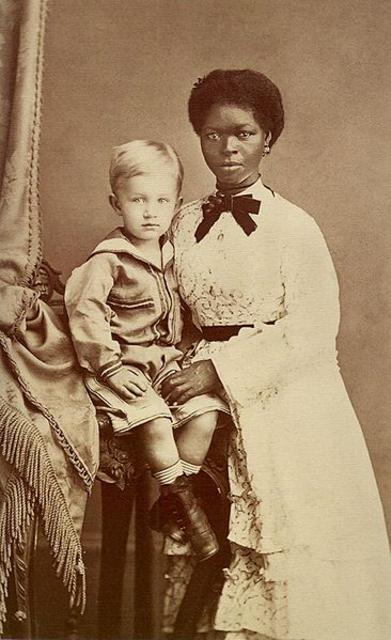
    When I saw the movie The Help, I thought, “Wow, that’s like present day Brazil”.  That’s what I see here.  Upper-classes in Brazil often deny the basic humanity of the people working in their homes.  (And to Brazilians who protest that Brazil doesn’t have The Help‘s racial component, I recommend a walk around Ipanema in the afternoon or a visit to a private daycare in Vitoria. Look at the color of the kids and look at the color of the people holding their hands.)

    I believe for most people it’s unconscious.  It’s how their own parents and everyone in their circle has always talked about nannies and housekeepers and drivers.  They’ve internalized this division, don’t see anything wrong with it, and haven’t been challenged on it.

    I’m not against paying for a housekeeper. We employ one. I’m not against paying for a nanny.  I believe affordable child care is a HUGE barrier keeping women from advancing in the workforce in the U.S. and Brazil. I’m writing this while my kid is at daycare. Many of the mom’s I know are amazing professionals, and it’s only possible because they can find childcare be it a daycare or nanny. Many moms want to work. Many moms HAVE to work. Quality childcare is a necessity.

    I’m against a system that keeps people from empathizing. That makes it “us” versus “them”. That causes a really nice person to ask the woman she’s paying almost minimum wage to watch her kids if she could also do the laundry.

    What about the kids of the people we pay to watch our kids?  Who watches them if we pay their moms $300 a month?  Is it ethical to ask a woman willing to assume the enormous task of keeping two small children alive for only $350/month to also do the laundry?  Is this woman really in a position to say “no”?  Are we going to be annoyed if she does?  If we’re paying minimal costs, why do we expect top-quality service and undying loyalty?

    Beyond respecting and talking to each other as people as opposed to being constantly on guard against the machinations of “those” others who want to exploit us…I have an idea for improving things for the moms, maids, and childcare workers.

    Everyone gets rid of their housekeeper.

    We take the money we were paying to housekeepers and put it toward childcare, either by increasing the wage of the nanny or increasing the salary of daycare and preschool teachers.  The former housekeepers come together and start cleaning-service businesses.  Their former employers, now clients, hire the company for once or twice a week, and now the preschool teachers and nannies may even be able to afford the housekeepers’ services with their increases in salary. The former housekeepers can also find employment at all the new public daycares the government will open in my utopia.

    And what about all the cooking and laundry and grocery shopping left in the wake of the maids?  Well, I think it’s time for Brazilian men to stop watching soccer and do some freakin’ laundry.

    How does that sound?

    Save

    Save

  • Flying with Preschoolers: It can always get worse.

    Flying with Preschoolers: It can always get worse.

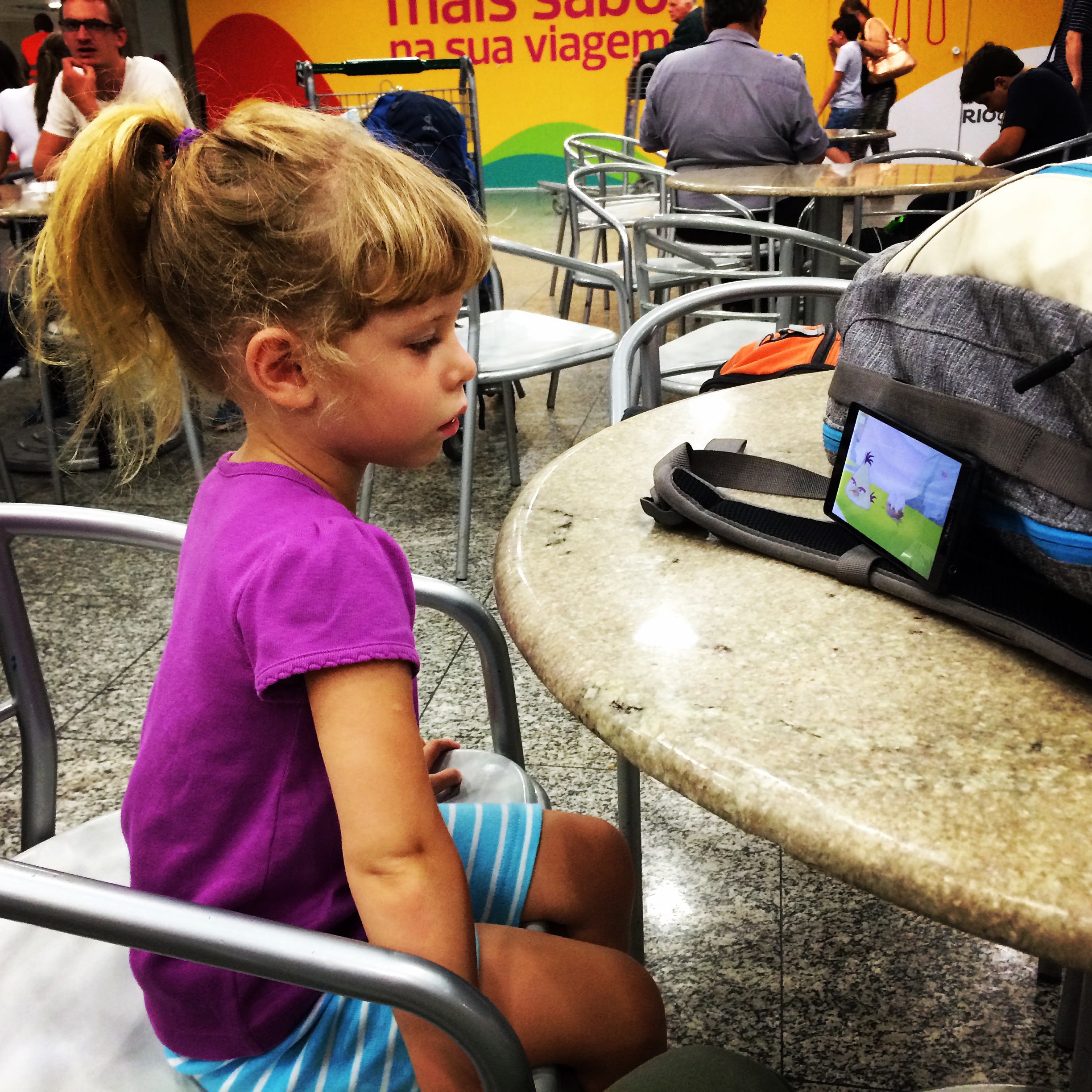
    My only parenting standard at airports is "don't lose her".
    My only parenting standard at airports is “don’t lose her”.

    My little family of three took a trip to Rio de Janeiro this weekend.  Our nephew recently had a birthday and we needed to put in some face time with my husband’s family.  It’s only a 45 minute flight from Vitoria to Rio, but that was long enough to learn a valuable lesson.  There is no length of time short enough a three year old can’t turn it into forever.

    It’s like in Interstellar.  For the pilot and crew who have tasks to complete, 45 minutes is barely enough time to toss bags of crackers at everyone.  They’re the lucky ones down on the planet.  The parents of small children are the ones stuck in orbit who stumble off the plane with more grey hair and beards, demanding to know what year it is.  How long were we up there?  Six years?  Ten?

    For our flight home, boarding was scheduled for 6:50pm.  Right at dinner time! But my husband and I were prepared.  We had packed sandwiches…which my daughter ultimately refused to eat because we miscalculated the nap.

    The ride to the airport was about 30 minutes.  When my daughter fell asleep in the taxi, we thought “Oh good, she can take a short nap and be in a better mood.”  Only, she didn’t fall into nap-time sleep.  She fell into bedtime-for-the-night sleep, and as my grandmother says, “You don’t need to step on a snake to know it’s going to bite you.”  The same principle applies.  You don’t need to wake a preschooler up from deep sleep to know it’s going to cry.

    And cry she did.  Through the whole check-in process.  While we searched for a place to sit.  While I bought water and snacks.  Even after we resorted to the emergency M&Ms.  Eventually, she calmed down and filled her stomach with 2 tiny bites of sandwich and 5 pão de queijo.

    No longer hungry but still exhausted from the weekend, her emotional pendulum swung to the other extreme. We then had a deliriously giddy 3 year old on our hands.  While deliriously-giddy child is less emotionally exhausting than inconsolable child, she is more physically exhausting because deliriously-giddy child cannot occupy the same space for more than 3 seconds.

    Did I mention that my back locked up this weekend?  It happened while checking in at the airport for our flight to Rio.  For the first time in my life.  I couldn’t bend over, lift anything, or even take a deep breath the entire weekend.

    Because I was benched from parenting due to injury, my husband was the one running after her while I kept our place in all the various lines.  He was the one who chased her through security, from the gate to the plane, and took her on the bathroom run she needed the moment we stepped on the plane.

    Eventually the plane took off and everything was ok. For about half an hour.

    With fifteen minutes of flight time left, my daughter decided she could no longer tolerate her seat belt.  My husband and I desperately tried to head off the fit we could see coming.  She was straining and arching her back against the seat belt.  Her face was scrunched and turning red.  She stopped speaking in sentences and devolved to “No seat belt!”  Very aware of the 150 people trapped on the plane with us, I grabbed a doll and made it sing “Let It Go”.  As we got to the chorus, my daughter joined in and shrieked “Let it poopy! Let it poopy!”  She dissolved into a fit of laughter and proceeded to sing at the top of her lungs different versions of the song featuring everything from pee pee to smelly socks to farts.

    I’m certain if there had been a vote, the other passengers would have unanimously voted us off the plane.

    That was the emotional knife edge we balanced on for the remainder of the flight.  We teetered between a breakdown over the seat belt and belting out classic Disney songs rewritten to feature bodily functions. “Let it fart! Let it poopy! Let it poopy and faaaaart!” The plane eventually landed three months later, and we made it home where my daughter finally ate a peanut butter and jelly sandwich and went to bed.

    All in all, it was a pretty uneventful trip.  It could have been so much worse.

  • Why I Finally Admitted I’m a Writer

    Why I Finally Admitted I’m a Writer

    articleFor the past seven years I’ve been writing a graphic novel.  I only admitted this to a non-family member for the first time two years ago.  I admitted it to close colleagues eight months ago, and then only because I had to give some reason for quitting my job.  I was forced to tell my boss the embarrassing truth; I wanted to focus on becoming a writer.  Specifically, I’m trying to sell a graphic novel.

    Admitting this at work was awkward because none of my 40+ year-old colleagues here in Brazil had any idea what that was.  “You’re quitting because you want to write comic books?  Like Superman?”

    “No, a graphic novel is a medium that can tell any story.  They’re actually becoming more mainstream.  A graphic memoir by a lesbian cartoonist about growing up with her closeted father who ran a funeral home was nominated for a National Book Critics award.”  This explanation didn’t clarify anything for them.

    As I suspected, once you tell people you are a writer and take the time to explain what it is you’re writing, they are going to ask about it.  Every time they see you.  This is why I never wanted to say anything.  This is why I hoped to keep it secret until I could direct all inquisitors to their local bookstore where they would find my already published and acclaimed debut on the shelf.

    I never called myself a writer because in my mind, a writer who has never published is a failed writer.  I have a deeply rooted fear of failure, and so far all I have to show for my writing is 57 rejections.

    I have only myself to blame.  I chose to write a graphic novel, which is a growing but hardly massive market in the U.S.  If I had written a romance or Young Adult, I’d be able to query a new agent a day for years.  I set my story in Brazil with a poor, Afro-Brazilian protagonist.  When I started writing, I had never read a graphic novel and had to google “format for a comic manuscript”.  I’ve also never had a creative writing class in my life.  And I can’t draw.  At all.  Not even a straight line with a ruler.

    Thinking about it, 57 rejections aren’t so much surprising as inevitable.

    When my husband and I conceived the story over dinner seven years ago, I was recently arrived in Brazil, with no job, and a lot of time on my hands.  I outlined the story in detail, taught myself how to write a comic, and wrote the first 25 pages.  I knew a story set in Rio de Janeiro should be illustrated.  The visual contrast of the luxury and poverty of the city needed a visual element, but 25 pages into the story, my research was revealing extreme odds against ever getting published.  Not being an illustrator, having no experience in comics or any area of publishing, and living in Brazil unable to attend conferences or network led me to save the project on a hard drive and forget it.

    That was in 2008.  I came back to it in 2013.  I quietly finished a first draft and sent out a ton of bad queries for an unpolished manuscript and got back 55 polite “No, thank yous.”  Naturally, I then decided to quit my job and pursue writing full-time.

    Why? What made me finish the manuscript?  What made me finally decide to not only pursue writing full-time but also publicly admit it?  I became a mom.

    My parenting philosophy is to model the behavior I want from my daughter.  I want her to drink water at meals, so I drink water.  I don’t want her to resort to physical violence, so I never use it on her.  I want her to consider fruit a dessert, so I wait until she goes to bed to eat my ice cream.

    More than anything I want my daughter to find her dream and follow it, so I damn well better follow mine.

    I can’t tell her success takes hard work and dedication if I gave up after only 25 pages.  I can’t tell her that failure is ok and a learning opportunity, if I abandon writing after 55 rejections on a first attempt at a first novel.  I can’t tell her passion is a wonderful thing, if I’m too embarrassed to openly admit my own.

    Today I have a polished and edited graphic novel manuscript, a critiqued query letter, 2 fresh rejections, and a strategy to pursue publication.  I have a picture book manuscript recently sent off for critique.  I have a detailed outline and the first 10,000 words of a young adult trilogy.  I have this blog.

    And when I do finally publish my first book, it will be dedicated to my daughter.  Because if it weren’t for being a mom, I would never have become a writer.

    blog-button-linkup-2

  • 5 Things You’d Never Guess About Brazil

    5 Things You’d Never Guess About Brazil

    5 Surprising Facts About Brazil
    5 of the many things that have surprised me about Brazil…

    “Do you like Brazil?” I heard this question for the thousandth time last night.  I don’t know why people bother to ask this question.  It’s in the same category as “Does this make me look fat?” and “Did you read my last blog post?”  Nobody wants an honest answer.  “Do you like Brazil?”  The correct response is an enthusiastic “Yes!”

    At least this question has an obvious correct answer, unlike “So which country do you like better?  The US or Brazil?”  What am I supposed to say?  I usually cop out with humor. “Neither.  I’m giving up on the whole nation-state system.  I’d like to start my own island tribe based on handedness.”

    Another strategy I’ve developed over the years is to answer these politically loaded questions with lists: “Things I love about Brazil” or “Things I miss about the US”.  Below is my favorite list.  I like it because it’s personal but more unusual than the standard “Things I love about Brazil.”

    Five Things That Surprised Me About Brazil

    1) Stellar Dental Hygiene   Brazilians are obsessed with their teeth.  If you go into a restroom after lunch, there will be a wall of people between you and the sink, all of them flossing their teeth.  Helpfully, many public restrooms have floss dispensers to facilitate this habit.  You should brush your teeth after every meal and ideally after every snack.  As an after-breakfast-and-before-bed brusher, I have the most disgusting teeth in all of Brazil.  Fortunately, my husband accepts me for who I am and ascribes my poor dental hygiene and once-a-day-showering to my Anglo-Saxon ancestors’ affinity for filth.  Although thanks to him, I have grudgingly become a daily flosser.

    2) Your Fingers Must Never Touch Your Food  When I learned that many Brazilians use a fork to eat french fries, I almost moved back to the US.  Brazilians use a knife and fork for EVERYTHING!  Your fingers must never touch your food.  As my people created a category just for “finger foods”, this is not a custom that I’m particularly comfortable with or always able to keep in mind.  I’ll be at a birthday party happily popping mini-pizzas in my mouth, when I notice everyone else at the table has a napkin delicately wrapped around their snack, creating a polite barrier between fingers and food.  After 9 years, I still can’t muster that level of formality for something that came frozen out of a box.  (Honestly between the finger eating and lack of teeth brushing, I’m surprised my husband agrees to go out with me.)

    3) Japanese-Brazilians  My initial thought when I saw my husband for the first time was “Hey, he’s white!”  True story.  Pretty romantic, huh?  Before my husband, the only Brazilian I was aware of was Pelé, thus my unconscious assumption about how Brazilians look.  I wasn’t totally wrong.  According to the 2010 census, 50.7% of Brazilians do consider themselves black or mixed-race. But in addition to the 4.8 million people brought as slaves from Africa and the indigenous tribes who were already here, Brazil has had substantial immigration from Portugal, Italy, Japan, Lebanon, and Germany to name a few countries.  With a history of intermarriage between the groups, Brazilians cover the entire range of possible human phenotypes.  

    4) Brazilians Love Volleyball!  Everyone else in the world besides Americans might already know this.  Probably the world loves indoor volleyball, and it’s only us Americans who are in the dark. Literally. We’d rather just sit in the dark than watch a volleyball game.  But not Brazilians!  If there’s no soccer game, the sports channels are covering a volleyball match.  They have incredibly popular professional leagues here, and if you stay in Brazil long enough, you will find yourself at a bar with a women’s club volleyball game on the TV.  Or judo.  Judo is also very popular in Brazil.

    5) Did You Already Add Salt?  This is a question most Brazilians won’t ask because they’re going to go ahead add more salt regardless.  Meal after meal, I see Brazilians get food placed in front of them and without even tasting it, they reach for the salt packets, rip one open, and rain salt down on the entire plate.  Very shortly after arriving, my husband made sure to treat me to one of Brazil’s traditional meals imported from Portugal, bacalhau or codfish.  Imagine a salt lick served with potatoes and onions. That’s bacalhau.  I couldn’t eat it.  The same was true for feijoada, a uniquely Brazilian dish involving black beans, all the leftover pieces of pig, and a few ice cream scoops of salt. Not surprisingly, Brazil has a hypertension epidemic.

    Those were some of the most surprising truths I learned about Brazil.  I’d come up with more, but I just ate a pretzel and must go floss my teeth.


  • The Two Kinds of Americans Abroad

    The Two Kinds of Americans Abroad

    There are two kinds of Americans abroad.
    There are two kinds of Americans abroad.

    Last week, I gave a lecture comparing Brazilian and American culture to a group of law students from West Virginia University.  I like to think that I was asked to lecture because I have a Master’s degree in International Communication, a subject I have been living everyday since I moved to Brazil.  But I think the decision making process was more like this.

    “We have a large group of Americans coming and none of them speak Portuguese.  We need English speakers with advanced degrees! Quick!”

    “We have these five professors.  That’s two days, but the group is here a week.”

    “Crap.”

    “Hey, isn’t there a professor with an American wife?”

    “Yes! She can talk about the differences between Americans and Brazilians.  Plus, she’s not actually a professor so we won’t have to pay her anything. Perfect!”

    And that’s how I ended up on a stage talking to a gaggle of WVU law students, who unfortunately didn’t come dressed in coal-dusted miner’s clothing, strumming banjos.  Thus the only images I had of West Virginia were shattered.

    I opened my lecture by asking for the audience to describe a “typical” American and Brazilian.  I asked each group to describe their own nationality.  The Brazilians in the room described a typical Brazilian as “friendly”, “family oriented”, “has lots of kids”, “talkative”, “kind”, and “social” among other things.  Now, how do you think the Americans described themselves?

    A little personal reflection before I tell you.  I’ve traveled a fair amount, and I think Americans who venture outside the US can be divided into two categories.  One group is the famous American tourist.  The loud, pink-faced, sneaker-wearing patriot who cannot fathom why this third-world country doesn’t put ice cubes in the drinks.  They seem surprised and confused to discover that not every person everywhere lives exactly like they do.

    “Cheryl, did you see that you cannot flush the toilet paper?!  I tell you what…I don’t know how these people can live like this.  If I lived in this place, I’d get myself an American toilet right quick.”

    Then there is the other group.  These students were from the other group.

    These American students described a typical American as “fat”, “lazy”, “arrogant”, “selfish”, and “ignorant”.  They basically described the typical American as a cross between Voldemort and Jabba the Hutt.

    It was fascinating.  Despite currently living through a recession and an enormous corruption scandal involving billions of taxpayers’ reais and rising inflation and gross income inequality and sky high rates of gun deaths…the Brazilians described themselves in overwhelmingly positive and honest terms.  Why were the Americans so brutal and negative toward their countrymen? And more interestingly, would any of them have described themselves in those terms? Of course not! They don’t see themselves as “typical”. (Ironically, separating yourself out from the majority as a unique individual is typically American.)

    These students are the second type of Americans abroad, the “serial apologizers”.

    Perhaps you’ve seen them eating couscous with their fingers in Rabat or using chopsticks like a local in Tokyo. They are Americans who are hyper aware of the negative opinion many people have of US foreign policy and/or Americans themselves.  Thus, they go around profusely apologizing for everything the US has ever done wrong.  They preempt criticism with more extreme criticism of their own.

    “You don’t like US policy in the Middle East?  How could you?  We’re arrogantly imposing our will on everyone who is different!  It’s what we do!  Let me tell you about our history with Native Americans and slavery and don’t even get me started on the present day! Between Iraq and the Kardashians, we’ve destroyed everything that is good and decent in the world!  Disney! Drones! Starbucks! We are the WORST!”

    My fellow Americans, isn’t there some happy middle ground between these groups?  Can’t we describe ourselves as hardworking, informal, and innovative while also acknowledging that Walmart is run by the devil’s minions?

    Let’s try!  Next time you go abroad, don’t assume the lack of ice cubes is indicative of underdevelopment.  If someone brings up Guantanamo, acknowledge that our collective fear after 9/11 led to some horrible policy decisions but you’re confident the pendulum is swinging back the other way.  Then lead everyone in a rousing chorus, “Tomorrow!  Tomorrow! I love ya, tomorrow!” Because fierce optimism and musical theater are two of Americans’ greatest contributions to the world.