Category: Being a Multicultural Family

  • Why I’m an Expat in Brazil Part III: Leaving the Friend Zone

    Why I’m an Expat in Brazil Part III: Leaving the Friend Zone

    Dancing crosses culture and brings people together. It did for my husband and me.
    Dancing crosses culture and brings people together. It did for my husband and me.

    My husband and I never actually dated.  Not officially.  He never asked me to dinner.  I never invited him to a movie.  We didn’t sit across from each other in a dimly-lit, over-cooled restaurant asking about family or hometowns between sips of wine.  When one of the parties can pull out a two inch file on the other there is no “getting to know you” period.

    “So, I’m from Rio de Janeiro originally…”

    “Yes, I read that in your program application.  I also saw that you got your law degree from a university in Bahia and recently completed your master’s in law at the State University of Rio de Janeiro.  Changing the subject, your blood pressure is fantastic!  Do you have any cardio tips?”

    For his part, he’d listened to a running stream of personal revelations from me as I attempted to make each of the Fellows (him in particular) feel at home in DC.  I thought the best way to do this was to talk about my parents’ divorce and bring travel photo albums to lunch.  He’d met my closest friends within two weeks of meeting me because I’d recruited them to be student hosts for the Fellows, and he met my parents when I brought them along to karaoke with the Fellows at a bar in Adams Morgan.

    He may not have had a full medical history for me, but he knew exactly who I was within a month of meeting me: a 22 year-old who excitedly brings her parents out to a bar to show off her new work colleagues.

    I hid nothing.  I revealed all of me including friends, family, and cat.  The only reason I did something as insane as show the HD version of myself from the start is because it was inconceivable that we would end up in a relationship.  And I mean inconceivable literally.  I did not imagine, envision, or hypothesize any scenario in which we were more than friends.  His different nationality and culture had nothing to do it with it.  He was…is sixteen years older than I am.  His professional career at that point included naval officer and auditor with Brazil’s IRS.  My professional title at the time was “Graduate Assistant”.  We were at such different stages in our lives that all I had my sights set on was an incredibly impressive letter of recommendation from him at the end of year.

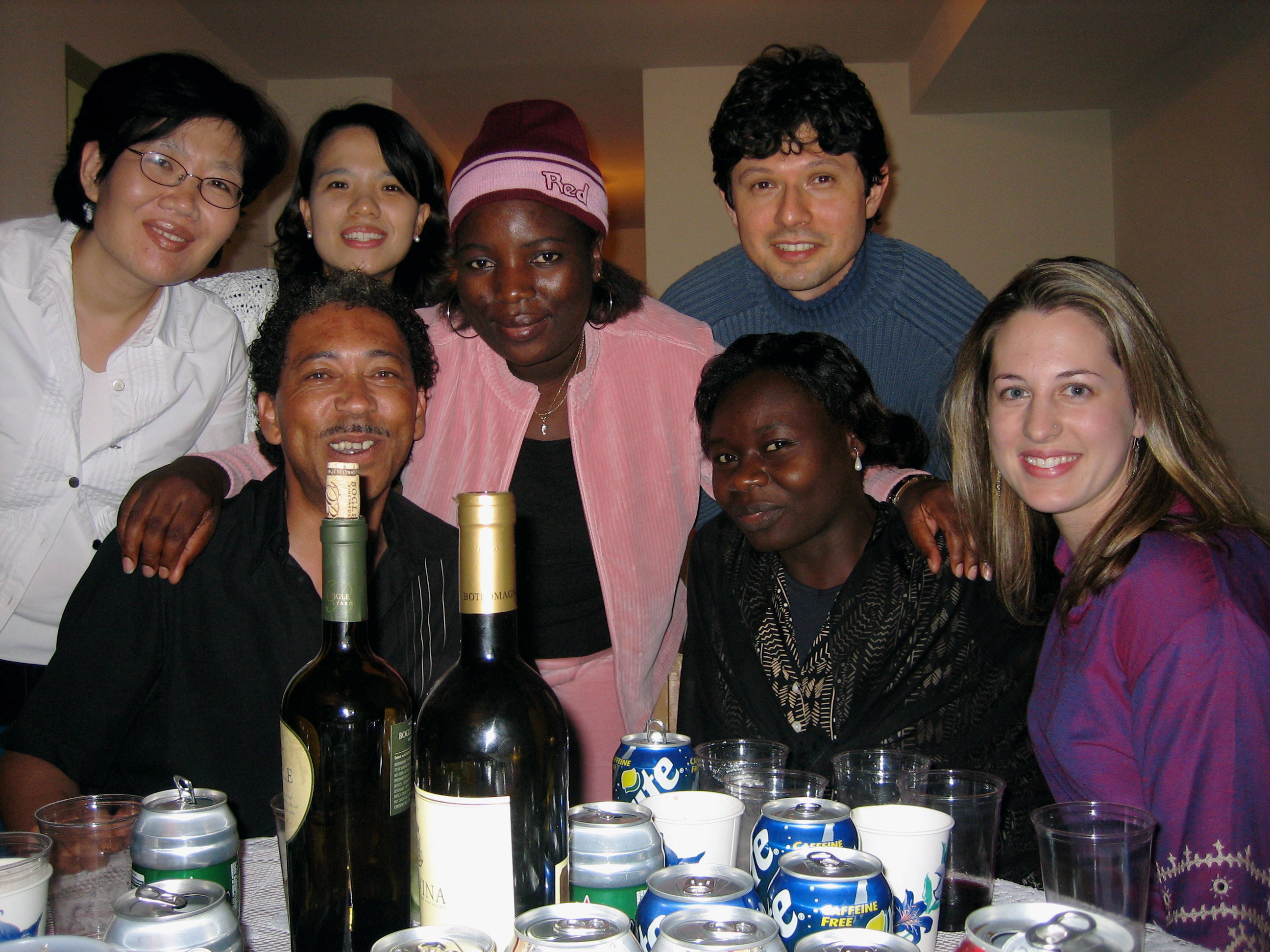
    So when my friend confidently told me over dinner one Saturday night “He’s totally going to stick his tongue down your throat.”  I replied “Wha…he…I…uh…we…nooooo, he is not.”  Because I was both incredulous at the idea and painfully uncomfortable talking about physical relationships.  It was a cool evening in early October, and my friend and I were having basin sized salads before I headed out clubbing with some of the Fellows.  The Fellows from Zimbabwe and Cameroon were desperate to go out dancing, so I’d agreed to pretend I could dance and go with them.  The Brazilian said he’d come too.  The plan was for me to meet him at the metro stop near our apartments and head to Dupont Circle together.

    “So you’re going to the club together,” my friend concluded.  I changed the subject.

    We were headed to Cafe Citron, a club I had visited once before, and thought (wrongly) I could get to without directions.  After lapping the circle, asking for directions, and finding the other Fellows at the club, we hit the dance floor.  This was the part I had been dreading.  Besides soccer playing, the only other skill I associated with Brazil was dancing.  Samba. The Girl from Ipanema.  Carnaval.  Bossa Nova.  I imagined a country full of people who celebrated soccer victories by literally dancing, extremely well, in the streets.  I could handle the “Electric Slide”, the “Chicken Dance”, or a montage from Greece, but as we weren’t at a suburban high school homecoming, I didn’t expect to shine very brightly on the dance floor.

    Fortunately, neither does he.  The Brazilian doesn’t dance.

    Oh, he dances better than I do, but the music and the crowd that night kept things simple and close.  I could follow.  Not that we danced for long.

    I felt the tension from the first sway of my hips.  After having lunch together for weeks, I suddenly couldn’t look him in the eye.  I looked at his shoulder, just beyond his shoulder, his feet, his forearm, his hand, his chest.  Eventually, I was down to body parts that would have been far more awkward to stare at than his eyes. So I looked up.  We made eye contact.  And he made his move.

    His move was confident and calm and so wonderful.  It was the unhurried and sure kiss of a grown man.  Thank god, we got married because after a minute of kissing, I was spoiled forever for mid-twenty grad students.

    We left the club a couple.  Not dating.  Not open to other people.  We left together.

    Not that we told anyone.  Why cause a fuss if it wasn’t going to work out?  But by Christmas break we’d said I love you and it was time to tell my family I had fallen for a Brazilian, atheist, sixteen-years my elder, who was in the states for only another seven months.

    It went better than I expected.


  • Why I’m an Expat in Brazil Part II: Between Meeting & Dating

    Why I’m an Expat in Brazil Part II: Between Meeting & Dating

    Some very impressive Humphrey Fellows and me.
    Some very impressive Humphrey Fellows and me.

    It is a long way between meeting someone for the first time and marrying him.

    I saw my future husband for the second time early the next morning as I collected the entire group of Humphrey Fellows to escort them to their welcome meeting.  As an international studies major, I was in quite the fan-girl tizzy over the Humphrey Fellows, specifically the Fellow from Bhutan.  There are only about 700,000 Bhutanese in the world, and I was going to work with one!  I’d been bringing her up in conversation regularly for months in an effort to compete with my roommate’s stories from her internship on Capitol Hill.

    On that typically humid August morning, I found my Brazilian waiting in the dorm lobby next to the Fellow from Kenya.  We chatted as the others slowly trickled down.  There was a lot of hand shaking and slow pronouncing of names, my own name included.  “It’s pronounced like Lynn, except with a Br instead of an L.”  “No, it’s not a boy’s name.  That’s Bryan, with an A.”  “No, I don’t think my parents knew my name would be unpronounceable to, apparently, the entire world.”

    Orientation for an international exchange program is probably the most emotionally exhaustive thing a person can go through that doesn’t involve a birth, a death, or a space suit.  A person is expected to navigate a new place, new culture, possibly a new language, and new people, all while jet lagged and in some amount of digestive distress from new food.  It’s not a vacation.  There’s no sleeping in.  I met the Fellows in the lobby at 8:45am for a welcome meeting that started at 9 sharp, and from that moment on for the next two weeks, it was a race to get them registered for classes, bank accounts, cell phones, and long-term housing before fall semester began.

    Our Fellows had an added emotional blow as they went from being up and coming stars of their respective professions to nobody.

    Welcome to Washington DC!  It has the highest concentration of PhDs, law degrees and self-esteem per capita of any city in the world.  You are now officially unimpressive.  You will not have maids.  You will not have secretaries.  If you don’t know how to send an email or cook, well…we can teach you how to email.  Try not to starve.

    Undergrads who study abroad don’t have these problems.  They haven’t been on their own long enough to be embarrassed by dependency.  The Humphrey Fellows however ranged in age from 35 to 50.  They arrived for their year in Washington with impressive CVs and very fragile egos.  Working with them taught me how to explain what to do with used toilet paper without sounding condescending.

    Culture shock and a complete lack of family and friends explain why I, at 22 with the ink still drying on my diploma, was treated by the Fellows as an equal.  Nobody asked me to get their coffee.  They asked me to explain the online course registration.  They asked me to listen as they cried over how much they missed their kids.  They asked me to explain the endless variety of milk in grocery stores.  At that moment in their lives, they needed an insiders guide to Americans.  I was an American with a embarrassingly fortuitously empty social calendar and that huge fan-girl crush on them.  I became the group’s cultural wingman.

    I started hanging out with the Fellows on weekends.  We went to a coffee shop at Dupont Circle for s’mores.  We hit some bars in Adams Morgan and tried out an Ethiopian restaurant for lunch.  The group changed depending on who had a paper due or a bad case of culture shock, except for one member: the Brazilian.  In my memories he’s always there.  Always up for anything.  Usually available for lunch.  He’d rented a basement apartment close to where I lived, and we often ran into each other on the shuttle heading to and from campus.

    But I was so hung up on his resume and the sixteen year age difference, I never imagined he actually thought of me as a fellow adult.  I was sure the Brazilian, like the other Fellows, was being incredibly polite to someone helping him.  When he paid close attention as I took him through every picture from my semester in India, I must have subconsciously chalked it up to good manners because I would never, NEVER, have brought a photo album to lunch with someone I actually hoped to date.

    About a month after orientation, the Korean Fellow invited everyone to his apartment for dinner.  I clearly remember a few wonderful minutes in the kitchen as the Brazilian taught me how to make caipirinhas and I tried one.  I blamed my flushed cheeks on the cachaça.  Later a group of us took the subway home.  It was several blocks to the metro station, and the temperature had dropped changing my sandals from cute to extremely impractical.  My toes were slowly freezing and I probably would have lost a few, if the Brazilian hadn’t stopped, taken off his shoes, and handed me his socks.  He gave me the socks off his feet.

    And I still didn’t see the first kiss coming.  But that night deserves its own story.

  • How I Met My Husband or Why I’m in Brazil

    How I Met My Husband or Why I’m in Brazil

    We met, we married, and I moved to Brazil.
    We met, we married, and I moved to Brazil.

    Ten years ago today, I met my husband.

    He showed up at the office a day early and if he had been less adventurous or more patient, if he had just followed his orientation schedule, I’d probably still be in Washington DC with an impressive career in international education.

    He was one of nine mid-career professionals from around the world being hosted by the Washington College of Law as part of the Hubert Humphrey Fellowship Program.  His welcome orientation was scheduled for August 4, 2005.  I was spending August 3 sprawled on the floor with my hair in a pony-tail  hole-punching, stacking, and assembling orientation binders.  At least, that was my plan, but about mid-morning the office manager poked his head into the conference room and told me the Brazilian was at the front desk.

    The office manager actually called him, “The Brazilian”.  We all did, even program staff at the national level, because no one had a clue how to pronounce his name, which is quite a statement considering the range of nationalities around the office suite.  My boss was out of the office, so I got to be the first to hear the correct pronunciation and fail repeatedly to say it.  We would be dating before I could correctly say his name.

    I saw him as soon as I stepped out of the conference room.  He was standing by the reception desk just beyond several ubiquitous office cubicles, including my own, and I thought, “Wow, he’s white. I didn’t know Brazilians could be white.”  It was the first in what has turned out to be a lifetime of revelations about Brazil, many of which have revealed an embarrassing number of unconscious assumptions based exclusively on Pelé.

    My second thought on seeing him was “He’s really handsome.”  My third was “I can’t believe he found this place.”  The program office was located in a suite on the bottom level of a building two blocks down from the law school.  The suite housed a variety of programs and offices, none of which had found a way to give directions that didn’t get most visitors lost.  The Brazilian had successfully navigated the maps and directions while jet-lagged and operating in a foreign language.  I was impressed.

    But I’d been impressed by him for months.  We received a binder on each Fellow that included a medical history, their complete program application with letters of recommendation, and the Fulbright selection committee’s evaluations.  The Brazilian came with a letter of recommendation from a Supreme Court Justice and a clean bill of health.  Not bad as boyfriend applications go.  For my part, I’d been a college graduate for three months.

    Truly I don’t know what about me got his attention.  Maybe it was my stellar administrative skills or consistent punctuality.  Somehow, I managed to make navigating my home country in my native language seem impressive.  Thank god for home court advantage.

    I wasn’t thinking relationship in that first moment.  After recognizing that he was attractive, I went straight to professional mode.  I took him on a tour of the school and to the bank.  There is nothing romantic about banking or walking around DC at midday in August.  Unless pit stains are considered a turn on.  We grabbed lunch at the sandwich place across the street where I proved I was strictly business and indifferent to others by ordering the onion smothered Greek wrap.  We chatted easily over lunch, and I believe that casual conversation over vegetarian wraps laid the groundwork for everything that followed.

    If my boss had been around that morning, she would have been the one to take him to the bank and to lunch.  If we had met the next day along with the entire group, we wouldn’t have had the rapport that made me the obvious choice to go with him apartment hunting while the other Fellows opened bank accounts.  And if we hadn’t gotten to know one another while touring some rather frightening basement apartments in Northwest DC, it wouldn’t have felt perfectly natural to meet up for lunch periodically over the coming weeks.

    By the time we went on our first date, we’d already opened a bank account, shopped for an apartment, and been subjected to a variety of team building exercises together. Rarely has a couple’s compatibility been so thoroughly tested.  All we lacked was an astrologer’s blessing.

    But all those moments came after that first meeting, when he showed up early and I mispronounced his name exactly ten years ago today.

  • 28 Days in a Brazilian NICU: The Mom Milking Room

    28 Days in a Brazilian NICU: The Mom Milking Room

    Day 2 of 28 in the NICU at Vitoria Apart Hospital in Brazil.
    Day 2 of 28 in the NICU at Vitoria Apart Hospital in Brazil.

    My daughter was born seven weeks early due to placental abruption.  That was a new term for me, placental abruption. Another one was UTIN.  That’s the acronym in Portuguese for Neonatal Intensive Care Unit (NICU).  It was one of the many Portuguese medical terms I learned after my daughter spent 28 days in a NICU in Brazil.  In the moment, each day felt like a lifetime. I was sure every minute of all 28 days had been seared into my memory.

    But they weren’t.

    My daughter just turned four, and I’m shocked to realize how much of a blur those weeks have become.  Most of the exact numbers are gone.  How many days was she on a ventilator?  When did she get above 2kg?  Of the many people who cared for my daughter, all but one of the names has been erased.  Now they’re the doctor with red glasses and the physiotherapist who spoke some English.  I suspect these details will disappear too.

    What has not faded in any detail, much to my dismay, is my memory of the milking room.  This was the place they sent the new moms to strip them dignity.  It was the room for hand expressing breast milk.

    Many preemies are born too small to breastfeed and are fed through a tube and syringe.  How do you get these babies breast milk?  The obvious answer is pump it, store it, and serve it.  Except the NICU did not allow breast pumps of any kind.  The hospital said it could not guarantee that an individual mom’s pump would be sterile, so they could not give the milk from from a potentially unsterile source to the baby.  The only way for a baby in the NICU at Vitoria Apart Hospital to get breast milk, other than on tap, was to hand express it.  This is as awful as it sounds.

    At least for me.  I am not particularly in touch with my body.  I’m more cerebral and would be quite content to be a floating brain in space except for the facts I do like going for walks and eating french fries.  I’m aware that my conscious self is housed in an organic Tupperware container that impacts how I feel, think, am, but I don’t dwell on it.  At least not until I get a stomach virus.  Or until I have to breastfeed a baby.

    And I was going to breastfeed.  I had done my research.  Despite my lack of emotional connection to my mammary glands, I was totally committed to breastfeeding.  I did not, however, anticipate having to milk myself like a cow.

    That’s what it is.  Hand expressing means squeezing out the milk by hand into a container.

    Despite that daunting psychological hurdle, I told the nurses I still wanted to breastfeed, so one of them led me out the backdoor of the NICU, down a hall, through an unmarked door, and into an unused storage closet.  Based on the size and lack of any comforts except three chairs, I assume storage closet was the original purpose of the room.  White walls, tile floor, no windows, and freezing cold.  This was the room I shuffled to, fresh from an emergency c-section, so that I could hand squeeze milk from my boobs.

    As I stood there shivering in my hospital gown, the nurse quickly went through the officially sanctioned routine that guaranteed milk I expressed in that closet would be more sanitary than what I could get from a pump: wash hands, don hairnet and face mask, remove the plastic cups from the packaging and take the lids off, wash hands again, wash nipples with gauze, squeeze milk into cup and seal the cup immediately when full.  Fortunately, she demonstrated the whole process because to this day I don’t know the Portuguese word for gauze or hairnet.

    Then she left.  No medical professional stayed in that closet with the moms.

    Want to guess how many of the moms expressing themselves actually followed that routine when left on their own?

    I know because it turned out to be a communal milking closet, and the answer is none that I saw.  The next time I went to the closet, two other women were already there happily chatting away, masks down over their chins.  I distinctly remember these two women because they were friendly, completely comfortable being half-naked in front of strangers, and filling up cup after cup with milk like a competition at a state fair.  I was none of those things.  I struggled to fill half a cup when alone.  Trying to hand-express milk in a freezer while confronting small talk in Portuguese and the four largest breasts I’ve ever seen in person was literally impossible.

    I got almost no milk out during that session or any other.  I subjected myself to breastfeeding purgatory every three hours for four days before finally saying “Enough.”  I believe breast milk is ideal.  I don’t believe it is worth torture.  I restarted breastfeeding only after my daughter was big enough to handle it herself.  Hand-expressing in that closet was one of the worst experiences of my life.  And I sat through the Sponge Bob movie.

    If I’d had any reserve of energy I would have been outraged.  I was being denied a breast pump on the grounds it wasn’t sterile, but there was nothing sterile about that room.  They sent a bunch of not-medically-trained women down the hall with instructions to wash their hands and wear a mask. I don’t believe a single doctor actually thought the milk coming out of that closet was sterile.  They know they’re in Brazil where actual laws are treated as suggestions.

    But I didn’t have the capacity for outrage then and I don’t care to feel it now.  True, an electric pump and a private space would have made a huge difference, but we all survived and someday the sound of someone else’s breastmilk squirting into a plastic cup will fade from memory.  In the meantime, I’ll milk it for the entertaining story it is.

    11ghkra

    Save

  • Flying with Preschoolers: It can always get worse.

    Flying with Preschoolers: It can always get worse.

    My only parenting standard at airports is "don't lose her".
    My only parenting standard at airports is “don’t lose her”.

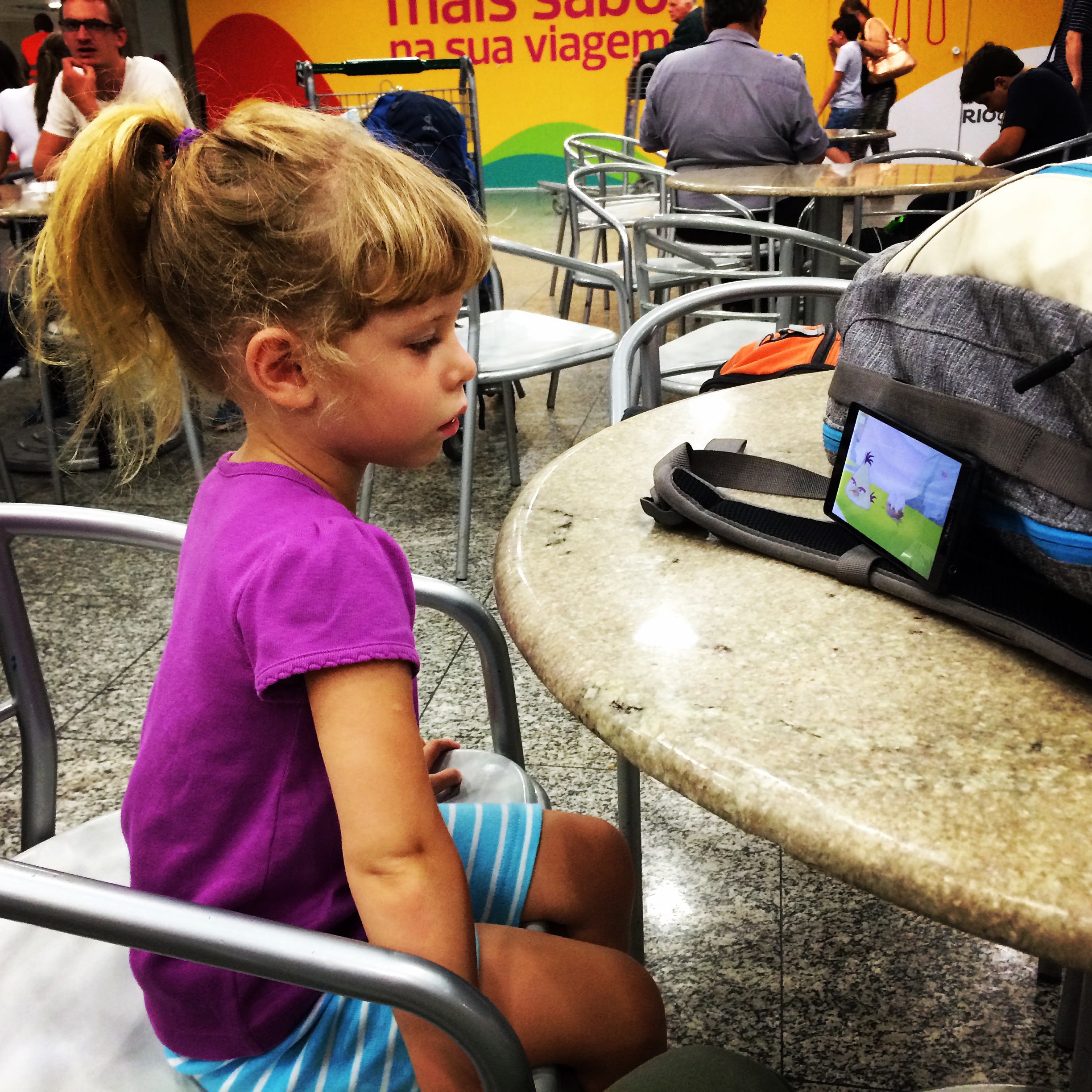
    My little family of three took a trip to Rio de Janeiro this weekend.  Our nephew recently had a birthday and we needed to put in some face time with my husband’s family.  It’s only a 45 minute flight from Vitoria to Rio, but that was long enough to learn a valuable lesson.  There is no length of time short enough a three year old can’t turn it into forever.

    It’s like in Interstellar.  For the pilot and crew who have tasks to complete, 45 minutes is barely enough time to toss bags of crackers at everyone.  They’re the lucky ones down on the planet.  The parents of small children are the ones stuck in orbit who stumble off the plane with more grey hair and beards, demanding to know what year it is.  How long were we up there?  Six years?  Ten?

    For our flight home, boarding was scheduled for 6:50pm.  Right at dinner time! But my husband and I were prepared.  We had packed sandwiches…which my daughter ultimately refused to eat because we miscalculated the nap.

    The ride to the airport was about 30 minutes.  When my daughter fell asleep in the taxi, we thought “Oh good, she can take a short nap and be in a better mood.”  Only, she didn’t fall into nap-time sleep.  She fell into bedtime-for-the-night sleep, and as my grandmother says, “You don’t need to step on a snake to know it’s going to bite you.”  The same principle applies.  You don’t need to wake a preschooler up from deep sleep to know it’s going to cry.

    And cry she did.  Through the whole check-in process.  While we searched for a place to sit.  While I bought water and snacks.  Even after we resorted to the emergency M&Ms.  Eventually, she calmed down and filled her stomach with 2 tiny bites of sandwich and 5 pão de queijo.

    No longer hungry but still exhausted from the weekend, her emotional pendulum swung to the other extreme. We then had a deliriously giddy 3 year old on our hands.  While deliriously-giddy child is less emotionally exhausting than inconsolable child, she is more physically exhausting because deliriously-giddy child cannot occupy the same space for more than 3 seconds.

    Did I mention that my back locked up this weekend?  It happened while checking in at the airport for our flight to Rio.  For the first time in my life.  I couldn’t bend over, lift anything, or even take a deep breath the entire weekend.

    Because I was benched from parenting due to injury, my husband was the one running after her while I kept our place in all the various lines.  He was the one who chased her through security, from the gate to the plane, and took her on the bathroom run she needed the moment we stepped on the plane.

    Eventually the plane took off and everything was ok. For about half an hour.

    With fifteen minutes of flight time left, my daughter decided she could no longer tolerate her seat belt.  My husband and I desperately tried to head off the fit we could see coming.  She was straining and arching her back against the seat belt.  Her face was scrunched and turning red.  She stopped speaking in sentences and devolved to “No seat belt!”  Very aware of the 150 people trapped on the plane with us, I grabbed a doll and made it sing “Let It Go”.  As we got to the chorus, my daughter joined in and shrieked “Let it poopy! Let it poopy!”  She dissolved into a fit of laughter and proceeded to sing at the top of her lungs different versions of the song featuring everything from pee pee to smelly socks to farts.

    I’m certain if there had been a vote, the other passengers would have unanimously voted us off the plane.

    That was the emotional knife edge we balanced on for the remainder of the flight.  We teetered between a breakdown over the seat belt and belting out classic Disney songs rewritten to feature bodily functions. “Let it fart! Let it poopy! Let it poopy and faaaaart!” The plane eventually landed three months later, and we made it home where my daughter finally ate a peanut butter and jelly sandwich and went to bed.

    All in all, it was a pretty uneventful trip.  It could have been so much worse.

  • The Two Kinds of Americans Abroad

    The Two Kinds of Americans Abroad

    There are two kinds of Americans abroad.
    There are two kinds of Americans abroad.

    Last week, I gave a lecture comparing Brazilian and American culture to a group of law students from West Virginia University.  I like to think that I was asked to lecture because I have a Master’s degree in International Communication, a subject I have been living everyday since I moved to Brazil.  But I think the decision making process was more like this.

    “We have a large group of Americans coming and none of them speak Portuguese.  We need English speakers with advanced degrees! Quick!”

    “We have these five professors.  That’s two days, but the group is here a week.”

    “Crap.”

    “Hey, isn’t there a professor with an American wife?”

    “Yes! She can talk about the differences between Americans and Brazilians.  Plus, she’s not actually a professor so we won’t have to pay her anything. Perfect!”

    And that’s how I ended up on a stage talking to a gaggle of WVU law students, who unfortunately didn’t come dressed in coal-dusted miner’s clothing, strumming banjos.  Thus the only images I had of West Virginia were shattered.

    I opened my lecture by asking for the audience to describe a “typical” American and Brazilian.  I asked each group to describe their own nationality.  The Brazilians in the room described a typical Brazilian as “friendly”, “family oriented”, “has lots of kids”, “talkative”, “kind”, and “social” among other things.  Now, how do you think the Americans described themselves?

    A little personal reflection before I tell you.  I’ve traveled a fair amount, and I think Americans who venture outside the US can be divided into two categories.  One group is the famous American tourist.  The loud, pink-faced, sneaker-wearing patriot who cannot fathom why this third-world country doesn’t put ice cubes in the drinks.  They seem surprised and confused to discover that not every person everywhere lives exactly like they do.

    “Cheryl, did you see that you cannot flush the toilet paper?!  I tell you what…I don’t know how these people can live like this.  If I lived in this place, I’d get myself an American toilet right quick.”

    Then there is the other group.  These students were from the other group.

    These American students described a typical American as “fat”, “lazy”, “arrogant”, “selfish”, and “ignorant”.  They basically described the typical American as a cross between Voldemort and Jabba the Hutt.

    It was fascinating.  Despite currently living through a recession and an enormous corruption scandal involving billions of taxpayers’ reais and rising inflation and gross income inequality and sky high rates of gun deaths…the Brazilians described themselves in overwhelmingly positive and honest terms.  Why were the Americans so brutal and negative toward their countrymen? And more interestingly, would any of them have described themselves in those terms? Of course not! They don’t see themselves as “typical”. (Ironically, separating yourself out from the majority as a unique individual is typically American.)

    These students are the second type of Americans abroad, the “serial apologizers”.

    Perhaps you’ve seen them eating couscous with their fingers in Rabat or using chopsticks like a local in Tokyo. They are Americans who are hyper aware of the negative opinion many people have of US foreign policy and/or Americans themselves.  Thus, they go around profusely apologizing for everything the US has ever done wrong.  They preempt criticism with more extreme criticism of their own.

    “You don’t like US policy in the Middle East?  How could you?  We’re arrogantly imposing our will on everyone who is different!  It’s what we do!  Let me tell you about our history with Native Americans and slavery and don’t even get me started on the present day! Between Iraq and the Kardashians, we’ve destroyed everything that is good and decent in the world!  Disney! Drones! Starbucks! We are the WORST!”

    My fellow Americans, isn’t there some happy middle ground between these groups?  Can’t we describe ourselves as hardworking, informal, and innovative while also acknowledging that Walmart is run by the devil’s minions?

    Let’s try!  Next time you go abroad, don’t assume the lack of ice cubes is indicative of underdevelopment.  If someone brings up Guantanamo, acknowledge that our collective fear after 9/11 led to some horrible policy decisions but you’re confident the pendulum is swinging back the other way.  Then lead everyone in a rousing chorus, “Tomorrow!  Tomorrow! I love ya, tomorrow!” Because fierce optimism and musical theater are two of Americans’ greatest contributions to the world.

  • Brazil: Children Allowed

    Brazil: Children Allowed

    Brazil! Where children are always welcome!
    Brazil! Where children are always welcome!

    As an American, I know that taking a child to any restaurant that doesn’t have it’s menu posted on a wall and ordering her juice while she plays on your phone will get you nasty looks at the least and reported to child services at worst.  The US can be a harsh culture in which to go about the day to day activities of parenting.  I didn’t know how harsh until I moved to Brazil, and my eyes were opened.

    Brazilians are gaga for children!

    Women and men, old and young, Brazilians adore kids.  Brazil makes the US seem like one giant lawn its crotchety citizens don’t want children stepping on.

    I first noticed this difference during a staff lunch at a chic restaurant in Rio. My boss brought her newborn to this very crowded restaurant at peak lunch hour.  Exactly one table was available and it was on the opposite of the restaurant.  There was a sea of people in expensive clothes and tables covered in glassware between us and that table.  When my boss indicated to the staff that we would be claiming that table, I cringed.  My stomach clenched at the idea of getting through this fancy crowd with a baby and stroller.

    That’s the appropriate response, right?  Obviously, a parent should feel ill at the thought of briefly disturbing other people’s lunches on the way to her own table.  Ha. How American of me.  Two waiters swooped in, all smiles, lifted the stroller up over their heads, and carried that baby like royalty across the entire dining room.  Not a single dirty look.

    Brazilians have this bizarre assumption that babies and children are a staple part of everyday life.  If there are people around, there will be young people and these young people will cry, complain, spill things, talk too loudly, and generally not behave like adults.  That’s life.  How else is it supposed to continue?

    People here also acknowledge kids.  They talk to them and include kids as if they were a part of society.  Strangers smile and say hello to my daughter on our walks to school.  Waiters greet her at restaurants.  When she cries in public, people stop and ask her what’s wrong. During a melt down, I’m not worried the stranger approaching is about to helpfully inform me my child is being disruptive or offer some  judgement in the form of unsolicited advice.  That stranger approaching doesn’t want to talk to me at all.  She’s going to console my daughter.

    At playgrounds, parents help each others’ kids on and off equipment.  They freely offer snacks they’ve brought to every child in earshot.  They let other kids run off with their own child’s toy confident it will be returned. Playgrounds in Brazil initially felt to me like loud, sandy communist communes.  It was a long time before I stopped apologizing profusely every time my daughter touched another kid’s toy and fearing the wrath of another parent because I offered her child gluten.

    If you do bring your baby to Brazil, be prepared. Brazilians love children, and Brazilians are touchy people.  I mean literally touchy.  They touch other people a lot.  A random passersby will want to touch, stroke, kiss, and even hold your baby.  One of my daughter’s nurses at the NICU here in Vitoria admitted this was a particular blind spot for Brazilians.  Knowledge of germ theory cannot curb their enthusiasm for babies. I dealt with it by reminding myself I’d rather have a request to hold my baby than a request to remove it from the premises.

    This habit of baby fawning is not limited to any age, gender, or class.  A trainer at my gym once brought his newborn into the weight room and a half dozen of the burliest men were reduced to cooing and clucking incoherently.  The school where I taught had preschool through high school, and everyday as the toddlers left the nap room, a crowd of teenagers gathered to squeal and exclaim over the adorably rumpled munchkins.

    And of course there are the old ladies.  Women over the age 70 must develop a sixth sense to detect babies.  I’d be sitting at the cafe, waving a rattle in my daughter’s face, and suddenly an 85 year old woman materialized out of thin air to stroke my daughter’s hair and to tell me my baby is cold.

    This is the one sin a parent cannot commit in Brazil.  You can leave the TV on 24 hours day.  You can feed your kid white rice and french fries at every lunch.  But do NOT let your baby get cold!!!  If there is a breeze and your baby is not covered with a blanket, every person will stop and tell you your baby is cold.  Every. Single. Person.  As someone who does not think 65 F requires gloves at any age, I heard it pretty much everyday of my child’s infancy.

    The love for and acceptance of children as part of daily life are two of the things I love best about Brazil, and for now, I’m perfectly content to raise my tantrum prone daughter here so as not to disturb my fellow Americans’ lattes.

    Save

  • Children’s Parties: Brazilian Edition

    Children’s Parties: Brazilian Edition

    What are they going to do for the 2nd birthday?

    We can learn a lot about our own culture by having to explain it to outsiders.  What specifically outsiders want an explanation for is telling and then having to explain why can lead to great enlightenment.

    For example, as an American I have fielded quite a few questions about guns.  I’ve learned that to the rest of the world our obsession with firearms makes us look like batshit crazy people hellbent on our own destruction.  Also, no American expat has ever convinced another person that a civilian needs a grenade launcher to potentially fight off a government that has missile launching drones.

    Of course every culture has its idiosyncracies.  Americans must account for a love of lethal weapons, and I’d like to ask my Brazilian family and friends to explain the Brazilian child’s birthday party.

    (This is a totally legit transition.  An American gun range and a Brazilian child’s first birthday are, for me, equally intimidating environments.)

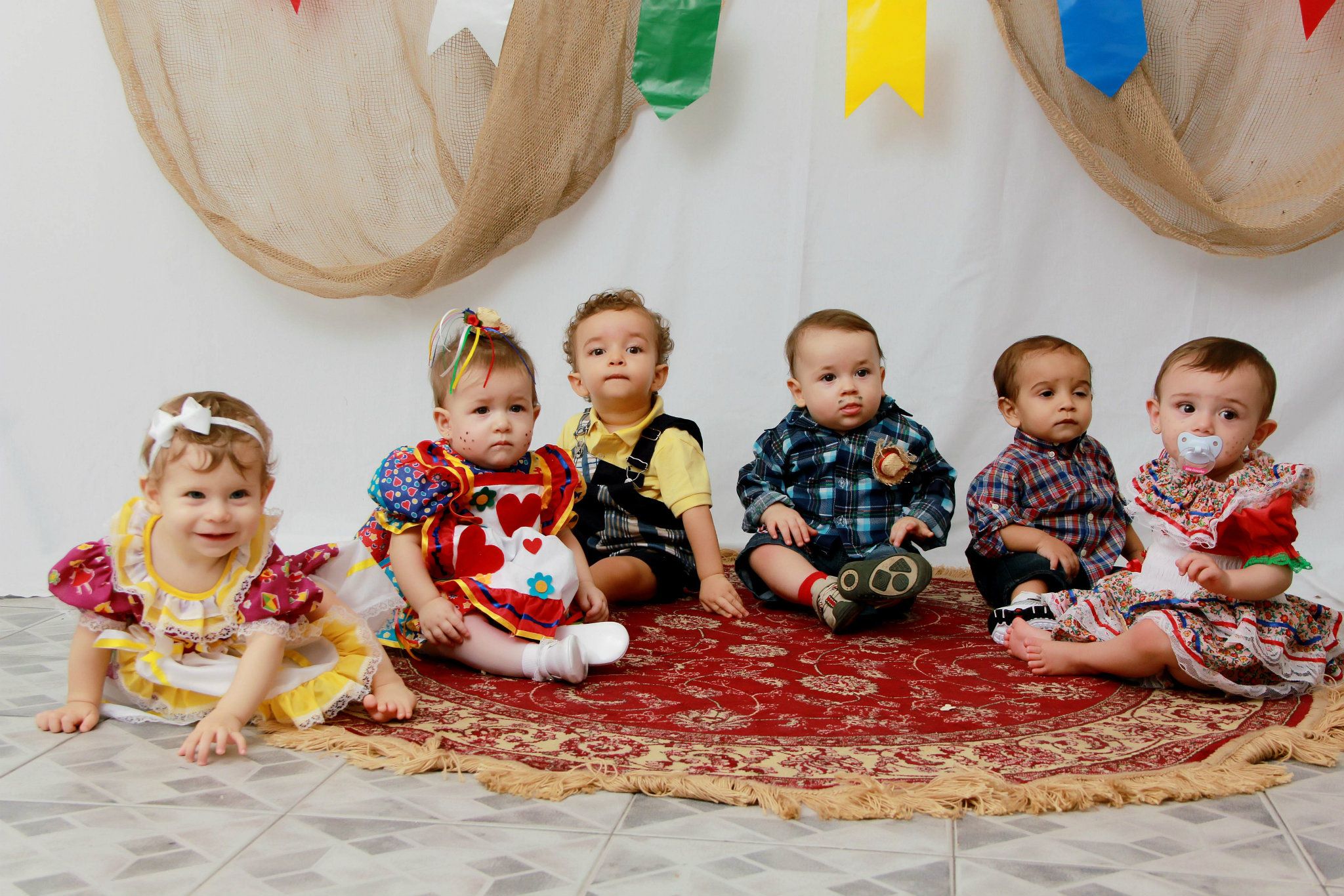
    This past weekend, we attended the birthday party of my daughter’s classmate.  My husband, daughter, and I all stayed the duration, from 5pm to 9pm on Sunday night.  There were about 60 people in attendance.  The three tables of decorated sweets and cakes on display throughout the event were perfectly arranged.  The personalized favors were lovely.  The party space had a climbing wall, a bungee-trampoline thing, a three-story playground, a rope walk suspended above everyone’s head, and a ball pit.  The trays of fingers foods, soda, and beer swept by with impressive frequency.  The boy was turning three.

    To be fair not every Brazilian family does this and many cannot afford to do this, but the party I have described is typical of middle class families.  It’s not something worthy of a reality TV show.  It’s completely mainstream.

    I have been to a few 1st birthday parties and they all had more guests than my wedding.  I understand that Brazilian families tend be large and stay in the same city where they were born.  It is very likely the birthday girl has ten cousins living close by. Ok. I understand that at a young age, it’s appropriate to give an invitation to everyone in the preschool class.  I’m totally on board.  But why their parents? Why do I have to feed 15 of my kid’s classmates, plus their moms, dads, and siblings?  My child doesn’t know little Rodrigo’s grandma. And why your boss and work colleagues your kid has never met?

    My nephew’s first birthday had around 100 people.  He spent almost the entire party hanging out with his grandpa in the car.  The poor kid burst into tears every time he got carried toward the commotion.

    I question the value of of a birthday party that the honoree is terrified to attend.

    Some beautiful things for the janitor to sweep up…

    And why spend so much money and time on the elaborate decorations and sweets?  A two year old doesn’t care if the candy is personalized and color coordinated.  For guests, those cute wrappers, ribbons, and bedazzled boxes are merely impediments between mouth and candy.  Once the birthday song is sung, it’s Lord of the Flies.  The smoke is still wafting up from the candles and the dessert tables look like a pack of Labradors was set on them. The kids are aggressive too.

    Ok, I’m being mean.  This is actually perfectly reasonable behavior considering the kids have been made to stare at these tables of sweets for three hours.  All the desserts are beautifully laid out upon arrival but DO NOT TOUCH them until after the candles are blown out!!  Scheduling a party at dinner time and making kids stare at cupcakes for hours is straight up torture.  I’m pretty sure it’s illegal under the Geneva Convention.

    I know some of the moms do everything themselves and I bow to their superior design and art skills. Every child’s party I’ve been to has been beautiful and if they were for a 15th birthday or graduation or even just for older kids who could remember it and not burst into tears at the sight of Great Aunt Roberta, I wouldn’t have any questions.  But I can’t help asking when I attend a three-year old’s birthday, who is this party for?

    blog-button-linkup-2

  • The Perks of Not Speaking the Language

    The Perks of Not Speaking the Language

    Or don't...depending on the situation.
    Or don’t…depending on the situation.

    I have a secret to confess.  I speak Portuguese.  Please, don’t tell my mother-in-law.

    I don’t speak Portuguese fluently. Nothing as impressive as that. I speak Portuguese like a 96-year-old suffering from extreme dementia.  My sentences are punctuated by gestures and facial expression to stand-in for words I’ve forgotten, and my responses to questions sometimes have nothing to do with what was actually asked.

    “Brynn, what did you do this weekend?”

    “No, I don’t like mangoes.”

    But more often than not, I can successfully converse, arrange appointments, and get the hair cut and color I actually want. (The correct hair color was something I mistakenly thought I could get after only recently arriving in Brazil with minimal Portuguese.)

    While life is greatly improved now that I don’t consistently confuse Monday and Tuesday, there are times when I play the clueless foreigner card without hesitation.  I should probably feel bad for perpetuating the ignorant, monolingual American stereotype, but it’s such an effective way to avoid all those tedious conversations that suck up patience and sanity: the chatty person with what sounds like TB at the doctor’s office, the perfume-drenched, close-talking lady from upstairs, all phone solicitors.

    I always answer my phone with a thick, American, “Hello.”  It’s the perfect screen.  Family and friends obviously know where I’m from and aren’t thrown by it.  Only salespeople freeze up and give themselves away with a long pause as they try to figure out what to do next.  Some hang up.  Some ask if they can speak to my husband.  Others plow doggedly ahead with their scripts.  I cut them all off and say sweetly in English, “Oh, I’m sorry. I don’t speak Portuguese. Goodbye.” Click.  Conversation over.  The salesperson doesn’t feel bad about losing someone they couldn’t talk to.  I’m back to watching John Oliver on YouTube. Win-win.

    I first employed this trick in Morocco.  Describing the young men in Morocco as persistent is like calling the Kardashians’ lifestyle “comfortable.”  Tired of being unable to walk two blocks without being asked to dinner and then asked why I was refusing, I answered one man with Croatian song lyrics.  Why Croatian? Because in almost every country other than the US, even misogynist assholes can speak more than one language.  But with only four million Croatians in the world, I was pretty confident Croatian would not be one of his languages.  I was right.  The guy stopped talking to me after a couple sentences.  He did still follow me all the way back to my hotel, but stalking is way less annoying when done in silence.

    Playing dumb also helps avoid awkward conversations with in-laws and before you judge, just imagine Thanksgiving with your in-laws.  What if you could avoid awkward conversations about politics or global-warming or when your daughter is getting baptized by simply fumbling the language? “Oh, what? When is she getting her booster shots? Next month.”  Wouldn’t everyone be happier if there was just a lot of smiling and complementing of the food?

    So before you get annoyed with the woman in the elevator for not speaking your language, check if you’re wearing deodorant, have brushed your teeth recently, and are saying something more interesting than the silence.  Then be careful what you mumble out loud.  There’s a chance she’s faking it.


    Find more fun adventures from life abroad!

    Expat Life with a Double Buggy