Category: Being a Multicultural Family

  • We’re All A Little Prejudiced: My Personal Encounters with Racism Around the World

    We’re All A Little Prejudiced: My Personal Encounters with Racism Around the World

    03380d86195895d94985f46283c97370
    Is your dark complexion keeping you from happiness?

    Many years ago I was dating a handsome Punjabi who lived in Milan, and we took a trip to Paris.  (That sentence makes me seem way more interesting than I actually am.)  While leaving our hotel one morning, he offered to carry my wallet.  “Thanks,” I said, “but these pants have pockets.  I carry my own money.  I’m not an Indian woman.”  He, being a human with feelings, rightfully gave me the silent treatment for the rest of the morning.  I, being an idiot, couldn’t figure out what was wrong and had to pointedly ask over lunch.

    My comment was referring to my fruitless quest to find a salwar kameez with pockets during my semester in Jaipur back in 2004. I spent four months in India looking for a place to put my cash.  I was trying to make a joke.  I failed.  To my friend, it wasn’t just not funny.  It was insulting to him, to his mom, his sister, and every Indian woman, so about 500,000,000 people.  Not my best moment.

    I share this memory in defense of Trevor Noah, the South African comedian who will be taking over for Jon Stewart on the Daily Show.  He’s gotten a lot criticism for some unfunny and unoriginal tweets about people who are overweight and Jewish.  I’m still a Trevor Noah fan.  Good people can be insensitive and thoughtless.  These people learn from their offenses, and these offenses can be pretty glaring when moving between cultures.

    Different cultures have different prejudices and sensitivities.  I’ve not been to South Africa but I wonder if they have the same level of sensitivity to weight related jokes that exists (only recently) in the US.  Brazil doesn’t.  I don’t believe any of Noah’s tweets would raise an eyebrow in Brazil.

    The truth is I’ve never been to a country that was not rampant with prejudices.  Every culture has groups of people that it marginalizes, fears, or has very little contact with and thus, no sensitivity to.  To make my point, here’s a global tour of prejudices I’ve encountered around the world.  And since people can be the worst with all our many, many prejudices, I’ll just focus on race for now.

    I once spent a summer in rural Croatia. It is the whitest place have ever been.  It’s like a town populated exclusively by the audience of the Country Music Awards, except with a better grasp of geography.  When I mentioned to my homestay sister that it was weird for me to be in a place with no people of any color except white, she cheerfully informed me, “Oh no, there’s one African.  He plays for our soccer team. They brought him here because those people are really good at soccer.” I was also told that throwing bananas during games is just a joke. It’s all in good fun.

    Morocco was the first place I discovered the product Fair and Lovely.  After repeated applications, this cream will lighten the complexion of any young woman and save her from the bad husband and unhappy life resulting from dark skin.  I was so horrified by it, I couldn’t bring myself to buy it as a joke.  In Morocco I also learned about the two Africas.  A fellow student in my program had shown me how to wrap my hair up in a scarf, and I sported the look almost daily for awhile.  Eventually, my homestay mom said I should try a different style because my style was how “African women” wrapped their hair.  I was momentarily confused because Morocco is in Africa, but of course she meant Sub-Saharan Africa. Black Africa. Not Arab Africa.  Even in Africa you can’t be black.

    India, unfortunately, also had Fair and Lovely and it was running a truly spectacular commercial.  A girl, in her early teens, is on the couch watching a cricket match, pretending to call the plays into a hairbrush.  Her mom appears and lovingly embraces her daughter while handing her a tube of Fair and Lovely.  The girl diligently applies the cream to her face before bed.  Leap to the future and a young woman with skin several shades lighter is taking her place in the announcer’s booth at a cricket match.  She’s smiling, loving life, and so thankful her lightened skin has helped her get a job as a radio announcer.

    White skin is also a prized commodity in Brazil.  Well maybe not “white” skin, not with all the beaches and lack of clothing, but blond hair and blue eyes are prized possessions.  Almost every Brazilian who sees my daughter for the first exclaims over her blue eyes.  The teachers and staff at school affectionately call her “Blondie”.  The staff of the preschool is almost entirely dark skinned and the students are almost entirely white.

    Brazil does have very strict hate speech laws which make racist remarks a crime, and I think they do limit the amount of explicit comments directed at Afro-Brazilians.  The law does not, however, seem to protect gays or anyone from the continent of Asia.  If there’s a gay joke your local PC police are holding you back from, come to Vitoria, Brazil.  You’ll get a hearty laugh because here men know there is nothing worse than being gay.  Do you think pulling down the corners of your eyes when talking about Japan is absolutely hilarious?  So do a lot of people in Brazil.  Here’s a commercial for the fast food chain China in Box. Please, watch it and tell me in the comments if your mouth dropped open too.

    I used to teach high school here in Vitoria, and I’ve had to stop my classes more than once to say,  “Never, never do that thing with your eyes in my class.” Some students then helpfully explain that the gesture is not racist in Brazil, and Americans are too sensitive about race.  I’ve heard the sentiment many times.  “Americans are too sensitive about race.”  Also, “Americans have a real problem with racism.”  Americans are very sensitive racists.

    The truth is we’re all a little bit racist or homophobic or Islamophobic.  Every person has prejudices and every culture has groups it doesn’t encourage empathy with.  My students here have had little to no contact with anyone from anywhere in Asia.  The jokes they make reflect this.  I think the solution is asking the students, asking ourselves, to consider the other group’s perspective. In short, empathy.

    I know, I know.  Actively respecting other people’s feelings requires thinking and we’re all so busy.  It may also require us to apologize when we fail to do that thinking and offend someone, and apologizing is the worst!  It implies we’re not right all the time!  I also understand the temptation to blame whoever for being overly sensitive.  Then we don’t have to feel guilty for hurting someone.  I hate feeling guilty.  It’s such a downer.  Speaking of downers, we are all going to have to drop some jokes about Latinos, women, gays, foreigners, the disabled, the indigent, Catholics, Muslims…oh my god, is it even possible to be funny while respecting others?  Yes, it is.

    And I think Trevor Noah will learn from his mistake.  I learned from mine that morning in Paris and the many more I’ve made since.  Empathy requires more energy than indifference, but the result, a kinder world for all, seems worth the effort.

  • The Super-Awesome, Amazingly-Exotic Expat Life

    The Super-Awesome, Amazingly-Exotic Expat Life

    The daily rainbow in Brazil.
    The daily rainbow in Brazil.

    When I’m back home in Atlanta, I try not to mention that I live in Brazil.  The opportunity presents itself with surprising frequency, usually when a sales associate asks if I’d like to sign up for a rewards card.  I decline saying “I’m just visiting for the holidays.”   Nine times out of ten, at least in the state of Georgia where people still practice things like small talk and friendliness, the person will ask “Oh, where do you live?”  Then I’m stuck.  “In Brazil,” I answer, and I’m at the counter another five minutes as I tell my story and confess that I have not in fact learned to speak Spanish.  Though I have learned the local Portuguese.

    I can’t blame people for their wide-eyed excitement and curiosity about my life.  Americans are under the impression that life south of Texas or north of Idaho or on the other side of an ocean is more…something.  More exciting.  More dangerous.  More romantic.  More barbaric.  More luxurious.  They’ve seen movies set in these “foreign” countries and read articles like “3 Things Dating Foreign Women (And Marrying One) Taught Me” which tell people what a romantic adventure life can be if they only find a spouse with a different passport.

    As someone who did manage to land a coveted foreign spouse and move abroad, I can state that it’s all true.  My life is more exciting than everyone else’s.  It’s more romantic and luxurious yet still a rewarding, character-building challenge.

    Take my very first meal in Brazil.  I got to eat in the food court of the nearby mall.  My future husband took me and it was incredibly romantic.  The din of the other customers drowned out our voices, so we could only stare into each other’s eyes.  Because I arrived in the midst of remodeling the apartment, I had the opportunity to tour all the best hardware stores in Rio de Janeiro.  The thrill of shopping for toilet seats abroad really gets downplayed in expat blogs.  The only thing in Brazil that rivals shopping for toilets is getting finger printed for a visa at the federal police.  The ink smells like jasmine.

    Living in Brazil has also given me the opportunity to learn a new language.  It’s a fact that everything is sexier in a foreign language. Doesn’t matter which language.  They’re all sexier than English.  Here are some of the local Portuguese phrases I learned in my first months here.  Encanador.  Plumber.  Conta corrente conjunta.  Joint checking account.  Seguro de saúde.  Health insurance.  Absorvente interno.  Tampon.

    If you are ever lucky enough to visit Rio, I recommend driving from downtown to the suburbs at 5:30pm.  It will give you an authentic local experience.  Turn the air-conditioning off and roll the windows down to really go native.  Be sure to have the GoPros charged because friends back home will want to watch this trek. All three hours of it.

    Anyone leaving the US should do their family and friends the favor of recording every second of their time abroad.  They’ll thank you for allowing them to live vicariously through you.  After all, life outside the United States is one long perpetual vacation.  Nobody goes to the grocery store or a “job” in foreign countries.  The people serving coconuts on the beach here in Brazil? Robots.  All of them.  Where do you think Walt Disney got the idea for the Hall of Presidents?  He stayed at the Copacabana Palace in Rio.  Actual Brazilian citizens don’t work and if you’re fortunate enough to get residency neither will you.  People who live here just go to the beach and gym everyday.  I haven’t had to run an errand since I arrived in September of 2006.

    Having a child abroad with a foreign spouse (Yes, even in Brazil my Brazilian husband is the foreigner.  I can’t be a foreigner because I’m American), it only adds to the drama and glamor of the expat life.  I’m writing a screenplay based on my experience of visiting the US consulate to prove the maternity of my child.  I’m hoping Ridley Scott will direct and it will star Angelina Jolie (as me), Antonio Banderas (as my husband), and Jack Black as the unwieldy and misunderstood stack of paperwork that ultimately saves the day and gets us the US birth certificate.

    Those of us living in far-off, exotic lands know that “living” abroad is exactly the same thing as “vacationing” abroad.  Don’t make the mistake of thinking that most people in the world are busy going about the tediousness of living day to day, with the jobs and childcare and home repairs and laundry that human existence demands.  No, no.  Life outside the US is romantic and electrifying all the time.  In fact, I have another Brazilian adventure planned for this morning.  I’m going on an excursion for light bulbs.

  • Why I Don’t Want Another Child

    Why I Don’t Want Another Child

    My daughter at 3 years
    My daughter at 3 years

    Yesterday my husband, daughter, and I headed out early for a morning on the beach.  We dug a giant sand pit, built and promptly stomped on sandcastles, and failed to convince my daughter stepping on seaweed is not the absolute worst thing in the world.  We followed this with fish stew and fried bananas on the beach.  In the afternoon, there was a skype call with grandparents, tutus, and puzzles, and a thirty minute tantrum during which my little ballerina spit in my face.

    When I finally crept out of her bedroom at night, I collapsed on the couch thinking “I will never do this again.”

    There it is.  My true feelings about parenthood.  I love my daughter.  I also love myself.  And I cannot spend any more of my one lifetime parenting a small child.

    Despite being born with a uterus, I never dreamed of having children.  In high school through my early twenties, when I imagined my future it never included children.  I pictured travel, politics, law, publishing a book and going on tour, or accepting an appointment as a US ambassador.  Babies never made an appearance.  Then I got married and in my late twenties, I began to think that a child might be nice.  Also, my husband is sixteen years older than I am and given women’s tendency to outlive men, I’d rather not be alone for the last twenty years of my life.

    Wanting a guaranteed companion in old age is a pretty selfish reason to have a child.  But aren’t they all?  I’ve never heard of a couple having a child because the kid asked to be born.  “I’ve always dreamed of a big family.” “We need someone to carry on the family name.”  “I just love babies.”  All selfish reasons.  Yet society reacts with hostility to a person who decides, “Yeah, I had a kid and I really don’t like parenting a baby. I won’t be doing it again.”

    Of course, I’m not just a person deciding I don’t want more children.  I’m a woman declaring I’d rather spend my Sunday afternoons reading as opposed to stringing macaroni necklaces.  I searched for other posts about women with one child by choice, and every mom wrote about her family feeling “complete” with just one.  One child just “feels right.”  Not one mother said, “It was hard.  I struggled.  And I’m not doing it again.”  Well, I’ll say it.  The last three years have been a struggle and I’m not going through it again.

    My daughter was born seven weeks early by emergency c-section after a placental abruption.  She spent 28 days in the NICU.  Her stay would have been shorter but she developed a food allergy at 2 weeks-old which caused loose, bloody stools at every feeding and meant I, the breastfeeding mother, had to begin eliminating things from my diet to isolate the cause.  I eventually removed all dairy, soy, peanuts, nuts, eggs, tomatoes, and berries from my diet but traces of blood and a poopy diaper every two hours continued for 7 months.  I clearly remember sitting at a Mexican restaurant, surrounded by my entire extended family and their plates of cheesy, processed deliciousness, while I ate my skinless chicken breast between two crumbling slices of homecooked, dairy-egg-soy-free bread.  On the plus side, I dropped to under my pre-pregnancy weight in three months.

    Since her homecoming my daughter has rejected the idea of sleeping in her own bed.  Not just her bed.  In her early months, she rejected swings, vibrating chairs, strollers, moving strollers, car seats, swaddling, and every means of soothing except a parent’s arms. And when I say “reject”, I mean she would scream until she couldn’t breathe, and it would take fifteen minutes of rocking to calm her back down.  At 3 and a half, she still doesn’t sleep the whole night in her own bed.  At least now, she will wake up and walk to our room and not just scream waiting for us to come.

    Her separation anxiety is so extreme, I have spent exactly one night away from her since she came home from the hospital.  It happened this January, while we were visiting my parents.  We prepped my daughter for days.  Mommy and Daddy were going away for a couple of days but she would be with Gramma and Grandpa.  There were chicken nuggets, new toys, and Legoland.  My husband and I kissed her goodbye at 6pm.  She cried from 2:30 to 7:30am and was back with us after 20 hours.  It’s been two months and still every story she plays out, with stuffed animals, Legos, or Littlest Pets, involves a lost parent.

    I haven’t even mentioned her tantrums.  And I won’t except that my dad witnessed one and described it to my brother this way: “Whatever you’re imagining, however awful…it was worse.”

    I’m not writing all this to convince anyone of how hard I’ve had it.  My daughter is happy, healthy, and growing.  Despite being a preemie, she is now on the median line for height and weight.  Her teachers send home glowing reports about what an active participant she is and what strides she has made recently with sharing.  When I ask her teachers about the tantrums, they acknowledge her fits are extreme but not abnormally so, and they are occurring less and less often.  It’s clear she will outgrow them.

    My point in listing my greatest parenting challenges (so far) is to say that as tough as these years have been, they could have been worse.  Much worse!  A second child could have health complications or developmental challenges that make my daughter’s early life a three year vacation. My marriage can’t take that.  My sanity can’t take that.  I can’t take the risk!  In the choice between a sane mother and siblings, I think we can universally agree a sane mother is more important for a child’s development.

    In the most private recesses of my mind, I think that I am simply too selfish for a parent.  While pregnant, I thought that hormones would flip some martyr switch that biology had surely hard wired in me.  It didn’t happen.  My dreams, interests, and personality remained mostly unchanged. I would throw myself in front of a bus for my daughter, but I still find coloring and crafting tedious.  I’m making play-dough spaghetti and wishing I could get back to my book.

    I do see a light at the end of tunnel.  I see a turning point, a threshold, an event horizon approaching.  We recently took her out Stand-Up Paddling for the first time.  Fun was had by all.  She’s asking to revisit the sea turtle center, making up stories, and composing songs off of the top of her head.  I’m seeing flashes of a person, one I can’t wait to know and think I’ll have a few things in common with.

    I definitely will not be repeating the past, but I am genuinely excited about the future.


    Brilliant blog posts on HonestMum.com

  • Lessons For Toddlers and Expats

    Lessons For Toddlers and Expats

    bureaucracyMy 3 year old daughter is currently struggling to accept some of the physical limitations of our three dimensional world.  “That tunnel is not tall enough for the train.”  “It was made for one Littlest Pet not eight.”  “Sweetheart, your teddy bear is never going to fit in that play dough pot.”   She will ignore me, keep trying, and eventually hurl whatever it is against the wall in a frustrated fury. I hope it’s just a phase.

    What is remarkable is her flat out refusal to accept an obvious reality.  She will continue to struggle long after it’s clear that it’s not going to fit.  Her tenacity is impressive.  It’s also the source of many a nighttime tantrum.  While I don’t want her to ever give up easily, I’d like to spare her the frustration and save her the energy spent fighting against a fact about her world.

    As an expat, I should apply this lesson myself.

    I’ve lived in Brazil eight and a half years, and I still struggle to accept some facts about life here.  One thing that still makes my face burn is the out of control and invasive bureaucracy.

    There is no question too personal for a form and no transaction that does not require one.  The eyeglass store wants your social security number.  The hotel wants your profession.  The dentist wants your race.  Your employer wants to know your blood pressure.

    I get around some forms by pretending I’m here temporarily or don’t speak a word of Portuguese, but I couldn’t do this at my former job.

    When I began teaching the school asked me to have a medical exam.  When I came back from maternity leave there was another exam and another a year later for every employee at the school.  When I gave notice at the end of last year, human resources asked me to sign several letters saying that I was leaving of my own accord and have another medical exam.

    I refused.  As American, an employer requiring a medical exam and making note of the fact you use contraceptives is deeply offensive.  I had done the previous exams because I liked the job, and hey when in Rome…but now I was quitting.  What could they do? Fire me?

    There were several meetings with HR during which I nicely refused to accommodate and the HR lady just as nicely said it was mandatory by law.  After checking with a lawyer, I explained sweetly there’s no law requiring a person to submit to a medical exam.  She politely insisted there is.

    Eventually I was told it was the union that required the exam.  And speaking of the union, I had to meet with them and have a rep sign off on my paperwork.  Please come back next Tuesday afternoon.

    I showed up at the union rep’s office in my school and met a man very disgruntled by my lateness.  The meeting was at 2pm.  It was 2:02 pm.  As he grumbled, he grabbed his keys, my work card, and my paperwork. Below is as faithful a transcription of our conversation as my memory allows.

    Me: “Excuse me, are you leaving?”

    Man I Have Only Just Met:  “He’s going to wait for us.”

    Me: “Who?”

    MIHOJM:  “The union Kahuna. (That’s my word because I don’t remember what title the guy really had.)  You were supposed to meet with him at 2pm.”

    Me: “Aren’t you the man I’m meeting?”

    MIHOJM: “No, the Kahuna has to sign off on your papers, and he’s at the union’s headquarters.”

    Me: “Wait. Do we have to drive somewhere?”

    MIHOJM: “Yes. We’re going to the union office.”

    Me: “Stop.  I’m not leaving.  Give me my work card and documents.  I am not going.”

    At that point I had been quitting my job for almost two months.  I was done.  I was out of patience and polite Portuguese.  I unleashed the full force of my direct, low-context American culture on him and I wrapped things up then and there.

    I am not going to the union office.  I am not having the medical exam.  I want to quit today.  You are a union officer?  Do you have authority to sign these papers?  Great.  Please, sign them all now.

    While I did manage to officially quit, within a Brazilian context, I was a complete asshole to a guy who was just doing his job.  He was acting according to standard practice and then comes this woman who freaks out on him, is blunt to the point of being rude, and very angry.

    And I stayed angry.  I complained about the whole process to everyone I met for days.  Hurling my complaints about meaningless bureaucracy against every wall in a frustrated fury.  What did that anger get me?  Well, it used up a lot of my energy, a very precious commodity.  It would have taken a lot less energy to shrug my shoulders.

    Somethings you have to accept.  Don’t waste energy being angry about something you can’t change.   Lessons we expats have to learn.  Expats and toddlers.

  • Unpacking Home Number Fifteen

    Unpacking Home Number Fifteen

    moving-day-boxesOver the course of my 32 years, I have called 15 different buildings “home”.  I define home as the place with most of my clothes, books, and charger cords.  This averages out to a new home every 2.13 years.

    I’ve been thinking about my different homes because I’ve just finished moving into number fifteen!  I unpacked the last suitcases being used as storage and put up a shoe rack in closet.  I took a week and organized every drawer, every closet, every shelf in my apartment.  My bathroom cabinets are a wonder and joy to behold.  After three and a half years here, I am FINALLY moved into my home.

    Three and a half years.  The moving-in process here has taken more time than my entire existence in some previous homes.  I blame my baby.  Really, it was her fault.  She came seven weeks early on the same day we moved into our newly purchased apartment.  The movers left at 5pm and I was having an emergency C-section three hours later.

    Because my husband and I were going to the NICU all day everyday for almost a month, my entire apartment was unpacked by my mother-in-law and our cleaning lady.  Of course, I will never forget the this great act of kindness on behalf of my mother-in-law.  But no one is going to organize your space and your things the same way you would.  I, for one, don’t organize my books by height and color.

    And this is why I am absolutely giddy.  After years of thinking things lost and rediscovering stuff I didn’t remember having in the first place, I have taken back control of my space and my stuff and woe be unto the person who puts the colander back in the wrong drawer.  I threw out every deviceless cable, every broken handled cheese grater, and every expired bottle of cough syrup. My week of obsessive organizing went so deep, I got pictures framed that have been buried in closets since 2002.

    Such a deep cleaning brings up a lot of questions.  Why would reasonable people with enough money keep a broken-handled cheese grater?  Who was I when I bought the jean miniskirt with frayed edges?  How does a person acquire so much lotion?

    But I’m not going to dwell on questions without answers.  Not when I can bask in the glory of knowing where every single thing in my apartment is currently located.  Every. Single. Thing.  I’m dying to make a game out of it.  I want to roll my desk chair to middle of the den, sit with my eyes closed, and have my husband call out random items.

    “Coffee filters?”

    “Cabinet directly beneath the coffee pot, top shelf.”

    “Rechargeable double AA batteries?”

    “TV stand in the playroom, in the right-side drawer, on the left.”

    “The cuff links a student gave me which I’ll never wear but haven’t thrown/given away.”

    “Your night stand, top drawer.”

    This is the closest to omniscient I will ever be. And it feels amazing.  Totally worth the wait.

    fabfridaypostW1

  • Nine Parenting Lessons Learned 3 Months In

    Nine Parenting Lessons Learned 3 Months In

    I don’t have a lot of time to write these days.  The last post took more than 2 months to finish.  Still, I need some kind of outlet, so when a reader posted a comment about Moby Wraps and baby products in Brazil, I was inspired to post a few of the lessons I’ve learned over the last few months.

    Lesson 1 About 85% of my identity is based on getting sufficient sleep.  After several days of less than four hours of sleep (none of them consecutive) the talkative, thoughtful person who cracks jokes to deal with stress becomes a simmering pot of boiling rage which spills over at the slightest thing.  A pacifier I cleaned minutes before pops out and falls straight to the floor and suddenly I am using every curse I know on gravity, Newton and any living relatives.  Jekyll never made a potion.  He just didn’t sleep for a few weeks.

    Lesson 2 The Moby Wrap, a popular baby carrying device in the US, needs to come with a warning.  Caution: Moby Wrap should only be used in air-conditioned environments in non-tropical countries. After 15 minutes with her in the wrap, I was on the verge of a heat stroke.  I managed to sweat off a few pounds and successfully teach my daughter that blankets are torture devices.

    Lesson 3 Like just about everything in Brazil, baby stuff is super expensive here.  $50 is too much to spend on preemie clothes or any baby clothes.  Call me cheap but I don’t want to spend more than $20 on an outfit she will either spit up on, poop on or outgrow after only three wearings.

    Lesson 4  Every person who does not have a baby thinks every time a baby cries it’s due to hunger.  And they will tell you this. “Your baby is hungry.”  They will tell you this repeatedly for an hour and a half and when the baby is inevitably hungry again these people will say, “See.  I knew she was hungry.”

    Lesson 5 I don’t want big breasts. I used to think I wanted some slightly larger breasts to balance out my bottom half.  Nope. Not anymore. I’m totally content with and miss my modest B cups.  Hats off to you ladies who have the back muscles and patience to tolerate these weights hanging off your front and bouncing around as your work out, jog, take stairs, try to sleep, etc.

    Lesson 6 The only practical outfit for a newborn is a onesie.  Being told this and eventually learning this from experience will not stop you from continuing to buy super adorable dresses which make her closet look spectacular.

    Lesson 7 I do not believe a baby should have it’s ears pierced, and I will not be piercing my baby’s ears.  This means when dressed in any color other than pink, everyone in Brazil thinks she is a boy.

    Lesson 8 Not all babies are born willing to sleep in a crib.  Some are born with a mistrust and a dislike of cribs that is so strong merely standing close to a crib will be enough to penetrate the deepest sleep.  They may also hate the swing, vibrating chair, stroller, car seat, and sleep in general.

    Lesson 9 Nothing, absolutely nothing in the world, is as adorable as a new baby smiling.  It’s what keeps you from dropping her in that ridiculously-expensive crib she hates and putting on some noise canceling headphones.


    Check out more great…

    Advice From The Heart

  • 7 Weeks Early

    7 Weeks Early

    Almost three weeks old!
    Almost three weeks old!

    The contractions started just before 5pm.  I didn’t know that’s what they were.  It was my first pregnancy and I’d never felt a contraction.  Everything I read about contractions emphasized back pain.  Oh the back pain!  I had no back pain. So much for preliminary research.

    What I had was pain across my lower abdomen that seemed to come in waves.  While watching my students study during the last few minutes of class for the day, I chalked the pain up to intestinal problems.  The one classic pregnancy symptom I’d had the joy of experiencing for several months was constipation.  I assumed the pain was my intestine finally in revolt, not contractions.

    Also, I was only 33 weeks along.

    I noted the increasing intensity of the pain as I caught a ride home from a fellow teacher.  I thought it odd when I finally  scurried into my bathroom at home that I didn’t really have to go.  Still, I did not think contractions.  It was 7 weeks before my due date.  I didn’t even dismiss the thought of contractions.  The thought has to enter your head in order to dismiss it and the idea of contractions never did.

    By 6:15pm however, I was in sufficient enough pain to ask my husband to call my doctor.  My doctor told me to get in a warm shower and sent my husband off to buy some pregnancy safe pain killers.  When the shower failed to lessen the pain, I began to think something was wrong.  Then there was blood.

    I called my husband.  He turned back before ever reaching the drug store.  He was on the phone with my doctor when he walked back into the apartment.  As I was yanking on clothes in the bedroom, I heard him ask “How much blood is there? If it’s just…” He stopped talking.  He’d seen the bathmat.  In less than a minute we were in the car on our way to the doctor’s office.

    Thankfully, Dr. Batistuta’s office is only five minutes from our apartment and he was working late.  It was about 7pm and the office was empty except for the doctor and his secretary, as my husband helped me climb the stairs to the exam room.  The pain was now so intense I wanted nothing more than to close my eyes and breathe.  But there were questions and Portuguese verbs to conjugate in order to answer.  I used to think speaking in Portuguese on the phone was difficult.  Speaking in Portuguese during a contraction is much harder.

    Placental Abruption.  That was my Portuguese phrase of the day.

    My doctor explained that the baby’s heart rate was elevated and that combined with the blood and contractions made him think the placenta had torn from the uterus and blood was now pumping into the uterus.  I was headed for an emergency c-section.

    After a flurry of discussion between my husband and the doctor, some quick phone calls made by his assistant, they confirmed no office with an ultrasound was open to confirm this diagnosis so we would be going straight to the emergency room.  At least, that’s what I was told happened.  I was still lying on the exam table breathing through contractions and pain that went from aching to breathtaking, never completely disappearing.

    A little before 8pm I was standing outside with my doctor trying to have small talk in Portuguese while my husband got the car.  Twenty minutes later my doctor was wheeling me into the emergency room and pushing me over to some nurses who began giving a flurry of instructions in Portuguese.  I was being prepped for emergency surgery 7 weeks before my due date and strangely enough I was not panicked.  I was too occupied with breathing through contractions and understanding the directions I was given to really dwell on worst case scenarios.  Contractions are a great distraction.  Contractions and conjugating Portuguese verbs.

    I never thought I would die.  I never thought I could die.  I never thought my baby would die.  In the moment, I never once feared for my life or my baby’s.  It was only afterwards, when researching placental abruptions, that I learned just how serious the situation was.  Not as much for me as for her.  While I lay on my side curled into a ball having a needle stuck between vertebrae, I was worried about the kinds of complications my daughter could have being born so early.  Would she have eye or ear problems?  Would she have some sort of neurological problem?  Would her lungs be working yet?

    I didn’t bring any of this up to my husband as he sat by my head in canary yellow scrubs pointedly not looking in the direction of my open abdomen.  The c-section is certainly one of the most surreal experiences of my life.  To be fully conscious while your abdomen is opened and people stick their hands in and root around your internal organs…well, surreal doesn’t quite cover it.  I felt tugging, sometimes hard tugging but absolutely no pain.  There was one hard tug and suddenly a baby was crying.  I cried for the first and only time all night.

    My daughter was born at 8:50pm on July 11.  We thought she was 33 weeks but her initial exams put her developmentally at 35 weeks.  She was just small so the ultrasounds underestimated her age.  She was 2.005kg or 4 1/2lbs.  She was on oxygen for a day and then under a UV lamp for four.  Some problems concerning her lactose tolerance resulted in her staying in Intensive care for 26 days.  But those 26 days are the subject of a future post.

    4 months old!
    4 months old!

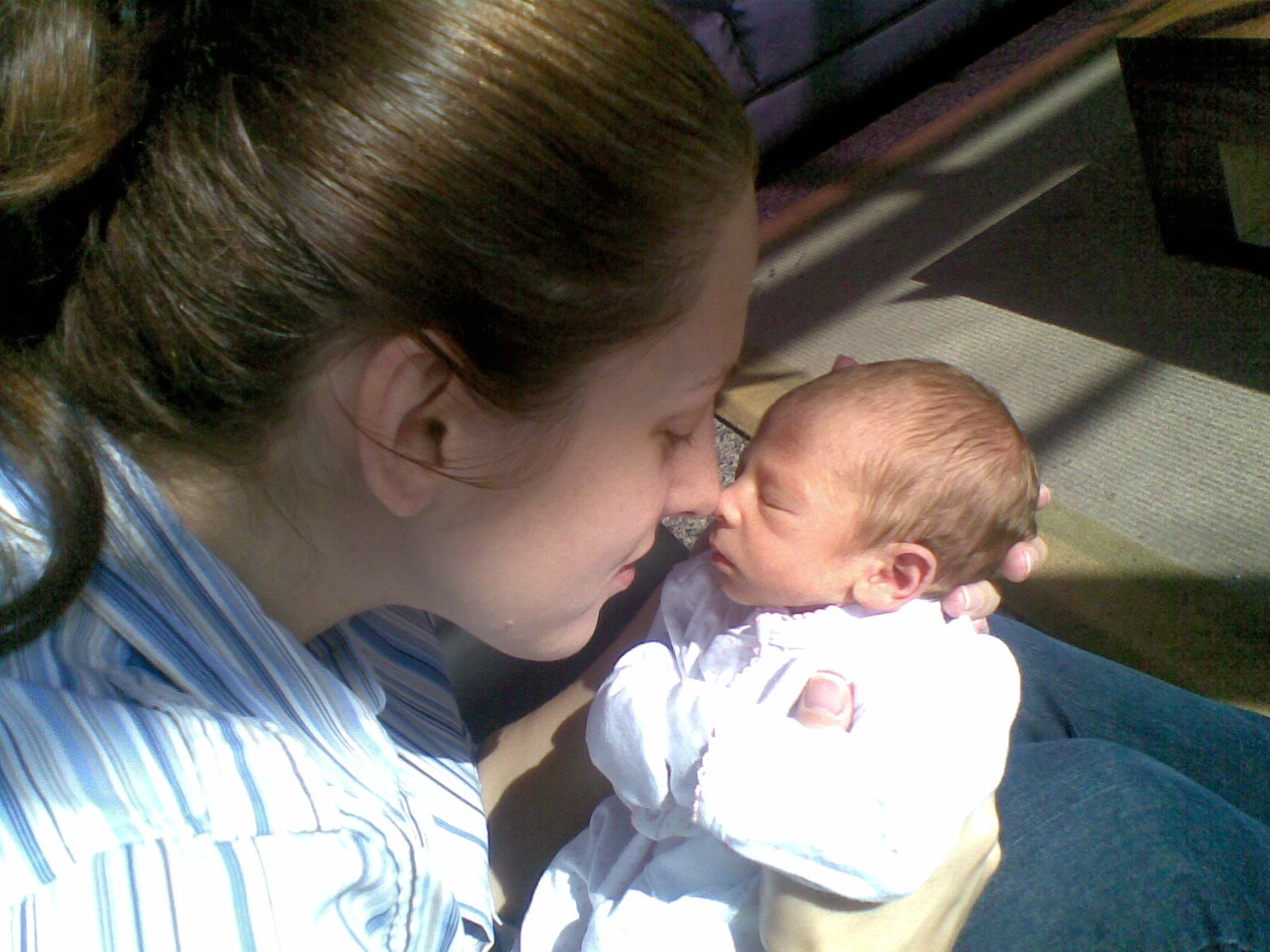
    Yesterday, my daughter celebrated her 3 month birthday.  She smiles and coos and refuses to sleep during the day anywhere but in a someone’s arms.  That’s why there haven’t been many posts recently.  It’s hard to type with a baby in your arms.  A perfectly healthy, happy, and breathtakingly beautiful baby.


    flower

  • My Recommendation for an OBGYN in Vitoria

    My Recommendation for an OBGYN in Vitoria

    My expat identity has taken a back seat in my last few posts to the teacher or pregnant woman part of me, but after reading some blog entries from other expats in Brazil I’ve been inspired to finally write a post that has been in the back of my mind for some time.

    Coconut Water is officially recommending Dr. Paulo Batistuta for anyone in Vitoria looking for an OBGYN.

    While I’ve endorsed several Brazilian food options including açaí and moqueca capixaba, this is Coconut Water’s first official endorsement of a healthcare professional in Brazil and I’m recommending Dr. Batistuta with the same fervor I do a big bowl of açaí.

    A fairly common complaint from expats here is that doctors in Brazil don’t really explain things to you.  They tell you to get a test and bring them the results.  Unless the results require being ordered to get another test or bypass surgery, that’s all you’ll hear about them.  Another complaint specific to women in the process of childbearing is that doctors here in Brazil prefer doing c-sections to pretty much anything else.  (I’d believe even more than sex given the rate at which they are performed here.)  Some private hospitals in Brazil have c-section rates as high as 90%.

    Dr. Batistuta (Dr. Paulo here in Brazil where they use first names) defies both of these stereotypes.

    Personal anecdote.  After an early ultrasound, I noticed there was one item that had an abnormal reading, specifically low blood flow in the left uterine artery. When we took the results to Dr. Batistuta, I asked about it and Dr. Batistuta picked up a pen and immediately began sketching a uterus and arteries.  He explained what the test measured and what the result meant.  He even sketched out exactly where the placenta was attached in my uterus.  You know, the more information the better.  He assured us that this wasn’t a problem given the normal results for everything else and we’d check it again at the next ultrasound.  He was right.  Everything was normal at the next ultrasound.

    Dr. Batistuta never rushes us out the door.  I’ll pull out a list of questions.  He’ll happily answer everyone, giving me cards, books, even DVDs that will provide further information.  While I’m in the bathroom changing I can hear him and my husband chatting away about upgrading their computers’ operating systems.  We were in his office for almost an hour during our last visit.

    As for c-sections, Dr. Batistuta is one of the leading voices in Brazil for natural childbirth.  If you speak Portuguese you can watch him being interviewed on youtube.  While he will state point blank he believes the best birth for the mother and baby is one with no unnecessary medical intervention, he has also told me that ultimately the doctors and staff are there to support me and what I want.  If I ask for drugs, they will give me drugs.

    I should mention cost.  One of the great things about Vitoria is that you can get great medical care (private) for half the cost of what you’d pay in Rio or Sao Paulo.  For an office visit, Dr. Batistuta charges BR$200 ($118).  We pay this out of pocket at the visit and send a receipt to our insurance company for reimbursement.  For the actual birth, Dr. Batistuta is charging BR$4.000 ($2,353). Again, we’ll pay and get reimbursed later.  (Once the whole birthing process is said and done, I’ll do a summary of all medical expenses for giving birth in Vitoria.)

    Finally, the language issue.  Our visits are conducted exclusively in Portuguese but when I have to use an English phrase Dr. Batistuta understands.  (I suspect he is modest about his level of English and understands way more English than he lets on.)  Fortunately, my husband attends every visit and supplements my intermediate Portuguese with his native tongue thus preventing any serious misunderstandings.  I can’t say for sure how it would go if you don’t speak any Portuguese. I think everyone could muddle through but it is important to know that Vitoria is a much smaller city than Rio, Sao Paulo or Belo Horizonte and English speaking professionals are in much shorter supply here.

    If you are an expat in Vitoria looking for an OBGYN, I strongly recommend Dr. Batistuta.  He talks to his patients as intellectual equals.  He supports natural birth and medical intervention only when necessary.  He understands some English and is very patient when listening to bad Portuguese.  You can find his profile and contact info with the CECON medical group.

  • Live and Let Parent

    Live and Let Parent

    This morning my husband was walking past the bookshelf and spotted a recent addition amongst the rainbow of spines. (Yes, he is that observant.)  “Breastfeeding,” he murmured out loud, taking a closer look.  He turned to me and said “Do you really need 200 pages on breastfeeding?  Isn’t it pretty straightforward?”  A few months ago I would have thought the same thing, but then I started reading pregnancy sites and the endless stream of personal anecdotes in the comment sections detailing difficulties with everything from breastfeeding to nose clearing.  Now, I’m pretty sure 200 pages is not enough address all the ways breastfeeding can go wrong.

    It’s complicated.  I’m not just talking about breastfeeding.  I’m talking about raising a baby.  Last night, I spent an hour researching diaper creams.  I’ve looked at swaddling blankets versus sleep sacks.  Pacifiers before she’s one month old?  What temperature for the bath water?  Do visitors need to wash their hands before holding her or is hand sanitizer enough?  If I give her peanut butter before she graduates from high school will she die of an allergic reaction?  And these are only the questions about physical development.  Never mind the ones about intellect and character.

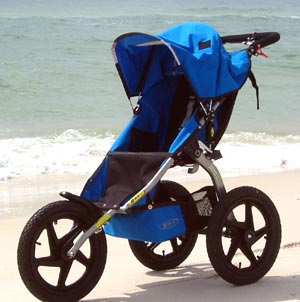
    As I develop an appreciation for how complicated raising a person is, I find myself becoming more and more tolerant of other parents.  Recently Salon featured an interview with the creator of the website “Too Big for Strollers.”  The name is literal.  The site is a collection of photos of kids who are probably old enough to send text messages from their own cell phones being pushed around in strollers.  From the tone of the site, its creator (clearly the Salon interviewer too) thinks putting a four-year-old in a stroller is what terrible parents do if they want to raise a lazy, entitled, and self-centered human being.

    When I saw the pictures, I thought “Isn’t an older child in a stroller better than a lost child?”

    The majority of pictures on the site seem to be taken in crowded amusements parks or cities, places where strapping in a kid perfectly old enough to walk but young enough to distractedly wander away is not a bad idea. Maybe overboard but not a terrible lapse in judgment.

    I have also been in the presence of a hot, tired, and hungry kid.  If they haven’t used this creature at Guantanamo, they’re missing a out on an extremely effective torture method not banned by the Geneva Convention.  I have dreams of being the parent who looks at her child after the 80th complaint of tired legs and serenely says, “You are too big for a stroller,” but I know they’re just dreams.  I’ll cave.  I can only take so much whining and screaming.  I have a breaking point.  Be it a day out running errands or a 9 hour plane ride, I already know there will be circumstances in which I will cater to any demand as long as it keeps her quiet. And mommy sane.

    Turns out the woman who created that site and the one who interviewed her are both childless!  Figures. It’s so easy to think there’s a clear “right way” when you are not the one who has to do it. I’m a pretty critical person but I’m now trying to give other parents a break.  As long as someone is feeding his child and not bathing it with bleach, I’ve got his back.  At least I’m trying to, because parenting is complicated.

    So to the Mom I passed on the street holding the hand of a 4 year old using a pacifier, I understand.  Maybe it was the only way to get through your errands without constant screaming.  So no judgment without context.  That leopard print unitard, though?  That’s just tacky.

    UPDATE May 2015: It looks like Laura Miller, the creator of the tumbler site Too Big for Strollers, gave it up shortly after her interview in Salon.  Apparently, there were A LOT of angry parents who didn’t like someone without children passing judgement on them.  And on a personal note, I recently tried to get my 3 1/2 year-old daughter to start walking the five blocks to school. It lasted two weeks. Dang, that girl can put up a fight.  She’ll overthrow a dictator someday.  We compromised on a tricycle that I can take over and push if necessary.  I’ll try the walking again on her 4th birthday.