Category: American in Brazil

  • Happy Birthday, Vitoria!

    Happy Birthday, Vitoria!

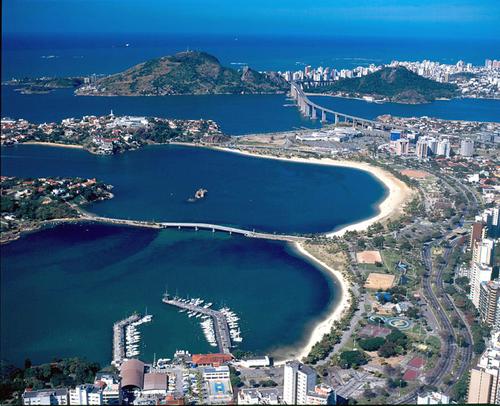
    Today, the city of Vitoria turns 459 years old.  A long time ago, September 8, 1551 to be exact, the Portuguese fought and won a decisive battle against the Goitacazes tribe.  They were so tickled with themselves for winning, the Portuguese called the island where the battle occurred Ilha de Vitoria, or Island of Victory.  Thus, the city of Vitoria was born and has been continuously inhabited for the past 459 years.

    A founding date of 1551 seems quite old to me, at least for a European city in the Western hemisphere.  The city government claims on their website that Vitoria is the second oldest capital city in Brazil.  I did some research (i.e. went to wikipedia) and found a list of the oldest cities in the US for comparison.

    The oldest, continuously inhabited city in the US is St. Augustine, which was founded in 1565.  Pensacola, FL was originally founded in 1559 but destroyed shortly after it’s founding.  It wasn’t refounded until 1698, so it loses the title on a technicality.  Either way, Vitoria is older than the oldest city in the US.

    Actually, Europeans began living on the islands that now make-up Vitoria beginning decades before the city was officially founded.  The first Portuguese governor of the region of Espirito Santo, Vasco Fernandes Coutinho, arrived in 1535.  The bay was protected by a series of small islands making it an ideal port.  The Portuguese could easily defend against the French and the Dutch.  There were also some problems with the locals.  With thousands of people already living up and down the Brazilian coast, the Portuguese had a little trouble convincing them to relocate.

    The local Indian tribes called Vitoria Guanaaní, Island of Honey.  The calm bay, bejewled with emerald green islands, was a beautiful site.  The waters were filled with mollusks and fish and the forests were filled with parrots and monkeys.  It was an Island of Honey, an island of plenty.

    Unfortunately, a city cannot be a major port for 400 continuous years and remain an untainted oasis.  While not at the levels of Rio, Vitoria has serious problems with water and air pollution.  Fortunately, it only takes an hour or two to reach the small beach towns that line the coast of Espirito Santo.  There you can see glimmers of the paradise Vitoria must have been.

    So happy birthday Vitoria!  I’ve only been here a week but I’m already a big fan.  To be honest, you had me at your incredible fish stew, but throwing in centuries of history and a candy factory was a nice touch.

  • Free Speech in Brazil

    If there is one group of people I would not want to piss off, it’s comedians.  They may make other people laugh but comedians themselves can be a savage and unforgiving group.  Think Tina Faye and Sarah Palin or Jon Stewart and anyone at Fox News.  A good comedian can leave someone’s ego in tatters and send him running for mommy.

    Maybe it’s that ability Brazilian politicians feared when back in July at the official start of the campaign season,  the electoral commission decided to start enforcing a law that prohibited ridiculing a candidate.  Specifically, radio and tv personalities cannot create audio or video content that degrades or ridicules a candidate, party or coalition.  The fine for a single infraction is R$200,000.

    As an American, I was shocked when I read this.  Because of course, as an American I know what true democracy is and am its de facto spokesperson when abroad.  I know the right to mock politicians is sacred.  It’s a cornerstone supporting the entire institution democracy.  Freedom to religion, property, guns, and to mercilessly ridicule politicians.

    In the midst of my righteous indignation on behalf of free speech, my husband pointed out, correctly, that free speech is a myth.  All countries regulate speech in some way.  The type of speech that gets regulated is determined by culture.  In the US, we allow the most grotesque distortions of facts to be presented as truth.  And in addition to Fox News, we also allow political satire.  We do, however, regulate speech related to sex.  You can call the President a nazi but you can’t say the word vagina.

    If there are precedents of regulating offensive speech, then it’s understandable the Brazilian legislature wants to protect the image of the candidates from harmful humor.  Right?  Turns out most Brazilians are not political candidates themselves, strongly value free speech, and really enjoy satire.  Hundreds joined comedians in a protest through Copacabana.  Legal experts throughout the country condemned the law.  One op-ed in O Globo said the law ignores the fact that truth is often presented through satire.  Also, it’s unconstitutional.

    A few people who share that opinion, 6 to be exact, are on the Supreme Court and last week voted to suspend the law.  Even the justices who dissented agreed the law was never meant to be applied to comedians, but felt its complete suspension was unnecessary.  It’s a victory for free speech and Brazilian comedians have something to smile about.

  • Welcome to Vitoria, Brazil

    Welcome to Vitoria, Brazil

    Last Monday, my husband and I loaded up our suitcases, and after being delayed by a meteor, we arrived at our new home, Vitoria.

    Vitoria is the capitol of Espirito Santo, the state immediately north of Rio de Janeiro state.  Including the metro area, Vitoria has a population of roughly 1.6 million people.  That’s only about 13 million less than Rio.

    I’ll be writing more about the city and how life here compares to that in Rio as I explore the city.  For now, here are some of the neat places I’ve found in our new neighborhood.


  • Flight Changed Due to “Meteor Delay”

    Flight Changed Due to “Meteor Delay”

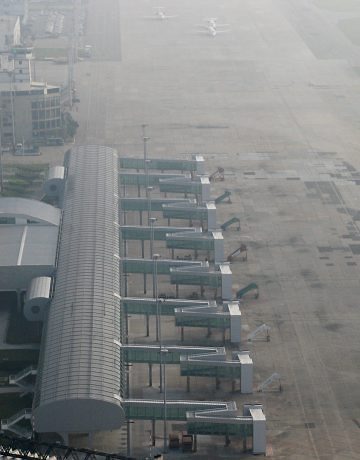
    My husband and I arrived in Vitoria yesterday, three hours later than planned.  Our flight was eventually moved to a different airport because, according to the departure board, of a “meteor delay.”

    I can’t be certain, but I’m willing to bet had there been an actual meteor hurtling down out of the sky, I would have been much more amenable to changing airports.  A meteor crashing into Guanabara Bay would have put things into perspective and made having to pass through security at two different airports seem a comparatively minor inconvenience.  And it would have made for an awesome story.

    Alas, there was no meteor involved in our meteor delay.  You’ve probably already guessed that “meteor” is short for meteorological, which is a fancy way to say fog.  Our flight was moved due to fog.

    While not nearly as interesting as a meteor, this particular event is a curious yet common occurrence in Rio.  Cariocas call it névoa, or neblina.  It is a dry fog that blankets the entire Guanabara Bay reducing visibility in the area to almost nothing.  The névoa is a winter phenomenon and happens when the air is particularly dry over a body of water.

    I don’t have a lot of experience with fogs but the little I’ve had led me to believe fogs are always damp.  Rio’s dry fog was a truly bizarre phenomenon the first time I experienced it.  Our apartment in Rio overlooks Guanabara Bay and it’s pretty amazing to have the entire bay disappear from view.

    The fog quickly goes from amazing to pain in the ass when it closes the local airport and forces you to go across town with 150 lbs of luggage.  But we’re here.  We made it to Vitoria in one piece, as did the wine glasses.  A statement we might not be able to make if there had been an actual meteor.

  • Great Things About Rio: Open Windows

    Great Things About Rio: Open Windows

    My last post was a little down on Rio.  What can I say?  My brother’s plane was canceled because drug dealers invaded a hotel and I ran out of peanut butter.

    Today, I had a delicious lunch while sitting outside on a beautiful afternoon.  Spring has come to Rio and the temperature is perfect, warm enough to wear a tank top without a jacket but not hot enough to make you sweat.  Plus, I saw a monkey this morning and fuzzy monkeys are one thing Rio has going for it. All that is to say, today I like Rio.

    Because Rio and I are on good terms today, I thought I’d return to my Great Things About Rio series.  The spectacular weather has highlighted a common practice here, which I intend to continue whenever I return to the US.  Here in Rio, people open their windows.

    Growing up, if a window in my house was opened, an adult always raced to it, vaulting over the coffee table, while shouting “The air! Don’t let the air out!” and then slammed the window shut crushing the bluebird that had landed on the sill.  Air was apparently a very precious commodity as we suburbanites moved from one hermetically sealed environment to another.  Heated or cooled, the air could not get out.  Thus, the windows remained shut.

    I guess there is an abundance of air in Rio because people just leave the windows open.  While the air inside the apartment does escape, it is replaced by air from the outside and the outside air brings all sort of wonderful things with it.  The sounds of birds, the shouts of kids playing soccer, the smell of beans and fish being prepared, the occasional chill before a storm hits.  It’s only been in Rio that I’ve discovered a breeze blowing through your home is a marvelous thing.  How wonderful to be simultaneously cozy in your apartment and still connected to the outside world.  If I were a therapist, I would regularly prescribe opening windows.

    True, an open window can let in the seasonal swarm of termites or strains of the drunken, karaoke contest from the nearby college campus, but dealing with the occasional plague does not detract from the daily calming effects of a curtain gently drifting into the room.  Besides, an open window can always be closed when it’s amateur night on the quad.

  • Hostage Taking Leads to Flight Cancelation

    Hostage Taking Leads to Flight Cancelation

    My brother and his girlfriend spent the last week with me here in Rio.  Saturday night, I dropped them off at the airport and went back to my apartment.  Sunday morning, I got a call from my Dad.  “Did you know your brother and Lauren are still in Rio?”

    “What do you mean they’re still in Rio?!”

    “Their flight was canceled.  All they were told was that the flight crew was in no condition to fly.  Apparently something happened at the hotel where the crew was staying.”

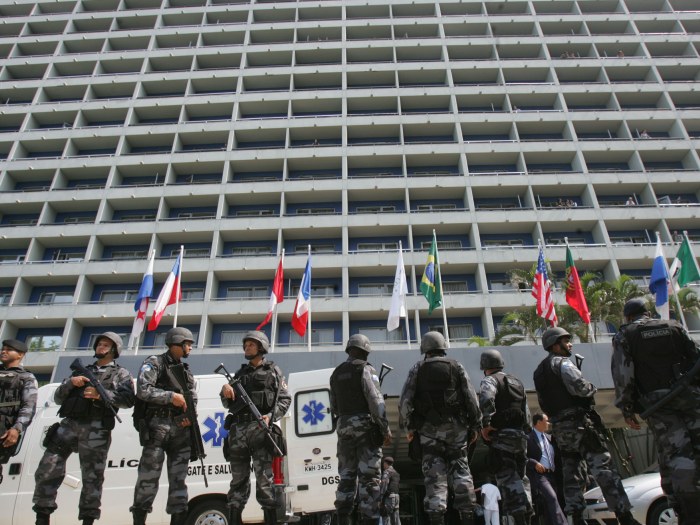
    The “something” that happened was a mass evacuation after gang members got into a firefight with police and then invaded the lobby of the Hotel Intercontinental and took 30 hostages to the hotel kitchen.  The flight crew was staying at the Hotel Intercontinental.  Thus, my brother and his girlfriend got an extra night in Rio courtesy of US Airways and the Amigos dos Amigos gang.

    Officials at every level have been made frantic by the invasion.  Rio’s mayor and governor could not get to a microphone fast enough to reassure the world that Rio will be safe for the World Cup and the Olympics.

    For me, Saturday’s hostage taking only highlights how very fragile Rio’s stability is.  Everything in the city is at or exceeding capacity, the airport, the roads, the public hospitals. The government is notoriously corrupt. The city is among mountains making access points between neighborhoods limited and an event that blocks a single road has the potential to tie up traffic throughout the city. The situation at the Hotel Intercontinental is a good example.

    Saturday’s invasion occurred just in front of a tunnel connecting the city’s social center to its huge suburbs. Residents were basically cut off from the city for the morning. Thank God the gangs and police manage to avoid each other during rush hour.  The event also showed the trickle down effects of one outbreak of violence.  A hotel is invaded and the airport, located on the other side of the city, is having to cancel flights.

    I have my doubts about Rio’s ability to host the Olympics.  I agree with the need to diversify host cities and have the games in South America.  I just feel so much in this city is already at the breaking point, that a major event is going to break it.

    This month, Smithsonian magazine has a cover article on Rio and the challenges it is facing in preparation for the World Cup and Olympics. It’s an honest assessment by an author who clearly loves Rio.

    Of course, the Olympics could be the stimulus for real change and improvement in infrastructure but Rio’s past problems with corruption and inefficiency make me skeptical.  In the four years I have been here, I’ve seen the very slow pace at which things get done.  I know Cariocas pride themselves on a laid back attitude but the city is going to have to pick up the pace because there is a lot of work to be done.

  • Mad Expat Skills

    Mad Expat Skills

    Expats develop a unique skill set over many years of international travel.  For example, at airport security, I can strip off shoes, jacket, and watch: move my computer from backpack to plastic bin: get three bins worth of personal items, a backpack and myself through the metal detectors (without setting anything off) all in under 20 seconds.

    A well choreographed routine for security lines is something expats share with all frequent travelers. A week ago, I realized a skill exclusive to the frequent international traveler.

    At any moment, I can drop what I’m doing and be at the airport completely packed to leave the country in an hour. From zero to transcontinental in under an hour. How is that for an awesome, albeit totally unmarketable, skill?

    I remember the very first time I traveled outside of the US.  I was going to spend three weeks in the British Isles with a high school exchange program and I spent at least three days packing.  Lists were made, checked, rechecked and amended.

    Every single family member participated in the preparation and packing for this trip.  My grandmother told me to roll my dresses instead of folding them in order to avoid wrinkles.  My Mom bought me detergent tablets for washing clothes and a string for hanging them to dry in the bathroom.  My Dad made sure I had extra batteries for my camera.

    I have streamlined things considerably since that first trip abroad.

    Today, I have a set of strict rules when it comes to my luggage.  First, I must be able to lift my own suitcase and carry it up and down stairs.  I will not be dependent on others to move my own luggage. Second, if you haven’t had to sit on your suitcase to close it, then it’s not full.  Third, thongs are the go to underwear because you can pack a month’s worth inside of a shoe.  And finally, hoodie sweatshirts can cushion anything from computer printers to brass lamps.

    When I pack it happens in a logical and well established order.  Underwear, bras, socks, pajamas, bottoms (casual, dressy), tops (casual, semi-dressy, dressy), workout attire, one dress, shoes (1 comfy, 1 cute, 1 dressy pairs), and finally accessories (jewelry, belts).  Then I pack my carry-on with my laptop, iPod, book, snacks, plastic baggy with hand sanitizer and chapstick, and of course passport and wallet.  I pack my toiletries last because I take a quick shower and brush my teeth right before I head to the airport.  (I assume the other passengers appreciate this habit.)

    I can go through this entire routine, including the shower, and be in a taxi on my way to the airport in an hour or less. I believe most expats have an equally impressive travel prep routine.  We never have to search for our passports and we always have some cash in a variety of currencies in the house.  If I ever need to flee a country, I’m confident I’ll make it out and still be well packed for any occasion, be it casual, formal or sporty.

  • Great Expectations

    Great Expectations

    The World Cup ended last Sunday when Spain finally, after 116 minutes of play, managed to score.  For me there was one important lesson to be learned from the Cup. If people expected the same level of performance from their governments as they do from their soccer teams, the world would be a better place.

    Last week, O Globo reported that 13 coaches had lost their jobs in the wake of unsatisfactory performances.  13 coaches out of 32 teams. Some resigned with their dignity intact but disappointed at having fallen short of their goal like Argentina’s Maradona.  Some, like Italy’s coach, resigned out of shame.  France’s coach resigned and then found himself the object of federal investigation led by the president and a mob of angry peasants with a guillotine.

    And some were fired.  No face saving letters of resignation.  Goodbye and good riddance. This was the fate of Dunga, the Brazilian coach who committed the unspeakable crime of focusing on defense and only getting Brazil to the top 8.  The general consensus in Brazil seems to be that Dunga single handedly killed the beautiful game Brazilians have always played and for what?  To make it only as far as the quarterfinals?

    I have been amazed at how swift and harsh the condemnation of Dunga has been here.  He did get Brazil to the final 8, right?  The top eight in the world is not a bad place to be.  Only 32 countries out of the entire world even make it to the Cup.  Just being there is a big deal isn’t it?

    Nope, not for Brazil, Cameroon, Greece, Argentina, Italy, Mexico, or South Africa.  None were satisfied with a top 32 finish and the coaches lost their jobs within days of their team’s elimination.

    Now, imagine all that energy, passion and sky-high expectations directed at government officials.  Moody’s downgrades your country’s credit rating?  The finance minister and chairman of the federal reserve immediately submit their resignation. Massive corruption is revealed in the police department?  All captains resign, every officer does community service and a national debate ensues over the “values” the police should embody. Unemployment over 20%?  The entire legislature has to issue a formal apology to the country, resigns and call for new elections.

    The human development index ranks the country 153 (cough, Cameroon, cough) out of 182 countries?  Then the president, prime minister, all cabinet officials, the head of every regulatory agency and the post master general all resign in disgrace.  The country is in an uproar and no one can talk about anything except these humiliating results. Every newspaper, radio, and television news programs is asking how this could happen and what can be done to prevent this kind of embarrassment in the future.

    Of course, this will never happen.  Soccer coaches answer to a higher authority.  Politicians would have to follow the example of Italy’s coach, accept full responsibility and resign of their own accord.  I can’t ever remember an elected official accepting full responsibility for failure.  And public outrage will never force them from office. Everyone is too busy watching soccer.

  • I don’t think we’re in Rio anymore.

    I don’t think we’re in Rio anymore.

    Well, just when I’ve made it my personal goal to try every kind of snack food in Brazil, it looks as though our weekly road trips are coming to end.  Barring any changes of heart or collapse of the Federal government, my husband will be able to take a position in Vitoria starting in September.

    This means one apartment in one city and all our possessions in a single location.  Eventually.  Of course, we have to decide whether to sell or rent the apartment in Rio.  We’re going to rent an apartment in Vitoria as we get to know the city and decide where we would like to buy.  Some of our stuff will probably stay in Rio until we buy our apartment in Vitoria, because only masochists want to move all of their furniture twice in one year.

    But, eventually, at a now foreseeable date in the future, we and all of our stuff will be in one place.

    With this happy day in mind, my husband and I spent the weekend in Vitoria strolling around the neighborhood of Praia do Canto.  We wandered up and down the streets, taking note of the restaurants, shops, traffic, noise levels, and the many coffee shops.  My husband also literally noted down (always thinking, he had brought a notepad and pen from our hotel room) the address of apartments for sale that had the quiet street and netted balcony we are looking for.

    Praia do Canto is very, very promising.

    It wasn’t just tranquility and friendly cafes, that gave me hope of finding a home in Vitoria.  At one point, I realized I was walking around staring up at apartments without any consideration as to where I was putting my feet.  In Rio, if you take your eyes of the sidewalk for ten seconds you’ll probably be lost forever in a pot hole.  At the very least, you’ll have a sprained ankle.

    Not the case here in this tranquil, little hamlet of only 4 million people.  The sidewalks are almost entirely free of pot holes and garbage.  The city is new and the people calm.  Drivers stay in a single lane and use their blinkers when they want to move to a different one.  There was so little horn honking I wondered if the population was sedated.  When a car slowed down, came to a complete stop, and the driver waved at my husband and I to cross the street, I almost fainted in shock.

    I didn’t faint because I wanted to hurry up and get across the street in case this was some sort of trick.  Perhaps, the driver was going to floor it right when we hit the middle of road just to see us leap to safety.  But he didn’t.  He waited patiently, until we reached the sidewalk, and then slowly eased around the traffic circle.  I was amazed.

    After this series of events had happened a dozen more times and I realized coming to a stop for pedestrians was the rule as opposed to the exception, I knew this was the city for me.