Category: American in Brazil

  • Bad Portuguese & Worse First Impression

    Bad Portuguese & Worse First Impression

    In my life, I’ve experienced very few things as disheartening as being unable to show another person who I am. Only slightly less frustrating is to still, after four years in Brazil, find myself looking like someone who has never had a single Portuguese class.

    Last Saturday, my husband and I went out with a group of his friends from work. The evening started with me mistiming the elevators doors and slamming my shoulder into them mere seconds after introductions were made. It was a pretty accurate omen of how the evening would go.

    At first, my Portuguese was just fine. When we arrived the bar was empty and the conversation involved one other couple. Then the bar began filling up. With each new couple that joined our group the conversation got busier and the background noise got louder. Soon I was trying to follow a conversation about John Marshall through waiters, drink orders, greetings and a BeeGees concert DVD with special guest Celine Dion.

    My lack of context for most of the conversation didn’t help. I’m not a lawyer. Almost everyone in the group was either a lawyer, judge or court staff, hence the discussion about John Marshall. I’m also not a parent on the verge of middle age or regular novella watcher.

    By 12:30am I was fighting the effects of two drinks, a day at the beach, and three hours of intensive Portuguese. The band was playing now and all conversation had to be shouted. I had ended up on the very end of the table, amongst the men, quietly eating peanuts without the energy to even pretend I could hear the conversation, let alone understand it.

    Finally to round off the shy, boring persona I was cultivating, when my husband got up to use the bathroom I put head back against the wall and closed my eyes. Yup, I went to sleep among 12 of my husband’s colleagues at a crowded bar. About 1:30, when someone finally asked if I wanted to sit in the middle of the group near the conversation, I told my husband I was ready to go.

    The evening was both frustrating and bizarre. The few questions that were directed at me were nothing more than a blend of sounds. The amount of noise and the English lyrics being blasted through the speaker made me deaf to Portuguese. My Portuguese is still not strong enough to fill in missed words of syllables. I have to hear everything perfectly. With all the noise I could recognize some sounds but not enough of them to hear words. The result was that I just heard people making noises in my direction. It was an odd feeling.

    In the end, after running into a door, not talking for two hours, falling asleep at the table and asking to leave after the first set, I’m pretty sure I set a new standard for worst first impression ever.

  • The Delicious Moqueca Capixaba

    The Delicious Moqueca Capixaba

    When visiting Vitoria there are exactly four things to do: 1)spend the day at one of the nearby beach towns, 2) visit the Garoto candy factory, 3) see the 16th century Convento da Penha and 4) stuff your face with Moqueca.

    Moqueca (pronounced Mookecka) can generally be described as a fish stew. Or, more accurately, the greatest fish stew ever made. There are two kinds of Moqueca in Brazil, Moqueca Baiana and Moqueca Capixaba. The basic ingredients are the same for both, fish, onions, tomatoes, garlic, and cilantro.

    The Moqueca Baiana, from the state of Bahia, uses dende oil (a kind of palm oil) and coconut milk


    The Dende Palm

    The Moqueca Capixaba, from Espirito Santo, draws more from native Brazilian cuisine. Traditionally, it’s cooked in a pot made with black clay and tree sap. The stew is colored using arucum, a natural pigment made from the urucu flower. Moqueca Capixaba uses olive oil instead of dende and doesn’t have coconut milk.


    The urucu flower

    Which version of Moqueca is tastiest? Well, that depends on which Brazilian you ask. Unfortunately, I’ve not had the Baiana version in order to declare definitively that the Capixaba version is better, but I can say the Moqueca Capixaba is not just a dish. It’s an experience.

    If ordering a Moqueca, I recommend having a very early, light breakfast and foregoing food for the rest of the day. If you’re a calorie counter, you might as well plan on not eating for the preceding 24 hours. You should also have the afternoon blocked off for napping. There is no strolling or sight seeing after this meal.

    You’ll be able to choose what kind of fish you want, but in Espirito Santo it’s almost always a kind of hard, white fish. My husband and I always order dorado. That is a hearty fish. We also like to have a shrimp sauce. As you can see the restaurant in Ubu is pretty generous with their shrimp.

    In addition to the stew, you’ll also get white rice, piraõ (a fish juice goo, very tasty) and Moqueca Banana (amazing!). Our favorite place also includes a delicious and totally unnecessary fried shrimp appetizer.

    Everything is brought to the table in a steaming, bubbling collection of black pans. The steam rising off the stew is so thick for a few seconds you can’t see across the table. Serving yourself is like dipping into a witch’s cauldron.

    There is no better way to spend an afternoon than gorging on Moqueca followed by a long, quiet nap on the beach. It’s become our Saturday routine, weather permitting. We always love company, so shoot me an email if you’d like to join us sometime.

    The Moqueca pictures were taken at Moqueca do Garcia, on Ubu beach, directly in front of the sea. Find Ubu and you find Garcia.


  • Ubu, our hidden gem

    Ubu, our hidden gem

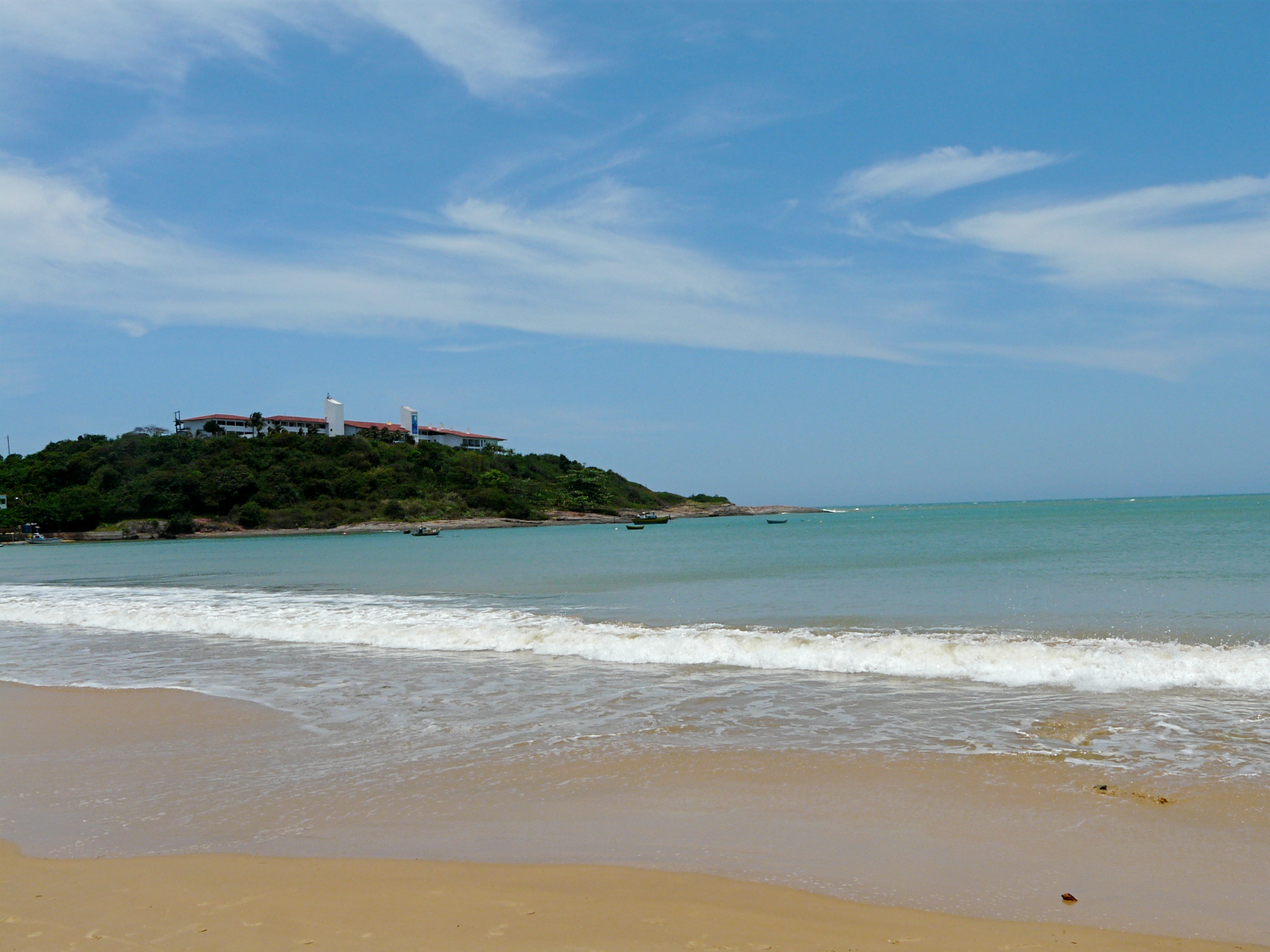
    For me, one of the greatest pleasures life in Vitoria has to offer is the opportunity to visit a gorgeous beach, on a gorgeous day. Can’t I do that in Rio? Yes, but I have to share the beach with 1 million other people. I don’t really like to share. That’s why I prefer this little, hidden gem called Ubu.

    The coast of Espirito Santo is lined with small beach towns. The relatively small population of the state will head out every weekend and drive to one of the three or four beaches within an hour of their homes. If you’re willing to drive an hour and half, you can have the beach to yourself.

    Yesterday was a perfect beach day. It was the kind of day against which all other beach days are judged. A blue sky with a few clouds like stretched out cotton balls. The temp was in the 80s and a constant strong breeze made everything perfect. There were not more than 30 people on the beach. A gorgeous beach, on a gorgeous day and we got it all to ourselves.

    I’d tell you how to get to Ubu, but then you might actually come.

    And did I mention the moqueca restaurant in front of the beach?

    The famous Moqueca Capixaba deserves and will receive its own post. To be continued…

  • Trip to the Veterinário

    Trip to the Veterinário


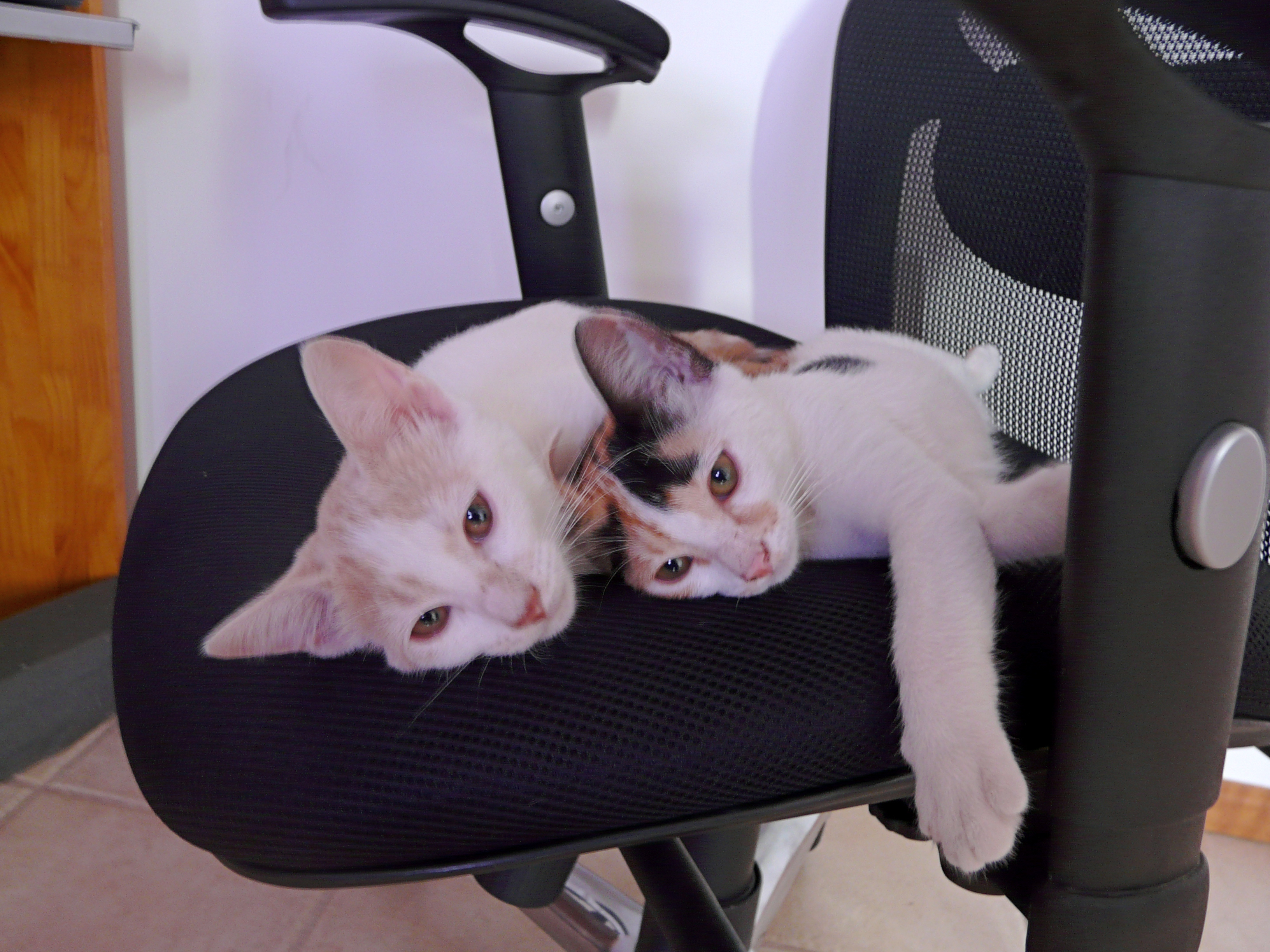
    Canela and Mingau, our four month old kittens, have been with us for exactly one month. In honor of that anniversary, I’m sharing a Simon’s Cat video. If you’ve known a cat, in any capacity, you should go to youtube and watch them all.

    The kittens have adjusted well. Mingau has stopped peeing in the bathroom sink and Canela has stopped peeing on my husband. I told my husband to take it as a compliment, because cats are quite finicky about where they go. That thought wasn’t enough to stop the stream of Portuguese curse words issuing from the shower.

    The kitties’ daily routine goes something like this…
    Run to greet Daddy emerging from bedroom.
    Get stepped on by Daddy as he tries to walk to kitchen.
    Eat.
    Drink.
    Play.
    Play in Mommy’s lap while she’s trying to eat breakfast.
    Scratch Mommy while playing.
    Play.
    Get accidentally shut inside the pantry.
    Chew on shoe laces.
    Knock folded laundry to floor.
    Chew on folded laundry.
    Eat.
    Sleep.
    Play.
    Get stepped on by Mommy while she’s hanging laundry.
    Play.
    Sleep.

    The routine was interrupted last night by a trip to the vet for their second round of shots. We got them into the carrier and car with no trouble. After a couple of blocks, I commented to my husband, “Wow, they travel so well. They don’t make a sound.”

    As a life long pet owner, I really should have known better than to jinx it. Within seconds, Mingau let out the first in a series of long, plaintive meows that continued until we got to the vet. He was not a happy camper.

    I took the cats to check in while my husband parked the car. I waited a grand total of ten seconds to see a vet. If the human doctors in Vitoria are as efficient as the animal doctors, this may just be the perfect city.

    In the exam room, Canela walked right out of carrier and got her shot without any fuss. Mingau, however, had figured out something bad was going to happen once out of the carrier and had retreated to the furthest corner. When the vet reached into grab him, he let out the loudest and most pitiful wail. Despite his visible terror, he never let out even tiniest growl. Mingau really is a sweetheart. A complete pansy, but a sweetheart.

    His human parents might be to blame. We named them the Portuguese equivalent of Cinnamon and Oats. Or at least that was my intention. In further discussion, my husband began listing all the kinds of “mingau” you can have, oats, corn, cassava. “Wait,” I said, “so a better translation is mush? Corn mush? Oat mush? We named our cat Mush?”

    So in his defense, it’s probably hard to have the heart of a lion when your name is Mush. But with Mingau curled in my lap as I write this, I think I prefer my cats a little mushy.

  • To American School or Not To American School in Rio de Janeiro

    To American School or Not To American School in Rio de Janeiro

    What would expect to get for $40,000? A great car? A renovated kitchen? What about $40,000 every year for four years, $160,000? A Harvard diploma? Nope, try a high school diploma.

    The American School in Rio de Janeiro, at the high school level, costs $33,000 a year. New students pay a registration fee of $6,500, making the grand total for freshman year $39,181. This does not include bus fees or lunch. Now, if you only have a toddler, it’s much more reasonable. Just $19,600 for half day pre-school.

    A few months back I got a message asking about schools for American kids in Rio de Janeiro. Full disclaimer: I have no kids of my own. What I know about EARJ, the American school in Rio, comes from working with high schoolers applying to college in the US. And that was only for two years. My sample size is admittedly small. Weight my opinion what you will.

    I’ve never written about EARJ because I was working with kids attending the school (i.e. their parents were paying clients). They were all great kids and I thought the professional thing to do was to remain neutral on the subject.

    Now that I’m based in Vitoria, here’s my opinion. For $40,000 a year, I expect my child to be able to build a time machine to travel back to ancient Rome and discuss in fluent Latin with Julius Caesar his reasons for taking the army across the Rubicon.

    It’s not that the school is bad. On contrary, I’ve met some really bright and driven kids who go there. I’ve also been stared at by a room of blank faces when asking for the formula for the area of a circle. My problem with the American school is that you pay $40,000 for the equivalent of a solid public school education.

    In my classes, students from the British school and Brazilian private schools like Sao Agostinho ($9,900 per year), consistently out scored the EARJ kids in math. Let’s not talk about the EARJ kids’ abysmal writing scores. I now think the best way to learn English grammar might be by taking it at a Brazilian high school.

    Essays, vocabulary and reading comprehension are EARJs strong points. This makes perfect sense given American educational culture. American teens (or Brazilians who attend an American school) don’t know what to do with a semicolon but they can express their personal opinions quite fluently. We also tend to focus more on the type of critical thinking tested in reading comprehension.

    To be clear, when I say the EARJ kids score better, that doesn’t mean they’re making 800s on the practice tests. No, the scores I saw were typically average, if not a little below. And here’s the amazing thing, they seem totally unaware of the fact that they are average.

    I said earlier that the kids I’ve taught were great. I genuinely liked everyone of them. There’s just a sense of entitlement common to the EARJ culture. Pausing to look up from their iPhones and Blackberrys, kids with average SAT scores will tell you how NYU is their backup school. Or maybe Duke. Duke might be ok if Cornell turns them down.

    NYU as a backup? Maybe if you’re the next Stephen Hawking. Where are the guidance counselors?! How can these kids be in their junior year of high school with no clue as to what a competitive SAT score is? For $40,000 a year, I’d want someone my kid can dictate her essay to.

    And we’re back to what you get for your money. I would assume that one of the benefits of sending your kids to the American high school as opposed to the British or Brazilian schools, is that you have a leg up when it comes to college admissions in the US. Someone would be there to guide you through an admissions process that is complex, bureaucratic and unique. It doesn’t seem to be the case at EARJ. The kids don’t seem more knowledgeable than any other students.

    So it’s left to the SAT teachers to talk to the kids, point out the average scores, and crush their dreams. Thanks a lot, EARJ!

    My husband and I will most likely go the Brazilian school route with our kids. They will get their English lit exposure from Mommy’s Summer Reading List. Expats moving to Rio with older kids probably can’t put them into a competitive, Brazilian school like Agostinho or Bento. In that case, I’m forced to be a traitor and recommend the British school. Their students have a more solid foundation in math and English and the school’s a little cheaper.

    Of course, if Chevron is footing your tuition bill, hell, go crazy. Enroll your kids, your maid’s kids, and your dog too. The campus is gorgeous and I think each student is given her own pet monkey.

  • My Peculiar Professional Niche: Helping Brazilian Students Study Abroad

    My Peculiar Professional Niche: Helping Brazilian Students Study Abroad

    Last Friday, Veja.com, posted an article on the growing number of Brazilian students attending college abroad. I found the article from a link posted by one of my former students, who just happens to be featured in the article. Flavia, is one of the 24,000 Brazilians, who attended college abroad in 2009. She’s studying economics at Harvard. I like to think I played a very small part in getting her there.

    My peculiar niche in the great market of Rio de Janeiro was teaching Brazilians how to write the personal statement for college applications. I also taught Kaplan SAT prep classes through FK Partners, but it was the essay workshop that I loved most.

    The Fulbright/Education USA office in Rio was kind enough (desperate enough) to let me develop a workshop despite the fact I had very little experience teaching kids. I also had real doubt as to whether or not I could spend time with a room of full of teenagers and not resort to physical violence at some point. I did not like high schoolers when I was one, I was pretty sure they hadn’t improved in 8 years.

    Well, 8 years changed something because I LOVE working with teenagers. At this age they’re just starting to figure out who they are as individual people, with their own opinions and dreams. Even at their most self-absorbed moments, I find them fresh and amusing. (Of course, I’m teaching kids who are trying to attend college. The true hooligans don’t sign up for my class.)

    Flavia was in my very first workshop. I told the kids they were my guinea pigs (a metaphor I then had to explain) and they were great. Respectful of me and supportive of each other. That support turned out to be a critical element.

    It turns out a workshop on personal statements really does get personal. In two weeks, I knew what achievement my students were most proud of, what they were afraid of and their most important memories. Forget therapy. If you want to know the inner most thoughts of a group of teenagers, have them write a personal statement.

    I also love the cultural elements that come into play. You might not know, but probably are not surprised to learn, that writing about yourself in first person is a very American thing. While my students definitely struggle with prepositions, they are completely thrown by the first person. I have been told time and again that Brazilian students never write in first person.

    And this whole, “what event in your past has most shaped who you are today” self-reflective stuff. “American universities really want to know about what I learned from my mom?” “Why does my opinion matter? I’m not anyone important.”

    Can you imagine an American teenager asking why people would care about his opinion?! It’s pretty much assumed by all American teens that their opinion is in fact the only one that matters. And that’s what I love about the workshop. I get to see how a different culture interprets something so ubiquitous to my American perception. The College Application Essay.

    Unfortunately, I won’t be giving any essay workshops this fall. Our move to Vitoria has made that impossible. But I am pursuing some options that I hope will allow me to keep working with teenagers and hopefully, send a couple more Brazilians Flavia’s way.

  • Brazil’s Hiroshima

    Brazil’s Hiroshima

    In his book, , British journalist Alex Bellos quotes the Brazilian playwright Nelson Rodrigues, “Everywhere has its irremediable national catastrophe, something like a Hiroshima.  Our catastrophe, our Hiroshima, was the defeat by Uruguay in 1950.”

    Rodrigues isn’t talking about a war. Uruguay beat Brazil in the final match of the 1950 World Cup.

    Yes, a Brazilian compared losing a soccer game to having an atomic bomb land on your head.  I might find this comparison less disturbing if Brazil had lost to Uruguay in a border skirmish or some type of military engagement. Comparing the decimation of a city to the loss of a sporting event lacks just a little perspective.

    Or does it?

    Bellos devotes an entire chapter to recounting this single match.  He interviews everyone involved, from the Uruguayan who scored the winning goal to contemporary football anthropologists who study the match.  The resulting picture is that of a nation which was ready to announce its global presence and the dawning of a new era in Brazil.  Winning their first World Cup, at home in Brazil, would be the grand opening of modern Brazil.

    As a showcase of the big future in store for the country, Brazilians built the largest stadium in the world.  In 2 years.  One reporter said the stadium gave the nation “a new soul.”

    The Maracanã, in Rio de Janeiro, is the most iconic stadium in the world. On July 16, 1950, it set a record for the largest sports crowd ever.  173,850 fans entered with paid tickets.  Combined with the dignitaries, journalists and special guests in attendance the crowd was estimated to be over 200,000 people.  Approximately, 199,999 of those people were cheering for Brazil.  One Uruguayan player brought his mother.

    By 1950 soccer, or futebol, had become a core piece of Brazilian identity.  A love of soccer was one of the few truly unifying traits of a diverse and expectant country.   Brazil had crushed, decimated, humiliated Spain (6-1) and Sweden (7-1) in the preceding final matches.  Rio’s O Mundo had already printed its front page: “These are the World Champions” alongside a picture of the Brazilian team. It was destiny for Brazil to win its first Cup on home turf in the greatest stadium in the world.

    Then they lost.  The final score was 2-1.

    Destiny, it seemed, had it in for Brazil.  At least, that’s what one Brazilian writer, José Lins do Rego, thought.  After watching people leave the stadium in tears, Rego wrote, “it stuck in my head that we really were a luckless people, a nation deprived of the great joys of victory, always pursued by bad luck, by the meanness of destiny.” The loss plunged the entire population into a crisis of self doubt.

    That game was wrapped up in nationhood and identity.  The loss was taken as a reflection on the nation.  Brazil lost because Brazilians are losers.  They are a “luckless people.”  I still sense a hint of this fatalist attitude in many aspects of Brazilian culture today. So maybe it’s a fair comparison, hiroshima and the 1950 World Cup.  Both impacted an entire nation.  The consequences can still be felt…

    You know what?  Bullshit. Who am I kidding?  You can’t compare a soccer game to the devastation of an atom bomb. You just can’t.  There is no comparison.  What can be said is that no single sporting event has impacted a country the way the 1950 final shaped Brazil and that you can’t know Brazil without knowing soccer.

    All of the information for this post came from Alex Bellos’ book Futebol The Brazilian Way of Life.  It is a great read.  Fun, informative, surprising.  Bellos uses soccer as a means of analyses for the country as a whole.  Anyone interested in Brazil or soccer should buy it immediately.

  • Culture Shock Causes 3 Year Loss in Productivity

    Culture Shock Causes 3 Year Loss in Productivity

    I had to update my resume last week for the first time in several years.  I was filling in dates and noticed a nearly three year gap between jobs.   Thanks to some nonspecific start dates, on the resume it looks like only a two year gap, but I know the truth.  I didn’t do anything for three years. At least not anything that could be put on a resume.

    “September 2006 – October 2009: Learning new language, new marriage, new culture and trying to avoid plunging into serious depression,” does not count as legitimate work experience.

    It’s not just the lack of formal employment that struck me.  I had a blog that whole time, yet I almost never wrote in it.  I didn’t need any Portuguese or work permit to write.  What’s my excuse?  Why did I do nothing for the better part of three years?

    I think I finally have an answer. I was mentally incapacitated.  I’m not kidding. Over the last three year, I was physically unable to produce quality thought or work during that time because my brain’s limbic system had taken control from my cerebral cortex due to the constant stress I was under from culture shock.

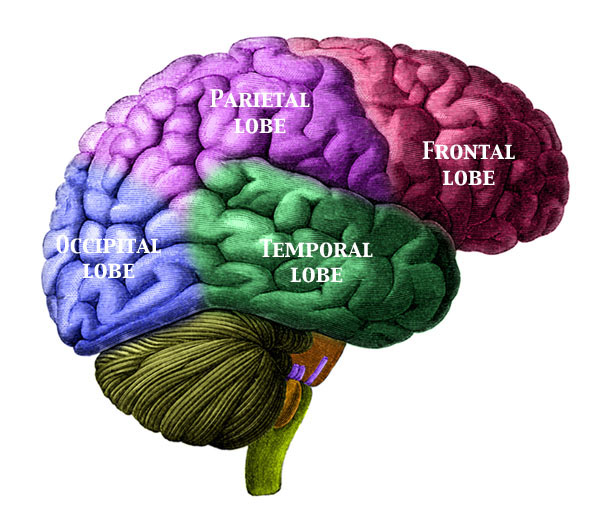
    I came across an article written for teachers of creative writing.  It explained from a neurological standpoint how stress inhibits creativity.  Human brains are typically divided into 3 systems: the brain stem which keeps your heart beating, the limbic system which provides emotion to input like “be happy,” or “get ready to kick some ass,” and the cerebral cortex which handles most of the problem solving, creative thinking that defines being human.

    When a person is relaxed the cerebral cortex is in control.  Creative thinking comes easily.  People are able to consider options, weigh consequences, and make a rational decision.

    Unfortunately, the cerebral cortex is not always in control.  The last time someone cut you off and your face flushed and you imagined running the jerk off the road?  That would be your limbic system.  When the idiot cut you off, the driver was perceived as a threat, and your limbic system triggered your fight or flight response.

    With the limbic system in control it’s physically impossible for someone to be at her creative best. Rational thought?  Not possible either.  Focusing on solving a problem?  Nope.  Self-motivation?  Sorry, not handled by the limbic system. But long naps, crying, cursing, and slamming doors are all things the limbic system does very well.

    That last list of behaviors are pretty common manifestations of culture shock. To people who’ve never lived abroad culture shock might sound, I don’t know, obvious.  “Gosh, living in a new country is difficult.” And something so obvious must surely be avoidable.  “Maybe if you just did the prep work and had the right attitude, you’d be a local in no time.  Just like Julia Roberts in that movie with the pasta and elephants.”  Right?

    God, I wish.  As far as prep work goes, I studied culture shock.  I worked with international students going through the process.  I have a freakin degree in cross-cultural communication.  And how did I handle moving to Brazil?  Well, I have the first three seasons of Grey’s Anatomy and Sex and the City memorized. Feel free to draw your own conclusions.

    It does not matter how much advance research you do, everyone goes through culture shock.  What we call culture shock is the brain creating a new operating system for the new environment.  Your brain has been trained to operate in a specific environment.  In your own culture your brain knows what meaning to attach to symbols and behaviors.  It can anticipate reactions.  It can predict a chain of events.  Different cultures have different cues, and thus require a new operating system.

    Culture Shock has physical symptoms.  Headaches, stomach pains, an unfortunate variety of digestion problems,   physical exhaustion, all are a result of the enormous 24 hours a day, 7 days a week workload your brain is handling.  The brain is frantically creating new connections and pathways to understand the new culture.

    This constant work, combined with the fear from not understanding the words or behaviors of people around you puts serious stress on your body.  And what happens to our brains when we’re stressed?  The limbic system takes over.  Limbic system inhibits creativity and problem solving.

    And so, due to the stress of culture shock I was physically incapable of producing my best quality, or any, work from 2006 – 2009.  That’s my story. I’m sticking to it and honestly I don’t have a better explanation for my sudden change in behavior.

    Beginning last October, after not writing for 3 years, new blog topics started popping into my head daily. I’ve been writing regularly since February and enjoying it. I have the energy and desire to go jogging.  I can’t remember the last time my previously moody stomach complained.  It feels like I found myself.  It took three years but I think my limbic system finally surrendered control.

    Hello, cerebral cortex. It’s so nice to be working together again.  Can you help me update my resume?

  • Reading or Things I Take For Granted

    Reading or Things I Take For Granted

    When was the last time you appreciated the ability to read?  For me, never. I’ve never finished a book and marveled at the feat I just accomplished.  I really should because reading is amazing!

    I can look at these squiggles and recognize that they have meaning.  They stand for a sound.  I can then put the little sounds together to form words, which are entities with their own meaning.  I can take the meaning of the individual words, scan them in order, and understand a complete thought or sentence.  Each thought has it’s own meaning but when read together as a series, like in a paragraph, they combine to describe even more complex ideas like why the Roman Empire collapsed.

    While reading this post your brain is doing some awesome computing and for you, it probably seems effortless.  This is not the case for everyone. I’m not even talking about people with physical differences in their brain that impede reading.  I’m referring to people who, for whatever reason, missed out on being taught how to read.

    Our brains, thanks to thousands of years of evolution, are programmed for language learning.  Drop a three year old anywhere in the world and she’ll learn to speak the language without any intervention.  If your brain were a computer, it comes with the language learning software pre-installed.  This is not the case for reading.  Reading cannot simply be acquired.

    Written language was developed much more recently in human history and our brains do not yet come with this software.  It has to be manually installed one lesson at a time.  Basically, I’ve come to understand that learning to read requires a teacher.  If someone doesn’t have the teacher or the time to practice, she will never read.

    Why am I thinking about literacy? Yesterday, our maid stopped in front of a map we had out for framing.  She asked my husband, “Is this a map of the United States?”  My husband, without missing a beat, said off handedly, “Oh no, that’s a map of the world.  Here’s Brazil and here’s Africa.  Up here is the United States.”  I froze at the question and the realization that here was an adult who didn’t know what the world looked like. It blew my mind. My husband pointed out later that not recognizing the map means very little, if any schooling, so she probably is functionally illiterate.

    I think her question threw me because I had not put her in my “unfortunate circumstance” category.  Our maid is responsible,  hard working, a great cook and keeps her word.  If we agree on next Tuesday morning, she shows up next Tuesday on time without a single reminder.  She is proactive and will clean or fix things that need it but that I haven’t necessarily mentioned.  She has raised a family. I’ve worked with people not half as competent. But she doesn’t know what a map of the world looks like.  And probably doesn’t read.

    I’ve been thinking about that ten second exchange since yesterday. The best response I have so far is to be thankful.  I am going to be grateful for my good, free schools.  I’m going to appreciate that my parents could afford to let me be a full time student.  A good education is not, unfortunately, a guarantee in life.  I’m going to be grateful for mine and what an awesome reader I became as a result.