Category: American in Brazil

  • My Daughter’s Bilingual. It’s not a big deal.

    My Daughter’s Bilingual. It’s not a big deal.

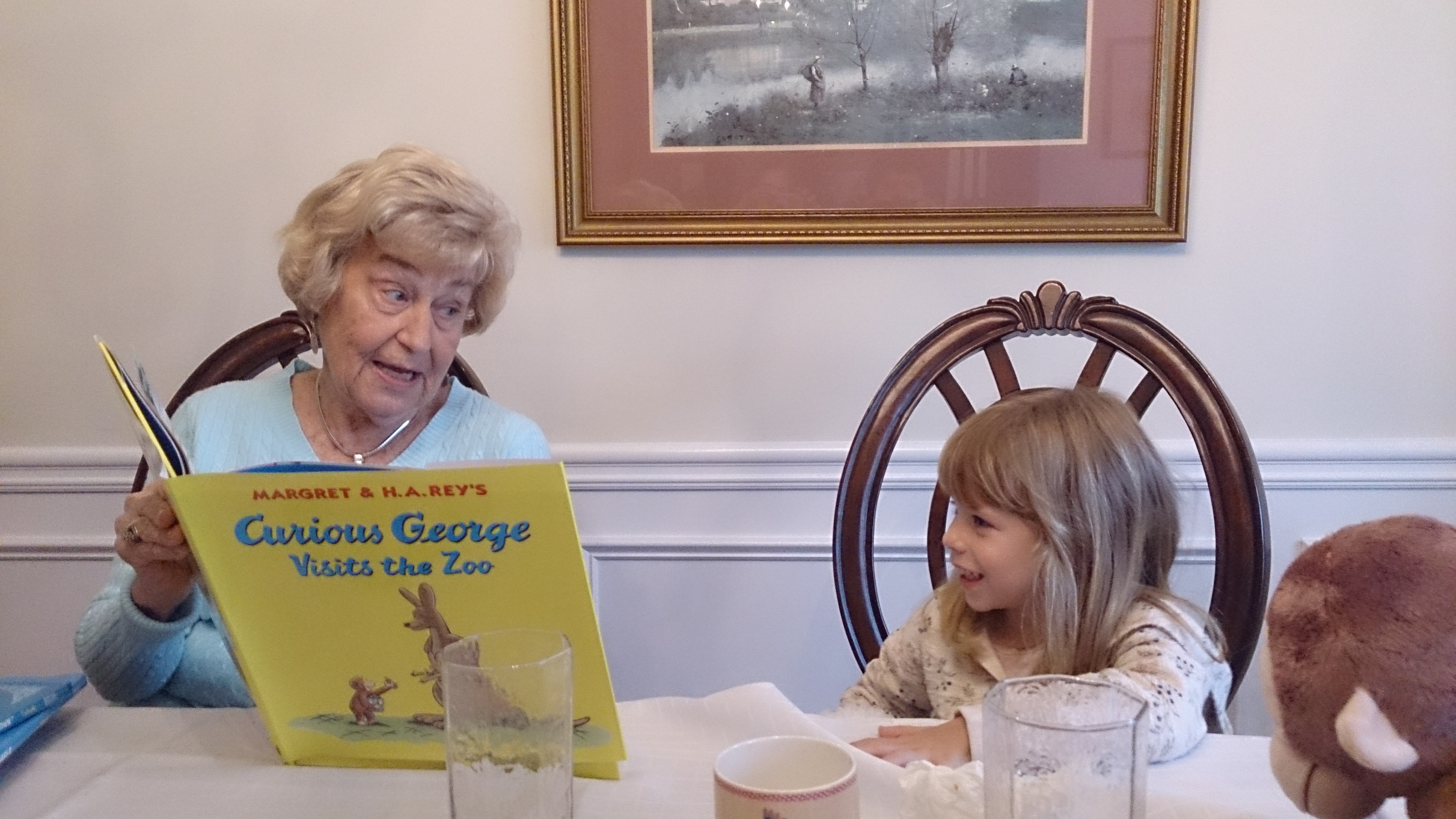
    DSC_0028
    My Brazilian-American daughter listening to her anglophone Great-Grandmother read Curious George.

    About a month ago, I was invited to be interviewed for a podcast with Marianna Du Bosq at Bilingual Avenue. She asked me to talk about raising my daughter bilingual in Portuguese and English, with English being the minority language. (Jargon alert! In the bilingual community, minority language is any language not spoken by the majority of people in the community.) I was flattered and excited.  In preparation, I visited her site and pulled up previous podcasts. As I listened to the PhD experts and trilingual parents, the researchers and published authors, I began to suspect that I would be the least helpful person ever interviewed for Bilingual Avenue.

    Well the interview is up, and I’m certain that I’m the least helpful guest ever.

    Of all the issues that come with parenting my daughter, raising her bilingual is one of the last I think about. In terms of energy usage, reflecting on her bilingualism comes just after flossing her teeth and ahead of which hand she writes with.

    I don’t have a favorite book on bilingualism. I don’t have tips or special strategies to share. I can’t list the names of prominent researchers in the field or site the latest journal article making waves. I don’t have a “biggest fear” or “primary concern”. I’m not visiting online forums and sharing my struggles with other parents.

    Before my daughter was born I did buy two books on raising bilingual kids. I read enough to know the common strategies: One Parent One Language (each parent speaks his/her native language to the child) and Minority Language at Home (the child learns the majority language at school/in public and speaks the minority language with both parents at home). Our pre-birth strategy session went something like this:

    Me: “Since she’s going to be getting Portuguese at school and with all her friends, we should probably speak English to her at home, right?”

    My Husband: “Absolutely.”

    And that was that. Marianna asked me during the interview how my Brazilian husband feels about speaking English to his daughter. Not to spoil the interview, but I considered revealing my suspicions that I married a robot. He speaks English fluently and wants his daughter to be fluent in both languages, thus the logical choice was to speak English at home. Period. I realize this story is not helpful for the majority of people who also consider feelings when making decisions. I personally would not be able to say “I love you” in Portuguese and feel it the way I do in English, but my husband didn’t give it a second thought.

    It’s possible we would have talked about it more, but then my daughter was born seven weeks early. We spent a month in the NICU. She developed a severe food allergy that caused bloody stools until she was 8 months and left me, the breastfeeding mom, only able to eat fruits and vegetables handpicked by fairies and meat that hadn’t been cooked in anything remotely tasty. Her breastfeeding feeding schedule was every two hours, so I didn’t sleep for almost a year. She has severe separation anxiety which has allowed me one night off in over four years, and that night was such a disaster it will take years for everyone to recover enough to try again. When she started throwing tantrums, they included biting, scratching, spitting, kicking, and screaming until she lost her voice. Two years later, we’ve managed to reduce the tantrums to only screaming and throwing toys at doors instead of people. She refuses to try new foods. Iran is more flexible over nuclear policies than my daughter is on the subject of vegetables. And she has recently decided she is done with both school and sleeping.

    Truly my daughter speaking two languages is the least of my concerns.

    Her teachers report no problems with communication. She has lots of friends she speaks to in Portuguese. She enjoys speaking in English to my parents via Skype. She might have in total fewer words in English than a monolingual her age but so, what? I’m a native English speaker and still regularly have to look up English words I’ve never seen before. With every piece of writing, I learn new ways to use and manipulate my native language. Learning a language is a lifelong activity, not something you need mastered by 18. My kid can identify an armadillo in both English and Portuguese. I’m not worried.

    When I do consider her bilingualism and her place in the world as a bilingual, I remember that the idea a child should only have one native language or risk never being fluent in any has been totally and completely debunked. Linguists estimate 75% of the world’s population speaks more than one language and about 20% of the U.S. population. She’s far from alone in her bilingualism. In fact, compared to the many families passing on three or even four languages, our two-language family is pretty straightforward.

    I think about these facts for two minutes and then go back to finding a way to make applying sunscreen less traumatic. Which is why, I’m the absolute last parent to ask about raising a bilingual child.

    Because when someone says “You’re raising her bilingual. How’s that going?” I say, “Fine. Hey, do you have any suggestions for getting her to not hate carrots?”


    *Here is the link to my interview with Marianna at Bilingual Avenue. Episode 87: Learning Language from our Kids with Brynn Barineau

    If you have any questions or doubts about raising multilingual kids, Bilingual Avenue is a great resource!!


    fJzNWoE3050e876-5d08-44fa-b416-1e09c2490383_zpse12fd438

  • Why I’m an Expat in Brazil Part III: Leaving the Friend Zone

    Why I’m an Expat in Brazil Part III: Leaving the Friend Zone

    Dancing crosses culture and brings people together. It did for my husband and me.
    Dancing crosses culture and brings people together. It did for my husband and me.

    My husband and I never actually dated.  Not officially.  He never asked me to dinner.  I never invited him to a movie.  We didn’t sit across from each other in a dimly-lit, over-cooled restaurant asking about family or hometowns between sips of wine.  When one of the parties can pull out a two inch file on the other there is no “getting to know you” period.

    “So, I’m from Rio de Janeiro originally…”

    “Yes, I read that in your program application.  I also saw that you got your law degree from a university in Bahia and recently completed your master’s in law at the State University of Rio de Janeiro.  Changing the subject, your blood pressure is fantastic!  Do you have any cardio tips?”

    For his part, he’d listened to a running stream of personal revelations from me as I attempted to make each of the Fellows (him in particular) feel at home in DC.  I thought the best way to do this was to talk about my parents’ divorce and bring travel photo albums to lunch.  He’d met my closest friends within two weeks of meeting me because I’d recruited them to be student hosts for the Fellows, and he met my parents when I brought them along to karaoke with the Fellows at a bar in Adams Morgan.

    He may not have had a full medical history for me, but he knew exactly who I was within a month of meeting me: a 22 year-old who excitedly brings her parents out to a bar to show off her new work colleagues.

    I hid nothing.  I revealed all of me including friends, family, and cat.  The only reason I did something as insane as show the HD version of myself from the start is because it was inconceivable that we would end up in a relationship.  And I mean inconceivable literally.  I did not imagine, envision, or hypothesize any scenario in which we were more than friends.  His different nationality and culture had nothing to do it with it.  He was…is sixteen years older than I am.  His professional career at that point included naval officer and auditor with Brazil’s IRS.  My professional title at the time was “Graduate Assistant”.  We were at such different stages in our lives that all I had my sights set on was an incredibly impressive letter of recommendation from him at the end of year.

    So when my friend confidently told me over dinner one Saturday night “He’s totally going to stick his tongue down your throat.”  I replied “Wha…he…I…uh…we…nooooo, he is not.”  Because I was both incredulous at the idea and painfully uncomfortable talking about physical relationships.  It was a cool evening in early October, and my friend and I were having basin sized salads before I headed out clubbing with some of the Fellows.  The Fellows from Zimbabwe and Cameroon were desperate to go out dancing, so I’d agreed to pretend I could dance and go with them.  The Brazilian said he’d come too.  The plan was for me to meet him at the metro stop near our apartments and head to Dupont Circle together.

    “So you’re going to the club together,” my friend concluded.  I changed the subject.

    We were headed to Cafe Citron, a club I had visited once before, and thought (wrongly) I could get to without directions.  After lapping the circle, asking for directions, and finding the other Fellows at the club, we hit the dance floor.  This was the part I had been dreading.  Besides soccer playing, the only other skill I associated with Brazil was dancing.  Samba. The Girl from Ipanema.  Carnaval.  Bossa Nova.  I imagined a country full of people who celebrated soccer victories by literally dancing, extremely well, in the streets.  I could handle the “Electric Slide”, the “Chicken Dance”, or a montage from Greece, but as we weren’t at a suburban high school homecoming, I didn’t expect to shine very brightly on the dance floor.

    Fortunately, neither does he.  The Brazilian doesn’t dance.

    Oh, he dances better than I do, but the music and the crowd that night kept things simple and close.  I could follow.  Not that we danced for long.

    I felt the tension from the first sway of my hips.  After having lunch together for weeks, I suddenly couldn’t look him in the eye.  I looked at his shoulder, just beyond his shoulder, his feet, his forearm, his hand, his chest.  Eventually, I was down to body parts that would have been far more awkward to stare at than his eyes. So I looked up.  We made eye contact.  And he made his move.

    His move was confident and calm and so wonderful.  It was the unhurried and sure kiss of a grown man.  Thank god, we got married because after a minute of kissing, I was spoiled forever for mid-twenty grad students.

    We left the club a couple.  Not dating.  Not open to other people.  We left together.

    Not that we told anyone.  Why cause a fuss if it wasn’t going to work out?  But by Christmas break we’d said I love you and it was time to tell my family I had fallen for a Brazilian, atheist, sixteen-years my elder, who was in the states for only another seven months.

    It went better than I expected.


  • Why I’m an Expat in Brazil Part II: Between Meeting & Dating

    Why I’m an Expat in Brazil Part II: Between Meeting & Dating

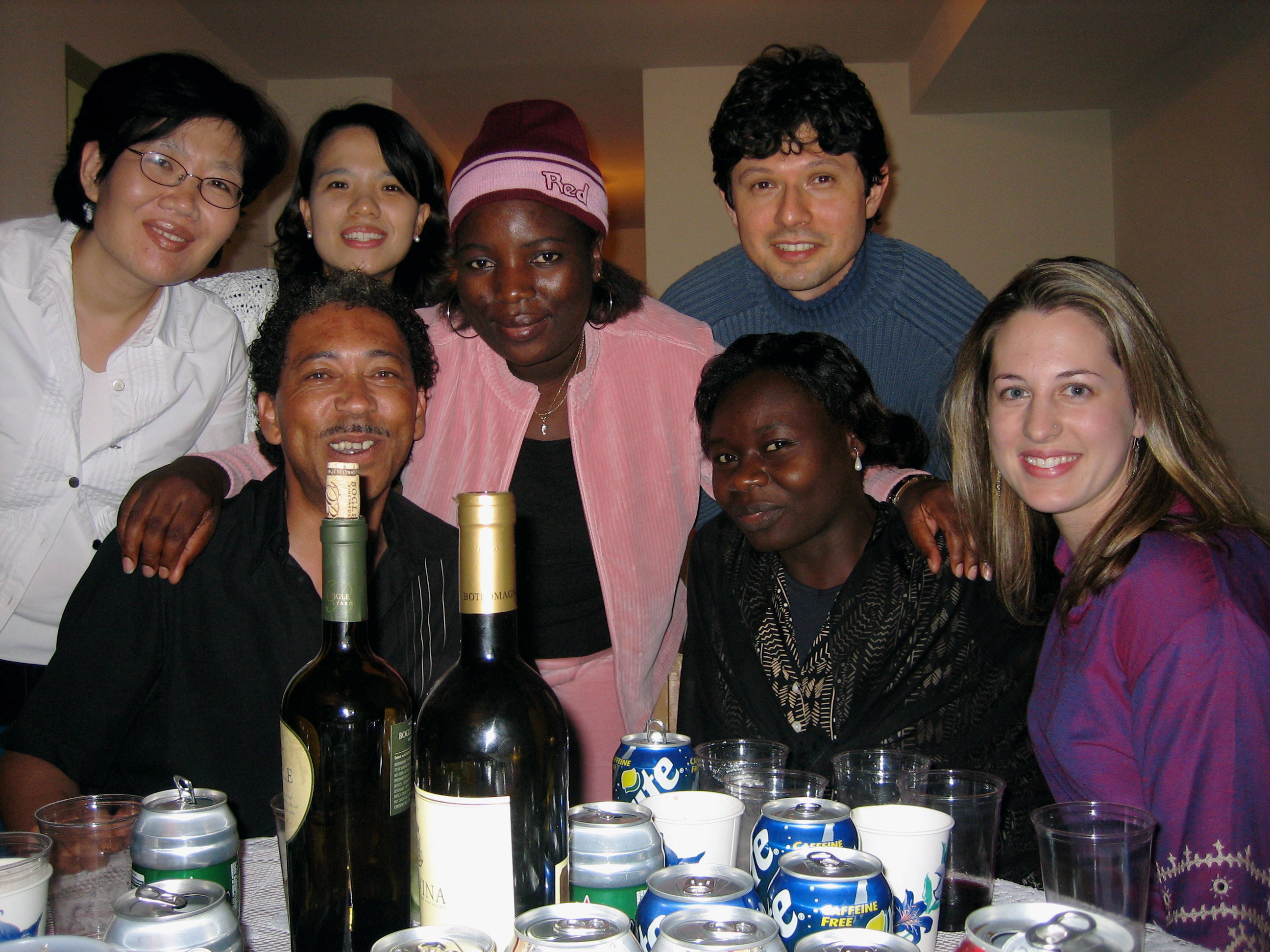
    Some very impressive Humphrey Fellows and me.
    Some very impressive Humphrey Fellows and me.

    It is a long way between meeting someone for the first time and marrying him.

    I saw my future husband for the second time early the next morning as I collected the entire group of Humphrey Fellows to escort them to their welcome meeting.  As an international studies major, I was in quite the fan-girl tizzy over the Humphrey Fellows, specifically the Fellow from Bhutan.  There are only about 700,000 Bhutanese in the world, and I was going to work with one!  I’d been bringing her up in conversation regularly for months in an effort to compete with my roommate’s stories from her internship on Capitol Hill.

    On that typically humid August morning, I found my Brazilian waiting in the dorm lobby next to the Fellow from Kenya.  We chatted as the others slowly trickled down.  There was a lot of hand shaking and slow pronouncing of names, my own name included.  “It’s pronounced like Lynn, except with a Br instead of an L.”  “No, it’s not a boy’s name.  That’s Bryan, with an A.”  “No, I don’t think my parents knew my name would be unpronounceable to, apparently, the entire world.”

    Orientation for an international exchange program is probably the most emotionally exhaustive thing a person can go through that doesn’t involve a birth, a death, or a space suit.  A person is expected to navigate a new place, new culture, possibly a new language, and new people, all while jet lagged and in some amount of digestive distress from new food.  It’s not a vacation.  There’s no sleeping in.  I met the Fellows in the lobby at 8:45am for a welcome meeting that started at 9 sharp, and from that moment on for the next two weeks, it was a race to get them registered for classes, bank accounts, cell phones, and long-term housing before fall semester began.

    Our Fellows had an added emotional blow as they went from being up and coming stars of their respective professions to nobody.

    Welcome to Washington DC!  It has the highest concentration of PhDs, law degrees and self-esteem per capita of any city in the world.  You are now officially unimpressive.  You will not have maids.  You will not have secretaries.  If you don’t know how to send an email or cook, well…we can teach you how to email.  Try not to starve.

    Undergrads who study abroad don’t have these problems.  They haven’t been on their own long enough to be embarrassed by dependency.  The Humphrey Fellows however ranged in age from 35 to 50.  They arrived for their year in Washington with impressive CVs and very fragile egos.  Working with them taught me how to explain what to do with used toilet paper without sounding condescending.

    Culture shock and a complete lack of family and friends explain why I, at 22 with the ink still drying on my diploma, was treated by the Fellows as an equal.  Nobody asked me to get their coffee.  They asked me to explain the online course registration.  They asked me to listen as they cried over how much they missed their kids.  They asked me to explain the endless variety of milk in grocery stores.  At that moment in their lives, they needed an insiders guide to Americans.  I was an American with a embarrassingly fortuitously empty social calendar and that huge fan-girl crush on them.  I became the group’s cultural wingman.

    I started hanging out with the Fellows on weekends.  We went to a coffee shop at Dupont Circle for s’mores.  We hit some bars in Adams Morgan and tried out an Ethiopian restaurant for lunch.  The group changed depending on who had a paper due or a bad case of culture shock, except for one member: the Brazilian.  In my memories he’s always there.  Always up for anything.  Usually available for lunch.  He’d rented a basement apartment close to where I lived, and we often ran into each other on the shuttle heading to and from campus.

    But I was so hung up on his resume and the sixteen year age difference, I never imagined he actually thought of me as a fellow adult.  I was sure the Brazilian, like the other Fellows, was being incredibly polite to someone helping him.  When he paid close attention as I took him through every picture from my semester in India, I must have subconsciously chalked it up to good manners because I would never, NEVER, have brought a photo album to lunch with someone I actually hoped to date.

    About a month after orientation, the Korean Fellow invited everyone to his apartment for dinner.  I clearly remember a few wonderful minutes in the kitchen as the Brazilian taught me how to make caipirinhas and I tried one.  I blamed my flushed cheeks on the cachaça.  Later a group of us took the subway home.  It was several blocks to the metro station, and the temperature had dropped changing my sandals from cute to extremely impractical.  My toes were slowly freezing and I probably would have lost a few, if the Brazilian hadn’t stopped, taken off his shoes, and handed me his socks.  He gave me the socks off his feet.

    And I still didn’t see the first kiss coming.  But that night deserves its own story.

  • How I Met My Husband or Why I’m in Brazil

    How I Met My Husband or Why I’m in Brazil

    We met, we married, and I moved to Brazil.
    We met, we married, and I moved to Brazil.

    Ten years ago today, I met my husband.

    He showed up at the office a day early and if he had been less adventurous or more patient, if he had just followed his orientation schedule, I’d probably still be in Washington DC with an impressive career in international education.

    He was one of nine mid-career professionals from around the world being hosted by the Washington College of Law as part of the Hubert Humphrey Fellowship Program.  His welcome orientation was scheduled for August 4, 2005.  I was spending August 3 sprawled on the floor with my hair in a pony-tail  hole-punching, stacking, and assembling orientation binders.  At least, that was my plan, but about mid-morning the office manager poked his head into the conference room and told me the Brazilian was at the front desk.

    The office manager actually called him, “The Brazilian”.  We all did, even program staff at the national level, because no one had a clue how to pronounce his name, which is quite a statement considering the range of nationalities around the office suite.  My boss was out of the office, so I got to be the first to hear the correct pronunciation and fail repeatedly to say it.  We would be dating before I could correctly say his name.

    I saw him as soon as I stepped out of the conference room.  He was standing by the reception desk just beyond several ubiquitous office cubicles, including my own, and I thought, “Wow, he’s white. I didn’t know Brazilians could be white.”  It was the first in what has turned out to be a lifetime of revelations about Brazil, many of which have revealed an embarrassing number of unconscious assumptions based exclusively on Pelé.

    My second thought on seeing him was “He’s really handsome.”  My third was “I can’t believe he found this place.”  The program office was located in a suite on the bottom level of a building two blocks down from the law school.  The suite housed a variety of programs and offices, none of which had found a way to give directions that didn’t get most visitors lost.  The Brazilian had successfully navigated the maps and directions while jet-lagged and operating in a foreign language.  I was impressed.

    But I’d been impressed by him for months.  We received a binder on each Fellow that included a medical history, their complete program application with letters of recommendation, and the Fulbright selection committee’s evaluations.  The Brazilian came with a letter of recommendation from a Supreme Court Justice and a clean bill of health.  Not bad as boyfriend applications go.  For my part, I’d been a college graduate for three months.

    Truly I don’t know what about me got his attention.  Maybe it was my stellar administrative skills or consistent punctuality.  Somehow, I managed to make navigating my home country in my native language seem impressive.  Thank god for home court advantage.

    I wasn’t thinking relationship in that first moment.  After recognizing that he was attractive, I went straight to professional mode.  I took him on a tour of the school and to the bank.  There is nothing romantic about banking or walking around DC at midday in August.  Unless pit stains are considered a turn on.  We grabbed lunch at the sandwich place across the street where I proved I was strictly business and indifferent to others by ordering the onion smothered Greek wrap.  We chatted easily over lunch, and I believe that casual conversation over vegetarian wraps laid the groundwork for everything that followed.

    If my boss had been around that morning, she would have been the one to take him to the bank and to lunch.  If we had met the next day along with the entire group, we wouldn’t have had the rapport that made me the obvious choice to go with him apartment hunting while the other Fellows opened bank accounts.  And if we hadn’t gotten to know one another while touring some rather frightening basement apartments in Northwest DC, it wouldn’t have felt perfectly natural to meet up for lunch periodically over the coming weeks.

    By the time we went on our first date, we’d already opened a bank account, shopped for an apartment, and been subjected to a variety of team building exercises together. Rarely has a couple’s compatibility been so thoroughly tested.  All we lacked was an astrologer’s blessing.

    But all those moments came after that first meeting, when he showed up early and I mispronounced his name exactly ten years ago today.

  • 28 Days in a Brazilian NICU: The Mom Milking Room

    28 Days in a Brazilian NICU: The Mom Milking Room

    Day 2 of 28 in the NICU at Vitoria Apart Hospital in Brazil.
    Day 2 of 28 in the NICU at Vitoria Apart Hospital in Brazil.

    My daughter was born seven weeks early due to placental abruption.  That was a new term for me, placental abruption. Another one was UTIN.  That’s the acronym in Portuguese for Neonatal Intensive Care Unit (NICU).  It was one of the many Portuguese medical terms I learned after my daughter spent 28 days in a NICU in Brazil.  In the moment, each day felt like a lifetime. I was sure every minute of all 28 days had been seared into my memory.

    But they weren’t.

    My daughter just turned four, and I’m shocked to realize how much of a blur those weeks have become.  Most of the exact numbers are gone.  How many days was she on a ventilator?  When did she get above 2kg?  Of the many people who cared for my daughter, all but one of the names has been erased.  Now they’re the doctor with red glasses and the physiotherapist who spoke some English.  I suspect these details will disappear too.

    What has not faded in any detail, much to my dismay, is my memory of the milking room.  This was the place they sent the new moms to strip them dignity.  It was the room for hand expressing breast milk.

    Many preemies are born too small to breastfeed and are fed through a tube and syringe.  How do you get these babies breast milk?  The obvious answer is pump it, store it, and serve it.  Except the NICU did not allow breast pumps of any kind.  The hospital said it could not guarantee that an individual mom’s pump would be sterile, so they could not give the milk from from a potentially unsterile source to the baby.  The only way for a baby in the NICU at Vitoria Apart Hospital to get breast milk, other than on tap, was to hand express it.  This is as awful as it sounds.

    At least for me.  I am not particularly in touch with my body.  I’m more cerebral and would be quite content to be a floating brain in space except for the facts I do like going for walks and eating french fries.  I’m aware that my conscious self is housed in an organic Tupperware container that impacts how I feel, think, am, but I don’t dwell on it.  At least not until I get a stomach virus.  Or until I have to breastfeed a baby.

    And I was going to breastfeed.  I had done my research.  Despite my lack of emotional connection to my mammary glands, I was totally committed to breastfeeding.  I did not, however, anticipate having to milk myself like a cow.

    That’s what it is.  Hand expressing means squeezing out the milk by hand into a container.

    Despite that daunting psychological hurdle, I told the nurses I still wanted to breastfeed, so one of them led me out the backdoor of the NICU, down a hall, through an unmarked door, and into an unused storage closet.  Based on the size and lack of any comforts except three chairs, I assume storage closet was the original purpose of the room.  White walls, tile floor, no windows, and freezing cold.  This was the room I shuffled to, fresh from an emergency c-section, so that I could hand squeeze milk from my boobs.

    As I stood there shivering in my hospital gown, the nurse quickly went through the officially sanctioned routine that guaranteed milk I expressed in that closet would be more sanitary than what I could get from a pump: wash hands, don hairnet and face mask, remove the plastic cups from the packaging and take the lids off, wash hands again, wash nipples with gauze, squeeze milk into cup and seal the cup immediately when full.  Fortunately, she demonstrated the whole process because to this day I don’t know the Portuguese word for gauze or hairnet.

    Then she left.  No medical professional stayed in that closet with the moms.

    Want to guess how many of the moms expressing themselves actually followed that routine when left on their own?

    I know because it turned out to be a communal milking closet, and the answer is none that I saw.  The next time I went to the closet, two other women were already there happily chatting away, masks down over their chins.  I distinctly remember these two women because they were friendly, completely comfortable being half-naked in front of strangers, and filling up cup after cup with milk like a competition at a state fair.  I was none of those things.  I struggled to fill half a cup when alone.  Trying to hand-express milk in a freezer while confronting small talk in Portuguese and the four largest breasts I’ve ever seen in person was literally impossible.

    I got almost no milk out during that session or any other.  I subjected myself to breastfeeding purgatory every three hours for four days before finally saying “Enough.”  I believe breast milk is ideal.  I don’t believe it is worth torture.  I restarted breastfeeding only after my daughter was big enough to handle it herself.  Hand-expressing in that closet was one of the worst experiences of my life.  And I sat through the Sponge Bob movie.

    If I’d had any reserve of energy I would have been outraged.  I was being denied a breast pump on the grounds it wasn’t sterile, but there was nothing sterile about that room.  They sent a bunch of not-medically-trained women down the hall with instructions to wash their hands and wear a mask. I don’t believe a single doctor actually thought the milk coming out of that closet was sterile.  They know they’re in Brazil where actual laws are treated as suggestions.

    But I didn’t have the capacity for outrage then and I don’t care to feel it now.  True, an electric pump and a private space would have made a huge difference, but we all survived and someday the sound of someone else’s breastmilk squirting into a plastic cup will fade from memory.  In the meantime, I’ll milk it for the entertaining story it is.

    11ghkra

    Save

  • Beach Day Doctrine: Great weather leads to awful governments

    Beach Day Doctrine: Great weather leads to awful governments

    A typical winter's day in Brazil.
    A typical winter’s day in Brazil.

    My family went to the beach this past Saturday.  We packed a kite and a boogie board and stayed out through lunch. It was an absolutely perfect beach day, warm without being hot and breezy without being chilly.  The sky was a sheet of blue with a few fluffy clouds pulled decoratively across it.  But the best part was having the beach almost entirely to ourselves.  People in Vitoria just don’t go to the beach in winter.

    Yes, it’s winter here in Vitoria, Brazil.  You can really feel it today.  It’s 68 degrees (20 C) outside and drizzly.  People are wearing their leather jackets over their shorts.  This will be one of the coldest days of the year here.  I’m sure it will be a front page article in tomorrow’s paper.  “Cold Front hits Vitoria. Drives Locals to Wearing Coats!”

    In my opinion, the weather is one of the best things about Vitoria and Brazil in general.  I think it’s also why the government sucks.

    I have a theory that the weather of a country can be tied directly to the quality of that country’s government.  The better the weather, the worse the public services.  The worse the weather, free university for everyone!

    Let’s take Norway.  The Economist’s Quality of Life Index ranks Norway third in terms of quality of life and third in GDP per capita.  Norway is number one on the UNDP’s Human Development Index.  Norway’s government is the world champion of governing.  Year after year, they are crushing the competition. Why? Because without an awesome government, there would be absolutely no reason to live there.

    This is a place where citizens go weeks without seeing the sun.  Every winter, there’s a period when the sun never makes it over the horizon.  This isn’t a freak phenomenon.  It’s a lifestyle.  How to avoid Winter SAD (Seasonal Affective Disorder) during the polar nights is a regular part of the school curriculum.  Why would anybody live in a place where winter is accompanied by its own psychological disorder causing sadness, a loss of self-esteem, and desire to avoid social and physical contact?  Why? Free universal healthcare coverage for all legal residents.  That’s why.

    Not surprisingly, Norway’s tourism website doesn’t bring up those polar nights, but it does have a lot to say about its midnight sun.  You can take an ocean cruise at midnight or stroll through the park at 2am.  Come visit Norway in summer and have 24 hours of sunlight!  Honestly Norway, 24 hours of sunlight doesn’t sound like a good thing.  It’s slightly better than 24 hours of darkness, but I have no desire to live in a place with sunlight streaming through my window at 2 am.

    Except that in Norway, universities are tuition free for all students, including international students.

    On second thought, I could probably get used to wearing a sleep mask.

    Norway’s tourism site also touts its mild winter temperatures.  The average January high for Oslo is 32 degrees (0 C). I suppose that’s mild compared to Siberia, but it’s still a place where getting locked out of your house in December is potentially life threatening.

    Here in Vitoria, you can sleep on the sidewalk 365 days a year and feel, at worst, a little uncomfortable.  Good thing too, because there are quite a few people who do sleep on the sidewalk.  Does Norway even have homeless?  I don’t see how.  The winters would kill them off.

    And this is the crux of my theory.  The environment in Norway is so inhospitable, the government has to help its people survive and then give them a reason to stay.

    What does a person need to survive a winter day here in Vitoria? A sandwich and a tree.  Something to eat and shelter from the hot-even-in-winter sun or rain.  That’s it.

    My theory holds true for other countries.  Sweden, Finland, Denmark, Canada, Australia (Why is Australia listed? It’s hot, in the middle of nowhere, and has all the world’s most poisonous things). These countries have awesome governments and crappy weather.  Venezuela, Fiji, Mexico, Maldives, Greece: crappy governments, 365 days of beach.

    This past Saturday was a spectacular day.  Bright sun.  Soft sand.  It was the kind of day that warms you on the inside and puts hope back in your life.  Listening to the waves while getting drunk on sunshine and coconut water, a person won’t care about anything.  Not even that Brazil ranks 79 on the HDI or that dozens of top government officials have been indicted for stealing billions in taxpayers’ money or that the President’s approval rating is 9%.

    Here schools are terrible.  Public healthcare is broken.  Inflation is increasing.  But the weather is fantastic, the beaches are free, and with 4,655 miles (7,491 km) of breathtaking coastline, there’s space on the sand for everybody.  What else do you really need?

  • Dear Brazil: Pay Your Nannies a Living Wage!

    Dear Brazil: Pay Your Nannies a Living Wage!

    Seriously Brazil, it's 2015. Pay your help a living wage.
    Seriously Brazil, it’s 2015. Pay your help a living wage.

    Dear reader, if you’re not in the mood for a rant, check back next week.

    It all started when I received an early morning WhatsApp message from a fellow mom asking the group about rates for a substitute nanny while the permanent nanny is on vacation.

    A little cultural context. Here in Brazil full-time nannies are common. This was surreal for me coming from the United States. In the U.S. full-time nannies are something only the Jolie-Pitt or Kardashian families can afford.  I remember a combination of church daycares and grandparents after school and over the summers while my parents worked.  Personally, I’ve never known anyone in the U.S. with a full-time nanny.

    In Brazil, almost everyone I know has a full-time maid and many have a full-time nanny too.  Often if the family has kids but can’t afford two employees, the maid will have childcare duties in addition to the housekeeping, grocery shopping, and cooking.  Several of our friends also employ a weekend nanny because labor laws in Brazil don’t allow families to demand ask their nanny to work 7 days a week. It’s like Downton Abbey in flip-flops with more beer and better weather.

    How can these middle class and professional families afford full time nannies and housekeepers in the year 2015? Minimum wage in Brazil for 2015 is $250 a month. (I’m using today’s exchange rate of 1 U.S. dollar to 3.15 Brazilian reais to put all values into US dollars.) U.S. federal minimum wage is $7.25 per hour, so assuming four 40-hour-weeks a month, the U.S. federal minimum wage per month is $1,160.

    $1,160 versus $250 a month.

    Now, a lower minimum wage doesn’t necessarily indicate a lower quality of life.

    Maybe the cost of living is significantly lower in Brazil than the US? Maybe goods are less expensive? They’re not. The only things cheap in Brazil are coconuts and people, and even the coconuts are experiencing inflation.

    Maybe there are a variety of free/very low-cost public services in Brazil? There aren’t.  Public services from school to health care are abysmal.  Everyone who can scrape together the cost goes private, and a full-time nanny at minimum wage is significantly cheaper than private day cares here in Vitoria.

    But there’s no way people pay nannies minimum wage, right? In practice people are paying more than the legal minimum, aren’t they?

    This brings us back to this morning’s Whatsapp conversation among local moms.

    A mom wanted to know what other people had paid for someone to fill-in as a nanny for a month.  The values reported ranged from $254 to $476 for the month.  For two children.  For the entire day, Monday through Friday.

    But these shockingly low values are not what drove me to clutch at my hair and mutter obscenities at my computer.  Nor was I upset that a family of four is looking for the highest quality childcare at the lowest possible cost.

    I got upset after I sent a message saying that our kids’ pregnant preschool teacher was at the doctor again due to pain from her sciatic nerve.  I commented about how what she really needed as a present was a housekeeper.  My message got no response.  The conversation continued about nannies until finally the original poster asked, “Did your nannies just take care of the kids or did they also clean their rooms and do laundry?”  This sparked the rant.

    Dear Brazilian Middle and Upper Classes, nannies are people!  Housekeepers are people!  Preschool teachers and assistants are people!

    There are so many wonderful things about Brazilian culture, like the attitude toward children, the judicial selection process, and dental hygiene.  But the way upper classes treat people in the working class is NOT one of those things.  I’m so tired of listening to good, ethical people, friends, colleagues and parents I respect, refer to their nannies or maids as “them”.  I’ve heard complaints about how much the maid eats, stories about getting older kids to spy on the maid and report back, and indignation about a nanny who went and got married.  The underlying message is that “we” must be vigilant against “them” or they will use up our sugar and make a lot of long distance phone calls.

    When I saw the movie The Help, I thought, “Wow, that’s like present day Brazil”.  That’s what I see here.  Upper-classes in Brazil often deny the basic humanity of the people working in their homes.  (And to Brazilians who protest that Brazil doesn’t have The Help‘s racial component, I recommend a walk around Ipanema in the afternoon or a visit to a private daycare in Vitoria. Look at the color of the kids and look at the color of the people holding their hands.)

    I believe for most people it’s unconscious.  It’s how their own parents and everyone in their circle has always talked about nannies and housekeepers and drivers.  They’ve internalized this division, don’t see anything wrong with it, and haven’t been challenged on it.

    I’m not against paying for a housekeeper. We employ one. I’m not against paying for a nanny.  I believe affordable child care is a HUGE barrier keeping women from advancing in the workforce in the U.S. and Brazil. I’m writing this while my kid is at daycare. Many of the mom’s I know are amazing professionals, and it’s only possible because they can find childcare be it a daycare or nanny. Many moms want to work. Many moms HAVE to work. Quality childcare is a necessity.

    I’m against a system that keeps people from empathizing. That makes it “us” versus “them”. That causes a really nice person to ask the woman she’s paying almost minimum wage to watch her kids if she could also do the laundry.

    What about the kids of the people we pay to watch our kids?  Who watches them if we pay their moms $300 a month?  Is it ethical to ask a woman willing to assume the enormous task of keeping two small children alive for only $350/month to also do the laundry?  Is this woman really in a position to say “no”?  Are we going to be annoyed if she does?  If we’re paying minimal costs, why do we expect top-quality service and undying loyalty?

    Beyond respecting and talking to each other as people as opposed to being constantly on guard against the machinations of “those” others who want to exploit us…I have an idea for improving things for the moms, maids, and childcare workers.

    Everyone gets rid of their housekeeper.

    We take the money we were paying to housekeepers and put it toward childcare, either by increasing the wage of the nanny or increasing the salary of daycare and preschool teachers.  The former housekeepers come together and start cleaning-service businesses.  Their former employers, now clients, hire the company for once or twice a week, and now the preschool teachers and nannies may even be able to afford the housekeepers’ services with their increases in salary. The former housekeepers can also find employment at all the new public daycares the government will open in my utopia.

    And what about all the cooking and laundry and grocery shopping left in the wake of the maids?  Well, I think it’s time for Brazilian men to stop watching soccer and do some freakin’ laundry.

    How does that sound?

    Save

    Save

  • 5 Things You’d Never Guess About Brazil

    5 Things You’d Never Guess About Brazil

    5 Surprising Facts About Brazil
    5 of the many things that have surprised me about Brazil…

    “Do you like Brazil?” I heard this question for the thousandth time last night.  I don’t know why people bother to ask this question.  It’s in the same category as “Does this make me look fat?” and “Did you read my last blog post?”  Nobody wants an honest answer.  “Do you like Brazil?”  The correct response is an enthusiastic “Yes!”

    At least this question has an obvious correct answer, unlike “So which country do you like better?  The US or Brazil?”  What am I supposed to say?  I usually cop out with humor. “Neither.  I’m giving up on the whole nation-state system.  I’d like to start my own island tribe based on handedness.”

    Another strategy I’ve developed over the years is to answer these politically loaded questions with lists: “Things I love about Brazil” or “Things I miss about the US”.  Below is my favorite list.  I like it because it’s personal but more unusual than the standard “Things I love about Brazil.”

    Five Things That Surprised Me About Brazil

    1) Stellar Dental Hygiene   Brazilians are obsessed with their teeth.  If you go into a restroom after lunch, there will be a wall of people between you and the sink, all of them flossing their teeth.  Helpfully, many public restrooms have floss dispensers to facilitate this habit.  You should brush your teeth after every meal and ideally after every snack.  As an after-breakfast-and-before-bed brusher, I have the most disgusting teeth in all of Brazil.  Fortunately, my husband accepts me for who I am and ascribes my poor dental hygiene and once-a-day-showering to my Anglo-Saxon ancestors’ affinity for filth.  Although thanks to him, I have grudgingly become a daily flosser.

    2) Your Fingers Must Never Touch Your Food  When I learned that many Brazilians use a fork to eat french fries, I almost moved back to the US.  Brazilians use a knife and fork for EVERYTHING!  Your fingers must never touch your food.  As my people created a category just for “finger foods”, this is not a custom that I’m particularly comfortable with or always able to keep in mind.  I’ll be at a birthday party happily popping mini-pizzas in my mouth, when I notice everyone else at the table has a napkin delicately wrapped around their snack, creating a polite barrier between fingers and food.  After 9 years, I still can’t muster that level of formality for something that came frozen out of a box.  (Honestly between the finger eating and lack of teeth brushing, I’m surprised my husband agrees to go out with me.)

    3) Japanese-Brazilians  My initial thought when I saw my husband for the first time was “Hey, he’s white!”  True story.  Pretty romantic, huh?  Before my husband, the only Brazilian I was aware of was Pelé, thus my unconscious assumption about how Brazilians look.  I wasn’t totally wrong.  According to the 2010 census, 50.7% of Brazilians do consider themselves black or mixed-race. But in addition to the 4.8 million people brought as slaves from Africa and the indigenous tribes who were already here, Brazil has had substantial immigration from Portugal, Italy, Japan, Lebanon, and Germany to name a few countries.  With a history of intermarriage between the groups, Brazilians cover the entire range of possible human phenotypes.  

    4) Brazilians Love Volleyball!  Everyone else in the world besides Americans might already know this.  Probably the world loves indoor volleyball, and it’s only us Americans who are in the dark. Literally. We’d rather just sit in the dark than watch a volleyball game.  But not Brazilians!  If there’s no soccer game, the sports channels are covering a volleyball match.  They have incredibly popular professional leagues here, and if you stay in Brazil long enough, you will find yourself at a bar with a women’s club volleyball game on the TV.  Or judo.  Judo is also very popular in Brazil.

    5) Did You Already Add Salt?  This is a question most Brazilians won’t ask because they’re going to go ahead add more salt regardless.  Meal after meal, I see Brazilians get food placed in front of them and without even tasting it, they reach for the salt packets, rip one open, and rain salt down on the entire plate.  Very shortly after arriving, my husband made sure to treat me to one of Brazil’s traditional meals imported from Portugal, bacalhau or codfish.  Imagine a salt lick served with potatoes and onions. That’s bacalhau.  I couldn’t eat it.  The same was true for feijoada, a uniquely Brazilian dish involving black beans, all the leftover pieces of pig, and a few ice cream scoops of salt. Not surprisingly, Brazil has a hypertension epidemic.

    Those were some of the most surprising truths I learned about Brazil.  I’d come up with more, but I just ate a pretzel and must go floss my teeth.


  • Getting a Driver’s License in Brazil

    Getting a Driver’s License in Brazil

    Traffic in Brazil is not helped by all the unlicensed drivers.

    To put my family at ease, I tend to downplay the more dangerous aspects of life in Brazil, but the truth is you’re much more likely to die a violent death in Brazil than in Canada or Japan or even gun-crazy United States.  Oh, you’re not going to get shot.  No, you’re going to die in a flaming car crash long before you get mixed up in drug-related violence.

    It didn’t take me very long in Brazil to understand that cars were the real danger.  After my first months in Rio, I assumed that traffic in Brazil was governed only by the laws of physics.  I was wrong.  It’s governed by plenty of people laws too.  It is Brazil after all.

    Licenses require medical exams, eye exams, and psychological exams.  Driver’s ed is mandatory and its content federally regulated down to the number of hours for theory and practice.  Thus, the only reasonable explanation for the number of traffic-related deaths here is that no bureaucrat in Brasilia has ever actually driven a car, and they have no idea what skills to include on the test.

    A student of mine recently turned 18 and has been taking his mandatory driver’s ed class.  He brought me several of his practice exams.  He knows I love to laugh.

    Driver’s education courses in Brazil are divided into two parts: 45 hours and 25 hours.  That’s 45 hours in the classroom and 25 hours on the road.  Some people might be thinking, “Gee, wouldn’t it be better is these kids learning to drive a car spent the majority of their class time in a car?”  These people don’t appreciate the teaching power of multiple choice exams and visualizing your goal.  “I can see myself successfully merging in rush hour traffic.”  (Actually, visualizing is the only way to practice highway driving.  Driver’s ed cars aren’t allowed on highways.)

    So if not safe merging practices, what are these up and coming driver’s expected to know?  For one, the best attitude man can have in relation to the environment.  (The answer is “preservation”.)  It’s also necessary to know how the government of Brazil is trying to reduce emissions.  Humans have basic rights and there are a variety of ways we can observe the importance of family and friends to society.  Know that pointing out to a fellow driver that one of her tires is low encourages solidarity and courtesy in society more so than it demonstrates a concern for traffic. Don’t worry about knowing the effects of alcohol on reflexes.  That’s only a leading cause of traffic deaths in Brazil.  It won’t be on the test.

    Now, a 35 question multiple choice test isn’t the only requirement. The non-drivers in Brasilia didn’t want just anybody who can read getting a license.  They also wanted to weed out the crazies, which is why a psychological exam is required.  Again, I think this shows a complete lack of understanding of driving and a prejudice against crazy people.  There’s no reason a person can’t be a sociopath and an excellent driver.  My life experience has shown me no correlation between sanity and a willingness to use the blinker.

    The greatest irony is that all these required (and expensive) exams and driver’s ed courses intended to make the roads safer actually result in a huge market for fake licenses.  People need to drive and they don’t have 70 hours to spend learning about the parts of an engine.

    In the end who ends up driving on Brazil’s roads? A bunch of unlicensed drivers who have no idea how rain affects a car’s ability to stop, a bunch of licensed drivers who can label all the parts of an engine but have never driven on a highway, and not a single person who knows anything about alcohol’s affects on the body.

    So, if you’re coming to Brazil be sure to wear your seat belt.  Or just stay on the beach the whole time.  Cancer kills fewer people here than cars.