Throwback to 2004 when I studied abroad in Jaipur, India. I remember that semester so vividly it doesn’t feel like 13 years ago. I wrote this essay in 2007 for the digital magazine Glimpse, which like my time in Jaipur is now a fond memory.
 Walking down a street in Jaipur, India, I heard what had become a familiar recorded political message blasting out over loudspeakers. The message was imploring people to vote for a particular party in the upcoming election. I turned the corner, expecting to see one of what I had affectionately termed the “propaganda trucks.” But instead of a truck, I saw a man on a cycle rickshaw that looked about ready to fall apart at the next pothole it hit. The rickshaw had two loudspeakers, duct-taped to the handlebars, and dangling wires that crisscrossed back to a stereo, which was also secured to the rickshaw with duct tape. I watched the man pedal by, the squeaking of the rickshaw drowned out by the message blasting repeatedly from the speakers. I was so moved by one of the most humble, yet dedicated, displays of democracy I had ever seen that I decided to take advantage of being in India during a parliamentary election to research local political campaigns.
To begin my research, I followed a candidate during a day of campaigning in downtown Jaipur. A friend drove me to the market where the candidate was scheduled to make his first speech of the day. It was 7:00 a.m. and I was still brushing sleep from my eyes, but the market was already alive with people. A group of men was tossing heads of cabbage off a truck. Another group was passing some sort of melon down a line from a truck bed to the stand. Vendors were shouting, women were bargaining, chickens were clucking, and cows—well, they stayed quiet, but were standing resolutely in the middle of the street, inconveniencing everyone. The market was a swirl of activity amidst the brilliantly colored fruits and saris, making me feel as though I were walking through a kaleidoscope. A very noisy kaleidoscope. In the center of the market was a small stage decorated with marigolds, roses, and saffron and green Congress party banners.
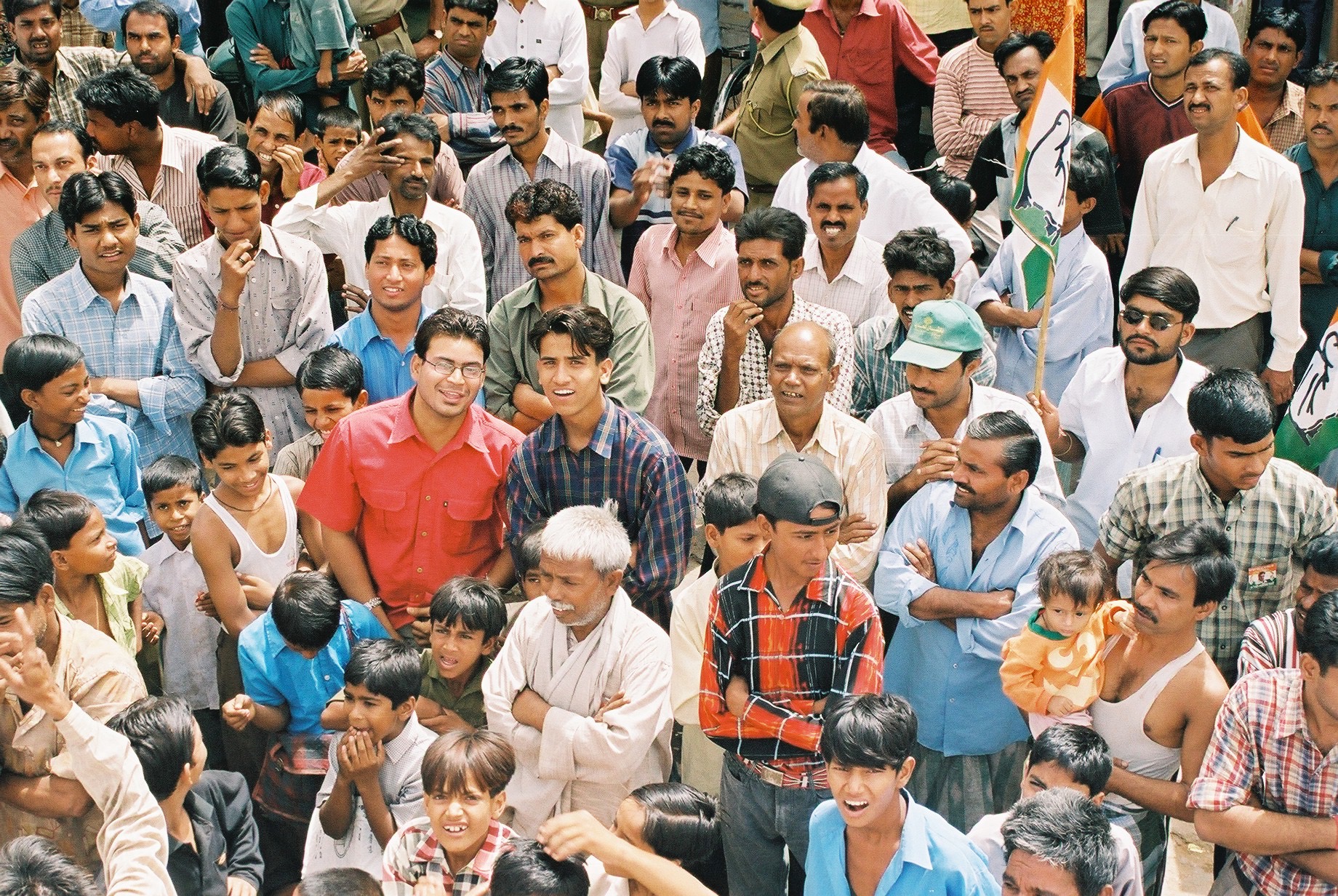
 The candidate arrived about 7:40 a.m., and by 8:00 he had given his speech and started a small riot in the market. The crowd that gathered during his speech had been completely passive, almost indifferent to what was being said, but at the end of the speech some aides brought out boxes of sweets. When the first sweet was handed to a woman in the front of the audience, the impassive crowd suddenly turned violent, surging forward as if on command. Elbows dug into rib cages. Shirts were ripped. People were shoved to the ground. The noise of the market was now drowned out by the yelling of people desperately groping for a single piece of candy. The aides tossed the boxes of sweets into the air over the crowd and hastily retreated. I don’t know whether the sweets actually ended up in anyone’s mouth, or whether anyone ended up getting hurt. I didn’t get the chance to find out. My friend grabbed my elbow, pulling me off the stage.
 After successfully disrupting the daily routine of the market, it was off to a march and rally through the heart of downtown Jaipur. As I trailed behind the candidate I learned that a successful mobile political rally in India must include four things: 1) the previously mentioned “propaganda truck,” brightly decorated, and spewing party slogans through loudspeakers, 2) a group of school children with a sweet song to sing and rose petals to throw (if the kids can be in uniforms, they earn extra points on the “adorable scale”), 3) a memorable stunt of some kind that can be pictured in the newspaper, i.e. milking a cow, and 4) a passionate group of youths who can wave flags and chant nonstop for the entire three-hour walk. Combine these elements and a crowd of hundreds is guaranteed to have developed by the time a candidate has reached the platform where he will give his speech.

After walking in the intense Indian heat for over an hour, enough time for everyone to have giant sweat stains under their arms, we finally reached the platform. Some of the party leaders invited me to stand with them, and although standing on the stage put me a little closer to the campaign than I had wanted, I thought back to the small riot we had started in the marketplace earlier that morning and decided it was definitely better to be above the large crowd.
The candidate finished his speech and the cheering crowd parted to allow him to walk to one of the propaganda trucks and climb on top, where there was a microphone hooked up to the truck’s loudspeakers. One of the party leaders turned and asked me if I wanted to go on top of the truck too. I definitely did not want to go on top of the truck. I was there to research a campaign, not endorse the man. I thought it somewhat unethical, not to mention awkward, to stand with him on the truck.
I was explaining my feelings on the matter when I heard the candidate say “America” in the midst of a bunch of Hindi I didn’t understand. Hundreds of people simultaneously turned and looked at me. Well, so much for non-participatory observation. In a quick analysis of the situation I decided it might not be wise to insult the candidate in front of 300 of his supporters. My decision was helped by a path suddenly clearing in the middle of the sea of people and two leaders taking my elbows and propelling me to the ladder on the truck. With many reservations, I climbed onto to the truck’s roof and stood next to the candidate.

We spent the rest of the afternoon riding around stopping in every new neighborhood for the candidate to make a speech. The lack of seat belt, roof, walls or anything else designed to keep those of on top of the truck from falling off made it difficult for me to take notes. I spent most of the drive clutching the single, skinny guardrail that ran around the edge of the roof. I didn’t know where I was. I didn’t know anyone else in the truck. I didn’t know how I was getting back home. I was grateful to the candidate for letting me tag along but I found myself thinking it might have been better to research a topic that kept me in a library on solid ground.
Fortunately, I made it off the truck, with only one awkward moment right at the end when a party leader asked if I would say a few words about the candidate into the microphone. At first I thought he was kidding but he pulled out a piece of paper with a few sentences written in Hindi and told me he would teach me exactly what to say. I had started the day as an impartial observer and ended the day being asked to give a public endorsement over the loudspeakers. I was not about to support a perfect stranger or give a statement I didn’t even understand. At the risk of offending my hosts, I politely declined and climbed off the truck at the next stop.
 While the campaigns I observed in India were similar in many ways to U.S. political campaigns, they were ultimately, unmistakably Indian. There were the superficial differences: the garlands, turbans, saffron and green banners, the traditional white dress worn by male candidates and the saris worn by women candidates. On a deeper level, the wide variety of political parties vying for power reflects the wide variety of ethnicities, religions and linguistic groups that all live within the world’s largest democracy. A three-hour walking tour is the only way to reach a constituency that does not own televisions or radios. While India currently celebrates its technological advances, I believe its greatest achievement is bringing democracy to one billion citizens—democracy that is delivered when necessary by cycle rickshaw.
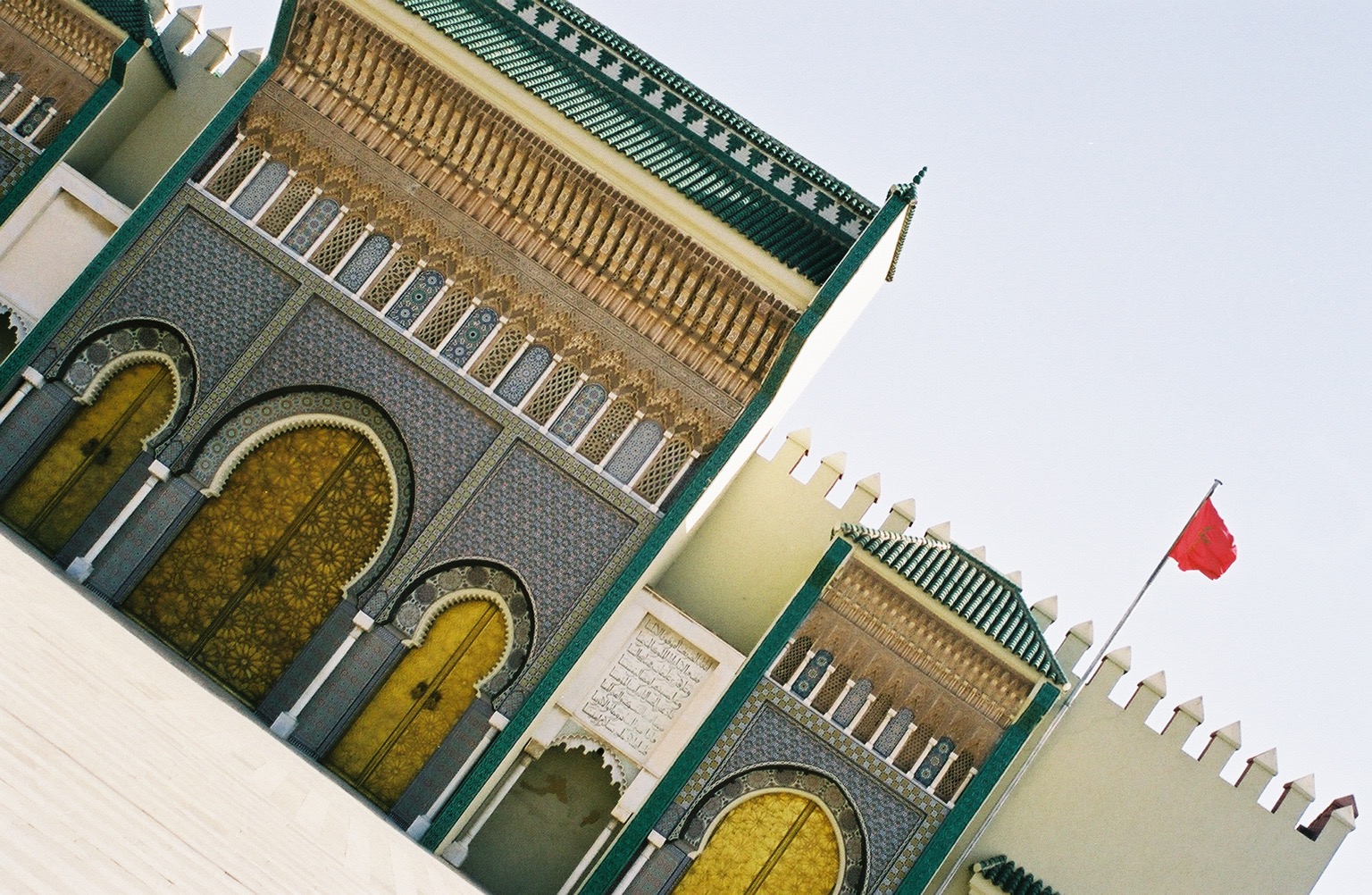
 It did not take me long after announcing my study abroad plans to realize that “abroad” for most of the people I knew meant Western Europe or Australia. Any other country was not so much abroad as another planet. The first time I mentioned Morocco to family or friends there was usually a momentary pause as people first, tried to place Morocco on a map, and second tried to figure out why I wanted to spend a significant amount of time there. Australia they could understand. It has beaches and people with funny accents. Italy has pasta and Prada. The only thing Morocco has is a city named after a Humphrey Bogart film.
 On September 3, I found myself all alone, completely lost, standing on a street corner in Rabat. That was the day of the Drop Off–the morning our program directors piled all 22 students on a bus, drove us around Rabat until we had no directional bearings whatsoever, and dropped us off one by one on random street corners throughout the city. Our first full day in Morocco and each of us was left stranded on a different street corner with no maps, no cell phones, and no idea how to even pronounce the street our hotel was on. The only thing we had was an assignment. Get back to the hotel by 1 o’clock. Welcome to Morocco and good luck.
 As I frantically looked around I noticed one opening in the wall flanked by two heavily armed Moroccan soldiers. I had heard stories about corrupt police officers in developing countries, about the actions of local military around the world who were supposed to be protecting refugees in various places, and decided the best direction to start walking would be away from the men with guns, uniform or no uniform. It would be much later before I realized this was my first decision in Morocco based entirely on a stereotype.
 Yes, that was one of the many thoughts running through my head as I tried to keep myself together. Despite all my boasting about being above the negative stereotyping of Arabs many friends and family engaged in, as I stood on the sidewalk of an unknown street somewhere in Rabat, I was genuinely afraid I was going to be harassed, beaten, or worse by those “fanatical Arabs.” So much for being a good liberal who doesn’t stereotype. I was alone, in a completely foreign country, with no knowledge of the language, or the culture, or where in God’s name my hotel was–and in that panic I embraced the most negative, racist stereotypes that had ever been presented in Western media. I wanted to go back to the time when being liberal meant eating vegan chocolate cake and discussing Said’s definition of orientalism on the quad of my $34,000 a year university in Northwest Washington, DC. While I walked, my mind kept repeating, “What am I doing here? I’m a white girl from Snellville, Georgia USA, where all the teenagers wear ‘what would Jesus do?’ bracelets. Why didn’t I study abroad in London with all of my friends?”
 As pleasantly surprising as this man’s generosity had been it was not the biggest surprise of the day. I was struck to the core when I walked into the hotel’s lobby and saw it was filled with students and all the Moroccans who had taken the time to help each of us find our way back. As we breathlessly shared our stories at increasing levels of volume, it became evident that every student made it back to the hotel through the generosity of complete strangers who were willing to take time out of their day to help another person. We had not experienced any kind of anti-American sentiment; in fact most of us had gotten incredibly positive reactions toward Americans. I hadn’t come across a flag or Bush effigy burning in the street. I had been in Morocco one full day and I had already had an exciting and liberating adventure, which introduced to many touchingly generous people and brought me face to face with my own hidden stereotypes.
 While tenaciously clinging to stereotypes, particularly if they are negative, will also blind a person to the wonderful and fascinating realities and practices of any culture. Recognizing stereotypes for what they are, imagined realities based on limited information, and preparing yourself to leave them behind as you learn and observe the reality from within the culture, are essential in order to make the transition into a new culture.


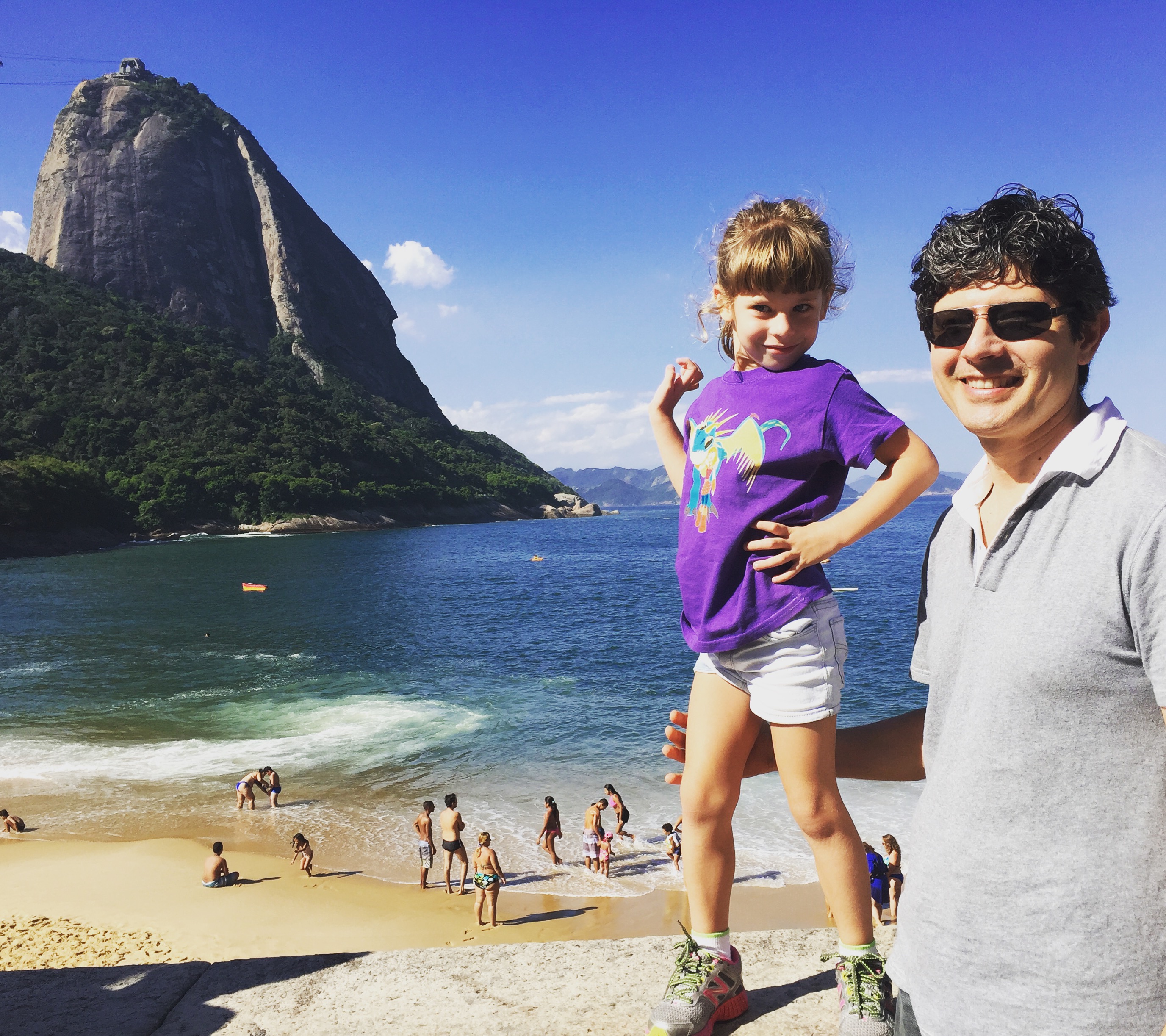
 Alright, now that we’ve covered


 13. Walk Along Copacabana Pretty self explanatory. The rules for beach going apply. Wear your shorts, tshirt and flip flops, bringing a little cash tucked away. Work out attire is fine too. The sidewalk will be full of people jogging and riding bikes. Grab a coconut to drink and stop and watch a game of footvolley. It’s volleyball played with your feet and it’s awesome.
 15. Juice Crawl A staple of Rio is restaurants and kiosks specializing in fruit juice. The variety of fruit available to be freshly squeezed is astonishing and I can promise, no matter how hard you try, you will not be able to try juice from every fruit on the menu. My cousin made the most valiant effort I’ve ever seen, and even after consuming 2.5 liters of liquid during a walk from Leblon to Ipanema, she’d not tasted a quarter of the fruits on the menus.
 16.
16. 
 18. Churrasco If you eat beef, you need to do so while in Brazil. Find a churrasco. Just type “churrasco Rio de Janeiro” into Google. They’ll probably be one within two blocks of wherever you’re standing. Brazilian know how to cook meat and they cook every part of the cow. Go for lunch and then plan on laying down for the rest of the day.
 19. Watch Some Capoeira I’m sure there will be groups playing capoeira in the parks and beaches during the Olympics. With the exception of açaí, I don’t think there is a more uniquely Brazilian export. Capoeira is a Brazilian martial practiced to music and dance. I wrote a post explaining the
  20.
20. 
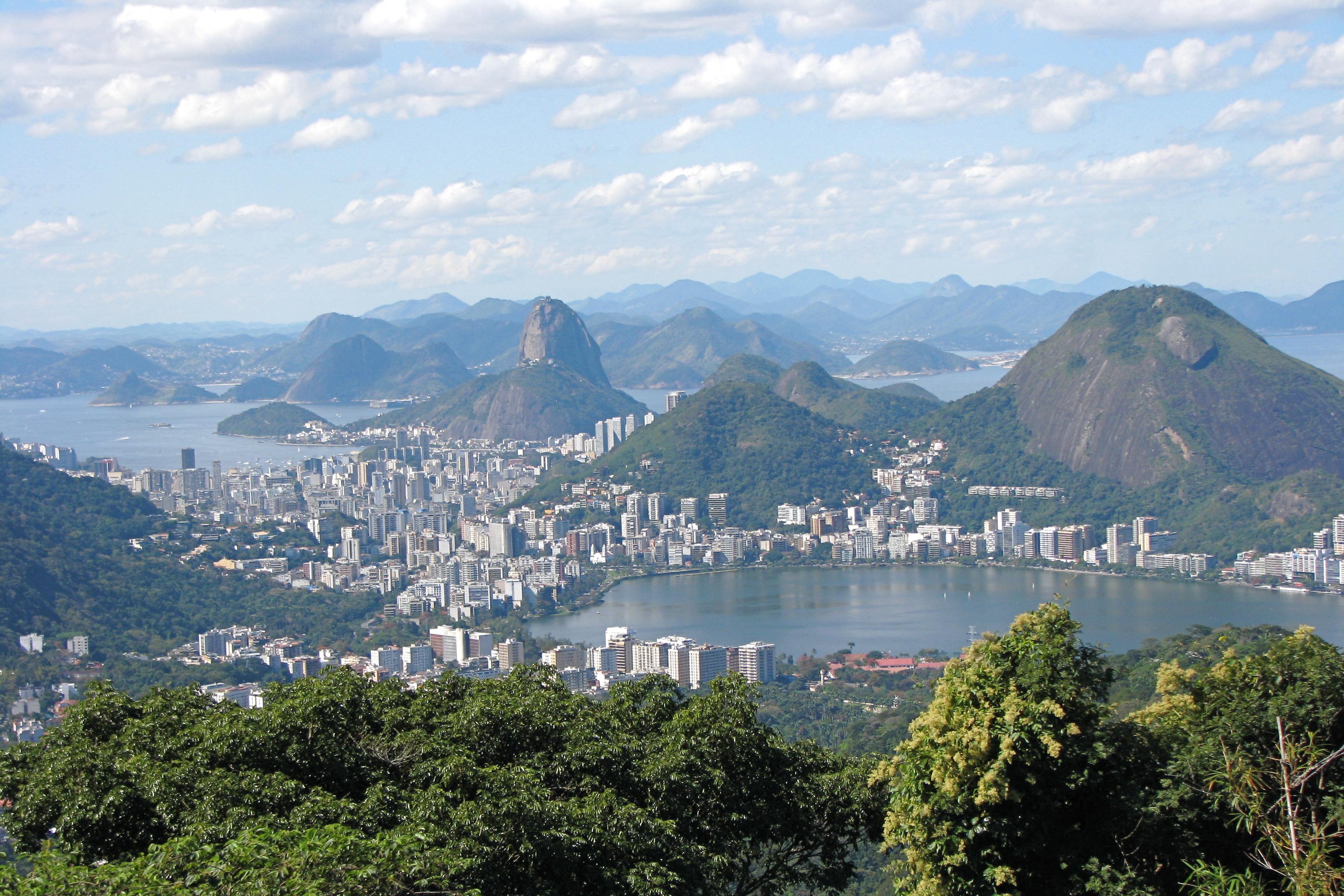
 Last week my family and I were waiting in the citizens service area of the US Consulate in Rio de Janeiro, and I overhead a young man pouring out a pretty tragic story to the consulate staff standing opposite the bullet proof glass. He’d been robbed and had lost every single form of id, all his credit cards, and all his cash. He was left with no proof of identity whatsoever.
 Because I have been a recently arrived foreigner in Rio without a word of Portuguese other than Obrigada and with the Rio Olympics opening in less than week, I’ve written down some tips to help visitors
  This is the most depressing list of travel advice. I realize that. But before angry Cariocas start posting in the comment stream about the foreigner who doesn’t appreciate their magnificent city, I’m going to do a second post on all the great experiences in Rio. Now that everyone knows how to stay safe, I can recommend awesome things to do with the free time not being used up with emergency trips to the consulate or hospital. Come back on Wednesday for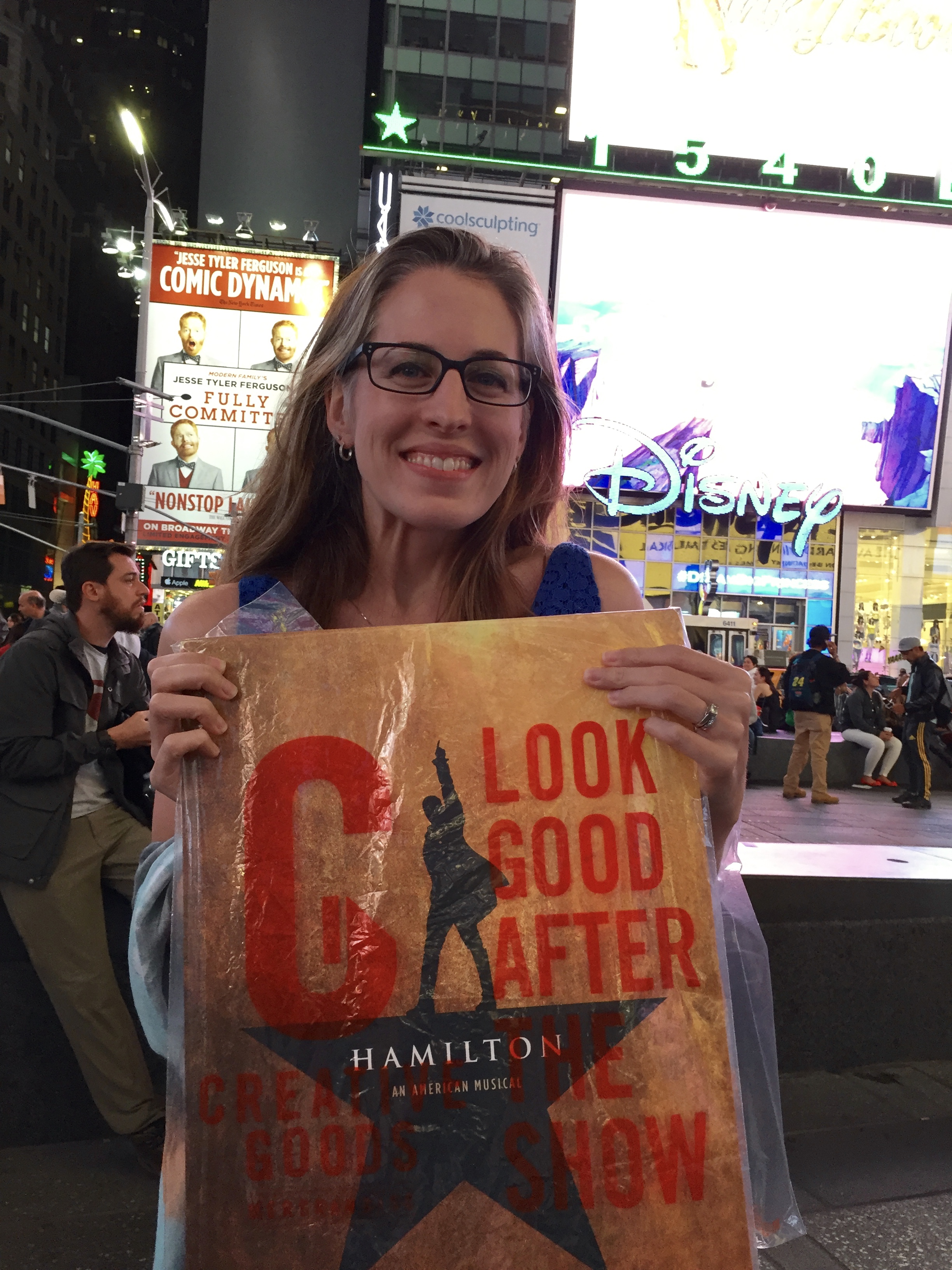
 I recently confessed to planning an entire trip to New York City around a preschooler. Housing, excursions, food…It was all for her. With the exception of Tuesday night. Because while our daily itinerary was planned around her, she was not the reason for the trip. Hamilton was the reason for trip. Ok, fine. My obsession with Hamilton was the reason for the trip.
 I’ve never been one to fangirl. I have loved movies and cheered in the stands for a favorite team. But I’ve never painted my entire face and worn a giant foam hat chanting in unison in below freezing temperatures. I’ve never spent six months salary on replica Storm Troopers costume and blaster. I’ve never loved anything enough to wait in line for more than one hour.
 A week later my husband said “Let’s do it. Let’s go to New York.”
 At the same time as Hamilton was debuting off-Broadway in early 2015, I quit my job as a teacher to devote myself to writing and publishing my first novel. I was anxious. I was antsy. I’d given myself two years to get an agent. I announced this to family and friends not realizing that two years is a laughably short time in the publishing world. Congressional cycles come faster than novel debuts. But I was ignorant of the alternate reality publishing exists in and worried that at 32 years old I was running out of time to build a career.
 Those years paid off. Hamilton was the most amazing theater experience of my life. I was in tears before the opening number was over. It was epic because every detail was right. I remember the way the lights changed at a stomp of King George’s foot to fabulous comedic effect. I remember Jefferson’s truly spectacular purple ensemble for his grand entrance in Act II. The intensity with which Leslie Odom Jr. delivered every line. Miranda’s complete breakdown after Hamilton’s forgiven by his wife. The banjo in “Room Where it Happens”. God, I love that banjo. The ensemble member who traces the trajectory of that fatal bullet in slow motion. It was all perfect.
 And that level of perfection takes patience. You can’t nail every detail at the same time. You have to tweak them one by one over the course of weeks, months, and years with constant feedback and help. I’m trying to keep that in mind when I grit my teeth at the prospect of reworking my first chapter for the tenth time. When I get feedback from an editor saying this is great just rework these parts, and I’m so very tempted to interpret this is “this is great” as “this is good enough” and be done with it. Patience is a challenge for me. Accepting that “life is long” and I do have years to get it right is very difficult for me.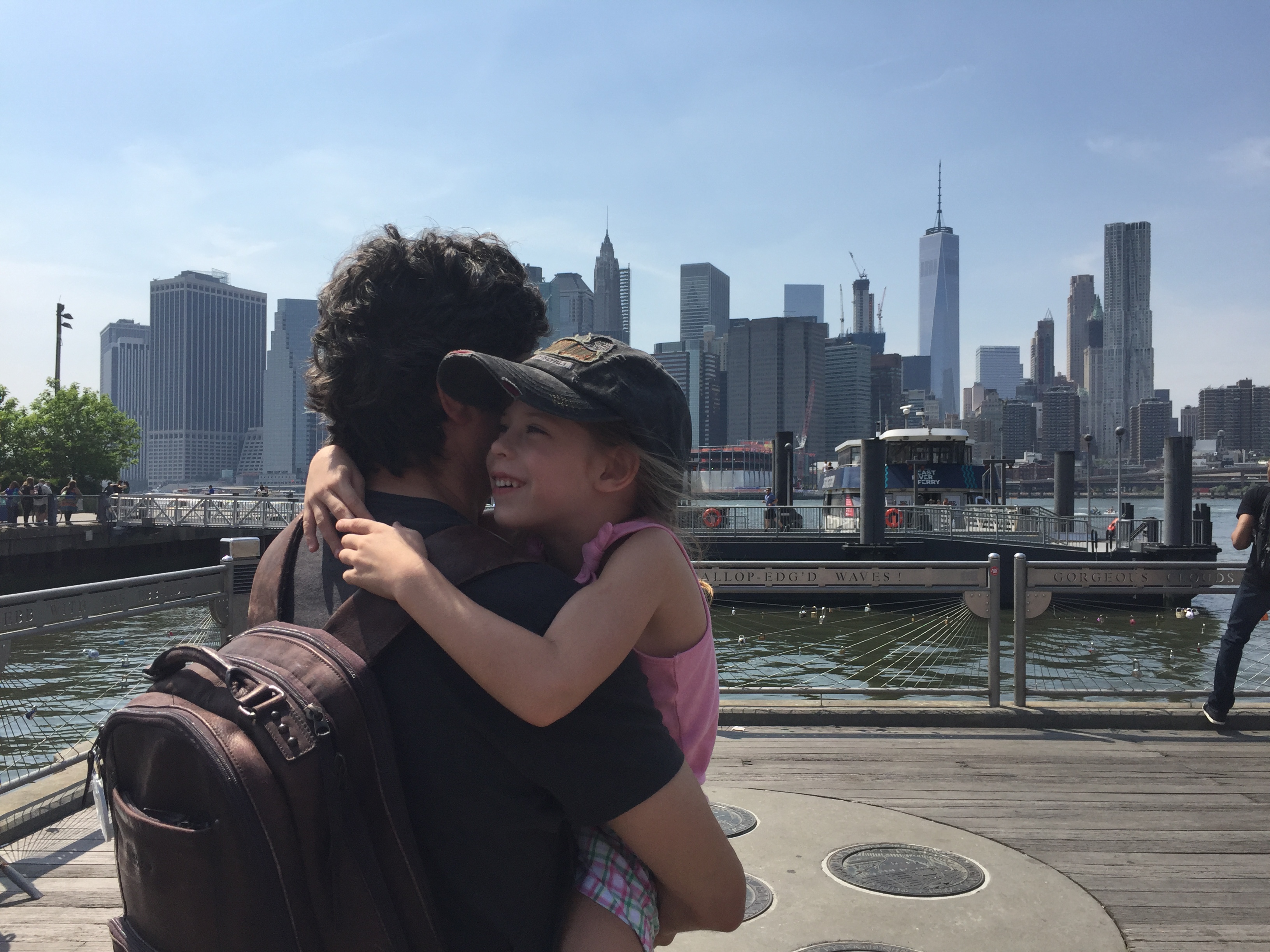
 We just got home after a week-long family vacation in New York City! I’ve been to New York City three times before, but this was my first visit as part of a preschooler’s posse. Our little Diva, with all of her four and a half years, was the central figure around which all activities were planned. If she wouldn’t like it or eat it or wait for it, then we didn’t do it. By we I mean, Mommy, Daddy, Gramma, and Grandpa aka The Posse.
 The hour subway ride into Manhattan or the car service were a small price to pay for the luxury of having a house with a den and backyard patio. The Diva is highly prone to outbursts when tired, so we wrapped up our sightseeing around 5pm everyday and spent the nights hanging out at the house. It was a stress-free way to end each day and allowed us to assume the role of local New Yorker for the week.
 Our week in New York was a tour of playgrounds and any museums that happened to be close by, starting with the Science Playground at the New York Hall of Science. This hands-on museum geared toward young kids was just down the street from our house in Queens. Even many of the indoor exhibits were basically highly educational playgrounds, particularly the exhibit on physics in sports. My daughter particularly loved the rope jungle gym and giant see-saw bridge.
 Day three’s plan to see the knights’ armor at the Metropolitan Museum of Art was immediately abandoned upon sight of the Ancient Playground next door to the museum. The playground’s stonework gave it a castle feel and the Diva unsurprisingly played for over two hours. What did surprise everyone was her question while heading back to the subway late afternoon “When are we going to see the knights in their armor?” When a four-year old expresses interest in an art exhibit, you go before she can change her mind or fall asleep in someone’s lap. The coolest part was the horses’ armor.
 We took one day off from playgrounds to see Aladdin at the New Amsterdam Theater which is right at the Times Square metro station. While Aladdin was beautiful and fun and the Diva is still talking about the flying carpet, the chaos of Times Square was not fun or beautiful. A prematurely pitched lollipop, which she hadn’t liked in the first place, caused the second major meltdown of the trip.
 After Times Square the posse had learned our lesson. Playgrounds and parks are enjoyable. Crowds and a sea of fifty foot iPads are not. This lesson led us to Brooklyn Bridge Park and the Main Street Playground near Manhattan Bridge. The Diva loved the nautical themed playground, and the posse loved the views. We rode Jane’s Carousel and had lunch at a little bistro just off the park. The breathtaking views are a great antidote to the effects of paying $4 for a single glass of coke that’s fifty percent ice.
 To complete our admittedly small sampling of New York City playgrounds, we went to Billy Johnson Playground in Central Park just north of the zoo. This comparatively humble playground features a 45 foot granite slide that the Diva went down at least twenty times. It was a gorgeous day and Central Park was lush and green. When we stumbled upon the Central Park Zoo after leaving the playground, there was no debate. The Diva bonded with a spirited puffin and enjoyed a hyper-active sea lion.
 I hope I haven’t given the impression that being in the posse of a small diva is only stressful. It does require planning and a willingness to abandon those plans, but the plus side of a diva is that they are energetic, passionate, and expressive people who draw you into their world. My Diva manifested such joy after seeing her first dog walker, I thought we’d have to follow him around the city.