I’m posting another recommendation for MKB’s Read Around the World Series! Today it’s an amazing young adult fantasy set in India!


I’m posting another recommendation for MKB’s Read Around the World Series! Today it’s an amazing young adult fantasy set in India!

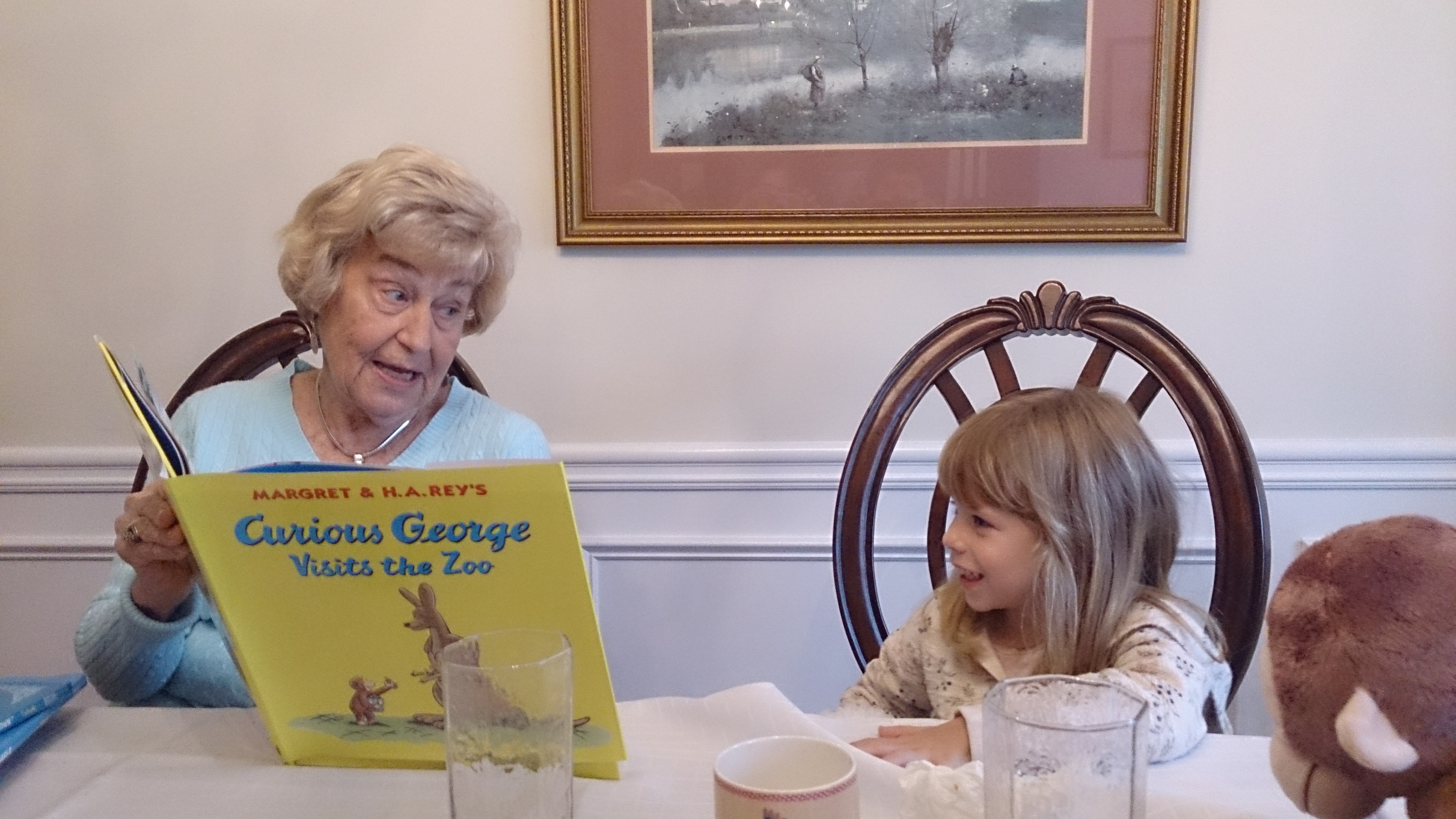
This is one of my daughter’s (and my) favorite books! The stories in told in a gorgeous panel (comic book) format, and the author/illustrator has given the animals hilarious asides. It’s delightful!

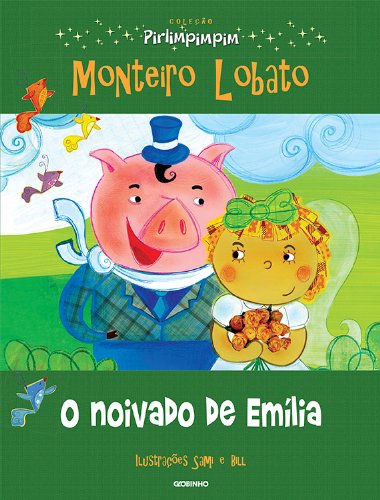
Today’s recommendation for MKB’s Read Around the World Series is an illustrated excerpt from one of Brazil’s most famous children’s author, Monteiro Lobato.


 I’m currently obsessed with an idea for a historical fiction novel and have spent the last week devouring books on colonial Brazil. (I know you’re jealous.) It’s been fascinating reading actually because it’s all entirely new history for me. It wasn’t until World History in high school that I even knew humans existed outside of Europe, and by “Europe” I mean Italy, France, and Britain with a brief stop in Germany for the Reformation. Any ideas I have about Portugal or South America I learned from Columbus Day themed picture books and Disney’s Emperor’s New Groove.
Turns out the Portuguese did more than just finance Columbus. They dominated maritime exploration in the 15th century, and that’s how little Portugal ended up with the enormous colony of Brazil. After a week of research, I now understand the root of all of Brazil’s problems. Portugal.
Everything is Portugal’s fault.
Let’s take education. Brazil does not have a single university in anybody’s top 100 Schools in World list. I recently read an article that could be summed up as “Brazilian have started buying books!” I can’t remember that last time I went to the beach and saw someone reading a book and I’m at the beach almost every weekend. Which makes perfect sense in a country that had printing presses, books, and universities banned for the first 300 years of its existence.
Yes, Portugal controlled Brazil for 300 years before it allowed a university to be built or a printing press to operate. Put another way, book circulation was banned for a century longer than it’s been legal in Brazil. Thanks Portugal!
Do you think Brazil’s government is a quagmire of ineffective bureaucracy staffed by people who are allergic to work? When the Portuguese court fled Napoleon and established itself in Rio de Janeiro, it brought between 10,000 and 15,000 people. When John Adams moved the US government from Philadelphia to Washington D.C., he moved 1,000 employees. And all those 10,000 people who came with the court expected a stipend from the government. Today, public pensions are currently bankrupting Brazil. Thanks Portugal!
Brazil is currently hosting a global event. No, not the Olympics. I’m talking about the largest corruption scheme in the history of democracy, the Lava Jato case in which federal politicians awarded contracts and got kickbacks to the tune of billions of dollars.
It’s actually totally understandable that Congressmen and their friends all expected rewards. When Prince Regent João showed up in Rio, the crown was flat broke, so he just started selling titles to wealthy Brazilian merchants. Prince João gave out more titles in eight years than his ancestors had in the previous three centuries. You get to be a Baron! And you get to be a Baron! And you get to be a Baron! (This is assuming you’d like to make a donation to the Court, of course.) Those of us at the top have to get each others’ backs, amiright? It’s Brazilian tradition. Thanks, Portugal!
I’ve wondered since arriving back in 2006 why the fifth largest country in the world in terms of land area seems to use two lanes roads almost exclusively. Why? Why am I sharing a single lane between states with all the 18-wheeled trucks? Because it was illegal to build roads between states until after João and his court arrived in 1808, 300 years after the Portuguese took control of the territory. And factories weren’t allowed. So no industrialization. Which means no trains. Thanks, Portugal!
I’ve learned all this from 1808 The Flight of the Emperor by Laurentino Gomes. It’s an engrossing telling of an unbelievable true story. One of the most striking accounts of colonial Brazil was from a woman, Maria Graham, arriving in Brazil for the first time. As her ship sailed up, she gushed over the picturesque city of Salvador with it’s beautiful white homes and striking setting on a cliffside. She called it “a city, magnificent in appearance from the sea.” Her opinion changed dramatically once walking the streets of the city. She describes Salvador as no less than “the filthiest place I ever was in.”

While I did not consider Rio anywhere close to the filthiest place I’ve ever been (I lived in a coed dorm in college), I did go through the exact same swing in emotions when first arriving in Brazil. Looking out the plane window, I was in awe of Rio’s beauty. Then I left the airport. The view out the car window was…disappointing in comparison.
Two hundred years separates Graham’s arrival and mine, yet our reactions were nearly identical. Culture is a powerful yet often unconscious shaper of our behavior. I have a university degree in this. I shouldn’t need a reminder, but this book was just that. Now, I understand. The next time I have to argue about whether the phrase “copy of your passport” means just the information page or all pages in the book, or I bounce along a road filled with potholes but with wifi coverage, or I read about another politician who’s been suspended due to a corruption scandal, I’m not blaming Brazil. I’m blaming Portugal.
Because it’s all Portugal’s fault (#blameportugal). And they didn’t even leave a legacy of good wine. Thanks a lot, Portugal.

 The wind gusted by, and my nose was numb by the time we crossed from the parking lot and entered the Visitor’s Center at the Martin Luther King Jr. Historic Site. It was a little unfortunate my step-mom and I had picked the coldest day in weeks to visit because the MLK Historic Site is a collection of buildings up and down the block where Dr. King’s childhood home and church are located. The facilities required walking. The weather required a hat.
 While peeling my gloves off in the Visitor’s Center, a helpful ranger told us that guided tours of Dr. King’s birth home are available for free but they’re first come first serve and you have to reserve tickets. Unfortunately for us, the next tour wasn’t until noon, and we had to move on before then. There was still the Visitor Center, the Tombs, exhibits from the life of Dr. and Mrs. King at Freedom Hall, as well as Historic Ebeneezer Baptist Church where Dr. King served as co-pastor with his father. More than enough to fill a Sunday morning.
Passing through twelve years of metro-Atlanta public schools, I’d learned about Dr. King and the Civil Rights movement extensively. To be perfectly honest, I wasn’t expecting to learn anything new during my visit. It would be interesting to see the buildings where Dr. King actually lived but the information would be a refresher course.
I stepped into the first stage of the Visitor Center’s overview of King’s life: Segregation. Photos, panels, and video explained the explicitly and brutally divided world Martin grew up in. On the video screen I watched footage of a young girl, book bag in hand, enter her school escorted by Federal marshals. The girl is Ruby Bridges, the first African-American student to attend an integrated elementary school in Louisiana. Well, integrated isn’t quite accurate. Bridges was the only African-American student in an all-white school.
I’d watched the footage before, but never as a mother.
 This time I saw a little girl with a bow in her hair, not much taller than my own daughter, walk alone into her school. No friends, no teachers. Only four armed Federal Marshals protecting her. She barely cleared the waist of the men around her. Ruby was six years old that day. My eyes filled with tears, and I ducked my head to keep anyone from noticing.
I left the images of children berated and under armed escort and moved on to the section on Dr. King’s early activism. His first role of national significance came when he helped organize the Montgomery Bus Boycott in the wake of Rosa Park’s arrest. It was 1955. Dr. King was twenty-six.
 I’d moved on from Ruby in hopes of being on more palatable ground of grown-ups being horrendous to other grown-ups, but I was staring at the face of a person whom, if I met over coffee, I would tease and welcome into adulthood. How’s that whole responsibility thing going? When I looked at the photo of Dr. King handcuffed and bent over a police desk, I didn’t see a great man. I saw a very young man.
I scanned the other photos. A group of non-violent protesters at a sit-in. Freedom riders. Marchers with their arms linked. Dr. King attending a leadership meeting of the Student Non-violent Coordinating Committee. There it was in the name: Student Non-violent Coordinating Committee. The walls were covered with pictures of kids and young people. Eighteen, nineteen, twenty year-olds. College kids were the driving force of the Civil Rights movement. Seeing the Civil Rights Movement from the perspective of an adult older than most of its leaders were at the time shocked me.
I’d learned about Dr. King and other leaders, John Lewis, Julian Bond, Andrew Young through the eyes of a child. I’d been told they were great men, and to a ten-year old, the footage and photos showed established adults. One grown-up is equal to any other grown-up. Anyone who has reached adulthood knows this couldn’t be farther from the truth.
 As I wandered through the Visitor Center, King’s church, and the other buildings, the entire site became a testament to the power of young people. Kids, teens, college students and freshly minted men and women in their twenties acted on their beliefs that the world could change and could be made better. They refused to accept the world they were about to inherit.
 It seems to be a favorite past time of adults to complain about the youth. There is certainly no shortage of criticism being hurled currently at young people with their selfie taking smart phones. But I did learn something during my visit to King Center. Never underestimate youth. Young people have the power of infinite possibility. Their vision hasn’t been narrowed by time. Martin Luther King Jr. did not imagine himself on the steps of the Lincoln Memorial when he called on his congregation to boycott the buses. With his twenty-six years, he imagined a more just world and acted to make it so.
 The quote on Dr. King’s tomb is “Free at last. Free at last. Thank God Almighty I’m Free at last.” The dates are 1929-1968. He was thirty-nine when assassinated, a young & great man.
 This post is part of an amazing series on Martin Luther King Jr. being hosted by Multicultural Kids Blog. Check out the link for fabulous educational activities and international perspectives on the legacy of Dr. King.

About a month ago, I was invited to be interviewed for a podcast with Marianna Du Bosq at Bilingual Avenue. She asked me to talk about raising my daughter bilingual in Portuguese and English, with English being the minority language. (Jargon alert! In the bilingual community, minority language is any language not spoken by the majority of people in the community.) I was flattered and excited. In preparation, I visited her site and pulled up previous podcasts. As I listened to the PhD experts and trilingual parents, the researchers and published authors, I began to suspect that I would be the least helpful person ever interviewed for Bilingual Avenue.
Well the interview is up, and I’m certain that I’m the least helpful guest ever.
Of all the issues that come with parenting my daughter, raising her bilingual is one of the last I think about. In terms of energy usage, reflecting on her bilingualism comes just after flossing her teeth and ahead of which hand she writes with.
I don’t have a favorite book on bilingualism. I don’t have tips or special strategies to share. I can’t list the names of prominent researchers in the field or site the latest journal article making waves. I don’t have a “biggest fear” or “primary concern”. I’m not visiting online forums and sharing my struggles with other parents.
Before my daughter was born I did buy two books on raising bilingual kids. I read enough to know the common strategies: One Parent One Language (each parent speaks his/her native language to the child) and Minority Language at Home (the child learns the majority language at school/in public and speaks the minority language with both parents at home). Our pre-birth strategy session went something like this:
Me: “Since she’s going to be getting Portuguese at school and with all her friends, we should probably speak English to her at home, right?”
My Husband: “Absolutely.”
And that was that. Marianna asked me during the interview how my Brazilian husband feels about speaking English to his daughter. Not to spoil the interview, but I considered revealing my suspicions that I married a robot. He speaks English fluently and wants his daughter to be fluent in both languages, thus the logical choice was to speak English at home. Period. I realize this story is not helpful for the majority of people who also consider feelings when making decisions. I personally would not be able to say “I love you” in Portuguese and feel it the way I do in English, but my husband didn’t give it a second thought.
It’s possible we would have talked about it more, but then my daughter was born seven weeks early. We spent a month in the NICU. She developed a severe food allergy that caused bloody stools until she was 8 months and left me, the breastfeeding mom, only able to eat fruits and vegetables handpicked by fairies and meat that hadn’t been cooked in anything remotely tasty. Her breastfeeding feeding schedule was every two hours, so I didn’t sleep for almost a year. She has severe separation anxiety which has allowed me one night off in over four years, and that night was such a disaster it will take years for everyone to recover enough to try again. When she started throwing tantrums, they included biting, scratching, spitting, kicking, and screaming until she lost her voice. Two years later, we’ve managed to reduce the tantrums to only screaming and throwing toys at doors instead of people. She refuses to try new foods. Iran is more flexible over nuclear policies than my daughter is on the subject of vegetables. And she has recently decided she is done with both school and sleeping.
Truly my daughter speaking two languages is the least of my concerns.
Her teachers report no problems with communication. She has lots of friends she speaks to in Portuguese. She enjoys speaking in English to my parents via Skype. She might have in total fewer words in English than a monolingual her age but so, what? I’m a native English speaker and still regularly have to look up English words I’ve never seen before. With every piece of writing, I learn new ways to use and manipulate my native language. Learning a language is a lifelong activity, not something you need mastered by 18. My kid can identify an armadillo in both English and Portuguese. I’m not worried.
When I do consider her bilingualism and her place in the world as a bilingual, I remember that the idea a child should only have one native language or risk never being fluent in any has been totally and completely debunked. Linguists estimate 75% of the world’s population speaks more than one language and about 20% of the U.S. population. She’s far from alone in her bilingualism. In fact, compared to the many families passing on three or even four languages, our two-language family is pretty straightforward.
I think about these facts for two minutes and then go back to finding a way to make applying sunscreen less traumatic. Which is why, I’m the absolute last parent to ask about raising a bilingual child.
Because when someone says “You’re raising her bilingual. How’s that going?” I say, “Fine. Hey, do you have any suggestions for getting her to not hate carrots?”
*Here is the link to my interview with Marianna at Bilingual Avenue. Episode 87: Learning Language from our Kids with Brynn Barineau
If you have any questions or doubts about raising multilingual kids, Bilingual Avenue is a great resource!!


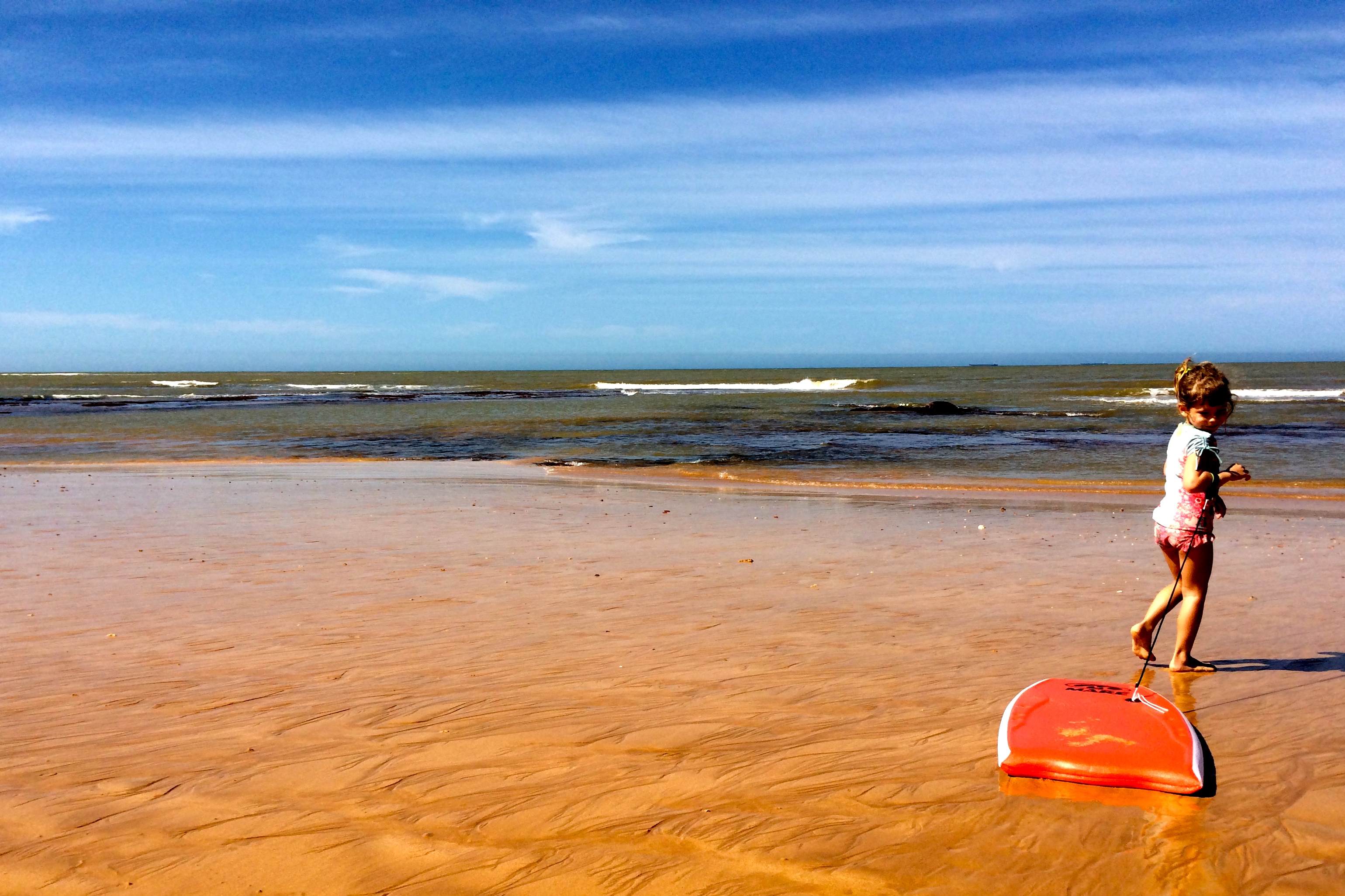

My family went to the beach this past Saturday. We packed a kite and a boogie board and stayed out through lunch. It was an absolutely perfect beach day, warm without being hot and breezy without being chilly. The sky was a sheet of blue with a few fluffy clouds pulled decoratively across it. But the best part was having the beach almost entirely to ourselves. People in Vitoria just don’t go to the beach in winter.
Yes, it’s winter here in Vitoria, Brazil. You can really feel it today. It’s 68 degrees (20 C) outside and drizzly. People are wearing their leather jackets over their shorts. This will be one of the coldest days of the year here. I’m sure it will be a front page article in tomorrow’s paper. “Cold Front hits Vitoria. Drives Locals to Wearing Coats!”
In my opinion, the weather is one of the best things about Vitoria and Brazil in general. I think it’s also why the government sucks.
I have a theory that the weather of a country can be tied directly to the quality of that country’s government. The better the weather, the worse the public services. The worse the weather, free university for everyone!
Let’s take Norway. The Economist’s Quality of Life Index ranks Norway third in terms of quality of life and third in GDP per capita. Norway is number one on the UNDP’s Human Development Index. Norway’s government is the world champion of governing. Year after year, they are crushing the competition. Why? Because without an awesome government, there would be absolutely no reason to live there.
This is a place where citizens go weeks without seeing the sun. Every winter, there’s a period when the sun never makes it over the horizon. This isn’t a freak phenomenon. It’s a lifestyle. How to avoid Winter SAD (Seasonal Affective Disorder) during the polar nights is a regular part of the school curriculum. Why would anybody live in a place where winter is accompanied by its own psychological disorder causing sadness, a loss of self-esteem, and desire to avoid social and physical contact? Why? Free universal healthcare coverage for all legal residents. That’s why.
Not surprisingly, Norway’s tourism website doesn’t bring up those polar nights, but it does have a lot to say about its midnight sun. You can take an ocean cruise at midnight or stroll through the park at 2am. Come visit Norway in summer and have 24 hours of sunlight! Honestly Norway, 24 hours of sunlight doesn’t sound like a good thing. It’s slightly better than 24 hours of darkness, but I have no desire to live in a place with sunlight streaming through my window at 2 am.
Except that in Norway, universities are tuition free for all students, including international students.
On second thought, I could probably get used to wearing a sleep mask.
Norway’s tourism site also touts its mild winter temperatures. The average January high for Oslo is 32 degrees (0 C). I suppose that’s mild compared to Siberia, but it’s still a place where getting locked out of your house in December is potentially life threatening.
Here in Vitoria, you can sleep on the sidewalk 365 days a year and feel, at worst, a little uncomfortable. Good thing too, because there are quite a few people who do sleep on the sidewalk. Does Norway even have homeless? I don’t see how. The winters would kill them off.
And this is the crux of my theory. The environment in Norway is so inhospitable, the government has to help its people survive and then give them a reason to stay.
What does a person need to survive a winter day here in Vitoria? A sandwich and a tree. Something to eat and shelter from the hot-even-in-winter sun or rain. That’s it.
My theory holds true for other countries. Sweden, Finland, Denmark, Canada, Australia (Why is Australia listed? It’s hot, in the middle of nowhere, and has all the world’s most poisonous things). These countries have awesome governments and crappy weather. Venezuela, Fiji, Mexico, Maldives, Greece: crappy governments, 365 days of beach.
This past Saturday was a spectacular day. Bright sun. Soft sand. It was the kind of day that warms you on the inside and puts hope back in your life. Listening to the waves while getting drunk on sunshine and coconut water, a person won’t care about anything. Not even that Brazil ranks 79 on the HDI or that dozens of top government officials have been indicted for stealing billions in taxpayers’ money or that the President’s approval rating is 9%.
Here schools are terrible. Public healthcare is broken. Inflation is increasing. But the weather is fantastic, the beaches are free, and with 4,655 miles (7,491 km) of breathtaking coastline, there’s space on the sand for everybody. What else do you really need?

 Being pregnant, I’ve become aware of several areas where evolution has either slacked off a little or failed utterly to come up with a sensible solution. Obviously pregnancy is one of those areas. Humans started walking upright but failed to develop a means of procreation that didn’t involve heartburn, back pain, hemorrhoids, and the inability to tie your tennis shoes. I’m amazed were able to survive because if I were at this moment on the Serengeti trying to avoid a predator, with my diminished lung capacity and screwed up center of gravity, I’d be toast.
Pregnancy is not the only flawed process evolution has led us to. What master planner thought it was a good idea to combine adult bodies and still developing brains? Because this is the plight of the teenager. A creature frequently misunderstood and the cause of many car insurance claims. After only four months of working with teenagers, ranging in age from 14 to 17 years old, there is no doubt in my mind that I am working with children. Children who can grow beards.
Many if not most of my students would (and I’m sure will after they read this) vehemently disagree. When in class I have addressed them as “children”, perhaps while they were poking each other in the ribs or making snot-like balls of glue at their desks, they have protested. They adamantly state, “No teacher, we’re not children,” while painting their fingernails with white out. Limited class time and a heavy curriculum keeps me from having the time to explain to them that, yes, they in fact are children and it is in no way meant to be an insult. It is a reminder to myself that while many of my students may look like adults, towering several inches above me or with a few days worth of stubble on their chins, they do not have the brain of an adult. I need to adjust my expectations accordingly.
Science backs me up. Research seems to agree that 25 years is the age at which a human brain fully matures. Recent studies have shown a significant difference between the brains of an 18 year old and a 25 year old, specifically in the prefrontal cortex. This area of the brain is in charge of decision making, determining right-from wrong, predicting the future and exerting self-control. All things teenagers are notoriously bad at doing.
Again, I say that evolution really screwed up by giving people fully functioning reproductive systems before fully functional brains. That is just really terrible planning.
I think teenagers themselves should be out promoting this fact. The world would probably go a lot easier on them if people started looking at them and thinking “old kid” as opposed to “young adult.” When a kid sits quietly through a movie without disturbing anyone, they’re praised. Well according to the research, a teenager who can think “Maybe I should not spend this movie texting my friends because it might disturb someone,” should be praised as well. Thinking beyond themselves and predicting the future are difficult tasks for their immature brains. “Way to think about possible future consequences of your actions, little Johnny! Good job!”
It is hard to remember these facts. I can’t help but expect someone with a size 12 shoe to be able to reason. But for all the frustration that begins to bubble when I’m presented with their faulty logic (“You want me to give an extension because you were really busy the day the essay was due? What about the other 13 days you had between when I gave the assignment and when it was due?), I truly am impressed by my students. Because when I do remember that they are older kids with a decade’s worth of brain development still in front of them, I realize the fact they sit through 10 hours of class a day is amazing. The fact that they spend several afternoons sitting in classes taught in a second language is amazing.
So, I’ll do my part for my students by lowering everyone’s expectations because currently my pregnant belly and I are in the same boat as they are. Evolution has failed us miserably.

 It’s my opinion that if you can’t figure out how facebook works, you shouldn’t be teaching.
Since becoming a teacher, any headline about the profession catches my attention and it seems like every week I read another article about a teacher getting fired or put on probation for an inappropriate tweet, blog, or facebook posting. Out of curiosity I searched “teacher fired facebook” and got 3,490,000 hits. “HS teacher loses job over Facebook posting” “Teacher Fired After Candid Facebook Comments” “Teacher Sues after being fired for Facebook Pics” It goes on and on. One teacher took a picture of a student’s hair, posted it on facebook and added a comment making fun of the girl’s hairstyle. Ultimately the girl’s mother saw the photo and the teacher’s comment.
Even if I accept the fact that American culture seems to no longer have any problem with adults insulting and tearing down kids (see: the entire Internet v. Rebecca Black), I can’t accept any educated adult expecting tweets and blogs to be private. The whole point of twitter is to communicate with many people instantaneously. This is not the place to discuss hiring a hitman to take care of your students.
I’ve only been teaching for four months but that is more than enough time to understand every teacher has days when she needs to vent. Venting is healthy. Venting fosters sanity. Venting should NEVER be done on the Internet. Unless you are Bill Maher and people follow you on Twitter specifically for the insults you hurl in 140 characters, do not post rants about your students, their parents or your administration online. Talk to your partner over dinner. Talk to your friends over drinks. Write it in a diary and save it for the bestselling memoir you’ll write when you’ve retired. Don’t update your Facebook status.
I agree with commenters who think teachers are held to unfairly high standard. The Georgia teacher fired because of a picture of her drinking Guinness at the Guinness factory is an example. Teachers are human and should not be fired for being such. I’m just waiting for the moment my pregnant and gassy body lets one rip in front of an entire class of teenagers. I hope it doesn’t get me fired. The experience will be scarring enough as it is.
However, typing and uploading your darkest thoughts in a fit of frustration or getting a few laughs from buddies at the expense of a child is unprofessional at best. Exerting some self control is a defining characteristic of an adult. And don’t argue an expectation of privacy because honestly, if you think something defined by the term “network” is an intimate forum, you should not be teaching.
So I just realized I followed up a post on not judging other parents with one judging other teachers. Hmmm. Oh well. No one’s perfect. Gosh, it really is hard to keep opinions to yourself.