Tag: expat life

  • Dear Brazil: Pay Your Nannies a Living Wage!

    Dear Brazil: Pay Your Nannies a Living Wage!

    Seriously Brazil, it's 2015. Pay your help a living wage.
    Seriously Brazil, it’s 2015. Pay your help a living wage.

    Dear reader, if you’re not in the mood for a rant, check back next week.

    It all started when I received an early morning WhatsApp message from a fellow mom asking the group about rates for a substitute nanny while the permanent nanny is on vacation.

    A little cultural context. Here in Brazil full-time nannies are common. This was surreal for me coming from the United States. In the U.S. full-time nannies are something only the Jolie-Pitt or Kardashian families can afford.  I remember a combination of church daycares and grandparents after school and over the summers while my parents worked.  Personally, I’ve never known anyone in the U.S. with a full-time nanny.

    In Brazil, almost everyone I know has a full-time maid and many have a full-time nanny too.  Often if the family has kids but can’t afford two employees, the maid will have childcare duties in addition to the housekeeping, grocery shopping, and cooking.  Several of our friends also employ a weekend nanny because labor laws in Brazil don’t allow families to demand ask their nanny to work 7 days a week. It’s like Downton Abbey in flip-flops with more beer and better weather.

    How can these middle class and professional families afford full time nannies and housekeepers in the year 2015? Minimum wage in Brazil for 2015 is $250 a month. (I’m using today’s exchange rate of 1 U.S. dollar to 3.15 Brazilian reais to put all values into US dollars.) U.S. federal minimum wage is $7.25 per hour, so assuming four 40-hour-weeks a month, the U.S. federal minimum wage per month is $1,160.

    $1,160 versus $250 a month.

    Now, a lower minimum wage doesn’t necessarily indicate a lower quality of life.

    Maybe the cost of living is significantly lower in Brazil than the US? Maybe goods are less expensive? They’re not. The only things cheap in Brazil are coconuts and people, and even the coconuts are experiencing inflation.

    Maybe there are a variety of free/very low-cost public services in Brazil? There aren’t.  Public services from school to health care are abysmal.  Everyone who can scrape together the cost goes private, and a full-time nanny at minimum wage is significantly cheaper than private day cares here in Vitoria.

    But there’s no way people pay nannies minimum wage, right? In practice people are paying more than the legal minimum, aren’t they?

    This brings us back to this morning’s Whatsapp conversation among local moms.

    A mom wanted to know what other people had paid for someone to fill-in as a nanny for a month.  The values reported ranged from $254 to $476 for the month.  For two children.  For the entire day, Monday through Friday.

    But these shockingly low values are not what drove me to clutch at my hair and mutter obscenities at my computer.  Nor was I upset that a family of four is looking for the highest quality childcare at the lowest possible cost.

    I got upset after I sent a message saying that our kids’ pregnant preschool teacher was at the doctor again due to pain from her sciatic nerve.  I commented about how what she really needed as a present was a housekeeper.  My message got no response.  The conversation continued about nannies until finally the original poster asked, “Did your nannies just take care of the kids or did they also clean their rooms and do laundry?”  This sparked the rant.

    Dear Brazilian Middle and Upper Classes, nannies are people!  Housekeepers are people!  Preschool teachers and assistants are people!

    There are so many wonderful things about Brazilian culture, like the attitude toward children, the judicial selection process, and dental hygiene.  But the way upper classes treat people in the working class is NOT one of those things.  I’m so tired of listening to good, ethical people, friends, colleagues and parents I respect, refer to their nannies or maids as “them”.  I’ve heard complaints about how much the maid eats, stories about getting older kids to spy on the maid and report back, and indignation about a nanny who went and got married.  The underlying message is that “we” must be vigilant against “them” or they will use up our sugar and make a lot of long distance phone calls.

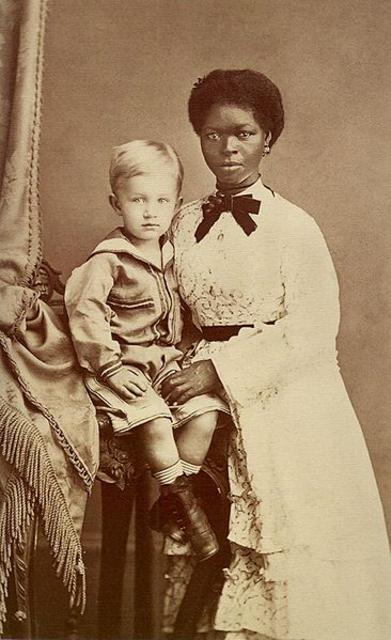
    When I saw the movie The Help, I thought, “Wow, that’s like present day Brazil”.  That’s what I see here.  Upper-classes in Brazil often deny the basic humanity of the people working in their homes.  (And to Brazilians who protest that Brazil doesn’t have The Help‘s racial component, I recommend a walk around Ipanema in the afternoon or a visit to a private daycare in Vitoria. Look at the color of the kids and look at the color of the people holding their hands.)

    I believe for most people it’s unconscious.  It’s how their own parents and everyone in their circle has always talked about nannies and housekeepers and drivers.  They’ve internalized this division, don’t see anything wrong with it, and haven’t been challenged on it.

    I’m not against paying for a housekeeper. We employ one. I’m not against paying for a nanny.  I believe affordable child care is a HUGE barrier keeping women from advancing in the workforce in the U.S. and Brazil. I’m writing this while my kid is at daycare. Many of the mom’s I know are amazing professionals, and it’s only possible because they can find childcare be it a daycare or nanny. Many moms want to work. Many moms HAVE to work. Quality childcare is a necessity.

    I’m against a system that keeps people from empathizing. That makes it “us” versus “them”. That causes a really nice person to ask the woman she’s paying almost minimum wage to watch her kids if she could also do the laundry.

    What about the kids of the people we pay to watch our kids?  Who watches them if we pay their moms $300 a month?  Is it ethical to ask a woman willing to assume the enormous task of keeping two small children alive for only $350/month to also do the laundry?  Is this woman really in a position to say “no”?  Are we going to be annoyed if she does?  If we’re paying minimal costs, why do we expect top-quality service and undying loyalty?

    Beyond respecting and talking to each other as people as opposed to being constantly on guard against the machinations of “those” others who want to exploit us…I have an idea for improving things for the moms, maids, and childcare workers.

    Everyone gets rid of their housekeeper.

    We take the money we were paying to housekeepers and put it toward childcare, either by increasing the wage of the nanny or increasing the salary of daycare and preschool teachers.  The former housekeepers come together and start cleaning-service businesses.  Their former employers, now clients, hire the company for once or twice a week, and now the preschool teachers and nannies may even be able to afford the housekeepers’ services with their increases in salary. The former housekeepers can also find employment at all the new public daycares the government will open in my utopia.

    And what about all the cooking and laundry and grocery shopping left in the wake of the maids?  Well, I think it’s time for Brazilian men to stop watching soccer and do some freakin’ laundry.

    How does that sound?
    Save

    Save

  • Flying with Preschoolers: It can always get worse.

    Flying with Preschoolers: It can always get worse.

    My only parenting standard at airports is "don't lose her".
    My only parenting standard at airports is “don’t lose her”.

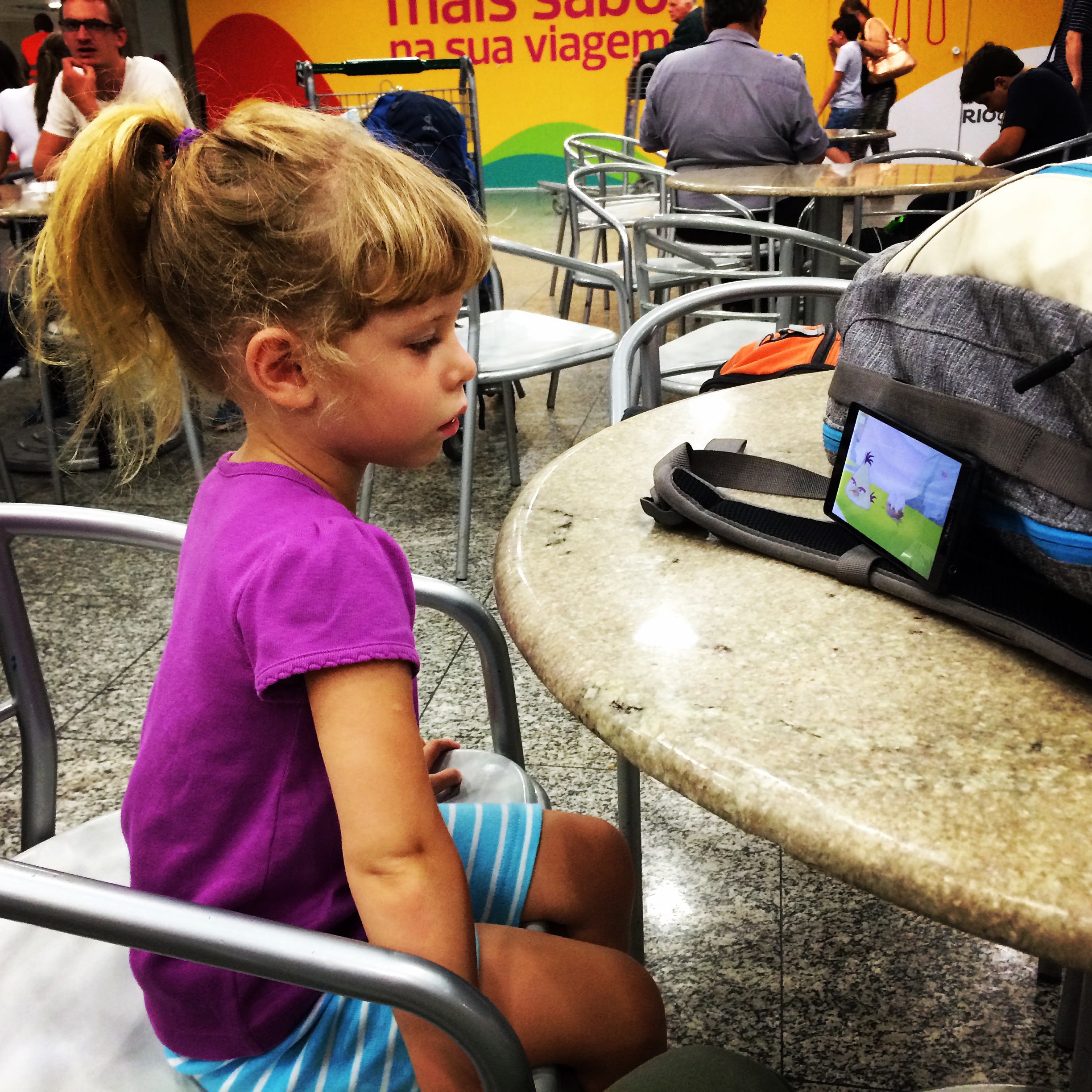
    My little family of three took a trip to Rio de Janeiro this weekend.  Our nephew recently had a birthday and we needed to put in some face time with my husband’s family.  It’s only a 45 minute flight from Vitoria to Rio, but that was long enough to learn a valuable lesson.  There is no length of time short enough a three year old can’t turn it into forever.

    It’s like in Interstellar.  For the pilot and crew who have tasks to complete, 45 minutes is barely enough time to toss bags of crackers at everyone.  They’re the lucky ones down on the planet.  The parents of small children are the ones stuck in orbit who stumble off the plane with more grey hair and beards, demanding to know what year it is.  How long were we up there?  Six years?  Ten?

    For our flight home, boarding was scheduled for 6:50pm.  Right at dinner time! But my husband and I were prepared.  We had packed sandwiches…which my daughter ultimately refused to eat because we miscalculated the nap.

    The ride to the airport was about 30 minutes.  When my daughter fell asleep in the taxi, we thought “Oh good, she can take a short nap and be in a better mood.”  Only, she didn’t fall into nap-time sleep.  She fell into bedtime-for-the-night sleep, and as my grandmother says, “You don’t need to step on a snake to know it’s going to bite you.”  The same principle applies.  You don’t need to wake a preschooler up from deep sleep to know it’s going to cry.

    And cry she did.  Through the whole check-in process.  While we searched for a place to sit.  While I bought water and snacks.  Even after we resorted to the emergency M&Ms.  Eventually, she calmed down and filled her stomach with 2 tiny bites of sandwich and 5 pão de queijo.

    No longer hungry but still exhausted from the weekend, her emotional pendulum swung to the other extreme. We then had a deliriously giddy 3 year old on our hands.  While deliriously-giddy child is less emotionally exhausting than inconsolable child, she is more physically exhausting because deliriously-giddy child cannot occupy the same space for more than 3 seconds.

    Did I mention that my back locked up this weekend?  It happened while checking in at the airport for our flight to Rio.  For the first time in my life.  I couldn’t bend over, lift anything, or even take a deep breath the entire weekend.

    Because I was benched from parenting due to injury, my husband was the one running after her while I kept our place in all the various lines.  He was the one who chased her through security, from the gate to the plane, and took her on the bathroom run she needed the moment we stepped on the plane.

    Eventually the plane took off and everything was ok. For about half an hour.

    With fifteen minutes of flight time left, my daughter decided she could no longer tolerate her seat belt.  My husband and I desperately tried to head off the fit we could see coming.  She was straining and arching her back against the seat belt.  Her face was scrunched and turning red.  She stopped speaking in sentences and devolved to “No seat belt!”  Very aware of the 150 people trapped on the plane with us, I grabbed a doll and made it sing “Let It Go”.  As we got to the chorus, my daughter joined in and shrieked “Let it poopy! Let it poopy!”  She dissolved into a fit of laughter and proceeded to sing at the top of her lungs different versions of the song featuring everything from pee pee to smelly socks to farts.

    I’m certain if there had been a vote, the other passengers would have unanimously voted us off the plane.

    That was the emotional knife edge we balanced on for the remainder of the flight.  We teetered between a breakdown over the seat belt and belting out classic Disney songs rewritten to feature bodily functions. “Let it fart! Let it poopy! Let it poopy and faaaaart!” The plane eventually landed three months later, and we made it home where my daughter finally ate a peanut butter and jelly sandwich and went to bed.

    All in all, it was a pretty uneventful trip.  It could have been so much worse.

  • 5 Things You’d Never Guess About Brazil

    5 Things You’d Never Guess About Brazil

    5 Surprising Facts About Brazil
    5 of the many things that have surprised me about Brazil…

    “Do you like Brazil?” I heard this question for the thousandth time last night.  I don’t know why people bother to ask this question.  It’s in the same category as “Does this make me look fat?” and “Did you read my last blog post?”  Nobody wants an honest answer.  “Do you like Brazil?”  The correct response is an enthusiastic “Yes!”

    At least this question has an obvious correct answer, unlike “So which country do you like better?  The US or Brazil?”  What am I supposed to say?  I usually cop out with humor. “Neither.  I’m giving up on the whole nation-state system.  I’d like to start my own island tribe based on handedness.”

    Another strategy I’ve developed over the years is to answer these politically loaded questions with lists: “Things I love about Brazil” or “Things I miss about the US”.  Below is my favorite list.  I like it because it’s personal but more unusual than the standard “Things I love about Brazil.”

    Five Things That Surprised Me About Brazil

    1) Stellar Dental Hygiene   Brazilians are obsessed with their teeth.  If you go into a restroom after lunch, there will be a wall of people between you and the sink, all of them flossing their teeth.  Helpfully, many public restrooms have floss dispensers to facilitate this habit.  You should brush your teeth after every meal and ideally after every snack.  As an after-breakfast-and-before-bed brusher, I have the most disgusting teeth in all of Brazil.  Fortunately, my husband accepts me for who I am and ascribes my poor dental hygiene and once-a-day-showering to my Anglo-Saxon ancestors’ affinity for filth.  Although thanks to him, I have grudgingly become a daily flosser.

    2) Your Fingers Must Never Touch Your Food  When I learned that many Brazilians use a fork to eat french fries, I almost moved back to the US.  Brazilians use a knife and fork for EVERYTHING!  Your fingers must never touch your food.  As my people created a category just for “finger foods”, this is not a custom that I’m particularly comfortable with or always able to keep in mind.  I’ll be at a birthday party happily popping mini-pizzas in my mouth, when I notice everyone else at the table has a napkin delicately wrapped around their snack, creating a polite barrier between fingers and food.  After 9 years, I still can’t muster that level of formality for something that came frozen out of a box.  (Honestly between the finger eating and lack of teeth brushing, I’m surprised my husband agrees to go out with me.)

    3) Japanese-Brazilians  My initial thought when I saw my husband for the first time was “Hey, he’s white!”  True story.  Pretty romantic, huh?  Before my husband, the only Brazilian I was aware of was Pelé, thus my unconscious assumption about how Brazilians look.  I wasn’t totally wrong.  According to the 2010 census, 50.7% of Brazilians do consider themselves black or mixed-race. But in addition to the 4.8 million people brought as slaves from Africa and the indigenous tribes who were already here, Brazil has had substantial immigration from Portugal, Italy, Japan, Lebanon, and Germany to name a few countries.  With a history of intermarriage between the groups, Brazilians cover the entire range of possible human phenotypes.  

    4) Brazilians Love Volleyball!  Everyone else in the world besides Americans might already know this.  Probably the world loves indoor volleyball, and it’s only us Americans who are in the dark. Literally. We’d rather just sit in the dark than watch a volleyball game.  But not Brazilians!  If there’s no soccer game, the sports channels are covering a volleyball match.  They have incredibly popular professional leagues here, and if you stay in Brazil long enough, you will find yourself at a bar with a women’s club volleyball game on the TV.  Or judo.  Judo is also very popular in Brazil.

    5) Did You Already Add Salt?  This is a question most Brazilians won’t ask because they’re going to go ahead add more salt regardless.  Meal after meal, I see Brazilians get food placed in front of them and without even tasting it, they reach for the salt packets, rip one open, and rain salt down on the entire plate.  Very shortly after arriving, my husband made sure to treat me to one of Brazil’s traditional meals imported from Portugal, bacalhau or codfish.  Imagine a salt lick served with potatoes and onions. That’s bacalhau.  I couldn’t eat it.  The same was true for feijoada, a uniquely Brazilian dish involving black beans, all the leftover pieces of pig, and a few ice cream scoops of salt. Not surprisingly, Brazil has a hypertension epidemic.

    Those were some of the most surprising truths I learned about Brazil.  I’d come up with more, but I just ate a pretzel and must go floss my teeth.


  • The Two Kinds of Americans Abroad

    The Two Kinds of Americans Abroad

    There are two kinds of Americans abroad.
    There are two kinds of Americans abroad.

    Last week, I gave a lecture comparing Brazilian and American culture to a group of law students from West Virginia University.  I like to think that I was asked to lecture because I have a Master’s degree in International Communication, a subject I have been living everyday since I moved to Brazil.  But I think the decision making process was more like this.

    “We have a large group of Americans coming and none of them speak Portuguese.  We need English speakers with advanced degrees! Quick!”

    “We have these five professors.  That’s two days, but the group is here a week.”

    “Crap.”

    “Hey, isn’t there a professor with an American wife?”

    “Yes! She can talk about the differences between Americans and Brazilians.  Plus, she’s not actually a professor so we won’t have to pay her anything. Perfect!”

    And that’s how I ended up on a stage talking to a gaggle of WVU law students, who unfortunately didn’t come dressed in coal-dusted miner’s clothing, strumming banjos.  Thus the only images I had of West Virginia were shattered.

    I opened my lecture by asking for the audience to describe a “typical” American and Brazilian.  I asked each group to describe their own nationality.  The Brazilians in the room described a typical Brazilian as “friendly”, “family oriented”, “has lots of kids”, “talkative”, “kind”, and “social” among other things.  Now, how do you think the Americans described themselves?

    A little personal reflection before I tell you.  I’ve traveled a fair amount, and I think Americans who venture outside the US can be divided into two categories.  One group is the famous American tourist.  The loud, pink-faced, sneaker-wearing patriot who cannot fathom why this third-world country doesn’t put ice cubes in the drinks.  They seem surprised and confused to discover that not every person everywhere lives exactly like they do.

    “Cheryl, did you see that you cannot flush the toilet paper?!  I tell you what…I don’t know how these people can live like this.  If I lived in this place, I’d get myself an American toilet right quick.”

    Then there is the other group.  These students were from the other group.

    These American students described a typical American as “fat”, “lazy”, “arrogant”, “selfish”, and “ignorant”.  They basically described the typical American as a cross between Voldemort and Jabba the Hutt.

    It was fascinating.  Despite currently living through a recession and an enormous corruption scandal involving billions of taxpayers’ reais and rising inflation and gross income inequality and sky high rates of gun deaths…the Brazilians described themselves in overwhelmingly positive and honest terms.  Why were the Americans so brutal and negative toward their countrymen? And more interestingly, would any of them have described themselves in those terms? Of course not! They don’t see themselves as “typical”. (Ironically, separating yourself out from the majority as a unique individual is typically American.)

    These students are the second type of Americans abroad, the “serial apologizers”.

    Perhaps you’ve seen them eating couscous with their fingers in Rabat or using chopsticks like a local in Tokyo. They are Americans who are hyper aware of the negative opinion many people have of US foreign policy and/or Americans themselves.  Thus, they go around profusely apologizing for everything the US has ever done wrong.  They preempt criticism with more extreme criticism of their own.

    “You don’t like US policy in the Middle East?  How could you?  We’re arrogantly imposing our will on everyone who is different!  It’s what we do!  Let me tell you about our history with Native Americans and slavery and don’t even get me started on the present day! Between Iraq and the Kardashians, we’ve destroyed everything that is good and decent in the world!  Disney! Drones! Starbucks! We are the WORST!”

    My fellow Americans, isn’t there some happy middle ground between these groups?  Can’t we describe ourselves as hardworking, informal, and innovative while also acknowledging that Walmart is run by the devil’s minions?

    Let’s try!  Next time you go abroad, don’t assume the lack of ice cubes is indicative of underdevelopment.  If someone brings up Guantanamo, acknowledge that our collective fear after 9/11 led to some horrible policy decisions but you’re confident the pendulum is swinging back the other way.  Then lead everyone in a rousing chorus, “Tomorrow!  Tomorrow! I love ya, tomorrow!” Because fierce optimism and musical theater are two of Americans’ greatest contributions to the world.

  • Getting a Driver’s License in Brazil

    Getting a Driver’s License in Brazil

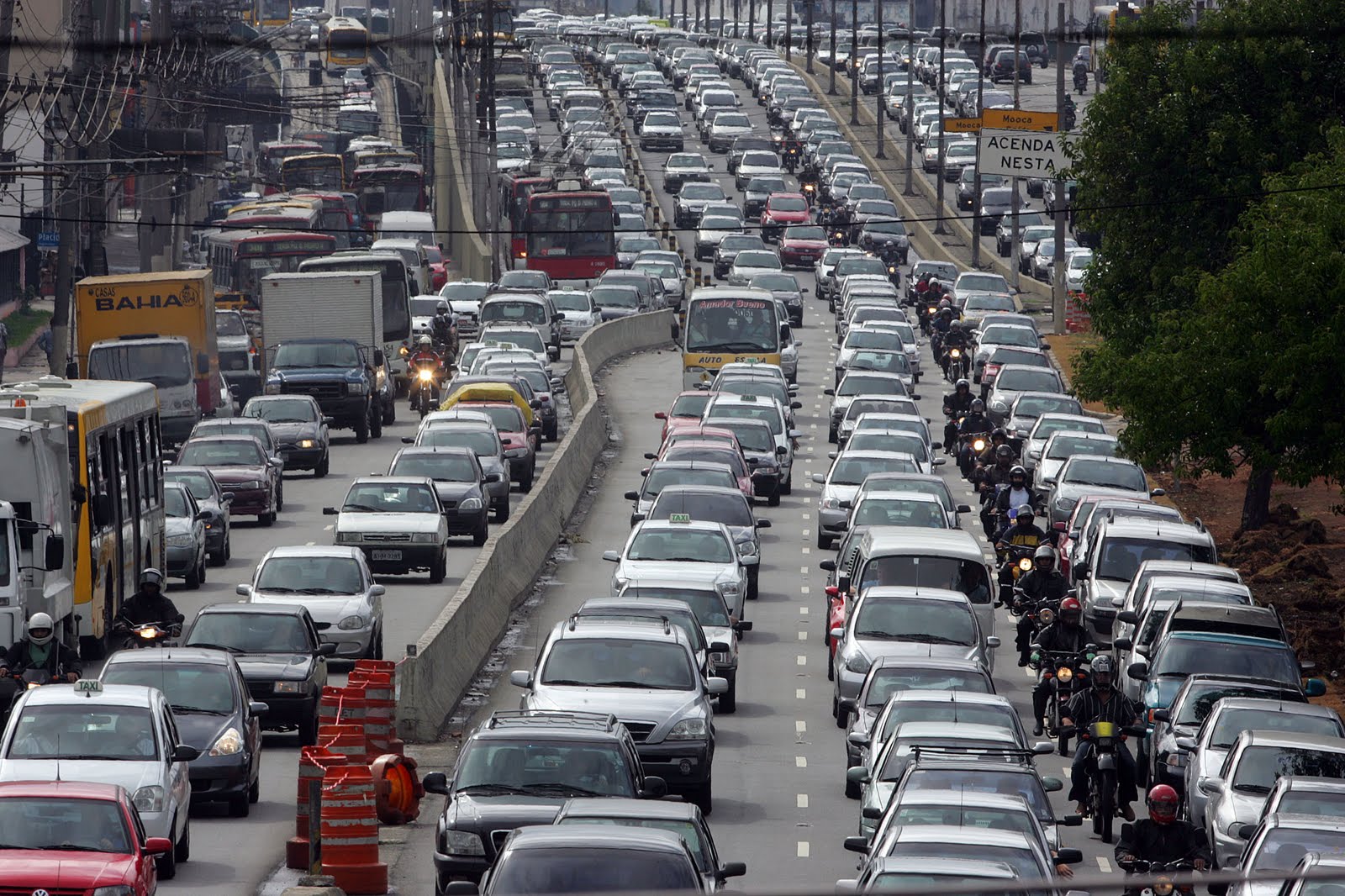
    Traffic in Brazil is not helped by all the unlicensed drivers.

    To put my family at ease, I tend to downplay the more dangerous aspects of life in Brazil, but the truth is you’re much more likely to die a violent death in Brazil than in Canada or Japan or even gun-crazy United States.  Oh, you’re not going to get shot.  No, you’re going to die in a flaming car crash long before you get mixed up in drug-related violence.

    It didn’t take me very long in Brazil to understand that cars were the real danger.  After my first months in Rio, I assumed that traffic in Brazil was governed only by the laws of physics.  I was wrong.  It’s governed by plenty of people laws too.  It is Brazil after all.

    Licenses require medical exams, eye exams, and psychological exams.  Driver’s ed is mandatory and its content federally regulated down to the number of hours for theory and practice.  Thus, the only reasonable explanation for the number of traffic-related deaths here is that no bureaucrat in Brasilia has ever actually driven a car, and they have no idea what skills to include on the test.

    A student of mine recently turned 18 and has been taking his mandatory driver’s ed class.  He brought me several of his practice exams.  He knows I love to laugh.

    Driver’s education courses in Brazil are divided into two parts: 45 hours and 25 hours.  That’s 45 hours in the classroom and 25 hours on the road.  Some people might be thinking, “Gee, wouldn’t it be better is these kids learning to drive a car spent the majority of their class time in a car?”  These people don’t appreciate the teaching power of multiple choice exams and visualizing your goal.  “I can see myself successfully merging in rush hour traffic.”  (Actually, visualizing is the only way to practice highway driving.  Driver’s ed cars aren’t allowed on highways.)

    So if not safe merging practices, what are these up and coming driver’s expected to know?  For one, the best attitude man can have in relation to the environment.  (The answer is “preservation”.)  It’s also necessary to know how the government of Brazil is trying to reduce emissions.  Humans have basic rights and there are a variety of ways we can observe the importance of family and friends to society.  Know that pointing out to a fellow driver that one of her tires is low encourages solidarity and courtesy in society more so than it demonstrates a concern for traffic. Don’t worry about knowing the effects of alcohol on reflexes.  That’s only a leading cause of traffic deaths in Brazil.  It won’t be on the test.

    Now, a 35 question multiple choice test isn’t the only requirement. The non-drivers in Brasilia didn’t want just anybody who can read getting a license.  They also wanted to weed out the crazies, which is why a psychological exam is required.  Again, I think this shows a complete lack of understanding of driving and a prejudice against crazy people.  There’s no reason a person can’t be a sociopath and an excellent driver.  My life experience has shown me no correlation between sanity and a willingness to use the blinker.

    The greatest irony is that all these required (and expensive) exams and driver’s ed courses intended to make the roads safer actually result in a huge market for fake licenses.  People need to drive and they don’t have 70 hours to spend learning about the parts of an engine.

    In the end who ends up driving on Brazil’s roads? A bunch of unlicensed drivers who have no idea how rain affects a car’s ability to stop, a bunch of licensed drivers who can label all the parts of an engine but have never driven on a highway, and not a single person who knows anything about alcohol’s affects on the body.

    So, if you’re coming to Brazil be sure to wear your seat belt.  Or just stay on the beach the whole time.  Cancer kills fewer people here than cars.

  • Brazil: Children Allowed

    Brazil: Children Allowed

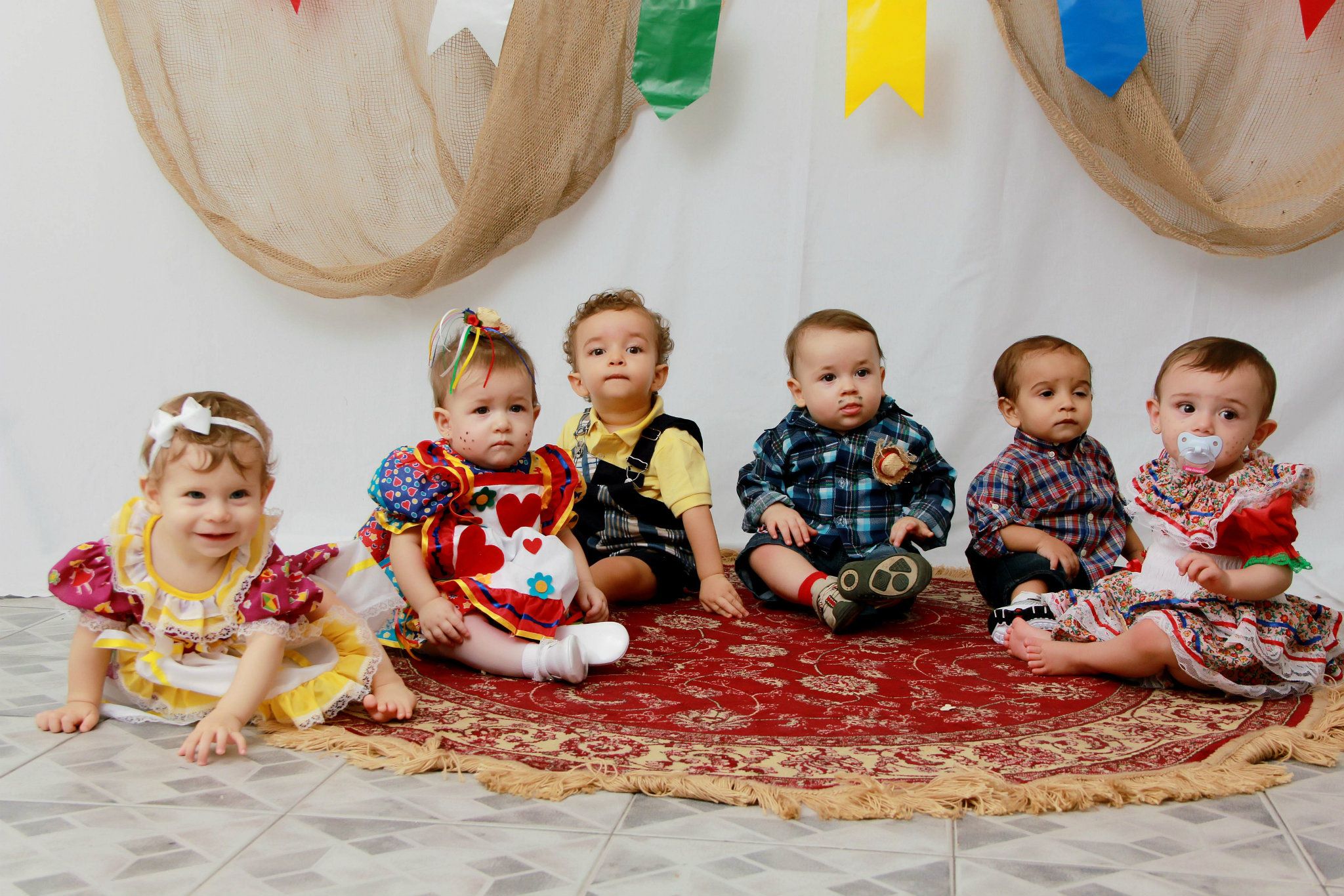
    Brazil! Where children are always welcome!
    Brazil! Where children are always welcome!

    As an American, I know that taking a child to any restaurant that doesn’t have it’s menu posted on a wall and ordering her juice while she plays on your phone will get you nasty looks at the least and reported to child services at worst.  The US can be a harsh culture in which to go about the day to day activities of parenting.  I didn’t know how harsh until I moved to Brazil, and my eyes were opened.

    Brazilians are gaga for children!

    Women and men, old and young, Brazilians adore kids.  Brazil makes the US seem like one giant lawn its crotchety citizens don’t want children stepping on.

    I first noticed this difference during a staff lunch at a chic restaurant in Rio. My boss brought her newborn to this very crowded restaurant at peak lunch hour.  Exactly one table was available and it was on the opposite of the restaurant.  There was a sea of people in expensive clothes and tables covered in glassware between us and that table.  When my boss indicated to the staff that we would be claiming that table, I cringed.  My stomach clenched at the idea of getting through this fancy crowd with a baby and stroller.

    That’s the appropriate response, right?  Obviously, a parent should feel ill at the thought of briefly disturbing other people’s lunches on the way to her own table.  Ha. How American of me.  Two waiters swooped in, all smiles, lifted the stroller up over their heads, and carried that baby like royalty across the entire dining room.  Not a single dirty look.

    Brazilians have this bizarre assumption that babies and children are a staple part of everyday life.  If there are people around, there will be young people and these young people will cry, complain, spill things, talk too loudly, and generally not behave like adults.  That’s life.  How else is it supposed to continue?

    People here also acknowledge kids.  They talk to them and include kids as if they were a part of society.  Strangers smile and say hello to my daughter on our walks to school.  Waiters greet her at restaurants.  When she cries in public, people stop and ask her what’s wrong. During a melt down, I’m not worried the stranger approaching is about to helpfully inform me my child is being disruptive or offer some  judgement in the form of unsolicited advice.  That stranger approaching doesn’t want to talk to me at all.  She’s going to console my daughter.

    At playgrounds, parents help each others’ kids on and off equipment.  They freely offer snacks they’ve brought to every child in earshot.  They let other kids run off with their own child’s toy confident it will be returned. Playgrounds in Brazil initially felt to me like loud, sandy communist communes.  It was a long time before I stopped apologizing profusely every time my daughter touched another kid’s toy and fearing the wrath of another parent because I offered her child gluten.

    If you do bring your baby to Brazil, be prepared. Brazilians love children, and Brazilians are touchy people.  I mean literally touchy.  They touch other people a lot.  A random passersby will want to touch, stroke, kiss, and even hold your baby.  One of my daughter’s nurses at the NICU here in Vitoria admitted this was a particular blind spot for Brazilians.  Knowledge of germ theory cannot curb their enthusiasm for babies. I dealt with it by reminding myself I’d rather have a request to hold my baby than a request to remove it from the premises.

    This habit of baby fawning is not limited to any age, gender, or class.  A trainer at my gym once brought his newborn into the weight room and a half dozen of the burliest men were reduced to cooing and clucking incoherently.  The school where I taught had preschool through high school, and everyday as the toddlers left the nap room, a crowd of teenagers gathered to squeal and exclaim over the adorably rumpled munchkins.

    And of course there are the old ladies.  Women over the age 70 must develop a sixth sense to detect babies.  I’d be sitting at the cafe, waving a rattle in my daughter’s face, and suddenly an 85 year old woman materialized out of thin air to stroke my daughter’s hair and to tell me my baby is cold.

    This is the one sin a parent cannot commit in Brazil.  You can leave the TV on 24 hours day.  You can feed your kid white rice and french fries at every lunch.  But do NOT let your baby get cold!!!  If there is a breeze and your baby is not covered with a blanket, every person will stop and tell you your baby is cold.  Every. Single. Person.  As someone who does not think 65 F requires gloves at any age, I heard it pretty much everyday of my child’s infancy.

    The love for and acceptance of children as part of daily life are two of the things I love best about Brazil, and for now, I’m perfectly content to raise my tantrum prone daughter here so as not to disturb my fellow Americans’ lattes.

    Save

  • The Perks of Not Speaking the Language

    The Perks of Not Speaking the Language

    Or don't...depending on the situation.
    Or don’t…depending on the situation.

    I have a secret to confess.  I speak Portuguese.  Please, don’t tell my mother-in-law.

    I don’t speak Portuguese fluently. Nothing as impressive as that. I speak Portuguese like a 96-year-old suffering from extreme dementia.  My sentences are punctuated by gestures and facial expression to stand-in for words I’ve forgotten, and my responses to questions sometimes have nothing to do with what was actually asked.

    “Brynn, what did you do this weekend?”

    “No, I don’t like mangoes.”

    But more often than not, I can successfully converse, arrange appointments, and get the hair cut and color I actually want. (The correct hair color was something I mistakenly thought I could get after only recently arriving in Brazil with minimal Portuguese.)

    While life is greatly improved now that I don’t consistently confuse Monday and Tuesday, there are times when I play the clueless foreigner card without hesitation.  I should probably feel bad for perpetuating the ignorant, monolingual American stereotype, but it’s such an effective way to avoid all those tedious conversations that suck up patience and sanity: the chatty person with what sounds like TB at the doctor’s office, the perfume-drenched, close-talking lady from upstairs, all phone solicitors.

    I always answer my phone with a thick, American, “Hello.”  It’s the perfect screen.  Family and friends obviously know where I’m from and aren’t thrown by it.  Only salespeople freeze up and give themselves away with a long pause as they try to figure out what to do next.  Some hang up.  Some ask if they can speak to my husband.  Others plow doggedly ahead with their scripts.  I cut them all off and say sweetly in English, “Oh, I’m sorry. I don’t speak Portuguese. Goodbye.” Click.  Conversation over.  The salesperson doesn’t feel bad about losing someone they couldn’t talk to.  I’m back to watching John Oliver on YouTube. Win-win.

    I first employed this trick in Morocco.  Describing the young men in Morocco as persistent is like calling the Kardashians’ lifestyle “comfortable.”  Tired of being unable to walk two blocks without being asked to dinner and then asked why I was refusing, I answered one man with Croatian song lyrics.  Why Croatian? Because in almost every country other than the US, even misogynist assholes can speak more than one language.  But with only four million Croatians in the world, I was pretty confident Croatian would not be one of his languages.  I was right.  The guy stopped talking to me after a couple sentences.  He did still follow me all the way back to my hotel, but stalking is way less annoying when done in silence.

    Playing dumb also helps avoid awkward conversations with in-laws and before you judge, just imagine Thanksgiving with your in-laws.  What if you could avoid awkward conversations about politics or global-warming or when your daughter is getting baptized by simply fumbling the language? “Oh, what? When is she getting her booster shots? Next month.”  Wouldn’t everyone be happier if there was just a lot of smiling and complementing of the food?

    So before you get annoyed with the woman in the elevator for not speaking your language, check if you’re wearing deodorant, have brushed your teeth recently, and are saying something more interesting than the silence.  Then be careful what you mumble out loud.  There’s a chance she’s faking it.


    Find more fun adventures from life abroad!

    Expat Life with a Double Buggy


  • Talking Small in Brazil

    Talking Small in Brazil

    P1010054
    Small talk across cultures…

    Today my daughter and I went through our regular morning routine.  We had breakfast while watching cartoons, got dressed, and somewhere between the front door of our apartment and the front door of our building she decided she’s never going to school again.  As usual, I hobbled out the door to our building with a child hanging on one leg, two backpacks, a bag of objects starting with the letter of the week, and, for extra fun today, an umbrella.  While negotiating the concrete stairs, the window of the front desk slid open on cue and our building’s porteiro (door person/front desk receptionist) stuck her head out.

    This woman’s commitment to good manners is unwavering.  It doesn’t matter how loudly my daughter is crying or precarious my balance on the steps.  She will call out a greeting to us, comment on my daughter’s cuteness, and wait for a response.  As I call out a frazzled good morning in Portuguese between promises and pleas to my daughter in English, the porteiro in cheerful Portuguese tells my daughter not cry because school is fun! Truly, nothing is more helpful when negotiating a tantrum than to have a relative stranger shouting encouragement in another language.

    Such is the Brazilian commitment to small talk.

    Screaming toddlers in the rain won’t deter a morning chat.  I come back from the gym sweaty and stinky, and I still can’t avoid a discussion on the humidity with our porteiro, a maid, and two retirees.  Yes, it sure is hot.  Just look at my face in a puddle on the floor there.  I’d really love a shower.  After the heat and humidity, inflation is the next hottest topic to discuss with taxi drivers, elevator companions, and stylists.  Here in Vitoria, you can go ahead and blame all three on President Dilma.

    My first experience with the Brazilian determination to converse happened at the pool of my old building in Rio.  I had head phones wedged in my ears, a highlighter in hand, an open journal article on my lap, a stack of ten more to my left and a total of five words in Portuguese.  I non-verbally screamed, “Don’t talk to me,” but not loudly enough to deter the lifeguard.  There was no way to get rid of the guy short of saying “Stop talking,” but as I couldn’t use the imperative in Portuguese, I was stuck.

    I hate small talk and unfortunately for me, Brazilians are generally an extraordinarily friendly and happy people.  How exhausting.  Fortunately for me, the man I married is the most anti-social Brazilian currently living.  He is an outlier that skews all  data about Brazilians, and serves as a reminder that while culture is real, each person is an individual.

    At least a lifetime of training among small talkers won’t go to waste here.  You see I’m from the South, the region of the US formerly known as the Confederacy.  We do our small talkin’ with more ice tea and fewer “g”s, but we do it and love it.

    At least, we can fake that we love it.  I don’t believe anyone feels genuine excitement over someone’s new, home-made seasonal door swag.  But when the saleswoman at Michaels raves about the gold spray paint she just used on hers, a good southern girl will exclaim on the good fortune, express gratitude for the knowledge by referencing her own failed attempt at a similar project, and ask for suggestions on holiday napkin holder crafts for kids she may or may not actually have.

    Successful small talk requires a lot of energy and even more if you have to do it in a second language and foreign culture.  You need not only correctly conjugated verbs but also content.   Small talk requires knowledge about topics appropriate for discussion i.e. the weather, current events, pop culture, and fluency in non-verbal cues to know when it’s time to change topics or wrap things up.  Pulling all this off in a new country is exhausting and I’m just not inclined to invest this energy in someone I will only be in line with for another five minutes.

    I know this makes me the shy or rude foreigner and that by Brazilian standers my building’s porteiro is hardly a stranger.  Neither is my mother-in-law.  I just think one of the best things about being a happily-married, self-employed adult is that I don’t have to win the approval of strangers, bosses, or periphery acquaintances.  Not unless I’m in the mood.

    I know when the apocalypse comes no one here will be inviting my husband and I onto their boat.  But I have a super cute Brazilian daughter.  I’ll leave it to her to small talk our way on board.

    Image_zps04194192

  • The Super-Awesome, Amazingly-Exotic Expat Life

    The Super-Awesome, Amazingly-Exotic Expat Life

    The daily rainbow in Brazil.
    The daily rainbow in Brazil.

    When I’m back home in Atlanta, I try not to mention that I live in Brazil.  The opportunity presents itself with surprising frequency, usually when a sales associate asks if I’d like to sign up for a rewards card.  I decline saying “I’m just visiting for the holidays.”   Nine times out of ten, at least in the state of Georgia where people still practice things like small talk and friendliness, the person will ask “Oh, where do you live?”  Then I’m stuck.  “In Brazil,” I answer, and I’m at the counter another five minutes as I tell my story and confess that I have not in fact learned to speak Spanish.  Though I have learned the local Portuguese.

    I can’t blame people for their wide-eyed excitement and curiosity about my life.  Americans are under the impression that life south of Texas or north of Idaho or on the other side of an ocean is more…something.  More exciting.  More dangerous.  More romantic.  More barbaric.  More luxurious.  They’ve seen movies set in these “foreign” countries and read articles like “3 Things Dating Foreign Women (And Marrying One) Taught Me” which tell people what a romantic adventure life can be if they only find a spouse with a different passport.

    As someone who did manage to land a coveted foreign spouse and move abroad, I can state that it’s all true.  My life is more exciting than everyone else’s.  It’s more romantic and luxurious yet still a rewarding, character-building challenge.

    Take my very first meal in Brazil.  I got to eat in the food court of the nearby mall.  My future husband took me and it was incredibly romantic.  The din of the other customers drowned out our voices, so we could only stare into each other’s eyes.  Because I arrived in the midst of remodeling the apartment, I had the opportunity to tour all the best hardware stores in Rio de Janeiro.  The thrill of shopping for toilet seats abroad really gets downplayed in expat blogs.  The only thing in Brazil that rivals shopping for toilets is getting finger printed for a visa at the federal police.  The ink smells like jasmine.

    Living in Brazil has also given me the opportunity to learn a new language.  It’s a fact that everything is sexier in a foreign language. Doesn’t matter which language.  They’re all sexier than English.  Here are some of the local Portuguese phrases I learned in my first months here.  Encanador.  Plumber.  Conta corrente conjunta.  Joint checking account.  Seguro de saúde.  Health insurance.  Absorvente interno.  Tampon.

    If you are ever lucky enough to visit Rio, I recommend driving from downtown to the suburbs at 5:30pm.  It will give you an authentic local experience.  Turn the air-conditioning off and roll the windows down to really go native.  Be sure to have the GoPros charged because friends back home will want to watch this trek. All three hours of it.

    Anyone leaving the US should do their family and friends the favor of recording every second of their time abroad.  They’ll thank you for allowing them to live vicariously through you.  After all, life outside the United States is one long perpetual vacation.  Nobody goes to the grocery store or a “job” in foreign countries.  The people serving coconuts on the beach here in Brazil? Robots.  All of them.  Where do you think Walt Disney got the idea for the Hall of Presidents?  He stayed at the Copacabana Palace in Rio.  Actual Brazilian citizens don’t work and if you’re fortunate enough to get residency neither will you.  People who live here just go to the beach and gym everyday.  I haven’t had to run an errand since I arrived in September of 2006.

    Having a child abroad with a foreign spouse (Yes, even in Brazil my Brazilian husband is the foreigner.  I can’t be a foreigner because I’m American), it only adds to the drama and glamor of the expat life.  I’m writing a screenplay based on my experience of visiting the US consulate to prove the maternity of my child.  I’m hoping Ridley Scott will direct and it will star Angelina Jolie (as me), Antonio Banderas (as my husband), and Jack Black as the unwieldy and misunderstood stack of paperwork that ultimately saves the day and gets us the US birth certificate.

    Those of us living in far-off, exotic lands know that “living” abroad is exactly the same thing as “vacationing” abroad.  Don’t make the mistake of thinking that most people in the world are busy going about the tediousness of living day to day, with the jobs and childcare and home repairs and laundry that human existence demands.  No, no.  Life outside the US is romantic and electrifying all the time.  In fact, I have another Brazilian adventure planned for this morning.  I’m going on an excursion for light bulbs.