This is public enemy #1! Aedes aegypti. It carries dengue, zika, & chikungunya.
Mosquito born viruses did not cross my mind when considering what my daily life would be like in Brazil, but it turns out that repellent is right up there with sunscreen as a daily necessity.
I certainly never lost sleep over a mosquito in the U.S., but here in Brazil, more than once we’ve turned the lights on in the middle of the night at the whine of a mosquito. Some people might think mosquito hunting at 2am is overreacting, but my husband has had dengue. The steely-eyed commitment with which he stalks every mosquito in our home makes me think the experience has stayed with him.
Public health officials in Brazil take mosquitoes seriously too. They’ve been battling dengue for decades. Chikungunya and Zika became common place in the last few years, and this year, Espirito Santo and its neighbor, Minas Gerais, are combating the spread of yellow fever. My family and I got our yellow fever vaccines last week, and it was an impressive operation.
If you know the monkey might have yellow fever, is it still as cute?
This is public health at it’s most efficient and most militarized. I know from personal experience. We were assigned a specific vaccination center and time when my husband reserved our vaccines online. When we got to the church, we had to present IDs for everyone, including my daughter, before we could enter the building where people waited in rows of white plastic chairs. We’d been assigned numbers at the entrance, and in what has to be one of the shortest waits in the history of line waiting in Brazil, a woman in a white lab coat, clipboard in hand, called our numbers, and we entered the heart of the operation.
Along one wall was a row of nurses and firefighters taking down people’s names, ID numbers, and stamping vaccine cards. Firefighters are militarized in Brazil, and their khaki green uniforms with ranks sewn on their shirts made the whole scene feel like something out of Contagion. Along the adjacent wall, was another group readying vaccines before passing them in a ceaseless stream to the one woman who administered vaccines. Needle in. Needle out. Hands off the old needle. Accepts freshly opened vaccine. Needle in. Needle out.
It wasn’t frantic, but it was efficient. People were moved around the room and back out the door with a lack of pleasantries I have never witnessed in Brazil.
We survived!
My daughter did not like it. She’d been totally chill about it until we got inside the vaccination room. The tension and focus that permeated the air had her clinging to her dad and begging to go. And these people were not waiting for her to calm down. I don’t blame them. They’re trying to vaccinate a few million people. My husband and I went first, trying to teach by example. It had no effect. She just got more hysterical with every second, so my husband held her in his arms. I held her arm straight, and the vaccine lady jabbed the needle in.
For the rest of the day, my daughter showed off the tiny, nearly invisible red dot left behind like the scars of a near-death shark attack.
As of Friday, there were 20 confirmed yellow fever deaths in our state. That’s 20 deaths out of 80 confirmed cases. The math is simple. That’s a 25% fatality rate. In neighboring Minas Gerais, there have been 109 deaths out 288 confirmed cases. I’m getting my calculator…37.8%. Wow, I hadn’t realized until writing this how bad this outbreak is.
So if you’re planning on visiting Brazil anytime soon, I’d check if you’re ecolodge is smack in the middle of a high risk zone, and then I’d pack lots and lots of repellent regardless.
Today is a Throwback Thursday post. I was cleaning out old files and discovered this essay I wrote about a memorable lunch with my homestay family while volunteering in Croatia during the summer of 2003. I wrote it in 2007 for a contest at a now defunct magazine. It was one of the first pieces of creative non-fiction I ever wrote and thought it would be fun to share because the question raised are some I still ask myself daily living in Brazil. (Also, this past week was Carnaval, so I haven’t had time to write anything new.)
A Different Part of the Pig
Koprivnica, Croatia
It was with something less than enthusiasm that I sat down for lunch next to my host sister. I had never quite understood what indigestion was, but after three weeks of eating plates of fried meat swimming in its own fat, I could now write an epic poem to its effects. Unfortunately, the small little village of Zdala, Croatia, where I was teaching, had only 600 people and no CVS with shelves of antacids to choose from. So, while I was thoroughly enjoying the rewards and challenges of teaching English to the local kids, the prospect of three more weeks of potatoes, bread and meat drowned in liquid fat made each meal a bit of a trial.
Zdala, Croatia
I was staying in Zdala with a generous family who had volunteered to house me while I was teaching. They weren’t receiving any kind of money or stipend for their trouble. I also knew from my walks around the village with my host sisters that no family in the village had resources to waste. Every house in Zdala had its own small farm and animals that supplied the staples for each meal. Knowing this, I couldn’t refuse to accept their generosity, even if it made my stomach feel like a beach ball blown up to the point of bursting. What would my host family think if I turned down the large helping of meat specially prepared for me and asked for a cucumber instead?
My adorable homestay sister
As I looked at the table that afternoon, it looked pretty much like every other lunch. Potatoes and onions, bread (which was homemade, amazing, and the one thing I was never sorry to see) and a large dish of meat stacked in the center of a shinning pool of grease. But there was something different on the meat this day. It was placed directly on top of the meat, like the star on a Christmas tree. A grayish, jiggly star. Oh no. I looked at my host mother and grandmother on the opposite side of the table. There was no way I could discreetly ask my host sister what it was that jiggled at the top of the meat tower. And I knew as the guest, I was going to be offered the first helping.
These amazing kids chose to attend English classes during their summer vacation!
That summer in Croatia was my first time living abroad, and the first time I had ever lived with a family other than my own. I was desperate to make a good impression. I wanted them to like me and not write me off as one of the arrogant Americans I had heard the cousin talk about. But I do not eat food that jiggles. I have had a lifelong no-jiggly-food policy. I believe that orange Jell-O is the worst food ever invented. I was sure my family would offer the jiggly thing to me, and I wasn’t sure I could tactfully refuse it on the grounds that it jiggled.
I was still staring at this piece of grayish, jiggly matter when Granny spooned it out and sure enough, offered it in my direction. I looked down at the offered spoon and saw them, two slits in the flat top of the fat. Oh God! It was a nose. I was being offered a pig’s nose. I looked across the table at Granny. Here was a sweet old woman, smiling kindly and holding out a large spoon with a pig’s nose nestled in it. I didn’t know whether to laugh or throw up.
Coming face to face—or, more accurately, face to nose—with a pig nose in a spoon, I knew it could be considered hypocritical to eat some parts of the pig but be repulsed by others. I was clearly the only one there who found a pig’s nose on the table unusual. I didn’t want to seem rude. I had come on my first trip abroad prepared to try new things. I was ready to be open-minded, but apparently not open-mouthed. I knew my family couldn’t afford to waste any part of the animal, but I couldn’t eat the nose. I wanted to adapt to Croatian culture, but I couldn’t deny who I was either. What level of discomfort was I supposed to be willing to accept in order to avoid offending my hosts? Where should I, or could I, draw the line?
As it turned out, I didn’t have to answer those questions on that day. My hesitation (and possibly the shade of green on my face) had tipped off my host family that I was not accustomed to eating this particular part of the pig. They started laughing, and my sister said I didn’t have to eat it if I didn’t want to. She didn’t like pig noses, either. But Granny loved them. And with that, Granny put the nose on her plate, scooped it up with her own spoon, and slurped it into her mouth. I knew I would never see Granny in the same way after that.
My family enjoyed teasing me with other animal parts over the next weeks, like a chicken beak in the soup. I was so thrilled they didn’t think I was rude that I didn’t even protest when a chicken’s foot was placed right on the middle of my plate. In retrospect, I could have saved myself some panic if I had just explained that where I come from, we don’t eat noses. After all, the family didn’t want me eating or doing anything I felt uncomfortable with.
I still struggle with the question of how far I should go in adapting to different cultures. There is a balance. I could not have expected my host family to provide me the exact same foods I had at home. It was impossible to make Zdala like home. Living in another country means being uncomfortable and trying things that are often scary. But at the same time, I cannot reject my own culture and my own feelings. How far should I go? Where do I draw the line? It changes. I haven’t found the balance yet. I do have one line that doesn’t move though. It’s just in front of the pig’s nose.
I’d been wondering how to break a five months long silence on my blog. I couldn’t think of a topic or an angle. I didn’t know what I wanted to write about to kick off a new year.
Then the police went on strike.
Early Saturday, February 4, the wives and families of police officers across the state of Espirito Santo gathered in front of barracks, forming human chains across the entrances effectively blocking any police or vehicles from entering or leaving the barracks. After four years without a pay raise and the lowest salaries of any police in Brazil, the movement wanted a raise and bonuses for night and higher risk work for the police. By late Saturday morning, there were no police on the streets anywhere in the state of Espirito Santo.
It actually took a couple of days for their absence to be felt statewide. Saturday was a totally normal day for us. We went to a park near the beach and had lunch out. A sitter came over later, and my husband and I had date night. We walked to our favorite restaurant, passing people grabbing ceviche from a food truck, walking dogs, or making a late run to the drug store.
The only hiccup came at the door of the restaurant. It was locked. There were people inside eating. The security guy confirmed the restaurant was open and within seconds a waiter let us in, locking the door behind us.
Our blissful ignorance lasted until Sunday morning. When planning our day, my husband said in passing “The police are on strike, so we should go somewhere with private security.”
Excuse, me?
One long term consequence of the strike for me personally is that I’ve now started reading my local paper. Something I should have probably been doing on occasion these last six years.
We did go out in the morning, but by Sunday evening we were having dinner at home. With the increased risk of violence, public hospitals, schools, and universities across the state closed for Monday. Private schools, including my daughters, followed suit. Monday, February 6, was supposed to be the first day of the new school year.
That night I noticed my husband locking the deadbolts before going to bed. We never locked the deadbolts before.
The texts from concerned friends around Brazil and even in Portugal started popping up Monday morning as did footage from around the city and state. While our neighborhood had been relatively quiet over the weekend, other areas were not as fortunate. Gangs of looters attacked stores around the metro area. A burning bus, armed robbers zipping around on motorcycle, shoot outs in the street. I learned several stores in our neighborhood had been robbed over the weekend, and pictures of smashed storefronts and videos of carjackings were filling up my Facebook feed.
By Monday afternoon, the extent of the violence that had descended on the state in the police’s absence was clear. The state government asked Brasilia for military assistance.
We stayed home all day Monday. Schools were canceled for a second day, so we stayed home all day Tuesday. By the end of the day Tuesday after more than 60 hours at home, my daughter and I were screaming at each other over a Lego train. Our problems were nothing.
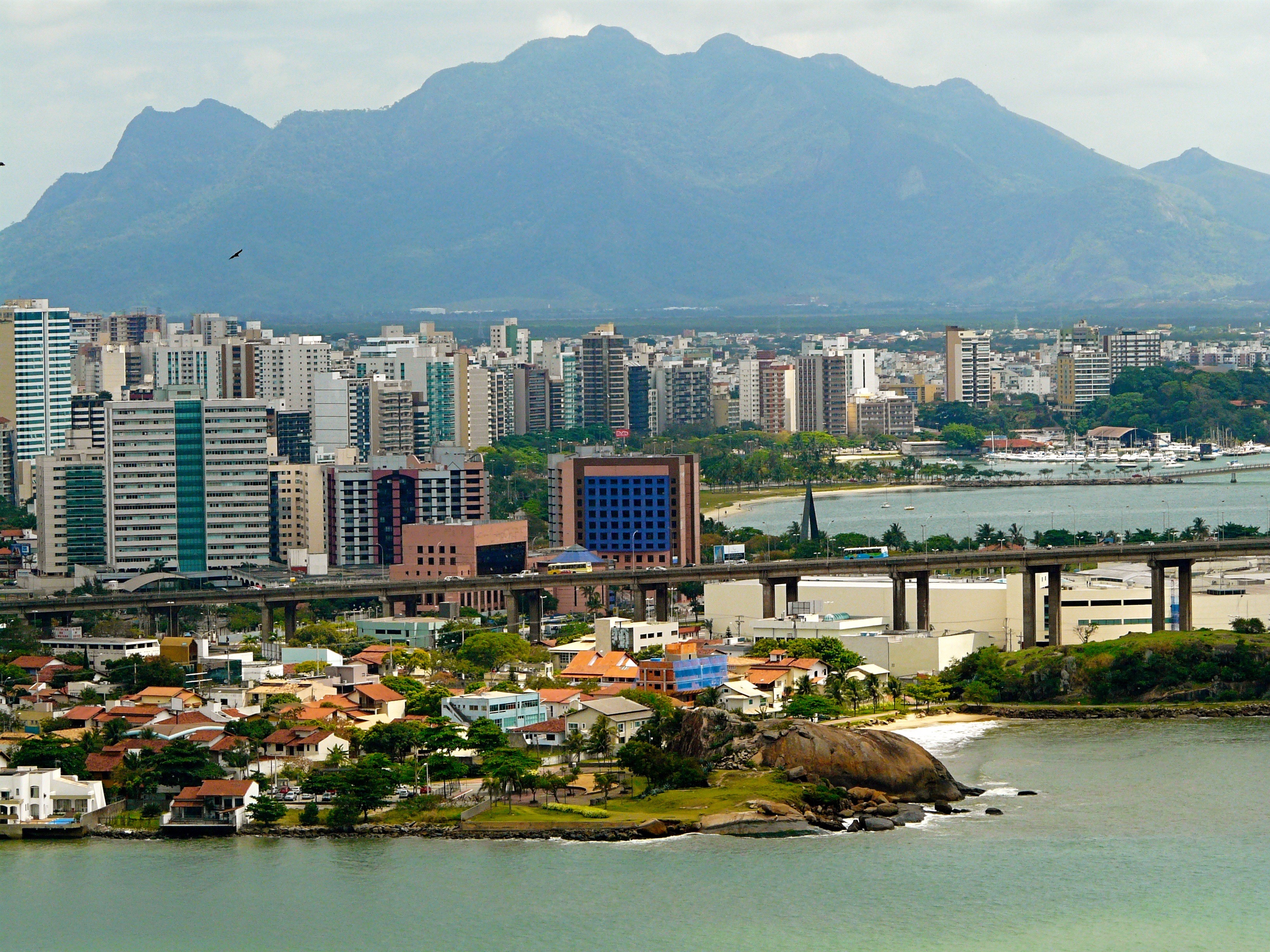
Vila Velha, Espirito Santo The city across the bridge from Vitoria. All part of metro Vitoria.
By Wednesday the police union was reporting the number of violent deaths in Espirito Santo during the strike had risen to 90. 200 cars were reported stolen on Wednesday up from an average of 20. More than 200 robberies and assaults. Schools, stores, restaurants remained closed. R$90 million loss to businesses. Public transportation had stopped running. The streets were completely empty.
My dad called from the US on Wednesday morning.
I hadn’t called anyone. Our neighborhood was quiet, our doors were locked, and the army had been spotted patrolling a few blocks from our building. We were safe, so I didn’t see any reason to alarm family. But the BBC picked up the strike. For maybe the first time ever Vitoria, Brazil was international news, and my dad saw the headline.
I assured my dad we were safe and our neighborhood was calm. I told him about the Governor’s press conference that morning in which he passionately declared the strike illegal and unconstitutional and vowed not to negotiate with hostage takers. Meanwhile, one of the wives in the movement gave an interview vowing not to move until the police got a raise. So there wasn’t going to be any deal in the near future.
I didn’t mention the attempted building invasion that happened around corner Tuesday night.
I was putting my daughter to bed and didn’t hear the commotion, but my husband did. He thought it was people cheering the army driving through the streets. We learned the next morning that a gang had tried to break into one of the apartment buildings around the corner. Somehow they were thwarted, but we were done. What is a single doorman going to do against a mob? Our uneventful days at home now seemed more like good luck than legitimate security.
We bought one-way tickets for Rio and left that afternoon. The irony of going to Rio de Janeiro to escape violence is not lost on me. Our first day in Rio, there was a massive strike against the privatization of the water company. We drove by streets packed with police trucks and vans and battalions in full riot gear. “Oh, here are all the police.”
We spent the remainder of the police strike in Rio checking the news constantly to see if a deal had been reached. Friday night the government announced a deal, but on Saturday morning the wives and families announced they had no intention of leaving because they had not been included in the deal. The governor signed a decree handing security over to the army, which called in 3,000 troops. The strike was declared illegal in court, and police were ordered to return to the streets. A week after the strike began, the news reported more 700 police officers were being indicted.
With the additional troops, violence subsided and residents desperate to resume normal lives after a week of unrest returned to the streets. The buses were back to running on Sunday. Schools announced they would finally start the new year on Monday. We flew back on Sunday afternoon to find the city running more or less as usual.
As of this morning, the government says 1,900 police have returned to patrols, which is “close to the normal amount”. I’d like to know exactly how close, but I have a feeling the government wants everyone to just assume 95%. Based on how normal life around the city is, I’d guess that’s what we’re all doing.
Through the whole crisis the wives and families surrounding the barracks insist the protest was their idea alone, and the police had nothing to do with it. They claim it was organized among themselves through social media without their husbands’ knowledge. No one believes this.
There were many people who agreed with them that working conditions for the police in Espirito Santo are abysmal. The government should be ashamed. Brazil’s economic crisis has been driving up inflation but the police in Espirito Santo haven’t had a salary adjustment in four years, let alone an actual raise. But they overplayed their hand. What started as a protest by wives, mothers, and sister gathering at a single barracks in Serra grew over the course of 24 hours to a full police strike that brought statewide chaos.
It was shocking, frightening, and for my part almost too surreal to feel anything. I went to the airport with my and my daughter’s passports in my shoes.
And now if you weren’t personally affected by the violence, it’s life as usual.
Except it’s pretend. People are dead and livelihoods lost. The police didn’t get their raise, and now hundreds are at risk of losing their jobs and the commanders are saying publicly the police department and its hierarchy has been completely destroyed. The army will be providing extra security for Carnaval celebrations and has promised to stay as long as it’s needed, which is indefinitely at the moment. And honestly having my streets patrolled indefinitely by soldiers trained for war, not civilian law enforcement, makes me queasy.
And yet I’m sitting at a café with my cappuccino writing a blog post loving the freedom that comes with a regular school day.
It was a disaster. There were no winners. Just a very, very long list of losers. I’d say I’m glad it’s over but it’s not over. The police might be back on the streets, but the fall out hasn’t even begun. And the list of losses will just keep growing.
Hip, hip, hooray! Hip, hip…Dear god, I’m never doing another Kickstarter campaign again. I wasn’t even in charge of the thing. Our editor put in a billion more hours organizing and promoting the thing, but I still felt like a used car salesman begging people to donate their hard earned money and time on my words. Who am I kidding? How am I ever going to promote and sell my own books if I can’t promote a collaborative work on Kickstarter on my Facebook? Even if I get published I’m never going to sell a single book. Never! My promotional posts will read “If you don’t mind and happen to enjoy this particular type of book and maybe have ten extra dollars to spare I would greatly appreciate it if you wouldn’t mind buying my book and if you really, really liked it then perhaps tell a friend about it. If you have the time and it won’t be a huge inconvenience. That would be really great. Thanks so much. (And if you’re not into YA or not a huge reader I totally understand. No hard feelings.)” I’m never going to sell a single book. But how can I be an author if can’t ask people to buy my book? Aaaaaagh!
Last week my family and I were waiting in the citizens service area of the US Consulate in Rio de Janeiro, and I overhead a young man pouring out a pretty tragic story to the consulate staff standing opposite the bullet proof glass. He’d been robbed and had lost every single form of id, all his credit cards, and all his cash. He was left with no proof of identity whatsoever.
My husband and I cringed at the guy’s story. As a woman, I know we shouldn’t blame the victim. A person should be able to walk down any street with his house deed and gold bullion spilling out of his pockets without the threat of violence. But dude! You walked around Rio with all of your documents in your pockets? Come on!
Because I have been a recently arrived foreigner in Rio without a word of Portuguese other than Obrigada and with the Rio Olympics opening in less than week, I’ve written down some tips to help visitors survive enjoy their time in Rio. The tips are gathered from my own experience in Rio and the advice my Carioca (native of Rio de Janeiro) husband gave me when I first arrived.
Leave Your Passport in the Hotel Safe Do not walk around Rio with your passport in your back pocket. Take a driver’s license, or even better a student id, just something with a picture and name so that your body could be identified. (I’m not saying you’ll be shot. Even though Rio does have an incredibly high violent crime rate, you’re much more likely to die in a car accident or crushed by a hastily constructed bikeway.)
Carry Cash Only or 1 Credit Card at Most Every touristy area in the world has pickpockets and canceling stolen cards is a major pain. Save yourself the worry. Also, withdraw a bunch of cash at the airport (Don’t carry it all at once or in the same pocket), so you can leave your ATM card back at the hotel too.
Speaking of Cash…Always Have Small Bills Many taxi drivers will tell you they cannot break a fifty. They will swear to it on their mother’s life, and then demand you pay them with what you have. Unless you enjoy arguing in Portuguese, always have 10s and 20s on you. Small bills are also more convenient for food vendors and stalls in the markets.
Carry a Purse/Backpack But Don’t Put Your Cards or Phone In It This advice I got from my husband my first day in Rio. Many women in Rio carry dummy purses with an old wallet that has some cash. Their credit card and id are in a back pocket.
Don’t Wear A Lot of Jewelry I know. We should all be able to wear whatever we want whenever we want, but maybe while on vacation in a foreign country it’s best to accept reality as is and save showy displays of wealth for your home turf. Wearing your gold necklaces and diamond rings will not in anyway improve your trip. Leave them at home. Besides Cariocas are generally a casual beach people. If you want to blend in, you should be going around in shorts and flip flops anyway.
And if you want to Blend in…Sunscreen! The surest way to find the tourists strolling through Ipanema is to look for the pinkest people. Even though it’s winter in Brazil, last week was 80 in Rio, and the sun was intense. I know. We had to walk around downtown in direct sun with an impatient preschooler. Pack sunscreen (It will be crazy expensive in Rio) and use it.
What You Bring to the Beach: Towel, Flip Flops, and Cash Tucked in Your Bathing Suit That’s it people. You leave the hotel already in your bathing suit & cover up and carry nothing other than your towel. You can rent chairs and buy snacks on the beach. This was a huge cultural adaptation for me. I come from Atlanta, and my family’s summer trips to the beach involved a cooler, a half dozen canvas totes, and a wheelbarrow. True statement.
The Ocean is For Admiring Not Swimming At this point most people have heard about Rio’s toxic bay and surrounding waters. I do feel a bit like I’m beating a dead horse that died from a super bacteria picked up after drinking out of Guanabara Bay, and I have taken lots of pictures of children playing happily in the water at Ipanema and Leblon beaches. But those local kids have immunity that visitors don’t. If you want to take the very real risk of spending your vacation hydrating on a bathroom floor, then by all means, dive in.
Deet I recommend insect repellent with the highest level of deet that doesn’t immediately give you cancer. Mosquitoes are a problem in Rio. Any exploration around the bay or into the forests around Rio absolutely demands bug spray. You do not want dengue! Sorry…what about zika? Oh sure, zika is terrible if contracted while pregnant for its potential to pass on devastating birth defects. Dengue can straight up kill you. It did kill 843 people in Brazil last year, and this years there’s been about 9 times more dengue cases than zika. Either way, dengue or zika, you’re gonna want to use repellent.
Be Alert Don’t be the idiot that’s so focused on getting the perfect selfie you’ve failed to realize you’re group of obvious tourists is alone on the street. My husband looks over both shoulders every few seconds when walking through Rio out of habit. He’s confirmed this level of vigilance is every bit as exhausting you’d imagine, but he developed the habit after being robbed twice. Just pick a designated driver for your group. Someone who can be in charge of risk management while everyone else has a good time.
This is the most depressing list of travel advice. I realize that. But before angry Cariocas start posting in the comment stream about the foreigner who doesn’t appreciate their magnificent city, I’m going to do a second post on all the great experiences in Rio. Now that everyone knows how to stay safe, I can recommend awesome things to do with the free time not being used up with emergency trips to the consulate or hospital. Come back on Wednesday for 10 Tips to Enjoy Rio.
We were walking the streets of Rio de Janeiro yesterday when my daughter piped up “Hey, it’s Festa Junina!” I shook my head and tolld her Festa Junina was last month. She insisted and pointed to a street vendor whose stall was decorated with primary colored flags and a stereo blaring forro music. My kid was right. This vendor was still celebrating Festa Junina. My husband, a native of Rio, explained it this way. “Whatever the party, it always lasts a month longer in Rio.”
In that spirit, I thought a post about Festa Junina in July makes total sense.
Kiddo’s very first Festa Junina!
Festa Junina celebrations, which happen with varying degrees of enthusiasm throughout Brazil, can be traced back to the Pagan tradition of worshiping the summer solstice. The Catholic church then hijacked this festival by assigning June 24 to Saint John the Baptist, and Portugal brought traditional Saint John celebrations to Brazil during colonization.
This is me eating a sweet soup called Canjica. Basically, take corn, add condensed milk, cloves, and heat it up.
Over the centuries, many Festa Junina traditions and celebrations have become entirely secular and blended with other cultures and annual events that happen at this time in Brazil. For example, June is when the corn gets harvested, and about 97% of traditional Festa Junina food is corn based. Salty and sweet. Eaten off the cob and baked into cakes. In soups and as snacks. Seriously, I had no idea there were so many ways to prepare corn, and they’re all delicious.
While many places in Brazil celebrate Festa Junina on the night of June 23 with an official holiday on the 24th, in the Southeast where I’ve lived, Festa Junina parties happen any Friday or Saturday during the month of June. Or if you’re a university club in Rio, every Friday and Saturday in June.
There are fireworks, dancing, carnival games, straw hats and painted freckles (girls) or a painted moustache (boys), and usually at least one mock wedding. I haven’t read exactly how the mock weddings became a staple of Festa Junina parties, but I have a theory. Saint Anthony is considered the patron saint of marriage because he helps single women get husbands so many offerings and prayers are sent to Saint Anthony on his day, June 13. In addition to June being a time when marriage is on the brain, bringing the corn harvest to market was one of the few times people in rural areas got to meet someone they weren’t related to. Oh, and how convenient to have your wedding at the same time as the already scheduled festival! You can save tons on catering! Thus Festa Junina became a day of many weddings.
At my daughter’s school, it’s always Year 4 that stages a mass mock wedding, and this year it was finally her turn. That meant her Festa Junina costume was a wedding dress with a veil, and she LOVED it. It also meant extra time on stage because in addition to the mock wedding, all grade levels perform a quadrilha, a traditional dance done during Festa Junina but with preschoolers is really just a lot of jumping and arm waving.
In my personal opinion, the best part about Festa Junina is the food, but I feel that way about all carnivals and festivals. Any event that has portable grills and homemade sweets being set up on folding tables arranged around ring toss and fishing games is something I’d be delighted to attend.
Even the teachers dress up!When not performing mock weddings, Tio Rafa can be found coaching soccer.Is there a culture that doesn’t have fishing games at festivals?The grooms waiting for the brides to arrive
One bride is always brought in riding in a wheelbarrow. I have no idea why, but it’s super cute.
Having spent the majority of my adult life outside of the United States (mostly in small, homogeneous cities), I’ve gotten used to being the subject of conversation at the next table over. It happens pretty frequently in Vitoria. My husband and I speak in English so people assume I don’t understand their Portuguese freeing them to openly discuss me from two feet away. It happens most frequently with kids and teens, but a surprising number of adults don’t seem to realize that a person could understand both English and Portuguese. In Vitoria, we expats are like endangered wildlife. People know we’re around, but when actually spotted, locals take note.
I don’t mind. Until visitors arrive from another planet, one from another continent is about as alien as it gets for most people in Vitoria. I signed up for the attention when I decided to become an expat.
But my daughter didn’t.
A series of encounters at the park Sunday has, for the first time, made me consider my daughter’s multiculturalism a challenge, a thing she’ll have to learn to deal with.
It also has me weighing the importance of three influences on my daughter’s behavior: my parenting instincts v. my daughter’s personality v. the culture she is growing up in. I’m now asking which of these should win out in the event they’re incompatible.
Here’s what happened.
We arrived at the park just as a craft was beginning and hurried to the classroom. As materials were being handed out, one of the helpers overheard me speaking English and asked where we’re from. I answered, heard about how he’s going to Disney World soon, and then got the VIP crafting upgrade, as he hovered over my shoulder for the duration of the activity asking repeatedly (in English) if my daughter needed help. He was pleasant and wanted to practice his English. No problem.
Then we moved to the playground and while my daughter, the baby dragon, sought refuge in a playhouse from me, the evil sorceress, a girl and boy asked what language we were speaking. I answered, their eyes widened, and they ran off. A few minutes later they were back with more friends who all crowded into the playhouse to stare at my four-year-old, English speaker. My daughter tried to play with them in Portuguese, but the older girl turned to her friends and asked, “Who wants to learn English?” My daughter was not interested in playing teacher when there was sorceress to escape from, so she turned her back on them. They were kids and curious. Ok.
The most bizarre exchange happened as my daughter and I were waiting for my husband to bring the car. We were sword fighting with sticks, so I have no idea what these people heard exactly. “Argh!” “Ah, my leg! I’m bleeding!” But whatever they heard prompted the man to turn to his friend and say “Uma italiana!” I know I opened the door to this exchange by correcting him, but I can’t live in a world where people hear an English speaking American and think Italian.
I smiled and told him “Sou americana.” Their minds were blown. The woman nearly doubled-over laughing and the man’s eyes bugged out as if this was the first time either of them had considered the possibility of a person speaking more than one language. If I had turned invisible, I think they would have been less surprised. The woman sat down on the bench next to my daughter, and the two of them began peppering us with questions, the most notable one being “So you speak Portuguese & French?” They quickly zeroed in on my daughter and began directing their questions to her, clearly not believing she speaks Portuguese and is, in fact, Brazilian. When they asked her for her name, I stiffened. When they asked her for her daddy’s name, I cut them off, said “ciao” and in their wake, made it explicitly clear she was never to give her name or mommy’s or daddy’s name to anyone other than a police officer. The couple hadn’t meant but did cross a line when they asked for personal information from my kid.
My daughter’s final audience of the day came at the end of lunch. She and I were walking back to our table with a much-anticipated chocolate popsicle, and the table next to us began exclaiming to my husband. “Nossa que olhos lindas! Uma loirinha linda!” My daughter has blond hair and blue eyes, the genetic jackpot in Brazil. The entire family at the next table gushed compliments, while my husband played along and joked it was a good thing she took after her mom.
This all happened within two hours. Nothing was said or done out of malice. The people’s motivation ranged from innocent curiosity to sincere appreciation with a heavy dash of racism. Everything interaction was typical. Brazilian culture is open and friendly and community oriented. Strangers talk to each other here. It’s like being in South Georgia without the gnats and shotguns.
But my daughter doesn’t want an audience. My husband and have noticed it. Her teachers noted it in her school report. When the group of kids crowded around my daughter asking her to speak in English, she went silent. When the geographically challenged couple asked for her name, she clutched my arm and hid her face. My daughter doesn’t like being put on the spot. And that is exactly what every stranger who asks her to demonstrate her Portuguese or English is doing. When strangers stare at my daughter, they turn her into a spectacle no matter their intentions.
So what to do about it?
My husband immediately suggested we stop speaking English outside of the apartment. This would eliminate having to always explain that my kid is Brazilian and hearing about people’s Disney vacations, but I’m against it. My daughter is immersed in Portuguese Monday through Friday all day long at school. She needs as much English as possible on the weekend. We’d also limit her English vocabulary to the world of our apartment.
My gut reaction is to tell the spectators, politely but firmly, to go away. I’ll explain that my daughter is shy and since she is Brazilian, we don’t want her to feel singled out in her home. Please, save your questions for another bilingual who’s more comfortable in the spotlight.
The problem with this solution is that it’s extremely American. Like off the charts individualistic. Walls up. Family in. Strangers out. It’s honest. It’s blunt. It’s clear. It’s rude as hell. It’s all of those things. Just depends on your cultural reference. I recently saw an article titled “I Don’t Make My Kid Share” and thought that would never fly in Brazil. Valuing individual property rights over communal harmony would brand you and your kid the biggest jerks on the playground. Not all parenting strategies work equally well in all cultures.
She is Brazilian, living in Brazil, dealing with Brazilians. Shouldn’t I do my best to teach her to understand and navigate her own culture? Is it right to protect her feelings by shutting down people in a culture where small talk is viewed as courteous? Doesn’t she need to be able to cope with the extra attention if it’s going to be part of her reality?
I want to help my daughter balance culture and her personality, and I’m not sure what to say to prepare her for the inevitable questions that come when you are the only one. I grew up a solid member of the majority in everyway possible, but she is often usually the only bilingual, the only American. A little, blue-eyed, Brazilian girl speaking English here in Vitoria is going to make people stop in their tracks and comment.
My plan so far is to tell her she should never talk to strangers without mommy and daddy around. (Safety first.) When we are around, she has an absolute right to remain silent. She doesn’t have to play with or talk to anyone she doesn’t want to. However, I’ll explain people aren’t trying to be mean. They want to learn, and she has the power to teach them. People are curious about her languages and cultures, so when she’s ready, people will be very interested in what she has to say.
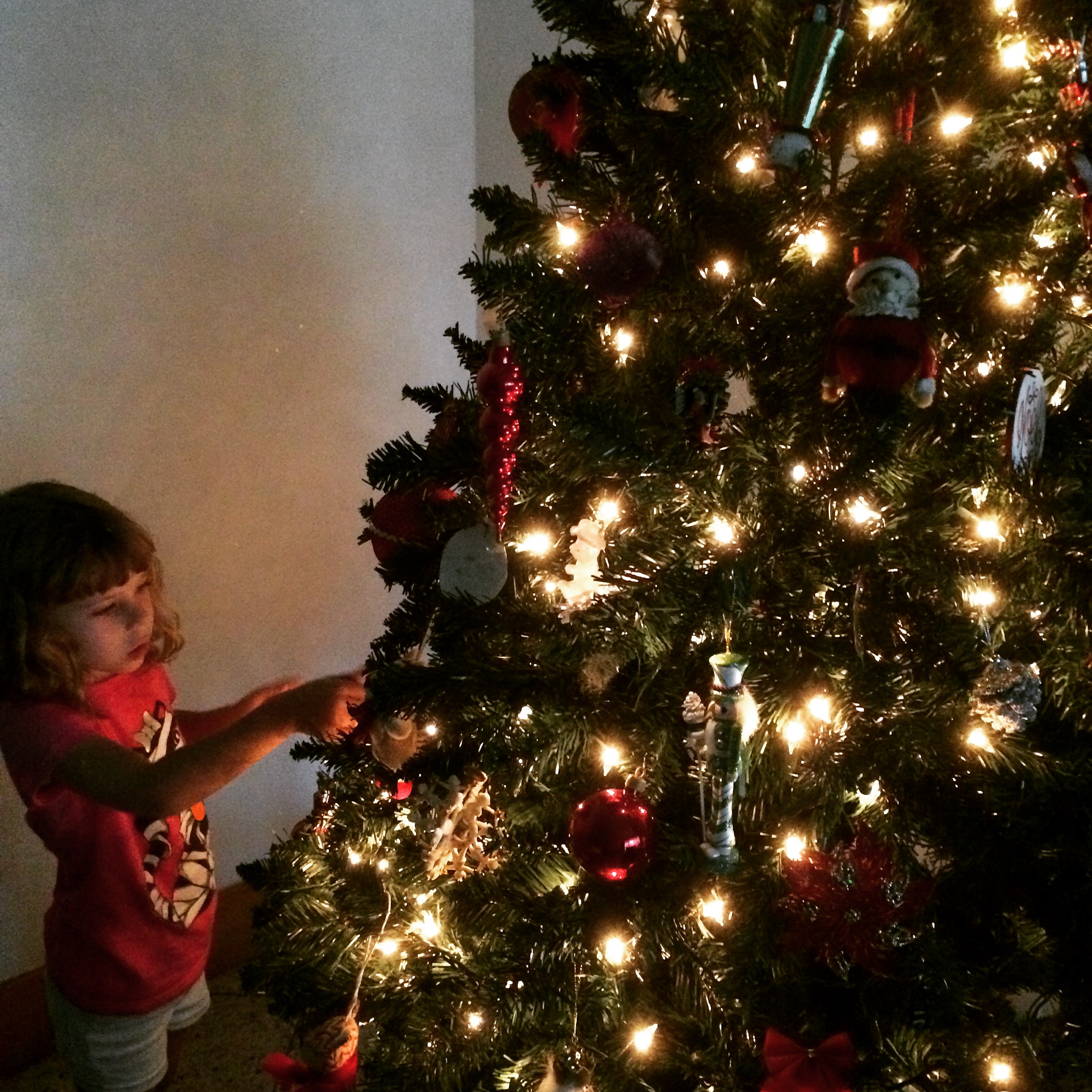
We put our Christmas decorations up this past weekend. This is the first year my daughter has really anticipated decorating and, more or less, helped in the process. She’s very proud of her Christmas decorations, and so am I. They are minimal but were hung with Christmas spirit. And a lot of sweat. Probably more sweat than Christmas spirit for my part.
That’s the problem with Christmas in Brazil. It’s hot. It’s humid. It is decidedly un-Christmasy. At least for someone who grew up spending Christmas a good bit north of the equator.
I tried to recreate my tree decorating memories for my daughter. We had Christmas carols playing. We pulled out the Christmas books and read Rudolph. But everytime I had to stop and rehydrate, the pleas to “Let it Snow” felt more like a cruel joke than an endearing tradition. Not that I’ve ever had a white Christmas in Atlanta, but it’s at least cold enough to necessitate pants.
I can’t shake this feeling that I’m faking Christmas and it’s not just because I’m importing my foreign Christmas culture. Brazil has already imported 90 percent of American & European Christmas traditions. The malls pipe in instrumental versions of American carols, and shop windows are filled with fake evergreens decked out in red, green, and sprayed on snow. Apartment buildings string lights in the shape of icicles and poor Santa greets kids in fur-trimmed, red velvet.
What feels so wrong about Christmas in Brazil is the juxtaposition between Northern hemisphere customs and Southern hemisphere weather. In order to make the season feel more authentic, I’ve got a few suggestions for improving Christmas in Brazil.
5 Way to Improve Christmas in Brazil
This was in October. December is hotter.
Put Santa in Board Shorts For his own sake, at the very least. It’s also hard for a parent to explain Santa’s velvet uniform to a kid running around in her underwear. “Yes, it’s very hot here, but Santa is magic and can maintain a constant body temperate even when wrapped in fur under the sun in 98 degrees.” How about some window decals of Santa strolling down the beach in board shorts pulling his sack along on a boogy board.
Carols About Sand, Not Snow “Oh the weather outside’s delightful. And the barbecue’s left me quite full. Laying out that’s my plan, In the sand, in the sand, in the sand.” They could also be more local. I think the world needs some Bossa Nova Christmas. “Gifts and fun and family and sunshine. Good will to all, good cheer we keep in mind. We’ll raise some glasses, attend some masses and dine.”
Replace Red & Green with Yellow & Blue Look in the store windows and you’ll see red and green wreathes, ornaments, figurines, dinner ware. These colors are too dark and heavy for a place that’s got sunlight until 8pm followed by balmy evenings with temps in the 80s. Christmas in Brazil should be bright and bold. It should be swirled on a sarong that you wear over tanned (or in my case sunburned) legs. I propose Christmas decorations in yellow, for the intense sun, and blue, for the ocean that everyone is visiting on their summer vacations.
Exchange Santa’s Sleigh for a VW Bug What good is a sleigh going to be in a tropical rainforest? Or on the sandy coast? Or the sertão, the arid grasslands? No good at all. For a truly Brazilian ride, give Santa a VW Beetle from the 70s pulled by a team of flying capybara. (Someone please draw and post that image!) I’ve seen old Beetles driving around every city I’ve visited in Brazil. Those cars can run forever in any environment. Santa can land in Caracas, send his team of reindeer back to the North Pole with the sleigh, and pick up his Beetle to continue distributing presents in South America.
Christmas Palm Trees First, we need to burn all the artificial evergreens that been assembled around Brazil. Most of them are probably made by children in Bangladesh with toxic chemicals. One thing Brazil is not short on is vegetation. No more cheap, fake fir trees. Let’s decorate little potted palms. It’d be a hundred times easier to wrap light around a palm tree. There wouldn’t be room for quite as many ornaments, but I can make sacrifices.
Rabanada. Mmmmmm!
I have no complaints about Christmas dishes. Nuts, pineapple, figs, codfish, ham, and lots more fruit. These are all things I can support. And rabanada. Especially the rabanada! It’s like french toast on steroids. It’s amazing and one Brazilian tradition I’ll be taking back to the US with me.
It’ll be my addition to the dessert table. When else wold you serve bread dipped in egg and covered with cinnamon and powdered sugar? At breakfast?
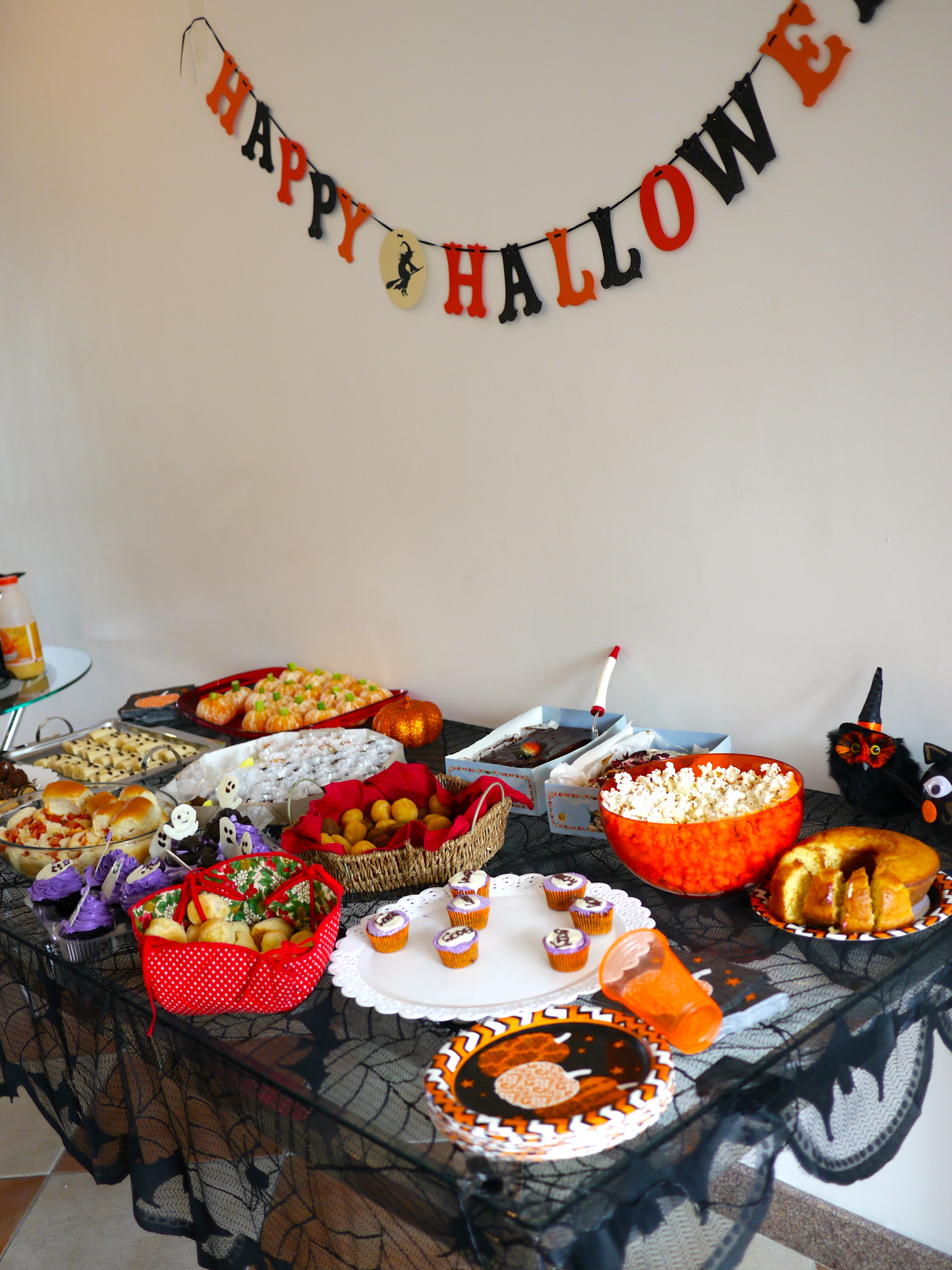
I threw a Halloween party for fifteen preschoolers last Saturday. It was a huge success, but I feel I owe my guests an apology.
Multiple parents came up to me and said I was “muito animada”, a very fun-loving, party-throwing person. I realized that by throwing a fun children’s party, I had completely misrepresented myself to them. I’m sorry. I didn’t mean to lie. The fact is I’m not a creative, crafty mom who saves egg cartons to make earthworm condos for the compost pile. My perfect Sunday afternoon is sitting quietly with a good a book and cup of coffee. Ideally on the beach and without people unable to wipe their own bottoms.
So why did I throw a class Halloween party?
Because they don’t traditionally celebrate Halloween in Brazil. I loved Halloween as a kid, and if I don’t throw the party, my Brazilian daughter won’t know one of my favorite childhood traditions.
Why did I make such an effort on the crafts and decorations?
Because the day after I announced my intention to have a party, one of the moms came up to me at school and told me she’d always dreamed of going to a real Halloween party. To which I thought “Oh crap! I’m fulfilling someone’s dream of Halloween? I don’t want that kind of responsibility!” But I accepted it. And that brings us to the last and really most revealing question.
How was I able to come up with such creative and age-appropriate themed snacks and crafts if I’m not a creative crafty mommy?
I’m an intelligent and highly-organized, type-A personality with access to the Internet and a working knowledge of Pinterest. That’s it. That’s the real me. If I take on the responsibility of a project, it will be done well. Even if it’s something I usually avoid.
Like baking.
Let me tell you about the cookie baking.
While in Atlanta in August, I found Halloween themed cookie cutters and decorating supplies. Bat, ghost, and pumpkin cutters. Black, orange, and green slime icing. The kids could decorate cookies! It would be awesome.
I knew I was going to have to make the dough from scratch. Shortly after arriving in Brazil, I tried to bake a pecan pie for reasons again related to culture sharing. I asked my husband where I could buy the crust. He stared at me brow furrowed. “Buy the crust? You mean the ingredients?” I laughed. Ha. Ha. Good joke. I’m not making my crust from scratch. Not even my South-Georgia raised, preserve-making grandmother makes her own crust anymore. Nobody does. “Uh, they do in Brazil.” Oh.
So I knew I was going to have to make sugar cookie dough from scratch and having baked maybe four times in my life, I knew I’d need a practice run. I planned out every day of the week leading up to the party. Saturday I went online and found a simple and well-rated sugar cookie recipe. Sunday I bought the ingredients. Tuesday was the baking run-through.
After my experience with the pie crust, I brought measuring cups back from the US because I’d learned I’m a victim of the US education system and can’t think in metric. Also, the Brazilian versions of recipes often call for “tea cups” which is not a standardized form of measurement! I find baking stressful enough without vague instructions, so American measurements and tools it is.
Recipe. Ingredients. Measuring cups and spoons. I thought I was prepared.
Preheat the oven to 350 F. My oven only has a line decreasing in thickness and the numbers 1 through 5, but my plan was to pick a number and once the first batch was in check them every minute and figure out the right amount of time at that setting. First problem solved.
Mix dry ingredients. Easy.
Cream butter and sugar. That’s when I realized I had a handheld beater with no beaters. They had been lost somewhere between a school project and kitchen renovation. Ok. People were obviously baking before electricity, so I decided to mix by hand. If I had known I would be creaming butter three times in a week, I would have gone out and bought a damn beater right then. But I didn’t.
Fifteen minutes and two sore arms later…mix in dry ingredients.
Two quivering arms and one sore back later…put dough on cookie sheet. Looking at the dough, I could tell using the cutters was out the question. The dough stuck to everything. I could have wallpapered with it. I went ahead and baked globs of it to test the flavor but knew I was going to have to address the stickiness.
One minute of internet research later, I’d learned the dough must be refrigerated for at least an hour before attempting to cut out cookies. Great! I had learned a valuable lesson. This is why test runs are important.
Friday morning I made the dough for a second time, breaking a sweat mixing by hand. I left it in the fridge all afternoon. I was going to bake the cookies after my daughter was asleep, but on a whim I decided to do one batch before I picked her up from school.
Within minutes I learned that firm dough doesn’t stay that way for long in an 85 degree kitchen. Central air conditioning in the kitchen would have been a big help, but I shrugged it off. People baked without air conditioning for most of human history. No big deal. I simply raced, hunched over my kitchen table, to roll out, cut, and dump cookies onto to the baking tray before the dough softened into a gooey mess.
I put cats, bats, and witches’ hats into oven and pulled out 8 amoebas. Son of a bitch.
I collapsed in a chair. Beads of sweat dripped down my back and forehead. My shoulders ached. And the prospect of mixing another batch of dough by hand loomed before me and crushed my soul.
I hate cooking. No matter how much I research and prepare, I feel I always, always, end up facing a dozen unexpected challenges that keep the results from being perfect. And perfect is the end goal, people. And it should be achievable with good planning and organization. That doesn’t seems to be the case with cooking, which is why I hate it.
The silver lining is that by making that test batch before I picked up my daughter, I was able to swing by the store and get more flour and butter for a third batch. Because I was making the cookies. My daughter had already found the cookie cutters and asked for a cat to decorate. I had brought the icing and spider sprinkles from the United States. I was making those damn cookies.
And by 1:12 a.m I had forty cookies in recognizable shapes.
At the party the next afternoon, a mom asked my husband where I bought the cookies. He told her I had baked them. She exclaimed “Really? Oh, those creative moms.”
That’s why I want to apologize to her and the other moms because I’m not the person the cookies make me out to be. I don’t get a thrill from making my daughter’s birthday cupcakes. I get stress knots above my shoulder blades. I don’t jump at every chance to throw a party. I cringe remembering the mess after the last one. I wish my Portuguese was better, then maybe I could translate my sarcasm when I talk about the joys of crafting.
I may have given my daughter wonderful Halloween memories and successfully represented a piece of my culture abroad, but I misrepresented myself in the process.
Which could be true for a lot party hosts. Maybe behind every Pinterest image, there’s a sweaty person popping painkillers and muttering obscenities at a tray of cookies.







 I’m thrilled to announce that after a successful Kickstarter campaign
 Last week my family and I were waiting in the citizens service area of the US Consulate in Rio de Janeiro, and I overhead a young man pouring out a pretty tragic story to the consulate staff standing opposite the bullet proof glass. He’d been robbed and had lost every single form of id, all his credit cards, and all his cash. He was left with no proof of identity whatsoever.
 Because I have been a recently arrived foreigner in Rio without a word of Portuguese other than Obrigada and with the Rio Olympics opening in less than week, I’ve written down some tips to help visitors
  This is the most depressing list of travel advice. I realize that. But before angry Cariocas start posting in the comment stream about the foreigner who doesn’t appreciate their magnificent city, I’m going to do a second post on all the great experiences in Rio. Now that everyone knows how to stay safe, I can recommend awesome things to do with the free time not being used up with emergency trips to the consulate or hospital. Come back on Wednesday for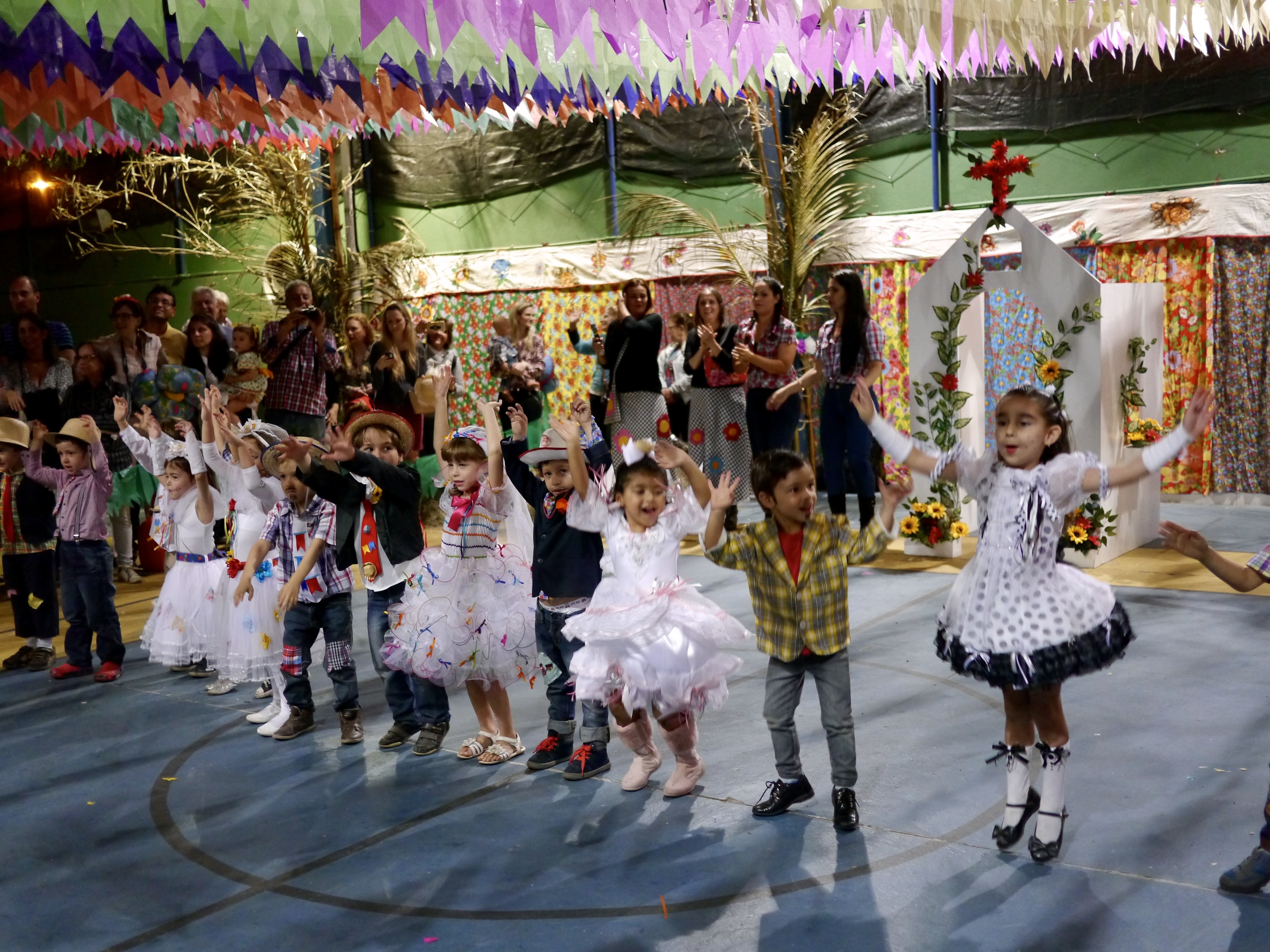
 We were walking the streets of Rio de Janeiro yesterday when my daughter piped up “Hey, it’s Festa Junina!” I shook my head and tolld her Festa Junina was last month. She insisted and pointed to a street vendor whose stall was decorated with primary colored flags and a stereo blaring forro music. My kid was right. This vendor was still celebrating Festa Junina. My husband, a native of Rio, explained it this way. “Whatever the party, it always lasts a month longer in Rio.”

 While many places in Brazil celebrate Festa Junina on the night of June 23 with an official holiday on the 24th, in the Southeast where I’ve lived, Festa Junina parties happen any Friday or Saturday during the month of June. Or if you’re a university club in Rio, every Friday and Saturday in June.
 There are fireworks, dancing, carnival games, straw hats and painted freckles (girls) or a painted moustache (boys), and usually at least one mock wedding. I haven’t read exactly how the mock weddings became a staple of Festa Junina parties, but I have a theory. Saint Anthony is considered the patron saint of marriage because he helps single women get husbands so many offerings and prayers are sent to Saint Anthony on his day, June 13. In addition to June being a time when marriage is on the brain, bringing the corn harvest to market was one of the few times people in rural areas got to meet someone they weren’t related to. Oh, and how convenient to have your wedding at the same time as the already scheduled festival! You can save tons on catering! Thus Festa Junina became a day of many weddings.
 At my daughter’s school, it’s always Year 4 that stages a mass mock wedding, and this year it was finally her turn. That meant her Festa Junina costume was a wedding dress with a veil, and she LOVED it. It also meant extra time on stage because in addition to the mock wedding, all grade levels perform a quadrilha, a traditional dance done during Festa Junina but with preschoolers is really just a lot of jumping and arm waving.
 In my personal opinion, the best part about Festa Junina is the food, but I feel that way about all carnivals and festivals. Any event that has portable grills and homemade sweets being set up on folding tables arranged around ring toss and fishing games is something I’d be delighted to attend.


 Having spent the majority of my adult life outside of the United States (mostly in small, homogeneous cities), I’ve gotten used to being the subject of conversation at the next table over. It happens pretty frequently in Vitoria. My husband and I speak in English so people assume I don’t understand their Portuguese freeing them to openly discuss me from two feet away. It happens most frequently with kids and teens, but a surprising number of adults don’t seem to realize that a person could understand both English and Portuguese. In Vitoria, we expats are like endangered wildlife. People know we’re around, but when actually spotted, locals take note.