Tag: History

  • Dear Brazil, It’s Portugal’s Fault.

    Dear Brazil, It’s Portugal’s Fault.

    I’m currently obsessed with an idea for a historical fiction novel and have spent the last week devouring books on colonial Brazil. (I know you’re jealous.) It’s been fascinating reading actually because it’s all entirely new history for me. It wasn’t until World History in high school that I even knew humans existed outside of Europe, and by “Europe” I mean Italy, France, and Britain with a brief stop in Germany for the Reformation. Any ideas I have about Portugal or South America I learned from Columbus Day themed picture books and Disney’s Emperor’s New Groove.

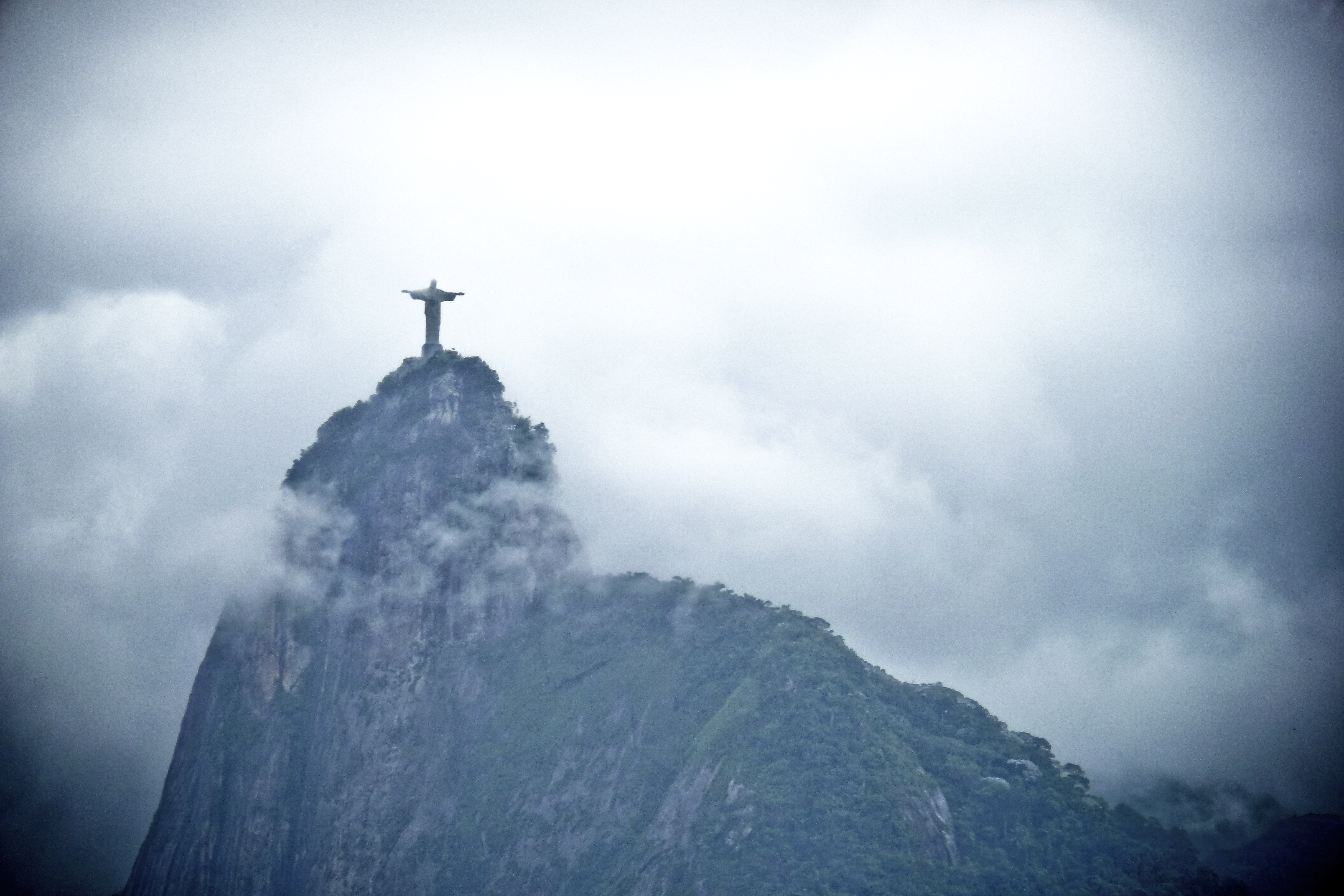
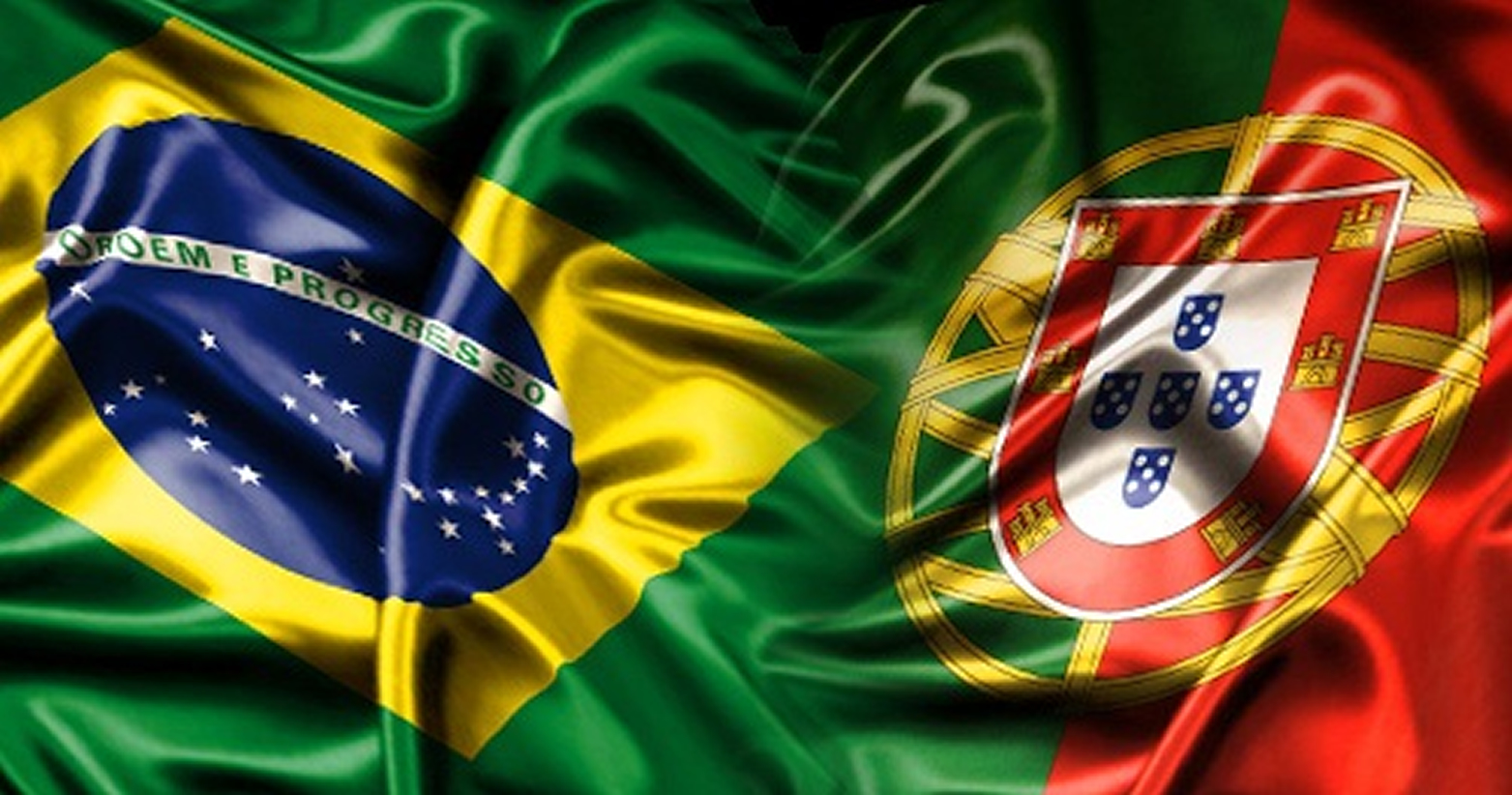
    Turns out the Portuguese did more than just finance Columbus. They dominated maritime exploration in the 15th century, and that’s how little Portugal ended up with the enormous colony of Brazil. After a week of research, I now understand the root of all of Brazil’s problems. Portugal.

    Everything is Portugal’s fault.

    Let’s take education. Brazil does not have a single university in anybody’s top 100 Schools in World list. I recently read an article that could be summed up as “Brazilian have started buying books!” I can’t remember that last time I went to the beach and saw someone reading a book and I’m at the beach almost every weekend. Which makes perfect sense in a country that had printing presses, books, and universities banned for the first 300 years of its existence.

    Yes, Portugal controlled Brazil for 300 years before it allowed a university to be built or a printing press to operate. Put another way, book circulation was banned for a century longer than it’s been legal in Brazil. Thanks Portugal!

    Do you think Brazil’s government is a quagmire of ineffective bureaucracy staffed by people who are allergic to work? When the Portuguese court fled Napoleon and established itself in Rio de Janeiro, it brought between 10,000 and 15,000 people. When John Adams moved the US government from Philadelphia to Washington D.C., he moved 1,000 employees. And all those 10,000 people who came with the court expected a stipend from the government. Today, public pensions are currently bankrupting Brazil. Thanks Portugal!

    Brazil is currently hosting a global event. No, not the Olympics. I’m talking about the largest corruption scheme in the history of democracy, the Lava Jato case in which federal politicians awarded contracts and got kickbacks to the tune of billions of dollars.

    It’s actually totally understandable that Congressmen and their friends all expected rewards. When Prince Regent João showed up in Rio, the crown was flat broke, so he just started selling titles to wealthy Brazilian merchants. Prince João gave out more titles in eight years than his ancestors had in the previous three centuries. You get to be a Baron! And you get to be a Baron! And you get to be a Baron! (This is assuming you’d like to make a donation to the Court, of course.) Those of us at the top have to get each others’ backs, amiright? It’s Brazilian tradition. Thanks, Portugal!

    I’ve wondered since arriving back in 2006 why the fifth largest country in the world in terms of land area seems to use two lanes roads almost exclusively. Why? Why am I sharing a single lane between states with all the 18-wheeled trucks? Because it was illegal to build roads between states until after João and his court arrived in 1808, 300 years after the Portuguese took control of the territory. And factories weren’t allowed. So no industrialization. Which means no trains. Thanks, Portugal!

    I’ve learned all this from 1808 The Flight of the Emperor by Laurentino Gomes. It’s an engrossing telling of an unbelievable true story. One of the most striking accounts of colonial Brazil was from a woman, Maria Graham, arriving in Brazil for the first time. As her ship sailed up, she gushed over the picturesque city of Salvador with it’s beautiful white homes and striking setting on a cliffside. She called it “a city, magnificent in appearance from the sea.” Her opinion changed dramatically once walking the streets of the city. She describes Salvador as no less than “the filthiest place I ever was in.”

    19th century Salvador by Joseph Alfred Martinet
    19th century Salvador by Joseph Alfred Martinet

    While I did not consider Rio anywhere close to the filthiest place I’ve ever been (I lived in a coed dorm in college), I did go through the exact same swing in emotions when first arriving in Brazil. Looking out the plane window, I was in awe of Rio’s beauty. Then I left the airport. The view out the car window was…disappointing in comparison.

    Two hundred years separates Graham’s arrival and mine, yet our reactions were nearly identical. Culture is a powerful yet often unconscious shaper of our behavior. I have a university degree in this. I shouldn’t need a reminder, but this book was just that. Now, I understand. The next time I have to argue about whether the phrase “copy of your passport” means just the information page or all pages in the book, or I bounce along a road filled with potholes but with wifi coverage, or I read about another politician who’s been suspended due to a corruption scandal, I’m not blaming Brazil. I’m blaming Portugal.

    Because it’s all Portugal’s fault (#blameportugal). And they didn’t even leave a legacy of good wine. Thanks a lot, Portugal.
  • Visiting the Martin Luther King Jr. Historic Site: The Power of Young People

    Visiting the Martin Luther King Jr. Historic Site: The Power of Young People

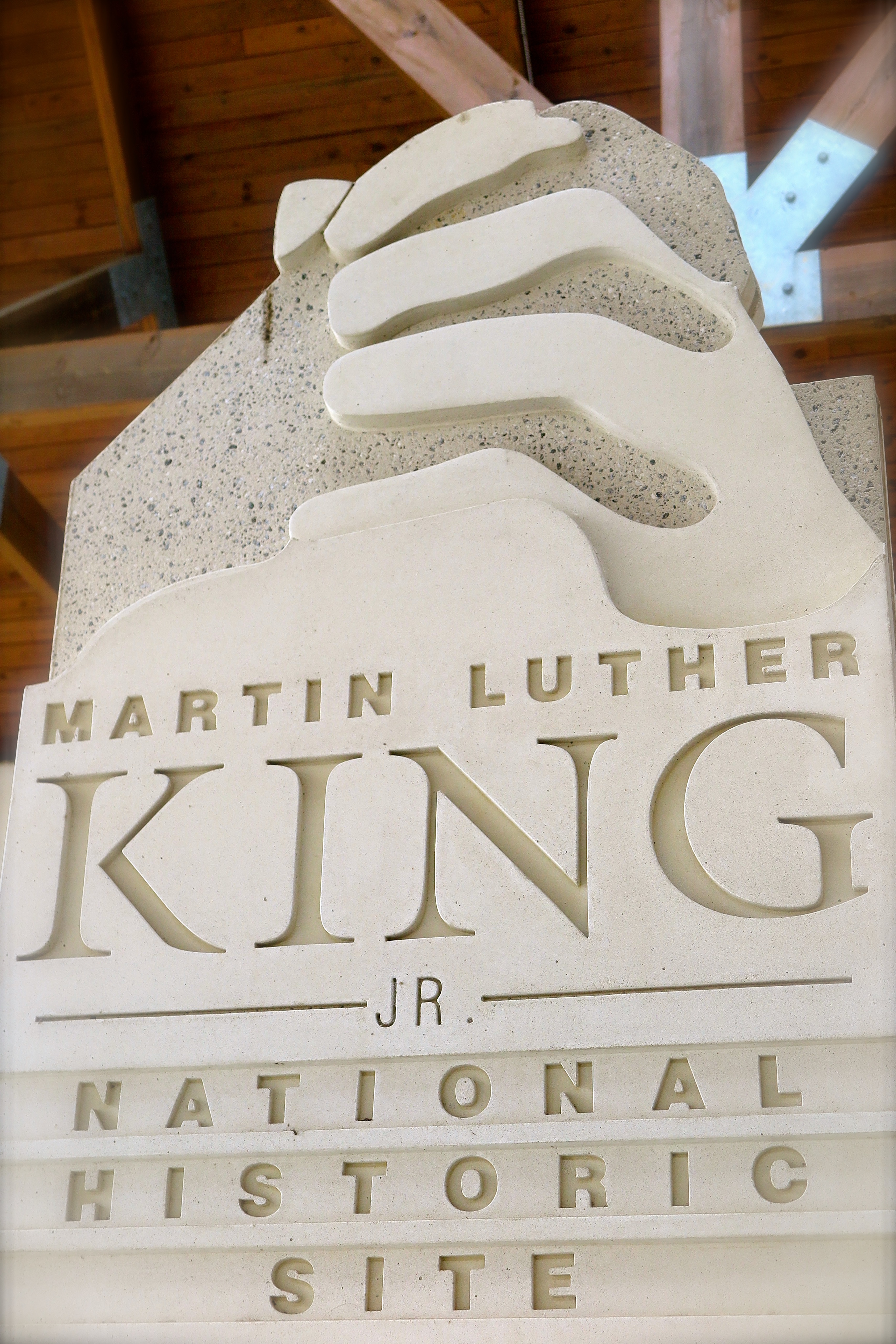
    IMG_1137The wind gusted by, and my nose was numb by the time we crossed from the parking lot and entered the Visitor’s Center at the Martin Luther King Jr. Historic Site. It was a little unfortunate my step-mom and I had picked the coldest day in weeks to visit because the MLK Historic Site is a collection of buildings up and down the block where Dr. King’s childhood home and church are located. The facilities required walking. The weather required a hat.

    IMG_1148While peeling my gloves off in the Visitor’s Center, a helpful ranger told us that guided tours of Dr. King’s birth home are available for free but they’re first come first serve and you have to reserve tickets. Unfortunately for us, the next tour wasn’t until noon, and we had to move on before then. There was still the Visitor Center, the Tombs, exhibits from the life of Dr. and Mrs. King at Freedom Hall, as well as Historic Ebeneezer Baptist Church where Dr. King served as co-pastor with his father. More than enough to fill a Sunday morning.

    Passing through twelve years of metro-Atlanta public schools, I’d learned about Dr. King and the Civil Rights movement extensively. To be perfectly honest, I wasn’t expecting to learn anything new during my visit. It would be interesting to see the buildings where Dr. King actually lived but the information would be a refresher course.

    I stepped into the first stage of the Visitor Center’s overview of King’s life: Segregation. Photos, panels, and video explained the explicitly and brutally divided world Martin grew up in. On the video screen I watched footage of a young girl, book bag in hand, enter her school escorted by Federal marshals. The girl is Ruby Bridges, the first African-American student to attend an integrated elementary school in Louisiana. Well, integrated isn’t quite accurate. Bridges was the only African-American student in an all-white school.

    I’d watched the footage before, but never as a mother.

    IMG_1126This time I saw a little girl with a bow in her hair, not much taller than my own daughter, walk alone into her school. No friends, no teachers. Only four armed Federal Marshals protecting her. She barely cleared the waist of the men around her. Ruby was six years old that day. My eyes filled with tears, and I ducked my head to keep anyone from noticing.

    I left the images of children berated and under armed escort and moved on to the section on Dr. King’s early activism. His first role of national significance came when he helped organize the Montgomery Bus Boycott in the wake of Rosa Park’s arrest. It was 1955. Dr. King was twenty-six.

    IMG_1125I’d moved on from Ruby in hopes of being on more palatable ground of grown-ups being horrendous to other grown-ups, but I was staring at the face of a person whom, if I met over coffee, I would tease and welcome into adulthood. How’s that whole responsibility thing going? When I looked at the photo of Dr. King handcuffed and bent over a police desk, I didn’t see a great man. I saw a very young man.

    I scanned the other photos. A group of non-violent protesters at a sit-in. Freedom riders. Marchers with their arms linked. Dr. King attending a leadership meeting of the Student Non-violent Coordinating Committee. There it was in the name: Student Non-violent Coordinating Committee. The walls were covered with pictures of kids and young people. Eighteen, nineteen, twenty year-olds. College kids were the driving force of the Civil Rights movement. Seeing the Civil Rights Movement from the perspective of an adult older than most of its leaders were at the time shocked me.

    I’d learned about Dr. King and other leaders, John Lewis, Julian Bond, Andrew Young through the eyes of a child. I’d been told they were great men, and to a ten-year old, the footage and photos showed established adults. One grown-up is equal to any other grown-up. Anyone who has reached adulthood knows this couldn’t be farther from the truth.

    IMG_1153As I wandered through the Visitor Center, King’s church, and the other buildings, the entire site became a testament to the power of young people. Kids, teens, college students and freshly minted men and women in their twenties acted on their beliefs that the world could change and could be made better. They refused to accept the world they were about to inherit.

    IMG_1130It seems to be a favorite past time of adults to complain about the youth. There is certainly no shortage of criticism being hurled currently at young people with their selfie taking smart phones. But I did learn something during my visit to King Center. Never underestimate youth. Young people have the power of infinite possibility. Their vision hasn’t been narrowed by time. Martin Luther King Jr. did not imagine himself on the steps of the Lincoln Memorial when he called on his congregation to boycott the buses. With his twenty-six years, he imagined a more just world and acted to make it so.

    IMG_1132The quote on Dr. King’s tomb is “Free at last. Free at last. Thank God Almighty I’m Free at last.” The dates are 1929-1968. He was thirty-nine when assassinated, a young & great man.

    mlk+day+button-1This post is part of an amazing series on Martin Luther King Jr. being hosted by Multicultural Kids Blog. Check out the link for fabulous educational activities and international perspectives on the legacy of Dr. King.

  • Why Doesn’t Anyone Know a Thing About Brazil?

    Why Doesn’t Anyone Know a Thing About Brazil?

    Rio 1 2008-82There’s a famous comedy sketch in Brazil that features a home invasion with the owner held at gunpoint. The masked assailant aims at the owner and barks “Name the major tributaries on the left bank of the Amazon River!” The owner rattles off several rivers in rapid succession. The bad guy immediately lowers his gun and leaves taking nothing. The homeowner stands, exhales and says “I knew that information would be useful some day.”

    Every country has its own “tributaries of the Amazon”. I had all fifty US state capitols memorized for most of fourth grade then never again. Why would I retain the capital of Wyoming? The world’s a big place and geography is only one of many subjects to master. With a background in international relations, I know where Brunei is but nothing about computer coding. That’s why I won’t judge someone for not being able to place Sri Lanka or name the capital of Azerbaijan, unless that person is on the Senate Foreign Relations committee.

    But Brazil is not Sri Lanka.

    Brazil is not a tiny country with a tiny population and a tiny economy. It’s a huge country with a massive economy but still nobody in the US knows anything about it. The average American knows people speak Arabic in Tunisia and Spanish in Argentina, but ask her about Brazil and she hesitates. People generally know India is important in the global economy but what does Brazil produces exactly? Mention Guatemala, Korea, or Sweden and most Americans will imagine someone with a particular phenotype. What do you think of when you hear “Brazilian”?

    Several years ago, I was visiting my parents in Atlanta and I read an article in the neighborhood newsletter about a recent mugging in the area. The victim gave a helpful warning to other residents to be on the lookout for someone who looked “Brazilian”. Whaaaat?!!! The only less helpful description would be to describe that attacker as a Homo sapien.

    The most upsetting fact was that my parents live in a highly educated neighborhood and still “Brazilian” was published as a helpful description of a person. Even these people wallpapering in college diplomas didn’t know the most basic things about Brazil, like the fact a Brazilian can have ancestry from anywhere.

    And there really is no excuse for it.

    Brazil has the seventh largest GDP in the world. It’s economy is larger than India, Russia, Korea, or Canada and that was coming off of a bad year. At roughly 206,000 million people, Brazil has the fifth largest population in the world. There are more Brazilians than Japanese, Germans, or Mexicans. Globally speaking, it’s pretty common to be born in Brazil. Brazil is also the fifth largest country in terms of land area. It’s bigger than Australia. In terms of exports, Brazil is the US’s seventh best customer ahead of France or India.

    I’ll admit a pro-Brazil bias given that my husband and daughter are both Brazilian, but knowing what I do now, I’m embarrassed by my pre-husband ignorance of Brazil. I’d like to spare others my embarrassment, so here are five basic facts every person should know about Brazil.

    1. Language  Brazilians speak Portuguese! Brazil is the largest country in South America and the official language is Portuguese, not Spanish.
    2. Capital City  The capital is Brasilia. The largest city in terms of population and economy is São Paulo. Rio de Janeiro was the capital from 1763 until 1960, which is why it’s the most frequently given wrong answer to the capital of Brazil question.
    3. Type of Government  Brazil is a democracy and it’s not just a part of the country’s name that is never actually lived up to. Brazil transitioned to a constitutional democracy in 1988 after 30 years of a military dictatorship. Brazil stabilized and entrenched the new constitution in less than a decade, which is amazing considering it takes that long to get a pothole fixed here. Currently President Dilma’s approval rating is 8% and people are demanding an impeachment. Not a revolution. Not a military invasion of the President’s mansion. Literally the entire country despises the current government, but the people want to work within the rule of law. Bravo Brazil! You guys can express your absolute and unified hatred of the current government within the confines of the constitution. Well done!
    4. Economy Really, really terrible at the moment. So, uh, let’s just talk about exports. What does Brazil produce? The top five exports are iron ore, crude petroleum, soy beans, raw sugar, and…any guesses? Poultry. Nobody, not even my Brazilian high school students, ever guesses chickens.
    5. Fun Fact To Impress Friends Brazil has been a colony, a monarchy, a dictatorship, a military dictatorship, and a republic. Name a type of government and Brazil has tried it.  The country celebrates two independence days.  The first on September 7 celebrates independence from Portugal and the second is on November 15 when Brazil transitioned from monarchy to republic in 1889.

    I hope people’s general awareness about the country improves before we move out of Brazil and my daughter is expected to play the role of walking Wikipedia article on the country. What language do they speak is a really boring question to repeatedly answer.

    After all, Brazil is not a tributary on the left bank of the Amazon or the capitol of Wyoming. It’s so much more important. But not many people know that.


    Badge-smlImage_zps04194192

  • Learning Brazilian History at  the Dentist

    Learning Brazilian History at the Dentist

    Something I enjoy about living in a different culture are the little reminders, even after years, that you’re not from here. Usually it’s a small thing that catches you by surprises and causes a double take. These cultural surprises are often trivial matters that you didn’t even anticipate being different, such as how socks get folded or the absence functional seat belts in the back seats of taxis.

    I wonder how long a person must live in a place before the little “Wait, what?” moments taper off. I’ve been in Brazil for four and a half years but just last week I was thrown by a simple question on a medical history form.

    At the dentist recently, I filled out a new patient form. I’ve become accustomed to routinely answering what I feel are very personal question such as marriage status and profession for everyone including the woman who sold me my bookshelf, but this question stopped me.

    “Cor:_____________”

    Cor in Portuguese means color. A medical history form handed to me by the dentist’s office asked for my color. I blinked in disbelief. I double checked with my husband. “Does this say color?” He told me it did. I asked “Ok, color of what exactly?” even though I knew the answer. He looked at the receptionist who said simply “skin.”

    For an American, an American from Atlanta, Georgia who heard about slavery, the civil rights movements, and racial tensions every year in school and was in high school during the ridiculously overdue process of getting the confederate flag off of the state flag, a doctor’s office asking for skin color is shocking.

    Four years in Brazil and I can still be shocked by a single word on a form. A simple piece of information that would never be asked for in my own culture. Or would it?

    How often is a person in the states asked to designate her race? Isn’t the same question just phrased in what, for Americans, is a more comfortable way? Sure, we’re usually told that question is “optional” and for “statistical purposes only” but the question is still asked.

    In talking to my husband afterwards, I learned that there are actually some Afro-Brazilian groups that are lobbying to get “color” included on forms. When Brazil first became a republic any mention of race was outlawed under the argument it would prevent discrimination. The result, however, was that millions of Brazilians who had been enslaved based solely on their race had no way to receive any programs targeted specifically  to help them overcome circumstances created by race, thus locking them into the lowest levels of society. Now, certain Afro-Brazilian groups want “color” on forms to have data about color and race in Brazil.

    So much history from a form at the dentist. That’s why, even though each cultural surprise is a clear reminder I’m living in someone else’s culture, I welcome them. Each one is a learning opportunity. Not that I always appreciate them. Learning takes energy and often I only have enough energy to be annoyed and call whatever is different stupid. (Both creativity and tolerance suffer when I’m tired.) But on good days having to pay for bottled water leads to a discussion of sewage infrastructure and a dentist’s form opens a dialogue on racial history.

  • Navy v. Army: A Brazilian Rivalry

    Navy v. Army: A Brazilian Rivalry

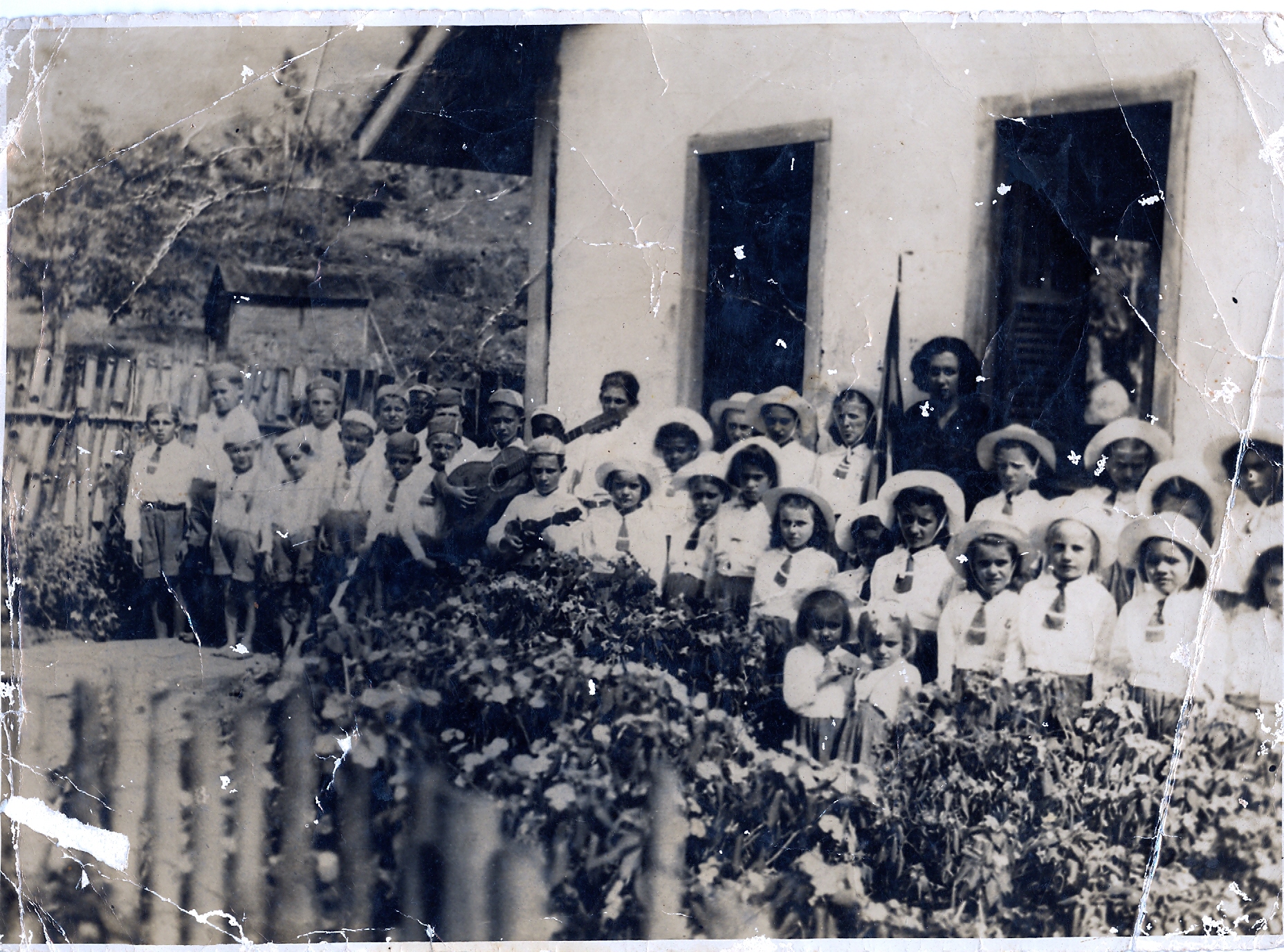
    This week the naval school here in Vitoria celebrated it’s 50th birthday. They marked the occasion with a series of events culminating in the unveiling of two commemorative stamps by the post office.

    In case you were caught off guard by the birthday or the fact people still make commemorative stamps, don’t worry. There was a big enough turnout among the naval community in Vitoria to keep the Commandante happy. As a former naval officer my husband is part of this community and I joined him at the Marine corps concert. Despite the unfortunate artistic decision to include “Can You feel the Love Tonight,” which was neither appropriate following Carmen nor improved by the addition of bagpipes, the band was excellent.

    I’ve been to a few Naval events during my time in Brazil and it took me a while to realize my husband was in the military during a military dictatorship.

    When asked “So, being part of an all powerful military, what was that like?” he explained that A) by the time he was an officer the military was ceding power and the country only a few years away from becoming a Democracy, B) supply officers don’t go on power trips and C) the navy was not really in power during the dictatorship.

    Here’s a little Brazilian history. The army has rivalry with the navy that goes beyond an annual sporting event and the dictators of the 20th century came exclusively from the army.

    Brazil has the 16th longest coastline in the world, 4,650 miles, and has one of the most extensive river systems in the world. Given this geography, the navy, already an important part of Portuguese culture before their arrival in Brazil, continued to be crucial to the develop and defense of the country. Both the Portuguese royalty during the colonial period and the Brazilian aristocracy during the empire were closely tied to the navy.

    When the republic was declared in 1889, it was the army funded by rich but not royal coffee farmers that overthrew the emperor. A people’s army was not eager to share power with an aristocratic navy.

    It was your typical armed forces rivalry. “The aristocracy always loved you best.” “Because you’re an undisciplined mess who never touches up the paint on your bases,” etc.

    The tension came to a head just a few years into the republic, in 1893, after some bungled governance and a president who ignored the constitution. Several high ranking officers and admirals sent a letter to the president (such nice manners those naval officers) calling for the constitutionally mandated elections. The president’s response was to issue arrest warrants for every officer who signed the letter.

    Rather than go to jail, naval officers in Rio de Janeiro attempted a coup and for several days Rio was under siege as the navy exchanged fire with the army. The navy failed to garner popular support, possibly because many of its officers were believed to be sympathetic to the monarchy, and those involved were forced to flee south where they were captured in 1894.

    Thus a rivalry was born. Fortunately today, both branches work in support of the democratically elected government. There’s still a competitive edge between them but it only manifests during school fencing and judo tournaments. Or who’s been issued the most commemorative stamps.

  • O Convento Nossa Senhora da Penha

    O Convento Nossa Senhora da Penha

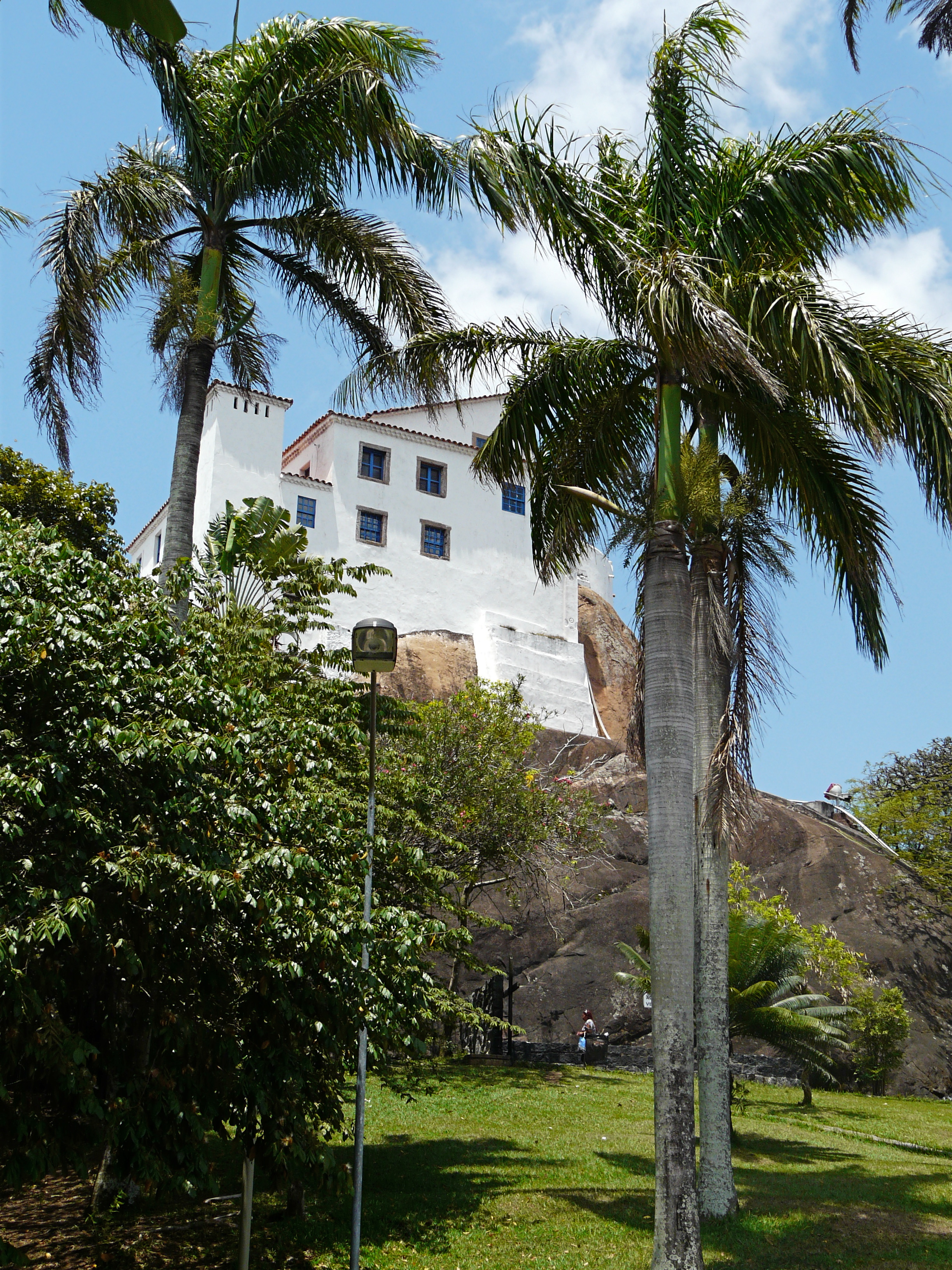
    I mentioned in a previous post the four attractions of Vitoria: 1) eating the regional fish stew more appetizingly called Moqueca, 2) visiting one of the beach towns just outside of the city, 3) visiting the 16th century Convento de Nossa Senhora da Penha and 4) visiting the Garoto Candy Factory.

    My husband and I recently did number three. We took a morning and wandered around what turned out to be a nun-free convent.

    The Convento da Penha is surprisingly not a convent at all. At least, when I heard “convent” I imagined a group of grumpy yet ultimately tender hearted women wearing black and all possessing phenomenal singing voices. I’m not Catholic but I saw the groundbreaking documentary Sound of Music and it’s contemporary follow-up Sister Act.

    Unfortunately, there are no nuns there today, nor have there ever been. The paintings of monks everywhere only confused me further. Clearly, “convento” has a different meaning in Portuguese.

    Because there was no soaring soprano, we had to be entertained by history and an interesting yet disturbing “Wall of Miracles.”

    The Wall of Miracles. People who have had their prayers answered by Nossa Senhora da Penha will post thank you messages on her wall. (No kids, Nossa Senhora is not on facebook. There’s an actual wall.)

    It’s a lovely concept that ends up being darn creepy. Many people have said thank you with pictures of the gaping wounds and mauled limbs that were saved. Or with locks of hair. Few things creep out like 30 year-old locks of hair. Gross!

    One of the older “thank you” walls, comfortingly free of human hair.

    The city of Vila Velha is just across the bridge from Vitoria. For those who know Rio, the relationship between Vitoria and Vila Velha is more like Zona Sul and Barra than Rio and Niteroi.

    People who live in Vila Velha talk about the low cost of an apartment by the beach and those in Vitoria say “Yeah, but you have to live in Vila Velha at least an hour away from anyplace you’d actually like to be.”

    Here’s one of the Convento’s original telephones they’ve successfully restored. There’s a fund accepting donations if you’d like to help with the restoration of the original snack bar.

    It’s worth visiting the Convento if only for the spectacular views of Vitoria and Vila Velha. My only complaint is that after spending an entire morning there, I still don’t know which Mary sighting Nossa Senhora da Penha refers to. Can anyone help me out here?

    Next stop on our tour of Vitoria, the Garoto Candy Factory tour! Our tour is scheduled for a week from Monday. We’ve been instructed to wear long pants and no jewelry. Sounds more hardcore than my tour of Hershey World.

  • Brazil’s Hiroshima

    Brazil’s Hiroshima

    In his book, , British journalist Alex Bellos quotes the Brazilian playwright Nelson Rodrigues, “Everywhere has its irremediable national catastrophe, something like a Hiroshima.  Our catastrophe, our Hiroshima, was the defeat by Uruguay in 1950.”

    Rodrigues isn’t talking about a war. Uruguay beat Brazil in the final match of the 1950 World Cup.

    Yes, a Brazilian compared losing a soccer game to having an atomic bomb land on your head.  I might find this comparison less disturbing if Brazil had lost to Uruguay in a border skirmish or some type of military engagement. Comparing the decimation of a city to the loss of a sporting event lacks just a little perspective.

    Or does it?

    Bellos devotes an entire chapter to recounting this single match.  He interviews everyone involved, from the Uruguayan who scored the winning goal to contemporary football anthropologists who study the match.  The resulting picture is that of a nation which was ready to announce its global presence and the dawning of a new era in Brazil.  Winning their first World Cup, at home in Brazil, would be the grand opening of modern Brazil.

    As a showcase of the big future in store for the country, Brazilians built the largest stadium in the world.  In 2 years.  One reporter said the stadium gave the nation “a new soul.”

    The Maracanã, in Rio de Janeiro, is the most iconic stadium in the world. On July 16, 1950, it set a record for the largest sports crowd ever.  173,850 fans entered with paid tickets.  Combined with the dignitaries, journalists and special guests in attendance the crowd was estimated to be over 200,000 people.  Approximately, 199,999 of those people were cheering for Brazil.  One Uruguayan player brought his mother.

    By 1950 soccer, or futebol, had become a core piece of Brazilian identity.  A love of soccer was one of the few truly unifying traits of a diverse and expectant country.   Brazil had crushed, decimated, humiliated Spain (6-1) and Sweden (7-1) in the preceding final matches.  Rio’s O Mundo had already printed its front page: “These are the World Champions” alongside a picture of the Brazilian team. It was destiny for Brazil to win its first Cup on home turf in the greatest stadium in the world.

    Then they lost.  The final score was 2-1.

    Destiny, it seemed, had it in for Brazil.  At least, that’s what one Brazilian writer, José Lins do Rego, thought.  After watching people leave the stadium in tears, Rego wrote, “it stuck in my head that we really were a luckless people, a nation deprived of the great joys of victory, always pursued by bad luck, by the meanness of destiny.” The loss plunged the entire population into a crisis of self doubt.

    That game was wrapped up in nationhood and identity.  The loss was taken as a reflection on the nation.  Brazil lost because Brazilians are losers.  They are a “luckless people.”  I still sense a hint of this fatalist attitude in many aspects of Brazilian culture today. So maybe it’s a fair comparison, hiroshima and the 1950 World Cup.  Both impacted an entire nation.  The consequences can still be felt…

    You know what?  Bullshit. Who am I kidding?  You can’t compare a soccer game to the devastation of an atom bomb. You just can’t.  There is no comparison.  What can be said is that no single sporting event has impacted a country the way the 1950 final shaped Brazil and that you can’t know Brazil without knowing soccer.

    All of the information for this post came from Alex Bellos’ book Futebol The Brazilian Way of Life.  It is a great read.  Fun, informative, surprising.  Bellos uses soccer as a means of analyses for the country as a whole.  Anyone interested in Brazil or soccer should buy it immediately.

  • Faking It: A Brazilian Success Story

    Faking It: A Brazilian Success Story

    Brazil is certainly getting its play in the international press lately.  Electing a possibly illiterate clown to congress by a landslide will do that for a country. (No, that is not a metaphor. An actual, professional clown will be representing Sao Paulo.)  Because I live here, I would prefer to focus on Brazil’s success stories and my stepmom sent me a link that does just that.

    On NPR’s All Things Considered last week, there was a segment about Brazil’s remarkable end to decades of runaway inflation.  It’s due in no small part to a group of drinking buddies from PUC (Catholic University in Rio) and a trick that worked on pretty much the entire population of Brazil.

    My Brazilian husband refers to the problem as “Brazil’s culture of inflation.”  He being somewhat (no specifics) older than myself remembers prices on virtually everything changing daily during the worst periods of inflation.  Those who could bought dollars or had savings accounts that adjusted daily.  But for lower income families (i.e. most of Brazil at the time) paychecks had to be deposited immediately or risk being worth less by the next day.

    This went on for decades until it became built into Brazilian culture.  People had no faith in the government or the currency.  They behaved as if the currency had no value and expected all government plans to fail.  So part of the solution was to trick the population into believing the currency was stable.  How do you do that?  You create a imaginary currency.  This became known as the real plan.

    Obviously, this is a gross simplification and at 7 minutes the broadcast is not delving into all the complexities either.  I do think, however, that’s it’s an informative and enjoyable introduction to a subject most Americans have never heard of.  You can listen to the story here.

    And on a human interest note, I can say that one of those four drinking buddies who ended inflation, is now a nice, doting father.  I taught his daughter in an SAT prep class.

  • Happy Birthday, Vitoria!

    Happy Birthday, Vitoria!

    Today, the city of Vitoria turns 459 years old.  A long time ago, September 8, 1551 to be exact, the Portuguese fought and won a decisive battle against the Goitacazes tribe.  They were so tickled with themselves for winning, the Portuguese called the island where the battle occurred Ilha de Vitoria, or Island of Victory.  Thus, the city of Vitoria was born and has been continuously inhabited for the past 459 years.

    A founding date of 1551 seems quite old to me, at least for a European city in the Western hemisphere.  The city government claims on their website that Vitoria is the second oldest capital city in Brazil.  I did some research (i.e. went to wikipedia) and found a list of the oldest cities in the US for comparison.

    The oldest, continuously inhabited city in the US is St. Augustine, which was founded in 1565.  Pensacola, FL was originally founded in 1559 but destroyed shortly after it’s founding.  It wasn’t refounded until 1698, so it loses the title on a technicality.  Either way, Vitoria is older than the oldest city in the US.

    Actually, Europeans began living on the islands that now make-up Vitoria beginning decades before the city was officially founded.  The first Portuguese governor of the region of Espirito Santo, Vasco Fernandes Coutinho, arrived in 1535.  The bay was protected by a series of small islands making it an ideal port.  The Portuguese could easily defend against the French and the Dutch.  There were also some problems with the locals.  With thousands of people already living up and down the Brazilian coast, the Portuguese had a little trouble convincing them to relocate.

    The local Indian tribes called Vitoria Guanaaní, Island of Honey.  The calm bay, bejewled with emerald green islands, was a beautiful site.  The waters were filled with mollusks and fish and the forests were filled with parrots and monkeys.  It was an Island of Honey, an island of plenty.

    Unfortunately, a city cannot be a major port for 400 continuous years and remain an untainted oasis.  While not at the levels of Rio, Vitoria has serious problems with water and air pollution.  Fortunately, it only takes an hour or two to reach the small beach towns that line the coast of Espirito Santo.  There you can see glimmers of the paradise Vitoria must have been.

    So happy birthday Vitoria!  I’ve only been here a week but I’m already a big fan.  To be honest, you had me at your incredible fish stew, but throwing in centuries of history and a candy factory was a nice touch.