Tag: Personal Stories

  • Why I’m an Expat in Brazil Part II: Between Meeting & Dating

    Why I’m an Expat in Brazil Part II: Between Meeting & Dating

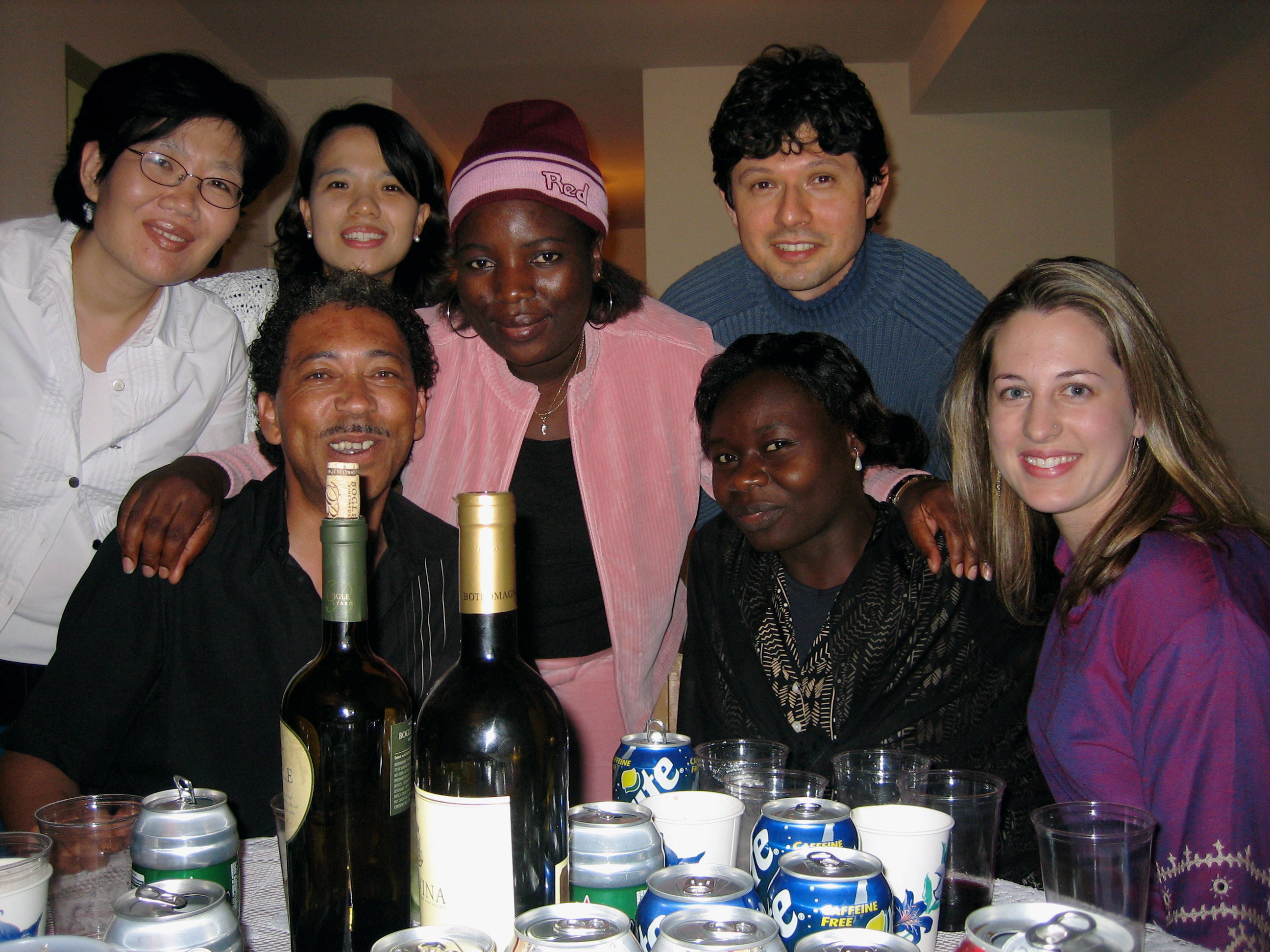
    Some very impressive Humphrey Fellows and me.
    Some very impressive Humphrey Fellows and me.

    It is a long way between meeting someone for the first time and marrying him.

    I saw my future husband for the second time early the next morning as I collected the entire group of Humphrey Fellows to escort them to their welcome meeting.  As an international studies major, I was in quite the fan-girl tizzy over the Humphrey Fellows, specifically the Fellow from Bhutan.  There are only about 700,000 Bhutanese in the world, and I was going to work with one!  I’d been bringing her up in conversation regularly for months in an effort to compete with my roommate’s stories from her internship on Capitol Hill.

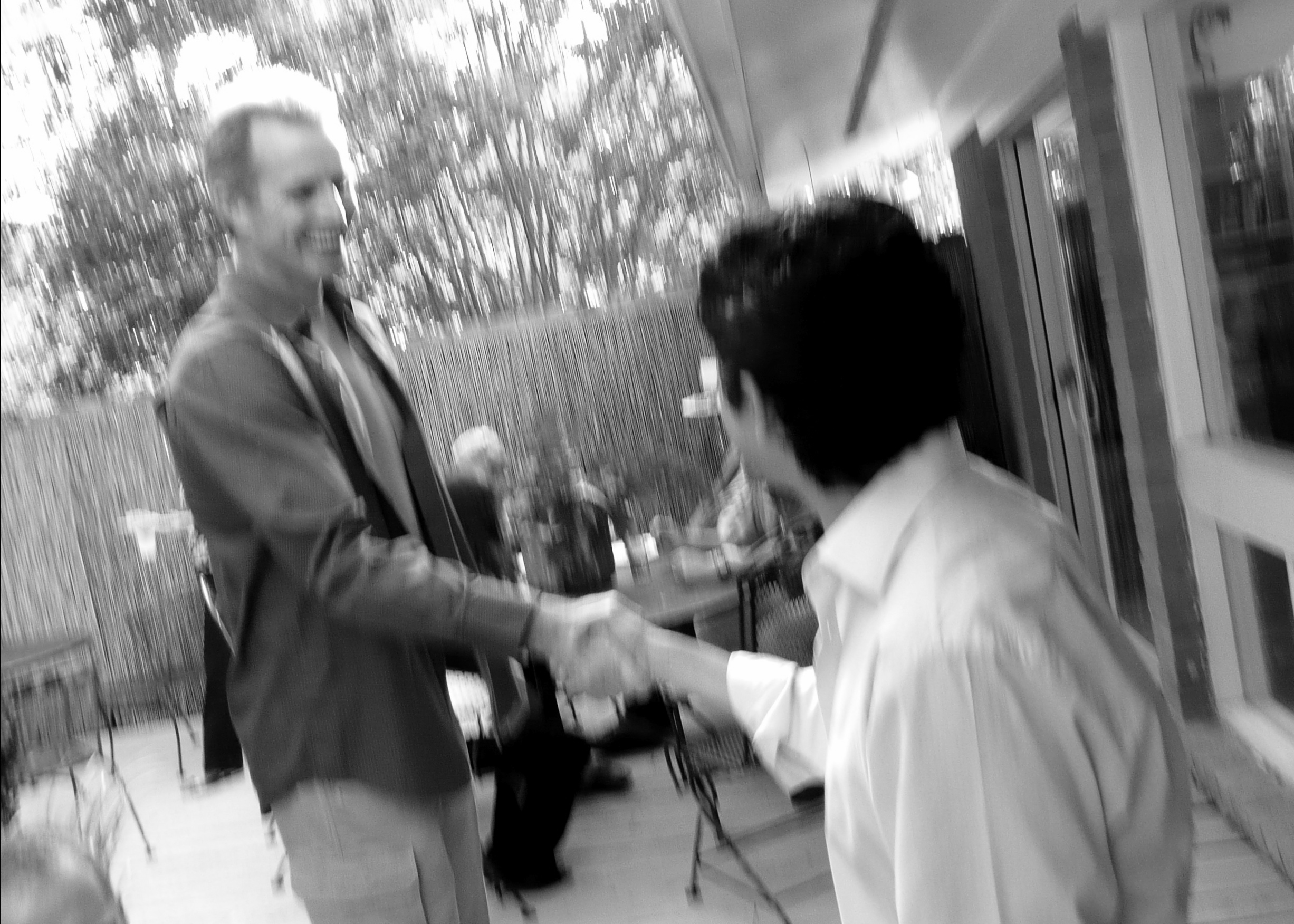
    On that typically humid August morning, I found my Brazilian waiting in the dorm lobby next to the Fellow from Kenya.  We chatted as the others slowly trickled down.  There was a lot of hand shaking and slow pronouncing of names, my own name included.  “It’s pronounced like Lynn, except with a Br instead of an L.”  “No, it’s not a boy’s name.  That’s Bryan, with an A.”  “No, I don’t think my parents knew my name would be unpronounceable to, apparently, the entire world.”

    Orientation for an international exchange program is probably the most emotionally exhaustive thing a person can go through that doesn’t involve a birth, a death, or a space suit.  A person is expected to navigate a new place, new culture, possibly a new language, and new people, all while jet lagged and in some amount of digestive distress from new food.  It’s not a vacation.  There’s no sleeping in.  I met the Fellows in the lobby at 8:45am for a welcome meeting that started at 9 sharp, and from that moment on for the next two weeks, it was a race to get them registered for classes, bank accounts, cell phones, and long-term housing before fall semester began.

    Our Fellows had an added emotional blow as they went from being up and coming stars of their respective professions to nobody.

    Welcome to Washington DC!  It has the highest concentration of PhDs, law degrees and self-esteem per capita of any city in the world.  You are now officially unimpressive.  You will not have maids.  You will not have secretaries.  If you don’t know how to send an email or cook, well…we can teach you how to email.  Try not to starve.

    Undergrads who study abroad don’t have these problems.  They haven’t been on their own long enough to be embarrassed by dependency.  The Humphrey Fellows however ranged in age from 35 to 50.  They arrived for their year in Washington with impressive CVs and very fragile egos.  Working with them taught me how to explain what to do with used toilet paper without sounding condescending.

    Culture shock and a complete lack of family and friends explain why I, at 22 with the ink still drying on my diploma, was treated by the Fellows as an equal.  Nobody asked me to get their coffee.  They asked me to explain the online course registration.  They asked me to listen as they cried over how much they missed their kids.  They asked me to explain the endless variety of milk in grocery stores.  At that moment in their lives, they needed an insiders guide to Americans.  I was an American with a embarrassingly fortuitously empty social calendar and that huge fan-girl crush on them.  I became the group’s cultural wingman.

    I started hanging out with the Fellows on weekends.  We went to a coffee shop at Dupont Circle for s’mores.  We hit some bars in Adams Morgan and tried out an Ethiopian restaurant for lunch.  The group changed depending on who had a paper due or a bad case of culture shock, except for one member: the Brazilian.  In my memories he’s always there.  Always up for anything.  Usually available for lunch.  He’d rented a basement apartment close to where I lived, and we often ran into each other on the shuttle heading to and from campus.

    But I was so hung up on his resume and the sixteen year age difference, I never imagined he actually thought of me as a fellow adult.  I was sure the Brazilian, like the other Fellows, was being incredibly polite to someone helping him.  When he paid close attention as I took him through every picture from my semester in India, I must have subconsciously chalked it up to good manners because I would never, NEVER, have brought a photo album to lunch with someone I actually hoped to date.

    About a month after orientation, the Korean Fellow invited everyone to his apartment for dinner.  I clearly remember a few wonderful minutes in the kitchen as the Brazilian taught me how to make caipirinhas and I tried one.  I blamed my flushed cheeks on the cachaça.  Later a group of us took the subway home.  It was several blocks to the metro station, and the temperature had dropped changing my sandals from cute to extremely impractical.  My toes were slowly freezing and I probably would have lost a few, if the Brazilian hadn’t stopped, taken off his shoes, and handed me his socks.  He gave me the socks off his feet.

    And I still didn’t see the first kiss coming.  But that night deserves its own story.

  • How I Met My Husband or Why I’m in Brazil

    How I Met My Husband or Why I’m in Brazil

    We met, we married, and I moved to Brazil.
    We met, we married, and I moved to Brazil.

    Ten years ago today, I met my husband.

    He showed up at the office a day early and if he had been less adventurous or more patient, if he had just followed his orientation schedule, I’d probably still be in Washington DC with an impressive career in international education.

    He was one of nine mid-career professionals from around the world being hosted by the Washington College of Law as part of the Hubert Humphrey Fellowship Program.  His welcome orientation was scheduled for August 4, 2005.  I was spending August 3 sprawled on the floor with my hair in a pony-tail  hole-punching, stacking, and assembling orientation binders.  At least, that was my plan, but about mid-morning the office manager poked his head into the conference room and told me the Brazilian was at the front desk.

    The office manager actually called him, “The Brazilian”.  We all did, even program staff at the national level, because no one had a clue how to pronounce his name, which is quite a statement considering the range of nationalities around the office suite.  My boss was out of the office, so I got to be the first to hear the correct pronunciation and fail repeatedly to say it.  We would be dating before I could correctly say his name.

    I saw him as soon as I stepped out of the conference room.  He was standing by the reception desk just beyond several ubiquitous office cubicles, including my own, and I thought, “Wow, he’s white. I didn’t know Brazilians could be white.”  It was the first in what has turned out to be a lifetime of revelations about Brazil, many of which have revealed an embarrassing number of unconscious assumptions based exclusively on Pelé.

    My second thought on seeing him was “He’s really handsome.”  My third was “I can’t believe he found this place.”  The program office was located in a suite on the bottom level of a building two blocks down from the law school.  The suite housed a variety of programs and offices, none of which had found a way to give directions that didn’t get most visitors lost.  The Brazilian had successfully navigated the maps and directions while jet-lagged and operating in a foreign language.  I was impressed.

    But I’d been impressed by him for months.  We received a binder on each Fellow that included a medical history, their complete program application with letters of recommendation, and the Fulbright selection committee’s evaluations.  The Brazilian came with a letter of recommendation from a Supreme Court Justice and a clean bill of health.  Not bad as boyfriend applications go.  For my part, I’d been a college graduate for three months.

    Truly I don’t know what about me got his attention.  Maybe it was my stellar administrative skills or consistent punctuality.  Somehow, I managed to make navigating my home country in my native language seem impressive.  Thank god for home court advantage.

    I wasn’t thinking relationship in that first moment.  After recognizing that he was attractive, I went straight to professional mode.  I took him on a tour of the school and to the bank.  There is nothing romantic about banking or walking around DC at midday in August.  Unless pit stains are considered a turn on.  We grabbed lunch at the sandwich place across the street where I proved I was strictly business and indifferent to others by ordering the onion smothered Greek wrap.  We chatted easily over lunch, and I believe that casual conversation over vegetarian wraps laid the groundwork for everything that followed.

    If my boss had been around that morning, she would have been the one to take him to the bank and to lunch.  If we had met the next day along with the entire group, we wouldn’t have had the rapport that made me the obvious choice to go with him apartment hunting while the other Fellows opened bank accounts.  And if we hadn’t gotten to know one another while touring some rather frightening basement apartments in Northwest DC, it wouldn’t have felt perfectly natural to meet up for lunch periodically over the coming weeks.

    By the time we went on our first date, we’d already opened a bank account, shopped for an apartment, and been subjected to a variety of team building exercises together. Rarely has a couple’s compatibility been so thoroughly tested.  All we lacked was an astrologer’s blessing.

    But all those moments came after that first meeting, when he showed up early and I mispronounced his name exactly ten years ago today.

  • 28 Days in a Brazilian NICU: The Mom Milking Room

    28 Days in a Brazilian NICU: The Mom Milking Room

    Day 2 of 28 in the NICU at Vitoria Apart Hospital in Brazil.
    Day 2 of 28 in the NICU at Vitoria Apart Hospital in Brazil.

    My daughter was born seven weeks early due to placental abruption.  That was a new term for me, placental abruption. Another one was UTIN.  That’s the acronym in Portuguese for Neonatal Intensive Care Unit (NICU).  It was one of the many Portuguese medical terms I learned after my daughter spent 28 days in a NICU in Brazil.  In the moment, each day felt like a lifetime. I was sure every minute of all 28 days had been seared into my memory.

    But they weren’t.

    My daughter just turned four, and I’m shocked to realize how much of a blur those weeks have become.  Most of the exact numbers are gone.  How many days was she on a ventilator?  When did she get above 2kg?  Of the many people who cared for my daughter, all but one of the names has been erased.  Now they’re the doctor with red glasses and the physiotherapist who spoke some English.  I suspect these details will disappear too.

    What has not faded in any detail, much to my dismay, is my memory of the milking room.  This was the place they sent the new moms to strip them dignity.  It was the room for hand expressing breast milk.

    Many preemies are born too small to breastfeed and are fed through a tube and syringe.  How do you get these babies breast milk?  The obvious answer is pump it, store it, and serve it.  Except the NICU did not allow breast pumps of any kind.  The hospital said it could not guarantee that an individual mom’s pump would be sterile, so they could not give the milk from from a potentially unsterile source to the baby.  The only way for a baby in the NICU at Vitoria Apart Hospital to get breast milk, other than on tap, was to hand express it.  This is as awful as it sounds.

    At least for me.  I am not particularly in touch with my body.  I’m more cerebral and would be quite content to be a floating brain in space except for the facts I do like going for walks and eating french fries.  I’m aware that my conscious self is housed in an organic Tupperware container that impacts how I feel, think, am, but I don’t dwell on it.  At least not until I get a stomach virus.  Or until I have to breastfeed a baby.

    And I was going to breastfeed.  I had done my research.  Despite my lack of emotional connection to my mammary glands, I was totally committed to breastfeeding.  I did not, however, anticipate having to milk myself like a cow.

    That’s what it is.  Hand expressing means squeezing out the milk by hand into a container.

    Despite that daunting psychological hurdle, I told the nurses I still wanted to breastfeed, so one of them led me out the backdoor of the NICU, down a hall, through an unmarked door, and into an unused storage closet.  Based on the size and lack of any comforts except three chairs, I assume storage closet was the original purpose of the room.  White walls, tile floor, no windows, and freezing cold.  This was the room I shuffled to, fresh from an emergency c-section, so that I could hand squeeze milk from my boobs.

    As I stood there shivering in my hospital gown, the nurse quickly went through the officially sanctioned routine that guaranteed milk I expressed in that closet would be more sanitary than what I could get from a pump: wash hands, don hairnet and face mask, remove the plastic cups from the packaging and take the lids off, wash hands again, wash nipples with gauze, squeeze milk into cup and seal the cup immediately when full.  Fortunately, she demonstrated the whole process because to this day I don’t know the Portuguese word for gauze or hairnet.

    Then she left.  No medical professional stayed in that closet with the moms.

    Want to guess how many of the moms expressing themselves actually followed that routine when left on their own?

    I know because it turned out to be a communal milking closet, and the answer is none that I saw.  The next time I went to the closet, two other women were already there happily chatting away, masks down over their chins.  I distinctly remember these two women because they were friendly, completely comfortable being half-naked in front of strangers, and filling up cup after cup with milk like a competition at a state fair.  I was none of those things.  I struggled to fill half a cup when alone.  Trying to hand-express milk in a freezer while confronting small talk in Portuguese and the four largest breasts I’ve ever seen in person was literally impossible.

    I got almost no milk out during that session or any other.  I subjected myself to breastfeeding purgatory every three hours for four days before finally saying “Enough.”  I believe breast milk is ideal.  I don’t believe it is worth torture.  I restarted breastfeeding only after my daughter was big enough to handle it herself.  Hand-expressing in that closet was one of the worst experiences of my life.  And I sat through the Sponge Bob movie.

    If I’d had any reserve of energy I would have been outraged.  I was being denied a breast pump on the grounds it wasn’t sterile, but there was nothing sterile about that room.  They sent a bunch of not-medically-trained women down the hall with instructions to wash their hands and wear a mask. I don’t believe a single doctor actually thought the milk coming out of that closet was sterile.  They know they’re in Brazil where actual laws are treated as suggestions.

    But I didn’t have the capacity for outrage then and I don’t care to feel it now.  True, an electric pump and a private space would have made a huge difference, but we all survived and someday the sound of someone else’s breastmilk squirting into a plastic cup will fade from memory.  In the meantime, I’ll milk it for the entertaining story it is.

    11ghkra

    Save

  • The Perks of Not Speaking the Language

    The Perks of Not Speaking the Language

    Or don't...depending on the situation.
    Or don’t…depending on the situation.

    I have a secret to confess.  I speak Portuguese.  Please, don’t tell my mother-in-law.

    I don’t speak Portuguese fluently. Nothing as impressive as that. I speak Portuguese like a 96-year-old suffering from extreme dementia.  My sentences are punctuated by gestures and facial expression to stand-in for words I’ve forgotten, and my responses to questions sometimes have nothing to do with what was actually asked.

    “Brynn, what did you do this weekend?”

    “No, I don’t like mangoes.”

    But more often than not, I can successfully converse, arrange appointments, and get the hair cut and color I actually want. (The correct hair color was something I mistakenly thought I could get after only recently arriving in Brazil with minimal Portuguese.)

    While life is greatly improved now that I don’t consistently confuse Monday and Tuesday, there are times when I play the clueless foreigner card without hesitation.  I should probably feel bad for perpetuating the ignorant, monolingual American stereotype, but it’s such an effective way to avoid all those tedious conversations that suck up patience and sanity: the chatty person with what sounds like TB at the doctor’s office, the perfume-drenched, close-talking lady from upstairs, all phone solicitors.

    I always answer my phone with a thick, American, “Hello.”  It’s the perfect screen.  Family and friends obviously know where I’m from and aren’t thrown by it.  Only salespeople freeze up and give themselves away with a long pause as they try to figure out what to do next.  Some hang up.  Some ask if they can speak to my husband.  Others plow doggedly ahead with their scripts.  I cut them all off and say sweetly in English, “Oh, I’m sorry. I don’t speak Portuguese. Goodbye.” Click.  Conversation over.  The salesperson doesn’t feel bad about losing someone they couldn’t talk to.  I’m back to watching John Oliver on YouTube. Win-win.

    I first employed this trick in Morocco.  Describing the young men in Morocco as persistent is like calling the Kardashians’ lifestyle “comfortable.”  Tired of being unable to walk two blocks without being asked to dinner and then asked why I was refusing, I answered one man with Croatian song lyrics.  Why Croatian? Because in almost every country other than the US, even misogynist assholes can speak more than one language.  But with only four million Croatians in the world, I was pretty confident Croatian would not be one of his languages.  I was right.  The guy stopped talking to me after a couple sentences.  He did still follow me all the way back to my hotel, but stalking is way less annoying when done in silence.

    Playing dumb also helps avoid awkward conversations with in-laws and before you judge, just imagine Thanksgiving with your in-laws.  What if you could avoid awkward conversations about politics or global-warming or when your daughter is getting baptized by simply fumbling the language? “Oh, what? When is she getting her booster shots? Next month.”  Wouldn’t everyone be happier if there was just a lot of smiling and complementing of the food?

    So before you get annoyed with the woman in the elevator for not speaking your language, check if you’re wearing deodorant, have brushed your teeth recently, and are saying something more interesting than the silence.  Then be careful what you mumble out loud.  There’s a chance she’s faking it.


    Find more fun adventures from life abroad!

    Expat Life with a Double Buggy


  • We’re All A Little Prejudiced: My Personal Encounters with Racism Around the World

    We’re All A Little Prejudiced: My Personal Encounters with Racism Around the World

    03380d86195895d94985f46283c97370
    Is your dark complexion keeping you from happiness?

    Many years ago I was dating a handsome Punjabi who lived in Milan, and we took a trip to Paris.  (That sentence makes me seem way more interesting than I actually am.)  While leaving our hotel one morning, he offered to carry my wallet.  “Thanks,” I said, “but these pants have pockets.  I carry my own money.  I’m not an Indian woman.”  He, being a human with feelings, rightfully gave me the silent treatment for the rest of the morning.  I, being an idiot, couldn’t figure out what was wrong and had to pointedly ask over lunch.

    My comment was referring to my fruitless quest to find a salwar kameez with pockets during my semester in Jaipur back in 2004. I spent four months in India looking for a place to put my cash.  I was trying to make a joke.  I failed.  To my friend, it wasn’t just not funny.  It was insulting to him, to his mom, his sister, and every Indian woman, so about 500,000,000 people.  Not my best moment.

    I share this memory in defense of Trevor Noah, the South African comedian who will be taking over for Jon Stewart on the Daily Show.  He’s gotten a lot criticism for some unfunny and unoriginal tweets about people who are overweight and Jewish.  I’m still a Trevor Noah fan.  Good people can be insensitive and thoughtless.  These people learn from their offenses, and these offenses can be pretty glaring when moving between cultures.

    Different cultures have different prejudices and sensitivities.  I’ve not been to South Africa but I wonder if they have the same level of sensitivity to weight related jokes that exists (only recently) in the US.  Brazil doesn’t.  I don’t believe any of Noah’s tweets would raise an eyebrow in Brazil.

    The truth is I’ve never been to a country that was not rampant with prejudices.  Every culture has groups of people that it marginalizes, fears, or has very little contact with and thus, no sensitivity to.  To make my point, here’s a global tour of prejudices I’ve encountered around the world.  And since people can be the worst with all our many, many prejudices, I’ll just focus on race for now.

    I once spent a summer in rural Croatia. It is the whitest place have ever been.  It’s like a town populated exclusively by the audience of the Country Music Awards, except with a better grasp of geography.  When I mentioned to my homestay sister that it was weird for me to be in a place with no people of any color except white, she cheerfully informed me, “Oh no, there’s one African.  He plays for our soccer team. They brought him here because those people are really good at soccer.” I was also told that throwing bananas during games is just a joke. It’s all in good fun.

    Morocco was the first place I discovered the product Fair and Lovely.  After repeated applications, this cream will lighten the complexion of any young woman and save her from the bad husband and unhappy life resulting from dark skin.  I was so horrified by it, I couldn’t bring myself to buy it as a joke.  In Morocco I also learned about the two Africas.  A fellow student in my program had shown me how to wrap my hair up in a scarf, and I sported the look almost daily for awhile.  Eventually, my homestay mom said I should try a different style because my style was how “African women” wrapped their hair.  I was momentarily confused because Morocco is in Africa, but of course she meant Sub-Saharan Africa. Black Africa. Not Arab Africa.  Even in Africa you can’t be black.

    India, unfortunately, also had Fair and Lovely and it was running a truly spectacular commercial.  A girl, in her early teens, is on the couch watching a cricket match, pretending to call the plays into a hairbrush.  Her mom appears and lovingly embraces her daughter while handing her a tube of Fair and Lovely.  The girl diligently applies the cream to her face before bed.  Leap to the future and a young woman with skin several shades lighter is taking her place in the announcer’s booth at a cricket match.  She’s smiling, loving life, and so thankful her lightened skin has helped her get a job as a radio announcer.

    White skin is also a prized commodity in Brazil.  Well maybe not “white” skin, not with all the beaches and lack of clothing, but blond hair and blue eyes are prized possessions.  Almost every Brazilian who sees my daughter for the first exclaims over her blue eyes.  The teachers and staff at school affectionately call her “Blondie”.  The staff of the preschool is almost entirely dark skinned and the students are almost entirely white.

    Brazil does have very strict hate speech laws which make racist remarks a crime, and I think they do limit the amount of explicit comments directed at Afro-Brazilians.  The law does not, however, seem to protect gays or anyone from the continent of Asia.  If there’s a gay joke your local PC police are holding you back from, come to Vitoria, Brazil.  You’ll get a hearty laugh because here men know there is nothing worse than being gay.  Do you think pulling down the corners of your eyes when talking about Japan is absolutely hilarious?  So do a lot of people in Brazil.  Here’s a commercial for the fast food chain China in Box. Please, watch it and tell me in the comments if your mouth dropped open too.

    I used to teach high school here in Vitoria, and I’ve had to stop my classes more than once to say,  “Never, never do that thing with your eyes in my class.” Some students then helpfully explain that the gesture is not racist in Brazil, and Americans are too sensitive about race.  I’ve heard the sentiment many times.  “Americans are too sensitive about race.”  Also, “Americans have a real problem with racism.”  Americans are very sensitive racists.

    The truth is we’re all a little bit racist or homophobic or Islamophobic.  Every person has prejudices and every culture has groups it doesn’t encourage empathy with.  My students here have had little to no contact with anyone from anywhere in Asia.  The jokes they make reflect this.  I think the solution is asking the students, asking ourselves, to consider the other group’s perspective. In short, empathy.

    I know, I know.  Actively respecting other people’s feelings requires thinking and we’re all so busy.  It may also require us to apologize when we fail to do that thinking and offend someone, and apologizing is the worst!  It implies we’re not right all the time!  I also understand the temptation to blame whoever for being overly sensitive.  Then we don’t have to feel guilty for hurting someone.  I hate feeling guilty.  It’s such a downer.  Speaking of downers, we are all going to have to drop some jokes about Latinos, women, gays, foreigners, the disabled, the indigent, Catholics, Muslims…oh my god, is it even possible to be funny while respecting others?  Yes, it is.

    And I think Trevor Noah will learn from his mistake.  I learned from mine that morning in Paris and the many more I’ve made since.  Empathy requires more energy than indifference, but the result, a kinder world for all, seems worth the effort.

  • I enjoy comics, therefore I am a geek.  I think.

    I enjoy comics, therefore I am a geek. I think.

    ls
    I admit it. I had X-men comics as a kid.

    A couple weeks ago as I was skimming the Internet, I  saw the latest Avengers: Age of Ultron trailer.  I saw it five times in a row.  When I discovered in the comment stream that the movie opens on April 23 here in Brazil, a full week earlier than in the US, I squealed for joy.

    Last Friday, I was browsing books on Amazon and it recommended the fourth compilation of the Saga series.  I hadn’t even realized it was out!  I gave thanks to the omniscient Amazon gods and ordered it immediately.

    This week I’m putting the final touches on the second draft of my 216 page graphic novel.

    I can no longer hide from the truth.  I am a geek.

    I suppose I’ve always known on some level, although I’ve repressed it for decades.  My brother is a gamer and has actually attended a Dragoncon, so I think it might be genetic.  I definitely don’t think it was anything my parents or society did.  I grew up in an upper-middle class suburb outside of Atlanta in a congressional district that doesn’t even have a Democratic party office.  There were club sports, sleepovers, and more churches than gas stations.  I had everything necessary to be totally mainstream.  Yet, my absolute favorite cartoons growing up were X-men and Batman.  I watched reruns of Batman every day after school long after I knew I couldn’t admit it at my lunch table.

    I was very confused.  I liked X-men comics, but I also made top grades, was elected to student council, and played varsity sports.  I didn’t have trouble making friends or shopping at the Gap.  It was made clear, by people on both sides of the line, that people who liked comics and superheroes didn’t do those kinds of things.  Also, I have a vagina, so I couldn’t possibly be a comics fan.  I was assigned a side, which I’ve stuck with until now.

    And there are most definitely sides.  I’ve done my research, and the internet divides people into two distinct camps: geeks and non-geeks.

    Geeks like comic.  They also enjoy animé, very elaborate games that require an entirely new language of acronyms like MUDs, ADnD, and MMORPGs, dressing as characters from their favorite comic/movie/tv show/video game, and toys.  Lots of toys.  When not cosplaying, geeks also enjoy wearing cotton tshirts with witty quotes or logos proudly promoting their geekhood.

    Non-geeks enjoy the outdoors, Starbucks, Top Gear, and yogurt.  They frequently wear cotton tshirts with logos promoting their favorite sports team and/or player.  They believe books with pictures are for children and adults only read celebrity cookbooks, Literature (with a capitol L), or war memoirs.  When not wearing their team colors, they are wearing Old Navy or J. Crew depending on income.

    Since high school, I have been living my life as a non-geek.  I love Starbucks and my reading time has been devoted to Capitol-L authors such as Jhumpa Lahiri, Barbara Kingsolver, Margaret Atwood, and Toni Morrison.  Then some time in my mid-20s, I came across a list of the “100 greates books of the 20th century.” I don’t remember who created the list. I think it was Times or maybe a freshman English major at Berkley.  Either way, I know the list included Watchmen by Alan Moore, illustrated by Dave Gibbons.  I was intrigued.  How did this comic, masquerading as a novel, end up on a list of “Greatest Books”?  The contradiction was there in the title, Greatest BooksThis list put a comic alongside Hemingway and Alice Walker.

    I was aware of the term graphic novel but didn’t understand it until I read Watchmen.  Then for Christmas my brother gave me Y: The Last Man and 100 Bullets.  Another year, a cousin gave me American Born Chinese.  I discovered Fun Home was named the best book of 2006 by Time.  Then one day I looked at my bookshelf and discovered a row of graphic novels, what my non-geek kind still refer to as comic books.  I had a shelf full of comic books!

    What can I say?  I’m sucker for a good story.  Combine memorable and complex characters with good writing and you’ve got me, even if the story is told in illustrated panels.  American Born Chinese is one of the most elegant pieces of story telling I’ve ever read, and it’s a graphic novel for young adults.

    I guess that makes me a geek, but I’m a little worried about what coming out as geek means. Geeks seem to make being a geek such a huge part of their identity; I’m afraid about half-assing the role. Can I love the Avengers movies without understanding the difference between The Avengers, The Mighty Avengers, and Avengers Assemble?  Because I’m really busy and just don’t have the time to figure that out.  Do I have to be willing to stand in line for two hours for an autograph from a Star Trek cast member?  Because frankly there’s nothing short of life saving necessities that I would stand in line for two hours to get.  Although I admire the passion. And the patience.  I could use more of both.

    Oh, and about the costumes…they look wondrous but also super impractical.  If I’m going to walk miles around a conference hall filled with 100,000 people, I’d prefer something breathable.  Is there a character I could portray in linen pants and a pair of Toms?  No?  Well, maybe I’ll write one.  As soon as this non-geek geek gets her first graphic novel sold.  But that’s a post for next week.

  • Talking Small in Brazil

    Talking Small in Brazil

    P1010054
    Small talk across cultures…

    Today my daughter and I went through our regular morning routine.  We had breakfast while watching cartoons, got dressed, and somewhere between the front door of our apartment and the front door of our building she decided she’s never going to school again.  As usual, I hobbled out the door to our building with a child hanging on one leg, two backpacks, a bag of objects starting with the letter of the week, and, for extra fun today, an umbrella.  While negotiating the concrete stairs, the window of the front desk slid open on cue and our building’s porteiro (door person/front desk receptionist) stuck her head out.

    This woman’s commitment to good manners is unwavering.  It doesn’t matter how loudly my daughter is crying or precarious my balance on the steps.  She will call out a greeting to us, comment on my daughter’s cuteness, and wait for a response.  As I call out a frazzled good morning in Portuguese between promises and pleas to my daughter in English, the porteiro in cheerful Portuguese tells my daughter not cry because school is fun! Truly, nothing is more helpful when negotiating a tantrum than to have a relative stranger shouting encouragement in another language.

    Such is the Brazilian commitment to small talk.

    Screaming toddlers in the rain won’t deter a morning chat.  I come back from the gym sweaty and stinky, and I still can’t avoid a discussion on the humidity with our porteiro, a maid, and two retirees.  Yes, it sure is hot.  Just look at my face in a puddle on the floor there.  I’d really love a shower.  After the heat and humidity, inflation is the next hottest topic to discuss with taxi drivers, elevator companions, and stylists.  Here in Vitoria, you can go ahead and blame all three on President Dilma.

    My first experience with the Brazilian determination to converse happened at the pool of my old building in Rio.  I had head phones wedged in my ears, a highlighter in hand, an open journal article on my lap, a stack of ten more to my left and a total of five words in Portuguese.  I non-verbally screamed, “Don’t talk to me,” but not loudly enough to deter the lifeguard.  There was no way to get rid of the guy short of saying “Stop talking,” but as I couldn’t use the imperative in Portuguese, I was stuck.

    I hate small talk and unfortunately for me, Brazilians are generally an extraordinarily friendly and happy people.  How exhausting.  Fortunately for me, the man I married is the most anti-social Brazilian currently living.  He is an outlier that skews all  data about Brazilians, and serves as a reminder that while culture is real, each person is an individual.

    At least a lifetime of training among small talkers won’t go to waste here.  You see I’m from the South, the region of the US formerly known as the Confederacy.  We do our small talkin’ with more ice tea and fewer “g”s, but we do it and love it.

    At least, we can fake that we love it.  I don’t believe anyone feels genuine excitement over someone’s new, home-made seasonal door swag.  But when the saleswoman at Michaels raves about the gold spray paint she just used on hers, a good southern girl will exclaim on the good fortune, express gratitude for the knowledge by referencing her own failed attempt at a similar project, and ask for suggestions on holiday napkin holder crafts for kids she may or may not actually have.

    Successful small talk requires a lot of energy and even more if you have to do it in a second language and foreign culture.  You need not only correctly conjugated verbs but also content.   Small talk requires knowledge about topics appropriate for discussion i.e. the weather, current events, pop culture, and fluency in non-verbal cues to know when it’s time to change topics or wrap things up.  Pulling all this off in a new country is exhausting and I’m just not inclined to invest this energy in someone I will only be in line with for another five minutes.

    I know this makes me the shy or rude foreigner and that by Brazilian standers my building’s porteiro is hardly a stranger.  Neither is my mother-in-law.  I just think one of the best things about being a happily-married, self-employed adult is that I don’t have to win the approval of strangers, bosses, or periphery acquaintances.  Not unless I’m in the mood.

    I know when the apocalypse comes no one here will be inviting my husband and I onto their boat.  But I have a super cute Brazilian daughter.  I’ll leave it to her to small talk our way on board.

    Image_zps04194192

  • The Super-Awesome, Amazingly-Exotic Expat Life

    The Super-Awesome, Amazingly-Exotic Expat Life

    The daily rainbow in Brazil.
    The daily rainbow in Brazil.

    When I’m back home in Atlanta, I try not to mention that I live in Brazil.  The opportunity presents itself with surprising frequency, usually when a sales associate asks if I’d like to sign up for a rewards card.  I decline saying “I’m just visiting for the holidays.”   Nine times out of ten, at least in the state of Georgia where people still practice things like small talk and friendliness, the person will ask “Oh, where do you live?”  Then I’m stuck.  “In Brazil,” I answer, and I’m at the counter another five minutes as I tell my story and confess that I have not in fact learned to speak Spanish.  Though I have learned the local Portuguese.

    I can’t blame people for their wide-eyed excitement and curiosity about my life.  Americans are under the impression that life south of Texas or north of Idaho or on the other side of an ocean is more…something.  More exciting.  More dangerous.  More romantic.  More barbaric.  More luxurious.  They’ve seen movies set in these “foreign” countries and read articles like “3 Things Dating Foreign Women (And Marrying One) Taught Me” which tell people what a romantic adventure life can be if they only find a spouse with a different passport.

    As someone who did manage to land a coveted foreign spouse and move abroad, I can state that it’s all true.  My life is more exciting than everyone else’s.  It’s more romantic and luxurious yet still a rewarding, character-building challenge.

    Take my very first meal in Brazil.  I got to eat in the food court of the nearby mall.  My future husband took me and it was incredibly romantic.  The din of the other customers drowned out our voices, so we could only stare into each other’s eyes.  Because I arrived in the midst of remodeling the apartment, I had the opportunity to tour all the best hardware stores in Rio de Janeiro.  The thrill of shopping for toilet seats abroad really gets downplayed in expat blogs.  The only thing in Brazil that rivals shopping for toilets is getting finger printed for a visa at the federal police.  The ink smells like jasmine.

    Living in Brazil has also given me the opportunity to learn a new language.  It’s a fact that everything is sexier in a foreign language. Doesn’t matter which language.  They’re all sexier than English.  Here are some of the local Portuguese phrases I learned in my first months here.  Encanador.  Plumber.  Conta corrente conjunta.  Joint checking account.  Seguro de saúde.  Health insurance.  Absorvente interno.  Tampon.

    If you are ever lucky enough to visit Rio, I recommend driving from downtown to the suburbs at 5:30pm.  It will give you an authentic local experience.  Turn the air-conditioning off and roll the windows down to really go native.  Be sure to have the GoPros charged because friends back home will want to watch this trek. All three hours of it.

    Anyone leaving the US should do their family and friends the favor of recording every second of their time abroad.  They’ll thank you for allowing them to live vicariously through you.  After all, life outside the United States is one long perpetual vacation.  Nobody goes to the grocery store or a “job” in foreign countries.  The people serving coconuts on the beach here in Brazil? Robots.  All of them.  Where do you think Walt Disney got the idea for the Hall of Presidents?  He stayed at the Copacabana Palace in Rio.  Actual Brazilian citizens don’t work and if you’re fortunate enough to get residency neither will you.  People who live here just go to the beach and gym everyday.  I haven’t had to run an errand since I arrived in September of 2006.

    Having a child abroad with a foreign spouse (Yes, even in Brazil my Brazilian husband is the foreigner.  I can’t be a foreigner because I’m American), it only adds to the drama and glamor of the expat life.  I’m writing a screenplay based on my experience of visiting the US consulate to prove the maternity of my child.  I’m hoping Ridley Scott will direct and it will star Angelina Jolie (as me), Antonio Banderas (as my husband), and Jack Black as the unwieldy and misunderstood stack of paperwork that ultimately saves the day and gets us the US birth certificate.

    Those of us living in far-off, exotic lands know that “living” abroad is exactly the same thing as “vacationing” abroad.  Don’t make the mistake of thinking that most people in the world are busy going about the tediousness of living day to day, with the jobs and childcare and home repairs and laundry that human existence demands.  No, no.  Life outside the US is romantic and electrifying all the time.  In fact, I have another Brazilian adventure planned for this morning.  I’m going on an excursion for light bulbs.

  • Why I Don’t Want Another Child

    Why I Don’t Want Another Child

    My daughter at 3 years
    My daughter at 3 years

    Yesterday my husband, daughter, and I headed out early for a morning on the beach.  We dug a giant sand pit, built and promptly stomped on sandcastles, and failed to convince my daughter stepping on seaweed is not the absolute worst thing in the world.  We followed this with fish stew and fried bananas on the beach.  In the afternoon, there was a skype call with grandparents, tutus, and puzzles, and a thirty minute tantrum during which my little ballerina spit in my face.

    When I finally crept out of her bedroom at night, I collapsed on the couch thinking “I will never do this again.”

    There it is.  My true feelings about parenthood.  I love my daughter.  I also love myself.  And I cannot spend any more of my one lifetime parenting a small child.

    Despite being born with a uterus, I never dreamed of having children.  In high school through my early twenties, when I imagined my future it never included children.  I pictured travel, politics, law, publishing a book and going on tour, or accepting an appointment as a US ambassador.  Babies never made an appearance.  Then I got married and in my late twenties, I began to think that a child might be nice.  Also, my husband is sixteen years older than I am and given women’s tendency to outlive men, I’d rather not be alone for the last twenty years of my life.

    Wanting a guaranteed companion in old age is a pretty selfish reason to have a child.  But aren’t they all?  I’ve never heard of a couple having a child because the kid asked to be born.  “I’ve always dreamed of a big family.” “We need someone to carry on the family name.”  “I just love babies.”  All selfish reasons.  Yet society reacts with hostility to a person who decides, “Yeah, I had a kid and I really don’t like parenting a baby. I won’t be doing it again.”

    Of course, I’m not just a person deciding I don’t want more children.  I’m a woman declaring I’d rather spend my Sunday afternoons reading as opposed to stringing macaroni necklaces.  I searched for other posts about women with one child by choice, and every mom wrote about her family feeling “complete” with just one.  One child just “feels right.”  Not one mother said, “It was hard.  I struggled.  And I’m not doing it again.”  Well, I’ll say it.  The last three years have been a struggle and I’m not going through it again.

    My daughter was born seven weeks early by emergency c-section after a placental abruption.  She spent 28 days in the NICU.  Her stay would have been shorter but she developed a food allergy at 2 weeks-old which caused loose, bloody stools at every feeding and meant I, the breastfeeding mother, had to begin eliminating things from my diet to isolate the cause.  I eventually removed all dairy, soy, peanuts, nuts, eggs, tomatoes, and berries from my diet but traces of blood and a poopy diaper every two hours continued for 7 months.  I clearly remember sitting at a Mexican restaurant, surrounded by my entire extended family and their plates of cheesy, processed deliciousness, while I ate my skinless chicken breast between two crumbling slices of homecooked, dairy-egg-soy-free bread.  On the plus side, I dropped to under my pre-pregnancy weight in three months.

    Since her homecoming my daughter has rejected the idea of sleeping in her own bed.  Not just her bed.  In her early months, she rejected swings, vibrating chairs, strollers, moving strollers, car seats, swaddling, and every means of soothing except a parent’s arms. And when I say “reject”, I mean she would scream until she couldn’t breathe, and it would take fifteen minutes of rocking to calm her back down.  At 3 and a half, she still doesn’t sleep the whole night in her own bed.  At least now, she will wake up and walk to our room and not just scream waiting for us to come.

    Her separation anxiety is so extreme, I have spent exactly one night away from her since she came home from the hospital.  It happened this January, while we were visiting my parents.  We prepped my daughter for days.  Mommy and Daddy were going away for a couple of days but she would be with Gramma and Grandpa.  There were chicken nuggets, new toys, and Legoland.  My husband and I kissed her goodbye at 6pm.  She cried from 2:30 to 7:30am and was back with us after 20 hours.  It’s been two months and still every story she plays out, with stuffed animals, Legos, or Littlest Pets, involves a lost parent.

    I haven’t even mentioned her tantrums.  And I won’t except that my dad witnessed one and described it to my brother this way: “Whatever you’re imagining, however awful…it was worse.”

    I’m not writing all this to convince anyone of how hard I’ve had it.  My daughter is happy, healthy, and growing.  Despite being a preemie, she is now on the median line for height and weight.  Her teachers send home glowing reports about what an active participant she is and what strides she has made recently with sharing.  When I ask her teachers about the tantrums, they acknowledge her fits are extreme but not abnormally so, and they are occurring less and less often.  It’s clear she will outgrow them.

    My point in listing my greatest parenting challenges (so far) is to say that as tough as these years have been, they could have been worse.  Much worse!  A second child could have health complications or developmental challenges that make my daughter’s early life a three year vacation. My marriage can’t take that.  My sanity can’t take that.  I can’t take the risk!  In the choice between a sane mother and siblings, I think we can universally agree a sane mother is more important for a child’s development.

    In the most private recesses of my mind, I think that I am simply too selfish for a parent.  While pregnant, I thought that hormones would flip some martyr switch that biology had surely hard wired in me.  It didn’t happen.  My dreams, interests, and personality remained mostly unchanged. I would throw myself in front of a bus for my daughter, but I still find coloring and crafting tedious.  I’m making play-dough spaghetti and wishing I could get back to my book.

    I do see a light at the end of tunnel.  I see a turning point, a threshold, an event horizon approaching.  We recently took her out Stand-Up Paddling for the first time.  Fun was had by all.  She’s asking to revisit the sea turtle center, making up stories, and composing songs off of the top of her head.  I’m seeing flashes of a person, one I can’t wait to know and think I’ll have a few things in common with.

    I definitely will not be repeating the past, but I am genuinely excited about the future.


    Brilliant blog posts on HonestMum.com