

Tag: Politics
-
Democracy By Cycle Rickshaw
Throwback to 2004 when I studied abroad in Jaipur, India. I remember that semester so vividly it doesn’t feel like 13 years ago. I wrote this essay in 2007 for the digital magazine Glimpse, which like my time in Jaipur is now a fond memory.
 Walking down a street in Jaipur, India, I heard what had become a familiar recorded political message blasting out over loudspeakers. The message was imploring people to vote for a particular party in the upcoming election. I turned the corner, expecting to see one of what I had affectionately termed the “propaganda trucks.” But instead of a truck, I saw a man on a cycle rickshaw that looked about ready to fall apart at the next pothole it hit. The rickshaw had two loudspeakers, duct-taped to the handlebars, and dangling wires that crisscrossed back to a stereo, which was also secured to the rickshaw with duct tape. I watched the man pedal by, the squeaking of the rickshaw drowned out by the message blasting repeatedly from the speakers. I was so moved by one of the most humble, yet dedicated, displays of democracy I had ever seen that I decided to take advantage of being in India during a parliamentary election to research local political campaigns.
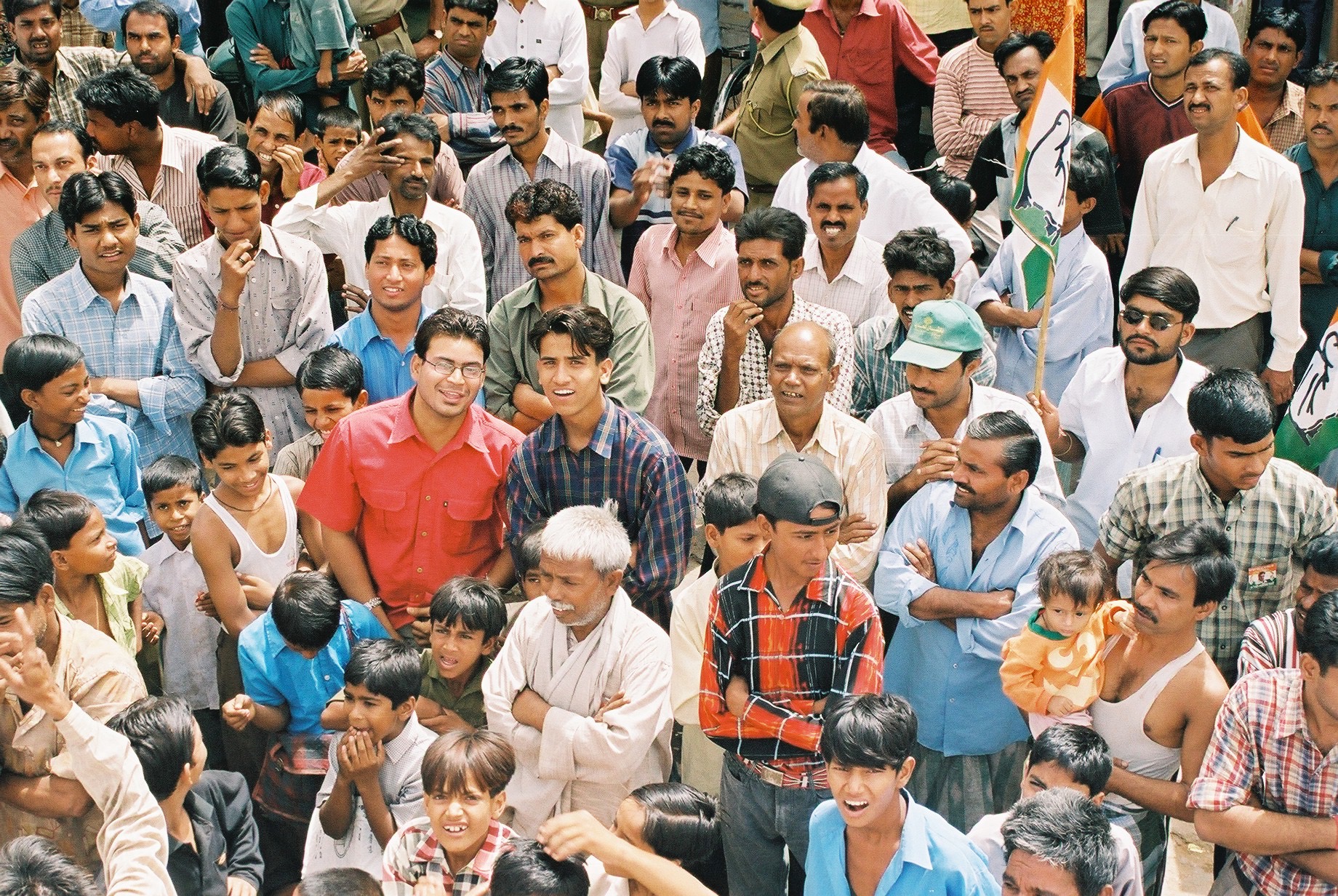
To begin my research, I followed a candidate during a day of campaigning in downtown Jaipur. A friend drove me to the market where the candidate was scheduled to make his first speech of the day. It was 7:00 a.m. and I was still brushing sleep from my eyes, but the market was already alive with people. A group of men was tossing heads of cabbage off a truck. Another group was passing some sort of melon down a line from a truck bed to the stand. Vendors were shouting, women were bargaining, chickens were clucking, and cows—well, they stayed quiet, but were standing resolutely in the middle of the street, inconveniencing everyone. The market was a swirl of activity amidst the brilliantly colored fruits and saris, making me feel as though I were walking through a kaleidoscope. A very noisy kaleidoscope. In the center of the market was a small stage decorated with marigolds, roses, and saffron and green Congress party banners.
 The candidate arrived about 7:40 a.m., and by 8:00 he had given his speech and started a small riot in the market. The crowd that gathered during his speech had been completely passive, almost indifferent to what was being said, but at the end of the speech some aides brought out boxes of sweets. When the first sweet was handed to a woman in the front of the audience, the impassive crowd suddenly turned violent, surging forward as if on command. Elbows dug into rib cages. Shirts were ripped. People were shoved to the ground. The noise of the market was now drowned out by the yelling of people desperately groping for a single piece of candy. The aides tossed the boxes of sweets into the air over the crowd and hastily retreated. I don’t know whether the sweets actually ended up in anyone’s mouth, or whether anyone ended up getting hurt. I didn’t get the chance to find out. My friend grabbed my elbow, pulling me off the stage.
 After successfully disrupting the daily routine of the market, it was off to a march and rally through the heart of downtown Jaipur. As I trailed behind the candidate I learned that a successful mobile political rally in India must include four things: 1) the previously mentioned “propaganda truck,” brightly decorated, and spewing party slogans through loudspeakers, 2) a group of school children with a sweet song to sing and rose petals to throw (if the kids can be in uniforms, they earn extra points on the “adorable scale”), 3) a memorable stunt of some kind that can be pictured in the newspaper, i.e. milking a cow, and 4) a passionate group of youths who can wave flags and chant nonstop for the entire three-hour walk. Combine these elements and a crowd of hundreds is guaranteed to have developed by the time a candidate has reached the platform where he will give his speech.
Some lovely school children who literally showered the candidate with rose petals. I’m sure it was purely their own initiative. After walking in the intense Indian heat for over an hour, enough time for everyone to have giant sweat stains under their arms, we finally reached the platform. Some of the party leaders invited me to stand with them, and although standing on the stage put me a little closer to the campaign than I had wanted, I thought back to the small riot we had started in the marketplace earlier that morning and decided it was definitely better to be above the large crowd.
The candidate finished his speech and the cheering crowd parted to allow him to walk to one of the propaganda trucks and climb on top, where there was a microphone hooked up to the truck’s loudspeakers. One of the party leaders turned and asked me if I wanted to go on top of the truck too. I definitely did not want to go on top of the truck. I was there to research a campaign, not endorse the man. I thought it somewhat unethical, not to mention awkward, to stand with him on the truck.
I was explaining my feelings on the matter when I heard the candidate say “America” in the midst of a bunch of Hindi I didn’t understand. Hundreds of people simultaneously turned and looked at me. Well, so much for non-participatory observation. In a quick analysis of the situation I decided it might not be wise to insult the candidate in front of 300 of his supporters. My decision was helped by a path suddenly clearing in the middle of the sea of people and two leaders taking my elbows and propelling me to the ladder on the truck. With many reservations, I climbed onto to the truck’s roof and stood next to the candidate.

We drove around to the point I had absolutely no idea where I was. I admit to second guessing my earlier decision making at that point. We spent the rest of the afternoon riding around stopping in every new neighborhood for the candidate to make a speech. The lack of seat belt, roof, walls or anything else designed to keep those of on top of the truck from falling off made it difficult for me to take notes. I spent most of the drive clutching the single, skinny guardrail that ran around the edge of the roof. I didn’t know where I was. I didn’t know anyone else in the truck. I didn’t know how I was getting back home. I was grateful to the candidate for letting me tag along but I found myself thinking it might have been better to research a topic that kept me in a library on solid ground.
Fortunately, I made it off the truck, with only one awkward moment right at the end when a party leader asked if I would say a few words about the candidate into the microphone. At first I thought he was kidding but he pulled out a piece of paper with a few sentences written in Hindi and told me he would teach me exactly what to say. I had started the day as an impartial observer and ended the day being asked to give a public endorsement over the loudspeakers. I was not about to support a perfect stranger or give a statement I didn’t even understand. At the risk of offending my hosts, I politely declined and climbed off the truck at the next stop.
 While the campaigns I observed in India were similar in many ways to U.S. political campaigns, they were ultimately, unmistakably Indian. There were the superficial differences: the garlands, turbans, saffron and green banners, the traditional white dress worn by male candidates and the saris worn by women candidates. On a deeper level, the wide variety of political parties vying for power reflects the wide variety of ethnicities, religions and linguistic groups that all live within the world’s largest democracy. A three-hour walking tour is the only way to reach a constituency that does not own televisions or radios. While India currently celebrates its technological advances, I believe its greatest achievement is bringing democracy to one billion citizens—democracy that is delivered when necessary by cycle rickshaw.
 -

King João VI of Portugal: Feared Crustaceans, Tricked Napoleon, & Lost Brazil
 One reason I love writing historical fiction is the chance to discover real people I’d swear were fabricated in someone’s imagination. King João VI of Portugal is one of these people. The man was born to be the comedic relief in someone else’s story. Sure, he was also born into royalty, but he seemed so much more suited for getting laughs than governing.
I discovered Dom João VI while researching for a book set in 1809 Rio de Janeiro. (Aside: King John is the English version of his name and title, which I won’t be using because that makes me think of English kings and Robin Hood but I’m writing about Portugal and there really are just too many people named John or some variation in human history). At the time of my story, João was Prince Regent and had been ruling in place of his mom, Queen Maria I of Portugal, since 1792 when she was declared insane. (Queen Maria is a whole other post.)
What to say about Dom João? He loved to eat. He always carried grilled chicken in his coat pocket for emergency snacking. This becomes even more disgusting after learning he also hated bathing and wouldn’t change his clothes for months. He was terrified of thunder and crustaceans, very inconvenient phobias when living in tropical Rio de Janeiro. João would literally hide in his bedroom during thunderstorms. He referred to himself in third person and was plagued by vertigo and hemorrhoids.
Not surprisingly, João was also the last absolute monarch of Portugal. What is surprising are his nine kids, which is eight more than I’d have guessed for a man universally considered a “peaceful dullard” with a “flaccid visage”.
 But the truly shocking and grand achievement of Dom João was surviving. When monarchs all over Europe were getting deposed at best and beheaded at worst, Dom João, the peaceful dullard, kept his crown, and he did it by being the only European monarch in history to move the capitol of his kingdom to a different continent. This man, who hated change so much his servants had to repair holes in his pants while he slept, moved the capital of Portugal from Lisbon to Rio de Janeiro.
João had been communicating with Napoleon in hopes of finding some solution that didn’t get him exiled or killed. Napoleon, the British, and pretty much everyone was under the impression Portugal would surrender to France. In 1808, the Prince Regent played Napoleon just long enough to order his government to pack up, board a ship, and get the hell out of Portugal before Napoleon’s army showed up. As someone who always preferred to delay a decision rather than make one, João gave the court three days to evacuate 10,000 people across the Atlantic.
That’s how Dom João VI found himself living in Rio de Janeiro, Brazil trying to establish court in a colony that had almost no roads between cities, no universities, no printing presses, and no trade with anyone but Portugal. Of course, the total lack of development in Brazil was intentional to keep the colony submissive and easily controlled. No Portuguese monarch ever anticipated having to live in this place where doctor, dentist, and barber was a single, mostly self-taught profession.
But it all changed under Dom João. He allowed roads, universities, and newspapers to flourish in Brazil. In exchange for escorting the court across the Atlantic, Brazilians ports were opened to the British and trade expanded. Academics, artists, and merchants flooded Brazil.
And Brazil declared independence sixteen years after João arrived in Rio. (Printing presses always lead to independence.)
As king finally back in Portugal, João conceded Brazilian independence in 1822 after a bloodless revolution led by the son he left behind in Rio to run the colony. His son’s betrayal probably didn’t bother him too much. At that point his wife had tried to overthrow him a few times so he was surely used to betrayal by immediate family. When he died in 1826, many suspected arsenic poisoning possibly ordered by his wife. (She really hated him.)
He may have lost Brazil for Portugal, but because of the reforms and development João initiated during his time in Brazil which led directly to independence, he’s remembered quite fondly here in spite of his eccentricities.
For my part, I can picture him clearly. His Majesty Dom João VI holding court, unbathed, and referring to himself in third while nibbling buttery chicken pulled out of a stained coat pocket that hasn’t been changed in a month. The perfect comedic relief.
If you’re interested in reading more about João and Brazilian history, I highly recommend 1808: The Flight of the Emperor by Laurentino Gomes.
-
When the Police Went on Strike in Vitoria

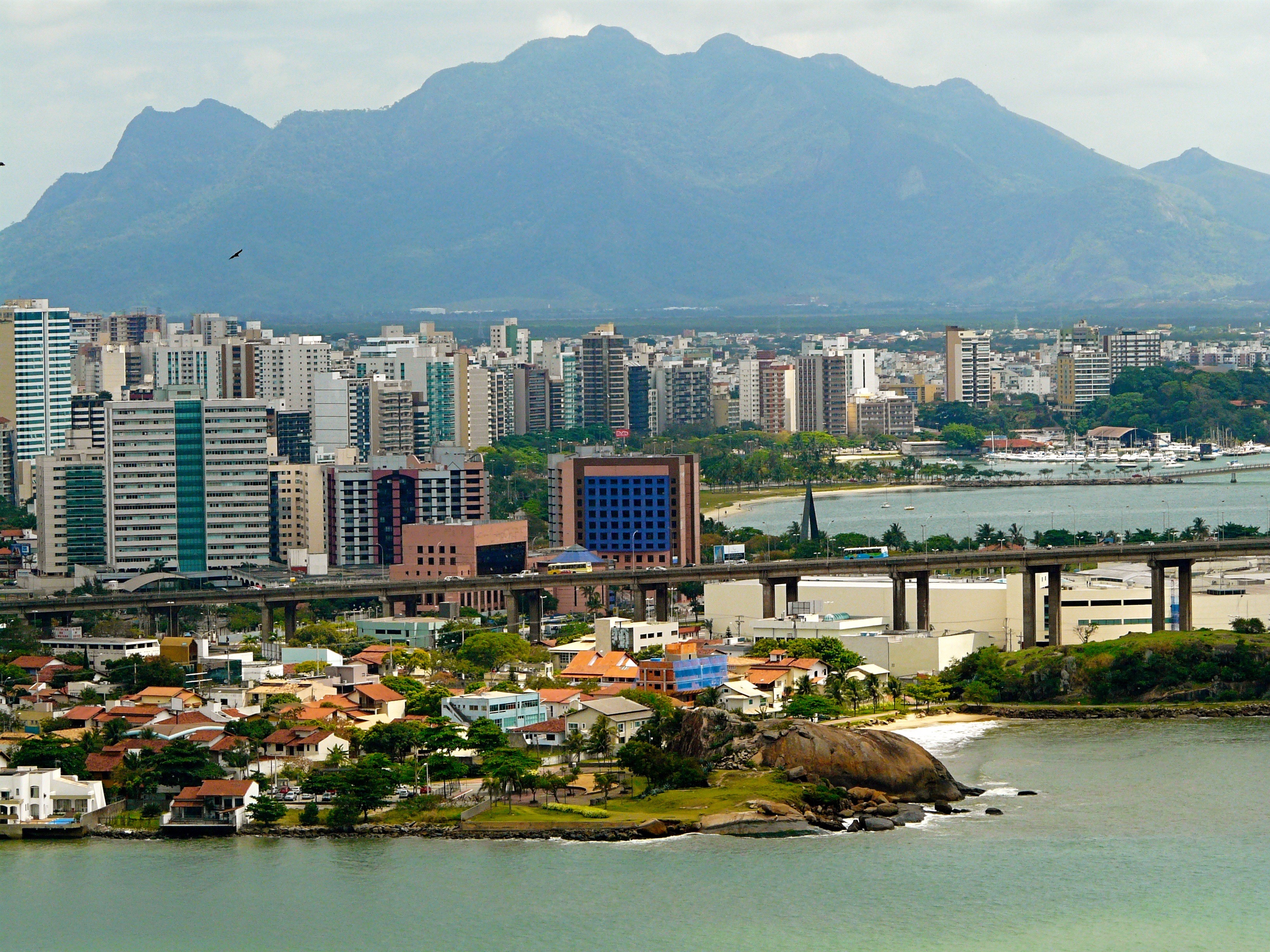
Vitoria, Espirito Santo, Brazil I’d been wondering how to break a five months long silence on my blog. I couldn’t think of a topic or an angle. I didn’t know what I wanted to write about to kick off a new year.
Then the police went on strike.
Early Saturday, February 4, the wives and families of police officers across the state of Espirito Santo gathered in front of barracks, forming human chains across the entrances effectively blocking any police or vehicles from entering or leaving the barracks. After four years without a pay raise and the lowest salaries of any police in Brazil, the movement wanted a raise and bonuses for night and higher risk work for the police. By late Saturday morning, there were no police on the streets anywhere in the state of Espirito Santo.
It actually took a couple of days for their absence to be felt statewide. Saturday was a totally normal day for us. We went to a park near the beach and had lunch out. A sitter came over later, and my husband and I had date night. We walked to our favorite restaurant, passing people grabbing ceviche from a food truck, walking dogs, or making a late run to the drug store.
The only hiccup came at the door of the restaurant. It was locked. There were people inside eating. The security guy confirmed the restaurant was open and within seconds a waiter let us in, locking the door behind us.
Our blissful ignorance lasted until Sunday morning. When planning our day, my husband said in passing “The police are on strike, so we should go somewhere with private security.”
Excuse, me?
One long term consequence of the strike for me personally is that I’ve now started reading my local paper. Something I should have probably been doing on occasion these last six years.
We did go out in the morning, but by Sunday evening we were having dinner at home. With the increased risk of violence, public hospitals, schools, and universities across the state closed for Monday. Private schools, including my daughters, followed suit. Monday, February 6, was supposed to be the first day of the new school year.
That night I noticed my husband locking the deadbolts before going to bed. We never locked the deadbolts before.
The texts from concerned friends around Brazil and even in Portugal started popping up Monday morning as did footage from around the city and state. While our neighborhood had been relatively quiet over the weekend, other areas were not as fortunate. Gangs of looters attacked stores around the metro area. A burning bus, armed robbers zipping around on motorcycle, shoot outs in the street. I learned several stores in our neighborhood had been robbed over the weekend, and pictures of smashed storefronts and videos of carjackings were filling up my Facebook feed.
Gangs were taking advantage of the police’s absence and shooting anyone from a rival territory who crossed their path. The number of murders in the metro Vitoria area over the weekend was 51 compared to 4 in January.
By Monday afternoon, the extent of the violence that had descended on the state in the police’s absence was clear. The state government asked Brasilia for military assistance.
We stayed home all day Monday. Schools were canceled for a second day, so we stayed home all day Tuesday. By the end of the day Tuesday after more than 60 hours at home, my daughter and I were screaming at each other over a Lego train. Our problems were nothing.

Vila Velha, Espirito Santo The city across the bridge from Vitoria. All part of metro Vitoria. By Wednesday the police union was reporting the number of violent deaths in Espirito Santo during the strike had risen to 90. 200 cars were reported stolen on Wednesday up from an average of 20. More than 200 robberies and assaults. Schools, stores, restaurants remained closed. R$90 million loss to businesses. Public transportation had stopped running. The streets were completely empty.
My dad called from the US on Wednesday morning.
I hadn’t called anyone. Our neighborhood was quiet, our doors were locked, and the army had been spotted patrolling a few blocks from our building. We were safe, so I didn’t see any reason to alarm family. But the BBC picked up the strike. For maybe the first time ever Vitoria, Brazil was international news, and my dad saw the headline.
I assured my dad we were safe and our neighborhood was calm. I told him about the Governor’s press conference that morning in which he passionately declared the strike illegal and unconstitutional and vowed not to negotiate with hostage takers. Meanwhile, one of the wives in the movement gave an interview vowing not to move until the police got a raise. So there wasn’t going to be any deal in the near future.
I didn’t mention the attempted building invasion that happened around corner Tuesday night.
I was putting my daughter to bed and didn’t hear the commotion, but my husband did. He thought it was people cheering the army driving through the streets. We learned the next morning that a gang had tried to break into one of the apartment buildings around the corner. Somehow they were thwarted, but we were done. What is a single doorman going to do against a mob? Our uneventful days at home now seemed more like good luck than legitimate security.
We bought one-way tickets for Rio and left that afternoon. The irony of going to Rio de Janeiro to escape violence is not lost on me. Our first day in Rio, there was a massive strike against the privatization of the water company. We drove by streets packed with police trucks and vans and battalions in full riot gear. “Oh, here are all the police.”
We spent the remainder of the police strike in Rio checking the news constantly to see if a deal had been reached. Friday night the government announced a deal, but on Saturday morning the wives and families announced they had no intention of leaving because they had not been included in the deal. The governor signed a decree handing security over to the army, which called in 3,000 troops. The strike was declared illegal in court, and police were ordered to return to the streets. A week after the strike began, the news reported more 700 police officers were being indicted.
With the additional troops, violence subsided and residents desperate to resume normal lives after a week of unrest returned to the streets. The buses were back to running on Sunday. Schools announced they would finally start the new year on Monday. We flew back on Sunday afternoon to find the city running more or less as usual.
As of this morning, the government says 1,900 police have returned to patrols, which is “close to the normal amount”. I’d like to know exactly how close, but I have a feeling the government wants everyone to just assume 95%. Based on how normal life around the city is, I’d guess that’s what we’re all doing.
There are still families protesting. Not all barracks have returned to patrols. The government has released a list of 155 names of officers under investigation. The state also released its own number of homicides. Between February 4 and 13, there were 143 homicides. February 6 was the most violent. 40 people were murdered compared to three the same day last year. The Federation of Goods and Commerce estimates losses for businesses will exceed R$300 million.

One of many articles on the protestors Through the whole crisis the wives and families surrounding the barracks insist the protest was their idea alone, and the police had nothing to do with it. They claim it was organized among themselves through social media without their husbands’ knowledge. No one believes this.
There were many people who agreed with them that working conditions for the police in Espirito Santo are abysmal. The government should be ashamed. Brazil’s economic crisis has been driving up inflation but the police in Espirito Santo haven’t had a salary adjustment in four years, let alone an actual raise. But they overplayed their hand. What started as a protest by wives, mothers, and sister gathering at a single barracks in Serra grew over the course of 24 hours to a full police strike that brought statewide chaos.
It was shocking, frightening, and for my part almost too surreal to feel anything. I went to the airport with my and my daughter’s passports in my shoes.
And now if you weren’t personally affected by the violence, it’s life as usual.
Except it’s pretend. People are dead and livelihoods lost. The police didn’t get their raise, and now hundreds are at risk of losing their jobs and the commanders are saying publicly the police department and its hierarchy has been completely destroyed. The army will be providing extra security for Carnaval celebrations and has promised to stay as long as it’s needed, which is indefinitely at the moment. And honestly having my streets patrolled indefinitely by soldiers trained for war, not civilian law enforcement, makes me queasy.
And yet I’m sitting at a café with my cappuccino writing a blog post loving the freedom that comes with a regular school day.
It was a disaster. There were no winners. Just a very, very long list of losers. I’d say I’m glad it’s over but it’s not over. The police might be back on the streets, but the fall out hasn’t even begun. And the list of losses will just keep growing.
-
Brazil’s Political Crisis Explained for Non-Brazilians
 A week ago, Brazil’s House of Deputies voted 367 to 137 to impeach President Dilma Rousseff. The vote lasted five hours and involved a lot of unnecessary shouting, spitting, and confetti.
I’m sure you heard about the impeachment vote even if you live outside of Brazil and aren’t following international politics. You might also have seen a headline about a corruption scandal in Brazil involving billions of dollars in public funds. Maybe you’ve read something about Brazil’s collapsing economy. The country’s gotten a lot of headlines in the last few months and a person could understandably be wondering, “What the hell is going on in Brazil?”
Here’s what’s going on in Brazil with enough context to paint a painfully vivid picture and enough jokes to make it palatable. To understand the extent of the seething rage under Brazilians’ normally chill exteriors, I need to jump back in time three decades.
Brazil is a relatively young democracy. The army seized control in 1964 and stayed in power until the mid-80s. The generals perfectly followed every page of the Military-Dictator Handbook, repressing speech, organizing, and all social rights. By 1980 student, workers, and militants were pushing back, and that year there were massive strikes organized, among others, by a young Luiz Inácio Lula da Silva aka Lula. Remember him. He’ll show up again. And again. And again until it becomes painfully ironic.
The strikes and protests helped lead to a “redemocratization” and a new constitution was adopted on October 5, 1988, making Brazil’s current government younger than I am.

The National Congress in Brasilia, currently hosting many future inmates. The Constitution divided the Federal Government into three parts just like in the US: Legislative, Executive, and Judicial. Differently than the US, both the Executive branch and the Federal Government in general are much more powerful than in the US. Don’t be fooled by the constant use of flip-flops and nicknames in Brazil. The country is extremely hierarchical. It’s a cultural legacy brought to Brazil by Portugal’s policy of ruling colonies by refusing to build universities or even roads in order to keep people in total subjugation.
The current constitution reflects this deeply embedded hierarchy by giving certain powers and privileges to members of the federal government. For example, members of Congress, cabinet ministers, and the President can only be investigated and tried by the Supreme Court. Currently 303 members of Congress are facing criminal charges or under investigation, so the Justices must be pretty busy. At least the President of the Supreme Court gets the perk of being fifth in line to assume the presidency in the event of a political disaster.
Speaking of which, Dilma’s impeachment is actually the second impeachment of Brazil’s young republic. They impeached the guy back in ’92, but given the awful state of Brazil’s economy then, a presidential impeachment probably barely made the front page. The economic situation in Brazil throughout the 80s and early 90s was terrible. Like invest in precious metals because the country is on its third currency bad. The inflation rates looked more like typos than real data. People ran to the grocery store on payday snatching items off the shelves before the clerk could put a new price sticker on it.
During these turbulent early years of the republic, the Worker’s Party, (known as PT) which got started during the strikes in 1980, was the leader of the opposition coalition in Brazil.
Embracing its roots as the voice of the working classes, PT fought against the deeply entrenched economic elite and policies that facilitated a huge wealth gap. Lula ran for president as the PT candidate four times before finally winning in 2002. You only fail when you quit, right? At this point the economy had stabilized. Lula initiated some social welfare programs that lifted millions out of poverty. China began buying everything that Brazil could produce. The economy took off. By 2006 developed countries were like “Hey Brazil, when did you guys show up to the party? We gave your chair to India a few years ago, but we can ask for it back.”

An Economist cover from 2009 For the first time in 20 years, Brazil had a growing economy and stable government. In 2011 Brazil passed the United Kingdom to become the 6th largest economy in the world. Brazilians were pumped, proud, and ready to finally take their place as a global power.
All this history is to give you some idea of the soul-crushing societal let down that happened when the shit hit the fan in 2014.
From a growth rate of 7.5% in 2010, Brazil’s economy shrank 3.8% in 2015. Today, Brazil is the 9th largest economy behind Italy, which has a fraction of the people and arable land. Unemployment is 8.2% and inflation is 9.4%, compared the government’s target rate of 4.5%. All those numbers are just to say that the country’s in its second year of recession and people are pissed.
At the same time that Brazil’s economy was headed down the toilet, the largest corruption scandal in any democratic country ever was uncovered. Now is the time for popcorn because this story makes House of Cards seem small time and easy to follow.
Back in the 90s, there was a humble money launderer who made a decent living hiding illegal income of politicians. He was arrested, convicted, served his time, and released. By the mid 00s, federal police noticed he was back in business. Apparently in Brazil, money launderers are like great Mexican restaurants. They’re rare and if you find one, you keep going back even if you know deep down it’s probably being investigated by public authorities.
Well, police grabbed the humble launderer and the guy, who’d been to jail before and was not doing that again, cut a deal and started dropping names. And more names. And more names. Police had uncovered a corruption scheme amounting to more the $5.3 billion and involving the most powerful political and economic players in Brazil, the now internationally infamous Lava Jato case.
From 2004-2014 political leaders through the state owned oil company, Petrobras, awarded contracts to companies that grossly overcharged the government, and the companies used some of that excess payment to say “thank you” to congressmen and party leaders for awarding them the contracts in the first place. Nothing shows appreciation like a stack of cold hard cash.
And what party was in control of Congress and the Executive at this time? PT and its coalition partners. The Worker’s Party. The party that built it’s reputation on fighting for working class citizens against the privileged elite was the driving force behind the largest theft of taxpayer’s money in the history of democracy. (I told you Lula’s story got ironic.)

Foto Oficial Presidenta Dilma Rousseff. Foto: Roberto Stuckert Filho. PT is also President Dilma’s party.
Back in 2015 when the investigation really took off, Dilma had NOT been implicated in the investigation. Everyone around was. PT’s treasurer is currently in jail. Lula’s former chief of staff is there too. Lula himself was under investigation. But not Dilma.
The thing is…Dilma was Chairwoman of Petrobras at exactly the time when the corruption was happening. That left 3 possibilities concerning her involvement:
- She knew about and participated.
- She knew about it but did nothing to stop it.
- She didn’t have a clue Petrobras was overpaying by billions of dollars and was the worst chairperson in history.
All possibilities made Dilma look bad. Her approval rating plummeted to 13% only 3 months after her second inauguration in 2015.

And a cover from 2015 So to recap, by July of 2015 Brazil was grappling with shattered expectations, a terrible economy, an epic corruption scandal, and a universally disliked president. The Brazilian people were understandably furious at the government for blowing the country’s best chance in a century to really improve quality of life and become a global player.
However, none of these things is grounds for impeachment. According to the Constitution, a president can only be impeached for committing a crime while in office.
So how did Dilma end up getting impeached? We’re stepping into the political muck now. Put your boots on.
October 7, 2015 The Federal Accounting Tribunal files for impeachment accused Dilma of fiscal pedaling in 2014. They claim Dilma forced the state controlled bank to make social programs payments from the bank’s own funds because the government was short on money and her administration was trying to hide that fact during an election year. Technically, the federal government cannot payoff its own debts with the bank’s funds, but it’s been done by every president. It’s very shaky legal ground, like a frozen pond in spring during an earthquake shaky.
December 2, 2015 After ignoring the impeachment request for months, Eduardo Cunha, Brazil’s equivalent of Speaker of the House, formally accepts the charges. He does this hours after PT drops its support of Cunha in an ethics committee investigation of him on charges of bribery, tax evasion, and money laundering. But he swears, cross his heart-and-hope-to-die, he didn’t advance the impeachment out of spite.
December 17, 2015 The Supreme Court defines the impeachment process because the Chamber of Deputies can’t get its act together and form a commission of 65 deputies to consider the charges with any semblance of openness and fairness. The Court rejects two commissions formed by the Chamber, and the proceedings are paused indefinitely.
March 4, 2016 As part of the Lava Jato investigation, prosecutors bring former president Lula in for questioning. Federal Police raid his home. People freak out both for and against him.
March 11 In a jaw-dropping move, prosecutors ask for preventive detention for Lula. Lula supporters clashed with police when he was being taken for questioning. There is no doubt an actual arrest would spark violence.

March 13 Millions take to the streets in the largest anti-government protest in Brazilian history. The people weren’t protesting only Dilma’s administration. Several opposition politicians got booed off the mic when they tried to speak. It was truly The People v. The Federal Government.
March 14 In what has to be the most blatant middle-finger giving from a democratically elected president, President Dilma doubles down and starts discussing appointing Lula for a cabinet position! F.U. anti-government protestors! Dilma wants to make Lula Ministro de Casa Civil, the chief administrator for the Executive and the most powerful person after the president. Oh, and remember that members of the federal government can only be investigated by the Supreme Court, so the case against Lula would be moved away from the prosecutors currently investigating him. But it’s for the good of Brazil, guys!
March 15 Plea-deal testimony from Senator Delcídio do Amaral, the head of PT in the senate, is released and he testifies that Dilma’s Education Minister offered him a bribe in exchange for not working with prosecutors. He also says that President Dilma knew all about the corruption happening at Petrobras during her time as chairwoman. I can finally fill in my Dilma square on my Lava Jato Bingo card!

How convenient for future casting directors that Moro is an attractive man in real life. March 16 Judge Sergio Moro, in charge of the Lava Jato case, releases a recording of a call between President Dilma and Lula revealing 1) that prosecutors had tapped a former president’s phone! and 2) Dilma seems to be appointing Lula only to keep him out of jail. While everyone freaked out over the phone call, a few did question if Judge Moro should have given up completely on judicial impartiality and released recordings in an ongoing investigation from a tap with a just-expired warrant.
March 17 Lula is sworn in as Minister. A new impeachment commission is sworn in. Basically, a lot of swearing happened in Brazil this day.
March 18 Supreme Court Justice Gilmar Mendes suspends Lula’s appointment on the grounds it was a blatant attempt to keep him from going to jail. Justice Mendes said it with more legal jargon but that was the gist of his decision. Also, large protests happen across Brazil against impeachment.

Can we say “future political career”? March 22 The Supreme Court removes Judge Moro from Lula’s case to review his decision to release the recorded conversation. The Supreme Court will now oversee the investigation against Lula. Oh well, he can console himself with the fact people are wearing his face on t-shirts.
March 29 PMDB, the largest party in PT’s coalition, drops out and pledges to support Dilma’s impeachment. PMDB is also the party of Vice President Michel Temer, so things got super awkward at the Presidential Palace.
April 11 The Commission to the consider Dilma’s impeachment votes 38-27 in favor of impeachment. The question will now be to a vote by the Full House of Deputies. Fun Fact: Of the 65 members on the Impeachment Commission, 37 are facing criminal charges themselves. I think the vote concluded with a Deputy ironically shouting “If we burn, you burn with us!”
April 13 President Dilma publicly accuses Vice President Temer of conspiring against her.
April 17 The House of Deputies votes 367 – 137 in favor of impeachment, more than securing the two-thirds majority needed to pass.
And that brings us to today. The Senate has until May 11 to vote on the issue and simple majority is enough to suspend Dilma and start a trial.
A lot of people celebrated after the impeachment, but despite the anger and disappointment with Dilma’s administration support for impeachment is at 61%. A majority but not the super majority you might expect given Dilma’s 10% approval rating.
Ideally, the only question would be “Did Dilma commit a crime by using state bank funds to make government payments?” and a trial in the Senate would answer that question. Of course, nothing happening in Brazil at the moment is ideal except maybe for vendors of inflatable Lula dolls in prison stripes.
The reason many people have no faith in the current government but don’t support impeachment is because everyone else in line to be president is way WORSE than Dilma. Let’s go through the line of succession.

Temer during the impeachment vote. He seems very cheerful. He’d probably manage to stay positive while stabbing you in the back. Vice President Temer is also under investigation and facing impeachment charges. He was named in Senator Amaral’s testimony for participating in an illegal ethanol purchasing scheme. His wife is 43 years younger than he is and has his name tattooed on the nape of her neck which I know is not a crime and and I shouldn’t judge but…ick.
Eduardo Cunha, the guy who led the charge for impeachment, is under indictment for taking as much as $40 million in bribes and faces 184 years in prison. He’s also known for aggressively pushing anti-choice legislation and tweeting bible verses. “And Jesus said, ‘Get while the getting’s good’.” Temer has already expressed support for Cunha and said he won’t ask Cunha to step down. Bros before the rule of law, amiright?
Third in line for president is the Senate leader, Renan Calheiros, who is also under investigation for corruption. Among the seven charges the Supreme Court is considering against him are accepting $600,000 to stop a Senate probe into the Lava Jato case and receiving $1.7 million in bribes for a drilling contract.
I think there’s one maid working at the Presidential Palace who isn’t likely to be in jail within the year. Maybe they could offer her the job?
Brazilians are facing a very tough choice in deciding between pro and anti impeachment. Did President Dilma commit a crime worthy of losing office and even if she did…do we give power to lying, hypocritical assholes? Who do you pick when everyone is a criminal?
Some commentators say Brazilians are being duped by a media controlled by that historically entrenched elite. They argue leaders pushing for impeachment are far more corrupt and will hault the Lava Jato once back in power. While it’s true the media here is extremely conservative both politically and socially, I think it’s a pretty patronizing view of the Brazilian people to think more than 60% of the country has been fooled by a handful of smarmy, rich guys. First, Dilma’s government did engage in some shady accounting and as for the Lava Jato case, she’s either guilty or incredibly incompetent. Nobody’s impeaching a saint. Second, from what I personally have seen and read from those in favor of impeachment believe removing Dilma is only the first step, not the last, in rooting out corruption in the government.
Still, it seems unlikely Congress is going to keep impeaching presidents until they get to the President of the Supreme Court, so removing Dilma just puts someone as guilty but more conservative in power who’s likely to stay there. For those against the impeachment, there’s nothing but a line of criminally indicted men from the economic elite pushing Dilma off a cliff. And she’s not even being impeached due to corruption. She’s being impeached for dubious accounting and to those against impeachment, it’s a purely political move.

Enough corruption! One thing is absolutely clear, no one in Brasilia is removing themselves power. The only thing they all agree on is that they did nothing wrong. If this were Japan, a third of Congress would have committed suicide by now, but alas we’re in Brazil and once elected to office a person becomes immune to shame. They used to be immune from consequences too, but that seems to be finally changing. That’s one thing, at least, Brazilians can be proud of.
-

Visiting the Martin Luther King Jr. Historic Site: The Power of Young People
 The wind gusted by, and my nose was numb by the time we crossed from the parking lot and entered the Visitor’s Center at the Martin Luther King Jr. Historic Site. It was a little unfortunate my step-mom and I had picked the coldest day in weeks to visit because the MLK Historic Site is a collection of buildings up and down the block where Dr. King’s childhood home and church are located. The facilities required walking. The weather required a hat.
 While peeling my gloves off in the Visitor’s Center, a helpful ranger told us that guided tours of Dr. King’s birth home are available for free but they’re first come first serve and you have to reserve tickets. Unfortunately for us, the next tour wasn’t until noon, and we had to move on before then. There was still the Visitor Center, the Tombs, exhibits from the life of Dr. and Mrs. King at Freedom Hall, as well as Historic Ebeneezer Baptist Church where Dr. King served as co-pastor with his father. More than enough to fill a Sunday morning.
Passing through twelve years of metro-Atlanta public schools, I’d learned about Dr. King and the Civil Rights movement extensively. To be perfectly honest, I wasn’t expecting to learn anything new during my visit. It would be interesting to see the buildings where Dr. King actually lived but the information would be a refresher course.
I stepped into the first stage of the Visitor Center’s overview of King’s life: Segregation. Photos, panels, and video explained the explicitly and brutally divided world Martin grew up in. On the video screen I watched footage of a young girl, book bag in hand, enter her school escorted by Federal marshals. The girl is Ruby Bridges, the first African-American student to attend an integrated elementary school in Louisiana. Well, integrated isn’t quite accurate. Bridges was the only African-American student in an all-white school.
I’d watched the footage before, but never as a mother.
 This time I saw a little girl with a bow in her hair, not much taller than my own daughter, walk alone into her school. No friends, no teachers. Only four armed Federal Marshals protecting her. She barely cleared the waist of the men around her. Ruby was six years old that day. My eyes filled with tears, and I ducked my head to keep anyone from noticing.
I left the images of children berated and under armed escort and moved on to the section on Dr. King’s early activism. His first role of national significance came when he helped organize the Montgomery Bus Boycott in the wake of Rosa Park’s arrest. It was 1955. Dr. King was twenty-six.
 I’d moved on from Ruby in hopes of being on more palatable ground of grown-ups being horrendous to other grown-ups, but I was staring at the face of a person whom, if I met over coffee, I would tease and welcome into adulthood. How’s that whole responsibility thing going? When I looked at the photo of Dr. King handcuffed and bent over a police desk, I didn’t see a great man. I saw a very young man.
I scanned the other photos. A group of non-violent protesters at a sit-in. Freedom riders. Marchers with their arms linked. Dr. King attending a leadership meeting of the Student Non-violent Coordinating Committee. There it was in the name: Student Non-violent Coordinating Committee. The walls were covered with pictures of kids and young people. Eighteen, nineteen, twenty year-olds. College kids were the driving force of the Civil Rights movement. Seeing the Civil Rights Movement from the perspective of an adult older than most of its leaders were at the time shocked me.
I’d learned about Dr. King and other leaders, John Lewis, Julian Bond, Andrew Young through the eyes of a child. I’d been told they were great men, and to a ten-year old, the footage and photos showed established adults. One grown-up is equal to any other grown-up. Anyone who has reached adulthood knows this couldn’t be farther from the truth.
 As I wandered through the Visitor Center, King’s church, and the other buildings, the entire site became a testament to the power of young people. Kids, teens, college students and freshly minted men and women in their twenties acted on their beliefs that the world could change and could be made better. They refused to accept the world they were about to inherit.
 It seems to be a favorite past time of adults to complain about the youth. There is certainly no shortage of criticism being hurled currently at young people with their selfie taking smart phones. But I did learn something during my visit to King Center. Never underestimate youth. Young people have the power of infinite possibility. Their vision hasn’t been narrowed by time. Martin Luther King Jr. did not imagine himself on the steps of the Lincoln Memorial when he called on his congregation to boycott the buses. With his twenty-six years, he imagined a more just world and acted to make it so.
 The quote on Dr. King’s tomb is “Free at last. Free at last. Thank God Almighty I’m Free at last.” The dates are 1929-1968. He was thirty-nine when assassinated, a young & great man.
 This post is part of an amazing series on Martin Luther King Jr. being hosted by Multicultural Kids Blog. Check out the link for fabulous educational activities and international perspectives on the legacy of Dr. King.
 -
Why Doesn’t Anyone Know a Thing About Brazil?
 There’s a famous comedy sketch in Brazil that features a home invasion with the owner held at gunpoint. The masked assailant aims at the owner and barks “Name the major tributaries on the left bank of the Amazon River!” The owner rattles off several rivers in rapid succession. The bad guy immediately lowers his gun and leaves taking nothing. The homeowner stands, exhales and says “I knew that information would be useful some day.”
Every country has its own “tributaries of the Amazon”. I had all fifty US state capitols memorized for most of fourth grade then never again. Why would I retain the capital of Wyoming? The world’s a big place and geography is only one of many subjects to master. With a background in international relations, I know where Brunei is but nothing about computer coding. That’s why I won’t judge someone for not being able to place Sri Lanka or name the capital of Azerbaijan, unless that person is on the Senate Foreign Relations committee.
But Brazil is not Sri Lanka.
Brazil is not a tiny country with a tiny population and a tiny economy. It’s a huge country with a massive economy but still nobody in the US knows anything about it. The average American knows people speak Arabic in Tunisia and Spanish in Argentina, but ask her about Brazil and she hesitates. People generally know India is important in the global economy but what does Brazil produces exactly? Mention Guatemala, Korea, or Sweden and most Americans will imagine someone with a particular phenotype. What do you think of when you hear “Brazilian”?
Several years ago, I was visiting my parents in Atlanta and I read an article in the neighborhood newsletter about a recent mugging in the area. The victim gave a helpful warning to other residents to be on the lookout for someone who looked “Brazilian”. Whaaaat?!!! The only less helpful description would be to describe that attacker as a Homo sapien.
The most upsetting fact was that my parents live in a highly educated neighborhood and still “Brazilian” was published as a helpful description of a person. Even these people wallpapering in college diplomas didn’t know the most basic things about Brazil, like the fact a Brazilian can have ancestry from anywhere.
And there really is no excuse for it.
Brazil has the seventh largest GDP in the world. It’s economy is larger than India, Russia, Korea, or Canada and that was coming off of a bad year. At roughly 206,000 million people, Brazil has the fifth largest population in the world. There are more Brazilians than Japanese, Germans, or Mexicans. Globally speaking, it’s pretty common to be born in Brazil. Brazil is also the fifth largest country in terms of land area. It’s bigger than Australia. In terms of exports, Brazil is the US’s seventh best customer ahead of France or India.
I’ll admit a pro-Brazil bias given that my husband and daughter are both Brazilian, but knowing what I do now, I’m embarrassed by my pre-husband ignorance of Brazil. I’d like to spare others my embarrassment, so here are five basic facts every person should know about Brazil.
- Language Brazilians speak Portuguese! Brazil is the largest country in South America and the official language is Portuguese, not Spanish.
- Capital City The capital is Brasilia. The largest city in terms of population and economy is São Paulo. Rio de Janeiro was the capital from 1763 until 1960, which is why it’s the most frequently given wrong answer to the capital of Brazil question.
- Type of Government Brazil is a democracy and it’s not just a part of the country’s name that is never actually lived up to. Brazil transitioned to a constitutional democracy in 1988 after 30 years of a military dictatorship. Brazil stabilized and entrenched the new constitution in less than a decade, which is amazing considering it takes that long to get a pothole fixed here. Currently President Dilma’s approval rating is 8% and people are demanding an impeachment. Not a revolution. Not a military invasion of the President’s mansion. Literally the entire country despises the current government, but the people want to work within the rule of law. Bravo Brazil! You guys can express your absolute and unified hatred of the current government within the confines of the constitution. Well done!
- Economy Really, really terrible at the moment. So, uh, let’s just talk about exports. What does Brazil produce? The top five exports are iron ore, crude petroleum, soy beans, raw sugar, and…any guesses? Poultry. Nobody, not even my Brazilian high school students, ever guesses chickens.
- Fun Fact To Impress Friends Brazil has been a colony, a monarchy, a dictatorship, a military dictatorship, and a republic. Name a type of government and Brazil has tried it. The country celebrates two independence days. The first on September 7 celebrates independence from Portugal and the second is on November 15 when Brazil transitioned from monarchy to republic in 1889.
I hope people’s general awareness about the country improves before we move out of Brazil and my daughter is expected to play the role of walking Wikipedia article on the country. What language do they speak is a really boring question to repeatedly answer.
After all, Brazil is not a tributary on the left bank of the Amazon or the capitol of Wyoming. It’s so much more important. But not many people know that.


-

Beach Day Doctrine: Great weather leads to awful governments

A typical winter’s day in Brazil. My family went to the beach this past Saturday. We packed a kite and a boogie board and stayed out through lunch. It was an absolutely perfect beach day, warm without being hot and breezy without being chilly. The sky was a sheet of blue with a few fluffy clouds pulled decoratively across it. But the best part was having the beach almost entirely to ourselves. People in Vitoria just don’t go to the beach in winter.
Yes, it’s winter here in Vitoria, Brazil. You can really feel it today. It’s 68 degrees (20 C) outside and drizzly. People are wearing their leather jackets over their shorts. This will be one of the coldest days of the year here. I’m sure it will be a front page article in tomorrow’s paper. “Cold Front hits Vitoria. Drives Locals to Wearing Coats!”
In my opinion, the weather is one of the best things about Vitoria and Brazil in general. I think it’s also why the government sucks.
I have a theory that the weather of a country can be tied directly to the quality of that country’s government. The better the weather, the worse the public services. The worse the weather, free university for everyone!
Let’s take Norway. The Economist’s Quality of Life Index ranks Norway third in terms of quality of life and third in GDP per capita. Norway is number one on the UNDP’s Human Development Index. Norway’s government is the world champion of governing. Year after year, they are crushing the competition. Why? Because without an awesome government, there would be absolutely no reason to live there.
This is a place where citizens go weeks without seeing the sun. Every winter, there’s a period when the sun never makes it over the horizon. This isn’t a freak phenomenon. It’s a lifestyle. How to avoid Winter SAD (Seasonal Affective Disorder) during the polar nights is a regular part of the school curriculum. Why would anybody live in a place where winter is accompanied by its own psychological disorder causing sadness, a loss of self-esteem, and desire to avoid social and physical contact? Why? Free universal healthcare coverage for all legal residents. That’s why.
Not surprisingly, Norway’s tourism website doesn’t bring up those polar nights, but it does have a lot to say about its midnight sun. You can take an ocean cruise at midnight or stroll through the park at 2am. Come visit Norway in summer and have 24 hours of sunlight! Honestly Norway, 24 hours of sunlight doesn’t sound like a good thing. It’s slightly better than 24 hours of darkness, but I have no desire to live in a place with sunlight streaming through my window at 2 am.
Except that in Norway, universities are tuition free for all students, including international students.
On second thought, I could probably get used to wearing a sleep mask.
Norway’s tourism site also touts its mild winter temperatures. The average January high for Oslo is 32 degrees (0 C). I suppose that’s mild compared to Siberia, but it’s still a place where getting locked out of your house in December is potentially life threatening.
Here in Vitoria, you can sleep on the sidewalk 365 days a year and feel, at worst, a little uncomfortable. Good thing too, because there are quite a few people who do sleep on the sidewalk. Does Norway even have homeless? I don’t see how. The winters would kill them off.
And this is the crux of my theory. The environment in Norway is so inhospitable, the government has to help its people survive and then give them a reason to stay.
What does a person need to survive a winter day here in Vitoria? A sandwich and a tree. Something to eat and shelter from the hot-even-in-winter sun or rain. That’s it.
My theory holds true for other countries. Sweden, Finland, Denmark, Canada, Australia (Why is Australia listed? It’s hot, in the middle of nowhere, and has all the world’s most poisonous things). These countries have awesome governments and crappy weather. Venezuela, Fiji, Mexico, Maldives, Greece: crappy governments, 365 days of beach.
This past Saturday was a spectacular day. Bright sun. Soft sand. It was the kind of day that warms you on the inside and puts hope back in your life. Listening to the waves while getting drunk on sunshine and coconut water, a person won’t care about anything. Not even that Brazil ranks 79 on the HDI or that dozens of top government officials have been indicted for stealing billions in taxpayers’ money or that the President’s approval rating is 9%.
Here schools are terrible. Public healthcare is broken. Inflation is increasing. But the weather is fantastic, the beaches are free, and with 4,655 miles (7,491 km) of breathtaking coastline, there’s space on the sand for everybody. What else do you really need?
-
The Two Kinds of Americans Abroad

There are two kinds of Americans abroad. Last week, I gave a lecture comparing Brazilian and American culture to a group of law students from West Virginia University. I like to think that I was asked to lecture because I have a Master’s degree in International Communication, a subject I have been living everyday since I moved to Brazil. But I think the decision making process was more like this.
“We have a large group of Americans coming and none of them speak Portuguese. We need English speakers with advanced degrees! Quick!”
“We have these five professors. That’s two days, but the group is here a week.”
“Crap.”
“Hey, isn’t there a professor with an American wife?”
“Yes! She can talk about the differences between Americans and Brazilians. Plus, she’s not actually a professor so we won’t have to pay her anything. Perfect!”
And that’s how I ended up on a stage talking to a gaggle of WVU law students, who unfortunately didn’t come dressed in coal-dusted miner’s clothing, strumming banjos. Thus the only images I had of West Virginia were shattered.
I opened my lecture by asking for the audience to describe a “typical” American and Brazilian. I asked each group to describe their own nationality. The Brazilians in the room described a typical Brazilian as “friendly”, “family oriented”, “has lots of kids”, “talkative”, “kind”, and “social” among other things. Now, how do you think the Americans described themselves?
A little personal reflection before I tell you. I’ve traveled a fair amount, and I think Americans who venture outside the US can be divided into two categories. One group is the famous American tourist. The loud, pink-faced, sneaker-wearing patriot who cannot fathom why this third-world country doesn’t put ice cubes in the drinks. They seem surprised and confused to discover that not every person everywhere lives exactly like they do.
“Cheryl, did you see that you cannot flush the toilet paper?! I tell you what…I don’t know how these people can live like this. If I lived in this place, I’d get myself an American toilet right quick.”
Then there is the other group. These students were from the other group.
These American students described a typical American as “fat”, “lazy”, “arrogant”, “selfish”, and “ignorant”. They basically described the typical American as a cross between Voldemort and Jabba the Hutt.
It was fascinating. Despite currently living through a recession and an enormous corruption scandal involving billions of taxpayers’ reais and rising inflation and gross income inequality and sky high rates of gun deaths…the Brazilians described themselves in overwhelmingly positive and honest terms. Why were the Americans so brutal and negative toward their countrymen? And more interestingly, would any of them have described themselves in those terms? Of course not! They don’t see themselves as “typical”. (Ironically, separating yourself out from the majority as a unique individual is typically American.)
These students are the second type of Americans abroad, the “serial apologizers”.
Perhaps you’ve seen them eating couscous with their fingers in Rabat or using chopsticks like a local in Tokyo. They are Americans who are hyper aware of the negative opinion many people have of US foreign policy and/or Americans themselves. Thus, they go around profusely apologizing for everything the US has ever done wrong. They preempt criticism with more extreme criticism of their own.
“You don’t like US policy in the Middle East? How could you? We’re arrogantly imposing our will on everyone who is different! It’s what we do! Let me tell you about our history with Native Americans and slavery and don’t even get me started on the present day! Between Iraq and the Kardashians, we’ve destroyed everything that is good and decent in the world! Disney! Drones! Starbucks! We are the WORST!”
My fellow Americans, isn’t there some happy middle ground between these groups? Can’t we describe ourselves as hardworking, informal, and innovative while also acknowledging that Walmart is run by the devil’s minions?
Let’s try! Next time you go abroad, don’t assume the lack of ice cubes is indicative of underdevelopment. If someone brings up Guantanamo, acknowledge that our collective fear after 9/11 led to some horrible policy decisions but you’re confident the pendulum is swinging back the other way. Then lead everyone in a rousing chorus, “Tomorrow! Tomorrow! I love ya, tomorrow!” Because fierce optimism and musical theater are two of Americans’ greatest contributions to the world.


