I guess it’s going to be a real book! Jungle of Ashes has its first event on the calendar! Put on your coziest slippers, grab your drink of choice (Prosecco for me!) and join us on Zoom for not one but two cover reveals! On Wine, Words and First Looks we’ll be revealing the cover for my second novel Jungle of Ashes AND the new cover for the new edition of Jaguars and Other Game, both coming out with History Through Fiction on May 19.
I’m so excited to be joined by Caroline Hewitt, the audio narrator for Jungle of Ashes and Jillian Forsberg, fabulous historical fiction and JoA’s first official reviewer. The conversation will be hosted by my editor and founder of History Through Fiction, Colin Mustful. We’re going to have a great time. I love a virtual event because I can be cozy and cozy makes me chatty. I will probably overshare and ask inappropriate questions. I can’t wait to speak to Caroline (we’ve only emailed a ton) and hear how she handled all the Portuguese words and Brazilian accents. Y’all she learned a Brazilian for my book!
The event is FREE! Just register on Eventbrite to get the link and mark your calendar for Friday, February 20 at 8pm EST/7pm CST.
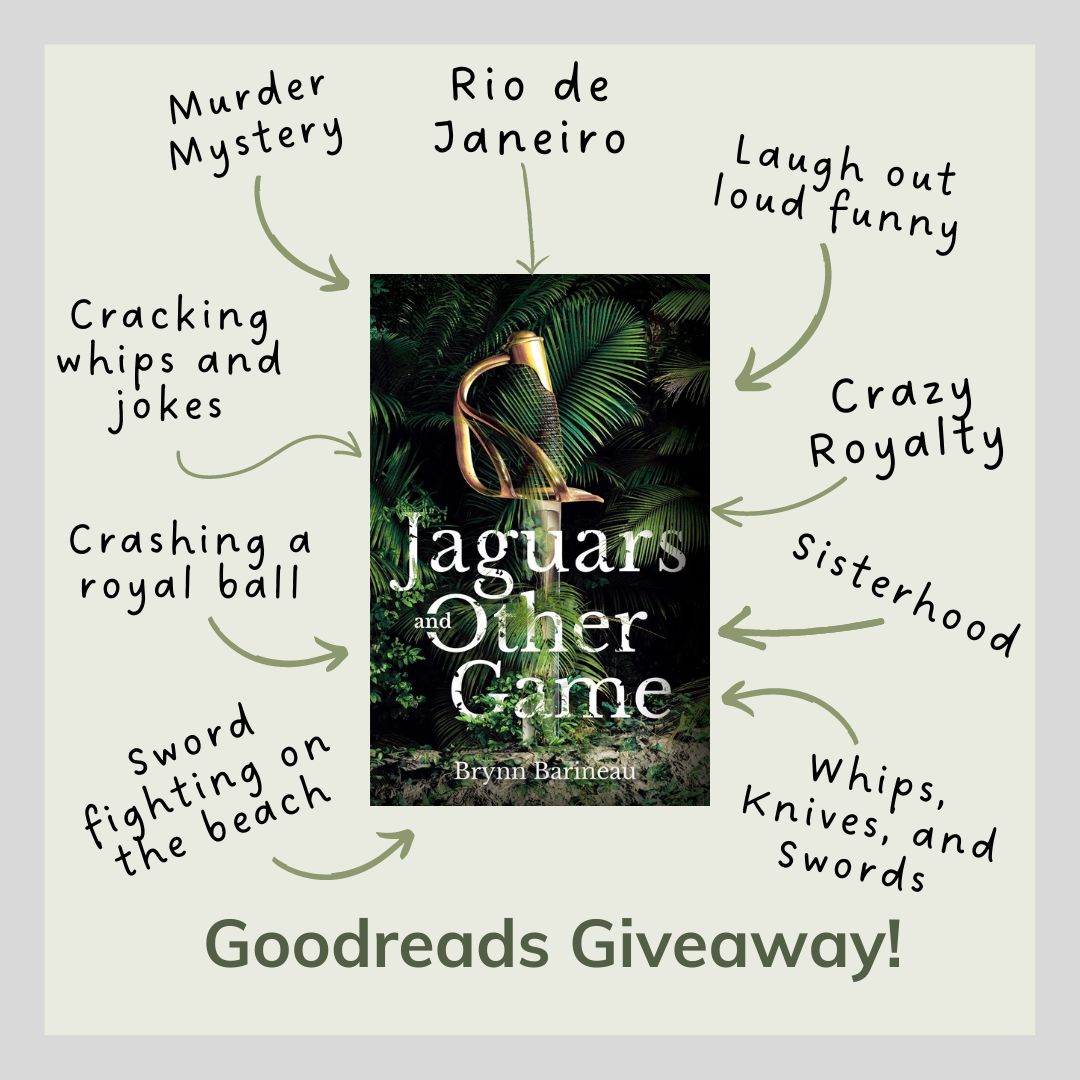
It’s giveaway time! Jaguars and Other Game comes out two weeks from today, and to celebrate the launch, my publisher is giving away five signed copies to US residents on Goodreads. The giveaway runs until debut day, November 22, so don’t miss your chance to win a free copy. You can cross-off a book lover from your Christmas shopping or keep it for yourself and escape the winter chills with an armchair trip to Rio de Janeiro.
On Goodreads, you can also check out the fabulous, early reviews for Jaguars! Only a couple are from people who’ll see me at Thanksgiving dinner.
“Five swashbuckling stars for this action-packed (and I don’t use that lightly) adventure! As a fan of Pirates of the Caribbean, The Princess Bride, and using historical fiction as a jumping-off point to learn about people and places, Jaguars and Other Game was right up my alley–and just a TON of fun! ” -Sarah
“What a fun read! Action-packed, lots of twists and turns, and badass females! This read like one of those action-packed movies, think Pirates of the Caribbean but in Rio and with female leads – I loved it!” -Catherine
“This book kept me wanting more. I did not want to put the book down. It has action, passion, and drama. The author describes each scene so well that you can feel like you are in each of those scenes.” -Jeanette
“Bad ass female characters that actually come across like real women, not just sex-symbol super-hero style caricatures. Laugh-out loud funny (the bakery scene! My favorite!)…But also really thoughtful (but not pretentious) commentary on social constructs. Plus a healthy dose of villains you love to hate getting their comeuppance.” -Melissa
“Brynn Barineau was able to combine grit, awesome adventure fight scenes, suspense at every turn and genuine heart all into one story inspired by the beautiful background of Brazil in the 1800s.” -Allie
“Despite being about characters in the early 19th century, the dialogue feels fresh and the tone is upbeat and fun! This book is packed with action and energy with a mystery at its heart, and it always left me wanting to read one more chapter before bed.” -Kelli Marie
…and so much more. I’m blown away by the support and enthusiasm for Jaguars and Other Game! For so long these characters existed only in my head, and it is absolutely wild that other people are professing their love for these figments of my imagination.
Thank you to everyone who has reviewed Jaguars! Don’t miss your chance to get in on the action. Enter the Goodreads Giveaway and win your free copy!
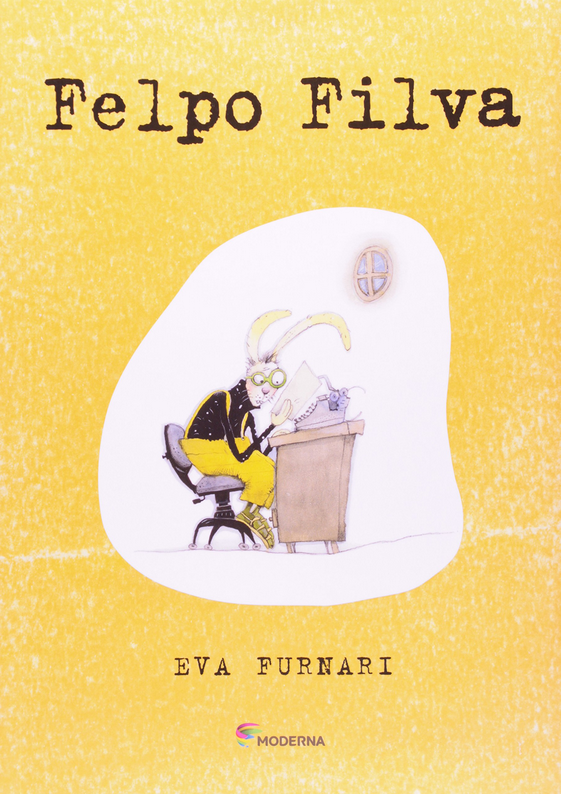
My second recommendation for this year’s Multicultural Kid Blogs Read Around the World Series is a charming and quirky picture book for kids ages 5 to 9: Felpo Filva by Eva Furnari.
If you believe children Need Diverse Books #WNDB, then check out the series homepage at Multicultural Kid Blogs for recommendations ranging from picture book to YA! Or check out the Read Around the World Pinterest page with all the recs from the past five years.
One reason I love writing historical fiction is the chance to discover real people I’d swear were fabricated in someone’s imagination. King João VI of Portugal is one of these people. The man was born to be the comedic relief in someone else’s story. Sure, he was also born into royalty, but he seemed so much more suited for getting laughs than governing.
I discovered Dom João VI while researching for a book set in 1809 Rio de Janeiro. (Aside: King John is the English version of his name and title, which I won’t be using because that makes me think of English kings and Robin Hood but I’m writing about Portugal and there really are just too many people named John or some variation in human history). At the time of my story, João was Prince Regent and had been ruling in place of his mom, Queen Maria I of Portugal, since 1792 when she was declared insane. (Queen Maria is a whole other post.)
What to say about Dom João? He loved to eat. He always carried grilled chicken in his coat pocket for emergency snacking. This becomes even more disgusting after learning he also hated bathing and wouldn’t change his clothes for months. He was terrified of thunder and crustaceans, very inconvenient phobias when living in tropical Rio de Janeiro. João would literally hide in his bedroom during thunderstorms. He referred to himself in third person and was plagued by vertigo and hemorrhoids.
Not surprisingly, João was also the last absolute monarch of Portugal. What is surprising are his nine kids, which is eight more than I’d have guessed for a man universally considered a “peaceful dullard” with a “flaccid visage”.
But the truly shocking and grand achievement of Dom João was surviving. When monarchs all over Europe were getting deposed at best and beheaded at worst, Dom João, the peaceful dullard, kept his crown, and he did it by being the only European monarch in history to move the capitol of his kingdom to a different continent. This man, who hated change so much his servants had to repair holes in his pants while he slept, moved the capital of Portugal from Lisbon to Rio de Janeiro.
João had been communicating with Napoleon in hopes of finding some solution that didn’t get him exiled or killed. Napoleon, the British, and pretty much everyone was under the impression Portugal would surrender to France. In 1808, the Prince Regent played Napoleon just long enough to order his government to pack up, board a ship, and get the hell out of Portugal before Napoleon’s army showed up. As someone who always preferred to delay a decision rather than make one, João gave the court three days to evacuate 10,000 people across the Atlantic.
That’s how Dom João VI found himself living in Rio de Janeiro, Brazil trying to establish court in a colony that had almost no roads between cities, no universities, no printing presses, and no trade with anyone but Portugal. Of course, the total lack of development in Brazil was intentional to keep the colony submissive and easily controlled. No Portuguese monarch ever anticipated having to live in this place where doctor, dentist, and barber was a single, mostly self-taught profession.
But it all changed under Dom João. He allowed roads, universities, and newspapers to flourish in Brazil. In exchange for escorting the court across the Atlantic, Brazilians ports were opened to the British and trade expanded. Academics, artists, and merchants flooded Brazil.
And Brazil declared independence sixteen years after João arrived in Rio. (Printing presses always lead to independence.)
As king finally back in Portugal, João conceded Brazilian independence in 1822 after a bloodless revolution led by the son he left behind in Rio to run the colony. His son’s betrayal probably didn’t bother him too much. At that point his wife had tried to overthrow him a few times so he was surely used to betrayal by immediate family. When he died in 1826, many suspected arsenic poisoning possibly ordered by his wife. (She really hated him.)
He may have lost Brazil for Portugal, but because of the reforms and development João initiated during his time in Brazil which led directly to independence, he’s remembered quite fondly here in spite of his eccentricities.
For my part, I can picture him clearly. His Majesty Dom João VI holding court, unbathed, and referring to himself in third while nibbling buttery chicken pulled out of a stained coat pocket that hasn’t been changed in a month. The perfect comedic relief.
If you’re interested in reading more about João and Brazilian history, I highly recommend 1808: The Flight of the Emperor by Laurentino Gomes.
I recently asked my husband what his favorite books were as a kid and without hesitation he said “O Gênio do Crime.” He couldn’t remember the author’s name, but he remembered in detail an ingenious system the kid detectives invented to tail a very tricky criminal. My husband remembered this book instantly after forty years, and it wasn’t about ancient Rome.
I had to read it.
Writing a story that stays with a child for the rest of their lives, that’s the dream for children’s authors. João Carlos Marinho solidified his place among Brazil’s greatest children’s writers with the 1969 publication of O Gênio do Crime. It became an instant bestseller and is currently #49 on Amazon Brazil’s fiction list.
Before I go on, I regret to say that I can’t find an English or Spanish translation. A fluent Spanish speaker would have no problem reading the Portuguese text, but as far I can discover, there’s no way for a non-Portuguese speaker to read the 49th most popular book in Brazil. Which is a shame.
The kids of São Paulo are on the verge of an uprising when the company manufacturing soccer trading cards stops awarding prizes for collecting because of counterfeit cards being mass produced in the city. (It’s possibly the most Brazilian crime ever.) The police have yet to find this “gênio do crime” (genius of crime), but Edmundo, Pituca, and Bolachão are determined to succeed where the police have failed and ensure the kids of Sao Paulo can continue collecting cards and prizes.
It’s a thrilling adventure for three friends that takes them on chases and stake outs and even undercover as they try to discover the location of the illegal factory. The method the kids invent to follow one of street sellers, which my husband remember forty years later, is brilliant and how fun is it to read about kids outsmarting the grown-up criminals.
But I don’t know if I want my daughter to read it for one simple reason, epic fat shaming.
I know ever book is a product of the time and place it was written. I know that a group of ten-year old boys communicate and express friendship differently than a group of ten year old girls. I still cringed repeatedly throughout the book.
Bolachão is overweight, and his friends never let him forget it. The tease him relentlessly even after Bolachão asks them to stop. He’s repeatedly referred to by the omniscient narrator as “o gordo”, which I’d translate as fatty. The character is defined primarily by his size and then by his intelligence, because Bolachão is the genius of the group and the one who solves the mystery. But the reader doesn’t know how smart he’s until about six chapters into the book. Whereas his weight is made clear from the first sentence.
I talked to my husband about it. As I did not grow up a boy in Brazil, I was curious how close the the friend’s banter was to reality. Very close is what he told. Pretty mild actually. There’s a saying in Rio, “The only people never booed in Maracanã (the soccer stadium) are the Pope and Frank Sintra.” Meaning those “super friendly” Brazilians the world hears about can be harsh. According to my husband, boys and men tease mercilessly. It doesn’t matter who you are, as nobody is perfect, your friends will find that not perfect thing about you and never let you forget it, but you’re expected to give it back to them. If you don’t tease or get teased, then you aren’t among personal friends.
Ok. I get that. However, Bolachão is harassed to a much greater extent the either of the other boys. Even the adults refer to him as “Fatty”. It’s pretty clear that for the characters being overweight is a far more serious offense the any other flaw. And haven’t we learned more about the psychology of kids and come to understand behavior that was commonplace even twenty years ago is in fact really damaging and standards for behavior should be changed?
Does that mean we never read books written in different eras or cultures because they might offend us? Do I deny a father-daughter bonding moment by forbidding my husband to share one of his favorite childhood books with her? When everyone else her age has read it because it’s the 49th most popular in Brazil, do I tell her no?
So the simple review I wanted to write about a famous Brazilian kid’s book has turned into a complex analysis of how to judge a book written in a different time and culture when it is very problematic by my personal standards.
The one thing I’m sure about is that I would NOT give this book to a child struggling with body image. Nope. Not under any circumstances. The fat shaming in this book is intense, and while it’s a fun story, I wouldn’t consider it required reading.
As for our home, and this could change because I’m still in the midst of an active internal debate, I’ll apply the same policy for reading Huck Finn. When she’s old enough, I’ll read it with her and we’ll talk about it. I think it’s important for kids to know how people acted in the past and compare it to today, but this requires an adult to lead the discussion.
What do you think? Have you read O Gênio do Crime? How do you feel about popular older books that are problematic by today’s standards? Like I said, it’s something I’m thinking about and would love to hear other opinions.
It happened. I finally got the brutal agent response I will talk about twenty years from now at book signings. I’m a real writer now. Yay!
I wasn’t expecting an total take down of my novel considering I wasn’t querying. I took an online workshop on historical fiction that included a critique by the agent instructor of a log line, synopsis, and first 2 pages. I’d recently finished the first draft and was eager to get feedback on what needed to be improve. Here’s what I got back.
“Unusual can be good, but in this case, Portugal may feel too foreign to American readers…I don’t know how interested American readers are going to be in this particular era and place. There is no precedent for it. That doesn’t mean you can’t start a new trend, but first it would have to be so spectacular that readers wouldn’t be able to put it down. Unfortunately, that is not the case here.”
Once I recovered from not having my first pages recognized for their genius and obvious money-making potential, I reread the email more critically.
My first thought was “Portugal, a Christian country in Europe full of white people, may feel too foreign for Americans?” I’m still trying to figure out what about US demographics gives the agent this impression. If Portugal is too foreign what countries will Americans read about? Great Britain, obviously. France, yes. Germany? What about Russia? They’re white, but their culture is pretty dissimilar to the US.
I’m assuming the agent was thinking of white Americans. But maybe that’s unfair. The agent could have been thinking about Korean Americans. Portugal is different from Korea in so many ways from language to internet speed. Korean Americans probably have no interest in reading a story set there. I know I personally only read books set in places my DNA came from. Thank God Hogwarts is in England!
Going off that thought, maybe the large percentage of Americans who have DNA from Africa, the Middle East, Asia, North or South America would be interested in reading a story set in one of those places. This would actually be a great thing for my story.
Which leads to my second thought after rereading the email. See if you can spot the source of my confusion.
Log Line:
Three young women form an improbable friendship in order to rescue the boy, find a murderer, and thwart a coup against the Portuguese monarchy. Madness & Diamonds is a girl-power Three Musketeers set in colonial Rio de Janeiro.
My book is not set in Portugal.
Here’s the first line of my synopsis.
Victoria, a servant of The Mad Queen Maria of Portugal, evacuates Lisbon to Rio de Janeiro with the royal family and 10,000 members of the court in advance of Napoleon’s invasion.
To clarify, Brazil is the big green one. Portugal is the orange dot.
The synopsis goes on to mention Rio another nine times. The most generous interpretation of events is that the agent was pressed for time or exhausted or probably both, skimmed my material in a rush and latched on to the first nationality mentioned, Portuguese. Or the agent typed Portugal but was thinking Brazil? I also considered the agent may not know where Rio de Janeiro is. (At Christmas I had to tell a homeschooling mom what continent Brazil is on, so thinking Rio is in Portugal is totally possible.)
Whatever the reason for the confusion, it’s just as well for me because if Portugal is too foreign, I can’t imagine what feedback I’d have gotten on a story set in Brazil.
In fairness, the agent cited one problem with my pages and synopsis: clarity. I absolutely agree based on her feedback that certain aspects of the story need to be made more obvious. I also know that complaining about a bad critique can make me seem petty to unprofessional. All writers get bad critiques. Get over it. And I would have except for one fact.
This agent is a Gatekeeper with a capitol G, and it was abundantly clear from the critique, this agent would never take a risk on a manuscript that was “too foreign.”
Foreign too whom? White, Christian Americans.
I joked about who the agent was envisioning when saying Portugal is too foreign for Americans, but it’s obvious what specific demographic she defines as American. What infuriates me is that the “Americans” this agent is considering will not even represent the vast majority of the population in a few years.
I’m going to end with a thank you to the agent who sent this critique. I had read the data and accounts from authors of color and those trying to publish books with diverse characters and settings. I was aware of the challenges these writers and books face but I wasn’t clear on the exact form they take. Now I know, and I’m more determined than ever to finish revising my story set in Brazil. I’m going to get it published. Then I’m going to sell it to Americans. Finally, I’ll send a copy along with the book’s sales numbers to that agent.
Although even then, I won’t have any idea how Americans feel about Portugal.
When I first began shopping for children’s books in Brazil, I had a hard time finding books by Brazilians. It was crazy. I was in Saraiva, one of the major chain bookstores in Brazil, and I noticed the books I’d picked were all translations from American authors. So I began hunting for books by Brazilians. I picked up one book after another. Published in France. Published in the UK. Published in Italy. I picked up one with a Macaw on the front. Macaws are from the Amazon. It had to be Brazilian. Nope. Published in Columbia.
There are of course many amazing Brazilian authors writing for children, but despite amazing native authors and children’s lit community, I had to research and order books by Brazilians. My local chain bookstore in Vitoria was no help, which is just wrong.
So I’d like to introduce five of my favorite Brazilian children’s book authors. I’ve included links for English translations when available. Based on what Spanish speaking friends have told me, a native Spanish speaker should have no trouble reading the Portuguese, but I’d love to get more Brazilian kid lit translated into English. I’ll add it to the list of life goals.
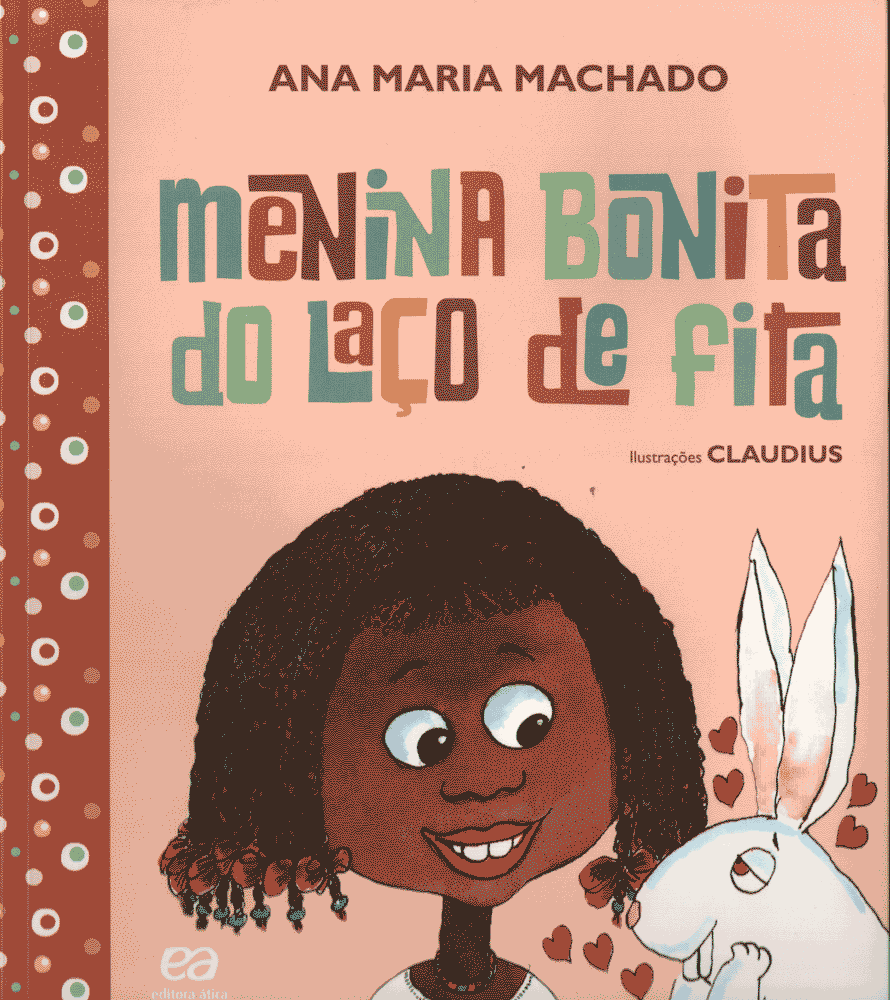
Machado was born in Rio de Janeiro in 1941 and has written over 100 books for children. In 2000, Machado won the international Hans Cristian Andersen Award, which designated her one of the greatest children’s authors in the world. She began writing in 1969 and wrote specifically for children because during the military dictatorship in Brazil, children’s literature along with poetry and song, “were amongst the few literary forms with which, through the poetic and symbolic use of language, you could make the ideas of a joie de vivre, individual freedom and respect for human rights known.” Some of her most famous books include A Menina Bonita do Laço de Fita, about a white bunny who desperately wants to become a beautiful black like the little girl next door and the advice she gives him, and Bisa Bia, Bisa Bel, about a girl’s internal dialogue with her great-grandfather and her own great-granddaughter. A Menina Bonita do Laço de Fita is available in English on Amazon.
Born in Rio de Janeiro in 1901, Meirelles published her first work at the age of 18, and she was every bit the genius you’d assume based on that fact. She’s known in Brazil primarily as a poet, but she was also a professor, journalist, painter, playwright, and fiction author. There aren’t many types of writing she didn’t publish in. She could do it all. Meirelles was one of the first women in Brazil to be recognized as a great literary voice. Some of her most famous works for children are “O Cavalinho Branco”, “Sonhos de Menina”, and “O Menino Azul”. The musicality of her lines is so strong, that “O Menino Azul” still sounded lovely when I read it aloud. (And as all adult learners of a second language know, nothing is harder to read aloud in a foreign language than poetry.) I haven’t been able to find any of her children’s works translated into English, but you can find many of her most famous poems translated in this anthology of Brazilian poets.
Furnari is an Italian-Brazilian author-illustrator. I’ve been able to forgive her for hoarding so much talent (author-illustrators seem so unfairly awesome) because her characters are so delightfully quirky. Born in Rome in 1948, she moved to São Paulo at the age of two and has lived there ever since. She came to children’s books in the early 1980’s through art and initially worked exclusively an illustrator before creating her own characters and stories. One of her most famous characters is A Bruxinha Zuzu or Zuzu the Little Witch, who never quite seems to master the power of her magic wand. Many of Funari’s books are textless, including our favorite A Bruxinha Zuzu e o Gato Miú, and can be enjoyed regardless of what languages you read. One of her most famous and award winning stories, Felpo Filva, is available in English as Fuzz McFlops in both the US and UK.
Born in the state of Minas Gerais in 1945, Junqueira published her first book at the age of 37 and has gone on to write more than 100 children’s books. She worked as a professor and editor before becoming an author. My daughter and I discovered Junqueira through a book swap at school. My daughter, always the animal lover, picked up a book with a cute cat on the front porch. I was the first story in verse that was more poetry than story and I honestly wasn’t sure how well she’d like it. A Poesia na Varanda was a hit and inspired me to buy Where the Sidewalk Ends during our Christmas trip to the US. I haven’t found any English translations but many of her world are available outside Brazil in Portuguese through Kindle.
Stigger is not really known as a children’s author. She’s a journalist, art critic, and writer primarily for adults known for challenging rules of genre and format in her work. Born in the state of Porto Alegre in 1973, Stigger began working as an essayist for radio and television. She then pursued a PhD in Art theory and Criticism and pursued research and various post-doctoral work before publishing her first collection of stories for adults in 2004. So not a career kid lit writer. However, one of her most recent books, Onde a Onça Bebe Água, Where the Jaguar Drinks Water, is one of the best books I’ve read for teaching empathy and seeing the world through a another’s eyes. In the story, Jaci is forced to consider the world from the perspective of the Jaguar he’s ends up dining with. Unfortunately, there isn’t an English translation of it or any of her books that I can find but several of her adults works do have Spanish versions available on Amazon.
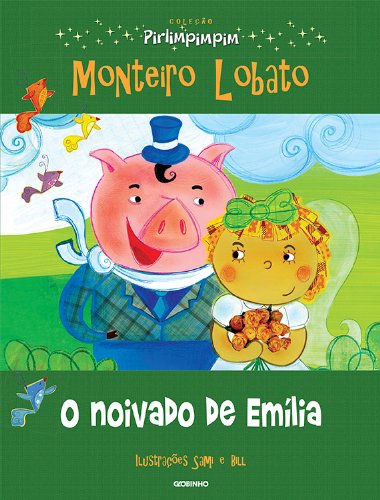
Today’s recommendation for MKB’s Read Around the World Series is an illustrated excerpt from one of Brazil’s most famous children’s author, Monteiro Lobato.
I’m proud to be a part of the Multicultural Kid Blogs community! It’s an amazing resource for parents and educators with multicultural kids or wanting to raise globally minded citizens. Every (northern hemisphere) summer, MKB hosts the Read Around the World Series to promote diverse books for kids. Bloggers around the world recommend books for all age ranges, picture book to young adult, and all regions of the world.
Today I’m up, and I’m excited to recommend a modern classic of Brazilian children’s literature!





 One reason I love writing historical fiction is the chance to discover real people I’d swear were fabricated in someone’s imagination. King João VI of Portugal is one of these people. The man was born to be the comedic relief in someone else’s story. Sure, he was also born into royalty, but he seemed so much more suited for getting laughs than governing.
 But the truly shocking and grand achievement of Dom João was surviving. When monarchs all over Europe were getting deposed at best and beheaded at worst, Dom João, the peaceful dullard, kept his crown, and he did it by being the only European monarch in history to move the capitol of his kingdom to a different continent. This man, who hated change so much his servants had to repair holes in his pants while he slept, moved the capital of Portugal from Lisbon to Rio de Janeiro.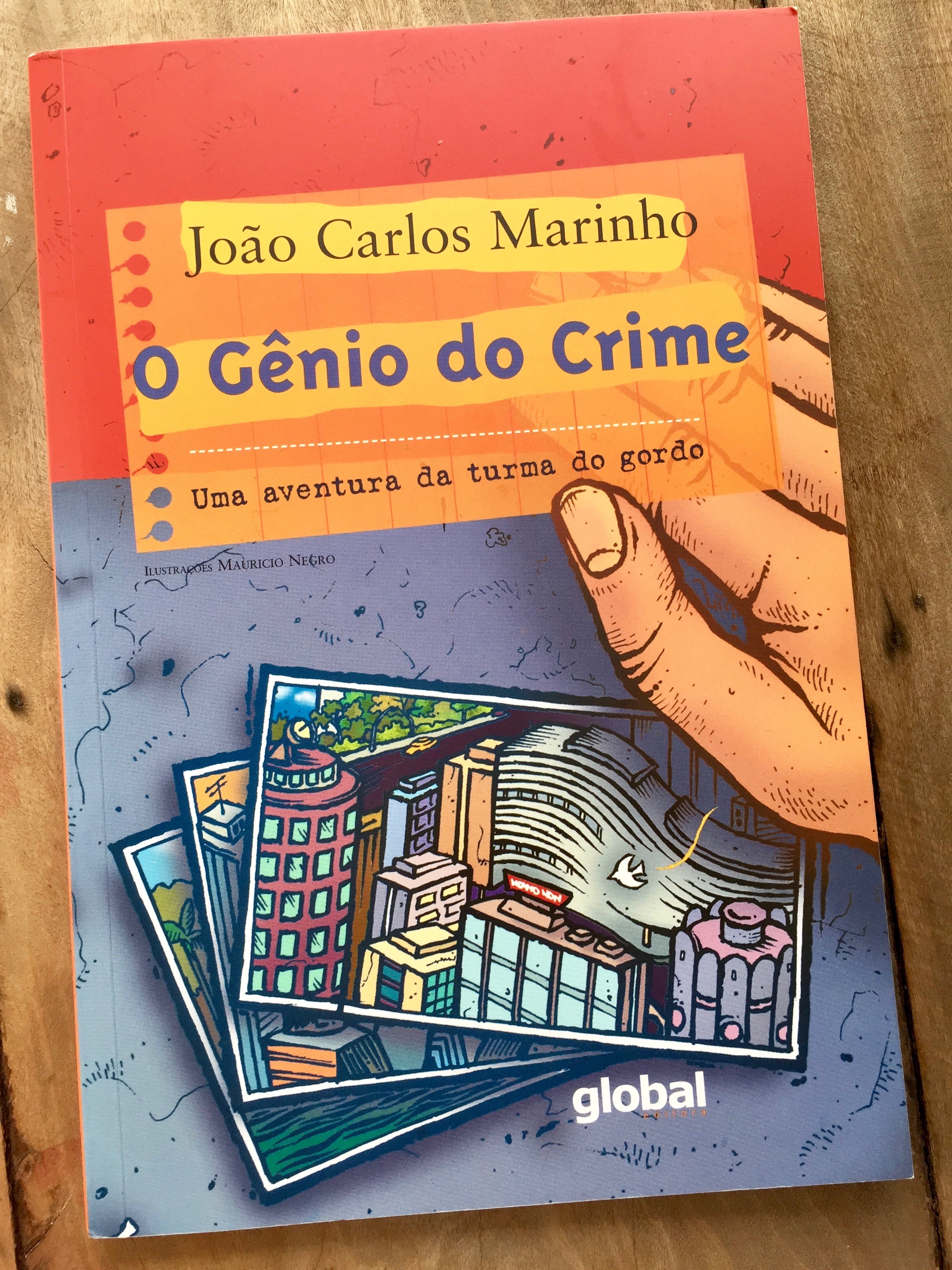
 I recently asked my husband what his favorite books were as a kid and without hesitation he said “O Gênio do Crime.” He couldn’t remember the author’s name, but he remembered in detail an ingenious system the kid detectives invented to tail a very tricky criminal. My husband remembered this book instantly after forty years, and it wasn’t about ancient Rome.
 The kids of São Paulo are on the verge of an uprising when the company manufacturing soccer trading cards stops awarding prizes for collecting because of counterfeit cards being mass produced in the city. (It’s possibly the most Brazilian crime ever.) The police have yet to find this “gênio do crime” (genius of crime), but Edmundo, Pituca, and Bolachão are determined to succeed where the police have failed and ensure the kids of Sao Paulo can continue collecting cards and prizes.
 It happened. I finally got the brutal agent response I will talk about twenty years from now at book signings. I’m a real writer now. Yay!
 My first thought was “Portugal, a Christian country in Europe full of white people, may feel too foreign for Americans?” I’m still trying to figure out what about US demographics gives the agent this impression. If Portugal is too foreign what countries will Americans read about? Great Britain, obviously. France, yes. Germany? What about Russia? They’re white, but their culture is pretty dissimilar to the US.
 The Census Bureas predicts that by 2020, the majority of kids in the United States will be members of a minority race or ethnic group.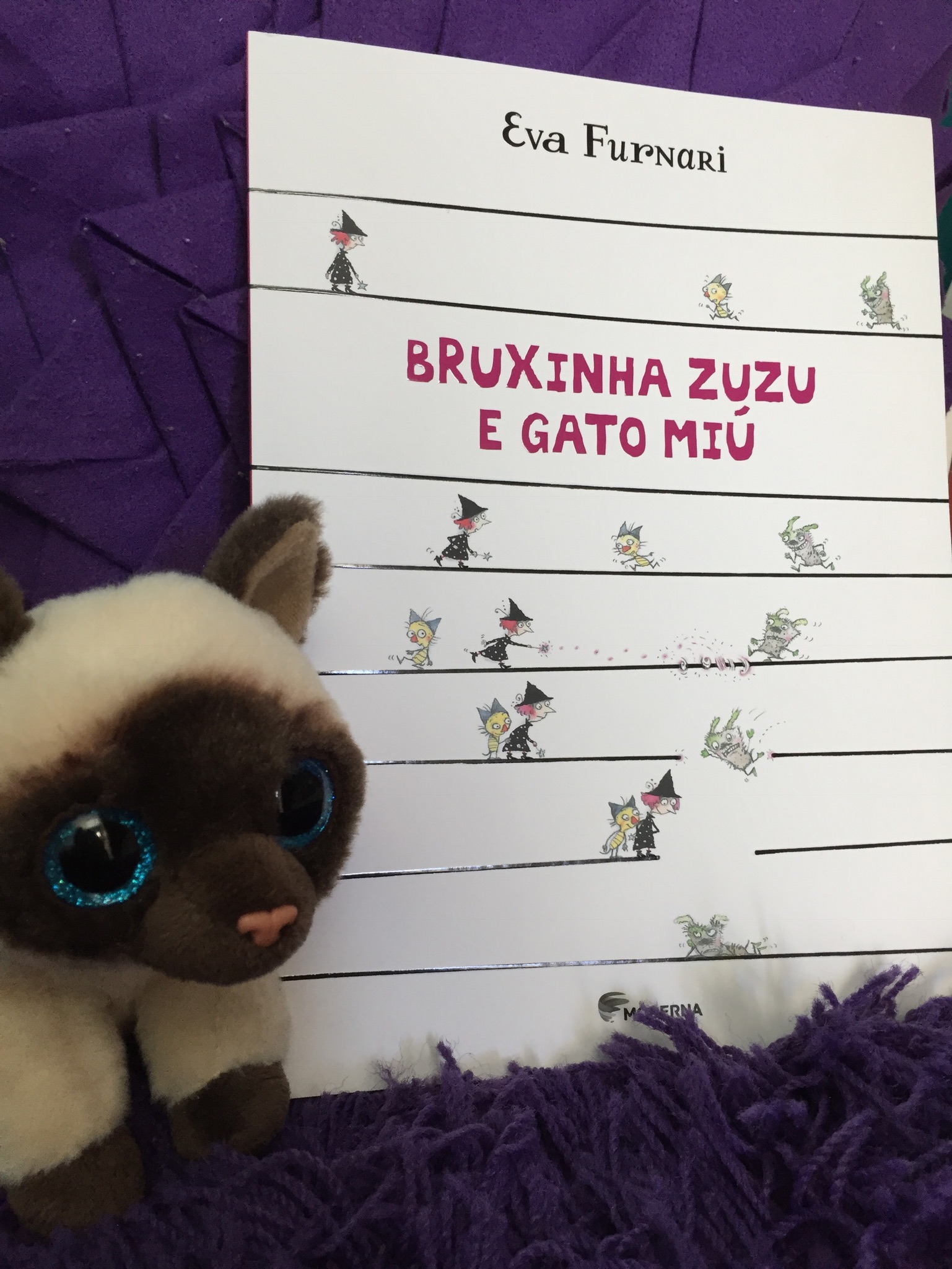
 ANA MARIA MACHADO
 Some of her most famous books include
  CECILIA MEIRELES
 The musicality of her lines is so strong, that “O Menino Azul” still sounded lovely when I read it aloud. (And as all adult learners of a second language know, nothing is harder to read aloud in a foreign language than poetry.) I haven’t been able to find any of her children’s works translated into English, but you can find many of
  EVA FURNARI
 One of her most famous characters is A Bruxinha Zuzu or Zuzu the Little Witch, who never quite seems to master the power of her magic wand. Many of Funari’s books are textless, including our favorite A Bruxinha Zuzu e o Gato Miú, and can be enjoyed regardless of what languages you read. One of her most famous and award winning stories, Felpo Filva, is
  SONIA JUNQUEIRA
 VERONICA STIGGER
 However, one of her most recent books, Onde a Onça Bebe Água, Where the Jaguar Drinks Water, is one of the best books I’ve read for teaching empathy and seeing the world through a another’s eyes. In the story, Jaci is forced to consider the world from the perspective of the Jaguar he’s ends up dining with. Unfortunately, there isn’t an English translation of it or any of her books that I can find but several of her adults works do have Spanish versions available on Amazon.