Tag: Portuguese

  • Dear Brazil, It’s Portugal’s Fault.

    Dear Brazil, It’s Portugal’s Fault.

    I’m currently obsessed with an idea for a historical fiction novel and have spent the last week devouring books on colonial Brazil. (I know you’re jealous.) It’s been fascinating reading actually because it’s all entirely new history for me. It wasn’t until World History in high school that I even knew humans existed outside of Europe, and by “Europe” I mean Italy, France, and Britain with a brief stop in Germany for the Reformation. Any ideas I have about Portugal or South America I learned from Columbus Day themed picture books and Disney’s Emperor’s New Groove.

    Turns out the Portuguese did more than just finance Columbus. They dominated maritime exploration in the 15th century, and that’s how little Portugal ended up with the enormous colony of Brazil. After a week of research, I now understand the root of all of Brazil’s problems. Portugal.

    Everything is Portugal’s fault.

    Let’s take education. Brazil does not have a single university in anybody’s top 100 Schools in World list. I recently read an article that could be summed up as “Brazilian have started buying books!” I can’t remember that last time I went to the beach and saw someone reading a book and I’m at the beach almost every weekend. Which makes perfect sense in a country that had printing presses, books, and universities banned for the first 300 years of its existence.

    Yes, Portugal controlled Brazil for 300 years before it allowed a university to be built or a printing press to operate. Put another way, book circulation was banned for a century longer than it’s been legal in Brazil. Thanks Portugal!

    Do you think Brazil’s government is a quagmire of ineffective bureaucracy staffed by people who are allergic to work? When the Portuguese court fled Napoleon and established itself in Rio de Janeiro, it brought between 10,000 and 15,000 people. When John Adams moved the US government from Philadelphia to Washington D.C., he moved 1,000 employees. And all those 10,000 people who came with the court expected a stipend from the government. Today, public pensions are currently bankrupting Brazil. Thanks Portugal!

    Brazil is currently hosting a global event. No, not the Olympics. I’m talking about the largest corruption scheme in the history of democracy, the Lava Jato case in which federal politicians awarded contracts and got kickbacks to the tune of billions of dollars.

    It’s actually totally understandable that Congressmen and their friends all expected rewards. When Prince Regent João showed up in Rio, the crown was flat broke, so he just started selling titles to wealthy Brazilian merchants. Prince João gave out more titles in eight years than his ancestors had in the previous three centuries. You get to be a Baron! And you get to be a Baron! And you get to be a Baron! (This is assuming you’d like to make a donation to the Court, of course.) Those of us at the top have to get each others’ backs, amiright? It’s Brazilian tradition. Thanks, Portugal!

    I’ve wondered since arriving back in 2006 why the fifth largest country in the world in terms of land area seems to use two lanes roads almost exclusively. Why? Why am I sharing a single lane between states with all the 18-wheeled trucks? Because it was illegal to build roads between states until after João and his court arrived in 1808, 300 years after the Portuguese took control of the territory. And factories weren’t allowed. So no industrialization. Which means no trains. Thanks, Portugal!

    I’ve learned all this from 1808 The Flight of the Emperor by Laurentino Gomes. It’s an engrossing telling of an unbelievable true story. One of the most striking accounts of colonial Brazil was from a woman, Maria Graham, arriving in Brazil for the first time. As her ship sailed up, she gushed over the picturesque city of Salvador with it’s beautiful white homes and striking setting on a cliffside. She called it “a city, magnificent in appearance from the sea.” Her opinion changed dramatically once walking the streets of the city. She describes Salvador as no less than “the filthiest place I ever was in.”

    19th century Salvador by Joseph Alfred Martinet
    19th century Salvador by Joseph Alfred Martinet

    While I did not consider Rio anywhere close to the filthiest place I’ve ever been (I lived in a coed dorm in college), I did go through the exact same swing in emotions when first arriving in Brazil. Looking out the plane window, I was in awe of Rio’s beauty. Then I left the airport. The view out the car window was…disappointing in comparison.

    Two hundred years separates Graham’s arrival and mine, yet our reactions were nearly identical. Culture is a powerful yet often unconscious shaper of our behavior. I have a university degree in this. I shouldn’t need a reminder, but this book was just that. Now, I understand. The next time I have to argue about whether the phrase “copy of your passport” means just the information page or all pages in the book, or I bounce along a road filled with potholes but with wifi coverage, or I read about another politician who’s been suspended due to a corruption scandal, I’m not blaming Brazil. I’m blaming Portugal.

    Because it’s all Portugal’s fault (#blameportugal). And they didn’t even leave a legacy of good wine. Thanks a lot, Portugal.

  • My Bilingual Kid Doesn’t Want Your Attention

    My Bilingual Kid Doesn’t Want Your Attention

    Having spent the majority of my adult life outside of the United States (mostly in small, homogeneous cities), I’ve gotten used to being the subject of conversation at the next table over. It happens pretty frequently in Vitoria. My husband and I speak in English so people assume I don’t understand their Portuguese freeing them to openly discuss me from two feet away. It happens most frequently with kids and teens, but a surprising number of adults don’t seem to realize that a person could understand both English and Portuguese. In Vitoria, we expats are like endangered wildlife. People know we’re around, but when actually spotted, locals take note.
    I don’t mind. Until visitors arrive from another planet, one from another continent is about as alien as it gets for most people in Vitoria. I signed up for the attention when I decided to become an expat.

    But my daughter didn’t.

    A series of encounters at the park Sunday has, for the first time, made me consider my daughter’s multiculturalism a challenge, a thing she’ll have to learn to deal with.

    It also has me weighing the importance of three influences on my daughter’s behavior: my parenting instincts v. my daughter’s personality v. the culture she is growing up in. I’m now asking which of these should win out in the event they’re incompatible.

    Here’s what happened.

    We arrived at the park just as a craft was beginning and hurried to the classroom. As materials were being handed out, one of the helpers overheard me speaking English and asked where we’re from. I answered, heard about how he’s going to Disney World soon, and then got the VIP crafting upgrade, as he hovered over my shoulder for the duration of the activity asking repeatedly (in English) if my daughter needed help. He was pleasant and wanted to practice his English. No problem.

    Then we moved to the playground and while my daughter, the baby dragon, sought refuge in a playhouse from me, the evil sorceress, a girl and boy asked what language we were speaking. I answered, their eyes widened, and they ran off. A few minutes later they were back with more friends who all crowded into the playhouse to stare at my four-year-old, English speaker. My daughter tried to play with them in Portuguese, but the older girl turned to her friends and asked, “Who wants to learn English?” My daughter was not interested in playing teacher when there was sorceress to escape from, so she turned her back on them. They were kids and curious. Ok.

    The most bizarre exchange happened as my daughter and I were waiting for my husband to bring the car. We were sword fighting with sticks, so I have no idea what these people heard exactly. “Argh!” “Ah, my leg! I’m bleeding!” But whatever they heard prompted the man to turn to his friend and say “Uma italiana!” I know I opened the door to this exchange by correcting him, but I can’t live in a world where people hear an English speaking American and think Italian.

    I smiled and told him “Sou americana.” Their minds were blown. The woman nearly doubled-over laughing and the man’s eyes bugged out as if this was the first time either of them had considered the possibility of a person speaking more than one language. If I had turned invisible, I think they would have been less surprised. The woman sat down on the bench next to my daughter, and the two of them began peppering us with questions, the most notable one being “So you speak Portuguese & French?” They quickly zeroed in on my daughter and began directing their questions to her, clearly not believing she speaks Portuguese and is, in fact, Brazilian. When they asked her for her name, I stiffened. When they asked her for her daddy’s name, I cut them off, said “ciao” and in their wake, made it explicitly clear she was never to give her name or mommy’s or daddy’s name to anyone other than a police officer. The couple hadn’t meant but did cross a line when they asked for personal information from my kid.

    My daughter’s final audience of the day came at the end of lunch. She and I were walking back to our table with a much-anticipated chocolate popsicle, and the table next to us began exclaiming to my husband. “Nossa que olhos lindas! Uma loirinha linda!” My daughter has blond hair and blue eyes, the genetic jackpot in Brazil. The entire family at the next table gushed compliments, while my husband played along and joked it was a good thing she took after her mom.

    This all happened within two hours. Nothing was said or done out of malice. The people’s motivation ranged from innocent curiosity to sincere appreciation with a heavy dash of racism. Everything interaction was typical. Brazilian culture is open and friendly and community oriented. Strangers talk to each other here. It’s like being in South Georgia without the gnats and shotguns.

    But my daughter doesn’t want an audience. My husband and have noticed it. Her teachers noted it in her school report. When the group of kids crowded around my daughter asking her to speak in English, she went silent. When the geographically challenged couple asked for her name, she clutched my arm and hid her face. My daughter doesn’t like being put on the spot. And that is exactly what every stranger who asks her to demonstrate her Portuguese or English is doing. When strangers stare at my daughter, they turn her into a spectacle no matter their intentions.

    So what to do about it?

    My husband immediately suggested we stop speaking English outside of the apartment. This would eliminate having to always explain that my kid is Brazilian and hearing about people’s Disney vacations, but I’m against it. My daughter is immersed in Portuguese Monday through Friday all day long at school. She needs as much English as possible on the weekend. We’d also limit her English vocabulary to the world of our apartment.

    My gut reaction is to tell the spectators, politely but firmly, to go away. I’ll explain that my daughter is shy and since she is Brazilian, we don’t want her to feel singled out in her home. Please, save your questions for another bilingual who’s more comfortable in the spotlight.

    The problem with this solution is that it’s extremely American. Like off the charts individualistic. Walls up. Family in. Strangers out. It’s honest. It’s blunt. It’s clear. It’s rude as hell. It’s all of those things. Just depends on your cultural reference. I recently saw an article titled “I Don’t Make My Kid Share” and thought that would never fly in Brazil. Valuing individual property rights over communal harmony would brand you and your kid the biggest jerks on the playground. Not all parenting strategies work equally well in all cultures.

    She is Brazilian, living in Brazil, dealing with Brazilians. Shouldn’t I do my best to teach her to understand and navigate her own culture? Is it right to protect her feelings by shutting down people in a culture where small talk is viewed as courteous? Doesn’t she need to be able to cope with the extra attention if it’s going to be part of her reality?

    I want to help my daughter balance culture and her personality, and I’m not sure what to say to prepare her for the inevitable questions that come when you are the only one. I grew up a solid member of the majority in everyway possible, but she is often usually the only bilingual, the only American. A little, blue-eyed, Brazilian girl speaking English here in Vitoria is going to make people stop in their tracks and comment.

    My plan so far is to tell her she should never talk to strangers without mommy and daddy around. (Safety first.) When we are around, she has an absolute right to remain silent. She doesn’t have to play with or talk to anyone she doesn’t want to. However, I’ll explain people aren’t trying to be mean. They want to learn, and she has the power to teach them. People are curious about her languages and cultures, so when she’s ready, people will be very interested in what she has to say.

    And that’s the best idea I’ve got for now.

  • Throwing a Brazilian Halloween Party: An Odyssey of Prep

    Throwing a Brazilian Halloween Party: An Odyssey of Prep

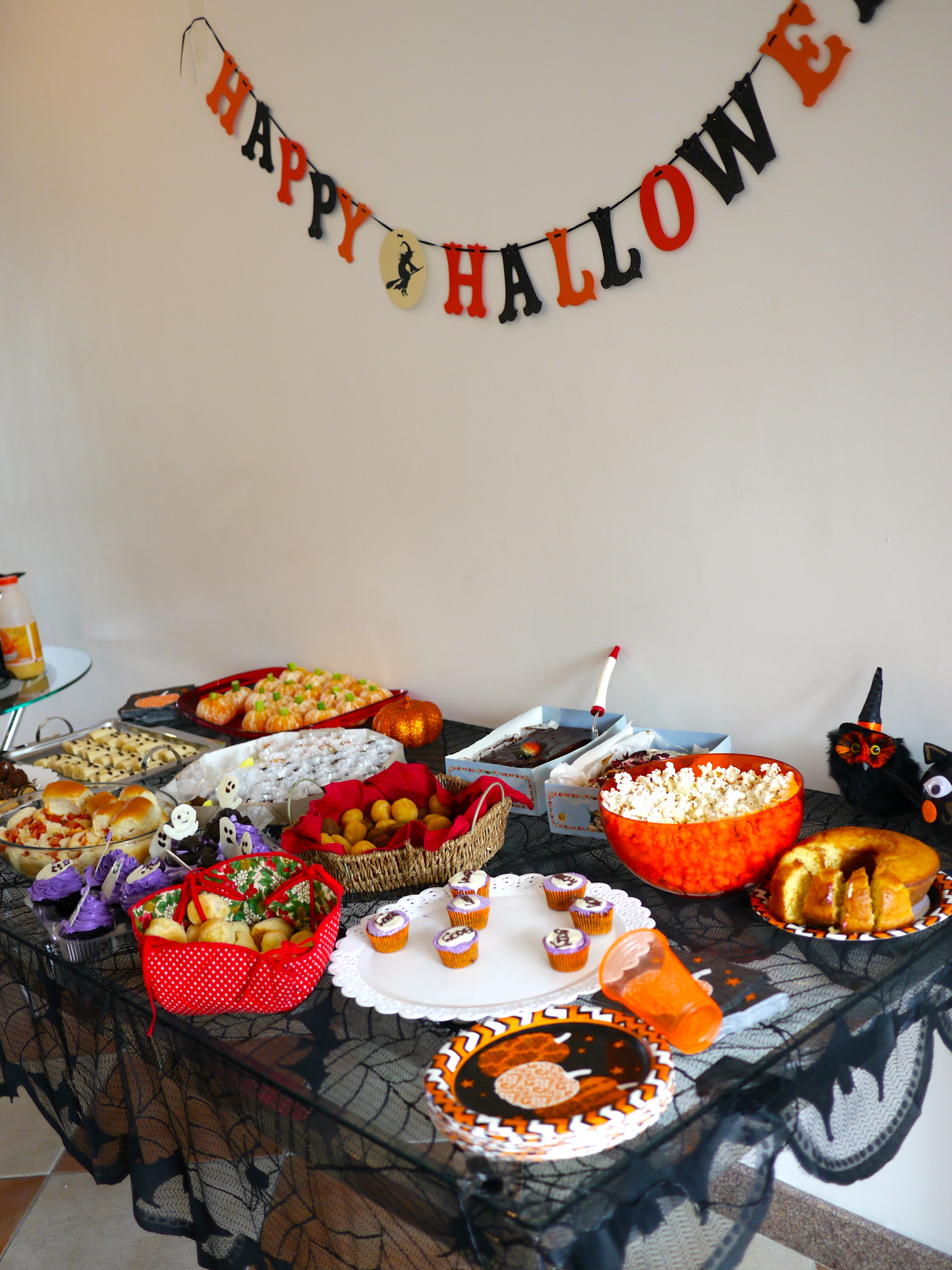
    P1010501I threw a Halloween party for fifteen preschoolers last Saturday. It was a huge success, but I feel I owe my guests an apology.

    Multiple parents came up to me and said I was “muito animada”,  a very fun-loving, party-throwing person. I realized that by throwing a fun children’s party, I had completely misrepresented myself to them. I’m sorry. I didn’t mean to lie. The fact is I’m not a creative, crafty mom who saves egg cartons to make earthworm condos for the compost pile. My perfect Sunday afternoon is sitting quietly with a good a book and cup of coffee. Ideally on the beach and without people unable to wipe their own bottoms.

    So why did I throw a class Halloween party?

    Because they don’t traditionally celebrate Halloween in Brazil. I loved Halloween as a kid, and if I don’t throw the party, my Brazilian daughter won’t know one of my favorite childhood traditions.

    Why did I make such an effort on the crafts and decorations?

    Because the day after I announced my intention to have a party, one of the moms came up to me at school and told me she’d always dreamed of going to a real Halloween party.  To which I thought “Oh crap! I’m fulfilling someone’s dream of Halloween? I don’t want that kind of responsibility!” But I accepted it. And that brings us to the last and really most revealing question.P1010469

    How was I able to come up with such creative and age-appropriate themed snacks and crafts if I’m not a creative crafty mommy?

    I’m an intelligent and highly-organized, type-A personality with access to the Internet and a working knowledge of Pinterest. That’s it. That’s the real me. If I take on the responsibility of a project, it will be done well. Even if it’s something I usually avoid.

    Like baking.

    Let me tell you about the cookie baking.

    P1010462While in Atlanta in August, I found Halloween themed cookie cutters and decorating supplies. Bat, ghost, and pumpkin cutters. Black, orange, and green slime icing. The kids could decorate cookies! It would be awesome.

    I knew I was going to have to make the dough from scratch. Shortly after arriving in Brazil, I tried to bake a pecan pie for reasons again related to culture sharing. I asked my husband where I could buy the crust. He stared at me brow furrowed. “Buy the crust? You mean the ingredients?” I laughed. Ha. Ha. Good joke. I’m not making my crust from scratch. Not even my South-Georgia raised, preserve-making grandmother makes her own crust anymore. Nobody does. “Uh, they do in Brazil.” Oh.

    So I knew I was going to have to make sugar cookie dough from scratch and having baked maybe four times in my life, I knew I’d need a practice run. I planned out every day of the week leading up to the party. Saturday I went online and found a simple and well-rated sugar cookie recipe. Sunday I bought the ingredients. Tuesday was the baking run-through.

    After my experience with the pie crust, I brought measuring cups back from the US because I’d learned I’m a victim of the US education system and can’t think in metric. Also, the Brazilian versions of recipes often call for “tea cups” which is not a standardized form of measurement! I find baking stressful enough without vague instructions, so American measurements and tools it is.

    Recipe. Ingredients. Measuring cups and spoons. I thought I was prepared.

    Preheat the oven to 350 F. My oven only has a line decreasing in thickness and the numbers 1 through 5, but my plan was to pick a number and once the first batch was in check them every minute and figure out the right amount of time at that setting. First problem solved.

    Mix dry ingredients. Easy.

    P1010507Cream butter and sugar. That’s when I realized I had a handheld beater with no beaters. They had been lost somewhere between a school project and kitchen renovation. Ok. People were obviously baking before electricity, so I decided to mix by hand. If I had known I would be creaming butter three times in a week, I would have gone out and bought a damn beater right then. But I didn’t.

    Fifteen minutes and two sore arms later…mix in dry ingredients.

    Two quivering arms and one sore back later…put dough on cookie sheet. Looking at the dough, I could tell using the cutters was out the question. The dough stuck to everything. I could have wallpapered with it. I went ahead and baked globs of it to test the flavor but knew I was going to have to address the stickiness.

    One minute of internet research later, I’d learned the dough must be refrigerated for at least an hour before attempting to cut out cookies. Great! I had learned a valuable lesson. This is why test runs are important.

    Friday morning I made the dough for a second time, breaking a sweat mixing by hand. I left it in the fridge all afternoon. I was going to bake the cookies after my daughter was asleep, but on a whim I decided to do one batch before I picked her up from school.

    Within minutes I learned that firm dough doesn’t stay that way for long in an 85 degree kitchen. Central air conditioning in the kitchen would have been a big help, but I shrugged it off. People baked without air conditioning for most of human history. No big deal. I simply raced, hunched over my kitchen table, to roll out, cut, and dump cookies onto to the baking tray before the dough softened into a gooey mess.P1010493

    I put cats, bats, and witches’ hats into oven and pulled out 8 amoebas. Son of a bitch.

    I collapsed in a chair. Beads of sweat dripped down my back and forehead. My shoulders ached. And the prospect of mixing another batch of dough by hand loomed before me and crushed my soul.

    I hate cooking. No matter how much I research and prepare, I feel I always, always, end up facing a dozen unexpected challenges that keep the results from being perfect. And perfect is the end goal, people. And it should be achievable with good planning and organization. That doesn’t seems to be the case with cooking, which is why I hate it.

    The silver lining is that by making that test batch before I picked up my daughter, I was able to swing by the store and get more flour and butter for a third batch. Because I was making the cookies. My daughter had already found the cookie cutters and asked for a cat to decorate. I had brought the icing and spider sprinkles from the United States. I was making those damn cookies.

    P1010513And by 1:12 a.m I had forty cookies in recognizable shapes.

    At the party the next afternoon, a mom asked my husband where I bought the cookies. He told her I had baked them. She exclaimed “Really? Oh, those creative moms.”

    That’s why I want to apologize to her and the other moms because I’m not the person the cookies make me out to be. I don’t get a thrill from making my daughter’s birthday cupcakes. I get stress knots above my shoulder blades. I don’t jump at every chance to throw a party. I cringe remembering the mess after the last one. I wish my Portuguese was better, then maybe I could translate my sarcasm when I talk about the joys of crafting.

    I may have given my daughter wonderful Halloween memories and successfully represented a piece of my culture abroad, but I misrepresented myself in the process.

    Which could be true for a lot party hosts. Maybe behind every Pinterest image, there’s a sweaty person popping painkillers and muttering obscenities at a tray of cookies.

    blog-button-linkup-2

    Save

    Save

  • Why Doesn’t Anyone Know a Thing About Brazil?

    Why Doesn’t Anyone Know a Thing About Brazil?

    Rio 1 2008-82There’s a famous comedy sketch in Brazil that features a home invasion with the owner held at gunpoint. The masked assailant aims at the owner and barks “Name the major tributaries on the left bank of the Amazon River!” The owner rattles off several rivers in rapid succession. The bad guy immediately lowers his gun and leaves taking nothing. The homeowner stands, exhales and says “I knew that information would be useful some day.”

    Every country has its own “tributaries of the Amazon”. I had all fifty US state capitols memorized for most of fourth grade then never again. Why would I retain the capital of Wyoming? The world’s a big place and geography is only one of many subjects to master. With a background in international relations, I know where Brunei is but nothing about computer coding. That’s why I won’t judge someone for not being able to place Sri Lanka or name the capital of Azerbaijan, unless that person is on the Senate Foreign Relations committee.

    But Brazil is not Sri Lanka.

    Brazil is not a tiny country with a tiny population and a tiny economy. It’s a huge country with a massive economy but still nobody in the US knows anything about it. The average American knows people speak Arabic in Tunisia and Spanish in Argentina, but ask her about Brazil and she hesitates. People generally know India is important in the global economy but what does Brazil produces exactly? Mention Guatemala, Korea, or Sweden and most Americans will imagine someone with a particular phenotype. What do you think of when you hear “Brazilian”?

    Several years ago, I was visiting my parents in Atlanta and I read an article in the neighborhood newsletter about a recent mugging in the area. The victim gave a helpful warning to other residents to be on the lookout for someone who looked “Brazilian”. Whaaaat?!!! The only less helpful description would be to describe that attacker as a Homo sapien.

    The most upsetting fact was that my parents live in a highly educated neighborhood and still “Brazilian” was published as a helpful description of a person. Even these people wallpapering in college diplomas didn’t know the most basic things about Brazil, like the fact a Brazilian can have ancestry from anywhere.

    And there really is no excuse for it.

    Brazil has the seventh largest GDP in the world. It’s economy is larger than India, Russia, Korea, or Canada and that was coming off of a bad year. At roughly 206,000 million people, Brazil has the fifth largest population in the world. There are more Brazilians than Japanese, Germans, or Mexicans. Globally speaking, it’s pretty common to be born in Brazil. Brazil is also the fifth largest country in terms of land area. It’s bigger than Australia. In terms of exports, Brazil is the US’s seventh best customer ahead of France or India.

    I’ll admit a pro-Brazil bias given that my husband and daughter are both Brazilian, but knowing what I do now, I’m embarrassed by my pre-husband ignorance of Brazil. I’d like to spare others my embarrassment, so here are five basic facts every person should know about Brazil.

    1. Language  Brazilians speak Portuguese! Brazil is the largest country in South America and the official language is Portuguese, not Spanish.
    2. Capital City  The capital is Brasilia. The largest city in terms of population and economy is São Paulo. Rio de Janeiro was the capital from 1763 until 1960, which is why it’s the most frequently given wrong answer to the capital of Brazil question.
    3. Type of Government  Brazil is a democracy and it’s not just a part of the country’s name that is never actually lived up to. Brazil transitioned to a constitutional democracy in 1988 after 30 years of a military dictatorship. Brazil stabilized and entrenched the new constitution in less than a decade, which is amazing considering it takes that long to get a pothole fixed here. Currently President Dilma’s approval rating is 8% and people are demanding an impeachment. Not a revolution. Not a military invasion of the President’s mansion. Literally the entire country despises the current government, but the people want to work within the rule of law. Bravo Brazil! You guys can express your absolute and unified hatred of the current government within the confines of the constitution. Well done!
    4. Economy Really, really terrible at the moment. So, uh, let’s just talk about exports. What does Brazil produce? The top five exports are iron ore, crude petroleum, soy beans, raw sugar, and…any guesses? Poultry. Nobody, not even my Brazilian high school students, ever guesses chickens.
    5. Fun Fact To Impress Friends Brazil has been a colony, a monarchy, a dictatorship, a military dictatorship, and a republic. Name a type of government and Brazil has tried it.  The country celebrates two independence days.  The first on September 7 celebrates independence from Portugal and the second is on November 15 when Brazil transitioned from monarchy to republic in 1889.

    I hope people’s general awareness about the country improves before we move out of Brazil and my daughter is expected to play the role of walking Wikipedia article on the country. What language do they speak is a really boring question to repeatedly answer.

    After all, Brazil is not a tributary on the left bank of the Amazon or the capitol of Wyoming. It’s so much more important. But not many people know that.


    Badge-smlImage_zps04194192

  • My Daughter’s Bilingual. It’s not a big deal.

    My Daughter’s Bilingual. It’s not a big deal.

    DSC_0028
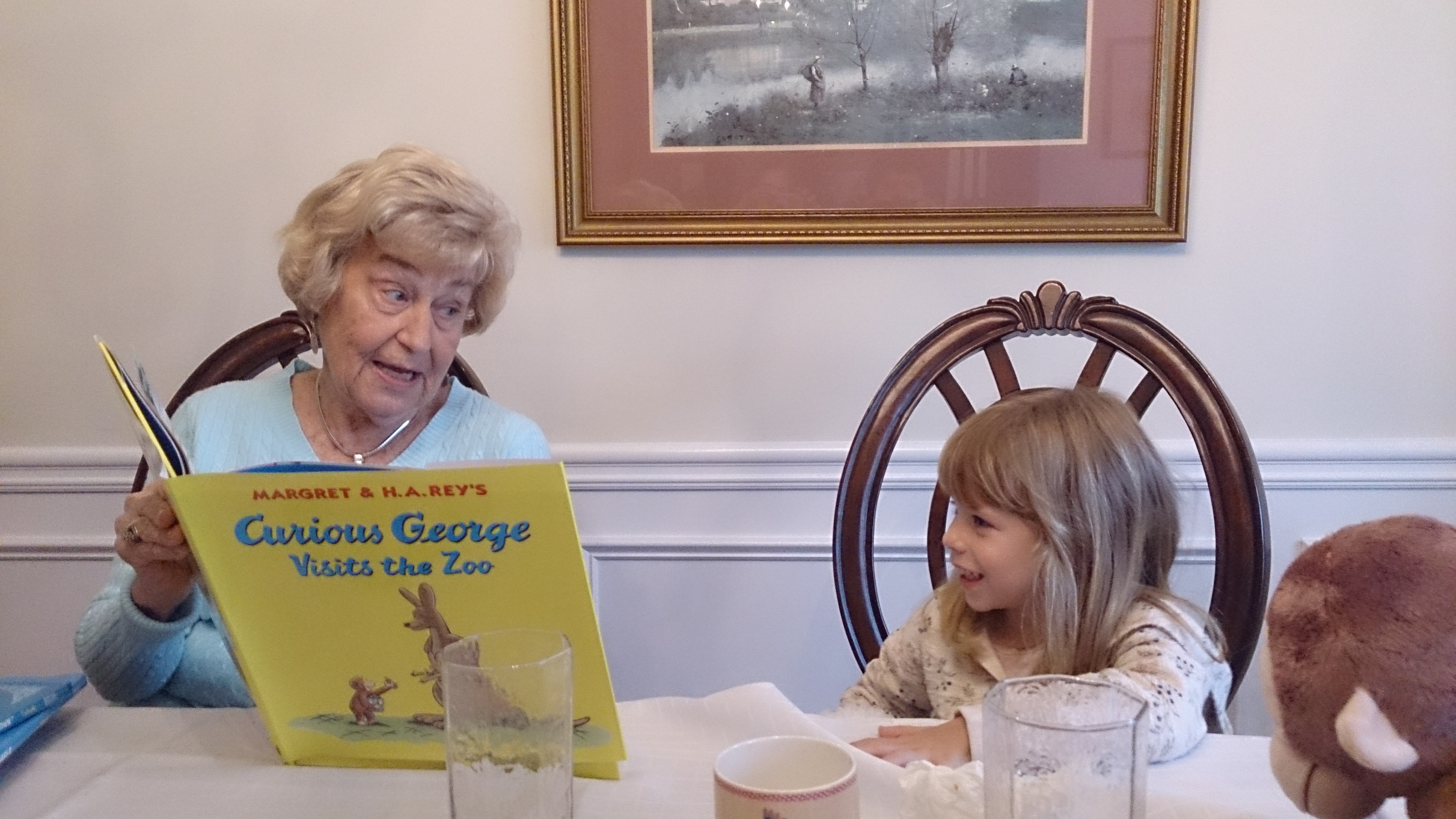
    My Brazilian-American daughter listening to her anglophone Great-Grandmother read Curious George.

    About a month ago, I was invited to be interviewed for a podcast with Marianna Du Bosq at Bilingual Avenue. She asked me to talk about raising my daughter bilingual in Portuguese and English, with English being the minority language. (Jargon alert! In the bilingual community, minority language is any language not spoken by the majority of people in the community.) I was flattered and excited.  In preparation, I visited her site and pulled up previous podcasts. As I listened to the PhD experts and trilingual parents, the researchers and published authors, I began to suspect that I would be the least helpful person ever interviewed for Bilingual Avenue.

    Well the interview is up, and I’m certain that I’m the least helpful guest ever.

    Of all the issues that come with parenting my daughter, raising her bilingual is one of the last I think about. In terms of energy usage, reflecting on her bilingualism comes just after flossing her teeth and ahead of which hand she writes with.

    I don’t have a favorite book on bilingualism. I don’t have tips or special strategies to share. I can’t list the names of prominent researchers in the field or site the latest journal article making waves. I don’t have a “biggest fear” or “primary concern”. I’m not visiting online forums and sharing my struggles with other parents.

    Before my daughter was born I did buy two books on raising bilingual kids. I read enough to know the common strategies: One Parent One Language (each parent speaks his/her native language to the child) and Minority Language at Home (the child learns the majority language at school/in public and speaks the minority language with both parents at home). Our pre-birth strategy session went something like this:

    Me: “Since she’s going to be getting Portuguese at school and with all her friends, we should probably speak English to her at home, right?”

    My Husband: “Absolutely.”

    And that was that. Marianna asked me during the interview how my Brazilian husband feels about speaking English to his daughter. Not to spoil the interview, but I considered revealing my suspicions that I married a robot. He speaks English fluently and wants his daughter to be fluent in both languages, thus the logical choice was to speak English at home. Period. I realize this story is not helpful for the majority of people who also consider feelings when making decisions. I personally would not be able to say “I love you” in Portuguese and feel it the way I do in English, but my husband didn’t give it a second thought.

    It’s possible we would have talked about it more, but then my daughter was born seven weeks early. We spent a month in the NICU. She developed a severe food allergy that caused bloody stools until she was 8 months and left me, the breastfeeding mom, only able to eat fruits and vegetables handpicked by fairies and meat that hadn’t been cooked in anything remotely tasty. Her breastfeeding feeding schedule was every two hours, so I didn’t sleep for almost a year. She has severe separation anxiety which has allowed me one night off in over four years, and that night was such a disaster it will take years for everyone to recover enough to try again. When she started throwing tantrums, they included biting, scratching, spitting, kicking, and screaming until she lost her voice. Two years later, we’ve managed to reduce the tantrums to only screaming and throwing toys at doors instead of people. She refuses to try new foods. Iran is more flexible over nuclear policies than my daughter is on the subject of vegetables. And she has recently decided she is done with both school and sleeping.

    Truly my daughter speaking two languages is the least of my concerns.

    Her teachers report no problems with communication. She has lots of friends she speaks to in Portuguese. She enjoys speaking in English to my parents via Skype. She might have in total fewer words in English than a monolingual her age but so, what? I’m a native English speaker and still regularly have to look up English words I’ve never seen before. With every piece of writing, I learn new ways to use and manipulate my native language. Learning a language is a lifelong activity, not something you need mastered by 18. My kid can identify an armadillo in both English and Portuguese. I’m not worried.

    When I do consider her bilingualism and her place in the world as a bilingual, I remember that the idea a child should only have one native language or risk never being fluent in any has been totally and completely debunked. Linguists estimate 75% of the world’s population speaks more than one language and about 20% of the U.S. population. She’s far from alone in her bilingualism. In fact, compared to the many families passing on three or even four languages, our two-language family is pretty straightforward.

    I think about these facts for two minutes and then go back to finding a way to make applying sunscreen less traumatic. Which is why, I’m the absolute last parent to ask about raising a bilingual child.

    Because when someone says “You’re raising her bilingual. How’s that going?” I say, “Fine. Hey, do you have any suggestions for getting her to not hate carrots?”


    *Here is the link to my interview with Marianna at Bilingual Avenue. Episode 87: Learning Language from our Kids with Brynn Barineau

    If you have any questions or doubts about raising multilingual kids, Bilingual Avenue is a great resource!!


    fJzNWoE3050e876-5d08-44fa-b416-1e09c2490383_zpse12fd438

  • The Perks of Not Speaking the Language

    The Perks of Not Speaking the Language

    Or don't...depending on the situation.
    Or don’t…depending on the situation.

    I have a secret to confess.  I speak Portuguese.  Please, don’t tell my mother-in-law.

    I don’t speak Portuguese fluently. Nothing as impressive as that. I speak Portuguese like a 96-year-old suffering from extreme dementia.  My sentences are punctuated by gestures and facial expression to stand-in for words I’ve forgotten, and my responses to questions sometimes have nothing to do with what was actually asked.

    “Brynn, what did you do this weekend?”

    “No, I don’t like mangoes.”

    But more often than not, I can successfully converse, arrange appointments, and get the hair cut and color I actually want. (The correct hair color was something I mistakenly thought I could get after only recently arriving in Brazil with minimal Portuguese.)

    While life is greatly improved now that I don’t consistently confuse Monday and Tuesday, there are times when I play the clueless foreigner card without hesitation.  I should probably feel bad for perpetuating the ignorant, monolingual American stereotype, but it’s such an effective way to avoid all those tedious conversations that suck up patience and sanity: the chatty person with what sounds like TB at the doctor’s office, the perfume-drenched, close-talking lady from upstairs, all phone solicitors.

    I always answer my phone with a thick, American, “Hello.”  It’s the perfect screen.  Family and friends obviously know where I’m from and aren’t thrown by it.  Only salespeople freeze up and give themselves away with a long pause as they try to figure out what to do next.  Some hang up.  Some ask if they can speak to my husband.  Others plow doggedly ahead with their scripts.  I cut them all off and say sweetly in English, “Oh, I’m sorry. I don’t speak Portuguese. Goodbye.” Click.  Conversation over.  The salesperson doesn’t feel bad about losing someone they couldn’t talk to.  I’m back to watching John Oliver on YouTube. Win-win.

    I first employed this trick in Morocco.  Describing the young men in Morocco as persistent is like calling the Kardashians’ lifestyle “comfortable.”  Tired of being unable to walk two blocks without being asked to dinner and then asked why I was refusing, I answered one man with Croatian song lyrics.  Why Croatian? Because in almost every country other than the US, even misogynist assholes can speak more than one language.  But with only four million Croatians in the world, I was pretty confident Croatian would not be one of his languages.  I was right.  The guy stopped talking to me after a couple sentences.  He did still follow me all the way back to my hotel, but stalking is way less annoying when done in silence.

    Playing dumb also helps avoid awkward conversations with in-laws and before you judge, just imagine Thanksgiving with your in-laws.  What if you could avoid awkward conversations about politics or global-warming or when your daughter is getting baptized by simply fumbling the language? “Oh, what? When is she getting her booster shots? Next month.”  Wouldn’t everyone be happier if there was just a lot of smiling and complementing of the food?

    So before you get annoyed with the woman in the elevator for not speaking your language, check if you’re wearing deodorant, have brushed your teeth recently, and are saying something more interesting than the silence.  Then be careful what you mumble out loud.  There’s a chance she’s faking it.


    Find more fun adventures from life abroad!

    Expat Life with a Double Buggy


  • Talking Small in Brazil

    Talking Small in Brazil

    P1010054
    Small talk across cultures…

    Today my daughter and I went through our regular morning routine.  We had breakfast while watching cartoons, got dressed, and somewhere between the front door of our apartment and the front door of our building she decided she’s never going to school again.  As usual, I hobbled out the door to our building with a child hanging on one leg, two backpacks, a bag of objects starting with the letter of the week, and, for extra fun today, an umbrella.  While negotiating the concrete stairs, the window of the front desk slid open on cue and our building’s porteiro (door person/front desk receptionist) stuck her head out.

    This woman’s commitment to good manners is unwavering.  It doesn’t matter how loudly my daughter is crying or precarious my balance on the steps.  She will call out a greeting to us, comment on my daughter’s cuteness, and wait for a response.  As I call out a frazzled good morning in Portuguese between promises and pleas to my daughter in English, the porteiro in cheerful Portuguese tells my daughter not cry because school is fun! Truly, nothing is more helpful when negotiating a tantrum than to have a relative stranger shouting encouragement in another language.

    Such is the Brazilian commitment to small talk.

    Screaming toddlers in the rain won’t deter a morning chat.  I come back from the gym sweaty and stinky, and I still can’t avoid a discussion on the humidity with our porteiro, a maid, and two retirees.  Yes, it sure is hot.  Just look at my face in a puddle on the floor there.  I’d really love a shower.  After the heat and humidity, inflation is the next hottest topic to discuss with taxi drivers, elevator companions, and stylists.  Here in Vitoria, you can go ahead and blame all three on President Dilma.

    My first experience with the Brazilian determination to converse happened at the pool of my old building in Rio.  I had head phones wedged in my ears, a highlighter in hand, an open journal article on my lap, a stack of ten more to my left and a total of five words in Portuguese.  I non-verbally screamed, “Don’t talk to me,” but not loudly enough to deter the lifeguard.  There was no way to get rid of the guy short of saying “Stop talking,” but as I couldn’t use the imperative in Portuguese, I was stuck.

    I hate small talk and unfortunately for me, Brazilians are generally an extraordinarily friendly and happy people.  How exhausting.  Fortunately for me, the man I married is the most anti-social Brazilian currently living.  He is an outlier that skews all  data about Brazilians, and serves as a reminder that while culture is real, each person is an individual.

    At least a lifetime of training among small talkers won’t go to waste here.  You see I’m from the South, the region of the US formerly known as the Confederacy.  We do our small talkin’ with more ice tea and fewer “g”s, but we do it and love it.

    At least, we can fake that we love it.  I don’t believe anyone feels genuine excitement over someone’s new, home-made seasonal door swag.  But when the saleswoman at Michaels raves about the gold spray paint she just used on hers, a good southern girl will exclaim on the good fortune, express gratitude for the knowledge by referencing her own failed attempt at a similar project, and ask for suggestions on holiday napkin holder crafts for kids she may or may not actually have.

    Successful small talk requires a lot of energy and even more if you have to do it in a second language and foreign culture.  You need not only correctly conjugated verbs but also content.   Small talk requires knowledge about topics appropriate for discussion i.e. the weather, current events, pop culture, and fluency in non-verbal cues to know when it’s time to change topics or wrap things up.  Pulling all this off in a new country is exhausting and I’m just not inclined to invest this energy in someone I will only be in line with for another five minutes.

    I know this makes me the shy or rude foreigner and that by Brazilian standers my building’s porteiro is hardly a stranger.  Neither is my mother-in-law.  I just think one of the best things about being a happily-married, self-employed adult is that I don’t have to win the approval of strangers, bosses, or periphery acquaintances.  Not unless I’m in the mood.

    I know when the apocalypse comes no one here will be inviting my husband and I onto their boat.  But I have a super cute Brazilian daughter.  I’ll leave it to her to small talk our way on board.

    Image_zps04194192

  • Expat Milestones: First Job Interview

    Expat Milestones: First Job Interview

    I’m bragging a little today. You see, in the life of an expat there are some standard milestones. At least standard for an English speaking expat who moves to a non-English speaking country with no previous knowledge of the language. For example…

    -There’s the first time you order a pizza over the phone in your new language.

    -The first time you notice and can yell at the taxi driver for taking you on the longer “tourist” route.

    -The first time you understand enough to genuinely enjoy a film in your second language.

    Last week I hit a new one: first successful job interview in your second language.

    On Wednesday, I received the official offer to teach here in Vitoria. I had been waiting to hear back and a particularly frustrating night of Portuguese had given me a sinking feeling that I had blown the interview.

    I didn’t know going into the interview that it would be in Portuguese. I had already been through one interview with the high school coordinator. We spoke in English. All emails had been in English. I was applying to teach in English. I was reasonably expecting more English.

    When I walked in for the second interview with the principal, as we exchanged greetings the high school coordinator said, “Vamos falar em português, tá bom?” We’re going to speak in Portuguese, ok?

    Had I known the interview would be in Portuguese, I might have abandoned the entire project. I do not have very good Portuguese. It’s not false modesty. It’s speaking only English at home and having only American friends in Rio. The Portuguese I have acquired has been in spite of a pathological fear of sounding like an idiot, so the announcement that I would be interviewed by the principal in Portuguese caused a shot of adrenaline urging me to flee out the door.

    As I sat down in front of her desk, I told myself, “Just keep talking. If you start thinking too hard you’ll realize all the mistakes you’re making. Then you’ll feel embarrassed, followed by panic, and you’ll end up either tongue-tied or crying.”

    So I smiled, kept my arms at my sides to hide the giant sweat stains appearing, and I kept talking. At the end of the interview the principal complemented my fluency.

    Now, I’m the newest teacher at my school and I have to say I’m pretty proud of myself. Not only did I interview in Portuguese but I got the job without any help. I researched and found the school on my own. I sent an email asking if there were opportunities for someone with my background. I sent my resume and had two interviews. I didn’t use my husband’s contacts or drop a single name. I got the job entirely on my own.

    The only downside is that I just found out American expats still have to pay US taxes. Damn.

  • Bad Portuguese & Worse First Impression

    Bad Portuguese & Worse First Impression

    In my life, I’ve experienced very few things as disheartening as being unable to show another person who I am. Only slightly less frustrating is to still, after four years in Brazil, find myself looking like someone who has never had a single Portuguese class.

    Last Saturday, my husband and I went out with a group of his friends from work. The evening started with me mistiming the elevators doors and slamming my shoulder into them mere seconds after introductions were made. It was a pretty accurate omen of how the evening would go.

    At first, my Portuguese was just fine. When we arrived the bar was empty and the conversation involved one other couple. Then the bar began filling up. With each new couple that joined our group the conversation got busier and the background noise got louder. Soon I was trying to follow a conversation about John Marshall through waiters, drink orders, greetings and a BeeGees concert DVD with special guest Celine Dion.

    My lack of context for most of the conversation didn’t help. I’m not a lawyer. Almost everyone in the group was either a lawyer, judge or court staff, hence the discussion about John Marshall. I’m also not a parent on the verge of middle age or regular novella watcher.

    By 12:30am I was fighting the effects of two drinks, a day at the beach, and three hours of intensive Portuguese. The band was playing now and all conversation had to be shouted. I had ended up on the very end of the table, amongst the men, quietly eating peanuts without the energy to even pretend I could hear the conversation, let alone understand it.

    Finally to round off the shy, boring persona I was cultivating, when my husband got up to use the bathroom I put head back against the wall and closed my eyes. Yup, I went to sleep among 12 of my husband’s colleagues at a crowded bar. About 1:30, when someone finally asked if I wanted to sit in the middle of the group near the conversation, I told my husband I was ready to go.

    The evening was both frustrating and bizarre. The few questions that were directed at me were nothing more than a blend of sounds. The amount of noise and the English lyrics being blasted through the speaker made me deaf to Portuguese. My Portuguese is still not strong enough to fill in missed words of syllables. I have to hear everything perfectly. With all the noise I could recognize some sounds but not enough of them to hear words. The result was that I just heard people making noises in my direction. It was an odd feeling.

    In the end, after running into a door, not talking for two hours, falling asleep at the table and asking to leave after the first set, I’m pretty sure I set a new standard for worst first impression ever.