Tag: Rio de Janeiro

  • Why Doesn’t Anyone Know a Thing About Brazil?

    Why Doesn’t Anyone Know a Thing About Brazil?

    Rio 1 2008-82There’s a famous comedy sketch in Brazil that features a home invasion with the owner held at gunpoint. The masked assailant aims at the owner and barks “Name the major tributaries on the left bank of the Amazon River!” The owner rattles off several rivers in rapid succession. The bad guy immediately lowers his gun and leaves taking nothing. The homeowner stands, exhales and says “I knew that information would be useful some day.”

    Every country has its own “tributaries of the Amazon”. I had all fifty US state capitols memorized for most of fourth grade then never again. Why would I retain the capital of Wyoming? The world’s a big place and geography is only one of many subjects to master. With a background in international relations, I know where Brunei is but nothing about computer coding. That’s why I won’t judge someone for not being able to place Sri Lanka or name the capital of Azerbaijan, unless that person is on the Senate Foreign Relations committee.

    But Brazil is not Sri Lanka.

    Brazil is not a tiny country with a tiny population and a tiny economy. It’s a huge country with a massive economy but still nobody in the US knows anything about it. The average American knows people speak Arabic in Tunisia and Spanish in Argentina, but ask her about Brazil and she hesitates. People generally know India is important in the global economy but what does Brazil produces exactly? Mention Guatemala, Korea, or Sweden and most Americans will imagine someone with a particular phenotype. What do you think of when you hear “Brazilian”?

    Several years ago, I was visiting my parents in Atlanta and I read an article in the neighborhood newsletter about a recent mugging in the area. The victim gave a helpful warning to other residents to be on the lookout for someone who looked “Brazilian”. Whaaaat?!!! The only less helpful description would be to describe that attacker as a Homo sapien.

    The most upsetting fact was that my parents live in a highly educated neighborhood and still “Brazilian” was published as a helpful description of a person. Even these people wallpapering in college diplomas didn’t know the most basic things about Brazil, like the fact a Brazilian can have ancestry from anywhere.

    And there really is no excuse for it.

    Brazil has the seventh largest GDP in the world. It’s economy is larger than India, Russia, Korea, or Canada and that was coming off of a bad year. At roughly 206,000 million people, Brazil has the fifth largest population in the world. There are more Brazilians than Japanese, Germans, or Mexicans. Globally speaking, it’s pretty common to be born in Brazil. Brazil is also the fifth largest country in terms of land area. It’s bigger than Australia. In terms of exports, Brazil is the US’s seventh best customer ahead of France or India.

    I’ll admit a pro-Brazil bias given that my husband and daughter are both Brazilian, but knowing what I do now, I’m embarrassed by my pre-husband ignorance of Brazil. I’d like to spare others my embarrassment, so here are five basic facts every person should know about Brazil.

    1. Language  Brazilians speak Portuguese! Brazil is the largest country in South America and the official language is Portuguese, not Spanish.
    2. Capital City  The capital is Brasilia. The largest city in terms of population and economy is São Paulo. Rio de Janeiro was the capital from 1763 until 1960, which is why it’s the most frequently given wrong answer to the capital of Brazil question.
    3. Type of Government  Brazil is a democracy and it’s not just a part of the country’s name that is never actually lived up to. Brazil transitioned to a constitutional democracy in 1988 after 30 years of a military dictatorship. Brazil stabilized and entrenched the new constitution in less than a decade, which is amazing considering it takes that long to get a pothole fixed here. Currently President Dilma’s approval rating is 8% and people are demanding an impeachment. Not a revolution. Not a military invasion of the President’s mansion. Literally the entire country despises the current government, but the people want to work within the rule of law. Bravo Brazil! You guys can express your absolute and unified hatred of the current government within the confines of the constitution. Well done!
    4. Economy Really, really terrible at the moment. So, uh, let’s just talk about exports. What does Brazil produce? The top five exports are iron ore, crude petroleum, soy beans, raw sugar, and…any guesses? Poultry. Nobody, not even my Brazilian high school students, ever guesses chickens.
    5. Fun Fact To Impress Friends Brazil has been a colony, a monarchy, a dictatorship, a military dictatorship, and a republic. Name a type of government and Brazil has tried it.  The country celebrates two independence days.  The first on September 7 celebrates independence from Portugal and the second is on November 15 when Brazil transitioned from monarchy to republic in 1889.

    I hope people’s general awareness about the country improves before we move out of Brazil and my daughter is expected to play the role of walking Wikipedia article on the country. What language do they speak is a really boring question to repeatedly answer.

    After all, Brazil is not a tributary on the left bank of the Amazon or the capitol of Wyoming. It’s so much more important. But not many people know that.


    Badge-smlImage_zps04194192

  • Dear Brazil: Pay Your Nannies a Living Wage!

    Dear Brazil: Pay Your Nannies a Living Wage!

    Seriously Brazil, it's 2015. Pay your help a living wage.
    Seriously Brazil, it’s 2015. Pay your help a living wage.

    Dear reader, if you’re not in the mood for a rant, check back next week.

    It all started when I received an early morning WhatsApp message from a fellow mom asking the group about rates for a substitute nanny while the permanent nanny is on vacation.

    A little cultural context. Here in Brazil full-time nannies are common. This was surreal for me coming from the United States. In the U.S. full-time nannies are something only the Jolie-Pitt or Kardashian families can afford.  I remember a combination of church daycares and grandparents after school and over the summers while my parents worked.  Personally, I’ve never known anyone in the U.S. with a full-time nanny.

    In Brazil, almost everyone I know has a full-time maid and many have a full-time nanny too.  Often if the family has kids but can’t afford two employees, the maid will have childcare duties in addition to the housekeeping, grocery shopping, and cooking.  Several of our friends also employ a weekend nanny because labor laws in Brazil don’t allow families to demand ask their nanny to work 7 days a week. It’s like Downton Abbey in flip-flops with more beer and better weather.

    How can these middle class and professional families afford full time nannies and housekeepers in the year 2015? Minimum wage in Brazil for 2015 is $250 a month. (I’m using today’s exchange rate of 1 U.S. dollar to 3.15 Brazilian reais to put all values into US dollars.) U.S. federal minimum wage is $7.25 per hour, so assuming four 40-hour-weeks a month, the U.S. federal minimum wage per month is $1,160.

    $1,160 versus $250 a month.

    Now, a lower minimum wage doesn’t necessarily indicate a lower quality of life.

    Maybe the cost of living is significantly lower in Brazil than the US? Maybe goods are less expensive? They’re not. The only things cheap in Brazil are coconuts and people, and even the coconuts are experiencing inflation.

    Maybe there are a variety of free/very low-cost public services in Brazil? There aren’t.  Public services from school to health care are abysmal.  Everyone who can scrape together the cost goes private, and a full-time nanny at minimum wage is significantly cheaper than private day cares here in Vitoria.

    But there’s no way people pay nannies minimum wage, right? In practice people are paying more than the legal minimum, aren’t they?

    This brings us back to this morning’s Whatsapp conversation among local moms.

    A mom wanted to know what other people had paid for someone to fill-in as a nanny for a month.  The values reported ranged from $254 to $476 for the month.  For two children.  For the entire day, Monday through Friday.

    But these shockingly low values are not what drove me to clutch at my hair and mutter obscenities at my computer.  Nor was I upset that a family of four is looking for the highest quality childcare at the lowest possible cost.

    I got upset after I sent a message saying that our kids’ pregnant preschool teacher was at the doctor again due to pain from her sciatic nerve.  I commented about how what she really needed as a present was a housekeeper.  My message got no response.  The conversation continued about nannies until finally the original poster asked, “Did your nannies just take care of the kids or did they also clean their rooms and do laundry?”  This sparked the rant.

    Dear Brazilian Middle and Upper Classes, nannies are people!  Housekeepers are people!  Preschool teachers and assistants are people!

    There are so many wonderful things about Brazilian culture, like the attitude toward children, the judicial selection process, and dental hygiene.  But the way upper classes treat people in the working class is NOT one of those things.  I’m so tired of listening to good, ethical people, friends, colleagues and parents I respect, refer to their nannies or maids as “them”.  I’ve heard complaints about how much the maid eats, stories about getting older kids to spy on the maid and report back, and indignation about a nanny who went and got married.  The underlying message is that “we” must be vigilant against “them” or they will use up our sugar and make a lot of long distance phone calls.

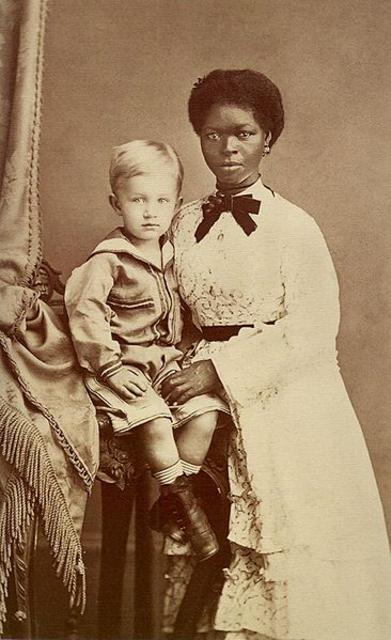
    When I saw the movie The Help, I thought, “Wow, that’s like present day Brazil”.  That’s what I see here.  Upper-classes in Brazil often deny the basic humanity of the people working in their homes.  (And to Brazilians who protest that Brazil doesn’t have The Help‘s racial component, I recommend a walk around Ipanema in the afternoon or a visit to a private daycare in Vitoria. Look at the color of the kids and look at the color of the people holding their hands.)

    I believe for most people it’s unconscious.  It’s how their own parents and everyone in their circle has always talked about nannies and housekeepers and drivers.  They’ve internalized this division, don’t see anything wrong with it, and haven’t been challenged on it.

    I’m not against paying for a housekeeper. We employ one. I’m not against paying for a nanny.  I believe affordable child care is a HUGE barrier keeping women from advancing in the workforce in the U.S. and Brazil. I’m writing this while my kid is at daycare. Many of the mom’s I know are amazing professionals, and it’s only possible because they can find childcare be it a daycare or nanny. Many moms want to work. Many moms HAVE to work. Quality childcare is a necessity.

    I’m against a system that keeps people from empathizing. That makes it “us” versus “them”. That causes a really nice person to ask the woman she’s paying almost minimum wage to watch her kids if she could also do the laundry.

    What about the kids of the people we pay to watch our kids?  Who watches them if we pay their moms $300 a month?  Is it ethical to ask a woman willing to assume the enormous task of keeping two small children alive for only $350/month to also do the laundry?  Is this woman really in a position to say “no”?  Are we going to be annoyed if she does?  If we’re paying minimal costs, why do we expect top-quality service and undying loyalty?

    Beyond respecting and talking to each other as people as opposed to being constantly on guard against the machinations of “those” others who want to exploit us…I have an idea for improving things for the moms, maids, and childcare workers.

    Everyone gets rid of their housekeeper.

    We take the money we were paying to housekeepers and put it toward childcare, either by increasing the wage of the nanny or increasing the salary of daycare and preschool teachers.  The former housekeepers come together and start cleaning-service businesses.  Their former employers, now clients, hire the company for once or twice a week, and now the preschool teachers and nannies may even be able to afford the housekeepers’ services with their increases in salary. The former housekeepers can also find employment at all the new public daycares the government will open in my utopia.

    And what about all the cooking and laundry and grocery shopping left in the wake of the maids?  Well, I think it’s time for Brazilian men to stop watching soccer and do some freakin’ laundry.

    How does that sound?

    Save

    Save

  • Flying with Preschoolers: It can always get worse.

    Flying with Preschoolers: It can always get worse.

    My only parenting standard at airports is "don't lose her".
    My only parenting standard at airports is “don’t lose her”.

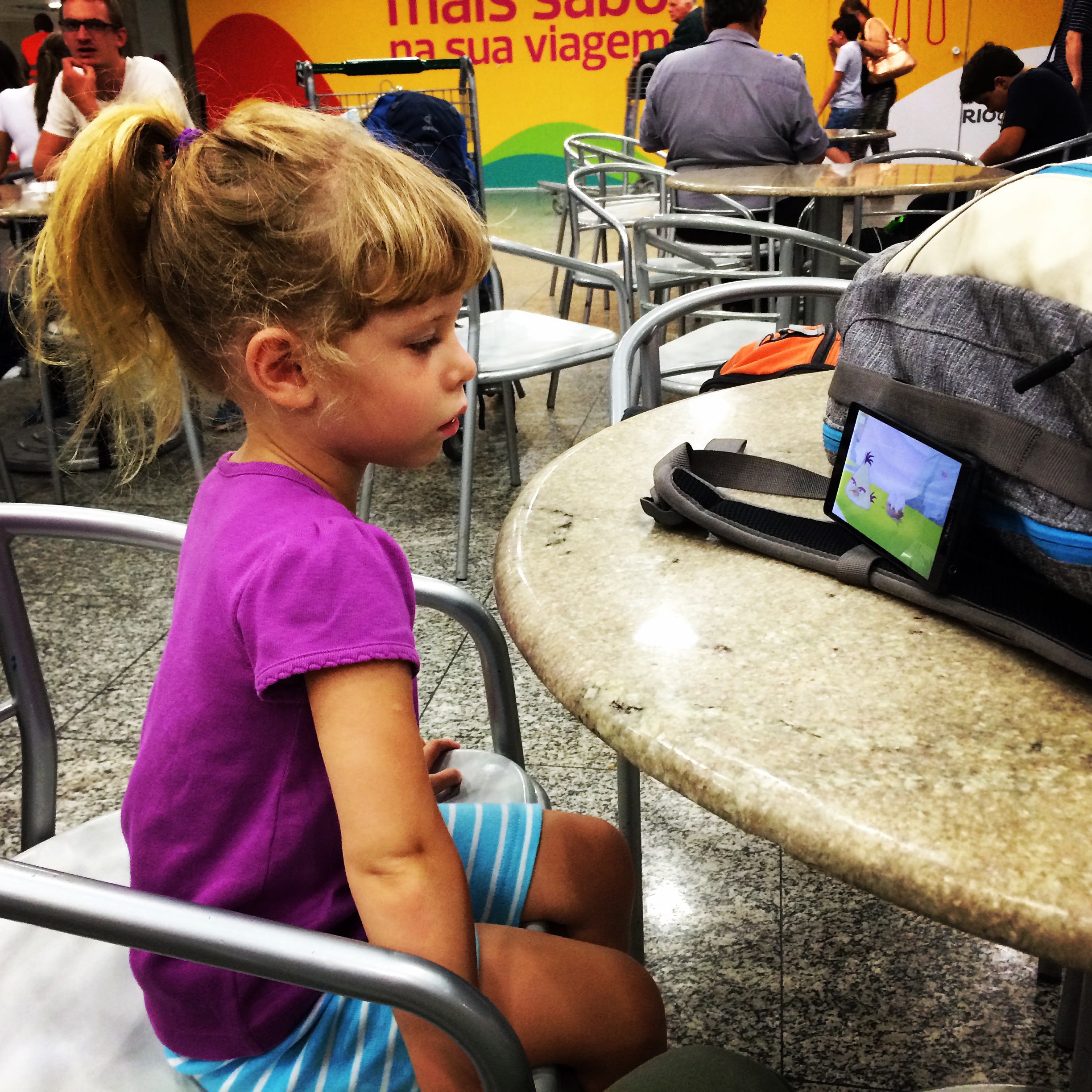
    My little family of three took a trip to Rio de Janeiro this weekend.  Our nephew recently had a birthday and we needed to put in some face time with my husband’s family.  It’s only a 45 minute flight from Vitoria to Rio, but that was long enough to learn a valuable lesson.  There is no length of time short enough a three year old can’t turn it into forever.

    It’s like in Interstellar.  For the pilot and crew who have tasks to complete, 45 minutes is barely enough time to toss bags of crackers at everyone.  They’re the lucky ones down on the planet.  The parents of small children are the ones stuck in orbit who stumble off the plane with more grey hair and beards, demanding to know what year it is.  How long were we up there?  Six years?  Ten?

    For our flight home, boarding was scheduled for 6:50pm.  Right at dinner time! But my husband and I were prepared.  We had packed sandwiches…which my daughter ultimately refused to eat because we miscalculated the nap.

    The ride to the airport was about 30 minutes.  When my daughter fell asleep in the taxi, we thought “Oh good, she can take a short nap and be in a better mood.”  Only, she didn’t fall into nap-time sleep.  She fell into bedtime-for-the-night sleep, and as my grandmother says, “You don’t need to step on a snake to know it’s going to bite you.”  The same principle applies.  You don’t need to wake a preschooler up from deep sleep to know it’s going to cry.

    And cry she did.  Through the whole check-in process.  While we searched for a place to sit.  While I bought water and snacks.  Even after we resorted to the emergency M&Ms.  Eventually, she calmed down and filled her stomach with 2 tiny bites of sandwich and 5 pão de queijo.

    No longer hungry but still exhausted from the weekend, her emotional pendulum swung to the other extreme. We then had a deliriously giddy 3 year old on our hands.  While deliriously-giddy child is less emotionally exhausting than inconsolable child, she is more physically exhausting because deliriously-giddy child cannot occupy the same space for more than 3 seconds.

    Did I mention that my back locked up this weekend?  It happened while checking in at the airport for our flight to Rio.  For the first time in my life.  I couldn’t bend over, lift anything, or even take a deep breath the entire weekend.

    Because I was benched from parenting due to injury, my husband was the one running after her while I kept our place in all the various lines.  He was the one who chased her through security, from the gate to the plane, and took her on the bathroom run she needed the moment we stepped on the plane.

    Eventually the plane took off and everything was ok. For about half an hour.

    With fifteen minutes of flight time left, my daughter decided she could no longer tolerate her seat belt.  My husband and I desperately tried to head off the fit we could see coming.  She was straining and arching her back against the seat belt.  Her face was scrunched and turning red.  She stopped speaking in sentences and devolved to “No seat belt!”  Very aware of the 150 people trapped on the plane with us, I grabbed a doll and made it sing “Let It Go”.  As we got to the chorus, my daughter joined in and shrieked “Let it poopy! Let it poopy!”  She dissolved into a fit of laughter and proceeded to sing at the top of her lungs different versions of the song featuring everything from pee pee to smelly socks to farts.

    I’m certain if there had been a vote, the other passengers would have unanimously voted us off the plane.

    That was the emotional knife edge we balanced on for the remainder of the flight.  We teetered between a breakdown over the seat belt and belting out classic Disney songs rewritten to feature bodily functions. “Let it fart! Let it poopy! Let it poopy and faaaaart!” The plane eventually landed three months later, and we made it home where my daughter finally ate a peanut butter and jelly sandwich and went to bed.

    All in all, it was a pretty uneventful trip.  It could have been so much worse.

  • 5 Things You’d Never Guess About Brazil

    5 Things You’d Never Guess About Brazil

    5 Surprising Facts About Brazil
    5 of the many things that have surprised me about Brazil…

    “Do you like Brazil?” I heard this question for the thousandth time last night.  I don’t know why people bother to ask this question.  It’s in the same category as “Does this make me look fat?” and “Did you read my last blog post?”  Nobody wants an honest answer.  “Do you like Brazil?”  The correct response is an enthusiastic “Yes!”

    At least this question has an obvious correct answer, unlike “So which country do you like better?  The US or Brazil?”  What am I supposed to say?  I usually cop out with humor. “Neither.  I’m giving up on the whole nation-state system.  I’d like to start my own island tribe based on handedness.”

    Another strategy I’ve developed over the years is to answer these politically loaded questions with lists: “Things I love about Brazil” or “Things I miss about the US”.  Below is my favorite list.  I like it because it’s personal but more unusual than the standard “Things I love about Brazil.”

    Five Things That Surprised Me About Brazil

    1) Stellar Dental Hygiene   Brazilians are obsessed with their teeth.  If you go into a restroom after lunch, there will be a wall of people between you and the sink, all of them flossing their teeth.  Helpfully, many public restrooms have floss dispensers to facilitate this habit.  You should brush your teeth after every meal and ideally after every snack.  As an after-breakfast-and-before-bed brusher, I have the most disgusting teeth in all of Brazil.  Fortunately, my husband accepts me for who I am and ascribes my poor dental hygiene and once-a-day-showering to my Anglo-Saxon ancestors’ affinity for filth.  Although thanks to him, I have grudgingly become a daily flosser.

    2) Your Fingers Must Never Touch Your Food  When I learned that many Brazilians use a fork to eat french fries, I almost moved back to the US.  Brazilians use a knife and fork for EVERYTHING!  Your fingers must never touch your food.  As my people created a category just for “finger foods”, this is not a custom that I’m particularly comfortable with or always able to keep in mind.  I’ll be at a birthday party happily popping mini-pizzas in my mouth, when I notice everyone else at the table has a napkin delicately wrapped around their snack, creating a polite barrier between fingers and food.  After 9 years, I still can’t muster that level of formality for something that came frozen out of a box.  (Honestly between the finger eating and lack of teeth brushing, I’m surprised my husband agrees to go out with me.)

    3) Japanese-Brazilians  My initial thought when I saw my husband for the first time was “Hey, he’s white!”  True story.  Pretty romantic, huh?  Before my husband, the only Brazilian I was aware of was Pelé, thus my unconscious assumption about how Brazilians look.  I wasn’t totally wrong.  According to the 2010 census, 50.7% of Brazilians do consider themselves black or mixed-race. But in addition to the 4.8 million people brought as slaves from Africa and the indigenous tribes who were already here, Brazil has had substantial immigration from Portugal, Italy, Japan, Lebanon, and Germany to name a few countries.  With a history of intermarriage between the groups, Brazilians cover the entire range of possible human phenotypes.  

    4) Brazilians Love Volleyball!  Everyone else in the world besides Americans might already know this.  Probably the world loves indoor volleyball, and it’s only us Americans who are in the dark. Literally. We’d rather just sit in the dark than watch a volleyball game.  But not Brazilians!  If there’s no soccer game, the sports channels are covering a volleyball match.  They have incredibly popular professional leagues here, and if you stay in Brazil long enough, you will find yourself at a bar with a women’s club volleyball game on the TV.  Or judo.  Judo is also very popular in Brazil.

    5) Did You Already Add Salt?  This is a question most Brazilians won’t ask because they’re going to go ahead add more salt regardless.  Meal after meal, I see Brazilians get food placed in front of them and without even tasting it, they reach for the salt packets, rip one open, and rain salt down on the entire plate.  Very shortly after arriving, my husband made sure to treat me to one of Brazil’s traditional meals imported from Portugal, bacalhau or codfish.  Imagine a salt lick served with potatoes and onions. That’s bacalhau.  I couldn’t eat it.  The same was true for feijoada, a uniquely Brazilian dish involving black beans, all the leftover pieces of pig, and a few ice cream scoops of salt. Not surprisingly, Brazil has a hypertension epidemic.

    Those were some of the most surprising truths I learned about Brazil.  I’d come up with more, but I just ate a pretzel and must go floss my teeth.


  • Getting a Driver’s License in Brazil

    Getting a Driver’s License in Brazil

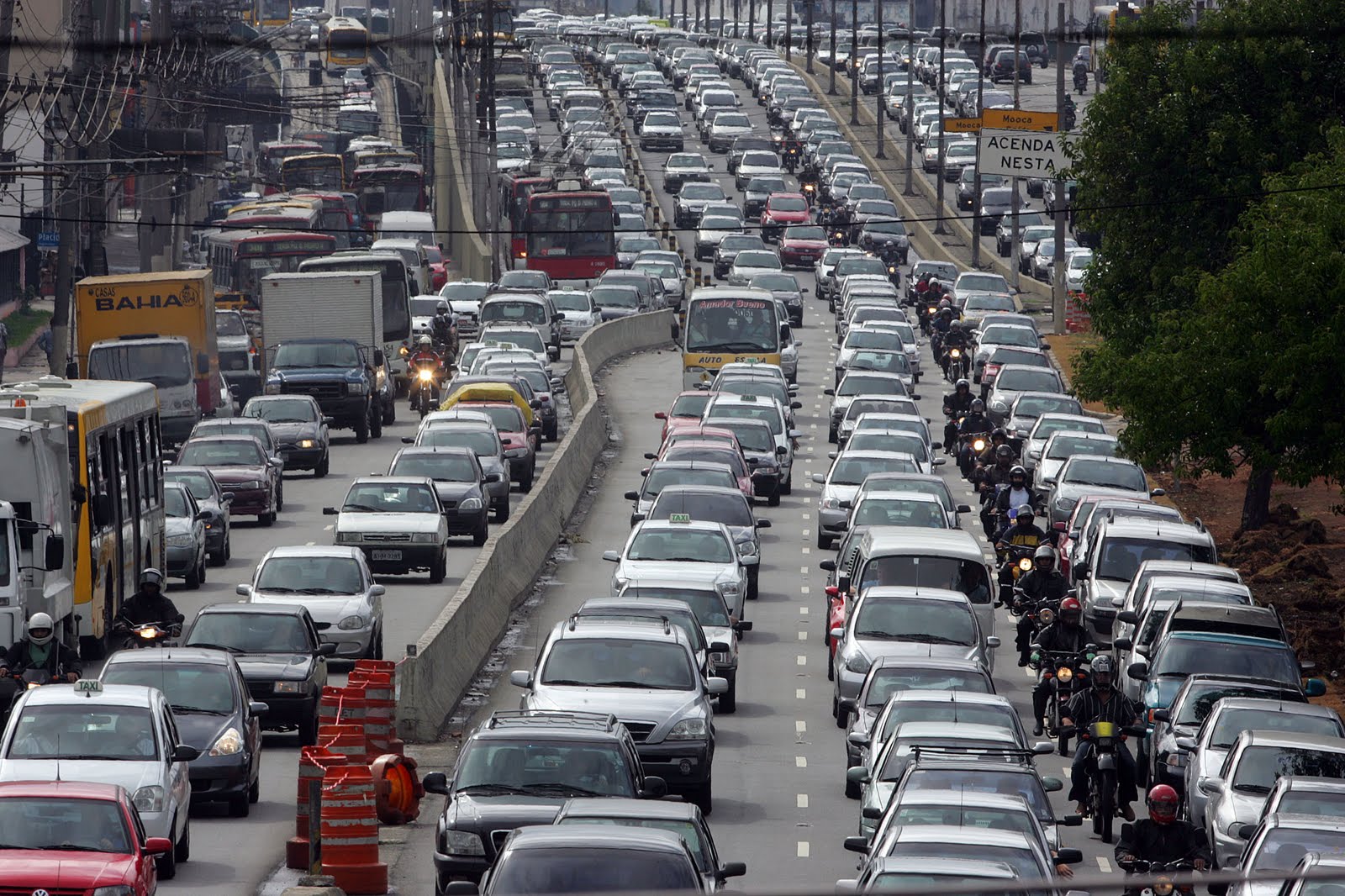
    Traffic in Brazil is not helped by all the unlicensed drivers.

    To put my family at ease, I tend to downplay the more dangerous aspects of life in Brazil, but the truth is you’re much more likely to die a violent death in Brazil than in Canada or Japan or even gun-crazy United States.  Oh, you’re not going to get shot.  No, you’re going to die in a flaming car crash long before you get mixed up in drug-related violence.

    It didn’t take me very long in Brazil to understand that cars were the real danger.  After my first months in Rio, I assumed that traffic in Brazil was governed only by the laws of physics.  I was wrong.  It’s governed by plenty of people laws too.  It is Brazil after all.

    Licenses require medical exams, eye exams, and psychological exams.  Driver’s ed is mandatory and its content federally regulated down to the number of hours for theory and practice.  Thus, the only reasonable explanation for the number of traffic-related deaths here is that no bureaucrat in Brasilia has ever actually driven a car, and they have no idea what skills to include on the test.

    A student of mine recently turned 18 and has been taking his mandatory driver’s ed class.  He brought me several of his practice exams.  He knows I love to laugh.

    Driver’s education courses in Brazil are divided into two parts: 45 hours and 25 hours.  That’s 45 hours in the classroom and 25 hours on the road.  Some people might be thinking, “Gee, wouldn’t it be better is these kids learning to drive a car spent the majority of their class time in a car?”  These people don’t appreciate the teaching power of multiple choice exams and visualizing your goal.  “I can see myself successfully merging in rush hour traffic.”  (Actually, visualizing is the only way to practice highway driving.  Driver’s ed cars aren’t allowed on highways.)

    So if not safe merging practices, what are these up and coming driver’s expected to know?  For one, the best attitude man can have in relation to the environment.  (The answer is “preservation”.)  It’s also necessary to know how the government of Brazil is trying to reduce emissions.  Humans have basic rights and there are a variety of ways we can observe the importance of family and friends to society.  Know that pointing out to a fellow driver that one of her tires is low encourages solidarity and courtesy in society more so than it demonstrates a concern for traffic. Don’t worry about knowing the effects of alcohol on reflexes.  That’s only a leading cause of traffic deaths in Brazil.  It won’t be on the test.

    Now, a 35 question multiple choice test isn’t the only requirement. The non-drivers in Brasilia didn’t want just anybody who can read getting a license.  They also wanted to weed out the crazies, which is why a psychological exam is required.  Again, I think this shows a complete lack of understanding of driving and a prejudice against crazy people.  There’s no reason a person can’t be a sociopath and an excellent driver.  My life experience has shown me no correlation between sanity and a willingness to use the blinker.

    The greatest irony is that all these required (and expensive) exams and driver’s ed courses intended to make the roads safer actually result in a huge market for fake licenses.  People need to drive and they don’t have 70 hours to spend learning about the parts of an engine.

    In the end who ends up driving on Brazil’s roads? A bunch of unlicensed drivers who have no idea how rain affects a car’s ability to stop, a bunch of licensed drivers who can label all the parts of an engine but have never driven on a highway, and not a single person who knows anything about alcohol’s affects on the body.

    So, if you’re coming to Brazil be sure to wear your seat belt.  Or just stay on the beach the whole time.  Cancer kills fewer people here than cars.

  • The Super-Awesome, Amazingly-Exotic Expat Life

    The Super-Awesome, Amazingly-Exotic Expat Life

    The daily rainbow in Brazil.
    The daily rainbow in Brazil.

    When I’m back home in Atlanta, I try not to mention that I live in Brazil.  The opportunity presents itself with surprising frequency, usually when a sales associate asks if I’d like to sign up for a rewards card.  I decline saying “I’m just visiting for the holidays.”   Nine times out of ten, at least in the state of Georgia where people still practice things like small talk and friendliness, the person will ask “Oh, where do you live?”  Then I’m stuck.  “In Brazil,” I answer, and I’m at the counter another five minutes as I tell my story and confess that I have not in fact learned to speak Spanish.  Though I have learned the local Portuguese.

    I can’t blame people for their wide-eyed excitement and curiosity about my life.  Americans are under the impression that life south of Texas or north of Idaho or on the other side of an ocean is more…something.  More exciting.  More dangerous.  More romantic.  More barbaric.  More luxurious.  They’ve seen movies set in these “foreign” countries and read articles like “3 Things Dating Foreign Women (And Marrying One) Taught Me” which tell people what a romantic adventure life can be if they only find a spouse with a different passport.

    As someone who did manage to land a coveted foreign spouse and move abroad, I can state that it’s all true.  My life is more exciting than everyone else’s.  It’s more romantic and luxurious yet still a rewarding, character-building challenge.

    Take my very first meal in Brazil.  I got to eat in the food court of the nearby mall.  My future husband took me and it was incredibly romantic.  The din of the other customers drowned out our voices, so we could only stare into each other’s eyes.  Because I arrived in the midst of remodeling the apartment, I had the opportunity to tour all the best hardware stores in Rio de Janeiro.  The thrill of shopping for toilet seats abroad really gets downplayed in expat blogs.  The only thing in Brazil that rivals shopping for toilets is getting finger printed for a visa at the federal police.  The ink smells like jasmine.

    Living in Brazil has also given me the opportunity to learn a new language.  It’s a fact that everything is sexier in a foreign language. Doesn’t matter which language.  They’re all sexier than English.  Here are some of the local Portuguese phrases I learned in my first months here.  Encanador.  Plumber.  Conta corrente conjunta.  Joint checking account.  Seguro de saúde.  Health insurance.  Absorvente interno.  Tampon.

    If you are ever lucky enough to visit Rio, I recommend driving from downtown to the suburbs at 5:30pm.  It will give you an authentic local experience.  Turn the air-conditioning off and roll the windows down to really go native.  Be sure to have the GoPros charged because friends back home will want to watch this trek. All three hours of it.

    Anyone leaving the US should do their family and friends the favor of recording every second of their time abroad.  They’ll thank you for allowing them to live vicariously through you.  After all, life outside the United States is one long perpetual vacation.  Nobody goes to the grocery store or a “job” in foreign countries.  The people serving coconuts on the beach here in Brazil? Robots.  All of them.  Where do you think Walt Disney got the idea for the Hall of Presidents?  He stayed at the Copacabana Palace in Rio.  Actual Brazilian citizens don’t work and if you’re fortunate enough to get residency neither will you.  People who live here just go to the beach and gym everyday.  I haven’t had to run an errand since I arrived in September of 2006.

    Having a child abroad with a foreign spouse (Yes, even in Brazil my Brazilian husband is the foreigner.  I can’t be a foreigner because I’m American), it only adds to the drama and glamor of the expat life.  I’m writing a screenplay based on my experience of visiting the US consulate to prove the maternity of my child.  I’m hoping Ridley Scott will direct and it will star Angelina Jolie (as me), Antonio Banderas (as my husband), and Jack Black as the unwieldy and misunderstood stack of paperwork that ultimately saves the day and gets us the US birth certificate.

    Those of us living in far-off, exotic lands know that “living” abroad is exactly the same thing as “vacationing” abroad.  Don’t make the mistake of thinking that most people in the world are busy going about the tediousness of living day to day, with the jobs and childcare and home repairs and laundry that human existence demands.  No, no.  Life outside the US is romantic and electrifying all the time.  In fact, I have another Brazilian adventure planned for this morning.  I’m going on an excursion for light bulbs.

  • Coconut Water in a Bottle

    Coconut Water in a Bottle

    I’d like to share a PSA I’m working on.

    “Hey kids, let’s talk about statistics!  Statistics are lame? Ok, how about, sex and statistics? Did you know there are lots of statistics about sex? Totally! People base entire careers off of pie charts illustrating issues about sex.  What issues?  Well, you could have data about how likely it is for someone above a certain age with a certain medical history to have a baby.  You could then pass this information along to doctors.  Doctors in turn pass it along to patients.  These doctors might even chuckle when the patient talks about continuing to use birth control for the time being, because the doctor knows the odds of pregnancy are so slim contraception isn’t necessary.  Then the patient and his partner, believing the doctor knows what he’s talking about, think it’s ok to go a few weeks without birth control.  Four months later the couple is researching baby names and picking out colors for the nursery.  Look kids, my point is that the only statistic about sex that really matters is ‘A small chance is NOT the same as no chance.”  Say it with me, ‘A small chance is NOT the same as no chance.’ ” -This message was brought to you by the US Department of Agriculture, for years bringing you numbing statistics such as raising child from birth to 17 costs $221,000 (not including the cost of time, sanity or college).

    A little wordy for a 30 second spot?  Maybe.  I could just make t-shirts that state in bold and all caps “A SMALL CHANCE IS NOT THE SAME AS NO CHANCE” and give one to, well, everybody .

    It’s an important lesson my husband and I have learned, because, obviously, the story above is ours.  I am currently 18 weeks pregnant.  We’re expecting a little girl August 26.

    Despite what my PSA might imply, we are excited.  Although, to be completely honest, it is has taken me a couple of months to reach that stage.  We always planned to have a family, but we were going to wait another year or two.  Being a person who sticks to any well-made plan the way others adhere to religion, I was thrown by this schedule change.  “Buying an apartment comes before having a baby!”  Then I looked at the big picture, the one where you see your entire life laid out, and I realized that having a baby after college, after grad school, after marriage, after employment, even if it’s still one year earlier than planned, is actually pretty darn good life planning.  Also, I started looking at baby stuff and discovered there is not a single item of clothing that does not become totally adorable when miniaturized.  OMG, baby socks!!

    Now that I’m far enough along, I’m comfortable posting about my pregnancy to the world.  This means Coconut Water will have lots of posts in the coming months about having a baby in Brazil.  Having read about expats in Rio, I already know having a baby in Vitoria is about half the cost as Rio for the same quality of care.  There will be posts about my doctor (love him!), raising bilingual kids, costs, hospitals, finding a nanny, coordinating family visits, etc. Between the new job and the new baby, I have so much to write about but right now I need to go edit essays.  So many posts, so little time.

  • Turkey & Tanks: Happy Thanksgiving from Rio!

    Turkey & Tanks: Happy Thanksgiving from Rio!

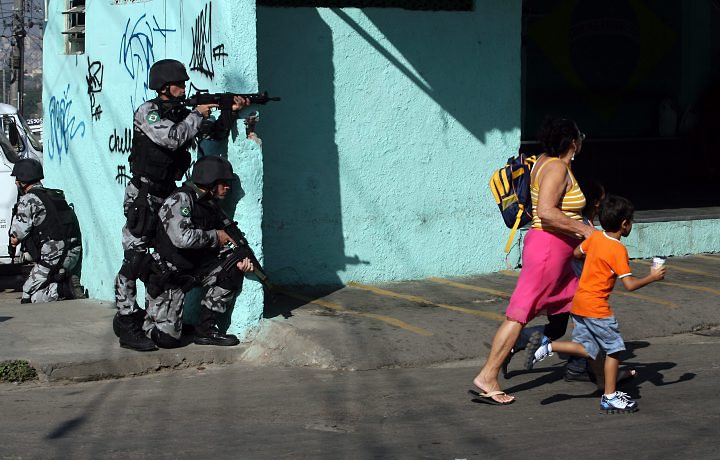
    One week ago today, I was sitting at the end of a beautifully laid table surrounded by good friends and equally good food. On my plate was a second helping of turkey and on the tv were images of tanks rolling through streets. Happy Thanksgiving from Rio de Janeiro!

    Most people, even in the US, have at this point heard that Rio was the scene of a violent showdown between drug gangs and police last week. Fortunately, the city has calmed since last Sunday when police and military invaded and secured one of the most violent slums in the city, Complexo Alemão.

    Despite questions and comments from friends in the US, I haven’t written about it because I don’t really understand my own reaction. My rational brain failing to sway my gut reaction. What finally prompted me to write something even if its contradictory and lacks a conclusion, was a facebook post by a family friend and Georgia state legislator that linked to coverage of the violence and asked “How did Rio get the Olympics?”

    Well, I can’t answer how Rio secured the Olympics although I suspect it has something to do with its fabulous location, vibrant sports-crazy population, huge federal support, and the fact South America was long overdue to host the Games. What I can say for certain is that no one needs to be afraid to come to Rio for the Games. Last week was the most violent week in recent Rio history and, to be perfectly honest, I never felt afraid.

    It was fluke that my husband and I were even in Rio when the violence broke out. We flew from Vitoria specifically to celebrate Thanksgiving with good friends. By the time we arrived in the city Wednesday afternoon gangs had been burning cars and buses around Rio for a couple of days.

    My husband and I spent Wednesday afternoon running errands, buying Christmas presents and visiting my in-laws. For dinner everyone, including my 1 year-old nephew, walked to the mall for pizza. The next morning someone came to look at our apartment, more errands and packing. It wasn’t until my husband and I went to the mall for lunch that I realized how bad things were.

    The tv in the food court was showing tanks in the streets of Rio. I had heard that gangs were burning buses and causing huge traffic jams but I never thought it was bad enough to call the military. From what I saw around me everyone was going about their day as usual. When my husband mentioned the bus burnings I asked, “Did they let the people off the bus before they burned it?” He told me they did and I promptly forgot about it. My only concern was getting caught in one of the resulting traffic jams.

    Should I have been afraid? I’ve been asking myself that question. I don’t think so. In a metropolitan area of over 10 million people the odds my husband and I would be in the car selected for burning were minuscule, made even smaller by the area of the city live in.

    In our neighborhood the streets were busy. The coconut water vendor was on the corner and the weekly vegetable market was set up like any Thursday. Taxis were lined up outside the mall and we grabbed one to head to our friend’s apartment for Thanksgiving dinner.

    Throughout the afternoon while prepping for dinner, our host had the tv on. Globo news replayed images of more than a hundred drug dealers fleeing through the bushes into another slum as the police moved in. Our host, a native of Rio, had a very clear opinion on how to deal with the gangs; bring in the helicopters and launch some missiles. In his opinion, the gangs were armed militias and they were waging war against the government.

    I was sitting next to him watching the same reports but I couldn’t muster the same anger. I saw a group of armed (yes, heavily) but often shirtless and shoeless young men and teenagers running from one neglected part of the city to another. The news was running shots of gang members burning tires. While my host called for missile strikes a voice in my head cried “Oh God, shirtless teenagers are burning tires! Quick call the marines!”

    I know those teens had guns. I know they were actively using them. Many people in Rio were justifiably afraid for their lives. Just not any of the people in the neighborhood where I was.

    I didn’t understand the ferocity and panic that some of the other dinner guests had. Their day had not ben impacted in any way by the violence. As for the chance of this “war” spreading to other areas…To my eyes the “war” was over before the second bus finished burning.

    The gangs had pistols and some automatic rifles. The police had bullet proof vests, pistols, rifles, scopes, years of training, overwhelming numbers, helicopters and did I mention the army was called in? This was the most one sided war in the history of military engagements.

    I’ve read back over this post and I’m aware of how bizarrely pro-drug dealer it sounds. Let me assure you, I think everyone of them should be arrested, sent to trial and then to jail on what is probably overwhelming evidence. They have broken the law, disrupted the entire city and started a gun battle that hurt many and even killed some. And yet…

    Images are powerful things. The image I remember most vividly from all of the news reports that Thursday was not the scene of a hundred armed men running from the police. It was of a group of armed and uniformed police officers dragging a shirtless, handcuffed teenager (he was 19 at the most) in front of reporters. One of the officers grabbed the teen’s chin and jerked his face up so all the cameras could see. The police displayed their human trophy and it made my stomach turn.

    I was the only one who saw that scene. We were having dinner but from my chair at the end of the table I could still see the tv. My reaction was physical. My stomach clenched and could feel my face flush. The crawl along the screen told me this was a captured drug dealer but all I saw was a half-naked kid being treated like a prized animal pelt by forces infinitely more powerful than he had ever been or could hope to be. It broke my heart.

    Of course I want the police to be able to defend themselves from people perfectly willing to use violence, but I expect the people society allows to carry weapons and use them to have respect for every human being. That is why they are the “good guys.” The good guys know that human life has value simply by being human. If you can treat someone like an animal without a second thought, in my book, you’re a bad guy.

    I don’t think that young drug dealer was born evil. His government failed him at every turn, health care, education, even basic sanitation. It’s certainly not an excuse given the thousands of people living in the slums who don’t turn to crime, but so many legitimate options were closed to him because of where he was born.

    It’s funny. I’ve been reading comment streams and blog posts about the violence. The majority seem to agree with my host. Kill the drug dealers. They’re the bad guys. I’m truly amazed by the fact I haven’t jumped on that band wagon. I’m no pacifist. I do moral outrage and righteous indignation really well.

    I’m sure it all it would take is for me to have a gun put in my face. It’s not been tested, but my compassion is probably only around when the weather is fair. I finally decided to stop trying to convince myself to hate them. A few people reminding everyone that even drug dealers are people who deserve a trial before being convicted is not a bad thing. Why would I want to talk myself into hating and fearing people anyway? If I can be aware of the situation and go on about my day, then yay for me.

    And you can go about your day in Rio too! That was the point of this entire post. The world doesn’t need to fear coming to Rio for the Olympics. I was in Rio during a week of violence and I still got all my Christmas shopping done. The chances of you being assaulted are minimal. You’re far more likely to get run over by a bus.

    So buy your tickets early! Beach volleyball is going to be right on Copacabana!

  • Dear Rio, It’s not you. It’s me.

    Dear Rio, It’s not you. It’s me.

    Dear Rio,

    I don’t really know where to start. It’s not easy to write this. I guess let me first say that you will always have a special place in my heart. The fours years we spent together were some of the happiest and most challenging years of my life. The sunny day strolls around Lagoa. Sipping coconut water next to the beach. We had some wonderful times together.

    It’s not you. It’s me. Well, no. It really is you. I mean, you do have some serious issues. Let’s be honest

    It’s both of us. We both know things weren’t perfect. In the end we’re not compatible. Even during the happy times there was always tension just below the surface.

    You are a blast. The definition of fun loving. Up for a dance party or round of beers every night of the week. And you do like the people. Always inviting more and more, until I can’t hear myself think. With you it’s always the more the merrier. Now, I’m not complaining. It’s who you are. But it’s not who I am.

    You don’t need me. With your amazing looks and fun loving spirit you will always have a string of lovers. Rio, you are truly breathtaking. A sight to behold. But I’m looking for more than just a pretty landscape. It’s what inside that counts with me.

    I know you have a violent side. You never showed it to me and for that I am thankful, but I’ve seen what you can do to others. I have to think about the future and I don’t want to raise kids in that kind of environment.

    Also (we’ve always been honest with each other so I have to tell you) you’re letting yourself go in some areas. All the pollution: air, water and noise. The crumbling sidewalks and potholes. The perpetual traffic jam. You’re not two centuries old anymore. For your own sake, and for those who love you, it’s time to start maintaining yourself.

    Now comes the hardest part. You deserve the truth and you deserve to hear it from me. The thing is, I’ve started seeing someone else. We’ve only been together about two months but, well, I think it was love at first sight. Her name is Vitoria and she’s everything I’m looking for.

    It has nothing to do with you. I need to stop denying who I truly am. The truth is, I love it both ways. I enjoy the activities and culture of urban life and the security and quiet of small town living. Vitoria, she gives me what I need.

    Yes, she’s younger but that’s not the reason. I’ve never been as outgoing as you. I like quiet and tranquility. I like to sit on my balcony and hear nothing but the birds. I want to walk down the street without feeling rushed and tense.

    She also makes me feel special. You can’t deny you’ve got a thing for foreigners. You just keep bringing more and more home. Did you honestly think you could keep thousands of expatriates a secret from me? For you, I’m just one of many.

    But for Vitoria, I’m special. She reminds how unique and therefore highly employable I am. Everyone wants to feel appreciated. Everyone wants to be one of a kind and for Vitoria, I am.

    I’ll end with goodbye and thank you. Thank you for the good times. Thank you for helping me learn what it is I’m looking for. I’ll think of you every time I’m nearly run over by a bus.

    Beijos,
    Brynn