When I first began shopping for children’s books in Brazil, I had a hard time finding books by Brazilians. It was crazy. I was in Saraiva, one of the major chain bookstores in Brazil, and I noticed the books I’d picked were all translations from American authors. So I began hunting for books by Brazilians. I picked up one book after another. Published in France. Published in the UK. Published in Italy. I picked up one with a Macaw on the front. Macaws are from the Amazon. It had to be Brazilian. Nope. Published in Columbia.
There are of course many amazing Brazilian authors writing for children, but despite amazing native authors and children’s lit community, I had to research and order books by Brazilians. My local chain bookstore in Vitoria was no help, which is just wrong.
So I’d like to introduce five of my favorite Brazilian children’s book authors. I’ve included links for English translations when available. Based on what Spanish speaking friends have told me, a native Spanish speaker should have no trouble reading the Portuguese, but I’d love to get more Brazilian kid lit translated into English. I’ll add it to the list of life goals.
Machado was born in Rio de Janeiro in 1941 and has written over 100 books for children. In 2000, Machado won the international Hans Cristian Andersen Award, which designated her one of the greatest children’s authors in the world. She began writing in 1969 and wrote specifically for children because during the military dictatorship in Brazil, children’s literature along with poetry and song, “were amongst the few literary forms with which, through the poetic and symbolic use of language, you could make the ideas of a joie de vivre, individual freedom and respect for human rights known.” Some of her most famous books include A Menina Bonita do Laço de Fita, about a white bunny who desperately wants to become a beautiful black like the little girl next door and the advice she gives him, and Bisa Bia, Bisa Bel, about a girl’s internal dialogue with her great-grandfather and her own great-granddaughter. A Menina Bonita do Laço de Fita is available in English on Amazon.
Born in Rio de Janeiro in 1901, Meirelles published her first work at the age of 18, and she was every bit the genius you’d assume based on that fact. She’s known in Brazil primarily as a poet, but she was also a professor, journalist, painter, playwright, and fiction author. There aren’t many types of writing she didn’t publish in. She could do it all. Meirelles was one of the first women in Brazil to be recognized as a great literary voice. Some of her most famous works for children are “O Cavalinho Branco”, “Sonhos de Menina”, and “O Menino Azul”. The musicality of her lines is so strong, that “O Menino Azul” still sounded lovely when I read it aloud. (And as all adult learners of a second language know, nothing is harder to read aloud in a foreign language than poetry.) I haven’t been able to find any of her children’s works translated into English, but you can find many of her most famous poems translated in this anthology of Brazilian poets.
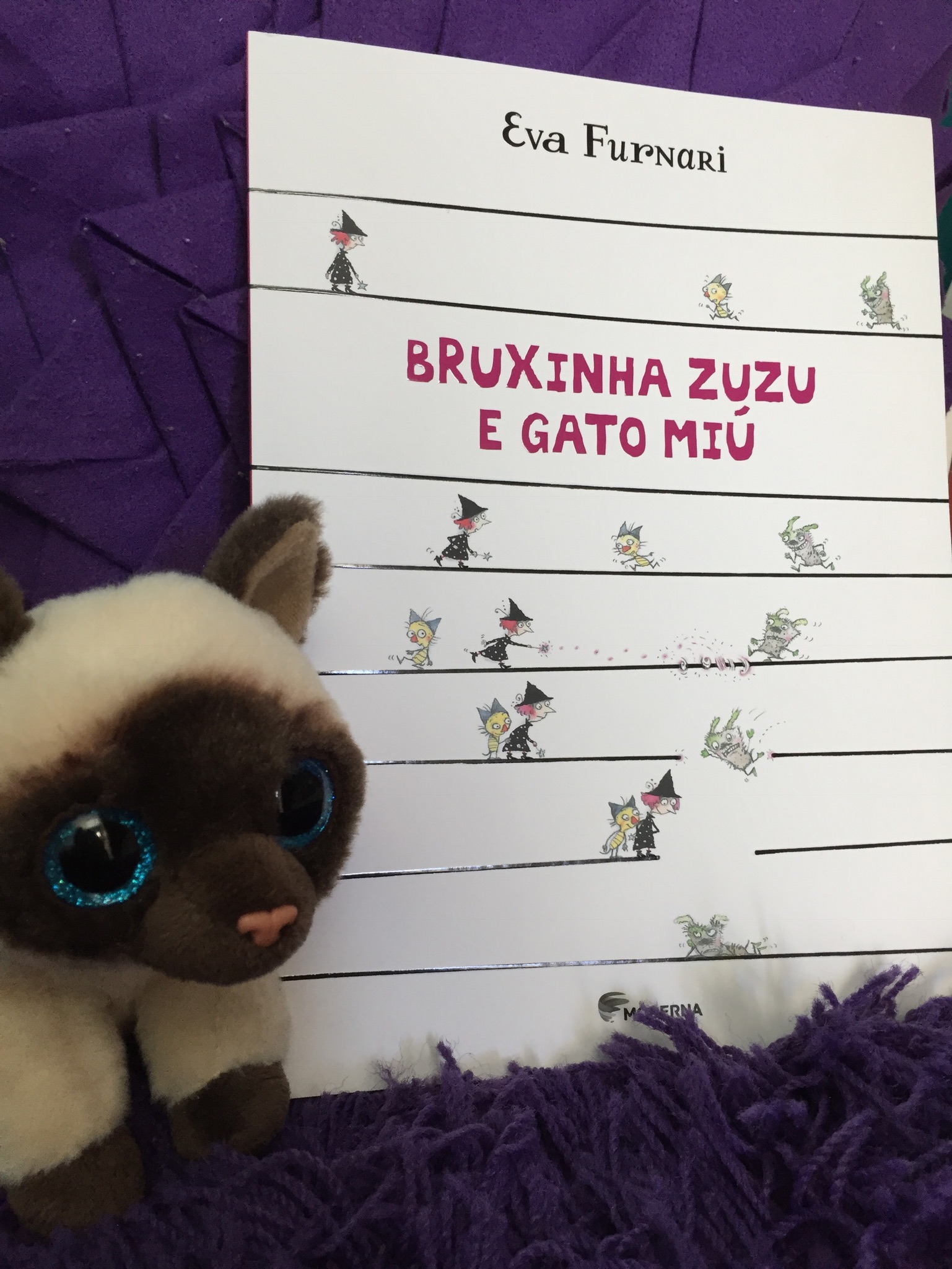
Furnari is an Italian-Brazilian author-illustrator. I’ve been able to forgive her for hoarding so much talent (author-illustrators seem so unfairly awesome) because her characters are so delightfully quirky. Born in Rome in 1948, she moved to São Paulo at the age of two and has lived there ever since. She came to children’s books in the early 1980’s through art and initially worked exclusively an illustrator before creating her own characters and stories. One of her most famous characters is A Bruxinha Zuzu or Zuzu the Little Witch, who never quite seems to master the power of her magic wand. Many of Funari’s books are textless, including our favorite A Bruxinha Zuzu e o Gato Miú, and can be enjoyed regardless of what languages you read. One of her most famous and award winning stories, Felpo Filva, is available in English as Fuzz McFlops in both the US and UK.
Born in the state of Minas Gerais in 1945, Junqueira published her first book at the age of 37 and has gone on to write more than 100 children’s books. She worked as a professor and editor before becoming an author. My daughter and I discovered Junqueira through a book swap at school. My daughter, always the animal lover, picked up a book with a cute cat on the front porch. I was the first story in verse that was more poetry than story and I honestly wasn’t sure how well she’d like it. A Poesia na Varanda was a hit and inspired me to buy Where the Sidewalk Ends during our Christmas trip to the US. I haven’t found any English translations but many of her world are available outside Brazil in Portuguese through Kindle.
Stigger is not really known as a children’s author. She’s a journalist, art critic, and writer primarily for adults known for challenging rules of genre and format in her work. Born in the state of Porto Alegre in 1973, Stigger began working as an essayist for radio and television. She then pursued a PhD in Art theory and Criticism and pursued research and various post-doctoral work before publishing her first collection of stories for adults in 2004. So not a career kid lit writer. However, one of her most recent books, Onde a Onça Bebe Água, Where the Jaguar Drinks Water, is one of the best books I’ve read for teaching empathy and seeing the world through a another’s eyes. In the story, Jaci is forced to consider the world from the perspective of the Jaguar he’s ends up dining with. Unfortunately, there isn’t an English translation of it or any of her books that I can find but several of her adults works do have Spanish versions available on Amazon.
This is public enemy #1! Aedes aegypti. Know it and squish it!
There are over 3,000 species of mosquitoes. A fact I think proves there’s no benevolent deity.
This post is a run down of the basic info on the common mosquito born diseases in Brazil: dengue, zika, chikungunya, and yellow fever. It’s essential information if you’re visiting.
Because the mosquitoes are winning.
Last year in the wake of zika and the microcephaly epidemic in Brazil, the federal government mobilized troops to patrol for standing water basically declaring war against mosquitoes. The yellow fever outbreak this year is evidence of how well that went in the long term.
So here’s everything you didn’t want to need to know about mosquito born illnesses in Brazil.
DENGUE:Let’s start with dengue because it kills the most people every year. I know zika is the Kim Kardashian of the bunch, hogging all the media attention, but dengue is most likely to put you in the hospital. There were roughly 1.5 million registered cases of dengue in Brazil last year and of those 629 died. The severity depends on which of the four strains of the virus you get. The worst causes hemorrhaging, but most people just get incapacitating joint pain and high fever.
Dengue is usually transmitted through the bite of an infected mosquito, but it can be passed from mother to fetus. The disease is asymptomatic in 40-80% of cases. The incubation ranges from 3 to 14 days.
Symptoms
Sudden high fever
Severe headache
Severe joint pain
Moderate joint pain
Severe pain behind the eyes (basically your body will hurt a lot)
A skin rash that appears post fever
Fatigue
Nausea
Itching
The Severe Case Symptoms (everything above plus…)
Bleeding from the nose and gums
Abdominal pain
Vomiting
Hypotension
Dizziness
Breathing difficulty
In rare cases, sometimes after a second infection, a person can develop dengue hemorrhagic fever which leads to shock and death in 24 hours. Yeah, dengue totally sucks.
There’s no vaccine. There’s no drug treatment. The only thing to do with dengue is treat the symptoms and be sure not use any aspirin because it increases the risk of hemorrhaging.
Yeah, they’re all cute and cuddly until one drops dead of yellow fever.
ZIKA: If you’ve been to Brazil in the last year and sneezed, you might have had zika. Or maybe you didn’t sneeze. You still might have had zika. Most cases are asymptomatic, about 80%.
Of the most common mosquito borne diseases, zika results in the fewest hospital cases. In 2016 there were 214,193 cases of Zika in Brazil and 3 deaths. The global panic over zika is because of it’s link to microcephaly, a condition that babies develop in utero which prevents the brain and skull from developing normally.
And let’s be clear. There IS scientific consensus that the zika virus is one of the causes of microcephaly. I believe in the CDC, WHO, and peer reviewed scientific journals. Conspiracy theorists can save themselves time and not bother commenting about genetically altered mosquitos. I will just delete them.
The fact the disease is asymptomatic in the majority of cases makes it particularly scary for women who are or may become pregnant. It’s possible to have zika and never know until the baby develops complications. Even if you develop symptoms, they’re usually mild.
Symptoms
low grade fever
headache
skin rash starting on the face and spreading over the body
red eyes
itching
fatigue
sore joints
Less Common Symptoms
Muscle pain
Swelling
Sore throat
Vomiting or diarrhea
Swelling
So now pregnant women all over Brazil can worry that their swollen legs and exhaustion is actually zika. Because there wasn’t enough for expectant parents to worry about. Fucking mosquitos.
There’s no vaccine.
CHIKUNGUNYA: Unlike zika and dengue, if you get chikungunya, you’ll know. 70% of cases develop symptoms. At least you don’t have to wonder whether or not you need a doctor.
Severe joint pain mostly in feet, ankles, hands, wrists
About the joint pain, almost every case has it and in rare cases it becomes chronic.
Less Common Symptoms
Intense back pain
Headache
Muscle pain
Vomiting
Conjunctivitis
Fatigue
Photophobia
Sore throat
Basically everything hurts like hell.
Like the others, there’s no vaccine for chikungunya and no treatment beyond treating the symptoms.
CDC’s risk area for yellow fever in South America
YELLOW FEVER: The CDC’s website has a map of areas where yellow fever vaccines are recommended. The risk area for Brazil extends just up to the border of our state. So far this year 31 people have died from yellow fever in Esparto Santo. Dear CDC, you need to update your map.
Yellow fever is typically passed via an infected monkey to mosquito to human, so areas without dense forests were considered safe. The incubation period is 3 to 6 days but most cases are asymptomatic.
Symptoms
Sudden high fever
Severe headache
Back pain
Muscle pain
Nausea & vomiting
Fatigue
Weakness
After a brief remission, 15% of cases will develop a severe form of the disease.
Symptoms of Severe Form
High fever
Jaundice (hence the name)
Bleeding
Shock
Organ Failure
Of cases that turn severe 20-50% die.
We got our yellow fever vaccines!
But good news! There’s a vaccine! Two doses taken ten years apart provide lifetime immunity. Yay science! If you’re thinking about visiting Brazil this year, double check to see if your hotel is located within one of the new expanded risk area. Be sure to use a Brazilian site. Remember, the CDC’s map is out of date.
Vaccines are being developed for the other three. Several companies will have zika vaccines ready for clinical trials by the end of the year. Late stage clinical trials of dengue vaccines are already underway, and researchers have reported success with initial clinical trials for chikungunya vaccines. Unfortunately, we’re still years away from these vaccines being available to the public.
In the meantime, don’t cancel your vacation. Just be prepared. Get a yellow fever vaccine. Pack repellent. Sleep with your windows closed and fan on. And for god’s sake, if you see a mosquito, kill it!
This is public enemy #1! Aedes aegypti. It carries dengue, zika, & chikungunya.
Mosquito born viruses did not cross my mind when considering what my daily life would be like in Brazil, but it turns out that repellent is right up there with sunscreen as a daily necessity.
I certainly never lost sleep over a mosquito in the U.S., but here in Brazil, more than once we’ve turned the lights on in the middle of the night at the whine of a mosquito. Some people might think mosquito hunting at 2am is overreacting, but my husband has had dengue. The steely-eyed commitment with which he stalks every mosquito in our home makes me think the experience has stayed with him.
Public health officials in Brazil take mosquitoes seriously too. They’ve been battling dengue for decades. Chikungunya and Zika became common place in the last few years, and this year, Espirito Santo and its neighbor, Minas Gerais, are combating the spread of yellow fever. My family and I got our yellow fever vaccines last week, and it was an impressive operation.
If you know the monkey might have yellow fever, is it still as cute?
This is public health at it’s most efficient and most militarized. I know from personal experience. We were assigned a specific vaccination center and time when my husband reserved our vaccines online. When we got to the church, we had to present IDs for everyone, including my daughter, before we could enter the building where people waited in rows of white plastic chairs. We’d been assigned numbers at the entrance, and in what has to be one of the shortest waits in the history of line waiting in Brazil, a woman in a white lab coat, clipboard in hand, called our numbers, and we entered the heart of the operation.
Along one wall was a row of nurses and firefighters taking down people’s names, ID numbers, and stamping vaccine cards. Firefighters are militarized in Brazil, and their khaki green uniforms with ranks sewn on their shirts made the whole scene feel like something out of Contagion. Along the adjacent wall, was another group readying vaccines before passing them in a ceaseless stream to the one woman who administered vaccines. Needle in. Needle out. Hands off the old needle. Accepts freshly opened vaccine. Needle in. Needle out.
It wasn’t frantic, but it was efficient. People were moved around the room and back out the door with a lack of pleasantries I have never witnessed in Brazil.
We survived!
My daughter did not like it. She’d been totally chill about it until we got inside the vaccination room. The tension and focus that permeated the air had her clinging to her dad and begging to go. And these people were not waiting for her to calm down. I don’t blame them. They’re trying to vaccinate a few million people. My husband and I went first, trying to teach by example. It had no effect. She just got more hysterical with every second, so my husband held her in his arms. I held her arm straight, and the vaccine lady jabbed the needle in.
For the rest of the day, my daughter showed off the tiny, nearly invisible red dot left behind like the scars of a near-death shark attack.
As of Friday, there were 20 confirmed yellow fever deaths in our state. That’s 20 deaths out of 80 confirmed cases. The math is simple. That’s a 25% fatality rate. In neighboring Minas Gerais, there have been 109 deaths out 288 confirmed cases. I’m getting my calculator…37.8%. Wow, I hadn’t realized until writing this how bad this outbreak is.
So if you’re planning on visiting Brazil anytime soon, I’d check if you’re ecolodge is smack in the middle of a high risk zone, and then I’d pack lots and lots of repellent regardless.
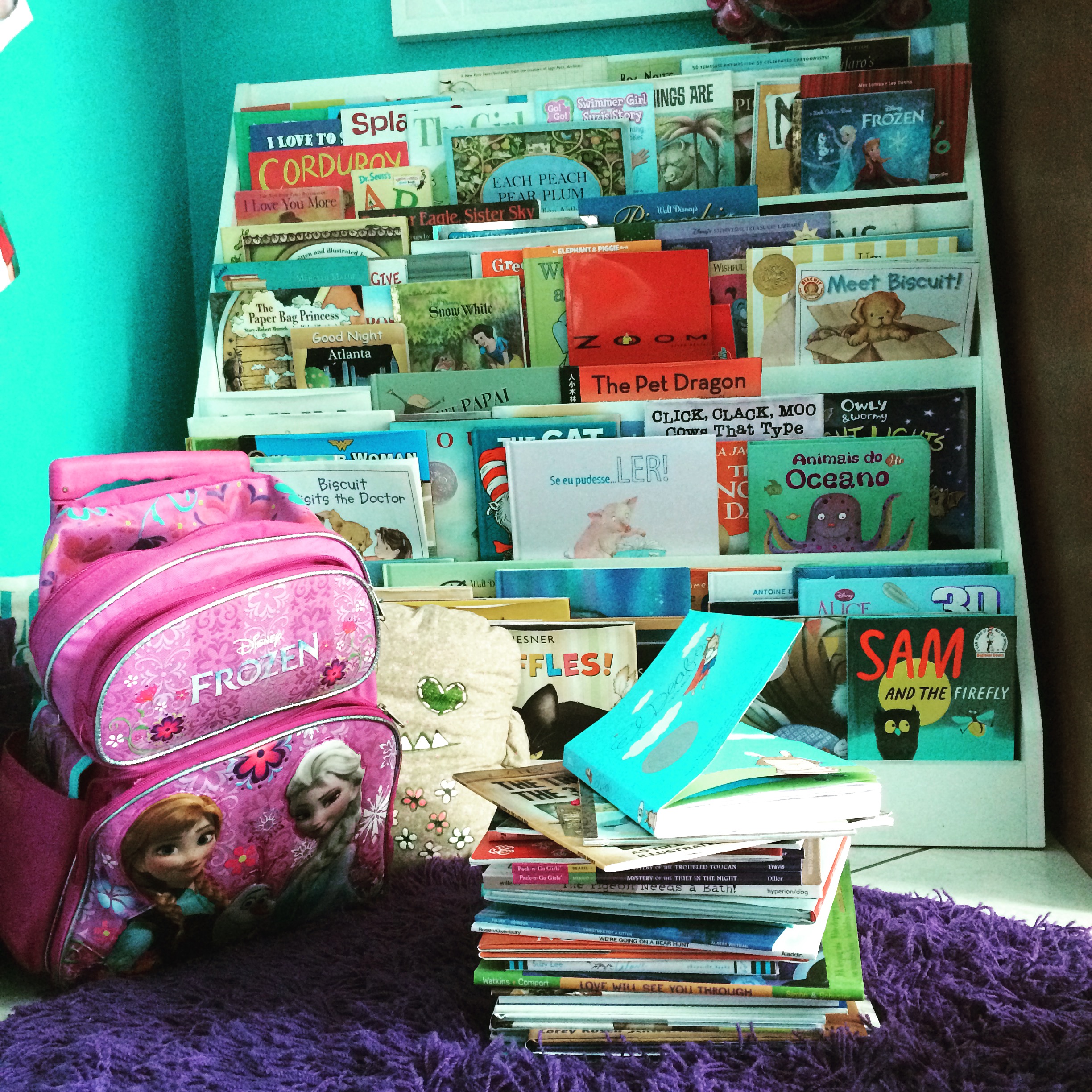
To celebrate International Women’s Day this week, I watched a lot of videos with infuriating facts. As a writer, book lover, and mother of a daughter, this one caught my attention. It made me get up and go straight to my daughter’s bookshelves.
One thing I can do right now to combat the publishing industry’s gender bias in kid’s lit is help spread the word about amazing picture books with female protagonists and encourage you to buy them. (Because sales matter!) And don’t buy them just for girls, please!
It’s important to read books with female protagonists to boys because reading about people different from ourselves teaches empathy. Shannon Hale, prolific author in every age group (her Princess in Black books appear on my list) wrote an amazing post about the dangers of not giving books with female protagonists to boys. Reading diversely also develops a realistic idea about the world which is filled with different kinds of people. I didn’t think twice about reading Peter’s Snowy Day to my daughter, despite the fact she is not a boy, black, or ever going to see snow outside her door. It’s a delightful human story and that’s what matters.
The books on my list are funny, exciting, and thought provoking stories that both girls and boys will enjoy. They’re set in countries all over the world and feature characters of different colors, languages, and cultures. The only commonality is that all the main characters are human female. (Sorry, Olivia. Female animal protagonists didn’t count for this list. You’re still totally awesome though!)
20 Fabulous Picture Books with Diverse Female Protagonists (In no order other than how I came to them on my daughter’s shelf)
Journey by Aaron Becker This stunning and wordless book, follows the adventure of a girl as she journeys to a fantastical land with the help of a magic crayon. There are enchanting forests, flying carpets, and bad guys on air ships!
Normal Norman by Tara Lazar illustrated by Stephen Britton This book is laugh out loud adorable as the narrator tries to define the word “normal” using a totally average orangutan. Things start to go wrong starting with Norman’s refusal to eat a banana and his preerence for pizza.
If You Give a Pig a Pancake by Laura Numeroff illustrated by Felicia Bond If you loved what happens when you give a mouse a cookie, check out what one little girl has to deal with when she caves to a pig’s demands.
Viva Frida by Yuyi Morales This is one of the most gorgeous books my daughter owns. The text (what very little there is) in both English and Spanish goes through the themes in Khalo’s work, such as live, imagine, create. The illustrations are bright and vibrant and straight out of a dream.
Paper Bag Princess by Robert Munsch illustrated by Michael Martchenko I’m not at all opposed to Princesses if they’re one among many different types of characters and take matters in their own hands like Princess Elizabeth. She has no intention of letting that dragon get away with burning down her castle and stealing her fiance.
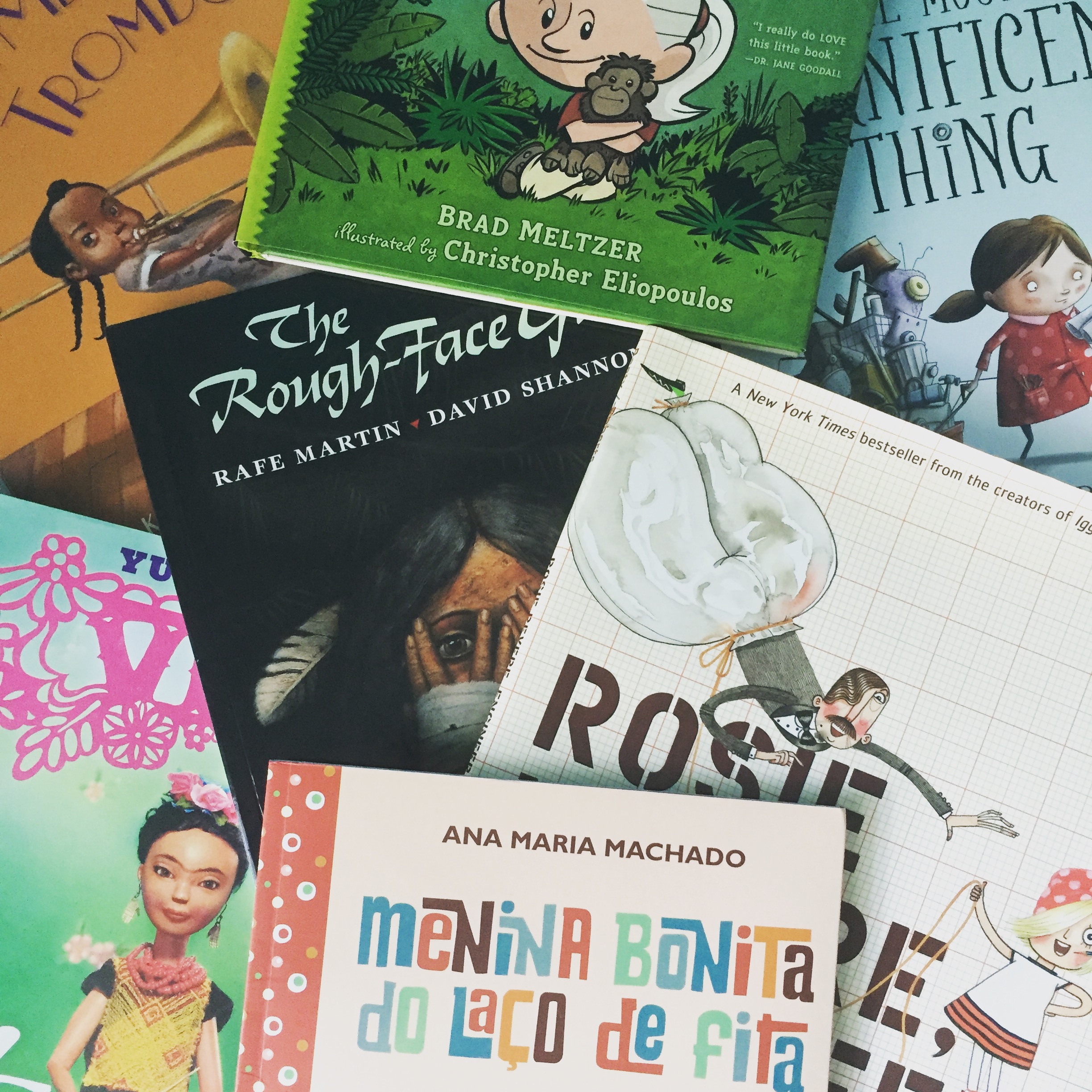
The Rough Face Girl by Rafe Martin illustrated by David Shannon In addition to the beautiful illustrations, the heroine wins the day because of her character. She’s not pretty. She doesn’t have fancy clothes, but she sees the beauty and power in nature and understands what’s truly valuable. Yes, the book is about a young woman looking for a husband, but the message about character over appearance and clothes is an important one for all kids.
My Two Grannies by Floella Benjamin illustrated by Margaret Chamberlain In addition to featuring females both young and old, black and white, the book also deal with two different cultures mixing! Multicultural, multiracial, and female protagonists! There is no reason not to have this book on your kid’s shelf.
Pretty Salma by Niki Daly A Little Red Riding Hood tale set in Ghana. What I love about this version is that Salma redeems herself after getting tricked by coming up with the idea for how to scare away Mr. Dog and save Granny.
My Pet Dragon by Christoph Niemann Lin has lost her pet dragon! She has to go on an adventure to find him and along the way the illustrator cleverly introduces some Chinese characters. Of your kid isn’t going to be fluent in Mandarin at the end, but thank to this book my daughter is ware that not all languages use an phonetic alphabet like English.
Menina Bonita do Laço de Fita by Ana Maria Machado illustrated by Claudius A Brazilian story about a beautiful little girl who so captivates a neighboring bunny that he wants desperately to become black like her. She gives him all sorts of funny tricks to turn black. None of them work. Don’t worry if you can’t read Portuguese. There’s an English version on Amazon.
The Most Magnificent Thing by Ashley Spires illustrated by Mark Pett Yes, this book is about a girl who loves to build things (awesome!), but that’s not the reason I bought it. My daughter gets frustrated easily and goes from fine to throwing things in a heartbeat. Just like the girl in the story. If you know a kid who has trouble coping with frustration when things don’t work exactly right, this book is a MUST read.
The Girl Who Never Made Mistakes by Gary Rubenstein Similarly to The Most Magnificent Thing, this book is great for kids who stress about being perfectionists and have a hard time dealing when things don’t work exactly the way they wanted. Spolier alert: A mistake is eventually made and lessons are learned.
As Mil e Umas Historias de Manuela by Marcelo Weberson illustrated by Maluf Santiago Ok, I don’t think there’s an English version of this, but Portuguese and Spanish speakers (because really they’re almost the same language) will love this story of a girl who devours books. Literally. She consumes so many books, she literally becomes a book and the only cure is to write her own story using all the words she has inside of her.
Wave by Suzy Lee This is a gorgeous, wordless story about a curious girl, a sunny day, and a playful wave. Lee is a fantastic illustrator from South Korea and her primarily ink drawings are stunning. If your child loves the beach, she will adore this book.
Biscuit series by Alyssa Capucilli illustrated by Pat Schories This is a series of simple stories about a girl and her dog, Biscuit, because it’s not only boys who love their dogs. My daughter adores animals. We bought her first Biscuit story to go with a veterinarian costume. Now that she is starting to read, Biscuit books are great first readers.
Rosie Revere Engineer & Ada Twist Scientist by Andrea Beaty illustrated by David Roberts Diverse representation in children’s literature is so important and Beaty has written two amazing books that feature girls in STEM fields. They’re rhyming books and a joy to read aloud, and the illustrations are so much fun.
I Am Jane Goodall by Brad Meltzer illustrated by Christopher Eliopoulos At the end of the video above, the girls asks if the bookseller has any books about a girl going to Mars. Studies have shown that by 5 years old kids already think certain jobs are “for boys”. This book is part of the Ordinary People Change World series. It’s a delightful collection about real people from history in all different professions. Books feature Rosa Parks, Helen Keller, Amelia Earhart, Eleanor Roosevelt, Sacagawea and Lucille Ball for your budding activists, teachers, pilots, politicians, or comedians.
Mufaro’s Beautiful Daughters by John Steptoe I remember my teacher reading this book to my class in elementary school. It’s a Cinderella story but in this version both sisters are equally physically beautiful. It’s Nyasha’s generosity and respect for all creatures and nature that sets her apart from her selfish sister.
I Wonder by Annaka Harris illustrated by John Rowe I love this book about a mother and daughter on a walk wondering about…everything really. The book has a beautiful message. It’s ok to say, “I don’t know,” and the beauty of not knowing allows all to wonder about the mysteries of the universe.
The Princess in Black by Shannon & Dean Hale illustrated by LeUyen Phan This is an illustrated early chapter book and was one of the first chapter books my daughter stayed interested several nights in a row. I love Princess Magnolia, and I think her adventures fighting monsters would appeal to girls and boys. I love the message. You can enjoy a frilly dress at the tea party and also love wearing a mask and boots and fighting monsters. A kid doesn’t have to chose between sparkly tiaras and being a hero.
So those are a few of my favorite pictures books with female protagonists. When you get into chapter books…wow! There’s Matilda, El Deafo, Little Women, Island of the Blue Dolphin, Anne of Green Gable, Smile, and anything by Judy Blume. But that’s another list for another post.
Obviously there are so many more great picture books not on the list. If I’ve left off one of your favorites, please add it in the comments!! I’m always on the lookout for new additions to our library! Our copy of Goodnight Stories for Rebel Girls is on the way!
This is the exact opposite of what I looked like reviewing pages to send off.
A month ago, my completed YA novel was selected for the annual Sun versus Snow writing contest, and I got the chance to work with a published author to polish my pitch materials and have them read by 21 agents.
On the day of the agent round, we boarded a plane on an emergency trip to find working law enforcement.
It was not the first-contest-win experience I’d imagined. I had envisioned sitting in front of my computer during the agent round, compulsively eating Kit Kat and obsessively refreshing the website to see if I got requests. Instead we booked an afternoon flight to a state with police, threw clothes in suitcases, stuffed passports in shoes, and took a taxi to the airport.
While I might not have been able to follow #sunversussnow as frequently as I would have liked, I was able to learn some valuable lesson about how to get the most out of a writing contest while law and order breaks down around you. Here are 5 tips for writing during a security emergency.
1. Don’t procrastinate. When you find out your manuscript was selected to participate, you will be thrilled and checking your email every two minutes for that first contact from your mentor. An actual published author is sending you an email! Keep that enthusiasm. You’re going to need it in order to get everything done ahead of time. From the time the police go on strike until a significant surge in assaults, you have about 48 hours. You’re going to want to send off final revisions before the shit really hits the fan.
2. Take the opportunity to work on mental discipline. This is really for parent writers. With schools being closed due to security concerns, you’re going to have to write between pouring grape juice and explaining (again) why there are not second helpings of dessert. Think of it as an afternoon of ten minute writing sprints. Interval training for your creative muscles. How much can you get in before the next “Mommy!”?
3. Use it as a distraction. While your fellow participants are wearing out their fingers refreshing the website hoping to see agent requests, you can use the last minute decision to fly to Rio as a reason to step away from the computer. As you puzzle over how much to pack considering you bought an open ended ticket, you might even briefly forget it is the agent round. When you do remember, it’s going to be at a super inconvenient time like in the middle of airport security, and you’ll be forced to practice patience.
4. Back up everything! You will be faced with a choice when packing for your last minute trip: bring your computer or don’t bring your computer. Your husband will advise against it given the 400% rise in carjackings. But what if you get an agent request? How will send off pages without your computer? You have to send them while the contest is fresh in the agent’s mind. Obviously you can’t wait three whole days!!! But what if your computer is stolen?!! Don’t stress. The answer is to put everything in iCloud, Google drive, a flash drive which you hide in the pencil jar, and in emails to yourself. You should be covered in the event of a carjacking.
5. Embrace the idea: Done and sent is better than “Almost perfect, just fifteen more minutes. For real this time.” Look, having to frantically reread your first fifty pages (because you actually got your first agent request for pages! Ahh!) while your family is crammed together in the hotel with the sound of PJ Masks in the background is not an ideal writing environment. You’re not going to turn out ideal work. It’s ok. Do what you can. Remember you’ve already read through those pages fifteen times. Acknowledge your mentor was awesome and helped you write a hell of a query letter that works! Then send the pages. There will be more requests in the future.
It was an honor to be selected for Snow versus Snow! Thanks to the judges and contest coordinators Michelle Hauck and Amy Trueblood. I do wish I’d been able to focus on the contest, interact more with fellow participants on Twitter, and celebrate the agent requests I did get, but these are minor complaints. My mentor Max Wirestone gave spot on feedback. His book The Unfortunate Decision of Dahlia Moss came out in February, but he still volunteered to be a mentor for the contest! Thanks to him, I have hugely improved pitch materials.
The contest also inspired me not to give up on Pangea. After no requests for pages from agents last year, I was ready to set it aside and focus exclusively on my new historical fiction, but now I’m tweaking the manuscript and sending it back out there.
As my daughter’s favorite book, Rosie Revere Engineer says “Life might have its failures, but this was not it. The only true failure can come if you quit.”
One of the best parts of being a writer is getting to read constantly and when someone raises an eyebrow at the four new novels that appeared in your joint Kindle library on the heels of three novels from the previous week getting to say “It’s for professional development.”
I’ve never done an annual review of favorite books, but while flipping through my Kindle library, I was struck by how many I want to reread (but will probably never find the time because there’s always a new book to read and I feel I should read every book at least once before I go back and start rereading).
I read some fantastic books last year. Some were beautiful. Some were powerful. Some were laugh out loud funny. And some were just lots of fun. Really the only thing all these books have in common is that they kept me up past my and everyone else’s bedtime, and left me alone in the silent living room with raw eyes at 2 in the morning.
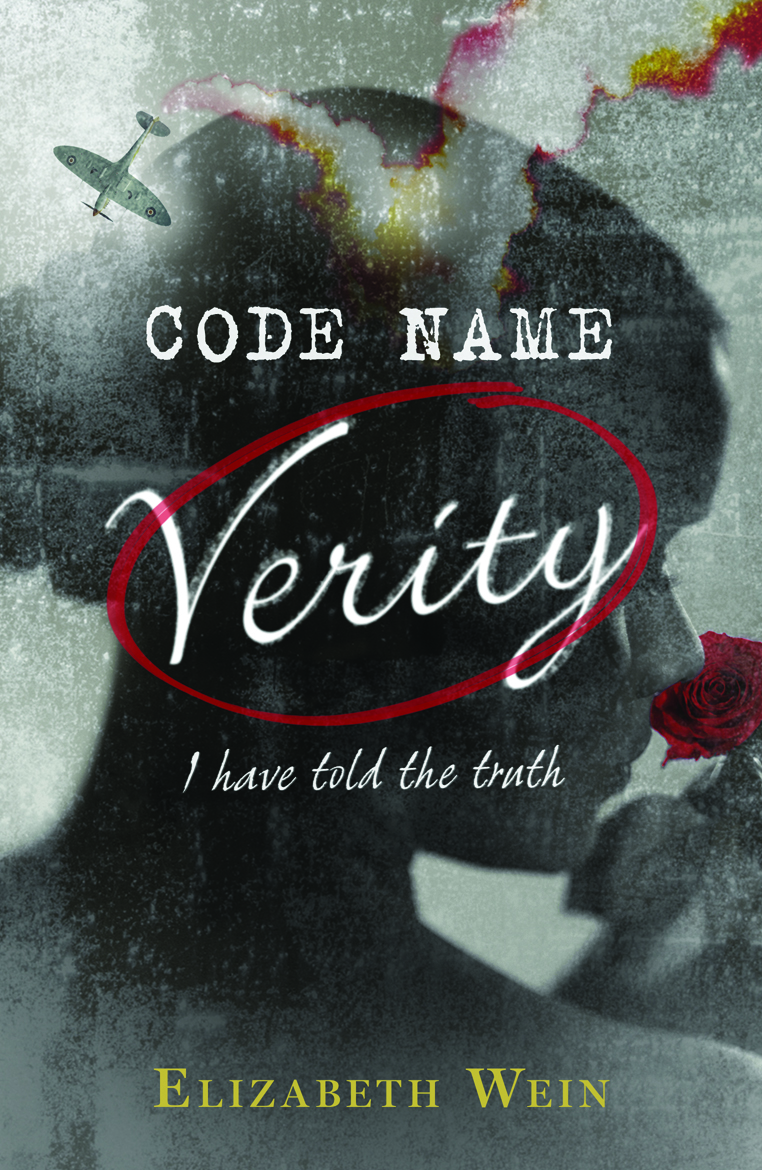
Code Name Verity by Elizabeth Wein Badass friends, pilots, and spies during WWII. This is one of the best historical fiction books I’ve ever read. It’s impossible to explain all the ways this book is so amazing without spoiling the whole thing, but a few are the friendship between Queenie and Maddie, the storytelling device (from the first page you know you’re reading a hand written confession to Nazi captors), and the fascinating and (based on the author’s notes about her research) accurate details about WWII. Actually, this book gets points for teaching me something entirely new about WWII, the women pilots of the RAF.
Between Shades of Gray by Ruta Sepetys Equal parts brutal and gorgeous, this book tells the story of a fifteen year old Lithuanian girl ripped from her home by Stalin’s Soviet Union. It’s a harsh read. The scenes of desperation, torture, and brutality whether from the Soviet soldiers or the Siberian winter are heart stopping. The gorgeous prose in which Lina’s story is told only highlights the inhuman cruelty around her. I knew almost nothing about Stalin’s atrocities in Eastern Europe, which made this book so much more powerful. Lina’s story is based on the true stories of millions who’s lives were destroyed and then forgotten. It’s a necessary and powerful book.
And I Darken by Kiersten White Vlad the Impaler reimagined as a vengeful, bloodthirsty princess. Do I need to say more? I can. The book reimagines the history of the Ottoman Empire not long before it takes Constantinople. I loved the original setting. I don’t think I’ve ever read an Ottoman Empire story and definitely not from the Ottoman side, which is where most of the story takes place as Lada is taken hostage the Ottoman court in exchange for her father’s support of the empire. The best historical fiction makes you want to learn more about the time and place of the story, and this book did exactly that. Vlad the Impaler’s name is both literal and extremely accurate.
Simon v. The Homo Sapiens Agenda by Becky Albertalli I didn’t only read historical fiction last year. Simon is contemporary YA, and it is AMAZING! I’m not just saying this because it’s set in my and Albertalli’s hometown of Atlanta, and I totally understand Simon’s enthusiasm for the Varsity. Simon is one of the most authentic teen characters I’ve read. The blend of humor, anxiety, anger, and joy perfectly reflects the trials of high school. Simon’s life is thrown into turmoil when one of his emails is seen by another student who threatens to force Simon out of the closet if he doesn’t help the blackmailer hook up with one of Simon’s friends. If that wasn’t enough, there’s best friend jealousy and rehearsals for Oliver to worry about. (There’s no way Albertalli wasn’t in high school theater herself. It’s too true.)
If You Come Softly by Jacqueline Woodson I do not recommend this book for anyone currently writing their own novel because you’ll finish this book and think “Why the hell even bother? There’s no way I can do this.” The prose is lyrical. The characters are beautifully drawn. It’s a simple and sweet retelling of a very old tale, the star-crossed lovers, Miah is black and Ellie is Jewish. I think high school is the only period in life where love, or better connection, at first sight is possible, and Woodson elegantly brings Miah and Ellie’s spark to life.
My Lady Janeby Cynthia Hand, Brodi Ashton, & Jodi Meadows Laugh out loud historical fiction, reimagining, fantasy…don’t get too caught in the defining the genre. Apparently Lady Jane Grey was queen of England for nine days between Henry VIII’s son Edward and daughter Mary. Historians estimate she was between 16 and 17 when executed on Mary’s orders technically for high treason but really for having the awful luck of being young, female, and related to royalty during a power vacuum. The real story of Lady Jane was just too tragic for the authors who decided she needed to escape, save the throne of English, and have the ability to turn into an animal. It’s also hilarious.
The Star-Touched Queen by Roshani Chokshi This breathtaking YA fantasy plunges readers into Indian mythology, as Mayavati attempts to forge her own destiny. Born a princess but shunned for a pretty terrible horoscope promising death and destruction, Maya battles prejudice, demons, and even the stars themselves to thwart her fate. For me, the story was a fascinating introduction to apsaras, pishachas, yakshinis, and so many other beings from Indian mythology. It’s pretty obvious at this point that I particularly love fiction which entertains and teaches me something new about the real world.
Ms. Marvel Vol. 5 by G. Willow Wilson Ms. Marvel is the super hero the United States needs right now. American, Muslim, female, fangirl, with boundless youthful optimism to boot, Kamala Khan is one of the greatest teen characters in fiction right now. Wilson’s characters are the best representation of American Millenials that I have read. Period. Ms. Marvel is a giant punch in the face to all the Millenial haters. Even if you’re not a reader of comics, if you enjoy great characters and fun, you will love Ms. Marvel.
March Vol. I-III by John Lewis Speaking of comics, you’d think by now everyone would know that comics and graphic novel formats aren’t just for stories about super powers, but amazingly there are still those left in the dark. March is a memoir about Congressman John Lewis’ time as a leader in the Civil Rights Movement during the 60s. Lewis was chairman of the Student Nonviolent Coordinating Committee (SNCC), which led the sit-in protests across the South. Lewis helped organize the March on Washington, but it was his stories from the front lines that took my breath. Lewis and his fellow SNCC volunteers were beaten at sit-ins only to return another only to be arrested just to go back out again. Lewis was locked inside a restaurant by an owner who left a fumigator running. He was one of the freedom riders and only missed being on a burned bus because he was beaten an arrested at an earlier stop. And to tell about the Birmingham Church bombing that left four girls dead and 21 children injured or Bloody Sunday, when hundreds of peaceful marchers were beaten by police while kneeling to pray, a picture is worth much more than 1,000 words.
1808: Flight of the Emperor by Laurentino Gomes This book is the foundation of my current work in progress. I was imagining a pirate story in colonial Brazil and then I read about Dom João, the Prince Regent of Portugal who fled from Napoleon to Brazil and took a 10,000 member court with him. This is non-fiction, but all the major players are characters. The Court’s evacuation was so frantic, they left the entire royal library in crates on the docks in Lisbon. The Prince Regent is straight up comic relief from his cowering in the bedchambers during thunderstorms to his fear of crustaceans. And Rio de Janeiro is rampant with corruption, murder, and diamond smuggling. If you’re like me and never studied anything about Portugal in school other than Magellan was born there, I highly recommend this book and unbelievable story.
I’d been wondering how to break a five months long silence on my blog. I couldn’t think of a topic or an angle. I didn’t know what I wanted to write about to kick off a new year.
Then the police went on strike.
Early Saturday, February 4, the wives and families of police officers across the state of Espirito Santo gathered in front of barracks, forming human chains across the entrances effectively blocking any police or vehicles from entering or leaving the barracks. After four years without a pay raise and the lowest salaries of any police in Brazil, the movement wanted a raise and bonuses for night and higher risk work for the police. By late Saturday morning, there were no police on the streets anywhere in the state of Espirito Santo.
It actually took a couple of days for their absence to be felt statewide. Saturday was a totally normal day for us. We went to a park near the beach and had lunch out. A sitter came over later, and my husband and I had date night. We walked to our favorite restaurant, passing people grabbing ceviche from a food truck, walking dogs, or making a late run to the drug store.
The only hiccup came at the door of the restaurant. It was locked. There were people inside eating. The security guy confirmed the restaurant was open and within seconds a waiter let us in, locking the door behind us.
Our blissful ignorance lasted until Sunday morning. When planning our day, my husband said in passing “The police are on strike, so we should go somewhere with private security.”
Excuse, me?
One long term consequence of the strike for me personally is that I’ve now started reading my local paper. Something I should have probably been doing on occasion these last six years.
We did go out in the morning, but by Sunday evening we were having dinner at home. With the increased risk of violence, public hospitals, schools, and universities across the state closed for Monday. Private schools, including my daughters, followed suit. Monday, February 6, was supposed to be the first day of the new school year.
That night I noticed my husband locking the deadbolts before going to bed. We never locked the deadbolts before.
The texts from concerned friends around Brazil and even in Portugal started popping up Monday morning as did footage from around the city and state. While our neighborhood had been relatively quiet over the weekend, other areas were not as fortunate. Gangs of looters attacked stores around the metro area. A burning bus, armed robbers zipping around on motorcycle, shoot outs in the street. I learned several stores in our neighborhood had been robbed over the weekend, and pictures of smashed storefronts and videos of carjackings were filling up my Facebook feed.
By Monday afternoon, the extent of the violence that had descended on the state in the police’s absence was clear. The state government asked Brasilia for military assistance.
We stayed home all day Monday. Schools were canceled for a second day, so we stayed home all day Tuesday. By the end of the day Tuesday after more than 60 hours at home, my daughter and I were screaming at each other over a Lego train. Our problems were nothing.
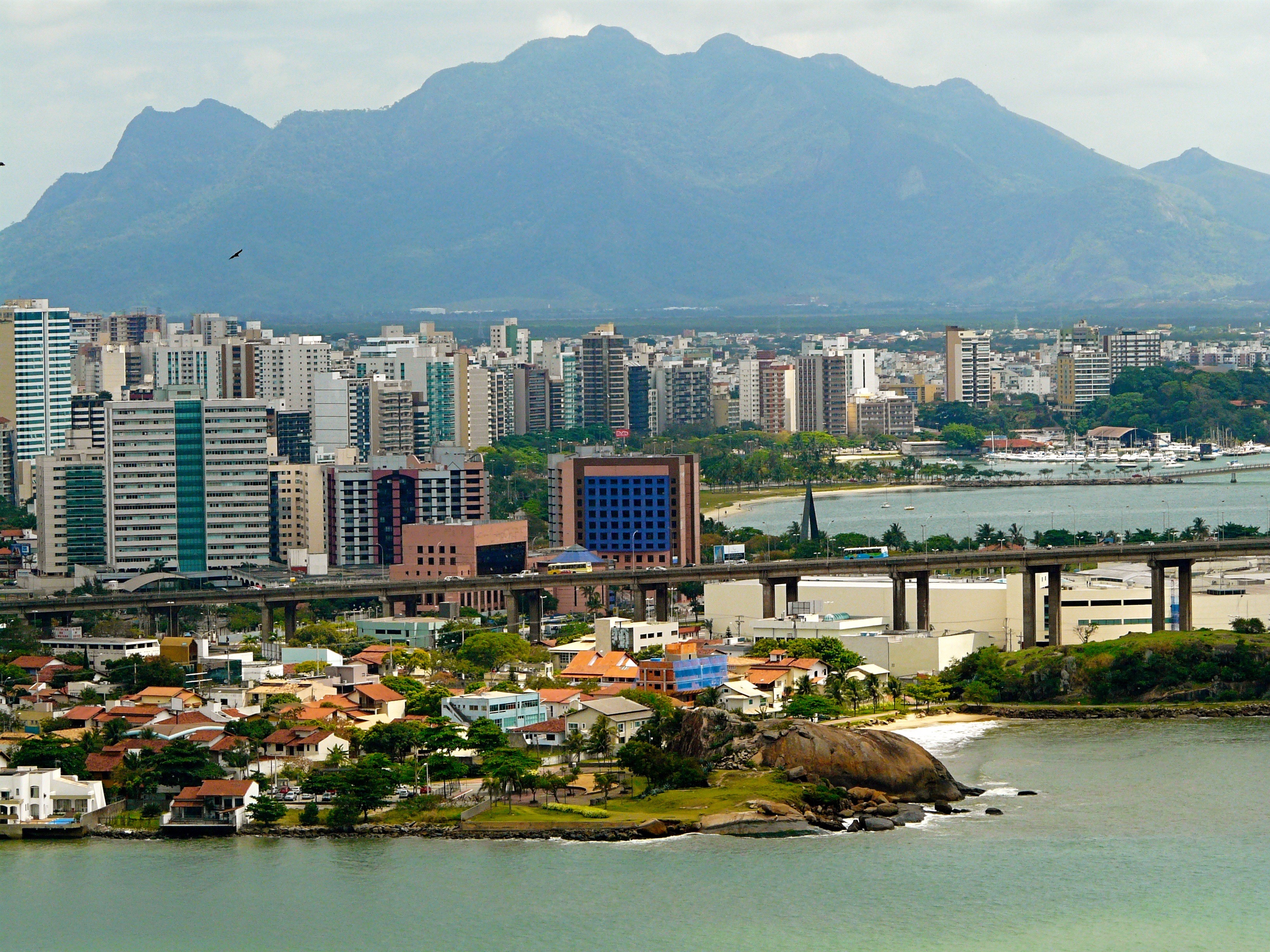
Vila Velha, Espirito Santo The city across the bridge from Vitoria. All part of metro Vitoria.
By Wednesday the police union was reporting the number of violent deaths in Espirito Santo during the strike had risen to 90. 200 cars were reported stolen on Wednesday up from an average of 20. More than 200 robberies and assaults. Schools, stores, restaurants remained closed. R$90 million loss to businesses. Public transportation had stopped running. The streets were completely empty.
My dad called from the US on Wednesday morning.
I hadn’t called anyone. Our neighborhood was quiet, our doors were locked, and the army had been spotted patrolling a few blocks from our building. We were safe, so I didn’t see any reason to alarm family. But the BBC picked up the strike. For maybe the first time ever Vitoria, Brazil was international news, and my dad saw the headline.
I assured my dad we were safe and our neighborhood was calm. I told him about the Governor’s press conference that morning in which he passionately declared the strike illegal and unconstitutional and vowed not to negotiate with hostage takers. Meanwhile, one of the wives in the movement gave an interview vowing not to move until the police got a raise. So there wasn’t going to be any deal in the near future.
I didn’t mention the attempted building invasion that happened around corner Tuesday night.
I was putting my daughter to bed and didn’t hear the commotion, but my husband did. He thought it was people cheering the army driving through the streets. We learned the next morning that a gang had tried to break into one of the apartment buildings around the corner. Somehow they were thwarted, but we were done. What is a single doorman going to do against a mob? Our uneventful days at home now seemed more like good luck than legitimate security.
We bought one-way tickets for Rio and left that afternoon. The irony of going to Rio de Janeiro to escape violence is not lost on me. Our first day in Rio, there was a massive strike against the privatization of the water company. We drove by streets packed with police trucks and vans and battalions in full riot gear. “Oh, here are all the police.”
We spent the remainder of the police strike in Rio checking the news constantly to see if a deal had been reached. Friday night the government announced a deal, but on Saturday morning the wives and families announced they had no intention of leaving because they had not been included in the deal. The governor signed a decree handing security over to the army, which called in 3,000 troops. The strike was declared illegal in court, and police were ordered to return to the streets. A week after the strike began, the news reported more 700 police officers were being indicted.
With the additional troops, violence subsided and residents desperate to resume normal lives after a week of unrest returned to the streets. The buses were back to running on Sunday. Schools announced they would finally start the new year on Monday. We flew back on Sunday afternoon to find the city running more or less as usual.
As of this morning, the government says 1,900 police have returned to patrols, which is “close to the normal amount”. I’d like to know exactly how close, but I have a feeling the government wants everyone to just assume 95%. Based on how normal life around the city is, I’d guess that’s what we’re all doing.
Through the whole crisis the wives and families surrounding the barracks insist the protest was their idea alone, and the police had nothing to do with it. They claim it was organized among themselves through social media without their husbands’ knowledge. No one believes this.
There were many people who agreed with them that working conditions for the police in Espirito Santo are abysmal. The government should be ashamed. Brazil’s economic crisis has been driving up inflation but the police in Espirito Santo haven’t had a salary adjustment in four years, let alone an actual raise. But they overplayed their hand. What started as a protest by wives, mothers, and sister gathering at a single barracks in Serra grew over the course of 24 hours to a full police strike that brought statewide chaos.
It was shocking, frightening, and for my part almost too surreal to feel anything. I went to the airport with my and my daughter’s passports in my shoes.
And now if you weren’t personally affected by the violence, it’s life as usual.
Except it’s pretend. People are dead and livelihoods lost. The police didn’t get their raise, and now hundreds are at risk of losing their jobs and the commanders are saying publicly the police department and its hierarchy has been completely destroyed. The army will be providing extra security for Carnaval celebrations and has promised to stay as long as it’s needed, which is indefinitely at the moment. And honestly having my streets patrolled indefinitely by soldiers trained for war, not civilian law enforcement, makes me queasy.
And yet I’m sitting at a café with my cappuccino writing a blog post loving the freedom that comes with a regular school day.
It was a disaster. There were no winners. Just a very, very long list of losers. I’d say I’m glad it’s over but it’s not over. The police might be back on the streets, but the fall out hasn’t even begun. And the list of losses will just keep growing.
Our Walk to School A one act play inspired by true events with a 5-year-old.
Mom: (Shouted from front door) Ok, time to go. Do you have your shoes on, yet?
Kiddo: (Shouted from bedroom) Not yet. I need to finish something.
Mom: (Shouted as pleasantly as possible to avoid a last minute fight but forceful enough to convey annoyance at shoes still being on.) No, you don’t. I’ve already asked you several times to put your shoes on. Now, it’s time to go. We’re going to be late for swim class.
Kiddo: (Shouted in complete indifference) I’m almost finished.
Mom: (Marches into child’s bedroom.) What are you doing? Why are your shorts and undies around your ankles?
Kiddo: I had to go pee pee.
Mom: But why are your shorts still around your ankles?
Kiddo: I’m trying to make the top spin.
Mom: Why wouldn’t you pull up your pants first? And why are you playing with a top? Ok, stop. We need to go. Where are your shoes?
Kiddo: (Leaving the top aside and picking up a book off the floor while still half naked.) I don’t know. Mommy, can we read The Book with No Pictures?
Mom: No, not right now. We’re going to be late for swim class if we don’t leave right now! Please, pull your shorts up while I find your shoes.
Mom leaves to find the shoes, one under the couch and one under the desk in the office. She returns to child’s room where Kiddo is now fully clothed but minus socks and looking at her calendar.
Mom: What happened to your socks!
Kiddo: I don’t like that pair. I want to wear my spider socks. Mommy, what day is Christmas?
Mom: (Through gritted teeth.) A long time away but it won’t matter because if you’re late to swim class Santa won’t come. (Kiddo drops to floor and starts trying to put shoes on. Mom picks up and puts away unsatisfactory first pair of socks.)
Kiddo: (Teary eyed and whimpering) It’s too tight! (Slams be-shoed foot on ground repeatedly.) Mommy, it’s too tight.
Mom: (Exhales slowly) Because it’s on the wrong foot.
Kiddo: Oh! (Giggles)
Mom: Why are you only using one hand? You can’t put tennis shoes on with only one hand. We need to leave now!
Kiddo: I pinched my finger in the drawer getting my spider socks and now it hurts. I can’t use it.
Mom: (Muttering) For the love of… (Squats and puts child’s shoes on totally over trying to foster independence this morning) Ok, we’re ready! Yay! Let’s go. (Mom grabs school bag and purse and runs to door.)
Kiddo: (Pulling on Mom’s shirt while she locks door) Tell a story! Tell a story!
Mom: I will when we get to the sidewalk, ok? Let’s start walking first.
Kiddo: (Foot touches the sidewalk. Tugs Mom’s hand.) Ok, tell the story! Tell the story!
Mom: (As they walk to school) Ok, where were we? So the Bowser kids decided they were going to play a trick on their Dad…
Kiddo: Noooo. Not a Bowser kid story. I want a Mario story.
Mom: Oh, ok. One day Mario was walking through the forest on his way to Princess Peach’s castle for tea when he heard a noise and Yoshi appeared.
Kiddo: No, not Yoshi! It was a little Eevee. It was going “Eevee! Eevee!” (Jumps up and down and flails arms) Because it lost its family.
Mom: So Mario heard a noise and saw a very strange creature by the river. Mario thought it looked like a Pokemon so he called his good friend Ash and asked “Do you know want this is?” Mario held up his phone so Ash could see Eevee and Ash said…
Kiddo: (Yanking on Mom’s hand) That’s when Mario sees another Pokemon! A Squirtle! It said “Squirtle! Squirtle!” and it was soooo adorable! And Mario took it to Princess Peach’s castle. And she thought it was so adorable. (Pause) C’mon Mommy! Tell the story! (Pulls on Mom’s arm)
Mom: Mario thought Princess Peach could help the lost Pokemon get back to their world so he took them to Peach’s castle and…
Kiddo: Then all the Pokemon appeared!!! There was a Charmeleon and a Bulbasaur and an Amaura, a Rhyhorn, a Leafeon! All the Pokemon!
Mom: So when Mario got to Peach’s castle he was shocked to find it filled with Pokemon! There was a Lapras swimming in the fountain and Ponyta eating the roses in the garden. Inside the castle, there were Zubats and Pidgies and Fledglings flying around and pooping on everything!
Kiddo: (Shrieks with laughter) They were pooping on the table, on the floor, on Luigi’s head.
Mom: Oh, Luigi’s there?
Kiddo: Yes, a Pidgey pooped right on his head!
Mom: Luigi walked into the castle and felt a splat on top of his head. Fortunately, he was wearing a hat.
Kiddo: But then he took it off and a Zubat pooped on his hair! (Hops up and down laughing and clapping her hands)
Mom: Well, Princess Peach was very upset all these Pokemon were destroying her castle…
Kiddo: So she called the Ghostbusters!
Mom: The Ghostbusters? Why would she call the Ghostbusters?
Kiddo: Because they catch Pokemon and ghosts.
Mom: Ok…so Princess Peach calls the Ghostbusters. They bring their special…
Kiddo: (Yanking on Mom’s hand) You have to sing the song!
Mom: (Glances around to see how many people will get to enjoy this) Na,na,na,na,na,na. Na,na,na,na,na,na. There’s something strange in your neighborhood. Who ya gonna call?
Mom & Kiddo: Ghostbusters!
Mom: So the Ghostbusters show up at Peach’s castle and begin catching all the Pokemon. They had some trouble with Charizard though. It was perched on top of the tallest tower and refused to come down. Peach was very upset because it was going to be a major pain to replace the roof tiles on the highest tower. She asked the Ghostbusters…
Kiddo: Then the little Eevee appeared and snuggled up to Princess Peach. And Princess Peach thought it was so adorable, she wanted to keep it forever. But the Eevee missed its family. So Peach decided to keep all the Eevees and Vaporeons and Leafeons and Sylveons. And then a cute, little Amaura appeared and licked Peach’s face and it was so cute. Peach decided to keep it and used her Harry Potter magic wand to create an ice cave in the yard for the Amaura to live in because it was too hot outside. Then Peach heard the Eevee crying “Eevee! Eevee!” because Team Rocket was trying to catch it!
Long Pause. Kiddo looks up at Mom.
Kiddo: C’mon Mommy! (Shakes Mom’s arm.) Tell the story!
Mom: Why don’t you tell the story?
Kiddo: Because I don’t know the story!
Mom: But you do! You’ve been the one telling it for the last block and…
Kiddo: I don’t KNOW the story! You have to tell it!
Mom: (sighs) So Team Rocket captured Eevee in a net and was pulling it up to their hot air balloon.
Kiddo: No, they were in a giant Meowth robot! That was electric proof so Pikachu couldn’t help Eevee escape.
Mom: What Pikachu?
Kiddo: Ash’s Pikachu.
Mom: When did Ash and Pikachu show up?
Kiddo: They came with the Ghostbusters.
Mom: Oh, look! Here we are! And there’s your class headed to pool. Better hurry. Bye, love you! (Mom and Kiddo hug and kiss) Have a great day at school!
Kiddo: And you can finish the story when we walk home! (Skips off, waving)
Mom: (Sinks down onto a bench) Sure. Can’t wait.
Lights fade to black.
This play is based on every walk to school we’ve taken this past year. It is not an exaggeration. It is truth. And it is every single day.
I’m sure you heard about the impeachment vote even if you live outside of Brazil and aren’t following international politics. You might also have seen a headline about a corruption scandal in Brazil involving billions of dollars in public funds. Maybe you’ve read something about Brazil’s collapsing economy. The country’s gotten a lot of headlines in the last few months and a person could understandably be wondering, “What the hell is going on in Brazil?”
Here’s what’s going on in Brazil with enough context to paint a painfully vivid picture and enough jokes to make it palatable. To understand the extent of the seething rage under Brazilians’ normally chill exteriors, I need to jump back in time three decades.
Brazil is a relatively young democracy. The army seized control in 1964 and stayed in power until the mid-80s. The generals perfectly followed every page of the Military-Dictator Handbook, repressing speech, organizing, and all social rights. By 1980 student, workers, and militants were pushing back, and that year there were massive strikes organized, among others, by a young Luiz Inácio Lula da Silva aka Lula. Remember him. He’ll show up again. And again. And again until it becomes painfully ironic.
The strikes and protests helped lead to a “redemocratization” and a new constitution was adopted on October 5, 1988, making Brazil’s current government younger than I am.
The National Congress in Brasilia, currently hosting many future inmates.
The Constitution divided the Federal Government into three parts just like in the US: Legislative, Executive, and Judicial. Differently than the US, both the Executive branch and the Federal Government in general are much more powerful than in the US. Don’t be fooled by the constant use of flip-flops and nicknames in Brazil. The country is extremely hierarchical. It’s a cultural legacy brought to Brazil by Portugal’s policy of ruling colonies by refusing to build universities or even roads in order to keep people in total subjugation.
The current constitution reflects this deeply embedded hierarchy by giving certain powers and privileges to members of the federal government. For example, members of Congress, cabinet ministers, and the President can only be investigated and tried by the Supreme Court. Currently 303 members of Congress are facing criminal charges or under investigation, so the Justices must be pretty busy. At least the President of the Supreme Court gets the perk of being fifth in line to assume the presidency in the event of a political disaster.
Speaking of which, Dilma’s impeachment is actually the second impeachment of Brazil’s young republic. They impeached the guy back in ’92, but given the awful state of Brazil’s economy then, a presidential impeachment probably barely made the front page. The economic situation in Brazil throughout the 80s and early 90s was terrible. Like invest in precious metals because the country is on its third currency bad. The inflation rates looked more like typos than real data. People ran to the grocery store on payday snatching items off the shelves before the clerk could put a new price sticker on it.
During these turbulent early years of the republic, the Worker’s Party, (known as PT) which got started during the strikes in 1980, was the leader of the opposition coalition in Brazil.
Embracing its roots as the voice of the working classes, PT fought against the deeply entrenched economic elite and policies that facilitated a huge wealth gap. Lula ran for president as the PT candidate four times before finally winning in 2002. You only fail when you quit, right? At this point the economy had stabilized. Lula initiated some social welfare programs that lifted millions out of poverty. China began buying everything that Brazil could produce. The economy took off. By 2006 developed countries were like “Hey Brazil, when did you guys show up to the party? We gave your chair to India a few years ago, but we can ask for it back.”
An Economist cover from 2009
For the first time in 20 years, Brazil had a growing economy and stable government. In 2011 Brazil passed the United Kingdom to become the 6th largest economy in the world. Brazilians were pumped, proud, and ready to finally take their place as a global power.
All this history is to give you some idea of the soul-crushing societal let down that happened when the shit hit the fan in 2014.
From a growth rate of 7.5% in 2010, Brazil’s economy shrank 3.8% in 2015. Today, Brazil is the 9th largest economy behind Italy, which has a fraction of the people and arable land. Unemployment is 8.2% and inflation is 9.4%, compared the government’s target rate of 4.5%. All those numbers are just to say that the country’s in its second year of recession and people are pissed.
At the same time that Brazil’s economy was headed down the toilet, the largest corruption scandal in any democratic country ever was uncovered. Now is the time for popcorn because this story makes House of Cards seem small time and easy to follow.
Back in the 90s, there was a humble money launderer who made a decent living hiding illegal income of politicians. He was arrested, convicted, served his time, and released. By the mid 00s, federal police noticed he was back in business. Apparently in Brazil, money launderers are like great Mexican restaurants. They’re rare and if you find one, you keep going back even if you know deep down it’s probably being investigated by public authorities.
From 2004-2014 political leaders through the state owned oil company, Petrobras, awarded contracts to companies that grossly overcharged the government, and the companies used some of that excess payment to say “thank you” to congressmen and party leaders for awarding them the contracts in the first place. Nothing shows appreciation like a stack of cold hard cash.
And what party was in control of Congress and the Executive at this time? PT and its coalition partners. The Worker’s Party. The party that built it’s reputation on fighting for working class citizens against the privileged elite was the driving force behind the largest theft of taxpayer’s money in the history of democracy. (I told you Lula’s story got ironic.)
Foto Oficial Presidenta Dilma Rousseff. Foto: Roberto Stuckert Filho.
PT is also President Dilma’s party.
Back in 2015 when the investigation really took off, Dilma had NOT been implicated in the investigation. Everyone around was. PT’s treasurer is currently in jail. Lula’s former chief of staff is there too. Lula himself was under investigation. But not Dilma.
She didn’t have a clue Petrobras was overpaying by billions of dollars and was the worst chairperson in history.
All possibilities made Dilma look bad. Her approval rating plummeted to 13% only 3 months after her second inauguration in 2015.
And a cover from 2015
So to recap, by July of 2015 Brazil was grappling with shattered expectations, a terrible economy, an epic corruption scandal, and a universally disliked president. The Brazilian people were understandably furious at the government for blowing the country’s best chance in a century to really improve quality of life and become a global player.
However, none of these things is grounds for impeachment. According to the Constitution, a president can only be impeached for committing a crime while in office.
So how did Dilma end up getting impeached? We’re stepping into the political muck now. Put your boots on.
October 7, 2015 The Federal Accounting Tribunal files for impeachment accused Dilma of fiscal pedaling in 2014. They claim Dilma forced the state controlled bank to make social programs payments from the bank’s own funds because the government was short on money and her administration was trying to hide that fact during an election year. Technically, the federal government cannot payoff its own debts with the bank’s funds, but it’s been done by every president. It’s very shaky legal ground, like a frozen pond in spring during an earthquake shaky.
December 17, 2015 The Supreme Court defines the impeachment process because the Chamber of Deputies can’t get its act together and form a commission of 65 deputies to consider the charges with any semblance of openness and fairness. The Court rejects two commissions formed by the Chamber, and the proceedings are paused indefinitely.
March 11 In a jaw-dropping move, prosecutors ask for preventive detention for Lula. Lula supporters clashed with police when he was being taken for questioning. There is no doubt an actual arrest would spark violence.
March 14 In what has to be the most blatant middle-finger giving from a democratically elected president, President Dilma doubles down and starts discussing appointing Lula for a cabinet position! F.U. anti-government protestors! Dilma wants to make Lula Ministro de Casa Civil, the chief administrator for the Executive and the most powerful person after the president. Oh, and remember that members of the federal government can only be investigated by the Supreme Court, so the case against Lula would be moved away from the prosecutors currently investigating him. But it’s for the good of Brazil, guys!
March 15 Plea-deal testimony from Senator Delcídio do Amaral, the head of PT in the senate, is released and he testifies that Dilma’s Education Minister offered him a bribe in exchange for not working with prosecutors. He also says that President Dilma knew all about the corruption happening at Petrobras during her time as chairwoman. I can finally fill in my Dilma square on my Lava Jato Bingo card!
How convenient for future casting directors that Moro is an attractive man in real life.
March 16 Judge Sergio Moro, in charge of the Lava Jato case, releases a recording of a call between President Dilma and Lula revealing 1) that prosecutors had tapped a former president’s phone! and 2) Dilma seems to be appointing Lula only to keep him out of jail. While everyone freaked out over the phone call, a few did question if Judge Moro should have given up completely on judicial impartiality and released recordings in an ongoing investigation from a tap with a just-expired warrant.
March 17 Lula is sworn in as Minister. A new impeachment commission is sworn in. Basically, a lot of swearing happened in Brazil this day.
March 18 Supreme Court Justice Gilmar Mendes suspends Lula’s appointment on the grounds it was a blatant attempt to keep him from going to jail. Justice Mendes said it with more legal jargon but that was the gist of his decision. Also, large protests happen across Brazil against impeachment.
Can we say “future political career”?
March 22 The Supreme Court removes Judge Moro from Lula’s case to review his decision to release the recorded conversation. The Supreme Court will now oversee the investigation against Lula. Oh well, he can console himself with the fact people are wearing his face on t-shirts.
March 29 PMDB, the largest party in PT’s coalition, drops out and pledges to support Dilma’s impeachment. PMDB is also the party of Vice President Michel Temer, so things got super awkward at the Presidential Palace.
April 11 The Commission to the consider Dilma’s impeachment votes 38-27 in favor of impeachment. The question will now be to a vote by the Full House of Deputies. Fun Fact: Of the 65 members on the Impeachment Commission, 37 are facing criminal charges themselves. I think the vote concluded with a Deputy ironically shouting “If we burn, you burn with us!”
April 13 President Dilma publicly accuses Vice President Temer of conspiring against her.
April 17 The House of Deputies votes 367 – 137 in favor of impeachment, more than securing the two-thirds majority needed to pass.
And that brings us to today. The Senate has until May 11 to vote on the issue and simple majority is enough to suspend Dilma and start a trial.
A lot of people celebrated after the impeachment, but despite the anger and disappointment with Dilma’s administration support for impeachment is at 61%. A majority but not the super majority you might expect given Dilma’s 10% approval rating.
Ideally, the only question would be “Did Dilma commit a crime by using state bank funds to make government payments?” and a trial in the Senate would answer that question. Of course, nothing happening in Brazil at the moment is ideal except maybe for vendors of inflatable Lula dolls in prison stripes.
The reason many people have no faith in the current government but don’t support impeachment is because everyone else in line to be president is way WORSE than Dilma. Let’s go through the line of succession.
Temer during the impeachment vote. He seems very cheerful. He’d probably manage to stay positive while stabbing you in the back.
Third in line for president is the Senate leader, Renan Calheiros, who is also under investigation for corruption. Among the seven charges the Supreme Court is considering against him are accepting $600,000 to stop a Senate probe into the Lava Jato case and receiving $1.7 million in bribes for a drilling contract.
I think there’s one maid working at the Presidential Palace who isn’t likely to be in jail within the year. Maybe they could offer her the job?
Brazilians are facing a very tough choice in deciding between pro and anti impeachment. Did President Dilma commit a crime worthy of losing office and even if she did…do we give power to lying, hypocritical assholes? Who do you pick when everyone is a criminal?
Some commentators say Brazilians are being duped by a media controlled by that historically entrenched elite. They argue leaders pushing for impeachment are far more corrupt and will hault the Lava Jato once back in power. While it’s true the media here is extremely conservative both politically and socially, I think it’s a pretty patronizing view of the Brazilian people to think more than 60% of the country has been fooled by a handful of smarmy, rich guys. First, Dilma’s government did engage in some shady accounting and as for the Lava Jato case, she’s either guilty or incredibly incompetent. Nobody’s impeaching a saint. Second, from what I personally have seen and read from those in favor of impeachment believe removing Dilma is only the first step, not the last, in rooting out corruption in the government.
Still, it seems unlikely Congress is going to keep impeaching presidents until they get to the President of the Supreme Court, so removing Dilma just puts someone as guilty but more conservative in power who’s likely to stay there. For those against the impeachment, there’s nothing but a line of criminally indicted men from the economic elite pushing Dilma off a cliff. And she’s not even being impeached due to corruption. She’s being impeached for dubious accounting and to those against impeachment, it’s a purely political move.
Enough corruption!
One thing is absolutely clear, no one in Brasilia is removing themselves power. The only thing they all agree on is that they did nothing wrong. If this were Japan, a third of Congress would have committed suicide by now, but alas we’re in Brazil and once elected to office a person becomes immune to shame. They used to be immune from consequences too, but that seems to be finally changing. That’s one thing, at least, Brazilians can be proud of.
 ANA MARIA MACHADO
 Some of her most famous books include A Menina Bonita do Laço de Fita, about a white bunny who desperately wants to become a beautiful black like the little girl next door and the advice she gives him, and Bisa Bia, Bisa Bel, about a girl’s internal dialogue with her great-grandfather and her own great-granddaughter. A Menina Bonita do Laço de Fita is available in English on Amazon.
 CECILIA MEIRELES
 The musicality of her lines is so strong, that “O Menino Azul” still sounded lovely when I read it aloud. (And as all adult learners of a second language know, nothing is harder to read aloud in a foreign language than poetry.) I haven’t been able to find any of her children’s works translated into English, but you can find many of her most famous poems translated in this anthology of Brazilian poets.
 EVA FURNARI
 One of her most famous characters is A Bruxinha Zuzu or Zuzu the Little Witch, who never quite seems to master the power of her magic wand. Many of Funari’s books are textless, including our favorite A Bruxinha Zuzu e o Gato Miú, and can be enjoyed regardless of what languages you read. One of her most famous and award winning stories, Felpo Filva, is available in English as Fuzz McFlops in both the US and UK.
 SONIA JUNQUEIRA
 VERONICA STIGGER
 However, one of her most recent books, Onde a Onça Bebe Água, Where the Jaguar Drinks Water, is one of the best books I’ve read for teaching empathy and seeing the world through a another’s eyes. In the story, Jaci is forced to consider the world from the perspective of the Jaguar he’s ends up dining with. Unfortunately, there isn’t an English translation of it or any of her books that I can find but several of her adults works do have Spanish versions available on Amazon.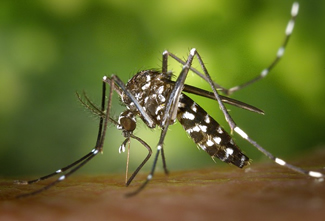



 Journey by Aaron Becker This stunning and wordless book, follows the adventure of a girl as she journeys to a fantastical land with the help of a magic crayon. There are enchanting forests, flying carpets, and bad guys on air ships!
 If You Give a Pig a Pancake by Laura Numeroff illustrated by Felicia Bond If you loved what happens when you give a mouse a cookie, check out what one little girl has to deal with when she caves to a pig’s demands.
 Viva Frida by Yuyi Morales This is one of the most gorgeous books my daughter owns. The text (what very little there is) in both English and Spanish goes through the themes in Khalo’s work, such as live, imagine, create. The illustrations are bright and vibrant and straight out of a dream.
 Paper Bag Princess by Robert Munsch illustrated by Michael Martchenko I’m not at all opposed to Princesses if they’re one among many different types of characters and take matters in their own hands like Princess Elizabeth. She has no intention of letting that dragon get away with burning down her castle and stealing her fiance.
 The Rough Face Girl by Rafe Martin illustrated by David Shannon In addition to the beautiful illustrations, the heroine wins the day because of her character. She’s not pretty. She doesn’t have fancy clothes, but she sees the beauty and power in nature and understands what’s truly valuable. Yes, the book is about a young woman looking for a husband, but the message about character over appearance and clothes is an important one for all kids.
 My Two Grannies by Floella Benjamin illustrated by Margaret Chamberlain In addition to featuring females both young and old, black and white, the book also deal with two different cultures mixing! Multicultural, multiracial, and female protagonists! There is no reason not to have this book on your kid’s shelf.
 Pretty Salma by Niki Daly A Little Red Riding Hood tale set in Ghana. What I love about this version is that Salma redeems herself after getting tricked by coming up with the idea for how to scare away Mr. Dog and save Granny.
 My Pet Dragon by Christoph Niemann Lin has lost her pet dragon! She has to go on an adventure to find him and along the way the illustrator cleverly introduces some Chinese characters. Of your kid isn’t going to be fluent in Mandarin at the end, but thank to this book my daughter is ware that not all languages use an phonetic alphabet like English.
 Menina Bonita do Laço de Fita by Ana Maria Machado illustrated by Claudius A Brazilian story about a beautiful little girl who so captivates a neighboring bunny that he wants desperately to become black like her. She gives him all sorts of funny tricks to turn black. None of them work. Don’t worry if you can’t read Portuguese. There’s an English version on Amazon.
 The Most Magnificent Thing by Ashley Spires illustrated by Mark Pett Yes, this book is about a girl who loves to build things (awesome!), but that’s not the reason I bought it. My daughter gets frustrated easily and goes from fine to throwing things in a heartbeat. Just like the girl in the story. If you know a kid who has trouble coping with frustration when things don’t work exactly right, this book is a MUST read.
 The Girl Who Never Made Mistakes by Gary Rubenstein Similarly to The Most Magnificent Thing, this book is great for kids who stress about being perfectionists and have a hard time dealing when things don’t work exactly the way they wanted. Spolier alert: A mistake is eventually made and lessons are learned.
 As Mil e Umas Historias de Manuela by Marcelo Weberson illustrated by Maluf Santiago Ok, I don’t think there’s an English version of this, but Portuguese and Spanish speakers (because really they’re almost the same language) will love this story of a girl who devours books. Literally. She consumes so many books, she literally becomes a book and the only cure is to write her own story using all the words she has inside of her.
 Wave by Suzy Lee This is a gorgeous, wordless story about a curious girl, a sunny day, and a playful wave. Lee is a fantastic illustrator from South Korea and her primarily ink drawings are stunning. If your child loves the beach, she will adore this book.
 Biscuit series by Alyssa Capucilli illustrated by Pat Schories This is a series of simple stories about a girl and her dog, Biscuit, because it’s not only boys who love their dogs. My daughter adores animals. We bought her first Biscuit story to go with a veterinarian costume. Now that she is starting to read, Biscuit books are great first readers.
 Rosie Revere Engineer & Ada Twist Scientist by Andrea Beaty illustrated by David Roberts Diverse representation in children’s literature is so important and Beaty has written two amazing books that feature girls in STEM fields. They’re rhyming books and a joy to read aloud, and the illustrations are so much fun.
 I Am Jane Goodall by Brad Meltzer illustrated by Christopher Eliopoulos At the end of the video above, the girls asks if the bookseller has any books about a girl going to Mars. Studies have shown that by 5 years old kids already think certain jobs are “for boys”. This book is part of the Ordinary People Change World series. It’s a delightful collection about real people from history in all different professions. Books feature Rosa Parks, Helen Keller, Amelia Earhart, Eleanor Roosevelt, Sacagawea and Lucille Ball for your budding activists, teachers, pilots, politicians, or comedians.
 Mufaro’s Beautiful Daughters by John Steptoe I remember my teacher reading this book to my class in elementary school. It’s a Cinderella story but in this version both sisters are equally physically beautiful. It’s Nyasha’s generosity and respect for all creatures and nature that sets her apart from her selfish sister.
 I Wonder by Annaka Harris illustrated by John Rowe I love this book about a mother and daughter on a walk wondering about…everything really. The book has a beautiful message. It’s ok to say, “I don’t know,” and the beauty of not knowing allows all to wonder about the mysteries of the universe.
 The Princess in Black by Shannon & Dean Hale illustrated by LeUyen Phan This is an illustrated early chapter book and was one of the first chapter books my daughter stayed interested several nights in a row. I love Princess Magnolia, and I think her adventures fighting monsters would appeal to girls and boys. I love the message. You can enjoy a frilly dress at the tea party and also love wearing a mask and boots and fighting monsters. A kid doesn’t have to chose between sparkly tiaras and being a hero.

 One of the best parts of being a writer is getting to read constantly and when someone raises an eyebrow at the four new novels that appeared in your joint Kindle library on the heels of three novels from the previous week getting to say “It’s for professional development.”




 Our Walk to School A one act play inspired by true events with a 5-year-old.
 Mom: Oh, ok. One day Mario was walking through the forest on his way to Princess Peach’s castle for tea when he heard a noise and Yoshi appeared.
 A week ago,


