Today is world turtle day! Hooray for the turtles!
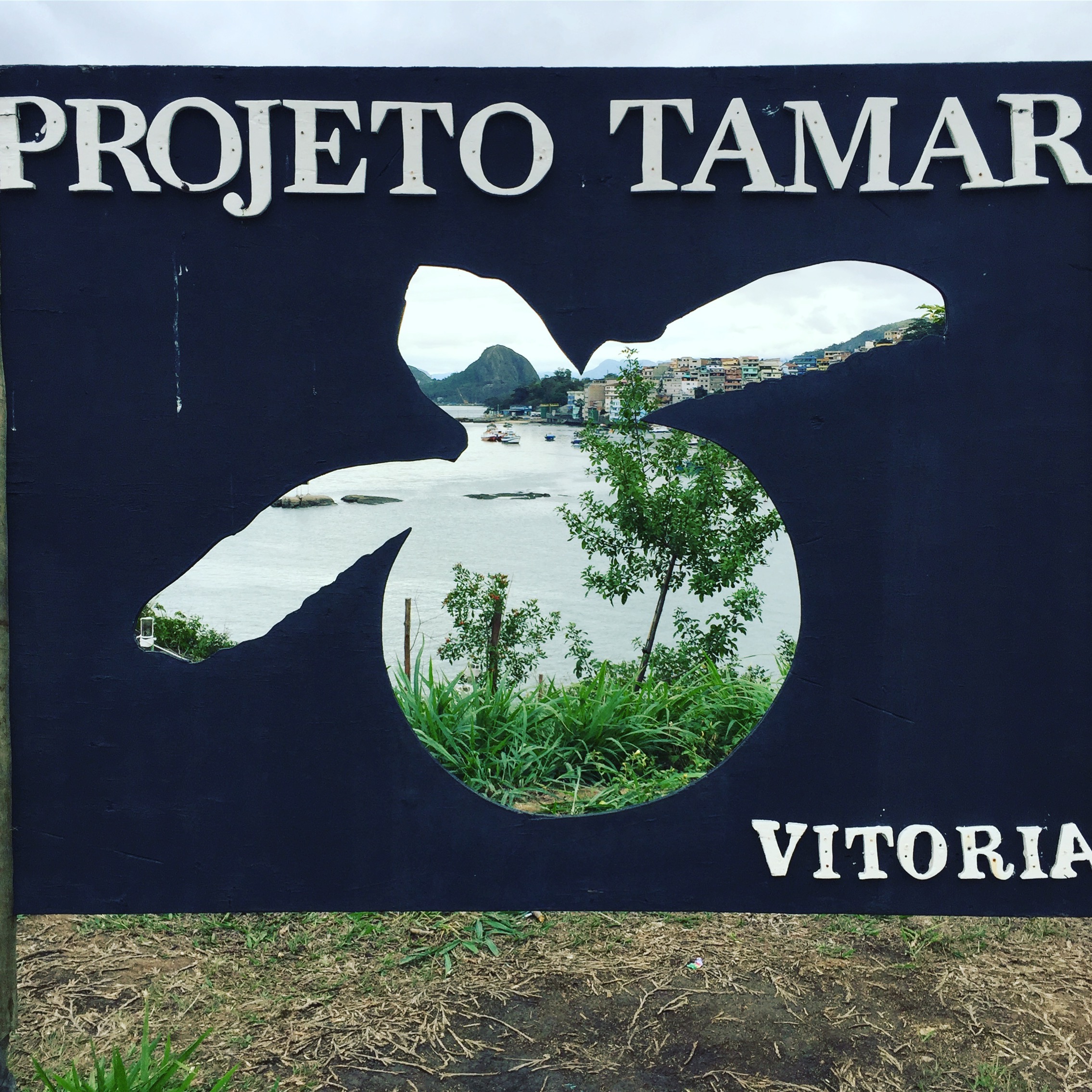
In honor of turtles everywhere, I wanted to give a shout out to one of my favorite places to spend an afternoon in Vitoria: Projeto Tamar.
Projeto Tamar is an NGO working throughout Brazil to study, protect, and rescue sea turtles. The name comes from the Portuguese for sea turtle, tartaruga marinha. Five species of sea turtle nest along Brazil’s coast, and one of Projeto Tamar’s initiatives it to observe and protect their nests. To date, Projeto Tamar has protected more than 25,000,000 baby turtles from egg to ocean. The organization also works with local fishermen to develop alternative methods that reduce the risk of sea turtle death from nets and has facilities up and down Brazil that work to educate the public about sea turtles and their major threats.
They’re so close! Just a little pet…
One unique skill I’ve developed since moving to Vitoria is sea turtle spotting. I can spot the shiny head of a turtle popping up for a breath in my peripheral vision at high noon without sunglasses. It’s one of the unintended consequences of my expat life. I’ve also become quite the amateur expert on sea turtles thanks to our regular visits to our local Projeto Tamar site. We take my daughter, but I’m the one hovering a little too close to the babies the staff always keep their eyes on. They look just like leaves bobbing in the water. A little touch wouldn’t hurt. I’d only use one finger. I’d be sooooo gentle.
In honor of turtles everywhere and to show off my sea turtle trivia, here are five facts I’ve learned thanks to Projeto Tamar.
Fact 1 The sea turtle species that nest along Brazil’s coast are olive ridely, green, hawksbill, loggerhead, and leatherback. The turtles I regularly see in the bay are young green turtles.
This poor olive ridely was hit by a boat. It was rescued by Projeto Tamar and now gets physical therapy for its front flipper every Monday.
Fact 2 Over the course of a year, the leatherbacks which nest here will migrate between Brazil and Africa. That is some impressive swimming.
Fact 3 Most sea turtles lay between 100 – 200 eggs per nest.
Fact 4 Experts estimate only about 1 in a thousand babies reaches adulthood in natural condition. 1 in a 1,000! Why so few? Well…
Fact 5 Sea turtles don’t reach maturity until 10-50 years old depending on the species. That’s a long time to try and avoid all the fishermen, boats, and plastic bags masquerading as jellyfish. Odds are against surviving all those threats for five decades. It’s why killing the moms as they’re laying eggs and then harvesting the eggs is so devastating for the species.
Fortunately in Brazil, Projeto Tamar has worked with local communities to dramatically reduce the hunting of turtles while they lay their eggs. In fact, Projeto Tamar has been working for 37 years, just long enough that they’ve recorded an 87% increase in babies hatched over the last five years compared to the previous five. The first few groups of turtles hatched under the protection of the project are finally old enough to come back and lay eggs of their own.
And what adorable babies hatch out of the eggs! Someday, I will convince a volunteer to let me hold. Surely out of over 25,000,000, there’s one baby turtle who doesn’t mind being held by a doting human aunt perfectly willing to handle chopped up pieces of fish and squid for feedings. Just for a few seconds?
This is public enemy #1! Aedes aegypti. Know it and squish it!
There are over 3,000 species of mosquitoes. A fact I think proves there’s no benevolent deity.
This post is a run down of the basic info on the common mosquito born diseases in Brazil: dengue, zika, chikungunya, and yellow fever. It’s essential information if you’re visiting.
Because the mosquitoes are winning.
Last year in the wake of zika and the microcephaly epidemic in Brazil, the federal government mobilized troops to patrol for standing water basically declaring war against mosquitoes. The yellow fever outbreak this year is evidence of how well that went in the long term.
So here’s everything you didn’t want to need to know about mosquito born illnesses in Brazil.
DENGUE:Let’s start with dengue because it kills the most people every year. I know zika is the Kim Kardashian of the bunch, hogging all the media attention, but dengue is most likely to put you in the hospital. There were roughly 1.5 million registered cases of dengue in Brazil last year and of those 629 died. The severity depends on which of the four strains of the virus you get. The worst causes hemorrhaging, but most people just get incapacitating joint pain and high fever.
Dengue is usually transmitted through the bite of an infected mosquito, but it can be passed from mother to fetus. The disease is asymptomatic in 40-80% of cases. The incubation ranges from 3 to 14 days.
Symptoms
Sudden high fever
Severe headache
Severe joint pain
Moderate joint pain
Severe pain behind the eyes (basically your body will hurt a lot)
A skin rash that appears post fever
Fatigue
Nausea
Itching
The Severe Case Symptoms (everything above plus…)
Bleeding from the nose and gums
Abdominal pain
Vomiting
Hypotension
Dizziness
Breathing difficulty
In rare cases, sometimes after a second infection, a person can develop dengue hemorrhagic fever which leads to shock and death in 24 hours. Yeah, dengue totally sucks.
There’s no vaccine. There’s no drug treatment. The only thing to do with dengue is treat the symptoms and be sure not use any aspirin because it increases the risk of hemorrhaging.
Yeah, they’re all cute and cuddly until one drops dead of yellow fever.
ZIKA: If you’ve been to Brazil in the last year and sneezed, you might have had zika. Or maybe you didn’t sneeze. You still might have had zika. Most cases are asymptomatic, about 80%.
Of the most common mosquito borne diseases, zika results in the fewest hospital cases. In 2016 there were 214,193 cases of Zika in Brazil and 3 deaths. The global panic over zika is because of it’s link to microcephaly, a condition that babies develop in utero which prevents the brain and skull from developing normally.
And let’s be clear. There IS scientific consensus that the zika virus is one of the causes of microcephaly. I believe in the CDC, WHO, and peer reviewed scientific journals. Conspiracy theorists can save themselves time and not bother commenting about genetically altered mosquitos. I will just delete them.
The fact the disease is asymptomatic in the majority of cases makes it particularly scary for women who are or may become pregnant. It’s possible to have zika and never know until the baby develops complications. Even if you develop symptoms, they’re usually mild.
Symptoms
low grade fever
headache
skin rash starting on the face and spreading over the body
red eyes
itching
fatigue
sore joints
Less Common Symptoms
Muscle pain
Swelling
Sore throat
Vomiting or diarrhea
Swelling
So now pregnant women all over Brazil can worry that their swollen legs and exhaustion is actually zika. Because there wasn’t enough for expectant parents to worry about. Fucking mosquitos.
There’s no vaccine.
CHIKUNGUNYA: Unlike zika and dengue, if you get chikungunya, you’ll know. 70% of cases develop symptoms. At least you don’t have to wonder whether or not you need a doctor.
Severe joint pain mostly in feet, ankles, hands, wrists
About the joint pain, almost every case has it and in rare cases it becomes chronic.
Less Common Symptoms
Intense back pain
Headache
Muscle pain
Vomiting
Conjunctivitis
Fatigue
Photophobia
Sore throat
Basically everything hurts like hell.
Like the others, there’s no vaccine for chikungunya and no treatment beyond treating the symptoms.
CDC’s risk area for yellow fever in South America
YELLOW FEVER: The CDC’s website has a map of areas where yellow fever vaccines are recommended. The risk area for Brazil extends just up to the border of our state. So far this year 31 people have died from yellow fever in Esparto Santo. Dear CDC, you need to update your map.
Yellow fever is typically passed via an infected monkey to mosquito to human, so areas without dense forests were considered safe. The incubation period is 3 to 6 days but most cases are asymptomatic.
Symptoms
Sudden high fever
Severe headache
Back pain
Muscle pain
Nausea & vomiting
Fatigue
Weakness
After a brief remission, 15% of cases will develop a severe form of the disease.
Symptoms of Severe Form
High fever
Jaundice (hence the name)
Bleeding
Shock
Organ Failure
Of cases that turn severe 20-50% die.
We got our yellow fever vaccines!
But good news! There’s a vaccine! Two doses taken ten years apart provide lifetime immunity. Yay science! If you’re thinking about visiting Brazil this year, double check to see if your hotel is located within one of the new expanded risk area. Be sure to use a Brazilian site. Remember, the CDC’s map is out of date.
Vaccines are being developed for the other three. Several companies will have zika vaccines ready for clinical trials by the end of the year. Late stage clinical trials of dengue vaccines are already underway, and researchers have reported success with initial clinical trials for chikungunya vaccines. Unfortunately, we’re still years away from these vaccines being available to the public.
In the meantime, don’t cancel your vacation. Just be prepared. Get a yellow fever vaccine. Pack repellent. Sleep with your windows closed and fan on. And for god’s sake, if you see a mosquito, kill it!
This is public enemy #1! Aedes aegypti. It carries dengue, zika, & chikungunya.
Mosquito born viruses did not cross my mind when considering what my daily life would be like in Brazil, but it turns out that repellent is right up there with sunscreen as a daily necessity.
I certainly never lost sleep over a mosquito in the U.S., but here in Brazil, more than once we’ve turned the lights on in the middle of the night at the whine of a mosquito. Some people might think mosquito hunting at 2am is overreacting, but my husband has had dengue. The steely-eyed commitment with which he stalks every mosquito in our home makes me think the experience has stayed with him.
Public health officials in Brazil take mosquitoes seriously too. They’ve been battling dengue for decades. Chikungunya and Zika became common place in the last few years, and this year, Espirito Santo and its neighbor, Minas Gerais, are combating the spread of yellow fever. My family and I got our yellow fever vaccines last week, and it was an impressive operation.
If you know the monkey might have yellow fever, is it still as cute?
This is public health at it’s most efficient and most militarized. I know from personal experience. We were assigned a specific vaccination center and time when my husband reserved our vaccines online. When we got to the church, we had to present IDs for everyone, including my daughter, before we could enter the building where people waited in rows of white plastic chairs. We’d been assigned numbers at the entrance, and in what has to be one of the shortest waits in the history of line waiting in Brazil, a woman in a white lab coat, clipboard in hand, called our numbers, and we entered the heart of the operation.
Along one wall was a row of nurses and firefighters taking down people’s names, ID numbers, and stamping vaccine cards. Firefighters are militarized in Brazil, and their khaki green uniforms with ranks sewn on their shirts made the whole scene feel like something out of Contagion. Along the adjacent wall, was another group readying vaccines before passing them in a ceaseless stream to the one woman who administered vaccines. Needle in. Needle out. Hands off the old needle. Accepts freshly opened vaccine. Needle in. Needle out.
It wasn’t frantic, but it was efficient. People were moved around the room and back out the door with a lack of pleasantries I have never witnessed in Brazil.
We survived!
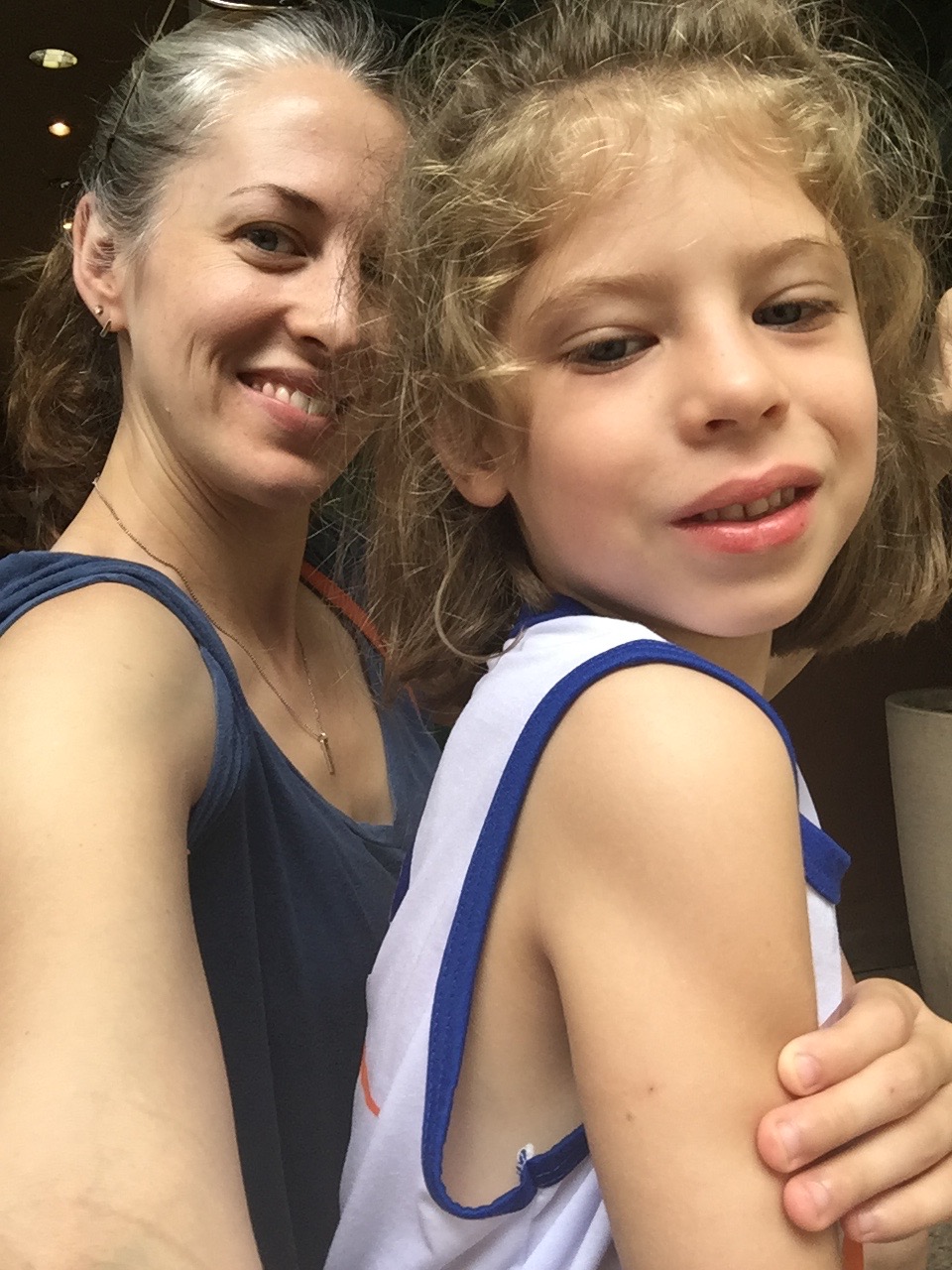
My daughter did not like it. She’d been totally chill about it until we got inside the vaccination room. The tension and focus that permeated the air had her clinging to her dad and begging to go. And these people were not waiting for her to calm down. I don’t blame them. They’re trying to vaccinate a few million people. My husband and I went first, trying to teach by example. It had no effect. She just got more hysterical with every second, so my husband held her in his arms. I held her arm straight, and the vaccine lady jabbed the needle in.
For the rest of the day, my daughter showed off the tiny, nearly invisible red dot left behind like the scars of a near-death shark attack.
As of Friday, there were 20 confirmed yellow fever deaths in our state. That’s 20 deaths out of 80 confirmed cases. The math is simple. That’s a 25% fatality rate. In neighboring Minas Gerais, there have been 109 deaths out 288 confirmed cases. I’m getting my calculator…37.8%. Wow, I hadn’t realized until writing this how bad this outbreak is.
So if you’re planning on visiting Brazil anytime soon, I’d check if you’re ecolodge is smack in the middle of a high risk zone, and then I’d pack lots and lots of repellent regardless.
This is the exact opposite of what I looked like reviewing pages to send off.
A month ago, my completed YA novel was selected for the annual Sun versus Snow writing contest, and I got the chance to work with a published author to polish my pitch materials and have them read by 21 agents.
On the day of the agent round, we boarded a plane on an emergency trip to find working law enforcement.
It was not the first-contest-win experience I’d imagined. I had envisioned sitting in front of my computer during the agent round, compulsively eating Kit Kat and obsessively refreshing the website to see if I got requests. Instead we booked an afternoon flight to a state with police, threw clothes in suitcases, stuffed passports in shoes, and took a taxi to the airport.
While I might not have been able to follow #sunversussnow as frequently as I would have liked, I was able to learn some valuable lesson about how to get the most out of a writing contest while law and order breaks down around you. Here are 5 tips for writing during a security emergency.
1. Don’t procrastinate. When you find out your manuscript was selected to participate, you will be thrilled and checking your email every two minutes for that first contact from your mentor. An actual published author is sending you an email! Keep that enthusiasm. You’re going to need it in order to get everything done ahead of time. From the time the police go on strike until a significant surge in assaults, you have about 48 hours. You’re going to want to send off final revisions before the shit really hits the fan.
2. Take the opportunity to work on mental discipline. This is really for parent writers. With schools being closed due to security concerns, you’re going to have to write between pouring grape juice and explaining (again) why there are not second helpings of dessert. Think of it as an afternoon of ten minute writing sprints. Interval training for your creative muscles. How much can you get in before the next “Mommy!”?
3. Use it as a distraction. While your fellow participants are wearing out their fingers refreshing the website hoping to see agent requests, you can use the last minute decision to fly to Rio as a reason to step away from the computer. As you puzzle over how much to pack considering you bought an open ended ticket, you might even briefly forget it is the agent round. When you do remember, it’s going to be at a super inconvenient time like in the middle of airport security, and you’ll be forced to practice patience.
4. Back up everything! You will be faced with a choice when packing for your last minute trip: bring your computer or don’t bring your computer. Your husband will advise against it given the 400% rise in carjackings. But what if you get an agent request? How will send off pages without your computer? You have to send them while the contest is fresh in the agent’s mind. Obviously you can’t wait three whole days!!! But what if your computer is stolen?!! Don’t stress. The answer is to put everything in iCloud, Google drive, a flash drive which you hide in the pencil jar, and in emails to yourself. You should be covered in the event of a carjacking.
5. Embrace the idea: Done and sent is better than “Almost perfect, just fifteen more minutes. For real this time.” Look, having to frantically reread your first fifty pages (because you actually got your first agent request for pages! Ahh!) while your family is crammed together in the hotel with the sound of PJ Masks in the background is not an ideal writing environment. You’re not going to turn out ideal work. It’s ok. Do what you can. Remember you’ve already read through those pages fifteen times. Acknowledge your mentor was awesome and helped you write a hell of a query letter that works! Then send the pages. There will be more requests in the future.
It was an honor to be selected for Snow versus Snow! Thanks to the judges and contest coordinators Michelle Hauck and Amy Trueblood. I do wish I’d been able to focus on the contest, interact more with fellow participants on Twitter, and celebrate the agent requests I did get, but these are minor complaints. My mentor Max Wirestone gave spot on feedback. His book The Unfortunate Decision of Dahlia Moss came out in February, but he still volunteered to be a mentor for the contest! Thanks to him, I have hugely improved pitch materials.
The contest also inspired me not to give up on Pangea. After no requests for pages from agents last year, I was ready to set it aside and focus exclusively on my new historical fiction, but now I’m tweaking the manuscript and sending it back out there.
As my daughter’s favorite book, Rosie Revere Engineer says “Life might have its failures, but this was not it. The only true failure can come if you quit.”
I’d been wondering how to break a five months long silence on my blog. I couldn’t think of a topic or an angle. I didn’t know what I wanted to write about to kick off a new year.
Then the police went on strike.
Early Saturday, February 4, the wives and families of police officers across the state of Espirito Santo gathered in front of barracks, forming human chains across the entrances effectively blocking any police or vehicles from entering or leaving the barracks. After four years without a pay raise and the lowest salaries of any police in Brazil, the movement wanted a raise and bonuses for night and higher risk work for the police. By late Saturday morning, there were no police on the streets anywhere in the state of Espirito Santo.
It actually took a couple of days for their absence to be felt statewide. Saturday was a totally normal day for us. We went to a park near the beach and had lunch out. A sitter came over later, and my husband and I had date night. We walked to our favorite restaurant, passing people grabbing ceviche from a food truck, walking dogs, or making a late run to the drug store.
The only hiccup came at the door of the restaurant. It was locked. There were people inside eating. The security guy confirmed the restaurant was open and within seconds a waiter let us in, locking the door behind us.
Our blissful ignorance lasted until Sunday morning. When planning our day, my husband said in passing “The police are on strike, so we should go somewhere with private security.”
Excuse, me?
One long term consequence of the strike for me personally is that I’ve now started reading my local paper. Something I should have probably been doing on occasion these last six years.
We did go out in the morning, but by Sunday evening we were having dinner at home. With the increased risk of violence, public hospitals, schools, and universities across the state closed for Monday. Private schools, including my daughters, followed suit. Monday, February 6, was supposed to be the first day of the new school year.
That night I noticed my husband locking the deadbolts before going to bed. We never locked the deadbolts before.
The texts from concerned friends around Brazil and even in Portugal started popping up Monday morning as did footage from around the city and state. While our neighborhood had been relatively quiet over the weekend, other areas were not as fortunate. Gangs of looters attacked stores around the metro area. A burning bus, armed robbers zipping around on motorcycle, shoot outs in the street. I learned several stores in our neighborhood had been robbed over the weekend, and pictures of smashed storefronts and videos of carjackings were filling up my Facebook feed.
By Monday afternoon, the extent of the violence that had descended on the state in the police’s absence was clear. The state government asked Brasilia for military assistance.
We stayed home all day Monday. Schools were canceled for a second day, so we stayed home all day Tuesday. By the end of the day Tuesday after more than 60 hours at home, my daughter and I were screaming at each other over a Lego train. Our problems were nothing.
Vila Velha, Espirito Santo The city across the bridge from Vitoria. All part of metro Vitoria.
By Wednesday the police union was reporting the number of violent deaths in Espirito Santo during the strike had risen to 90. 200 cars were reported stolen on Wednesday up from an average of 20. More than 200 robberies and assaults. Schools, stores, restaurants remained closed. R$90 million loss to businesses. Public transportation had stopped running. The streets were completely empty.
My dad called from the US on Wednesday morning.
I hadn’t called anyone. Our neighborhood was quiet, our doors were locked, and the army had been spotted patrolling a few blocks from our building. We were safe, so I didn’t see any reason to alarm family. But the BBC picked up the strike. For maybe the first time ever Vitoria, Brazil was international news, and my dad saw the headline.
I assured my dad we were safe and our neighborhood was calm. I told him about the Governor’s press conference that morning in which he passionately declared the strike illegal and unconstitutional and vowed not to negotiate with hostage takers. Meanwhile, one of the wives in the movement gave an interview vowing not to move until the police got a raise. So there wasn’t going to be any deal in the near future.
I didn’t mention the attempted building invasion that happened around corner Tuesday night.
I was putting my daughter to bed and didn’t hear the commotion, but my husband did. He thought it was people cheering the army driving through the streets. We learned the next morning that a gang had tried to break into one of the apartment buildings around the corner. Somehow they were thwarted, but we were done. What is a single doorman going to do against a mob? Our uneventful days at home now seemed more like good luck than legitimate security.
We bought one-way tickets for Rio and left that afternoon. The irony of going to Rio de Janeiro to escape violence is not lost on me. Our first day in Rio, there was a massive strike against the privatization of the water company. We drove by streets packed with police trucks and vans and battalions in full riot gear. “Oh, here are all the police.”
We spent the remainder of the police strike in Rio checking the news constantly to see if a deal had been reached. Friday night the government announced a deal, but on Saturday morning the wives and families announced they had no intention of leaving because they had not been included in the deal. The governor signed a decree handing security over to the army, which called in 3,000 troops. The strike was declared illegal in court, and police were ordered to return to the streets. A week after the strike began, the news reported more 700 police officers were being indicted.
With the additional troops, violence subsided and residents desperate to resume normal lives after a week of unrest returned to the streets. The buses were back to running on Sunday. Schools announced they would finally start the new year on Monday. We flew back on Sunday afternoon to find the city running more or less as usual.
As of this morning, the government says 1,900 police have returned to patrols, which is “close to the normal amount”. I’d like to know exactly how close, but I have a feeling the government wants everyone to just assume 95%. Based on how normal life around the city is, I’d guess that’s what we’re all doing.
Through the whole crisis the wives and families surrounding the barracks insist the protest was their idea alone, and the police had nothing to do with it. They claim it was organized among themselves through social media without their husbands’ knowledge. No one believes this.
There were many people who agreed with them that working conditions for the police in Espirito Santo are abysmal. The government should be ashamed. Brazil’s economic crisis has been driving up inflation but the police in Espirito Santo haven’t had a salary adjustment in four years, let alone an actual raise. But they overplayed their hand. What started as a protest by wives, mothers, and sister gathering at a single barracks in Serra grew over the course of 24 hours to a full police strike that brought statewide chaos.
It was shocking, frightening, and for my part almost too surreal to feel anything. I went to the airport with my and my daughter’s passports in my shoes.
And now if you weren’t personally affected by the violence, it’s life as usual.
Except it’s pretend. People are dead and livelihoods lost. The police didn’t get their raise, and now hundreds are at risk of losing their jobs and the commanders are saying publicly the police department and its hierarchy has been completely destroyed. The army will be providing extra security for Carnaval celebrations and has promised to stay as long as it’s needed, which is indefinitely at the moment. And honestly having my streets patrolled indefinitely by soldiers trained for war, not civilian law enforcement, makes me queasy.
And yet I’m sitting at a café with my cappuccino writing a blog post loving the freedom that comes with a regular school day.
It was a disaster. There were no winners. Just a very, very long list of losers. I’d say I’m glad it’s over but it’s not over. The police might be back on the streets, but the fall out hasn’t even begun. And the list of losses will just keep growing.
Hip, hip, hooray! Hip, hip…Dear god, I’m never doing another Kickstarter campaign again. I wasn’t even in charge of the thing. Our editor put in a billion more hours organizing and promoting the thing, but I still felt like a used car salesman begging people to donate their hard earned money and time on my words. Who am I kidding? How am I ever going to promote and sell my own books if I can’t promote a collaborative work on Kickstarter on my Facebook? Even if I get published I’m never going to sell a single book. Never! My promotional posts will read “If you don’t mind and happen to enjoy this particular type of book and maybe have ten extra dollars to spare I would greatly appreciate it if you wouldn’t mind buying my book and if you really, really liked it then perhaps tell a friend about it. If you have the time and it won’t be a huge inconvenience. That would be really great. Thanks so much. (And if you’re not into YA or not a huge reader I totally understand. No hard feelings.)” I’m never going to sell a single book. But how can I be an author if can’t ask people to buy my book? Aaaaaagh!
We were walking the streets of Rio de Janeiro yesterday when my daughter piped up “Hey, it’s Festa Junina!” I shook my head and tolld her Festa Junina was last month. She insisted and pointed to a street vendor whose stall was decorated with primary colored flags and a stereo blaring forro music. My kid was right. This vendor was still celebrating Festa Junina. My husband, a native of Rio, explained it this way. “Whatever the party, it always lasts a month longer in Rio.”
In that spirit, I thought a post about Festa Junina in July makes total sense.
Kiddo’s very first Festa Junina!
Festa Junina celebrations, which happen with varying degrees of enthusiasm throughout Brazil, can be traced back to the Pagan tradition of worshiping the summer solstice. The Catholic church then hijacked this festival by assigning June 24 to Saint John the Baptist, and Portugal brought traditional Saint John celebrations to Brazil during colonization.
This is me eating a sweet soup called Canjica. Basically, take corn, add condensed milk, cloves, and heat it up.
Over the centuries, many Festa Junina traditions and celebrations have become entirely secular and blended with other cultures and annual events that happen at this time in Brazil. For example, June is when the corn gets harvested, and about 97% of traditional Festa Junina food is corn based. Salty and sweet. Eaten off the cob and baked into cakes. In soups and as snacks. Seriously, I had no idea there were so many ways to prepare corn, and they’re all delicious.
While many places in Brazil celebrate Festa Junina on the night of June 23 with an official holiday on the 24th, in the Southeast where I’ve lived, Festa Junina parties happen any Friday or Saturday during the month of June. Or if you’re a university club in Rio, every Friday and Saturday in June.
There are fireworks, dancing, carnival games, straw hats and painted freckles (girls) or a painted moustache (boys), and usually at least one mock wedding. I haven’t read exactly how the mock weddings became a staple of Festa Junina parties, but I have a theory. Saint Anthony is considered the patron saint of marriage because he helps single women get husbands so many offerings and prayers are sent to Saint Anthony on his day, June 13. In addition to June being a time when marriage is on the brain, bringing the corn harvest to market was one of the few times people in rural areas got to meet someone they weren’t related to. Oh, and how convenient to have your wedding at the same time as the already scheduled festival! You can save tons on catering! Thus Festa Junina became a day of many weddings.
At my daughter’s school, it’s always Year 4 that stages a mass mock wedding, and this year it was finally her turn. That meant her Festa Junina costume was a wedding dress with a veil, and she LOVED it. It also meant extra time on stage because in addition to the mock wedding, all grade levels perform a quadrilha, a traditional dance done during Festa Junina but with preschoolers is really just a lot of jumping and arm waving.
In my personal opinion, the best part about Festa Junina is the food, but I feel that way about all carnivals and festivals. Any event that has portable grills and homemade sweets being set up on folding tables arranged around ring toss and fishing games is something I’d be delighted to attend.
Even the teachers dress up!When not performing mock weddings, Tio Rafa can be found coaching soccer.Is there a culture that doesn’t have fishing games at festivals?The grooms waiting for the brides to arrive
One bride is always brought in riding in a wheelbarrow. I have no idea why, but it’s super cute.
There’s so much bad news coming out of Brazil lately. The economy is still in tatters. The president is impeached. The interim president is according to most sources a mysogynist, corrupt pig. (And those are the nice names people are using for him.) Any waterbased Olympic events will require the athletes to wear hazmat suits. Zika.
I feel bad for Brazil. She’s like a good friend that’s going through a majorly shitty time in her life. When you have a friend struggling, you try to tell her it’s not all her fault. (#blameportugal) You try to look at her situation analytically. (In Brazil’s case that might make your head explode.) And finally you find the silver lining. Which in Brazil’s case is…Hold on…Give me a minute…
The weather! Brazil, you have amazing weather. And vacation spots. And fruit. Oh, something man-made? Uh…
Snack food. Brazilians have nailed snack food in a way superior to any country I’ve ever lived in. Brazil has upped the snacking game to a point it’s an independent category of food. Look in a Brazilian cookbook and it’s possible to find, main courses, sides, desserts, and salgados.
I’ve been asked by students how to translate salgados into English. You can’t. The best I’ve come up with is “a variety of salty, heavy snack foods that can be either fried or baked and are usually eaten individually as between meal snacks or in miniature forms at parties.” If anyone can suggest a single word in English to convey, please let me know, but I don’t think there is one. And hors d’oeuvre doesn’t cut it. A full-sized salgado is easily a meal in itself. A coffee and coxinha will set you up for hours.
Here’s a rundown on the typical salgados you’ll find in Brazil. I have a broad definition of salgado (see above), and I’m sure a few Brazilian purists will take issue with some of the food I’ve included on my list. Also, I’m sure I’ve forgotten some traditional favorites as well. My apologies.
Pão de quiejo…nom,nom,nom
Pão de Queijo: I’m putting this first because it is one of my absolute favorite things about Brazil. Yup, of all things that come from Brazil, my husband, my daughter, and pão de queijo are my favorites. This is a ball of cheesy, doughy deliciousness that can be served at breakfast, with afternoon coffee, or on party platters. Pão de quiejo can range in size from golf-ball to grown man’s fist, but when it comes to pão de queijo, bigger is always better. Trust me.
It’s important to observe local customs when abroad. Pasteis and caipirinha.
Pastel: A light pastry dough that is stuffed with deliciousness, folded over, and fried. Like pão de qeuijo, pastéis (plural form) can come the size of your palm of the size of your face. Shaped like a half circle or rectangle, the traditional fillings include ground beef, palm heart, mozzarella, shrimp, a kind of cream cheese, and chicken. They are delicious at ten in the morning with sugar cane juice or at seven at night with a caipirinha. I suspect they’re delicious at every hour of the day.
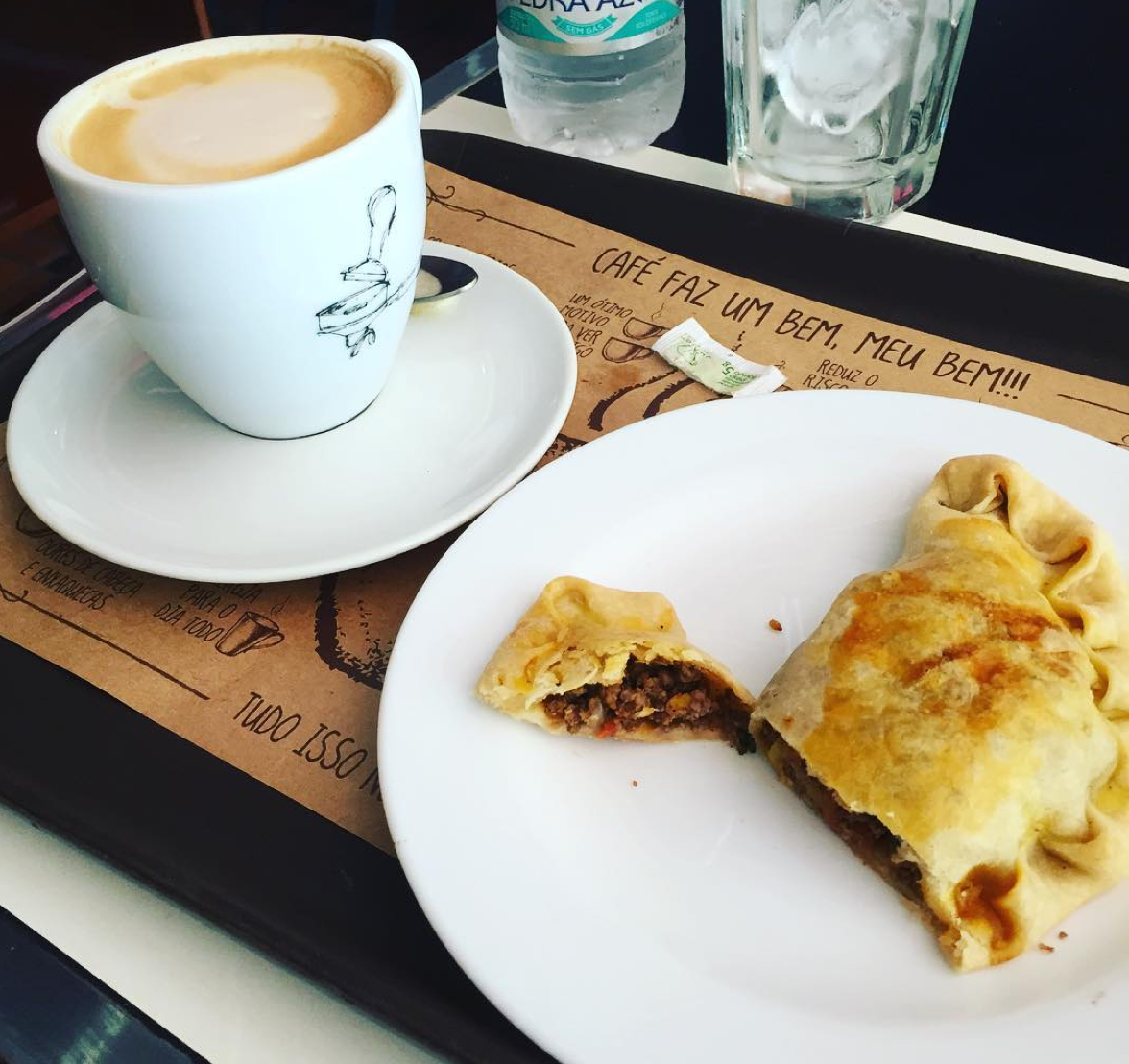
Empanadas go very well with lattes.
Empanada: Ok, this is one of the debatable entries because many people/sites equate empanada (a Spanish dish) and pastel (the Brazilian version). I’ll grant the overall concept is the same. Dough folded around a filling usually shaped in a half circle. But based on my personal experience with snack food in Brazil (which is fairly extensive I’m proud to say), the empanada and pastel are different things here primarily because of the dough. The empanada dough is thicker and not as flaky as the pastel. Also, empanadas seem to be baked whereas pastéis seem to be fried. Am I totally wrong about this? Are they the same? Am I the only one who cares? Also, don’t confuse an empanada with an…
Empada: Again dough, filling, baked, but the empada is more like a pie or casserole. The dough is much thicker and tends to become sticky when wet thus gluing your tongue to the roof of your mouth. It’s one of my least favorite salgados for this reason.
Kibe is yummy!
Kibe: An import from the Middle East and North Africa and a staple of party platters everywhere in Brazil. It mixes flour and ground beef into a football (oh, American football) shaped snacking delight. Sometimes there’s a cream cheese filling, but that’s only done if you hate your guests.
So it’s shaped like Picasso’s version of a chicken leg.
Coxinha: As far as I know, this is the only salgado with an origin story. A son of Princess Isabel (the last royal in charge of Brazil) would only eat chicken legs (even royal kids are brats about food). One day the kitchen was out chicken legs so the chef shredded chicken meat and put it inside a flour dough crust shaped like a drumstick. The little prince approved and now coxinhas are served in miniature at every children’s party. You can get them at pretty much any cafe or bakery. Coxinha is the heaviest item on the list, especially if there’s cream cheese in the center of the chicken filling. It’s like snacking on a small cannonball. A very delicious cannonball.
Açaí. It’s pronounced like an “s” people. No hard “c” here.
Juices, Açaí bowls, quiches, etc: I know juice and açaí don’t count as salgados. They are however staples of the Brazilian snacking experience. When my cousin visited Rio, we did a juice crawl through Ipanema. She tried fruits that the staff cringed from. In the heat of Brazil, nothing beats a bowl of cold açaí covered in bananas and strawberries. And of course cafes always have a variety of quiches and cakes to choose from.
Brazil is a great country for snacking. They have great coffee for the daytime, great caipirinhas for the nighttime and plenty of savory goodies for anytime. I just recommend a gym membership if you’re going to be staying any length time of here.
I’m proud to be a part of the Multicultural Kid Blogs community! It’s an amazing resource for parents and educators with multicultural kids or wanting to raise globally minded citizens. Every (northern hemisphere) summer, MKB hosts the Read Around the World Series to promote diverse books for kids. Bloggers around the world recommend books for all age ranges, picture book to young adult, and all regions of the world.
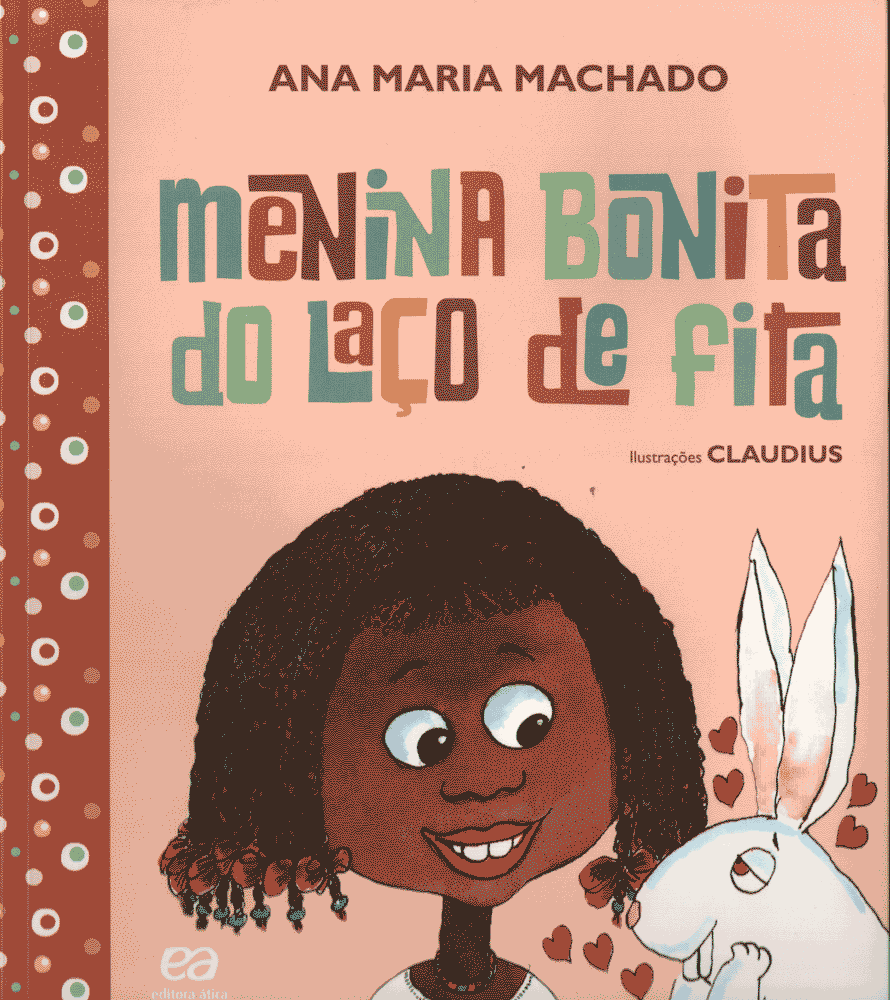
Today I’m up, and I’m excited to recommend a modern classic of Brazilian children’s literature!


 Fortunately in Brazil, Projeto Tamar has worked with local communities to dramatically reduce the hunting of turtles while they lay their eggs. In fact, Projeto Tamar has been working for 37 years, just long enough that they’ve recorded an 87% increase in babies hatched over the last five years compared to the previous five. The first few groups of turtles hatched under the protection of the project are finally old enough to come back and lay eggs of their own.








 I’m thrilled to announce that after a successful Kickstarter campaign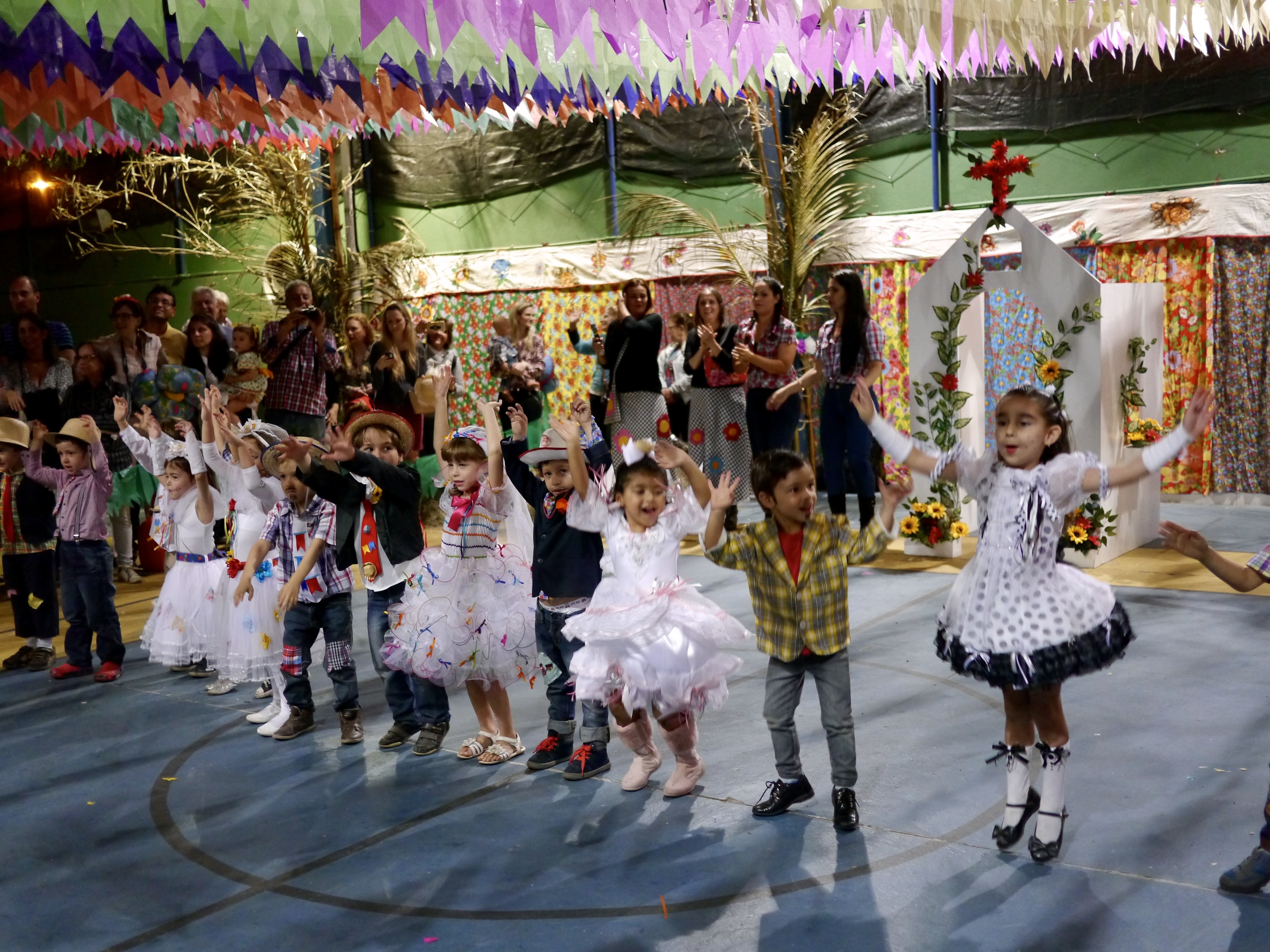
 We were walking the streets of Rio de Janeiro yesterday when my daughter piped up “Hey, it’s Festa Junina!” I shook my head and tolld her Festa Junina was last month. She insisted and pointed to a street vendor whose stall was decorated with primary colored flags and a stereo blaring forro music. My kid was right. This vendor was still celebrating Festa Junina. My husband, a native of Rio, explained it this way. “Whatever the party, it always lasts a month longer in Rio.”

 While many places in Brazil celebrate Festa Junina on the night of June 23 with an official holiday on the 24th, in the Southeast where I’ve lived, Festa Junina parties happen any Friday or Saturday during the month of June. Or if you’re a university club in Rio, every Friday and Saturday in June.
 There are fireworks, dancing, carnival games, straw hats and painted freckles (girls) or a painted moustache (boys), and usually at least one mock wedding. I haven’t read exactly how the mock weddings became a staple of Festa Junina parties, but I have a theory. Saint Anthony is considered the patron saint of marriage because he helps single women get husbands so many offerings and prayers are sent to Saint Anthony on his day, June 13. In addition to June being a time when marriage is on the brain, bringing the corn harvest to market was one of the few times people in rural areas got to meet someone they weren’t related to. Oh, and how convenient to have your wedding at the same time as the already scheduled festival! You can save tons on catering! Thus Festa Junina became a day of many weddings.
 At my daughter’s school, it’s always Year 4 that stages a mass mock wedding, and this year it was finally her turn. That meant her Festa Junina costume was a wedding dress with a veil, and she LOVED it. It also meant extra time on stage because in addition to the mock wedding, all grade levels perform a quadrilha, a traditional dance done during Festa Junina but with preschoolers is really just a lot of jumping and arm waving.
 In my personal opinion, the best part about Festa Junina is the food, but I feel that way about all carnivals and festivals. Any event that has portable grills and homemade sweets being set up on folding tables arranged around ring toss and fishing games is something I’d be delighted to attend.


 There’s so much bad news coming out of Brazil lately. The economy is still in tatters. The president is impeached. The interim president is according to most sources a mysogynist, corrupt pig. (And those are the nice names people are using for him.) Any waterbased Olympic events will require the athletes to wear hazmat suits. Zika.