Tag: Vitoria

  • A Tropical Paradise is a Sweaty Paradise

    A Tropical Paradise is a Sweaty Paradise

    IMG_1524Today was another sunny, blue-sky day here in Vitoria. A breeze blowing through my apartment forced me to stop the doors with various colored flipflops. By late afternoon, I’d been enjoying the weather so much, I was compelled to look up the temperature. What numeric value can I assign to this lovely afternoon.

    84℉ (28.9℃) And feels like 91℉ (32.8℃)

    Oh, yes. So much nicer. I knew it had to be cooler today because the sweat was only beading and not trickling down my back.

    It’s hot this year. So hot. We’re almost a month into fall, and I’m still leaving thigh-shaped pools of sweat on every chair I sit in. I haven’t had to pee since January. All liquid just gushes out my pores. Within a half an hour of waking up and leaving the air-conditioned bedroom for the naturally breeze-cooled den, I have sweat stains along my breast bone, and the only exertion I’ve had is lifting a piece of peanut butter toast.

    Of course I married a man who doesn’t have pores and could wear the same shirt to the gym everyday for a week without any lingering odor. He doesn’t. But he could. Meanwhile, I look like I jumped in a pool. Whenever I complain, my husband shakes his head and insists “Your body is more efficient at cooling itself than mine.” (Life Lesson: If you find a man who can turn being a sweaty mess into a compliment, marry him.) I reapply deodorant two time a day minimum, and I can still smell myself at the end of the day.

    But seriously without any hyperbole, I can’t remember a day I wasn’t actively sweating in Vitoria. There might have been one cool day last September, but definitely by October, I was dripping sweat trying to cut cookie dough in a ninety degrees kitchen. A secondary perk to annual Christmas visit to Atlanta is we get to miss a month of summer heat in Vitoria.  Although, it’s feeling less like summer heat and more like pretty-much-all-year-long heat. For anyone still on the fence about global warming, I have a guest room with only an old window unit AC that you’re welcome to sleep in. If you can make it through breakfast the next morning without complaining about the heat, I’ll paint Drill Baby Drill on my kid’s bedroom wall.

    The heat’s not just in Vitoria. On February 27, Rio had a record breaking high of 106.5℉ (41.4℃) with a heat index of 119.5℉ (48.6℃). What?!!! I’m so glad we left Rio.

    Just imagine if that’s the temperature you have to go to work in. You’re not on vacation. You can’t just camp out at a pool with a swim up bar. You have to get dressed, maybe in a suit, maybe with a lab coat, maybe a uniform that requires pants. You have to go work now. Remember the worst traffic or school drop-off run you’ve ever experienced, now imagine it happening at 120℉. And without air conditioning. Many buses in Rio don’t have air conditioning.

    Actually, central AC is rare and reserved mostly for tourists. We don’t have it at home. The top tier private school I worked for didn’t have it. My bank doesn’t have it. What we use here are individual units, and the top of line can effectively turn a classroom into a freezer. Just don’t be the first one to show up and have to turn them on. And of course they break. And if you wake up in the middle of night in a puddle of sweat and the clock blinking, don’t worry. All the thousands of bedroom unit ACs just overwhelmed the grid and caused a blackout.

    So if you are planning a trip to Brazil for this time of year, bring a flashlight, lots of sunscreen, and a half dozen sticks of deodorant. That should last you about a week.

    Image_zps04194192

  • The World’s Pickiest Beachgoers

    The World’s Pickiest Beachgoers

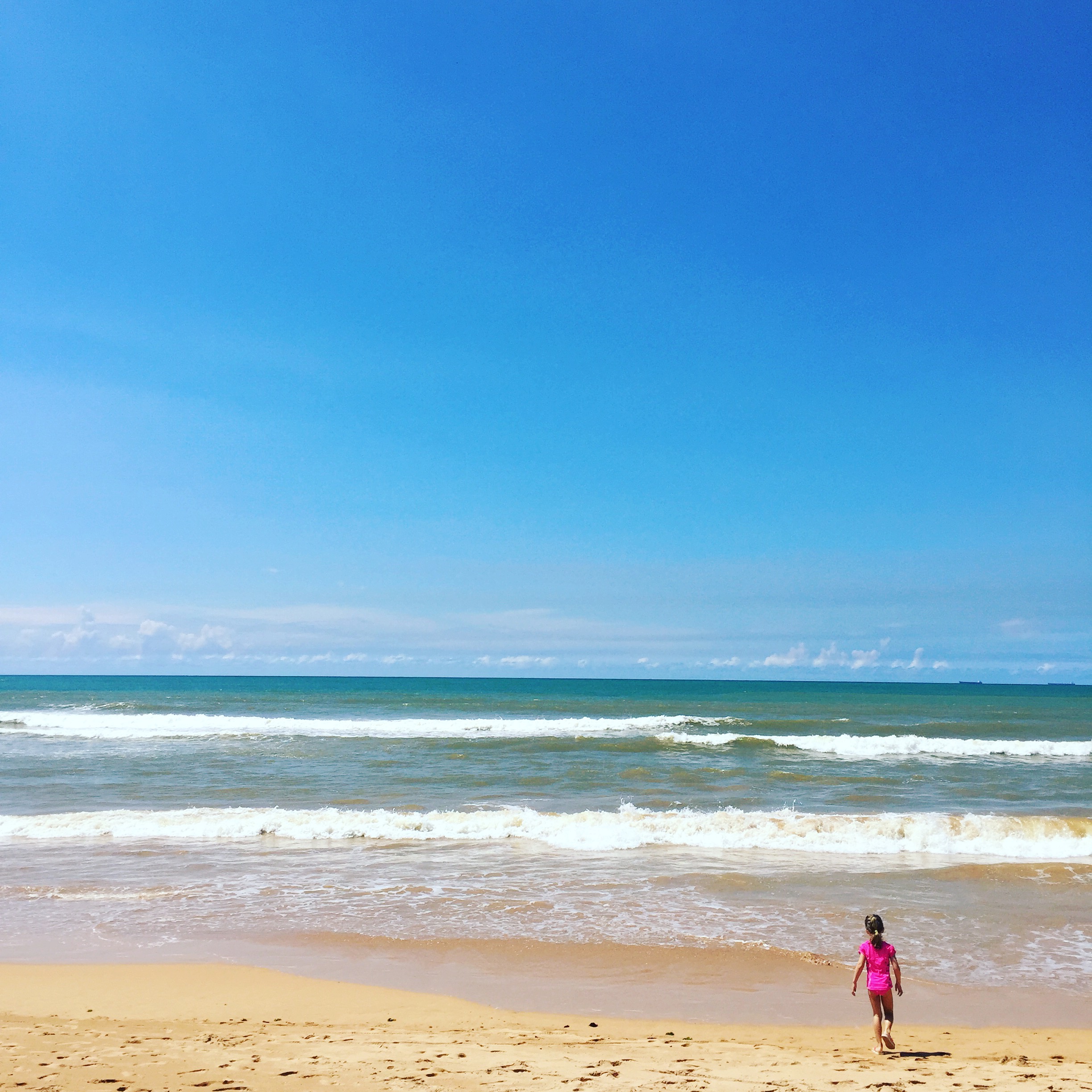
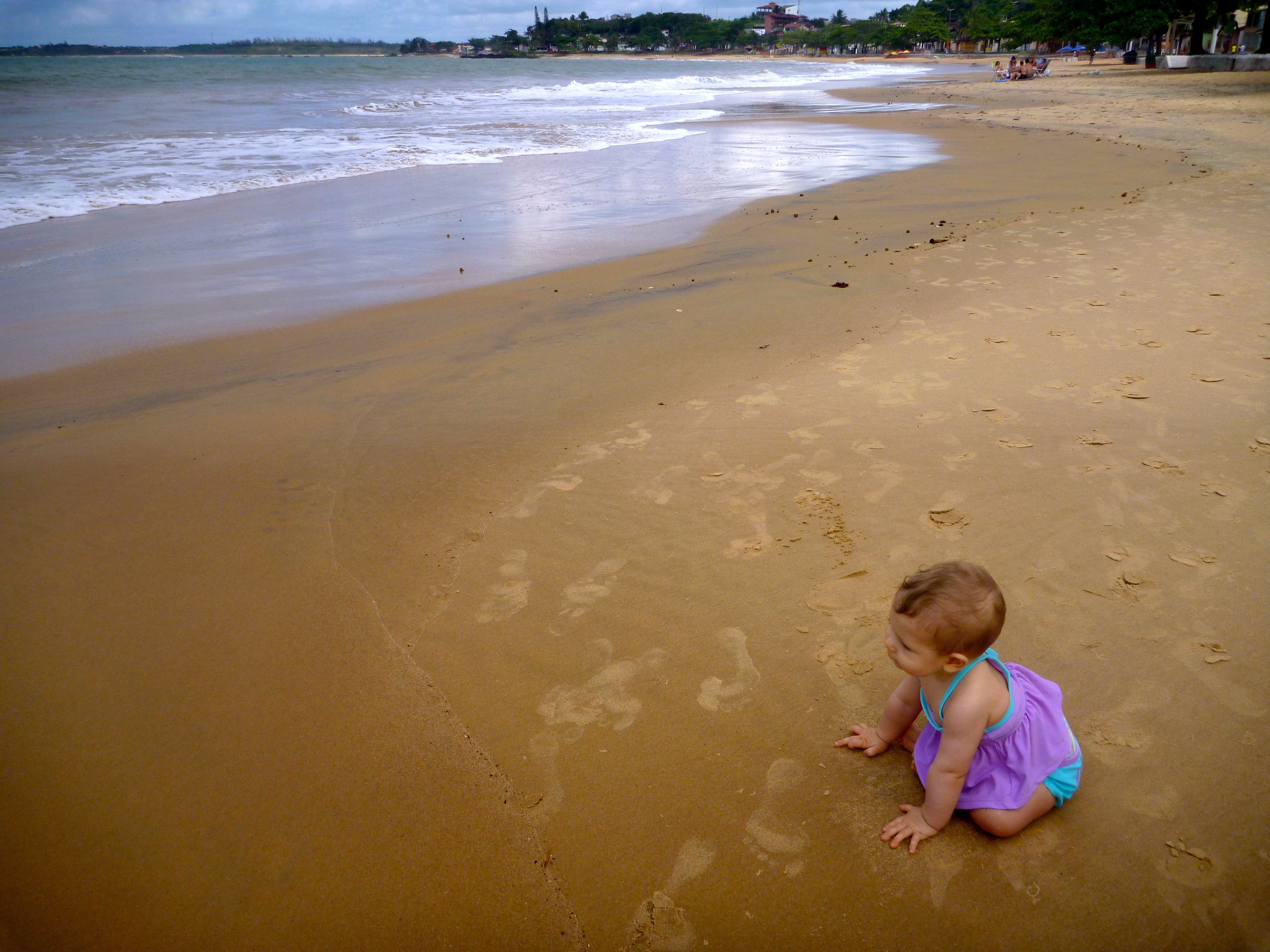
    IMG_1698Last Saturday, the whole Barineau-Mauricio clan (all three of us) seized the day early (like 10ish) and headed to the beach. It was the kind of day that gets recorded and replayed in every tourist advertisement for the next decade. The temperature was perfect, warm enough to sit comfortably in a bathing suit but not oppressively hot. There was a steady breeze that my husband and daughter exploited for kite flying. It was a perfect beach day.

    There were two other families on the beach.

    I’m not exaggerating. This is not hyperbole. When we arrived there were two families camped out close to the boardwalk. The next closest people we could see were colorful ants. We looked around in dismay for any food vendor. We’d been banking on supplementing my daughter’s meager breakfast with an ear of corn, but the beach was empty.

    Now, before people start shipping furniture and arranging to have their pensions deposited in Brazil, empty beaches are not typical in Brazil, especially not around the cities. Typically, they’re packed so densely you can’t stretch your legs out without kicking the back of someone’s chair. (True story. It was a summer day at Iriri in Espirito Santo. Worst beach day ever!) In Rio de Janeiro, you can’t find a beach with less than a few thousand people on it. Drive past Ipanema on a Tuesday, and you’ll wonder who’s running the city.

    That’s not the case here in Vitoria. The empty beaches were one of the biggest shocks moving from Rio to Vitoria. I kept trying to find some explanation. Are Vitoria’s beaches more polluted than Rio’s? Are they more violent? Is there a vicious rip current? A Kraken? Where the hell is everybody?!

    After living in Vitoria for almost six years, I’ve figured it out. Capixabas are simply the pickiest beach goers in the world.

    Capixaba is the Brazilian term for a person born in Vitoria, the state capital of Espirito Santo. The best English equivalent would be North Carolinian. That state has picturesque mountains and beaches and a generally more conservative population that goes regularly to church and the salon.

    Capixabas are incredibly picky about their beach trips. Here are 7 reasons why Capixabas won’t go to the beach.

    1. The temperature has dropped below 80°F (26.5°C). If there’s one thing Capixabas fear more than visiting Rio de Janeiro, it’s cold weather. And any temperature in which you can comfortably wear long sleeves is cold. In winter when the high is around 75°F (24°C), my kid will be one of three students whose parents are still allowing them in the pool. Those other all kids have parents from Rio Grande do Sul, the state that’s so far south it’s basically Uruguay.

    2. It’s Saturday. Sunday is beach day. Obviously.

    3. It rained yesterday. Everything will be wet. And the water will be too cold.

    4. It might rain today. Everything will get wet. And to pack everything up and walk across the street only to get rained on would be such a pain.

    5. Those clouds are kind of dark. It’s probably going to be chilly with all the clouds. The wind is picking up. It might rain. Better just to wait for a day with no clouds. It’s going to be too cold today anyway.

    6. We went to the beach yesterday. If we want to go to the beach everyday we’ll go to a hotel or to our family’s beach house in Guarapari. The beaches in Vitoria are mostly decorative. You can’t use them too much, or they’ll break.

    7. It’s too empty. There just aren’t enough people to feel safe. This is the one reason I agree with. The rate of violent crime in Espirito Santo is a tragedy. It’s why we’ve never considered buying a house near the beach even though we go every weekend. I’d love to walk along an empty beach early in the morning or a night, but it wouldn’t be safe. On the other hand, I don’t think two hundred people are required to make beach a safe, and the threat of robbery certainly doesn’t stop people in Rio from swarming Copacabana.

    Most excuses are weather related. I assume most Capixabas believe English beaches to be fatal, and I’m not going to try dissuade anyone from that thinking. Mostly because Capixabas are friendly and obsessively follow traffic rules compared to people in Rio. Because nobody’s perfect. But mostly because this way my family and I have the beaches to ourselves from June through September.

    Have I missed any excuses, Capixaba friends and readers? Am I totally and completely off-base?

  • My Bilingual Kid Doesn’t Want Your Attention

    My Bilingual Kid Doesn’t Want Your Attention

    Having spent the majority of my adult life outside of the United States (mostly in small, homogeneous cities), I’ve gotten used to being the subject of conversation at the next table over. It happens pretty frequently in Vitoria. My husband and I speak in English so people assume I don’t understand their Portuguese freeing them to openly discuss me from two feet away. It happens most frequently with kids and teens, but a surprising number of adults don’t seem to realize that a person could understand both English and Portuguese. In Vitoria, we expats are like endangered wildlife. People know we’re around, but when actually spotted, locals take note.

    I don’t mind. Until visitors arrive from another planet, one from another continent is about as alien as it gets for most people in Vitoria. I signed up for the attention when I decided to become an expat.

    But my daughter didn’t.

    A series of encounters at the park Sunday has, for the first time, made me consider my daughter’s multiculturalism a challenge, a thing she’ll have to learn to deal with.

    It also has me weighing the importance of three influences on my daughter’s behavior: my parenting instincts v. my daughter’s personality v. the culture she is growing up in. I’m now asking which of these should win out in the event they’re incompatible.

    Here’s what happened.

    We arrived at the park just as a craft was beginning and hurried to the classroom. As materials were being handed out, one of the helpers overheard me speaking English and asked where we’re from. I answered, heard about how he’s going to Disney World soon, and then got the VIP crafting upgrade, as he hovered over my shoulder for the duration of the activity asking repeatedly (in English) if my daughter needed help. He was pleasant and wanted to practice his English. No problem.

    Then we moved to the playground and while my daughter, the baby dragon, sought refuge in a playhouse from me, the evil sorceress, a girl and boy asked what language we were speaking. I answered, their eyes widened, and they ran off. A few minutes later they were back with more friends who all crowded into the playhouse to stare at my four-year-old, English speaker. My daughter tried to play with them in Portuguese, but the older girl turned to her friends and asked, “Who wants to learn English?” My daughter was not interested in playing teacher when there was sorceress to escape from, so she turned her back on them. They were kids and curious. Ok.

    The most bizarre exchange happened as my daughter and I were waiting for my husband to bring the car. We were sword fighting with sticks, so I have no idea what these people heard exactly. “Argh!” “Ah, my leg! I’m bleeding!” But whatever they heard prompted the man to turn to his friend and say “Uma italiana!” I know I opened the door to this exchange by correcting him, but I can’t live in a world where people hear an English speaking American and think Italian.

    I smiled and told him “Sou americana.” Their minds were blown. The woman nearly doubled-over laughing and the man’s eyes bugged out as if this was the first time either of them had considered the possibility of a person speaking more than one language. If I had turned invisible, I think they would have been less surprised. The woman sat down on the bench next to my daughter, and the two of them began peppering us with questions, the most notable one being “So you speak Portuguese & French?” They quickly zeroed in on my daughter and began directing their questions to her, clearly not believing she speaks Portuguese and is, in fact, Brazilian. When they asked her for her name, I stiffened. When they asked her for her daddy’s name, I cut them off, said “ciao” and in their wake, made it explicitly clear she was never to give her name or mommy’s or daddy’s name to anyone other than a police officer. The couple hadn’t meant but did cross a line when they asked for personal information from my kid.

    My daughter’s final audience of the day came at the end of lunch. She and I were walking back to our table with a much-anticipated chocolate popsicle, and the table next to us began exclaiming to my husband. “Nossa que olhos lindas! Uma loirinha linda!” My daughter has blond hair and blue eyes, the genetic jackpot in Brazil. The entire family at the next table gushed compliments, while my husband played along and joked it was a good thing she took after her mom.

    This all happened within two hours. Nothing was said or done out of malice. The people’s motivation ranged from innocent curiosity to sincere appreciation with a heavy dash of racism. Everything interaction was typical. Brazilian culture is open and friendly and community oriented. Strangers talk to each other here. It’s like being in South Georgia without the gnats and shotguns.

    But my daughter doesn’t want an audience. My husband and have noticed it. Her teachers noted it in her school report. When the group of kids crowded around my daughter asking her to speak in English, she went silent. When the geographically challenged couple asked for her name, she clutched my arm and hid her face. My daughter doesn’t like being put on the spot. And that is exactly what every stranger who asks her to demonstrate her Portuguese or English is doing. When strangers stare at my daughter, they turn her into a spectacle no matter their intentions.

    So what to do about it?

    My husband immediately suggested we stop speaking English outside of the apartment. This would eliminate having to always explain that my kid is Brazilian and hearing about people’s Disney vacations, but I’m against it. My daughter is immersed in Portuguese Monday through Friday all day long at school. She needs as much English as possible on the weekend. We’d also limit her English vocabulary to the world of our apartment.

    My gut reaction is to tell the spectators, politely but firmly, to go away. I’ll explain that my daughter is shy and since she is Brazilian, we don’t want her to feel singled out in her home. Please, save your questions for another bilingual who’s more comfortable in the spotlight.

    The problem with this solution is that it’s extremely American. Like off the charts individualistic. Walls up. Family in. Strangers out. It’s honest. It’s blunt. It’s clear. It’s rude as hell. It’s all of those things. Just depends on your cultural reference. I recently saw an article titled “I Don’t Make My Kid Share” and thought that would never fly in Brazil. Valuing individual property rights over communal harmony would brand you and your kid the biggest jerks on the playground. Not all parenting strategies work equally well in all cultures.

    She is Brazilian, living in Brazil, dealing with Brazilians. Shouldn’t I do my best to teach her to understand and navigate her own culture? Is it right to protect her feelings by shutting down people in a culture where small talk is viewed as courteous? Doesn’t she need to be able to cope with the extra attention if it’s going to be part of her reality?

    I want to help my daughter balance culture and her personality, and I’m not sure what to say to prepare her for the inevitable questions that come when you are the only one. I grew up a solid member of the majority in everyway possible, but she is often usually the only bilingual, the only American. A little, blue-eyed, Brazilian girl speaking English here in Vitoria is going to make people stop in their tracks and comment.

    My plan so far is to tell her she should never talk to strangers without mommy and daddy around. (Safety first.) When we are around, she has an absolute right to remain silent. She doesn’t have to play with or talk to anyone she doesn’t want to. However, I’ll explain people aren’t trying to be mean. They want to learn, and she has the power to teach them. People are curious about her languages and cultures, so when she’s ready, people will be very interested in what she has to say.

    And that’s the best idea I’ve got for now.
  • Flying with Preschoolers: It can always get worse.

    Flying with Preschoolers: It can always get worse.

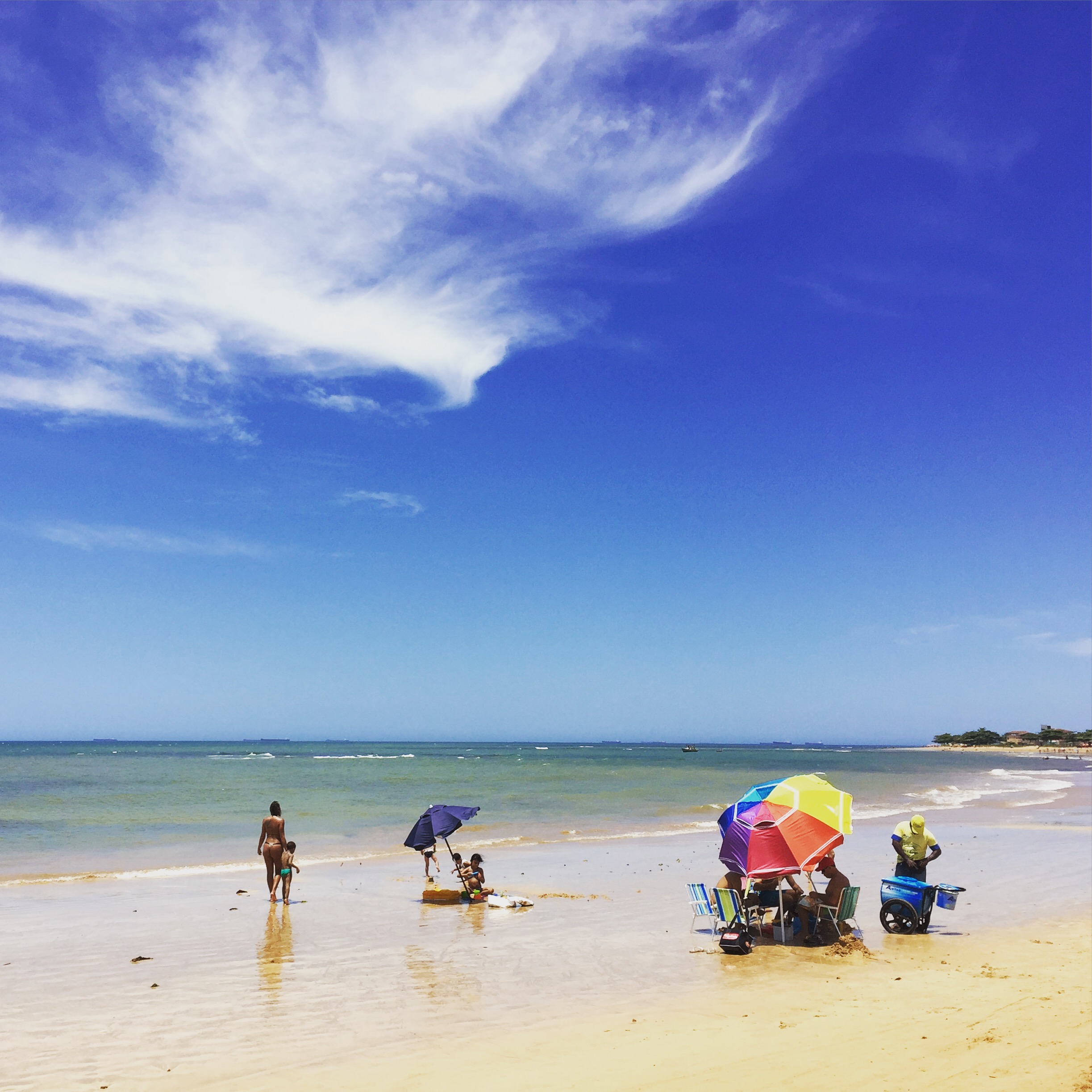
    My only parenting standard at airports is "don't lose her".
    My only parenting standard at airports is “don’t lose her”.

    My little family of three took a trip to Rio de Janeiro this weekend.  Our nephew recently had a birthday and we needed to put in some face time with my husband’s family.  It’s only a 45 minute flight from Vitoria to Rio, but that was long enough to learn a valuable lesson.  There is no length of time short enough a three year old can’t turn it into forever.

    It’s like in Interstellar.  For the pilot and crew who have tasks to complete, 45 minutes is barely enough time to toss bags of crackers at everyone.  They’re the lucky ones down on the planet.  The parents of small children are the ones stuck in orbit who stumble off the plane with more grey hair and beards, demanding to know what year it is.  How long were we up there?  Six years?  Ten?

    For our flight home, boarding was scheduled for 6:50pm.  Right at dinner time! But my husband and I were prepared.  We had packed sandwiches…which my daughter ultimately refused to eat because we miscalculated the nap.

    The ride to the airport was about 30 minutes.  When my daughter fell asleep in the taxi, we thought “Oh good, she can take a short nap and be in a better mood.”  Only, she didn’t fall into nap-time sleep.  She fell into bedtime-for-the-night sleep, and as my grandmother says, “You don’t need to step on a snake to know it’s going to bite you.”  The same principle applies.  You don’t need to wake a preschooler up from deep sleep to know it’s going to cry.

    And cry she did.  Through the whole check-in process.  While we searched for a place to sit.  While I bought water and snacks.  Even after we resorted to the emergency M&Ms.  Eventually, she calmed down and filled her stomach with 2 tiny bites of sandwich and 5 pão de queijo.

    No longer hungry but still exhausted from the weekend, her emotional pendulum swung to the other extreme. We then had a deliriously giddy 3 year old on our hands.  While deliriously-giddy child is less emotionally exhausting than inconsolable child, she is more physically exhausting because deliriously-giddy child cannot occupy the same space for more than 3 seconds.

    Did I mention that my back locked up this weekend?  It happened while checking in at the airport for our flight to Rio.  For the first time in my life.  I couldn’t bend over, lift anything, or even take a deep breath the entire weekend.

    Because I was benched from parenting due to injury, my husband was the one running after her while I kept our place in all the various lines.  He was the one who chased her through security, from the gate to the plane, and took her on the bathroom run she needed the moment we stepped on the plane.

    Eventually the plane took off and everything was ok. For about half an hour.

    With fifteen minutes of flight time left, my daughter decided she could no longer tolerate her seat belt.  My husband and I desperately tried to head off the fit we could see coming.  She was straining and arching her back against the seat belt.  Her face was scrunched and turning red.  She stopped speaking in sentences and devolved to “No seat belt!”  Very aware of the 150 people trapped on the plane with us, I grabbed a doll and made it sing “Let It Go”.  As we got to the chorus, my daughter joined in and shrieked “Let it poopy! Let it poopy!”  She dissolved into a fit of laughter and proceeded to sing at the top of her lungs different versions of the song featuring everything from pee pee to smelly socks to farts.

    I’m certain if there had been a vote, the other passengers would have unanimously voted us off the plane.

    That was the emotional knife edge we balanced on for the remainder of the flight.  We teetered between a breakdown over the seat belt and belting out classic Disney songs rewritten to feature bodily functions. “Let it fart! Let it poopy! Let it poopy and faaaaart!” The plane eventually landed three months later, and we made it home where my daughter finally ate a peanut butter and jelly sandwich and went to bed.

    All in all, it was a pretty uneventful trip.  It could have been so much worse.

  • 5 Things You’d Never Guess About Brazil

    5 Things You’d Never Guess About Brazil

    5 Surprising Facts About Brazil
    5 of the many things that have surprised me about Brazil…

    “Do you like Brazil?” I heard this question for the thousandth time last night.  I don’t know why people bother to ask this question.  It’s in the same category as “Does this make me look fat?” and “Did you read my last blog post?”  Nobody wants an honest answer.  “Do you like Brazil?”  The correct response is an enthusiastic “Yes!”

    At least this question has an obvious correct answer, unlike “So which country do you like better?  The US or Brazil?”  What am I supposed to say?  I usually cop out with humor. “Neither.  I’m giving up on the whole nation-state system.  I’d like to start my own island tribe based on handedness.”

    Another strategy I’ve developed over the years is to answer these politically loaded questions with lists: “Things I love about Brazil” or “Things I miss about the US”.  Below is my favorite list.  I like it because it’s personal but more unusual than the standard “Things I love about Brazil.”

    Five Things That Surprised Me About Brazil

    1) Stellar Dental Hygiene   Brazilians are obsessed with their teeth.  If you go into a restroom after lunch, there will be a wall of people between you and the sink, all of them flossing their teeth.  Helpfully, many public restrooms have floss dispensers to facilitate this habit.  You should brush your teeth after every meal and ideally after every snack.  As an after-breakfast-and-before-bed brusher, I have the most disgusting teeth in all of Brazil.  Fortunately, my husband accepts me for who I am and ascribes my poor dental hygiene and once-a-day-showering to my Anglo-Saxon ancestors’ affinity for filth.  Although thanks to him, I have grudgingly become a daily flosser.

    2) Your Fingers Must Never Touch Your Food  When I learned that many Brazilians use a fork to eat french fries, I almost moved back to the US.  Brazilians use a knife and fork for EVERYTHING!  Your fingers must never touch your food.  As my people created a category just for “finger foods”, this is not a custom that I’m particularly comfortable with or always able to keep in mind.  I’ll be at a birthday party happily popping mini-pizzas in my mouth, when I notice everyone else at the table has a napkin delicately wrapped around their snack, creating a polite barrier between fingers and food.  After 9 years, I still can’t muster that level of formality for something that came frozen out of a box.  (Honestly between the finger eating and lack of teeth brushing, I’m surprised my husband agrees to go out with me.)

    3) Japanese-Brazilians  My initial thought when I saw my husband for the first time was “Hey, he’s white!”  True story.  Pretty romantic, huh?  Before my husband, the only Brazilian I was aware of was Pelé, thus my unconscious assumption about how Brazilians look.  I wasn’t totally wrong.  According to the 2010 census, 50.7% of Brazilians do consider themselves black or mixed-race. But in addition to the 4.8 million people brought as slaves from Africa and the indigenous tribes who were already here, Brazil has had substantial immigration from Portugal, Italy, Japan, Lebanon, and Germany to name a few countries.  With a history of intermarriage between the groups, Brazilians cover the entire range of possible human phenotypes.  

    4) Brazilians Love Volleyball!  Everyone else in the world besides Americans might already know this.  Probably the world loves indoor volleyball, and it’s only us Americans who are in the dark. Literally. We’d rather just sit in the dark than watch a volleyball game.  But not Brazilians!  If there’s no soccer game, the sports channels are covering a volleyball match.  They have incredibly popular professional leagues here, and if you stay in Brazil long enough, you will find yourself at a bar with a women’s club volleyball game on the TV.  Or judo.  Judo is also very popular in Brazil.

    5) Did You Already Add Salt?  This is a question most Brazilians won’t ask because they’re going to go ahead add more salt regardless.  Meal after meal, I see Brazilians get food placed in front of them and without even tasting it, they reach for the salt packets, rip one open, and rain salt down on the entire plate.  Very shortly after arriving, my husband made sure to treat me to one of Brazil’s traditional meals imported from Portugal, bacalhau or codfish.  Imagine a salt lick served with potatoes and onions. That’s bacalhau.  I couldn’t eat it.  The same was true for feijoada, a uniquely Brazilian dish involving black beans, all the leftover pieces of pig, and a few ice cream scoops of salt. Not surprisingly, Brazil has a hypertension epidemic.

    Those were some of the most surprising truths I learned about Brazil.  I’d come up with more, but I just ate a pretzel and must go floss my teeth.


  • Children’s Parties: Brazilian Edition

    Children’s Parties: Brazilian Edition

    What are they going to do for the 2nd birthday?

    We can learn a lot about our own culture by having to explain it to outsiders.  What specifically outsiders want an explanation for is telling and then having to explain why can lead to great enlightenment.

    For example, as an American I have fielded quite a few questions about guns.  I’ve learned that to the rest of the world our obsession with firearms makes us look like batshit crazy people hellbent on our own destruction.  Also, no American expat has ever convinced another person that a civilian needs a grenade launcher to potentially fight off a government that has missile launching drones.

    Of course every culture has its idiosyncracies.  Americans must account for a love of lethal weapons, and I’d like to ask my Brazilian family and friends to explain the Brazilian child’s birthday party.

    (This is a totally legit transition.  An American gun range and a Brazilian child’s first birthday are, for me, equally intimidating environments.)

    This past weekend, we attended the birthday party of my daughter’s classmate.  My husband, daughter, and I all stayed the duration, from 5pm to 9pm on Sunday night.  There were about 60 people in attendance.  The three tables of decorated sweets and cakes on display throughout the event were perfectly arranged.  The personalized favors were lovely.  The party space had a climbing wall, a bungee-trampoline thing, a three-story playground, a rope walk suspended above everyone’s head, and a ball pit.  The trays of fingers foods, soda, and beer swept by with impressive frequency.  The boy was turning three.

    To be fair not every Brazilian family does this and many cannot afford to do this, but the party I have described is typical of middle class families.  It’s not something worthy of a reality TV show.  It’s completely mainstream.

    I have been to a few 1st birthday parties and they all had more guests than my wedding.  I understand that Brazilian families tend be large and stay in the same city where they were born.  It is very likely the birthday girl has ten cousins living close by. Ok. I understand that at a young age, it’s appropriate to give an invitation to everyone in the preschool class.  I’m totally on board.  But why their parents? Why do I have to feed 15 of my kid’s classmates, plus their moms, dads, and siblings?  My child doesn’t know little Rodrigo’s grandma. And why your boss and work colleagues your kid has never met?

    My nephew’s first birthday had around 100 people.  He spent almost the entire party hanging out with his grandpa in the car.  The poor kid burst into tears every time he got carried toward the commotion.

    I question the value of of a birthday party that the honoree is terrified to attend.

    Some beautiful things for the janitor to sweep up…

    And why spend so much money and time on the elaborate decorations and sweets?  A two year old doesn’t care if the candy is personalized and color coordinated.  For guests, those cute wrappers, ribbons, and bedazzled boxes are merely impediments between mouth and candy.  Once the birthday song is sung, it’s Lord of the Flies.  The smoke is still wafting up from the candles and the dessert tables look like a pack of Labradors was set on them. The kids are aggressive too.

    Ok, I’m being mean.  This is actually perfectly reasonable behavior considering the kids have been made to stare at these tables of sweets for three hours.  All the desserts are beautifully laid out upon arrival but DO NOT TOUCH them until after the candles are blown out!!  Scheduling a party at dinner time and making kids stare at cupcakes for hours is straight up torture.  I’m pretty sure it’s illegal under the Geneva Convention.

    I know some of the moms do everything themselves and I bow to their superior design and art skills. Every child’s party I’ve been to has been beautiful and if they were for a 15th birthday or graduation or even just for older kids who could remember it and not burst into tears at the sight of Great Aunt Roberta, I wouldn’t have any questions.  But I can’t help asking when I attend a three-year old’s birthday, who is this party for?

    blog-button-linkup-2

  • The Super-Awesome, Amazingly-Exotic Expat Life

    The Super-Awesome, Amazingly-Exotic Expat Life

    The daily rainbow in Brazil.
    The daily rainbow in Brazil.

    When I’m back home in Atlanta, I try not to mention that I live in Brazil.  The opportunity presents itself with surprising frequency, usually when a sales associate asks if I’d like to sign up for a rewards card.  I decline saying “I’m just visiting for the holidays.”   Nine times out of ten, at least in the state of Georgia where people still practice things like small talk and friendliness, the person will ask “Oh, where do you live?”  Then I’m stuck.  “In Brazil,” I answer, and I’m at the counter another five minutes as I tell my story and confess that I have not in fact learned to speak Spanish.  Though I have learned the local Portuguese.

    I can’t blame people for their wide-eyed excitement and curiosity about my life.  Americans are under the impression that life south of Texas or north of Idaho or on the other side of an ocean is more…something.  More exciting.  More dangerous.  More romantic.  More barbaric.  More luxurious.  They’ve seen movies set in these “foreign” countries and read articles like “3 Things Dating Foreign Women (And Marrying One) Taught Me” which tell people what a romantic adventure life can be if they only find a spouse with a different passport.

    As someone who did manage to land a coveted foreign spouse and move abroad, I can state that it’s all true.  My life is more exciting than everyone else’s.  It’s more romantic and luxurious yet still a rewarding, character-building challenge.

    Take my very first meal in Brazil.  I got to eat in the food court of the nearby mall.  My future husband took me and it was incredibly romantic.  The din of the other customers drowned out our voices, so we could only stare into each other’s eyes.  Because I arrived in the midst of remodeling the apartment, I had the opportunity to tour all the best hardware stores in Rio de Janeiro.  The thrill of shopping for toilet seats abroad really gets downplayed in expat blogs.  The only thing in Brazil that rivals shopping for toilets is getting finger printed for a visa at the federal police.  The ink smells like jasmine.

    Living in Brazil has also given me the opportunity to learn a new language.  It’s a fact that everything is sexier in a foreign language. Doesn’t matter which language.  They’re all sexier than English.  Here are some of the local Portuguese phrases I learned in my first months here.  Encanador.  Plumber.  Conta corrente conjunta.  Joint checking account.  Seguro de saúde.  Health insurance.  Absorvente interno.  Tampon.

    If you are ever lucky enough to visit Rio, I recommend driving from downtown to the suburbs at 5:30pm.  It will give you an authentic local experience.  Turn the air-conditioning off and roll the windows down to really go native.  Be sure to have the GoPros charged because friends back home will want to watch this trek. All three hours of it.

    Anyone leaving the US should do their family and friends the favor of recording every second of their time abroad.  They’ll thank you for allowing them to live vicariously through you.  After all, life outside the United States is one long perpetual vacation.  Nobody goes to the grocery store or a “job” in foreign countries.  The people serving coconuts on the beach here in Brazil? Robots.  All of them.  Where do you think Walt Disney got the idea for the Hall of Presidents?  He stayed at the Copacabana Palace in Rio.  Actual Brazilian citizens don’t work and if you’re fortunate enough to get residency neither will you.  People who live here just go to the beach and gym everyday.  I haven’t had to run an errand since I arrived in September of 2006.

    Having a child abroad with a foreign spouse (Yes, even in Brazil my Brazilian husband is the foreigner.  I can’t be a foreigner because I’m American), it only adds to the drama and glamor of the expat life.  I’m writing a screenplay based on my experience of visiting the US consulate to prove the maternity of my child.  I’m hoping Ridley Scott will direct and it will star Angelina Jolie (as me), Antonio Banderas (as my husband), and Jack Black as the unwieldy and misunderstood stack of paperwork that ultimately saves the day and gets us the US birth certificate.

    Those of us living in far-off, exotic lands know that “living” abroad is exactly the same thing as “vacationing” abroad.  Don’t make the mistake of thinking that most people in the world are busy going about the tediousness of living day to day, with the jobs and childcare and home repairs and laundry that human existence demands.  No, no.  Life outside the US is romantic and electrifying all the time.  In fact, I have another Brazilian adventure planned for this morning.  I’m going on an excursion for light bulbs.

  • The Novelty of Beach Life

    The Novelty of Beach Life

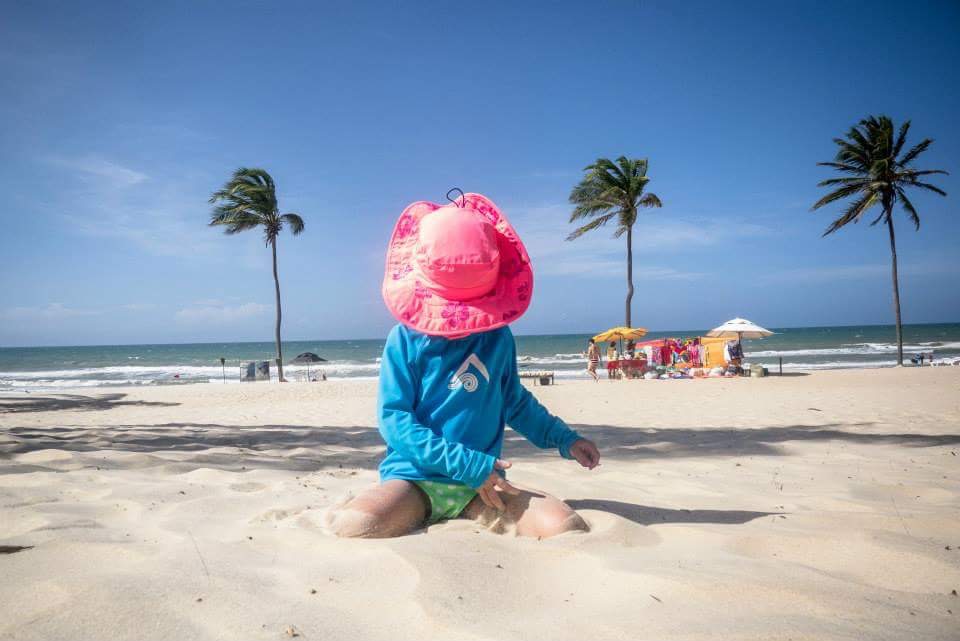
    Baby at the Beach
    Beach Comber From Birth

    Growing up in Atlanta, I got to be part of that great American summer tradition, the annual family beach trip.  Depending on the beach, my brother and I could look forward to between 4 and 6 hours of Wee-Sing-Silly-Songs cassettes, gas station candy, and fierce battles for control of the middle-seat armrest.

    We usually ventured to one of a handful of beaches: Panama City, Florida; Daytona, Florida; St. Simons Island, Georgia; Hilton Head, South Carolina.  Some on the Atlantic and some on the Gulf of Mexico but all had an abundance of cooked white flesh and thick southern accents.  It was paradise!

    I remember the thrill of the first palm tree sighting.  My brother and I would then count the palms in growing anticipation until we finally glimpsed a flash of ocean between a Texaco and a McDonald’s.  After checking into the hotel, we’d spend the next five days coated with sand and sunscreen jumping waves, riding boogie boards, and hunting for seashells.  Often grandparents came along and sometimes aunts, uncles, and cousins.  There was always a family putt-putt outing, which some of us took more seriously than others.  Inevitably, the week ended, and we would say goodbye to the beach for a year.

    I now live three blocks from the beach.

    I can wake up any day of the week and decide to skip writing in favor of paddling around the bay spotting sea turtles.  It. is. amazing!

    My daughter has been going to the beach regularly since before she discovered her hands.  The list of foods my girl will eat is short but includes white fish, salmon, shark, and tiny fried shrimp.  Fried shrimp with the shell and legs still on them.  The girl won’t part her lips for a carrot but she pops little shrimp in her mouth like chocolates.  We frequently have some version of this conversation on Saturday mornings:

    Me: “Should we go to beach today?”

    Husband: “I don’t know.  We went the last few weekends.  I think she might be getting tired of it.”

    Me: “Hey Little Bit, do you want to go to the beach?”

    Kid: “No, I want to stay home and play with my toys.”

    Yes, my daughter will turn down going to the beach in favor of staying home to play with her Littlest Pets because she has no idea how lucky she is and no appreciation for the months of waiting that I had to endure when I was her age to get to the beach.  Preschoolers!

    Because of these different life experiences, my daughter will probably never understand my obsession with ocean-based hobbies, specifically that she master one or several of them.  Some parents dream of their children graduating from the ivy league, I dream of my daughter being a competitive sailor or windsurfer or deep sea fisherwoman.  (That last one is lower down on the list.)

    Given the novelty (for me anyway) of growing up next to the beach, imagine my joy when my girl started swim class and LOVED it!  She has no fear of water, which makes supervising her around the pool more stressful, but is an important first step to becoming a world champion free diver!

    A couple of weeks ago, we embarked on phase two of my master plan.  Stand up paddle boarding in the bay!*  We went as a family and spent the morning spotting green sea turtles in the bay.  It was a success.  You can see in the video below.  My daughter had so much fun, we all went back out yesterday and the heavy grey clouds and constant drizzle didn’t deter her one bit.

    Watching my daughter yesterday on my husband’s board, leaning forward through the rain with a smile on her face, I thought “I just might have a seafarer on my hands.”  At least I hope I do.  All she needs now is a willingness to use sunscreen.

    *If you’re ever in Vitoria, Brazil, I highly recommend a morning of SUP.  We rented our boards from Loop.  They have windsurf and stand up equipment for rent. The bay is filled with sea turtle, fish, and the occasional ray leaping from the water.

    Whatever-the-weather-both-small

  • My Recommendation for an OBGYN in Vitoria

    My Recommendation for an OBGYN in Vitoria

    My expat identity has taken a back seat in my last few posts to the teacher or pregnant woman part of me, but after reading some blog entries from other expats in Brazil I’ve been inspired to finally write a post that has been in the back of my mind for some time.

    Coconut Water is officially recommending Dr. Paulo Batistuta for anyone in Vitoria looking for an OBGYN.

    While I’ve endorsed several Brazilian food options including açaí and moqueca capixaba, this is Coconut Water’s first official endorsement of a healthcare professional in Brazil and I’m recommending Dr. Batistuta with the same fervor I do a big bowl of açaí.

    A fairly common complaint from expats here is that doctors in Brazil don’t really explain things to you.  They tell you to get a test and bring them the results.  Unless the results require being ordered to get another test or bypass surgery, that’s all you’ll hear about them.  Another complaint specific to women in the process of childbearing is that doctors here in Brazil prefer doing c-sections to pretty much anything else.  (I’d believe even more than sex given the rate at which they are performed here.)  Some private hospitals in Brazil have c-section rates as high as 90%.

    Dr. Batistuta (Dr. Paulo here in Brazil where they use first names) defies both of these stereotypes.

    Personal anecdote.  After an early ultrasound, I noticed there was one item that had an abnormal reading, specifically low blood flow in the left uterine artery. When we took the results to Dr. Batistuta, I asked about it and Dr. Batistuta picked up a pen and immediately began sketching a uterus and arteries.  He explained what the test measured and what the result meant.  He even sketched out exactly where the placenta was attached in my uterus.  You know, the more information the better.  He assured us that this wasn’t a problem given the normal results for everything else and we’d check it again at the next ultrasound.  He was right.  Everything was normal at the next ultrasound.

    Dr. Batistuta never rushes us out the door.  I’ll pull out a list of questions.  He’ll happily answer everyone, giving me cards, books, even DVDs that will provide further information.  While I’m in the bathroom changing I can hear him and my husband chatting away about upgrading their computers’ operating systems.  We were in his office for almost an hour during our last visit.

    As for c-sections, Dr. Batistuta is one of the leading voices in Brazil for natural childbirth.  If you speak Portuguese you can watch him being interviewed on youtube.  While he will state point blank he believes the best birth for the mother and baby is one with no unnecessary medical intervention, he has also told me that ultimately the doctors and staff are there to support me and what I want.  If I ask for drugs, they will give me drugs.

    I should mention cost.  One of the great things about Vitoria is that you can get great medical care (private) for half the cost of what you’d pay in Rio or Sao Paulo.  For an office visit, Dr. Batistuta charges BR$200 ($118).  We pay this out of pocket at the visit and send a receipt to our insurance company for reimbursement.  For the actual birth, Dr. Batistuta is charging BR$4.000 ($2,353). Again, we’ll pay and get reimbursed later.  (Once the whole birthing process is said and done, I’ll do a summary of all medical expenses for giving birth in Vitoria.)

    Finally, the language issue.  Our visits are conducted exclusively in Portuguese but when I have to use an English phrase Dr. Batistuta understands.  (I suspect he is modest about his level of English and understands way more English than he lets on.)  Fortunately, my husband attends every visit and supplements my intermediate Portuguese with his native tongue thus preventing any serious misunderstandings.  I can’t say for sure how it would go if you don’t speak any Portuguese. I think everyone could muddle through but it is important to know that Vitoria is a much smaller city than Rio, Sao Paulo or Belo Horizonte and English speaking professionals are in much shorter supply here.

    If you are an expat in Vitoria looking for an OBGYN, I strongly recommend Dr. Batistuta.  He talks to his patients as intellectual equals.  He supports natural birth and medical intervention only when necessary.  He understands some English and is very patient when listening to bad Portuguese.  You can find his profile and contact info with the CECON medical group.