
 The other night my daughter and I died repeatedly in a lava lake. We were playing Yoshi’s Woolly World and trying to get a final daisy that would unlock a secret board but the lava was rising and covering the daisy and…well, we died a lot.
After death number twenty-two give or take five, my daughter said, “Mommy, let’s just quit. We’re never going to get it.”
“That’s only true if we quit,” I cried, frantically pounding the A button.
Which is true. In Yoshi’s Wolly World and in life. Someday becomes never only when we quit.
This is not a sentiment I would have slapped on a poster, covered in glitter, and waved over my head until very recently. I was much more a “Why would I waste my limited time and energy on something that’s basically impossible?” or put more honestly “Why would I try so hard to most likely fail?”
Then I started querying agents for a novel, and I learned failing isn’t the end. Failing is a step.
I remember the queasy feeling I had as I hit send on my first query. This was it. After three years of writing, revising and researching the fiction industry, I was as ready as I could be. I was NOT querying a first draft. I had revised and revised again. I researched agents and made a list tailored to the book I wrote. I sent my query to workshops and had ACTUAL literary agents critique it. I was ready, and with my hand shaking, I clicked send. Then I sent nine more.
They all said no. So did the next ten agents. And the ten after that. All form rejections.
Querying literary agents is a pretty good dry run for living with chronic reflux. Once those queries are out, checking your inbox triggers chest pains, difficulty breathing, and nausea. It didn’t matter if the query was sent six hours ago or six months ago. If I had an open query and that little red circle appeared over my inbox icon, my stomach flipped. My expectations rose.
And then I’d read the rejection. It’s amazing that pixels on a screen can stimulate the physical sensation of being punched in the gut.
The first few rejections hurt but weren’t devastating. I didn’t panic. There are varied tastes. Some agents just won’t be into a vigilante anti-hero no matter how well written. Although someone should have recognized my talent by query 20. Or 25. Certainly by 30. But the form rejections kept coming and feeding the self-doubt. Because I wouldn’t have queried a novel I didn’t think was good. So the agent rejections were a reflection not only my book but on my judgement as a writer, right?
Eventually I went in search of data because that’s what people with social science degrees do. I wanted a number, so I googled “What’s the average number of rejections authors get before signing with an agent?” I found enough numbers that I know my total rejections over three projects isn’t even that high.
But back then, I had no idea where my count would end. Would I be the author who got an agent on her 65th query for her sixth manuscript? Imagining the time and energy it would take to write and revise six novels left me breathless. Could my heart take a shot of adrenaline every time I checked my email for a decade? But giving up after one novel wasn’t even trying and I couldn’t quit without really trying.
So I wrote another book. And I queried it. I got more form rejections. They caused heart palpitations and pain. But…and this was a revelation…not as much pain as that first batch.
I realized as I neared that 100 rejections mark, that the more times I read “no”, the faster my heart rate returned to normal. By the time I was into three digit rejection numbers, the emails caused only a flutter of despair. I could tell my husband and family “Nope. Another pass” with merely a shrug. I seemed to have developed a high tolerance for “no”.
Then project number three got me my first full manuscript request and first rejection of the entire manuscript. That one was bad. My query reflux flared up. I cried. But there were more full requests and I started thinking “At this rate, eventually someone will say yes.” I’d heard “no” 130 times, but somewhere along the line my thinking had shifted from “maybe not ever” to “eventually”.
As long as I didn’t quit. I’d gone from form rejections to personalized rejections to a partial request to multiple full requests. If I kept going, one rejection at time, I’d eventually get to a yes and after four years, I did. After 138 rejections.
So here’s what I hope to pass on my daughter.
There will be some doors that never open no matter how hard a person tries. I will never be and could never have been a professional basketball player or super model. I do not have the body for either. Nor do I have the eyesight for fighter jet pilot. Some things are out of our control.
And not everyone has the luxury of failing repeatedly. They don’t have time and energy to spare on ventures that might not bring any financial return. They don’t have family to support them during the trial and errors or bail them out after the crash and burn.
Failing repeatedly is a priviledge. If you’ve got the safety net, take the leap.
Do not let fear of hearing “no” or shame from having to admit rejection in front of family and friends be the only reasons you don’t try. Hearing “no” gets easier. It’ll always sting, but it will stop defining you. Every failed attempt teaches and makes you better. And you will get better.
So tryout for the team. Audition for the roll. Submit the story. Send off the resume. The regret from never trying will be so much worse than the sting of failing. And if there answer is “no”, well, your life will go on exactly as it did before you tried. It won’t be worse and now you have the chance to learn something and try again.
Take the step. Get a “no”. Reassess and try again. And again. Get 138 “no”s. Get 500 “no”s. You’ve only truly failed once you stop trying.
That’s what I yelled while my Yoshi leapt over rising lava. And eventually we got that damn daisy.









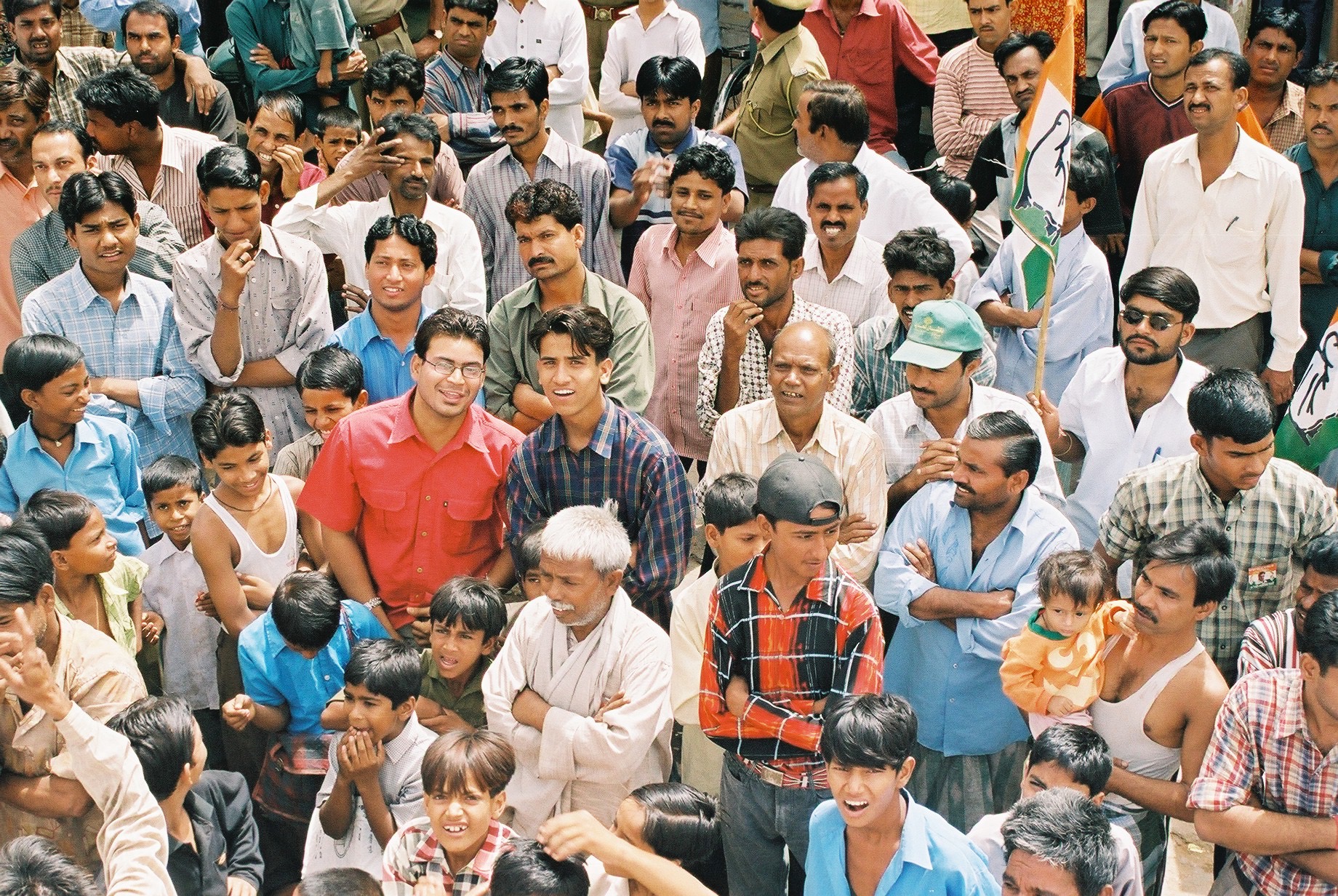
 Walking down a street in Jaipur, India, I heard what had become a familiar recorded political message blasting out over loudspeakers. The message was imploring people to vote for a particular party in the upcoming election. I turned the corner, expecting to see one of what I had affectionately termed the “propaganda trucks.” But instead of a truck, I saw a man on a cycle rickshaw that looked about ready to fall apart at the next pothole it hit. The rickshaw had two loudspeakers, duct-taped to the handlebars, and dangling wires that crisscrossed back to a stereo, which was also secured to the rickshaw with duct tape. I watched the man pedal by, the squeaking of the rickshaw drowned out by the message blasting repeatedly from the speakers. I was so moved by one of the most humble, yet dedicated, displays of democracy I had ever seen that I decided to take advantage of being in India during a parliamentary election to research local political campaigns.
 The candidate arrived about 7:40 a.m., and by 8:00 he had given his speech and started a small riot in the market. The crowd that gathered during his speech had been completely passive, almost indifferent to what was being said, but at the end of the speech some aides brought out boxes of sweets. When the first sweet was handed to a woman in the front of the audience, the impassive crowd suddenly turned violent, surging forward as if on command. Elbows dug into rib cages. Shirts were ripped. People were shoved to the ground. The noise of the market was now drowned out by the yelling of people desperately groping for a single piece of candy. The aides tossed the boxes of sweets into the air over the crowd and hastily retreated. I don’t know whether the sweets actually ended up in anyone’s mouth, or whether anyone ended up getting hurt. I didn’t get the chance to find out. My friend grabbed my elbow, pulling me off the stage.
 After successfully disrupting the daily routine of the market, it was off to a march and rally through the heart of downtown Jaipur. As I trailed behind the candidate I learned that a successful mobile political rally in India must include four things: 1) the previously mentioned “propaganda truck,” brightly decorated, and spewing party slogans through loudspeakers, 2) a group of school children with a sweet song to sing and rose petals to throw (if the kids can be in uniforms, they earn extra points on the “adorable scale”), 3) a memorable stunt of some kind that can be pictured in the newspaper, i.e. milking a cow, and 4) a passionate group of youths who can wave flags and chant nonstop for the entire three-hour walk. Combine these elements and a crowd of hundreds is guaranteed to have developed by the time a candidate has reached the platform where he will give his speech.

 While the campaigns I observed in India were similar in many ways to U.S. political campaigns, they were ultimately, unmistakably Indian. There were the superficial differences: the garlands, turbans, saffron and green banners, the traditional white dress worn by male candidates and the saris worn by women candidates. On a deeper level, the wide variety of political parties vying for power reflects the wide variety of ethnicities, religions and linguistic groups that all live within the world’s largest democracy. A three-hour walking tour is the only way to reach a constituency that does not own televisions or radios. While India currently celebrates its technological advances, I believe its greatest achievement is bringing democracy to one billion citizens—democracy that is delivered when necessary by cycle rickshaw.
 The first woman to rule Portugal, Maria Francisca Isabel Josefa Antónia Gertrudes Rita Joana (why’d her parents stop there?) married her uncle in order to remain in line for the throne, saw her hometown destroyed by an earthquake-tsunami-fire mega disaster, calmed political unrest in Portugal by proving infinitely more competent, less corrupt, and not as prone to mass incarceration as her father and his advisors, outlived her husband and all but one of her children, and became the only European monarch to leave the content and rule her empire from a colony. Although, by the time the court fled to Brazil, she wasn’t technically in charge anymore as she’d been declared insane and unfit to rule fifteen years earlier.
 Maria was born in 1734 and became the heir presumptive when all her brothers were still born. Now Portugal had never had a Queen rule in her own right, and they had this totally just and reasonable law that said a princess could NOT marry a foreigner and remain in line for the throne. Because obviously a man would be strong enough to resist manipulation from his Spanish wife, but a woman would be a puppet to her mustache-twirling Spanish husband. (This is hilariously ironic if you know about Queen Maria’s son and daughter-in-law.) So how can a princess marry a prince but not marry foreigner?
 In 1755, when Maria was just shy of 21, Lisbon was left in smoldering ruins after being hit by so many disasters in day even Hollywood producers would call it over the top. A massive earthquake hit at 9:30 in the morning on All Saint’s Day, while the churches were packed for mass. Almost every church in the city collapsed. Thousands of survivors rushed to open squares around the port, only to be swept away by the tsunami triggered by the quake. Fires then broke out and raged for five days destroying whatever parts of the city were left.
 As Queen she took a much more hands on approach to governing compared to her father who had taken the “everyone listen to my advisor because I’m going hunting” approach. She rolled back a lot of her father’s more extreme measures such as mass incarceration of political opponents. She’s remembered as a good ruler in Portugal and Brazil. By all accounts Maria was kind and affectionate with her family.
 When the Portuguese court fled Napoleon to Brazil, Maria thought she was being kidnapped and had to be carried aboard the ship by the fleet commander. She spent much of the three month voyage screaming. It sounds horrible for everyone involved.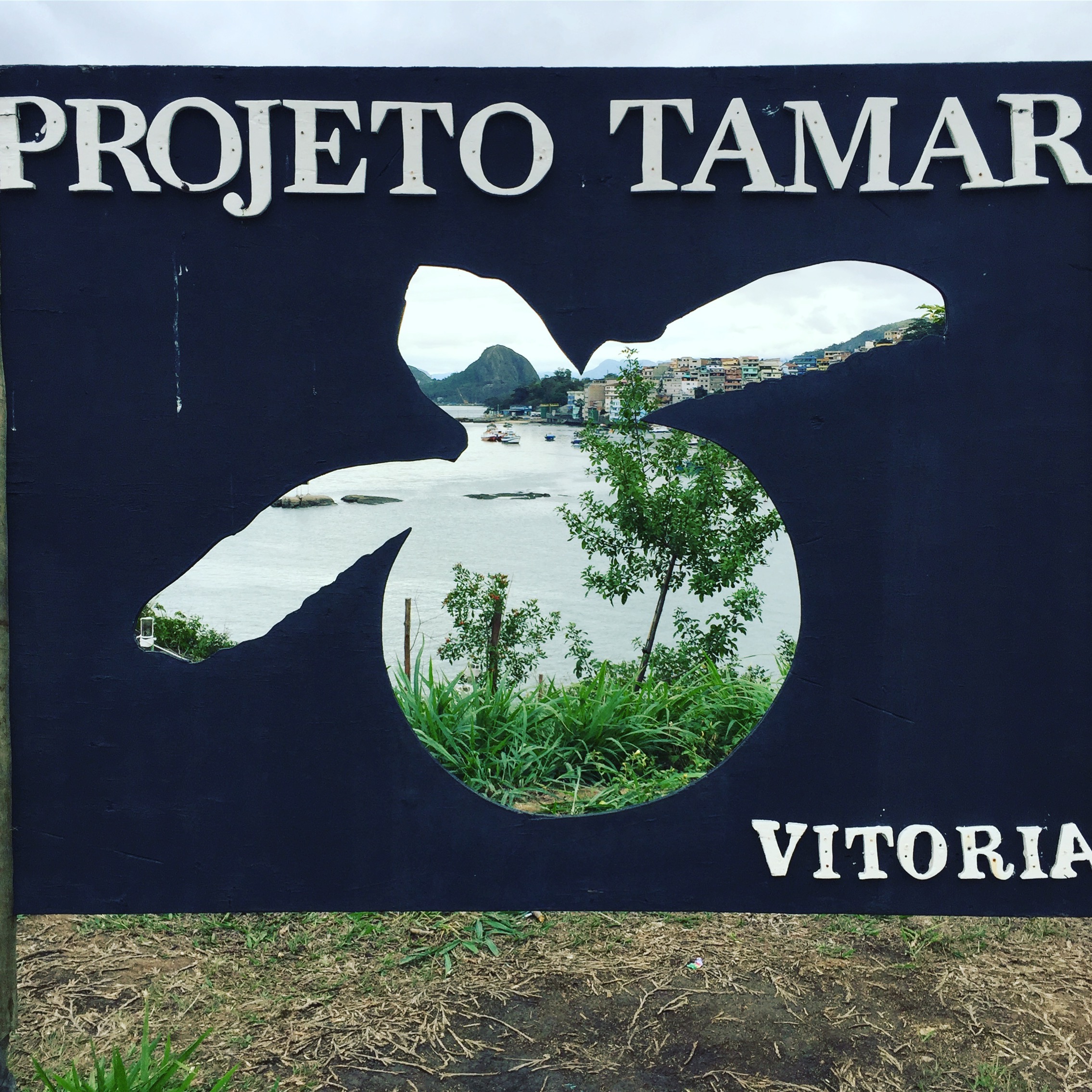


 Fortunately in Brazil, Projeto Tamar has worked with local communities to dramatically reduce the hunting of turtles while they lay their eggs. In fact, Projeto Tamar has been working for 37 years, just long enough that they’ve recorded an 87% increase in babies hatched over the last five years compared to the previous five. The first few groups of turtles hatched under the protection of the project are finally old enough to come back and lay eggs of their own.