One reason I love writing historical fiction is the chance to discover real people I’d swear were fabricated in someone’s imagination. King João VI of Portugal is one of these people. The man was born to be the comedic relief in someone else’s story. Sure, he was also born into royalty, but he seemed so much more suited for getting laughs than governing.
I discovered Dom João VI while researching for a book set in 1809 Rio de Janeiro. (Aside: King John is the English version of his name and title, which I won’t be using because that makes me think of English kings and Robin Hood but I’m writing about Portugal and there really are just too many people named John or some variation in human history). At the time of my story, João was Prince Regent and had been ruling in place of his mom, Queen Maria I of Portugal, since 1792 when she was declared insane. (Queen Maria is a whole other post.)
What to say about Dom João? He loved to eat. He always carried grilled chicken in his coat pocket for emergency snacking. This becomes even more disgusting after learning he also hated bathing and wouldn’t change his clothes for months. He was terrified of thunder and crustaceans, very inconvenient phobias when living in tropical Rio de Janeiro. João would literally hide in his bedroom during thunderstorms. He referred to himself in third person and was plagued by vertigo and hemorrhoids.
Not surprisingly, João was also the last absolute monarch of Portugal. What is surprising are his nine kids, which is eight more than I’d have guessed for a man universally considered a “peaceful dullard” with a “flaccid visage”.
 But the truly shocking and grand achievement of Dom João was surviving. When monarchs all over Europe were getting deposed at best and beheaded at worst, Dom João, the peaceful dullard, kept his crown, and he did it by being the only European monarch in history to move the capitol of his kingdom to a different continent. This man, who hated change so much his servants had to repair holes in his pants while he slept, moved the capital of Portugal from Lisbon to Rio de Janeiro.
João had been communicating with Napoleon in hopes of finding some solution that didn’t get him exiled or killed. Napoleon, the British, and pretty much everyone was under the impression Portugal would surrender to France. In 1808, the Prince Regent played Napoleon just long enough to order his government to pack up, board a ship, and get the hell out of Portugal before Napoleon’s army showed up. As someone who always preferred to delay a decision rather than make one, João gave the court three days to evacuate 10,000 people across the Atlantic.
That’s how Dom João VI found himself living in Rio de Janeiro, Brazil trying to establish court in a colony that had almost no roads between cities, no universities, no printing presses, and no trade with anyone but Portugal. Of course, the total lack of development in Brazil was intentional to keep the colony submissive and easily controlled. No Portuguese monarch ever anticipated having to live in this place where doctor, dentist, and barber was a single, mostly self-taught profession.
But it all changed under Dom João. He allowed roads, universities, and newspapers to flourish in Brazil. In exchange for escorting the court across the Atlantic, Brazilians ports were opened to the British and trade expanded. Academics, artists, and merchants flooded Brazil.
And Brazil declared independence sixteen years after João arrived in Rio. (Printing presses always lead to independence.)
As king finally back in Portugal, João conceded Brazilian independence in 1822 after a bloodless revolution led by the son he left behind in Rio to run the colony. His son’s betrayal probably didn’t bother him too much. At that point his wife had tried to overthrow him a few times so he was surely used to betrayal by immediate family. When he died in 1826, many suspected arsenic poisoning possibly ordered by his wife. (She really hated him.)
He may have lost Brazil for Portugal, but because of the reforms and development João initiated during his time in Brazil which led directly to independence, he’s remembered quite fondly here in spite of his eccentricities.
For my part, I can picture him clearly. His Majesty Dom João VI holding court, unbathed, and referring to himself in third while nibbling buttery chicken pulled out of a stained coat pocket that hasn’t been changed in a month. The perfect comedic relief.
If you’re interested in reading more about João and Brazilian history, I highly recommend 1808: The Flight of the Emperor by Laurentino Gomes.
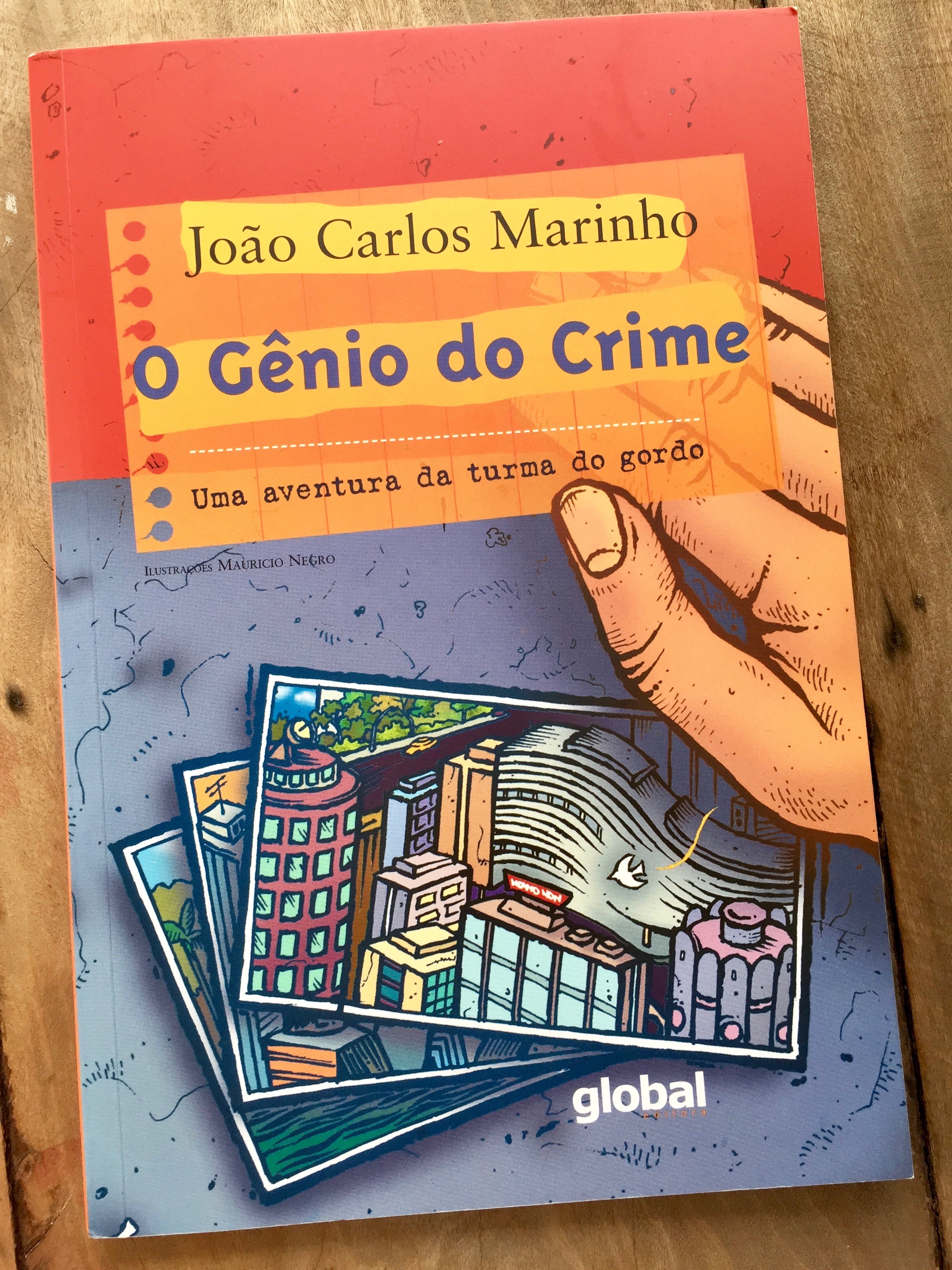
 I recently asked my husband what his favorite books were as a kid and without hesitation he said “O Gênio do Crime.” He couldn’t remember the author’s name, but he remembered in detail an ingenious system the kid detectives invented to tail a very tricky criminal. My husband remembered this book instantly after forty years, and it wasn’t about ancient Rome.
 The kids of São Paulo are on the verge of an uprising when the company manufacturing soccer trading cards stops awarding prizes for collecting because of counterfeit cards being mass produced in the city. (It’s possibly the most Brazilian crime ever.) The police have yet to find this “gênio do crime” (genius of crime), but Edmundo, Pituca, and Bolachão are determined to succeed where the police have failed and ensure the kids of Sao Paulo can continue collecting cards and prizes.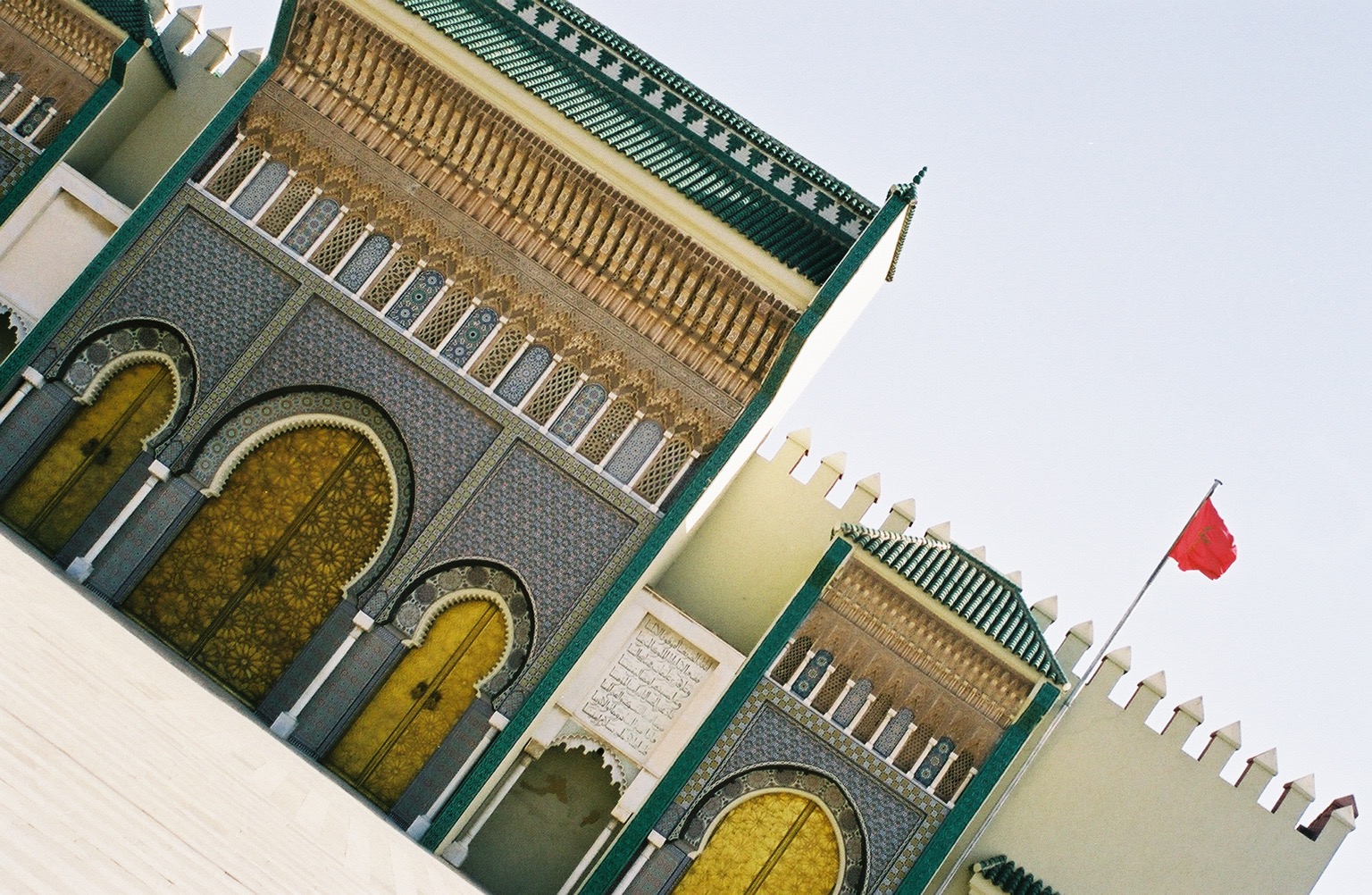
 It did not take me long after announcing my study abroad plans to realize that “abroad” for most of the people I knew meant Western Europe or Australia. Any other country was not so much abroad as another planet. The first time I mentioned Morocco to family or friends there was usually a momentary pause as people first, tried to place Morocco on a map, and second tried to figure out why I wanted to spend a significant amount of time there. Australia they could understand. It has beaches and people with funny accents. Italy has pasta and Prada. The only thing Morocco has is a city named after a Humphrey Bogart film.
 On September 3, I found myself all alone, completely lost, standing on a street corner in Rabat. That was the day of the Drop Off–the morning our program directors piled all 22 students on a bus, drove us around Rabat until we had no directional bearings whatsoever, and dropped us off one by one on random street corners throughout the city. Our first full day in Morocco and each of us was left stranded on a different street corner with no maps, no cell phones, and no idea how to even pronounce the street our hotel was on. The only thing we had was an assignment. Get back to the hotel by 1 o’clock. Welcome to Morocco and good luck.
 As I frantically looked around I noticed one opening in the wall flanked by two heavily armed Moroccan soldiers. I had heard stories about corrupt police officers in developing countries, about the actions of local military around the world who were supposed to be protecting refugees in various places, and decided the best direction to start walking would be away from the men with guns, uniform or no uniform. It would be much later before I realized this was my first decision in Morocco based entirely on a stereotype.
 Yes, that was one of the many thoughts running through my head as I tried to keep myself together. Despite all my boasting about being above the negative stereotyping of Arabs many friends and family engaged in, as I stood on the sidewalk of an unknown street somewhere in Rabat, I was genuinely afraid I was going to be harassed, beaten, or worse by those “fanatical Arabs.” So much for being a good liberal who doesn’t stereotype. I was alone, in a completely foreign country, with no knowledge of the language, or the culture, or where in God’s name my hotel was–and in that panic I embraced the most negative, racist stereotypes that had ever been presented in Western media. I wanted to go back to the time when being liberal meant eating vegan chocolate cake and discussing Said’s definition of orientalism on the quad of my $34,000 a year university in Northwest Washington, DC. While I walked, my mind kept repeating, “What am I doing here? I’m a white girl from Snellville, Georgia USA, where all the teenagers wear ‘what would Jesus do?’ bracelets. Why didn’t I study abroad in London with all of my friends?”
 As pleasantly surprising as this man’s generosity had been it was not the biggest surprise of the day. I was struck to the core when I walked into the hotel’s lobby and saw it was filled with students and all the Moroccans who had taken the time to help each of us find our way back. As we breathlessly shared our stories at increasing levels of volume, it became evident that every student made it back to the hotel through the generosity of complete strangers who were willing to take time out of their day to help another person. We had not experienced any kind of anti-American sentiment; in fact most of us had gotten incredibly positive reactions toward Americans. I hadn’t come across a flag or Bush effigy burning in the street. I had been in Morocco one full day and I had already had an exciting and liberating adventure, which introduced to many touchingly generous people and brought me face to face with my own hidden stereotypes.
 While tenaciously clinging to stereotypes, particularly if they are negative, will also blind a person to the wonderful and fascinating realities and practices of any culture. Recognizing stereotypes for what they are, imagined realities based on limited information, and preparing yourself to leave them behind as you learn and observe the reality from within the culture, are essential in order to make the transition into a new culture.
 It happened. I finally got the brutal agent response I will talk about twenty years from now at book signings. I’m a real writer now. Yay!
 My first thought was “Portugal, a Christian country in Europe full of white people, may feel too foreign for Americans?” I’m still trying to figure out what about US demographics gives the agent this impression. If Portugal is too foreign what countries will Americans read about? Great Britain, obviously. France, yes. Germany? What about Russia? They’re white, but their culture is pretty dissimilar to the US.
 The Census Bureas predicts that by 2020, the majority of kids in the United States will be members of a minority race or ethnic group.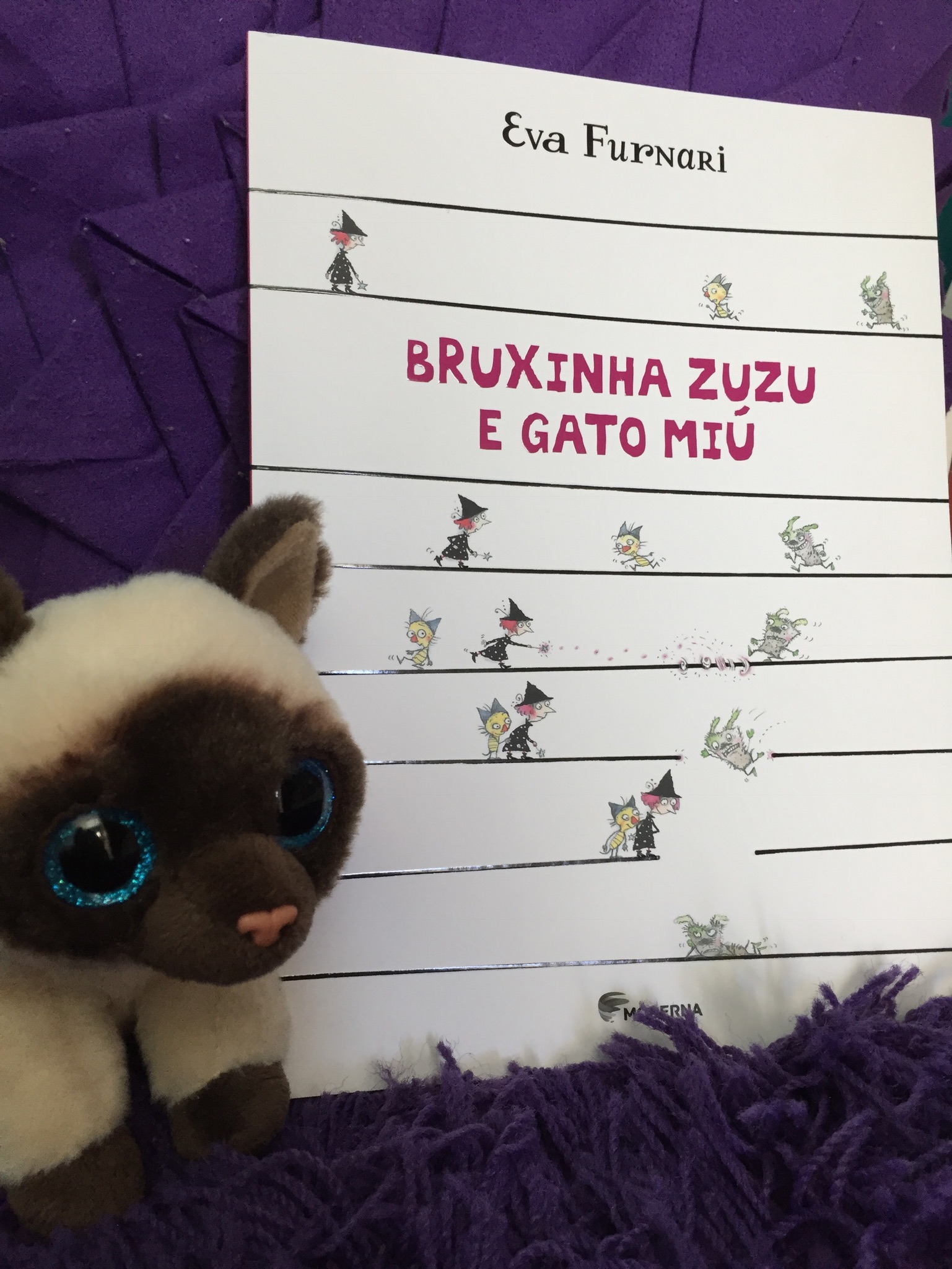
 ANA MARIA MACHADO
 Some of her most famous books include
  CECILIA MEIRELES
 The musicality of her lines is so strong, that “O Menino Azul” still sounded lovely when I read it aloud. (And as all adult learners of a second language know, nothing is harder to read aloud in a foreign language than poetry.) I haven’t been able to find any of her children’s works translated into English, but you can find many of
  EVA FURNARI
 One of her most famous characters is A Bruxinha Zuzu or Zuzu the Little Witch, who never quite seems to master the power of her magic wand. Many of Funari’s books are textless, including our favorite A Bruxinha Zuzu e o Gato Miú, and can be enjoyed regardless of what languages you read. One of her most famous and award winning stories, Felpo Filva, is
  SONIA JUNQUEIRA
 VERONICA STIGGER
 However, one of her most recent books, Onde a Onça Bebe Água, Where the Jaguar Drinks Water, is one of the best books I’ve read for teaching empathy and seeing the world through a another’s eyes. In the story, Jaci is forced to consider the world from the perspective of the Jaguar he’s ends up dining with. Unfortunately, there isn’t an English translation of it or any of her books that I can find but several of her adults works do have Spanish versions available on Amazon.



 Journey by Aaron Becker This stunning and wordless book, follows the adventure of a girl as she journeys to a fantastical land with the help of a magic crayon. There are enchanting forests, flying carpets, and bad guys on air ships!
 If You Give a Pig a Pancake by Laura Numeroff illustrated by Felicia Bond If you loved what happens when you give a mouse a cookie, check out what one little girl has to deal with when she caves to a pig’s demands.
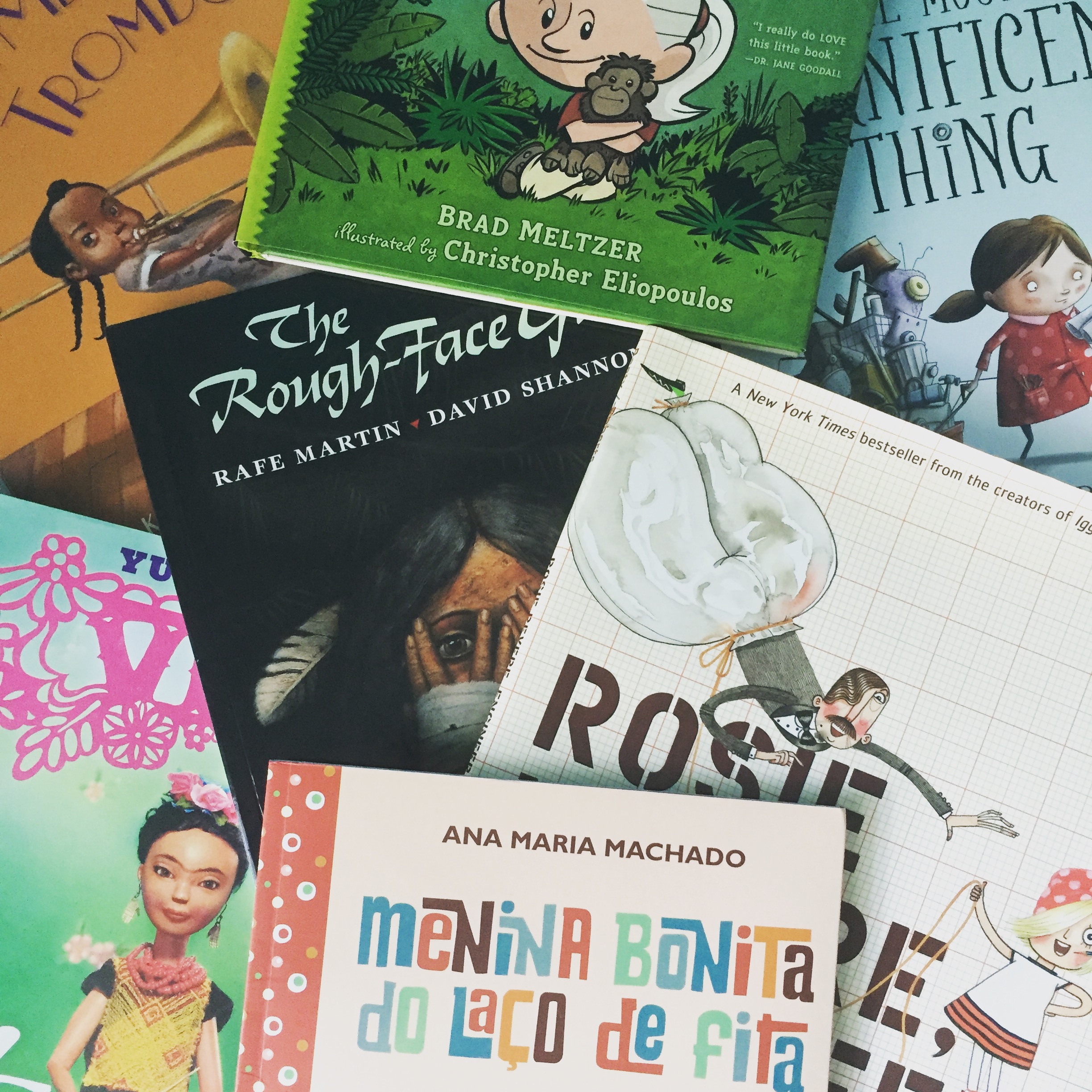
 Viva Frida by Yuyi Morales This is one of the most gorgeous books my daughter owns. The text (what very little there is) in both English and Spanish goes through the themes in Khalo’s work, such as live, imagine, create. The illustrations are bright and vibrant and straight out of a dream.
 Paper Bag Princess by Robert Munsch illustrated by Michael Martchenko I’m not at all opposed to Princesses if they’re one among many different types of characters and take matters in their own hands like Princess Elizabeth. She has no intention of letting that dragon get away with burning down her castle and stealing her fiance.
 The Rough Face Girl by Rafe Martin illustrated by David Shannon In addition to the beautiful illustrations, the heroine wins the day because of her character. She’s not pretty. She doesn’t have fancy clothes, but she sees the beauty and power in nature and understands what’s truly valuable. Yes, the book is about a young woman looking for a husband, but the message about character over appearance and clothes is an important one for all kids.
 My Two Grannies by Floella Benjamin illustrated by Margaret Chamberlain In addition to featuring females both young and old, black and white, the book also deal with two different cultures mixing! Multicultural, multiracial, and female protagonists! There is no reason not to have this book on your kid’s shelf.
 Pretty Salma by Niki Daly A Little Red Riding Hood tale set in Ghana. What I love about this version is that Salma redeems herself after getting tricked by coming up with the idea for how to scare away Mr. Dog and save Granny.
 My Pet Dragon by Christoph Niemann Lin has lost her pet dragon! She has to go on an adventure to find him and along the way the illustrator cleverly introduces some Chinese characters. Of your kid isn’t going to be fluent in Mandarin at the end, but thank to this book my daughter is ware that not all languages use an phonetic alphabet like English.
 Menina Bonita do Laço de Fita by Ana Maria Machado illustrated by Claudius A Brazilian story about a beautiful little girl who so captivates a neighboring bunny that he wants desperately to become black like her. She gives him all sorts of funny tricks to turn black. None of them work. Don’t worry if you can’t read Portuguese. There’s an English version on Amazon.
 The Most Magnificent Thing by Ashley Spires illustrated by Mark Pett Yes, this book is about a girl who loves to build things (awesome!), but that’s not the reason I bought it. My daughter gets frustrated easily and goes from fine to throwing things in a heartbeat. Just like the girl in the story. If you know a kid who has trouble coping with frustration when things don’t work exactly right, this book is a MUST read.
 The Girl Who Never Made Mistakes by Gary Rubenstein Similarly to The Most Magnificent Thing, this book is great for kids who stress about being perfectionists and have a hard time dealing when things don’t work exactly the way they wanted. Spolier alert: A mistake is eventually made and lessons are learned.
 As Mil e Umas Historias de Manuela by Marcelo Weberson illustrated by Maluf Santiago Ok, I don’t think there’s an English version of this, but Portuguese and Spanish speakers (because really they’re almost the same language) will love this story of a girl who devours books. Literally. She consumes so many books, she literally becomes a book and the only cure is to write her own story using all the words she has inside of her.
 Wave by Suzy Lee This is a gorgeous, wordless story about a curious girl, a sunny day, and a playful wave. Lee is a fantastic illustrator from South Korea and her primarily ink drawings are stunning. If your child loves the beach, she will adore this book.
 Biscuit series by Alyssa Capucilli illustrated by Pat Schories This is a series of simple stories about a girl and her dog, Biscuit, because it’s not only boys who love their dogs. My daughter adores animals. We bought her first Biscuit story to go with a veterinarian costume. Now that she is starting to read, Biscuit books are great first readers.
 Rosie Revere Engineer & Ada Twist Scientist by Andrea Beaty illustrated by David Roberts Diverse representation in children’s literature is so important and Beaty has written two amazing books that feature girls in STEM fields. They’re rhyming books and a joy to read aloud, and the illustrations are so much fun.
 I Am Jane Goodall by Brad Meltzer illustrated by Christopher Eliopoulos At the end of the video above, the girls asks if the bookseller has any books about a girl going to Mars. Studies have shown that by 5 years old kids already think certain jobs are “for boys”. This book is part of the Ordinary People Change World series. It’s a delightful collection about real people from history in all different professions. Books feature Rosa Parks, Helen Keller, Amelia Earhart, Eleanor Roosevelt, Sacagawea and Lucille Ball for your budding activists, teachers, pilots, politicians, or comedians.
 Mufaro’s Beautiful Daughters by John Steptoe I remember my teacher reading this book to my class in elementary school. It’s a Cinderella story but in this version both sisters are equally physically beautiful. It’s Nyasha’s generosity and respect for all creatures and nature that sets her apart from her selfish sister.
 I Wonder by Annaka Harris illustrated by John Rowe I love this book about a mother and daughter on a walk wondering about…everything really. The book has a beautiful message. It’s ok to say, “I don’t know,” and the beauty of not knowing allows all to wonder about the mysteries of the universe.
 The Princess in Black by Shannon & Dean Hale illustrated by LeUyen Phan This is an illustrated early chapter book and was one of the first chapter books my daughter stayed interested several nights in a row. I love Princess Magnolia, and I think her adventures fighting monsters would appeal to girls and boys. I love the message. You can enjoy a frilly dress at the tea party and also love wearing a mask and boots and fighting monsters. A kid doesn’t have to chose between sparkly tiaras and being a hero.