I don’t have an English degree or an MFA in creative writing. Because of my AP English scores, I didn’t take one college level English class. I still have to Google “how to use emdashes.”
So allow me to invite everyone in the Atlanta area to my first writing workshop! February 18 at 1:30pm the Atlanta Writers Club has invited me to give a workshop on creating compelling and authentic characters by understanding how culture informs identity.
Because I do in fact know a few things well, but it took me a minute to realize what they are.
When I first reached out for speaking opportunities as an author, a librarian asked if I had any experience teaching writing workshops and what topics I felt comfortable speaking on. Ummm…Using Chicago style in-text citations? At the mention of “class” or “workshop,” I immediately considered what I’ve been academically trained to do.
Sure, I secured an agent and traditionally published. That doesn’t mean I know what I’m doing. I’m a self-taught author. I have one novel out. I couldn’t think of any skills I’d be more qualified to speak on than the librarian.
A book blogger from Nigeria helped me realize what I do uniquely well even among very talented people. She left a review on NetGalley specifically praising the characters in Jaguars and the fact none of them felt patronizing or like a talking stereotype. I read her review and thought “Oh thank God. I didn’t fuck that up.” Then I thought “But it’s actually hard to end up with a stereotype when you consider all of the character’s cultural groups and individual history.”
Wait. Do other writers not make lists of all the cultural groups their characters belong to? Does the word culture even appear in their thinking?
I may not have an MFA, but I do have a master’s in international communication. Specifically, I specialized in cross-cultural communication which was basically two years of studying how human culture is learned, used by the brain, can vary between groups and can cause someone to break down sobbing after being asked to get a form signed before using the club pool. (True story. Culture shock is fun!)
Here’s what I can teach other writers: how to use an understanding of culture to create characters and worlds that are unique, believable and NOT stereotypes. Sci-fi, fantasy and historical fiction authors are often creating cultures that either don’t exist or no one is actively living, but even authors of books set in the present-day or recent past will have to write characters from backgrounds other than their own. While this doesn’t absolve any writer from the responsibility of getting sensitivity readers, a basic understanding of culture and identity formation can help writers avoid patronizing and stereotyping when populating their fictional world with the diversity the exists in the real world and be aware of which groups they need people to read for.
Throwback to 2004 when I studied abroad in Jaipur, India. I remember that semester so vividly it doesn’t feel like 13 years ago. I wrote this essay in 2007 for the digital magazine Glimpse, which like my time in Jaipur is now a fond memory.
Walking down a street in Jaipur, India, I heard what had become a familiar recorded political message blasting out over loudspeakers. The message was imploring people to vote for a particular party in the upcoming election. I turned the corner, expecting to see one of what I had affectionately termed the “propaganda trucks.” But instead of a truck, I saw a man on a cycle rickshaw that looked about ready to fall apart at the next pothole it hit. The rickshaw had two loudspeakers, duct-taped to the handlebars, and dangling wires that crisscrossed back to a stereo, which was also secured to the rickshaw with duct tape. I watched the man pedal by, the squeaking of the rickshaw drowned out by the message blasting repeatedly from the speakers. I was so moved by one of the most humble, yet dedicated, displays of democracy I had ever seen that I decided to take advantage of being in India during a parliamentary election to research local political campaigns.
To begin my research, I followed a candidate during a day of campaigning in downtown Jaipur. A friend drove me to the market where the candidate was scheduled to make his first speech of the day. It was 7:00 a.m. and I was still brushing sleep from my eyes, but the market was already alive with people. A group of men was tossing heads of cabbage off a truck. Another group was passing some sort of melon down a line from a truck bed to the stand. Vendors were shouting, women were bargaining, chickens were clucking, and cows—well, they stayed quiet, but were standing resolutely in the middle of the street, inconveniencing everyone. The market was a swirl of activity amidst the brilliantly colored fruits and saris, making me feel as though I were walking through a kaleidoscope. A very noisy kaleidoscope. In the center of the market was a small stage decorated with marigolds, roses, and saffron and green Congress party banners.
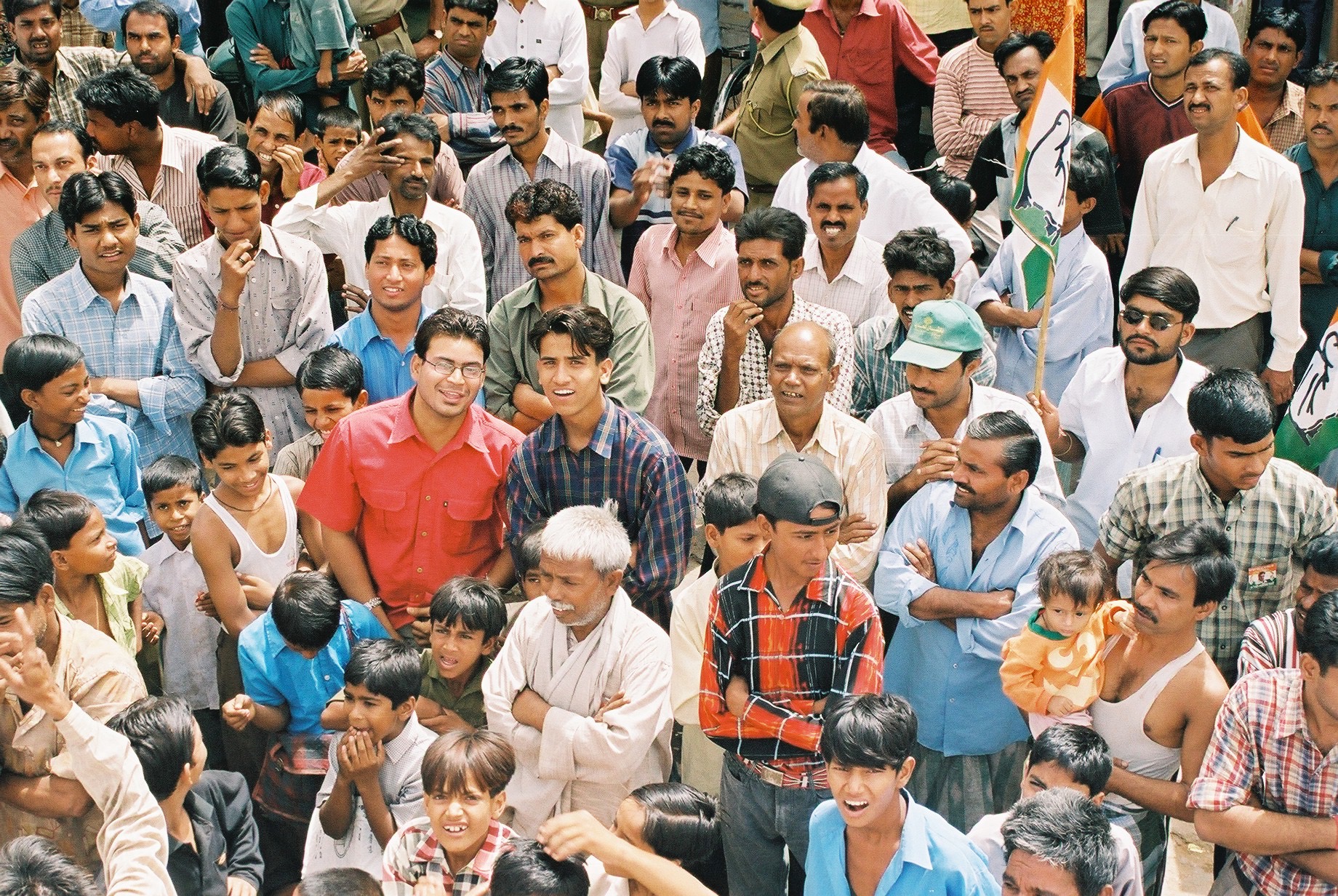
The candidate arrived about 7:40 a.m., and by 8:00 he had given his speech and started a small riot in the market. The crowd that gathered during his speech had been completely passive, almost indifferent to what was being said, but at the end of the speech some aides brought out boxes of sweets. When the first sweet was handed to a woman in the front of the audience, the impassive crowd suddenly turned violent, surging forward as if on command. Elbows dug into rib cages. Shirts were ripped. People were shoved to the ground. The noise of the market was now drowned out by the yelling of people desperately groping for a single piece of candy. The aides tossed the boxes of sweets into the air over the crowd and hastily retreated. I don’t know whether the sweets actually ended up in anyone’s mouth, or whether anyone ended up getting hurt. I didn’t get the chance to find out. My friend grabbed my elbow, pulling me off the stage.
After successfully disrupting the daily routine of the market, it was off to a march and rally through the heart of downtown Jaipur. As I trailed behind the candidate I learned that a successful mobile political rally in India must include four things: 1) the previously mentioned “propaganda truck,” brightly decorated, and spewing party slogans through loudspeakers, 2) a group of school children with a sweet song to sing and rose petals to throw (if the kids can be in uniforms, they earn extra points on the “adorable scale”), 3) a memorable stunt of some kind that can be pictured in the newspaper, i.e. milking a cow, and 4) a passionate group of youths who can wave flags and chant nonstop for the entire three-hour walk. Combine these elements and a crowd of hundreds is guaranteed to have developed by the time a candidate has reached the platform where he will give his speech.
Some lovely school children who literally showered the candidate with rose petals. I’m sure it was purely their own initiative.
After walking in the intense Indian heat for over an hour, enough time for everyone to have giant sweat stains under their arms, we finally reached the platform. Some of the party leaders invited me to stand with them, and although standing on the stage put me a little closer to the campaign than I had wanted, I thought back to the small riot we had started in the marketplace earlier that morning and decided it was definitely better to be above the large crowd.
The candidate finished his speech and the cheering crowd parted to allow him to walk to one of the propaganda trucks and climb on top, where there was a microphone hooked up to the truck’s loudspeakers. One of the party leaders turned and asked me if I wanted to go on top of the truck too. I definitely did not want to go on top of the truck. I was there to research a campaign, not endorse the man. I thought it somewhat unethical, not to mention awkward, to stand with him on the truck.
I was explaining my feelings on the matter when I heard the candidate say “America” in the midst of a bunch of Hindi I didn’t understand. Hundreds of people simultaneously turned and looked at me. Well, so much for non-participatory observation. In a quick analysis of the situation I decided it might not be wise to insult the candidate in front of 300 of his supporters. My decision was helped by a path suddenly clearing in the middle of the sea of people and two leaders taking my elbows and propelling me to the ladder on the truck. With many reservations, I climbed onto to the truck’s roof and stood next to the candidate.
We drove around to the point I had absolutely no idea where I was. I admit to second guessing my earlier decision making at that point.
We spent the rest of the afternoon riding around stopping in every new neighborhood for the candidate to make a speech. The lack of seat belt, roof, walls or anything else designed to keep those of on top of the truck from falling off made it difficult for me to take notes. I spent most of the drive clutching the single, skinny guardrail that ran around the edge of the roof. I didn’t know where I was. I didn’t know anyone else in the truck. I didn’t know how I was getting back home. I was grateful to the candidate for letting me tag along but I found myself thinking it might have been better to research a topic that kept me in a library on solid ground.
Fortunately, I made it off the truck, with only one awkward moment right at the end when a party leader asked if I would say a few words about the candidate into the microphone. At first I thought he was kidding but he pulled out a piece of paper with a few sentences written in Hindi and told me he would teach me exactly what to say. I had started the day as an impartial observer and ended the day being asked to give a public endorsement over the loudspeakers. I was not about to support a perfect stranger or give a statement I didn’t even understand. At the risk of offending my hosts, I politely declined and climbed off the truck at the next stop.
While the campaigns I observed in India were similar in many ways to U.S. political campaigns, they were ultimately, unmistakably Indian. There were the superficial differences: the garlands, turbans, saffron and green banners, the traditional white dress worn by male candidates and the saris worn by women candidates. On a deeper level, the wide variety of political parties vying for power reflects the wide variety of ethnicities, religions and linguistic groups that all live within the world’s largest democracy. A three-hour walking tour is the only way to reach a constituency that does not own televisions or radios. While India currently celebrates its technological advances, I believe its greatest achievement is bringing democracy to one billion citizens—democracy that is delivered when necessary by cycle rickshaw.
I recently asked my husband what his favorite books were as a kid and without hesitation he said “O Gênio do Crime.” He couldn’t remember the author’s name, but he remembered in detail an ingenious system the kid detectives invented to tail a very tricky criminal. My husband remembered this book instantly after forty years, and it wasn’t about ancient Rome.
I had to read it.
Writing a story that stays with a child for the rest of their lives, that’s the dream for children’s authors. João Carlos Marinho solidified his place among Brazil’s greatest children’s writers with the 1969 publication of O Gênio do Crime. It became an instant bestseller and is currently #49 on Amazon Brazil’s fiction list.
Before I go on, I regret to say that I can’t find an English or Spanish translation. A fluent Spanish speaker would have no problem reading the Portuguese text, but as far I can discover, there’s no way for a non-Portuguese speaker to read the 49th most popular book in Brazil. Which is a shame.
The kids of São Paulo are on the verge of an uprising when the company manufacturing soccer trading cards stops awarding prizes for collecting because of counterfeit cards being mass produced in the city. (It’s possibly the most Brazilian crime ever.) The police have yet to find this “gênio do crime” (genius of crime), but Edmundo, Pituca, and Bolachão are determined to succeed where the police have failed and ensure the kids of Sao Paulo can continue collecting cards and prizes.
It’s a thrilling adventure for three friends that takes them on chases and stake outs and even undercover as they try to discover the location of the illegal factory. The method the kids invent to follow one of street sellers, which my husband remember forty years later, is brilliant and how fun is it to read about kids outsmarting the grown-up criminals.
But I don’t know if I want my daughter to read it for one simple reason, epic fat shaming.
I know ever book is a product of the time and place it was written. I know that a group of ten-year old boys communicate and express friendship differently than a group of ten year old girls. I still cringed repeatedly throughout the book.
Bolachão is overweight, and his friends never let him forget it. The tease him relentlessly even after Bolachão asks them to stop. He’s repeatedly referred to by the omniscient narrator as “o gordo”, which I’d translate as fatty. The character is defined primarily by his size and then by his intelligence, because Bolachão is the genius of the group and the one who solves the mystery. But the reader doesn’t know how smart he’s until about six chapters into the book. Whereas his weight is made clear from the first sentence.
I talked to my husband about it. As I did not grow up a boy in Brazil, I was curious how close the the friend’s banter was to reality. Very close is what he told. Pretty mild actually. There’s a saying in Rio, “The only people never booed in Maracanã (the soccer stadium) are the Pope and Frank Sintra.” Meaning those “super friendly” Brazilians the world hears about can be harsh. According to my husband, boys and men tease mercilessly. It doesn’t matter who you are, as nobody is perfect, your friends will find that not perfect thing about you and never let you forget it, but you’re expected to give it back to them. If you don’t tease or get teased, then you aren’t among personal friends.
Ok. I get that. However, Bolachão is harassed to a much greater extent the either of the other boys. Even the adults refer to him as “Fatty”. It’s pretty clear that for the characters being overweight is a far more serious offense the any other flaw. And haven’t we learned more about the psychology of kids and come to understand behavior that was commonplace even twenty years ago is in fact really damaging and standards for behavior should be changed?
Does that mean we never read books written in different eras or cultures because they might offend us? Do I deny a father-daughter bonding moment by forbidding my husband to share one of his favorite childhood books with her? When everyone else her age has read it because it’s the 49th most popular in Brazil, do I tell her no?
So the simple review I wanted to write about a famous Brazilian kid’s book has turned into a complex analysis of how to judge a book written in a different time and culture when it is very problematic by my personal standards.
The one thing I’m sure about is that I would NOT give this book to a child struggling with body image. Nope. Not under any circumstances. The fat shaming in this book is intense, and while it’s a fun story, I wouldn’t consider it required reading.
As for our home, and this could change because I’m still in the midst of an active internal debate, I’ll apply the same policy for reading Huck Finn. When she’s old enough, I’ll read it with her and we’ll talk about it. I think it’s important for kids to know how people acted in the past and compare it to today, but this requires an adult to lead the discussion.
What do you think? Have you read O Gênio do Crime? How do you feel about popular older books that are problematic by today’s standards? Like I said, it’s something I’m thinking about and would love to hear other opinions.
This is a flashback to my first published essay! It appeared in 2007 in the now defunct digital magazine Glimpse, a National Geographic Imprint. It’s about the first day of my study abroad program in Rabat, Morocco in Sepetember, 2003. I’m feeling very old now.
A Random Street in Rabat
It did not take me long after announcing my study abroad plans to realize that “abroad” for most of the people I knew meant Western Europe or Australia. Any other country was not so much abroad as another planet. The first time I mentioned Morocco to family or friends there was usually a momentary pause as people first, tried to place Morocco on a map, and second tried to figure out why I wanted to spend a significant amount of time there. Australia they could understand. It has beaches and people with funny accents. Italy has pasta and Prada. The only thing Morocco has is a city named after a Humphrey Bogart film.
While many people didn’t know what countries Morocco borders they did know it is Islamic and predominantly Arab. This was cause for concern among friends and family. Being what one of my professors calls a “good liberal” I believed I was above the negative generalizations many of my friends and family made. When my less open-minded family and friends living sheltered lives in Georgia, asked why I would want to study in a country where I was likely to get assaulted simply for being American, I’d give an exasperated sigh and patiently (maybe ever so condescendingly) explain that “all Arabs are not terrorists and they do not spend their afternoons looking for Americans to beat with sticks.” I scolded my friends for being so ethnocentric as to believe Arabs were inherently more violent than Americans. I prided myself on avoiding the negative stereotyping of Arabs and Muslims many of my friends and family engaged in and as an open-minded, good, liberal, university student I arrived in Casablanca with my program group on September 2, 2003.
On September 3, I found myself all alone, completely lost, standing on a street corner in Rabat. That was the day of the Drop Off–the morning our program directors piled all 22 students on a bus, drove us around Rabat until we had no directional bearings whatsoever, and dropped us off one by one on random street corners throughout the city. Our first full day in Morocco and each of us was left stranded on a different street corner with no maps, no cell phones, and no idea how to even pronounce the street our hotel was on. The only thing we had was an assignment. Get back to the hotel by 1 o’clock. Welcome to Morocco and good luck.
As the bus pulled away it kicked up a huge cloud of dust, which settled adding to the already thick layer on the cars parked along the curb. Across the street was a clay wall, stretching as far as I could see in both directions. “Where am I?!” Panic is an interesting sensation and watching the bus pull away with the teachers and students I was convinced I would never see again, I got to experience heart-pounding, adrenaline-pumping, rational-thought-inhibiting, panic.
As I frantically looked around I noticed one opening in the wall flanked by two heavily armed Moroccan soldiers. I had heard stories about corrupt police officers in developing countries, about the actions of local military around the world who were supposed to be protecting refugees in various places, and decided the best direction to start walking would be away from the men with guns, uniform or no uniform. It would be much later before I realized this was my first decision in Morocco based entirely on a stereotype.
I walked down a few residential streets, which were of course deserted. Where were all those people I had seen out on the streets the day before? Where were the market streets I glimpsed through the bus windows bustling with people and literally humming with energy? I was desperate to find a person, and it appeared I had been dropped off on the only street in Rabat where no one was selling anything. I wanted to find people, and I wanted to find them before the band of angry Islamic fundamentalists rounded the corner and stoned me.
Yes, that was one of the many thoughts running through my head as I tried to keep myself together. Despite all my boasting about being above the negative stereotyping of Arabs many friends and family engaged in, as I stood on the sidewalk of an unknown street somewhere in Rabat, I was genuinely afraid I was going to be harassed, beaten, or worse by those “fanatical Arabs.” So much for being a good liberal who doesn’t stereotype. I was alone, in a completely foreign country, with no knowledge of the language, or the culture, or where in God’s name my hotel was–and in that panic I embraced the most negative, racist stereotypes that had ever been presented in Western media. I wanted to go back to the time when being liberal meant eating vegan chocolate cake and discussing Said’s definition of orientalism on the quad of my $34,000 a year university in Northwest Washington, DC. While I walked, my mind kept repeating, “What am I doing here? I’m a white girl from Snellville, Georgia USA, where all the teenagers wear ‘what would Jesus do?’ bracelets. Why didn’t I study abroad in London with all of my friends?”
After what seemed like forever, but of course in these situations is really only a minute or two, I found a street with stores, cafes and, most importantly, a group of women standing on a corner not far in front of me. I walked up to them and steeled myself for all the anti-American sentiment I was certain would come spewing forth. Then a funny thing happened. When I said the name of the main road near our hotel all the women started smiling and pointing. One woman in what looked like a long brown nightshirt (I later learned it is called a djellabah) and a cream hijab, took my elbow and guided me down the street so I could see where she was pointing. The others followed all smiling and telling me the way.
Visiting the beaches of Rabat with my homestay family! My little brother and sister for four months.
Unfortunately they were telling me in Arabic of which I knew not one word. I did, however, get the general direction, and I started walking that way. As I walked, it occurred to me the women had been nice. They had been helpful. Nobody had given me a mean look or angry gesture. They had read my body language, figured out I was lost, and pointed me in the right direction. I began thinking, “Maybe other people I meet would be nice too? Maybe I’ll get back to the hotel alive?” Things were looking up.
I approached a young couple walking down the street and they stopped and gave me very detailed directions in French smiling the entire time. It took about three sentences from the couple for me to realize that I had seriously overestimated my French skills on my program application, but I understood enough to get turned down the right street. I was getting closer and I had talked to two groups of people who had been more than happy to help me. The panic was slowly being replaced by a sense of confidence and a sneaking suspicion nobody was going to kill me along the way.
Finally, while I was standing on a corner with my facial expressions screaming, “I am totally lost,” a young man came up and asked politely in French if he could help. I explained that I was looking for my hotel and that I didn’t speak French all that well. He smiled and said slowly that he knew where the hotel was, it wasn’t far and he would walk me to it. And that is exactly what he did. I don’t where he had been going or what his afternoon plans had been, but this man took twenty minutes out of his day to walk some random and confused foreigner to the door of her hotel. I was grateful and shocked by how generous this man had been with his time.
As pleasantly surprising as this man’s generosity had been it was not the biggest surprise of the day. I was struck to the core when I walked into the hotel’s lobby and saw it was filled with students and all the Moroccans who had taken the time to help each of us find our way back. As we breathlessly shared our stories at increasing levels of volume, it became evident that every student made it back to the hotel through the generosity of complete strangers who were willing to take time out of their day to help another person. We had not experienced any kind of anti-American sentiment; in fact most of us had gotten incredibly positive reactions toward Americans. I hadn’t come across a flag or Bush effigy burning in the street. I had been in Morocco one full day and I had already had an exciting and liberating adventure, which introduced to many touchingly generous people and brought me face to face with my own hidden stereotypes.
When the rush of having successfully followed someone who knew exactly where he was going began to ebb I was forced to face the humbling fact of how quickly, and without any good reason, I had thought the worst of all the people around me. It turned out, after all my pre-departure pontificating I had at some point internalized the same negative stereotypes of Arab Muslims I was consciously trying to avoid. I knew the first step to ridding myself of these stereotypes was admitting I had them in the first place.
The program staff was amazing!!!
Recognizing and then confronting stereotypes is one of the most difficult parts of traveling to another country and it seems unfair that a person should be forced to do this while jet-lagged, sleep-deprived, and trying not to get lost every time she ventures out of her hotel, this last one being especially difficult when the street signs are written in a different alphabet. Unfortunately, travelers have no choice because it usually only takes landing at the airport to realize just how far off your preconceptions were. Failing to identify your own stereotypes and the information that led to their creation will be the cause of hair-pulling frustration and anger at the people for not being exactly the way you had imagined them in your head. While tenaciously clinging to stereotypes, particularly if they are negative, will also blind a person to the wonderful and fascinating realities and practices of any culture. Recognizing stereotypes for what they are, imagined realities based on limited information, and preparing yourself to leave them behind as you learn and observe the reality from within the culture, are essential in order to make the transition into a new culture.
This picture has nothing to do with the article except that it was taken during my semester in Morocco. I just wanted to share it.
Today is a Throwback Thursday post. I was cleaning out old files and discovered this essay I wrote about a memorable lunch with my homestay family while volunteering in Croatia during the summer of 2003. I wrote it in 2007 for a contest at a now defunct magazine. It was one of the first pieces of creative non-fiction I ever wrote and thought it would be fun to share because the question raised are some I still ask myself daily living in Brazil. (Also, this past week was Carnaval, so I haven’t had time to write anything new.)
A Different Part of the Pig
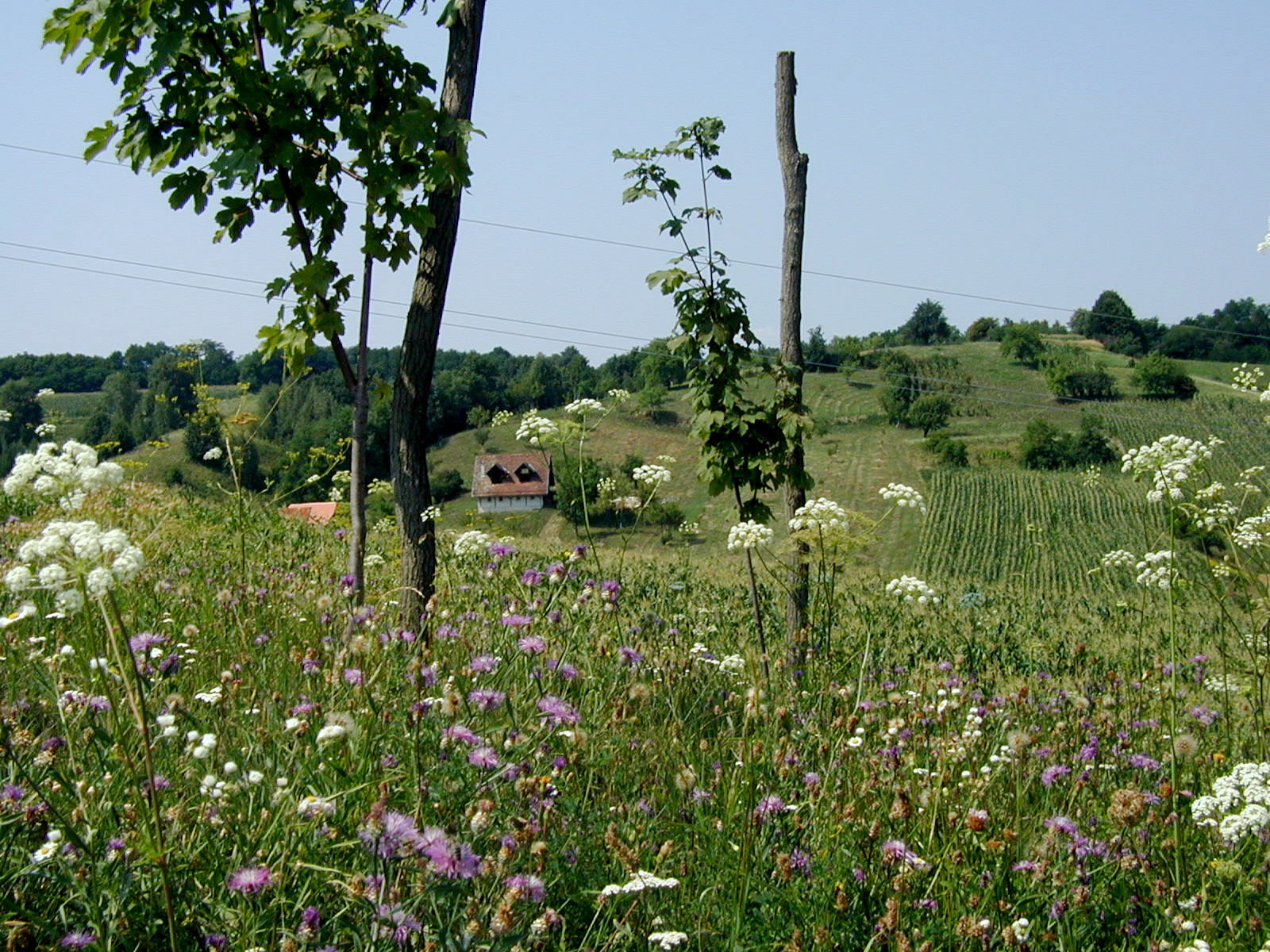
Koprivnica, Croatia
It was with something less than enthusiasm that I sat down for lunch next to my host sister. I had never quite understood what indigestion was, but after three weeks of eating plates of fried meat swimming in its own fat, I could now write an epic poem to its effects. Unfortunately, the small little village of Zdala, Croatia, where I was teaching, had only 600 people and no CVS with shelves of antacids to choose from. So, while I was thoroughly enjoying the rewards and challenges of teaching English to the local kids, the prospect of three more weeks of potatoes, bread and meat drowned in liquid fat made each meal a bit of a trial.
Zdala, Croatia
I was staying in Zdala with a generous family who had volunteered to house me while I was teaching. They weren’t receiving any kind of money or stipend for their trouble. I also knew from my walks around the village with my host sisters that no family in the village had resources to waste. Every house in Zdala had its own small farm and animals that supplied the staples for each meal. Knowing this, I couldn’t refuse to accept their generosity, even if it made my stomach feel like a beach ball blown up to the point of bursting. What would my host family think if I turned down the large helping of meat specially prepared for me and asked for a cucumber instead?
My adorable homestay sister
As I looked at the table that afternoon, it looked pretty much like every other lunch. Potatoes and onions, bread (which was homemade, amazing, and the one thing I was never sorry to see) and a large dish of meat stacked in the center of a shinning pool of grease. But there was something different on the meat this day. It was placed directly on top of the meat, like the star on a Christmas tree. A grayish, jiggly star. Oh no. I looked at my host mother and grandmother on the opposite side of the table. There was no way I could discreetly ask my host sister what it was that jiggled at the top of the meat tower. And I knew as the guest, I was going to be offered the first helping.
These amazing kids chose to attend English classes during their summer vacation!
That summer in Croatia was my first time living abroad, and the first time I had ever lived with a family other than my own. I was desperate to make a good impression. I wanted them to like me and not write me off as one of the arrogant Americans I had heard the cousin talk about. But I do not eat food that jiggles. I have had a lifelong no-jiggly-food policy. I believe that orange Jell-O is the worst food ever invented. I was sure my family would offer the jiggly thing to me, and I wasn’t sure I could tactfully refuse it on the grounds that it jiggled.
I was still staring at this piece of grayish, jiggly matter when Granny spooned it out and sure enough, offered it in my direction. I looked down at the offered spoon and saw them, two slits in the flat top of the fat. Oh God! It was a nose. I was being offered a pig’s nose. I looked across the table at Granny. Here was a sweet old woman, smiling kindly and holding out a large spoon with a pig’s nose nestled in it. I didn’t know whether to laugh or throw up.
Coming face to face—or, more accurately, face to nose—with a pig nose in a spoon, I knew it could be considered hypocritical to eat some parts of the pig but be repulsed by others. I was clearly the only one there who found a pig’s nose on the table unusual. I didn’t want to seem rude. I had come on my first trip abroad prepared to try new things. I was ready to be open-minded, but apparently not open-mouthed. I knew my family couldn’t afford to waste any part of the animal, but I couldn’t eat the nose. I wanted to adapt to Croatian culture, but I couldn’t deny who I was either. What level of discomfort was I supposed to be willing to accept in order to avoid offending my hosts? Where should I, or could I, draw the line?
As it turned out, I didn’t have to answer those questions on that day. My hesitation (and possibly the shade of green on my face) had tipped off my host family that I was not accustomed to eating this particular part of the pig. They started laughing, and my sister said I didn’t have to eat it if I didn’t want to. She didn’t like pig noses, either. But Granny loved them. And with that, Granny put the nose on her plate, scooped it up with her own spoon, and slurped it into her mouth. I knew I would never see Granny in the same way after that.
My family enjoyed teasing me with other animal parts over the next weeks, like a chicken beak in the soup. I was so thrilled they didn’t think I was rude that I didn’t even protest when a chicken’s foot was placed right on the middle of my plate. In retrospect, I could have saved myself some panic if I had just explained that where I come from, we don’t eat noses. After all, the family didn’t want me eating or doing anything I felt uncomfortable with.
I still struggle with the question of how far I should go in adapting to different cultures. There is a balance. I could not have expected my host family to provide me the exact same foods I had at home. It was impossible to make Zdala like home. Living in another country means being uncomfortable and trying things that are often scary. But at the same time, I cannot reject my own culture and my own feelings. How far should I go? Where do I draw the line? It changes. I haven’t found the balance yet. I do have one line that doesn’t move though. It’s just in front of the pig’s nose.
Hip, hip, hooray! Hip, hip…Dear god, I’m never doing another Kickstarter campaign again. I wasn’t even in charge of the thing. Our editor put in a billion more hours organizing and promoting the thing, but I still felt like a used car salesman begging people to donate their hard earned money and time on my words. Who am I kidding? How am I ever going to promote and sell my own books if I can’t promote a collaborative work on Kickstarter on my Facebook? Even if I get published I’m never going to sell a single book. Never! My promotional posts will read “If you don’t mind and happen to enjoy this particular type of book and maybe have ten extra dollars to spare I would greatly appreciate it if you wouldn’t mind buying my book and if you really, really liked it then perhaps tell a friend about it. If you have the time and it won’t be a huge inconvenience. That would be really great. Thanks so much. (And if you’re not into YA or not a huge reader I totally understand. No hard feelings.)” I’m never going to sell a single book. But how can I be an author if can’t ask people to buy my book? Aaaaaagh!
This one young tourist is feelin’ good after visiting Sugar Loaf and Praia Vermelha!So cute!!!
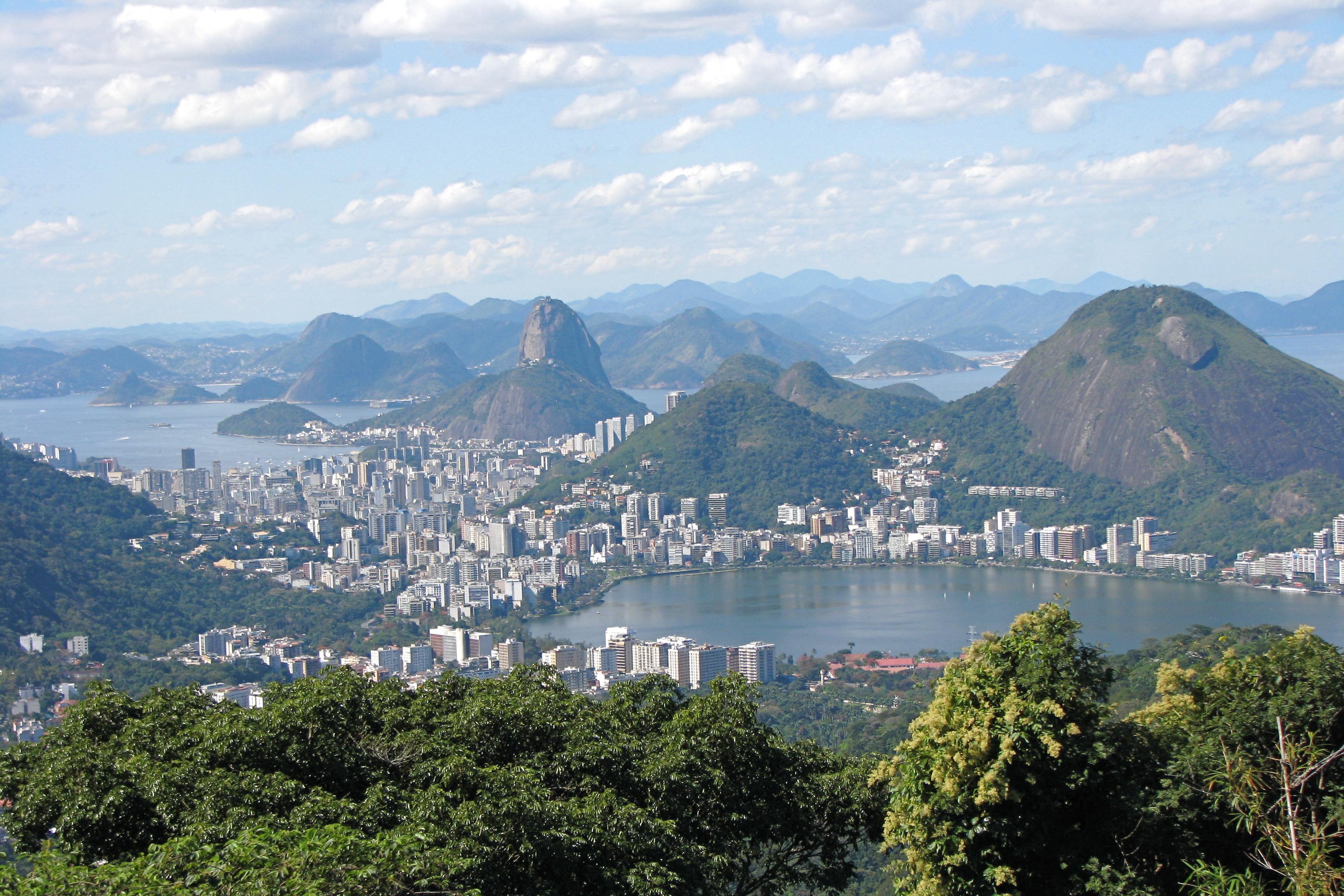
11. Sugar Loaf or Pão de Açucar in Portuguese but that ão sound is crazy hard to make, so I think visitors to Brazil can be forgiven for using Sugar Loaf. In my opinion if you have a choice between Christ the Redeemer on Corcovado or Sugar Loaf, pick Sugar Loaf. The most crowded day I’ve been on Sugar Loaf involved 50% fewer people than my most crowded trip up Corcovado. (And let’s assume any day sightseeing during the Olympics will be in contention for “most crowded”.) Both sites have amazing views of Rio, but Sugar Loaf and Morro da Urca (the smaller mountain next to Sugar Loaf) have more space to wander around the forest, including a trail that wraps around the bottom of Morro da Urca and offers a great chance of seeing micos (the little marmosets you might remember from the movie Rio), blue butterflies, and all kinds of birds and other local animals. Yay, micos! Then you stop and have lunch at Praia Vermelha (Red Beach). That is a great morning!
It’s those same tourists again. This time visiting Praça XV in front of the Paço Imperial.
12. Arco do Teles You can go back to colonial Rio by walking around this street off of the square Praça XV. I recommend going for lunch and grabbing a prato feito, a daily set menu that usually includes a choice of meat, rice, beans, french fries, and salad. Then go back across the square to Arlequim, a fabulous music & book inside the Paço Imperial, the former Imperial Palace. The store is a great place to pick up books and music from Brazil and grab a coffee and dessert.
13. Walk Along Copacabana Pretty self explanatory. The rules for beach going apply. Wear your shorts, tshirt and flip flops, bringing a little cash tucked away. Work out attire is fine too. The sidewalk will be full of people jogging and riding bikes. Grab a coconut to drink and stop and watch a game of footvolley. It’s volleyball played with your feet and it’s awesome.
14. Confeitaria Columbo Oh man, go to the downtown (Centro) location late in the afternoon after you’ve spent the day walking and feel you deserve a generous reward. Confeitaria Columbo is a gorgeous Belle epoque cafe and both the decor and dessert are amazing. They do offer meals and salty snacks, but you’ll regret that choice when you see the desserts being delivered to other tables. I recommend the rabanada, a Brazilian version of french toast, or anything else on the menu honestly.
15. Juice Crawl A staple of Rio is restaurants and kiosks specializing in fruit juice. The variety of fruit available to be freshly squeezed is astonishing and I can promise, no matter how hard you try, you will not be able to try juice from every fruit on the menu. My cousin made the most valiant effort I’ve ever seen, and even after consuming 2.5 liters of liquid during a walk from Leblon to Ipanema, she’d not tasted a quarter of the fruits on the menus.
16. Jardim Botanico A beautiful Botanical Garden that offers a welcome chance to slow down and enjoy the tropical flora and fauna of Rio, including Tucans and parrots. There are beautiful plants there too, but I’m more of animal person. I remember the snack area having some super friendly stray cats, which my husband was a lot less thrilled about.
Two American tourists enjoying their informative yet enjoyable audio guides! Their big sister definitely did not order them to smile for this picture.
17. Museu Histórico NacionalIf you like history or would just like to know something about Brazil other than it’s affinity for soccer and barbecue, visit the National History Museum. They have guided audio tours in a variety languages. You can hear Dom Pedro’s famous speech when he refused to to return to the Court of Portugal and declared himself emperor of an independent Brazil or learn about Princess Isabel who finally ended slavery in Brazil in 1894.
18. Churrasco If you eat beef, you need to do so while in Brazil. Find a churrasco. Just type “churrasco Rio de Janeiro” into Google. They’ll probably be one within two blocks of wherever you’re standing. Brazilian know how to cook meat and they cook every part of the cow. Go for lunch and then plan on laying down for the rest of the day.
19. Watch Some Capoeira I’m sure there will be groups playing capoeira in the parks and beaches during the Olympics. With the exception of açaí, I don’t think there is a more uniquely Brazilian export. Capoeira is a Brazilian martial practiced to music and dance. I wrote a post explaining the history and practice of capoeira. For now, I’ll just say if you see a circle of people wearing white, singing and clapping, while two people dance around each other in the middle, stop and watch for a few minutes.
20. Beer, Snacks, and a Lovely View at Bar Urca This is a more personal recommendation. Back in our childless Rio days, my husband and I lived very close to the Urca neighborhood, which sits just on the inside of Guanarbara in the shadow of Sugar Loaf. The neighborhood is quiet with beautiful houses and a magnificent view of the bay and Rio. Bar Urca is just across the street from the water. Late afternoon you should go grab a beer or soda, a basket of pasteis, take them to the stone wall overlooking the water, and enjoy the view and company. You won’t regret it.
That’s it. I’m out of suggestions and advice. There are of course so many more things to do and ways to get into trouble than I’ve mentioned in my post. I don’t surf, so I can’t advise on best beaches for waves. I’m not a thrill seeker and have never had any desire to go hang gliding in Rio, and I’m not much of a live music in a bar person. The city of Bossa Nova is wasted on me. But Rio is known for all of these things. Rio has a lot to offer tourists than the beach and a stomach bug.
You can see from the pictures, we’ve had family of all ages visiting Rio and Brazil for years and our biggest emergency has been running out of toilet paper in the apartment. With a little planning and a few precautions, Rio de Janeiro can be an amazing experience. Just leave the passport in the room and bring the bug spray.
Last week my family and I were waiting in the citizens service area of the US Consulate in Rio de Janeiro, and I overhead a young man pouring out a pretty tragic story to the consulate staff standing opposite the bullet proof glass. He’d been robbed and had lost every single form of id, all his credit cards, and all his cash. He was left with no proof of identity whatsoever.
My husband and I cringed at the guy’s story. As a woman, I know we shouldn’t blame the victim. A person should be able to walk down any street with his house deed and gold bullion spilling out of his pockets without the threat of violence. But dude! You walked around Rio with all of your documents in your pockets? Come on!
Because I have been a recently arrived foreigner in Rio without a word of Portuguese other than Obrigada and with the Rio Olympics opening in less than week, I’ve written down some tips to help visitors survive enjoy their time in Rio. The tips are gathered from my own experience in Rio and the advice my Carioca (native of Rio de Janeiro) husband gave me when I first arrived.
Leave Your Passport in the Hotel Safe Do not walk around Rio with your passport in your back pocket. Take a driver’s license, or even better a student id, just something with a picture and name so that your body could be identified. (I’m not saying you’ll be shot. Even though Rio does have an incredibly high violent crime rate, you’re much more likely to die in a car accident or crushed by a hastily constructed bikeway.)
Carry Cash Only or 1 Credit Card at Most Every touristy area in the world has pickpockets and canceling stolen cards is a major pain. Save yourself the worry. Also, withdraw a bunch of cash at the airport (Don’t carry it all at once or in the same pocket), so you can leave your ATM card back at the hotel too.
Speaking of Cash…Always Have Small Bills Many taxi drivers will tell you they cannot break a fifty. They will swear to it on their mother’s life, and then demand you pay them with what you have. Unless you enjoy arguing in Portuguese, always have 10s and 20s on you. Small bills are also more convenient for food vendors and stalls in the markets.
Carry a Purse/Backpack But Don’t Put Your Cards or Phone In It This advice I got from my husband my first day in Rio. Many women in Rio carry dummy purses with an old wallet that has some cash. Their credit card and id are in a back pocket.
Don’t Wear A Lot of Jewelry I know. We should all be able to wear whatever we want whenever we want, but maybe while on vacation in a foreign country it’s best to accept reality as is and save showy displays of wealth for your home turf. Wearing your gold necklaces and diamond rings will not in anyway improve your trip. Leave them at home. Besides Cariocas are generally a casual beach people. If you want to blend in, you should be going around in shorts and flip flops anyway.
And if you want to Blend in…Sunscreen! The surest way to find the tourists strolling through Ipanema is to look for the pinkest people. Even though it’s winter in Brazil, last week was 80 in Rio, and the sun was intense. I know. We had to walk around downtown in direct sun with an impatient preschooler. Pack sunscreen (It will be crazy expensive in Rio) and use it.
What You Bring to the Beach: Towel, Flip Flops, and Cash Tucked in Your Bathing Suit That’s it people. You leave the hotel already in your bathing suit & cover up and carry nothing other than your towel. You can rent chairs and buy snacks on the beach. This was a huge cultural adaptation for me. I come from Atlanta, and my family’s summer trips to the beach involved a cooler, a half dozen canvas totes, and a wheelbarrow. True statement.
The Ocean is For Admiring Not Swimming At this point most people have heard about Rio’s toxic bay and surrounding waters. I do feel a bit like I’m beating a dead horse that died from a super bacteria picked up after drinking out of Guanabara Bay, and I have taken lots of pictures of children playing happily in the water at Ipanema and Leblon beaches. But those local kids have immunity that visitors don’t. If you want to take the very real risk of spending your vacation hydrating on a bathroom floor, then by all means, dive in.
Deet I recommend insect repellent with the highest level of deet that doesn’t immediately give you cancer. Mosquitoes are a problem in Rio. Any exploration around the bay or into the forests around Rio absolutely demands bug spray. You do not want dengue! Sorry…what about zika? Oh sure, zika is terrible if contracted while pregnant for its potential to pass on devastating birth defects. Dengue can straight up kill you. It did kill 843 people in Brazil last year, and this years there’s been about 9 times more dengue cases than zika. Either way, dengue or zika, you’re gonna want to use repellent.
Be Alert Don’t be the idiot that’s so focused on getting the perfect selfie you’ve failed to realize you’re group of obvious tourists is alone on the street. My husband looks over both shoulders every few seconds when walking through Rio out of habit. He’s confirmed this level of vigilance is every bit as exhausting you’d imagine, but he developed the habit after being robbed twice. Just pick a designated driver for your group. Someone who can be in charge of risk management while everyone else has a good time.
This is the most depressing list of travel advice. I realize that. But before angry Cariocas start posting in the comment stream about the foreigner who doesn’t appreciate their magnificent city, I’m going to do a second post on all the great experiences in Rio. Now that everyone knows how to stay safe, I can recommend awesome things to do with the free time not being used up with emergency trips to the consulate or hospital. Come back on Wednesday for 10 Tips to Enjoy Rio.
We were walking the streets of Rio de Janeiro yesterday when my daughter piped up “Hey, it’s Festa Junina!” I shook my head and tolld her Festa Junina was last month. She insisted and pointed to a street vendor whose stall was decorated with primary colored flags and a stereo blaring forro music. My kid was right. This vendor was still celebrating Festa Junina. My husband, a native of Rio, explained it this way. “Whatever the party, it always lasts a month longer in Rio.”
In that spirit, I thought a post about Festa Junina in July makes total sense.
Kiddo’s very first Festa Junina!
Festa Junina celebrations, which happen with varying degrees of enthusiasm throughout Brazil, can be traced back to the Pagan tradition of worshiping the summer solstice. The Catholic church then hijacked this festival by assigning June 24 to Saint John the Baptist, and Portugal brought traditional Saint John celebrations to Brazil during colonization.
This is me eating a sweet soup called Canjica. Basically, take corn, add condensed milk, cloves, and heat it up.
Over the centuries, many Festa Junina traditions and celebrations have become entirely secular and blended with other cultures and annual events that happen at this time in Brazil. For example, June is when the corn gets harvested, and about 97% of traditional Festa Junina food is corn based. Salty and sweet. Eaten off the cob and baked into cakes. In soups and as snacks. Seriously, I had no idea there were so many ways to prepare corn, and they’re all delicious.
While many places in Brazil celebrate Festa Junina on the night of June 23 with an official holiday on the 24th, in the Southeast where I’ve lived, Festa Junina parties happen any Friday or Saturday during the month of June. Or if you’re a university club in Rio, every Friday and Saturday in June.
There are fireworks, dancing, carnival games, straw hats and painted freckles (girls) or a painted moustache (boys), and usually at least one mock wedding. I haven’t read exactly how the mock weddings became a staple of Festa Junina parties, but I have a theory. Saint Anthony is considered the patron saint of marriage because he helps single women get husbands so many offerings and prayers are sent to Saint Anthony on his day, June 13. In addition to June being a time when marriage is on the brain, bringing the corn harvest to market was one of the few times people in rural areas got to meet someone they weren’t related to. Oh, and how convenient to have your wedding at the same time as the already scheduled festival! You can save tons on catering! Thus Festa Junina became a day of many weddings.
At my daughter’s school, it’s always Year 4 that stages a mass mock wedding, and this year it was finally her turn. That meant her Festa Junina costume was a wedding dress with a veil, and she LOVED it. It also meant extra time on stage because in addition to the mock wedding, all grade levels perform a quadrilha, a traditional dance done during Festa Junina but with preschoolers is really just a lot of jumping and arm waving.
In my personal opinion, the best part about Festa Junina is the food, but I feel that way about all carnivals and festivals. Any event that has portable grills and homemade sweets being set up on folding tables arranged around ring toss and fishing games is something I’d be delighted to attend.
Even the teachers dress up!When not performing mock weddings, Tio Rafa can be found coaching soccer.Is there a culture that doesn’t have fishing games at festivals?The grooms waiting for the brides to arrive
One bride is always brought in riding in a wheelbarrow. I have no idea why, but it’s super cute.


 Walking down a street in Jaipur, India, I heard what had become a familiar recorded political message blasting out over loudspeakers. The message was imploring people to vote for a particular party in the upcoming election. I turned the corner, expecting to see one of what I had affectionately termed the “propaganda trucks.” But instead of a truck, I saw a man on a cycle rickshaw that looked about ready to fall apart at the next pothole it hit. The rickshaw had two loudspeakers, duct-taped to the handlebars, and dangling wires that crisscrossed back to a stereo, which was also secured to the rickshaw with duct tape. I watched the man pedal by, the squeaking of the rickshaw drowned out by the message blasting repeatedly from the speakers. I was so moved by one of the most humble, yet dedicated, displays of democracy I had ever seen that I decided to take advantage of being in India during a parliamentary election to research local political campaigns.
 The candidate arrived about 7:40 a.m., and by 8:00 he had given his speech and started a small riot in the market. The crowd that gathered during his speech had been completely passive, almost indifferent to what was being said, but at the end of the speech some aides brought out boxes of sweets. When the first sweet was handed to a woman in the front of the audience, the impassive crowd suddenly turned violent, surging forward as if on command. Elbows dug into rib cages. Shirts were ripped. People were shoved to the ground. The noise of the market was now drowned out by the yelling of people desperately groping for a single piece of candy. The aides tossed the boxes of sweets into the air over the crowd and hastily retreated. I don’t know whether the sweets actually ended up in anyone’s mouth, or whether anyone ended up getting hurt. I didn’t get the chance to find out. My friend grabbed my elbow, pulling me off the stage.
 After successfully disrupting the daily routine of the market, it was off to a march and rally through the heart of downtown Jaipur. As I trailed behind the candidate I learned that a successful mobile political rally in India must include four things: 1) the previously mentioned “propaganda truck,” brightly decorated, and spewing party slogans through loudspeakers, 2) a group of school children with a sweet song to sing and rose petals to throw (if the kids can be in uniforms, they earn extra points on the “adorable scale”), 3) a memorable stunt of some kind that can be pictured in the newspaper, i.e. milking a cow, and 4) a passionate group of youths who can wave flags and chant nonstop for the entire three-hour walk. Combine these elements and a crowd of hundreds is guaranteed to have developed by the time a candidate has reached the platform where he will give his speech.

 While the campaigns I observed in India were similar in many ways to U.S. political campaigns, they were ultimately, unmistakably Indian. There were the superficial differences: the garlands, turbans, saffron and green banners, the traditional white dress worn by male candidates and the saris worn by women candidates. On a deeper level, the wide variety of political parties vying for power reflects the wide variety of ethnicities, religions and linguistic groups that all live within the world’s largest democracy. A three-hour walking tour is the only way to reach a constituency that does not own televisions or radios. While India currently celebrates its technological advances, I believe its greatest achievement is bringing democracy to one billion citizens—democracy that is delivered when necessary by cycle rickshaw.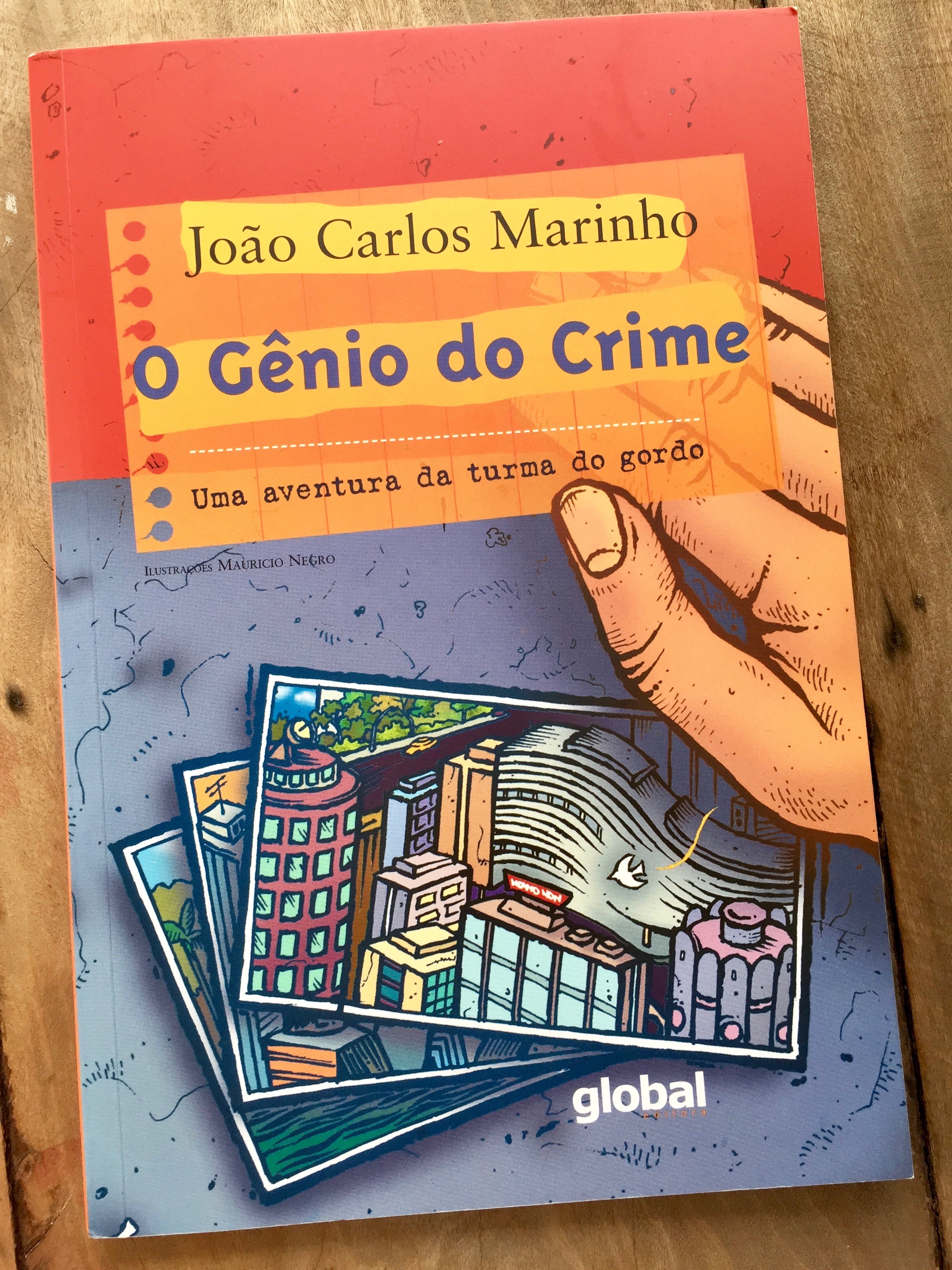
 I recently asked my husband what his favorite books were as a kid and without hesitation he said “O Gênio do Crime.” He couldn’t remember the author’s name, but he remembered in detail an ingenious system the kid detectives invented to tail a very tricky criminal. My husband remembered this book instantly after forty years, and it wasn’t about ancient Rome.
 The kids of São Paulo are on the verge of an uprising when the company manufacturing soccer trading cards stops awarding prizes for collecting because of counterfeit cards being mass produced in the city. (It’s possibly the most Brazilian crime ever.) The police have yet to find this “gênio do crime” (genius of crime), but Edmundo, Pituca, and Bolachão are determined to succeed where the police have failed and ensure the kids of Sao Paulo can continue collecting cards and prizes.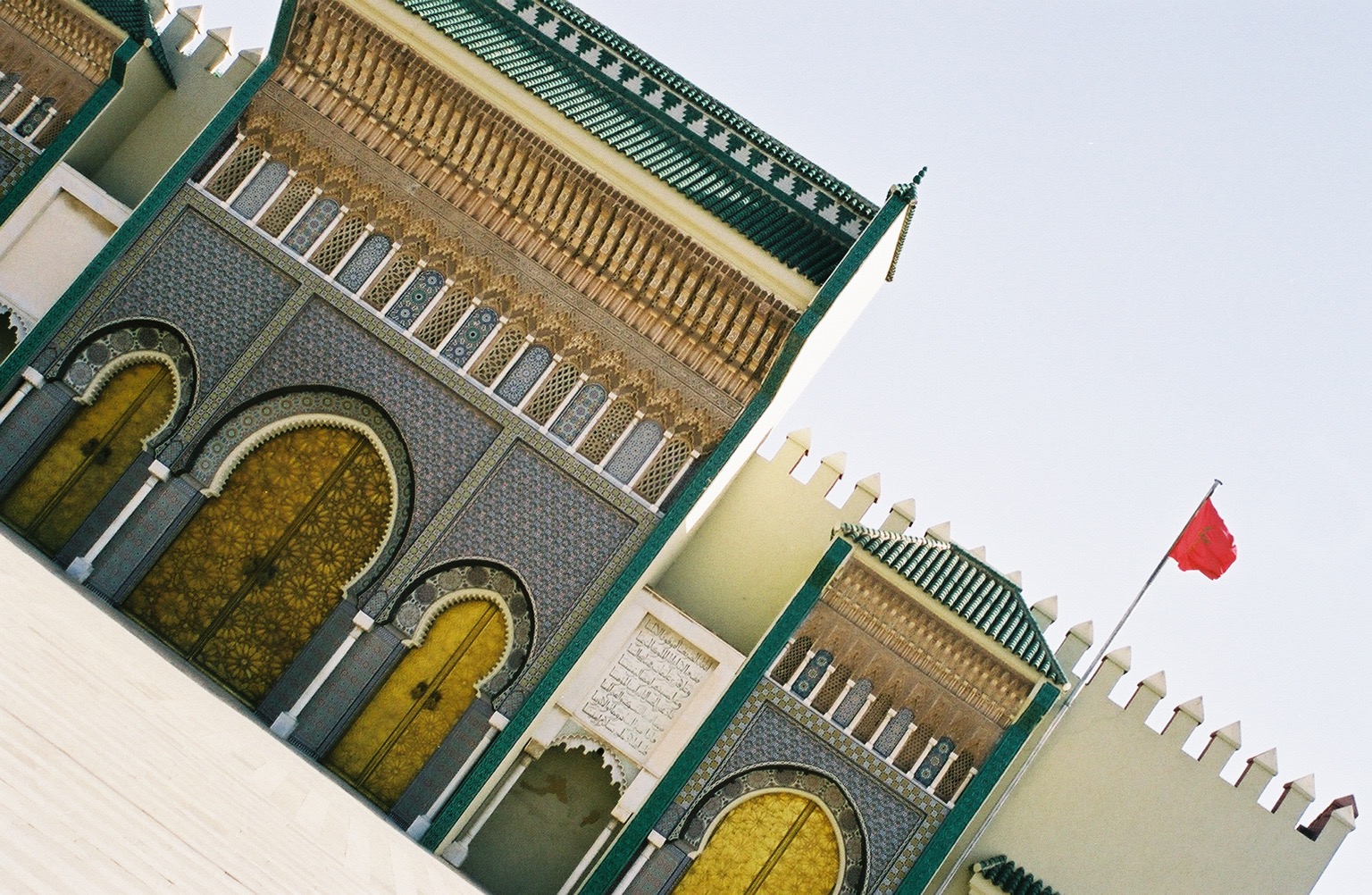
 It did not take me long after announcing my study abroad plans to realize that “abroad” for most of the people I knew meant Western Europe or Australia. Any other country was not so much abroad as another planet. The first time I mentioned Morocco to family or friends there was usually a momentary pause as people first, tried to place Morocco on a map, and second tried to figure out why I wanted to spend a significant amount of time there. Australia they could understand. It has beaches and people with funny accents. Italy has pasta and Prada. The only thing Morocco has is a city named after a Humphrey Bogart film.
 On September 3, I found myself all alone, completely lost, standing on a street corner in Rabat. That was the day of the Drop Off–the morning our program directors piled all 22 students on a bus, drove us around Rabat until we had no directional bearings whatsoever, and dropped us off one by one on random street corners throughout the city. Our first full day in Morocco and each of us was left stranded on a different street corner with no maps, no cell phones, and no idea how to even pronounce the street our hotel was on. The only thing we had was an assignment. Get back to the hotel by 1 o’clock. Welcome to Morocco and good luck.
 As I frantically looked around I noticed one opening in the wall flanked by two heavily armed Moroccan soldiers. I had heard stories about corrupt police officers in developing countries, about the actions of local military around the world who were supposed to be protecting refugees in various places, and decided the best direction to start walking would be away from the men with guns, uniform or no uniform. It would be much later before I realized this was my first decision in Morocco based entirely on a stereotype.
 Yes, that was one of the many thoughts running through my head as I tried to keep myself together. Despite all my boasting about being above the negative stereotyping of Arabs many friends and family engaged in, as I stood on the sidewalk of an unknown street somewhere in Rabat, I was genuinely afraid I was going to be harassed, beaten, or worse by those “fanatical Arabs.” So much for being a good liberal who doesn’t stereotype. I was alone, in a completely foreign country, with no knowledge of the language, or the culture, or where in God’s name my hotel was–and in that panic I embraced the most negative, racist stereotypes that had ever been presented in Western media. I wanted to go back to the time when being liberal meant eating vegan chocolate cake and discussing Said’s definition of orientalism on the quad of my $34,000 a year university in Northwest Washington, DC. While I walked, my mind kept repeating, “What am I doing here? I’m a white girl from Snellville, Georgia USA, where all the teenagers wear ‘what would Jesus do?’ bracelets. Why didn’t I study abroad in London with all of my friends?”
 As pleasantly surprising as this man’s generosity had been it was not the biggest surprise of the day. I was struck to the core when I walked into the hotel’s lobby and saw it was filled with students and all the Moroccans who had taken the time to help each of us find our way back. As we breathlessly shared our stories at increasing levels of volume, it became evident that every student made it back to the hotel through the generosity of complete strangers who were willing to take time out of their day to help another person. We had not experienced any kind of anti-American sentiment; in fact most of us had gotten incredibly positive reactions toward Americans. I hadn’t come across a flag or Bush effigy burning in the street. I had been in Morocco one full day and I had already had an exciting and liberating adventure, which introduced to many touchingly generous people and brought me face to face with my own hidden stereotypes.
 While tenaciously clinging to stereotypes, particularly if they are negative, will also blind a person to the wonderful and fascinating realities and practices of any culture. Recognizing stereotypes for what they are, imagined realities based on limited information, and preparing yourself to leave them behind as you learn and observe the reality from within the culture, are essential in order to make the transition into a new culture.



 I’m thrilled to announce that after a successful Kickstarter campaign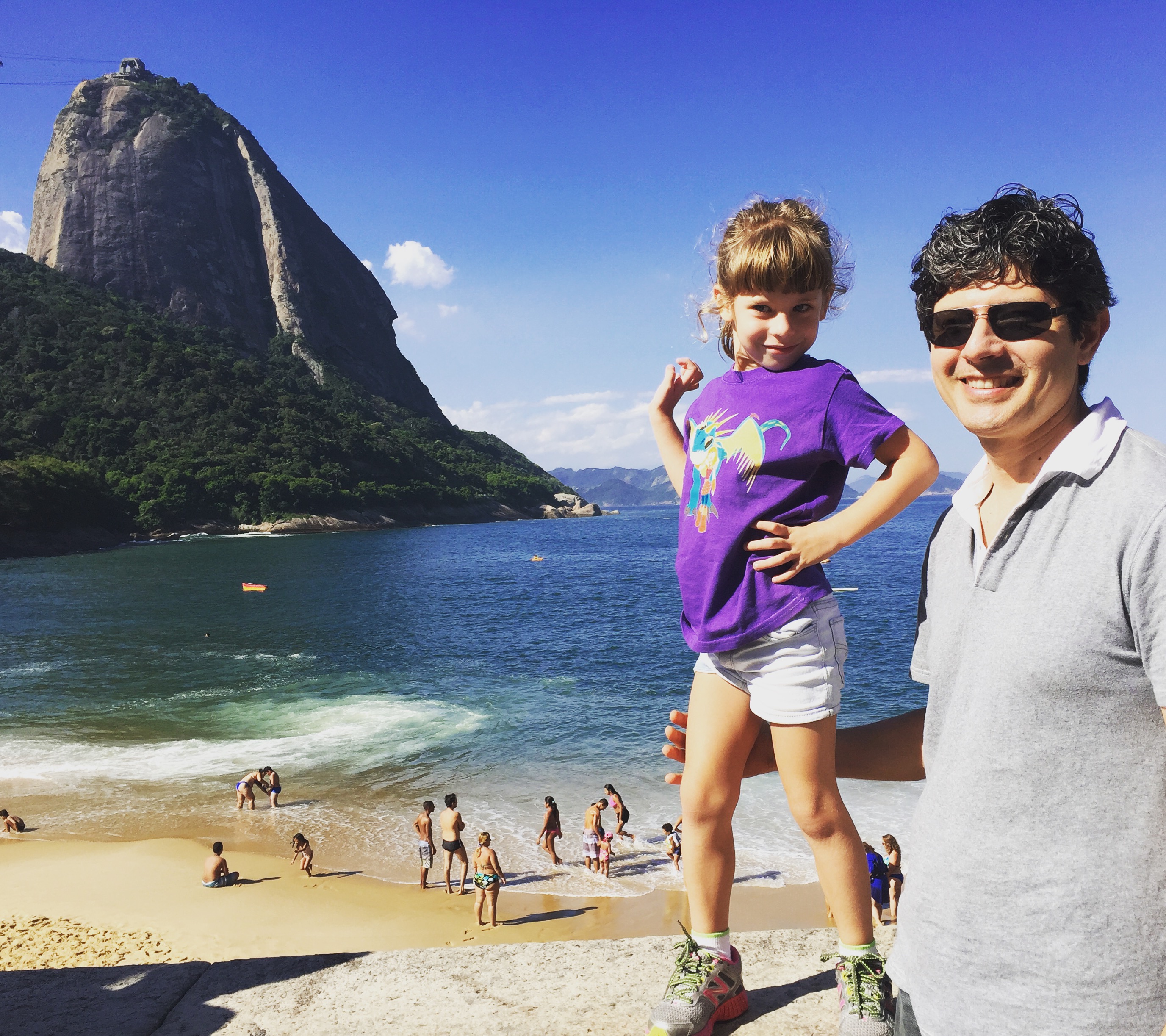
 Alright, now that we’ve covered


 13. Walk Along Copacabana Pretty self explanatory. The rules for beach going apply. Wear your shorts, tshirt and flip flops, bringing a little cash tucked away. Work out attire is fine too. The sidewalk will be full of people jogging and riding bikes. Grab a coconut to drink and stop and watch a game of footvolley. It’s volleyball played with your feet and it’s awesome.
 15. Juice Crawl A staple of Rio is restaurants and kiosks specializing in fruit juice. The variety of fruit available to be freshly squeezed is astonishing and I can promise, no matter how hard you try, you will not be able to try juice from every fruit on the menu. My cousin made the most valiant effort I’ve ever seen, and even after consuming 2.5 liters of liquid during a walk from Leblon to Ipanema, she’d not tasted a quarter of the fruits on the menus.
 16.
16. 
 18. Churrasco If you eat beef, you need to do so while in Brazil. Find a churrasco. Just type “churrasco Rio de Janeiro” into Google. They’ll probably be one within two blocks of wherever you’re standing. Brazilian know how to cook meat and they cook every part of the cow. Go for lunch and then plan on laying down for the rest of the day.
 19. Watch Some Capoeira I’m sure there will be groups playing capoeira in the parks and beaches during the Olympics. With the exception of açaí, I don’t think there is a more uniquely Brazilian export. Capoeira is a Brazilian martial practiced to music and dance. I wrote a post explaining the
  20.
20. 
 Last week my family and I were waiting in the citizens service area of the US Consulate in Rio de Janeiro, and I overhead a young man pouring out a pretty tragic story to the consulate staff standing opposite the bullet proof glass. He’d been robbed and had lost every single form of id, all his credit cards, and all his cash. He was left with no proof of identity whatsoever.
 Because I have been a recently arrived foreigner in Rio without a word of Portuguese other than Obrigada and with the Rio Olympics opening in less than week, I’ve written down some tips to help visitors
  This is the most depressing list of travel advice. I realize that. But before angry Cariocas start posting in the comment stream about the foreigner who doesn’t appreciate their magnificent city, I’m going to do a second post on all the great experiences in Rio. Now that everyone knows how to stay safe, I can recommend awesome things to do with the free time not being used up with emergency trips to the consulate or hospital. Come back on Wednesday for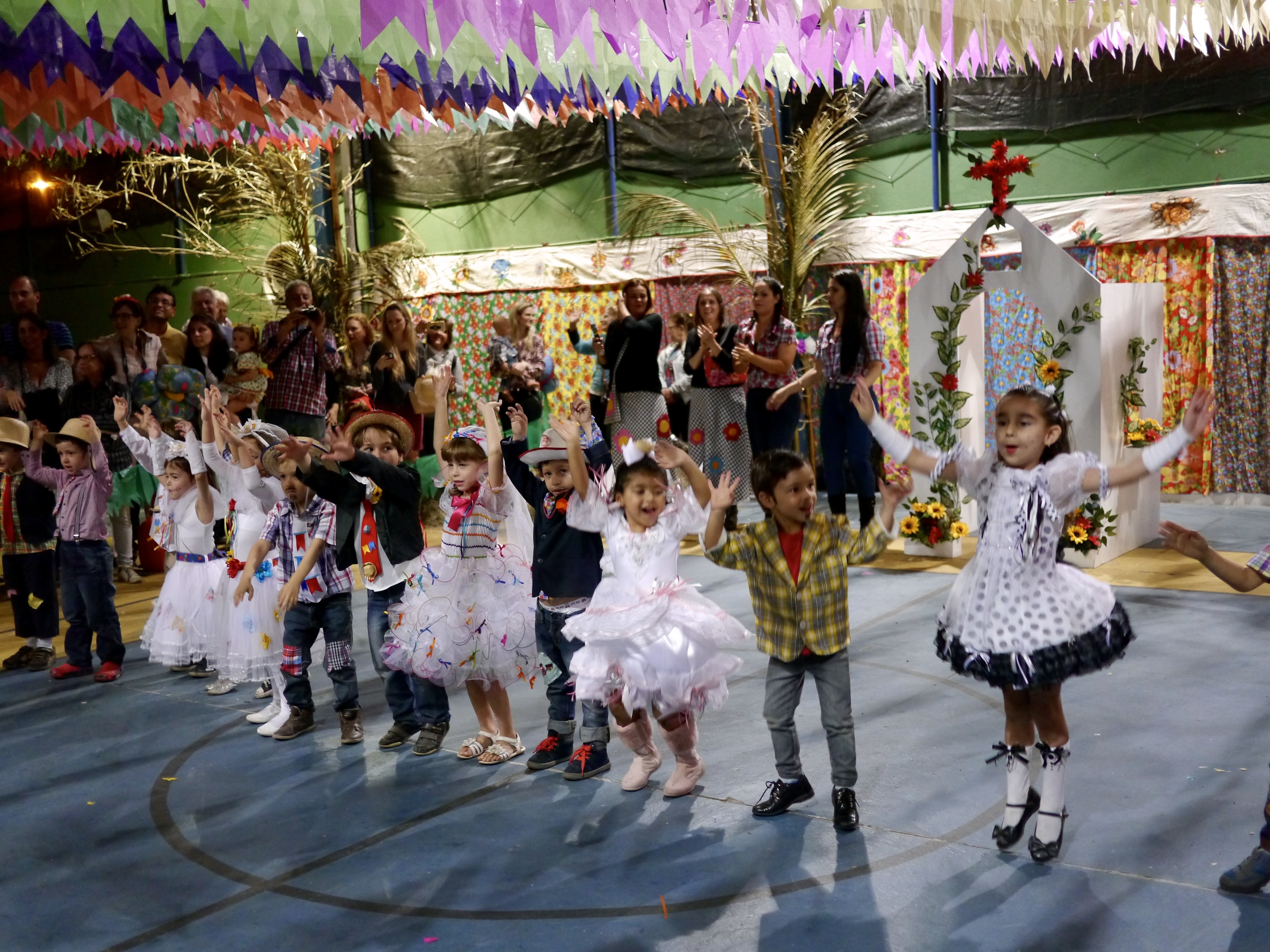
 We were walking the streets of Rio de Janeiro yesterday when my daughter piped up “Hey, it’s Festa Junina!” I shook my head and tolld her Festa Junina was last month. She insisted and pointed to a street vendor whose stall was decorated with primary colored flags and a stereo blaring forro music. My kid was right. This vendor was still celebrating Festa Junina. My husband, a native of Rio, explained it this way. “Whatever the party, it always lasts a month longer in Rio.”

 While many places in Brazil celebrate Festa Junina on the night of June 23 with an official holiday on the 24th, in the Southeast where I’ve lived, Festa Junina parties happen any Friday or Saturday during the month of June. Or if you’re a university club in Rio, every Friday and Saturday in June.
 There are fireworks, dancing, carnival games, straw hats and painted freckles (girls) or a painted moustache (boys), and usually at least one mock wedding. I haven’t read exactly how the mock weddings became a staple of Festa Junina parties, but I have a theory. Saint Anthony is considered the patron saint of marriage because he helps single women get husbands so many offerings and prayers are sent to Saint Anthony on his day, June 13. In addition to June being a time when marriage is on the brain, bringing the corn harvest to market was one of the few times people in rural areas got to meet someone they weren’t related to. Oh, and how convenient to have your wedding at the same time as the already scheduled festival! You can save tons on catering! Thus Festa Junina became a day of many weddings.
 At my daughter’s school, it’s always Year 4 that stages a mass mock wedding, and this year it was finally her turn. That meant her Festa Junina costume was a wedding dress with a veil, and she LOVED it. It also meant extra time on stage because in addition to the mock wedding, all grade levels perform a quadrilha, a traditional dance done during Festa Junina but with preschoolers is really just a lot of jumping and arm waving.
 In my personal opinion, the best part about Festa Junina is the food, but I feel that way about all carnivals and festivals. Any event that has portable grills and homemade sweets being set up on folding tables arranged around ring toss and fishing games is something I’d be delighted to attend.


