Tag: Cultural Differences

  • Brazil: Children Allowed

    Brazil: Children Allowed

    Brazil! Where children are always welcome!
    Brazil! Where children are always welcome!

    As an American, I know that taking a child to any restaurant that doesn’t have it’s menu posted on a wall and ordering her juice while she plays on your phone will get you nasty looks at the least and reported to child services at worst.  The US can be a harsh culture in which to go about the day to day activities of parenting.  I didn’t know how harsh until I moved to Brazil, and my eyes were opened.

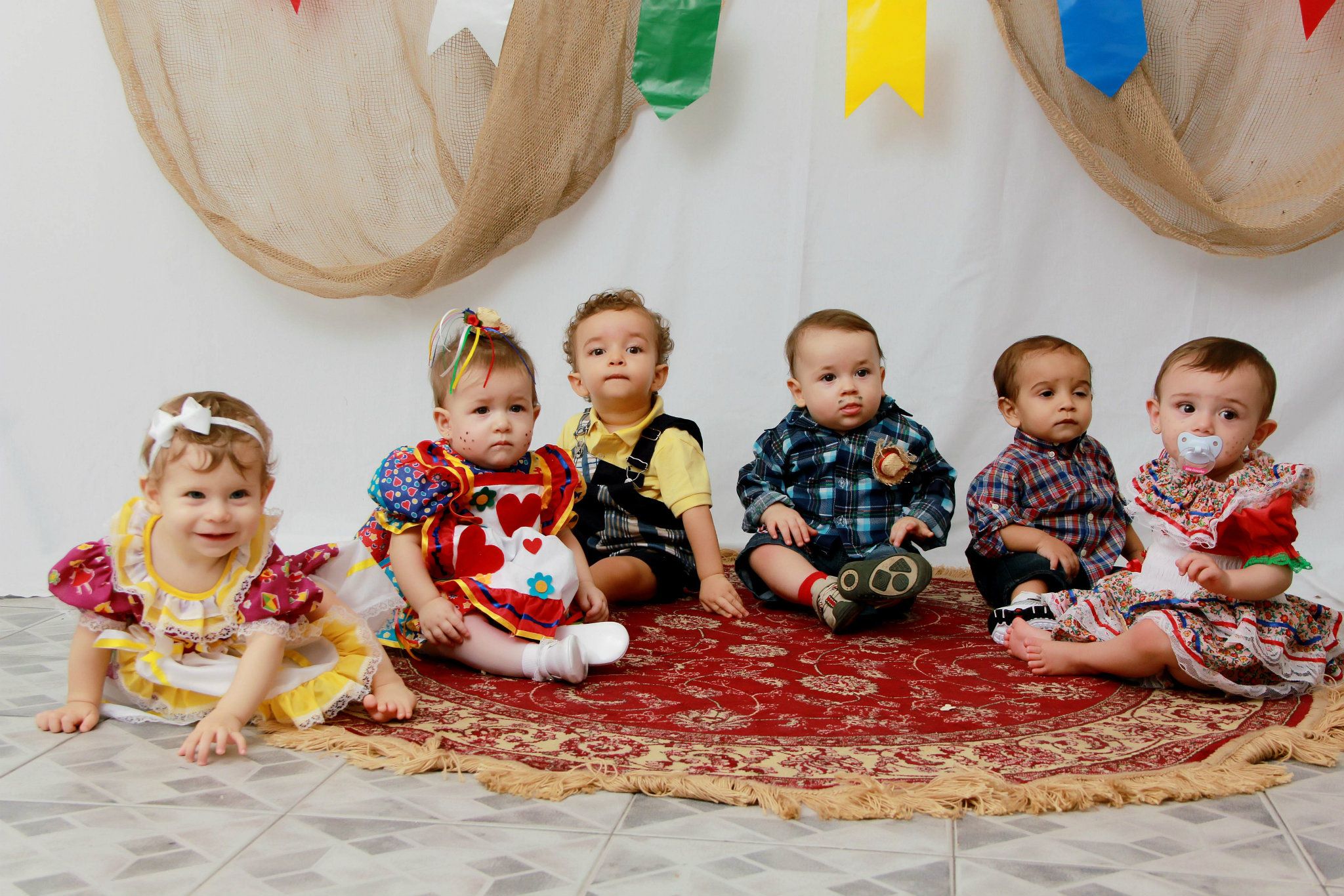
    Brazilians are gaga for children!

    Women and men, old and young, Brazilians adore kids.  Brazil makes the US seem like one giant lawn its crotchety citizens don’t want children stepping on.

    I first noticed this difference during a staff lunch at a chic restaurant in Rio. My boss brought her newborn to this very crowded restaurant at peak lunch hour.  Exactly one table was available and it was on the opposite of the restaurant.  There was a sea of people in expensive clothes and tables covered in glassware between us and that table.  When my boss indicated to the staff that we would be claiming that table, I cringed.  My stomach clenched at the idea of getting through this fancy crowd with a baby and stroller.

    That’s the appropriate response, right?  Obviously, a parent should feel ill at the thought of briefly disturbing other people’s lunches on the way to her own table.  Ha. How American of me.  Two waiters swooped in, all smiles, lifted the stroller up over their heads, and carried that baby like royalty across the entire dining room.  Not a single dirty look.

    Brazilians have this bizarre assumption that babies and children are a staple part of everyday life.  If there are people around, there will be young people and these young people will cry, complain, spill things, talk too loudly, and generally not behave like adults.  That’s life.  How else is it supposed to continue?

    People here also acknowledge kids.  They talk to them and include kids as if they were a part of society.  Strangers smile and say hello to my daughter on our walks to school.  Waiters greet her at restaurants.  When she cries in public, people stop and ask her what’s wrong. During a melt down, I’m not worried the stranger approaching is about to helpfully inform me my child is being disruptive or offer some  judgement in the form of unsolicited advice.  That stranger approaching doesn’t want to talk to me at all.  She’s going to console my daughter.

    At playgrounds, parents help each others’ kids on and off equipment.  They freely offer snacks they’ve brought to every child in earshot.  They let other kids run off with their own child’s toy confident it will be returned. Playgrounds in Brazil initially felt to me like loud, sandy communist communes.  It was a long time before I stopped apologizing profusely every time my daughter touched another kid’s toy and fearing the wrath of another parent because I offered her child gluten.

    If you do bring your baby to Brazil, be prepared. Brazilians love children, and Brazilians are touchy people.  I mean literally touchy.  They touch other people a lot.  A random passersby will want to touch, stroke, kiss, and even hold your baby.  One of my daughter’s nurses at the NICU here in Vitoria admitted this was a particular blind spot for Brazilians.  Knowledge of germ theory cannot curb their enthusiasm for babies. I dealt with it by reminding myself I’d rather have a request to hold my baby than a request to remove it from the premises.

    This habit of baby fawning is not limited to any age, gender, or class.  A trainer at my gym once brought his newborn into the weight room and a half dozen of the burliest men were reduced to cooing and clucking incoherently.  The school where I taught had preschool through high school, and everyday as the toddlers left the nap room, a crowd of teenagers gathered to squeal and exclaim over the adorably rumpled munchkins.

    And of course there are the old ladies.  Women over the age 70 must develop a sixth sense to detect babies.  I’d be sitting at the cafe, waving a rattle in my daughter’s face, and suddenly an 85 year old woman materialized out of thin air to stroke my daughter’s hair and to tell me my baby is cold.

    This is the one sin a parent cannot commit in Brazil.  You can leave the TV on 24 hours day.  You can feed your kid white rice and french fries at every lunch.  But do NOT let your baby get cold!!!  If there is a breeze and your baby is not covered with a blanket, every person will stop and tell you your baby is cold.  Every. Single. Person.  As someone who does not think 65 F requires gloves at any age, I heard it pretty much everyday of my child’s infancy.

    The love for and acceptance of children as part of daily life are two of the things I love best about Brazil, and for now, I’m perfectly content to raise my tantrum prone daughter here so as not to disturb my fellow Americans’ lattes.

    Save

  • Children’s Parties: Brazilian Edition

    Children’s Parties: Brazilian Edition

    What are they going to do for the 2nd birthday?

    We can learn a lot about our own culture by having to explain it to outsiders.  What specifically outsiders want an explanation for is telling and then having to explain why can lead to great enlightenment.

    For example, as an American I have fielded quite a few questions about guns.  I’ve learned that to the rest of the world our obsession with firearms makes us look like batshit crazy people hellbent on our own destruction.  Also, no American expat has ever convinced another person that a civilian needs a grenade launcher to potentially fight off a government that has missile launching drones.

    Of course every culture has its idiosyncracies.  Americans must account for a love of lethal weapons, and I’d like to ask my Brazilian family and friends to explain the Brazilian child’s birthday party.

    (This is a totally legit transition.  An American gun range and a Brazilian child’s first birthday are, for me, equally intimidating environments.)

    This past weekend, we attended the birthday party of my daughter’s classmate.  My husband, daughter, and I all stayed the duration, from 5pm to 9pm on Sunday night.  There were about 60 people in attendance.  The three tables of decorated sweets and cakes on display throughout the event were perfectly arranged.  The personalized favors were lovely.  The party space had a climbing wall, a bungee-trampoline thing, a three-story playground, a rope walk suspended above everyone’s head, and a ball pit.  The trays of fingers foods, soda, and beer swept by with impressive frequency.  The boy was turning three.

    To be fair not every Brazilian family does this and many cannot afford to do this, but the party I have described is typical of middle class families.  It’s not something worthy of a reality TV show.  It’s completely mainstream.

    I have been to a few 1st birthday parties and they all had more guests than my wedding.  I understand that Brazilian families tend be large and stay in the same city where they were born.  It is very likely the birthday girl has ten cousins living close by. Ok. I understand that at a young age, it’s appropriate to give an invitation to everyone in the preschool class.  I’m totally on board.  But why their parents? Why do I have to feed 15 of my kid’s classmates, plus their moms, dads, and siblings?  My child doesn’t know little Rodrigo’s grandma. And why your boss and work colleagues your kid has never met?

    My nephew’s first birthday had around 100 people.  He spent almost the entire party hanging out with his grandpa in the car.  The poor kid burst into tears every time he got carried toward the commotion.

    I question the value of of a birthday party that the honoree is terrified to attend.

    Some beautiful things for the janitor to sweep up…

    And why spend so much money and time on the elaborate decorations and sweets?  A two year old doesn’t care if the candy is personalized and color coordinated.  For guests, those cute wrappers, ribbons, and bedazzled boxes are merely impediments between mouth and candy.  Once the birthday song is sung, it’s Lord of the Flies.  The smoke is still wafting up from the candles and the dessert tables look like a pack of Labradors was set on them. The kids are aggressive too.

    Ok, I’m being mean.  This is actually perfectly reasonable behavior considering the kids have been made to stare at these tables of sweets for three hours.  All the desserts are beautifully laid out upon arrival but DO NOT TOUCH them until after the candles are blown out!!  Scheduling a party at dinner time and making kids stare at cupcakes for hours is straight up torture.  I’m pretty sure it’s illegal under the Geneva Convention.

    I know some of the moms do everything themselves and I bow to their superior design and art skills. Every child’s party I’ve been to has been beautiful and if they were for a 15th birthday or graduation or even just for older kids who could remember it and not burst into tears at the sight of Great Aunt Roberta, I wouldn’t have any questions.  But I can’t help asking when I attend a three-year old’s birthday, who is this party for?

    blog-button-linkup-2

  • The Perks of Not Speaking the Language

    The Perks of Not Speaking the Language

    Or don't...depending on the situation.
    Or don’t…depending on the situation.

    I have a secret to confess.  I speak Portuguese.  Please, don’t tell my mother-in-law.

    I don’t speak Portuguese fluently. Nothing as impressive as that. I speak Portuguese like a 96-year-old suffering from extreme dementia.  My sentences are punctuated by gestures and facial expression to stand-in for words I’ve forgotten, and my responses to questions sometimes have nothing to do with what was actually asked.

    “Brynn, what did you do this weekend?”

    “No, I don’t like mangoes.”

    But more often than not, I can successfully converse, arrange appointments, and get the hair cut and color I actually want. (The correct hair color was something I mistakenly thought I could get after only recently arriving in Brazil with minimal Portuguese.)

    While life is greatly improved now that I don’t consistently confuse Monday and Tuesday, there are times when I play the clueless foreigner card without hesitation.  I should probably feel bad for perpetuating the ignorant, monolingual American stereotype, but it’s such an effective way to avoid all those tedious conversations that suck up patience and sanity: the chatty person with what sounds like TB at the doctor’s office, the perfume-drenched, close-talking lady from upstairs, all phone solicitors.

    I always answer my phone with a thick, American, “Hello.”  It’s the perfect screen.  Family and friends obviously know where I’m from and aren’t thrown by it.  Only salespeople freeze up and give themselves away with a long pause as they try to figure out what to do next.  Some hang up.  Some ask if they can speak to my husband.  Others plow doggedly ahead with their scripts.  I cut them all off and say sweetly in English, “Oh, I’m sorry. I don’t speak Portuguese. Goodbye.” Click.  Conversation over.  The salesperson doesn’t feel bad about losing someone they couldn’t talk to.  I’m back to watching John Oliver on YouTube. Win-win.

    I first employed this trick in Morocco.  Describing the young men in Morocco as persistent is like calling the Kardashians’ lifestyle “comfortable.”  Tired of being unable to walk two blocks without being asked to dinner and then asked why I was refusing, I answered one man with Croatian song lyrics.  Why Croatian? Because in almost every country other than the US, even misogynist assholes can speak more than one language.  But with only four million Croatians in the world, I was pretty confident Croatian would not be one of his languages.  I was right.  The guy stopped talking to me after a couple sentences.  He did still follow me all the way back to my hotel, but stalking is way less annoying when done in silence.

    Playing dumb also helps avoid awkward conversations with in-laws and before you judge, just imagine Thanksgiving with your in-laws.  What if you could avoid awkward conversations about politics or global-warming or when your daughter is getting baptized by simply fumbling the language? “Oh, what? When is she getting her booster shots? Next month.”  Wouldn’t everyone be happier if there was just a lot of smiling and complementing of the food?

    So before you get annoyed with the woman in the elevator for not speaking your language, check if you’re wearing deodorant, have brushed your teeth recently, and are saying something more interesting than the silence.  Then be careful what you mumble out loud.  There’s a chance she’s faking it.


    Find more fun adventures from life abroad!

    Expat Life with a Double Buggy


  • Talking Small in Brazil

    Talking Small in Brazil

    P1010054
    Small talk across cultures…

    Today my daughter and I went through our regular morning routine.  We had breakfast while watching cartoons, got dressed, and somewhere between the front door of our apartment and the front door of our building she decided she’s never going to school again.  As usual, I hobbled out the door to our building with a child hanging on one leg, two backpacks, a bag of objects starting with the letter of the week, and, for extra fun today, an umbrella.  While negotiating the concrete stairs, the window of the front desk slid open on cue and our building’s porteiro (door person/front desk receptionist) stuck her head out.

    This woman’s commitment to good manners is unwavering.  It doesn’t matter how loudly my daughter is crying or precarious my balance on the steps.  She will call out a greeting to us, comment on my daughter’s cuteness, and wait for a response.  As I call out a frazzled good morning in Portuguese between promises and pleas to my daughter in English, the porteiro in cheerful Portuguese tells my daughter not cry because school is fun! Truly, nothing is more helpful when negotiating a tantrum than to have a relative stranger shouting encouragement in another language.

    Such is the Brazilian commitment to small talk.

    Screaming toddlers in the rain won’t deter a morning chat.  I come back from the gym sweaty and stinky, and I still can’t avoid a discussion on the humidity with our porteiro, a maid, and two retirees.  Yes, it sure is hot.  Just look at my face in a puddle on the floor there.  I’d really love a shower.  After the heat and humidity, inflation is the next hottest topic to discuss with taxi drivers, elevator companions, and stylists.  Here in Vitoria, you can go ahead and blame all three on President Dilma.

    My first experience with the Brazilian determination to converse happened at the pool of my old building in Rio.  I had head phones wedged in my ears, a highlighter in hand, an open journal article on my lap, a stack of ten more to my left and a total of five words in Portuguese.  I non-verbally screamed, “Don’t talk to me,” but not loudly enough to deter the lifeguard.  There was no way to get rid of the guy short of saying “Stop talking,” but as I couldn’t use the imperative in Portuguese, I was stuck.

    I hate small talk and unfortunately for me, Brazilians are generally an extraordinarily friendly and happy people.  How exhausting.  Fortunately for me, the man I married is the most anti-social Brazilian currently living.  He is an outlier that skews all  data about Brazilians, and serves as a reminder that while culture is real, each person is an individual.

    At least a lifetime of training among small talkers won’t go to waste here.  You see I’m from the South, the region of the US formerly known as the Confederacy.  We do our small talkin’ with more ice tea and fewer “g”s, but we do it and love it.

    At least, we can fake that we love it.  I don’t believe anyone feels genuine excitement over someone’s new, home-made seasonal door swag.  But when the saleswoman at Michaels raves about the gold spray paint she just used on hers, a good southern girl will exclaim on the good fortune, express gratitude for the knowledge by referencing her own failed attempt at a similar project, and ask for suggestions on holiday napkin holder crafts for kids she may or may not actually have.

    Successful small talk requires a lot of energy and even more if you have to do it in a second language and foreign culture.  You need not only correctly conjugated verbs but also content.   Small talk requires knowledge about topics appropriate for discussion i.e. the weather, current events, pop culture, and fluency in non-verbal cues to know when it’s time to change topics or wrap things up.  Pulling all this off in a new country is exhausting and I’m just not inclined to invest this energy in someone I will only be in line with for another five minutes.

    I know this makes me the shy or rude foreigner and that by Brazilian standers my building’s porteiro is hardly a stranger.  Neither is my mother-in-law.  I just think one of the best things about being a happily-married, self-employed adult is that I don’t have to win the approval of strangers, bosses, or periphery acquaintances.  Not unless I’m in the mood.

    I know when the apocalypse comes no one here will be inviting my husband and I onto their boat.  But I have a super cute Brazilian daughter.  I’ll leave it to her to small talk our way on board.

    Image_zps04194192

  • The Super-Awesome, Amazingly-Exotic Expat Life

    The Super-Awesome, Amazingly-Exotic Expat Life

    The daily rainbow in Brazil.
    The daily rainbow in Brazil.

    When I’m back home in Atlanta, I try not to mention that I live in Brazil.  The opportunity presents itself with surprising frequency, usually when a sales associate asks if I’d like to sign up for a rewards card.  I decline saying “I’m just visiting for the holidays.”   Nine times out of ten, at least in the state of Georgia where people still practice things like small talk and friendliness, the person will ask “Oh, where do you live?”  Then I’m stuck.  “In Brazil,” I answer, and I’m at the counter another five minutes as I tell my story and confess that I have not in fact learned to speak Spanish.  Though I have learned the local Portuguese.

    I can’t blame people for their wide-eyed excitement and curiosity about my life.  Americans are under the impression that life south of Texas or north of Idaho or on the other side of an ocean is more…something.  More exciting.  More dangerous.  More romantic.  More barbaric.  More luxurious.  They’ve seen movies set in these “foreign” countries and read articles like “3 Things Dating Foreign Women (And Marrying One) Taught Me” which tell people what a romantic adventure life can be if they only find a spouse with a different passport.

    As someone who did manage to land a coveted foreign spouse and move abroad, I can state that it’s all true.  My life is more exciting than everyone else’s.  It’s more romantic and luxurious yet still a rewarding, character-building challenge.

    Take my very first meal in Brazil.  I got to eat in the food court of the nearby mall.  My future husband took me and it was incredibly romantic.  The din of the other customers drowned out our voices, so we could only stare into each other’s eyes.  Because I arrived in the midst of remodeling the apartment, I had the opportunity to tour all the best hardware stores in Rio de Janeiro.  The thrill of shopping for toilet seats abroad really gets downplayed in expat blogs.  The only thing in Brazil that rivals shopping for toilets is getting finger printed for a visa at the federal police.  The ink smells like jasmine.

    Living in Brazil has also given me the opportunity to learn a new language.  It’s a fact that everything is sexier in a foreign language. Doesn’t matter which language.  They’re all sexier than English.  Here are some of the local Portuguese phrases I learned in my first months here.  Encanador.  Plumber.  Conta corrente conjunta.  Joint checking account.  Seguro de saúde.  Health insurance.  Absorvente interno.  Tampon.

    If you are ever lucky enough to visit Rio, I recommend driving from downtown to the suburbs at 5:30pm.  It will give you an authentic local experience.  Turn the air-conditioning off and roll the windows down to really go native.  Be sure to have the GoPros charged because friends back home will want to watch this trek. All three hours of it.

    Anyone leaving the US should do their family and friends the favor of recording every second of their time abroad.  They’ll thank you for allowing them to live vicariously through you.  After all, life outside the United States is one long perpetual vacation.  Nobody goes to the grocery store or a “job” in foreign countries.  The people serving coconuts on the beach here in Brazil? Robots.  All of them.  Where do you think Walt Disney got the idea for the Hall of Presidents?  He stayed at the Copacabana Palace in Rio.  Actual Brazilian citizens don’t work and if you’re fortunate enough to get residency neither will you.  People who live here just go to the beach and gym everyday.  I haven’t had to run an errand since I arrived in September of 2006.

    Having a child abroad with a foreign spouse (Yes, even in Brazil my Brazilian husband is the foreigner.  I can’t be a foreigner because I’m American), it only adds to the drama and glamor of the expat life.  I’m writing a screenplay based on my experience of visiting the US consulate to prove the maternity of my child.  I’m hoping Ridley Scott will direct and it will star Angelina Jolie (as me), Antonio Banderas (as my husband), and Jack Black as the unwieldy and misunderstood stack of paperwork that ultimately saves the day and gets us the US birth certificate.

    Those of us living in far-off, exotic lands know that “living” abroad is exactly the same thing as “vacationing” abroad.  Don’t make the mistake of thinking that most people in the world are busy going about the tediousness of living day to day, with the jobs and childcare and home repairs and laundry that human existence demands.  No, no.  Life outside the US is romantic and electrifying all the time.  In fact, I have another Brazilian adventure planned for this morning.  I’m going on an excursion for light bulbs.

  • The Novelty of Beach Life

    The Novelty of Beach Life

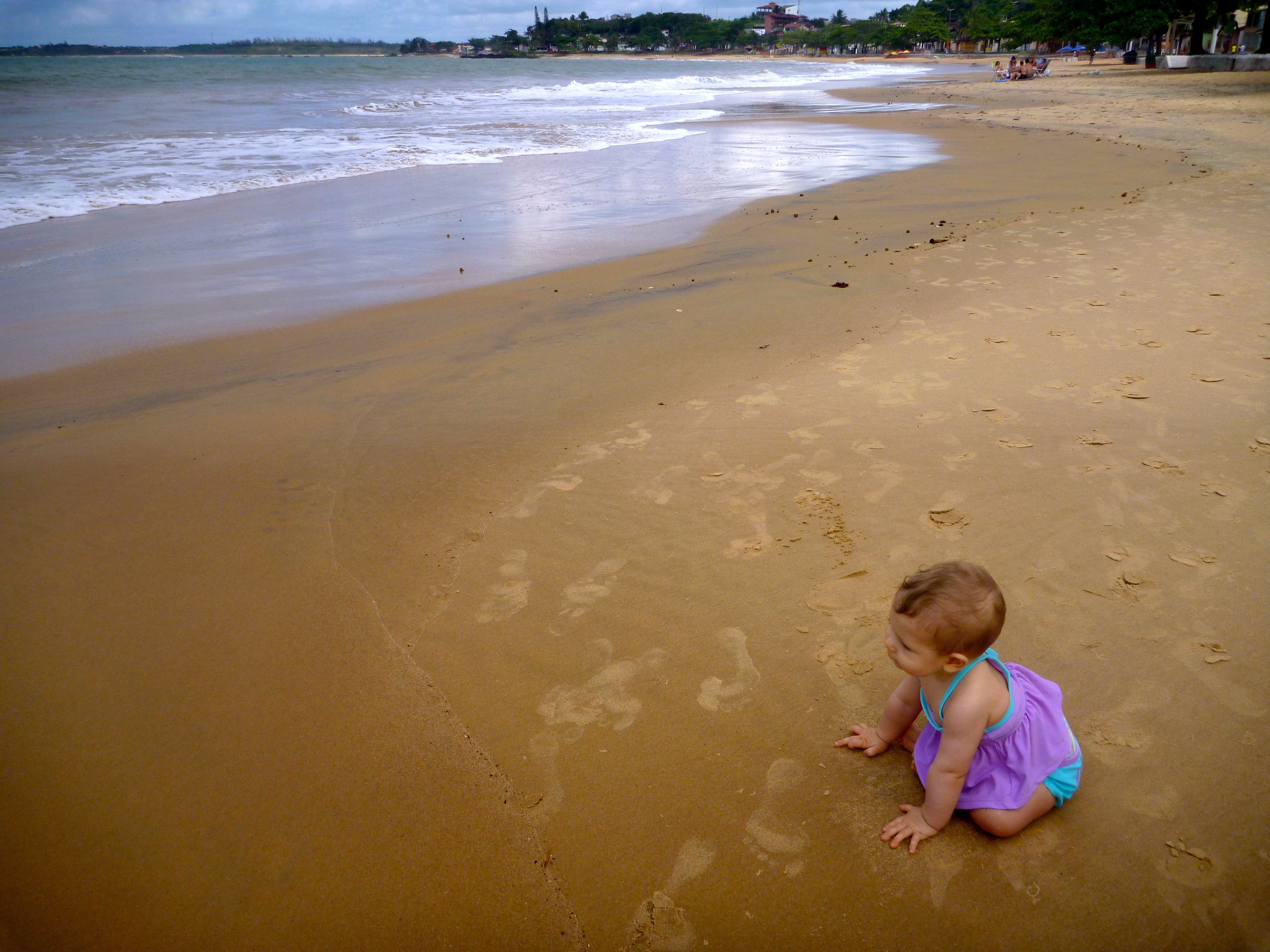
    Baby at the Beach
    Beach Comber From Birth

    Growing up in Atlanta, I got to be part of that great American summer tradition, the annual family beach trip.  Depending on the beach, my brother and I could look forward to between 4 and 6 hours of Wee-Sing-Silly-Songs cassettes, gas station candy, and fierce battles for control of the middle-seat armrest.

    We usually ventured to one of a handful of beaches: Panama City, Florida; Daytona, Florida; St. Simons Island, Georgia; Hilton Head, South Carolina.  Some on the Atlantic and some on the Gulf of Mexico but all had an abundance of cooked white flesh and thick southern accents.  It was paradise!

    I remember the thrill of the first palm tree sighting.  My brother and I would then count the palms in growing anticipation until we finally glimpsed a flash of ocean between a Texaco and a McDonald’s.  After checking into the hotel, we’d spend the next five days coated with sand and sunscreen jumping waves, riding boogie boards, and hunting for seashells.  Often grandparents came along and sometimes aunts, uncles, and cousins.  There was always a family putt-putt outing, which some of us took more seriously than others.  Inevitably, the week ended, and we would say goodbye to the beach for a year.

    I now live three blocks from the beach.

    I can wake up any day of the week and decide to skip writing in favor of paddling around the bay spotting sea turtles.  It. is. amazing!

    My daughter has been going to the beach regularly since before she discovered her hands.  The list of foods my girl will eat is short but includes white fish, salmon, shark, and tiny fried shrimp.  Fried shrimp with the shell and legs still on them.  The girl won’t part her lips for a carrot but she pops little shrimp in her mouth like chocolates.  We frequently have some version of this conversation on Saturday mornings:

    Me: “Should we go to beach today?”

    Husband: “I don’t know.  We went the last few weekends.  I think she might be getting tired of it.”

    Me: “Hey Little Bit, do you want to go to the beach?”

    Kid: “No, I want to stay home and play with my toys.”

    Yes, my daughter will turn down going to the beach in favor of staying home to play with her Littlest Pets because she has no idea how lucky she is and no appreciation for the months of waiting that I had to endure when I was her age to get to the beach.  Preschoolers!

    Because of these different life experiences, my daughter will probably never understand my obsession with ocean-based hobbies, specifically that she master one or several of them.  Some parents dream of their children graduating from the ivy league, I dream of my daughter being a competitive sailor or windsurfer or deep sea fisherwoman.  (That last one is lower down on the list.)

    Given the novelty (for me anyway) of growing up next to the beach, imagine my joy when my girl started swim class and LOVED it!  She has no fear of water, which makes supervising her around the pool more stressful, but is an important first step to becoming a world champion free diver!

    A couple of weeks ago, we embarked on phase two of my master plan.  Stand up paddle boarding in the bay!*  We went as a family and spent the morning spotting green sea turtles in the bay.  It was a success.  You can see in the video below.  My daughter had so much fun, we all went back out yesterday and the heavy grey clouds and constant drizzle didn’t deter her one bit.

    Watching my daughter yesterday on my husband’s board, leaning forward through the rain with a smile on her face, I thought “I just might have a seafarer on my hands.”  At least I hope I do.  All she needs now is a willingness to use sunscreen.

    *If you’re ever in Vitoria, Brazil, I highly recommend a morning of SUP.  We rented our boards from Loop.  They have windsurf and stand up equipment for rent. The bay is filled with sea turtle, fish, and the occasional ray leaping from the water.

    Whatever-the-weather-both-small

  • Lessons For Toddlers and Expats

    Lessons For Toddlers and Expats

    bureaucracyMy 3 year old daughter is currently struggling to accept some of the physical limitations of our three dimensional world.  “That tunnel is not tall enough for the train.”  “It was made for one Littlest Pet not eight.”  “Sweetheart, your teddy bear is never going to fit in that play dough pot.”   She will ignore me, keep trying, and eventually hurl whatever it is against the wall in a frustrated fury. I hope it’s just a phase.

    What is remarkable is her flat out refusal to accept an obvious reality.  She will continue to struggle long after it’s clear that it’s not going to fit.  Her tenacity is impressive.  It’s also the source of many a nighttime tantrum.  While I don’t want her to ever give up easily, I’d like to spare her the frustration and save her the energy spent fighting against a fact about her world.

    As an expat, I should apply this lesson myself.

    I’ve lived in Brazil eight and a half years, and I still struggle to accept some facts about life here.  One thing that still makes my face burn is the out of control and invasive bureaucracy.

    There is no question too personal for a form and no transaction that does not require one.  The eyeglass store wants your social security number.  The hotel wants your profession.  The dentist wants your race.  Your employer wants to know your blood pressure.

    I get around some forms by pretending I’m here temporarily or don’t speak a word of Portuguese, but I couldn’t do this at my former job.

    When I began teaching the school asked me to have a medical exam.  When I came back from maternity leave there was another exam and another a year later for every employee at the school.  When I gave notice at the end of last year, human resources asked me to sign several letters saying that I was leaving of my own accord and have another medical exam.

    I refused.  As American, an employer requiring a medical exam and making note of the fact you use contraceptives is deeply offensive.  I had done the previous exams because I liked the job, and hey when in Rome…but now I was quitting.  What could they do? Fire me?

    There were several meetings with HR during which I nicely refused to accommodate and the HR lady just as nicely said it was mandatory by law.  After checking with a lawyer, I explained sweetly there’s no law requiring a person to submit to a medical exam.  She politely insisted there is.

    Eventually I was told it was the union that required the exam.  And speaking of the union, I had to meet with them and have a rep sign off on my paperwork.  Please come back next Tuesday afternoon.

    I showed up at the union rep’s office in my school and met a man very disgruntled by my lateness.  The meeting was at 2pm.  It was 2:02 pm.  As he grumbled, he grabbed his keys, my work card, and my paperwork. Below is as faithful a transcription of our conversation as my memory allows.

    Me: “Excuse me, are you leaving?”

    Man I Have Only Just Met:  “He’s going to wait for us.”

    Me: “Who?”

    MIHOJM:  “The union Kahuna. (That’s my word because I don’t remember what title the guy really had.)  You were supposed to meet with him at 2pm.”

    Me: “Aren’t you the man I’m meeting?”

    MIHOJM: “No, the Kahuna has to sign off on your papers, and he’s at the union’s headquarters.”

    Me: “Wait. Do we have to drive somewhere?”

    MIHOJM: “Yes. We’re going to the union office.”

    Me: “Stop.  I’m not leaving.  Give me my work card and documents.  I am not going.”

    At that point I had been quitting my job for almost two months.  I was done.  I was out of patience and polite Portuguese.  I unleashed the full force of my direct, low-context American culture on him and I wrapped things up then and there.

    I am not going to the union office.  I am not having the medical exam.  I want to quit today.  You are a union officer?  Do you have authority to sign these papers?  Great.  Please, sign them all now.

    While I did manage to officially quit, within a Brazilian context, I was a complete asshole to a guy who was just doing his job.  He was acting according to standard practice and then comes this woman who freaks out on him, is blunt to the point of being rude, and very angry.

    And I stayed angry.  I complained about the whole process to everyone I met for days.  Hurling my complaints about meaningless bureaucracy against every wall in a frustrated fury.  What did that anger get me?  Well, it used up a lot of my energy, a very precious commodity.  It would have taken a lot less energy to shrug my shoulders.

    Somethings you have to accept.  Don’t waste energy being angry about something you can’t change.   Lessons we expats have to learn.  Expats and toddlers.

  • Nine Parenting Lessons Learned 3 Months In

    Nine Parenting Lessons Learned 3 Months In

    I don’t have a lot of time to write these days.  The last post took more than 2 months to finish.  Still, I need some kind of outlet, so when a reader posted a comment about Moby Wraps and baby products in Brazil, I was inspired to post a few of the lessons I’ve learned over the last few months.

    Lesson 1 About 85% of my identity is based on getting sufficient sleep.  After several days of less than four hours of sleep (none of them consecutive) the talkative, thoughtful person who cracks jokes to deal with stress becomes a simmering pot of boiling rage which spills over at the slightest thing.  A pacifier I cleaned minutes before pops out and falls straight to the floor and suddenly I am using every curse I know on gravity, Newton and any living relatives.  Jekyll never made a potion.  He just didn’t sleep for a few weeks.

    Lesson 2 The Moby Wrap, a popular baby carrying device in the US, needs to come with a warning.  Caution: Moby Wrap should only be used in air-conditioned environments in non-tropical countries. After 15 minutes with her in the wrap, I was on the verge of a heat stroke.  I managed to sweat off a few pounds and successfully teach my daughter that blankets are torture devices.

    Lesson 3 Like just about everything in Brazil, baby stuff is super expensive here.  $50 is too much to spend on preemie clothes or any baby clothes.  Call me cheap but I don’t want to spend more than $20 on an outfit she will either spit up on, poop on or outgrow after only three wearings.

    Lesson 4  Every person who does not have a baby thinks every time a baby cries it’s due to hunger.  And they will tell you this. “Your baby is hungry.”  They will tell you this repeatedly for an hour and a half and when the baby is inevitably hungry again these people will say, “See.  I knew she was hungry.”

    Lesson 5 I don’t want big breasts. I used to think I wanted some slightly larger breasts to balance out my bottom half.  Nope. Not anymore. I’m totally content with and miss my modest B cups.  Hats off to you ladies who have the back muscles and patience to tolerate these weights hanging off your front and bouncing around as your work out, jog, take stairs, try to sleep, etc.

    Lesson 6 The only practical outfit for a newborn is a onesie.  Being told this and eventually learning this from experience will not stop you from continuing to buy super adorable dresses which make her closet look spectacular.

    Lesson 7 I do not believe a baby should have it’s ears pierced, and I will not be piercing my baby’s ears.  This means when dressed in any color other than pink, everyone in Brazil thinks she is a boy.

    Lesson 8 Not all babies are born willing to sleep in a crib.  Some are born with a mistrust and a dislike of cribs that is so strong merely standing close to a crib will be enough to penetrate the deepest sleep.  They may also hate the swing, vibrating chair, stroller, car seat, and sleep in general.

    Lesson 9 Nothing, absolutely nothing in the world, is as adorable as a new baby smiling.  It’s what keeps you from dropping her in that ridiculously-expensive crib she hates and putting on some noise canceling headphones.


    Check out more great…

    Advice From The Heart

  • Coolest extracurricular activity ever!

    Coolest extracurricular activity ever!

    I’ve spent the last couple of days editing essays.  I’m drowning in essays.  During a break, I watched a clip of the Daily Show where they showed a commentator ranting about how teachers are paid too much for a part-time job.  I envisioned ramming a two-inch stack of ungraded essays down his throat until he chocked.  It made me happy and reminded me that I still had about 20 essays left to grade.

    When not being used as a weapon, my student’s essays are also an endless source of amusement.  I fill entire dinner conversations relating what pearls of wisdom my kids have come up with.  The essays are also helping me compile a list of potential extra curricular activities available in Vitoria for any future Brazilian-Americans I have in my house.

    It’s fascinating to see what activities teenagers in the US and Brazil share and what activities are unique not just to Brazil but to Vitoria.

    It’s no surprise a kid in Vitoria can be a soccer player but I also have competitive basketball players, skateboarders and surfers as well.  Judo is pretty popular.  There are ballet studios and acting lessons. With my guitar players, drummers, pianists and singers, I can supply any event in Vitoria with a band.  One of my students has taken cooking lessons and runs a small business catering desserts for parties.  Another is a financier in the making, having taken classes on the stock market and started his own investment portfolio.

    But I think my favorite hobby, of all the hobbies I’ve read about, is competitive oceanic fishing.  It’s not my favorite because it’s anything I’d like to be proficient at myself but because it is such an utterly foreign activity to the suburban, Atlanta culture where I grew up.  Competitive oceanic fishing!  Maybe there were some kids in my school who regularly caught trout from the Chattahoochee River but nobody was heading to Australia to compete catching marlins.  Which is exactly what one of my students did.

    I mentioned this to my husband and he said “Oh sure, Vitoria is one of the best spots for oceanic fishing along Brazil’s coast.”  Huh, a new fact about Vitoria thanks to my students’ essays.  It seems one of the perks of being a teachers is that the learning goes both ways.

    Oceanic fishing is a skill I would never have thought to offer any of my future kids.  It wasn’t part of my childhood and I would not have made it part of theirs.  Now I know.  And if the kid doesn’t like fishing, there’s always surfing, sailing, samba dancing, cooking, judo and of course, soccer.