Tag: Cultural Differences

  • A Brazilian Christmas

    A Brazilian Christmas

    Describing holiday gatherings in my family as hectic would be an understatement. There are multiple sets of grandparents, aunts, uncles and cousins to visit and dine with. The table is buried under enough food for a week-long bacchanalia. Enough dessert is prepared for every person in attendance to have her own cake.

    In comparison, the first Christmas I spent with my in-laws in Brazil was a pleasant afternoon picnic with some acoustic guitar.

    It was surprising to me that my American Christmases are filled with more food, presents and cousins than those of my Brazilian in-laws. It certainly seems to go against the stereotype of family-focused Brazilian culture and allowing-the-disintegration-of-the-family American culture. But which “American” culture am I referring to?

    Middle-class America? Middle-class, Latino, urban American from Miami? The diversity of the US makes it difficult to define what is American and the same is true of Brazil. What is Brazilian? Well, are we talking about the Paulista sushi chef of Japanese heritage or the Carioca taxi driver of Italian/Portuguese ancestry?

    I’m not saying overarching national or regional cultures don’t exist, just that within any culture are seemingly endless subcultures that create huge variety among people and families.

    I realized this year, after hearing many accounts of “Brazilian” Christmases, that my southern family celebrates Christmas in a more “Brazilian” way than my Brazilian husband does.

    Growing up, I’d usually celebrate Thanksgiving in South Georgia on my Grandmother’s pecan farm. As one of the oldest, I got to drive my younger cousins and the kids of my dad’s cousins (who I believe are called second cousins) around in my great-uncle’s golf cart. On my mom’s side, Christmas dinner often included the daughter of my step-dad’s brother-in-law’s sister, a relationship the English language has no term for.

    Because my parent’s are divorced, Christmas day usually included visits no fewer than four houses. One set of grandparents has since moved to Florida, so we’re down to a mere three present opening sessions. Three homes is more than enough to leave my husband shell-shocked with only the strength to sit upright, mumbling to himself, “It’s so much. It’s so much.”

    Whether he was talking about the number of presents, pies, or names of family members to remember I don’t know, but after my first Christmas lunch in Rio with only his immediate family and a single pudding for dessert, I understood his culture shock.

    We now make a point of spending Christmas in the U.S.  Every December we fly to Georgia for lots of family and food. It’s a very Brazilian holiday.

  • Why are you here?

    “Why are you here?” I probably posed that question 20 times over the course of my teacher training. Asking a person to explain her existence may seem a bit forward for a first meeting but among expats it’s typically asked as a follow up question to visa status. “So, why are you here?”

    In this context “here” is understood to be Brazil and answers ranged from the romantic to the idealistic. While our individuals stories differed, whether South African, Irish, or New Zealander, all of us attending the training were united by the designation “native English speaker” plus the fact we had chosen to take up residency amongst non-English speakers. And this was more than enough to make for two weeks of great conversations, lasting friendships and several explanations of cricket.

    Jump to four days after the last training session and I’m suddenly posing the same question to myself, “Why am I here?” I was seated amongst a few bleached blonde teenagers in letter jackets and puffy-haired, middle-aged women in college football sweatshirts at a Chinese restaurant in a strip mall. The day before I had listened to my grandfather calmly discuss Obama’s intention to make the US a socialist state. While shopping, I’d overheard a conversation as a man fervently hoped the US “drops some nukes” on Iran, item one on the worst Christmas wish list ever.

    Then I was deciding between lemon or kung pao chicken while the children at the next table called for “Mama.” I felt as if I was observing a scene without taking part in it, like Scrooge and the Ghost of Christmas Present, only instead of quotable, crippled children there were text-messaging Republicans.

    So, why was I having Chinese at a strip mall surrounded by people I would probably never have great conversations or lasting friendships with? Because I frickin’ love Chinese food. Because I can understand every southern-accented word spoken and I can identify which college claims which animal among the alligators, tigers, and bulldogs featured on sweatshirts.

    I’m here because we drove to the shopping center in five minutes on a four lane divided highway. A divided highway! It’s how angels travel around heaven.

    I’m here because I can mentally roll out a blue print of this strip mall and know that starting at the far end, my printer ink is at Staples and my reasonably priced jeans are at Gap. I bought my camera battery at the store next door to the Chinese restaurant with the wonderful egg drop soup. My salon is further down and three doors down from the grocery store. I know that while the grocery store’s bananas will taste like wax, it carries all the peanut butter I could eat in a lifetime.

    I’m here because at the far end of the parking lot there is a Target and a Borders both of which I can wander through blindfolded. I know without doubt that every suburbanite wants a coffee from the Starbucks inside Target but not a single one of them will walk across the parking lot to get one. They will get in their cars and drive alongside the paved sidewalk to a closer parking space.

    I’m here because I know this place and I know these people. This is where I became the person who moved to Brazil and became a registered Democrat. Clearly this place is not as soul crushing as I like to paint it. The truth is I share a lot with my fellow Chinese food patrons, from a love of a separate and clearly marked returns counter to a fanatical observation of traffic laws.

    At Christmas a person wants to feel at home and this is my home. I moved to Brazil but my family and my culture is here. That’s why I’m here among people I understand and who would agree that cricket is a ridiculous attempt at a sport.

  • Stove Top Terror

    Stove Top Terror

    I’ve never enjoyed cooking. It’s something I’ve been forced by hunger pangs and lack of sandwich bread to do from time to time. With the exception of freshly baked cookies and pies, I’ve never cooked anything so much more satisfying than a peanut butter and jelly sandwich that it justified the extra costs in both material and labor.

    Now, I live in Brazil. If cooking was merely uninteresting before, here it’s terrifying. It’s not the spiny vegetables and fruits or recipes using the metric system. It’s my stove. People here find it acceptable to have a kitchen appliance that combines both gas and an open flame.

    I can’t remember the first dish my husband and I cooked in Brazil, but I do remember the first time I was asked to light the stove.

    “Did you light the stove?” my husband asked.

    “Sure, I turned the burner on,” I replied.

    “Did you light it?”

    “What do you mean ‘light it’?”

    “Did you light the burner? With the spark button?”

    “Spark button? What the heck’s a spark button?”

    “You turned it on and didn’t light it?!” My husband is frantically turning knobs and opening windows. “You’re letting gas pour into the kitchen! You have to turn the knob and then hold the spark button to light the burner.”

    “When you say ‘light’ you’re talking about an actual flame?” I asked with my mouth hanging open.

    Against my better judgement, I did master the simple trick of opening the gas flow and holding a button to cause sparks in front of the opening. Every time the spark button went click, click, click, I thought about what a quaint, yet potentially lethal, contraption this gaseous machine is.

    In retrospect, I was not fully appreciative of the huge technological leap that is the spark button.

    My husband and I are currently split between two apartments. Rather than purchase new appliances, we hauled a variety of pieces out of retirement including a stove which I can only assume Benjamin Franklin designed. In order to use the stove, I’m required to strike a match and hold it to the gas opening. My fear of the stove is second only to my fear of lighting matches.

    Every time I boil water I picture a massive explosion. In my head the blast rivals Hiroshima.

    Here’s how I begin every cooking attempt:

    Before using the stove, I get everything set. I double check the burner and its corresponding knob. I turn the gas on. Then I try to strike the match as quickly as possible. I hesitate on the first two strikes and they’re not hard enough to light. The third strike is too hard; the match breaks in half sending it’s lit head to the floor. I frantically and thoroughly stomp on the match. At this point, I realize the gas has been flowing for a few seconds. I imagine the mushroom cloud and turn the gas off. I’ll wait 20 minutes before starting all over.

    My husband says stoves without flames are available for purchase in Brazil. All I have to do is say the word and we’ll go get one. But then, what excuse will I have to avoid cooking?

  • Culture Shock Causes 3 Year Loss in Productivity

    Culture Shock Causes 3 Year Loss in Productivity

    I had to update my resume last week for the first time in several years.  I was filling in dates and noticed a nearly three year gap between jobs.   Thanks to some nonspecific start dates, on the resume it looks like only a two year gap, but I know the truth.  I didn’t do anything for three years. At least not anything that could be put on a resume.

    “September 2006 – October 2009: Learning new language, new marriage, new culture and trying to avoid plunging into serious depression,” does not count as legitimate work experience.

    It’s not just the lack of formal employment that struck me.  I had a blog that whole time, yet I almost never wrote in it.  I didn’t need any Portuguese or work permit to write.  What’s my excuse?  Why did I do nothing for the better part of three years?

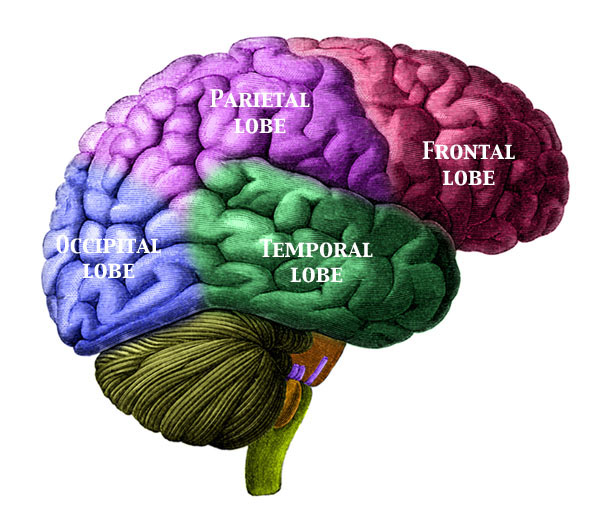
    I think I finally have an answer. I was mentally incapacitated.  I’m not kidding. Over the last three year, I was physically unable to produce quality thought or work during that time because my brain’s limbic system had taken control from my cerebral cortex due to the constant stress I was under from culture shock.

    I came across an article written for teachers of creative writing.  It explained from a neurological standpoint how stress inhibits creativity.  Human brains are typically divided into 3 systems: the brain stem which keeps your heart beating, the limbic system which provides emotion to input like “be happy,” or “get ready to kick some ass,” and the cerebral cortex which handles most of the problem solving, creative thinking that defines being human.

    When a person is relaxed the cerebral cortex is in control.  Creative thinking comes easily.  People are able to consider options, weigh consequences, and make a rational decision.

    Unfortunately, the cerebral cortex is not always in control.  The last time someone cut you off and your face flushed and you imagined running the jerk off the road?  That would be your limbic system.  When the idiot cut you off, the driver was perceived as a threat, and your limbic system triggered your fight or flight response.

    With the limbic system in control it’s physically impossible for someone to be at her creative best. Rational thought?  Not possible either.  Focusing on solving a problem?  Nope.  Self-motivation?  Sorry, not handled by the limbic system. But long naps, crying, cursing, and slamming doors are all things the limbic system does very well.

    That last list of behaviors are pretty common manifestations of culture shock. To people who’ve never lived abroad culture shock might sound, I don’t know, obvious.  “Gosh, living in a new country is difficult.” And something so obvious must surely be avoidable.  “Maybe if you just did the prep work and had the right attitude, you’d be a local in no time.  Just like Julia Roberts in that movie with the pasta and elephants.”  Right?

    God, I wish.  As far as prep work goes, I studied culture shock.  I worked with international students going through the process.  I have a freakin degree in cross-cultural communication.  And how did I handle moving to Brazil?  Well, I have the first three seasons of Grey’s Anatomy and Sex and the City memorized. Feel free to draw your own conclusions.

    It does not matter how much advance research you do, everyone goes through culture shock.  What we call culture shock is the brain creating a new operating system for the new environment.  Your brain has been trained to operate in a specific environment.  In your own culture your brain knows what meaning to attach to symbols and behaviors.  It can anticipate reactions.  It can predict a chain of events.  Different cultures have different cues, and thus require a new operating system.

    Culture Shock has physical symptoms.  Headaches, stomach pains, an unfortunate variety of digestion problems,   physical exhaustion, all are a result of the enormous 24 hours a day, 7 days a week workload your brain is handling.  The brain is frantically creating new connections and pathways to understand the new culture.

    This constant work, combined with the fear from not understanding the words or behaviors of people around you puts serious stress on your body.  And what happens to our brains when we’re stressed?  The limbic system takes over.  Limbic system inhibits creativity and problem solving.

    And so, due to the stress of culture shock I was physically incapable of producing my best quality, or any, work from 2006 – 2009.  That’s my story. I’m sticking to it and honestly I don’t have a better explanation for my sudden change in behavior.

    Beginning last October, after not writing for 3 years, new blog topics started popping into my head daily. I’ve been writing regularly since February and enjoying it. I have the energy and desire to go jogging.  I can’t remember the last time my previously moody stomach complained.  It feels like I found myself.  It took three years but I think my limbic system finally surrendered control.

    Hello, cerebral cortex. It’s so nice to be working together again.  Can you help me update my resume?

  • Reading or Things I Take For Granted

    Reading or Things I Take For Granted

    When was the last time you appreciated the ability to read?  For me, never. I’ve never finished a book and marveled at the feat I just accomplished.  I really should because reading is amazing!

    I can look at these squiggles and recognize that they have meaning.  They stand for a sound.  I can then put the little sounds together to form words, which are entities with their own meaning.  I can take the meaning of the individual words, scan them in order, and understand a complete thought or sentence.  Each thought has it’s own meaning but when read together as a series, like in a paragraph, they combine to describe even more complex ideas like why the Roman Empire collapsed.

    While reading this post your brain is doing some awesome computing and for you, it probably seems effortless.  This is not the case for everyone. I’m not even talking about people with physical differences in their brain that impede reading.  I’m referring to people who, for whatever reason, missed out on being taught how to read.

    Our brains, thanks to thousands of years of evolution, are programmed for language learning.  Drop a three year old anywhere in the world and she’ll learn to speak the language without any intervention.  If your brain were a computer, it comes with the language learning software pre-installed.  This is not the case for reading.  Reading cannot simply be acquired.

    Written language was developed much more recently in human history and our brains do not yet come with this software.  It has to be manually installed one lesson at a time.  Basically, I’ve come to understand that learning to read requires a teacher.  If someone doesn’t have the teacher or the time to practice, she will never read.

    Why am I thinking about literacy? Yesterday, our maid stopped in front of a map we had out for framing.  She asked my husband, “Is this a map of the United States?”  My husband, without missing a beat, said off handedly, “Oh no, that’s a map of the world.  Here’s Brazil and here’s Africa.  Up here is the United States.”  I froze at the question and the realization that here was an adult who didn’t know what the world looked like. It blew my mind. My husband pointed out later that not recognizing the map means very little, if any schooling, so she probably is functionally illiterate.

    I think her question threw me because I had not put her in my “unfortunate circumstance” category.  Our maid is responsible,  hard working, a great cook and keeps her word.  If we agree on next Tuesday morning, she shows up next Tuesday on time without a single reminder.  She is proactive and will clean or fix things that need it but that I haven’t necessarily mentioned.  She has raised a family. I’ve worked with people not half as competent. But she doesn’t know what a map of the world looks like.  And probably doesn’t read.

    I’ve been thinking about that ten second exchange since yesterday. The best response I have so far is to be thankful.  I am going to be grateful for my good, free schools.  I’m going to appreciate that my parents could afford to let me be a full time student.  A good education is not, unfortunately, a guarantee in life.  I’m going to be grateful for mine and what an awesome reader I became as a result.

  • Combatting Fraud & Efficiency

    The Brazilian government is truly amazing in its ability to complicate simple things.  Take signing your name to a contract.  In the US, at the end of negotiations a piece of paper is laid down on which is written everything the parties agree to and then all affected by the agreement pick up a pen and sign their names.  That’s it. Deal’s closed.

    Here in Brazil, there is an extra step.  Once everyone has signed the contract then each signatory must prove that she is in fact the person whose name is signed on the document.

    You prove the validity of your signature by having it notarized.  The only way you can have your signature notarized is by having an official signature on record with one of the notary offices in your city.  And that was what I got to do last week.  I put my signature on record.  Now, all I need is a contract to sign.

    In an age when I can see and talk to my parents in the States while sitting on my couch in Brazil, this signature registration seems a touch outdated.  I walked into the notary and gave them my RNE card (Brazilian green card).  A man then typed my information onto what is essentially a 3×5 index card.  He gave the card to me and told me to sign my name three times on the empty lines provided.  I did.  He stamped it and filed it away.

    Now, I have an official signature.  In the future if I’m signing an official document, let’s say a contract on a four-bedroom apartment with two parking spaces, just imagining here, once I sign the document I will have to go back to that same notary office.  They will pull my card out and compare the signature on the contract to the signatures on the card.  If they match, the notary will stamp the contract saying the person who signed “Brynn” is in fact “Brynn.”  If they are different in any way, the notary will not affirm the signature. I either resign matching the index card exactly or I get sent to jail for fraud.  Something like that.

    I’m told this is a way to prevent fraud.  I guess Brazilian criminals aren’t sophisticated enough to fake the ID shown to register the signature in the first place.  They just run around trying to sign other people’s names on marriage certificates.

    An American lawyer friend explained to me Brazilians and Americans have different ways of approaching fraud.  Americans assume 95% of all transactions will be legit and make the process simple.  They invest resources in prosecuting the 5% that is fraudulent.  Brazilians invest their resources in trying to prevent fraud from ever occurring, hence the overwhelming amount of bureaucracy.

    Obvious, not all fraud in America is persecuted, but neither does Brazil’s approach prevent fraud from ever happening.  My husband, who knows something about fraud cases in Brazil, said most people would be surprised by just how often fraud occurs.  So in the end the only thing a notarized signature prevents every time, is efficiency.

  • My Brazilian Gym Membership Part 3: Dress Code

    My Brazilian Gym Membership Part 3: Dress Code

    Most ads don't reflect reality...this one does. This is exactly how many women show up to my gym.
    Most ads don’t reflect reality…this one does. This is exactly how many women show up to my gym.

    I’ve been a regular at our new gym for one full week and I have to say I’m a bit of a standout.  People come up to me and ask where I’m from.  The trainers notice me and wave from across the gym.  I notice guys doing a double take.  Not to brag but people notice me.  Yup, I have the distinction of being the most conservatively dressed woman in the gym.

    With my t-shirts and running shorts, I might as well be using an American flag as a towel. It’s not just the fact that my abdomen is entirely covered that sets me apart.  I’m not wearing eyeliner or chandelier earrings and I haven’t left my waist-length hair streaming down my back. The Brazilian women at my gym are the sexiest collection of gym goers I’ve ever seen.  It’s like working out in a Flo Rida music video.

    There’s more leopard print here than on a jungle safari.  You can also see a good deal of paisley in all the colors of the rainbow.  Every outfit is perfectly matched and accessorized.  A flower-print sports bra paired with striped shorts?  Major faux-pas!

    Most of the women avoid the risks of mismatching by just going with the unitard.  Until recently, the unitard was, for me, merely a myth.  An extinct manner of dress that could be seen in historic records and frequently used in comedy sketches, like the toga.

    I’m pleased to report the unitard is alive and popular here in Brazil.  Surprisingly, there is quite a variety of cuts.  You have very low cut backs that dip so far down it’s possible to count every vertebra. Some of the unitards have cutouts on the sides and others have lace-up backs. They also have fronts cut so low there’s no way the woman can lift her arms over head without everything popping out.

    But lifting one’s arms is something most of the women never need to do since 95% of their workout focuses on legs.  Probably, to pull off their unitards.  And boy, do they pull them off.  In addition to being sex bombs, I’m pretty sure every woman there is also a triathlete.  These women sport six packs and perky, round butts without any jiggle.

    I’m not exaggerating when I say every woman in the gym is hardcore.  Yesterday, I scanned the gym specifically looking for women who could stand to lose a pound or two.  I saw maybe four.  Everyone else looked like an athlete and this includes the grandmothers in the room.  One woman, who could not have been younger than 60, followed me on the squat press and upped my weight by 40kgs. A very humbling moment.

    I’d be lying if I said I wasn’t a little intimidated by the overt sexiness of the women.  The women are sleek, styled and fit. I’m in baggy shorts with my ponytail askew.  In the end though, I’ll take a ponytail over sweaty hair clinging to my back.  For me, comfort trumps fashion but I will take a cue from their commitment.  These women, of all ages, have made exercise an integral part of their lifestyle.  That, unlike unitards, is something worth imitating.

  • Why Does Brazil Not Have Closets?!

    Why Does Brazil Not Have Closets?!

    We saw our current apartment for the first time about a month ago.  We had two days in Vitoria to find an apartment to rent so my husband could move and start work in 10 days.  One step across the threshold and I knew I liked it.  After a quick tour I was ready to sign the papers. My husband hesitated.

    “What’s the problem?” I asked.

    “Well, it doesn’t come with closets.”

    I did a double take. Plenty of cabinets in the kitchen,  and…nothing else. That’s it.  No closet or storage room of any kind.  Unless we wanted to store our socks above the sink, we would have to purchase a closet.

    “Brazilian homes typically don’t have built in closets,” my husband explained later.  “It’s just a piece of furniture your have to buy. It’s cultural.”

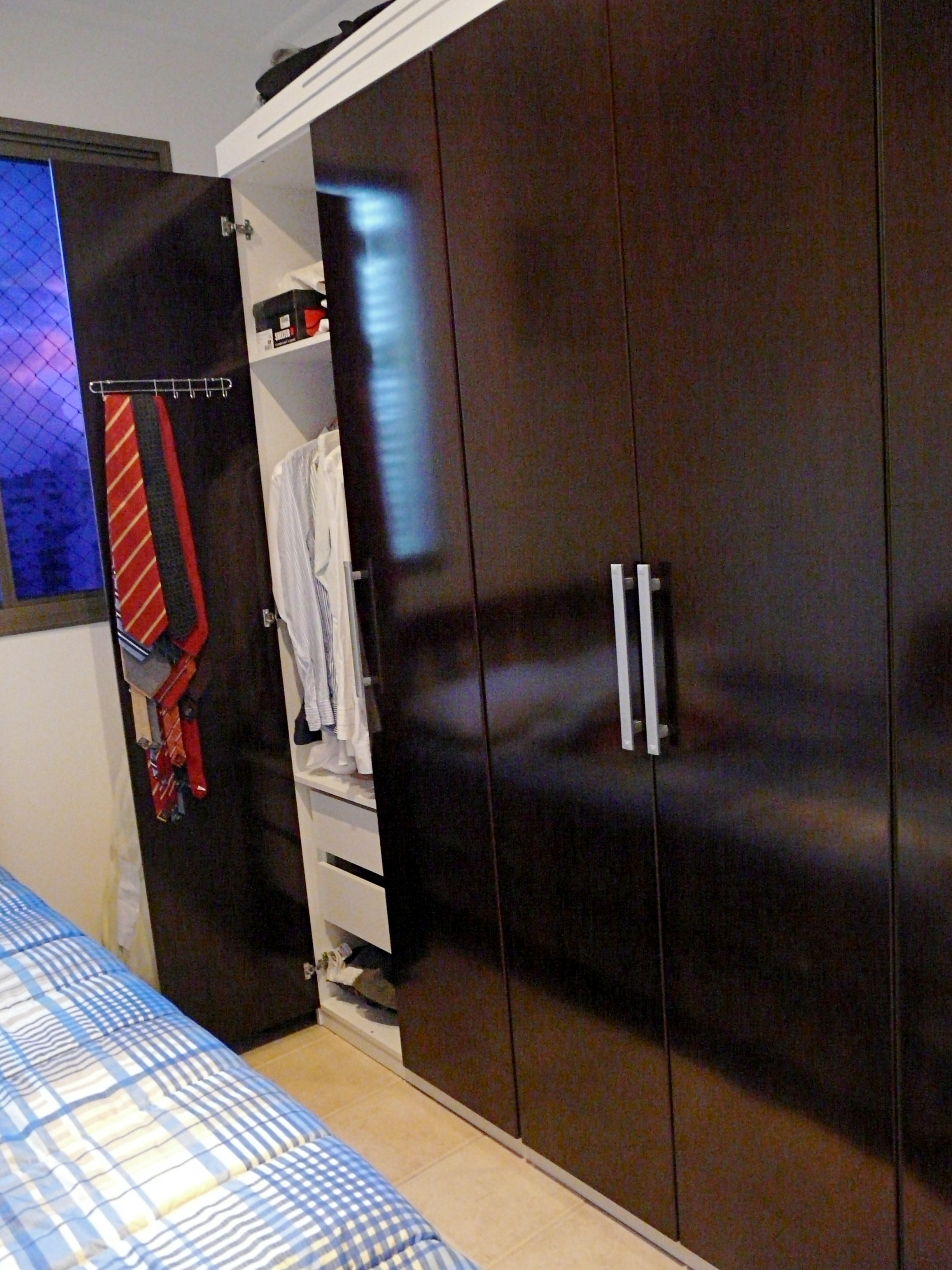
    Obviously, Brazilians have clothes.  They have towels and bed sheets.   Cariocas seem to think 60 degrees requires a coat and scarf, so where do they store the coat?  In separately purchased, often custom made, cabinets and closets like the one pictured above.

    In our quest for a closet, I developed my own theory to explain the lack closets.  It is one giant conspiracy between developers and furniture manufacturers.  Oh, the architects and interior designers are in on it too.  Everyone’s involved.  It’s a massive, money-making conspiracy.  And you the poor home buyer, with your four suitcases of clothes and one of shoes (yes, you need it all), you are the victim.

    For those of you scoffing at the idea of a closet conspiracy, let me tell you about the first stop on our closet shopping quest.  We went into a beautiful store, just a few, tree-lined blocks from our new apartment.  They had efficient yet elegant looking layouts of closets and cabinets for every room of the house.  We sat down in front of a lovely woman.  My husband spoke to her for all of forty seconds.  Before I could even catch up in the conversation, we were leaving.

    “What was the problem?  I couldn’t understand what she said.”  I scurried after my husband out the door.

    “They only do custom work.”

    “Is that a problem?”

    “It would probably cost around R$3,000/m.  So, a big closet could cost between R$27 – 30,000.”

    In dollars, about $15,000.  A $15,000 closet!  A closet!  Hell no, I’m not paying for a closet the same amount that I could pay for a car.  Never going to happen.  I will live out of my suitcases forever, before I spend that kind of money on what are essentially very tall cabinets.   Now, tell me there is not a conspiracy here?

    We did eventually find the above closet for way, way less and it is working beautifully.  It keeps our clothes off the floor, which is where we’ve had them for the past two weeks.  My husband keeps saying this is just how Brazilians do it.  Big closets are an American thing.

    I thought about that last comment.  I’ve stayed with families in a few different countries and I have to admit that I don’t remember ever walking into a closet or even seeing one.  Still, if the idea of “0” can be developed independently on two different continents, I refuse to believe the concept of a walk-in closet is uniquely American.

  • Great Things About Rio: Open Windows

    Great Things About Rio: Open Windows

    My last post was a little down on Rio.  What can I say?  My brother’s plane was canceled because drug dealers invaded a hotel and I ran out of peanut butter.

    Today, I had a delicious lunch while sitting outside on a beautiful afternoon.  Spring has come to Rio and the temperature is perfect, warm enough to wear a tank top without a jacket but not hot enough to make you sweat.  Plus, I saw a monkey this morning and fuzzy monkeys are one thing Rio has going for it. All that is to say, today I like Rio.

    Because Rio and I are on good terms today, I thought I’d return to my Great Things About Rio series.  The spectacular weather has highlighted a common practice here, which I intend to continue whenever I return to the US.  Here in Rio, people open their windows.

    Growing up, if a window in my house was opened, an adult always raced to it, vaulting over the coffee table, while shouting “The air! Don’t let the air out!” and then slammed the window shut crushing the bluebird that had landed on the sill.  Air was apparently a very precious commodity as we suburbanites moved from one hermetically sealed environment to another.  Heated or cooled, the air could not get out.  Thus, the windows remained shut.

    I guess there is an abundance of air in Rio because people just leave the windows open.  While the air inside the apartment does escape, it is replaced by air from the outside and the outside air brings all sort of wonderful things with it.  The sounds of birds, the shouts of kids playing soccer, the smell of beans and fish being prepared, the occasional chill before a storm hits.  It’s only been in Rio that I’ve discovered a breeze blowing through your home is a marvelous thing.  How wonderful to be simultaneously cozy in your apartment and still connected to the outside world.  If I were a therapist, I would regularly prescribe opening windows.

    True, an open window can let in the seasonal swarm of termites or strains of the drunken, karaoke contest from the nearby college campus, but dealing with the occasional plague does not detract from the daily calming effects of a curtain gently drifting into the room.  Besides, an open window can always be closed when it’s amateur night on the quad.